| Enduring Understanding | Learning Objective | Essential Knowledge |
|---|---|---|
CHR-1 | 1.A |
|
Short Fiction I
AP English Literature and Composition · Topic 1
 6:43
6:43
Unit 1: Short Fiction I
AP English Literature reads texts in three genres across nine units — short fiction, poetry, and longer fiction or drama — each visited three times at…
English narration · English + 中文 subtitles burned in
1.1
What Textual Details Reveal About a Character
Syllabus
Source: College Board AP Course and Exam Description
AP English Literature reads texts in three genres across nine units - short fiction, poetry, and longer fiction or drama, each visited three times at increasing difficulty. Unit 1 installs the tools for all of them.
Character 人物 is revealed by three things, and the CED names them exactly:
- Description, dialogue, and behaviour 描写、对话与行为 reveal characters to readers.
- Descriptions may come from a speaker, narrator, other characters, or the characters themselves - so who is describing is part of the evidence.
- Perspective 视角 is how narrators, characters, or speakers understand their circumstances, informed by background, experience, and values.
- A character's perspective is both shaped and revealed by relationships with other characters, the environment, and events.
That last point is the one that turns character notes into analysis. A character is not a list of adjectives; a character is a way of seeing, which becomes visible in what they notice, what they misread, and how they respond.
Explore
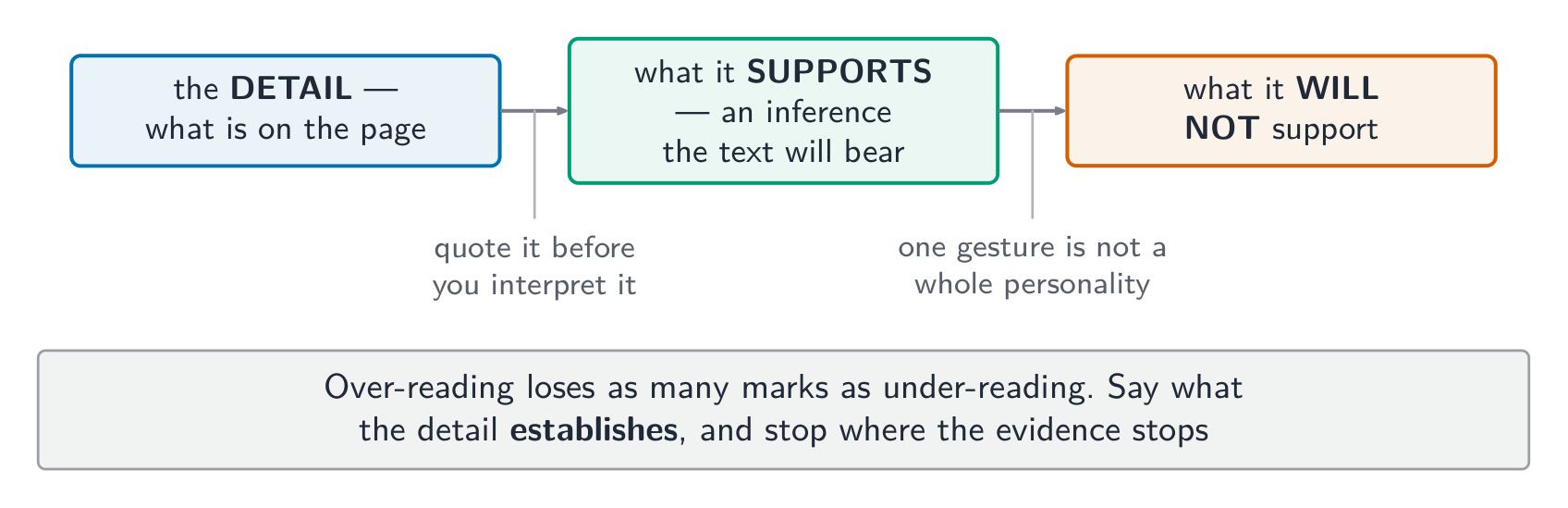
Take a detail exactly as far as it goes
Over-reading loses as many marks as under-reading: say what the detail establishes, and stop where the evidence stops.
Vocabulary
Train
| English |
|---|
| Character/ˈkærɪktə/ |
| Description, dialogue, and behaviour/dɪˈskrɪpʃn ˈdaɪəlɒɡ ænd bɪˈheɪvjə/ |
| Perspective/pəˈspektɪv/ |
1.2
Textual Details That Convey Setting
Syllabus
| Enduring Understanding | Learning Objective | Essential Knowledge |
|---|---|---|
SET-1 | 2.A |
|
Source: College Board AP Course and Exam Description
Setting 背景 includes the time and place during which the events of the text occur.
The CED's definition is deliberately minimal, and that is the trap. Setting earns marks not when it is described but when it is shown doing something - constraining a character, explaining a value, or contrasting with an interior state. A paragraph that establishes where a story happens has not yet made a claim.
Vocabulary
Train
| English |
|---|
| Setting/ˈsetɪŋ/ |
1.3
How Plot Orders Events
Syllabus
| Enduring Understanding | Learning Objective | Essential Knowledge |
|---|---|---|
STR-1 | 3.A |
|
Source: College Board AP Course and Exam Description
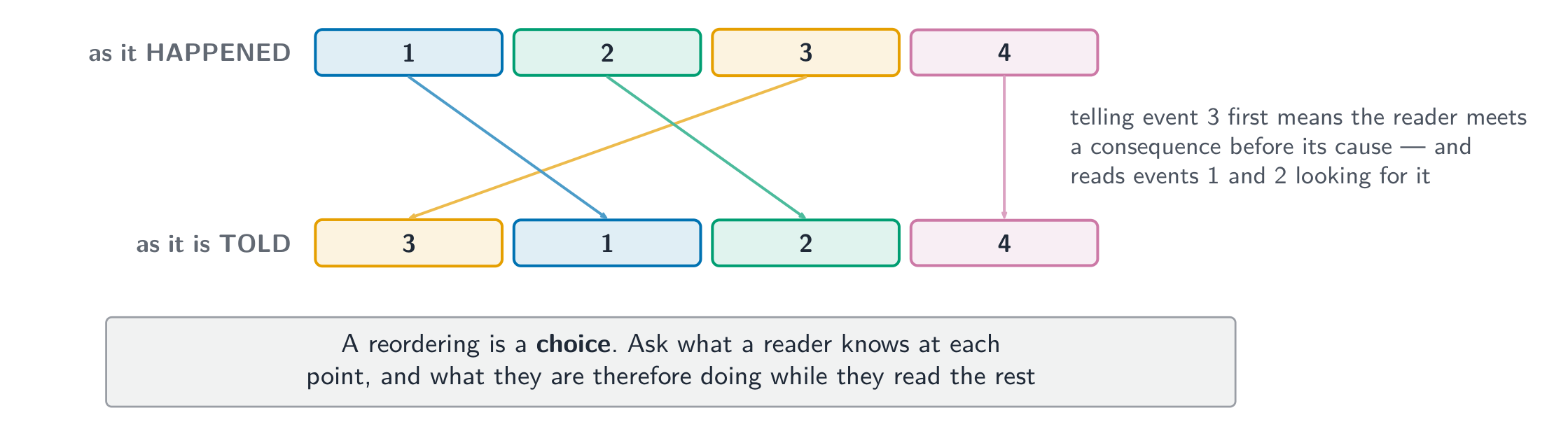
- Plot 情节 is the sequence of events in a narrative; events are connected, each building on those before it.
- The dramatic situation 戏剧情境 includes the setting and action of the plot and how the narrative develops to place characters in conflict.
The word sequence is doing work. Plot is not the events but their order - and an author who reveals something late that happened early has made a choice you can analyse.
Vocabulary
Train
| English |
|---|
| Plot/plɒt/ |
| dramatic situation/drəˈmætɪk ˌsɪtʃuːˈeɪʃn/ |
1.4
The Function of a Sequence of Events
Syllabus
| Enduring Understanding | Learning Objective | Essential Knowledge |
|---|---|---|
STR-1 | 3.B |
|
Source: College Board AP Course and Exam Description
Plot and the exposition that accompanies it focus readers' attention on the parts of the narrative that matter most to the text's meaning.
That sentence is the whole method for prose analysis: proportion is evidence. What the text lingers over, and what it passes in a clause, is the author telling you where to look.
1.5
Identifying the Narrator or Speaker
Syllabus
| Enduring Understanding | Learning Objective | Essential Knowledge |
|---|---|---|
NAR-1 | 4.A |
|
Source: College Board AP Course and Exam Description
- Narrators or speakers relate accounts and establish a relationship between the text and the reader.
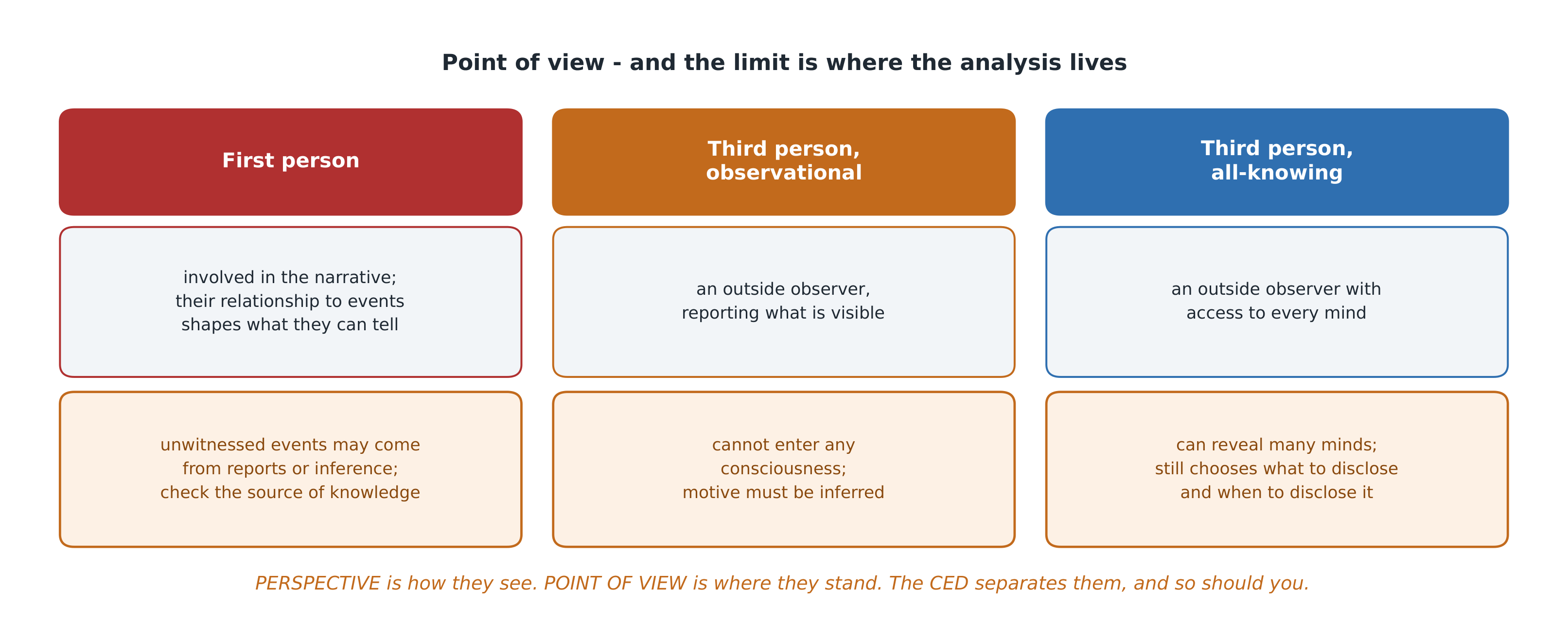
- Perspective refers to how narrators, characters, or speakers see their circumstances; point of view 叙述视点 refers to the position from which they relate the account.
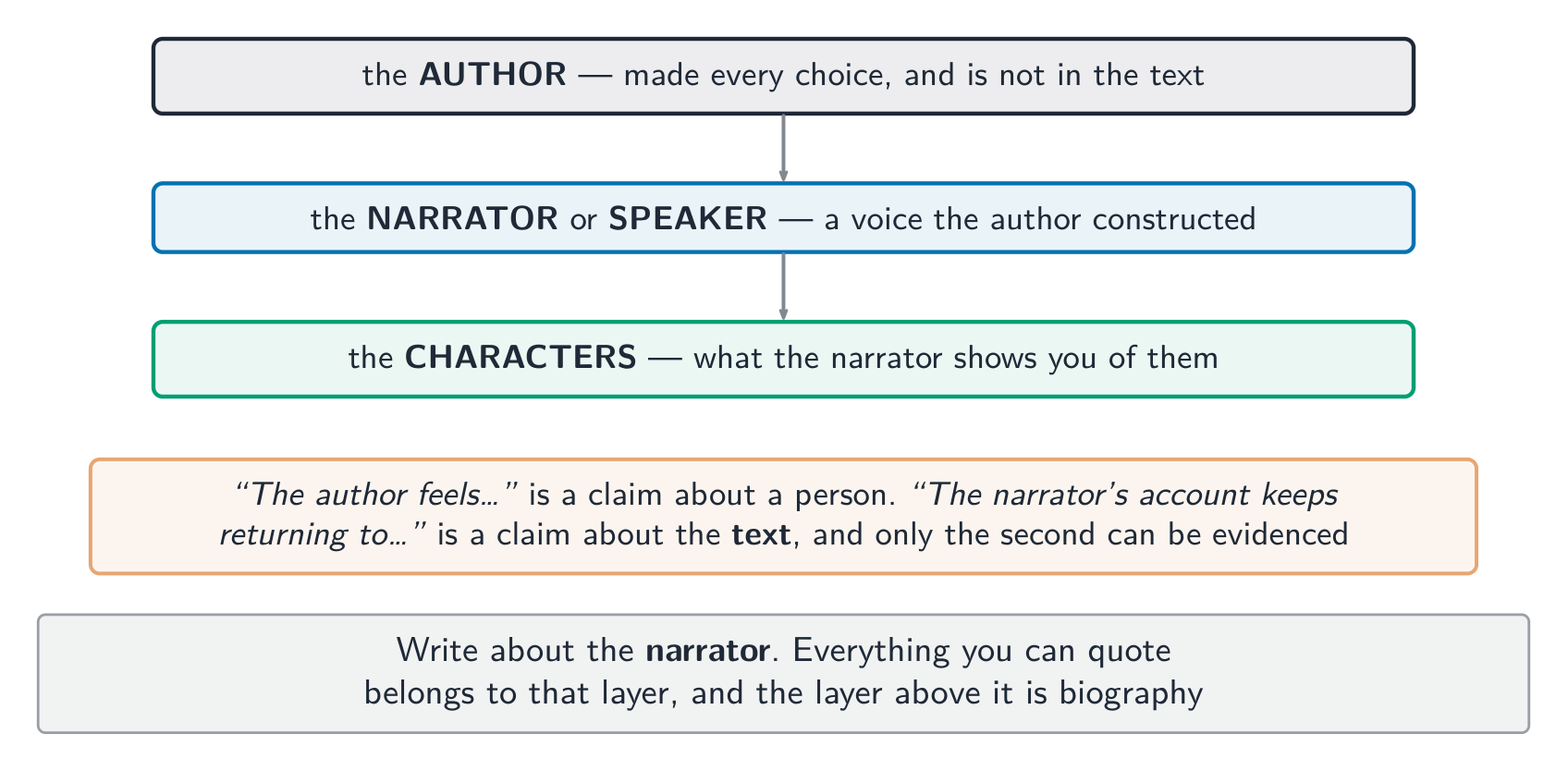
- A speaker or narrator is not necessarily the author. Never write "the author feels" about a first-person narrator.
Explore
Sort each statement by the layer it belongs to
Everything you can quote belongs to the narrator's layer. The layer above it is biography.
Vocabulary
Train
| English |
|---|
| point of view/pɔɪnt ɒv vjuː/ |
1.6
The Function of Point of View
Syllabus
| Enduring Understanding | Learning Objective | Essential Knowledge |
|---|---|---|
NAR-1 | 4.B |
|
Source: College Board AP Course and Exam Description
- Point of view contributes to what narrators can and cannot provide in a text, based on their position.
- Narrators may also be characters, and that role may influence their perspective.
- First-person narrators are involved in the narrative; their relationship to events and to other characters shapes what they can tell you.
- Third-person narrators are outside observers, and their knowledge may range from observational to all-knowing 全知.
- The outside perspective of a third-person narrator may not be affected by the events of the narrative.
The analytical payoff is the cannot. A first-person narrator may learn about unwitnessed events through reports or inference. Distinguish that indirect knowledge from direct access to another mind, and explain a gap only when the surrounding text supports its significance. A limited third-person narrator confines you to one consciousness, which is a choice about whose experience counts.
Vocabulary
Train
| English |
|---|
| observational to all-knowing/ɒbzəˈveɪʃənl tʊ ɔːl ˈnəʊɪŋ/ |
1.7
Developing a Paragraph with Claim and Evidence
Syllabus
| Enduring Understanding | Learning Objective | Essential Knowledge |
|---|---|---|
LAN-1 | 7.A |
|
Source: College Board AP Course and Exam Description
- In literary analysis, writers read a text closely to identify details that, in combination, enable them to make and defend a claim.
- A claim is a statement that requires defence with evidence from the text.
- The initial components of a paragraph are the claim and the textual evidence that defends it.
Note in combination. A single detail rarely supports an interpretive claim; two or three details that point the same way do.
Original practice passage: the unposted letter
This short passage was written for teaching. It is not an extract from an AP paper.
On the last evening before the station closed, I waited beside its locked ticket window. “You could still post it,” Mara said. I folded the letter until her name disappeared inside. “There is nothing left to say,” I told her. Years later, I call that silence kindness. Mara's answer, if she gave one, is the part I no longer remember.
Worked analysis. The first-person narrator presents avoidance as kindness. Folding Mara's name out of sight and insisting there is “nothing left to say” make that self-description questionable. The later admission about memory further limits the account: Mara's response is unavailable, so the passage does not establish that she agreed. The closed station reinforces the situation's narrowing possibilities. This interpretation links several details without claiming that first person automatically means dishonesty or that the narrator's judgement is the author's.
Practice. Explain how the later phrase “Years later” changes your reading of the earlier silence. Use two details and distinguish what the passage establishes from what remains uncertain.
1.7
Exam tips
- Character is a way of seeing, not a list of adjectives. Analyse what they notice and misread.
- Setting must do something. Describing where a story happens is not yet a claim.
- Plot is the order of events. A late revelation of an early event is an authorial choice worth analysing.
- Proportion is evidence. What the text lingers over is where the meaning is.
- The narrator is not the author. Never write "the author feels" about a first-person narrator.
- The analytical gold in point of view is what the narrator cannot provide.
Interactive lessons on this topic
Work through it step by step, with instant-check exercises.