Skip to content · ⁨コンテンツへスキップ⁩

Transoceanic Interconnections · ⁨越洋相互接続⁩

AP World History: Modern · ⁨AP 世界史:近代⁩ · Topic 4 · ⁨トピック 4⁩

View Slides · ⁨查看幻灯片⁩ Train · ⁨練習する⁩
Video lesson for this topic · ⁨このトピックのビデオレッスン⁩ Open the video page · ⁨動画ページを開く⁩
6:37

Unit 4: 海洋間接続

多くの学生にヨーロッパ人が航海した理由を聞くと、名前が答えてきます——コロンブス、ダ・ガマ、マゼランです。探検家という答えは利用可能な中で最も有用さが低いです。実際に…

English narration · English + 中文 subtitles burned in · ⁨英語ナレーション・英語+中文字幕 burning-in⁩

4.1 4.2

Why Europeans Sailed · ⁨ーロッパ人の航海の動機⁩

Syllabus · ⁨シラバス⁩
English

4.1 Technological Innovations from1450 to 1750

Thematic Focus (TEC): Technology and Innovation — Human adaptation and innovation have resulted in increased efficiency, comfort, and security, and technological advances have shaped human development and interactions with both intended and unintended consequences.

Learning Objective Unit 4.A: Explain how cross-cultural interactions resulted in the diffusion of technology and facilitated changes in patterns of trade and travel from 1450 to 1750.

  • KC-4.1.II Knowledge, scientific learning, and technology from the Classical, Islamic, and Asian worlds spread, facilitating European technological developments and innovation.
  • KC-4.1.II.A The developments included the production of new tools, innovations in ship designs, and an improved understanding of regional wind and currents patterns—all of which made transoceanic travel and trade possible.

Illustrative examples:

  • Innovations in ship design:
    • Caravel
    • Carrack
    • Fluyt
  • European technological developments influenced by cross-cultural interactions with the Classical, Islamic, and Asian worlds:
    • Lateen sail
    • Compass
    • Astronomical charts
日本語

4.1 1450 から 1750 までの技術革新

テーマ的焦点(TEC): 技術と革新 — 人間の適応と革新により、効率性、快適性、安全性が高まり、技術の進歩は意図的かつ意図しない結果をもたらしながら、人間の発展および相互作用を形作った。

学習目標 ユニット4.A: 1450年から1750年にかけて、異文化間相互作用が技術の拡散にもたらされ、交易や旅行のパターンの変化を促進した点を説明せよ。

  • KC-4.1.II 古典世界、イスラム世界、アジア世界の知識、科学的学び、技術が伝播し、ヨーロッパの技術的発展と革新を支援した。
  • KC-4.1.II.A これらの発展には、新しい道具の製造、船の設計における革新、地域ごとの風と海流パターンの理解の向上が含まれ、これらすべてが越洋旅行と貿易を可能にした。

具体例:

  • 船の設計に関する革新:
    • カラヴェル
    • カラク
    • フルート
  • 古典世界、イスラム世界、アジア世界との異文化間相互作用によって影響を受けたヨーロッパの技術的発展:
    • ラテン帆
    • 磁石コンパス
    • 天体図
English

4.2 Exploration: Causes and Events from 1450 to 1750

Thematic Focus (GOV): Governance — A variety of internal and external factors contribute to state formation, expansion, and decline. Governments maintain order through a variety of administrative institutions, policies, and procedures, and governments obtain, retain, and exercise power in different ways and for different purposes.

Learning Objective Unit 4.B: Describe the role of states in the expansion of maritime exploration from 1450 to 1750. THEMATIC FOCUS Economics Systems ECN As societies develop, they affect and are affected by the ways that they produce, exchange, and consume goods and services. LEARNING OBJECTIVE

  • KC-4.1.III New state-supported transoceanic maritime exploration occurred in this period. HISTORICAL DEVELOPMENTS

Learning Objective Unit 4.C: Explain the economic causes and effects of maritime exploration by the various European states.

  • KC-4.1.III.A Portuguese development of maritime technology and navigational skills led to increased travel to and trade with Africa and Asia and resulted in the construction of a global trading-post empire.
  • KC-4.1.III.B Spanish sponsorship of the voyages of Columbus and subsequent voyages across the Atlantic and Pacific dramatically increased European interest in transoceanic travel and trade.
  • KC-4.1.III.C Northern Atlantic crossings were undertaken under English, French, and Dutch sponsorship, often with the goal of finding alternative sailing routes to Asia.
日本語

4.2 1450 から 1750 までの探検:原因と出来事

テーマの焦点(GOV): 統治 — 多様な内外的要因が国家の形成、拡大、衰退に寄与する。政府は多様な行政機関、政策、手続きを通じて秩序を維持し、異なる方法・目的で権力を獲得・保持・行使する。

学習目標 ユニット4.B: 1450年から1750年にかけての海洋探検の拡大における国家の役割を記述せよ。テーマ焦点 経済システム ECN 社会が発展するにつれて、その生産、交換、消費の方法に影響を与え、同時にそれらの方法によっても影響を受ける。学習目標

  • KC-4.1.III この時期、新政府による越洋海洋探検が行われた。歴史的発展

学習目標 ユニット4.C: various European states( various European states)による海洋探検の経済的要因と結果を説明せよ。

  • KC-4.1.III.A ポルトガルの海洋技術および航海技能の発展により、アフリカおよびアジアへの渡航および貿易が増加し、世界的な貿易拠点帝国の建設につながった。
  • KC-4.1.III.B クロスコの航海およびその後の大西洋および太平洋の航海に対するスペインの資金提供は、越洋旅行と貿易に対するヨーロッパの関心を劇的に高めた。
  • KC-4.1.III.C 北大西洋の横断は、イギリス、フランス、オランダの資金提供の下で行われ、しばしばアジアへの代替航行路の発見を目的とした。
Source: College Board AP Course and Exam Description · ⁨出典: College Board AP コースおよび試験説明書⁩

English

Unit 4 covers 1450 to 1750 - the period in which the Eastern and Western Hemispheres are permanently joined, and the consequences of that joining.

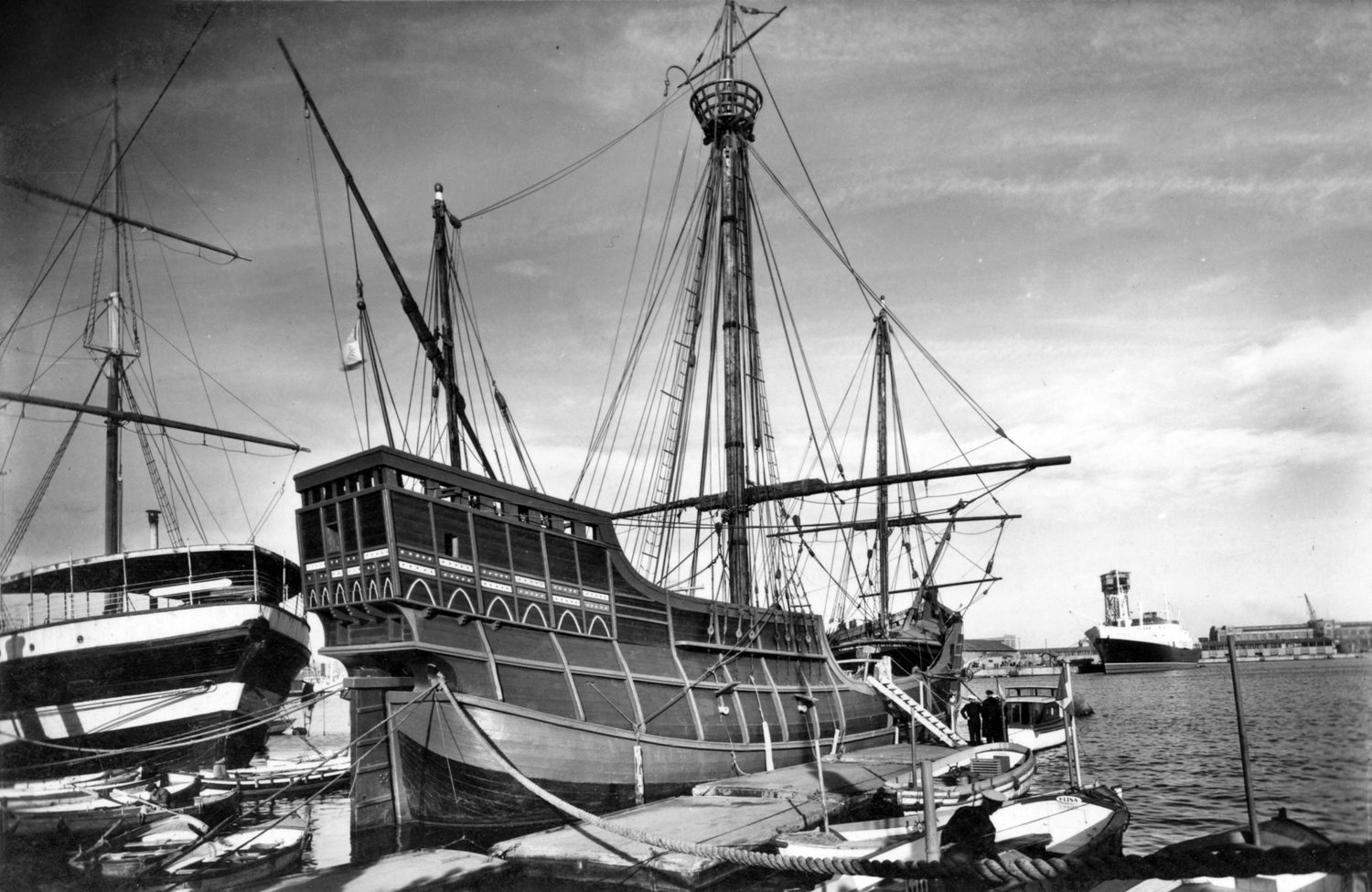
The voyages rested on borrowed knowledge. Learning and technology from the Classical, Islamic, and Asian worlds was gathered and applied in Europe: new tools, innovations in ship design 船舶设计, and better understanding of navigation 航海 - the caravel 卡拉维尔帆船, the astrolabe, the magnetic compass, and knowledge of wind patterns.

State-supported maritime exploration 国家支持的海上探索 then followed:

  • Portuguese development of maritime technology and navigational skill led to the sea route around Africa to the Indian Ocean.
  • Spanish sponsorship of Columbus and subsequent voyages opened the Atlantic to the Americas.
  • English, French, and Dutch crossings of the northern Atlantic followed.

Motives combined the search for wealth, competition between states, and religious mission.

日本語

第4単元は1450年から1750年までを扱っており、東半球と西半球が永続的に結びつき、その結果が生じた時代である。

これらの航海は、借用された知識の上に成り立っていた。古典的世界、イスラーム世界、アジア世界から得られた学術や技術がヨーロッパで収集・応用された。新しい道具、船の設計における革新、および航海に関するより深い理解——カラヴェル、アストロラーベ、磁気羅針盤、そして風のパターンに関する知識などである。

国家支援による海洋探検が続いた:

  • ポルトガルによる海洋技術および航海技術の開発により、アフリカ回りの海上ルートからインド洋への航路が開かれた。
  • スペインによるコロンブスの後援およびその後の航海により、大西洋がアメリカ大陸へと開かれた。
  • イギリス、フランス、オランダによる北大西洋の横断も続いた。

動機は、富の追求、国家間の競争、および宗教的使命が組み合わさったものである。

4つの必須条件、1つの動機ではない——知識と器具には依然として後援者が必要である
カラヴェルの複製品——海洋航海を可能にした船のデザイン
Explore · ⁨探索⁩

Collect the four conditions for a voyage · ⁨航海のための四つの条件を収集せよ⁩

Knowledge, ship design, navigation and a sponsor: any three without the fourth produces no voyage. · ⁨知識、船舶設計、航海術、後援者:これら四つの中でどれか一つ欠けていれば航海は成立しない。⁩

Vocabulary · ⁨語彙⁩ Train · ⁨練習する⁩
English 日本語
ship design/ʃɪp dɪˈzaɪn/ 船舶設計
navigation/ˌnævɪˈɡeɪʃn/ 航海法
caravel/ˈkærævl/ カラヴェル
State-supported maritime exploration/steɪt səˈpɔːtɪd ˈmærɪtaɪm eksplɔːˈreɪʃn/ 国家支援による海洋探検
4.3

The Columbian Exchange · ⁨コロンブス交換⁩

Syllabus · ⁨シラバス⁩
English

4.3 Columbian Exchange

Thematic Focus (ENV): Humans and the Environments — The environment shapes human societies, and as populations grow and change, these populations in turn shape their environments.

Learning Objective Unit 4.D: Explain the causes of the Columbian Exchange and its effects on the Eastern and Western Hemispheres.

  • KC-4.1.V The new connections between the Eastern and Western Hemispheres resulted in the exchange of new plants, animals, and diseases, known as the Columbian Exchange.
  • KC-4.1.V.A European colonization of the Americas led to the unintentional transfer of disease vectors, including mosquitoes and rats, and the spread of diseases that were endemic in the Eastern Hemisphere, including smallpox, measles, and malaria. Some of these diseases substantially reduced the indigenous populations, with catastrophic effects in many areas.
  • KC-4.1.V.B American foods became staple crops in various parts of Europe, Asia, and Africa. Cash crops were grown primarily on plantations with coerced labor and were exported mostly to Europe and the Middle East.
  • KC-4.1.V.C Afro-Eurasian fruit trees, grains, sugar, and domesticated animals were brought by Europeans to the Americas, while other foods were brought by African enslaved persons.
  • KC-4.1.V.D Populations in Afro-Eurasia benefitted nutritionally from the increased diversity of American food crops.

Illustrative examples:

  • Domesticated animals:
    • Horses
    • Pigs
    • Cattle
  • Foods brought by African enslaved persons:
    • Okra
    • Rice
日本語

4.3 クロンビアン・エクスチェンジ

テーマ別焦点(ENV): 人間と環境 — 環境は人類社会を形成し、人口が増加・変化すると、その人々もまた環境を形作る。

学習目標 ユニット4.D: クロンビアン・エクスチェンジの原因および東半球と西半球への影響を説明せよ。

  • KC-4.1.V 東半球と西半球の間の新たなつながりは、植物、動物、病気の交換をもたらした。これをクロンビアン・エクスチェンジという。
  • KC-4.1.V.A アメリカ洲へのヨーロッパ人の植民化は、蚊やネズミなどの病原体の媒介者の意図しない移送、および東半球で地方病となっていた疾病(痘瘡、麻疹、マラリアなど)の蔓延をもたらした。これらの疾病の一部は先住民の人口を大幅に減少させ、多くの地域で壊滅的な影響をもたらした。
  • KC-4.1.V.B アメリカの食料作物は、ヨーロッパ、アジア、アフリカの各地域で主作物となった。商業作物は強制労働を伴うplantation(プランテーション)で栽培され、主にヨーロッパおよび中東へ輸出された。
  • KC-4.1.V.C アフロユーラシアの果樹、穀物、砂糖、家畜はヨーロッパ人によってアメリカ洲にもたらされ、他の食料はアフリカ出身の奴隷によってもたらされた。
  • KC-4.1.V.D アフロユーラシアの人口は、アメリカの食料作物の多様性の増加により栄養面で利益を得た。

具体例:

  • 家畜:
    • 馬
    • 豚
    • 牛
  • アフリカ出身の奴隷によってもたらされた食料:
    • オクラ
    • 米

Source: College Board AP Course and Exam Description · ⁨出典: College Board AP コースおよび試験説明書⁩

English

New connections between the hemispheres produced the Columbian Exchange 哥伦布大交换, and the CED spells out four consequences.

  • European colonisation led to the unintentional transfer of disease 疾病的非蓄意传播 to the Americas, causing catastrophic population loss.
  • American foods 美洲作物 - maize, potatoes, cassava - became staple crops in parts of Europe, Asia, and Africa.
  • Afro-Eurasian fruit trees, grains, sugar, and domesticated animals 驯化动物 were brought to the Americas, reshaping its landscapes and economies.
  • Populations in Afro-Eurasia benefited nutritionally 营养状况改善 from a more diverse diet, contributing to population growth.

The asymmetry is the examinable point: the same exchange raised population in Afro-Eurasia and destroyed it in the Americas.

日本語
双方向のコロンビア交換、大西洋奴隷貿易を駆動した人口学的后果を含む
交換は双方向であったが、その結果は非対称であった

半球間の新たなつながりはコロンビア交換を生み出し、CED(課程開発委員会)は4つの后果を指定している。

  • ヨーロッパ人の植民化は、美洲への意図しない疾病の移送をもたらし、壊滅的な人口減少を引き起こした。
  • 美洲の作物——トウモロコシ、ジャガイモ、ヤシ——は、ヨーロッパ、アジア、アフリカの一部で基幹作物となった。
  • アフロユーラシアの果樹、穀類、砂糖、および家畜が美洲にもたらされ、その景観と経済を変貌させた。
  • アフロユーラシアの人口は、栄養価の高い多様な食事に恩恵を受け、人口増加に寄与した。

非対称性が受験ポイントである:同じ交換がアフロユーラシアでは人口を増やし、美洲では破壊した。

Vocabulary · ⁨語彙⁩ Train · ⁨練習する⁩
English 日本語
Columbian Exchange/kəˈlʌmbɪən eksˈtʃeɪndʒ/ クリスチアン・エクスチェンジ
unintentional transfer of disease/ˌʌnɪnˈtenʃənl ˈtrænsfɜː ɒv dɪˈziːz/ 意図しない疾病の伝播
American foods/əˈmerɪkən fuːdz/ アメリカ由来の作物
domesticated animals/dəˈmestɪkeɪtɪd ˈænɪmlz/ 家畜化された動物
benefited nutritionally/ˈbenɪfɪtɪd njuːˈtrɪʃənəli/ 栄養面での利益を得た
trading posts/ˈtreɪdɪŋ pəʊsts/ 貿易拠点
rivalries/ˈraɪvəlriz/ 対立関係
4.4

Maritime Empires Established · ⁨海洋帝国の確立⁩

Syllabus · ⁨シラバス⁩
English

4.4 Maritime Empires Established

Thematic Focus (GOV): Governance — A variety of internal and external factors contribute to state formation, expansion, and decline. Governments maintain order through a variety of administrative institutions, policies, and procedures, and governments obtain, retain, and exercise power in different ways and for different purposes.

Thematic Focus (ECN): Economics Systems — As societies develop, they affect and are affected by the ways that they produce, exchange, and consume goods and services.

Learning Objective Unit 4.E: Explain the process of state building and expansion among various empires and states in the period from 1450 to 1750.

  • KC-4.3.II.A.i Europeans established new trading posts in Africa and Asia, which proved profitable for the rulers and merchants involved in new global trade networks. Some Asian states sought to limit the disruptive economic and cultural effects of European-dominated long-distance trade by adopting restrictive or isolationist trade policies.
  • KC-4.3.II.C Driven largely by political, religious, and economic rivalries, European states established new maritime empires, including the Portuguese, Spanish, Dutch, French, and British.
  • KC-4.3.II.A.ii The expansion of maritime trading networks fostered the growth of states in Africa, including the Asante and the Kingdom of the Kongo, whose participation in trading networks led to an increase in their influence.

Learning Objective Unit 4.F: Explain the continuities and changes in economic systems and labor systems from 1450 to 1750. THEMATIC FOCUS Social Interactions and Organization SIO The process by which societies group their members and the norms that govern the interactions between these groups and between individuals influence political, economic, and cultural institutions and organization. LEARNING OBJECTIVE

  • KC-4.3.II.A.iii Despite some disruption and restructuring due to the arrival of Portuguese, Spanish, and Dutch merchants, existing trade networks in the Indian Ocean continued to flourish and included intra-Asian trade and Asian merchants.
  • KC-4.2.II.D Newly developed colonial economies in the Americas largely depended on agriculture, utilized existing labor systems, including the Incan mit’a, and introduced new labor systems including chattel slavery, indentured servitude, and encomienda and hacienda systems. HISTORICAL DEVELOPMENTS

Learning Objective Unit 4.G: Explain changes and continuities in systems of slavery in the period from 1450 to 1750.

  • KC-4.2.II.B Enslavement in Africa continued in its traditional forms, including incorporation of enslaved persons into households and the export of enslaved persons to the Mediterranean and the Indian Ocean regions.
  • KC-4.2.II.C The growth of the plantation economy increased the demand for enslaved labor in the Americas, leading to significant demographic, social, and cultural changes.

Illustrative examples:

  • Asian states that adopted restrictive or isolationist trade policies:
    • Ming China
    • Tokugawa Japan
  • (CONT’D) Indian Ocean Asian merchants:
    • Swahili Arabs
    • Omanis
    • Gujaratis
    • Javanese
日本語

4.4 海洋帝国の確立

テーマの焦点(GOV): 統治 — 多様な内外的要因が国家の形成、拡大、衰退に寄与する。政府は多様な行政機関、政策、手続きを通じて秩序を維持し、異なる方法・目的で権力を獲得・保持・行使する。

テーマ別焦点(ECN):経済システム — 社会が発展するにつれて、商品およびサービスの生産、交換、消費のあり方に影響を与え、かつそれらに影響される。

学習目標 ユニット4.E: 1450年から1750年の期間において、 various empires and states( various empires and states)の国造りと拡大のプロセスを説明せよ。

  • KC-4.3.II.A.i ヨーロッパ人はアフリカおよびアジアに新たな貿易拠点を設立したが、これは新たな世界的貿易ネットワークに関与する支配者や商人にとって収益性があることが判明した。一部のアジアの国家は、ヨーロッパ主導の遠距離貿易による disruptive economic and cultural effects(disruptive economic and cultural effects)を制限するために、規制的または孤立主義的な貿易政策を採用しようとした。
  • KC-4.3.II.C 政治的、宗教的、経済的な競合を主な動機として、ヨーロッパの国家はポルトガル、スペイン、オランダ、フランス、イギリスを含む新たな海洋帝国を確立した。
  • KC-4.3.II.A.ii 海洋貿易ネットワークの拡大は、アフリカの国家の成長を促した。アシャンテやコンゴ王国などが該当し、これらは貿易ネットワークへの参加により影響力を増した。

学習目標 ユニット4.F: 1450年から1750年にかけての経済システムおよび労働システムの継続性と変化を説明せよ。テーマ焦点 社会的相互作用と組織 SIO 社会が構成員をグループ化し、これらのグループ間および個人間の相互作用を規律する規範は、政治的、経済的、文化的な制度および組織に影響を与える。学習目標

  • KC-4.3.II.A.iii ポルトガル、スペイン、オランダの商人の到来に伴い一部で混乱と再編が生じたにもかかわらず、インド洋の既存の貿易ネットワークは依然として繁栄しており、アジア内部の貿易およびアジアの商人を含んでいた。
  • KC-4.2.II.D 新開発された美洲植民地経済は主に農業に依存し、インカ帝国のミタ(奴役労働)など既存の労働制度を利用するとともに、 chattel slavery(所有奴隷)、indentured servitude(契約奉公人)、encomiendaおよびhaciendaシステムといった新たな労働制度を導入した。歴史的発展

学習目標 ユニット4.G: 1450年から1750年の期間における奴隷制のシステムの変化と継続性を説明せよ。

  • KC-4.2.II.B アフリカでの奴隷化は伝統的な形を維持し続け、奴隷が家庭に組み込まれたり、地中海地域やインド洋地域へ輸出されたりした。
  • KC-4.2.II.C 植物園経済の成長により、美洲における奴隷労働への需要が増大し、人口、社会、文化における大きな変化をもたらした。

具体例:

  • 制限的または孤立主義的通商政策を採用したアジア国家:
    • 明中国
    • 徳川日本
  • (続)インド洋アジア商人:
    • スワヒリ・アラブ人
    • オマーン人
    • グジャラート人
    • ジャワ人

Source: College Board AP Course and Exam Description · ⁨出典: College Board AP コースおよび試験説明書⁩

English

Europeans established trading posts 商站 in Africa and Asia, which proved profitable, and pursued colonisation in the Americas driven by political, religious, and economic rivalries 对抗.

Where existing states were strong, Europeans traded rather than conquered: despite disruption caused by Portuguese arrival, existing trade networks in the Indian Ocean continued, and Asian states largely dictated the terms.

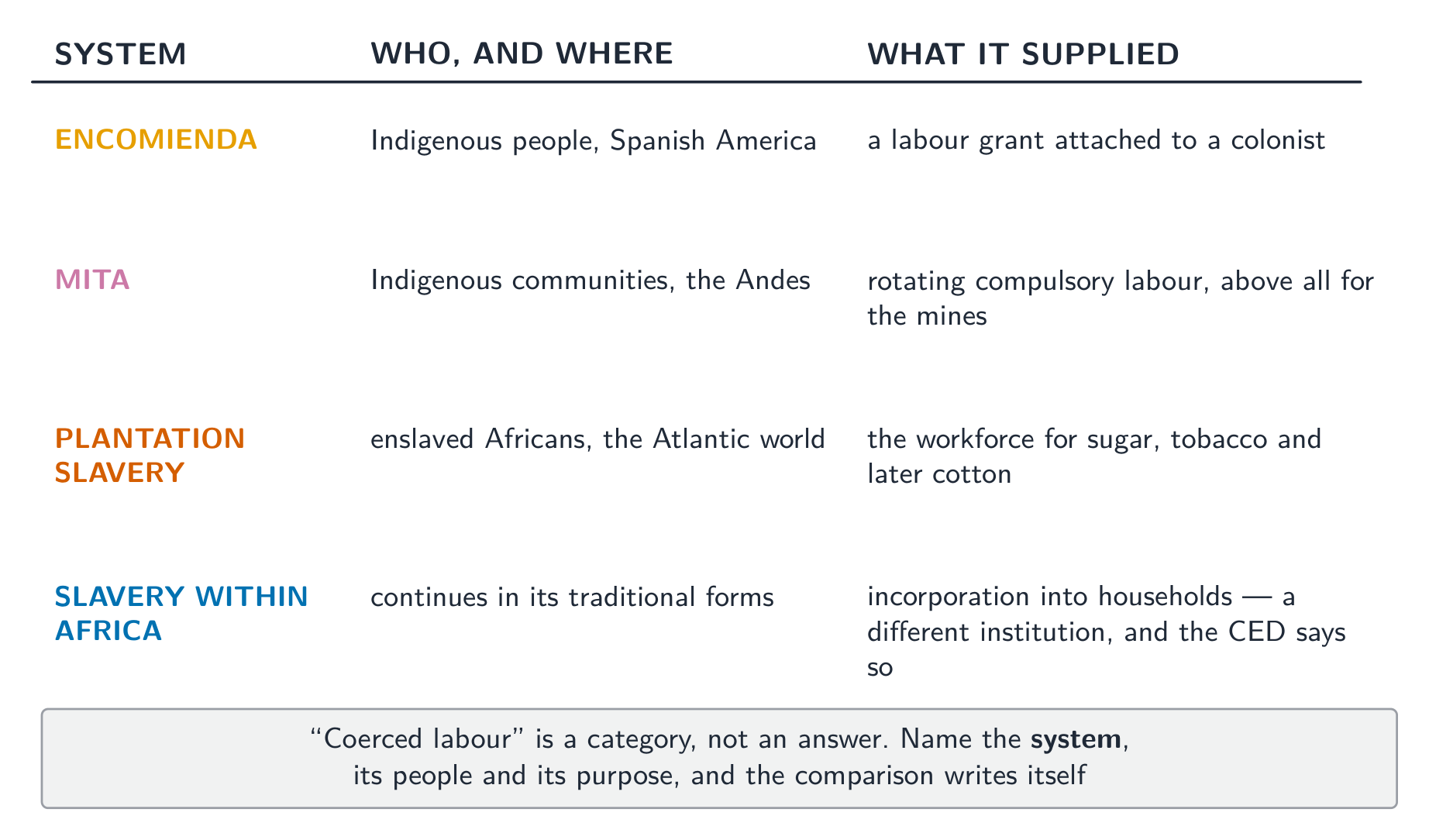
In the Americas the pattern was different. Colonial economies depended on agriculture and on coerced labour 强制劳动:

  • Enslavement in Africa continued in its traditional forms, including incorporation into households.
  • The growth of the plantation economy 种植园经济 increased demand for enslaved labour, and the Atlantic slave trade expanded enormously to supply it.
  • Systems such as the encomienda and mita 米塔制 compelled Indigenous labour.
日本語

ヨーロッパ人はアフリカおよびアジアに利益をもたらす交易所を設立し、政治的、宗教的、経済的対立に駆られて美洲での植民化を進めた。

既存の国家が強力な地域では、ヨーロッパ人は征服ではなく交易を選択した:ポルトガルの arrival による混乱にもかかわらず、インド洋の既存の交易ネットワークは継続し、アジア諸国がほぼすべての条件を決定した。

美洲ではパターンが異なった。植民地経済は農業および強制労働に依存していた:

  • アフリカでの奴隷化は伝統的な形態を維持し、家庭への組み込みなどが含まれた。
  • プランテーション経済の発展により奴隷労働の需要が増加し、それを供給するために大西洋奴隷貿易が劇的に拡大した。
  • エンコミエンダやミタなどの制度が先住民労働を強要した。
4つの強制労働システムは、各々が誰に、どこで、何を供給したかによって区別される
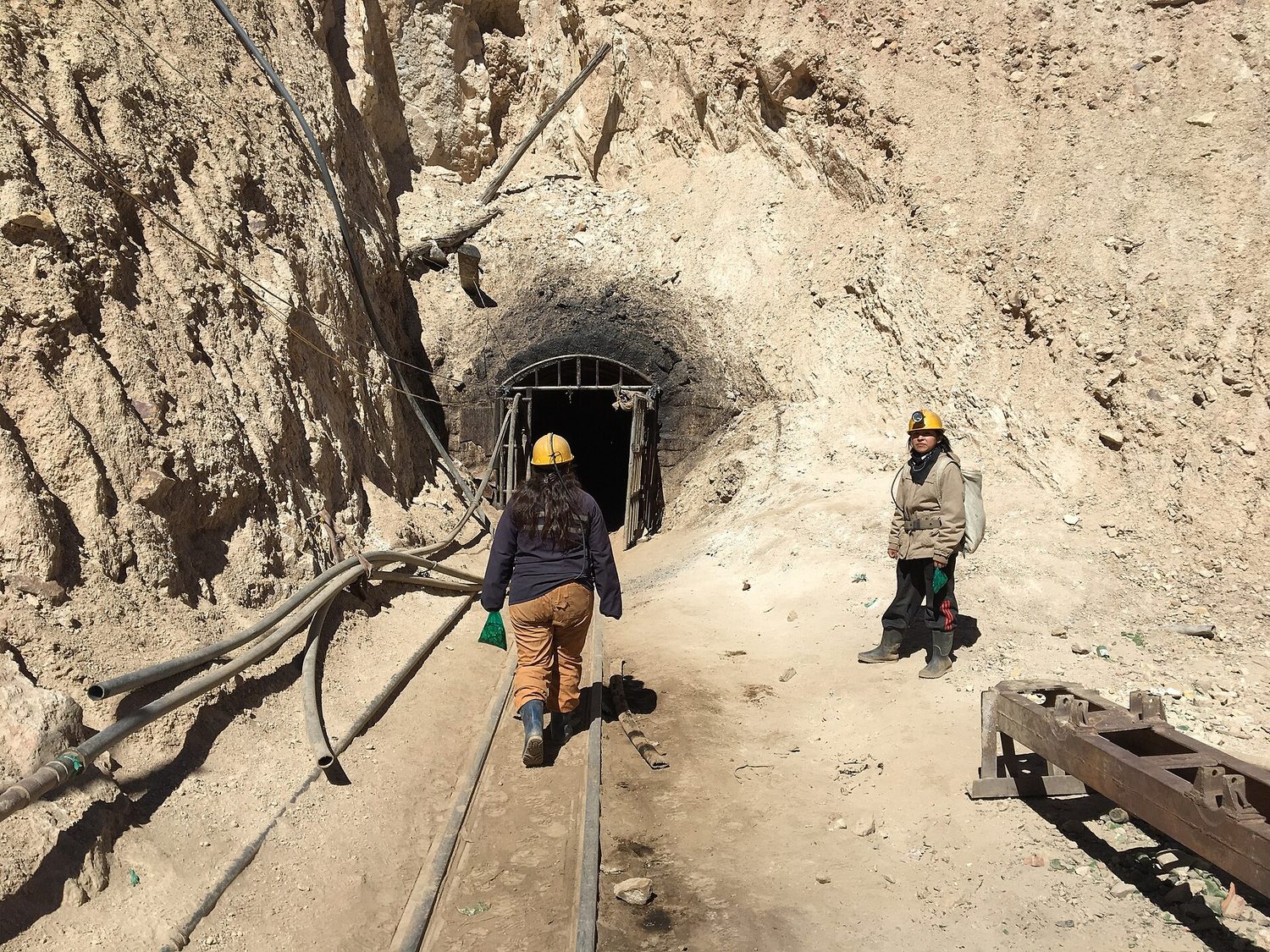
プ託シのセロ・リコ——ミタ労働制度が組織して作業させようとした山
Explore · ⁨探索⁩

Tell the coerced-labour systems apart · ⁨強制労働システムを区別せよ⁩

'Coerced labour' is a category, not an answer: name the system, its people and its purpose. · ⁨'強制労働'はカテゴリであり答えではない。システム名、対象者、目的を名指しせよ。⁩

Vocabulary · ⁨語彙⁩ Train · ⁨練習する⁩
English 日本語
coerced labour/ˌkəʊˈɜːst ˈleɪbə/ 強制労働
plantation economy/plænˈteɪʃn ɪˈkɒnəmi/ プランテーション経済
mita/ˈmiːtə/ ミータ制度
Mercantilist/ˈmɜːkæntɪlɪst/ 重商主義的
Atlantic trading system/ətˈlæntɪk ˈtreɪdɪŋ ˈsɪstəm/ 大西洋貿易システム
social hierarchies/ˈsəʊʃl ˈhaɪərɑːkiz/ 社会階層
rebellion/rɪˈbelɪən/ 反乱
maroon communities/məˈruːn kəˈmjuːnɪtiz/ マロオンコミュニティ(逃亡奴隷共同体)
4.5 4.7

Maritime Empires Maintained · ⁨海洋帝国の維持⁩

Syllabus · ⁨シラバス⁩
English

4.5 Maritime Empires Maintained and Developed

Thematic Focus (GOV): Governance — A variety of internal and external factors contribute to state formation, expansion, and decline. Governments maintain order through a variety of administrative institutions, policies, and procedures, and governments obtain, retain, and exercise power in different ways and for different purposes.

Thematic Focus (ECN): Economics Systems — As societies develop, they affect and are affected by the ways that they produce, exchange, and consume goods and services.

Thematic Focus (CDI): Cultural Developments and Interactions — The development of ideas, beliefs, and religions illustrates how groups in society view themselves, and the interactions of societies and their beliefs often have political, social, and cultural implications.

Learning Objective Unit 4.H: Explain how rulers employed economic strategies to consolidate and maintain power throughout the period from 1450 to 1750.

  • KC-4.1.IV.C Mercantilist policies and practices were used by European rulers to expand and control their economies and claim overseas territories. Joint-stock companies, influenced by these mercantilist principles, were used by rulers and merchants to finance exploration and were used by rulers to compete against one another in global trade.
  • KC-4.3.III.ii Economic disputes led to rivalries and conflict between states.

Learning Objective Unit 4.I: Explain the continuities and changes in networks of exchange from 1450 to 1750. THEMATIC FOCUS Social Interactions and Organization SIO The process by which societies group their members and the norms that govern the interactions between these groups and between individuals influence political, economic, and cultural institutions and organization. LEARNING OBJECTIVE

  • KC-4.1.IV.D.i The Atlantic trading system involved the movement of goods, wealth, and labor, including enslaved persons.
  • KC-4.1.IV The new global circulation of goods was facilitated by chartered European monopoly companies and the global flow of silver, especially from Spanish colonies in the Americas, which was used to purchase Asian goods for the Atlantic markets and satisfy Chinese demand for silver. Regional markets continued to flourish in Afro-Eurasia by using established commercial practices and new transoceanic and regional shipping services developed by European merchants.
  • KC-4.2.II.A Peasant and artisan labor continued and intensified in many regions as the demand for food and consumer goods increased. HISTORICAL DEVELOPMENTS

Learning Objective Unit 4.J: Explain how political, economic, and cultural factors affected society from 1450 to 1750.

  • KC-4.2.III.C Some notable gender and family restructuring occurred, including demographic changes in Africa that resulted from the trade of enslaved persons.
  • KC-4.1.IV.D.ii The Atlantic trading system involved the movement of labor—including enslaved persons and the mixing of African, American, and European cultures and peoples, with all parties contributing to this cultural synthesis.

Learning Objective Unit 4.K: Explain the similarities and differences in how various belief systems affected societies from 1450 to 1750.

  • KC-4.1.VI In some cases, the increase and intensification of interactions between newly connected hemispheres expanded the reach and furthered development of existing religions, and contributed to religious conflicts and the development of syncretic belief systems and practices.

Illustrative examples:

  • Competition over trade routes:
    • Muslim–European rivalry in the Indian Ocean
    • Moroccan conflict with the Songhai Empire
  • (CONT’D) Increased peasant and artisan labor:
    • Western Europe— wool and linen
    • India—cotton
    • China—silk
日本語

4.5 海洋帝国の維持と発展

テーマの焦点(GOV): 統治 — 多様な内外的要因が国家の形成、拡大、衰退に寄与する。政府は多様な行政機関、政策、手続きを通じて秩序を維持し、異なる方法・目的で権力を獲得・保持・行使する。

テーマ別焦点(ECN):経済システム — 社会が発展するにつれて、商品およびサービスの生産、交換、消費のあり方に影響を与え、かつそれらに影響される。

テーマの焦点(CDI): 文化的発展と相互作用 — 思想、信仰、宗教の発展は、社会内の集団が自らをどのように認識しているかを示しており、社会やその信念の相互作用は政治的、社会的、文化的な影響を及ぼすことが往往ある。

学習目標 ユニット4.H: 1450年から1750年の期間を通じて、統治者が権力を強化・維持するために経済戦略をどのように活用したかを説明せよ。

  • KC-4.1.IV.C 重商主義政策および実践は、ヨーロッパの統治者によって経済の拡大と統制、海外領土の獲得のために用いられた。重商主義の原則に影響を受けた合資会社は、統治者や商人によって探検の資金調達に利用され、また統治者同士が世界的な貿易で競うために用いられた。
  • KC-4.3.III.ii 経済紛争は、国家間の対立と衝突を引き起こした。

学習目標 ユニット4.I: 1450年から1750年の期間における交流ネットワークの変化と継続性を説明せよ。テーマ別焦点 社会的相互作用と組織 SIO 社会が構成員をどう集団化し、これらの集団間および個人間の相互作用を規律する規範が、政治、経済、文化的機構および組織に影響を与えるか。学習目標

  • KC-4.1.IV.D.i 大西洋通商システムには、商品、富、労働(奴隷を含む)の移動が含まれていた。
  • KC-4.1.IV 新たな世界的な商品の循環は、特許状を付与されたヨーロッパの独占企業および銀の世界的な流れによって促進された。特に美洲のスペイン植民地からの銀は、大西洋市場向けのアジア商品購入や中国の銀需要を満たすために使用された。アフロ・ユーラシアでは、確立された商業慣行およびヨーロッパの商人によって開発された新たな越洋・地域輸送サービスを活用して、地域市場は依然として繁栄を極めた。
  • KC-4.2.II.A 食料および消費財への需要増に伴い、多くの地域で農民および職人の労働は継続・強化された。歴史的発展

学習目標 ユニット4.J: 1450年から1750年の期間において、政治、経済、文化的要因が社会にどのような影響を与えたかを説明せよ。

  • KC-4.2.III.C 性別および家族構造の変革が生じ、その中には奴隷取引によるアフリカの人口変動も含まれる。
  • KC-4.1.IV.D.ii 大西洋通商システムには、労働の移動(奴隷を含む)およびアフリカ、美洲、ヨーロッパの文化・民族の混合が含まれ、すべての当事者がこの文化的合成に寄与した。

学習目標 ユニット4.K: 1450年から1750年の期間において、異なる信仰体系が社会に与えた影響の類似点と相違点を説明せよ。

  • KC-4.1.VI 場合によっては、 newly connected hemispheres(新たに結びついた半球)間の相互作用の増加と強化により、既存の宗教の波及範囲が拡大し発展が進み、宗教紛争の勃発や折衷的信仰体系および実践の発展にも寄与した。

具体例:

  • 航路をめぐる競争:
    • インド洋におけるムスリムとヨーロッパの対立
    • モロッコとソンハイ帝国の紛争
  • (続)農民および職人の労働の増加:
    • 西ヨーロッパ—羊毛およびリネン
    • インド—綿
    • 中国—絹
English

4.7 Changing Social Hierarchies from1450 to 1750

Thematic Focus (SIO): Social Interactions and Organization — The process by which societies group their members and the norms that govern the interactions between these groups and between individuals influence political, economic, and cultural institutions and organization.

Learning Objective Unit 4.M: Explain how social categories, roles, and practices have been maintained or have changed over time.

  • KC-4.3.I.B Many states, such as the Mughal and Ottoman empires, adopted practices to accommodate the ethnic and religious diversity of their subjects or to utilize the economic, political, and military contributions of different ethnic or religious groups. In other cases, states suppressed diversity or limited certain groups’ roles in society, politics, or the economy.
  • KC-4.2.III.A Imperial conquests and widening global economic opportunities contributed to the formation of new political and economic elites, including in China with the transition to the Qing Dynasty and in the Americas with the rise of the Casta system.
  • KC-4.2.III.B The power of existing political and economic elites fluctuated as the elites confronted new challenges to their ability to affect the policies of the increasingly powerful monarchs and leaders.

Illustrative examples:

  • Differential treatment of groups in society, politics, and the economy:
    • Expulsion of Jews from Spain and Portugal; the acceptance of Jews in the Ottoman Empire
    • Restrictive policies against Han Chinese in Qing China
    • Varying status of different classes of women within the Ottoman Empire
  • Existing elites:
    • Ottoman timars
    • Russian boyars
    • European nobility
日本語

4.7 1450年から1750年にかけての変化する社会的階層

テーマ別焦点(SIO):社会的相互作用と組織化 — 社会が構成員をまとめ、これらの集団間および個人間の相互作用を支配する規範は、政治、経済、文化の制度や組織に影響を与える。

学習目標 ユニット4.M: 社会的カテゴリー、役割、実践が時代を通じてどのように維持され、あるいは変化したかを説明せよ。

  • KC-4.3.I.B ムガル帝国やオスマン帝国などの多くの国家は、臣民の民族的・宗教的多様性に対応するための実践を採用したり、異なる民族や宗教グループの経済的、政治的、軍事的貢献を活用したりした。他方、国家は多様性を弾圧したり、特定のグループの社会、政治、経済における役割を制限したりすることもあった。
  • KC-4.2.III.A 帝国の征服とグローバルな経済機会の拡大は、新しい政治的・経済的エリート層の形成に寄与した。中国では清王朝への移行により、アメリカ大陸ではカスター制度の台頭によってである。
  • KC-4.2.III.B 既存の政治的・経済的エリート層の権力は変動した。彼らは、次第に権力を強めていく君主や指導者たちの政策に影響を与える能力に対する新たな挑戦に直面したからである。

具体例:

  • 社会、政治、経済におけるグループごとの差別的处理:
    • スペインおよびポルトガルからのユダヤ人の追放;オスマン帝国におけるユダヤ人の受容
    • 清中国における漢民族に対する制限政策
    • オスマン帝国における女性階級ごとの異なる地位
  • 既存のエリート層:
    • オスマンのティマール制
    • ロシアのボヤール
    • 欧州の貴族

Source: College Board AP Course and Exam Description · ⁨出典: College Board AP コースおよび試験説明書⁩

English

Mercantilist 重商主义 policies were used by European rulers to expand and control their economies: colonies existed to supply raw materials and buy finished goods, and trade was directed through the mother country.

The Atlantic trading system 大西洋贸易体系 moved goods, wealth, and people between Europe, Africa, and the Americas - the pattern usually taught as triangular trade, though real routes were more complex.

Economic disputes led to rivalries and conflict between states, and commercial competition became a standing cause of European war.

Colonial societies developed new social hierarchies 社会等级, defined by ancestry and by place of birth - the Spanish casta system being the most formally codified.

日本語

重商主義政策は、ヨーロッパの支配者によって自国の経済を拡大・統制するために用いられました。植民地は原産物資の供給と完成品購買のため存在し、貿易は本土を通じて管理されました。

大西洋交易システムは、ヨーロッパ、アフリカ、アメリカ間の物品、財、人々の移動を行いました。これは通常「三角貿易」として教えられますが、実際のルートはより複雑でした。

経済紛争は国間での対立と衝突を引き起こし、商業競争はヨーロッパの戦争における恒常的な原因となりました。

植民地社会では、系譜や出生地によって定義される新たな社会的階層が発達しました。スペインのカスタ制度が最も形式的に法典化されたものです。

4.6

Internal and External Challenges · ⁨内部および外部の課題⁩

Syllabus · ⁨シラバス⁩
English

4.6 Internal and External Challenges to State Power from 1450 to 1750

Thematic Focus (GOV): Governance — A variety of internal and external factors contribute to state formation, expansion, and decline. Governments maintain order through a variety of administrative institutions, policies, and procedures, and governments obtain, retain, and exercise power in different ways and for different purposes.

Learning Objective Unit 4.L: Explain the effects of the development of state power from 1450 to 1750.

  • KC-4.3.III.iii State expansion and centralization led to resistance from an array of social, political, and economic groups on a local level.
  • KC-5.3.III.C Enslaved persons challenged existing authorities in the Americas through organized resistance.

Illustrative examples:

  • Local resistance:
    • Pueblo Revolts
    • Fronde
    • Cossack revolts
    • Maratha conflict with Mughals
    • Ana Nzinga’s resistance (as ruler of Ndongo and Matamba)
    • Metacom’s War (King Philip’s War)
  • Resistance of enslaved persons:
    • The establishment of Maroon societies in the Caribbean and Brazil
    • Resistance of enslaved persons in North America
日本語

4.6 1450年から1750年にかけての国家権力に対する内外の挑戦

テーマの焦点(GOV): 統治 — 多様な内外的要因が国家の形成、拡大、衰退に寄与する。政府は多様な行政機関、政策、手続きを通じて秩序を維持し、異なる方法・目的で権力を獲得・保持・行使する。

学習目標 ユニット4.L: 1450年から1750年の期間における国家権力の発展がもたらした影響を説明せよ。

  • KC-4.3.III.iii 国家の拡張および集権化は、地域レベルにおいて多様な社会、政治、経済グループからの抵抗を引き起こした。
  • KC-5.3.III.C 奴隷たちは、組織的な抵抗を通じて美洲における既存の権威に挑戦した。

具体例:

  • 地域の抵抗:
    • プエブロ蜂起
    • フロンデ
    • コサック蜂起
    • マラータとムガル帝国の紛争
    • アナ・ジンガの抵抗(アンゴラおよびマトambaの君主として)
    • メトコム戦争(キングフィリップ戦争)
  • 奴隷による抵抗:
    • カリブ海およびブラジルにおけるクイロンゴ(逃亡奴隷共同体)の成立
    • 北米における奴隷の抵抗

Source: College Board AP Course and Exam Description · ⁨出典: College Board AP コースおよび試験説明書⁩

English

Rulers everywhere faced resistance. Enslaved people resisted through rebellion 起义 and maroon communities 逃奴社群; Indigenous peoples resisted colonial demands; peasants and religious groups challenged state power across Eurasia.

日本語

あらゆる場所の支配者は抵抗に直面しました。奴隷たちは反乱やマロオン共同体を通じて抵抗し、先住民は植民地の要求に抵抗しました。農民や宗教集団はユーラシア全域で国家権力に挑戦しました。

反乱とマロナージュは、一方的な秩序に対する2つの異なる反応です
4.8

Continuity and Change from 1450 to 1750 · ⁨1450年から1750年までの継続と変化⁩

Syllabus · ⁨シラバス⁩
English

4.8 Continuity and Change from 1450 to 1750

Learning Objective Unit 4.N: Explain how economic developments from 1450 to 1750 affected social structures over time.

  • KC-4.1 The interconnection of the Eastern and Western Hemispheres, made possible by transoceanic voyaging, transformed trade and had a significant social impact on the world.
    • KC-4.1.II Knowledge, scientific learning, and technology from the Classical, Islamic, and Asian worlds spread, facilitating European technological developments and innovation.
    • KC-4.1.II.A The developments included the production of new tools, innovations in ship designs, and an improved understanding of regional wind and currents patterns—all of which made transoceanic travel and trade possible.
  • KC-4.2 Although the world’s productive systems continued to be heavily centered on agriculture, major changes occurred in agricultural labor, the systems and locations of manufacturing, gender and social structures, and environmental processes.
    • KC-4.2.II The demand for labor intensified as a result of the growing global demand for raw materials and finished products. Traditional peasant agriculture increased and changed in nature, plantations expanded, and the Atlantic slave trade developed and intensified.
  • KC-4.3 Empires achieved increased scope and influence around the world, shaping and being shaped by the diverse populations they incorporated.
    • KC-4.3.III.ii Economic disputes led to rivalries and conflict between states.
日本語

4.8 1450年から1750年の継続と変化

学習目標 ユニット4.N: 1450年から1750年までの経済発展が、長期的に社会構造にどのように影響を与えたかを説明する。

  • KC-4.1 大西洋越洋航海によって可能になった東半球と西半球の相互接続は、貿易を変化させ、世界に対して重要な社会的影響をもたらした。
    • KC-4.1.II 古典期、イスラム世界、アジア世界からの知識、科学的学び、技術が広がり、ヨーロッパの技術的発展と革新を促進した。
    • KC-4.1.II.A これらの発展には、新しい道具の生産、船の設計における革新、地域的な風向や海流パターンに対する理解の向上が含まれており、これらすべてが大西洋越洋航行と貿易を可能にした。
  • KC-4.2 世界の生産システムが依然として農業に強く依存し続けていたにもかかわらず、農業労働、製造業のシステムと場所、性別と社会構造、環境プロセスにおいて主要な変化が生じた。
    • KC-4.2.II 原材料および完成品に対する世界的な需要の増加に伴い、労働力の需要が高まった。伝統的な農民の農業は増大し性質も変化した。プランテーションは拡大し、大西洋奴隷貿易は発展して激化した。
  • KC-4.3 帝国は世界各地でより広い範囲と影響力を獲得し、取り込んだ多様な人口によって形作られると同時に、それ自身もまた人口によって形作られた。
    • KC-4.3.III.ii 経済的対立が、国家間の競合と衝突を生み出した。

Source: College Board AP Course and Exam Description · ⁨出典: College Board AP コースおよび試験説明書⁩

English

The unit's reasoning skill is continuity and change. The strongest answers hold both: connection between hemispheres was genuinely new, while the dominance of agriculture, coerced labour, and land empires continued.

Worked example (a real AP exam question). AP World short-answer questions in this unit ask, for example, to "Explain one effect of the Columbian Exchange on the Americas" and "…on Afro-Eurasia." A full-mark pair states the effect and the mechanism for each: "In the Americas, transferred diseases such as smallpox caused a demographic collapse, which created the labour shortage that European colonisers met by expanding the Atlantic slave trade. In Afro-Eurasia, American crops such as the potato and maize improved nutrition and contributed to population growth." Notice the shape: effect questions want the consequence traced, and the two halves must not be the same answer twice.

日本語

この単元の推理スキルは継続と変化です。最良の回答は両方を含みます:半球間のつながりは本質的に新しいものでありながら、農業の優位性、強制労働、土地帝国の支配は継続しました。

** worked example (AP試験の実際の問題)。** この単元のAP世界史短答問題は、例えば「コロンブス交換がアメリカに与えた影響の1つを説明せよ」および「…アフロ・ユーラシアに与えた影響」を問うものです。満点のペアは、それぞれの影響とメカニズムを明記します:「アメリカでは、痘瘡などの移転疾病が人口崩壊を引き起こし、これが労働力不足を生み出しました。ヨーロッパの植民地統治者は、大西洋奴隷貿易の拡大によってこれを解決しました。アフロ・ユーラシアでは、ジャガイモやトウモロコシなどのアメリカ作物が栄養状態を改善し、人口増加に寄与しました。」形状に注意してください:効果に関する質問は結果を追跡することを求め、2つの半分は同じ答えを繰り返してはいけません。

4.8

Exam tips · ⁨試験対策⁩

English
  • Explain the voyages with borrowed technology plus state support, not with individual explorers.
  • Keep the Columbian Exchange two-directional and asymmetrical: population fell in the Americas and rose in Afro-Eurasia.
  • Where Asian states were strong, Europeans traded; where disease had shattered societies, they conquered. That contrast answers many questions.
  • Mercantilism is the policy, the Atlantic system is the flow, and coerced labour is what made the plantation economy work.
  • Always include resistance - rebellion, maroon communities, Indigenous refusal - since it is examinable and often omitted.
  • On effect questions, trace the consequence. A named change with no mechanism is only half the mark.
日本語
  • 個人の探検家ではなく、借用された技術+国家支援による航海を説明すること。
  • コロンブス交換を双方向的かつ非対称的に保つこと:人口はアメリカで減少し、アフロ・ユーラシアで増加した。
  • アジア諸国が強かった場所では、ヨーロッパ人は貿易を行い、病気が社会を破壊した場所では征服を行った。この対比が多くの問題への解答となる。
  • 重商主義は政策であり、大西洋システムは流れであり、強制労働がプランテーション経済を機能させたものである。
  • 常に抵抗を含むこと(反乱、マロオン共同体、先住民の拒否など)。これは出題対象であり、しばしば省略されがちである。
  • 効果に関する質問では、結果を追跡すること。メカニズムを伴わない名指しの変化のみでは、満点の半分しか得られない。

Interactive lessons on this topic · ⁨このトピックのインタラクティブ授業⁩

Work through it step by step, with instant-check exercises. · ⁨一歩ずつ進め、即時チェック付きの問題で学習します。⁩

Past Papers · ⁨過去問⁩

More topics in AP World History: Modern · ⁨AP 世界史:近代⁩ · ⁨AP World History: Modern · ⁨AP 世界史:近代⁩ の他のトピック⁩

Log in or create account · ⁨ログインまたはアカウント作成⁩

IGCSE, A-Level & AP