English
Learning Objective 15.1.A: Describe the properties and behavior of an object that exhibits both particle-like and wave-like behavior.
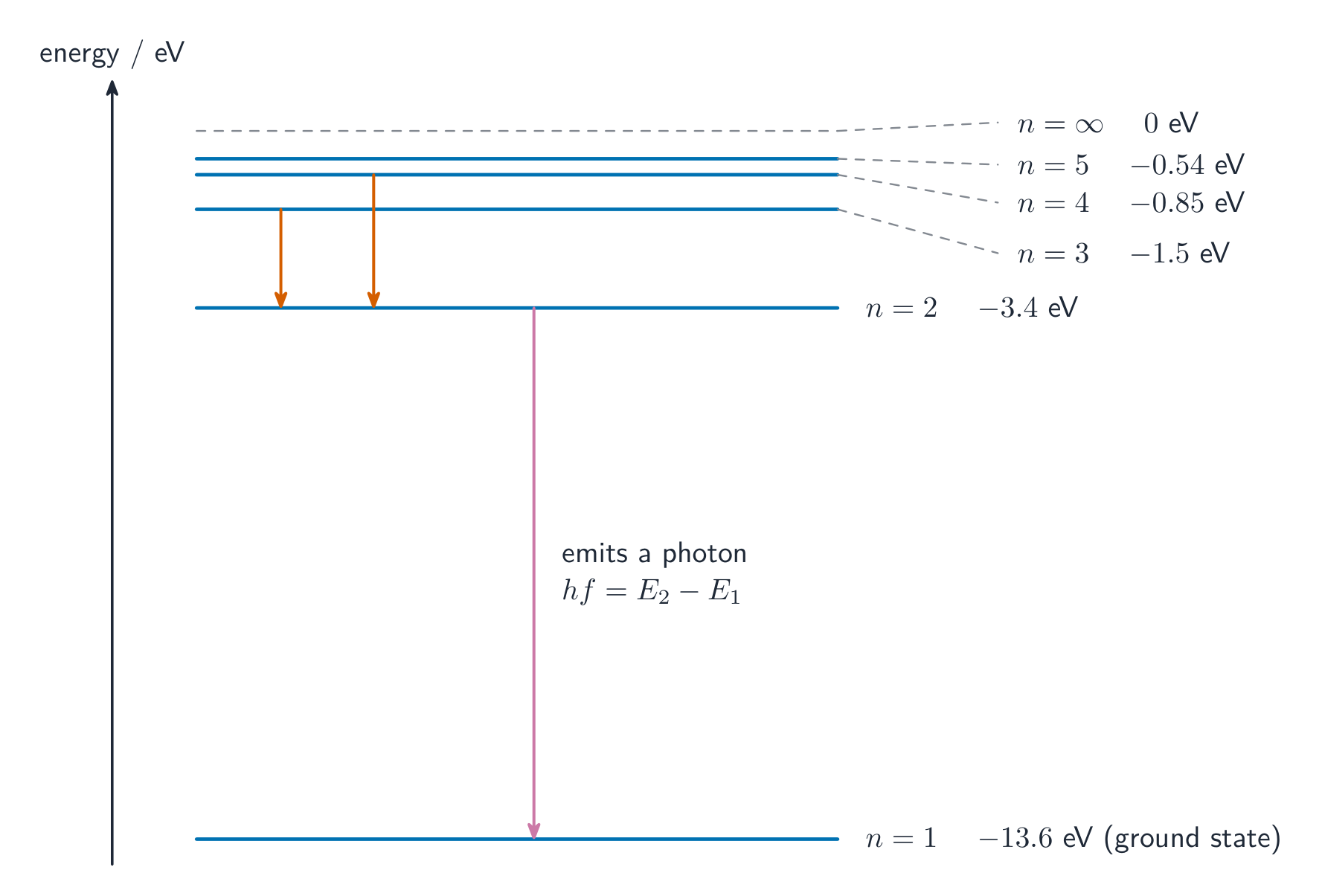
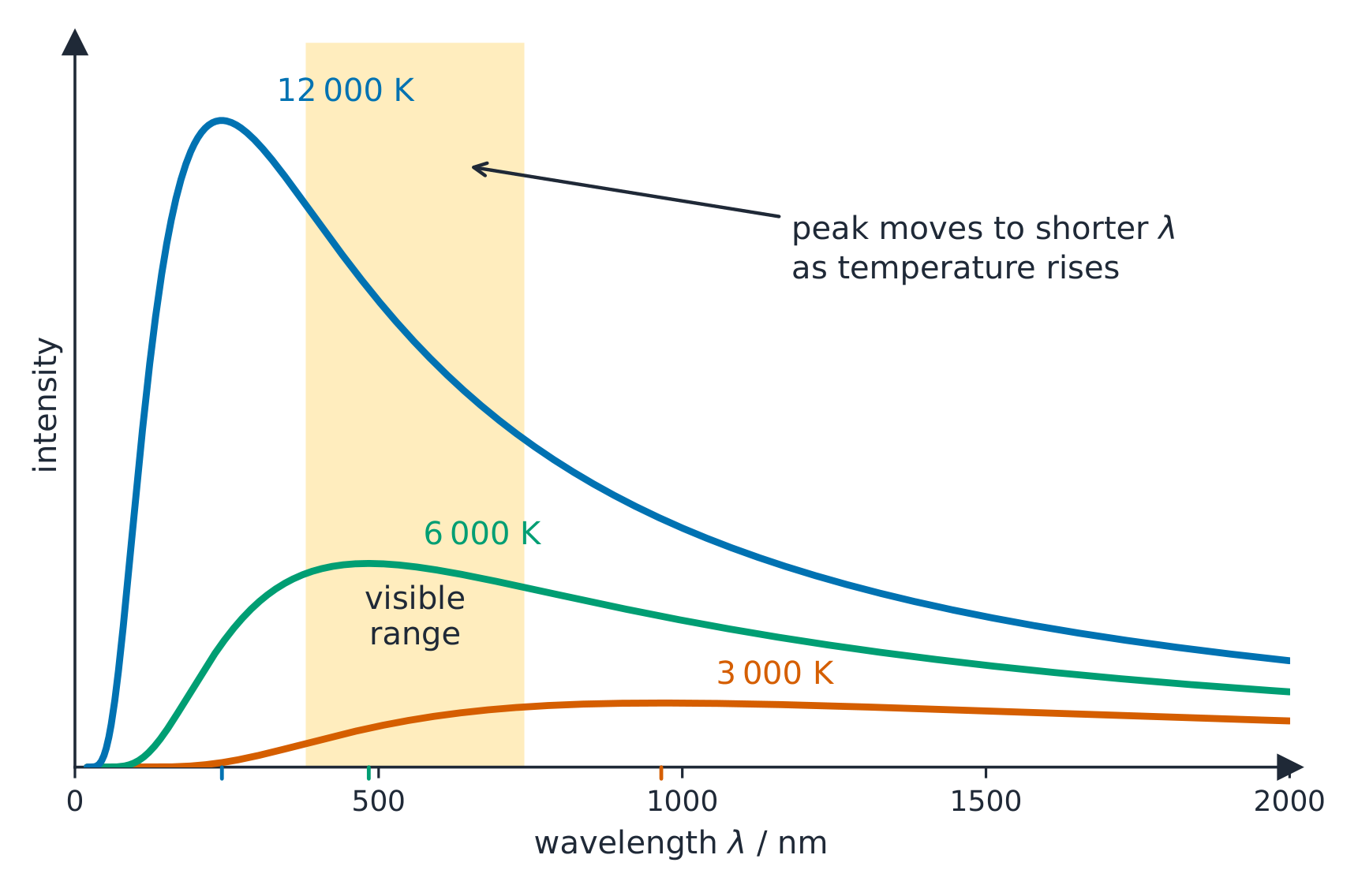
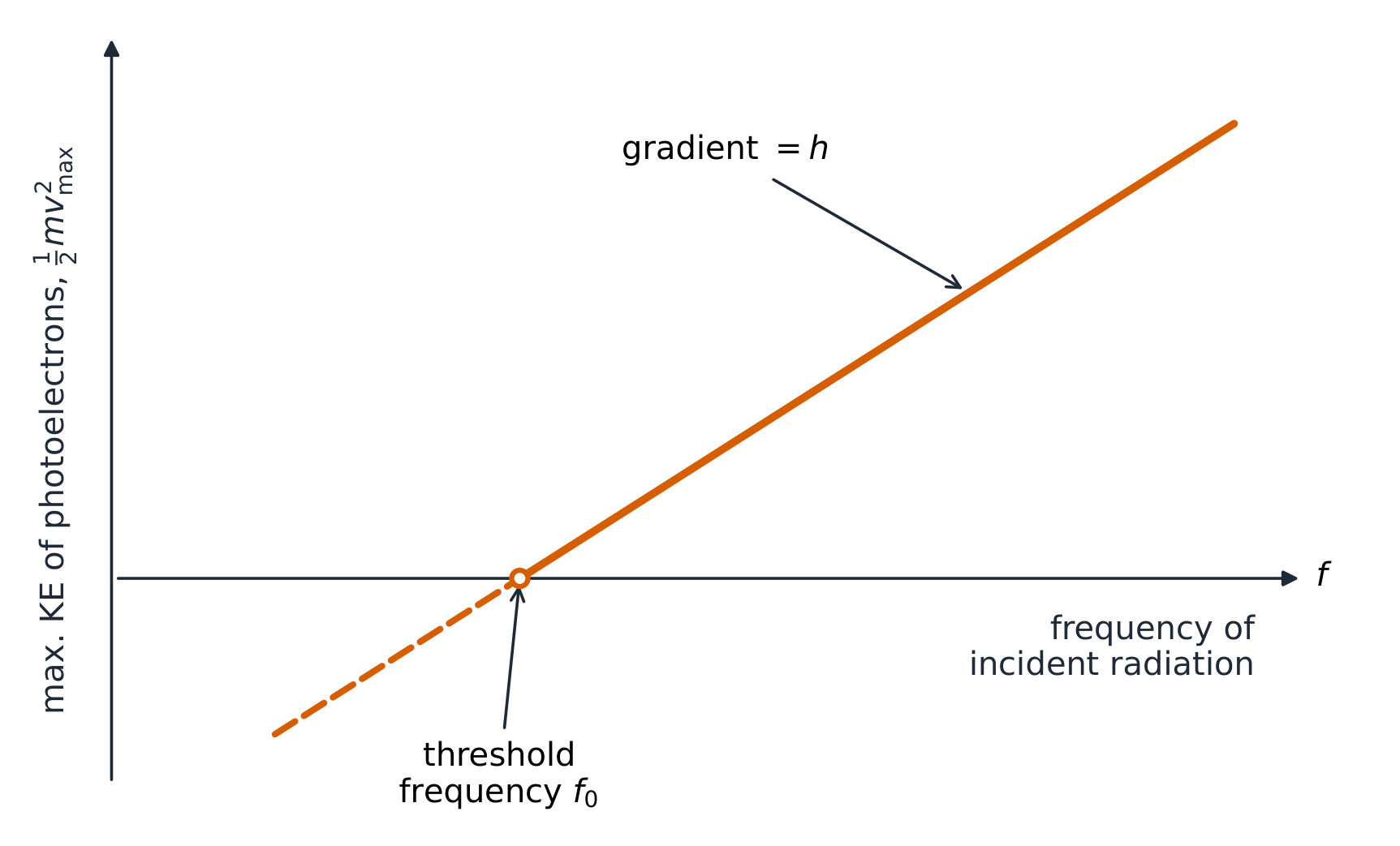
- 15.1.A.1 Quantum theory was developed to explain observations of matter and energy that could not be explained using classical mechanics. These phenomena include, but are not limited to, atomic spectra, blackbody radiation, and the photoelectric effect.
- 15.1.A.1.i Quantum theory is necessary to describe the properties of matter at atomic and subatomic scales.
- 15.1.A.1.ii In quantum theory, fundamental particles can exhibit both particle-like and wave-like behavior.
- 15.1.A.2 Light can be modeled both as a wave and as discrete particles, called photons.
- 15.1.A.2.i A photon is a massless, electrically neutral particle with energy proportional to the photon's frequency.
- Relevant equations:
- $E = hf$
- $\lambda = \dfrac{c}{f}$
- 15.1.A.2.ii Photons travel in straight lines unless they interact with matter.
- 15.1.A.2.i A photon is a massless, electrically neutral particle with energy proportional to the photon's frequency.
- 15.1.A.3 The speed of a photon depends on the medium through which the photon travels.
- 15.1.A.3.i The speed of all photons in free space is equal to the speed of light, $c = 3.00 \times 10^{8}$ m/s.
- 15.1.A.3.ii In general, the speed of photons through a given medium is inversely proportional to the index of refraction of that medium.
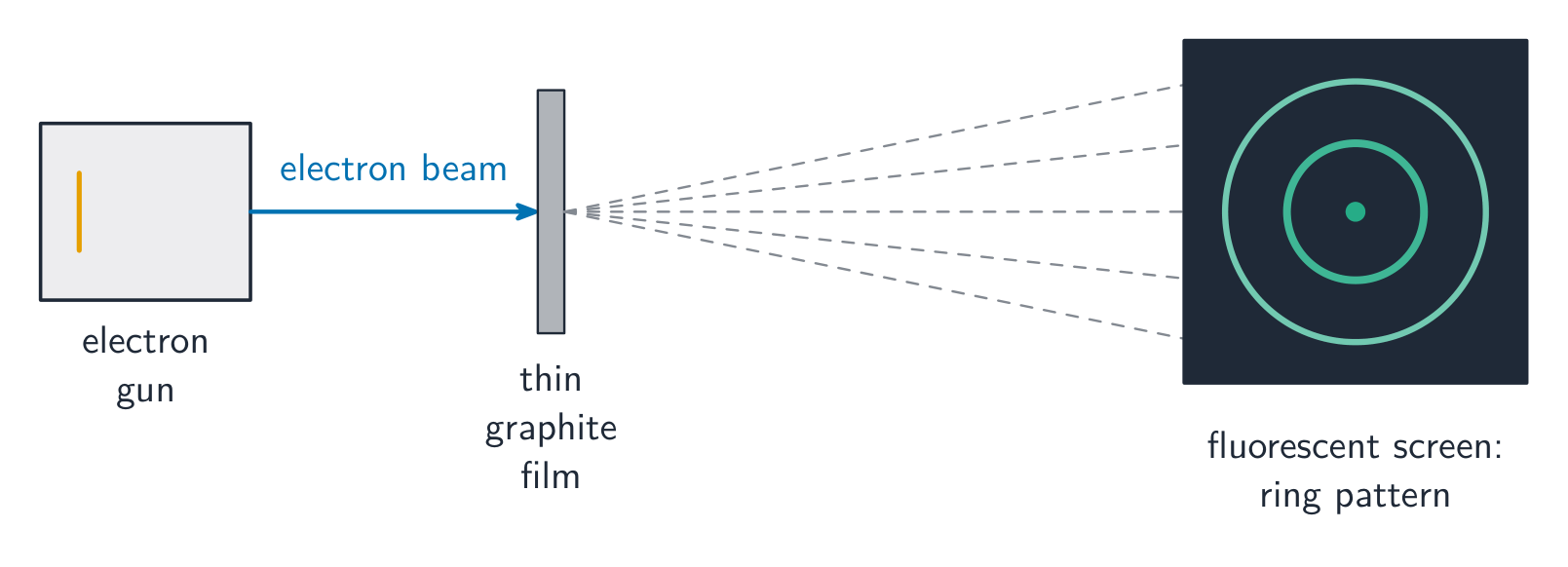
- 15.1.A.4 Particles can demonstrate wave properties, as shown by variations of Young's double-slit experiment.
- 15.1.A.4.i A wave model of matter is quantified by the de Broglie wavelength, which increases as the momentum of a particle decreases.
- Relevant equation:
- $\lambda = \dfrac{h}{p}$
- 15.1.A.4.ii Quantum theory is necessary to describe systems where the de Broglie wavelength is comparable to the size of the system.
- 15.1.A.4.i A wave model of matter is quantified by the de Broglie wavelength, which increases as the momentum of a particle decreases.
- 15.1.A.5 Values of energy and momentum have discrete, or quantized, values for bound systems described by quantum theory.
日本語
学習目標 15.1.A: 粒子としての性質と波としての性質の両方を示す物体の性質と挙動を説明する。
- 15.1.A.1 量子理論は、古典力学では説明できない物質とエネルギーの観測を説明するために発展された。これらの現象には、原子スペクトル、黒体放射、光電効果などが含まれる(これらに限定されない)。
- 15.1.A.1.i 量子理論は、原子レベルおよび亜原子レベルでの物質の性質を記述するために必要である。
- 15.1.A.1.ii 量子理論において、素粒子は粒子としての性質と波としての性質の両方を示すことができる。
- 15.1.A.2 光は波としても、光子と呼ばれる離散的な粒子としてもモデル化できる。
- 15.1.A.2.i 光子は質量を持たず電気的に中性な粒子であり、そのエネルギーは光子の周波数に比例する。
- 関連方程式:
- $E = hf$
- $\lambda = \dfrac{c}{f}$
- 15.1.A.2.ii 光子は物質と相互作用しない限り直進する。
- 15.1.A.2.i 光子は質量を持たず電気的に中性な粒子であり、そのエネルギーは光子の周波数に比例する。
- 15.1.A.3 光子の速度は、光子が通過する媒質に依存する。
- 15.1.A.3.i 真空中におけるすべての光子の速度は、光速 $c = 3.00 \times 10^{8}$ m/s に等しい。
- 15.1.A.3.ii 一般的に、特定の媒質中を通過する光子の速度は、その媒質の屈折率に反比例する。
- 15.1.A.4 粒子も波動性を示すことがあり、ヤングの二重スlit実験の変種によって実証されている。
- 15.1.A.4.i 物質の波動モデルは、ド・ブロイリー波長によって定量化される。ド・ブロイリー波長は、粒子の運動量が減少すると増加する。
- 関連方程式:
- $\lambda = \dfrac{h}{p}$
- 15.1.A.4.ii 量子理論は、ド・ブロイリー波長がシステムのサイズと同程度であるシステムを記述するために必要である。
- 15.1.A.4.i 物質の波動モデルは、ド・ブロイリー波長によって定量化される。ド・ブロイリー波長は、粒子の運動量が減少すると増加する。
- 15.1.A.5 量子理論によって記述される束縛系において、エネルギーおよび運動量の値は離散的、すなわち量子化された値をとる。