Skip to content · ⁨Lompat ke konten⁩

Cellular Energetics · ⁨Energetika Seluler⁩

AP Biology · ⁨AP Biologi⁩ · Topic 3 · ⁨Topik 3⁩

Video lesson for this topic · ⁨Pelajaran video untuk topik ini⁩ Open the video page · ⁨Buka halaman video⁩
9:13

Energetika Seluler

Perhatikan deterjen di lemari Anda. Dalam air hangat, ia menghilangkan noda makanan dalam setengah jam. Di laboratorium, pekerjaan yang sama membutuhkan asam kuat dan mendidih…

English narration · English + 中文 subtitles burned in · ⁨Narasi bahasa Inggris · Subtitle bahasa Inggris + 中文 disematkan langsung⁩

3.1

Enzymes as Biological Catalysts · ⁨Enzim sebagai Katalis Biologis⁩

Syllabus · ⁨Silabus⁩
English

Big Idea 2 — Energetics: Biological systems use energy and molecular building blocks to grow, reproduce, and maintain dynamic homeostasis.

Learning Objective 3.1.A: Explain how enzymes affect the rate of biological reactions.

  • 3.1.A.1 The structure and function of enzymes contribute to the regulation of biological processes. Enzymes are proteins that are biological catalysts that facilitate chemical reactions in cells by lowering the activation energy.
  • 3.1.A.2 For an enzyme-mediated chemical reaction to occur, the shape and charge of the substrate must be compatible with the active site of the enzyme. This is illustrated by the enzyme-substrate complex model.
Bahasa Indonesia

Ide Besar 2 — Energetika: Sistem biologis menggunakan energi dan blok bangunan molekuler untuk tumbuh, bereproduksi, dan mempertahankan homeostasis dinamis.

Tujuan Pembelajaran 3.1.A: Jelaskan bagaimana enzim mempengaruhi laju reaksi biologis.

  • 3.1.A.1 Struktur dan fungsi enzim berkontribusi pada regulasi proses biologis. Enzim adalah protein yang berfungsi sebagai katalis biologis yang memfasilitasi reaksi kimia di dalam sel dengan menurunkan energi aktivasi.
  • 3.1.A.2 Agar reaksi kimia yang dimediasi enzim terjadi, bentuk dan muatan substrat harus kompatibel dengan situs aktif enzim. Hal ini diilustrasikan oleh model kompleks enzim-substrat.
Source: College Board AP Course and Exam Description · ⁨Sumber: Deskripsi Kursus dan Ujian College Board AP⁩

English

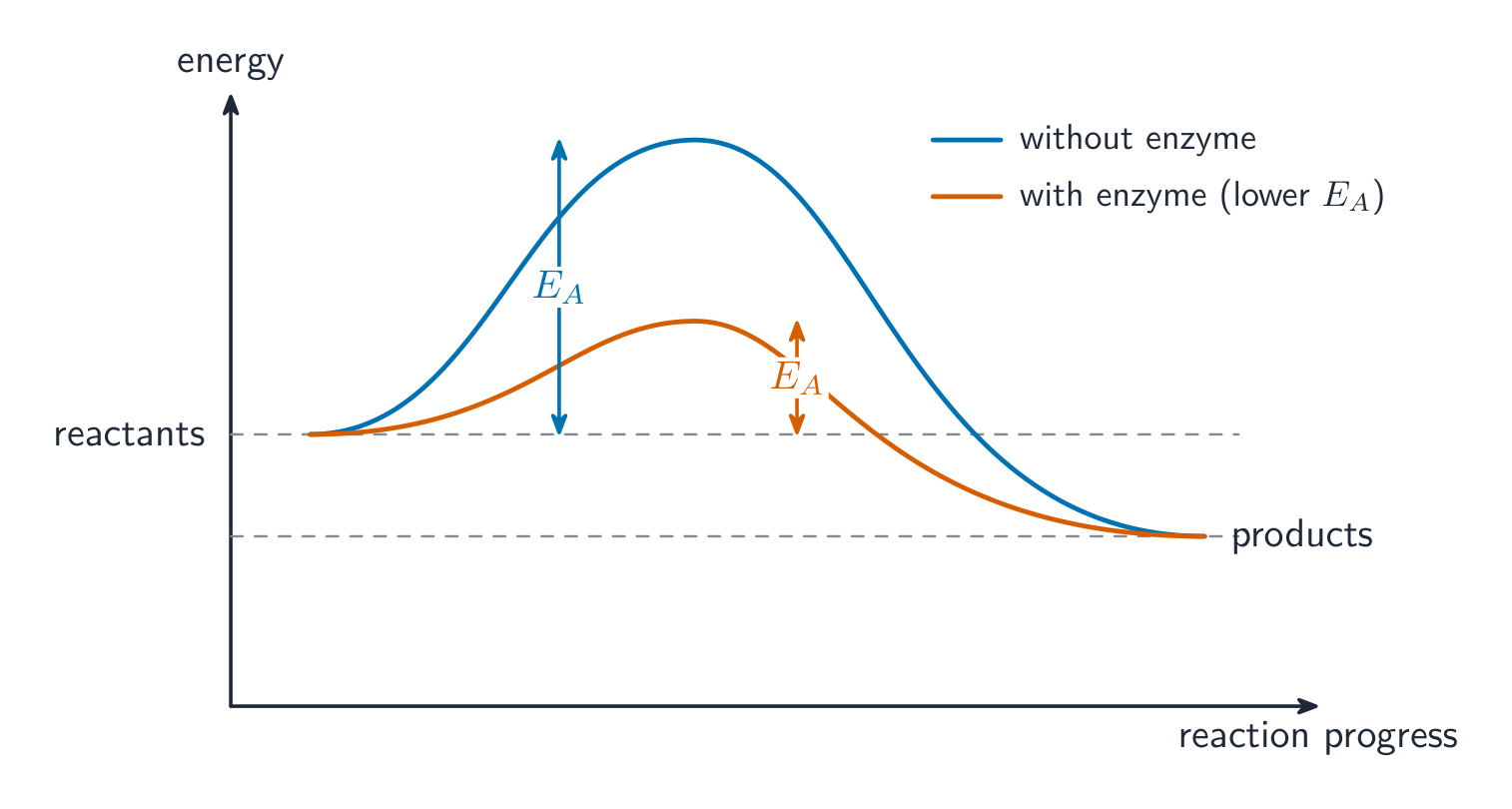
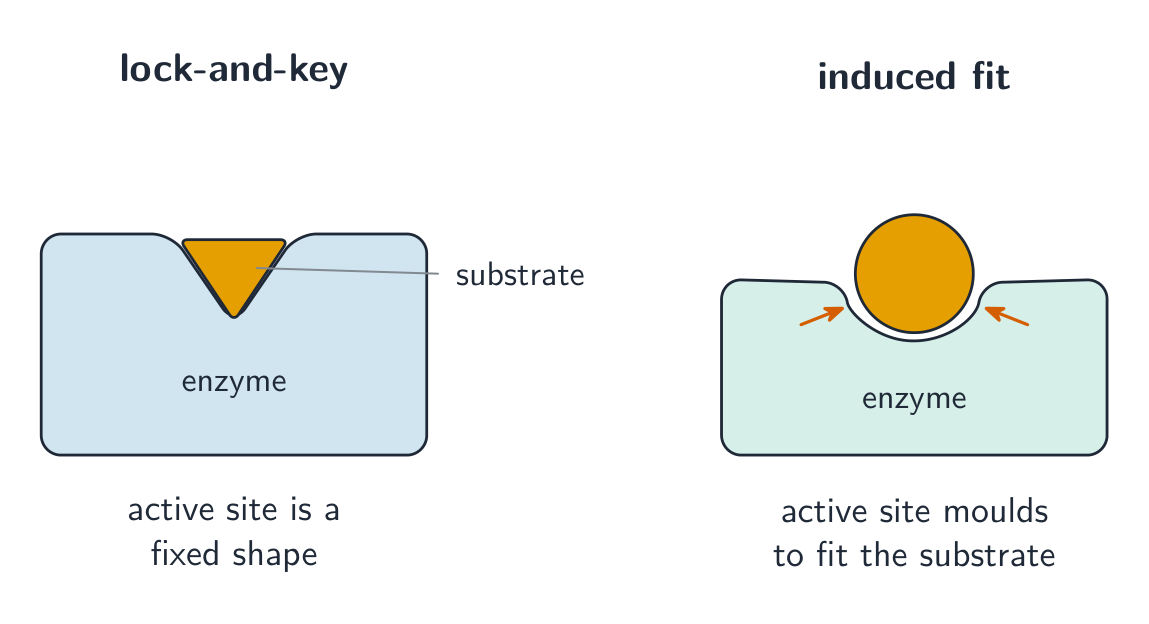
An enzyme 酶 is a protein catalyst 催化剂 that speeds a reaction by lowering its activation energy 活化能, without being used up. Each enzyme has an active site 活性位点 that binds a specific substrate 底物 (the "lock and key" or induced fit), so enzymes are highly specific. They do not change whether a reaction is favorable – only how fast it goes.

Bahasa Indonesia
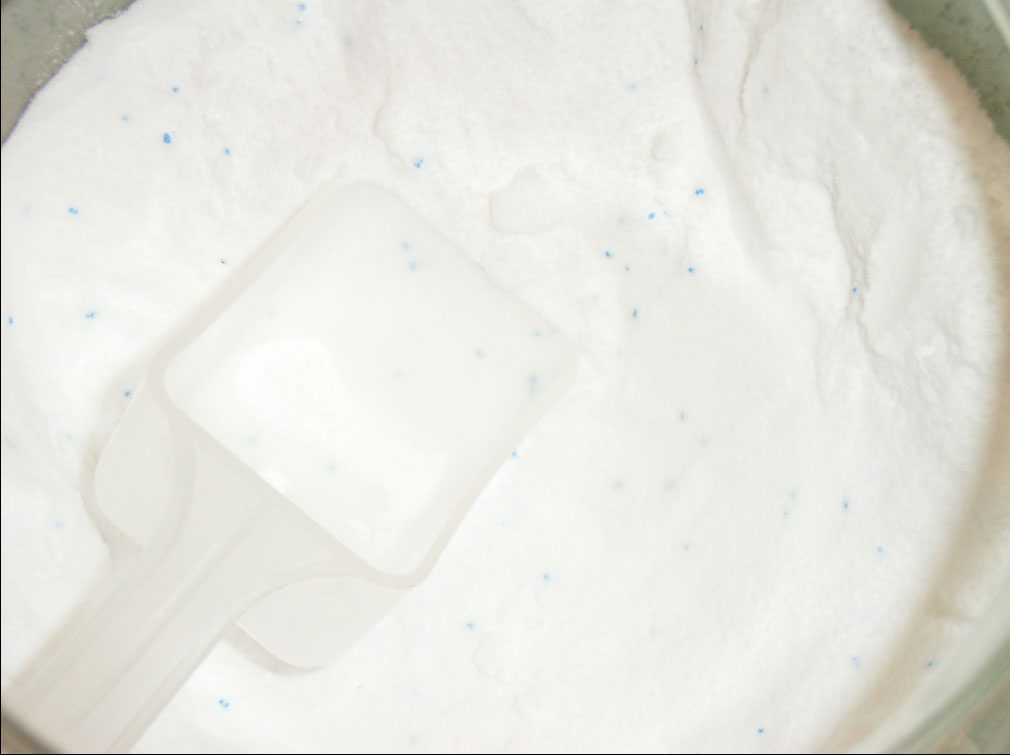
Bubuk cuci biologis menggunakan enzim yang bekerja pada suhu dan pH sedang
Bubuk cucian biologis menggunakan enzim yang bekerja pada suhu dan pH sedang

Enzim adalah katalis protein yang mempercepat reaksi dengan menurunkan energi aktivasi-nya, tanpa habis terpakai. Setiap enzim memiliki situs aktif yang mengikat substrat spesifik (model "kunci dan gembok" atau ikatan terinduksi), sehingga enzim sangat spesifik. Enzim tidak mengubah apakah suatu reaksi menguntungkan – hanya seberapa cepat reaksi itu berlangsung.

Enzim menurunkan energi aktivasi suatu reaksi
Model kunci-gembok dan ikatan terinduksi dari kerja enzim
Explore · ⁨Jelajahi⁩

Raise substrate and watch the rate saturate · ⁨Naikkan substrat dan saksikan laju mencapai titik jenuh⁩

An enzyme speeds a reaction by lowering activation energy. As substrate rises the rate climbs, then levels off once every active site is busy (saturation). · ⁨Sebuah enzim mempercepat reaksi dengan menurunkan energi aktivasi. Saat substrat naik, laju meningkat, lalu mendatar sekali semua situs aktif sibuk (jenuh).⁩

Vocabulary · ⁨Kosa kata⁩ Train · ⁨Latih⁩
English Bahasa Indonesia
enzyme/ˈenzaɪm/ enzim
catalyst/ˈkætəlɪst/ katalisator
activation energy/ˌæktɪˈveɪʃn ˈenədʒi/ energi pengaktifan
active site/ˈæktɪv saɪt/ situs aktif
substrate/ˈsʌbstreɪt/ substrat
denatures/ˈdenətʃəz/ terdenaturasi
Inhibitors/ɪnˈhɪbɪtəz/ Inhibitor
The first law/ðə fɜːst lɔː/ Hukum pertama
The second law/ðə ˈsekənd lɔː/ Hukum kedua
entropy/ˈentrəpi/ entropi
constant input of free energy/ˈkɒnstənt ˈɪnpʊt ɒv friː ˈenədʒi/ input energi bebas konstan
Photosynthesis/ˌfəʊtəʊˈsɪnθəsɪs/ Fotosintesis
Calvin cycle/ˈkælvɪn ˈsaɪkl/ siklus Calvin
prokaryotes/ˈprɒkərɪəʊts/ prokariota
cyanobacteria/ˌsaɪəˌnɒbəkˈtɪərɪə/ sianobakteri
oxygenated atmosphere/ˈɒksɪdʒeneɪtɪd ˈætməsfɪə/ atmosfer beroksigen
banded iron formations/ˈbændɪd ˈaɪən fɔːˈmeɪʃnz/ formasi besi bertingkat
Cellular respiration/ˈseljʊlə ˌrespɪˈreɪʃn/ Respirasi seluler
Glycolysis/ɡlaɪˈkɒləsɪs/ Glikolisis
Krebs cycle/krebz ˈsaɪkl/ siklus Krebs
electron transport chain/ɪˈlektrɒn ˈtrænspɔːt tʃeɪn/ rantai transpor elektron
fermentation/fɜːmənˈteɪʃn/ fermentasi
3.2

Environmental Impacts on Enzyme Function · ⁨Dampak Lingkungan pada Fungsi Enzim⁩

Syllabus · ⁨Silabus⁩
English

Big Idea 2 — Energetics: Biological systems use energy and molecular building blocks to grow, reproduce, and maintain dynamic homeostasis.

Learning Objective 3.2.A: Explain how changes to the structure of an enzyme may affect its function.

  • 3.2.A.1 Change to the molecular structure of a component in an enzymatic system may result in a change to its function or efficiency.
    • i. Denaturation of proteins, such as enzymes, occurs when the protein structure is disrupted by a change in temperature, pH, or chemical environment, eliminating the ability to catalyze reactions.
    • ii. Environmental temperatures and pH outside the optimal range for a given enzyme will cause changes to its structure (by disrupting the hydrogen bonds), altering the efficiency with which it catalyzes reactions.
  • 3.2.A.2 In some cases, enzyme denaturation is reversible, allowing the enzyme to regain activity.

Learning Objective 3.2.B: Explain how the cellular environment affects enzyme activity.

  • 3.2.B.1 The relative concentrations of substrates and products determine how efficiently an enzymatic reaction proceeds.
Bahasa Indonesia

Ide Besar 2 — Energetika: Sistem biologis menggunakan energi dan blok bangunan molekuler untuk tumbuh, bereproduksi, dan mempertahankan homeostasis dinamis.

Tujuan Pembelajaran 3.2.A: Jelaskan bagaimana perubahan pada struktur enzim dapat mempengaruhi fungsinya.

  • 3.2.A.1 Perubahan pada struktur molekuler komponen dalam sistem enzimatik dapat mengakibatkan perubahan pada fungsinya atau efisiensinya.
    • i. Denaturasi protein, seperti enzim, terjadi ketika struktur protein terganggu akibat perubahan suhu, pH, atau lingkungan kimiawi, sehingga menghilangkan kemampuan untuk mengkatalisis reaksi.
    • ii. Suhu lingkungan dan pH di luar rentang optimal untuk suatu enzim tertentu akan menyebabkan perubahan pada strukturnya (dengan mengganggu ikatan hidrogen), mengubah efisiensi dengan mana enzim tersebut mengkatalisis reaksi.
  • 3.2.A.2 Dalam beberapa kasus, denaturasi enzim bersifat reversibel, memungkinkan enzim memperoleh kembali aktivitasnya.

Tujuan Pembelajaran 3.2.B: Jelaskan bagaimana lingkungan seluler mempengaruhi aktivitas enzim.

  • 3.2.B.1 Konsentrasi relatif substrat dan produk menentukan seberapa efisien reaksi enzimatik berlangsung.

Source: College Board AP Course and Exam Description · ⁨Sumber: Deskripsi Kursus dan Ujian College Board AP⁩

English

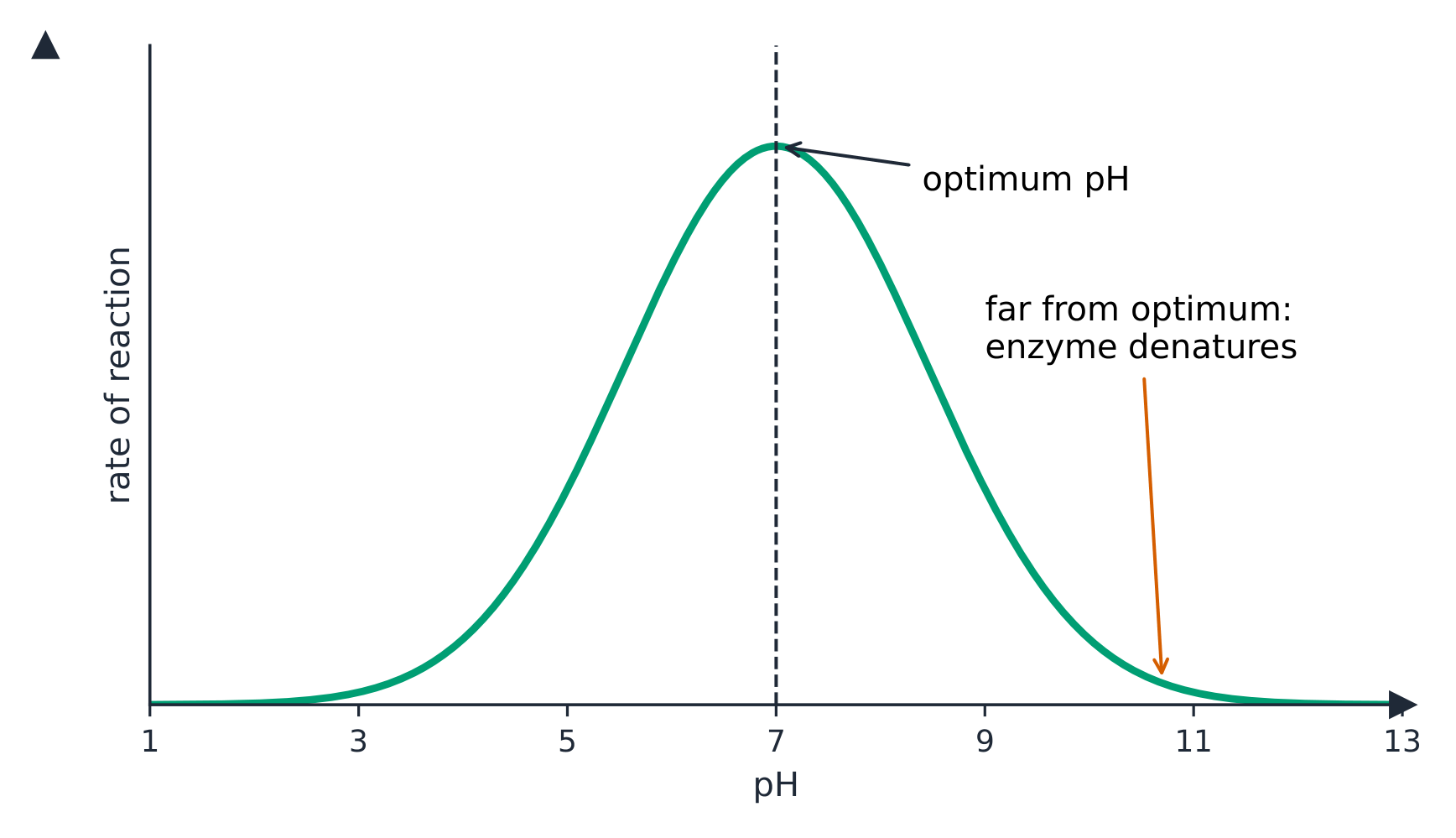
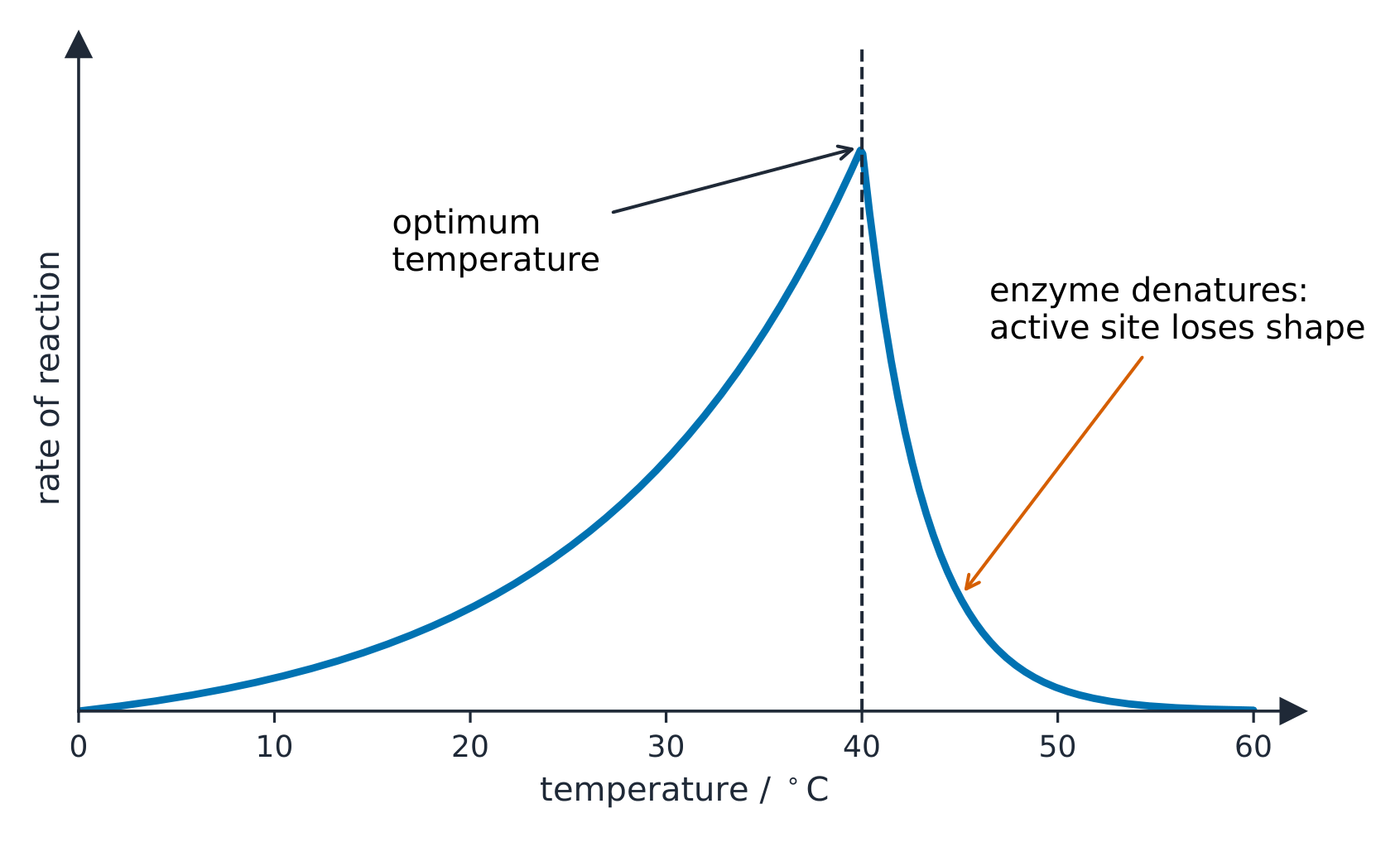
Enzyme activity depends on conditions. Each enzyme has an optimal temperature and pH; beyond it, the protein denatures 变性 (loses shape) and stops working. Substrate concentration raises the rate until the enzyme saturates. Inhibitors 抑制剂 slow enzymes – competitive ones block the active site, noncompetitive ones bind elsewhere and change the shape.

Bahasa Indonesia

Aktivitas enzim bergantung pada kondisi. Setiap enzim memiliki suhu dan pH optimal; melampaui titik tersebut, protein terdenaturasi (kehilangan bentuk) dan berhenti bekerja. Konsentrasi substrat meningkatkan laju hingga enzim jenuh. Inhibitor memperlambat enzim – kompetitif memblokir situs aktif, nonkompetitif berikatan di tempat lain dan mengubah bentuk.

Setiap enzim memiliki pH optimum
Laju naik mencapai suhu optimum, lalu turun saat enzim terdenaturasi
Explore · ⁨Jelajahi⁩

Change temperature and watch enzyme activity · ⁨Ubah suhu dan saksikan aktivitas enzim⁩

Each enzyme has an optimum temperature and pH. Too cold is slow; too hot denatures the enzyme so its active site loses shape and activity crashes. · ⁨Setiap enzim memiliki suhu dan pH optimum. Terlalu dingin membuatnya lambat; terlalu panas men-denaturasi enzim sehingga situs aktif kehilangan bentuk dan aktivitas anjlok.⁩

3.3

Cellular Energy and ATP · ⁨Energi Seluler dan ATP⁩

Syllabus · ⁨Silabus⁩
English

Big Idea 2 — Energetics: Biological systems use energy and molecular building blocks to grow, reproduce, and maintain dynamic homeostasis.

Learning Objective 3.3.A: Describe the role of energy in living organisms.

  • 3.3.A.1 All living systems require an input of energy.
  • 3.3.A.2 Life requires a highly ordered system and does not violate the first and second laws of thermodynamics.
    • i. Energy input must exceed energy loss to maintain order and to power cellular processes.
    • ii. Cellular processes that release energy may be coupled with cellular processes that require energy.
    • iii. Significant loss of order or energy flow results in death.
    • Exclusion statement: Students will need to understand the concept of energy, but the equation for Gibbs free energy is beyond the scope of the AP Exam.
  • 3.3.A.3 Energy-related pathways in biological systems are sequential to allow for a more controlled transfer of energy. A product of a reaction in a metabolic pathway is typically the reactant for the subsequent step in the pathway.

Learning Objective 3.3.B: Explain how shared, conserved, and fundamental processes and features support the concept of common ancestry for all organisms.

  • 3.3.B.1 Core metabolic pathways (e.g., glycolysis, oxidative phosphorylation) are conserved across all currently recognized domains (Archaea, Bacteria, and Eukarya).
Bahasa Indonesia

Ide Besar 2 — Energetika: Sistem biologis menggunakan energi dan blok bangunan molekuler untuk tumbuh, bereproduksi, dan mempertahankan homeostasis dinamis.

Tujuan Pembelajaran 3.3.A: Jelaskan peran energi dalam organisme hidup.

  • 3.3.A.1 Semua sistem hidup memerlukan input energi.
  • 3.3.A.2 Kehidupan memerlukan sistem yang sangat teratur dan tidak melanggar hukum termodinamika pertama dan kedua.
    • i. Input energi harus melebihi kehilangan energi untuk mempertahankan keteraturan dan powering proses seluler.
    • ii. Proses seluler yang melepaskan energi dapat dikopel dengan proses seluler yang membutuhkan energi.
    • iii. Hilangnya keteraturan atau aliran energi yang signifikan mengakibatkan kematian.
    • Pernyataan pengecualian: Siswa perlu memahami konsep energi, namun persamaan energi bebas Gibbs berada di luar ruang lingkup Ujian AP.
  • 3.3.A.3 Jalur terkait energi dalam sistem biologis bersifat berurutan agar memungkinkan transfer energi yang lebih terkendali. Produk dari suatu reaksi dalam jalur metabolisme biasanya merupakan reaktan untuk langkah berikutnya dalam jalur tersebut.

Tujuan Pembelajaran 3.3.B: Jelaskan bagaimana proses dan fitur yang bersama, terkonservasi, dan fundamental mendukung konsep nenek moyang bersama bagi semua organisme.

  • 3.3.B.1 Jalur metabolisme inti (misalnya, glikolisis, fosforilasi oksidatif) terkonservasi di seluruh domain yang diakui saat ini (Arkea, Bakteri, dan Eukarya).

Source: College Board AP Course and Exam Description · ⁨Sumber: Deskripsi Kursus dan Ujian College Board AP⁩

English

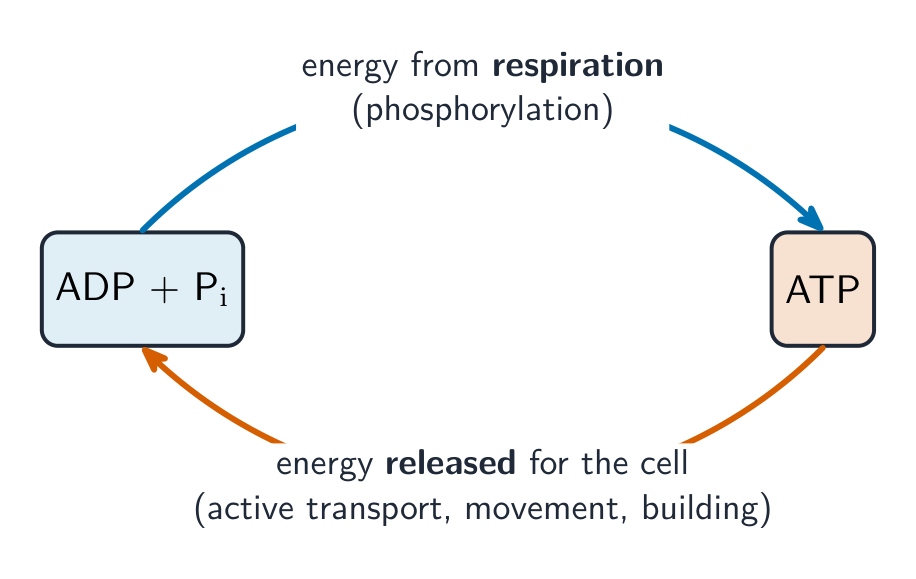
ATP (adenosine triphosphate) is the cell's energy currency. Energy is stored in its phosphate bonds; breaking off a phosphate (ATP → ADP) releases energy to power cellular work, and reattaching one stores energy. Cells constantly recycle ATP, coupling energy-releasing reactions to energy-requiring ones.

Life and the laws of thermodynamics

A living cell is highly ordered, and that order is often mistaken for a violation of physics. It is not.

  • The first law 热力学第一定律 says energy is conserved: it changes form but is never created or destroyed. A cell does not make energy — it transforms the chemical energy of glucose, or the light energy of the Sun, into the chemical energy of ATP.
  • The second law 热力学第二定律 says that in any energy transfer, some energy is lost as heat and the entropy 熵 of the universe increases. A cell builds order inside itself, but only by releasing more disorder to its surroundings, mostly as heat.

So life requires a constant input of free energy 自由能 from outside. This is why an organism cut off from its energy source dies: maintaining order is not free, and the moment the input stops, the ordered system runs down.

Bahasa Indonesia

ATP (adenosin trifosfat) adalah mata uang energi sel. Energi tersimpan dalam ikatan fosfatnya; memutuskan satu fosfat (ATP → ADP) melepaskan energi untuk powering kerja seluler, dan menyambungkannya kembali menyimpan energi. Sel terus-menerus mendaur ulang ATP, menggabungkan reaksi pelepas energi dengan reaksi yang membutuhkan energi.

Siklus ATP-ADP menyimpan dan melepaskan energi

Kehidupan dan hukum termodinamika

Sel hidup sangat teratur, dan ketertiban itu sering dianggap sebagai pelanggaran fisika. Namun, itu bukan pelanggaran.

  • Hukum pertama menyatakan energi kekal: berubah bentuk tetapi tidak diciptakan atau dimusnahkan. Sel tidak membuat energi — ia mengubah energi kimia glukosa, atau energi cahaya Matahari, menjadi energi kimia ATP.
  • Hukum kedua menyatakan bahwa dalam setiap perpindahan energi, sebagian energi hilang sebagai panas dan entropi alam semesta meningkat. Sel membangun keteraturan di dalamnya, tetapi hanya dengan melepaskan lebih banyak ketidakteraturan ke lingkungannya, sebagian besar sebagai panas.

Jadi kehidupan memerlukan masukan energi bebas yang konstan dari luar. Inilah mengapa organisme yang terputus dari sumber energinya mati: mempertahankan keteraturan tidak gratis, dan begitu masukan berhenti, sistem yang teratur akan runtuh.

3.4

Photosynthesis · ⁨Fotosintesis⁩

Syllabus · ⁨Silabus⁩
English

Big Idea 2 — Energetics: Biological systems use energy and molecular building blocks to grow, reproduce, and maintain dynamic homeostasis.

Learning Objective 3.4.A: Describe the photosynthetic processes and structural features of the chloroplast that allow organisms to capture and store energy.

  • 3.4.A.1 Photosynthesis is the series of reactions that use carbon dioxide $(\mathrm{CO_2})$, water $(\mathrm{H_2O})$, and light energy to make carbohydrates and oxygen $(\mathrm{O_2})$.
    • i. Photosynthetic organisms capture energy from the sun and produce sugars that can be used in biological processes or stored.
    • ii. Photosynthesis first evolved in prokaryotic organisms.
    • iii. Scientific evidence supports the claim that prokaryotic (cyanobacterial) photosynthesis was responsible for the production of an oxygenated atmosphere.
    • iv. Prokaryotic photosynthetic pathways were the foundation of eukaryotic photosynthesis.
    • Exclusion statement: Memorization of the steps in the Calvin cycle, the structure of the molecules, and the names of the enzymes involved, with the exception of ATP synthase, is beyond the scope of the AP Exam.
  • 3.4.A.2 Stroma and thylakoids are found within the chloroplast.
    • i. The stroma is the fluid within the inner chloroplast membrane and outside the thylakoid. The carbon fixation (Calvin cycle) reactions of photosynthesis occur in the stroma.
    • ii. The thylakoid membranes contain chlorophyll pigments organized into two photosystems, as well as electron transport proteins.
    • iii. Thylakoids are organized in stacks called grana. The light reactions of photosynthesis occur in the grana.
  • 3.4.A.3 The light reactions of photosynthesis in eukaryotes involve a series of coordinated reaction pathways that capture energy present in light to yield ATP and NADPH, which power the production of organic molecules in the Calvin cycle. This provides energy for metabolic processes.

Learning Objective 3.4.B: Explain how cells capture energy from light and transfer it to biological molecules for storage and use.

  • 3.4.B.1 Electron transport chain (ETC) reactions occur in chloroplasts, in mitochondria, and across prokaryotic plasma membranes. In photosynthesis, electrons that pass through the thylakoid membrane are picked up and ultimately transferred to $\mathrm{NADP^+}$ reducing it to NADPH in photosystem I.
    • Exclusion statement: The full names of the specific electron carriers in the electron transport chain are beyond the scope of the AP Exam.
    • Exclusion statement: Specific steps, names of enzymes, and intermediates of the pathways for these processes are beyond the scope of this course and the AP Exam.
  • 3.4.B.2 During photosynthesis, chlorophylls absorb energy from light, boosting electrons to a higher energy level in photosystems I and II. Water then splits, supplying electrons to replace those lost from photosystem II.
  • 3.4.B.3 Photosystems I and II are embedded in the thylakoid membranes of chloroplasts and are connected by the transfer of electrons through an ETC.
  • 3.4.B.4 When electrons are transferred between molecules in a series of oxidation/reduction reactions as they pass through the ETC, an electrochemical gradient of protons (hydrogen ions) is established across the thylakoid membrane. The membrane separates a region of low proton concentration outside the thylakoid membrane from a region of high proton concentration inside the thylakoid membrane.
  • 3.4.B.5 The formation of the proton gradient is linked to the synthesis of ATP from ADP and inorganic phosphate via ATP synthase. The flow of protons back through membrane-bound ATP synthase by chemiosmosis drives the formation of ATP from ADP and inorganic phosphate; this is known as photophosphorylation.
  • 3.4.B.6 The energy captured in the light reactions and transferred to ATP and NADPH powers the production of carbohydrates from carbon dioxide in the Calvin cycle. This occurs in the stroma of the chloroplast.
Bahasa Indonesia

Ide Besar 2 — Energetika: Sistem biologis menggunakan energi dan blok bangunan molekuler untuk tumbuh, bereproduksi, dan mempertahankan homeostasis dinamis.

Tujuan Pembelajaran 3.4.A: Jelaskan proses fotosintesis dan fitur struktural kloroplas yang memungkinkan organisme menangkap dan menyimpan energi.

  • 3.4.A.1 Fotosintesis adalah serangkaian reaksi yang menggunakan karbon dioksida $(\mathrm{CO_2})$, air $(\mathrm{H_2O})$, dan energi cahaya untuk membuat karbohidrat dan oksigen $(\mathrm{O_2})$.
    • i. Organisme fotosintetik menangkap energi dari matahari dan menghasilkan gula yang dapat digunakan dalam proses biologis atau disimpan.
    • ii. Fotosintesis pertama kali berevolusi pada organisme prokariotik.
    • iii. Bukti ilmiah mendukung klaim bahwa fotosintesis prokariotik (sianobakteri) bertanggung jawab atas produksi atmosfer yang kaya oksigen.
    • iv. Jalur fotosintesis prokariotik menjadi fondasi fotosintesis eukariotik.
    • Pengecualian: Menghafal langkah-langkah siklus Calvin, struktur molekul, dan nama enzim yang terlibat, dengan pengecualian ATP sintase, berada di luar cakupan Ujian AP.
  • 3.4.A.2 Stroma dan tilakoid ditemukan di dalam kloroplas.
    • i. Strom adalah cairan di dalam membran kloroplas bagian dalam dan di luar tilakoid. Reaksi fiksasi karbon (siklus Calvin) fotosintesis terjadi di stroma.
    • ii. Membran tilakoid mengandung pigmen klorofil yang tersusun menjadi dua sistem fotosis, serta protein rantai transpor elektron.
    • iii. Tilakoid tersusun dalam tumpukan yang disebut granum. Reaksi terang fotosintesis terjadi di granum.
  • 3.4.A.3 Reaksi terang fotosintesis pada eukariot melibatkan serangkaian jalur reaksi terkoordinasi yang menangkap energi yang terdapat dalam cahaya untuk menghasilkan ATP dan NADPH, yang menggerakkan produksi molekul organik dalam siklus Calvin. Hal ini menyediakan energi untuk proses metabolik.

Tujuan Pembelajaran 3.4.B: Jelaskan bagaimana sel menangkap energi dari cahaya dan mentransfernya ke molekul biologis untuk penyimpanan dan penggunaan.

  • 3.4.B.1 Reaksi rantai transpor elektron (ETC) terjadi di kloroplas, mitokondria, dan melintasi membran plasma prokariotik. Dalam fotosintesis, elektron yang melewati membran tilakoid ditangkap dan akhirnya ditransfer ke $\mathrm{NADP^+}$ yang mereduksinya menjadi NADPH di fotosistem I.
    • Pengecualian: Nama lengkap pembawa elektron spesifik dalam rantai transpor elektron berada di luar cakupan Ujian AP.
    • Pengecualian: Langkah-langkah spesifik, nama enzim, dan perantara jalur untuk proses-proses ini berada di luar cakupan kursus ini dan Ujian AP.
  • 3.4.B.2 Selama fotosintesis, klorofil menyerap energi dari cahaya, meningkatkan elektron ke tingkat energi yang lebih tinggi di fotosistem I dan II. Air kemudian terpecah, menyediakan elektron untuk menggantikan elektron yang hilang dari fotosistem II.
  • 3.4.B.3 Fotosistem I dan II tertanam di membran tilakoid kloroplas dan terhubung melalui transfer elektron melalui ETC.
  • 3.4.B.4 Ketika elektron ditransfer antar molekul dalam serangkaian reaksi oksidasi/reduksi saat mereka melewati ETC, gradien elektrokimia proton (ion hidrogen) terbentuk melintasi membran tilakoid. Membran memisahkan wilayah dengan konsentrasi proton rendah di luar membran tilakoid dari wilayah dengan konsentrasi proton tinggi di dalam membran tilakoid.
  • 3.4.B.5 Pembentukan gradien proton terkait dengan sintesis ATP dari ADP dan fosfat anorganik melalui ATP sintase. Aliran proton kembali melalui ATP sintase yang terikat membran secara kemiosmosis menggerakkan pembentukan ATP dari ADP dan fosfat anorganik; hal ini dikenal sebagai fotofosforilasi.
  • 3.4.B.6 Energi yang ditangkap dalam reaksi terang dan ditransfer ke ATP dan NADPH menggerakkan produksi karbohidrat dari karbon dioksida dalam siklus Calvin. Hal ini terjadi di stroma kloroplas.

Source: College Board AP Course and Exam Description · ⁨Sumber: Deskripsi Kursus dan Ujian College Board AP⁩

English

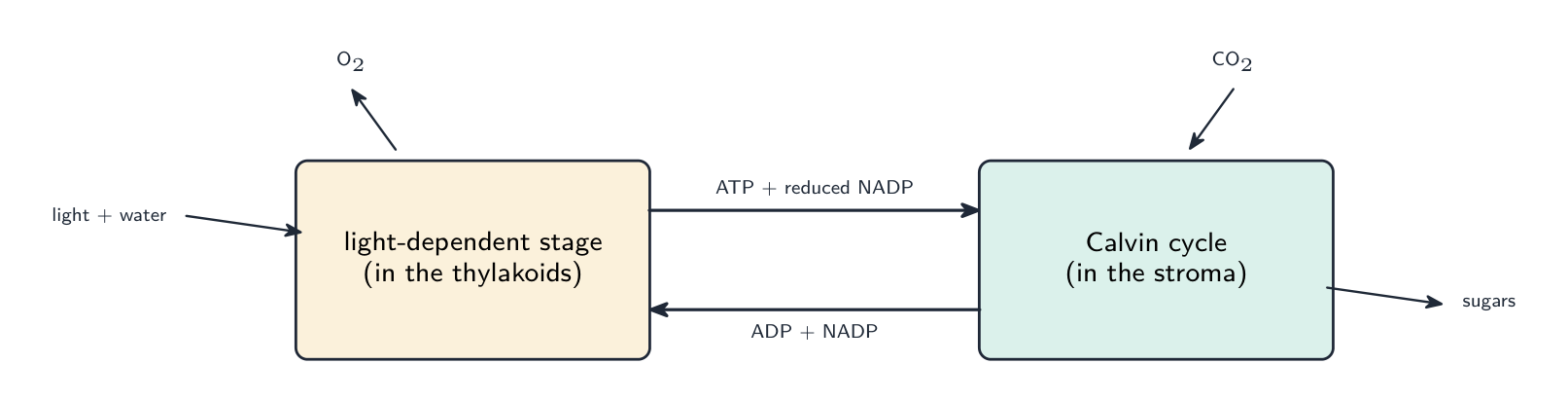
Photosynthesis 光合作用 captures light energy to build sugar from $\text{CO}_2$ and water, releasing $\text{O}_2$. It has two stages:

  • The light reactions (in the thylakoid membranes) use light to make ATP and NADPH and split water, releasing oxygen.
  • The Calvin cycle 卡尔文循环 (in the stroma) uses that ATP and NADPH to fix $\text{CO}_2$ into sugar.

So light energy becomes chemical energy stored in glucose.

Where the oxygen in the air came from

Photosynthesis did not only feed the first organisms; it changed the planet. Scientific evidence supports the claim that photosynthesis by prokaryotes 原核生物 — specifically cyanobacteria 蓝细菌 — produced the oxygen that built Earth's oxygenated atmosphere 含氧大气.

The evidence is physical: banded iron formations 条带状铁建造 in rocks about 2.4 billion years old record iron dissolved in the ocean being oxidised and precipitating out, which needs free oxygen. Before that event, called the Great Oxidation Event, the atmosphere held almost none.

Two consequences matter for the rest of the course. Free oxygen made aerobic respiration possible, which releases far more ATP per glucose than anaerobic pathways do. And it was lethal to much of the anaerobic life already present, so it counts as one of the largest extinction events in Earth's history — an early example of organisms changing their own environment.

Bahasa Indonesia
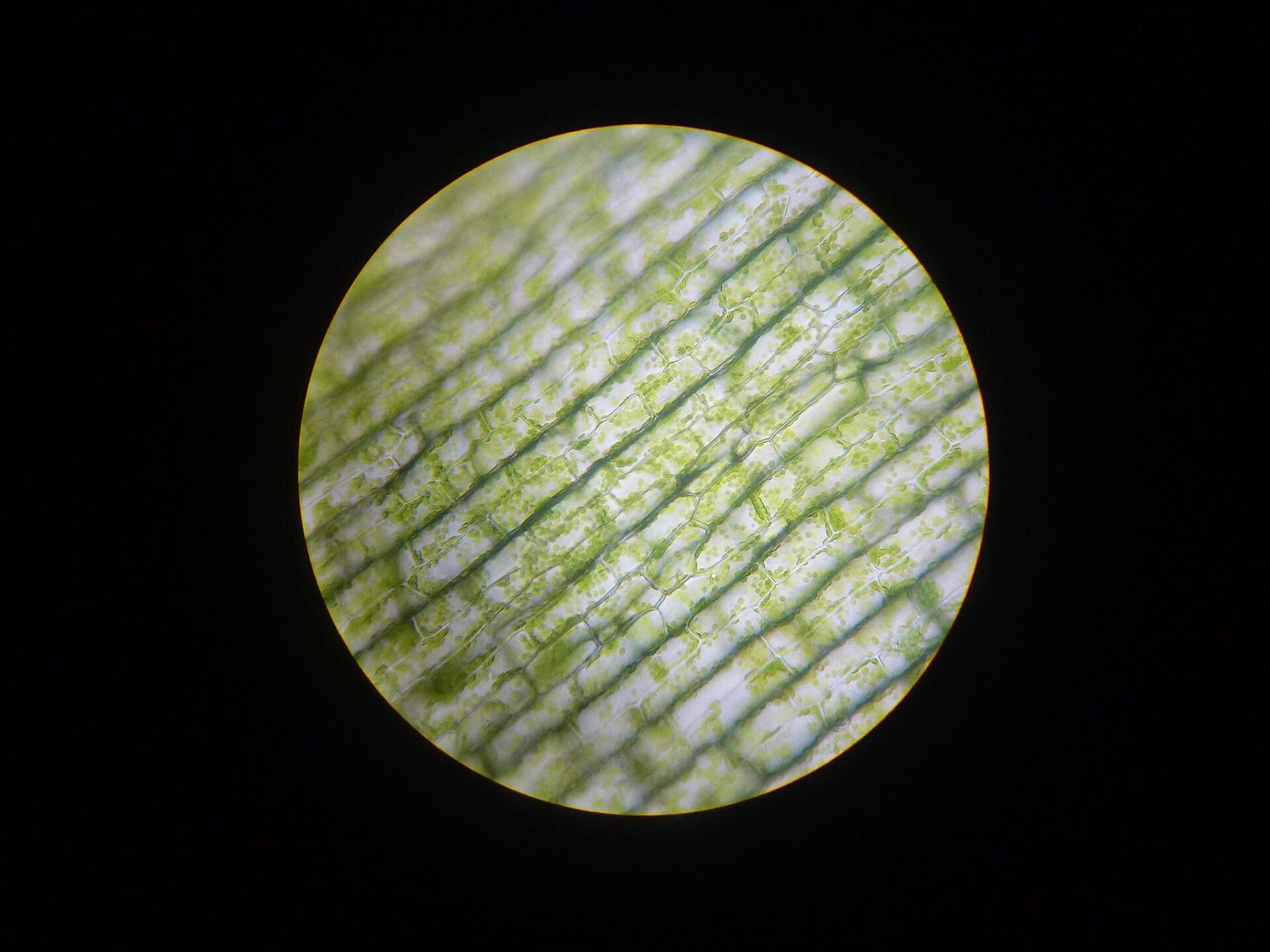
Kloroplas mengisi sel mesofil tumbuhan — organel fotosintesis

Fotosintesis menangkap energi cahaya untuk membangun gula dari $\text{CO}_2$ dan air, serta melepaskan $\text{O}_2$. Proses ini memiliki dua tahap:

Dua tahap fotosintesis saling terhubung oleh ATP dan NADPH
  • Reaksi terang (di membran tilakoid) menggunakan cahaya untuk menghasilkan ATP dan NADPH serta memecah air, sehingga melepaskan oksigen.
  • Siklus Calvin (di stroma) menggunakan ATP dan NADPH tersebut untuk mengikat $\text{CO}_2$ menjadi gula.

Dengan demikian, energi cahaya berubah menjadi energi kimia yang tersimpan dalam glukosa.

Asal-usul oksigen di udara

Fotosintesis tidak hanya memberi makan organisme pertama; ia juga mengubah planet ini. Bukti ilmiah mendukung klaim bahwa fotosintesis oleh prokariota — khususnya sianobakteri — menghasilkan oksigen yang membentuk atmosfer beroksigen Bumi.

Bukti tersebut bersifat fisik: formasi besi banded dalam batuan berumur sekitar 2.4 miliar tahun mencatat besi terlarut di lautan yang teroksidasi dan mengendap, yang memerlukan oksigen bebas. Sebelum peristiwa itu, yang disebut Peristiwa Oksidasi Besar, atmosfer hampir tidak mengandung oksigen.

Dua konsekuensi penting bagi sisa materi kursus. Oksigen bebas memungkinkan respirasi aerobik, yang menghasilkan jauh lebih banyak ATP per glukosa dibandingkan jalur anaerobik. Selain itu, oksigen bersifat letal bagi sebagian besar kehidupan anaerobik yang sudah ada, sehingga hal ini dihitung sebagai salah satu peristiwa kepunahan terbesar dalam sejarah Bumi — sebuah contoh awal organisme mengubah lingkungan mereka sendiri.

3.5

Cellular Respiration · ⁨Respirasi Seluler⁩

Syllabus · ⁨Silabus⁩
English

Big Idea 2 — Energetics: Biological systems use energy and molecular building blocks to grow, reproduce, and maintain dynamic homeostasis.

Learning Objective 3.5.A: Describe the processes and structural features of mitochondria that allow organisms to use energy stored in biological macromolecules.

  • 3.5.A.1 Cellular respiration uses energy from biological macromolecules to synthesize ATP. Respiration and fermentation are characteristic of all forms of life.
  • 3.5.A.2 Aerobic cellular respiration in eukaryotes involves a series of coordinated enzyme-catalyzed reactions that capture energy from biological macromolecules.
  • 3.5.A.3 The ETC transfers electrons in a series of oxidation-reduction reactions that establish an electrochemical gradient across membranes.
    • i. In cellular respiration, electrons delivered by NADH and $\mathrm{FADH_2}$ are passed to a series of electron acceptors as they move toward the terminal electron acceptor, oxygen. Aerobic prokaryotes use oxygen as a terminal electron acceptor, while anaerobic prokaryotes use other molecules.
    • ii. The transfer of electrons, through the ETC, is accompanied by the formation of a proton gradient across the inner mitochondrial membrane, with the membrane(s) separating a region of high proton concentration outside the membrane from a region of low proton concentration inside the membrane. The folding of the inner membrane increases the surface area, which allows for more ATP to be synthesized. In prokaryotes, the passage of electrons is accompanied by the movement of protons across the plasma membrane.
    • iii. The flow of protons back through membrane-bound ATP synthase by chemiosmosis drives the formation of ATP from ADP and inorganic phosphate. This is known as oxidative phosphorylation in aerobic cellular respiration.
    • iv. In aerobic cellular respiration, decoupling oxidative phosphorylation from electron transport generates heat. This heat can be used by endothermic organisms to regulate body temperature.
    • Exclusion statement: The full names of the specific electron carriers in the electron transport chain are beyond the scope of the AP Exam.
    • Exclusion statement: Specific steps, names of enzymes, and intermediates of the pathways for these processes are beyond the scope of this course and the AP Exam.

Learning Objective 3.5.B: Explain how cells obtain energy from biological macromolecules in order to power cellular functions.

  • 3.5.B.1 Glycolysis is a biochemical pathway that releases the energy in glucose molecules to form ATP (from ADP and inorganic phosphate), NADH (from $\mathrm{NAD^+}$), and pyruvate.
  • 3.5.B.2 Pyruvate is transported from the cytosol to the mitochondrion where oxidation occurs. This process releases electrons during the Krebs (citric acid) cycle, reducing $\mathrm{NAD^+}$ to NADH and FAD to $\mathrm{FADH_2}$, and releasing $\mathrm{CO_2}$.
  • 3.5.B.3 The Krebs cycle takes place in the mitochondrial matrix. During the Krebs cycle, carbon dioxide is released from organic intermediates, ATP is synthesized from ADP and inorganic phosphate, and electrons are transferred by the coenzymes $\mathrm{NAD^+}$ and FAD.
  • 3.5.B.4 Electrons extracted in glycolysis and Krebs cycle reactions are transferred by NADH and $\mathrm{FADH_2}$ to the ETC in the inner mitochondrial membrane.
  • 3.5.B.5 When electrons are transferred between molecules in a sequence of reactions as they pass through the ETC, an electrochemical gradient of protons (hydrogen ions) across the inner mitochondrial membrane is established. The pH inside the mitochondrial matrix is higher than in the intermembrane space.
  • 3.5.B.6 Fermentation allows glycolysis to proceed in the absence of oxygen and produces organic molecules such as alcohol and lactic acid.
    • Exclusion statement: Memorization of the steps in glycolysis and the Krebs cycle, and of the structures of the molecules and the names of the enzymes involved, is beyond the scope of this course and the AP Exam.
Bahasa Indonesia

Ide Besar 2 — Energetika: Sistem biologis menggunakan energi dan blok bangunan molekuler untuk tumbuh, bereproduksi, dan mempertahankan homeostasis dinamis.

Tujuan Pembelajaran 3.5.A: Deskripsikan proses dan fitur struktural mitokondria yang memungkinkan organisme menggunakan energi yang tersimpan dalam makromolekul biologis.

  • 3.5.A.1 Respirasi seluler menggunakan energi dari makromolekul biologis untuk mensintesis ATP. Respirasi dan fermentasi merupakan karakteristik semua bentuk kehidupan.
  • 3.5.A.2 Respirasi seluler aerobik pada eukariot melibatkan serangkaian reaksi berantai enzim yang terkoordinasi yang menangkap energi dari makromolekul biologis.
  • 3.5.A.3 ETC mentransfer elektron dalam serangkaian reaksi oksidasi-reduksi yang membentuk gradien elektrokimia melintasi membran.
    • i. Dalam respirasi seluler, elektron yang disalurkan oleh NADH dan $\mathrm{FADH_2}$ diteruskan ke serangkaian penerima elektron saat mereka bergerak menuju penerima elektron terminal, yaitu oksigen. Prokariota aerob menggunakan oksigen sebagai penerima elektron terminal, sedangkan prokariota anaerob menggunakan molekul lain.
    • ii. Transfer elektron, melalui Rantai Transpor Elektron (ETC), disertai pembentukan gradien proton melintasi membran mitokondria bagian dalam, dengan membran memisahkan area konsentrasi proton tinggi di luar membran dari area konsentrasi proton rendah di dalam membran. Lipatan membran bagian dalam meningkatkan luas permukaan, yang memungkinkan lebih banyak ATP disintesis. Pada prokariota, perpindahan elektron disertai pergerakan proton melintasi membran plasma.
    • iii. Aliran proton kembali melalui sintase ATP yang terikat membran secara kemiosmosis mendorong pembentukan ATP dari ADP dan fosfat anorganik. Ini dikenal sebagai fosforilasi oksidatif dalam respirasi seluler aerob.
    • iv. Dalam respirasi seluler aerob, pemisahan fosforilasi oksidatif dari transpor elektron menghasilkan panas. Panas ini dapat digunakan oleh organisme endotermik untuk mengatur suhu tubuh.
    • Pengecualian: Nama lengkap pembawa elektron spesifik dalam rantai transpor elektron berada di luar cakupan Ujian AP.
    • Pengecualian: Langkah-langkah spesifik, nama enzim, dan perantara jalur untuk proses-proses ini berada di luar cakupan kursus ini dan Ujian AP.

Tujuan Pembelajaran 3.5.B: Jelaskan bagaimana sel memperoleh energi dari makromolekul biologis guna menggerakkan fungsi seluler.

  • 3.5.B.1 Glikolisis adalah jalur biokimia yang melepaskan energi dalam molekul glukosa untuk membentuk ATP (dari ADP dan fosfat anorganik), NADH (dari $\mathrm{NAD^+}$), dan piruvat.
  • 3.5.B.2 Piruvat diangkut dari sitosol ke mitokondria tempat oksidasi terjadi. Proses ini melepaskan elektron selama siklus Krebs (asam sitrat), mengurangi $\mathrm{NAD^+}$ menjadi NADH dan FAD menjadi $\mathrm{FADH_2}$, serta melepaskan $\mathrm{CO_2}$.
  • 3.5.B.3 Siklus Krebs berlangsung di matriks mitokondria. Selama siklus Krebs, karbon dioksida dilepaskan dari intermediet organik, ATP disintesis dari ADP dan fosfat anorganik, dan elektron ditransfer oleh koenzim $\mathrm{NAD^+}$ dan FAD.
  • 3.5.B.4 Elektron yang diekstrak dalam reaksi glikolisis dan siklus Krebs ditransfer oleh NADH dan $\mathrm{FADH_2}$ ke Rantai Transpor Elektron (ETC) di membran dalam mitokondria.
  • 3.5.B.5 Ketika elektron dipindahkan antar molekul dalam serangkaian reaksi saat melewati ETC, gradien elektrokimia proton (ion hidrogen) melintasi membran dalam mitokondria terbentuk. pH di dalam matriks mitokondria lebih tinggi daripada di ruang antarmembran.
  • 3.5.B.6 Fermentasi memungkinkan glikolisis berjalan tanpa oksigen dan menghasilkan molekul organik seperti alkohol dan asam laktat.
    • Pernyataan pengecualian: Hafalan langkah-langkah dalam glikolisis dan siklus Krebs, serta struktur molekul dan nama enzim yang terlibat, berada di luar cakupan kursus ini dan Ujian AP.

Source: College Board AP Course and Exam Description · ⁨Sumber: Deskripsi Kursus dan Ujian College Board AP⁩

English

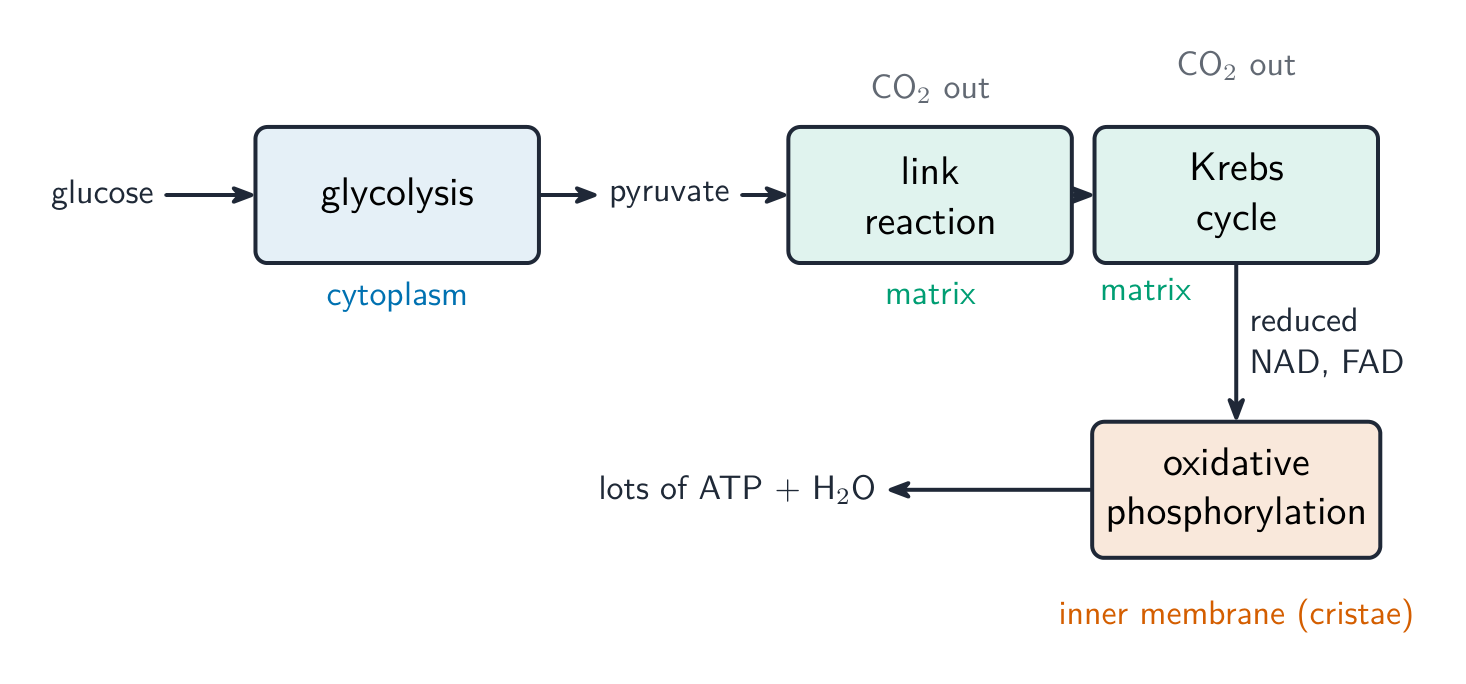
Cellular respiration 细胞呼吸 releases the energy in glucose to make ATP, mostly using oxygen. Its stages:

  • Glycolysis 糖酵解 (in the cytoplasm) splits glucose, making a little ATP.
  • The Krebs cycle 克雷布斯循环 (mitochondrial matrix) releases $\text{CO}_2$ and loads electron carriers.
  • The electron transport chain 电子传递链 (inner membrane) uses those electrons to pump protons and make most of the ATP, with oxygen as the final electron acceptor.

Without oxygen, cells use fermentation 发酵 to keep glycolysis running, making far less ATP. Photosynthesis and respiration are complementary – the products of one are the reactants of the other.

Worked example. Aerobic respiration of one glucose nets about 2 ATP from glycolysis, 2 ATP from the Krebs cycle, and about 28 ATP from oxidative phosphorylation, for $\approx$ 32 ATP total. With no oxygen only glycolysis runs, so fermentation nets just 2 ATP per glucose — roughly 16 times less energy, which is why aerobic pathways dominate in oxygen-rich cells.

Bahasa Indonesia
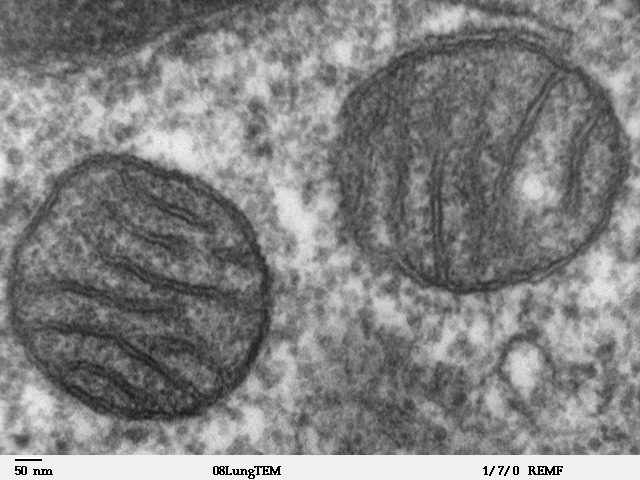
TEM mitokondria: membran dalam berlipat (kristae) memperbanyak permukaan untuk respirasi

Respirasi seluler melepaskan energi dalam glukosa untuk membuat ATP, sebagian besar menggunakan oksigen. Tahapannya:

Tahapan respirasi aerob dan lokasinya di dalam sel
Tahapan respirasi aerobik dan lokasi terjadinya di dalam sel
  • Glikolisis (di sitoplasma) memecah glukosa, menghasilkan sedikit ATP.
  • Siklus Krebs (matriks mitokondria) melepaskan $\text{CO}_2$ dan memuat pembawa elektron.
  • Rantai transpor elektron (membran dalam) menggunakan elektron-elektron tersebut untuk memompa proton dan menghasilkan sebagian besar ATP, dengan oksigen sebagai penerima elektron terakhir.

Tanpa oksigen, sel menggunakan fermentasi agar glikolisis tetap berjalan, namun menghasilkan jauh lebih sedikit ATP. Fotosintesis dan respirasi saling melengkapi — produk dari satu proses adalah reaktan dari proses lainnya.

Contoh pengerjaan. Respirasi aerobik satu molekul glukosa menghasilkan bersih sekitar 2 ATP dari glikolisis, 2 ATP dari Siklus Krebs, dan sekitar 28 ATP dari fosforilasi oksidatif, sehingga totalnya $\approx$ 32 ATP. Tanpa oksigen, hanya glikolisis yang berjalan, sehingga fermentasi menghasilkan bersih hanya 2 ATP per glukosa — kira-kira 16 kali lebih sedikit energi, itulah sebabnya jalur aerobik mendominasi di sel yang kaya oksigen.

3.5

Exam tips · ⁨Tips ujian⁩

English
  • An enzyme lowers the activation energy and is not used up; its active site is specific to one substrate (lock and key).
  • Rate rises with temperature only up to the optimum — beyond it the enzyme denatures and the rate falls (unlike an ordinary reaction).
  • Know the ATP↔ADP cycle: breaking a phosphate releases energy to power the cell.
  • Write the overall equations: photosynthesis stores energy (builds glucose); respiration releases it (breaks glucose down) — they are opposites.
  • Match each stage to its location and whether it needs oxygen.
Bahasa Indonesia
  • Enzim menurunkan energi aktivasi dan tidak habis digunakan; situs aktif-nya spesifik terhadap satu substrat (gagang kunci dan lubang kunci).
  • Laju meningkat seiring kenaikan suhu hanya hingga titik optimum — setelah melewati titik tersebut enzim terdenaturasi dan laju menurun (berbeda dengan reaksi biasa).
  • Pahami siklus ATP↔ADP: pemutusan gugus fosfat melepaskan energi untuk menggerakkan sel.
  • Tulis persamaan keseluruhan: fotosintesis menyimpan energi (membangun glukosa); respirasi melepaskan energi (mengurai glukosa) — keduanya merupakan kebalikan.
  • Cocokkan setiap tahap dengan lokasinya dan apakah tahap tersebut membutuhkan oksigen.

Interactive lessons on this topic · ⁨Pelajaran interaktif untuk topik ini⁩

Work through it step by step, with instant-check exercises. · ⁨Kerjakan langkah demi langkah, dengan latihan pengecekan instan.⁩

Past Papers · ⁨Soal-Soil Masa Lalu⁩

More topics in AP Biology · ⁨AP Biologi⁩ · ⁨Topik lain dalam AP Biology · ⁨AP Biologi⁩⁩

Log in or create account · ⁨Masuk atau buat akun⁩

IGCSE, A-Level & AP