Skip to content · ⁨דלג לתוכן⁩

Writing: purpose, audience and accuracy · ⁨כתיבה: מטרה, קהל יעד ומדויקות⁩

IGCSE English · ⁨אנגלית IGCSE⁩ · Topic 2 · ⁨נושא 2⁩

Video lesson for this topic · ⁨שיעור וידאו לנושא זה⁩ Open the video page · ⁨פתח את עמוד הוידאו⁩
7:50

כתיבה: מטרה, קהל יעד ומדויקות

שני תלמידים רוצים אותו דבר: רשות להשתמש באולם בבית הספר ביום שבת. שניהם כותבים למנהל. הראשון אומר: <slow>שלום, האם נוכל לקבל…

English narration · English + 中文 subtitles burned in · ⁨קריאת קול באנגלית · תרגום אנגלי + סינית שרוף בתוך הסרטון⁩

2.1

Purpose, audience and register · ⁨מטרה, קהל יעד ורגיסטר⁩

Syllabus · ⁨סיילבוס⁩
English
  1. identify the purpose of a piece of writing: to inform, to argue or to discuss
  2. think about the audience and how formal or informal the language should be
  3. choose a register and style that suit the purpose and the reader
עברית
  1. זיהוי המטרה של כתבה: להעביר מידע, להעלות אורח דין או לדון בנושא
  2. לחשוב על הקהל ועל האם השפה צריכה להיות רשמית או לא רשמית
  3. לבחור רשטר וסגנון המתאימים למטרה ולקורא

Source: Cambridge International syllabus · ⁨מקור: הסיילבוס הבינלאומי של קמבריד'ג'⁩

English

Before you write, ask two questions: why am I writing, and who will read it?

Know your purpose

  • Every writing task has a purpose 目的: to inform 告知, to argue 论证, or to discuss 讨论.
  • The purpose decides what you write and how you write it.
  • The task tells you the purpose. Read it carefully and underline it.

Know your audience

  • The audience 读者 is the person who will read your writing — a friend, a teacher, or an event organiser.
  • Write in a way that suits them. You write to a friend in a different way from a teacher.

Choose the right register

  • Register 语域 means how formal 正式 or informal 非正式 your language is.
  • Use informal language for a friend: short forms (I'm, don't) and friendly words.
  • Use formal language for a teacher or a report: full forms (I am, do not) and polite words. No slang 俚语.
עברית

לפני שכתבת, שאל שתי שאלות: מדוע אני כותב, ומי יהיה הקורא?

זיהוי המטרה שלך

  • לכל משימת כתיבה יש מטרה 目的: להעביר מידע 告知, להוכיח טענה 论证, או לדון בנושא 讨论.
  • המטרה קובעת מה תכתוב ואיך תכתוב זאת.
  • המשימה מציינת את המטרה. קרא אותה בקפידה וחבר קו תחתיה.

זיהוי קהל היעד שלך

  • ה-קהל יעד 读者 הוא האדם שיقرأ את הכתיבה שלך — חבר, מורה, או מארגן אירוע.
  • כתוב בדרך המתאימה אליהם. כותבים לחבר בצורה שונה מזו שבה כותבים למורה.

בחירת הרגיסטר הנכון

  • רגיסטר 语域 פירושו עד כמה השפה שלך פורמלית 正式 או לא-פורמלית 非正式.
  • השתמש בשפה לא-פורמלית עבור חבר: צורות מקוצרות (I'm, don't) ומילים ידידותיות.
  • השתמש בשפה פורמלית עבור מורה או דוח: צורות מלאות (I am, do not) ומילים מכובדות. ללא סלנג 俚语.
תרשים זרימה: השאלות מדוע אני כותב ומי יקרא את הכתיבה מובילות למטרה ולקהל יעד, שקביעתם יחד קובעת בין רגיסטר לא-פורמלי לחבר לבין רגיסטר פורמלי למורה או לדוח
Purpose and audience together decide how formal your writing should be
כתיבה בשולחן עבודה: קבע את המטרה והקהל לפני שתארגן רעיונות בדף
Vocabulary · ⁨מילון מונחים⁩ Train · ⁨אימון⁩
English עברית
purpose/ˈpɜːpəs/ מטרה
inform/ɪnˈfɔːm/ להעביר מידע
argue/ˈɑːɡjuː/ לטעון
discuss/dɪˈskʌs/ לדון
audience/ˈɔːdɪəns/ קהל היעד
register/ˈredʒɪstə/ רשמה
formal/ˈfɔːml/ רשמי
informal/ɪnˈfɔːml/ בלתי רשמי
slang/slæŋ/ גיגית
2.2

Organising your ideas · ⁨ארגון הרעיונות שלך⁩

Syllabus · ⁨סיילבוס⁩
English
  1. plan what to include and the order in which to present it
  2. organise writing into clear paragraphs with a logical structure
  3. link ideas using devices for addition (in addition, moreover), contrast (however, although) and cause/effect (therefore, as a result)
עברית
  1. לתכנן מה לכלול ואיך לסדר את ההצגה
  2. לארגן את הכתיבה בסעיפים ברורים עם מבנה לוגי
  3. לחבר בין רעיונות באמצעות כלי חיבור להוספה (in addition, moreover), ניגוד (however, although) וגורם/תוצאה (therefore, as a result)

Source: Cambridge International syllabus · ⁨מקור: הסיילבוס הבינלאומי של קמבריד'ג'⁩

English

Good writing is not just correct. It is also easy to follow.

Plan before you write

  • Spend one minute on a plan 计划. Write down your main ideas and put them in order.
  • A plan stops you from forgetting a point or repeating yourself.

Use paragraphs

  • Put each main idea in its own paragraph 段落.
  • Start a new paragraph for a new idea. This makes your writing clear.

Link your ideas

  • Use linking words 衔接词 to join your ideas smoothly.
  • For adding: in addition, also, as well as. For contrast: however, but, although. For results: so, therefore, as a result.
עברית

כתיבה טובה אינה רק נכונה. היא גם קלה לעקוב אחריה.

תכנן לפני שאתה כותב

  • הקדש דקה אחת לתוכנית 计划. כתוב את הרעיונות המרכזיים שלך ומיין אותם בסדר.
  • תוכנית מונעת ממך לשכוח נקודה או לחזור על עצמך.
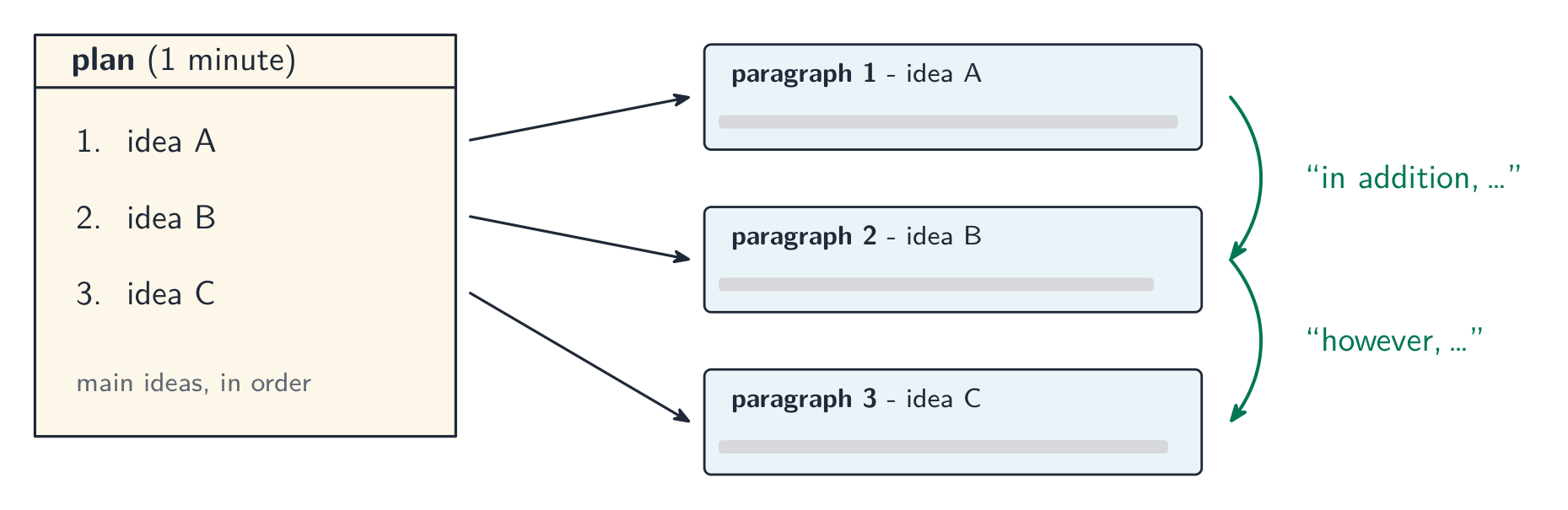
תוכנית של דקה אחת עם שלושה רעיונות מסומנים הופכת לשלושה פסקאות, רעיון אחד בכל אחת, מחוברות באמצעות מילים מקשרות כמו in addition וhowever
תכנית של דקה הופכת לפרקראפים: רעיון אחד בכל, מחוברים באמצעות מילים מקשרות

השתמש בפסקאות

  • שמור כל רעיון מרכזי בפסקה משלו פסקה 段落.
  • התחל פסקה חדשה עבור רעיון חדש. כך הכתיבה שלך תהיה ברורה.

חבר בין הרעיונות שלך

  • השתמש במילים מקשרות 衔接词 כדי לחבר בין הרעיונות שלך בצורה חלקה.
  • להוספה: in addition, also, as well as. לעניין ניגוד: however, but, although. לתוצאה: so, therefore, as a result.
Vocabulary · ⁨מילון מונחים⁩ Train · ⁨אימון⁩
English עברית
plan/plæn/ לתכנן
paragraph/ˈpærəɡræf/ פראגרף
linking words/ˈlɪŋkɪŋ wɜːdz/ מילים מקשרות
Watch lesson · ⁨צפה בשיעור⁩
2.3

Accuracy: grammar, vocabulary and checking · ⁨דיוק: דקדוק, מילית ובדיקה⁩

Syllabus · ⁨סיילבוס⁩
English
  1. use a range of grammatical structures: different verb forms and tenses, conditionals and varied sentence types
  2. use a range of vocabulary, including set phrases, collocations and synonyms to avoid repetition
  3. check your writing for accuracy in grammar, spelling and punctuation
עברית
  1. השתמש במגוון מבנים דקדוקיים: צורות וזמני פעול שונים, משפטי תנאי ומגוון סוגי משפטים
  2. השתמש במגוון מילים, כולל ביטויים קבועים, קולוקציות וסינונימים כדי להימנע מחזרה
  3. בדוק את הכתיבה שלך מבחינת הדיוק בדקדוק, בכתיב ובניקוד

Source: Cambridge International syllabus · ⁨מקור: הסיילבוס הבינלאומי של קמבריד'ג'⁩

English

Language marks come from range 多样性 and accuracy 准确性.

Show a range

  • Use different tenses 时态 and sentence types. Do not write every sentence the same way.
  • Use a range of vocabulary 词汇. Choose a better word than the easy one, and use synonyms 同义词 to avoid repeating yourself.

Be accurate

  • Check your grammar 语法, spelling 拼写 and punctuation 标点.
  • Common errors are subject–verb agreement, verb tenses, and missing capital letters.

Check your work

  • Leave one or two minutes to read your work again.
  • Look for small mistakes you can fix quickly. Checking can save several marks.
עברית

ציונים בשפה מגיעים ממגוון 多样性 ודיוק 准确性.

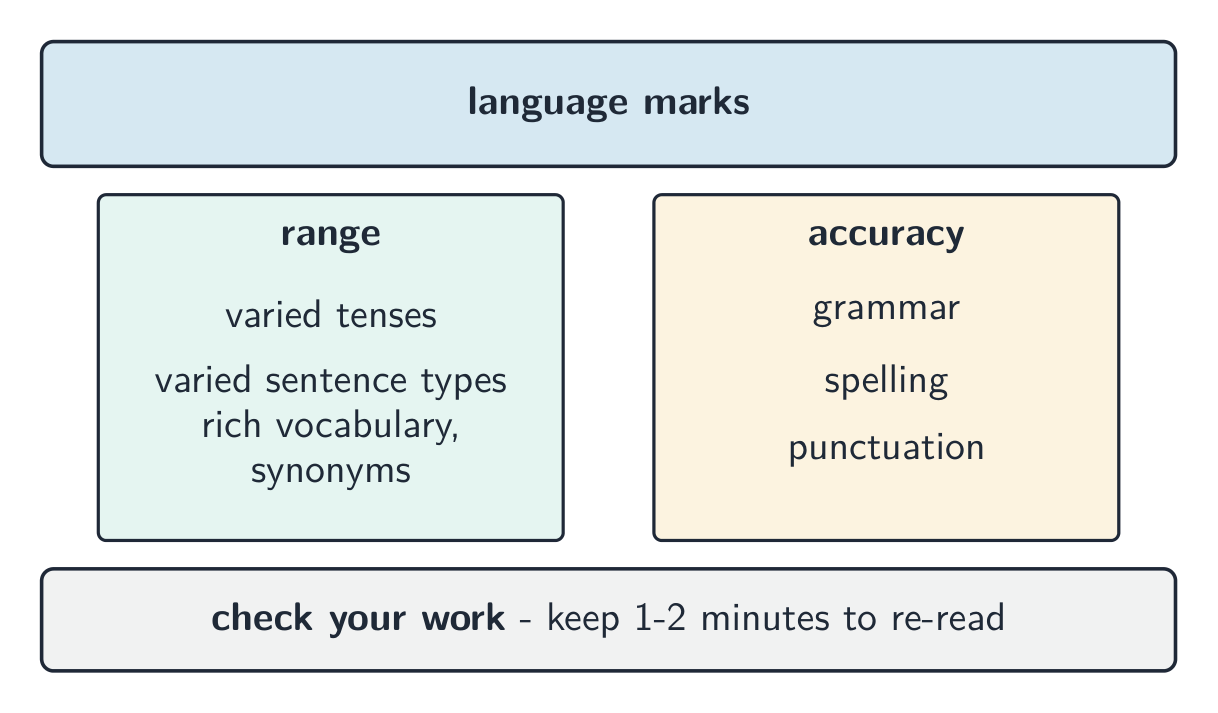
עמודים זוגיים המסומנים range וaccuracy נושאים גג המסומן language marks, ועומדים על בסיס שעליו כתוב check your work
ציוני השפה מבוססים על שני עמודים: מגוון ודיוק

הראה מגוון

  • השתמש בזמנים 时态 שונים ובסוגי משפט שונים. אל תכתוב כל משפט באותו אופן.
  • השתמש במגוון שלמילית 词汇. בחר מילה טובה מהמילה הפשוטה, והשתמש בסינונימים 同义词 כדי למנוע חזרה על עצמך.

דיוק

  • בדוק את הדקדוק 语法, הכתיב 拼写 והניקוד 标点.
  • שגיאות נפוצות הן התאמה בין ערך לנושא, זמני פעלים וחירוג אותיות גדולות.

בדוק את עבודתך

  • השאר דקה או שתיים לקריאה חוזרת של עבודתך.
  • חפש טעויות קטנות שניתן לתקן במהירות. בדיקה יכולה להציל מספר נקודות.
Vocabulary · ⁨מילון מונחים⁩ Train · ⁨אימון⁩
English עברית
range/reɪndʒ/ טווח
accuracy/ˈækjʊrəsi/ דיוק
tenses/ˈtensɪz/ זמנים
vocabulary/vəʊˈkæbjʊləri/ מילון
synonyms/ˈsɪnənɪmz/ סינונימים
grammar/ˈɡræmə/ דקדוק
spelling/ˈspelɪŋ/ כתיב
punctuation/ˌpʌŋktʃuːˈeɪʃn/ ניקוד
2.3

Exam tips · ⁨טיפים לבחינות⁩

English
  • Before you write, say your job in one line: "an informal email to a friend, to invite him to a picnic".
  • Cover every content point in the task. Examiners tick each point; a missing one costs marks at once.
  • Learn what 120 to 160 words of your handwriting looks like, so you never count in the exam.
  • Save the last five minutes to check your usual errors: verb -s, past forms, a / an / the.
  • A short correct sentence beats a long broken one every time.
עברית
  • לפני הכתיבה, סכם את המשימה בשורה אחת: "מייל לא-רשמי לחבר, להזמינו לפיקניק".
  • כסה כל נקודת תוכן במשימה. המתקנים מסמנים כל נקודה; נקודה שאינה מופיעה גורמת להפסדת נקודות מיד.
  • למד מה נראית 120 עד 160 מילים בכתיב יד שלך, כך שלא תצטרך לספור במהלך המבחן.
  • שמור על חמשת הדקות האחרונות לבדיקת הטעויות הרגילות שלך: s בפעלים, צורות עבר, a / an / the.
  • משפט קצר ונכון עדיף על משפט ארוך ומשובר בכל פעם.

Interactive lessons on this topic · ⁨שיעורים אינטראקטיביים בנושא זה⁩

Work through it step by step, with instant-check exercises. · ⁨לעבור על הדברים צעד אחר צעד, עם תרגילים לבדיקה מיידית.⁩

Past Papers · ⁨מבחני עבר⁩

More topics in IGCSE English · ⁨אנגלית IGCSE⁩ · ⁨נושאים נוספים בIGCSE English · ⁨אנגלית IGCSE⁩⁩

Log in or create account · ⁨היכנס או צור חשבון⁩

IGCSE, A-Level & AP