Skip to content · ⁨דלג לתוכן⁩

Transoceanic Interconnections · ⁨קישורים טרנס-אוקיינוסיים⁩

AP World History: Modern · ⁨היסטוריה עולמית: זמנים מודרניים - AP⁩ · Topic 4 · ⁨נושא 4⁩

Video lesson for this topic · ⁨שיעור וידאו לנושא זה⁩ Open the video page · ⁨פתח את עמוד הוידאו⁩
6:37

יחידה 4: קשרים חוצה-אוקיינוסים

תשאלו רוב התלמידים מדוע האירופאים הפליגו ותקבלו שמות – קולומבוס, דה גמה, מגלן. המגלה הוא התשובה הכי פחות שימושית הניתנת. מה שעשה בפועל…

English narration · English + 中文 subtitles burned in · ⁨קריאת קול באנגלית · תרגום אנגלי + סינית שרוף בתוך הסרטון⁩

4.1 4.2

Why Europeans Sailed · ⁨מדוע האירופאים הפליגו⁩

Syllabus · ⁨סיילבוס⁩

4.1 Technological Innovations from1450 to 1750

Thematic FocusLearning ObjectiveHistorical Developments

TEC
Technology and Innovation — Human adaptation and innovation have resulted in increased efficiency, comfort, and security, and technological advances have shaped human development and interactions with both intended and unintended consequences.

Unit 4.A
Explain how cross-cultural interactions resulted in the diffusion of technology and facilitated changes in patterns of trade and travel from 1450 to 1750.

  • KC-4.1.II Knowledge, scientific learning, and technology from the Classical, Islamic, and Asian worlds spread, facilitating European technological developments and innovation.
  • KC-4.1.II.A The developments included the production of new tools, innovations in ship designs, and an improved understanding of regional wind and currents patterns—all of which made transoceanic travel and trade possible.

Illustrative examples:

  • Innovations in ship design:
    • Caravel
    • Carrack
    • Fluyt
  • European technological developments influenced by cross-cultural interactions with the Classical, Islamic, and Asian worlds:
    • Lateen sail
    • Compass
    • Astronomical charts
English

4.2 Exploration: Causes and Events from 1450 to 1750

Thematic Focus (GOV): Governance — A variety of internal and external factors contribute to state formation, expansion, and decline. Governments maintain order through a variety of administrative institutions, policies, and procedures, and governments obtain, retain, and exercise power in different ways and for different purposes.

Learning Objective Unit 4.B: Describe the role of states in the expansion of maritime exploration from 1450 to 1750. THEMATIC FOCUS Economics Systems ECN As societies develop, they affect and are affected by the ways that they produce, exchange, and consume goods and services. LEARNING OBJECTIVE

  • KC-4.1.III New state-supported transoceanic maritime exploration occurred in this period. HISTORICAL DEVELOPMENTS

Learning Objective Unit 4.C: Explain the economic causes and effects of maritime exploration by the various European states.

  • KC-4.1.III.A Portuguese development of maritime technology and navigational skills led to increased travel to and trade with Africa and Asia and resulted in the construction of a global trading-post empire.
  • KC-4.1.III.B Spanish sponsorship of the voyages of Columbus and subsequent voyages across the Atlantic and Pacific dramatically increased European interest in transoceanic travel and trade.
  • KC-4.1.III.C Northern Atlantic crossings were undertaken under English, French, and Dutch sponsorship, often with the goal of finding alternative sailing routes to Asia.
עברית

4.2 חקירה: גורמים ואירועים משנת 1450 עד 1750

מיקוד נושא (GOV): שלטון — מגוון גורמים פנימיים וחיצוניים תורמים ליצירת מדינות, הרחבתן ונפילתן. ממשלות שומרות על סדר באמצעות מגוון מוסדות, מדיניות ונהלים מנהליים, וממשלות רוכשות, שומרות ומפעילות כוח בדרכים ובמטרות שונות.

מטרת הלמידה ליחידה 4.B: לתאר את תפקוד המדינות בהרחבת החקר הימי משנת 1450 ועד 1750. דגש נושאי: כלכלה מערכות ECN ככל שהחברות מתפתחות, הן משפיעות ונשפעות מהדרכים שבהן הן מייצרות, מחליפות ומצרכות סחורות ושירותים. מטרת למידה

  • KC-4.1.III נעשתה בתקופה זו חקירה ימית טרנס-אוקייאנית חדשה התומכת במדינה. התפתחויות היסטוריות

מטרת הלמידה ליחידה 4.C: להסביר את הגורמים וההשפעות הכלכליים של החקר הימי על ידי מדינות אירופאיות שונות.

  • KC-4.1.III.A פיתוח הטכנולוגיה הימית והיכולותניווט על ידי הפורטוגזים הביאו לעלייה בנסיעות מסחר עם אפריקה ואסיה והובילו לבניית אימפריה של בתי מסחר עולמיים.
  • KC-4.1.III.B הממון הספרדי לשייטי קולומבוס ולשייטים שלאחריו על פני האטלנטית והפסיפי הקיף באופן דרמטי את העניין האירופאי בנסיעות ומסחר טרנס-אוקייאניים.
  • KC-4.1.III.C מעבר האטלנטי הצפוני בוצע תחת חסות אנגלית, צרפתית והולנדית, לעיתים קרובות במטרה למצוא דרכי sailed חלופיות לאסיה.

Source: College Board AP Course and Exam Description · ⁨מקור: תיאור הקורס והמבחן של College Board AP⁩

English

Unit 4 covers 1450 to 1750 - the period in which the Eastern and Western Hemispheres are permanently joined, and the consequences of that joining.

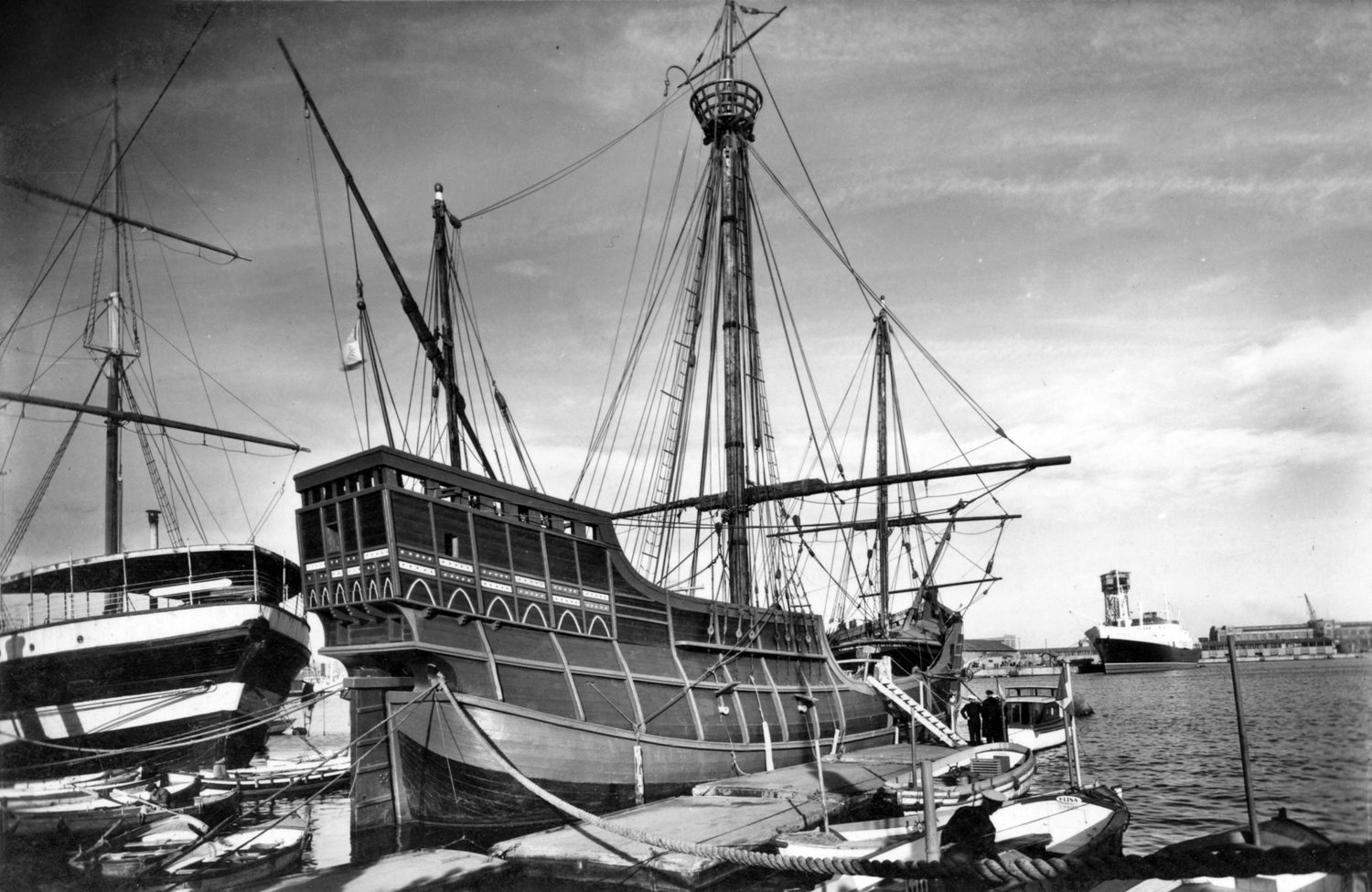
The voyages rested on borrowed knowledge. Learning and technology from the Classical, Islamic, and Asian worlds was gathered and applied in Europe: new tools, innovations in ship design 船舶设计, and better understanding of navigation 航海 - the caravel 卡拉维尔帆船, the astrolabe, the magnetic compass, and knowledge of wind patterns.

State-supported maritime exploration 国家支持的海上探索 then followed:

  • Portuguese development of maritime technology and navigational skill led to the sea route around Africa to the Indian Ocean.
  • Spanish sponsorship of Columbus and subsequent voyages opened the Atlantic to the Americas.
  • English, French, and Dutch crossings of the northern Atlantic followed.

Motives combined the search for wealth, competition between states, and religious mission.

עברית

הפרק 4 מכסה את התקופה מ-1450 עד 1750 - התקופה שבה החצי כדור הארץ המזרחי והמערבי נחברו לצמיתות, ובתוצאות חיבור זה.

המסעות התבססו על ידע מלווה. ידע וטכנולוגיה מהעולם הקלאסי, האסלאמי והאסייתי אוספו והוחלו באירופה: כלים חדשים, חדשנות בעיצוב ספינות, והבנה טובה יותר של ניווט - הקרבל, האסטרולאב, המצפן המגנטי, וידע על דפוסי רוח.

התגליות הימיות בתמיכת המדינה באו לאחר מכן:

  • פיתוח טכנולוגיית ימיות ויכולות ניווט פורטוגזיות הביאו למסלול ימי סביב אפריקה אל הים האינדי.
  • חסות ספרדית לקולומבוס ולמסעות שלאחריו פתחה את האטלנטי אל האמריקות.
  • מעבר אנגלים, צרפתים והולנדים באטלנטי הצפוני באו לאחר מכן.

המניעים שילבו את החיפוש אחרי עושר, התחרות בין מדינות, והמשימה הדתית.

ארבע תנאים הכרחיים, ולא מOtive אחד - ידע וכלים עדיין זקוקים למימן
מודל של קארבלה - עיצוב הספינה שאיפשר את המסעות הימיים
Explore · ⁨חקור⁩

Collect the four conditions for a voyage · ⁨אספו ארבעה תנאים להפלגה⁩

Knowledge, ship design, navigation and a sponsor: any three without the fourth produces no voyage. · ⁨ידע, עיצוב ספינה, ניווט ותומך: כל שלושה מבין ארבעה ללא הרביעי לא יובילו להפלגה.⁩

Vocabulary · ⁨מילון מונחים⁩ Train · ⁨אימון⁩
English עברית
ship design/ʃɪp dɪˈzaɪn/ עיצוב ספינות
navigation/ˌnævɪˈɡeɪʃn/ ניווט
caravel/ˈkærævl/ קרבלה
State-supported maritime exploration/steɪt səˈpɔːtɪd ˈmærɪtaɪm eksplɔːˈreɪʃn/ חקירה ימית נתמכת על ידי המדינה
4.3

The Columbian Exchange · ⁨החילופים הקולומביים⁩

Syllabus · ⁨סיילבוס⁩

4.3 Columbian Exchange

Thematic FocusLearning ObjectiveHistorical Developments

ENV
Humans and the Environments — The environment shapes human societies, and as populations grow and change, these populations in turn shape their environments.

Unit 4.D
Explain the causes of the Columbian Exchange and its effects on the Eastern and Western Hemispheres.

  • KC-4.1.V The new connections between the Eastern and Western Hemispheres resulted in the exchange of new plants, animals, and diseases, known as the Columbian Exchange.
  • KC-4.1.V.A European colonization of the Americas led to the unintentional transfer of disease vectors, including mosquitoes and rats, and the spread of diseases that were endemic in the Eastern Hemisphere, including smallpox, measles, and malaria. Some of these diseases substantially reduced the indigenous populations, with catastrophic effects in many areas.
  • KC-4.1.V.B American foods became staple crops in various parts of Europe, Asia, and Africa. Cash crops were grown primarily on plantations with coerced labor and were exported mostly to Europe and the Middle East.
  • KC-4.1.V.C Afro-Eurasian fruit trees, grains, sugar, and domesticated animals were brought by Europeans to the Americas, while other foods were brought by African enslaved persons.
  • KC-4.1.V.D Populations in Afro-Eurasia benefitted nutritionally from the increased diversity of American food crops.

Illustrative examples:

  • Domesticated animals:
    • Horses
    • Pigs
    • Cattle
  • Foods brought by African enslaved persons:
    • Okra
    • Rice

Source: College Board AP Course and Exam Description · ⁨מקור: תיאור הקורס והמבחן של College Board AP⁩

English

New connections between the hemispheres produced the Columbian Exchange 哥伦布大交换, and the CED spells out four consequences.

  • European colonisation led to the unintentional transfer of disease 疾病的非蓄意传播 to the Americas, causing catastrophic population loss.
  • American foods 美洲作物 - maize, potatoes, cassava - became staple crops in parts of Europe, Asia, and Africa.
  • Afro-Eurasian fruit trees, grains, sugar, and domesticated animals 驯化动物 were brought to the Americas, reshaping its landscapes and economies.
  • Populations in Afro-Eurasia benefited nutritionally 营养状况改善 from a more diverse diet, contributing to population growth.

The asymmetry is the examinable point: the same exchange raised population in Afro-Eurasia and destroyed it in the Americas.

עברית
ההחלפה הקולומביאית בשני הכיוונים, עם ההשפעה הדמוגרפית שהניעה את מסחר העבדים באטלנטיק
החלפה התרחשה בשני הכיוונים, אך ההשלכות לא היו סימטריות

קשרים חדשים בין חצאי הכדור הארצי הובילו להחלפה הקולומביאנית, ו-CED מפרט ארבע השלכות.

  • התיישבות אירופית הביאה להעברת מחלות בלתי רצונית לאמריקות, וגרמה לאובדן אוכלוסייה קטסטרופלי.
  • מזונות אמריקאים – תירס, תפוחי אדמה, קסבה – הפכו לתבואה עיקרית בחלקים מאירופה, אסיה ואפריקה.
  • עצים פריים, דגנים, סוכר ובעלי חיים מבויתים מאפרו-אוראסיה הובאו לאמריקות, ומייצרים את הנוף והכלכלה שלה מחדש.
  • האוכלוסיות באפרו-אוראסיה התעשרו מזון בזכות תזונה מגוונת יותר, מה שתרם לגידול האוכלוסייה.

הלא-סימטריה היא הנקודה הנבדקת: אותה החלפה העלתה את האוכלוסייה באפרו-אוראסיה והשמידה אותה באמריקות.

Vocabulary · ⁨מילון מונחים⁩ Train · ⁨אימון⁩
English עברית
Columbian Exchange/kəˈlʌmbɪən eksˈtʃeɪndʒ/ החלפה הקולומביה
unintentional transfer of disease/ˌʌnɪnˈtenʃənl ˈtrænsfɜː ɒv dɪˈziːz/ העברת מחלות לא רצונית
American foods/əˈmerɪkən fuːdz/ מזון אמריקאי
domesticated animals/dəˈmestɪkeɪtɪd ˈænɪmlz/ בעלי חיים מבויתים
benefited nutritionally/ˈbenɪfɪtɪd njuːˈtrɪʃənəli/ הפרעה תזונתית
trading posts/ˈtreɪdɪŋ pəʊsts/ נוקדות מסחר
rivalries/ˈraɪvəlriz/ יריבויות
4.4

Maritime Empires Established · ⁨אימפריות ימיות נוספו⁩

Syllabus · ⁨סיילבוס⁩
English

4.4 Maritime Empires Established

Thematic Focus (GOV): Governance — A variety of internal and external factors contribute to state formation, expansion, and decline. Governments maintain order through a variety of administrative institutions, policies, and procedures, and governments obtain, retain, and exercise power in different ways and for different purposes.

Thematic Focus (ECN): Economics Systems — As societies develop, they affect and are affected by the ways that they produce, exchange, and consume goods and services.

Learning Objective Unit 4.E: Explain the process of state building and expansion among various empires and states in the period from 1450 to 1750.

  • KC-4.3.II.A.i Europeans established new trading posts in Africa and Asia, which proved profitable for the rulers and merchants involved in new global trade networks. Some Asian states sought to limit the disruptive economic and cultural effects of European-dominated long-distance trade by adopting restrictive or isolationist trade policies.
  • KC-4.3.II.C Driven largely by political, religious, and economic rivalries, European states established new maritime empires, including the Portuguese, Spanish, Dutch, French, and British.
  • KC-4.3.II.A.ii The expansion of maritime trading networks fostered the growth of states in Africa, including the Asante and the Kingdom of the Kongo, whose participation in trading networks led to an increase in their influence.

Learning Objective Unit 4.F: Explain the continuities and changes in economic systems and labor systems from 1450 to 1750. THEMATIC FOCUS Social Interactions and Organization SIO The process by which societies group their members and the norms that govern the interactions between these groups and between individuals influence political, economic, and cultural institutions and organization. LEARNING OBJECTIVE

  • KC-4.3.II.A.iii Despite some disruption and restructuring due to the arrival of Portuguese, Spanish, and Dutch merchants, existing trade networks in the Indian Ocean continued to flourish and included intra-Asian trade and Asian merchants.
  • KC-4.2.II.D Newly developed colonial economies in the Americas largely depended on agriculture, utilized existing labor systems, including the Incan mit’a, and introduced new labor systems including chattel slavery, indentured servitude, and encomienda and hacienda systems. HISTORICAL DEVELOPMENTS

Learning Objective Unit 4.G: Explain changes and continuities in systems of slavery in the period from 1450 to 1750.

  • KC-4.2.II.B Enslavement in Africa continued in its traditional forms, including incorporation of enslaved persons into households and the export of enslaved persons to the Mediterranean and the Indian Ocean regions.
  • KC-4.2.II.C The growth of the plantation economy increased the demand for enslaved labor in the Americas, leading to significant demographic, social, and cultural changes.

Illustrative examples:

  • Asian states that adopted restrictive or isolationist trade policies:
    • Ming China
    • Tokugawa Japan
  • (CONT’D) Indian Ocean Asian merchants:
    • Swahili Arabs
    • Omanis
    • Gujaratis
    • Javanese
עברית

4.4 אימפריות ימיות שהוקמו

מיקוד נושא (GOV): שלטון — מגוון גורמים פנימיים וחיצוניים תורמים ליצירת מדינות, הרחבתן ונפילתן. ממשלות שומרות על סדר באמצעות מגוון מוסדות, מדיניות ונהלים מנהליים, וממשלות רוכשות, שומרות ומפעילות כוח בדרכים ובמטרות שונות.

הדגשה נושאית (ECN): מערכות כלכליות — כאשר חברות מתפתחות, הן משפיעות ומושפעות מהדרך שבהן הן מייצרות, מחליפות וצורכות סחורות ושירותים.

מטרת למידה יחידה 4.E: הסבר תהליך בניית המדינה וההתפשטות של אימפריות ומדינות שונות בתקופה שבין 1450 ל-1750.

  • KC-4.3.II.A.i האירופאים הקימו עמדות מסחר חדשות באפריקה ובאסיה, שהוכיחו כרווחיות עבור השולטים והסוחרים המעורבים ברשתות סחר גלובליות חדשות. חלק ממדינות אסיה נסו להגביל את ההשפעות הכלכליות והתרבותיות המערערות של הסחר הנייד המדומה על ידי אירופה, על ידי קביעת מדיניות סחר מגבלתית או בודדיםית.
  • KC-4.3.II.C נתמחים בעיקר על ידי יריבויות פוליטיות, דתיות וכלכליות, מדינות אירופה הקימו אימפריות ימיות חדשות, כולל הפורטוגזים, הספרדים, ההולנדים, הצרפתים והבריטים.
  • KC-4.3.II.A.ii הרחבת רשתות הסחר הימיות עודדה את צמיחתן של מדינות באפריקה, כולל האסאנטה וממלכת הקונגו, שהשתתפותם ברשתות הסחר הביאה לעלייה בהשפעתן.

מטרת למידה יחידה 4.F: הסבר המשכיות ושינויים במערכות כלכליות ומערכות עבודה מתוך תקופה 1450 עד 1750. פוקוס נושאאי: אינטראקציות חברתיות וארגון SIO התהליך שבו חברות מקבוצות את חבריהן והנורמות המכוונות את האינטראקציות בין קבוצות אלו ובין פרטים משפיעים על מוסדות וארגונים פוליטיים, כלכליים ותרבותיים. מטרת למידה

  • KC-4.3.II.A.iii למרות הפרעות ומבנים מחודשים בשל הגעתם של סוחרים פורטוגזים, ספרדים והולנדים, רשתות הסחר הקיימות באוקיינוס ההודי המשיכו לפרוח וכלללו סחר תוך-אסייתי וסוחרים אסייתים.
  • KC-4.2.II.D כלכלות המושבה החדשות שהתפתחו באמריקות הסתמכו בעיקר על חקלאות, השתמשו במערכות עבודה קיימות, כולל המיטה האינקית, והכניסו מערכות עבודה חדשות כולל עבדות נכס, שירותיות מוזמנת, ומערכות אנקומינדה וסקינדה. התפתחויות היסטוריות

מטרת למידה יחידה 4.G: הסבר שינויים ומשמרים במערכות העבדות בתקופה שבין 1450 ל-1750.

  • KC-4.2.II.B העיבדות באפריקה המשיכה בצורותיה המסורתיות, כולל שילוב עבדים בבתי משפחה ויצוא עבדים לאזורי הים התיכון ואוקיינוס ההודי.
  • KC-4.2.II.C צמיחתה של הכלכלת הנטיעות הגבירה את הביקוש לעבודת עבדים באמריקות, מה שהוביל לשינויים דמוגרפיים, חברתיים ותרבותיים משמעותיים.

דוגמאות מדגמיות:

  • מדינות אסיה שאמצו מדיניות סחר מגבלתית או בודדיםית:
    • סין מינג
    • יפן טוקוגאו
  • (המשך) סוחרים אסייתים באוקיינוס ההודי:
    • ערבי סוואהילי
    • עומאנים
    • ג'וראטיים
    • יאווניים

Source: College Board AP Course and Exam Description · ⁨מקור: תיאור הקורס והמבחן של College Board AP⁩

English

Europeans established trading posts 商站 in Africa and Asia, which proved profitable, and pursued colonisation in the Americas driven by political, religious, and economic rivalries 对抗.

Where existing states were strong, Europeans traded rather than conquered: despite disruption caused by Portuguese arrival, existing trade networks in the Indian Ocean continued, and Asian states largely dictated the terms.

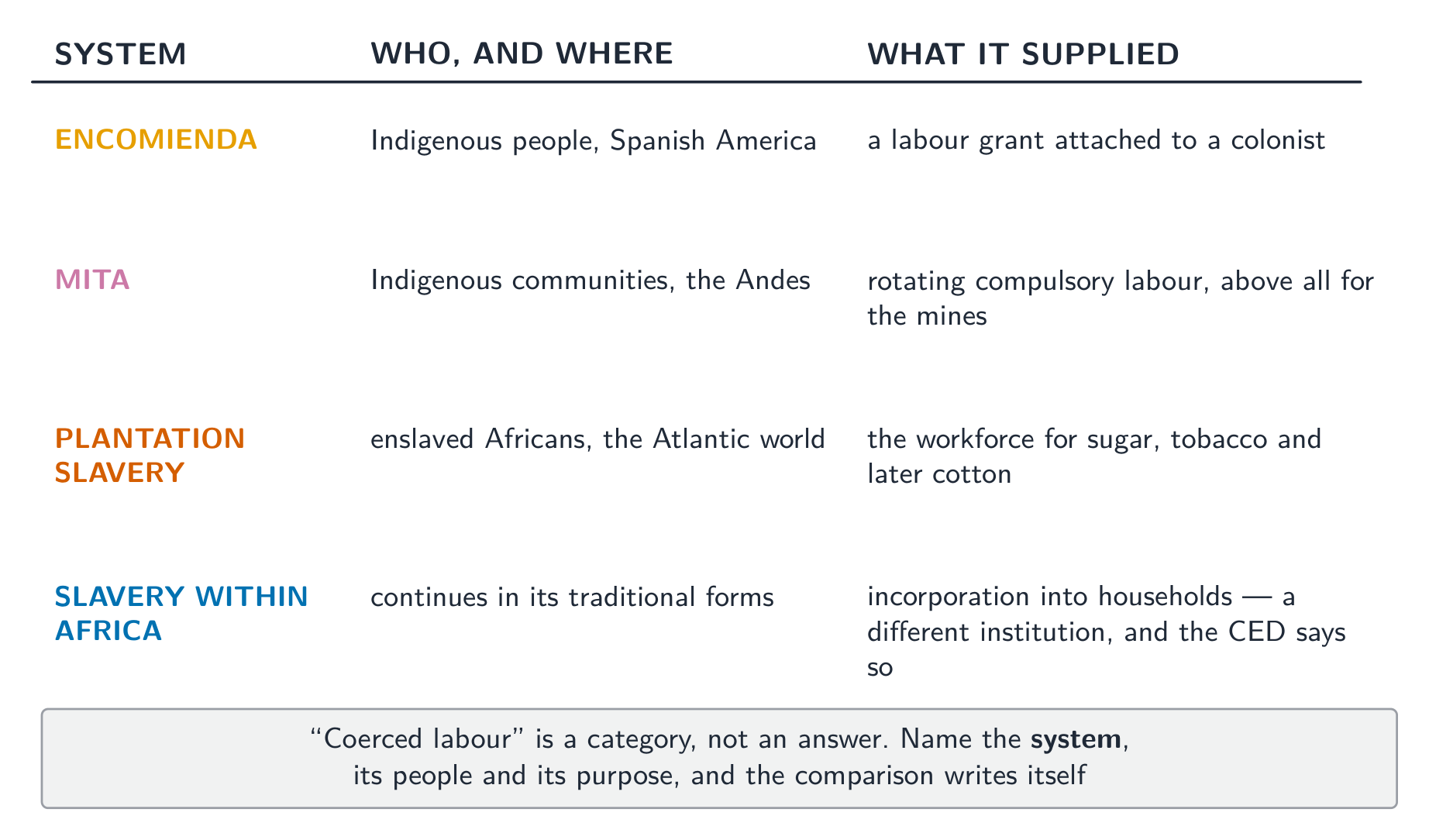
In the Americas the pattern was different. Colonial economies depended on agriculture and on coerced labour 强制劳动:

  • Enslavement in Africa continued in its traditional forms, including incorporation into households.
  • The growth of the plantation economy 种植园经济 increased demand for enslaved labour, and the Atlantic slave trade expanded enormously to supply it.
  • Systems such as the encomienda and mita 米塔制 compelled Indigenous labour.
עברית

אירופאים הקימו נקודות מסחר באפריקה ובאסיה, שהוכיחו כרווחיות, ורדפו אחרי התיישבות באמריקות בהשפעת מתחרויות פוליטיות, דתיות וכלכליות.

כאשר מדינות קיימות היו חזקות, אירופאים מסחרו במקום לכבוש: למרות ההפרעה שנגרמה מהגעת הפורטוגזים, רשתות המסחר בקו האוקיינוס ההודי המשיכו, והמדינות האסייתיות קבעו בעיקר את התנאים.

באמריקות הדפוס היה שונה. כלכלות המושבות הסתמכו על חקלאות ועל עבודת כפייה:

  • העבדה באפריקה המשיכה בצורותיה המסורתיות, כולל הכללה לתוך משקי הבית.
  • צמיחת הכלכלה של הפלנטציות הגברה את הביקוש לעובדים עבדים, והסחר בעבדים באטלנטי התרחב באופן עצום כדי לספק אותו.
  • מערכות כמו אנקומינדה ומיטה הכריחו עבודה מקומית.
ארבע מערכות עבודת כפייה המובדלות לפי מי, היכן, ומה כל אחת ספקה
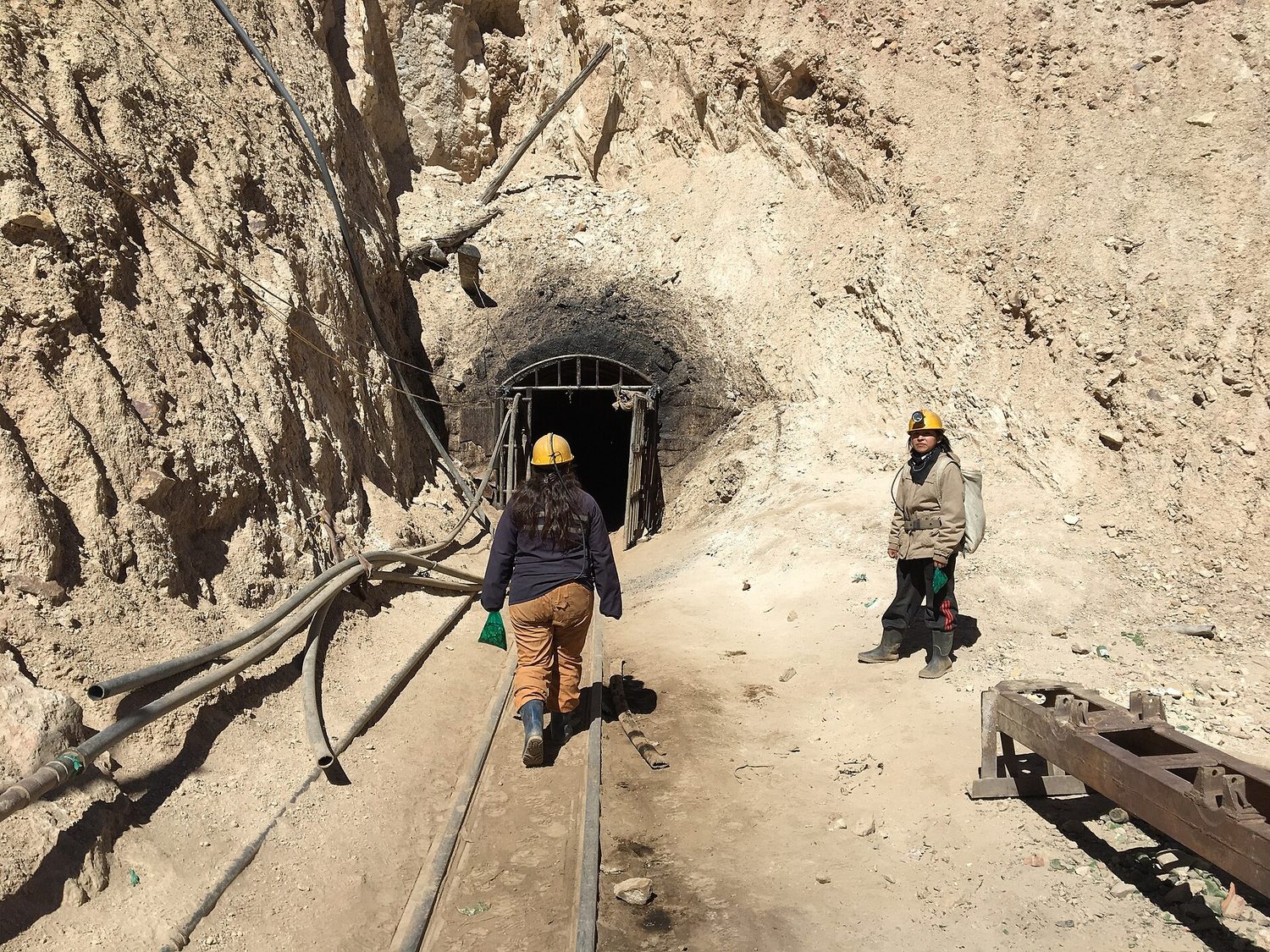
סרו ריקו בפוטוסי - ההר שבו אורגנה מערכת עבודת המיטה
Explore · ⁨חקור⁩

Tell the coerced-labour systems apart · ⁨להבין את הבדלים בין מערכות העבודה המאולצת⁩

'Coerced labour' is a category, not an answer: name the system, its people and its purpose. · ⁨'עבודה מאולצת' היא קטגוריה, לא תשובה: יש לציין את שם המערכת, את אנשיה ואת מטרתה.⁩

Vocabulary · ⁨מילון מונחים⁩ Train · ⁨אימון⁩
English עברית
coerced labour/ˌkəʊˈɜːst ˈleɪbə/ עבודה מוכרעת
plantation economy/plænˈteɪʃn ɪˈkɒnəmi/ כלכלת פלאנטיציה
mita/ˈmiːtə/ מיטה
Mercantilist/ˈmɜːkæntɪlɪst/ מרקantilist (מרקנטיליסטי)
Atlantic trading system/ətˈlæntɪk ˈtreɪdɪŋ ˈsɪstəm/ מערכת המסחר האטלנטית
social hierarchies/ˈsəʊʃl ˈhaɪərɑːkiz/ היררכיות חברתיות
rebellion/rɪˈbelɪən/ מרידה
maroon communities/məˈruːn kəˈmjuːnɪtiz/ קהילות מרון
4.5 4.7

Maritime Empires Maintained · ⁨אימפריות ימיות שומרו⁩

Syllabus · ⁨סיילבוס⁩
English

4.5 Maritime Empires Maintained and Developed

Thematic Focus (GOV): Governance — A variety of internal and external factors contribute to state formation, expansion, and decline. Governments maintain order through a variety of administrative institutions, policies, and procedures, and governments obtain, retain, and exercise power in different ways and for different purposes.

Thematic Focus (ECN): Economics Systems — As societies develop, they affect and are affected by the ways that they produce, exchange, and consume goods and services.

Thematic Focus (CDI): Cultural Developments and Interactions — The development of ideas, beliefs, and religions illustrates how groups in society view themselves, and the interactions of societies and their beliefs often have political, social, and cultural implications.

Learning Objective Unit 4.H: Explain how rulers employed economic strategies to consolidate and maintain power throughout the period from 1450 to 1750.

  • KC-4.1.IV.C Mercantilist policies and practices were used by European rulers to expand and control their economies and claim overseas territories. Joint-stock companies, influenced by these mercantilist principles, were used by rulers and merchants to finance exploration and were used by rulers to compete against one another in global trade.
  • KC-4.3.III.ii Economic disputes led to rivalries and conflict between states.

Learning Objective Unit 4.I: Explain the continuities and changes in networks of exchange from 1450 to 1750. THEMATIC FOCUS Social Interactions and Organization SIO The process by which societies group their members and the norms that govern the interactions between these groups and between individuals influence political, economic, and cultural institutions and organization. LEARNING OBJECTIVE

  • KC-4.1.IV.D.i The Atlantic trading system involved the movement of goods, wealth, and labor, including enslaved persons.
  • KC-4.1.IV The new global circulation of goods was facilitated by chartered European monopoly companies and the global flow of silver, especially from Spanish colonies in the Americas, which was used to purchase Asian goods for the Atlantic markets and satisfy Chinese demand for silver. Regional markets continued to flourish in Afro-Eurasia by using established commercial practices and new transoceanic and regional shipping services developed by European merchants.
  • KC-4.2.II.A Peasant and artisan labor continued and intensified in many regions as the demand for food and consumer goods increased. HISTORICAL DEVELOPMENTS

Learning Objective Unit 4.J: Explain how political, economic, and cultural factors affected society from 1450 to 1750.

  • KC-4.2.III.C Some notable gender and family restructuring occurred, including demographic changes in Africa that resulted from the trade of enslaved persons.
  • KC-4.1.IV.D.ii The Atlantic trading system involved the movement of labor—including enslaved persons and the mixing of African, American, and European cultures and peoples, with all parties contributing to this cultural synthesis.

Learning Objective Unit 4.K: Explain the similarities and differences in how various belief systems affected societies from 1450 to 1750.

  • KC-4.1.VI In some cases, the increase and intensification of interactions between newly connected hemispheres expanded the reach and furthered development of existing religions, and contributed to religious conflicts and the development of syncretic belief systems and practices.

Illustrative examples:

  • Competition over trade routes:
    • Muslim–European rivalry in the Indian Ocean
    • Moroccan conflict with the Songhai Empire
  • (CONT’D) Increased peasant and artisan labor:
    • Western Europe— wool and linen
    • India—cotton
    • China—silk
עברית

4.5 אימפריות ימיות שומרו ופותחו

מיקוד נושא (GOV): שלטון — מגוון גורמים פנימיים וחיצוניים תורמים ליצירת מדינות, הרחבתן ונפילתן. ממשלות שומרות על סדר באמצעות מגוון מוסדות, מדיניות ונהלים מנהליים, וממשלות רוכשות, שומרות ומפעילות כוח בדרכים ובמטרות שונות.

הדגשה נושאית (ECN): מערכות כלכליות — כאשר חברות מתפתחות, הן משפיעות ומושפעות מהדרך שבהן הן מייצרות, מחליפות וצורכות סחורות ושירותים.

מיקוד נושא (CDI): התפתחויות ותفاعלים תרבותיים — פיתוח רעיונות, אמונות ודתות מדגיש כיצד קבוצות בחברה רואות את עצמן, והתفاعלים בין חברות ואמונותיהן לעיתים קרובות יש להם משמעויות פוליטיות, חברתיות ותרבותיות.

מטרת למידה יחידה 4.H: הסבר כיצד שלטים השתמשו באסטרטגיות כלכליות לקונסולידציה ולשמירה על כוח לאורך התקופה שבין 1450 ל-1750.

  • KC-4.1.IV.C מדיניות ומעשים מרקנטיליסטיים שימשו את השליטים האירופיים להרחבה ולשליטה בכלכלותיהם ולהתחייבות בשטחי מעבר לים. חברות מניות, שנמצאו תחת ערכי המרקנטיליזם, שימשו את השליטים והסוחרים לממון חקירות ימיות ושימשו את השליטים להתחרות זה בזה במסחר גלובלי.
  • KC-4.3.III.ii מחלוקות כלכליות הובילו לתחרויות ולסכסוך בין מדינות.

מטרות לימוד ליחידה 4.I: הסביר את הרצף והשינויים ברשתות החלפה מתאריך 1450 ועד 1750. פוקוס נושאי אינטראקציות חברתיות וארגון SIO התהליך שבו קבוצות חברתיות מקבצות את חבריהן והנורמות שמכוונות את האינטראקציות בין קבוצות אלו ובין פרטים משפיעות על מוסדות וארגונים פוליטיים, כלכליים ותרבותיים. מטרת לימוד

  • KC-4.1.IV.D.i מערכת המסחר באוקיינוס האטלנטי כללה הזזת סחורות, עושר ועבודה, כולל אנשים עבדים.
  • KC-4.1.IV ההתגלגלות הגלובלית החדשה של סחורות נועלה על ידי חברות מונופול מצויות רישיון אירופיות וזרימת הכסף הגלובלית, במיוחד מהמושבות הספרדיות באמריקה, שהושקעה לרכישת סחורות אסיאתיות לשוקי האטלנטי ולסיפוק הביקוש הסיני לכסף. שווקים אזוריים המשיכו לפרוח באפריה-אוראסיה באמצעות שימוש בתרגולי מסחר מקובלים ושירותי משלוח חדשים טרנס-אוקייאניים ואזוריים שפותחו על ידי סוחרים אירופיים.
  • KC-4.2.II.A עבודת הפועלים והבעלי מלאכה המשיכה והתעצמה באזורים רבים כאשר הביקוש למזון ולסחורות צריכה עלה. התפתחויות היסטוריות

מטרות לימוד ליחידה 4.J: הסביר כיצד גורמים פוליטיים, כלכליים ותרבותיים השפיעו על החברה מתאריך 1450 ועד 1750.

  • KC-4.2.III.C התרחשו שינויים בולטים במבנה מגדר ומשפחה, כולל שינויים דמוגרפיים באפריה שנובעו ממסחר העבדים.
  • KC-4.1.IV.D.ii מערכת המסחר באוקיינוס האטלנטי כללה הזזת עבודה—כולל אנשים עבדים—ומעורבבות של תרבויות ואנשים אפריקאים, אמריקאים ואירופיים, כאשר כל הצדדים תרמו לסנתזה התרבותית זו.

מטרות לימוד ליחידה 4.K: הסביר את הדמיון וההבדלים בכיצד מערכות אמונה שונות השפיעו על החברה מתאריך 1450 ועד 1750.

  • KC-4.1.VI במקרים מסוימים, העלייה וההתעצמות של האינטראקציות בין חצי הכדורים המתחברים החדשים הרחיבו את ההשפעה וקידמו את פיתוח הדתות הקיימות, ותרומו לסכסוכים דתיים ולפיתוח מערכות אמונה ופעולות סנקרטטיות.

דוגמאות מדגמיות:

  • תחרות על מסלולי המסחר:
    • תחרות מוסלמית-אירופית באוקיינוס ההודי
    • הסכסוך המרוקאי עם האימפריה של סונגהאי
  • (המשך) עלייה בעבודת הפועלים והבעלי מלאכה:
    • אירופה המערבית—צמר ופשתן
    • הודו—כותנה
    • סין—משי

4.7 Changing Social Hierarchies from1450 to 1750

Thematic FocusLearning ObjectiveHistorical Developments

SIO
Social Interactions and Organization — The process by which societies group their members and the norms that govern the interactions between these groups and between individuals influence political, economic, and cultural institutions and organization.

Unit 4.M
Explain how social categories, roles, and practices have been maintained or have changed over time.

  • KC-4.3.I.B Many states, such as the Mughal and Ottoman empires, adopted practices to accommodate the ethnic and religious diversity of their subjects or to utilize the economic, political, and military contributions of different ethnic or religious groups. In other cases, states suppressed diversity or limited certain groups’ roles in society, politics, or the economy.
  • KC-4.2.III.A Imperial conquests and widening global economic opportunities contributed to the formation of new political and economic elites, including in China with the transition to the Qing Dynasty and in the Americas with the rise of the Casta system.
  • KC-4.2.III.B The power of existing political and economic elites fluctuated as the elites confronted new challenges to their ability to affect the policies of the increasingly powerful monarchs and leaders.

Illustrative examples:

  • Differential treatment of groups in society, politics, and the economy:
    • Expulsion of Jews from Spain and Portugal; the acceptance of Jews in the Ottoman Empire
    • Restrictive policies against Han Chinese in Qing China
    • Varying status of different classes of women within the Ottoman Empire
  • Existing elites:
    • Ottoman timars
    • Russian boyars
    • European nobility

Source: College Board AP Course and Exam Description · ⁨מקור: תיאור הקורס והמבחן של College Board AP⁩

English

Mercantilist 重商主义 policies were used by European rulers to expand and control their economies: colonies existed to supply raw materials and buy finished goods, and trade was directed through the mother country.

The Atlantic trading system 大西洋贸易体系 moved goods, wealth, and people between Europe, Africa, and the Americas - the pattern usually taught as triangular trade, though real routes were more complex.

Economic disputes led to rivalries and conflict between states, and commercial competition became a standing cause of European war.

Colonial societies developed new social hierarchies 社会等级, defined by ancestry and by place of birth - the Spanish casta system being the most formally codified.

עברית

מדיניות מרקantilist שימשו על ידי שליטי אירופה להרחיב ולשלוט בכלכלותיהם: המושבות קיימו כדי לספק חומרי גלם ולקנות סחורות מוגמרות, והמסחר הופנה דרך המדינה האם.

מערכת המסחר באטלנטי הזיזה סחורות, עושר ואנשים בין אירופה, אפריקה ואמריקות - הדפוס שמלמד בדרך כלל כמסחר משולש, אף שנתבי המסחר האמיתיים היו מורכבים יותר.

מחלוקות כלכליות הובילו למתחרויות ולסכסוך בין מדינות, והתחרות המסחרית הפכה לגורם מתמשך במלחמות אירופה.

החברות המושבתיות פיתחו היררכיות חברתיות חדשות, שהוגדרו על פי ייחוס ועל פי מקום הלידה - כאשר מערכת הקסטות הספרדית הייתה המערכת הממוסדת ביותר.

4.6

Internal and External Challenges · ⁨אתגרים פנימיים וחיצוניים⁩

Syllabus · ⁨סיילבוס⁩
English

4.6 Internal and External Challenges to State Power from 1450 to 1750

Thematic Focus (GOV): Governance — A variety of internal and external factors contribute to state formation, expansion, and decline. Governments maintain order through a variety of administrative institutions, policies, and procedures, and governments obtain, retain, and exercise power in different ways and for different purposes.

Learning Objective Unit 4.L: Explain the effects of the development of state power from 1450 to 1750.

  • KC-4.3.III.iii State expansion and centralization led to resistance from an array of social, political, and economic groups on a local level.
  • KC-5.3.III.C Enslaved persons challenged existing authorities in the Americas through organized resistance.

Illustrative examples:

  • Local resistance:
    • Pueblo Revolts
    • Fronde
    • Cossack revolts
    • Maratha conflict with Mughals
    • Ana Nzinga’s resistance (as ruler of Ndongo and Matamba)
    • Metacom’s War (King Philip’s War)
  • Resistance of enslaved persons:
    • The establishment of Maroon societies in the Caribbean and Brazil
    • Resistance of enslaved persons in North America
עברית

4.6 אתגרים פנימיים וחיצוניים לעוצמת המדינה מתאריך 1450 ועד 1750

מיקוד נושא (GOV): שלטון — מגוון גורמים פנימיים וחיצוניים תורמים ליצירת מדינות, הרחבתן ונפילתן. ממשלות שומרות על סדר באמצעות מגוון מוסדות, מדיניות ונהלים מנהליים, וממשלות רוכשות, שומרות ומפעילות כוח בדרכים ובמטרות שונות.

מטרות לימוד ליחידה 4.L: הסביר את ההשפעות של פיתוח עוצמת המדינה מתאריך 1450 ועד 1750.

  • KC-4.3.III.iii הרחבה ומרכזיות הובילו להתנגדות מצד מגוון קבוצות חברתיות, פוליטיות וכלכליות ברמה המקומית.
  • KC-5.3.III.C עבדים התנגדו לסמכויות הקיימות באמריקות דרך התנגדות מאורגנת.

דוגמאות מדגמיות:

  • התנגדות מקומית:
    • מרדינות פואבלו
    • פרונד
    • מרדינות הקוזאקים
    • הסכסוך המראטה עם המוגולים
    • ההתנגדות של אנה ניזינגה (כשלטנית אנדונגו ומטמבה)
    • מלחמת מתקומם (מלחמת המלך פיליפ)
  • התנגדות של עבדים:
    • הקמת קהילות מרונון בקריבי ובברזיל
    • התנגדות של עבדים בצפון אמריקה

Source: College Board AP Course and Exam Description · ⁨מקור: תיאור הקורס והמבחן של College Board AP⁩

English

Rulers everywhere faced resistance. Enslaved people resisted through rebellion 起义 and maroon communities 逃奴社群; Indigenous peoples resisted colonial demands; peasants and religious groups challenged state power across Eurasia.

עברית

שלטונים בכל מקום נפגעו מהתנגדות. עבדים התנגדו דרך מרידות וקהילות מרונות; תושבים ילידים התנגדו לדרישות המושבה; חקלאים וקבוצות דתיות אתגרו את סמכות המדינה ברחבי אוראסיה.

מרידה והתיישבות בקהילות מרונות הן שתי תגובות שונות לסדר שנכפה
4.8

Continuity and Change from 1450 to 1750 · ⁨רצף ומעבר בין השנים 1450 ל-1750⁩

Syllabus · ⁨סיילבוס⁩
English

4.8 Continuity and Change from 1450 to 1750

Learning Objective Unit 4.N: Explain how economic developments from 1450 to 1750 affected social structures over time.

  • KC-4.1 The interconnection of the Eastern and Western Hemispheres, made possible by transoceanic voyaging, transformed trade and had a significant social impact on the world.
    • KC-4.1.II Knowledge, scientific learning, and technology from the Classical, Islamic, and Asian worlds spread, facilitating European technological developments and innovation.
    • KC-4.1.II.A The developments included the production of new tools, innovations in ship designs, and an improved understanding of regional wind and currents patterns—all of which made transoceanic travel and trade possible.
  • KC-4.2 Although the world’s productive systems continued to be heavily centered on agriculture, major changes occurred in agricultural labor, the systems and locations of manufacturing, gender and social structures, and environmental processes.
    • KC-4.2.II The demand for labor intensified as a result of the growing global demand for raw materials and finished products. Traditional peasant agriculture increased and changed in nature, plantations expanded, and the Atlantic slave trade developed and intensified.
  • KC-4.3 Empires achieved increased scope and influence around the world, shaping and being shaped by the diverse populations they incorporated.
    • KC-4.3.III.ii Economic disputes led to rivalries and conflict between states.
עברית

4.8 רציפות ושינויים בין 1450 ל-1750

יעד למידה ליחידה 4.N: הסבר כיצד פיתוחים כלכליים בין 1450 ל-1750 השפיעו על המבנים החברתיים לאורך הזמן.

  • KC-4.1 הקישוריות בין חצי הכדור המזרחי למערבי, שהיאפשרה באמצעות הפלגות מולט-אוקייניות, שינתה את המסחר והייתה בעלת השפעה חברתית משמעותית על העולם.
    • KC-4.1.II ידע, למידה מדעית וטכנולוגיה ממזרח התיכון, העולם האסלאמי והאסייתי התפשטו, וקידמו פיתוחים וחדשנות טכנולוגיים באירופה.
    • KC-4.1.II.A הפיתוחים כללו ייצור כלי עבודה חדשים, חדשנות בעיצוב ספינות, והבנה משופרת של דפוסי רוח ואגמים אזוריים—כל אלו איפשרו מסע ומסחר מולט-אוקייני.
  • KC-4.2 למרות שמערכות הייצור העולמיות המשיכו להיות ממוקדות במידה רבה בחקלאות, התרחשו שינויים גדולים בעבודת חקלאית, במערכות ובמיקומי הייצור, במבנים מגדרים וחברתיים, ובתהליכים סביבתיים.
    • KC-4.2.II הביקוש לעבודה התגבר כתוצאה מהביקוש הגובר בעולם לחומרי גלם ולמוצרים מוגמרים. חקלאות כפרית מסורתית צמה ושונה באופי שלה, פלנטציות התרחבו, ומסחר העבדים באטלנטי התפתח והתגבר.
  • KC-4.3 האימפריות השיגו היקף והשפעה מוגברים בכל רחבי העולם, עיצבו את אוכלוסיות המגוון שהשתלבו בהן והיו עצמן מעוצבות על ידי אלו.
    • KC-4.3.III.ii מחלוקות כלכליות הובילו להתחרויות ולמלחמות בין מדינות.

Source: College Board AP Course and Exam Description · ⁨מקור: תיאור הקורס והמבחן של College Board AP⁩

English

The unit's reasoning skill is continuity and change. The strongest answers hold both: connection between hemispheres was genuinely new, while the dominance of agriculture, coerced labour, and land empires continued.

Worked example (a real AP exam question). AP World short-answer questions in this unit ask, for example, to "Explain one effect of the Columbian Exchange on the Americas" and "…on Afro-Eurasia." A full-mark pair states the effect and the mechanism for each: "In the Americas, transferred diseases such as smallpox caused a demographic collapse, which created the labour shortage that European colonisers met by expanding the Atlantic slave trade. In Afro-Eurasia, American crops such as the potato and maize improved nutrition and contributed to population growth." Notice the shape: effect questions want the consequence traced, and the two halves must not be the same answer twice.

עברית

מיומנות החשיבה של היחידה היא רצף ומעבר. התשובות החזקות ביותר משלבות שניהן: הקשר בין חצי הכדורים היה חדש באמת, בעוד שהדומיננטיות של חקלאות, עבודה מאולצת ואימפריות קרקע המשיכו להתקיים.

דוגמה מפורטת (שאלה אמיתית מבחינת AP). שאלות התשובה הקצרה בבחינת AP ביחידה זו שואלות, למשל, "הסבר השפעה אחת של ההחלפה הקולומביית על האמריקות" ו*"…על אפרו-אוראסיה."* זוג תשובות מלאות מקבלות נקודות מלאות מציין את ההשפעה והמנגנון עבור כל אחד: "באמריקות, מחלות שהועברו כמו אבעבות גרמו לקריסה דמוגרפית, שיצרה מחסור בעבודה שמשקיפי אירופה פתרו על ידי הרחבת מסחר העבדים באטלנטי. באפרו-אוראסיה, יבולים אמריקאים כמו תפוח אדמה ותירס שיפרו תזונה ותרמו לגידול אוכלוסייה." שים לב לצורה: שאלות השפעה דורשות מעקב אחר התוצאה, ושתי החלקים לא יכולים להיות אותה תשובה פעמיים.

4.8

Exam tips · ⁨טיפים לבחינות⁩

English
  • Explain the voyages with borrowed technology plus state support, not with individual explorers.
  • Keep the Columbian Exchange two-directional and asymmetrical: population fell in the Americas and rose in Afro-Eurasia.
  • Where Asian states were strong, Europeans traded; where disease had shattered societies, they conquered. That contrast answers many questions.
  • Mercantilism is the policy, the Atlantic system is the flow, and coerced labour is what made the plantation economy work.
  • Always include resistance - rebellion, maroon communities, Indigenous refusal - since it is examinable and often omitted.
  • On effect questions, trace the consequence. A named change with no mechanism is only half the mark.
עברית
  • הסבר את הפניות עם טכנולוגיה מלווה בתמיכה מדינית, ולא עם מגלי ים פרטיים.
  • שמור על ההחלפה הקולומביית כדו-כיוונית ולא סימטרית: האוכלוסייה ירדה באמריקות ועלתה באפרו-אוראסיה.
  • במקומות בהם מדינות אסיה היו חזקות, האירופאים סחרו; במקומות בהם מחלות הרוסו חברות, הם כבשו. ניגוד זה עונה על הרבה שאלות.
  • מרקantilism היא המדיניות, ה-מערכת האטלנטית היא הזרימה, וה-עבודה המאולצת היא מה שהפך את הכלכלה של הנטעים לפונקציונלית.
  • תמיד כלול התנגדות - מרידות, קהילות מרונות, סירוב תושבים ילידים - שכן זה נבחן לעיתים קרובות ונשכח לעיתים.
  • בשאלות השפעה, עקוב אחר התוצאה. שינוי שמיוחס לשם ללא מנגנון הוא רק חצי מהנקודות.

Interactive lessons on this topic · ⁨שיעורים אינטראקטיביים בנושא זה⁩

Work through it step by step, with instant-check exercises. · ⁨לעבור על הדברים צעד אחר צעד, עם תרגילים לבדיקה מיידית.⁩

Past Papers · ⁨מבחני עבר⁩

More topics in AP World History: Modern · ⁨היסטוריה עולמית: זמנים מודרניים - AP⁩ · ⁨נושאים נוספים בAP World History: Modern · ⁨היסטוריה עולמית: זמנים מודרניים - AP⁩⁩

Log in or create account · ⁨היכנס או צור חשבון⁩

IGCSE, A-Level & AP