Skip to content · ⁨דלג לתוכן⁩

Equilibrium · ⁨איזון⁩

AP Chemistry · ⁨כימיה AP⁩ · Topic 7 · ⁨נושא 7⁩

Video lesson for this topic · ⁨שיעור וידאו לנושא זה⁩ Open the video page · ⁨פתח את עמוד הוידאו⁩
8:24

איזון

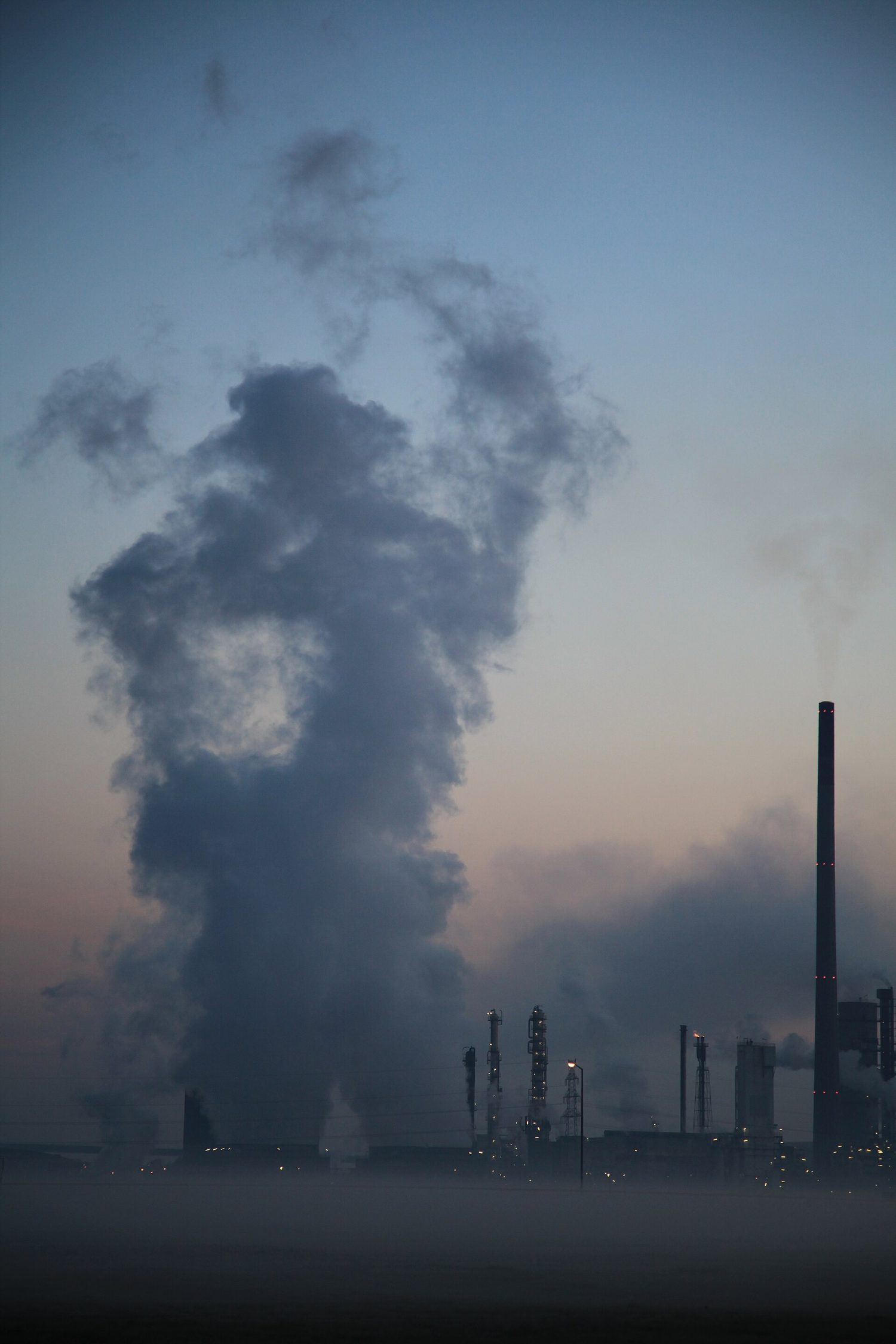
מפעל כימי בשעת שקיעה. בתוכו, חנקן מהאוויר הופך לאמוניה — המדוד שמזין כחצי מאוכלוסיית העולם כיום. אבל ה…

English narration · English + 中文 subtitles burned in · ⁨קריאת קול באנגלית · תרגום אנגלי + סינית שרוף בתוך הסרטון⁩

7.1

Introduction to Equilibrium · ⁨מבוא לאיזון כימי⁩

Syllabus · ⁨סיילבוס⁩
English

Learning Objective 7.1.A: Explain the relationship between the occurrence of a reversible chemical or physical process, and the establishment of equilibrium, to experimental observations.

  • 7.1.A.1 Many observable processes are reversible. Examples include evaporation and condensation of water, absorption and desorption of a gas, or dissolution and precipitation of a salt. Some important reversible chemical processes include the transfer of protons in acid-base reactions and the transfer of electrons in redox reactions.
  • 7.1.A.2 When equilibrium is reached, no observable changes occur in the system. Reactants and products are simultaneously present, and the concentrations or partial pressures of all species remain constant.
  • 7.1.A.3 The equilibrium state is dynamic. The forward and reverse processes continue to occur at equal rates, resulting in no net observable change.
  • 7.1.A.4 Graphs of concentration, partial pressure, or rate of reaction versus time for simple chemical reactions can be used to understand the establishment of chemical equilibrium.
עברית

מטרת למידה 7.1.A: להסביר את הקשר בין התרחשות תהליך כימי או פיזיקלי הפיך, לבין ההתגבשות של איזון, בהתייחס לצפיות ניסוייות.

  • 7.1.A.1 תהליכים רבים הניתנים לצפייה הם הפיכים. דוגמאות כוללות אידוי והתעבות של מים, ספיחה ודסורציה של גז, או התמוסחות והתגבשות של מלח. חלק מהתהליכים הכימיים ההפיכים החשובים כוללים העברת פרוטונים בתגובות חומצה-בסיס והעברת אלקטרונים בתגובות חמצון-חיזור.
  • 7.1.A.2 כאשר מתקבל איזון, אין שינויים נראים לעין במערכת. תרכובות התחלה ותוצרים קיימים בו-זמנית, והריכוזים או הלחצים החלקיים של כל המינים נשארים קבועים.
  • 7.1.A.3 מצב האיזון הוא דינמי. התהליכים הקדימה והאחורה ממשיכים להתרחש בקצבים שווים, מה שמוביל לשינוי נטו שאינו נראה לעין.
  • 7.1.A.4 גרפים של ריכוז, לחץ חלקי או קצב תגובה כנגד זמן עבור תגובות כימיות פשוטות יכולים לשמש להבנת ההתגבשות של איזון כימי.
Source: College Board AP Course and Exam Description · ⁨מקור: תיאור הקורס והמבחן של College Board AP⁩

English
Dynamic equilibrium

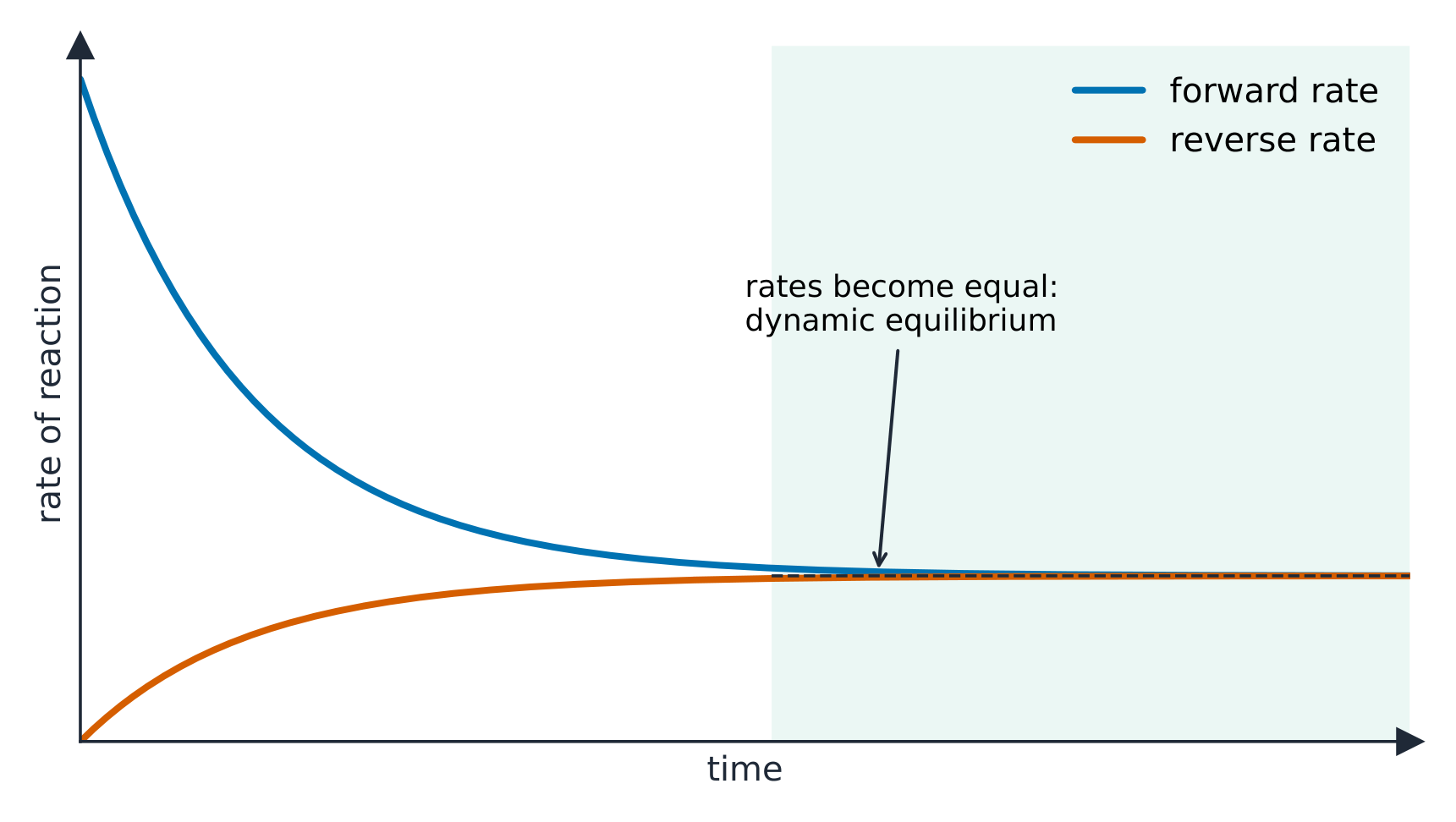
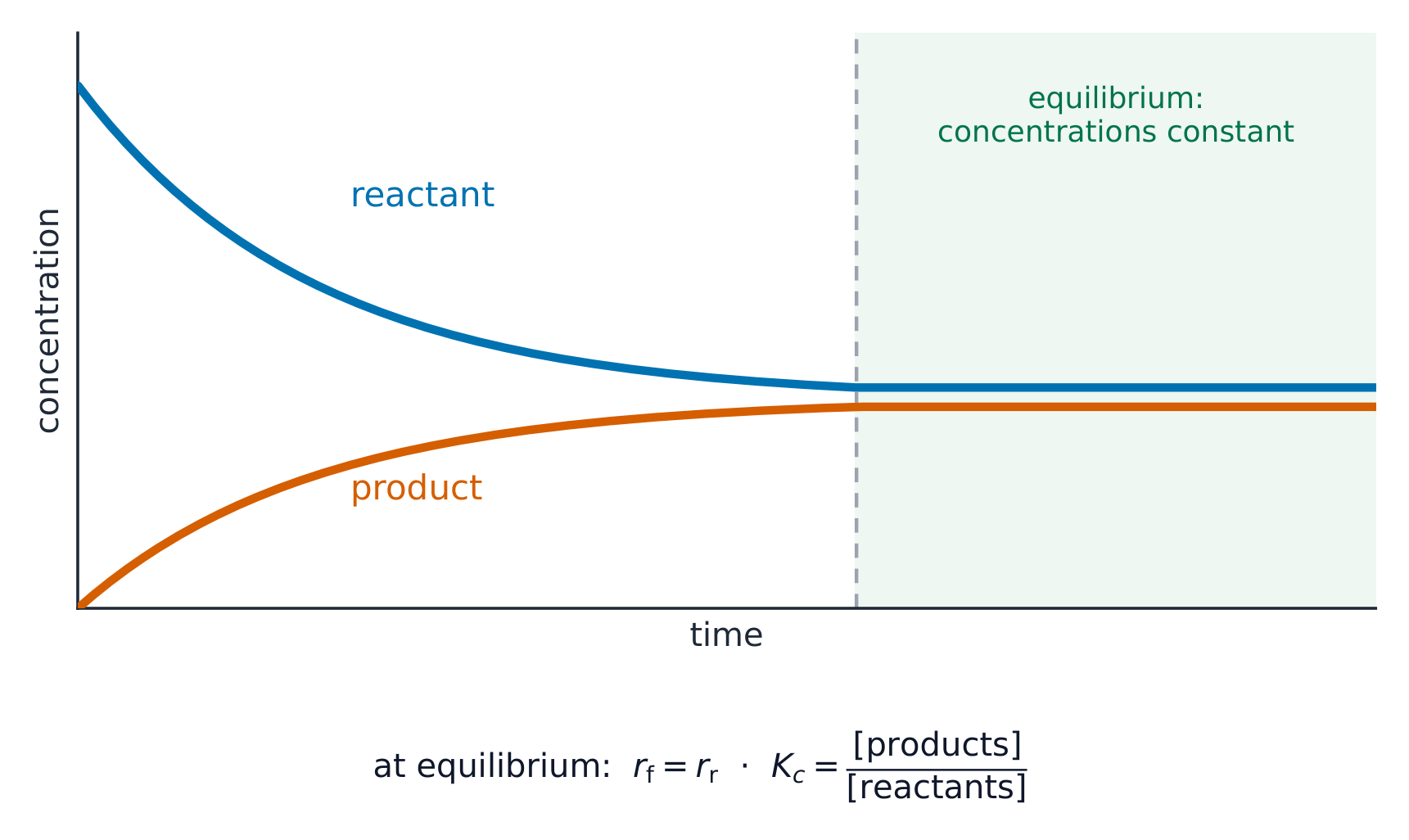
A reversible reaction 可逆反应 runs both ways. Chemical equilibrium 化学平衡 is reached when the forward and reverse rates become equal, so concentrations stop changing. Equilibrium is dynamic – both reactions continue, but at matching rates, so nothing appears to change.

The rates graph above explains why concentrations settle; this next graph shows what the concentrations do – reactants fall and products rise until, once the rates match, both hold constant (they need not be equal).

עברית
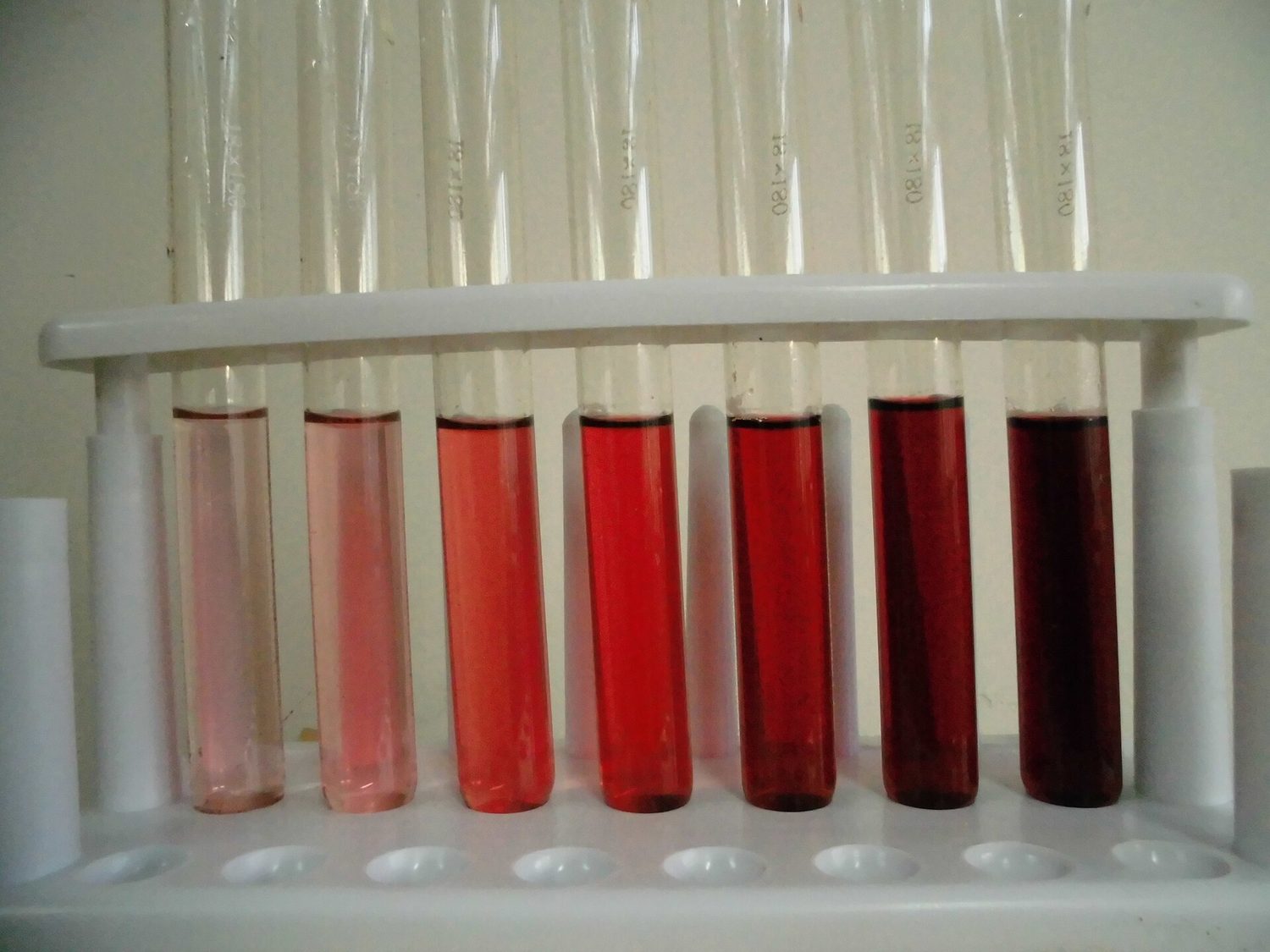
פתרונות כלוריד הקובלט: מערכות איזון זזות כאשר התנאים משתנים (עקרון לה-שטליה)
תמיסות כלוריד הקובלט: מערכות איזון זזות כאשר התנאים משתנים (עקרון לה-שטליيه)
איזון דינמי

תגובה הפיכה מתבצעת בשני הכיוונים. איזון כימי נשגב כאשר קצבי התגובה הקדימה וההפוכה הופכים שווים, ולכן ריכוזים מפסיקים להשתנות. האיזון הוא דינמי – שתי התגובות ממשיכות להתרחש, אך בקצבים זהים, כך שאין שינוי נראה לעין.

איזון דינמי: קצבי התגובה הקדימה וההפוכה הופכים שווים

הגרף הקצב למעלה מסביר מדוע הריכוזים מתייצבים; הגרף הבא מראה מה הריכוזים עושים – הריאקטנטים יורדים והמוצרים עולים עד ש, ברגע שהקצבים זהים, שניהם נשארים קבועים (הם אינם חייבים להיות שווים).

ריכוזי ריאקטנט ומוצר משתנים, ולאחר מכן נשארים קבועים ברגע שהאיזון נשגב
Vocabulary · ⁨מילון מונחים⁩ Train · ⁨אימון⁩
English עברית
reversible reaction/rɪˈvɜːsɪbl rɪˈækʃn/ תגובה הפוכה
Chemical equilibrium/ˈkemɪkl ˌiːkwɪˈlɪbrɪəm/ איזון כימי
reaction quotient/rɪˈækʃn ˈkwəʊʃənt/ מכפלת ריכוזים (Q)
equilibrium constant/ˌiːkwɪˈlɪbrɪəm ˈkɒnstənt/ קבוע איזון
Le Chatelier's principle/lə ˈtʃeɪtlɪəz ˈprɪnsɪpl/ עקרון לה-שטלייה
solubility product/ˌsɒljuːˈbɪlɪti ˈprɒdʌkt/ מכפלת מסיסות
7.2

Direction of Reversible Reactions · ⁨כיוון תגובות הפיכות⁩

Syllabus · ⁨סיילבוס⁩
English

Learning Objective 7.2.A: Explain the relationship between the direction in which a reversible reaction proceeds and the relative rates of the forward and reverse reactions.

  • 7.2.A.1 If the rate of the forward reaction is greater than the reverse reaction, then there is a net conversion of reactants to products. If the rate of the reverse reaction is greater than that of the forward reaction, then there is a net conversion of products to reactants. An equilibrium state is reached when these rates are equal.
עברית

מטרת למידה 7.2.A: להסביר את הקשר בין הכיוון שבו תגובה הפיכה תימשך לבין הקצבים היחסיים של התגובות הקדימה והאחורה.

  • 7.2.A.1 אם קצב התגובה הקדימה גדול מקצב התגובה ההפוכה, אזי מתקיים המרה נטו של תגובות לתוצרים. אם קצב התגובה ההפוכה גדול מקצב התגובה הקדימה, אזי מתקיים המרה נטו של תוצרים לתגובות. מצב איזון מושג כאשר קצבים אלו שווים.

Source: College Board AP Course and Exam Description · ⁨מקור: תיאור הקורס והמבחן של College Board AP⁩

English

At equilibrium the amounts of reactants and products are fixed but usually not equal. Whether the mixture favors products or reactants depends on the reaction; you compare the current state to the equilibrium condition to predict which way it shifts.

עברית

בעת איזון הכמויות של ריאקטנטים ומוצרים קבועות אך לרוב לא שוות. האם התערובת מעודדת מוצרים או ריאקטנטים תלויה בתגובה; יש להשוות את המצב הנוכחי לתנאי האיזון כדי לחזות באילו כיוון היא תזוז.

7.3

The Reaction Quotient and Equilibrium Constant · ⁨מכפלת התגובה וקבוע האיזון⁩

Syllabus · ⁨סיילבוס⁩
English

Learning Objective 7.3.A: Represent the reaction quotient $Q_c$ or $Q_p$, for a reversible reaction, and the corresponding equilibrium expressions $K_c = Q_c$ or $K_p = Q_p$.

  • 7.3.A.1 The reaction quotient $Q_c$ describes the relative concentrations of reaction species at any time. For gas phase reactions, the reaction quotient may instead be written in terms of partial pressures as $Q_p$. The reaction quotient tends toward the equilibrium constant such that at equilibrium $K_c = Q_c$ and $K_p = Q_p$. As examples, for the reaction

    $$a\,\mathrm{A} + b\,\mathrm{B} \rightleftarrows c\,\mathrm{C} + d\,\mathrm{D}$$
    the law of mass action indicates that the equilibrium expression for $(K_c, Q_c)$ is

    • Equation: $K_c = \dfrac{[\mathrm{C}]^c [\mathrm{D}]^d}{[\mathrm{A}]^a [\mathrm{B}]^b}$

    and that for $(K_p, Q_p)$ is

    • Equation: $K_p = \dfrac{(P_\mathrm{C})^c (P_\mathrm{D})^d}{(P_\mathrm{A})^a (P_\mathrm{B})^b}$
    • Exclusion statement: Conversion between $K_c$ and $K_p$ will not be assessed on the AP Exam. Students should be aware of the conceptual differences and pay attention to whether $K_c$ or $K_p$ is used in an exam question.
    • Exclusion statement: Equilibrium calculations on systems where a dissolved species is in equilibrium with that species in the gas phase will not be assessed on the AP Exam.
  • 7.3.A.2 The reaction quotient does not include substances whose concentrations (or partial pressures) are independent of the amount, such as for solids and pure liquids.

עברית

מטרת הלמידה 7.3.A: לייצג את יחס התגובה $Q_c$ או $Q_p$, עבור תגובה הפיכה, ואת ביטויי האיזון המתאימים $K_c = Q_c$ או $K_p = Q_p$.

  • 7.3.A.1 יחס התגובה $Q_c$ מתאר את ריכוזי היחסים של מיני התגובה בכל עת. עבור תגובות בשלב גזי, יחס התגובה יכול להיות כתוב במקום זאת במונחי לחצים חלקיים כ$Q_p$. יחס התגובה שואף לקבוע האיזון כך שבמצב איזון $K_c = Q_c$ ו$K_p = Q_p$. לדוגמה, עבור התגובה

    $$a\,\mathrm{A} + b\,\mathrm{B} \rightleftarrows c\,\mathrm{C} + d\,\mathrm{D}$$
    חוק הפעולת המסה מעיד כי ביטוי האיזון עבור $(K_c, Q_c)$ הוא

    • משוואה: $K_c = \dfrac{[\mathrm{C}]^c [\mathrm{D}]^d}{[\mathrm{A}]^a [\mathrm{B}]^b}$

    ועבור $(K_p, Q_p)$ הוא

    • משוואה: $K_p = \dfrac{(P_\mathrm{C})^c (P_\mathrm{D})^d}{(P_\mathrm{A})^a (P_\mathrm{B})^b}$
    • הערה על סילוק: המרה בין $K_c$ ל$K_p$ לא תימדד במבחן האפר. סטודנטים צריכים להיות מודעים להבדלים הקונספטואליים ולשים לב האם $K_c$ או $K_p$ משמש בשאלת מבחן.
    • הערה על סילוק: חישובי איזון על מערכות שבהן מין מומס נמצא באיזון עם אותו מין בשלב הגזי לא יימדדו במבחן האפר.
  • 7.3.A.2 יחס התגובה אינו כולל חומרים שריכוזיהם (או לחציהם החלקיים) הם עצמאיים לכמות, כמו למשל לגבי מוצקים ונוזלים טהורים.

Source: College Board AP Course and Exam Description · ⁨מקור: תיאור הקורס והמבחן של College Board AP⁩

English

The reaction quotient 反应商 $Q$ has the same form as the equilibrium expression but uses current concentrations:

$$Q=\frac{[\text{products}]}{[\text{reactants}]}\ \text{(each raised to its coefficient)}.$$
At equilibrium $Q$ equals the equilibrium constant 平衡常数 $K$. Comparing them predicts direction: $Q shifts forward (toward products); $Q>K$ shifts reverse; $Q=K$ means already at equilibrium.

עברית

מכפלת התגובה $Q$ בעלת אותה צורה כמו הביטוי לאיזון אך משתמשת בריכוזים נוכחיים:

$$Q=\frac{[\text{products}]}{[\text{reactants}]}\ \text{(each raised to its coefficient)}.$$
באיזון $Q$ שווה ל-קבוע האיזון $K$. השוואתם מתחזת כיוון: $Q זז קדימה (לעבר המוצרים); $Q>K$ זוז אחורה; $Q=K$ פירושו שהוא כבר באיזון.

7.4

Calculating the Equilibrium Constant · ⁨חישוב קבוע האיזון⁩

Syllabus · ⁨סיילבוס⁩
English

Learning Objective 7.4.A: Calculate $K_c$ or $K_p$ based on experimental observations of concentrations or pressures at equilibrium.

  • 7.4.A.1 Equilibrium constants can be determined from experimental measurements of the concentrations or partial pressures of the reactants and products at equilibrium.
עברית

מטרה לימודית 7.4.A: חישוב $K_c$ או $K_p$ על בסיס תצפיות ניסוייות של ריכוזים או לחצים באיזון.

  • 7.4.A.1 קבועי איזון יכולים להיות נקבעים ממדידות ניסיוניות של ריכוזים או לחצים חלקיים של תגובות ותוצרים במצב איזון.

Source: College Board AP Course and Exam Description · ⁨מקור: תיאור הקורס והמבחן של College Board AP⁩

English

Write $K$ from the balanced equation (pure solids and liquids are left out). From equilibrium concentrations (or partial pressures for $K_p$), plug in and compute. $K_c$ uses molarities; $K_p$ uses pressures.

Worked example. For $\text{N}_2\text{O}_4\rightleftharpoons2\text{NO}_2$, the equilibrium concentrations are $[\text{N}_2\text{O}_4]=0.20\ \text{M}$ and $[\text{NO}_2]=0.10\ \text{M}$. Then

$$K_c=\frac{[\text{NO}_2]^2}{[\text{N}_2\text{O}_4]}=\frac{(0.10)^2}{0.20}=0.050.$$
The NO$_2$ coefficient of $2$ becomes the power; N$_2$O$_4$ (coefficient $1$) is just to the first power.

עברית

כתוב $K$ מהמשוואה המאוזנת (נוזלים ומוצרים טהורים אינם נכללים). מהריכוזים באיזון (או הלחצים החלקיים עבור $K_p$), הצב ערכים וחשב. $K_c$ משתמש במוולריות; $K_p$ משתמש בלחצים.

דוגמה פותרת. עבור $\text{N}_2\text{O}_4\rightleftharpoons2\text{NO}_2$, הריכוזים באיזון הם $[\text{N}_2\text{O}_4]=0.20\ \text{M}$ ו$[\text{NO}_2]=0.10\ \text{M}$. אז

$$K_c=\frac{[\text{NO}_2]^2}{[\text{N}_2\text{O}_4]}=\frac{(0.10)^2}{0.20}=0.050.$$
המקדם NO$_2$ ב-$2$ הופך לאקספוננט; N$_2$O$_4$ (מקדם $1$) פשוט מעוצה בחזקה ראשונה.

7.5

Magnitude of the Equilibrium Constant · ⁨גודל קבוע האיזון⁩

Syllabus · ⁨סיילבוס⁩
English

Learning Objective 7.5.A: Explain the relationship between very large or very small values of $K$ and the relative concentrations of chemical species at equilibrium.

  • 7.5.A.1 Some equilibrium reactions have very large $K$ values and proceed essentially to completion. Others have very small $K$ values and barely proceed at all.
עברית

מטרה לימודית 7.5.A: הסבר הקשר בין ערכים גדולים מאוד או קטנים מאוד של $K$ לבין הריכוזים היחסיים של מינים כימיים באיזון.

  • 7.5.A.1 חלק מתגובות האיזון יש להן ערכים גדולים מאוד של $K$ והן מתקדמות בעיקר עד לסיום. אחרות יש להן ערכים קטנים מאוד של $K$ ואינן מתקדמות כלל כמעט.

Source: College Board AP Course and Exam Description · ⁨מקור: תיאור הקורס והמבחן של College Board AP⁩

English
  • $K\gg 1$: products strongly favored (reaction nearly complete).
  • $K\ll 1$: reactants favored (little reaction).
  • $K\approx 1$: significant amounts of both.

The size of $K$ tells you where the equilibrium "sits."

עברית
  • $K\gg 1$: מוצרים מעודדים בחוזקה (התגובה כמעט הושלמה).
  • $K\ll 1$: ריאקטנטים מעודדים (מעט תגובה).
  • $K\approx 1$: כמויות משמעותיות של שניהם.

גודל $K$ אומר לך היכן האיזון "יושב".

7.6

Properties of the Equilibrium Constant · ⁨תכונות קבוע האיזון⁩

Syllabus · ⁨סיילבוס⁩
English

Learning Objective 7.6.A: Represent a multistep process with an overall equilibrium expression, using the constituent $K$ expressions for each individual reaction.

  • 7.6.A.1 When a reaction is reversed, $K$ is inverted.
  • 7.6.A.2 When the stoichiometric coefficients of a reaction are multiplied by a factor $c$, $K$ is raised to the power $c$.
  • 7.6.A.3 When reactions are added together, the $K$ of the resulting overall reaction is the product of the $K$'s for the reactions that were summed.
  • 7.6.A.4 Since the expressions for $K$ and $Q$ have identical mathematical forms, all valid algebraic manipulations of $K$ also apply to $Q$.
עברית

מטרת הלמידה 7.6.A: לייצג תהליך רב-שלבתי בביטוי איזון כולל, על ידי שימוש בביטויי $K$ המרכיבים עבור כל תגوبة בודדת.

  • 7.6.A.1 כאשר תגובה הופכת, $K$ מתהפך.
  • 7.6.A.2 כאשר המקדמים הסטוכיאומטריים של תגובה מכפילים בגורם $c$, $K$ מורם בחזקה $c$.
  • 7.6.A.3 כאשר תגובות מחוברות זו לזו, ה$K$ של התגובה הכוללת הנותרת הוא מכפלת ה$K$'s של התגובות שנכנסו לסכום.
  • 7.6.A.4 מכיוון שצורות המתמטיקה של $K$ ו-$Q$ זהות, כל הפעולות האלגבריות החוקיות על $K$ חלות גם על $Q$.

Source: College Board AP Course and Exam Description · ⁨מקור: תיאור הקורס והמבחן של College Board AP⁩

English

$K$ changes in predictable ways: reversing a reaction inverts $K$ ($1/K$); multiplying coefficients by $n$ raises $K$ to the $n$th power; adding reactions multiplies their $K$ values. Only temperature changes the value of $K$ itself.

עברית

$K$ משתנה בדרכים הניתנות לחיזוי: הפיכת תגובה מפכה את $K$ ($1/K$); הכפלת מקדמים ב-$n$ מרימה את $K$ ל-$n$; חיבור תגובות מכפיל את ערכי $K$ שלהן. רק טמפרטורה משנה את ערך $K$ עצמו.

7.7

Calculating Equilibrium Concentrations · ⁨חישוב ריכוזי איזון⁩

Syllabus · ⁨סיילבוס⁩
English

Learning Objective 7.7.A: Identify the concentrations or partial pressures of chemical species at equilibrium based on the initial conditions and the equilibrium constant.

  • 7.7.A.1 The concentrations or partial pressures of species at equilibrium can be predicted given the balanced reaction, initial concentrations, and the appropriate $K$.
  • 7.7.A.2 When $Q < K$, the reaction will proceed with a net consumption of reactants and generation of products. When $Q > K$, the reaction will proceed with a net consumption of products and generation of reactants. When $Q = K$, the system is at dynamic equilibrium; both forward and reverse reactions proceed at the same rate, and the proportion of reactants and products remains constant.
עברית

מטרת הלמידה 7.7.A: לזהות את הריכוזים או הלחצים החלקיים של מינים כימיים במצב איזון על בסיס התנאים ההתחלתיים וקבוע האיזון.

  • 7.7.A.1 ניתן לחזות את הריכוזים או הלחצים החלקיים של המינים במצב איזון בהינתן תגובה מאוזנת, ריכוזים התחלתיים ו-$K$ הרלוונטי.
  • 7.7.A.2 כאשר $Q < K$, התגובה תתקדם עם צריכה נטו של תגובנים ויצירה נטו של מוצרים. כאשר $Q > K$, התגובה תתקדם עם צריכה נטו של מוצרים ויצירה נטו של תגובנים. כאשר $Q = K$, המערכת נמצאת באיזון דינמי; שתי התגובות (קדימה ואחורה) מתקדמות בקצב זהה, והיחס בין תגובנים למוצרים נשאר קבוע.

Source: College Board AP Course and Exam Description · ⁨מקור: תיאור הקורס והמבחן של College Board AP⁩

English

Use an ICE table (Initial, Change, Equilibrium): fill in starting amounts, express the change with $x$ using the mole ratios, then substitute into the $K$ expression and solve for $x$. When $K$ is small, the approximation "$x$ is negligible" often simplifies the algebra.

Worked example. For $\text{H}_2+\text{I}_2\rightleftharpoons2\text{HI}$ with $K_c=50$, start with $0.100\ \text{M}$ each of H$_2$ and I$_2$. The ICE table gives equilibrium $[\text{H}_2]=[\text{I}_2]=0.100-x$ and $[\text{HI}]=2x$. Substitute:

$$K_c=\frac{(2x)^2}{(0.100-x)^2}=50\;\Rightarrow\;\frac{2x}{0.100-x}=\sqrt{50}=7.07\;\Rightarrow\;x=0.078,$$
so $[\text{HI}]=2x=0.156\ \text{M}$. Taking the square root of both sides works here because the expression is a perfect square.

עברית

השתמש בטבלת ICE (התחלתי, שינוי, איזון): מלא כמות התחלתית, מבטא את השינוי באמצעות $x$ על פי היחסים המולריים, ולאחר מכן הצב ביטוי $K$ והפתור עבור $x$. כאשר $K$ קטן, הקירוב "$x$ זניח" פשוט לעיתים קרובות את האלגברה.

דוגמה מוצלחת. עבור $\text{H}_2+\text{I}_2\rightleftharpoons2\text{HI}$ עם $K_c=50$, התחל עם $0.100\ \text{M}$ של כל אחד מה-H$_2$ ו-I$_2$. טבלת ה-ICE נותנת ריכוזי איזון של $[\text{H}_2]=[\text{I}_2]=0.100-x$ ו-$[\text{HI}]=2x$. הצב:

$$K_c=\frac{(2x)^2}{(0.100-x)^2}=50\;\Rightarrow\;\frac{2x}{0.100-x}=\sqrt{50}=7.07\;\Rightarrow\;x=0.078,$$
ולכן $[\text{HI}]=2x=0.156\ \text{M}$. חילוץ שורש ריבועי משני האגפים עובד כאן מכיוון שהביטוי הוא ריבוע מושלם.

7.8

Representations of Equilibrium · ⁨ייצוגי איזון⁩

Syllabus · ⁨סיילבוס⁩
English

Learning Objective 7.8.A: Represent a system undergoing a reversible reaction with a particulate model.

  • 7.8.A.1 Particulate representations can be used to describe the relative numbers of reactant and product particles present prior to and at equilibrium, and the value of the equilibrium constant.
עברית

מטרת הלמידה 7.8.A: לייצג מערכת העוברת תגובה הפיכה באמצעות דגם חלקיקי.

  • 7.8.A.1 ניתן להשתמש בייצוגים חלקיקיים כדי לתאר את המספרים היחסיים של חלקיקי תגובנים ומוצרים הקיימים לפני ובמצב איזון, ainsi que ערך קבוע האיזון.

Source: College Board AP Course and Exam Description · ⁨מקור: תיאור הקורס והמבחן של College Board AP⁩

English

A particulate picture at equilibrium shows a fixed mix of reactant and product particles. Graphs of concentration vs time level off (never reaching zero) once equilibrium is reached – both curves flatten at the same moment.

עברית

תמונת חלקיקים במצב איזון מראה מערך קבוע של חלקיקי תגובה ומוצר. גרפים של ריכוז לאורך זמן מישוריים (לעולם אינם מגיעים לאפס) ברגע שהאיזון נשגש – שתי העקומות הופכות לשטוחות בו-זמנית.

7.9

Introduction to Le Chatelier's Principle · ⁨מבוא לעקרון לה-שיטלי⁩

Syllabus · ⁨סיילבוס⁩
English

Learning Objective 7.9.A: Identify the response of a system at equilibrium to an external stress, using Le Châtelier's principle.

  • 7.9.A.1 Le Châtelier's principle can be used to predict the response of a system to stresses such as addition or removal of a chemical species, change in temperature, change in volume/pressure of a gas-phase system, or dilution of a reaction system.
  • 7.9.A.2 Le Châtelier's principle can be used to predict the effect that a stress will have on experimentally measurable properties such as pH, temperature, and color of a solution.
עברית

מטרת הלמידה 7.9.A: לזהות את תגובת מערכת באיזון לעומס חיצוני, בעזרת עקרון לה-שאטלייה.

  • 7.9.A.1 ניתן להשתמש בעקרון לה-שאטלייה כדי לחזות את תגובת המערכת לעומסים כגון הוספה או הסרה של מין כימי, שינוי בטמפרטורה, שינוי בנפח/לחץ של מערכת גזית, או דילול של מערכת התגובה.
  • 7.9.A.2 ניתן להשתמש בעקרון לה-שאטלייה כדי לחזות את השפעת העומס על מאפיינים הנמדדים ניסויית כמו pH, טמפרטורה וצבע של תמיסה.

Source: College Board AP Course and Exam Description · ⁨מקור: תיאור הקורס והמבחן של College Board AP⁩

English
Le Chatelier's principle

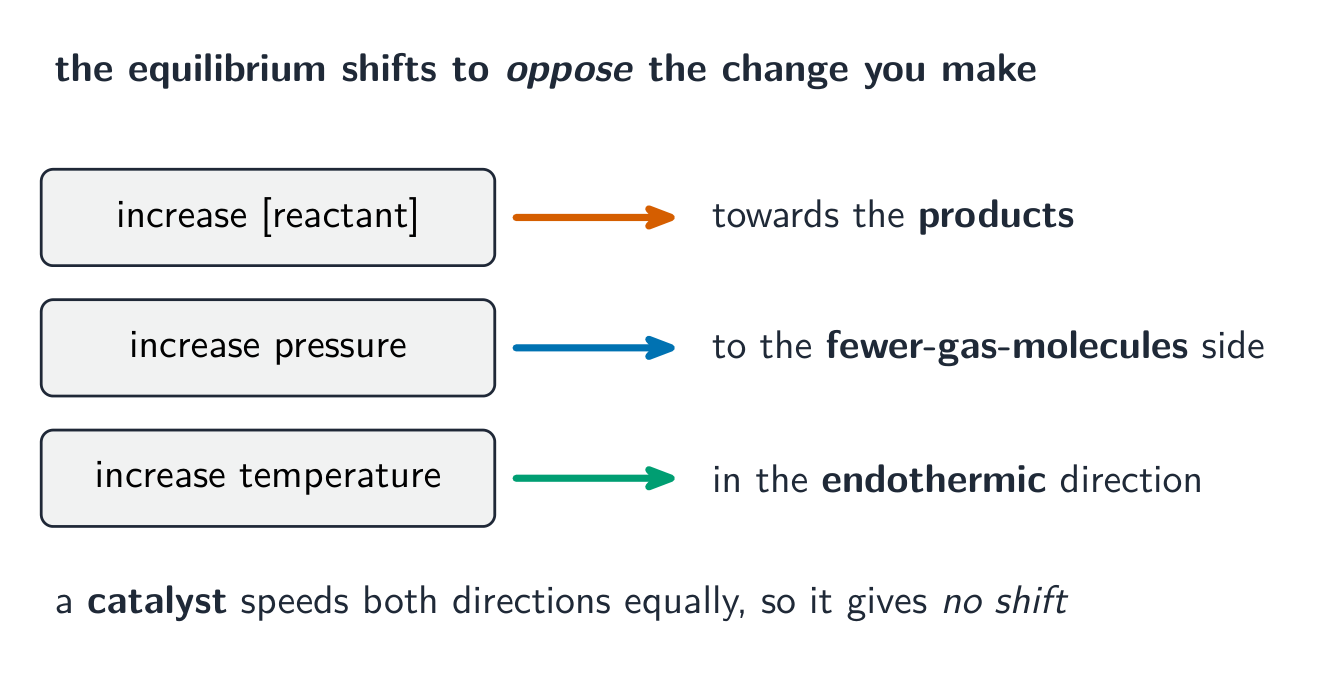
Le Chatelier's principle 勒沙特列原理: if you disturb a system at equilibrium, it shifts to partly counteract the change. Adding a reactant shifts forward; removing product shifts forward; increasing pressure (by reducing volume) shifts toward the side with fewer gas moles; raising temperature shifts in the endothermic direction.

עברית
עקרון לה-שטליה

עקרון לה-שיטלי: אם מפריעים למערכת בשיווי משקל, היא תזוז כדי להפחית בחלקו את ההפרעה. הוספת תגובה מזיזה את האיזון קדימה; הסרת מוצר מזיזה קדימה; עליית לחץ (על ידי צמצום נפח) מזיזה את האיזון לצד בעל מספר מולים גזי קטן יותר; עליית טמפרטורה מזיזה את האיזון לכיוון התגובה האנדותרמית.

עקרון לה-שיטלי: האיזון זז כדי להתנגד לשינוי שנעשה
מפעל אמוניה: שיווי משקל תעשייתי כמו תהליך האבר נשלט על ידי לחץ, טמפרטורה וקטליזטורים
Explore · ⁨חקור⁩

Disturb an equilibrium · ⁨הפרו איזון כימי⁩

Le Chatelier's principle: an equilibrium shifts to oppose a change. Add reactant, change pressure or temperature and watch the position of equilibrium move. · ⁨עקרון לה-שטלייה: איזון נטל כיוון כדי להתנגד לשינוי. הוסיפו מגיב, שינו לחץ או טמפרטורה וצפו בתנועת מיקום האיזון.⁩

7.10

The Reaction Quotient and Le Chatelier's Principle · ⁨מקדם התגובה ועקרון לה-שיטלי⁩

Syllabus · ⁨סיילבוס⁩
English

Learning Objective 7.10.A: Explain the relationships between $Q$, $K$, and the direction in which a reversible reaction will proceed to reach equilibrium.

  • 7.10.A.1 A disturbance to a system at equilibrium causes $Q$ to differ from $K$, thereby taking the system out of equilibrium. The system responds by bringing $Q$ back into agreement with $K$, thereby establishing a new equilibrium state.
  • 7.10.A.2 Some stresses, such as changes in concentration, cause a change in $Q$ only. A change in temperature causes a change in $K$. In either case, the concentrations or partial pressures of species redistribute to bring $Q$ and $K$ back into equality.
עברית

מטרה לימודית 7.10.A: הסבר הקשרים בין $Q$, $K$ ובין הכיוון שבו תגובה הפוכה תתקדם כדי להגיע לאיזון.

  • 7.10.A.1 הפרעה למערכת באיזון גורמת לכך ש$Q$ יהיה שונה מ$K$, ובכך מוציא את המערכת מאיזון. המערכת מגיבה על ידי הבאת $Q$ בחזרה לתואם עם $K$, ובכך מקבעת מצב איזון חדש.
  • 7.10.A.2 חלק מהעומסים, כמו שינויים בריכוז, גורמים לשינוי ב$Q$ בלבד. שינוי בטמפרטורה גורם לשינוי ב$K$. במקרה זה או האחר, הריכוזים או הלחצים החלקיים של המינים יתחלפו מחדש כדי להביא את $Q$ ו$K$ לחזרה לשוויון.

Source: College Board AP Course and Exam Description · ⁨מקור: תיאור הקורס והמבחן של College Board AP⁩

English

You can justify every Le Chatelier shift with $Q$ versus $K$: a disturbance changes $Q$, and the system reacts to bring $Q$ back to $K$. This quantitative view backs up the qualitative rule and is the fuller answer on the exam.

עברית

ניתן להסביר כל הזזת לה-שיטלי באמצעות השוואה בין $Q$ ל-$K$: הפרעה משנה את $Q$, והמערכת מגיבה כדי להחזיר את $Q$ ל-$K$. מבטא כמותי זה תומך בתקנה האיכותית והוא התשובה המלאה בבחינה.

Explore · ⁨חקור⁩

Compare Q with K · ⁨השוו את Q עם K⁩

If the reaction quotient $Q the forward reaction is favoured; $Q>K$ favours the reverse. Perturb the system and watch it move back toward $Q=K$. · ⁨אם מנת התגובה $Q התגובה הקדמית תועדף; $Q>K$ תועדף את ההפוכה. הפרע במערכת וצפה שהיא תחזור ל$Q=K$.⁩

7.11 7.12

Introduction to Solubility Equilibria · ⁨מבוא לשיווי משקל מסיסות⁩

Syllabus · ⁨סיילבוס⁩
English

Learning Objective 7.11.A: Calculate the solubility of a salt based on the value of $K_{sp}$ for the salt.

  • 7.11.A.1 The dissolution of a salt is a reversible process whose extent can be described by $K_{sp}$, the solubility-product constant.
  • 7.11.A.2 The solubility of a substance can be calculated from the $K_{sp}$ for the dissolution process. This relationship can also be used to predict the relative solubility of different substances.
  • 7.11.A.3 The solubility rules (see 4.7.A.5) can be quantitatively related to $K_{sp}$, in which $K_{sp}$ values $>1$ correspond to soluble salts.
  • 7.11.A.4 The molar solubility of one or more species in a saturated solution can be used to calculate the $K_{sp}$ of a substance.
עברית

מטרת למידה 7.11.A: לחשב את התמוסחותו של מלח על בסיס ערך ה$K_{sp}$ עבור המלח.

  • 7.11.A.1 התמוסחות של מלח היא תהליך הפיך שההתפתחות שלו יכולה להיות מתוארת על ידי $K_{sp}$, קבוע מכפלת התמוסחות.
  • 7.11.A.2 ניתן לחשב את התמוסחותו של חומר על בסיס ה$K_{sp}$ לתהליך ההתמוסחות. קשר זה יכול לשמש גם לחזות את התמוסחות היחסית של חומרים שונים.
  • 7.11.A.3 כללי התמוסחות (ראו 4.7.A.5) יכולים להיות קשורים כמותית ל$K_{sp}$, כאשר ערכי $K_{sp}$ גדולים מ$>1$ מתאימים למלחים המתמוסחים.
  • 7.11.A.4 ניתן להשתמש בתמוסחות המולרית של מינים אחד או יותר במיץ רווי כדי לחשב את ה$K_{sp}$ של חומר.
English

Learning Objective 7.12.A: Identify the solubility of a salt, and/or the value of $K_{sp}$ for the salt, based on the concentration of a common ion already present in solution.

  • 7.12.A.1 The solubility of a salt is reduced when it is dissolved into a solution that already contains one of the ions present in the salt. The impact of this "common-ion effect" on solubility can be understood qualitatively using Le Châtelier's principle or calculated from the $K_{sp}$ for the dissolution process.
עברית

מטרת למידה 7.12.A: לזהות את התמוסחותו של מלח, ול/או את ערך ה$K_{sp}$ עבור המלח, על בסיס ריכוזו של יון משותף שכבר קיים במיץ.

  • 7.12.A.1 המסיסות של מלח מצטמצמת כאשר הוא מומס בממיס שמכיל כבר אחד מהיונים הנמצאים בו. השפעת "אפקט היון המשותף" על המסיסות ניתנת להבנה באופן איכותי באמצעות עקרון לה-שיטליה או לחישוב מתוך ה$K_{sp}$ לתהליך ההמיסה.

Source: College Board AP Course and Exam Description · ⁨מקור: תיאור הקורס והמבחן של College Board AP⁩

English

For a slightly soluble salt, the solubility product 溶度积 $K_{sp}$ is the equilibrium constant for its dissolving:

$$\text{M}_a\text{X}_b(s)\rightleftharpoons a\,\text{M}^{b+}+b\,\text{X}^{a-},\qquad K_{sp}=[\text{M}^{b+}]^a[\text{X}^{a-}]^b.$$
A smaller $K_{sp}$ means less soluble. The common-ion effect – adding an ion already in the salt – pushes the equilibrium back and lowers solubility.

Worked example. Silver chloride has $K_{sp}=1.8\times10^{-10}$. If its molar solubility is $s$, then $[\text{Ag}^+]=[\text{Cl}^-]=s$, so $K_{sp}=s^2$ and

$$s=\sqrt{1.8\times10^{-10}}=1.3\times10^{-5}\ \text{M}.$$
Adding NaCl (a common ion) would raise $[\text{Cl}^-]$, forcing $s$ down – far less AgCl would dissolve.

עברית

למלח מעט מסיס, מכפלת המסיסות $K_{sp}$ היא קבוע האיזון של המסתו:

$$\text{M}_a\text{X}_b(s)\rightleftharpoons a\,\text{M}^{b+}+b\,\text{X}^{a-},\qquad K_{sp}=[\text{M}^{b+}]^a[\text{X}^{a-}]^b.$$
ערך קטן יותר של $K_{sp}$ מעיד על מסיסות נמוכה יותר. אפקט היון המשותף – הוספת יון שכבר קיים במלח – דוחפת את האיזון אחורה ומנמיחה את המסיסות.

דוגמה מוצלחת. כסף כלוריד יש לו $K_{sp}=1.8\times10^{-10}$. אם המסיסות המולרית שלו היא $s$, אזי $[\text{Ag}^+]=[\text{Cl}^-]=s$, ולכן $K_{sp}=s^2$ ו-

$$s=\sqrt{1.8\times10^{-10}}=1.3\times10^{-5}\ \text{M}.$$
הוספת NaCl (יון משותף) תעלה את $[\text{Cl}^-]$, ותגרום לירידת $s$ – יתמוסס כמות קטנה הרבה יותר של AgCl.

7.11 7.12

Exam tips · ⁨טיפים לבחינות⁩

English
  • At equilibrium the forward and reverse rates are equal, but the amounts are usually not.
  • Leave pure solids and liquids out of the $K$ expression; a large $K$ favours products, a small $K$ favours reactants.
  • Apply Le Chatelier: add reactant → shift forward; raise pressure → shift toward fewer gas moles; raise temperature → shift in the endothermic direction.
  • A catalyst does not shift the position of equilibrium — it only speeds the approach.
  • Use an ICE table for equilibrium concentrations, and the small-$x$ approximation when $K$ is small.
עברית
  • במצב איזון הקצבים של התגובה הישירה וההפוכה שווים, אך הכמויות בדרך כלל אינן שוות.
  • יש להוציא פסולות נוזלים טהורים מביטוי ה-$K$; ערך גדול של $K$ תומך בתוצרים, וערך קטן של $K$ תומך בחומרי המוצא.
  • יש ליישם את ל-שאטלייה: הוספת חומר מוצא → הזזה ישרה; העלאת לחץ → הזזה לכיוון מספר מולקולות גז קטן יותר; העלאת טמפרטורה → הזזה בכיוון האנדותרמי.
  • קטלייזר אינו מזיז את מיקום האיזון – הוא רק מאיץ את הגישה אליו.
  • השתמש בטבלת ICE עבור ריכוזי איזון, ובקירוב קטן-$x$ כאשר $K$ קטן.

Interactive lessons on this topic · ⁨שיעורים אינטראקטיביים בנושא זה⁩

Work through it step by step, with instant-check exercises. · ⁨לעבור על הדברים צעד אחר צעד, עם תרגילים לבדיקה מיידית.⁩

Past Papers · ⁨מבחני עבר⁩

More topics in AP Chemistry · ⁨כימיה AP⁩ · ⁨נושאים נוספים בAP Chemistry · ⁨כימיה AP⁩⁩

Log in or create account · ⁨היכנס או צור חשבון⁩

IGCSE, A-Level & AP