Skip to content · ⁨דלג לתוכן⁩

Kinetics · ⁨קינטיקה⁩

AP Chemistry · ⁨כימיה AP⁩ · Topic 5 · ⁨נושא 5⁩

Video lesson for this topic · ⁨שיעור וידאו לנושא זה⁩ Open the video page · ⁨פתח את עמוד הוידאו⁩
8:00

קינטיקה

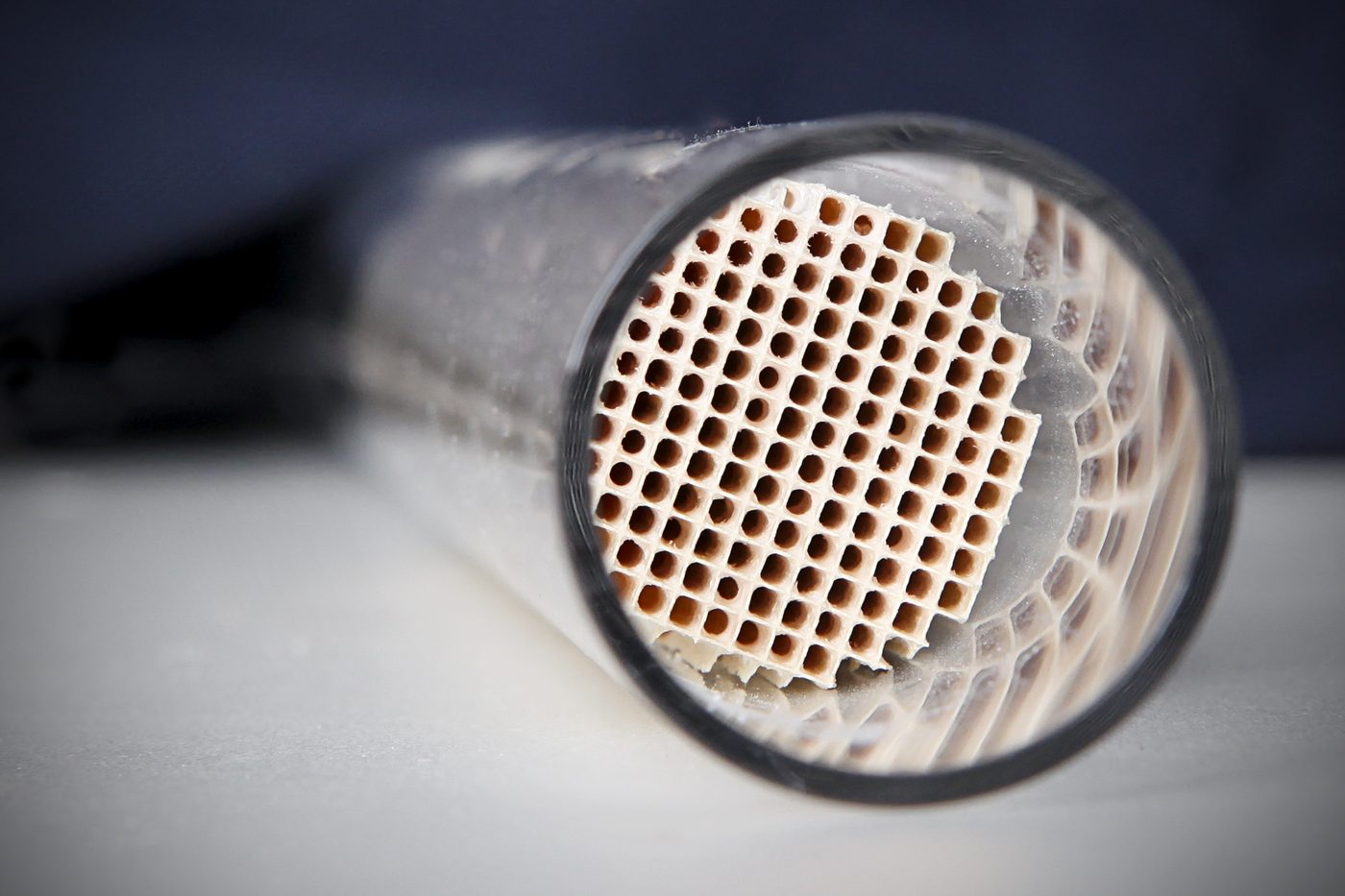
הסתכל לתוך צינור הפליטה של רכב. חלת הדבש הקרמית הזו היא ממיר קטליטי. הגזים הנדחים דרכו הם רעילים. אם יישארו לבדם, ייקחו שנים…

English narration · English + 中文 subtitles burned in · ⁨קריאת קול באנגלית · תרגום אנגלי + סינית שרוף בתוך הסרטון⁩

5.1

How Fast a Reaction Goes · ⁨מהירות התגובה⁩

Syllabus · ⁨סיילבוס⁩
English

Learning Objective 5.1.A: Explain the relationship between the rate of a chemical reaction and experimental parameters.

  • 5.1.A.1 The kinetics of a chemical reaction is defined as the rate at which an amount of reactants is converted to products per unit of time.
  • 5.1.A.2 The rates of change of reactant and product concentrations are determined by the stoichiometry in the balanced chemical equation.
  • 5.1.A.3 The rate of a reaction is influenced by reactant concentrations, temperature, surface area, catalysts, and other environmental factors.
עברית

מטרת למידה 5.1.A: להסביר את הקשר בין קצב תגובה כימית לבין פרמטרים ניסויים.

  • 5.1.A.1 הקינטיקה של תגובה כימית מוגדרת כקצב שבו כמות של תגובנים הופכת למוצרים ליחידת זמן.
  • 5.1.A.2 קצבי השינוי בריכוזי התגובנים והמוצרים נקבעים על ידי הסטוכיומטריה במשוואה הכימית המאוזנת.
  • 5.1.A.3 קצב התגובה מושפע מריכוזי התגובנים, טמפרטורה, שטח פני שטח, חומרי זרזים וגורמים סביבתיים אחרים.
Source: College Board AP Course and Exam Description · ⁨מקור: תיאור הקורס והמבחן של College Board AP⁩

English
The Maxwell–Boltzmann distribution

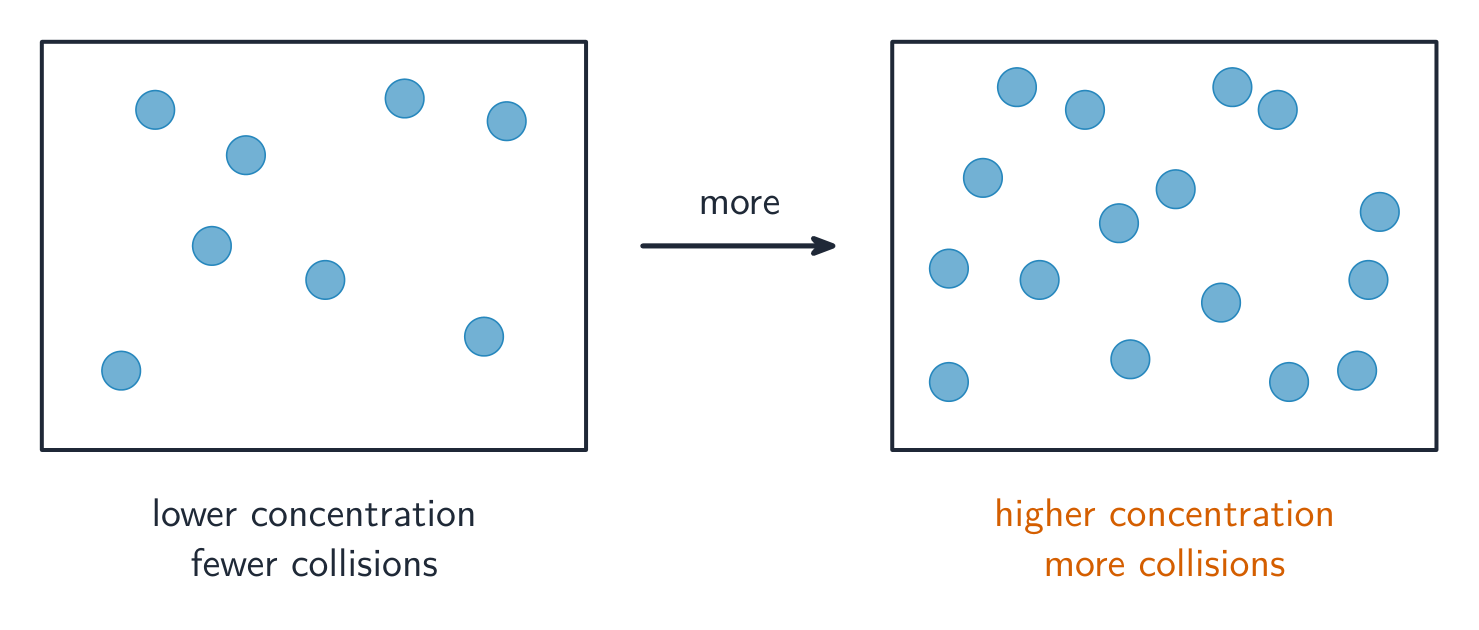
Kinetics 动力学 studies reaction rate 反应速率 – how fast reactants become products. Rate is the change in concentration per unit time, and it typically decreases as reactants are used up. Rate rises with higher concentration, higher temperature, greater surface area, and a catalyst.

עברית
ממיר זיהומים: קטליזטים מאיצים קצבים על ידי הורדת אנרגיית הפעלה ללא צריכה עצמית
חלוקת מקסוול-בולצמן

קינטיקה לומדת קצב תגובה – כמה מהר התגובה מתרחשת. הקצב הוא שינוי הריכוז ליחידת זמן, והוא בדרך כלל יורד ככל שהתגובה מתקדמת. הקצב עולה עם ריכוז גבוה יותר, טמפרטורה גבוהה יותר, שטח פנים גדול יותר וקטליזט.

חלקיקים רבים יותר באותו נפח מתנגשים תדירות יותר, ולכן הקצף עולה
חלקיקים יותר בתוך אותו נפח מתנגשים תדירות יותר, ולכן הקצב עולה
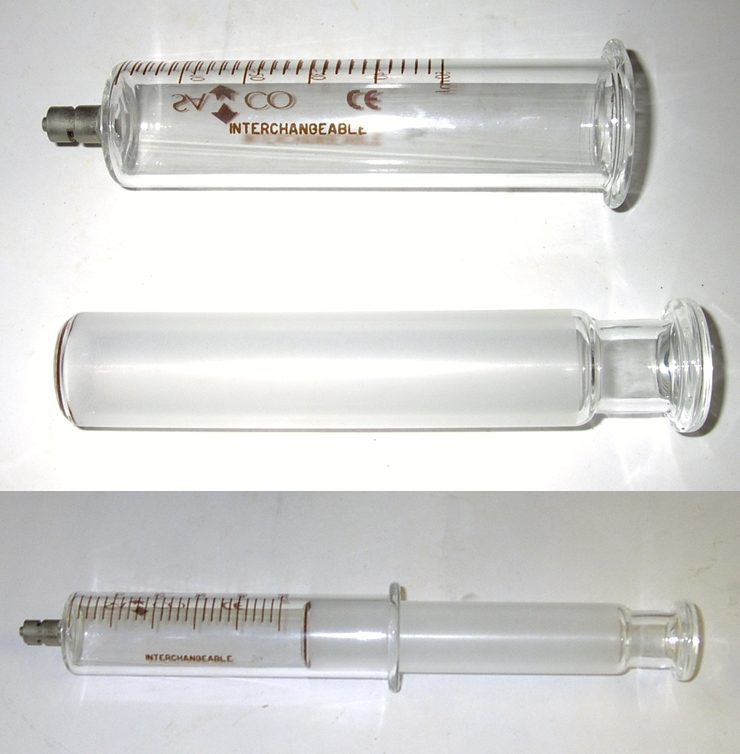
מזרקת גז: מדידת נפח הגז לאורך זמן מאפשרת לחשב את קצב התגובה מהשיפוע
Explore · ⁨חקור⁩

Change conditions and watch the rate · ⁨שנה תנאים ועקוב אחר הקצב⁩

Reaction rate rises with temperature, concentration, and a catalyst — each gives more frequent or more successful collisions. Change each and watch the reaction speed up. · ⁨קצב התגובה עולה עם טמפרטורה, ריכוז, וקטליזטור — כל אחד מהם גורם להתנגשויות תדירות יותר או מוצלחות יותר. שנה כל אחד ועקוב אחר הזדקקות התגובה.⁩

Vocabulary · ⁨מילון מונחים⁩ Train · ⁨אימון⁩
English עברית
Kinetics/kɪˈnetɪks/ קינטיקה
reaction rate/rɪˈækʃn reɪt/ קצב תגובה
rate law/reɪt lɔː/ חוק קצב
rate constant/reɪt ˈkɒnstənt/ קבוע קצב
orders/ˈɔːdəz/ דרגות
catalyst/ˈkætəlɪst/ מצעין
5.2

Writing the Rate Law · ⁨כתיבת משוואת הקצב⁩

Syllabus · ⁨סיילבוס⁩
English

Learning Objective 5.2.A: Represent experimental data with a consistent rate law expression.

  • 5.2.A.1 Experimental methods can be used to monitor the amounts of reactants and/or products of a reaction over time and to determine the rate of the reaction.
  • 5.2.A.2 The rate law expresses the rate of a reaction as proportional to the concentration of each reactant raised to a power.
  • 5.2.A.3 The power of each reactant in the rate law is the order of the reaction with respect to that reactant. The sum of the powers of the reactant concentrations in the rate law is the overall order of the reaction.
  • 5.2.A.4 The proportionality constant in the rate law is called the rate constant. The value of this constant is temperature dependent and the units reflect the overall reaction order.
  • 5.2.A.5 Comparing initial rates of a reaction is a method to determine the order with respect to each reactant.
עברית

מטרת הלמידה 5.2.A: לייצג נתונים ניסויים באמצעות ביטוי חוק קצב עקבי.

  • 5.2.A.1 ניתן להשתמש בשיטות ניסוייות כדי לעקוב אחר כמות המגיבים ו/או התוצרים של תגובה לאורך זמן ולקבוע את קצב התגובה.
  • 5.2.A.2 חוק הקצב מבטא את קצב התגובה כיחס ישר עם ריכוז כל מגיב מוגבה למעריך.
  • 5.2.A.3 מעריךו של כל מגיב בחוק הקצב הוא סדר התגובה בהתאם למגיב זה. הסכום של המעריכים של ריכוזי המגיבים בחוק הקצב הוא סדר התגובה הכולל.
  • 5.2.A.4 קבוע היחסיות בחוק הקצב נקרא קבוע הקצב. ערך קבוע זה תלוי בטמפרטורה והיחידות שלו משקפות את סדר התגובה הכולל.
  • 5.2.A.5 השוואת קצבי התחלה של תגובה היא שיטה לקביעת הסדר בהתאם לכל מגיב.

Source: College Board AP Course and Exam Description · ⁨מקור: תיאור הקורס והמבחן של College Board AP⁩

English

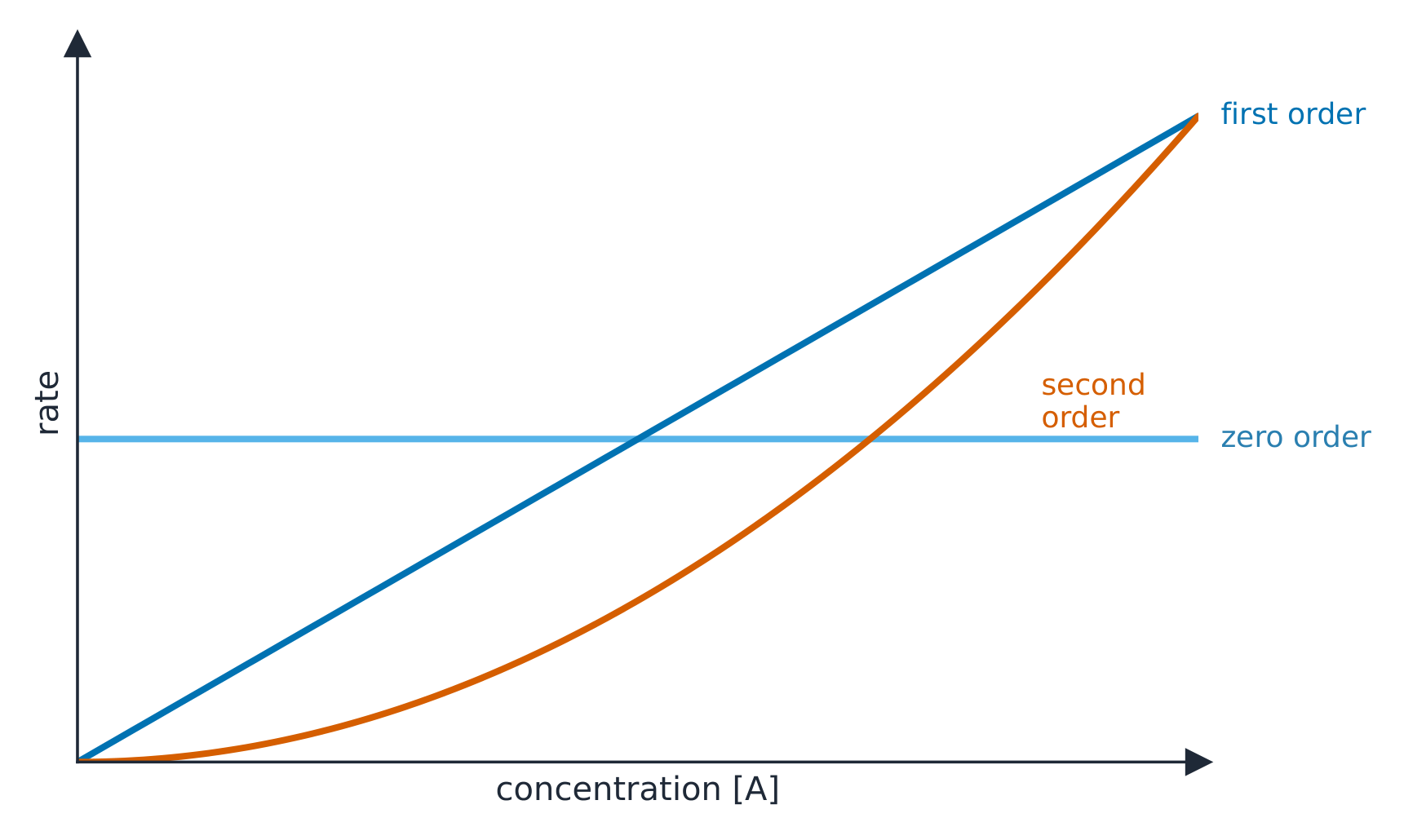
The rate law 速率方程 relates rate to reactant concentrations:

$$\text{rate}=k[\text{A}]^m[\text{B}]^n,$$
where $k$ is the rate constant 速率常数 and $m,n$ are the orders 级数. Orders are found experimentally (not from the balanced coefficients) by seeing how the rate changes when you change one concentration at a time.

Worked example. In experiments, doubling $[\text{A}]$ makes the rate four times larger, while doubling $[\text{B}]$ leaves the rate unchanged. So the reaction is second order in A ($2^2=4$) and zero order in B, giving $\text{rate}=k[\text{A}]^2$. The overall order is $2+0=2$. Never read the orders off the balanced coefficients – only experiment gives them.

עברית

משוואת הקצב מקשרת בין קצב התגובה לבין ריכוזי המגיבים:

$$\text{rate}=k[\text{A}]^m[\text{B}]^n,$$
כאן $k$ הוא קבוע הקצב ו$m,n$ הם הסדרים. הסדרים נמצאים ניסויית (לא מהמקדמים המאוזנים) על ידי הצצה לשינוי הקצב כאשר משנים ריכוז אחד בכל פעם.

גרף קצב לעומת ריכוז לריאקציות מסדר אפס, ראשון ושני

דוגמה פותרת. בניסויים, הכפלת $[\text{A}]$ גורמת לקצב להיות ארבע פעמים גדול יותר, בעוד שהכפלת $[\text{B}]$ אינה משנה את הקצב. לכן, הריאקציה היא מסדר שני ביחס ל-A ($2^2=4$) ומסדר אפס ביחס ל-B, מה שמניב $\text{rate}=k[\text{A}]^2$. סך הדרגות הוא $2+0=2$. לעולם אל תשאל את דרגות הריאקציה מהמקדמים במשוואה המאוזנת – רק ניסוי יכול לתת אותן.

5.3

Concentration Over Time · ⁨ריכוז לאורך זמן⁩

Syllabus · ⁨סיילבוס⁩
English

Learning Objective 5.3.A: Identify the rate law expression of a chemical reaction using data that show how the concentrations of reaction species change over time.

  • 5.3.A.1 The order of a reaction can be inferred from a graph of concentration of reactant versus time.
  • 5.3.A.2 If a reaction is first order with respect to a reactant being monitored, a plot of the natural log (ln) of the reactant concentration as a function of time will be linear.
  • 5.3.A.3 If a reaction is second order with respect to a reactant being monitored, a plot of the reciprocal of the concentration of that reactant versus time will be linear.
  • 5.3.A.4 The slopes of the concentration versus time data for zeroth, first, and second order reactions can be used to determine the rate constant for the reaction.
    • Zeroth order:
    • Equation: $[\mathrm{A}]_t - [\mathrm{A}]_0 = -kt$
    • First order:
    • Equation: $\ln[\mathrm{A}]_t - \ln[\mathrm{A}]_0 = -kt$
    • Second order:
    • Equation: $1/[\mathrm{A}]_t - 1/[\mathrm{A}]_0 = kt$
  • 5.3.A.5 Half-life is a critical parameter for first order reactions because the half-life is constant and related to the rate constant for the reaction by the equation:
    • Equation: $t_{1/2} = 0.693/k.$
  • 5.3.A.6 Radioactive decay processes provide an important illustration of first order kinetics.
עברית

מטרת הלמידה 5.3.A: לזהות את ביטוי חוק הקצב של תגובה כימית באמצעות נתונים המראים כיצד ריכוזי מיני תגובה משתנים לאורך זמן.

  • 5.3.A.1 ניתן לגזור את סדר התגובה ממגרף של ריכוז מגיב כפונקציה של זמן.
  • 5.3.A.2 אם תגובה היא מסדר ראשון בהתאם למגיב הנצפה, גרף הלוגריתם הטבעי (ln) של ריכוז המגיב כפונקציה של זמן יהיה ליניארי.
  • 5.3.A.3 אם תגובה היא מסדר שני בהתאם למגיב הנצפה, גרף ההופכי של ריכוז המגיב כפונקציה של זמן יהיה ליניארי.
  • 5.3.A.4 ניתן להשתמש במשיקים של נתוני ריכוז כפונקציה של זמן לתגובות מסדר אפס, מסדר ראשון ומסדר שני כדי לקבוע את קבוע הקצב של התגובה.
    • מסדר אפס:
    • משוואה: $[\mathrm{A}]_t - [\mathrm{A}]_0 = -kt$
    • מסדר ראשון:
    • משוואה: $\ln[\mathrm{A}]_t - \ln[\mathrm{A}]_0 = -kt$
    • מסדר שני:
    • משוואה: $1/[\mathrm{A}]_t - 1/[\mathrm{A}]_0 = kt$
  • 5.3.A.5 מחצית החיים הוא פרמטר קריטי לתגובות מסדר ראשון מכיוון שמחצית החיים היא קבועה וקשורה לקבוע הקצב של התגובה על ידי המשוואה:
    • משוואה: $t_{1/2} = 0.693/k.$
  • 5.3.A.6 תהליכי דעיכה רדיואקטיבית מהווים הדמיה חשובה של קינטיקה מסדר ראשון.

Source: College Board AP Course and Exam Description · ⁨מקור: תיאור הקורס והמבחן של College Board AP⁩

English

The integrated rate laws describe how concentration falls with time and give straight-line tests:

  • Zero order: $[\text{A}]$ vs $t$ is linear.
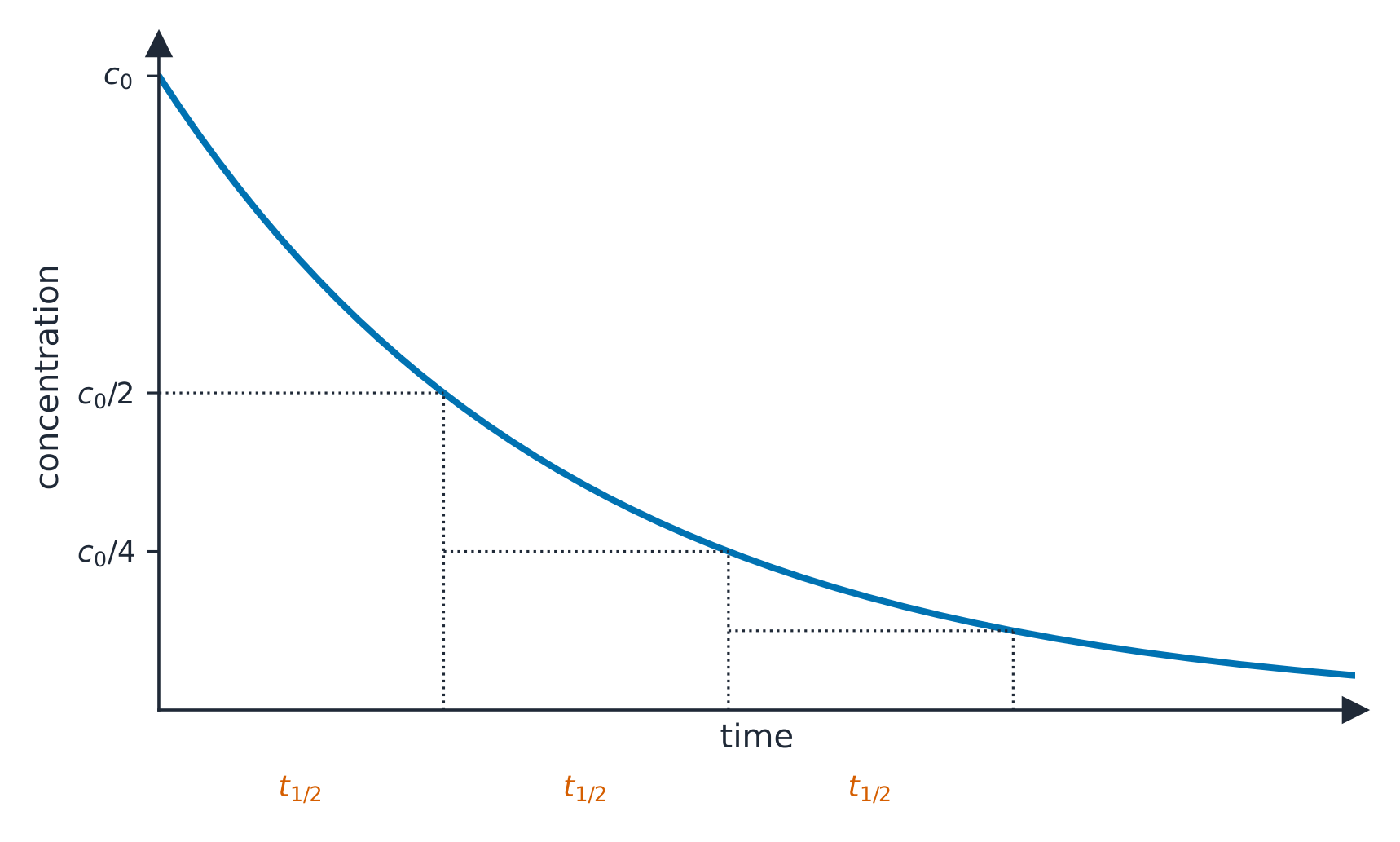
  • First order: $\ln[\text{A}]$ vs $t$ is linear; constant half-life 半衰期.
  • Second order: $\dfrac{1}{[\text{A}]}$ vs $t$ is linear.

Whichever plot is straight tells you the order and gives $k$ from its slope.

Worked example. A first-order reaction has rate constant $k=0.030\ \text{s}^{-1}$. Its half-life is

$$t_{1/2}=\frac{0.693}{k}=\frac{0.693}{0.030}=23\ \text{s},$$
and, being first order, that half-life stays the same no matter how much reactant remains – so after $46\ \text{s}$ ($2$ half-lives) one quarter is left.

עברית

משוואות הקצב המשולבות מתארות כיצד הריכוז יורד עם הזמן ומספקות מבחנים לגרפים ישרים:

תגובה מסדר ראשון בעלת מחצית חיים קבועה
  • מסדר אפס: גרף של $[\text{A}]$ לעומת $t$ הוא ליניארי.
  • מסדר ראשון: גרף של $\ln[\text{A}]$ לעומת $t$ הוא ליניארי; חיי מחצית קבועים.
  • מסדר שני: גרף של $\dfrac{1}{[\text{A}]}$ לעומת $t$ הוא ליניארי.

הגרף שיוצר קו ישר מעיד על דרגת הריאקציה ומאפשר לחשב את $k$ מתוך השיפוע שלו.

דוגמה פותרת. ריאקציה מסדר ראשון יש לה קבוע קצב $k=0.030\ \text{s}^{-1}$. חיי המחצית שלה הם

$$t_{1/2}=\frac{0.693}{k}=\frac{0.693}{0.030}=23\ \text{s},$$
ובשל כך שהיא מסדר ראשון, חיי המחצית נשארים זהים ללא תלות בכמות המגיב שנותרה – כך שלאחר $46\ \text{s}$ ($2$ חיי מחצית) נותרו רבע מהחומר.

Explore · ⁨חקור⁩

Track concentration as a reaction runs · ⁨עקוב אחר הריכוז בזמן התגובה⁩

As reactants are used up the rate slows, so a concentration-time curve is steep at first and flattens out. Raising temperature or adding a catalyst steepens it. · ⁨ככל שהתגובה מתקדמת והמגיבים נצרכים, המהירות יורדת, ולכן עקומת ריכוז-זמן תלולה בהתחלה ומשטחת. העלאת הטמפרטורה או הוספת חומר זרז משפרת את התלילות.⁩

Vocabulary · ⁨מילון מונחים⁩ Train · ⁨אימון⁩
English עברית
half-life/hɑːf laɪf/ זמן מחצית חיים
reaction mechanism/rɪˈækʃn ˈmekənɪzəm/ מנגנון תגובה
elementary steps/ˌelɪˈmentəri steps/ שלבים יסודיים
intermediates/ˌɪntəˈmiːdɪəts/ תוצרי ביניים
5.4

The Steps a Reaction Really Takes · ⁨השלבים האמיתיים של ריאקציה⁩

Syllabus · ⁨סיילבוס⁩
English

Learning Objective 5.4.A: Represent an elementary reaction as a rate law expression using stoichiometry.

  • 5.4.A.1 The rate law of an elementary reaction can be inferred from the stoichiometry of the particles participating in a collision.
  • 5.4.A.2 Elementary reactions involving the simultaneous collision of three or more particles are rare.
עברית

מטרת הלמידה 5.4.A: לייצג תגובה אלמנטרית באמצעות ביטוי חוק קצב המשמש את הסטוכיומטריה.

  • 5.4.A.1 את חוק הקינטיקה של תגובה יסודית ניתן להסיק מהסטואיומטריה של החלקיקים המשתתפים בהתנגשות.
  • 5.4.A.2 תגובות יסודיות הכוללות התנגשות סימולטנית של שלושה או יותר חלקיקים הן נדירות.

Source: College Board AP Course and Exam Description · ⁨מקור: תיאור הקורס והמבחן של College Board AP⁩

English

A reaction mechanism 反应机理 is the sequence of elementary steps 基元反应 that actually occur. Their molecularity (how many particles collide in a step) sets that step's rate law directly. Species made in one step and used up in a later one are intermediates 中间体.

עברית

מנגנון ריאקציה הוא הרצף של שלבים יסודיים שאמנם מתרחשים בפועל. המולקולריות שלהם (כמות החלקיקים הנפגשות בשלב) קובעת ישירות את משוואת הקצב של כל שלב. מינים שנוצרים בשלב מסוים ונצרכים בשלב מאוחר יותר הם אינטרמדיוטים.

5.5

Why Collisions Do or Do Not React · ⁨מדוע התנגשויות עשויות או אינן גורמות לתגובה⁩

Syllabus · ⁨סיילבוס⁩
English

Learning Objective 5.5.A: Explain the relationship between the rate of an elementary reaction and the frequency, energy, and orientation of particle collisions.

  • 5.5.A.1 For an elementary reaction to successfully produce products, reactants must successfully collide to initiate bond-breaking and bond-making events.
  • 5.5.A.2 In most reactions, only a small fraction of the collisions leads to a reaction. Successful collisions have both sufficient energy to overcome the activation energy requirements and orientations that allow the bonds to rearrange in the required manner.
  • 5.5.A.3 The Maxwell-Boltzmann distribution curve describes the distribution of particle energies; this distribution can be used to gain a qualitative estimate of the fraction of collisions with sufficient energy to lead to a reaction, and also how that fraction depends on temperature.
עברית

מטרות למידה 5.5.A: הסבר הקשר בין קצב התגובה היסודית לבין תדירות, אנרגיה וכיוון ההתנגשויות בין חלקיקים.

  • 5.5.A.1 כדי שתגובה יסודית תייצר מוצרים בהצלחה, המגיבים חייבים להתנגש באופן מוצלח כדי לזרוע אירועי שבירת ויצירת קשרים.
  • 5.5.A.2 ברוב התגובות, רק שבר קטן מההתנגשויות מוביל לתגובה. התנגשויות מוצלחות כוללות גם אנרגיה מספקת כדי להתגבר על דרישות האנרגיה להפעלה וגם כיוונים המאפשרים לחלקיקים להיערך מחדש בצורה הנדרשת.
  • 5.5.A.3 עקומת חלוקת מקסוול-בולצמן מתארת את חלוקת האנרגיה של החלקיקים; חלוקה זו יכולה לשמש לקבלת הערכה איכותית של השבר שהתנגשויותיו מכילות אנרגיה מספקת כדי לייצר תגובה, ולכן השבר תלוי בטמפרטורה.

Source: College Board AP Course and Exam Description · ⁨מקור: תיאור הקורס והמבחן של College Board AP⁩

English
Collision theory

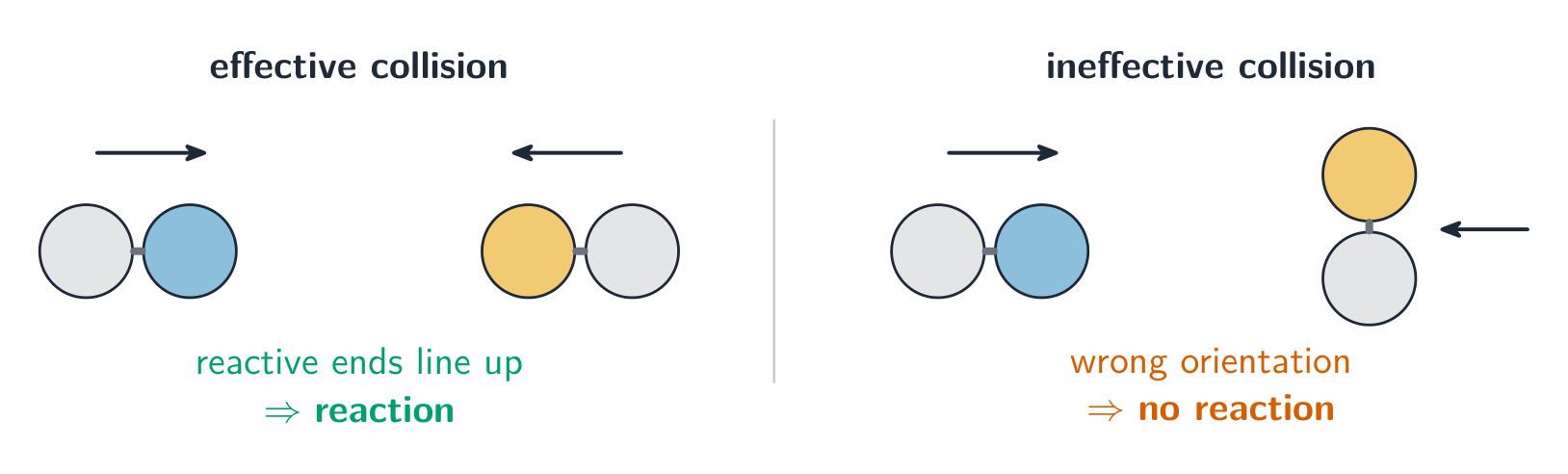
Collision theory 碰撞理论: molecules must collide with enough energy (the activation energy 活化能, $E_a$) and the correct orientation to react. Higher temperature means more molecules exceed $E_a$, so the reaction speeds up sharply.

עברית
תיאוריית התנגשויות

תיאוריית התנגשויות: מולקולות חייבות להתנגש באנרגיה מספקת (אנרגיית השפעול, $E_a$) ובכיוון התאמה נכון כדי להגיב. טמפרטורה גבוהה יותר משמעותה שמספר רב יותר של מולקולות עוברות את $E_a$, ולכן התגובה מאיצה באופן חד.

התנגשות מגיעה לתוצאה רק אם יש כיוון נכון ואנרגיה מספקת
התנגשות מגיבה רק עם הכיוון הנכון ובעלות אנרגיה מספקת
Explore · ⁨חקור⁩

Which molecules clear the activation energy · ⁨אילו מולקולות מצליחות לעבור את אנרגיית ההפעלה⁩

Only collisions with energy above the activation energy react. Heating shifts the speed distribution right, so a much larger fraction of molecules can react. · ⁨רק התנגשויות עם אנרגיה מעל אנרגיית ההפעלה גורמות לתגובה. חימום מזיז את התפלגת המהירויות ימינה, כך ששבר הרבה גדול יותר של מולקולות יכול להגיב.⁩

Vocabulary · ⁨מילון מונחים⁩ Train · ⁨אימון⁩
English עברית
Collision theory/kəˈlɪʒn ˈθɪəri/ תיאוריית התנגשות
activation energy/ˌæktɪˈveɪʃn ˈenədʒi/ אנרגיית השפעול
energy profile/ˈenədʒi ˈprəʊfaɪl/ פרופיל אנרגטי
transition state/trænˈsɪʃn steɪt/ מצב מעבר
5.6

Reading an Energy Profile · ⁨קריאת פרופיל אנרגטי⁩

Syllabus · ⁨סיילבוס⁩
English

Learning Objective 5.6.A: Represent the activation energy and overall energy change in an elementary reaction using a reaction energy profile.

  • 5.6.A.1 Elementary reactions typically involve the breaking of some bonds and the forming of new ones.
  • 5.6.A.2 The reaction coordinate is the axis along which the complex set of motions involved in rearranging reactants to form products can be plotted.
  • 5.6.A.3 The energy profile gives the energy along the reaction coordinate, which typically proceeds from reactants, through a transition state, to products. The energy difference between the reactants and the transition state is the activation energy for the forward reaction.
  • 5.6.A.4 The rate of an elementary reaction is temperature dependent because the proportion of particle collisions that are energetic enough to reach the transition state varies with temperature. The Arrhenius equation relates the temperature dependence of the rate of an elementary reaction to the activation energy needed by molecular collisions to reach the transition state.
    • Exclusion statement: Calculations involving the Arrhenius equation will not be assessed on the AP Exam.
עברית

מטרות למידה 5.6.A: הצגת אנרגיית ההפעלה והשינוי באנרגיה הכוללת בתגובה יסודית באמצעות פרופיל אנרגיה בתגובה.

  • 5.6.A.1 תגובות יסודיות בדרך כלל כוללות שבירה של קשרים מסוימים ויצירה של חדשים.
  • 5.6.A.2 ציר התגובה הוא הציר לאורךיו ניתן לשרטט את סט המורכב של תנועות המעורבות בעיצוב מחדש של מגיבים ליצירת מוצרים.
  • 5.6.A.3 פרופיל האנרגיה מציג את האנרגיה לאורך ציר התגובה, אשר בדרך כלל מתקדם מהמגיבים, דרך מצב מעבר, אל המוצרים. הפרש האנרגיה בין המגיבים למצב המעבר הוא אנרגיית ההפעלה לתגובה הפנימה.
  • 5.6.A.4 קצב התגובה היסודית תלוי בטמפרטורה מכיוון שהחלק מההתנגשויות בין חלקיקים שאנרגטיות מספיק כדי להגיע למצב המעבר משתנה עם הטמפרטורה. משפט ארניוס מקשר את התלות בטמפרטורה של קצב התגובה היסודית לאנרגיית ההפעלה הנדרשת מההתנגשויות המולקולריות כדי להגיע למצב המעבר.
    • הצהרת פסילה: חישובים הכוללים את משפט ארניוס לא יימדדו במבחן AP.

Source: College Board AP Course and Exam Description · ⁨מקור: תיאור הקורס והמבחן של College Board AP⁩

English
Reaction energy profile

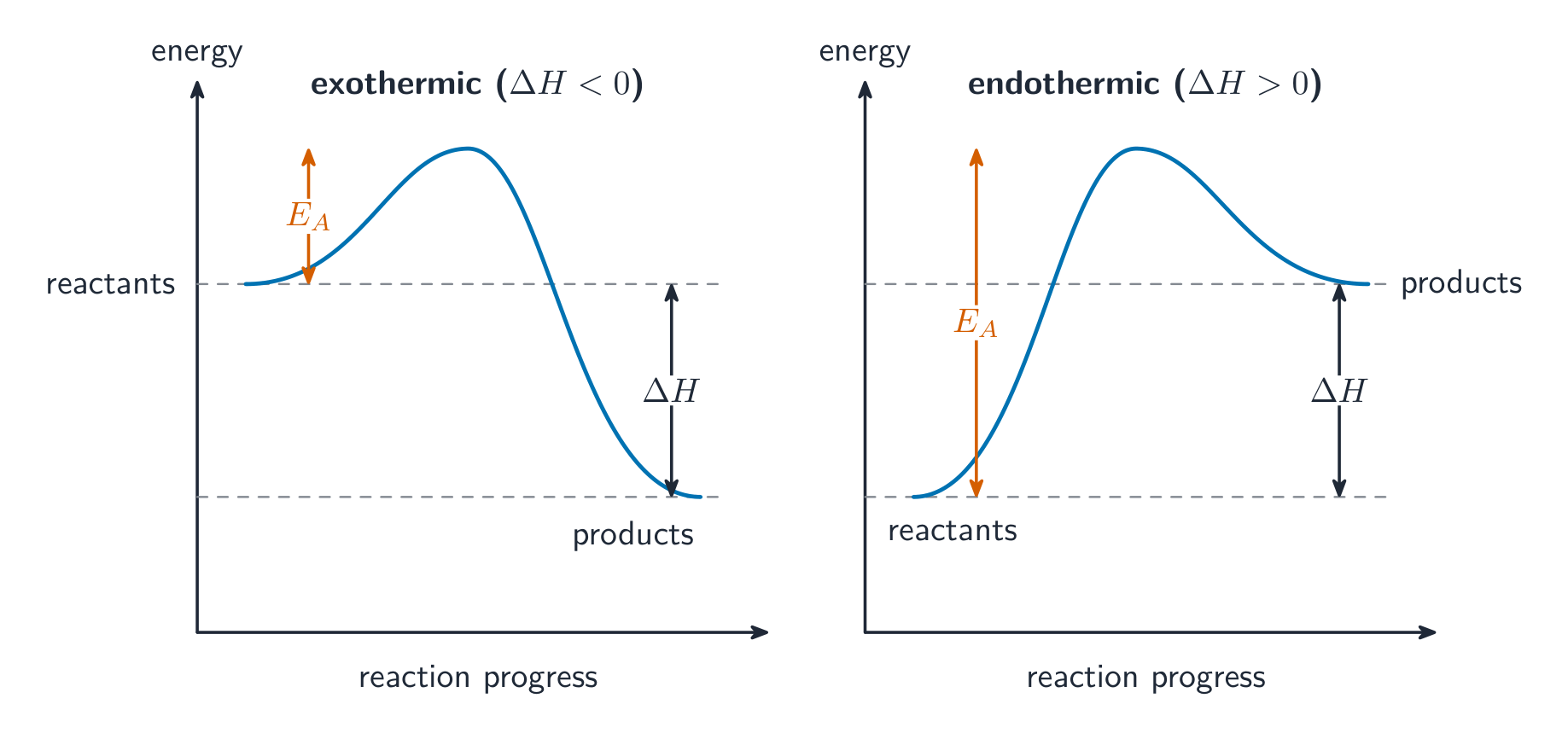
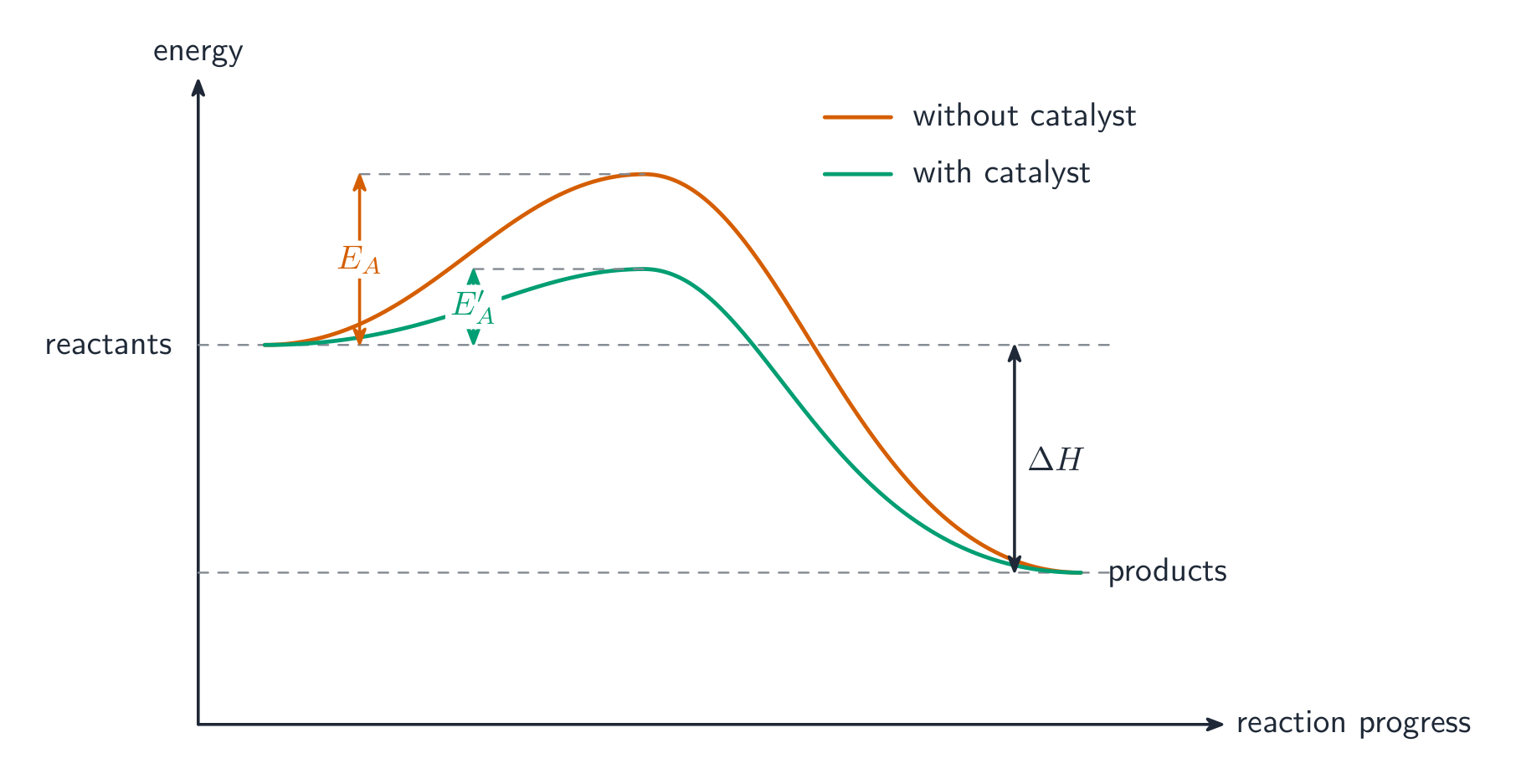
An energy profile 能量图 plots energy along the reaction path. The peak is the transition state 过渡态; the climb from reactants to the peak is $E_a$; the difference between reactant and product energies is the enthalpy change $\Delta H$ (down for exothermic).

עברית
פרופיל אנרגטי לתגובה

גרף אנרגטי מצייר אנרגיה לאורך מסלול התגובה. הפסגה היא מצב המעבר; העלייה מהתגובים לפסגה היא $E_a$; ההפרש בין אנרגיית התגובים למוצרים הוא שינוי האנטלפיה $\Delta H$ (שלילי בתגובות אקסותרמיות).

תגובות אקסותרמיות נסיימות נמוכה מהתגובים; תגובות אנדותרמיות נסיימות גבוהה
Explore · ⁨חקור⁩

Read activation energy off the profile · ⁨קראו את אנרגיית ההפעלה מהפרופיל האנרגטי⁩

An energy profile plots energy along the reaction. The hump is the activation energy; the drop from reactants to products is $\Delta H$. A catalyst lowers the hump. · ⁨פרופיל אנרגטי מציג אנרגיה לאורך התגובה. הגבשון הוא אנרגיית ההפעלה; הירידה ממגיבים למוצרים היא $\Delta H$. חומר זרז מקטין את הגבשון.⁩

5.7

The Sequence of Steps · ⁨סדר השלבים⁩

Syllabus · ⁨סיילבוס⁩
English

Learning Objective 5.7.A: Identify the components of a reaction mechanism.

  • 5.7.A.1 A reaction mechanism consists of a series of elementary reactions, or steps, that occur in sequence. The components may include reactants, intermediates, products, and catalysts.
  • 5.7.A.2 The elementary steps when combined should align with the overall balanced equation of a chemical reaction.
  • 5.7.A.3 A reaction intermediate is produced by some elementary steps and consumed by others, such that it is present only while a reaction is occurring.
  • 5.7.A.4 Experimental detection of a reaction intermediate is a common way to build evidence in support of one reaction mechanism over an alternative mechanism.
    • Exclusion statement: Collection of data pertaining to detection of a reaction intermediate will not be assessed on the AP Exam.
עברית

מטרות למידה 5.7.A: זיהוי רכיבי מנגנון תגובה.

  • 5.7.A.1 מנגנון תגובה מורכב מסדרה של תגובות יסודיות, או שלבים, המתרחשים ברצף. הרכיבים עשויים לכלול מגיבים, ביניים, מוצרים וקטליזטורים.
  • 5.7.A.2 השלבים היסודיים בשילובם אמורים להיות תואמים למשוואה הכימית מאוזנת בסך הכל.
  • 5.7.A.3 ביניים בתגובה נוצר על ידי חלק מהשלבים היסודיים ונצרך על ידי אחרים, כך שהוא קיים רק בזמן שהתגובה מתרחשת.
  • 5.7.A.4 גילוי ניסויי של ביניים בתגובה הוא דרך נפוצה לבנות ראיות לתמיכה במנגנון תגובה אחד לעומת מנגנון חלופי.
    • הצהרת פסילה: איסוף נתונים הקשורים לזיהוי תוצר ביניים בתגובה לא יהיה כלול בחינה ב-AP.

Source: College Board AP Course and Exam Description · ⁨מקור: תיאור הקורס והמבחן של College Board AP⁩

English

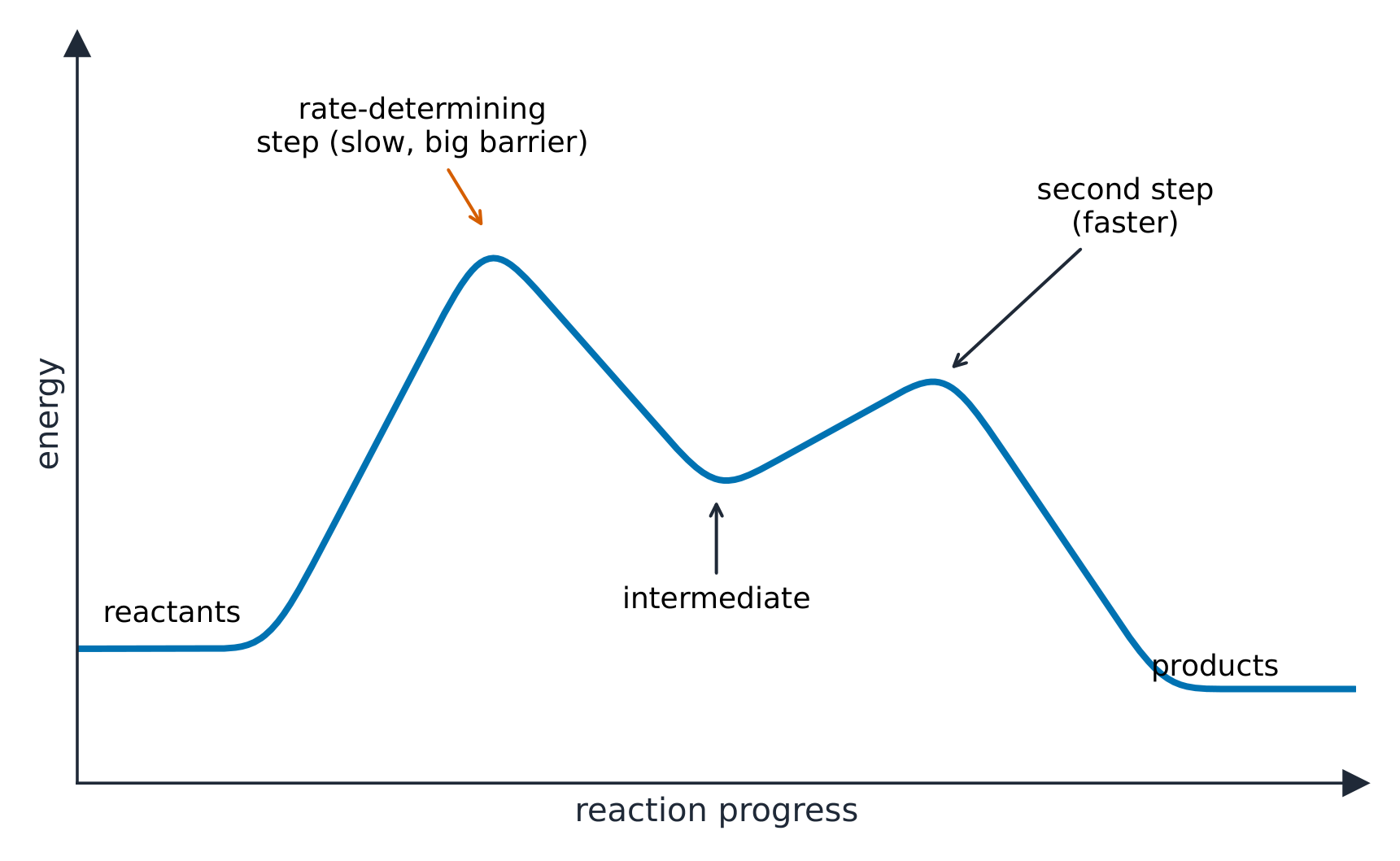
In a multi-step mechanism, the steps must add up to the overall balanced equation (intermediates cancel). Each step has its own energy hill; the tallest hill is the slowest step.

עברית

במנגנון רב-שלבי, השלבים חייבים להתכנס למשוואה הכימית הכוללת המאוזנת (הביניים מתאפסו). לכל שלב יש את הגבעה האנרגטית שלו; הגבעה הגבוהה ביותר היא השלב האיטי ביותר.

השלב האיטי עם מחסום הגבוה הוא הקובע את הקצב
Vocabulary · ⁨מילון מונחים⁩ Train · ⁨אימון⁩
English עברית
rate-determining step/reɪt dɪˈtɜːmɪnɪŋ step/ שלב קובע קצב
5.8

Finding the Rate Law From a Mechanism · ⁨מציאת חוק הקצב ממנגנון⁩

Syllabus · ⁨סיילבוס⁩
English

Learning Objective 5.8.A: Identify the rate law for a reaction from a mechanism in which the first step is rate limiting.

  • 5.8.A.1 For reaction mechanisms in which each elementary step is irreversible, or in which the first step is rate limiting, the rate law of the reaction is set by the molecularity of the slowest elementary step (i.e., the rate-limiting step).
    • Exclusion statement: Collection of data pertaining to detection of a reaction intermediate will not be assessed on the AP Exam.
עברית

מטרה לימודית 5.8.A: זיהוי ניסוח הקצב לתגובה מתוך מנגנון שבו השלב הראשון הוא המגביל את הקצב.

  • 5.8.A.1 עבור מנגנוני תגובה שבהם כל שלב על-תחומי בלתי הפיך, או שבהם השלב הראשון הוא המגביל את הקצב, ניסוח הקצב של התגובה נקבע על ידי המולקולריות של השלב העל-תחומי האיטי ביותר (כלומר, השלב המגביל את הקצב).
    • הצהרת פסילה: איסוף נתונים הקשורים לזיהוי תוצר ביניים בתגובה לא יהיה כלול בחינה ב-AP.

Source: College Board AP Course and Exam Description · ⁨מקור: תיאור הקורס והמבחן של College Board AP⁩

English

The rate-determining step 决速步骤 is the slowest step; its molecularity gives the overall rate law. A valid mechanism must (1) add to the overall reaction and (2) predict the experimentally observed rate law.

Worked example. Suppose the slow (rate-determining) step is the bimolecular collision $\text{NO}_2+\text{NO}_2\rightarrow\text{NO}_3+\text{NO}$. Its molecularity gives the rate law directly: $\text{rate}=k[\text{NO}_2]^2$. If experiment shows exactly this, the proposed mechanism is consistent; if experiment gave $\text{rate}=k[\text{NO}_2]$, the mechanism would be wrong.

עברית

ה-שלב הקובע את הקצב הוא השלב האיטי ביותר; המולקולריות שלו נותנת את חוק הקצב הכולל. מנגנון תקף חייב (1) להסתכם לתגובה הכוללת ו-(2) לחזות את חוק הקצב הנצפה ניסויית.

דוגמה מפורשת. נתון שהשלב האיטי (הקובע את הקצב) הוא ההתנגשות הבימולארית $\text{NO}_2+\text{NO}_2\rightarrow\text{NO}_3+\text{NO}$. המולקולריות שלו נותנת את חוק הקצב ישירות: $\text{rate}=k[\text{NO}_2]^2$. אם הניסוי מראה בדיוק זאת, המנגנון המוצע הוא תואם; אם הניסוי נתן $\text{rate}=k[\text{NO}_2]$, המנגנון היה שגוי.

5.9

When the First Step Is Fast · ⁨כאשר השלב הראשון הוא מהיר⁩

Syllabus · ⁨סיילבוס⁩
English

Learning Objective 5.9.A: Identify the rate law for a reaction from a mechanism in which the first step is not rate limiting.

  • 5.9.A.1 If the first elementary reaction is not rate limiting, approximations (such as pre-equilibrium) must be made to determine a rate law expression.
עברית

מטרה לימודית 5.9.A: זיהוי ניסוח הקצב לתגובה מתוך מנגנון שבו השלב הראשון אינו המגביל את הקצב.

  • 5.9.A.1 אם השלב העל-תחומי הראשון אינו מגביל את הקצב, יש לבצע קירובים (כמו טרום-איזון) כדי לקבוע ביטוי לניסוח הקצב.

Source: College Board AP Course and Exam Description · ⁨מקור: תיאור הקורס והמבחן של College Board AP⁩

English

If a fast step precedes the slow one, an intermediate appears in the slow step's rate law. Use the fast pre-equilibrium to rewrite that intermediate in terms of reactants, so the final rate law contains only measurable species.

עברית

אם שלב מהיר מקדים לשלב האיטי, ביניים מופיע בחוק הקצב של השלב האיטי. השתמש ב-איזון מהיר מקדים כדי לבטא את הביניים באמצעות התגובים, כך שחוק הקצב הסופי יכלול רק מינים ניתן למדידה.

5.10

Energy Profiles for Many Steps · ⁨פרופילים אנרגטיים עבור רבים שלבים⁩

Syllabus · ⁨סיילבוס⁩
English

Learning Objective 5.10.A: Represent the activation energy and overall energy change in a multistep reaction with a reaction energy profile.

  • 5.10.A.1 Knowledge of the energetics of each elementary reaction in a mechanism allows for the construction of an energy profile for a multistep reaction.
עברית

מטרת למידה 5.10.A: להציג את אנרגיית ההפעלה ואת השינוי האנרגטי הכולל בתגובה רב-שלבים באמצעות פרופיל אנרגיה לתגובה.

  • 5.10.A.1 ידע באנרגטיקה של כל תגובה יסודית במנגנון מאפשר בניית פרופיל אנרגיה לתגובה רב-שלבים.

Source: College Board AP Course and Exam Description · ⁨מקור: תיאור הקורס והמבחן של College Board AP⁩

English

A multi-step reaction's profile shows several peaks (one per step) with valleys (intermediates) between them. The highest peak is the rate-determining transition state – it controls the overall rate.

עברית

פרופיל של תגובה רב-שלבית מציג פסגות מספר (אחת לכל שלב) עם עמקים (ביניים) ביניהם. הפסגה הגבוהה ביותר היא מצב המעבר הקובע את הקצב – היא קובעת את הקצב הכולל.

5.11

How Catalysts Speed Things Up · ⁨כיצד זרזים מאיצים תהליכים⁩

Syllabus · ⁨סיילבוס⁩
English

Learning Objective 5.11.A: Explain the relationship between the effect of a catalyst on a reaction and changes in the reaction mechanism.

  • 5.11.A.1 In order for a catalyst to increase the rate of a reaction, the addition of the catalyst must increase the number of effective collisions and/or provide a reaction path with a lower activation energy relative to the original reaction coordinate.
  • 5.11.A.2 In a reaction mechanism containing a catalyst, the net concentration of the catalyst is constant. However, the catalyst will frequently be consumed in the rate-determining step of the reaction, only to be regenerated in a subsequent step in the mechanism.
  • 5.11.A.3 Some catalysts accelerate a reaction by binding to the reactant(s). The reactants are either oriented more favorably or react with lower activation energy. There is often a new reaction intermediate in which the catalyst is bound to the reactant(s). Many enzymes function in this manner.
  • 5.11.A.4 Some catalysts involve covalent bonding between the catalyst and the reactant(s). An example is acid-base catalysis, in which a reactant or intermediate either gains or loses a proton. This introduces a new reaction intermediate and new elementary reactions involving that intermediate.
  • 5.11.A.5 In surface catalysis, a reactant or intermediate binds to, or forms a covalent bond with, the surface. This introduces elementary reactions involving these new bound reaction intermediate(s).
עברית

מטרת למידה 5.11.A: להסביר את הקשר בין השפעתו של חומר זרז על תגובה לבין שינויים במנגנון התגובה.

  • 5.11.A.1 כדי לחומר זרז יגדיל את קצב התגובה, הוספתו חייבת להגדיל את מספר ההתנגשויות האפקטיביות ול/או לספק מסלול תגובה בעל אנרגיית הפעלה נמוכה יותר בהשוואה לקו התגובה המקורי.
  • 5.11.A.2 במנגנון תגובה המכיל חומר זרז, הריכוז הנקי של החומר הזרז נשאר קבוע. עם זאת, החומר הזרז עשוי להיות צרוך בשלב הקובע את קצב התגובה, אך יוחזר לרוב בשלב הבא במנגנון.
  • 5.11.A.3 חלק מחומרי הזרז מאיצים תגובה על ידי קישור לתגובן(ים). התגובנים מכוונים בצורה יעילה יותר או מגיבים באנרגיית הפעלה נמוכה יותר. לעיתים קרובות נוצר ביניים תגובה חדש בו החומר הזרז קשור לתגובן(ים). אנזימים רבים פועלים בסגנון זה.
  • 5.11.A.4 חלק מחומרי הזרז מעורבים בקישור קוולנטי בין החומר הזרז לתגובן(ים). דוגמה לכך היא זירוז חומצה-בסיס, שבו תגובן או ביניים מקבלים או מאבדים פרוטון. הדבר מוביל לביניים תגובה חדש ותגובות יסודיות חדשות המעורבות בביניים זה.
  • 5.11.A.5 בזירוז פני שטח, תגובן או ביניים נקשר ל, או יוצר קשר קוולנטי עם, הפני שטח. הדבר מוביל לתגובות יסודיות המעורבות בביניים(ים) החדשים הקשורים הללו.

Source: College Board AP Course and Exam Description · ⁨מקור: תיאור הקורס והמבחן של College Board AP⁩

English

A catalyst 催化剂 speeds a reaction by providing a new pathway with a lower activation energy, without being consumed. It does not change $\Delta H$ or the equilibrium position – only how fast equilibrium is reached. On an energy profile, a catalyst lowers the peak(s).

עברית

קטליז מאיץ תגובה על ידי אספקת מסלול חדש עם אנרגיית השפעול הנמוכה יותר, ללא צריכת עצמו. הוא אינו משנה $\Delta H$ או את מיקום האיזון – אלא רק את מהירות ההגעה לאיזון. בגרף אנרגיה, קטליז מפחית את הפסגה(ות).

קטליסטר מספק מסלול עם אנרגיית הפעלה נמוכה יותר; שינוי האנתלפיה נשאר לא משתנה
5.11

Exam tips · ⁨טיפים לבחינות⁩

English
  • Rate rises with concentration, temperature, surface area, and a catalyst — explain each with collision theory (more, or more energetic, successful collisions).
  • Temperature works mainly by getting more particles above the activation energy, not just more collisions.
  • Reaction orders come from experiment, not the balanced coefficients — see how the rate changes when one concentration is varied.
  • On an energy profile the hill height is the activation energy and the reactant–product gap is $\Delta H$.
  • A catalyst lowers the activation energy (a new pathway) but leaves $\Delta H$ and the equilibrium position unchanged.
עברית
  • הקצב עולה עם ריכוז, טמפרטורה, שטח פנים וקטליז – הסבר כל אחד באמצעות תיאוריית התנגשויות (יותר, או התנגשויות אנרגטיות יותר, מוצלחות).
  • הטמפרטורה פועלת בעיקר על ידי יצירת יותר חלקיקים מעבר לאנרגיית השפעול, ולא רק יותר התנגשויות.
  • דרגות התגובה נובעות מניסוי, ולא מקואפסיאנטים במשוואה המאוזנת – ראו כיצד הקצב משתנה כאשר ריכוז אחד משתנה.
  • בגרף אנרגיה גובה הגבעה הוא אנרגיית השפעול והמרווח בין התגובה-מוצר הוא $\Delta H$.
  • קטליז מפחית את אנרגיית השפעול (מסלול חדש) אך משאיר $\Delta H$ ומיקום האיזון ללא שינוי.

Interactive lessons on this topic · ⁨שיעורים אינטראקטיביים בנושא זה⁩

Work through it step by step, with instant-check exercises. · ⁨לעבור על הדברים צעד אחר צעד, עם תרגילים לבדיקה מיידית.⁩

Past Papers · ⁨מבחני עבר⁩

More topics in AP Chemistry · ⁨כימיה AP⁩ · ⁨נושאים נוספים בAP Chemistry · ⁨כימיה AP⁩⁩

Log in or create account · ⁨היכנס או צור חשבון⁩

IGCSE, A-Level & AP