AP Biology is built on four big ideas: evolution, energetics, information storage and transmission, and systems interactions. Its content is huge, but the exam does not test recall of it. It tests whether you can use biology on an unfamiliar case — a species you have never met, an experiment you have never seen.
The science practices are the real syllabus: reading a graph, designing an experiment, identifying the control, and justifying a claim with evidence. These are exactly what the free-response section asks for.
Statistics is examinable.Chi-square, standard error and error bars appear regularly, and they carry marks that pure content revision never reaches.
Notes run through all eight units, with diagrams for the processes that are easier seen than read. The library holds released free-response questions; the biology rubric pays for linking structure to function and for handling data correctly, so the worked answers are built that way.
Big Idea 4 — Systems Interactions: Biological systems interact, and these systems and their interactions exhibit complex properties.
Learning Objective 1.1.A: Explain how the properties of water that result from its polarity and hydrogen bonding affect its biological function.
1.1.A.1 Living systems depend on the properties of water to sustain life.
1.1.A.1.i Water has polarity, because of the formation of polar covalent bonds between hydrogen and oxygen within water molecules. This polarity contributes to hydrogen bonding between and within biological molecules.
1.1.A.1.ii Water has a high specific heat capacity, which allows for the maintenance of homeostatic body temperature within living organisms.
1.1.A.1.iii Water has a high heat of vaporization, which allows for the evaporative cooling of the surrounding environment. In living organisms, this property allows for body temperature to be maintained.
1.1.A.2 The hydrogen bonds between adjacent polar water molecules result in cohesion, adhesion, and surface tension.
עברית
רעיון מרכזי 4 — אינטראקציות מערכות: מערכות ביולוגיות נמצאות באינטראקציה זו עם הזו, ומערכות אלו ואינטראקציותיהן מציגות תכונות מורכבות.
מטרות למידה 1.1.A: הסבר כיצד התכונות של המים הנובעות מקוטביות ובקשרי מימן משפיעות על הפונקציה הביולוגית שלו.
1.1.A.1 מערכות חיות תלויות בתכונות המים כדי לתמוך בחיים.
1.1.A.1.i למים יש קוטביות, בשל יצירת קשרים קוולנטיים קוטביים בין מימן לחמצן בתוך מולקולות מים. קוטביות זו תורמת לקשרי מימן בין ולתוך מולקולות ביולוגיות.
1.1.A.1.ii למים יש קיבולת חום ספציפית גבוהה, מה שמאפשר שמירה על טמפרטורת הגוף הבית-חומתית בתוך בעלי חיים.
1.1.A.1.iii למים יש חום אידוי גבוה, מה שמאפשר קירור באמצעות אידוי לסביבה הסובבת. בבעלי חיים, תכונה זו מאפשרת שמירה על טמפרטורת הגוף.
1.1.A.2 קשרי המימן בין מולקולות מים קוטביות סמוכות מובילים להדבקה פנימית, הדבקה חיצונית ולמתיחה פני שטח.
Source: College Board AP Course and Exam Description · מקור: תיאור הקורס והמבחן של College Board AP
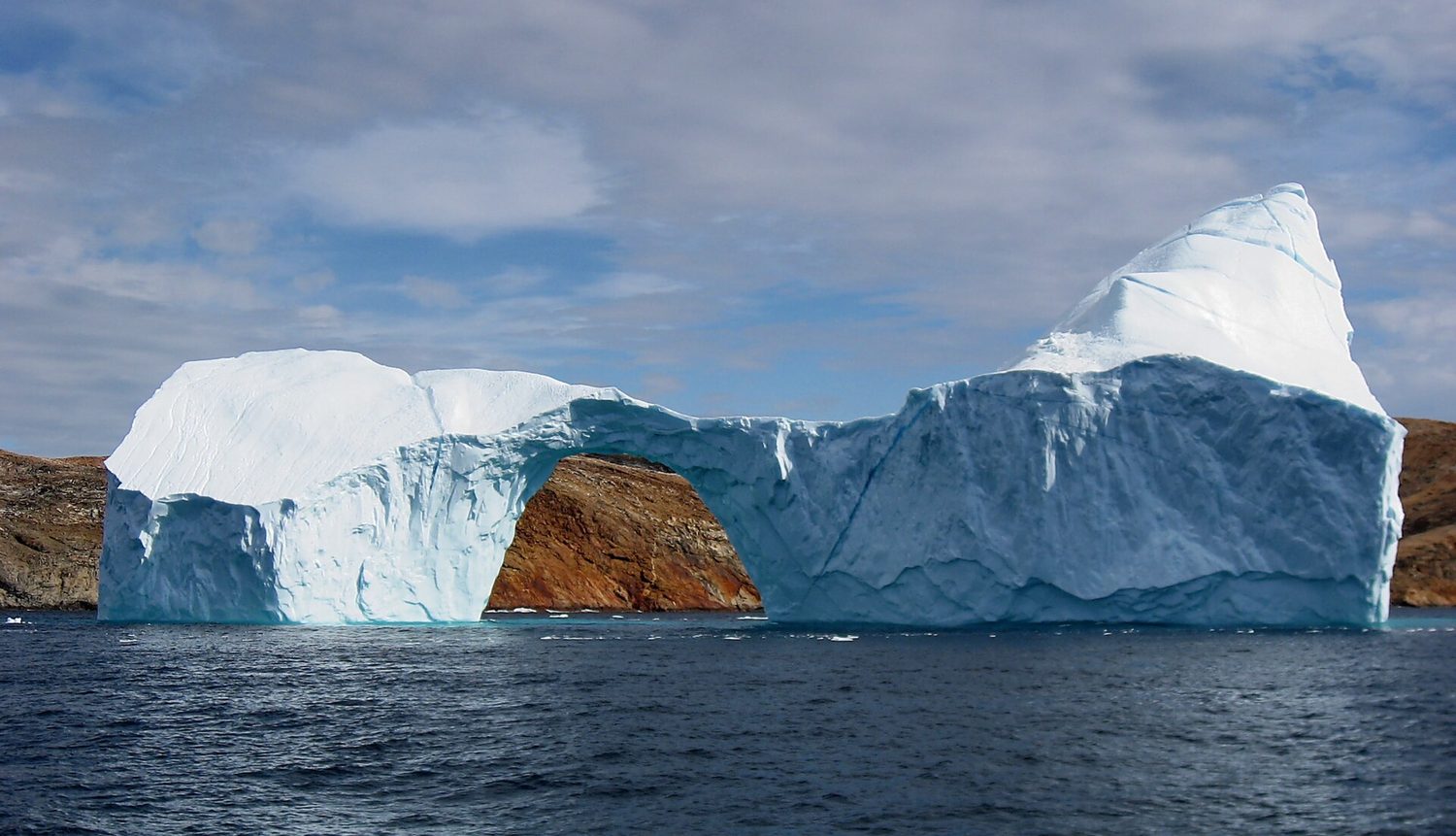
Ice floats on water because hydrogen bonding makes solid water less dense than liquid water
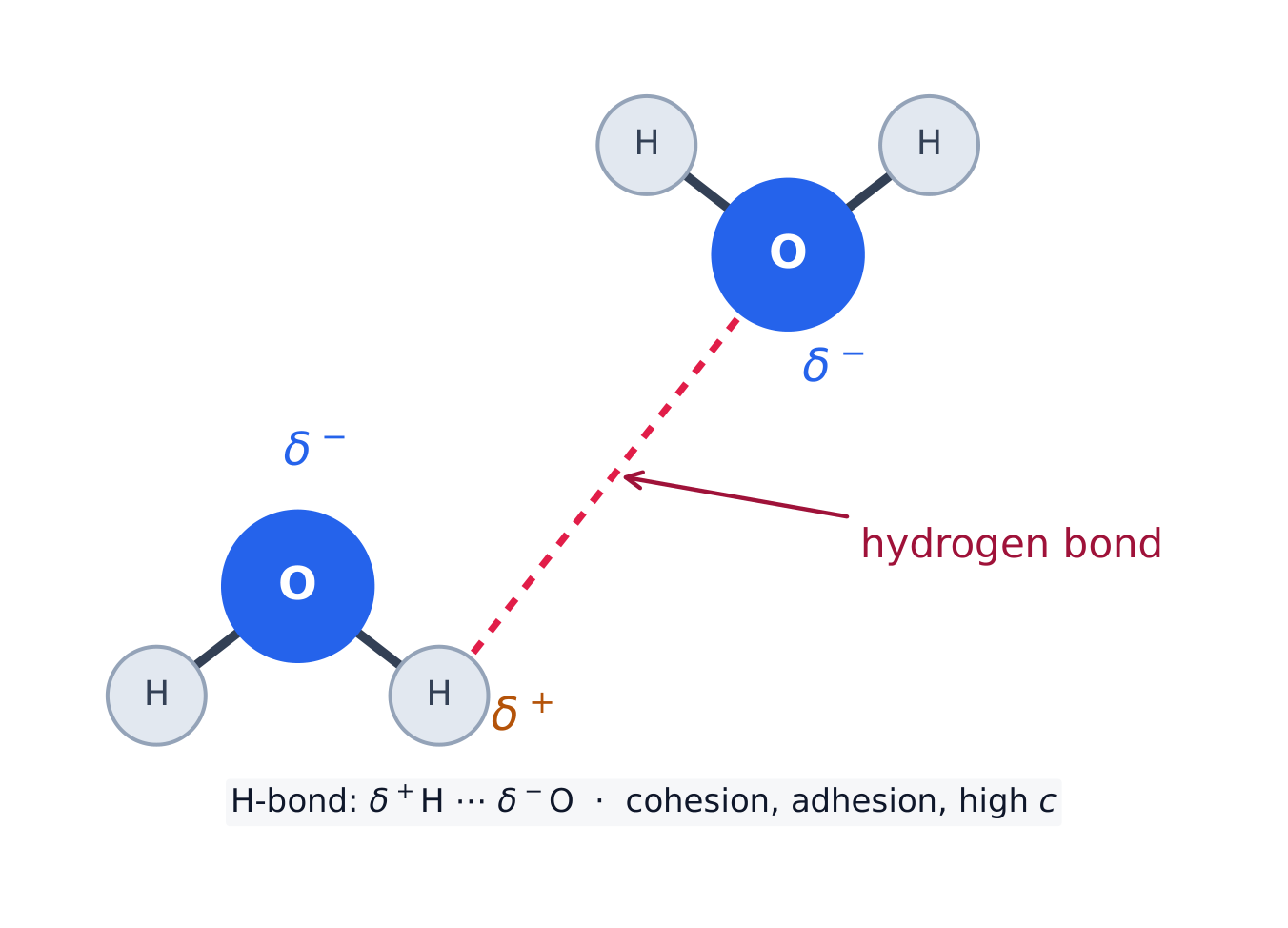
Water is polar 极性: its oxygen pulls electrons more strongly than its hydrogens, giving a slightly negative O and slightly positive H. This lets water molecules form hydrogen bonds 氢键 with each other, which explains water's life-supporting properties:
Cohesion 内聚力 and adhesion 附着力 (surface tension, capillary action, water rising in plants),
high specific heat 比热容 (resists temperature change, stabilizing organisms),
high heat of vaporization (evaporative cooling),
ice floating (less dense solid), and being a great solvent for polar and ionic substances.
A hydrogen bond between two polar water molecules
Explore · חקור
Explore how a covalent bond shares electrons · חקור כיצד קשר קוולנטי משתף אלקטרונים
Step through two atoms overlapping to share a pair of electrons so each reaches a full shell. In $\text{H}_2$ the two atoms pull equally, so the bond is non-polar — the contrast that makes water's unequal sharing (and its $\delta^+/\delta^-$ dipole) so important. · עבור שלב-אחר-שלב על שני אטומים השואפים זה את זה כדי להשתף בזוג אלקטרונים כך שכל אחד יגיע למעטפת מלאה. ב$\text{H}_2$ שני האטומים מושכים באותה עוצמה, ולכן הקשר הוא לא-קוטבי — ההבדל הזה הופך את ההתחלפות הבלתי-שוויונית במים (וגם את ה$\delta^+/\delta^-$ הקוטביות שלהם) למשהו חשוב מאוד.
Big Idea 2 — Energetics: Biological systems use energy and molecular building blocks to grow, reproduce, and maintain dynamic homeostasis.
Learning Objective 1.2.A: Describe the composition of macromolecules required by living organisms.
1.2.A.1 Atoms and molecules from the environment are necessary to build new molecules. Carbon, hydrogen, and oxygen are the most prevalent elements used to build biological molecules such as carbohydrates, proteins, lipids, and nucleic acids. Additionally:
1.2.A.1.i Sulfur is used in the building of proteins.
1.2.A.1.ii Phosphorus is used in the building of phospholipids (a type of lipid) and nucleic acids.
1.2.A.1.iii Nitrogen is used in the building of nucleic acids.
עברית
רעיון מרכזי 2 — אנרגטיקה: מערכות ביולוגיות משתמשות באנרגיה ובבלוקי בנייה מולקולריים לצמיחה, רבייה ותחזוקה של בית-חום דינמי.
מטרות למידה 1.2.A: תיאור הרכב המקרומולקולות הנדרשות על ידי בעלי חיים.
1.2.A.1 אטומים ומולקולות מהסביבה נדרשים לבניית מולקולות חדשות. פחמן, מימן וחמצן הם האלמנטים הנפוצים ביותר המשמשים לבניית מולקולות ביולוגיות כמו פחמימות, חלבונים, ליפידים וחומצה גרעינית. בנוסף:
1.2.A.1.i גופרית משמש בבניית חלבונים.
1.2.A.1.ii פוספורוס משמש בבניית פוספוליפידים (סוג של ליפיד) וחומצה גרעינית.
1.2.A.1.iii חנקן משמש בבניית חומצה גרעינית.
Source: College Board AP Course and Exam Description · מקור: תיאור הקורס והמבחן של College Board AP
Living matter is built mostly from a few elements – carbon, hydrogen, oxygen, nitrogen, phosphorus, and sulfur. Carbon 碳 is central because it forms four stable covalent bonds, building long chains, branches, and rings – the skeletons of all biological molecules.
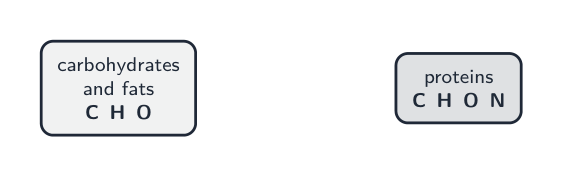
Carbohydrates and fats contain carbon, hydrogen, and oxygen; proteins also contain nitrogen
Big Idea 4 — Systems Interactions: Biological systems interact, and these systems and their interactions exhibit complex properties.
Learning Objective 1.3.A: Describe the chemical reactions that build and break biological macromolecules.
1.3.A.1 Hydrolysis is a chemical reaction involving the cleaving of covalent bonds. This type of reaction breaks down molecules into smaller molecules. When water is added to the bond between monomers in a polymer, the bond is broken. The hydrogen ion from a water molecule is added to one monomer and the hydroxyl group of the water molecule is added to the other monomer, completing the reaction.
1.3.A.2 Dehydration synthesis occurs when two smaller molecules are joined together through covalent bonding. A hydrogen ion is removed from one monomer and a hydroxyl group is removed from the other. This causes the loss of the equivalent of a water molecule from the reactants and the connection of the two remaining monomers. The connection of many monomers is known as polymerization.
עברית
רעיון מרכזי 4 — אינטראקציות מערכות: מערכות ביולוגיות נמצאות באינטראקציה זו עם הזו, ומערכות אלו ואינטראקציותיהן מציגות תכונות מורכבות.
מטרות למידה 1.3.A: תיאור התגובות הכימיות בונות ומפרקות מקרומולקולות ביולוגיות.
1.3.A.1 הידרוליזה היא תגובה כימית המעוררת שבירת קשרים קוולנטיים. סוג זה של תגובה מפרק מולקולות למולקולות קטנות יותר. כאשר מוסיפים מים לקשר בין מונומרים בפולימר, הקשר נשבר. יון ההידרוגן ממולקולת המים מתווסף למונומר אחד והקבוצת ההידרוקסיל ממולקולת המים מתווספת למונומר השני, ומשלמים את התגובה.
1.3.A.2 סינתזת דהידרציה מתרחשת כאשר שתי מולקולות קטנות מחוברות יחד באמצעות קישור קוולנטי. יון מימן מוסר ממונומר אחד וקבוצת הידרוקסיל מוסרת ממונומר השני. דבר זה גורם לאובדן הערך השווה למולקולת מים מהתגובה והחיבור בין שני המונומרים שנותרו. חיבור של מספר רב של מונומרים נקרא פולימריזציה.
Source: College Board AP Course and Exam Description · מקור: תיאור הקורס והמבחן של College Board AP
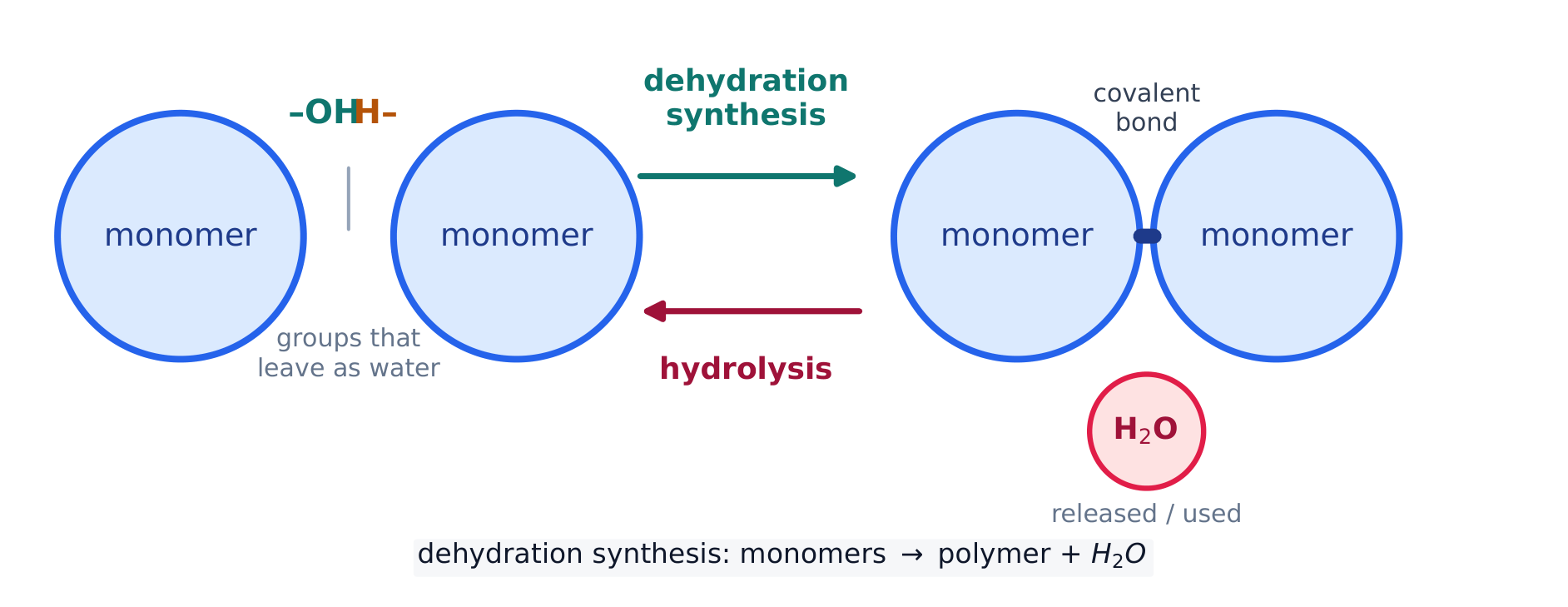
Large biological molecules – macromolecules 大分子 – are polymers 聚合物 built from repeating monomers 单体. Cells join monomers by dehydration synthesis 脱水缩合 (removing water to form a bond) and break polymers by hydrolysis 水解 (adding water). Four classes: carbohydrates, lipids, nucleic acids, and proteins.
Dehydration synthesis builds polymers and releases water; hydrolysis reverses it
Explore · חקור
Explore the four classes of macromolecule by their monomer · חקור את ארבעת סוגי המכרמולים הגדולים לפי המונומר שלהם
Sort each clue into the right macromolecule class by matching the monomer that builds it — sugars, nucleotides or amino acids — and notice that lipids are the odd one out that are not true polymers. · סדר כל רמז בקטגוריית המכרמול הגורמת לו הנכונה על ידי התאמת המונומר הבונה אותו – פרוקות, נוקלאוטידים או חומצות אמינו – ושים לב שמ脂ידים הם המקרה החריג שאינו פולימרים אמיתיים.
Big Idea 4 — Systems Interactions: Biological systems interact, and these systems and their interactions exhibit complex properties.
Learning Objective 1.4.A: Describe the structure and function of carbohydrates.
1.4.A.1 Monosaccharides (simple sugars) are the monomers for polysaccharides (complex carbohydrates). These monomers are connected by covalent bonds to form polymers such as complex carbohydrates, which may be linear or branched.
Illustrative examples for 1.4.A.1:
Cellulose
Starch
Glycogen
Exclusion statement: The molecular structure of specific carbohydrate polymers is beyond the scope of the AP Exam.
עברית
רעיון מרכזי 4 — אינטראקציות מערכות: מערכות ביולוגיות נמצאות באינטראקציה זו עם הזו, ומערכות אלו ואינטראקציותיהן מציגות תכונות מורכבות.
מטרות למידה 1.4.A: לתאר את המבנה והפונקציה של פחמימות.
1.4.A.1 מונוסכרידים (סוכרים פשוטים) הם המונומרים לפוליסכרידים (פחמימות מורכבות). מונומרים אלו מחוברים על ידי קשרים קוולנטיים כדי ליצור פולימרים כמו פחמימות מורכבות, שיכולים להיות ליניאריים או ערוכים.
דוגמאות להמחשה ל-1.4.A.1:
תאית
עמילן
גליקוגן
הערה לגבי היעדר חומר: מבנה מולקולרי ספציפי של פולימרים פחמימתיים אינו נכלל בתוכנית הלימודים לבחינת AP.
Source: College Board AP Course and Exam Description · מקור: תיאור הקורס והמבחן של College Board AP
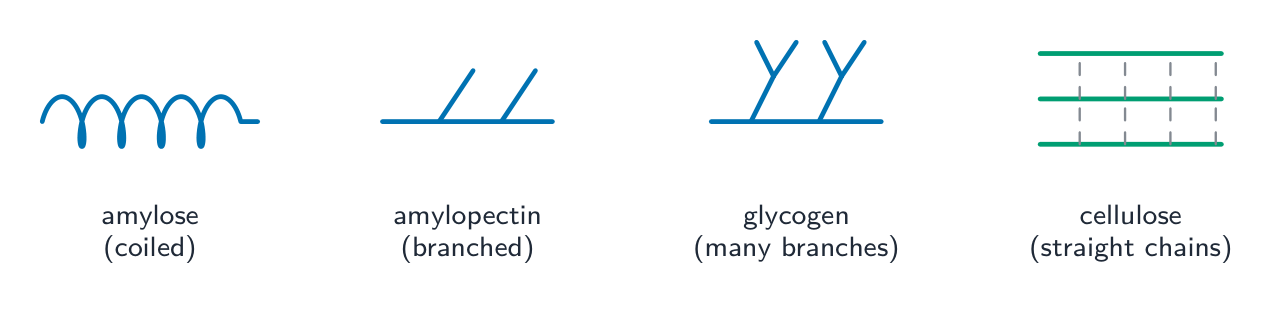
Carbohydrates 碳水化合物 are made of sugar monomers (monosaccharides 单糖 like glucose). They store energy (starch, glycogen) and provide structure (cellulose 纤维素 in plant walls). Their many hydroxyl groups make them polar and water-soluble.
The shapes of storage polysaccharides (starch, glycogen) and structural cellulose
Big Idea 4 — Systems Interactions: Biological systems interact, and these systems and their interactions exhibit complex properties.
Learning Objective 1.5.A: Describe the structure and function of lipids.
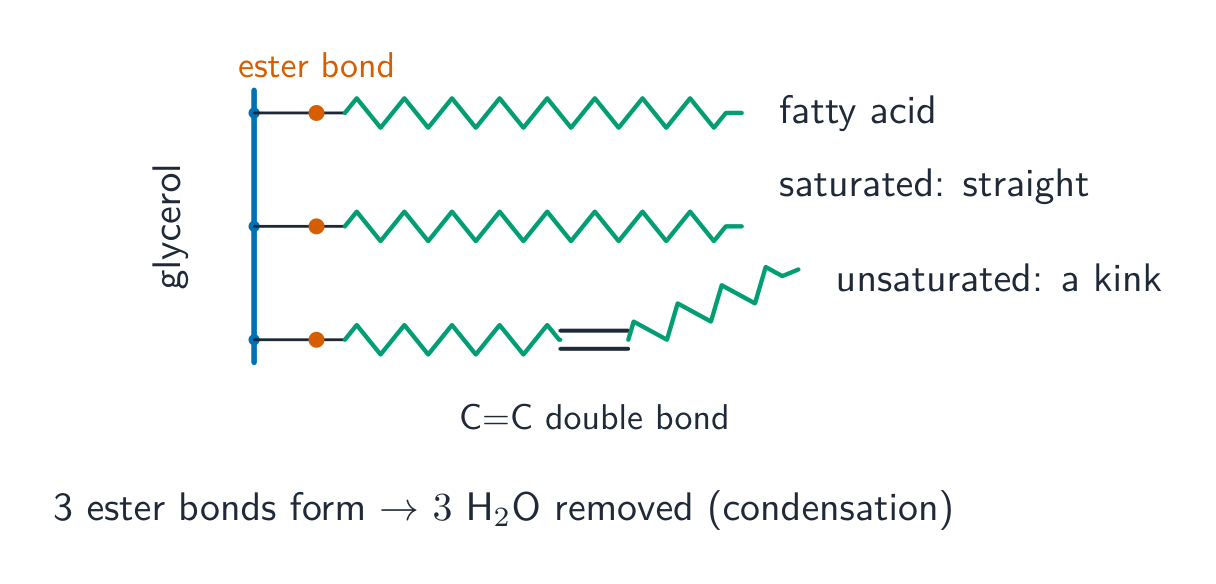
1.5.A.1 Lipids are typically nonpolar, hydrophobic molecules whose structure and function are derived from the way their subcomponents are assembled. Fatty acids can be described as either saturated or unsaturated.
1.5.A.1.i Saturated fatty acids contain only single bonds between carbon atoms.
1.5.A.1.ii Unsaturated fatty acids contain at least one double bond between carbon atoms, which causes the carbon chain to kink.
1.5.A.1.iii The more double bonds in a fatty acid tail, the more unsaturated the lipid becomes.
1.5.A.1.iv The more unsaturated a lipid is, the more liquid it is at room temperature.
1.5.A.2 Lipids provide a variety of functions for living organisms. Some examples of lipids are fats, steroids including cholesterol, and phospholipids.
1.5.A.2.i Fats provide energy storage and support cell function. In some cases, they can also provide insulation to help keep mammals warm.
1.5.A.2.ii Steroids are hormones that support physiological functions including growth and development, energy metabolism, and homeostasis.
1.5.A.2.iii Cholesterol provides essential structural stability to animal cell membranes.
1.5.A.2.iv Phospholipids group together to form the lipid bilayers found in plasma and cell membranes.
Exclusion statement: The molecular structure of specific lipids is beyond the scope of the AP Exam.
עברית
רעיון מרכזי 4 — אינטראקציות מערכות: מערכות ביולוגיות נמצאות באינטראקציה זו עם הזו, ומערכות אלו ואינטראקציותיהן מציגות תכונות מורכבות.
מטרות למידה 1.5.A: לתאר את המבנה והפונקציה של שומנים (ליפידים).
1.5.A.1 שומנים (ליפידים) הם בדרך כלל מולקולות לא-קוטביות והידרופוביות, ומבנהן ופונקציותיהם נגזרות מהדרך שבה רכיבי המשנה שלהם מאורגנים. חומצות שומן יכולות להתואר כשבוניות או כבלתי-שוניות.
1.5.A.1.i חומצות שומן שבוניות מכילות רק קשרים יחידים בין אטומי פחמן.
1.5.A.1.ii חומצות שומן בלתי-שוניות מכילות לפחות קשר כפול אחד בין אטומי פחמן, מה שגורם לשרשרת הפחמן להתכופף.
1.5.A.1.iii ככל שהכמות של קשרים כפולים בזנב החומצה השומנית גדולה יותר, כך הליפיד נהיה בלתי-שוני יותר.
1.5.A.1.iv ככל שהליפיד בלתי-שוני יותר, כך הוא נוטה להיות נוזלי יותר בטמפרטורת החדר.
1.5.A.2 שומנים מספקים מגוון פונקציות לאורגניזמים חיים. דוגמאות לשומנים הן שומנים, סטרואידים כגון כולסטרול, ופוספוליפידים.
1.5.A.2.i שומנים מספקים אחסון אנרגיה ותומכים בפונקציית התא. במקרים מסוימים, הם יכולים גם לספק בידוד תרמי שעוזר לשמור על חום בגוף היונקים.
1.5.A.2.ii סטרואידים הם הורמונים התומכים בפונקציות פיזיולוגיות כגון גידול ופיתוח, מטבוליזם אנרגטי ושימור homeostasis.
1.5.A.2.iii כולסטרול מספק יציבות מבנית הכרחית לקרום תאי בעלי חיים.
1.5.A.2.iv פוספוליפידים מתאגדים זה עם זה כדי ליצור את שכבת הדו-שומנית הנמצאת בקרום התא ובקרום הרקמה.
הודעת איסור: המבנה המולקולרי של ליפידים ספציפיים אינו נכלל במסגרת המבחן האפליקטיבי.
Source: College Board AP Course and Exam Description · מקור: תיאור הקורס והמבחן של College Board AP
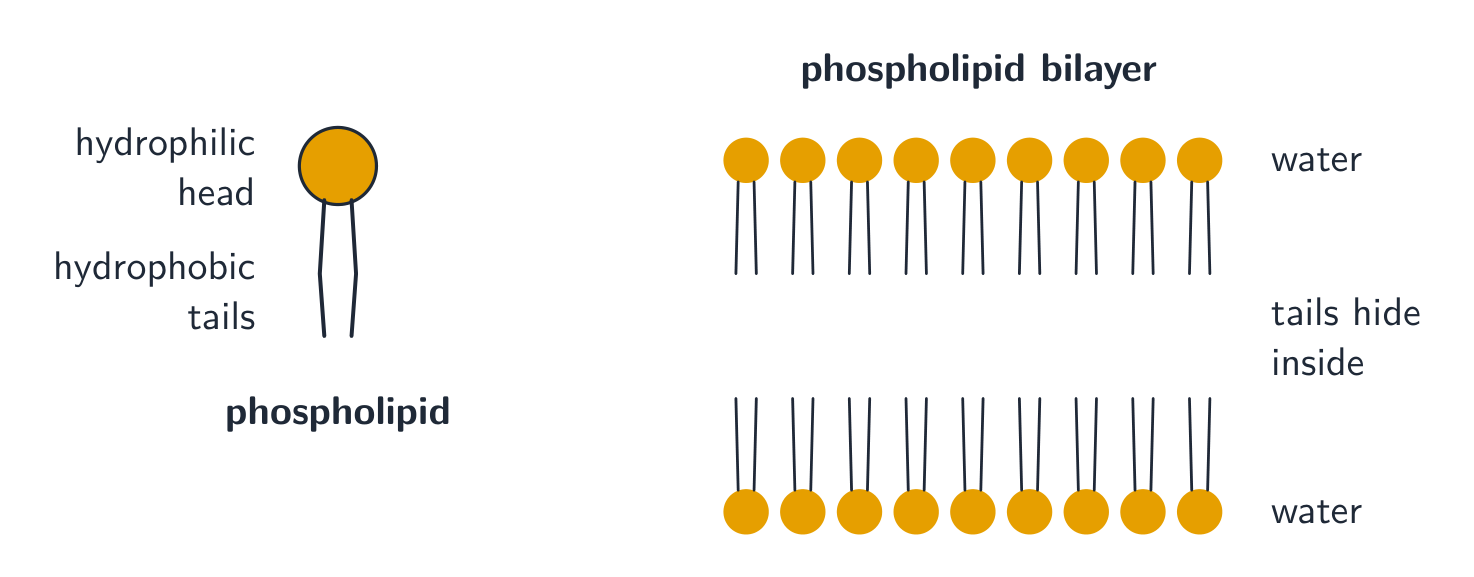
Lipids 脂质 are nonpolar and do not mix with water (hydrophobic 疏水). They include fats (long-term energy storage), phospholipids 磷脂 (which build membranes), and steroids. A phospholipid has a polar "head" and nonpolar "tails," the key to the cell membrane.
A phospholipid has a polar head and two nonpolar tails, so phospholipids form a bilayerA triglyceride: glycerol joined to three fatty acids
Big Idea 3 — Information Storage and Transmission: Living systems store, retrieve, transmit, and respond to information essential to life processes.
Learning Objective 1.6.A: Describe the structure and function of DNA and RNA.
1.6.A.1 In nucleic acids (DNA and RNA), biological information is encoded in sequences of nucleotide monomers. Each nucleotide has the following structural components: a five-carbon sugar (deoxyribose or ribose), a phosphate, and a nitrogenous base (adenine, thymine, guanine, cytosine, or uracil).
1.6.A.2 Nucleic acids have a linear sequence of nucleotides that have ends, defined by the 3' (three prime) hydroxyl and 5' (five prime) phosphates of the sugar in the nucleotide. During nucleic acid synthesis, nucleotides are added to the 3' end of the growing strand, resulting in the formation of covalent bonds between nucleotides.
Exclusion statement: The molecular structure of specific nucleotides is beyond the scope of the AP Exam.
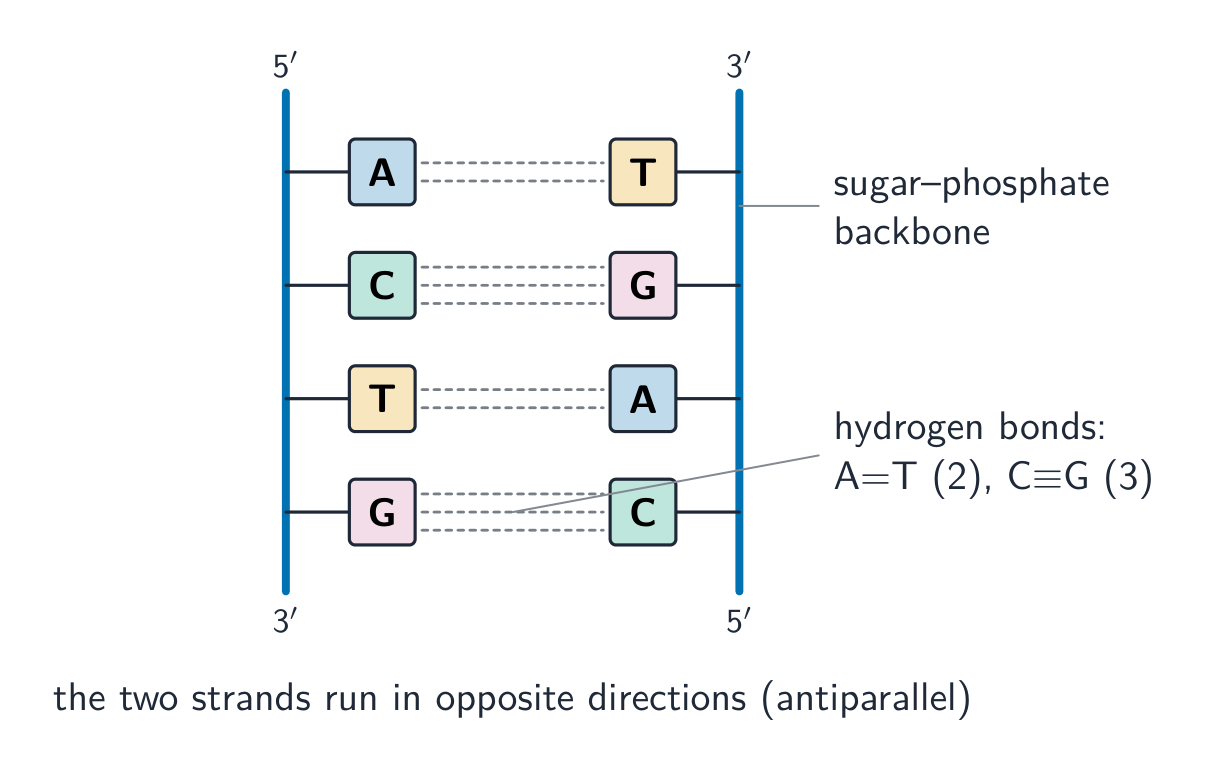
1.6.A.3 DNA is structured as an antiparallel double helix, with two strands of nucleotides running in opposite 5' to 3' orientation. In DNA, adenine nucleotides pair with thymine nucleotides via hydrogen bonds (A-T), and cytosine nucleotides pair with guanine nucleotides via hydrogen bonds (C-G). In RNA, adenine pairs with uracil (A-U).
1.6.A.4 Structural differences between DNA and RNA include:
1.6.A.4.i DNA contains the sugar deoxyribose, and RNA contains the sugar ribose.
1.6.A.4.ii DNA contains the nitrogenous base thymine, and RNA contains the nitrogenous base uracil.
1.6.A.4.iii DNA is typically double stranded, while RNA is typically single stranded.
עברית
רעיון מרכזי 3 — אחסון ומעבר מידע: מערכות חיות מאחסנות, מוצאות, משדרות ומגיבות למידע הקריטי לתהליכי החיים.
מטרות למידה 1.6.A: לתאר את המבנה והפונקציה של DNA ו-RNA.
1.6.A.1 בחומצות גרעין (DNA ו-RNA), המידע הביולוגי מופקד ברצפים של מונומרים נאוטאטידיים. לכל נאוטאטיד ישנם רכיבי המבנה הבאים: סוכר בעל חמישה פחמן (דאוקסיריבוז או ריבוז), קבוצת פוספט, ובסיס א滋וטני (אדנין, תימין, גואנין, ציטוזין או יורציל).
1.6.A.2 לחומצות גרעין יש רצף ליניארי של נאוטאטידים עם קצוות, המוגדר על ידי קבוצת ההידרוקסיל ב-3' (שלוש פרیم) ובפוספטים ב-5' (חמש פרیم) של הסוכר בנאוטאטיד. במהלך סינתזה של חומצות גרעין, נאוטאטידים נוספים לקצה ה-3' של הרצועה הגדלה, מה שגורם ליצירת קשרים קוולנטיים בין נאוטאטידים.
הצהרת פסילה: המבנה המולקולרי של נאוטאטידים ספציפיים אינו נכלל בתוכן בדיחתי ה-AP Exam.
1.6.A.3 ל-DNA מבנה של הלכס דו-סלילי אנטי-פראלל, עם שני רצועות נאוטאטידים הפועלות בכיוונים מנוגדים באוריינטציה מ-5' ל-3'. ב-DNA, נאוטאטידים של אדנין זוגי עם נאוטאטידים של תימין באמצעות קשרי מימן (A-T), ונאוטאטידים של ציטוזין זוגי עם נאוטאטידים של גואנין באמצעות קשרי מימן (C-G). ב-RNA, אדנין זוגי עם יורציל (A-U).
1.6.A.4 הבדלים מבניים בין DNA ל-RNA כוללים:
1.6.A.4.i ל-DNA יש הסוכר דאוקסיריבוז, ול-RNA יש הסוכר ריבוז.
1.6.A.4.ii ל-DNA יש הבסיס האזוטני תימין, ול-RNA יש הבסיס האזוטני יורציל.
1.6.A.4.iii ל-DNA יש בדרך כלל שני רצועות, בעוד ש-RNA הוא בדרך כלל חד-רצועי.
Source: College Board AP Course and Exam Description · מקור: תיאור הקורס והמבחן של College Board AP
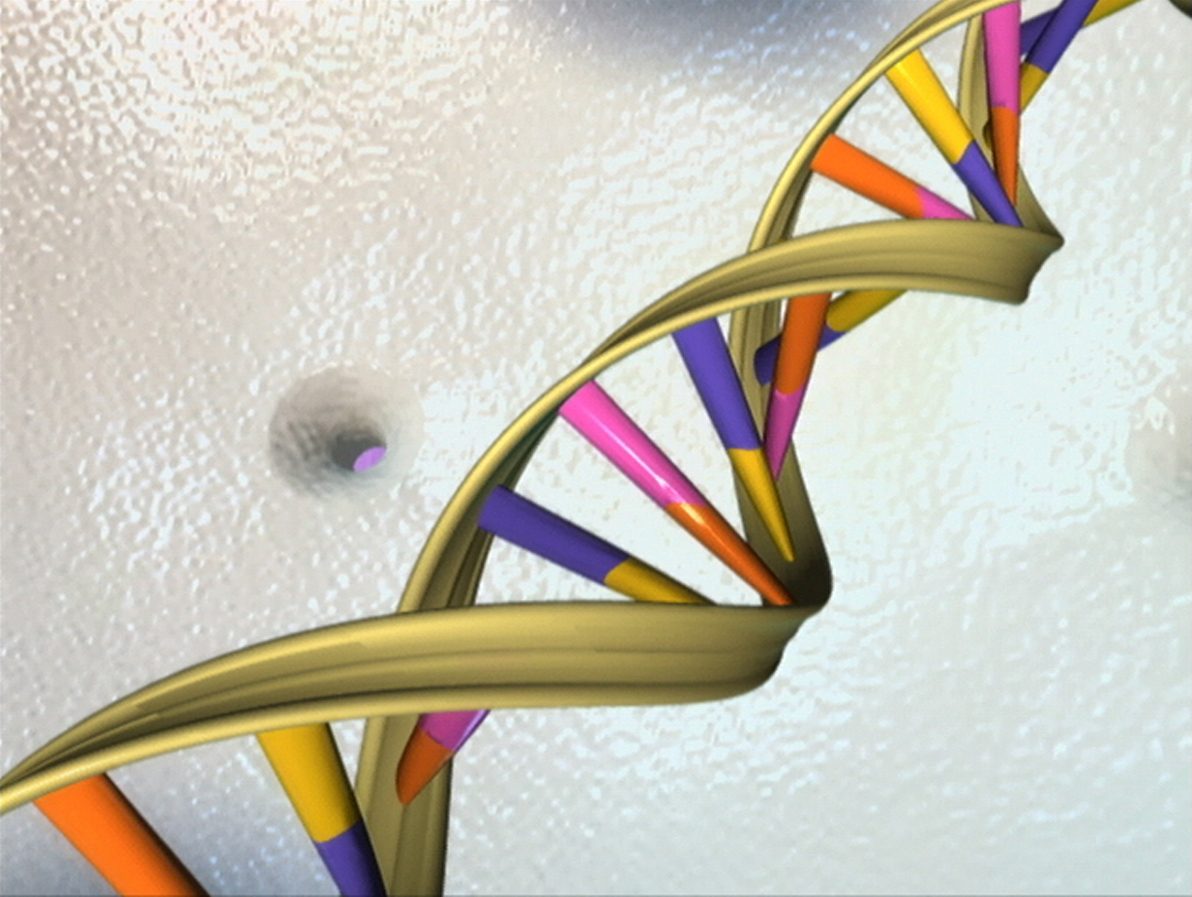
Space-filling model of the DNA double helix (NHGRI)
Nucleic acids 核酸 (DNA and RNA) store and carry genetic information. Their monomers are nucleotides 核苷酸, each a sugar, a phosphate, and a nitrogen base. The base sequence encodes instructions; DNA is double-stranded, RNA single-stranded.
Complementary base pairing holds the two antiparallel strands of DNA together
Explore · חקור
Explore complementary base pairing · חקור זיווג בסיסים משלים
Step along a DNA template and watch each base pair to its partner by complementary base pairing ($A$ with $T$, $G$ with $C$) — the rule that lets either strand act as a template to rebuild the other. · התקדם לאורך תבנית DNA וצפה כל בסיס נזוג לשותפו באמצעות זיווג בסיסים משלים ($A$ עם $T$, $G$ עם $C$) — הכלל המאפשר לכל רצועה לשמש כתבנית לבניית הרצועה השנייה.
Big Idea 3 — Information Storage and Transmission: Living systems store, retrieve, transmit, and respond to information essential to life processes.
Learning Objective 1.7.A: Describe the structure and function of proteins.
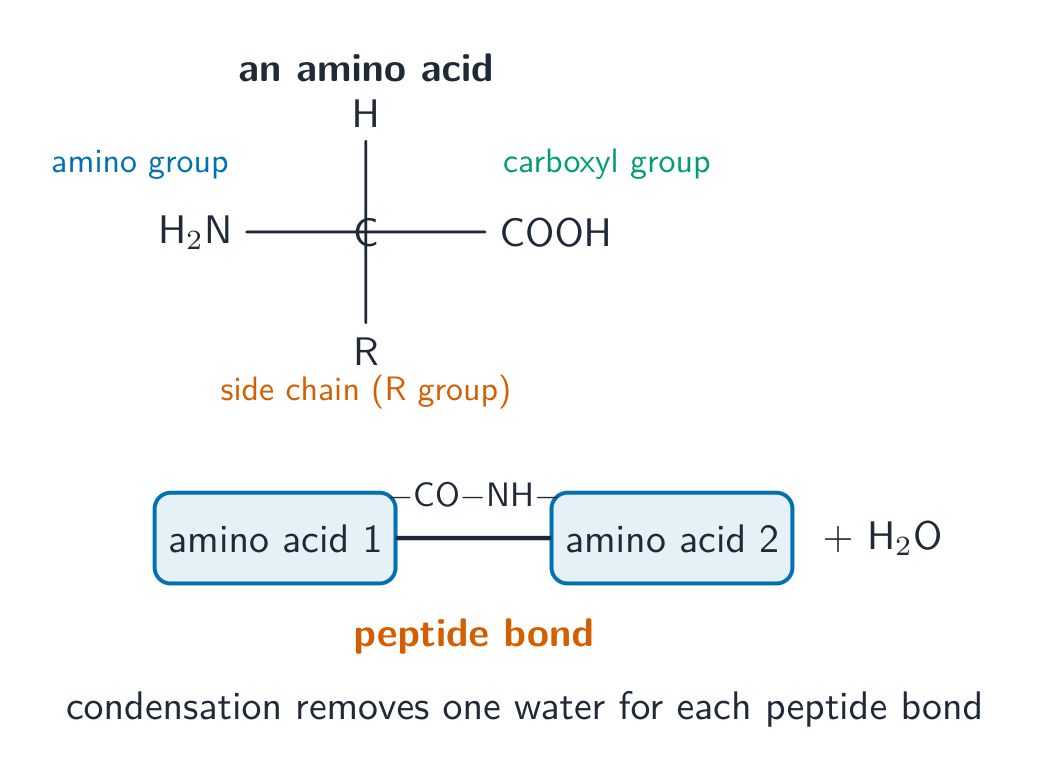
1.7.A.1 Proteins comprise linear chains of amino acids connected by the formation of covalent (peptide) bonds that form between a carboxyl group ($-\text{COOH}$) of one amino acid and an amine group ($-\text{NH}_2$) of the next amino acid, resulting in a growing peptide chain.
1.7.A.2 Amino acids are composed of a central carbon atom with a hydrogen atom, a carboxyl group, an amine group, and a variable R group covalently bound to it. The R group of an amino acid can be categorized by three possible chemical properties: hydrophobic/nonpolar, hydrophilic/polar, or ionic. The interactions of these R groups determine the structure and function of that region of the protein.
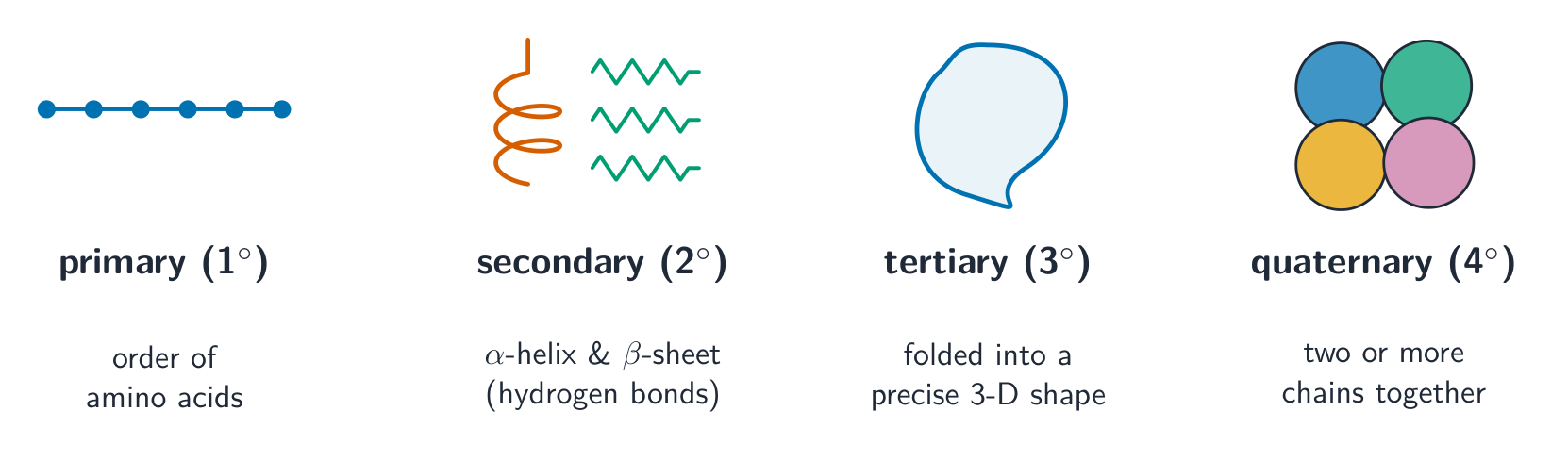
1.7.A.3 The specific sequence of amino acids in proteins determines the primary structure of a polypeptide as well as the overall shape of the protein.
Exclusion statement: The molecular structure of amino acids is beyond the scope of the AP Exam.
1.7.A.4 Secondary structures of proteins are made through the local folding that forms from interactions between atoms of the polypeptide backbone of the amino acid chain. Hydrogen bonding forms shapes such as alpha-helices and beta-pleated sheets.
1.7.A.5 The three-dimensional shape of the tertiary structure of a protein results from the formation of hydrogen bonds, hydrophobic interactions, ionic interactions, or disulfide bridges.
1.7.A.6 The quaternary structure arises from interactions between multiple polypeptides. All four levels of a protein structure determine the function of a protein.
עברית
רעיון מרכזי 3 — אחסון ומעבר מידע: מערכות חיות מאחסנות, מוצאות, משדרות ומגיבות למידע הקריטי לתהליכי החיים.
מטרות למידה 1.7.A: לתאר את המבנה והפונקציה של חלבונים.
1.7.A.1 חלבונים מורכבים מרצועות ליניאריות של חומצות אמינו המחוברות באמצעות יצירת קשרים קוולנטיים (פפטידיים) הנוצרים בין קבוצת קרבוקסיל ($-\text{COOH}$) של חומצת אמינו אחת לבין קבוצת אמינו ($-\text{NH}_2$) של חומצת האמינו הבאה, מה שגורם ליצירת רצועת פפטיד גדלה.
1.7.A.2 חומצות אמינו מורכבות מאטום פחמן מרכזי עם אטום מימן, קבוצת קרבוקסיל, קבוצת אמינו, וקבוצת R משתנה הקשורה לו בקשר קוולנטי. קבוצת ה-R של חומצת אמינו יכולה להיות מסווגת לפי שלושה סוגי תכונות כימיות אפשריות: הידרופובית/לא מקוטבת, הידרופילית/מקוטבת, או יונית. האינטראקציות של קבוצות ה-R אלו קובעות את המבנה והפונקציה של האזור ההוא בחלבון.
1.7.A.3 הרצף הספציפי של חומצות האמינו בחלבונים קובע את המבנה הראשוני של הפוליפפטיד כמו גם את הצורה הכללית של החלבון.
הצהרת פסילה: המבנה המולקולרי של חומצות אמינו אינו נכלל בתוכן בדיחתי ה-AP Exam.
1.7.A.4 מבנים משניים של חלבונים נוצרים דרך קיפול מקומי הנוצר מתוך אינטראקציות בין אטומים של הגבול הפוליפפטידי של רצועת חומצות האמינו. קשרי מימן יוצרים צורות כמו אלפא-הלכסים ודפים מקופלים בטא.
1.7.A.5 הצורה התלת-ממדית של המבן השלישוני של חלבון נובעת מהיווצרות של קשרי מימן, אינטראקציות הידרופוביות, אינטראקציות יוניות, או גשרי דיסולפידי.
1.7.A.6 המבנה הרביעי נובע מאינטראקציות בין מספר פוליפפטידים. ארבעת רמות המבנה של חלבון קובעות את תפקודו.
Source: College Board AP Course and Exam Description · מקור: תיאור הקורס והמבחן של College Board AP
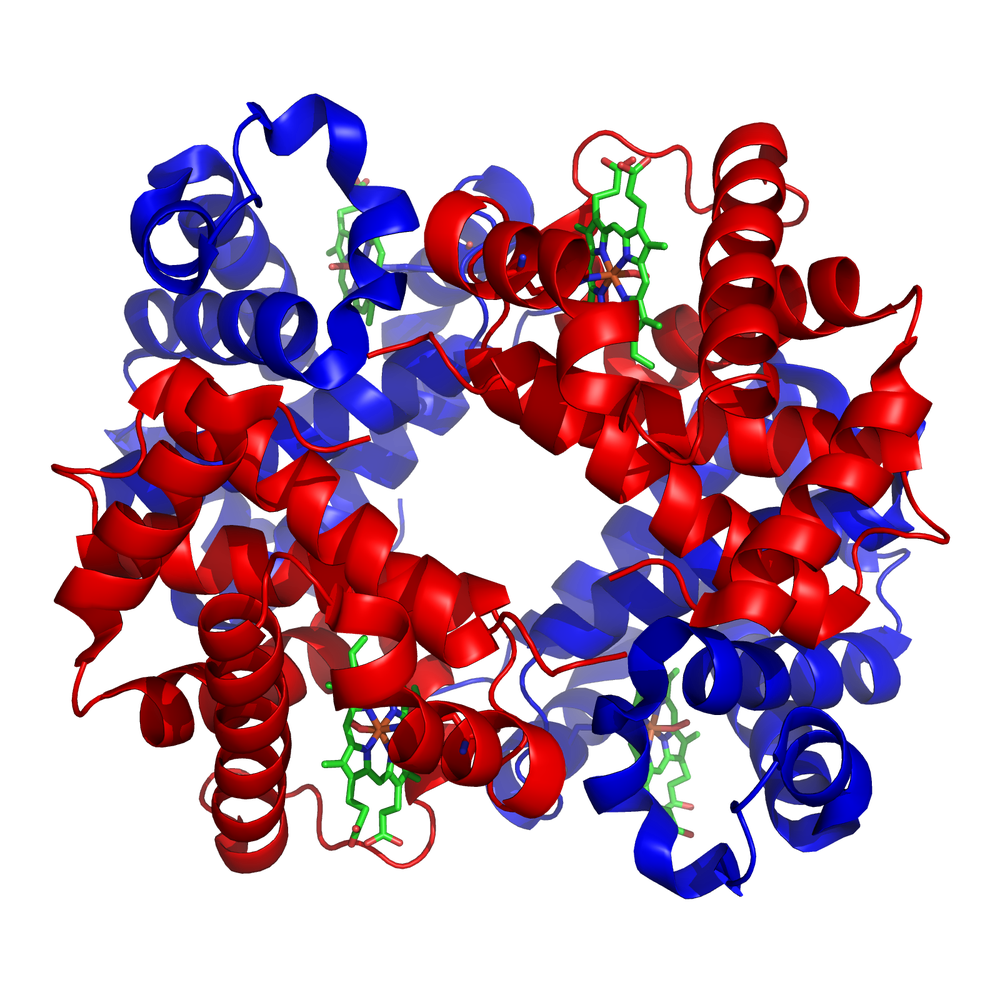
Haemoglobin quaternary structure: four folded polypeptide chains, each holding a haem group
Proteins 蛋白质 are polymers of amino acids 氨基酸 joined by peptide bonds 肽键. Their sequence folds into a specific 3-D shape at four levels (primary, secondary, tertiary, quaternary), and shape determines function – as enzymes, transporters, receptors, and structural parts. Changing the environment (heat, pH) can denature 变性 a protein, unfolding it and stopping its function.
An amino acid, and the peptide bond formed by condensationThe four levels of protein structure
Worked example. Building a polymer from 10 monomers by dehydration synthesis forms 9 bonds and releases 9 water molecules — one per bond, so $N$ monomers release $N-1$ waters. Hydrolysis reverses this exactly: adding those 9 waters breaks the polymer back into 10 monomers. This is why biosynthesis (dehydration) and digestion (hydrolysis) are chemical opposites.
Organelles and the Endomembrane System · אורגנלות ומערכת האנדוממברנה
Syllabus · סיילבוס
English
Big Idea 4 — Systems Interactions (SYI): Biological systems interact, and these systems and their interactions exhibit complex properties.
Learning Objective 2.1.A: Explain how the structure and function of subcellular components and organelles contribute to the function of cells.
2.1.A.1 Ribosomes are comprised of ribosomal RNA (rRNA) and protein. These non-membrane, subcellular structures are found in cells in all forms of life and reflect the common ancestry in all known life. Ribosomes synthesize proteins according to messenger RNA (mRNA) sequences.
2.1.A.2 The endomembrane system consists of a group of membrane-bound organelles and subcellular components (endoplasmic reticulum (ER), Golgi complex, lysosomes, vacuoles and transport vesicles, the nuclear envelope, and the plasma membrane) that work together to modify, package, and transport polysaccharides, lipids, and proteins intercellularly.
2.1.A.3 Endoplasmic reticulum provides mechanical support by helping cells maintain shape and plays a role in intracellular transport.
i. Rough ER is associated with membrane-bound ribosomes, allows for the compartmentalization of cells, and helps carry out protein synthesis.
ii. Smooth ER functions include the detoxification of cells and lipid synthesis.
Exclusion statement: Knowledge of the specific functions of smooth ER in specialized cells is beyond the scope of the AP Exam.
2.1.A.4 The Golgi complex is a membrane-bound structure that consists of a series of flattened membrane sacs. Functions of the Golgi include:
i. Correctly folding and chemically modifying newly synthesized cellular products
ii. Packaging proteins for trafficking
Exclusion statement: Knowledge of the role of Golgi in the synthesis of specific phospholipids and packaging of specific enzymes for lysosomes, peroxisomes, and secretory vesicles is beyond the scope of the AP Exam.
Illustrative examples for 2.1.A.4:
Glycosylation and other chemical modifications of proteins that take place within the Golgi and determine protein function or targeting
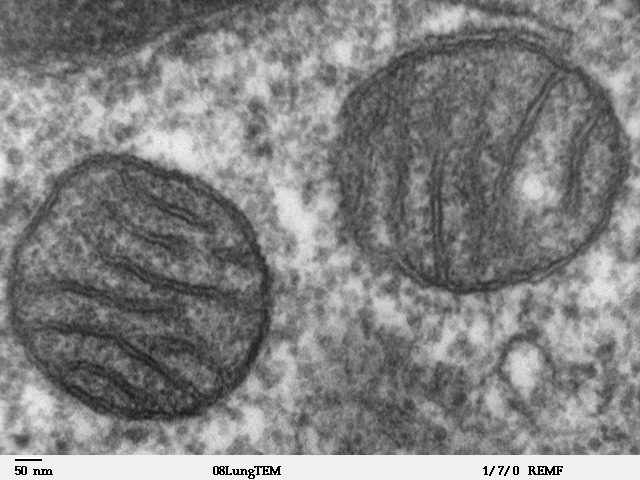
2.1.A.5 Mitochondria have a double membrane that provides compartments for different metabolic reactions involved in aerobic cellular respiration. The outer membrane is smooth, while the inner membrane is highly convoluted, forming folds that enable ATP to be synthesized more efficiently.
2.1.A.6 Lysosomes are membrane-enclosed sacs that contain hydrolytic enzymes that digest material. Lysosomes also play a role in programmed cell death (apoptosis).
2.1.A.7 Vacuoles are membrane-bound sacs that play many different roles.
i. In plant cells, a specialized large vacuole maintains turgor pressure through nutrient and water storage.
ii. In animal cells, vacuoles are smaller in size, are more plentiful than in plant cells, and store cellular materials.
2.1.A.8 Chloroplasts are specialized organelles that are found in plants and photosynthetic algae. Chloroplasts contain a double membrane and serve as the location for photosynthesis.
עברית
רעיון מרכזי 4 — אינטראקציות מערכות (SYI): מערכות ביולוגיות נמצאות באינטראקציה, ומערכות אלו ופעולותיהן מציגות מאפיינים מורכבים.
מטרת למידה 2.1.A: הסבר כיצד המבנה והתפקוד של רכיבי תת-תאיים ואורגנלות תורמים לתפקוד התאים.
2.1.A.1 ריבוזומים מורכבים מ-RNA ריבוזומלי (rRNA) וחלבונים. מבני תת-תאיים אלו שאינם עטופי ממברנה נמצאים בתאים בכל צורות החיים ומשקפים את המוצא המשותף בכל החיים הידועים. ריבוזומים סנתזים חלבונים לפי רצפי mRNA (messenger RNA).
2.1.A.2 מערכת האנדומembran מתאגדת מקבוצת אורגנלות וערכי תת-תאיים העטופים בממברנה (רתיק אנדופלזמי (ER), גולגי, ליזוסומים, וואקואולים, וסיסיות הובלה, מעטפת הגרעין, וממברנה פלזמית) הפועלים יחד כדי לשנות, לארוז ולהוביל פוליסכרידים, שומנים וחלבונים בין-תאיים.
2.1.A.3 רתיק אנדופלזמי מספק תמיכה מכנית על ידי עזרה לתאים לשמור על צורתם, ומשחק תפקיד בהובלה תוך-תאית.
i. רתיק אנדופלזמי מחוספס קשור לריבוזומים עטופי ממברנה, מאפשר בידוד תאי ומסייע בביצוע סינתזת חלבונים.
ii. תפקודי רתיק אנדופלזמי חלק כוללים דיטוקסיקציה של תאים וסינתזת שומנים.
הצהרתheit: ידע לגבי תפקודים ספציפיים של רתיק אנדופלזמי חלק בתאים מצוינים חורג מתחום הבחינה AP.
2.1.A.4 גולגי הוא מבנה עטוף בממברנה המורכב מסדרה של שקיות ממברנה שטוחות. תפקודי גולגי כוללים:
i. קיפול נכון ושנוי כימי של מוצרים תאיים חדשים שסונתזו
ii. אריזת חלבונים להובלה
הצהרתheit: ידע לגבי תפקיד גולגי בסינתזה של פוספוליפידים ספציפיים ואריזת אנזימים ספציפיים לליזוסומים, פרוקסיסומים וסיסיות סקרטוריות חורג מתחום הבחינה AP.
דוגמאות הדמיות עבור 2.1.A.4:
גליקוזילציה ושנויים כימיים אחרים בחלבונים המתרחשים בתוך גולגי ומכתיבים את תפקוד החלבון או היעד שלו
2.1.A.5 מיטוכונדריה בעלת ממברנה כפולה המספקת תאים למערכבות המעורבות במשימת נושמת תאית אווירית. הממברנה החיצונית חלקה, בעוד שהממברנה הפנימית מתקפלת מאוד, ויוצרת קפלים המאפשרים סינתזת ATP בצורה יעילה יותר.
2.1.A.6 ליזוסומים הם שקיות עטופות בממברנה המכילות אנזימי הידרוליזה לעיכול חומר. ליזוסומים משחקים גם תפקיד במוות תאי ממוצע (אפופטוזיס).
2.1.A.7 וואקואולים הם שקיות עטופות בממברנה המשחקות תפקידים מגוונים רבים.
i. בתאי צמח, וואקול גדול ומיוחדת שומר על לחץ טורגור דרך אחסון מזון ומים.
ii. בתאי בעלי חיים, וקואולות קטנות יותר בגודלן, נפוצות יותר מאשר בתאי צמחים, ואוגרות חומרים תאיים.
2.1.A.8 כלורופלסטים הם ארגנלים מיוחדים המצויים בצמחים ובאלגאות פוטוסנתטיות. כלורופלסטים מכילים ממברנה כפולה ושמשו כמיקום לפוטוסנתזה.
Source: College Board AP Course and Exam Description · מקור: תיאור הקורס והמבחן של College Board AP
English
A eukaryotic cell divides its work among organelles 细胞器. The endomembrane system 内膜系统 is a connected set that makes, modifies, and ships molecules: the nucleus 细胞核 (holds DNA), rough and smooth endoplasmic reticulum 内质网 (protein and lipid synthesis), the Golgi 高尔基体 (modifies and packages), lysosomes 溶酶体 (digestion), and vesicles that carry material between them. Mitochondria 线粒体 (respiration) and chloroplasts 叶绿体 (photosynthesis) have their own membranes.
What each organelle actually does
The exam asks you to name a structure and say what it does, so learn them as pairs.
Ribosomes 核糖体 are made of ribosomal RNA 核糖体核糖核酸 (rRNA) and protein. They have no membrane, and they are found in every form of life — bacteria, archaea and eukaryotes alike. That shared presence is evidence of common ancestry: a structure this central was already present in the last common ancestor of all living things. A ribosome reads messenger RNA 信使核糖核酸 (mRNA) and builds the protein it codes for. Free ribosomes make proteins for use inside the cell; ribosomes bound to the rough endoplasmic reticulum make proteins for export or for the membrane.
The Golgi complex 高尔基复合体 is a series of flattened, membrane-bound sacs. A protein arriving from the endoplasmic reticulum is passed through them, and three things happen to it:
it is folded correctly and chemically modified — most often by glycosylation 糖基化, the attachment of short sugar chains;
it is sorted and targeted, so the modified sugar or phosphate tag decides which compartment the protein is sent to;
it is packaged into a vesicle for transport.
So the Golgi is not storage: it is the cell's finishing and dispatch department, and its modifications determine what a protein does and where it ends up.
Lysosomes are membrane-enclosed sacs of hydrolytic enzymes 水解酶 that digest material — worn-out organelles, engulfed bacteria, and food particles taken in by the cell. Their enzymes work best at a low pH, which the lysosome maintains inside itself; keeping them enclosed protects the rest of the cell. Lysosomes also take part in apoptosis 细胞凋亡, programmed cell death, in which a cell is dismantled deliberately, for example to sculpt fingers from a webbed embryonic hand.
Vacuoles 液泡 are membrane-bound sacs with many different roles: storing water, ions, nutrients or waste, and in a plant cell the large central vacuole also presses outwards on the cell wall to keep the cell firm.
Mitochondria and chloroplasts each have a double membrane and their own circular DNA and ribosomes — the evidence behind endosymbiotic theory below.
עברית
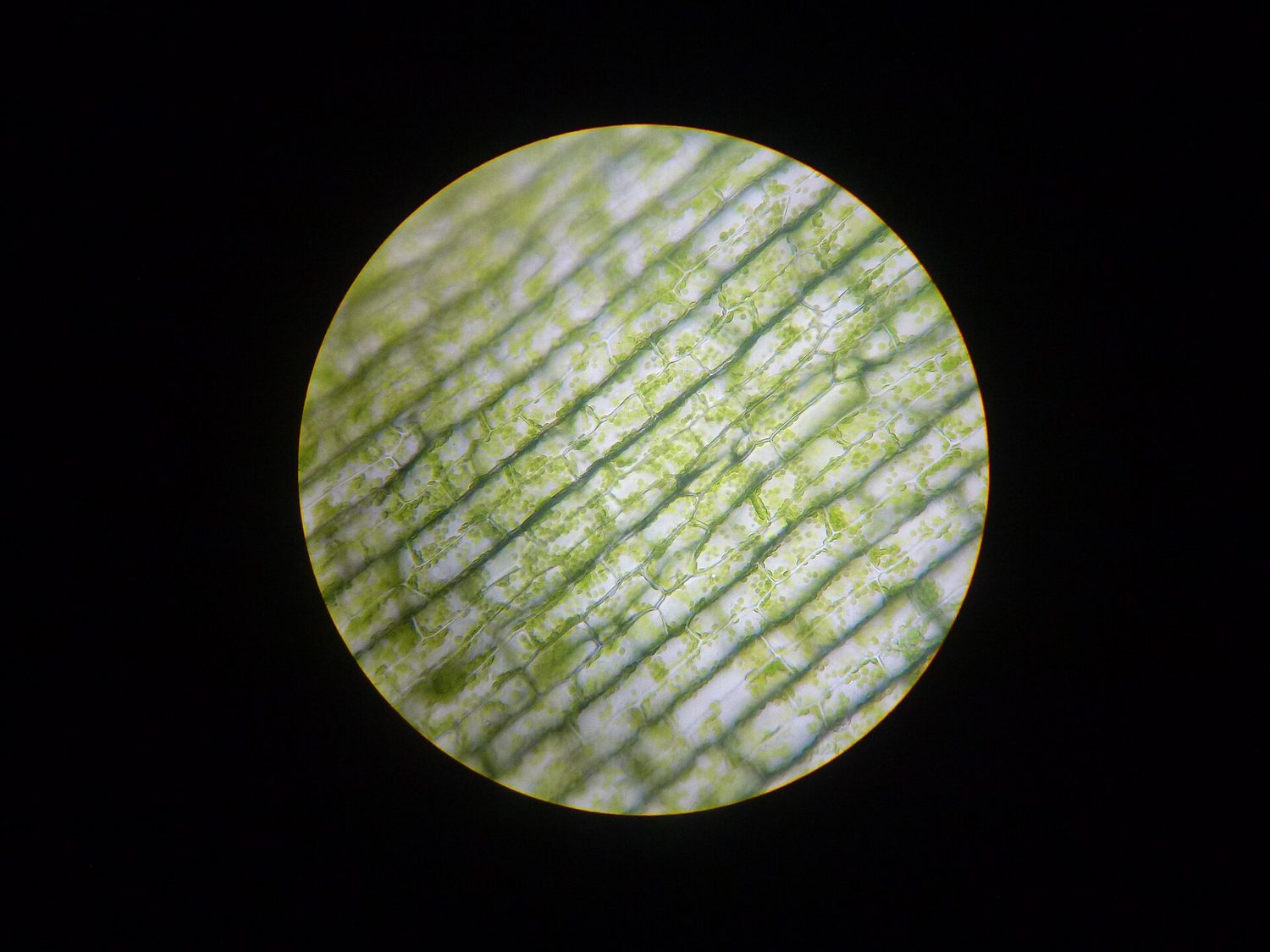
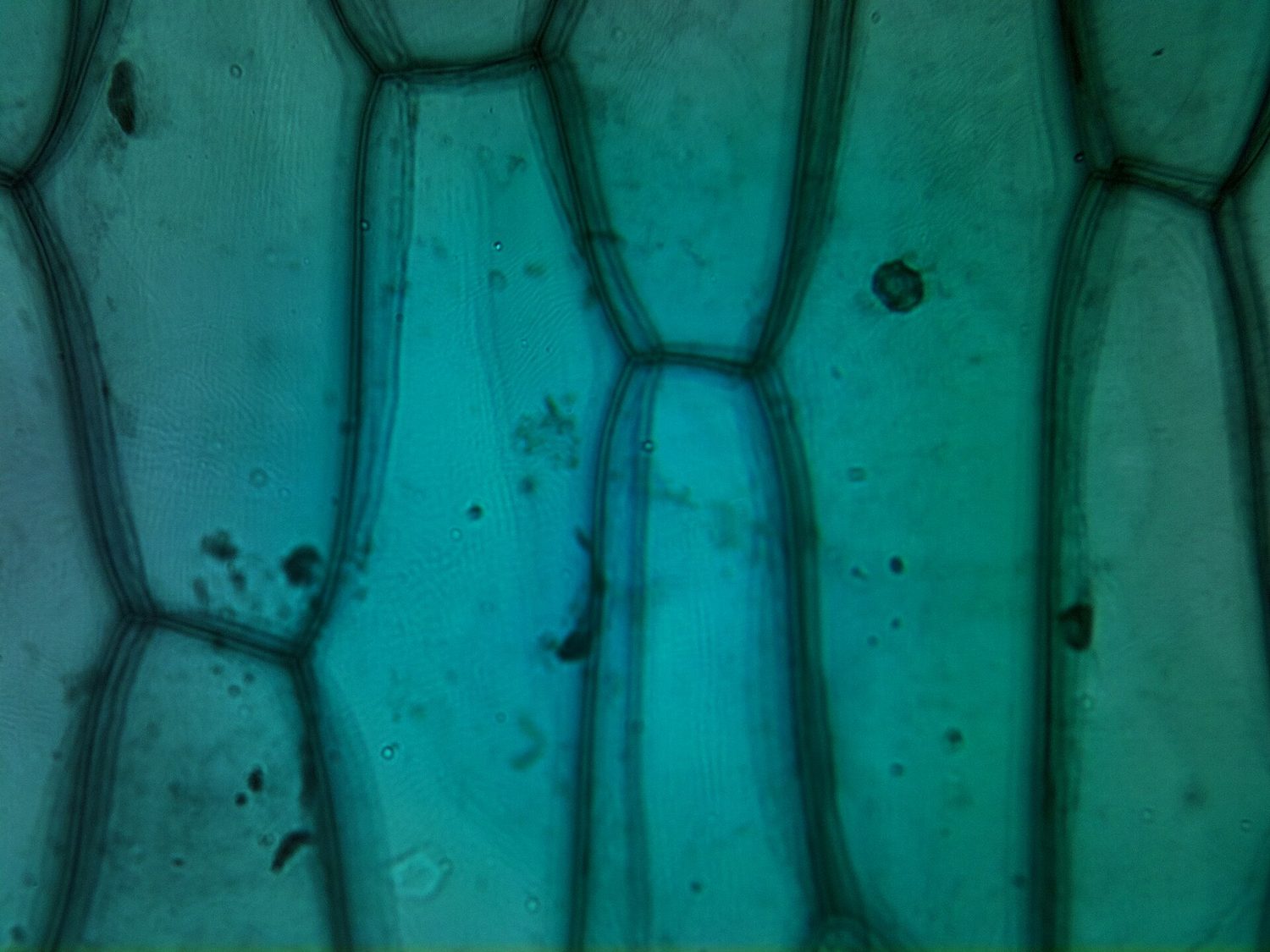
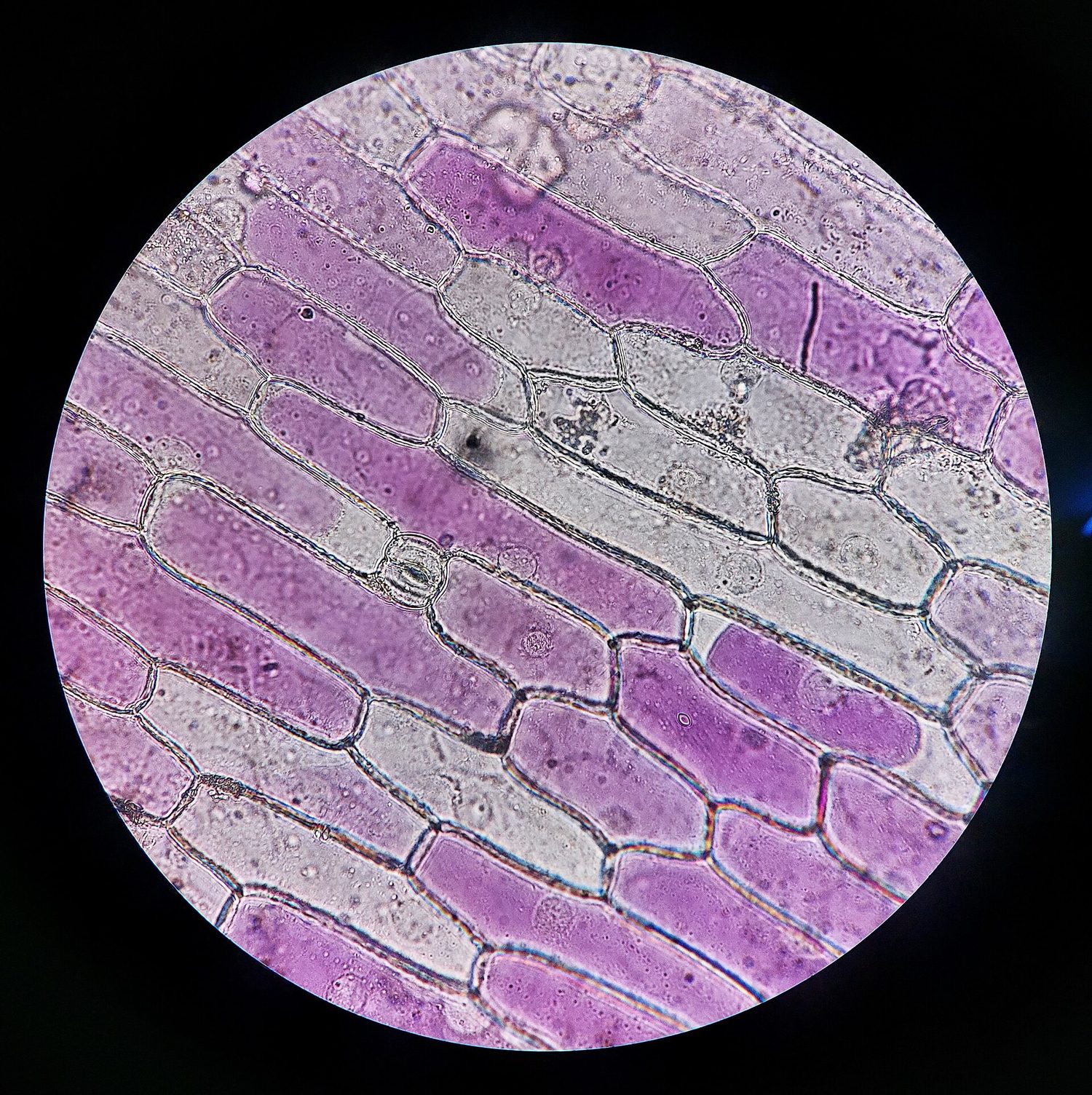
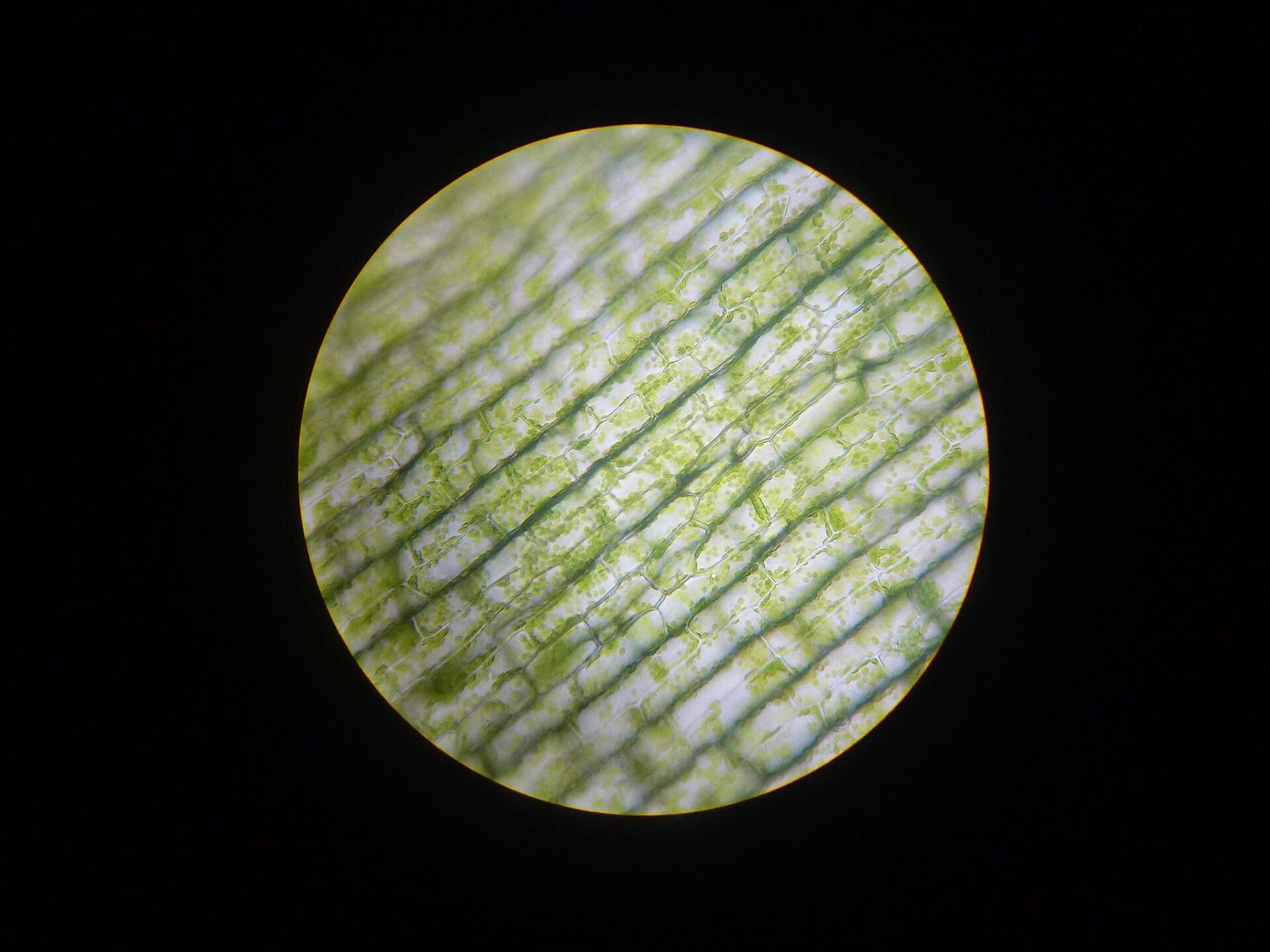
תאי עלי Elodea צפופים בכלורופלסטים ירוקים (מיקרוסקופ אור)תאי אפידרמיס של בצל(microscope אור — קירות תאי וגרעינים נראים בבירור
תא אוקריוטי מחלק את עבודתו בין אורגנלות. מערכת האנדוממברנה היא מערכת מקוונת היוצרת, מעבדת ושולחת מולקולות: הגרעין (מכיל DNA), רeticulum אנדופלזמי מחוספס וחלק (סינתזת חלבונים וליפידים), גולג'י (עיבוד ואריזה), ליזוסומים (עכולה), ווېסיקולות שמובילות חומר ביניהן. מיטוכונדריות (נשימה) וכלורופלסטים (פוטוסינתזה) יש להן ממברנות משלהן.
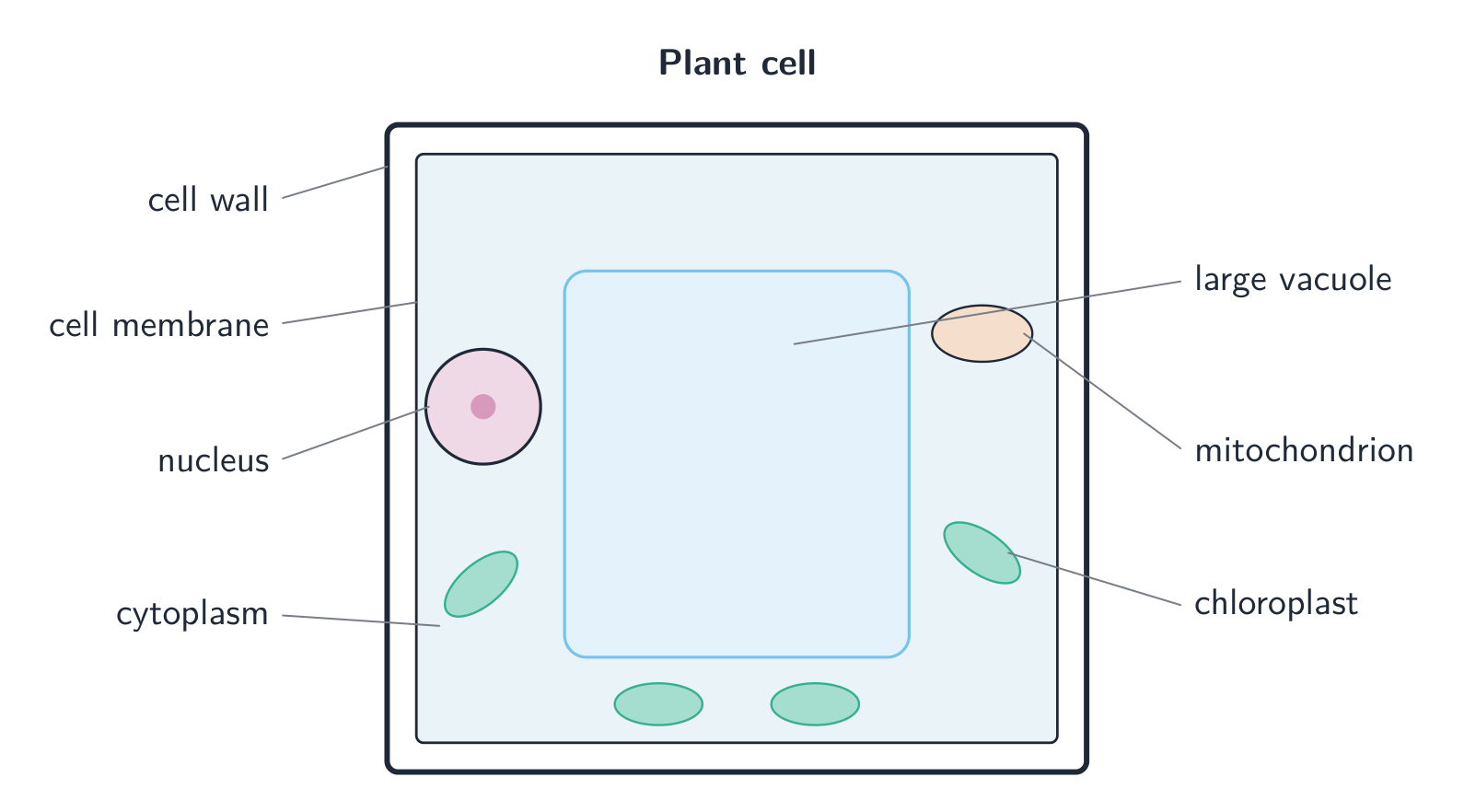
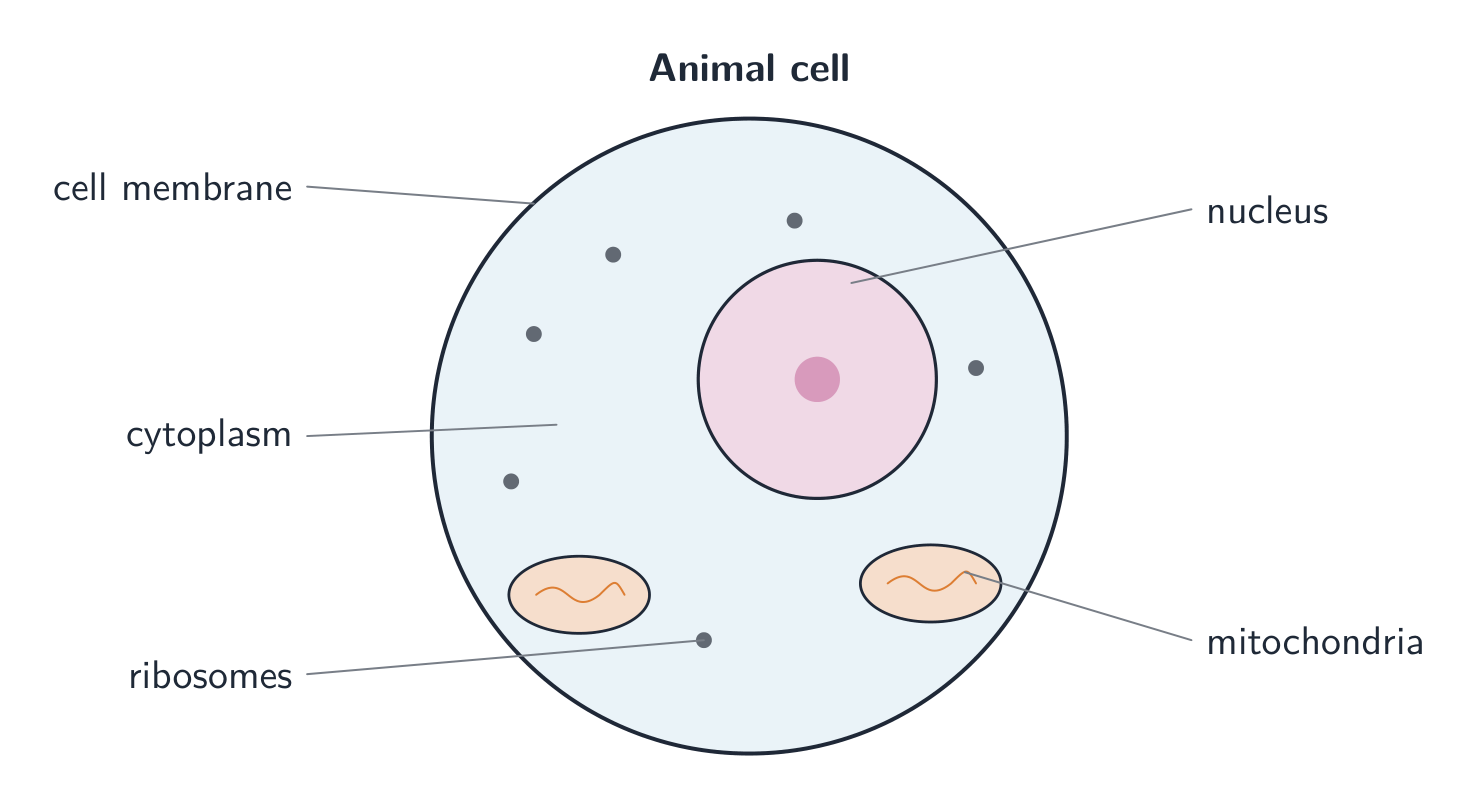
תא צמחי גם בעל קיר תאי, וקואולה גדולה, וכלורופלסטיםתא בעלי חיים כללי ואברוניו
מה שאורגנלה כלשהי עושה בפועל
המבחן מבקש ממך לקרוא למבנה וגם לומר מה הוא עושה, ולכן יש ללמוד אותם כזוגות.
רובוסומים עשוים מ-RNA ריבוזומלי (rRNA) וחלבון. אין להם ממברנה, והם נמצאים בכל צורות החיים — חיידקים, ארכאיה ואוקריוטים על שווה. נוכחות משותפת זו היא עדות לאב קדמון משותף: מבנה这么 מרכזי היה קיים כבר באב הקדמון המשותף של כל היצורים החיים. רובוסום קורא mRNA (RNA מסר) ובונה את החלבון שהוא מקודד. רובוסומים חופשיים מייצרים חלבונים לשימוש בתוך התא; רובוסומים הקשורים ל-reticulum אנדופלזמי מחוספס מייצרים חלבונים ליצוא או לממברנה.
הממורן גולג'י הוא סדרה של שקיות שטוחות, מוגבלות בממברנה. חלבון הנכנס מה-reticulum האנדופלזמי עובר דרכן, וקורה לו שלושה דברים:
היא מתקפלת נכון ומעובדת כימית — לרוב באמצעות גליקוזילציה, חיבור של שרשרות סוכר קצרות;
היא מוסדרת ומוכוונת, כך שתווית הסוכר או הפוספט המעובדת קובעת לאיזה תא רשת (קומפרטימנט) החלבון יישלח;
היא ארוזה בוסיקול להובלה.
לכן גולג'י אינו מחסן: הוא מחלקת ההשלמה והמשלוח של התא, והשינויים שלו קובעים מהו תפקידו של חלבון ואين הוא מגיע בסוף.
ליזוסומים הם שקיות מוקפות ממברנה של אנזימי הידרוליזה המפרקים חומרים — אורגנלים ישנים, חיידקים שנבלעו וחלקיקי מזון שנכנסו לתוך התא. האנזימים שלהם עובדים בצורה הטובה ביותר בטמפרטורת pH נמוכה, שהליזוסום שומר בתוכו; שמירה על הקריה שלהם מגנה על שאר חלקי התא. ליזוסומים משתפים גם ב-אפופטוזיס, מוות תאי מוגדר מראש, בו תא פורק במתכונת מתוכננת, למשל כדי לעצב אצבעות מכף יד עוברת-גשר בעובר.
וואקואולות הן שקיות מוקלות בממברנה עם תפקודים מגוונים: אחסון מים, יונים, חומרי תזונה או פסולת, ובתא צמחי הוואקואולה המרכזית הגדולה לוחצת החוצה כלפי דופן התא כדי לשמור על התא מוצק.
מיטוכונדריות וכלורופלאסטים יש לכל אחד ממברנה כפולה ו-DNA מעגלי וריבוסומים משלו — העדות מאחורי תיאוריית האנדוסימביוזיס למטה.
2.2
Why Cells Stay Small · מדוע תאים נשארים קטנים
Syllabus · סיילבוס
English
Big Idea 2 — Energetics (ENE): Biological systems use energy and molecular building blocks to grow, reproduce, and maintain dynamic homeostasis.
Learning Objective 2.2.A: Explain the effect of surface area-to-volume ratios on the exchange of materials between cells or organisms and the environment.
2.2.A.1 Surface area-to-volume ratios affect the ability of a biological system to obtain necessary nutrients, eliminate waste products, acquire or dissipate thermal energy, and otherwise exchange chemicals and energy with the environment.
Relevant equations:
Volume of a Sphere: $V = \dfrac{4}{3}\pi r^3$
Volume of a Cube: $V = s^3$
Volume of a Rectangular Solid: $V = lwh$
Volume of a Cylinder: $V = \pi r^2 h$
Surface Area of a Sphere: $SA = 4\pi r^2$
Surface Area of a Cube: $SA = 6s^2$
Surface Area of a Rectangular Solid: $SA = 2lh + 2lw + 2wh$
Surface Area of a Cylinder: $SA = 2\pi rh + 2\pi r^2$
$r$ = radius
$l$ = length
$h$ = height
$w$ = width
$s$ = length of one side of a cube
Illustrative examples for 2.2.A.1:
SA/V Ratios and Exchanges
Root hairs
Guard cells
Gut epithelial cells
Cilia
Stomata
2.2.A.2 The surface area of the plasma membrane must be large enough to adequately exchange materials.
i. The surface area-to-volume ratio can restrict cell size and shape. Smaller cells typically have a higher surface area-to-volume ratio as well as a more efficient exchange of materials with the environment than do larger cells.
ii. As cells increase in volume, the surface area-to-volume ratio decreases and the demand for internal resources increases.
iii. More complex cellular structures (e.g., membrane folds) are necessary to adequately exchange materials with the environment.
iv. As organisms increase in size, their surface area-to-volume ratio decreases, affecting properties like rate of heat exchange with the environment. Smaller amounts of mass exchange proportionally more heat with the ambient environment than do larger masses. As mass increases, both the surface area-to-volume ratio and the rate of heat exchange decrease.
v. There is a relationship between metabolic rate per unit body mass and the size of multicellular organisms; typically, the smaller the organism, the higher the metabolic rate per unit body mass.
עברית
רעיון מרכזי 2 — אנרגטיקה (ENE): מערכות ביולוגיות משתמשות באנרגיה ובחומרי גלם מולקולריים לצמיחה, רבייה ולשמירה על הומיאוסטאז דינמית.
מטרה לימודית 2.2.A: להסביר את השפעת יחסי השטח-נפח על החלפת חומרים בין תאים או אורגניזמים לבין הסביבה.
2.2.A.1 יחסי השטח-נפח משפיעים על יכולתה של מערכת ביולוגית לקבל מזון חיוני, לשחרר פסולת, לרכוש או לפלוט אנרגיה תרמית, ולחלף חומרים ואנרגיה אחרת עם הסביבה.
נוסחאות רלוונטיות:
נפח כדור: $V = \dfrac{4}{3}\pi r^3$
נפח קובייה: $V = s^3$
נפח גוף מלבני: $V = lwh$
נפח צילינדר: $V = \pi r^2 h$
שטח פני כדור: $SA = 4\pi r^2$
שטח פני קובייה: $SA = 6s^2$
שטח פני גוף מלבני: $SA = 2lh + 2lw + 2wh$
שטח פנים של צילינדר: $SA = 2\pi rh + 2\pi r^2$
$r$ = רדיוס
$l$ = אורך
$h$ = גובה
$w$ = רוחב
$s$ = אורך צלע אחת בקובייה
דוגמאות מודגמות ל-2.2.A.1:
יחסים בין שטח פנים לבין נפח והחלפות חומרים
שערות שורש
תאי שמירה (אקוליות)
תאי אפיתל באינטסטין
סיבים
נקביות
2.2.A.2 שטח הפנים של הממברנה הפלזמטית חייב להיות גדול מספיק כדי לאפשר החלפה יעילה של חומרים.
i. היחס בין שטח פנים לנפח יכול להגביל את הגודל והצורה של התא. תאים קטנים יותר בדרך כלל בעלי יחס שטח פנים לנפח גבוה יותר, וכן החלפת חומרים יעילה יותר עם הסביבה בהשוואה לתאים גדולים יותר.
ii. ככל שהתאים גדלים בנפחם, היחס בין שטח פנים לנפח יורד והדרישה למשאבים פנימיים עולה.
iii. נדרשים מבנים תאיים מורכבים יותר (למשל, קפלי ממברנה) כדי לאפשר החלפה מספקת של חומרים עם הסביבה.
iv. ככל שהאורגניזמים גדלים בגודלם, היחס בין שטח פנים לנפח שלהם יורד, מה שמשפיע על מאפיינים כמו קצב החלפת חום עם הסביבה. מסות קטנות יותר מחליפות פרופורציונלית יותר חום עם הסביבה המוצבת בהשוואה למסות גדולות. ככל שהמסה עולה, גם היחס בין שטח פנים לנפח וגם קצב החלפת החום יורדים.
v. קיים קשר בין קצב המטבוליזם ליחידת משקל גוף לבין הגודל של אורגניזמים רב-תאיים; לרוב, ככל שאורגניזם קטן יותר, כך קצב המטבוליזם ליחידת משקל גוף גבוה יותר.
Source: College Board AP Course and Exam Description · מקור: תיאור הקורס והמבחן של College Board AP
English
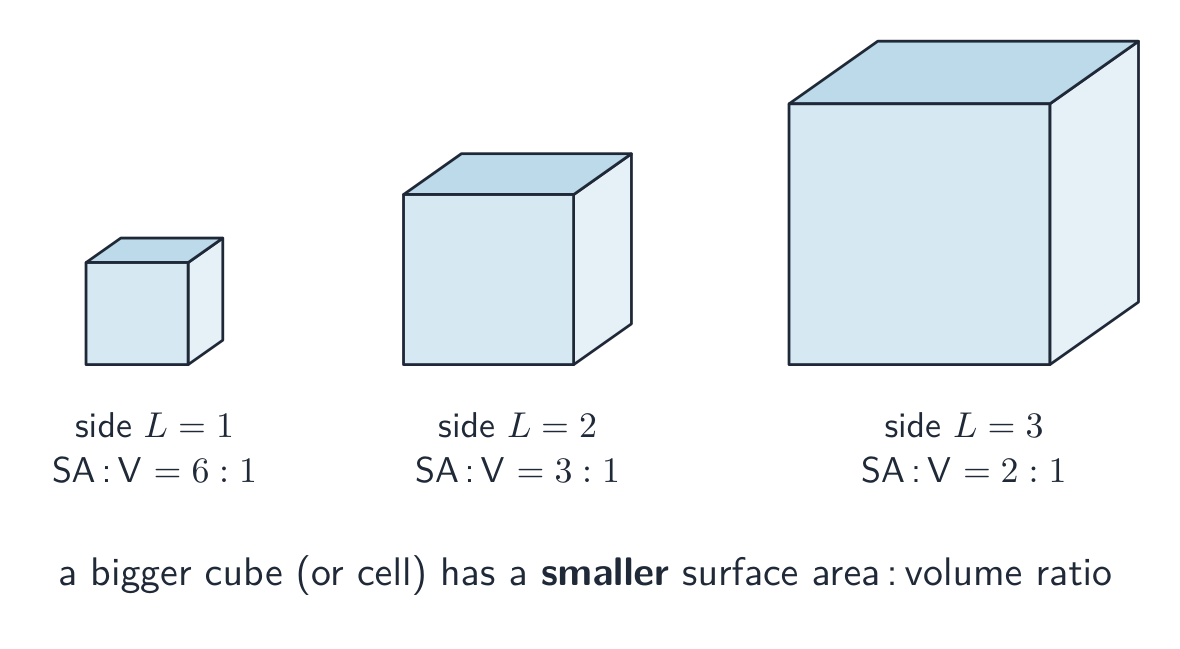
Cells stay small because of the surface-area-to-volume ratio 表面积与体积比. As a cell grows, its volume rises faster than its surface area, so its membrane cannot exchange materials fast enough for the interior. Staying small (or being flat or folded) keeps enough surface to serve the volume.
Worked example. A cube-shaped cell $2\ \mu\text{m}$ on a side has surface area $6\times2^2=24\ \mu\text{m}^2$ and volume $2^3=8\ \mu\text{m}^3$, so its surface-area-to-volume ratio is $\tfrac{24}{8}=3$. Double the side to $4\ \mu\text{m}$: surface area $=6\times4^2=96$, volume $=4^3=64$, ratio $=\tfrac{96}{64}=1.5$. Doubling the size halved the ratio – the larger cell has far less membrane per unit of interior, which is why cells stay small.
עברית
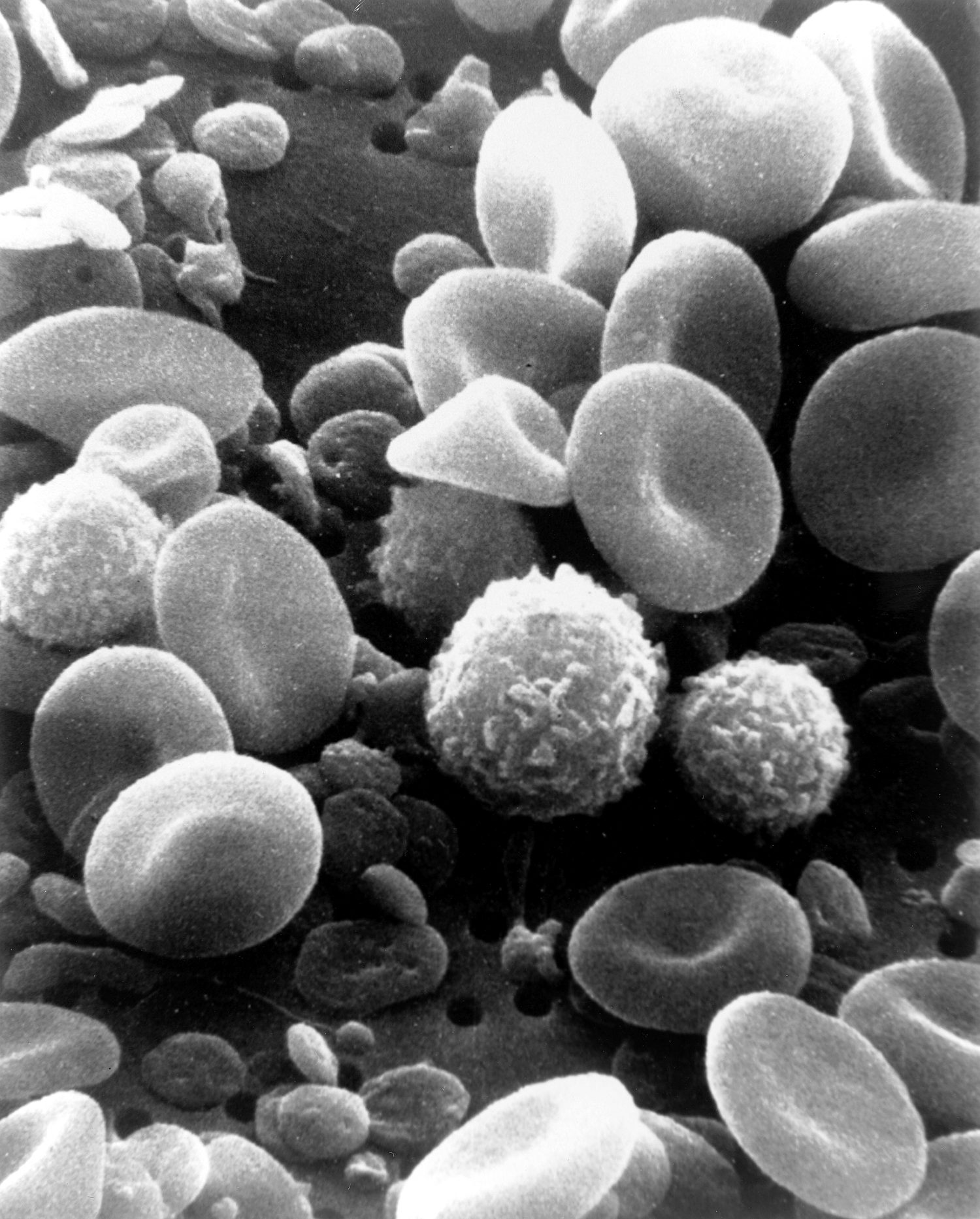
תמונת מיקרוסקופ סריקה אלקטרונית של תאי דם אדומים — ללא גרעין, שטח פני שטח גבוה לחילוף גזים
תאים נשארים קטנים בשל יחס השטח-לנפח. כשהתא גדל, הנפח שלו עולה מהר יותר מאשר שטח הפנים שלו, ולכן הממברנה שלו אינה יכולה להחליף חומרים מהר מספיק עבור הפנים. שמירה על גודל קטן (או להיות שטוח או מתקפל) שומר על מספיק שטח כדי לשרת את הנפח.
יחס השטח-לנפח יורד כשהתא מתגדל
דוגמה מפורטת. תא בצורת קובייה $2\ \mu\text{m}$ על צד בעל שטח פנים $6\times2^2=24\ \mu\text{m}^2$ ונפח $2^3=8\ \mu\text{m}^3$, ולכן יחס השטח-לנפח שלו הוא $\tfrac{24}{8}=3$. הכפילו את הצד ל$4\ \mu\text{m}$: שטח פנים $=6\times4^2=96$, נפח $=4^3=64$, יחס $=\tfrac{96}{64}=1.5$. הכפלת הגודל הפחיתה למחצה את היחס – התא הגדול יותר יש הרבה פחות ממברנה ליחידת נפח, שזה הסיבה שתיאים נשארים קטנים.
Explore · חקור
See surface area vs volume as a cube grows · ראה שטח פנים לעומת נפח כאשר קובייה גדלה
As a cell grows, volume rises faster than surface area, so the surface-area-to-volume ratio falls. A small cell keeps enough membrane to exchange materials fast enough. · ככל שהתא מתרחב, ה-נפח עולה מהר יותר מה-שטח הפנים, ולכן היחס בין שטח הפנים לנפח יורד. תא קטן שומר על מספיק ממברנה כדי להחליף חומרים במהירות מספקת.
2.3
The Fluid Mosaic Model of the Membrane · הדגם המוזאי-נוזלי של הממברנה
Syllabus · סיילבוס
English
Big Idea 2 — Energetics (ENE): Biological systems use energy and molecular building blocks to grow, reproduce, and maintain dynamic homeostasis.
Learning Objective 2.3.A: Describe the roles of each of the components of the cell membrane in maintaining the internal environment of the cell.
2.3.A.1 Phospholipids have both hydrophilic and hydrophobic regions. The polar hydrophilic phosphate regions of the phospholipids are oriented toward the aqueous external or internal environment, while the nonpolar hydrophobic fatty acid regions face each other within the interior of the membrane.
2.3.A.2 Embedded proteins can be hydrophilic (with charged and polar side groups), hydrophobic (with nonpolar side groups), or both.
i. Hydrophilic regions of the proteins are either inside the interior of the protein or exposed to the cytosol (cytoplasm).
ii. Hydrophobic regions of proteins make up the protein surface that interacts with the fatty acids in the interior membrane.
Learning Objective 2.3.B: Describe the fluid mosaic model of cell membranes.
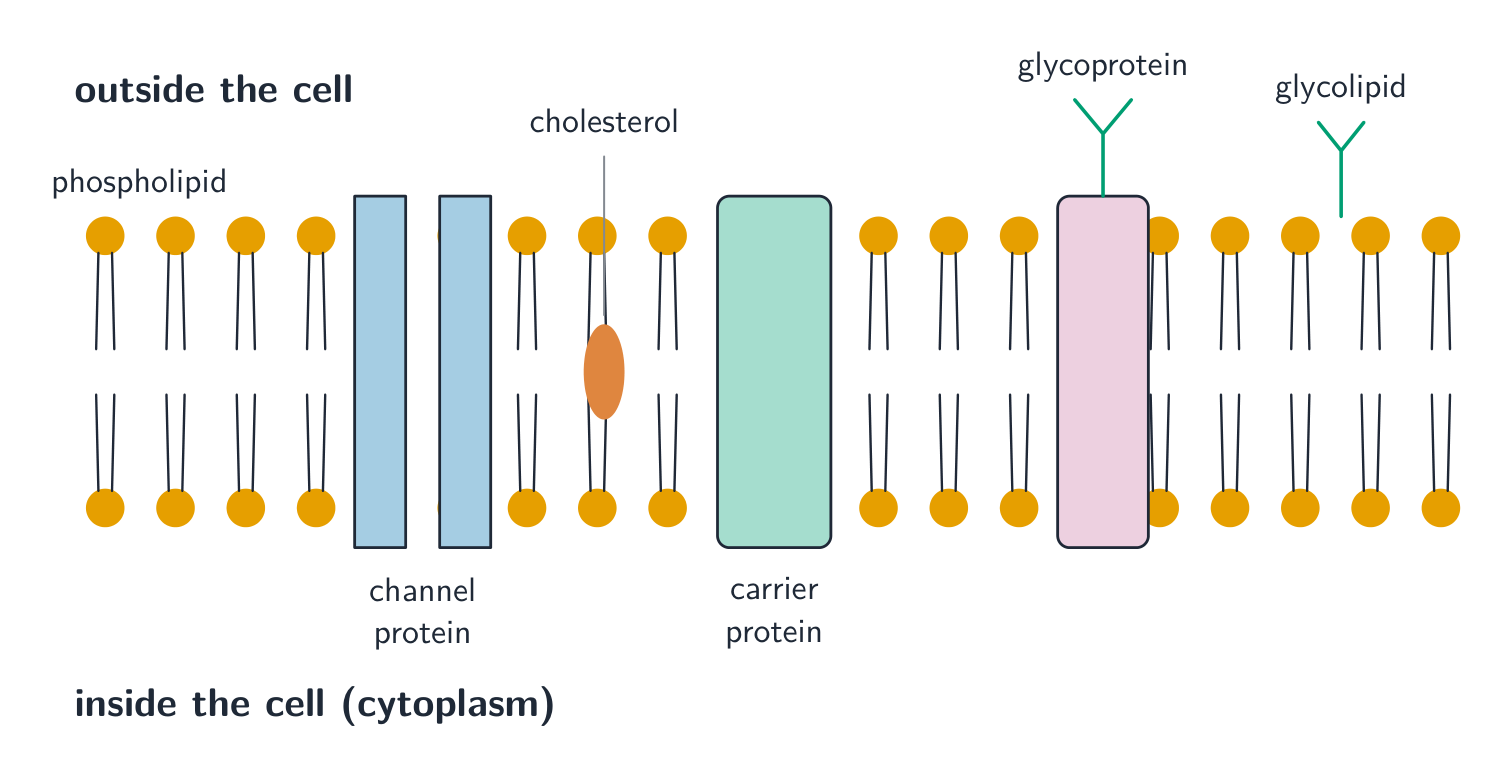
2.3.B.1 Plasma membranes consist of a structural framework of phospholipid molecules embedded with proteins, steroids (such as cholesterol in vertebrate animals), glycoproteins, and glycolipids. All of these can move around the surface of the cell within the membrane, as illustrated by the fluid mosaic model.
עברית
רעיון מרכזי 2 — אנרגטיקה (ENE): מערכות ביולוגיות משתמשות באנרגיה ובחומרי גלם מולקולריים לצמיחה, רבייה ולשמירה על הומיאוסטאז דינמית.
מטרת ההתלמדות 2.3.A: תאר את התפקידים של כל רכיבי ממברנת התא בתחזוקת הסביבה הפנימית של התא.
2.3.A.1 לפוספוליפידים ישנם אזורי הידרופיליים והידרופוביים גם יחד. האזורי הפוספט הקוטבי-הידרופיליים של הפוספוליפידים ממוקמים כלפי הסביבה החיצונית או הפנימית המימית, בעוד שאזורי חומצות השומן הלא-קוטביים-הידרופוביים פונים זה לזה בתוך פנים הממברנה.
2.3.A.2 חלבונים משולבים עשויים להיות הידרופיליים (עם קבוצות צד טעונות וקוטביות), הידרופוביים (עם קבוצות צד לא-קוטביות) או שניהם.
i. אזורי ההידרופיליות בחלבונים נמצאים או בתוך פנים החלבון או חשופים לקוטרוזול (ציטופלזמה).
ii. אזורי ההידרופוביות בחלבונים יוצרים את פני השטח של החלבון שנמצאים במגע עם חומצות השומן בפנים הממברנה.
מטרת ההתלמדות 2.3.B: תאר את דגם המosaic הזורם של ממברנות תאי.
2.3.B.1 ממברנות פלזמה מורכבות מעוגן מבני של מולקולות פוספוליפיד המשולבות בהן חלבונים, סטרואידים (כגון כולסטרול בבעלי חוליות), גליקופרוטאינים וגליקוליפידים. כל אלו יכולים לנוע על פני השטח של התא בתוך הממברנה, כפי שמוצג בדגם המosaic הזורם.
Source: College Board AP Course and Exam Description · מקור: תיאור הקורס והמבחן של College Board AP
English
The cell membrane is a phospholipid bilayer 磷脂双分子层 – polar heads facing the water, nonpolar tails inside – studded with proteins. The fluid mosaic model 流动镶嵌模型 pictures it as a fluid sheet in which lipids and proteins drift. Cholesterol and the degree of unsaturation tune its fluidity.
עברית
ממברנת התא היא דו-שכבתת פוספוליפידים – ראשים מקוטבים פונים למים, זנבות לא-מקוטבים בפנים – מצופה בחלבונים. הדגם המוזאי-נוזלי מתאר אותה כדף נוזלי שבו ליפידים וחלבונים מרחפים. כולסטרול ודרגת האי-רוויה מכוונים את הנוזליות שלה.
הדגם המוזאי-נוזלי של ממברנת התא
2.4
What Can Cross the Membrane · מה יכול לעבור דרך הממברנה
Syllabus · סיילבוס
English
Big Idea 2 — Energetics (ENE): Biological systems use energy and molecular building blocks to grow, reproduce, and maintain dynamic homeostasis.
Learning Objective 2.4.A: Explain how the structure of biological membranes influences selective permeability.
2.4.A.1 Plasma membranes separate the internal environment of the cell from the external environment. Selective permeability is the result of the plasma membrane having a hydrophobic interior.
2.4.A.2 Small nonpolar molecules, including $\mathrm{N_2}$, $\mathrm{O_2}$, and $\mathrm{CO_2}$, freely pass across the membrane. Hydrophilic substances, such as large polar molecules and ions, move across the membrane through embedded channels and transport proteins.
2.4.A.3 The nonpolar hydrocarbon tails of phospholipids prevent the movement of ions and polar molecules across the membrane. Small polar, uncharged molecules, like $\mathrm{H_2O}$ or $\mathrm{NH_3}$ (ammonia), pass through the membrane in small amounts.
Learning Objective 2.4.B: Describe the role of the cell wall in maintaining cell structure and function.
2.4.B.1 Cell walls of Bacteria, Archaea, Fungi, and plants provide a structural boundary as well as a permeability barrier for some substances to the internal or external cellular environments and protection from osmotic lysis.
עברית
רעיון מרכזי 2 — אנרגטיקה (ENE): מערכות ביולוגיות משתמשות באנרגיה ובחומרי גלם מולקולריים לצמיחה, רבייה ולשמירה על הומיאוסטאז דינמית.
מטרת ההתלמדות 2.4.A: הסבר כיצד המבנה של ממברנות ביולוגיות משפיע על חדירות סלקטיבית.
2.4.A.1 ממברנות פלזמה מפרידות בין הסביבה הפנימית של התא לבין הסביבה החיצונית. חדירות סלקטיבית היא תוצאה מכך לממברנה הפלזמטית ישנו פנים הידרופובי.
2.4.A.2 מולקולות קטנות ולא-קוטביות, כולל $\mathrm{N_2}$, $\mathrm{O_2}$ ו$\mathrm{CO_2}$, חוצות את הממברנה בחופשיות. חומרים הידרופיליים, כמו מולקולות קוטביות גדולות ויונים, חוצים את הממברנה דרך ערוצים משולבים וחלבוני תובלה.
2.4.A.3 זנבות ההידרוקרबון הלא-קוטביים של הפוספוליפידים מונעים תנועת יונים ומולקולות קוטביות חוצות הממברנה. מולקולות קטנות, קוטביות וללא מטען, כמו $\mathrm{H_2O}$ או $\mathrm{NH_3}$ (אמוניה), חוצות את הממברנה בכמויות קטנות.
מטרת ההתלמדות 2.4.B: תאר את תפקיד הקיר התאי בתחזוקת מבנה התא ותפקודו.
2.4.B.1 קירות תאים של חיידקים, ארכאה, פטריות וצמחים מספקים גבול מבני וגם מחסום חדירות עבור חומרים מסוימים לסביבות התא הפנימית או החיצונית והגנה מפני ליזיס אוסמוטי.
Source: College Board AP Course and Exam Description · מקור: תיאור הקורס והמבחן של College Board AP
English
The membrane is selectively permeable 选择透过性. Small nonpolar molecules ($\text{O}_2$, $\text{CO}_2$) and water cross easily; large or charged/polar particles (ions, glucose) cannot pass the nonpolar core without help. This selectivity lets the cell control its internal environment.
עברית
הממברנה היא חדירה סלקטיבית. מולקולות לא-מקוטבות קטנות ($\text{O}_2$, $\text{CO}_2$) ומים עוברים בקלות; חלקיקים גדולים או טעונים/מקוטבים (יונים, גלוקוז) אינם יכולים לעבור דרך ליבת הלא-מקוטבות ללא עזרה. חדירות זו מאפשרת לתא לשלוט בסביבתו הפנימית.
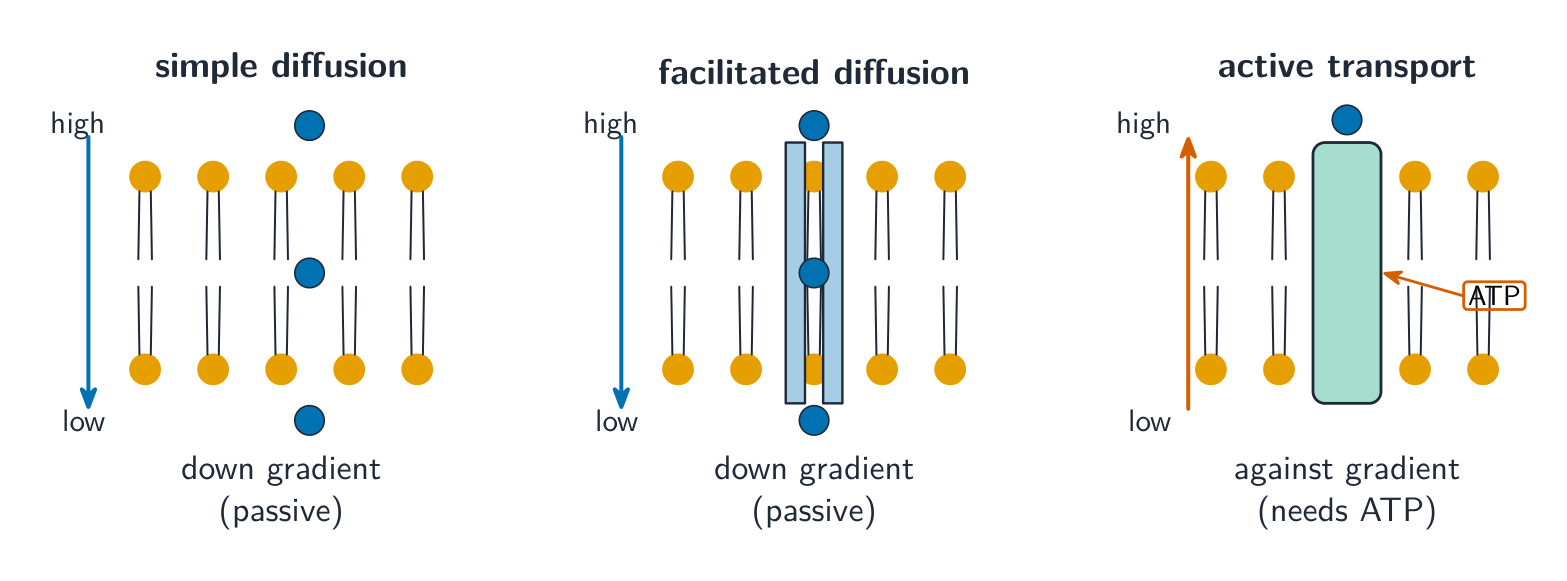
שלושה דרכים שחומרים חוצים את הממברנה
2.5
Passive and Active Transport · הובלה פסיבית ואקטיבית
Syllabus · סיילבוס
English
Big Idea 2 — Energetics (ENE): Biological systems use energy and molecular building blocks to grow, reproduce, and maintain dynamic homeostasis.
Learning Objective 2.5.A: Describe the mechanisms that organisms use to maintain solute and water balance.
2.5.A.1 The selective permeability of membranes allows for the formation of concentration gradients of solutes across the membrane.
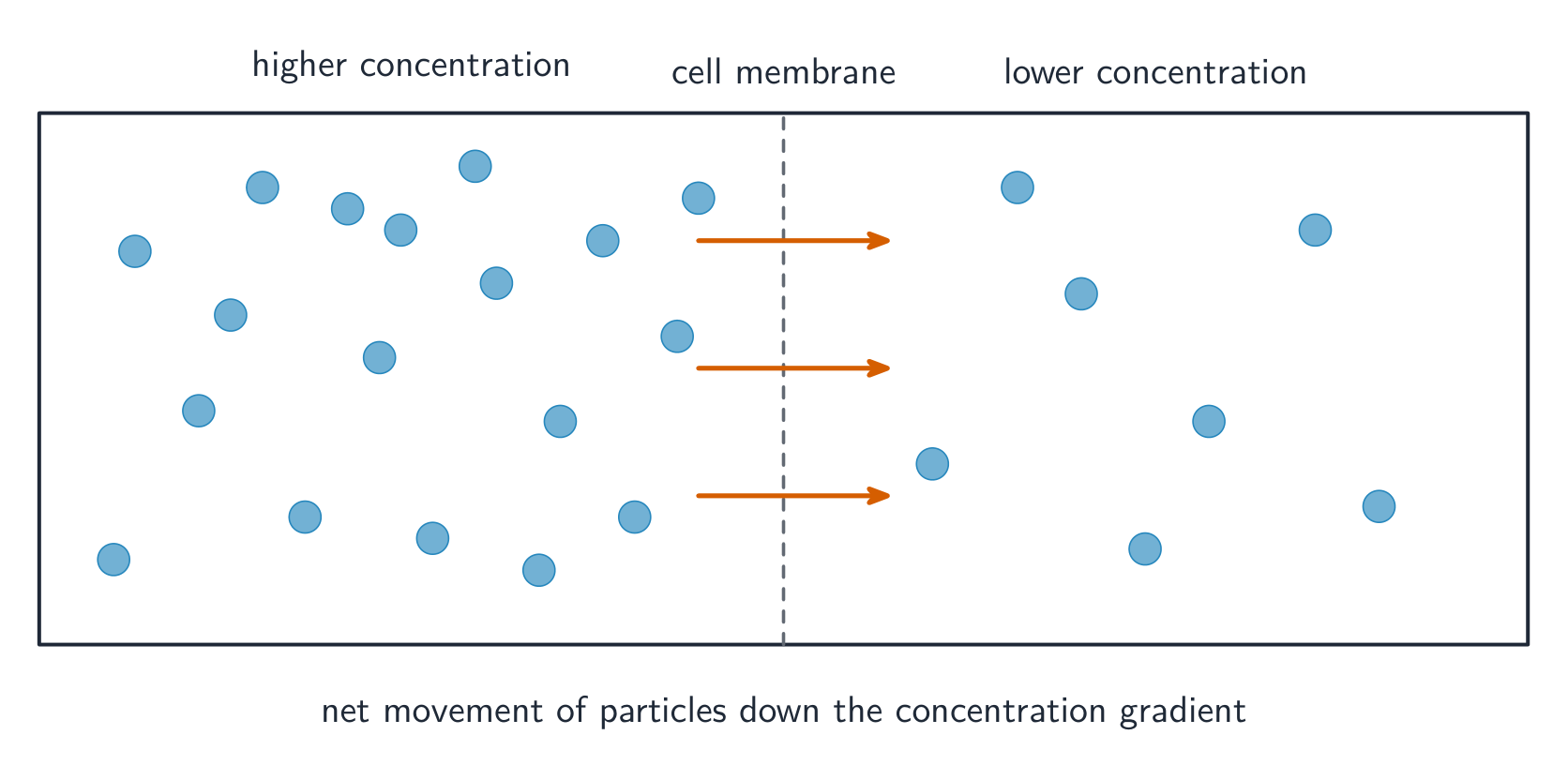
2.5.A.2 Passive transport is the net movement of molecules from regions of high concentration to regions of low concentration without the direct input of metabolic energy.
2.5.A.3 Active transport requires the direct input of energy to move molecules. In some cases, active transport is utilized to move molecules from regions of low concentration to regions of high concentration.
Learning Objective 2.5.B: Describe the mechanisms that organisms use to transport large molecules across the plasma membrane.
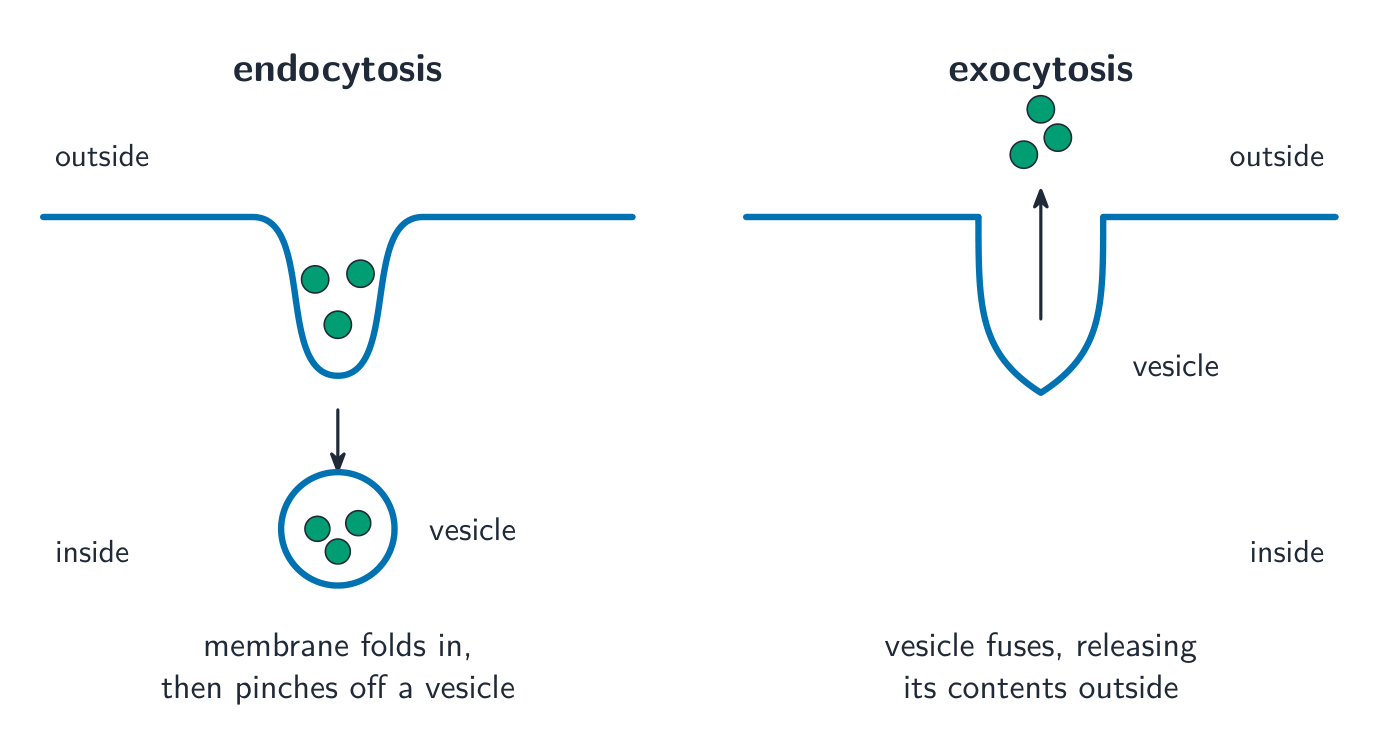
2.5.B.1 The processes of endocytosis and exocytosis require energy to move large substances or large amounts of substances into and out of cells.
i. In endocytosis, the cell takes in large molecules and particulate matter by folding the plasma membrane in on itself and forming new (small) vesicles that engulf material from the external environment.
ii. In exocytosis, internal vesicles release material from cells by fusing with the plasma membrane and secreting large molecules from the cell.
עברית
רעיון מרכזי 2 — אנרגטיקה (ENE): מערכות ביולוגיות משתמשות באנרגיה ובחומרי גלם מולקולריים לצמיחה, רבייה ולשמירה על הומיאוסטאז דינמית.
מטרת ההתלמדות 2.5.A: תאר את המנגנונים שהאורגניזמים משתמשים בהם לתחזוקת איזון מומסים ומים.
2.5.A.1 החדירות הסלקטיבית של הממברנות מאפשרת היווצרות של גרדיינטים ריכוזיים של מומסים על פני הממברנה.
2.5.A.2 תובלה פסיבית היא תנועה נטו של מולקולות מאזורים עם ריכוז גבוה לאזורים עם ריכוז נמוך ללא הכנסה ישירה של אנרגיה מטבולית.
2.5.A.3 תובלה פעילה דורשת הכנסה ישירה של אנרגיה כדי להזיז מולקולות. במקרים מסוימים, תובלה פעילה משמשת להזזת מולקולות מאזורים עם ריכוז נמוך לאזורים עם ריכוז גבוה.
מטרת ההתלמדות 2.5.B: תאר את המנגנונים שהאורגניזמים משתמשים בהם לתובלת מולקולות גדולות על פני ממברנת הפלזמה.
2.5.B.1 תהליכי האנציוטוז והאקסוציטוז דורשים אנרגיה כדי להעביר חומרים גדולים או כמות גדולה של חומרים לתוך ואלו מהתאים.
i. באנציוטוז, התא סופג מולקולות גדולות וחומר גבישי על ידי קיפול הממברנה הפלזמטית פנימה אליו עצמה ויצירת נדנדים (נוניקלים) חדשים (קטנים) שבלועים חומר מהסביבה החיצונית.
ii. באקסוציטוז, נדנדים פנימים משחררים חומרים מתוך התאים על ידי התמזגות עם הממברנה הפלזמטית והפרשת מולקולות גדולות מהתא.
Source: College Board AP Course and Exam Description · מקור: תיאור הקורס והמבחן של College Board AP
English
Passive transport 被动运输 moves substances down their concentration gradient (high → low) with no energy – diffusion 扩散.
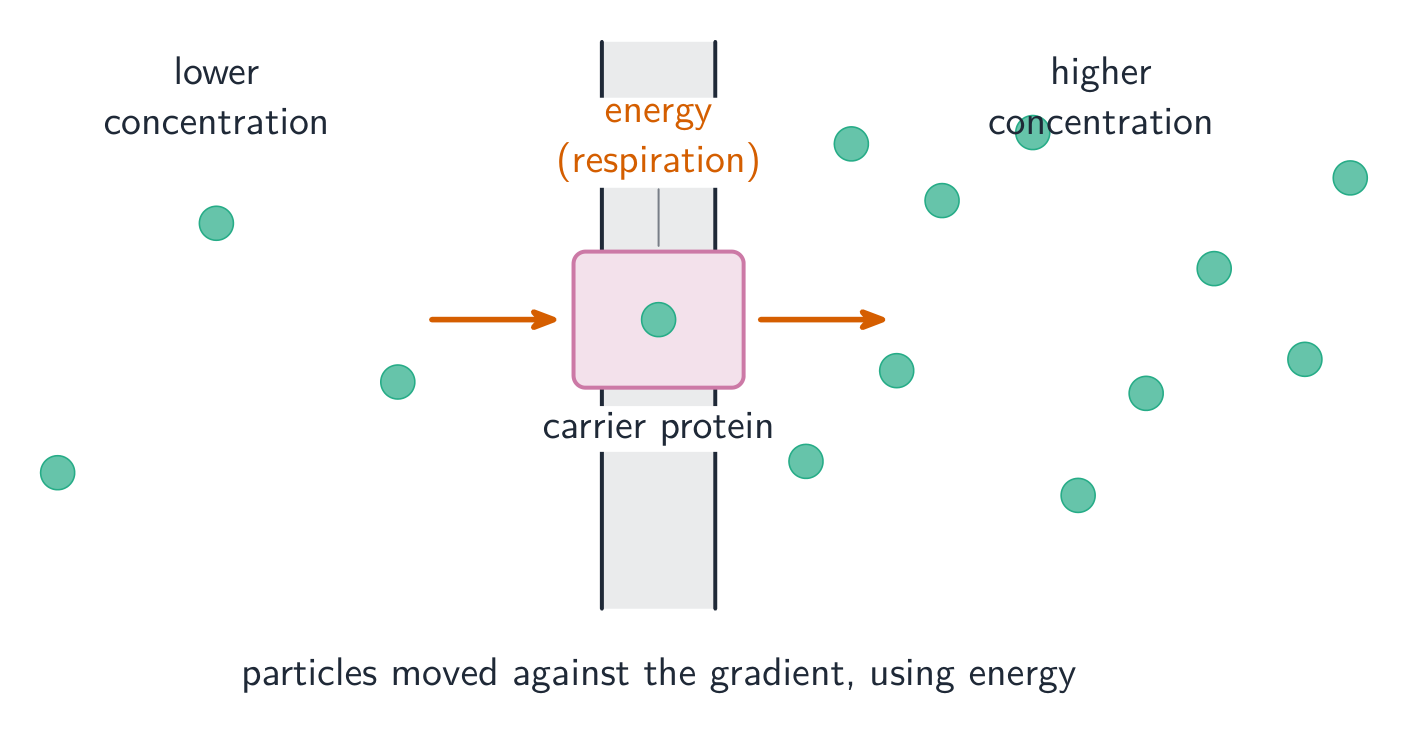
Active transport 主动运输 moves substances against the gradient (low → high), requiring energy (ATP), via protein pumps like the sodium–potassium pump.
עברית
הובלה פסיבית מזיזה חומרים למטה ריכוזם (גבוה → נמוך) בלי אנרגיה – פיזור.
הובלה אקטיבית מזיזה חומרים נגד הגרדיין (נמוך → גבוה), דורשת אנרגיה (ATP), באמצעות משאבות חלבון כמו משאבת הנתרן-אשלגן.
הובלה אקטיבית מזיזה חלקיקים נגד הגרדיין, תוך שימוש ב-ATP ובחלבון נושא
Explore · חקור
Pump a solute against its gradient · משאב חומר מומס נגד הגרדינט שלו
Passive transport moves solutes down their gradient for free; active transport uses ATP to pump them the other way, from low to high concentration. · העברה פסיבית מעבירה חומרים מומסים לאורך הגרדינט בחינם; העברה אקטיבית משתמשת ב-ATP כדי למשוך אותם לכיוון ההפוך, מכריכויות נמוכה לגבוהה.
Big Idea 2 — Energetics (ENE): Biological systems use energy and molecular building blocks to grow, reproduce, and maintain dynamic homeostasis.
Learning Objective 2.6.A: Explain how the structure of a molecule affects its ability to pass through the plasma membrane.
2.6.A.1 Facilitated diffusion requires transport or channel proteins to enable the movement of charged ions across the membrane.
i. Membranes may become polarized by the movement of ions across the membrane.
ii. Charged ions, including $\mathrm{Na^+}$ (sodium) and $\mathrm{K^+}$ (potassium), require channel proteins to move through the membrane.
2.6.A.2 Facilitated diffusion enables the movement of large polar molecules through membranes with no energy input. In this type of diffusion, substances move down the concentration gradient.
2.6.A.3 Aquaporins transport large quantities of water across membranes.
עברית
רעיון מרכזי 2 — אנרגטיקה (ENE): מערכות ביולוגיות משתמשות באנרגיה ובחומרי גלם מולקולריים לצמיחה, רבייה ולשמירה על הומיאוסטאז דינמית.
מטרות למידה 2.6.A: הסבר כיצד מבנה המולקולה משפיע על יכולתה לעבור דרך הממברנה הפלזמטית.
2.6.A.1 פיזור מופעל דורש חלבוני הובלה או חלבוני ערוץ כדי לאפשר את תנועת יונים מטענים דרך הממברנה.
i. ממברנות עשויות להפוך למוקוטבות כתוצאה מתנועת יונים דרכן.
ii. יונים מטענים, כולל $\mathrm{Na^+}$ (נתרן) ו$\mathrm{K^+}$ (אשלגן), זקוקים לחלבוני ערוץ כדי לעבור דרך הממברנה.
2.6.A.2 פיזור מופעל מאפשר תנועת מולקולות קוטביות גדולות דרך ממברנות ללא הצורך באנרגיה. בסוג זה של פיזור, חומרים נעים לאורך מדרגת הריכוז.
2.6.A.3 אקוואפורינים מעבירים כמויות גדולות של מים דרך ממברנות.
Source: College Board AP Course and Exam Description · מקור: תיאור הקורס והמבחן של College Board AP
English
Facilitated diffusion 易化扩散 is passive transport through a membrane protein – a channel or carrier 载体 – for particles that cannot cross the lipid alone. It still goes down the gradient and needs no energy, but its rate can saturate when all the proteins are busy.
עברית
פיזור מופעל הוא הובלה פסיבית דרך חלבון ממברנה – תעלה או נושא – עבור חלקיקים שאינם יכולים לחצות את השכבה הלipoide לבדם. התהליך עדיין מתרחש למטה בגרדיין ואינו דורש אנרגיה, אך קצב הפיזור עלול להגיע לרוויה כאשר כל החלבונים תפוסים.
דיפוזיה: חלקיקים מתפשטים מאזור בעל ריכוז גבוה אל אזור בעל ריכוז נמוך, לאורך הגרדיאנט
Tonicity, Water Potential, and Osmoregulation · טוניקities, פוטנציאל מים ואוסמו-ויסות
Syllabus · סיילבוס
English
Big Idea 2 — Energetics (ENE): Biological systems use energy and molecular building blocks to grow, reproduce, and maintain dynamic homeostasis.
Learning Objective 2.7.A: Explain how concentration gradients affect the movement of molecules across membranes.
2.7.A.1 External environments can be hypotonic, hypertonic, or isotonic to internal environments of cells. Movement of water can also be described as moving from hypotonic to hypertonic regions. Water moves by osmosis from regions of high water potential to regions of low water potential.
Learning Objective 2.7.B: Explain how osmoregulatory mechanisms contribute to the health and survival of organisms.
2.7.B.1 Growth and homeostasis are maintained by the constant movement of molecules across membranes.
2.7.B.2 Osmoregulation maintains water balance and allows organisms to control their internal solute composition and water potential. Water moves from regions of low osmolarity or solute concentration to regions of high osmolarity or solute concentration.
Equation (Solute Potential of a Solution):$\psi_s = -iCRT$
רעיון מרכזי 2 — אנרגטיקה (ENE): מערכות ביולוגיות משתמשות באנרגיה ובחומרי גלם מולקולריים לצמיחה, רבייה ולשמירה על הומיאוסטאז דינמית.
מטרות למידה 2.7.A: הסבר כיצד מדרגות ריכוז משפיעות על תנועת מולקולות דרך ממברנות.
2.7.A.1 סביבות חיצוניות יכולות להיות היפו-טוניות, היפר-טוניות או איזו-טוניות ביחס לסביבות הפנימיות של התאים. תנועת מים יכולה להתואר גם כזחילה מאזורי היפו-טוניות לאזורי היפר-טוניות. מים נעים באמצעות אוסמוזה מאזורים בעל פוטנציאל מים גבוה לאזורים בעל פוטנציאל מים נמוך.
משוואה (פוטנציאל מים):$\psi = \psi_p + \psi_s$
שבה:
$\psi_p$ = פוטנציאל לחץ
$\psi_s$ = פוטנציאל חומר מומס
דוגמאות להמחשה עבור 2.7.A.1:
וואקואולה מתכווצת בפרוטיסטים
וואקואולה מרכזית בתאי צמחים
מטרות למידה 2.7.B: הסבר כיצד מנגנוני אוסמו-ויסות תורמים לבריאות ולשרידות של אורגניזמים.
2.7.B.1 הגדילה ושימור הבית (הומאוסטאז) מתוחזקים על ידי תנועה מתמדת של מולקולות דרך ממברנות.
2.7.B.2 אוסמו-ויסות שומר על איזון מים ומאפשר לאורגניזמים לשלוט בהרכב הפנימי של המומסים ובפוטנציאל המים שלהם. מים זורמים מאזורים בעלי אוסמולריות נמוכה או ריכוז מומסים נמוך אל אזורים בעלי אוסמולריות גבוהה או ריכוז מומסים גבוה.
משוואה (פוטנציאל מומס במחلول):$\psi_s = -iCRT$
שבה:
$i$ = קבוע יוניזציה
$C$ = ריכוז מולרי
$R$ = קבוע לחץ $\left(R = 0.0831 \dfrac{L \cdot bars}{mol \cdot K}\right)$
$T$ = טמפרטורה בקלווין (°C + 273)
Source: College Board AP Course and Exam Description · מקור: תיאור הקורס והמבחן של College Board AP
English
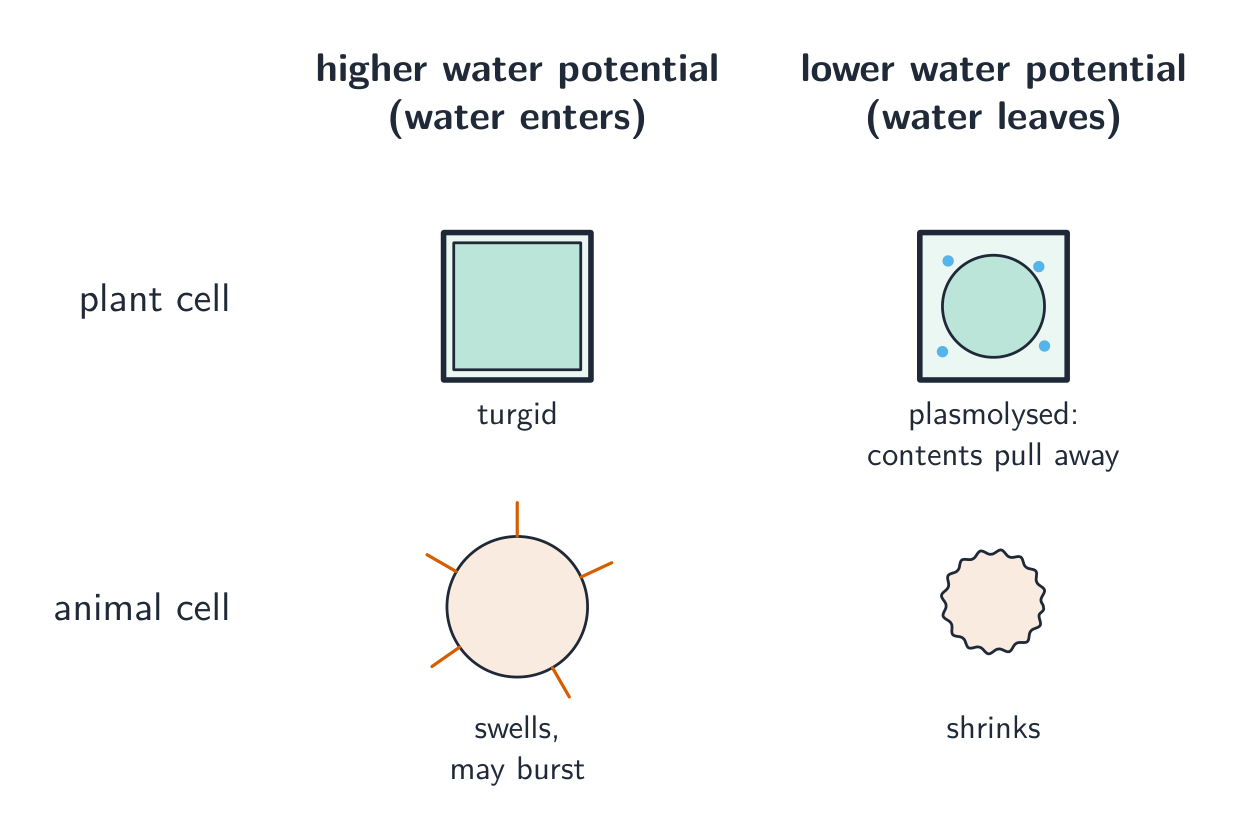
Osmosis 渗透 is the diffusion of water across a membrane. Tonicity 张力 compares solute concentrations: in a hypotonic 低渗 solution a cell gains water (may burst); in a hypertonic 高渗 one it loses water (shrinks); in an isotonic 等渗 one there is no net change. Water potential 水势 predicts the direction of water movement (water moves to lower water potential), and is the sum of a pressure term and a solute term: $\Psi=\Psi_p+\Psi_s$, where the solute potential $\Psi_s=-iCRT$. Osmoregulation 渗透调节 is how organisms control this balance.
Worked example. For a $0.1\,\text{M}$ sucrose solution ($i=1$) in an open beaker (so pressure potential $\Psi_p=0$) at $25\,°\text{C}$ ($T=298\,\text{K}$, $R=0.0831\ \text{L}\cdot\text{bar/mol}\cdot\text{K}$): $\Psi_s=-iCRT=-(1)(0.1)(0.0831)(298)\approx-2.48\ \text{bar}$, so $\Psi\approx-2.48\ \text{bar}$. A plant cell whose interior is $\Psi=-1.0\ \text{bar}$ sits in this solution: since the solution is more negative, water moves out of the cell into the solution, and the cell loses turgor.
עברית
תאי בצל אדום בתמיסה היפרטונית: הממברנה נמשכת הרחק מהדופן (פלזמוליזה)
אוסמוזה היא פיזור של מים דרך ממברנה. טוניקities משווה בין ריכוזי המומסים: בתמיסה היפוטונית תא רוכש מים (ייתכן ויתפוצץ); בתמיסה היפרטונית הוא מאבד מים (מתכווץ); בתמיסה איזוטונית אין שינוי נטו. פוטנציאל מים חוזה את כיוון זרימת המים (מים זורמים לפוטנציאל מים נמוך יותר), והוא סכום של איבר לחץ ואיבר מומס: $\Psi=\Psi_p+\Psi_s$, כאשר פוטנציאל המומס $\Psi_s=-iCRT$. אוסמו-ויסות הוא האופן שבו אורגניזמים שולטים במאזן זה.
איך תאי צמח ובעלי חיים מגיבים למימסים עם פוטנציאל מים שונה
דוגמה מפורטת. עבור תמיסת $0.1\,\text{M}$ סוכרוז ($i=1$) בכוס פתוחה (כלומר פוטנציאל לחץ $\Psi_p=0$) בטמפרטורה $25\,°\text{C}$ ($T=298\,\text{K}$, $R=0.0831\ \text{L}\cdot\text{bar/mol}\cdot\text{K}$): $\Psi_s=-iCRT=-(1)(0.1)(0.0831)(298)\approx-2.48\ \text{bar}$, ולכן $\Psi\approx-2.48\ \text{bar}$. תא צמחי whose interior is $\Psi=-1.0\ \text{bar}$ יושב בתמיסה זו: מכיוון שהתמיסה שלילית יותר, מים זורעים מחוץ לתא אל התמיסה, והתא מאבד נפיחות.
Explore · חקור
Watch water move by osmosis · צפה במימן זז באמצעות אוסמוזה
Water moves across the membrane from high water potential to low, toward the more concentrated (hypertonic) side. Set the concentrations and watch which way the cell swells or shrinks. · מים זזים דרך הממברנה מ-פוטנציאל מים גבוה לנמוך, אל צד המרוכז יותר (היפרטוני). הגדר את הריכוזים וצפה לאיפה התא מתנפח או מתכווץ.
2.8
Mechanisms of Membrane Transport · מנגנוני הובלת ממברנה
Syllabus · סיילבוס
English
Big Idea 2 — Energetics (ENE): Biological systems use energy and molecular building blocks to grow, reproduce, and maintain dynamic homeostasis.
Learning Objective 2.8.A: Describe the processes that allow ions and other molecules to move across membranes.
2.8.A.1 Metabolic energy (such as that from ATP) is required for active transport of molecules across the membrane and to establish and maintain electrochemical gradients.
i. Membrane proteins are necessary for active transport.
ii. The $\mathrm{Na^+}/\mathrm{K^+}$ pump and ATPase contribute to the maintenance of the membrane potential.
עברית
רעיון מרכזי 2 — אנרגטיקה (ENE): מערכות ביולוגיות משתמשות באנרגיה ובחומרי גלם מולקולריים לצמיחה, רבייה ולשמירה על הומיאוסטאז דינמית.
מטרות למידה 2.8.A: תיאור התהליכים המאפשרים ליונים ולמולקולות אחרות לנוע דרך ממברנות.
2.8.A.1 אנרגיה מטבולית (כגון זו המופקת מ-ATP) נדרשת להובלה פעילה של מולקולות דרך הממברה ולהקמה ולשמירה על גרדיאנטים אלקטרוכימיים.
i. חלבוני ממברה נדרשים להובלה פעילה.
ii. משאבת $\mathrm{Na^+}/\mathrm{K^+}$ ואטאז (ATPase) תורמים לשמירה על פוטנציאל הממברה.
Source: College Board AP Course and Exam Description · מקור: תיאור הקורס והמבחן של College Board AP
English
Large materials move in bulk by vesicles: endocytosis 内吞 brings material in (the membrane engulfs it), and exocytosis 外排 sends material out (a vesicle fuses with the membrane). Both require energy and let cells import and secrete large molecules.
עברית
חומרים גדולים נעים באופן מקבץ באמצעות וסיקלים: אנדוציטוזיס מביא חומרים פנימה (הממברנה עוטפת אותם), ואקזוציטוזיס שולח חומרים חוצה (וסיקל מתמזג עם הממברנה). שניהם דורשים אנרגיה ומאפשרים לתאים להיכנס ולהפריש מולקולות גדולות.
אנדוציטוז מכניס חומר פנימה; אקזוציטוז משחרר אותו חוצה
Compartmentalization Inside the Cell · בידוד תאים בתוך התא
Syllabus · סיילבוס
English
Big Idea 2 — Energetics (ENE): Biological systems use energy and molecular building blocks to grow, reproduce, and maintain dynamic homeostasis.
Learning Objective 2.9.A: Describe the membrane-bound structures of the eukaryotic cell.
2.9.A.1 Membranes and membrane-bound organelles in eukaryotic cells compartmentalize intracellular metabolic processes and specific enzymatic reactions.
Learning Objective 2.9.B: Explain how internal membranes and membrane-bound organelles contribute to compartmentalization of eukaryotic cell functions.
2.9.B.1 Internal membranes facilitate cellular processes by minimizing competing interactions and by increasing the surface area where reactions can occur.
עברית
רעיון מרכזי 2 — אנרגטיקה (ENE): מערכות ביולוגיות משתמשות באנרגיה ובחומרי גלם מולקולריים לצמיחה, רבייה ולשמירה על הומיאוסטאז דינמית.
מטרות למידה 2.9.A: תיאור המבנים הקשורים בממברנה בתא האוקאריוטי.
2.9.A.1 ממברנות ואורגנלים הקשורים בממברנה בתאים אוקאריוטיים מבצעים תאום לתהליכים מטבוליים תוך-תאיים ותגובות אנזימטיות ספציפיות.
מטרות למידה 2.9.B: הסבר כיצד ממברנות פנימיות ואורגנלים הקשורים בממברנה תורמים לתאום פונקציות של תא אוקאריוטי.
2.9.B.1 ממברנות פנימיות מקלות על תהליכים תאיים על ידי מינימום אינטראקציות מתחרות ועל ידי הגדלת השטח בו יכולות להתרחש תגובות.
Source: College Board AP Course and Exam Description · מקור: תיאור הקורס והמבחן של College Board AP
English
Membranes create separate compartments 区室 so incompatible reactions can run at once and conditions (pH, ion levels) can be tuned locally. This organization boosts efficiency – the internal membranes also add surface area for reactions.
עברית
ממברנות יוצרות תאים נפרדים כדי שתגובות לא תואמות יכולות להתקיים בו-זמנית ותנאים (pH, רמות יונים) יכולים להיות מכוונים מקומית. ארגון זה מגביר יעילות – הממברנות הפנימיות מוסיפות גם שטח פנים לתגובות.
2.10
The Origins of Cell Compartmentalization · מקורות הבידוד התאי
Syllabus · סיילבוס
English
Big Idea 1 — Evolution (EVO): The process of evolution drives the diversity and unity of life.
Learning Objective 2.10.A: Describe similarities and/or differences in compartmentalization between prokaryotic and eukaryotic cells.
2.10.A.1 Membrane-bound organelles such as mitochondria and chloroplasts evolved from once free-living prokaryotic cells via endosymbiosis.
2.10.A.2 Prokaryotes typically lack internal membrane-bound organelles but have internal regions with specialized structures and functions.
2.10.A.3 Eukaryotic cells maintain internal membranes that partition the cell into specialized regions.
עברית
רעיון מרכזי 1 — התפתחות (EVO): תהליך ההתפתחות מניע את מגוון ואחדות החיים.
מטרה לימודית 2.10.A: לתאר דמיונות ו/או הבדלים בחלוקה לתאים בין תאים פרוקריוטיים לאוקריוטיים.
2.10.A.1 ארגנלים בעלי ממברנה כמו מיטוכונדריה וכלורופלסטים התפתחו מתוך תאים פרוקריוטיים שחיים באופן עצמאי דרך אנדוסמביוזיס.
2.10.A.2 פרוקריוטים בדרך כלל אינם כוללים ארגנלים עם ממברנה פנימיים, אך יש להם אזורים פנימיים עם מבנים ותפקידים מיוחדים.
2.10.A.3 תאים אוקריוטיים שומרים על ממברנות פנימיות המפרידות את התא לאזורים מיוחדים.
Source: College Board AP Course and Exam Description · מקור: תיאור הקורס והמבחן של College Board AP
English
The endosymbiotic theory 内共生学说 explains mitochondria and chloroplasts: they arose when a larger cell engulfed free-living prokaryotes that then lived inside it. The evidence – their own circular DNA, their own ribosomes, and double membranes – supports this shared evolutionary origin.
עברית
התיאוריה האנדוסמביוטית מסבירה מיטוכונדריה וכלורופלסטים: הם נוצרו כאשר תא גדול הצטרף פרוקאריוטים חופשיים שחיו בתוכו. העדויות – ה-DNA הקרוי שלהם, הריבוזומים שלהם, והממברנות הכפולות – תומכות במקור האבולוציוני המשותף הזה.
2.10
Exam tips · טיפים לבחינות
English
Use the two AP-formula skills: surface-area-to-volume ratio (why cells stay small) and water potential$\Psi=\Psi_p+\Psi_s$ ($\Psi_s=-iCRT$).
Water moves toward the lower (more negative) water potential; predict swelling or shrinking from tonicity (hypo/hyper/isotonic).
Passive transport and osmosis need no energy (down the gradient); active transport needs ATP (against the gradient).
Distinguish diffusion, facilitated diffusion (a channel/carrier protein), and active transport.
Explain membrane selectivity from the phospholipid bilayer — small non-polar molecules cross, large/charged ones need help.
עברית
השתמש בשתי מיומנויות הנוסחאות AP: יחס שטח-לנפח (מדוע תאים נשארים קטנים) ופוטנציאל מים$\Psi=\Psi_p+\Psi_s$ ($\Psi_s=-iCRT$).
המים זורמים לכיוון פוטנציאל מים נמוך יותר (שלילי יותר); חזה התנפחות או דחיפה על בסיס היפותוניות/היפרטוניות/איזוטוניות.
הובלה פסיבית ואוזמוזה אינן דורשות אנרגיה (על גרדיאנט); הובלה אקטיבית דורשת ATP (נגד הגרדיאנט).
הבדל בין דיפוזיה, דיפוזיה מופעלת (עבורו חלבון ערוץ/נשיא), והובלה אקטיבית.
הסבר העדר סלקטיביות ממברנה מתוך דו-שכבת הפוספוליפידים: מולקולות קטנות ולא-קוטביות חוצות אותה, בעוד גדולות/טעונות זקוקות לעזרה.
Big Idea 2 — Energetics: Biological systems use energy and molecular building blocks to grow, reproduce, and maintain dynamic homeostasis.
Learning Objective 3.1.A: Explain how enzymes affect the rate of biological reactions.
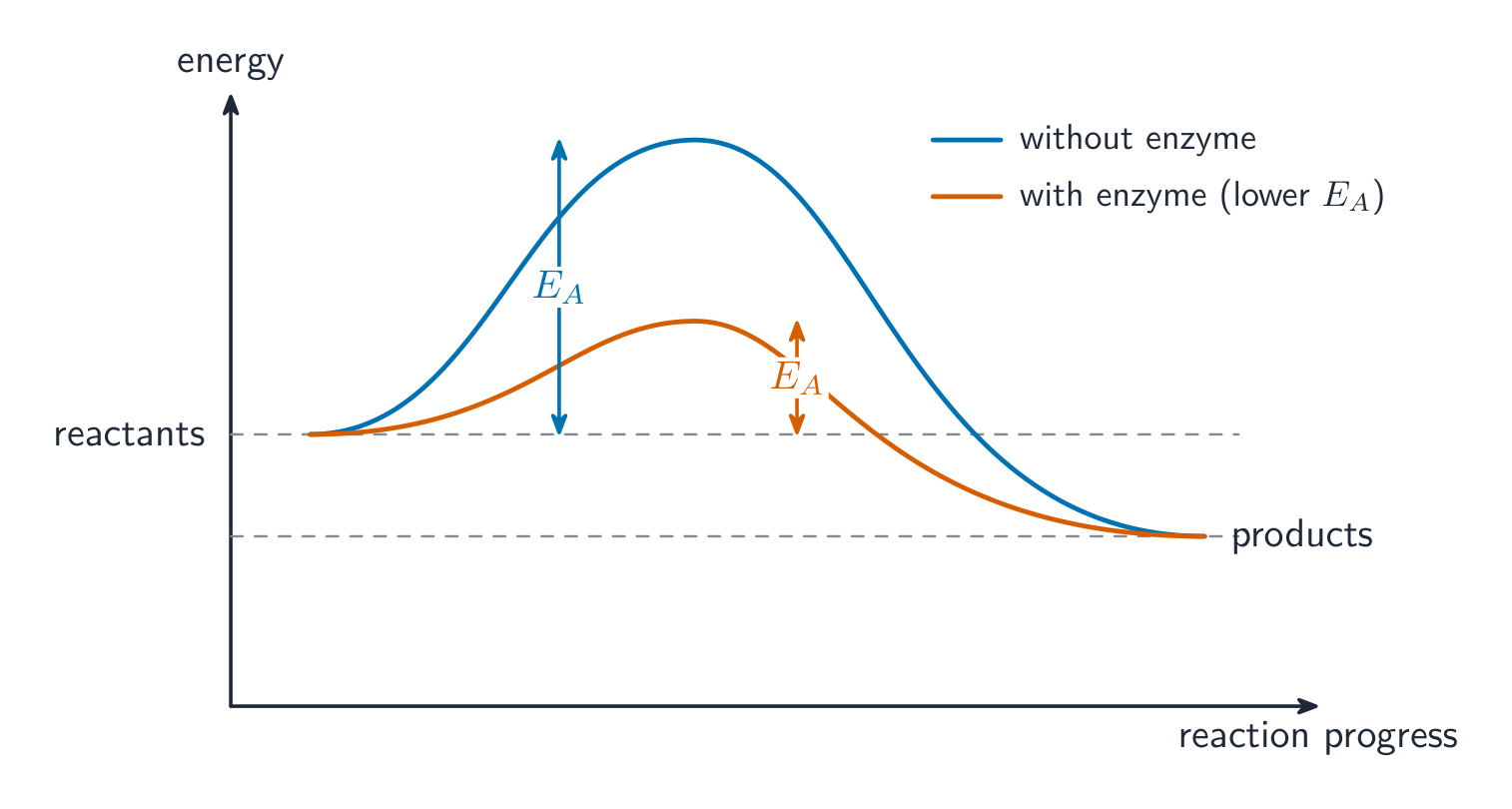
3.1.A.1 The structure and function of enzymes contribute to the regulation of biological processes. Enzymes are proteins that are biological catalysts that facilitate chemical reactions in cells by lowering the activation energy.
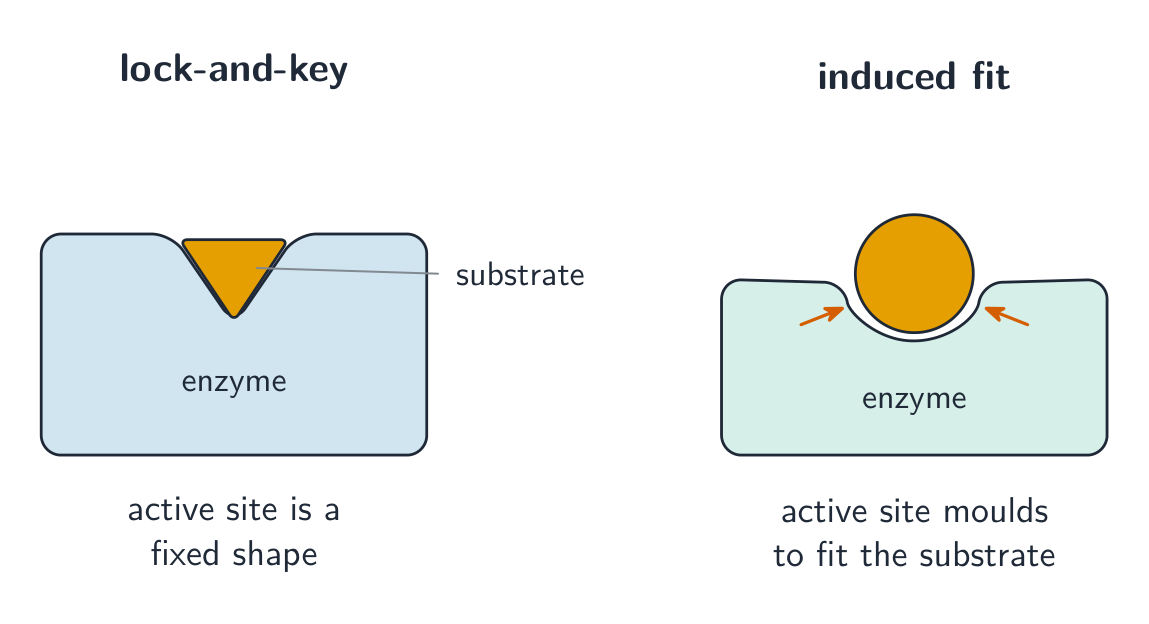
3.1.A.2 For an enzyme-mediated chemical reaction to occur, the shape and charge of the substrate must be compatible with the active site of the enzyme. This is illustrated by the enzyme-substrate complex model.
עברית
רעיון מרכזי 2 — אנרגטיקה: מערכות ביולוגיות משתמשות באנרגיה ובבלוקי בנייה מולקולריים לצמיחה, רבייה ותחזוקה של בית-חום דינמי.
מטרות למידה 3.1.A: הסבר כיצד אנזימים משפיעים על קצב התגובות הביולוגיות.
3.1.A.1 המבנה והפונקציה של אנזימים תורמים לוויסות תהליכים ביולוגיים. אנזימים הם חלבונים המשמשים כגורמי זרז ביולוגיים המקלים על תגובות כימיות בתאים על ידי הורדת אנרגיית ההפעלה.
3.1.A.2 כדי שתתרחש תגובה כימית הממונת על ידי אנזים, צורתו ומטענו של החומר הנמצא במערכת התגובה (הסברט) חייבים להיות תואמים לאתר הפעיל של האנזים. דבר זה מודגם על ידי מודל הקומפלקס אנזים-סברט.
Source: College Board AP Course and Exam Description · מקור: תיאור הקורס והמבחן של College Board AP
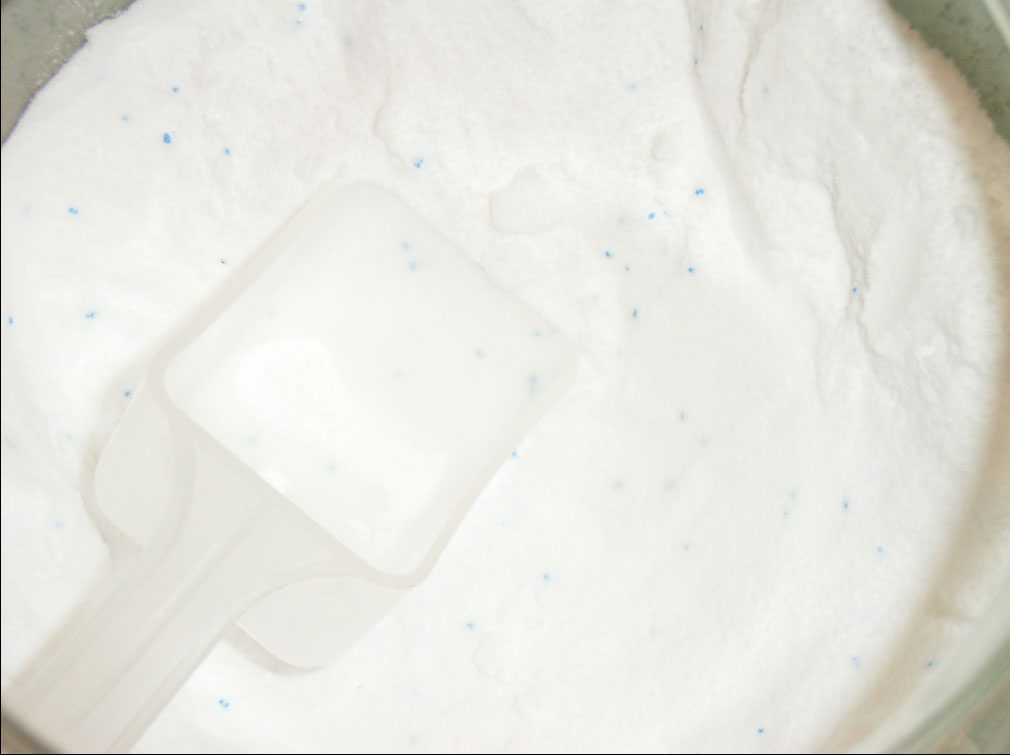
Biological washing powder uses enzymes that work at moderate temperature and pH
An enzyme 酶 is a protein catalyst 催化剂 that speeds a reaction by lowering its activation energy 活化能, without being used up. Each enzyme has an active site 活性位点 that binds a specific substrate 底物 (the "lock and key" or induced fit), so enzymes are highly specific. They do not change whether a reaction is favorable – only how fast it goes.
An enzyme lowers the activation energy of a reactionThe lock-and-key and induced-fit models of enzyme action
Explore · חקור
Raise substrate and watch the rate saturate · הגבהה מצע ומצפה לקצב להגיע לרוויה
An enzyme speeds a reaction by lowering activation energy. As substrate rises the rate climbs, then levels off once every active site is busy (saturation). · אנזים מאיץ תגובה על ידי הורדת אנרגיית הפעולה. כאשר המצע עולה הקצב עולה, ולאחר מכן מתשטח ברגע שכל האתר הפעיל עסוק (רוויה).
Big Idea 2 — Energetics: Biological systems use energy and molecular building blocks to grow, reproduce, and maintain dynamic homeostasis.
Learning Objective 3.2.A: Explain how changes to the structure of an enzyme may affect its function.
3.2.A.1 Change to the molecular structure of a component in an enzymatic system may result in a change to its function or efficiency.
i. Denaturation of proteins, such as enzymes, occurs when the protein structure is disrupted by a change in temperature, pH, or chemical environment, eliminating the ability to catalyze reactions.
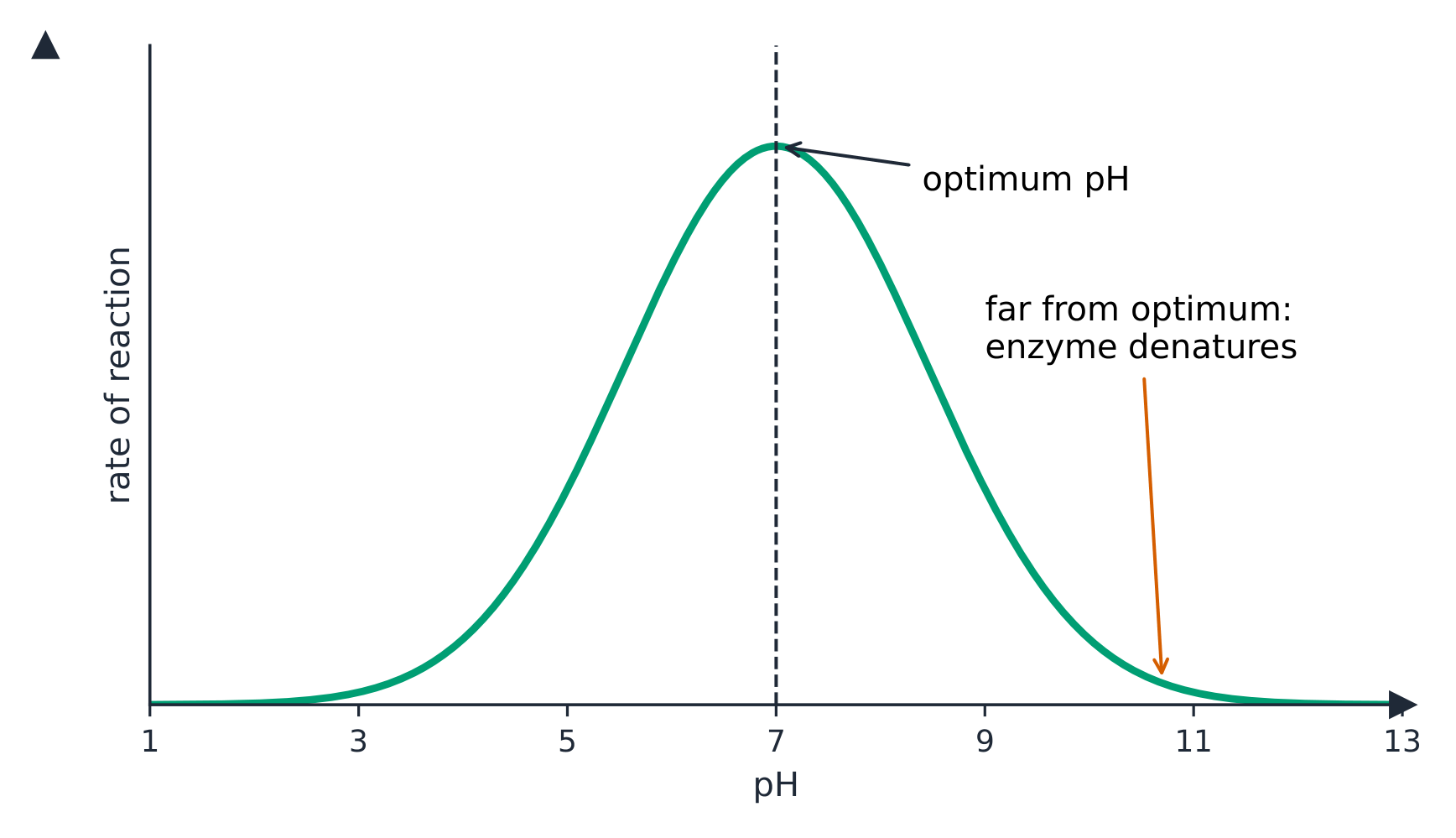
ii. Environmental temperatures and pH outside the optimal range for a given enzyme will cause changes to its structure (by disrupting the hydrogen bonds), altering the efficiency with which it catalyzes reactions.
3.2.A.2 In some cases, enzyme denaturation is reversible, allowing the enzyme to regain activity.
Learning Objective 3.2.B: Explain how the cellular environment affects enzyme activity.
3.2.B.1 The relative concentrations of substrates and products determine how efficiently an enzymatic reaction proceeds.
עברית
רעיון מרכזי 2 — אנרגטיקה: מערכות ביולוגיות משתמשות באנרגיה ובבלוקי בנייה מולקולריים לצמיחה, רבייה ותחזוקה של בית-חום דינמי.
מטרות למידה 3.2.A: הסבר כיצד שינויים במבנה של אנזים עשויים להשפיע על פועלו.
3.2.A.1 שינוי במבנה המולקולרי של רכיב כלשהו במערכת אנזימטית עשוי ל_category_שינוי בפועלו או ביעילותו.
i. דינצראציה (שחיקה מבנית) של חלבונים, כגון אנזימים, מתרחשת כאשר המבנה החלבוני נפגע כתוצאה משוני בטמפרטורה, pH או בסביבה הכימית, מה שמבטל את היכולת לקטליז תגובות.
ii. טמפרטורות ו-pH סביבתיים מחוץ לטווח האופטימלי עבור אנזים נתון יגרמו לשינויים במבנה שלו (על ידי שבירת קשרי מימן), ובכך ישנו את היעילות שבה הוא מקטליז תגובות.
3.2.A.2 במקרים מסוימים, דינצראציה של אנזים היא הפיכה, המאפשרת לאנזים לשקם את פעילותו.
מטרות למידה 3.2.B: הסבר כיצד הסביבה התאית משפיעה על פעילות אנזימים.
3.2.B.1 הריכוזים היחסיים של הסברטים והמוצרים קובעים עד כמה יעילה תהליכת האנזימה תהיה.
Source: College Board AP Course and Exam Description · מקור: תיאור הקורס והמבחן של College Board AP
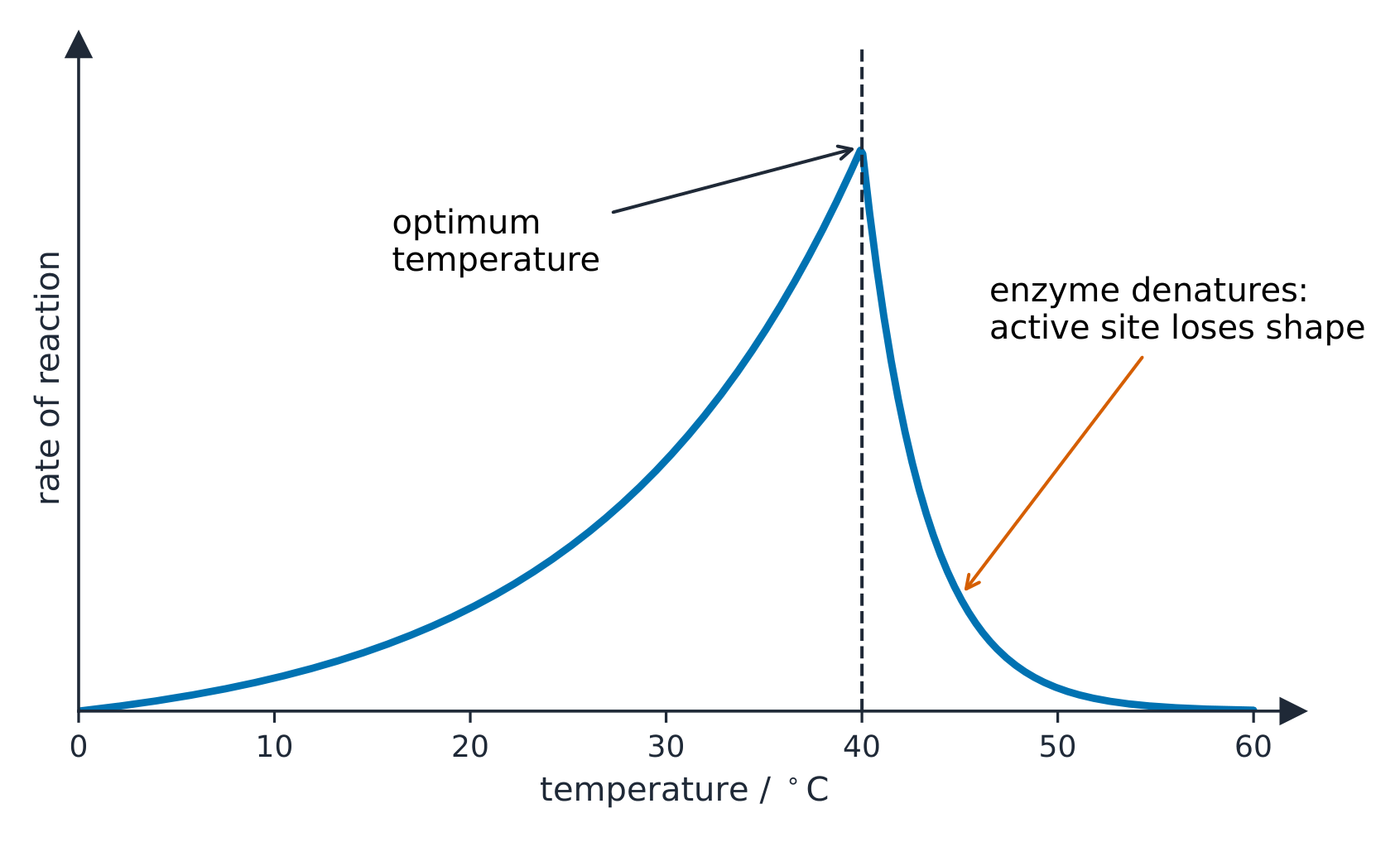
Enzyme activity depends on conditions. Each enzyme has an optimal temperature and pH; beyond it, the protein denatures 变性 (loses shape) and stops working. Substrate concentration raises the rate until the enzyme saturates. Inhibitors 抑制剂 slow enzymes – competitive ones block the active site, noncompetitive ones bind elsewhere and change the shape.
Each enzyme has an optimum pHRate rises to an optimum temperature, then falls as the enzyme denatures
Explore · חקור
Change temperature and watch enzyme activity · שנה טמפרטורה וצפה בפעילות האנזים
Each enzyme has an optimum temperature and pH. Too cold is slow; too hot denatures the enzyme so its active site loses shape and activity crashes. · לכל אנזים יש טמפרטורה ו-pH אופטימליים. קר מדי הוא איטי; חם מדי משרה את האנזים כך שהאתר הפעיל מאבד צורה והפעילות צונחת.
Big Idea 2 — Energetics: Biological systems use energy and molecular building blocks to grow, reproduce, and maintain dynamic homeostasis.
Learning Objective 3.3.A: Describe the role of energy in living organisms.
3.3.A.1 All living systems require an input of energy.
3.3.A.2 Life requires a highly ordered system and does not violate the first and second laws of thermodynamics.
i. Energy input must exceed energy loss to maintain order and to power cellular processes.
ii. Cellular processes that release energy may be coupled with cellular processes that require energy.
iii. Significant loss of order or energy flow results in death.
Exclusion statement: Students will need to understand the concept of energy, but the equation for Gibbs free energy is beyond the scope of the AP Exam.
3.3.A.3 Energy-related pathways in biological systems are sequential to allow for a more controlled transfer of energy. A product of a reaction in a metabolic pathway is typically the reactant for the subsequent step in the pathway.
Learning Objective 3.3.B: Explain how shared, conserved, and fundamental processes and features support the concept of common ancestry for all organisms.
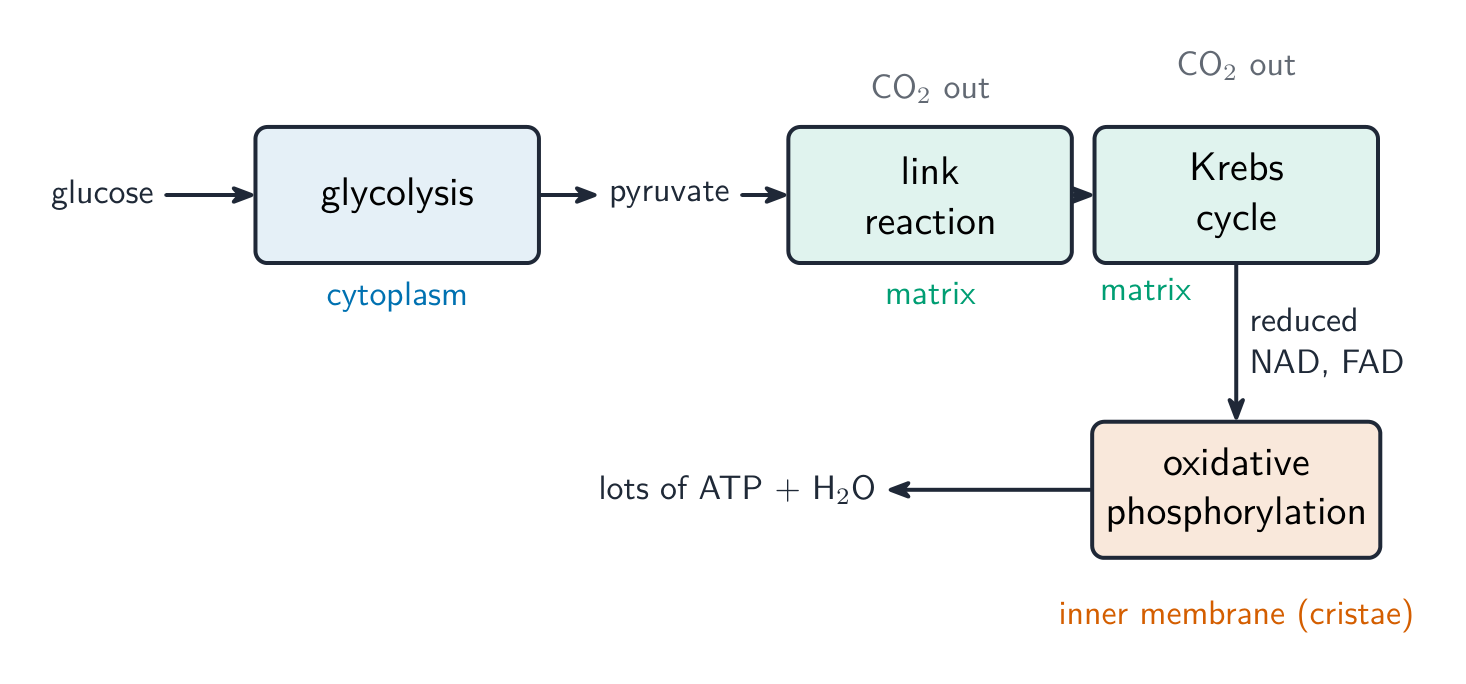
3.3.B.1 Core metabolic pathways (e.g., glycolysis, oxidative phosphorylation) are conserved across all currently recognized domains (Archaea, Bacteria, and Eukarya).
עברית
רעיון מרכזי 2 — אנרגטיקה: מערכות ביולוגיות משתמשות באנרגיה ובבלוקי בנייה מולקולריים לצמיחה, רבייה ותחזוקה של בית-חום דינמי.
מטרות למידה 3.3.A: תאר את תפקיד האנרגיה באורגניזמים חיים.
3.3.A.1 לכל מערכת חיה נדרש הזרעת אנרגיה.
3.3.A.2 החיים דורשים מערכת מאורגנת מאוד ואינם מפרים את החוק הראשון והשני של התרמודינמיקה.
i. הזרעת האנרגיה חייבת לעלות על איבוד האנרגיה כדי לשמור על האורגניזציה ולהפעיל תהליכים תאיים.
ii. תהליכים תאיים המשתחררת בהם אנרגיה עשויים להתקפל עם תהליכים תאיים הדורשים אנרגיה.
iii. אובדן משמעותי של אורגניזציה או של זרימת אנרגיה מוביל למוות.
הערה לגבי גבולות: תלמידים יצטרכו להבין את מושג האנרגיה, אך המשוואה לאנרגיה חופשית של ג'יבס אינה בתחום הלימודים לבחינת AP.
3.3.A.3 מסלולים הקשורים לאנרגיה במערכות ביולוגיות הם רציף כדי לאפשר העברה יותר מבוקרת של אנרגיה. מוצר של תגובה במסלול מטבולי הוא בדרך כלל המגיב בשלב הבא במסלול.
מטרות למידה 3.3.B: הסבר כיצד תהליכים ותכונות משותפים, שמורים ובסיסיים תומכים בהשערה על אב קדמון משותף לכל האורגניזמים.
3.3.B.1 מסלולי מתابוליזם מרכזיים (כגון גליקוליזה, פוספורילציה חמצונית) שימרו את עצמם בכל התחומים המוכרים כיום (ארכאה, חיידקים ואוקריוטה).
Source: College Board AP Course and Exam Description · מקור: תיאור הקורס והמבחן של College Board AP
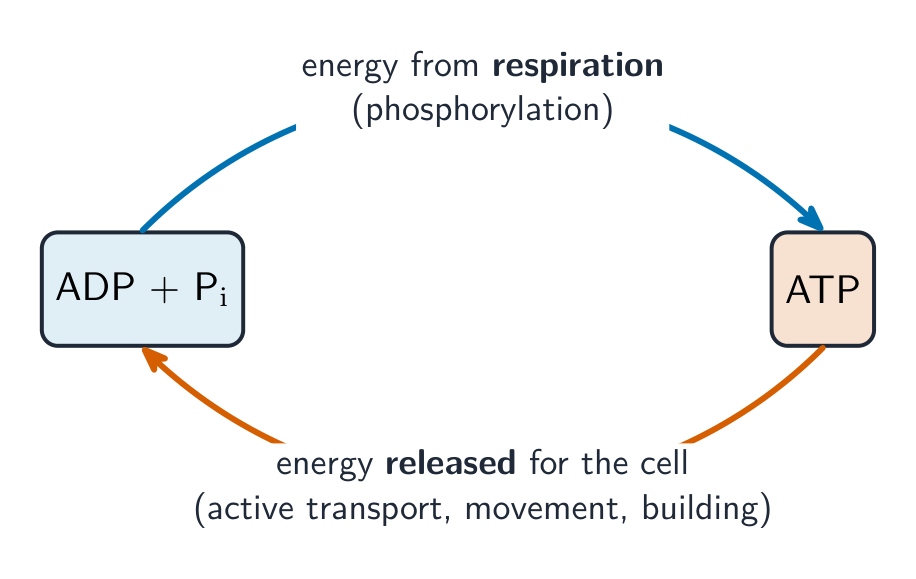
ATP (adenosine triphosphate) is the cell's energy currency. Energy is stored in its phosphate bonds; breaking off a phosphate (ATP → ADP) releases energy to power cellular work, and reattaching one stores energy. Cells constantly recycle ATP, coupling energy-releasing reactions to energy-requiring ones.
The ATP-ADP cycle stores and releases energy
Life and the laws of thermodynamics
A living cell is highly ordered, and that order is often mistaken for a violation of physics. It is not.
The first law 热力学第一定律 says energy is conserved: it changes form but is never created or destroyed. A cell does not make energy — it transforms the chemical energy of glucose, or the light energy of the Sun, into the chemical energy of ATP.
The second law 热力学第二定律 says that in any energy transfer, some energy is lost as heat and the entropy 熵 of the universe increases. A cell builds order inside itself, but only by releasing more disorder to its surroundings, mostly as heat.
So life requires a constant input of free energy 自由能 from outside. This is why an organism cut off from its energy source dies: maintaining order is not free, and the moment the input stops, the ordered system runs down.
constant input of free energy/ˈkɒnstənt ˈɪnpʊt ɒv friː ˈenədʒi/
כניסה מתמדת של אנרגיה חופשית
3.4
Photosynthesis
Syllabus · סיילבוס
English
Big Idea 2 — Energetics: Biological systems use energy and molecular building blocks to grow, reproduce, and maintain dynamic homeostasis.
Learning Objective 3.4.A: Describe the photosynthetic processes and structural features of the chloroplast that allow organisms to capture and store energy.
3.4.A.1 Photosynthesis is the series of reactions that use carbon dioxide $(\mathrm{CO_2})$, water $(\mathrm{H_2O})$, and light energy to make carbohydrates and oxygen $(\mathrm{O_2})$.
i. Photosynthetic organisms capture energy from the sun and produce sugars that can be used in biological processes or stored.
ii. Photosynthesis first evolved in prokaryotic organisms.
iii. Scientific evidence supports the claim that prokaryotic (cyanobacterial) photosynthesis was responsible for the production of an oxygenated atmosphere.
iv. Prokaryotic photosynthetic pathways were the foundation of eukaryotic photosynthesis.
Exclusion statement: Memorization of the steps in the Calvin cycle, the structure of the molecules, and the names of the enzymes involved, with the exception of ATP synthase, is beyond the scope of the AP Exam.
3.4.A.2 Stroma and thylakoids are found within the chloroplast.
i. The stroma is the fluid within the inner chloroplast membrane and outside the thylakoid. The carbon fixation (Calvin cycle) reactions of photosynthesis occur in the stroma.
ii. The thylakoid membranes contain chlorophyll pigments organized into two photosystems, as well as electron transport proteins.
iii. Thylakoids are organized in stacks called grana. The light reactions of photosynthesis occur in the grana.
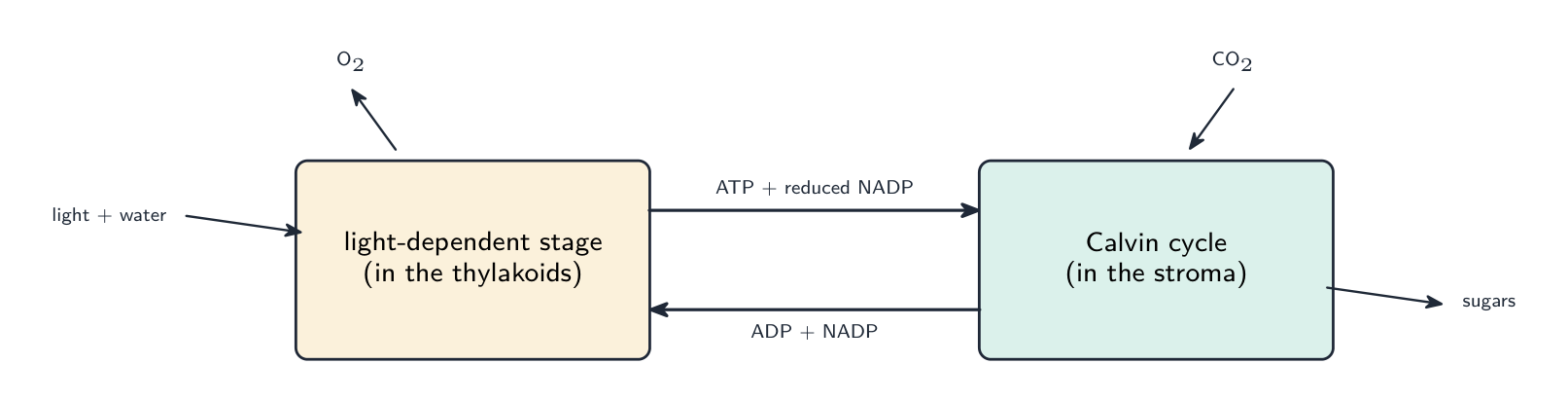
3.4.A.3 The light reactions of photosynthesis in eukaryotes involve a series of coordinated reaction pathways that capture energy present in light to yield ATP and NADPH, which power the production of organic molecules in the Calvin cycle. This provides energy for metabolic processes.
Learning Objective 3.4.B: Explain how cells capture energy from light and transfer it to biological molecules for storage and use.
3.4.B.1 Electron transport chain (ETC) reactions occur in chloroplasts, in mitochondria, and across prokaryotic plasma membranes. In photosynthesis, electrons that pass through the thylakoid membrane are picked up and ultimately transferred to $\mathrm{NADP^+}$ reducing it to NADPH in photosystem I.
Exclusion statement: The full names of the specific electron carriers in the electron transport chain are beyond the scope of the AP Exam.
Exclusion statement: Specific steps, names of enzymes, and intermediates of the pathways for these processes are beyond the scope of this course and the AP Exam.
3.4.B.2 During photosynthesis, chlorophylls absorb energy from light, boosting electrons to a higher energy level in photosystems I and II. Water then splits, supplying electrons to replace those lost from photosystem II.
3.4.B.3 Photosystems I and II are embedded in the thylakoid membranes of chloroplasts and are connected by the transfer of electrons through an ETC.
3.4.B.4 When electrons are transferred between molecules in a series of oxidation/reduction reactions as they pass through the ETC, an electrochemical gradient of protons (hydrogen ions) is established across the thylakoid membrane. The membrane separates a region of low proton concentration outside the thylakoid membrane from a region of high proton concentration inside the thylakoid membrane.
3.4.B.5 The formation of the proton gradient is linked to the synthesis of ATP from ADP and inorganic phosphate via ATP synthase. The flow of protons back through membrane-bound ATP synthase by chemiosmosis drives the formation of ATP from ADP and inorganic phosphate; this is known as photophosphorylation.
3.4.B.6 The energy captured in the light reactions and transferred to ATP and NADPH powers the production of carbohydrates from carbon dioxide in the Calvin cycle. This occurs in the stroma of the chloroplast.
עברית
רעיון מרכזי 2 — אנרגטיקה: מערכות ביולוגיות משתמשות באנרגיה ובבלוקי בנייה מולקולריים לצמיחה, רבייה ותחזוקה של בית-חום דינמי.
מטרות למידה 3.4.A: תאר את תהליכי הפוטוסינתזה והמאפיינים המבניים של הכלורופלסט המאפשרים לאורגניזמים לתפוס ולאחסן אנרגיה.
3.4.A.1 פוטוסינתזה היא סדרת תגובות המשמשות פחמן דו-חמצני $(\mathrm{CO_2})$, מים $(\mathrm{H_2O})$ ואנרגיית אור ליצירת פחמימות וחמצן $(\mathrm{O_2})$.
i. אורגניזמים פוטוסינתטיים תופסים אנרגיה מהשמש ומייצרים סוכרים שניתן להשתמש בהם בתהליכים ביולוגיים או לאחסנם.
ii. הפוטוסינתזה התפתחה לראשונה באורגניזמים פרוקריוטיים.
iii. עדויות מדעיות תומכות בטענה שהפוטוסינתזה הפרוקריוטית (של ציאנובקטריות) הייתה אחראית ליצירת האטמוספרה החמצנית.
iv. מסלולי הפוטוסינתזה הפרוקריוטיים היו הבסיס לפוטוסינתזה באוקריוטים.
הצהרת חריגה: שינון הצעדים במחזור קלווין, מבנה המולקולות ושמות האנזימים המעורבים, למעט ATP synthase, אינם בתחום הלימודים לבחינת AP.
3.4.A.2 סטרומה ותילקואידים נמצאים בתוך הכלורופלסט.
i. הסטרומה היא הנוזל בתוך הממברנה הפנימית של הכלורופלסט מחוץ לתילקואיד. תגובות קיבוע הפחמן (מחזור קלווין) של הפוטוסינתזה מתרחשות בסטרומה.
ii. ממברנות התילקואיד מכילות פיגמנטים כלורופיל מאורגנים בשני פוטוסיस्टמות, כמו גם חלבונות העברת אלקטרונים.
iii. תילקואידים מאורגנים בערמות הנקראות גרנה. תגובות האור של הפוטוסינתזה מתרחשות בגרנה.
3.4.A.3 תגובות האור של הפוטוסינתזה באוקריוטים כוללות סדרת מסלולי תגובה מכוונים שתופסים את האנרגיה הקיימת באור כדי לייצר ATP ו-NADPH, המפעילים את ייצור החומרים האורגניים במחזור קלווין. זאת מספקת אנרגיה לתהליכים מתבולתיים.
מטרות למידה 3.4.B: הסבר כיצד תאים תופסים אנרגיה מאור ומעבירים אותה לחומרים ביולוגיים לאחסון ולשימוש.
3.4.B.1 תגובות שרשרת העברת האלקטרונים (ETC) מתרחשות בکلורופלסטים, במיטוכונדריה ובממברנות הפלזמה של פרוקריוטים. בפוטוסינתזה, אלקטרונים שעוברים דרך ממברנת התילקואיד נתפסים ומועברים בסופו של דבר ל-$\mathrm{NADP^+}$ ומפחיתים אותו ל-NADPH בפוטוסיסטמה I.
הצהרת חריגה: השמות המלאים של נושאי האלקטרונים הספציפיים בשרשרת העברת האלקטרונים אינם בתחום הלימודים לבחינת AP.
הצהרת חריגה: צעדים ספציפיים, שמות אנזימים ואמצעי מסלולים לתהליכים אלו אינם בתחום הלימודים ובחינת AP.
3.4.B.2 במהלך הפוטוסינתזה, הכלורופילים סופגים אנרגיה מאור, ומרמים אלקטרונים לרמת אנרגיה גבוהה יותר בפוטוסיסטמות I ו-II. המים מתפרקים, ומספקים אלקטרונים להחלפת אלו שאבדו מפוטוסיסטמה II.
3.4.B.3 פוטוסיסטמות I ו-II משובצים בממברנות התילקואיד של הכלורופלסטים ומחוברות על ידי העברת אלקטרונים דרך ETC.
3.4.B.4 כאשר אלקטרונים מועברים בין מולקולות בסדרת תגובות חמצון/חיסוך במהלך מעברן דרך ETC, מתקיים גרדינט אלקטרוכימי של פרוטונים (יוני מימן) על פני ממברנת התילקואיד. הממברנה מפרידה בין אזור בעל ריכוז נמוך של פרוטונים מחוץ לממברנת התילקואיד לבין אזור בעל ריכוז גבוה של פרוטונים בתוך ממברנת התילקואיד.
3.4.B.5 יצירת הגרדינט הפרוטוני קשורה לסנתזת ATP מאדנוסין דיפוספט ופוספט אי-אורגני באמצעות ATP סינתאז. זרימת פרוטונים חוזרת דרך ATP סינתאז הקשורה לממברנה באמצעות כימיוסמוזה מדריכה את יצירת ה-ATP מאדנוסין דיפוספט ופוספט אי-אורגני; תהליך זה נקרא פוטופוספורילציה.
3.4.B.6 האנרגיה הנכבדת בתגובות האור ומועברת ל-ATP ול-NADPH מניעה את ייצור הפחמימות מפחמן דו-חמצני במחזור קלווין. תהליך זה מתרחש בסטרומה של הכלורופלט.
Source: College Board AP Course and Exam Description · מקור: תיאור הקורס והמבחן של College Board AP
Chloroplasts fill plant mesophyll cells — the organelles of photosynthesis
Photosynthesis 光合作用 captures light energy to build sugar from $\text{CO}_2$ and water, releasing $\text{O}_2$. It has two stages:
The two stages of photosynthesis are linked by ATP and NADPH
The light reactions (in the thylakoid membranes) use light to make ATP and NADPH and split water, releasing oxygen.
The Calvin cycle 卡尔文循环 (in the stroma) uses that ATP and NADPH to fix $\text{CO}_2$ into sugar.
So light energy becomes chemical energy stored in glucose.
Where the oxygen in the air came from
Photosynthesis did not only feed the first organisms; it changed the planet. Scientific evidence supports the claim that photosynthesis by prokaryotes 原核生物 — specifically cyanobacteria 蓝细菌 — produced the oxygen that built Earth's oxygenated atmosphere 含氧大气.
The evidence is physical: banded iron formations 条带状铁建造 in rocks about 2.4 billion years old record iron dissolved in the ocean being oxidised and precipitating out, which needs free oxygen. Before that event, called the Great Oxidation Event, the atmosphere held almost none.
Two consequences matter for the rest of the course. Free oxygen made aerobic respiration possible, which releases far more ATP per glucose than anaerobic pathways do. And it was lethal to much of the anaerobic life already present, so it counts as one of the largest extinction events in Earth's history — an early example of organisms changing their own environment.
Big Idea 2 — Energetics: Biological systems use energy and molecular building blocks to grow, reproduce, and maintain dynamic homeostasis.
Learning Objective 3.5.A: Describe the processes and structural features of mitochondria that allow organisms to use energy stored in biological macromolecules.
3.5.A.1 Cellular respiration uses energy from biological macromolecules to synthesize ATP. Respiration and fermentation are characteristic of all forms of life.
3.5.A.2 Aerobic cellular respiration in eukaryotes involves a series of coordinated enzyme-catalyzed reactions that capture energy from biological macromolecules.
3.5.A.3 The ETC transfers electrons in a series of oxidation-reduction reactions that establish an electrochemical gradient across membranes.
i. In cellular respiration, electrons delivered by NADH and $\mathrm{FADH_2}$ are passed to a series of electron acceptors as they move toward the terminal electron acceptor, oxygen. Aerobic prokaryotes use oxygen as a terminal electron acceptor, while anaerobic prokaryotes use other molecules.
ii. The transfer of electrons, through the ETC, is accompanied by the formation of a proton gradient across the inner mitochondrial membrane, with the membrane(s) separating a region of high proton concentration outside the membrane from a region of low proton concentration inside the membrane. The folding of the inner membrane increases the surface area, which allows for more ATP to be synthesized. In prokaryotes, the passage of electrons is accompanied by the movement of protons across the plasma membrane.
iii. The flow of protons back through membrane-bound ATP synthase by chemiosmosis drives the formation of ATP from ADP and inorganic phosphate. This is known as oxidative phosphorylation in aerobic cellular respiration.
iv. In aerobic cellular respiration, decoupling oxidative phosphorylation from electron transport generates heat. This heat can be used by endothermic organisms to regulate body temperature.
Exclusion statement: The full names of the specific electron carriers in the electron transport chain are beyond the scope of the AP Exam.
Exclusion statement: Specific steps, names of enzymes, and intermediates of the pathways for these processes are beyond the scope of this course and the AP Exam.
Learning Objective 3.5.B: Explain how cells obtain energy from biological macromolecules in order to power cellular functions.
3.5.B.1 Glycolysis is a biochemical pathway that releases the energy in glucose molecules to form ATP (from ADP and inorganic phosphate), NADH (from $\mathrm{NAD^+}$), and pyruvate.
3.5.B.2 Pyruvate is transported from the cytosol to the mitochondrion where oxidation occurs. This process releases electrons during the Krebs (citric acid) cycle, reducing $\mathrm{NAD^+}$ to NADH and FAD to $\mathrm{FADH_2}$, and releasing $\mathrm{CO_2}$.
3.5.B.3 The Krebs cycle takes place in the mitochondrial matrix. During the Krebs cycle, carbon dioxide is released from organic intermediates, ATP is synthesized from ADP and inorganic phosphate, and electrons are transferred by the coenzymes $\mathrm{NAD^+}$ and FAD.
3.5.B.4 Electrons extracted in glycolysis and Krebs cycle reactions are transferred by NADH and $\mathrm{FADH_2}$ to the ETC in the inner mitochondrial membrane.
3.5.B.5 When electrons are transferred between molecules in a sequence of reactions as they pass through the ETC, an electrochemical gradient of protons (hydrogen ions) across the inner mitochondrial membrane is established. The pH inside the mitochondrial matrix is higher than in the intermembrane space.
3.5.B.6 Fermentation allows glycolysis to proceed in the absence of oxygen and produces organic molecules such as alcohol and lactic acid.
Exclusion statement: Memorization of the steps in glycolysis and the Krebs cycle, and of the structures of the molecules and the names of the enzymes involved, is beyond the scope of this course and the AP Exam.
עברית
רעיון מרכזי 2 — אנרגטיקה: מערכות ביולוגיות משתמשות באנרגיה ובבלוקי בנייה מולקולריים לצמיחה, רבייה ותחזוקה של בית-חום דינמי.
מטרות לימוד 3.5.A: לתאר את התהליכים והמאפיינים המבניים של המיטוכונדריה המאפשרים לאורגניזמים להשתמש באנרגיה האגורה בביומולקולות ביולוגיות.
3.5.A.1 נשימה תאית משתמשת באנרגיה מביומולקולות ביולוגיות כדי לסנתז ATP. נשימה ותסיסה מאפיין כל צורות החיים.
3.5.A.2 נשימה תאית אווירית באוקאריטים כוללת סדרת תגובות אנזימטיות מכווננות המושכות אנרגיה מביומולקולות ביולוגיות.
3.5.A.3 ה-ETC מעביר אלקטרונים בסדרת תגובות חמצון-חיסוך שמקימות גרדינט אלקטרוכימי על פני ממברנות.
i. בנשימה תאית, אלקטרונים המסופקים על ידי NADH ו$\mathrm{FADH_2}$ עוברים למקבלים שונים של אלקטרונים כשהם נעים לעבר המקבל האלקטרונים הסופי, חמצן. פרוקאריוטים אוויריים משתמשים בחמצן כמקבל אלקטרונים סופי, בעוד שפרוקאריוטים אנאירוביים משתמשים במולקולות אחרות.
ii. העברת האלקטרונים, דרך ה-ETC, מלווה ביצירת גרדינט פרוטונים על פני הממברנה הפנימית של המיטוכונדריה, כאשר הממברנה(ות) מפרידה בין אזור בעל ריכוז גבוה של פרוטונים מחוץ לממברנה לבין אזור בעל ריכוז נמוך של פרוטונים בתוך הממברנה. קיפולי הממברנה הפנימית מגדילים את השטח, מה שמאפשר סינתזה של יותר ATP. בפרוקאריוטים, מעבר האלקטרונים מלווה בתנועת פרוטונים על פני הממברנה הפלזמטית.
iii. זרימת פרוטונים חוזרת דרך ATP סינתאז הקשורה לממברנה באמצעות כימיוסמוזה מדריכה את יצירת ה-ATP מאדנוסין דיפוספט ופוספט אי-אורגני. תהליך זה נקרא פוספורילציה אוקסידטיבית בנשימה תאית אווירית.
iv. בנשימה תאית אווירית, ניתוק הפוספורילציה האוקסידטיבית מהעברת האלקטרונים מייצר חום. חום זה יכול לשמש אורגניזמים אנדותרמיים לוויסות טמפרטורת הגוף.
הצהרת חריגה: השמות המלאים של נושאי האלקטרונים הספציפיים בשרשרת העברת האלקטרונים אינם בתחום הלימודים לבחינת AP.
הצהרת חריגה: צעדים ספציפיים, שמות אנזימים ואמצעי מסלולים לתהליכים אלו אינם בתחום הלימודים ובחינת AP.
מטרות לימוד 3.5.B: להסביר כיצד תאים מקבלים אנרגיה מביומולקולות ביולוגיות כדי לספק אנרגיה לפונקציות תאיות.
3.5.B.1 גליקוליזה היא מסלול ביוכימי המשחרר את האנרגיה המוגדרת בגלוקוז ליצירת ATP (מאדנוסין דיפוספט ופוספט אי-אורגני), NADH (מ$\mathrm{NAD^+}$), ופירוביט.
3.5.B.2 פירוביט מועבר מהציטופלזמה למיטוכונדריה שם מתרחשת חמצון. תהליך זה משחרר אלקטרונים במהלך מחזור קרbs (חומצה ציטרית), ומפחית $\mathrm{NAD^+}$ ל-NADH ו-FAD ל$\mathrm{FADH_2}$, ומשחרר $\mathrm{CO_2}$.
3.5.B.3 מחזור קרbs מתרחש במטריקס המיטוכונדריה. במהלך מחזור קרbs, פחמן דו-חמצני משוחרר מתוצאי הביניים האורגניים, ATP מסונתז מאדנוסין דיפוספט ופוספט אי-אורגני, ואלקטרונים מועברים על ידי הקואנזימים $\mathrm{NAD^+}$ ו-FAD.
3.5.B.4 אלקטרונים שהופקו בתגובות הגליקוליזה ומחזור קרbs מועברים על ידי NADH ו$\mathrm{FADH_2}$ ל-ETC בממברנה הפנימית של המיטוכונדריה.
3.5.B.5 כאשר אלקטרונים מועברים בין מולקולות בסדרת תגובות במהלך מעברן דרך ה-ETC, מתקיים גרדינט אלקטרוכימי של פרוטונים (יוני מימן) על פני הממברנה הפנימית של המיטוכונדריה. ה-pH בתוך מטריקס המיטוכונדריה גבוה יותר מאשר במרחב האינטרממרי.
3.5.B.6 תסיסה מאפשרת לגליקוליזה להמשיך בהיעדר חמצן ומייצרת מולקולות אורגניות כמו אלכוהול וחומצה לקטית.
הצהרת בלילה: שינון של שלבים בגליקוליזה ובמחזור קרbs, ושל מבני המולקולות ושמות האנזימים המעורבים, אינם בתחום העניין של קורס זה ובמבחן AP.
Source: College Board AP Course and Exam Description · מקור: תיאור הקורס והמבחן של College Board AP
TEM of a mitochondrion: folded inner membrane (cristae) multiplies surface for respiration
Cellular respiration 细胞呼吸 releases the energy in glucose to make ATP, mostly using oxygen. Its stages:
The stages of aerobic respiration and where in the cell they happen
Glycolysis 糖酵解 (in the cytoplasm) splits glucose, making a little ATP.
The Krebs cycle 克雷布斯循环 (mitochondrial matrix) releases $\text{CO}_2$ and loads electron carriers.
The electron transport chain 电子传递链 (inner membrane) uses those electrons to pump protons and make most of the ATP, with oxygen as the final electron acceptor.
Without oxygen, cells use fermentation 发酵 to keep glycolysis running, making far less ATP. Photosynthesis and respiration are complementary – the products of one are the reactants of the other.
Worked example. Aerobic respiration of one glucose nets about 2 ATP from glycolysis, 2 ATP from the Krebs cycle, and about 28 ATP from oxidative phosphorylation, for $\approx$32 ATP total. With no oxygen only glycolysis runs, so fermentation nets just 2 ATP per glucose — roughly 16 times less energy, which is why aerobic pathways dominate in oxygen-rich cells.
Big Idea 3 — Information Storage and Transmission: Living systems store, retrieve, transmit, and respond to information essential to life processes.
Learning Objective 4.1.A: Describe the ways that cells can communicate with one another.
4.1.A.1 Cells communicate with one another through direct contact with other cells or from a distance via chemical signaling.
Illustrative examples for 4.1.A.1:
Immune cells interact through cell-to-cell contact, antigen-presenting cells (APCs), helper T-cells, and killer T-cells.
Learning Objective 4.1.B: Explain how cells communicate with one another over short and long distances.
4.1.B.1 Cells communicate over short distances by using local regulators that target cells in the vicinity of the signal-emitting cell.
Illustrative examples for 4.1.B.1:
Neurotransmitters
Plant immune response
Quorum sensing in bacteria
Morphogens in embryonic development
4.1.B.2 Signals released by one cell type can travel long distances to target cells of another type.
Illustrative examples for 4.1.B.2:
Insulin
Human growth hormone
Thyroid hormones
Testosterone
Estrogen
עברית
רעיון מרכזי 3 — אחסון ומעבר מידע: מערכות חיות מאחסנות, מוצאות, משדרות ומגיבות למידע הקריטי לתהליכי החיים.
מטרת הלמידה 4.1.A: לתאר את הדרך שבה תאים יכולים לתקשר זה עם זה.
4.1.A.1 תאים מתקשרים זה עם זה באמצעות מגע ישיר עם תאים אחרים או מרחוק דרך אותות כימיים.
דוגמאות להמחשה ל-4.1.A.1:
תאי חיסון אינטראקטיבים באמצעות מגע תא-תא, תאי מצגת אנטיגן (APCs), תאי T עוזרים ותאי T הרגים.
מטרת הלמידה 4.1.B: להסביר כיצד תאים מתקשרים זה עם זה במרחקים קצרים וארוכים.
4.1.B.1 תאים מתקשרים במרחק קצר על ידי שימוש בווסתי מקום המכוונים לתאים הסמוכים לתא המשדר האות.
דוגמאות להמחשה ל-4.1.B.1:
נוירוטרנסמיטורים
תגובת חיסון בצמחים
חישוב כמות בקפואריות
מורפוגנים בהתפתחות העובר
4.1.B.2 אותות השתחררו על ידי סוג תאי אחד יכולים לטייל למרחקים ארוכים אל תאי יעד מסוג אחר.
דוגמאות להמחשה ל-4.1.B.2:
אינסולין
הורמון הגדילה האנושי
הורמוני בלוטת התריס
טסטוסטרון
אסטרוגן
Source: College Board AP Course and Exam Description · מקור: תיאור הקורס והמבחן של College Board AP
Cells coordinate by sending and receiving chemical signals 信号. A signaling cell releases a ligand 配体 that binds a receptor 受体 on a target cell. Signals travel over different ranges: direct contact (cell junctions), local signaling (nearby cells, like neurotransmitters), and long-distance signaling (hormones 激素 through the blood).
A signal molecule (ligand) binds a matching receptor on the target cell
Big Idea 3 — Information Storage and Transmission: Living systems store, retrieve, transmit, and respond to information essential to life processes.
Learning Objective 4.2.A: Describe the components of a signal transduction pathway.
4.2.A.1 Signal transduction pathways link signal receptions with cellular responses.
4.2.A.2 Many signal transduction pathways include protein modifications and involve phosphorylation cascades.
Learning Objective 4.2.B: Describe the role of components of a signal transduction pathway in producing a cellular response.
4.2.B.1 Signaling begins with the recognition of a chemical messenger—a ligand—by a receptor protein in a target cell.
i. The ligand-binding domain of a receptor recognizes a specific chemical messenger, which can be a peptide (protein) or a small molecule.
ii. G protein-coupled receptors are an example of a receptor protein in eukaryotes.
iii. Receptors may be located on the surface of a target cell or in the cytoplasm or nucleus of the target cell.
4.2.B.2 Signaling cascades relay signals from receptors to cell targets, often amplifying the incoming signals, resulting in the appropriate responses by the cell. Responses could include cell growth, secretion of molecules, or gene expression.
i. After the ligand binds, the intracellular domain of a receptor protein changes shape, initiating transduction of the signal.
ii. Enzymes and second messengers such as cyclic AMP (cAMP) relay and amplify the intracellular signal.
iii. Hormones are an example of a signaling messenger that can travel long distances in the bloodstream.
iv. The binding of ligands to ligand-gated channels can cause the channel to open or close.
עברית
רעיון מרכזי 3 — אחסון ומעבר מידע: מערכות חיות מאחסנות, מוצאות, משדרות ומגיבות למידע הקריטי לתהליכי החיים.
מטרת למידה 4.2.A: תאר את רכיבי מסלול העברת אותות.
4.2.A.1 מסלולי עברת אותות מקשרים בין קליטת האות לבין התגובות התאית.
4.2.A.2 לרבים ממסלולי עברת האותות ישנם שינויים בחלבונים ומעורבבות בהם זרמי פוספצילציה.
מטרת למידה 4.2.B: תאר את תפקודם של רכיבי מסלול עברת האותות בייצור התגובה התאית.
4.2.B.1 האותות מתחילים בזיהוי מולקולת אות כימית—ליגנד—על ידי חלבון רצפטור בתא היעד.
i. תחום הקישור לליגנד ברצפטור מזוהה מולקולה כימית ספציפית, שעלולה להיות פפטיד (חלבון) או מולקולה קטנה.
ii. רצפטורים המצומדים לחלבוני G הם דוגמה לחלבון רצפטור באוקרייotes.
iii. רצפטורים עשויים להיות ממוקמים על פני שטח התא היעד או בתוך הציטופלזמה או הגרעין של התא היעד.
4.2.B.2 זרמי האותות מעבירים אותות מהרצפטורים ליעדי התא, לעיתים קרובות מגדלים את האותות הנכנסים, וכתוצאה מכך מתקבלות התגובות המתאימות מהתא. התגובות עשויות לכלול גדילת תאים, שחרור מולקולות או ביטוי גנים.
i. לאחר שהליגנד נקשר, תחום התוך-תאי של חלבון הרצפטור משנה את צורתו, ובכך מתחיל את העברת האות.
ii. אנזימים ומשלחים שניים כמו cAMP מעבירים ומגדילים את האות התוך-תאי.
iii. הורמונים הם דוגמה למשלח אותות שיכול לנוע למרחקים ארוכים במחזור הדם.
iv. קישור ליגנדים לערוצי תלויי ליגנד יכול לגרום לפתיחה או לסגירה של הערוץ.
Source: College Board AP Course and Exam Description · מקור: תיאור הקורס והמבחן של College Board AP
Signal transduction 信号转导 converts an outside signal into a cellular response in three stages: reception (ligand binds receptor), transduction (a relay of molecules inside the cell), and response (a change in the cell's activity, such as switching on a gene). Receptors are specific, so a cell only responds to signals it can receive.
A chemical synapse: signal transduction passes a message across a gap with a ligand and receptor
Big Idea 3 — Information Storage and Transmission: Living systems store, retrieve, transmit, and respond to information essential to life processes.
Learning Objective 4.3.A: Describe the different types of cellular responses elicited by a signal transduction pathway.
4.3.A.1 Signal transduction may result in changes in gene expressions and cell function, which may alter phenotype or result in programmed cell death (apoptosis).
Illustrative examples for 4.3.A.1:
Use of chemical messengers by microbes to communicate with other nearby cells and to regulate specific pathways in response to population density (quorum sensing)
Epinephrine stimulation of glycogen breakdown in mammals
Learning Objective 4.3.B: Explain how a change in the structure of any signaling molecule affects the activity of the signaling pathway.
4.3.B.1 Changes in signal transduction pathways can alter cellular responses. Mutations in any domain of the receptor protein or in any component of the signaling pathway may affect the downstream components by altering the subsequent transduction of the signal.
Illustrative examples for 4.3.B.1:
Cytokines regulate gene expression to allow for cell replication and division.
Mating pheromones in yeast trigger mating gene expression.
Ethylene levels cause changes in the production of different enzymes allowing fruits to ripen.
HOX genes regulate animal body plans during embryonic development.
4.3.B.2 Chemicals that interact with any component of the signaling pathway may activate or inhibit the pathway.
עברית
רעיון מרכזי 3 — אחסון ומעבר מידע: מערכות חיות מאחסנות, מוצאות, משדרות ומגיבות למידע הקריטי לתהליכי החיים.
מטרת למידה 4.3.A: תאר את הסוגים השונים של התגובות התאיות שמופעלות על ידי מסלול עברת אותות.
4.3.A.1 עברת האותות עשויה להוביל לשינויים בביטוי גנים ובפונקציית התא, שיכולים לשנות את הפנוטיפ או לגרום למות תוכנן של התא (אפופטוזיס).
דוגמאות להמחיה עבור 4.3.A.1:
שימוש במולקולות אות על ידי מיקרואורגניזמים לתקשורת עם תאים סמוכים ולכוונון מסלולים ספציפיים כתגובה לצפיפות האוכלוסייה (חוש הציון)
גירוי אדרנalin בפירוק גליקוגן ביונקים
מטרת למידה 4.3.B: הסבר כיצד שינוי במבנה של כל מולקלת אות משפיע על פעילות מסלול האות.
4.3.B.1 שינויים במסלולי העברת האות יכולים לשנות תגובות תאיות. מוטציות בכל תחום של חלבון המקבל או בכל רכיב במסלול ההודעה עלולות להשפיע על הרכיבים הבאות בתהליך על ידי שינוי בעברת האות הבאה.
דוגמאות למחשבה ל-4.3.B.1:
ציטוקינים ווסתים ביטוי גנטי כדי לאפשר כפילה וחלוקה תאית.
פרומונים לזיווג בשמרים מגריעים ביטוי גני זיווג.
רמות אתילן גורמות לשינויים בייצור אנזימים שונים המאפשרים לבשלת פירות.
גני HOX ווסתים תוכניות גוף של בעלי חיים במהלך התפתחות עוברית.
4.3.B.2 חומרים הכם אינטראקציה עם כל רכיב במסלול ההודעה יכולים להפעיל או לחסום את המסלול.
Source: College Board AP Course and Exam Description · מקור: תיאור הקורס והמבחן של College Board AP
In the transduction stage, the signal passes through a pathway – often a cascade of proteins that activate one another, frequently amplifying the signal so a few ligands trigger a large response. Second messengers (like cyclic AMP or calcium ions) spread the signal quickly through the cell. A change in one step can alter the whole outcome.
A signalling cascade amplifies the message inside the cell
4.4
Feedback
Syllabus · סיילבוס
English
Big Idea 2 — Energetics: Biological systems use energy and molecular building blocks to grow, reproduce, and maintain dynamic homeostasis.
Learning Objective 4.4.A: Explain how positive and negative feedback helps maintain homeostasis.
4.4.A.1 Organisms use feedback mechanisms to maintain their internal environments in response to internal and external changes.
i. Negative feedback mechanisms maintain homeostasis by reducing the initial stimulus to regulate physiological processes. If a system is perturbed or disrupted, negative feedback mechanisms return the system back to its target set point. These processes operate at the molecular, cellular, and organismal levels.
Illustrative examples for 4.4.A.1.i:
Blood sugar regulation by insulin/glucagon
ii. Positive feedback mechanisms amplify responses and processes in biological organisms. The variable initiating the response is moved further away from the initial set point. Amplification occurs when the stimulus is further intensified, which, in turn, initiates an additional response that produces system change.
Illustrative examples for 4.4.A.1.ii:
Lactation in mammals
Onset of labor in childbirth
Ripening of fruit
עברית
רעיון מרכזי 2 — אנרגטיקה: מערכות ביולוגיות משתמשות באנרגיה ובבלוקי בנייה מולקולריים לצמיחה, רבייה ותחזוקה של בית-חום דינמי.
מטרות למידה 4.4.A: הסבר כיצד משוב חיובי ושלילי תורמים לשמירה על הומיאוסטאזיס.
4.4.A.1 אורגניזמים משתמשים במנגנוני משוב כדי לשמור על סביבתם הפנימית בתגובה לשינויים פנימיים וחיצוניים.
i. מנגנוני משוב שלילי שומרים על הומיאוסטאזיס על ידי הפחתת הגירוי הראשוני לוויסות תהליכים פיזיולוגיים. אם מערכת מוטרדת או מופרעת, מנגנוני משוב שלילי מחזירים את המערכת בחזרה לנקודת היעד שלה. תהליכים אלו פועלים ברמות המולקולרית, התאית והאורגניזמלית.
דוגמאות למחשבה ל-4.4.A.1.i:
ויסות סוכר בדם על ידי אינסולין/גלוקגון
ii. מנגנוני משוב חיובי מגבירים תגובות ותהליכים באורגניזמים ביולוגיים. המשתנה המפעיל את התגובה מוזז רחוק יותר מנקודת ההתחלה. הגברה מתרחשת כאשר הגירוי מוגבר נוסף, מה שמוביל בתורו להתגובה נוספת המייצרת שינוי במערכת.
דוגמאות למחשבה ל-4.4.A.1.ii:
הנקה בקשפתי יונקים
תחילת לידה בלידה
בשלת פירות
Source: College Board AP Course and Exam Description · מקור: תיאור הקורס והמבחן של College Board AP
Feedback 反馈 keeps systems balanced:
Negative feedback detects and corrects a change
Negative feedback 负反馈 counteracts a change to restore a set point (like a thermostat) – it maintains homeostasis 稳态.
Positive feedback 正反馈 amplifies a change to push a process to completion (like childbirth contractions or blood clotting).
Explore · חקור
Negative feedback keeps things steady · משוב שלילי שומר על יציבות
Negative feedback senses a change and reverses it, holding a variable (like blood glucose) near a set point. Push it away and watch the system correct. · משוב שלילי מזהה שינוי והופך אותו, ושומר על משתנה (כגון סוכר בדם) סביב נקודת ייחוס. דחוף אותו והתבונן במערכת מתקנת.
Big Idea 3 — Information Storage and Transmission: Living systems store, retrieve, transmit, and respond to information essential to life processes.
Learning Objective 4.5.A: Describe the events that occur in the cell cycle.
4.5.A.1 The cell cycle is a highly regulated series of events that controls the growth and reproduction of eukaryotic cells.
i. The cell cycle consists of sequential stages of interphase (G1, S, G2), mitosis, and cytokinesis.
ii. G1 phase: The cell is metabolically active, duplicating organelles and cytosolic components.
iii. S phase: DNA is in the form of chromatin and replicates to form two sister chromatids connected at a centromere.
iv. G2 phase: Protein synthesis occurs, ATP is produced in large quantities, and centrosomes replicate.
v. A cell can enter a stage (G0) in which it no longer divides, but it can reenter the cell cycle in response to appropriate cues.
vi. Nondividing cells may exit the cell cycle or be held at a particular stage in the cell cycle.
Learning Objective 4.5.B: Explain how mitosis results in the transmission of chromosomes from one generation of cells to the next.
4.5.B.1 Mitosis is a process that ensures the transfer of a complete genome from a parent cell to two genetically identical daughter cells in eukaryotes.
i. Mitosis plays a role in growth, tissue repair, and asexual reproduction.
ii. Mitosis occurs in sequential steps (prophase, metaphase, anaphase, telophase) and alternates with interphase in the cell cycle.
iii. Prophase: Sister chromatids condense, mitotic spindle begins to form, and centrosomes move to opposite poles of the cell.
iv. Metaphase: Spindle fibers align chromosomes along the equator of the cell.
v. Anaphase: Paired sister chromatids separate as spindle fibers pull chromatids toward poles.
vi. Telophase: Mitotic spindle breaks down, a new nuclear envelope develops, and then the cytoplasm divides.
vii. Cytokinesis: A cleavage furrow forms in animal cells or a cell plate forms in plant cells, resulting in two new daughter cells.
עברית
רעיון מרכזי 3 — אחסון ומעבר מידע: מערכות חיות מאחסנות, מוצאות, משדרות ומגיבות למידע הקריטי לתהליכי החיים.
מטרות למידה 4.5.A: תאר את האירועים המתרחשים במחזור התא.
4.5.A.1 מחזור התא הוא סדרת אירועים המווסתת בקפדנות ושולטת בצמיחה וברבייה של תאים איקריטיים.
i. מחזור התא מורכב משלבים רצופים של אינטרפזה (G1, S, G2), מיטוזיס וציטוקינזיס.
ii. שלב G1: התא פעיל מטבולית ומכפיל ארגנלים ומרכיבים ציטופלסמיים.
iii. שלב S: ה-DNA נמצא בצורת כרומטין ומתכפל כדי ליצור שני כרומטידים אחיינים הקשורים במרכזומרה.
iv. שלב G2: מתרחש סינתזת חלבונים, ATP מופק בכמויות גדולות, והמרכזוסומות מתכפלות.
v. תא יכול להיכנס לשלב (G0) בו הוא אינו מתחלק יותר, אך יכול לחזור למחזור התא בתגובה לגירויים המתאימים.
vi. תאים שאינם מתחלקים עשויים לצאת ממחזור התא או להיות מוחזקים בשלב מסוים במחזור התא.
מטרות הלמידה 4.5.B: הסבר כיצד המיטוזיס מוביל להעברת כרומוזומים מדור תאים לדור הבא.
4.5.B.1 מיטוזיס היא תהליך המבטיח העברת גנום שלם מתא הורה לשני תאי בת זהים גנטית באוקריוטים.
i. מיטוזיס משחק תפקיד בצמיחה, תיקון רקמות ורבייה אלסקסואלית.
ii. מיטוזיס מתרחש בשלבים רצופים (פרופזה, מטפזה, אנפזה, טלופזה) ומתחלף עם אינטרפזה במחזור התא.
iii. פרופזה: כרומטידים אחיינים מתכווצים, המסרק המיטוטי מתחיל להתפתח, והמרכזוסומות זזות לקוטבים הנגדיים של התא.
iv. מטפזה: סיבי המסרק מיישרים את הכרומוזומים לאורך המשווה של התא.
v. אנפזה: כרומטידים אחיינים זוגיים נפרדים כאשר סיבי המסרק מושכים את הכרומטידים לעבר הקוטבים.
vi. טלופזה: המסרק המיטוטי מתפרק, מעטפת גרעין חדשה מתפתחת, ולאחר מכן הציטופלמה מתחלקת.
vii. ציטוקינזה: מחשוף חיתוך נוצר בתאי בעלי חיים או לוח תא נוצר בתאי צמחים, מה שמוביל ליצירת שני תאי בת חדשים.
Source: College Board AP Course and Exam Description · מקור: תיאור הקורס והמבחן של College Board AP
Onion root-tip cells at different stages of mitosis (light micrograph)
The cell cycle 细胞周期 is the life of a cell from one division to the next: interphase 间期 (G1 growth, S DNA replication, G2 preparation) followed by mitosis 有丝分裂 (M) and cytokinesis, which produce two identical daughter cells. Interphase takes most of the time; DNA is copied only in S phase.
The cell cycle: interphase, then mitosis and cytokinesisA fibroblast dividing: cytokinesis splits one cell into two after mitosis finishesOnion root tip at metaphase: chromosomes line up before sister chromatids separate
Explore · חקור
Step through the cell cycle · התקדם דרך מחזור התא
The cell cycle copies the DNA (S phase) then splits it evenly in mitosis, producing two identical cells. Step through the stages. · מחזור התא מכפיל את ה-DNA (שלב S) ואז מחלק אותו באופן שווה ב-מיטוזה, ומייצר שני תאים זהים. התקדם דרך השלבים.
Big Idea 3 — Information Storage and Transmission
Living systems store, retrieve, transmit, and respond to information essential to life processes.
4.6.A
Describe the role of checkpoints in regulating the cell cycle.
4.6.A.1 A number of internal controls or checkpoints regulate progression through the cell cycle.
4.6.A.2 Interactions between cyclins and cyclin-dependent kinases control the cell cycle.
Exclusion statement: Knowledge of specific cyclin-CdK pairs or growth factors is beyond the scope of the AP Exam.
4.6.B
Describe the effects of disruptions to the cell cycle on the cell or organism.
4.6.B.1 Disruptions to the cell cycle may result in cancer or apoptosis (programmed cell death).
Source: College Board AP Course and Exam Description · מקור: תיאור הקורס והמבחן של College Board AP
The cycle is controlled at checkpoints 检查点 that verify conditions before proceeding (Is the DNA intact? Are chromosomes attached?). Internal signals (cyclins and their kinases) and external signals drive the cycle forward. When this control fails – for example, a mutation that ignores a checkpoint – cells divide uncontrollably, which underlies cancer 癌症.
Uncontrolled division from failed checkpoints forms a tumour
Worked example. Signal amplification in a cascade: one hormone activates one receptor, which switches on about 100 relay proteins, and each of those makes about 1,000 second-messenger molecules — so a single signal produces roughly $100 \times 1000 = 10^{5}$ product molecules. This is why a hormone concentration as low as $10^{-9}\,\text{M}$ can trigger a large cellular response.
In signal transduction name the three stages: reception → transduction → response.
Negative feedback reverses a change to keep conditions steady (homeostasis); positive feedback amplifies a change to completion (childbirth, clotting).
Order the cell cycle: interphase (grow, copy DNA in S phase) then mitosis → two identical daughter cells.
The DNA is copied once, in S phase, so each daughter gets a full copy.
Enduring Understanding (BIG IDEA 3 — Information Storage and Transmission): Living systems store, retrieve, transmit, and respond to information essential to life processes.
Learning Objective 5.1.A: Explain how meiosis results in the transmission of chromosomes from one generation to the next.
5.1.A.1 Meiosis is a process that ensures the formation of haploid gamete cells, sometimes referred to as daughter cells, in sexually reproducing diploid organisms.
5.1.A.2 Meiosis I involves the following steps:
i. Prophase I: Homologous chromosomes pair up and condense, synapsis occurs and then chiasmata may form, meiotic spindle begins to form, centrosomes move to opposite poles of the cell, and the nuclear envelope breaks down.
ii. Metaphase I: Meiotic spindle fibers align homologous pairs of chromosomes along the equator of the cell at the metaphase plate.
iii. Anaphase I: Homologous chromosomes separate, while sister chromatids remain attached, as meiotic spindle fibers pull chromosomes toward poles.
iv. Telophase I: Meiotic spindle breaks down, a new nuclear envelope develops, a cleavage furrow (animal cell) or cell plate (plant cell) forms, and cytokinesis occurs. Two haploid daughter cells are formed (at the end of meiosis I).
5.1.A.3 Meiosis II involves the following steps:
i. Prophase II: Meiotic spindle forms; sister chromatids connected at the centromere attach to meiotic spindle.
ii. Metaphase II: Chromosomes align along the metaphase plate; the kinetochore of each chromatid is attached to a microtubule extending from the poles.
iii. Anaphase II: Proteins at the centromeres break down, and sister chromatids are pulled apart and toward opposite poles in the cell.
iv. Telophase II: Meiotic spindle breaks down, a new nuclear envelope develops, a cleavage furrow (animal cell) or a cell plate (plant cell) forms, chromatids begin to decondense, and cytokinesis occurs. Four haploid daughter cells are formed, each with an unduplicated chromatid.
Learning Objective 5.1.B: Describe similarities and differences between the phases and outcomes of mitosis and meiosis.
5.1.B.1 Mitosis and meiosis are similar in the use of a spindle apparatus to move chromosomes but differ in the number of cells produced and the genetic content of the daughter cells.
עברית
הבנה מתמשכת (רעיון גדול 3 — אחסון ומעבר מידע): מערכות חיות מאחסנות, מחזירות, מעבירות ומוגבות למידע החיוני לתהליכי החיים.
מטרה לימודית 5.1.A: להסביר כיצד המיוזה מובילה למעבר כרומוזומים מדור לדור.
5.1.A.1 המיוזה היא תהליך המבטיח יצירת תאי גמטה haploid, המכונים לעיתים תאי בת, באורגניזמים diploid הנמצאים בהכפלה מינית.
5.1.A.2 המיוזה I כוללת את השלבים הבאים:
i. פרופייז I: כרומוזומים הומולוגיים נשזרים זה עם זה ועוברים קונדנסציה, מתרחשת סינפסיס ולאחר מכן עשויים להיווצר כיאזמות, אקסטנד מיוטי מתחיל להתפתח, הcentrosomes נעים לקוטבי התא הנegatim, והמעטפת הגרעין מתפרקת.
ii. מטאפייז I: סיבי אקסטנד מיוטי מיישרים זוגות כרומוזומים הומולוגיים לאורך המשווה של התא ללוח המטאפייז.
iii. אנאפייז I: כרומוזומים הומולוגיים נפרדים, בעוד שהכרומוטידים האחים נשארים מחוברים, כאשר סיבי האקסטנד מיוטי מושכים את הכרומוזומים לקוטבים.
iv. טלופייז I: האקסטנד המיוטי מתפרק, מעטפת גרעין חדשה מתפתחת, חריץ צמצום (בתא חי) או פלטת תא (בתא צמח) נוצרים, וקינוקינזה מתרחשת. שני תאי בת haploid נוצרים ( בסוף המיוזה I).
ii. מטאפייז II: כרומוזומים מיישרים לאורך לוח המטאפייז; הקינטוכור של כל כרומוטיד נצמד למיקרוטובול המمتד מהקוטבים.
iii. אנאפייז II: חלבונים בcentromeres מתפרקים, וכרומוטידים אחים נפרדים ומושכים לקוטבים הנegatim בתוך התא.
iv. טלופייז II: האקסטנד המיוטי מתפרק, מעטפת גרעין חדשה מתפתחת, חריץ צמצום (בתא חי) או פלטת תא (בתא צמח) נוצרים, הכרומוטידים מתחילים בקונדנסציה הפוכה, וקינוקינזה מתרחשת. ארבעה תאי בת haploid נוצרים, כל אחד עם כרומוטיד שאינו משועתק.
מטרה לימודית 5.1.B: לתאר דמיונות והבדלים בין שלבי המיטוז המיוזה ותוצאותיהן.
5.1.B.1 מיטוז ומיוזה דומים בשימוש בארגון אקסטנד להעברת כרומוזומים אך שונים במספר התאים המופקים ובתוכן הגנטי של תאי הבת.
Source: College Board AP Course and Exam Description · מקור: תיאור הקורס והמבחן של College Board AP
A human karyotype: 22 pairs of autosomes plus the sex chromosomes
Meiosis 减数分裂 makes gametes 配子 (eggs and sperm) with half the chromosome number, so fertilization restores the full set. One diploid cell divides twice to give four haploid cells. Meiosis I separates homologous chromosomes 同源染色体 (reducing the number); meiosis II separates sister chromatids (like mitosis).
Meiosis halves the chromosome number in two divisions
Explore · חקור
Divide a cell's chromosomes · חלקו כרומוזומים של תא
Meiosis halves the chromosome number and shuffles genes, making four genetically varied gametes. Step through to see the divisions. · מיוזיס מחצית את מספר הכרומוזומים ומערבל גנים, ויוצר ארבעה גמטות מגוונות גנטית. מעבר שלב-לשלב כדי לראות את החלוקות.
Enduring Understanding (BIG IDEA 3 — Information Storage and Transmission): Living systems store, retrieve, transmit, and respond to information essential to life processes.
Learning Objective 5.2.A: Explain how the process of meiosis generates genetic diversity.
5.2.A.1 Correct separation of the homologous chromosomes in meiosis I and sister chromatids in meiosis II ensures that each gamete receives a haploid (1n) set of chromosomes that comprises an assortment of both maternal and paternal chromosomes. When incorrect separation occurs (nondisjunction), gametes are no longer haploid.
5.2.A.2 During prophase I of meiosis, non-sister chromatids exchange genetic material via a process called crossing over (recombination), which increases genetic diversity among the resultant gametes.
5.2.A.3 Sexual reproduction in eukaryotes increases genetic variation, including crossing over, random assortment of chromosomes during meiosis, and subsequent fertilization of gametes.
Exclusion statement: Knowledge of the details of sexual reproduction cycles in various plants and animals is beyond the scope of the AP Exam.
עברית
הבנה מתמשכת (רעיון גדול 3 — אחסון ומעבר מידע): מערכות חיות מאחסנות, מחזירות, מעבירות ומוגבות למידע החיוני לתהליכי החיים.
מטרות למידה 5.2.A: הסבר כיצד תהליך המיוזיס יוצג מגוון גנטי.
5.2.A.1 הפרדה נכונה של כרומוזומים הומולוגיים במיוזיס I וכרומטידים אחיות במיוזיס II מבטיחה שכל גמטה תקבל ערכה חפלואידית (1n) המורכבת משילוב של כרומוזומים מאב ומאם. כאשר מתרחשת הפרדה לא נכונה (אי-התפרקות), הגמטות אינן חפלואידיות יותר.
5.2.A.2 במהלך פרופאז I של המיוזיס, כרומטידים שאינן אחיות מחליפות חומר גנטי באמצעות תהליך הנקרא צלילה (רקומבינציה), מה שמגדיל את המגוון הגנטי בין הגמטות הנובעות.
5.2.A.3 רבייה מינית באוקריוטים מגדילה את השונות הגנטית, לרבות צלילה, פריסה אקראית של כרומוזומים במהלך המיוזיס והחשפה הבאה של גמטות.
הצהרת פסילה: ידע בפרטי מחזורי הרבייה המינית בצמחים ובעלי חיים שונים אינם בתחום ההתייחסות לבחינת AP.
Source: College Board AP Course and Exam Description · מקור: תיאור הקורס והמבחן של College Board AP
Meiosis shuffles genes three ways, so offspring differ from parents and each other:
Independent assortment produces many gamete combinationsCrossing over swaps segments between homologous chromosomes
Crossing over 交叉互换: homologous chromosomes swap segments in meiosis I.
Independent assortment 自由组合: each homologous pair lines up and separates randomly.
Random fertilization: any sperm can meet any egg.
Together these create enormous variation – the raw material for evolution.
Enduring Understanding (BIG IDEA 1 — Evolution): The process of evolution drives the diversity and unity of life.
Enduring Understanding (BIG IDEA 3 — Information Storage and Transmission): Living systems store, retrieve, transmit, and respond to information essential to life processes.
Learning Objective 5.3.A: Explain the inheritance of genes and traits as described by Mendel's laws.
5.3.A.1 Mendel's laws of segregation and independent assortment can be applied to genes that are on different chromosomes.
5.3.A.2 In most cases, fertilization involves the fusion of two haploid gametes, restoring the diploid number of chromosomes and increasing genetic variation in populations by creating new combinations of alleles in the zygote.
i. Rules of probability can be applied to analyze the passing of single-gene traits from parent to offspring.
ii. Monohybrid, dihybrid, and test crosses can be used to determine whether alleles are dominant or recessive.
iii. An organism's genotype is the set of alleles inherited for one or more genes by an individual organism. An organism's genotype can be homozygous or heterozygous for each gene.
iv. An organism's phenotype is the observable expression of the inherited traits.
v. Patterns of inheritance (autosomal, genetically linked, sex-linked) and whether an allele is dominant or recessive can often be predicted from data, including pedigrees. Punnett squares can be used to predict the genotypes and phenotypes of parents and offspring.
Equation (Laws of Probability): If $A$ and $B$ are mutually exclusive, then: $P(A \text{ or } B) = P(A) + P(B)$
Equation (Laws of Probability): If $A$ and $B$ are independent, then: $P(A \text{ and } B) = P(A) \times P(B)$
עברית
הבנה קיימת (רעיון גדול 1 — התפתחות): תהליך האבולוציה מניע את המגוון וההתאחדות של החיים.
הבנה מתמשכת (רעיון גדול 3 — אחסון ומעבר מידע): מערכות חיות מאחסנות, מחזירות, מעבירות ומוגבות למידע החיוני לתהליכי החיים.
מטרות למידה 5.3.A: הסבר על הירث של גנים ותכונות כפי שתואר בחוקי מנדל.
5.3.A.1 חוקי ההפרדה והפריסה העצמאית של מנדל ניתנים להחלה על גנים הנמצאים בכרומוזומים שונים.
5.3.A.2 ברוב המקרים, החשפה מעורבת בהיתוך של שתי גמטות חפלואידיות, המשחזר את המספר הדיפלואידי של הכרומוזומים ומגדיל את השונות הגנטית באוכלוסיות על ידי יצירת שילובים חדשים של אללים בזיגוטה.
i. כללי סבירות יכולים להיות מוחלים כדי לנתח העברת תכונות של גן יחיד מההורים לצאצאים.
ii. צלילים מונוהיברידיים, דיהיברידיים ובדיקתיים יכולים לשמש לקביעת האם אללים הם דומיננטיים או רסיסיביים.
iii. הגנוטיפ של אורגניזם הוא סט האללים שהורשו עבור גן אחד או יותר על ידי אורגניזם יחיד. גנוטיפ של אורגניזם יכול להיות הומוזיגוטי או היטרוזיגוטי לכל גן.
iv. הפנוטיפ של אורגניזם הוא הביטוי הנצפה של התכונות המורשות.
v. דפוסי ירث (אוטוזומלי, קישור גנטי, קישור למין) והאם אלל הוא דומיננטי או רסיסיבי יכולים לעיתים קרובות להיות נבואים מהנתונים, כולל משפחות (pedigrees). טבלאות פאנלט יכולות לשמש לחיזוי הגנוטיפים והפנוטיפים של הורים וצאצאים.
משוואה (חוקי סבירות): אם $A$ ו$B$ הם בלתי תואמים, אז: $P(A \text{ or } B) = P(A) + P(B)$
משוואה (חוקי סבירות): אם $A$ ו$B$ הם עצמאיים, אז: $P(A \text{ and } B) = P(A) \times P(B)$
Source: College Board AP Course and Exam Description · מקור: תיאור הקורס והמבחן של College Board AP
Natural variation in snail shell banding — heritable differences selection can act on
A gene's alternative versions are alleles 等位基因. An organism's genotype 基因型 (its alleles) produces its phenotype 表型 (its traits). Mendel's rules: a dominant 显性 allele masks a recessive 隐性 one; the two alleles segregate into different gametes (law of segregation); genes for different traits assort independently. A Punnett square 庞纳特方格 predicts offspring ratios (a heterozygous cross gives 3:1). Homozygous 纯合 means two identical alleles; heterozygous 杂合 means two different.
A monohybrid Punnett square giving a 3:1 ratio
Worked example. For a dihybrid cross of two independent genes, $AaBb\times AaBb$, use the multiplication rule instead of a $16$-box square. Each gene alone gives $\tfrac34$ dominant, so the chance an offspring shows both dominant traits is $\tfrac34\times\tfrac34=\tfrac{9}{16}$, and the chance of the fully recessive $aabb$ is $\tfrac14\times\tfrac14=\tfrac{1}{16}$. Multiplying two independent $3{:}1$ ratios is what produces the classic $9{:}3{:}3{:}1$ pattern.
Explore · חקור
Cross two parents · צלב שני הורים
A Punnett square combines each parent's alleles to predict the offspring ratios. Set the parent genotypes and read off the expected proportions. · ריבוע פונט משלב אללים מכל הורא כדי לחזות יחסי צאצאים. הגדרו גנוטיפים של ההורים וקראו את היחסים הצפויים.
Enduring Understanding (BIG IDEA 3 — Information Storage and Transmission): Living systems store, retrieve, transmit, and respond to information essential to life processes.
Learning Objective 5.4.A: Explain deviations from Mendel's model of the inheritance of traits.
5.4.A.1 Patterns of inheritance of many traits do not follow the ratios predicted by Mendel's laws and can be identified by quantitative analysis, when the observed phenotypic ratios statistically differ from the predicted ratios.
i. Genes located on the same chromosome are referred to as being genetically linked. The probability that these linked genes segregate together during meiosis can be used to calculate the map distance (or map units) between them on a chromosome. This calculation is called gene or genetic mapping.
ii. Codominance occurs when the phenotype from both alleles is expressed such that the heterozygote would have a different phenotype than either homozygote.
iii. Incomplete dominance occurs when neither allele of a gene can mask the other, so the phenotype of the heterozygote is a blended version of the dominant and recessive phenotypes.
5.4.A.2 Some traits, known as sex-linked traits (X- or Y-linked), are determined by genes on sex chromosomes. The pattern of inheritance of sex-linked traits can often be predicted from data, including pedigrees, indicating the genotypes and phenotypes of both parents and offspring.
Illustrative examples for EK 5.4.A.2:
Sex-linked traits (X- or Y-linked) reside on sex chromosomes.
Sex-linked traits (X- or Y-linked) are inherited at higher rates in XY individuals than they are in XX individuals.
In certain species, the chromosomal basis of sex determination is not based on X and Y chromosomes (e.g., ZW in birds, haplodiploidy in bees).
5.4.A.3 Pleiotropy is a phenomenon in which the expression of a single gene results in multiple traits or effects; these traits therefore do not segregate independently.
5.4.A.4 Some traits result from non-nuclear inheritance.
i. Chloroplasts and mitochondria are randomly assorted to gametes and daughter cells; thus, traits determined by chloroplast and mitochondrial DNA do not follow simple Mendelian rules.
ii. In animals, mitochondria are usually transmitted by the egg and not by sperm; thus, traits determined by the mitochondrial DNA are typically maternally inherited.
iii. In plants, mitochondria and chloroplasts are transmitted in the ovule and not in the pollen; as such, mitochondria-determined and chloroplast-determined traits are typically maternally inherited.
עברית
הבנה מתמשכת (רעיון גדול 3 — אחסון ומעבר מידע): מערכות חיות מאחסנות, מחזירות, מעבירות ומוגבות למידע החיוני לתהליכי החיים.
מטרות למידה 5.4.A: הסבר על סטיות מדגם הירש של מנדל לתכונות.
5.4.A.1 דפוסי ירש של תכונות רבות אינם עוקבים אחרי היחסים הנבואים על ידי חוקי מנדל וניתן לזהות אותם באמצעות ניתוח כמותי, כאשר היחסים הפנוטיפיים הנצפים שונים סטטיסטית מהיחסים הנבואים.
i. גנים הממוקמים באותו כרומוזום נקראים קשורים גנטית. האפשרות שגנים קשורים אלו יתפרקו יחד במהלך המיוזה יכולה לשמש לחישוב מרחק המפה (או יחידות מפה) ביניהם על הכרומוזום. חישוב זה נקרא מיפוי גן או מיפוי גנטי.
ii. דומיננטיות משותפת מתרחשת כאשר הפנוטיפ מכל אחד מהאללים מתבטא כך שההטרוזיגוט יהיה בעל פנוטיפ שונה מזה של כל אחד מההomozygotes.
iii. דומיננטיות לא מלאה מתרחשת כאשר אף אחד מהאללים של גן אינו יכול להסתיר את השני, ולכן הפנוטיפ של ההטרוזיגוט הוא גרסה מעורבת של הפנוטיפים הדומיננטי והרסיסיבי.
5.4.A.2 חלק מאפיינים, הנקראים אפיינים הקשורים למין (X- או Y-linked), נקבעים על ידי גנים בכרומוזומי המין. תבנית המורשת של אפיינים אלו לעיתים קרובות ניתנת לחיזוי מהנתונים, כולל ערכי משפחה, המעידים על הגנוטיפים והפנוטיפים של ההורים והצאצאים.
דוגמאות מדגמות ל- EK 5.4.A2:
אפיינים הקשורים למין (X- או Y-linked) נמצאים בכרומוזומי המין.
אפיינים הקשורים למין (X- או Y-linked) מורשים בקצב גבוה יותר בפרטים XY מאשר בפרטים XX.
במינים מסוימים, הבסיס הכרומוזומלי לקביעת המין אינו מבוסס על כרומוזומי X ו-Y (למשל, ZW בציפורים, haplodiploidy בדבורים).
5.4.A.3 פליאוטרופיה היא תופעה שבה הביטוי של גן יחיד מוביל למספר אפיינים או השפעות; אפיינים אלו אינם מתפרקים באופן עצמאי.
5.4.A.4 חלק מאפיינים נובעים ממורשת שאינה גרעינית.
i. כלורופלסטים ומיטוכונדריה מתפרקים באופן אקראי לגמטות ולתאי בת; לפיכך, אפיינים הנקבעים על ידי DNA של כלורופלסט ומיטוכונדריה אינם עוקבים אחרי הכללים המנדליים הפשוטים.
ii. בחיות, מיטוכונדריה מועברות לרוב על ידי הביצה ולא על ידי הזרע; לפיכך, אפיינים הנקבעים על ידי ה-DNA המיטוכונדריאלי הם בדרך כלל מורשת אם-צדדית.
iii. בצמחים, מיטוכונדריה וכלורופלסטים מועברים בביצית ולא באבקה; מכאן, אפיינים הנקבעים על ידי מיטוכונדריה וכלורופלסט הם בדרך כלל מורשת אם-צדדית.
Source: College Board AP Course and Exam Description · מקור: תיאור הקורס והמבחן של College Board AP
Many traits do not follow simple dominance:
Sex linkage gives different results for sons and daughters
Incomplete dominance 不完全显性: heterozygotes are a blend (red × white → pink).
Codominance 共显性: both alleles show fully (AB blood type).
Multiple alleles, polygenic 多基因 traits (many genes, like height), pleiotropy (one gene, many effects), and sex-linked 伴性 genes (on the X chromosome) all give more complex ratios.
Worked example (chi-square test). To check whether real data fit a predicted ratio, use $\chi^2=\sum\dfrac{(o-e)^2}{e}$. A monohybrid cross predicts $3{:}1$, so of $80$ offspring you expect $60$ dominant and $20$ recessive, but you observe $55$ and $25$. Then $\chi^2=\dfrac{(55-60)^2}{60}+\dfrac{(25-20)^2}{20}=\dfrac{25}{60}+\dfrac{25}{20}=0.42+1.25=1.67$. With $1$ degree of freedom the critical value at $p=0.05$ is $3.84$; since $1.67<3.84$, we fail to reject the null hypothesis – the deviation is within chance.
Enduring Understanding (BIG IDEA 4 — Systems Interactions): Biological systems interact, and these systems and their interactions exhibit complex properties.
Learning Objective 5.5.A: Explain how the same genotype can result in multiple phenotypes under different environmental conditions.
5.5.A.1 Environmental conditions influence gene expression and can lead to phenotypic plasticity (e.g., the ability of individual genotypes to produce different phenotypes).
Illustrative examples for EK 5.5.A.1:
Height and weight in humans
Flower color based on soil pH
Seasonal fur color in arctic animals
Sex determination in reptiles
Effect of increased UV on melanin production in animals
Presence of the opposite mating type on pheromone production in yeast and other fungi
עברית
הבנה מתמשכת (רעיון גדול 4 — אינטראקציות מערכת): מערכות ביולוגיות אינטראקטיות, ומערכות אלו ואינטראקציותיהן מציגות תכונות מורכבות.
מטרת למידה 5.5.A: הסבר כיצד אותו גנוטיפ יכול להוביל למספר פנוטיפים תחת תנאי סביבה שונים.
5.5.A.1 תנאי הסביבה משפיעים על ביטוי גנים ועלולים להוביל לפלסטיות פנוטיפית (למשל, היכולת של גנוטיפים פרטניים לייצר פנוטיפים שונים).
דוגמאות מדגמות ל-EK 5.5.A1:
גובה ומשקל באדם
צבע פרחים בהתבסס על pH הקרקע
צבע פרווה עונתי בבעלי חיים ארקטיים
קביעת מין בזוחים
השפעת הגברת קרני UV על ייצור מלנין בעלי חיים
נוכחות סוג הזוגות הנגדי בייצור פרומונים בשמרים ובפטריות אחרות
Source: College Board AP Course and Exam Description · מקור: תיאור הקורס והמבחן של College Board AP
Phenotype is not set by genes alone – the environment also matters. Temperature, nutrition, and other factors can change how genes are expressed (a Himalayan rabbit's dark fur where it is cold, a plant's height with more sunlight). So identical genotypes can give different phenotypes in different conditions.
5.5
Exam tips
Contrast mitosis (2 identical, full chromosome number) with meiosis (4 non-identical gametes, half the number).
Explain variation from crossing over, independent assortment, and random fertilisation.
Use the multiplication rule for dihybrid crosses (each gene's $3{:}1$ multiplied), and a chi-square test ($\chi^2=\sum\frac{(o-e)^2}{e}$) to judge observed vs expected ratios.
Keep genotype (the alleles) separate from phenotype (what you see) — $AA$ and $Aa$ can look the same.
Recognise non-Mendelian patterns: incomplete dominance, codominance, and sex linkage.
6
Gene Expression and Regulation · ביטוי גן וויסות
Enduring Understanding (BIG IDEA 3 — Information Storage and Transmission): Living systems store, retrieve, transmit, and respond to information essential to life processes.
Learning Objective 6.1.A: Describe the structures involved in passing hereditary information from one generation to the next.
6.1.A.1 Genetic information is stored in and passed to subsequent generations through DNA molecules and, in some cases, RNA molecules.
6.1.A.1.i Prokaryotic organisms typically have circular chromosomes.
6.1.A.1.ii Eukaryotic organisms typically have multiple linear chromosomes that are comprised of DNA. These chromosomes are condensed using histones and associated proteins.
6.1.A.2 Prokaryotes and eukaryotes can contain plasmids, which are extra-chromosomal circular molecules of DNA.
Learning Objective 6.1.B: Describe the characteristics of DNA that allow it to be used as hereditary material.
6.1.B.1 Nucleic acids exhibit specific nucleotide base pairing that is conserved through evolution.
6.1.B.1.i Purines (guanine and adenine) have a double ring structure.
6.1.B.1.ii Pyrimidines (cytosine, thymine, and uracil) have a single ring structure.
6.1.B.1.iii Purines pair with pyrimidines: adenine with thymine (or uracil in RNA) and guanine with cytosine.
עברית
הבנה מתמשכת (רעיון גדול 3 — אחסון ומעבר מידע): מערכות חיות מאחסנות, מחזירות, מעבירות ומוגבות למידע החיוני לתהליכי החיים.
מטרות למידה 6.1.A: תאר את המבנים המעורבים בהעברת מידע גנטי מדור לדור.
6.1.A.1 מידע גנטי מאוחסן ועובר לדורות הבאות דרך מולקולות DNA ובמקרים מסוימים מולקולות RNA.
6.1.A.1.i אורגניזמים פרוקריוטיים בדרך כלל בעלי כרומוזומים מעגליים.
6.1.A.1.ii אורגניזמים איקריאטיים בדרך כלל בעלי מספר רב של כרומוזומים ליניאריים המורכבים מ-DNA. כרומוזומים אלו מתכווצים באמצעות היסטונים וחלבונים קשורים.
6.1.A.2 לפרוקריוטים ולאיקריאטים יכול להיות פלסמידים, שהם מולקולות DNA מעגליות מחוץ לכרומוזומים.
מטרות למידה 6.1.B: תאר את התכונות של DNA המאפשרות שימוש בו כחומר גנטי.
6.1.B.1 חומצות גרעין מציגות זיווג בסיסי נאוכלוטידים ספציפי הנשמר לאורך האבולוציה.
6.1.B.1.i פורינים (גואנין ואדנין) הם בעלי מבנה דו-טבעתי.
6.1.B.1.ii פירימידינים (ציטוזין, תימין ואוראקיל) הם בעלי מבנה טבעתי אחד.
6.1.B.1.iii פורינים זוגיים עם פירימידינים: אדנין עם תימין (או אוראקיל ב-RNA) וגואנין עם ציטוזין.
Source: College Board AP Course and Exam Description · מקור: תיאור הקורס והמבחן של College Board AP
English
DNA carries genetic information as a double helix 双螺旋 of two strands. Its nucleotides 核苷酸 pair by rule – A with T, G with C (complementary base pairing 互补配对) – so one strand specifies the other. The strands run antiparallel 反平行. RNA is single-stranded, uses uracil (U) instead of thymine, and has ribose sugar.
How the DNA is packaged differs between the domains, and the CED asks for both.
Prokaryotic organisms typically have a single circular chromosome 环状染色体 in the cytoplasm, often with extra small circles called plasmids.
Eukaryotic organisms typically have multiple linear chromosomes 线性染色体, and each is condensed by wrapping around proteins called histones 组蛋白. That packing is what fits two metres of DNA into a nucleus a few micrometres across — and because a tightly wound region is hard for the transcription machinery to reach, the packing is itself a level of gene regulation.
עברית
ספיגת DNA מופרש מתמצית תאית — ה-DNA הוא מולקולה אמיתית ונראית לעין
DNA נושא מידע גנטי כסליל כפול של שני סלילים. ה-נוקאוטידים שלו זוגיים לפי כלל – A עם T, G עם C (זיווג בסיסים משלים) כך שסליל אחד מגדיר את השני. הסלילים נעים בכיוון אנטי-פראללי. RNA הוא סליל יחיד, משתמש באוראציל (U) במקום תימין, ומכיל סוכר ריבוז.
DNA: שני סלילים אנטי-פראלליים הקשורים בזיוגי בסיסים משלימים
האריזה של ה-DNA שונה בין הדומיינים, וה-CED דורש את שניהם.
לאוקריוטים יש בדרך כלל כרומוזום עגול יחיד בציטופלזמה, לעיתים עם מעגלים קטנים נוספים הנקראים פלסמידים.
לאוקריוטים יש בדרך כלל מספר כרומוזומים ליניאריים, וכל אחד מהם מתכווץ על ידי עטיפה סביב חלבונים הנקראים היסטונים. אריזה זו היא מה שמאפשר הכנסת שני מטרים של DNA לתוך גרעין בעל קוטר של מספר מיקרומטרים — ובגלל שהאזור המעטוף בחוזקה קשה למנגנון התרגום להגיע אליו, האריזה עצמה מהווה רמת ויסות גנטי.
6.2
DNA Replication · שכפול DNA
Syllabus · סיילבוס
English
Enduring Understanding (BIG IDEA 3 — Information Storage and Transmission): Living systems store, retrieve, transmit, and respond to information essential to life processes.
Learning Objective 6.2.A: Describe the mechanisms by which genetic information is copied for transmission between generations.
6.2.A.1 DNA replication ensures continuity of hereditary information.
6.2.A.1.i DNA is synthesized in the 5' to 3' direction.
6.2.A.1.ii Replication is a semiconservative process, meaning one strand of DNA serves as the template for a new strand of complementary DNA.
6.2.A.1.iii Helicase unwinds the DNA strands.
6.2.A.1.iv Topoisomerase relaxes supercoiling in front of the replication fork.
6.2.A.1.v DNA polymerase requires RNA primers to initiate DNA synthesis.
6.2.A.1.vi DNA polymerase synthesizes new strands of DNA continuously on the leading strand and discontinuously on the lagging strand.
6.2.A.1.vii Ligase joins the fragments on the lagging strand.
Exclusion statement: The names of the steps and particular enzymes involved, excluding DNA polymerase, ligase, RNA polymerase, helicase, and topoisomerase, are beyond the scope of the AP Exam.
עברית
הבנה מתמשכת (רעיון גדול 3 — אחסון ומעבר מידע): מערכות חיות מאחסנות, מחזירות, מעבירות ומוגבות למידע החיוני לתהליכי החיים.
מטרות למידה 6.2.A: תאר את המנגנונים שבהם מידע גנטי משוכפל להעברה בין דורות.
6.2.A.1 שכפול DNA מבטיח רציפות של מידע גנטי.
6.2.A.1.i DNA סינתטי בכיוון 5' ל-3'.
6.2.A.1.ii השכפול הוא תהליך חצי-שמרני, כלומר חוט אחד של DNA משמש כתבנית לחוט חדש של DNA משלים.
6.2.A.1.iii הלिकאזה פותחת את רצועות ה-DNA.
6.2.A.1.iv טופואיסומראז משחרר סופר-קוילינג (התכווצות יתר) לפני מזלג הרפליקציה.
6.2.A.1.v DNA פולימראז דורש מקדימי RNA כדי להתחיל סינתזת DNA.
6.2.A.1.vi DNA פולימראז מסינתז רצועות חדשות של DNA ברצף ברצועה המובילה ובצורה לא רציפה ברצועה המאוחרת.
6.2.A.1.vii ליגאזה מחברת את המקטעים ברצועה המאוחרת.
הצהרת חריגה: שמות השלבים והאנזימים הספציפיים המעורבים, למעט DNA פולימראז, ליגאז, RNA פולימראז, הליקאזה וטופואיסומראז, הם מעבר לטווח הלימודים של המבחן AP.
Source: College Board AP Course and Exam Description · מקור: תיאור הקורס והמבחן של College Board AP
English
Before a cell divides, DNA is copied semiconservatively 半保留复制: the helix unwinds and each old strand templates a new one, so each daughter helix has one old and one new strand. DNA polymerase 聚合酶 adds nucleotides following base-pairing rules, building the new strand and proofreading as it goes.
עברית
לפני חלוקת תא, ה-DNA מועתק באופן שמית-שמרני: ההליקסה מתפתלת וה每条 הקדומה משמשת כתבנית לסיבה חדשה, כך שכל הליקסת בת מכילה סיבה אחת ישנה ואחת חדשה. פולימראז ה-DNA מוסיף נאוטידידים בהתאם לכללי זוגיות הבסיסים, בונה את הסיבה החדשה ומבצע בדיקות תקינות בזמן הפעולה.
שכפול DNA שמית-שמרני באתר השכפול
6.3
Transcription and RNA Processing · תרגום ועיבוד RNA
Syllabus · סיילבוס
English
Enduring Understanding (BIG IDEA 3 — Information Storage and Transmission): Living systems store, retrieve, transmit, and respond to information essential to life processes.
Learning Objective 6.3.A: Describe the mechanisms by which genetic information flows from DNA to RNA to protein.
6.3.A.1 The sequence of the RNA bases, together with the structure of the RNA molecule, determines RNA function.
6.3.A.1.i Messenger RNA (mRNA) molecules carry information from DNA in the nucleus to the ribosome in the cytoplasm.
6.3.A.1.ii Distinct transfer RNA (tRNA) molecules bind specific amino acids and have anticodon sequences that base pair with the codons of mRNA. tRNA is recruited to the ribosome during translation to generate the primary peptide sequence based on the mRNA sequence.
6.3.A.1.iii Ribosomal RNA (rRNA) molecules are functional building blocks of ribosomes.
6.3.A.2 RNA polymerases use a single template strand of DNA to direct the inclusion of bases in the newly formed RNA molecule. This process is known as transcription.
6.3.A.3 The enzyme RNA polymerase synthesizes mRNA molecules in the 5' to 3' direction by reading the template DNA strand in the 3' to 5' direction.
6.3.A.4 In eukaryotic cells the mRNA transcript undergoes a series of enzyme-mediated modifications.
6.3.A.4.i The addition of a poly-A tail makes mRNA more stable.
6.3.A.4.ii The addition of a GTP cap helps with ribosomal recognition.
6.3.A.4.iii The excision of introns, along with the splicing and retention of exons, generates different versions of the resulting mature mRNA molecule. This process is known as alternative splicing.
עברית
הבנה מתמשכת (רעיון גדול 3 — אחסון ומעבר מידע): מערכות חיות מאחסנות, מחזירות, מעבירות ומוגבות למידע החיוני לתהליכי החיים.
מטרות הלמידה 6.3.A: לתאר את המנגנונים שבהם מידע גנטי זורם מ-DNA ל-RNA ולחלבון.
6.3.A.1 רצף בסיסי ה-RNA, יחד עם מבנה המולקולה, קובע את התפקוד של ה-RNA.
6.3.A.1.i מולקולות mRNA נושאות מידע מ-DNA בגרעין אל הריבוזום בציטופלזמה.
6.3.A.1.ii מולקולות tRNA שונות מקשרות חומצות אמינו ספציפיות ויש להן רצפי אנטי-קודון המשלימים בזוגיות עם הקודונים של mRNA. tRNA מיועד לריבוזום במהלך התרגום כדי ליצור את הרצף הפפטיד הראשוני בהתאם לרצף ה-mRNA.
6.3.A.1.iii מולקולות rRNA הן בלוקי בנייה פונקציונליים של ריבוזומים.
6.3.A.2 RNA פולימראזים משתמשים ברצועת תבנית אחת של DNA כדי להנחות הוספת בסיסים למולקולת ה-RNA הנוצרת. תהליך זה נקרא תרגום גנטי.
6.3.A.3 האנזים RNA פולימראז ממשיך מולקולות mRNA בכיוון 5' ל-3' על ידי קריאת רצועת ה-DNA התבנית בכיוון 3' ל-5'.
6.3.A.4 בתאים אוקריוטיים, תרסקריפט ה-mRNA עובר סדרת שינויים המתווכים על ידי אנזימים.
6.3.A.4.i הוספת זנב פוליא- A הופכת את ה-mRNA ליציב יותר.
6.3.A.4.ii הוספת כובע GTP עוזרת בזיהוי על ידי ריבוזומים.
6.3.A.4.iii חיתוך אינטרונים, לצד חיבור ושמירה על אקסונים, מייצר גרסאות שונות של מולקולת ה-mRNA הבוגרת. תהליך זה נקרא חיבור אלטרנטיבי.
Source: College Board AP Course and Exam Description · מקור: תיאור הקורס והמבחן של College Board AP
English
Transcription 转录 copies a gene's DNA into messenger RNA 信使RNA (mRNA). RNA polymerase reads the template strand and builds a complementary RNA. In eukaryotes the mRNA is then processed: a cap and tail are added, and introns 内含子 (non-coding parts) are spliced out, leaving the exons 外显子.
The 5′ cap added during processing is a modified guanine nucleotide — a GTP cap — and its job is recognition: it helps the ribosome recognise and bind the mRNA, as well as protecting the transcript from degradation as it leaves the nucleus.
עברית
תרגום מעתיק את ה-DNA של גן ל-RNA מסייע (mRNA). פולימראז ה-RNA קורא את הסיבה התבנית ובונה RNA משלים. באוקריוטים, לאחר מכן העיבוד mRNA: נוספים כובע וזנב, ו-אינטרונים (חלקים שאינם מקודדים) נחתכים החוצה, ומותרים את ה-אקסונים.
אינטרונים נשלפים ואקסונים מחוברים ליצירת mRNA בשל
הכובע ב-5′ שנוסף במהלך העיבוד הוא נאוטיד גואנין מודול — כובע GTP — ותפקידו הוא זיהוי: הוא עוזר לריבוזום לזהות ולקשר את ה-mRNA, כמו גם להגן על התרגום מפני פירוק כשהוא יוצא מהגרעין.
Explore · חקור
Transcribe DNA into messenger RNA · תרגם DNA ל-RNA משרת
Transcription copies a DNA template into mRNA, pairing A→U, T→A, C→G, G→C. Step through to build the RNA strand base by base. · תרגום מעתיק תבנית DNA ל-mRNA, עם זוגיות A→U, T→A, C→G, G→C. מעבר שלב-לשלב לבניית רצועת ה-RNA בסיס אחר בסיס.
6.4
Translation · תרגום
Syllabus · סיילבוס
English
Enduring Understanding (BIG IDEA 3 — Information Storage and Transmission): Living systems store, retrieve, transmit, and respond to information essential to life processes.
Learning Objective 6.4.A: Explain how the phenotype of an organism is determined by its genotype.
6.4.A.1 Translation of the mRNA to generate a polypeptide occurs on ribosomes that are present in the cytoplasm of both prokaryotic and eukaryotic cells, as well as the cytoplasmic surface of the rough ER of eukaryotic cells.
6.4.A.2 In prokaryotic organisms, translation of the mRNA molecule occurs while it is being transcribed.
6.4.A.3 Translation involves many sequential steps, including initiation, elongation, and termination. The salient features of translation include:
6.4.A.3.i Translation is initiated when the rRNA in the ribosome interacts with the mRNA at the start codon (AUG, coding for the amino acid methionine).
6.4.A.3.ii The sequence of nucleotides on the mRNA is read in triplets, called codons.
6.4.A.3.iii Each codon encodes a specific amino acid, which can be deduced by using a genetic code chart. Many amino acids are encoded by more than one codon.
6.4.A.3.iv Nearly all living organisms use the same genetic code, which is evidence for the common ancestry of all living organisms.
6.4.A.3.v tRNA brings the correct amino acid to the place specified by the codon on the mRNA.
6.4.A.3.vi The amino acid is transferred to the growing polypeptide chain.
6.4.A.3.vii The process continues along the mRNA until a stop codon is reached.
6.4.A.3.viii Translation terminates with the release of the newly synthesized protein.
Exclusion statement: The details and names of the enzymes and factors involved in each of these steps are beyond the scope of the AP Exam.
Exclusion statement: Memorization of the genetic code, with the exception of the start codon AUG, is beyond the scope of the AP Exam.
6.4.A.4 Genetic information in retroviruses is a special case and has an alternate flow of information: from RNA to DNA, made possible by reverse transcriptase, an enzyme that copies the viral RNA genome into DNA. This DNA integrates into the host genome and is transcribed and translated for the assembly of new viral progeny.
עברית
הבנה מתמשכת (רעיון גדול 3 — אחסון ומעבר מידע): מערכות חיות מאחסנות, מחזירות, מעבירות ומוגבות למידע החיוני לתהליכי החיים.
מטרות הלמידה 6.4.A: להסביר כיצד הפנוטיפ של אורגניזם נקבע על ידי הגנוטיפ שלו.
6.4.A.1 התרגום של ה-mRNA ליצירת פוליפפטיד מתרחש על ריבוזומים הנמצאים בציטופלזמה של תאי פרוקריוטים ואוקריוטים, כמו גם על פני שטח ה-ER הגס הציטופלזמי של תאי אוקריוטים.
6.4.A.2 באורגניזמים פרוקריוטיים, התרגום של מולקולת ה-mRNA מתרחש בזמן שהיא מתורגמת (Transcription).
6.4.A.3 התרגום כולל מספר רב של שלבים עוקבים, כולל התחלה, הארכה וסיום. המאפיינים הבולטים בתרגום הם:
6.4.A.3.i התרגום מתחיל כאשר ה-rRNA בריבוזום נעשה אינטראקציה עם ה-mRNA בקודון ההתחלה (AUG, המקודד לחומצה אמינית מטיונין).
6.4.A.3.ii הרצף של הנוקלאוטידים ב-mRNA נקרא בשלושות, הנקראות קודונים.
6.4.A.3.iii כל קודון מקודד חומצה אמינית ספציפית, שניתן לגזור על ידי שימוש בטבלת הקוד הגנטי. למעט חומצות אמיניות מסוימות מקודדות על ידי יותר מקודון אחד.
6.4.A.3.iv כמעט כל האורגניזמים החיים משתמשים באותו קוד גנטי, מה שמצביע על מוצא משותף לכל האורגניזמים החיים.
6.4.A.3.v ה-tRNA מביאה את החומצה האמינית הנכונה למיקום שנקבע על ידי הקודון ב-mRNA.
*הערה: פרטים ושמות האנזימים והגורמים המשתתפים בכל שלב מהם הם מחוץ להיקף הבחינה AP.
*הערה: השינון של הקוד הגנטי, למעט קודון ההתחלה AUG, הוא מחוץ להיקף הבחינה AP.
6.4.A.4 המידע הגנטי בווירוסים רטרוויוריים הוא מקרה מיוחד ויש לו זרימת מידע חלופית: מ-RNA ל-DNA, המאפשרת על ידי טרנסקריפטזה הפוכה, אנזים שמעתיק את הגנום הוויראלי של ה-RNA ל-DNA. DNA זה משתלב בגנום המארח ומתורגם ומתרגם לצורך הרכבת צאצאים ויראליים חדשים.
Source: College Board AP Course and Exam Description · מקור: תיאור הקורס והמבחן של College Board AP
English
Translation 翻译 builds a protein from the mRNA at the ribosome 核糖体. The mRNA is read in three-base codons 密码子, each specifying one amino acid (the genetic code). Transfer RNA 转运RNA brings the matching amino acid, and the ribosome links them into a polypeptide until a stop codon ends it. This is the "central dogma": DNA → RNA → protein.
עברית
תרגום בונה חלבון מה-mRNA ב-ריבוזום. ה-mRNA נקרא בקודונים בעלי שלושה בסיסים, כל אחד מהם מציין חומצה אמינו אחת (הקוד הגנטי). tRNA מביאה את החומצה האמינו המתאימה, והריבוזום מקשר אותן לפוליפפטיד עד לקודון עצירה שיסתיים בתהליך. זהו ה"דוגמה המרכזית": DNA → RNA → חלבון.
mRNA נקרא על ידי ריבוזום כדי לבנות חלבון מחומצות אמינו
6.5
Regulation of Gene Expression · ויסות ביטוי גנים
Syllabus · סיילבוס
English
Enduring Understanding (BIG IDEA 3 — Information Storage and Transmission): Living systems store, retrieve, transmit, and respond to information essential to life processes.
Learning Objective 6.5.A: Describe the types of interactions that regulate gene expression.
6.5.A.1 Regulatory sequences are stretches of DNA that interact with regulatory proteins to control transcription. Some genes are constitutively expressed, and others are inducible.
6.5.A.2 Epigenetic changes can affect gene expression through reversible modifications of DNA or histones.
6.5.A.3 The phenotype of a cell or an organism is determined by the combination of genes that are expressed and the levels at which they are expressed.
6.5.A.3.i Observable cell differentiation results from the expression of genes for tissue-specific proteins.
6.5.A.3.ii Induction of transcription factors during development results in sequential gene expression.
6.5.A.3.iii The function and amount of gene products determine the phenotype of organisms.
Learning Objective 6.5.B: Explain how the location of regulatory sequences relates to their function.
6.5.B.1 Both prokaryotes and eukaryotes have groups of genes that are coordinately regulated.
6.5.B.1.i Prokaryotes regulate operons in an inducible or repressible system.
6.5.B.1.ii In eukaryotes, groups of genes may be influenced by the same transcription factors to coordinately regulate expression.
עברית
הבנה מתמשכת (רעיון גדול 3 — אחסון ומעבר מידע): מערכות חיות מאחסנות, מחזירות, מעבירות ומוגבות למידע החיוני לתהליכי החיים.
מטרות הלמידה 6.5.A: לתאר את סוגי האינטראקציות המכוונות ביטוי גנים.
6.5.A.1 רצפי ויסות הם stretches של DNA הנעשים אינטראקציה עם חלבוני ויסות כדי לשלוט בתורגמה. חלק מהגנים מבויעים באופן קונסטיטוטיבי וחלקם מבויעים באופן אינדוקסיבי.
6.5.A.2 שינויים אפיקגנטיים יכולים להשפיע על ביטוי גנים דרך שינויים הפיכים של ה-DNA או ההיסטונים.
6.5.A.3 הפנוטיפ של תא או אורגניזם נקבע על ידי השילוב של הגנים המבוيعים ובדרגות הביטוי שלהם.
6.5.A.3.ii הדלקת גורמי תעתיק במהלך פיתוח גורמת לביוטון גנים רצפי.
6.5.A.3.iii הפונקציה וכמות המוצרים הגנטיים קובעים את הפנוטיפ של האורגניזמים.
מטרות למידה 6.5.B: הסבר כיצד מיקום הרצפים הווסתוני קשור לפונקציה שלהם.
6.5.B.1 גם לפרוקאריוטים וגם לאיכריוטים יש קבוצות גנים המווסתות באופן סנכרוני.
6.5.B.1.i לפרוקאריוטים יש וסטת אופרונים במערכת אינדוקציבית או רפראסיבית.
6.5.B.1.ii באיכריוטים, קבוצות גנים עשויות להיות מושפעות מאותו גורם תמסול כדי לווסת ביטוי באופן סנכרוני.
Source: College Board AP Course and Exam Description · מקור: תיאור הקורס והמבחן של College Board AP
English
Cells control which genes are expressed and when. In prokaryotes, operons 操纵子 switch groups of genes on or off. In eukaryotes, regulation happens at many levels – which genes are transcribed (transcription factors, promoters, enhancers), RNA processing, and after translation. This lets a cell respond to its environment without changing its DNA.
עברית
תאים שולטים באילו גנים מבויעים ובמתי. באוקריוטים, אופרונים מדליקים או מכבים קבוצות של גנים. באוקריוטים, ויסות מתרחש ברמות רבות – אילו גנים מתורגמים (גורמי תרגום, פרומוטורים, מגברונים), עיבוד RNA, ואחרי תרגום. זה מאפשר לתא להגיב לסביבתו ללא שינוי ב-DNA שלו.
אופרון lac מדליק גנים רק כאשר לקטוז נוכח
6.6
Gene Expression and Cell Specialization · ביטוי גנים והתמחות תא
Syllabus · סיילבוס
English
Enduring Understanding (BIG IDEA 3 — Information Storage and Transmission): Living systems store, retrieve, transmit, and respond to information essential to life processes.
Learning Objective 6.6.A: Explain how the binding of transcription factors to promoter regions affects gene expression and the phenotype of the organism.
6.6.A.1 RNA polymerase and transcription factors bind to promoter or enhancer DNA sequences to initiate transcription. These sequences can be upstream or downstream of the transcription start site.
6.6.A.2 Negative regulatory molecules inhibit gene expression by binding to DNA and blocking transcription.
Learning Objective 6.6.B: Explain the connection between the regulation of gene expression and phenotypic differences in cells and organisms.
6.6.B.1 Gene regulation results in differential gene expression and influences cell products and functions.
6.6.B.2 Certain small RNA molecules have roles in regulating gene expression.
עברית
הבנה מתמשכת (רעיון גדול 3 — אחסון ומעבר מידע): מערכות חיות מאחסנות, מחזירות, מעבירות ומוגבות למידע החיוני לתהליכי החיים.
מטרות למידה 6.6.A: הסבר כיצד קישור גורמי תמסול לאזורי מקדמים משפיע על ביטוי גנים ועל הפנוטיפ של האורגניזם.
6.6.A.1 RNA פולימראזה וגורמי תמסול נקשרים לרצפי DNA מקדמים או מגברים כדי להפעיל תמסול. רצפים אלו יכולים להיות מעל (upstream) או מתחת (downstream) לאתר ההתחלה של התמסול.
6.6.A.2 מולקולות ויסות שליליות מדכאות ביטוי גנים על ידי קישור ל-DNA וחסימת התמסול.
מטרות למידה 6.6.B: הסבר הקשר בין ויסת ביטוי גנים להבדלים פנוטיפיים בתאים ובאורגניזמים.
6.6.B.1 ויסת גנים מובילה לביטוי גנים שונה ומשפיעה על מוצרים ותפקודי התא.
6.6.B.2 חלק ממולקולות ה-RNA הקטנות משמשות בווסת ביטוי גנים.
Source: College Board AP Course and Exam Description · מקור: תיאור הקורס והמבחן של College Board AP
English
Every cell in a body has the same DNA, yet cells differ because they express different genes – differential gene expression 差异表达. This is how one fertilized egg produces many specialized cell types (muscle, nerve, skin); signals during development turn specific genes on and off.
עברית
לכל תא בגוף יש את אותו ה-DNA, אך תאים שונים כי הם מבטאים גנים שונים – ביטוי גנטי בלתי שווה. זוהי הדרך שבה ביצה מופרית אחת מייצרת סוגים רבים של תאים מומחים (שרירים, עצבים, עור); אותות במהלך ההתפתחות מדליקים וכבים גנים ספציפיים.
תא גזע מתמחז לסוגי תאים מומחים
6.7
Mutations · מוטציות
Syllabus · סיילבוס
English
Enduring Understanding (BIG IDEA 3 — Information Storage and Transmission): Living systems store, retrieve, transmit, and respond to information essential to life processes.
Learning Objective 6.7.A: Describe the various types of mutation.
6.7.A.1 Alterations in a DNA sequence are mutations that can cause changes in the type or amount of the protein produced and the consequent phenotype. DNA mutations can be beneficial, detrimental, or neutral based on the effect or the lack of effect they have on the resulting nucleic acid or protein and the phenotypes that are conferred by the protein.
6.7.A.1.i Point mutations occur when one nucleotide has been substituted for a different nucleotide.
6.7.A.1.ii Frameshift mutations occur when one or more nucleotides are inserted or deleted, causing the reading frame to be shifted.
6.7.A.1.iii Nonsense mutations occur when there is a point mutation that causes a premature stop.
6.7.A.1.iv Silent mutations occur when the change in the nucleotide sequence has no effect on the amino acid sequence.
Illustrative examples for 6.7.A.1:
Mutations in the CFTR gene disrupt ion transport and result in cystic fibrosis.
Mutations in the MC1R gene give adaptive melanism in pocket mice.
Exclusion statement: Knowledge of specific mutations and their effects is beyond the scope of the AP Exam.
Learning Objective 6.7.B: Explain how changes in genotype may result in changes in phenotype.
6.7.B.1 Errors in DNA replication or DNA repair mechanisms as well as external factors, including radiation and reactive chemicals, can cause random mutations in the DNA.
6.7.B.1.i Whether a mutation is beneficial, detrimental, or neutral depends on the environmental context.
6.7.B.1.ii Mutations are a source of genetic variation.
6.7.B.2 Errors in mitosis or meiosis can result in changes in phenotype.
6.7.B.2.i Changes in chromosome number resulting from nondisjunction often result in new phenotypes caused by triploidy (aneuploidy).
6.7.B.2.ii Changes in chromosome number often result in disorders with developmental limitations.
6.7.B.2.iii Alterations in chromosome structure lead to genetic disorders.
Exclusion statement: Knowledge of specific disorders related to changes in chromosome number is beyond the scope of the AP Exam.
Learning Objective 6.7.C: Explain how alterations in DNA sequences contribute to variation that can be subject to natural selection.
6.7.C.1 Changes in genotype may affect phenotypes that are subject to natural selection. Genetic changes that enhance survival and reproduction can be selected for by environmental conditions.
6.7.C.1.i The horizontal acquisitions of genetic information in prokaryotes via transformation (uptake of DNA), transduction (viral transmission of genetic information), conjugation (cell-to-cell transfer of DNA), and transposition (movement of DNA segments within and between DNA molecules) increase genetic variation.
6.7.C.1.ii Related viruses can recombine genetic information if they infect the same host cell.
6.7.C.1.iii Reproductive processes that increase genetic variation are evolutionarily conserved and are shared by various organisms.
Illustrative examples for 6.7.C.1: Sickle cell anemia
עברית
הבנה מתמשכת (רעיון גדול 3 — אחסון ומעבר מידע): מערכות חיות מאחסנות, מחזירות, מעבירות ומוגבות למידע החיוני לתהליכי החיים.
מטרות למידה 6.7.A: תיאור סוגי המוטציה השונים.
6.7.A.1 שינויים ברצף ה-DNA הם מוטציות שיכולות לגרום לשינויים בסוג או בכמות החלבון המיוצר ולפנוטיפ הנגזר מכך. מוטציות ב-DNA יכולות להיות יועילות, מזיקות או ניטרליות בהתבסס על ההשפעה או העדר ההשפעה שלהן על חומצה גנטית או חלבון נוצר ועל הפנוטיפים שמעניק החלבון.
6.7.A.1.i מוטציות נקודתיות מתרחשות כאשר נאוטידיד אחד הוחלף בנאוטידיד אחר.
6.7.A.1.ii מוטציות הזזה מסגרת מתרחשות כאשר נאוטידיד אחד או יותר מוחדרים או נמחקים, מה שגורם להזזה במסגרת הקריאה.
6.7.A.1.iii מוטציות הפסקה (nonsense) מתרחשות כאשר ישנה מוטציה נקודתית הגורמת לעצירה מוקדמת.
6.7.A.1.iv מוטציות שקטות מתרחשות כאשר השינוי ברצף הנאוטידידים אינו משפיע על רצף האמינו_'+s_'+.
הצהרת בלילה: ידע על מוטציות ספציפיות והשפעתן אינו נכלל בתחום המבחן AP.
יעד לימודי 6.7.B: הסבר כיצד שינויים בגנוטיפ עשויים לגרום לשינויים בפנוטיפ.
6.7.B.1 שגיאות בשכפול DNA או במנגנוני תיקון DNA, כמו גם גורמים חיצוניים, כגון קרני רדיואקטיביות וחומרים ריאקטיביים, עלולים לגרום למוטציות אקראיות ב-DNA.
6.7.B.1.i האם מוטציה היא יתירית, מזיקה או ניטרלית תלויה בהקשר הסביבתי.
6.7.B.1.ii מוטציות הן מקור למגוון גנטי.
6.7.B.2 שגיאות במייטוז או במיוזה עלולות לגרום לשינויים בפנוטיפ.
6.7.B.2.i שינויים במספר הכרומוזומים הנגרמים מעדר הפרדה (nondisjunction) מובילים לעיתים קרובות לפנוטיפים חדשים כתוצאה משלושיות (אנופלואדיה).
6.7.B.2.ii שינויים במספר הכרומוזומים מובילים לעיתים קרובות למחלות עם מגבלות התפתחות.
6.7.B.2.iii שינויים במבנה הכרומוזומים מובילים למחלות גנטיות.
הצהרת בלילה: ידע על מחלות ספציפיות הקשורות לשינויים במספר הכרומוזומים אינו נכלל בתחום המבחן AP.
יעד לימודי 6.7.C: הסבר כיצד שינויים ברצפי DNA תורמים למגוון שעלול להיות נתון לבחירה טבעית.
6.7.C.1 שינויים בגנוטיפ עשויים להשפיע על פנוטיפים הנמצאים תחת בחירה טבעית. שינויים גנטיים המגבירים את ההישרדות וההתרבהות יכולים להיות נבחרים על ידי תנאי הסביבה.
6.7.C.1.i רכישת מידע גנטי אנכי בקדקאריוטים דרך טרנספורמציה (ספיגת DNA), טרנסדוקציה (העברת מידע גנטי ויראלית), קונג'וגציה (העברת DNA מתא לתא) וטרנספוזיציה (תנועת מקטעי DNA בתוך ובין מולקולות DNA) מגבירים את המגוון הגנטי.
6.7.C.1.ii וירוסים קשורים יכולים לשלב מידע גנטי אם הם מזהמים את אותה תא מארח.
6.7.C.1.iii תהליכים רפרודוקטיביים המגבירים את המגוון הגנטי הם שמורים אבולוציונית ושיתופיים בין אורגניזמים שונים.
דוגמאות להמחשה ל-6.7.C.1: אנמיה תאית צורת סחף
Source: College Board AP Course and Exam Description · מקור: תיאור הקורס והמבחן של College Board AP
English
A mutation 突变 is a change in the DNA sequence. Point mutations change one base (silent, missense, or nonsense); insertions/deletions can cause a frameshift 移码 that garbles everything downstream. Mutations in gametes are heritable; they may be harmful, neutral, or beneficial – and beneficial ones supply the variation for natural selection.
Whole-chromosome errors change the phenotype too. Mutation is not only a change of base: errors in mitosis or meiosis can result in changes in phenotype. If chromosomes fail to separate — nondisjunction 不分离 — a gamete receives an extra copy or none, and the resulting zygote has an abnormal chromosome number (aneuploidy 非整倍性). Trisomy 21 is the familiar example. Because a whole chromosome carries hundreds of genes, the phenotypic effect is far broader than a point mutation's.
עברית
מוטציה היא שינוי ברצף ה-DNA. מוטציות נקודתיות משנות בסיס אחד (שקט, מיסנס או נונסנס); הכנסות/מחיקות עלולות לגרום להזזת מסגרת שמבלבלת הכל בשאר הרצף. מוטציות בגמטות הן ירثיות; הן עשויות להיות מזיקות, ניטרליות או מועילות – והמוטציות המועילות מספקות את השונות לקידוח טבעי.
מוטציות החלפה, מחיקה והכנסה
שגיאות כרומוזומליות שלמות משנות גם את הפנוטיפ. מוטציה אינה רק שינוי בסיס: שגיאות במיוזה או במיטוזה עלולות להוביל לשינויים בפנוטיפ. אם כרומוזומים לא נפרדים – אי-הפרדה – גמטה מקבלת העתק נוסף או אף אחד, והזיגוטה הנוצרת בעלת מספר כרומוזומים חריג (אנופלואדיה). תריסומי 21 הוא הדוגמה המוכרת מכאן. מכיוון שכרומוזום שלם נושא מאות גנים, ההשפעה הפנוטיפית רחבה הרבה יותר מזו של מוטציה נקודתית.
Enduring Understanding (BIG IDEA 3 — Information Storage and Transmission): Living systems store, retrieve, transmit, and respond to information essential to life processes.
Learning Objective 6.8.A: Explain the use of genetic engineering techniques in analyzing or manipulating DNA.
6.8.A.1 Genetic engineering techniques can be used to analyze and manipulate DNA and RNA.
6.8.A.1.i Gel electrophoresis is a process that separates DNA fragments by size and charge.
6.8.A.1.ii During polymerase chain reaction (PCR), DNA fragments are amplified by denaturing DNA, annealing primers to the original strand, and extending the new DNA molecule.
6.8.A.1.iii Bacterial transformation introduces foreign DNA into bacterial cells.
6.8.A.1.iv DNA sequencing technology determines the order of nucleotides in a DNA molecule. Typically, these techniques result in a DNA fingerprint that allows for the comparison of DNA sequences from various samples.
Illustrative examples for 6.8.A.1:
Amplified DNA fragments can be used to identify organisms and perform phylogenetic analysis.
Analysis of DNA can be used for forensic identification.
Genetically modified organisms include transgenic animals.
Gene cloning allows propagation of DNA fragments.
Exclusion statement: Knowledge of the details of each of these genetic engineering techniques is beyond the scope of the AP Exam.
עברית
הבנה מתמשכת (רעיון גדול 3 — אחסון ומעבר מידע): מערכות חיות מאחסנות, מחזירות, מעבירות ומוגבות למידע החיוני לתהליכי החיים.
מטרת למידה 6.8.A: הסבר על השימוש בטכניקות הנדלנות גנטית לניתוח או לעיבוד DNA.
6.8.A.1 טכניקות נדלנות גנטית יכולות לשמש לניתוח ועיבוד של DNA ו-RNA.
6.8.A.1.i אלקטרופורזה בג'ל היא תהליך המפריד קטעי DNA לפי גודל ומטען.
6.8.A.1.ii במהלך תגובת שרשרת פולימראז (PCR), קטעי DNA מועתקים באמצעות דנאטורציה של DNA, חיבור פרימרים לרצועה המקורית והארכת המולקולה החדשה.
6.8.A.1.iii טרנספורמציה חיבתרית כניסה של DNA זר לתוך תאי חיידקים.
6.8.A.1.iv טכנולוגיות ריצוף DNA קובעות את סדר הגונינים במולקולת DNA. לרוב, טכניקות אלו מובילות ליצירת טביעת אצבע DNA המאפשרת השוואה בין רצפי DNA ממגוון דגימות.
דוגמאות מ illustrate ל-6.8.A.1:
קטעי DNA מועתקים יכולים לשמש לזיהוי אורגניזמים ולביצוע ניתוח פיлогנטי.
ניתוח DNA יכול לשמש לזיהוי פורנסי.
אורגניזמים מהנדסים גנטית כוללים בעלי חיים טרנסגניים.
קלונिंग גנית מאפשרת הרבה קטעי DNA.
הצהרת בלילה: ידע בפרטים של כל אחת מטכניקות הנדלנות הגנטיות הללו אינו בתחום הבחינה AP.
Source: College Board AP Course and Exam Description · מקור: תיאור הקורס והמבחן של College Board AP
English
Biotechnology 生物技术 tools manipulate genetic material: PCR 聚合酶链反应 copies DNA, gel electrophoresis 凝胶电泳 separates DNA fragments by size, restriction enzymes and cloning move genes between organisms, and CRISPR edits sequences. These techniques enable genetic testing, engineered organisms, and medical treatments.
Worked example. A template DNA strand 3'-TAC GGA TTC-5' is transcribed into mRNA 5'-AUG CCU AAG-3'. A ribosome reads three codons: AUG = Met (start), CCU = Pro, AAG = Lys — coding for Met–Pro–Lys. Changing the third base of a codon often gives the same amino acid, because the genetic code is degenerate, which softens the effect of many mutations.
Reading DNA identifies individuals. Because the number of repeats at certain non-coding loci varies from person to person, analysis of DNA can be used for forensic identification: amplify those regions by PCR, separate the fragments by gel electrophoresis, and compare the pattern of band positions with a reference sample. A match is a statement about probability rather than certainty, which is why several loci are tested rather than one.
עברית
מחזור תרמי מחמם ומקרר דגימות חוזר ושוב כדי להכפיל DNA (PCR)ג'ל אגרז תחת אור UV: קטעי DNA נפרדים לפי גודל כפסים בהירים
כלי ביוטכנולוגיה מעבירים חומר גנטי: PCR משכפל DNA, אלקטרופורזה על ג'ל מפרידה קטעי DNA לפי גודל, אנזימי הגבלה וקלונינג ממקמים גנים בין אורגניזמים, ו-CRISPR עורכת רצפים. טכניקות אלו מאפשרות בדיקות גנטיות, אורגניזמים מהונדסים וטיפול רפואי.
אלקטרופורזה על ג'ל מפרידה קטעי DNA לפי אורךתגובה שרשרת פולימראז כופלת את ה-DNA בכל מחזור
דוגמה פתורה. רצף תבנית DNA 3'-TAC GGA TTC-5' מתורגם ל-mRNA 5'-AUG CCU AAG-3'. ריבוזום קורא שלושה קודונים: AUG = Met (התחלה), CCU = Pro, AAG = Lys – המקודד ל-Met–Pro–Lys. שינוי הבסיס השלישי בקודון לעיתים קרובות נותן אותו חומצת אמינו, מכיוון שהקוד הגנטי הוא דגנרטי, מה שמקל על ההשפעה של מוטציות רבות.
קריאת DNA מזהה אנשים. מכיוון שמספר ההכפלות באזורי לא-קודिंग מסוימים משתנה מאדם לאדם, ניתוח DNA יכול לשמש לזיהוי פורנזי: להכפיל אזורים אלו באמצעות PCR, להפריד את הקטעים באמצעות אלקטרופורזה על ג'ל, ולהשוות את תבנית מיקום הפסים לדגימת ייחוס. התאמה היא הצהרה על הסתברות ולא בוודאות, ולכן נבדקים מספר אזורי זיהוי במקום אחד.
Enduring Understanding (BIG IDEA 1 — Evolution): The process of evolution drives the diversity and unity of life.
Learning Objective 7.1.A: Describe the causes of natural selection.
7.1.A.1 Natural selection is a major mechanism of evolution.
7.1.A.2 According to Darwin's theory of natural selection, competition for limited resources results in differential survival. Individuals with more favorable phenotypes are more likely to survive and produce more offspring, thus passing on those favorable traits to subsequent generations.
Learning Objective 7.1.B: Explain how natural selection affects populations.
7.1.B.1 Evolutionary fitness is measured by reproductive success.
7.1.B.2 Biotic and abiotic environments can fluctuate, affecting the rate and direction of evolution. Different genetic variations can be selected in each generation.
עברית
הבנה קיימת (רעיון גדול 1 — התפתחות): תהליך האבולוציה מניע את המגוון וההתאחדות של החיים.
מטרת למידה 7.1.A: תיאור גורמי הבחירה הטבעית.
7.1.A.1 בחירה טבעית היא מנגנון מרכזי באבולוציה.
7.1.A.2 לפי תורת הבחירה הטבעית של דארווין, התחרות על משאבים מוגבלים מובילה להישרדות משתנה. פרטים עם פנוטיפים יותר מיטיבים נוטים להישרדות טובה יותר ולהפקת צאצאים יותר, ובכך מעבירים את המאפיינים המיטיבים האלה לדורות הבאים.
מטרת למידה 7.1.B: הסבר כיצד בחירה טבעית משפיעה על אוכלוסיות.
7.1.B.1 כושר אבולוציוני נמדד על ידי הצלחה רפרודוקטיבית.
7.1.B.2 סביבות ביוטיות ואביוטיות עשויות להשתנות, מה שמשפיע על קצב וכיוון האבולוציה. וריאציות גנטיות שונות יכולות להיות נבחרות בכל דור.
Source: College Board AP Course and Exam Description · מקור: תיאור הקורס והמבחן של College Board AP
Evolution 进化 is a change in the heritable traits of a population over generations. Natural selection 自然选择 is its main driver: individuals vary, some variations are heritable, more offspring are produced than survive, and those with traits better suited to the environment survive and reproduce more. Over time, helpful traits become more common.
Natural selection: the best-adapted survive, reproduce, and pass on their alleles
Enduring Understanding (BIG IDEA 1 — Evolution): The process of evolution drives the diversity and unity of life.
Learning Objective 7.2.A: Describe the importance of phenotypic variation in a population.
7.2.A.1 Natural selection acts on phenotypic variations in populations.
7.2.A.2 Environments change and apply selective pressures to populations.
Illustrative examples for 7.2.A.2: Flowering time in relation to global climate change
7.2.A.3 Some phenotypic variations can increase or decrease the fitness of an organism in particular environments.
Illustrative examples for 7.2.A.3: Sickle cell anemia; DDT resistance in insects
Learning Objective 7.2.B: Explain how variation in molecules within cells connects to the fitness of an organism.
7.2.B.1 Variation in the number and types of molecules within cells can provide populations a greater ability to survive and reproduce in different environments.
עברית
הבנה קיימת (רעיון גדול 1 — התפתחות): תהליך האבולוציה מניע את המגוון וההתאחדות של החיים.
מטרת הלמידה 7.2.A: להסביר את חשיבות השונות הפנוטיפית באוכלוסייה.
7.2.A.1 ברירה טבעית פועלת על שונות פנוטיפית באוכלוסיות.
7.2.A.2 הסביבות משתנות ומפעילות לחצים ברירה על אוכלוסיות.
דוגמאות להמחשה עבור 7.2.A.2: זמן פריחה בהקשר לשינויי האקלים העולמיים
7.2.A.3 חלק מהשונות הפנוטיפיות יכולות להגדיל או להקטין את הכושר הביולוגי של אורגניזם בסביבות מסוימות.
דוגמאות להמחשה עבור 7.2.A.3: אנמיה קוצבת; עמידות ל-DDT בחרקים
מטרת הלמידה 7.2.B: להסביר כיצד שונות במולקולות בתוך תאים קשורה לכוח הביולוגי של אורגניזם.
7.2.B.1 שונות בכמות ובסוגי המולקולות בתוך תאים יכולה לספק לאוכלוסיות יכולת טובה יותר לשרוד ולהתרבות בסביבות שונות.
Source: College Board AP Course and Exam Description · מקור: תיאור הקורס והמבחן של College Board AP
Peppered moth dark form (carbonaria) — industrial melanism is a classic natural-selection case study
Selection acts on variation 变异. Fitness 适合度 means reproductive success, not strength. Selection comes in modes: directional (favors one extreme), stabilizing (favors the average), and disruptive (favors both extremes). The environment does the "selecting," so a trait that helps in one setting may not in another. Well-suited traits are adaptations 适应.
Stabilising, directional, and disruptive selection
Explore · חקור
Watch selection shift a population · צפו כיצד בחירה מזזה אוכלוסייה
Natural selection: individuals better suited to the environment survive and reproduce more, so helpful traits spread. Change the environment and watch the population adapt. · בחירה טבעית: פרטים המותאמים יותר לסביבה נשארים חיים ומתרבים יותר, ולכן מאפיינים מועילים מתפשטים. שינו את הסביבה וצפו כיצד האוכלוסייה משתכנת.
Enduring Understanding (BIG IDEA 1 — Evolution): The process of evolution drives the diversity and unity of life.
Learning Objective 7.3.A: Explain how humans can affect diversity within a population.
7.3.A.1 Through artificial selection, humans affect variation in other species.
עברית
הבנה קיימת (רעיון גדול 1 — התפתחות): תהליך האבולוציה מניע את המגוון וההתאחדות של החיים.
מטרת הלמידה 7.3.A: להסביר כיצד בני אדם יכולים להשפיע על מגוון בתוך אוכלוסייה.
7.3.A.1 באמצעות ברירה מלאכותית, בני אדם משפיעים על השונות במינים אחרים.
Source: College Board AP Course and Exam Description · מקור: תיאור הקורס והמבחן של College Board AP
In artificial selection 人工选择, humans – not nature – choose which individuals breed, selecting for desired traits (crops, livestock, dogs). It works the same way as natural selection and, being fast and visible, is strong evidence that selection can reshape populations.
Selective breeding makes a wanted feature more common over generations
Enduring Understanding (BIG IDEA 1 — Evolution): The process of evolution drives the diversity and unity of life.
Learning Objective 7.4.A: Explain how random occurrences affect the genetic makeup of a population.
7.4.A.1 Evolution is also driven by random occurrences.
i. Mutation is a random process that adds new genetic variation to a population.
ii. Genetic drift is a change in allele frequencies attributable to a nonselective process occurring in small populations.
iii. The bottleneck effect is a type of genetic drift that occurs when a population size is reduced to a small number of individuals for at least one generation.
iv. The founder effect is a type of genetic drift that occurs when a population is separated from other members of the population. The frequency of genes and traits will shift based on the genes in this new founder population.
v. Migration can result in gene flow (the addition or removal of alleles from a population).
Learning Objective 7.4.B: Describe the role of random processes in the evolution of specific populations.
7.4.B.1 Random processes can lead to changes in allele frequencies in a population.
i. Mutations result in genetic variation, which provides phenotypes on which natural selection acts.
ii. Genetic drift can allow a small population to diverge from other populations of the same species.
iii. Gene flow between two populations prevents them from diverging into separate species.
Learning Objective 7.4.C: Describe the change in the genetic makeup of a population over time.
7.4.C.1 Changes in allele frequencies provide evidence for the occurrence of evolution in a population.
עברית
הבנה קיימת (רעיון גדול 1 — התפתחות): תהליך האבולוציה מניע את המגוון וההתאחדות של החיים.
מטרת הלמידה 7.4.A: הסבר כיצד תרחישים אקראיים משפיעים על המבנה הגנטי של אוכלוסייה.
7.4.A.1 האבולוציה מופעלת גם על ידי תרחישים אקראיים.
i. מוטציה היא תהליך אקראי המוסיף מגוון גנטי חדש לאוכלוסייה.
ii. נדיפת גנטית היא שינוי בתדירות האללים הנתון לתהליך שאינו בחירה, המתרחש באוכלוסיות קטנות.
iii. אפקט צוואר הבקבוק הוא סוג של נדיפת גנטית המתרחשת כאשר גודל האוכלוסייה מצטמצם למספר קטן של פרטים למעלה מדור אחד לפחות.
iv. אפקט המייסד הוא סוג של נדיפת גנטית המתרחשת כאשר אוכלוסייה מבודדת מארבעת חברי האוכלוסייה האחרים. תדירות הגנים והתכונות תשתנה בהתאם לגנים במוסד האוכלוסייה החדש.
v. הגירה יכולה לובשת לזרימת גנים (הוספה או הסרה של אללים מאוכלוסייה).
מטרת הלמידה 7.4.B: תיאור התפקיד של תהליכים אקראיים באבולוציה של אוכלוסיות ספציפיות.
7.4.B.1 תהליכים אקראיים עשויים להוביל לשינויים בתדירות האללים באוכלוסייה.
i. מוטציות מובילות למגוון גנטי, המספק פנוטיפים שעליהם פועלת בחירה טבעית.
ii. נדיפת גנטית יכולה לאפשר לאוכלוסייה קטנה להתפשט מהאוכלוסיות האחרות של אותו מין.
iii. זרימת גנים בין שתי אוכלוסיות מונעת מהן להתפשט למינים נפרדים.
מטרת הלמידה 7.4.C: תיאור השינוי במבנה הגנטי של אוכלוסייה לאורך זמן.
7.4.C.1 שינויים בתדירות האללים מספקים ראיה לקיום האבולוציה באוכלוסייה.
Source: College Board AP Course and Exam Description · מקור: תיאור הקורס והמבחן של College Board AP
Population genetics 群体遗传学 studies the pool of alleles in a population. Evolution is a change in allele frequencies 等位基因频率 over time. Besides natural selection, allele frequencies change through mutation (new alleles), gene flow 基因流 (migration), and genetic drift 遗传漂变 (random change, strongest in small populations – the bottleneck and founder effects).
Enduring Understanding (BIG IDEA 1 — Evolution): The process of evolution drives the diversity and unity of life.
Learning Objective 7.5.A: Describe the conditions under which allele and genotype frequencies will change in populations.
7.5.A.1 The Hardy–Weinberg Equilibrium is a model for describing and predicting allele frequencies in a non-evolving population. Conditions for a population or an allele to be in Hardy–Weinberg equilibrium are:
i. A large population size
ii. No migration
iii. No new mutations
iv. Random mating
v. No natural selection
These conditions are never met, but they provide a valuable null hypothesis.
7.5.A.2 Allele frequencies in a nonevolving population can be calculated from genotype frequencies.
Equation: Hardy–Weinberg Equation— $p^2 + 2pq + q^2 = 1$; $p + q = 1$, where: $p$ = frequency of allele 1 in the population; $q$ = frequency of allele 2 in the population
Illustrative examples for 7.5.A.2: Graphic analysis of allele frequencies in a population
עברית
הבנה קיימת (רעיון גדול 1 — התפתחות): תהליך האבולוציה מניע את המגוון וההתאחדות של החיים.
מטרת הלמידה 7.5.A: תיאור התנאים שבהם תדירות האללים והגנוטיפים תשתנה באוכלוסיות.
7.5.A.1 איזון הרדי-ווינברג הוא מודל לתיאור ולחזית תדירות אלקלים באוכלוסייה שאינה מתפתחת. התנאים לאוכלוסייה או לאלל להיות באיזון הרדי-ווינברג הם:
i. גודל אוכלוסייה גדול
ii. אין הגירה
iii. אין מוטציות חדשות
iv. הזווגה אקראית
v. אין בחירה טבעית
תנאים אלו לעולם אינם מתקיימים, אך הם מספקים הנחת בר-מובן (null hypothesis) בעלת ערך.
7.5.A.2 תדירות אללים באוכלוסייה שאינה נאבדת יכולה לחושב מתוך תדירות גנוטיפים.
דוגמאות להמחשה עבור 7.5.A.2: ניתוח גרפי של תדירות אללים באוכלוסייה
Source: College Board AP Course and Exam Description · מקור: תיאור הקורס והמבחן של College Board AP
The Hardy–Weinberg 哈迪-温伯格 model gives the allele and genotype frequencies expected when a population is not evolving. With allele frequencies $p$ and $q$ ($p+q=1$):
$$p^2 + 2pq + q^2 = 1,$$
where $p^2$ and $q^2$ are the homozygotes and $2pq$ the heterozygotes. It holds only under five conditions (no selection, no mutation, no migration, random mating, large population); when real data differ from the prediction, the population is evolving.
Worked example. In a population, $16\%$ of individuals show the recessive phenotype, so $q^2=0.16$ and $q=\sqrt{0.16}=0.4$. Then $p=1-q=0.6$. The predicted carrier frequency (heterozygotes) is $2pq=2(0.6)(0.4)=0.48$, i.e. $48\%$, and the homozygous dominants are $p^2=0.6^2=0.36$, i.e. $36\%$. As a check, $0.36+0.48+0.16=1$. This is the standard route: recessive phenotype $\to q^2\to q\to p\to$ everything else.
Hardy–Weinberg: allele frequencies p and q give genotype frequencies p², 2pq, q²
Explore · חקור
Allele frequencies across a cross · תדירותי אללים בצלב
Hardy-Weinberg predicts genotype frequencies ($p^2+2pq+q^2$) in a population that isn't evolving. A Punnett square shows the same allele combining at the population scale. · הארדי-וווינברג חוזה תדירויות גנוטיפיות ($p^2+2pq+q^2$) באוכלוסייה שאינה מתפתחת. ריבוע פונט מראה את אותה התאמה של אללים בקנה מידה אוכלוסייתי.
Enduring Understanding (BIG IDEA 1 — Evolution): The process of evolution drives the diversity and unity of life.
Learning Objective 7.6.A: Describe the types of data that provide evidence for evolution.
7.6.A.1 Evolution is supported by scientific evidence from many disciplines (geographical, geological, physical, biochemical, and mathematical data).
Learning Objective 7.6.B: Explain how morphological, biochemical, and geological data provide evidence that organisms have changed over time.
7.6.B.1 Molecular, morphological, and genetic evidence from extant and extinct organisms adds to our understanding of evolution.
i. Fossils can be dated by a variety of methods. These include 1) the age of the rocks where a fossil is found; 2) the rate of decay of isotopes including carbon-14; and 3) geographical data.
ii. Morphological homologies, including vestigial structures, provide evidence of common ancestry.
7.6.B.2 A comparison of DNA nucleotide sequences and protein amino acid sequences provides evidence for evolution and common ancestry.
עברית
הבנה קיימת (רעיון גדול 1 — התפתחות): תהליך האבולוציה מניע את המגוון וההתאחדות של החיים.
מטרת למידה 7.6.A: לפרט את סוגי המידע המספקים הוכחות להתפתחות.
7.6.A.1 התפתחות נתמכת על ידי הוכחות מדעיות ממגוון תחומים (מידע גיאוגרפי, גיאולוגי, פיזיקלי, ביוכימי ומתמטי).
מטרת למידה 7.6.B: להסביר כיצד מידע מורפולוגי, ביוכימי וגיאולוגי מספק הוכחות לכך שאורגניזמים השתנו לאורך הזמן.
7.6.B.1 הוכחות מולקולריות, מורפולוגיות וגנטיות מאורגניזמים קיימים ונכחדים תורמות להבנתנו את ההתפתחות.
i. פוסילים ניתן לארגן לפי גילם באמצעות מגוון שיטות. כולל זאת: 1) גיל הסלעים בהם נמצא הפוסיל; 2) קצב הדעיכה של איזוטופים, כולל פחמן-14; ו-3) מידע גיאוגרפי.
ii. הומולוגיות מורפולוגיות, כולל מבנים רגביים, מספקות הוכחות לקו אחווה משותף.
Source: College Board AP Course and Exam Description · מקור: תיאור הקורס והמבחן של College Board AP
Archaeopteryx fossil: feathers plus reptilian features — evidence of common ancestry
Multiple independent lines support evolution: the fossil record 化石记录, homologous structures 同源结构 (shared anatomy from common ancestry), vestigial structures 痕迹器官, shared embryology, and molecular evidence – the near-universal genetic code and matching DNA/protein sequences.
Enduring Understanding (BIG IDEA 1 — Evolution): The process of evolution drives the diversity and unity of life.
Learning Objective 7.7.A: Describe structural and functional evidence on cellular and molecular levels that provides evidence for the common ancestry of all eukaryotes.
7.7.A.1 Structural and functional evidence indicates common ancestry of all eukaryotes. This evidence includes:
i. Membrane-bound organelles
ii. Linear chromosomes
iii. Genes that contain introns
עברית
הבנה קיימת (רעיון גדול 1 — התפתחות): תהליך האבולוציה מניע את המגוון וההתאחדות של החיים.
מטרת למידה 7.7.A: לפרט הוכחות מבניות ותפקודיות ברמת תאי ומולקולרית המספקות הוכחות לקו אחווה משותף של כל האוקריוטים.
7.7.A.1 הוכחות מבניות ותפקודיות מצביעות על קו אחווה משותף של כל האוקריוטים. הוכחות אלו כוללות:
i. אורגנלים עם ממברנה
ii. כרומוזומים ליניאריים
iii. גנים המכילים אינטרונים
Source: College Board AP Course and Exam Description · מקור: תיאור הקורס והמבחן של College Board AP
All life shares a common ancestor 共同祖先, shown by universal features: the same DNA/RNA machinery, the same genetic code, ribosomes, and core metabolic pathways in all organisms. The more features and sequences two species share, the more recently they diverged.
Archaeopteryx: transitional fossils link major groups and support common ancestry
Enduring Understanding (BIG IDEA 1 — Evolution): The process of evolution drives the diversity and unity of life.
Learning Objective 7.8.A: Explain how evolution is an ongoing process in all living organisms.
7.8.A.1 All species have evolved and continue to evolve. Examples include:
i. Genomic changes over time
ii. Continuous change in the fossil record
iii. Evolution of resistance to antibiotics, pesticides, herbicides, or chemotherapy drugs
iv. Pathogens evolving and causing emergent diseases
עברית
הבנה קיימת (רעיון גדול 1 — התפתחות): תהליך האבולוציה מניע את המגוון וההתאחדות של החיים.
מטרות למידה 7.8.A: הסבר כיצד ההתפתחות היא תהליך מתמשך בכל היצורים החיים.
7.8.A.1 כל המינים התפתחו וממשיכים להתפתח. דוגמאות כוללות:
i. שינויים בגנום לאורך זמן
ii. שינוי רציף במאגר מאובנים
iii. התפתחות עמידות לאנטיביוטיקה, רעלים, חומרי הדברה או תרופות לכימותרפיה
iv. פתוגנים המתפתחים וגורמים למחלות קיימות
Source: College Board AP Course and Exam Description · מקור: תיאור הקורס והמבחן של College Board AP
Antibiotic sensitivity plate: clear zones show which antibiotics kill the bacteria
Evolution is ongoing and observable: antibiotic-resistant bacteria, pesticide-resistant insects, and rapid changes in fast-breeding species. Because environments keep changing, selection keeps acting – evolution has no endpoint.
How antibiotic resistance spreads through a population by natural selection
7.9
Phylogeny
Syllabus · סיילבוס
English
Enduring Understanding (BIG IDEA 1 — Evolution): The process of evolution drives the diversity and unity of life.
Learning Objective 7.9.A: Describe the types of evidence that can be used to infer an evolutionary relationship.
7.9.A.1 Phylogenetic trees and cladograms show hypothetical evolutionary relationships among lineages that can be tested.
7.9.A.2 Phylogenetic trees show the amount of change over time calibrated by fossils or a molecular clock, whereas cladograms do not show time scale or the evolutionary difference between groups.
7.9.A.3 Traits that are either gained or lost during evolution can be used to construct phylogenetic trees and cladograms. The out-group represents the lineage that is least closely related to the remainder of the organisms in the phylogenetic tree or cladogram.
i. Shared derived characters can be present in more than one lineage and indicate common ancestry. These are informative for the construction of phylogenetic trees and cladograms.
ii. Molecular data typically provide more accurate and reliable evidence than morphological traits in the construction of phylogenetic trees or cladograms.
Learning Objective 7.9.B: Explain how phylogenetic trees and cladograms can be used to infer evolutionary relatedness.
7.9.B.1 Phylogenetic trees and cladograms can be used to illustrate speciation that has occurred. The nodes on a tree represent the most recent common ancestor of any two groups or lineages.
7.9.B.2 Phylogenetic trees and cladograms can be constructed from morphological similarities of living or fossil species and from DNA and protein sequence similarities.
7.9.B.3 Phylogenetic trees and cladograms represent hypotheses that are constantly being revised based on evidence.
עברית
הבנה קיימת (רעיון גדול 1 — התפתחות): תהליך האבולוציה מניע את המגוון וההתאחדות של החיים.
מטרות למידה 7.9.A: תיאור סוגי העדויות שניתן להשתמש בהם להסקת קשר אבולוציוני.
7.9.A.1 עצים פילוגנטיים וקלדוגרמות מציגים קשרים אבולוציוניים היפותטיים בין קווים שהם ניתנים לבדיקה.
7.9.A.2 עצים פילוגנטיים מציגים את גודל השינוי לאורך זמן שמיושר על ידי מאובנים או שעון מולקולרי, בעוד שקלדוגרמות אינן מציגות קנה מידה של זמן או הבדלים אבולוציוניים בין קבוצות.
7.9.A.3 תכונות שנרכשו או נאבדו במהלך האבולוציה יכולות לשמש לבניית עצים פילוגנטיים וקלדוגרמות. הקבוצה החיצונית (out-group) מייצגת את הקו הלא קרוב ביותר לשאר היצורים בעץ הפילוגנטי או בקלדוגרמה.
i. מאפיין מופק משותף יכול להיות נוכח ביותר מקו אחד ומצביע על יחסי אב טמוני. מאפיין זה הוא מידע רלוונטי לבניית עצים פילוגנטיים וקלדוגרמות.
ii. נתונים מולקולריים מספקים לרוב עדות מדויקת ואמינה יותר מאשר מאפיינים מורפולוגיים בבניית עצים פילוגנטיים או קלדוגרמות.
מטרות למידה 7.9.B: הסבר כיצד ניתן להשתמש בעצים פילוגנטיים ובקלדוגרמות להסקת קשר אבולוציוני.
7.9.B.1 עצים פילוגנטיים וקלדוגרמות יכולים לשמש להמחלת ספציאציה (התמיינות מינים) שבה התרחשה. הצמתים בעץ מייצגים את אב הטמוני האחרון ביותר של שתי קבוצות או קווים כלשהם.
7.9.B.2 עצים פילוגנטיים וקלדוגרמות יכולים להיקבע על בסיס דמיון מורפולוגי של מינים חיים או מאובנים, ועל בסיס דמיון ברצפי DNA וחלבונים.
7.9.B.3 עצים פילוגנטיים וקלדוגרמות מייצגים הנחות שנערכות באופן מתמיד על בסיס עדות.
Source: College Board AP Course and Exam Description · מקור: תיאור הקורס והמבחן של College Board AP
A phylogenetic tree 系统发育树 (cladogram) diagrams evolutionary relationships, with branch points marking common ancestors and shared derived traits grouping related species. Trees are hypotheses, revised as new (especially molecular) data arrive.
The tree of life: phylogeny groups organisms by shared ancestry from a common origin
Enduring Understanding (BIG IDEA 1 — Evolution): The process of evolution drives the diversity and unity of life.
Learning Objective 7.10.A: Describe the conditions under which new species may arise.
7.10.A.1 Speciation occurs when two populations become reproductively isolated from each other.
7.10.A.2 The biological species concept provides a commonly used definition of a species for sexually reproducing organisms. It states that species can be defined as a group capable of interbreeding and exchanging genetic information to produce viable, fertile offspring.
Learning Objective 7.10.B: Describe the rate of evolution and speciation under different ecological conditions.
7.10.B.1 Punctuated equilibrium is when evolution occurs rapidly after a long period of stasis. Gradualism is when evolution occurs slowly over hundreds of thousands or millions of years.
7.10.B.2 Divergent evolution occurs when adaptation to new habitats results in phenotypic diversification. Speciation rates can be especially rapid during times of adaptive radiation as new habitats become available.
7.10.B.3 Convergent evolution occurs when similar selective pressures result in similar phenotypic adaptations in different populations or species.
Learning Objective 7.10.C: Explain the processes and mechanisms that drive speciation.
7.10.C.1 Sympatric speciation occurs in populations with geographic overlap. Allopatric speciation occurs in populations that are geographically isolated.
7.10.C.2 Various pre-zygotic and post-zygotic mechanisms can maintain reproductive isolation and prevent gene flow between populations.
Illustrative examples for 7.10.C: Hawaiian Drosophila; Caribbean Anolis; Apple maggot Rhagoletis
עברית
הבנה קיימת (רעיון גדול 1 — התפתחות): תהליך האבולוציה מניע את המגוון וההתאחדות של החיים.
מטרת למידה 7.10.A: תאר את התנאים שבהם עשויים להתעורר מינים חדשים.
7.10.A.1 ספציאציה מתרחשת כאשר שתי אוכלוסיות הופכות לבודדות רבייתית זו מזו.
7.10.A.2 המושג המי הביולוגי מספק הגדרה נפוצה למין עבור אורגניזמים הנראבים במיניות. הוא קובע שמין יכול להיות מוגדר כקבוצה היכולה להירבב ולחלף מידע גנטי כדי לייצר צאצאים חיים ו fertile (ברי).
מטרת למידה 7.10.B: תאר את קצב האבולוציה והספציאציה בתנאים אקולוגיים שונים.
7.10.B.1 איזון מקוטע הוא מצב שבו אבולוציה מתרחשת במהירות לאחר תקופה ארוכה של סטאז. גרדואליזם הוא מצב שבו אבולוציה מתרחשת לאט לאורך מאות אלפים או מיליוני שנים.
7.10.B.2 אבולוציה דיורגנטית מתרחשת כאשר הסתגלות לבתי גידול חדשים מובילה להתבוננות פנוטיפית. קצבי הספציאציה יכולים להיות במיוחד מהירים בזמן קרינה אדפטבית, כאשר בתי גידול חדשים נפתחים.
7.10.B.3 אבולוציה קונרגנטית מתרחשת כאשר לחצים ברירה דומים מובילים להתאמות פנוטיפיות דומות באוכלוסיות או מינים שונים.
מטרת למידה 7.10.C: הסבר את התהליכים והמנגנונים המניעים את הספציאציה.
7.10.C.1 ספציאציה סימטרית מתרחשת באוכלוסיות עם חפיפה גיאוגרפית. ספציאציה אלופטרית מתרחשת באוכלוסיות המבודדות גיאוגרפית.
7.10.C.2 מגוון של מנגנונים טרם-זיגוטיים ופוסט-זיגוטיים יכולים לשמר בדידות רבייתית ולהגן על זרימת גנים בין אוכלוסיות.
דוגמאות מדגמות ל-7.10.C: דרוזופילה הוואי; אנוליס הקריבי; זבוב תפוח Rhagoletis
Source: College Board AP Course and Exam Description · מקור: תיאור הקורס והמבחן של College Board AP
Speciation 物种形成 is the origin of new species, usually when populations become reproductively isolated 生殖隔离 and diverge. Allopatric speciation follows a geographic split; sympatric speciation happens without one. Once populations can no longer interbreed, they are separate species.
Enduring Understanding (BIG IDEA 4 — Systems Interactions): Biological systems interact, and these systems and their interactions exhibit complex properties.
Learning Objective 7.11.A: Explain how the genetic diversity of a species or population affects its ability to withstand environmental pressures.
7.11.A.1 The level of variation in a population affects population dynamics.
i. The ability of a population to respond to changes in the environment is influenced by genetic diversity. Species and populations with little genetic diversity are at risk of decline or extinction.
ii. Genetically diverse populations are more resilient to environmental perturbation because they are more likely to contain individuals that can withstand the environmental pressure.
iii. Alleles that are adaptive in one environmental condition may be deleterious in another because of different selective pressures.
Illustrative examples for 7.11.A.1: California condors; Black-footed ferrets; Prairie chickens; Potato blight; Corn rust; Genetic diversity and selective pressures; Antibiotic resistance in bacteria (not all individuals in a diverse population are susceptible to a disease outbreak)
עברית
הבנה מתמשכת (רעיון גדול 4 — אינטראקציות מערכת): מערכות ביולוגיות אינטראקטיות, ומערכות אלו ואינטראקציותיהן מציגות תכונות מורכבות.
מטרת למידה 7.11.A: הסבר כיצד מגוון גנטי של מין או אוכלוסיה משפיע על יכולתה לעמוד בלחצים סביבתיים.
7.11.A.1 רמת השונות באוכלוסיה משפיעה על דינמיקת האוכלוסייה.
i. היכולת של אוכלוסיה להגיב לשינויים בסביעה מושפעת ממגוון גנטי. מינים ואוכלוסיות עם מעט מגוון גנטי נמצאים בסיכון לצמצום או הכחדה.
ii. אוכלוסיות מגוונות גנטית יותר עמידות בפני הפרעות סביבתיות, מכיוון שהן נוטות יותר להכיל פרטים שיכולים לעמוד בלחץ הסביבתי.
iii. אללים שתאימותם בסביבה מסוימת עשויה להיות מזיקה בסביבה אחרת בשל לחצי ברירה שונים.
דוגמאות מדגמות ל-7.11.A.1: עיט קליפורניה; יענוד שחור-רגלי; תרנגולי פרארי; מחלת הפטרה של התפוחים; חלודה של תירס; מגוון גנטי ולחצי ברירה; עמידות לאנטיביוטיקה בחיידקים (לא כל פרטים באוכלוסייה מגוונת רגישים לפיצוץ מחלה)
Source: College Board AP Course and Exam Description · מקור: תיאור הקורס והמבחן של College Board AP
Genetic diversity 多样性 helps a population survive change – if conditions shift, some variants may already be suited to them. Low diversity (as in an endangered species) leaves a population vulnerable. Variation arises from mutation and the reshuffling of meiosis and sexual reproduction.
Enduring Understanding (BIG IDEA 4 — Systems Interactions): Biological systems interact, and these systems and their interactions exhibit complex properties.
Learning Objective 7.12.A: Describe the scientific evidence that supports models of the origin of life on Earth.
7.12.A.1 The origin of life on Earth is supported by scientific evidence.
i. Geological evidence reinforces models of the origin of life on Earth.
ii. Earth formed approximately 4.6 billion years ago (bya). The environment was too hostile for life until about 3.9 bya, and the earliest fossil evidence for life dates to 3.5 bya. Taken together, this evidence provides a plausible range of dates for the origin of life.
7.12.A.2 The RNA world hypothesis proposes that RNA could have been the earliest genetic material. There are three assumptions:
i. At some point in time, genetic continuity was assured by the replication of RNA.
ii. Base-pairing is necessary for replication.
iii. Genetically encoded proteins were not involved as catalysts.
עברית
הבנה מתמשכת (רעיון גדול 4 — אינטראקציות מערכת): מערכות ביולוגיות אינטראקטיות, ומערכות אלו ואינטראקציותיהן מציגות תכונות מורכבות.
מטרת למידה 7.12.A: תאר את העדפות המדעיות התומכות בדגמי מקור החיים על כדור הארץ.
7.12.A.1 מקור החיים על כדור הארץ נתמך בממצאים מדעיים.
i. ממצאים גיאולוגיים מחזקים את המודלים למקור החיים על כדור הארץ.
ii. כדור הארץ התגבש לפני כ-4.6 מיליארד שנים (מ"ש). הסביבה הייתה מאיימת מדי לחיים עד כ-3.9 מ"ש, והממצא הפיסילי המוקדם ביותר לחיים מתוארך ל-3.5 מ"ש. יחד, ממצאים אלו מספקים טווח סביר לתאריכים של מקור החיים.
7.12.A.2 תיאוריית עולם ה-RNA מציעה שה-RNA עשוי להיות החומר הגנטי הראשון. ישנן שלוש הנחות:
i. בנקודה כלשהי בעבר, הרצף הגנטי נשמר באמצעות רפליקציה של ה-RNA.
ii. זיווג בסיסים הוא הכרחי לרפליקציה.
iii. חלבונים קודנים גנטית לא השתתפו כתורמים ביולוגיים.
Source: College Board AP Course and Exam Description · מקור: תיאור הקורס והמבחן של College Board AP
Evidence suggests early Earth's conditions could form simple organic molecules (the Miller–Urey type experiments), which assembled into polymers, then self-replicating RNA (the "RNA world"), and eventually membrane-bound cells. The first cells were prokaryotes; eukaryotes arose later through endosymbiosis 内共生.
Stromatolites: layered microbial mats are among the oldest evidence of life on EarthA hydrothermal vent: hot chemical-rich water may have powered early metabolism at life's origin
Big Idea 2 — Energetics: Biological systems use energy and molecular building blocks to grow, reproduce, and maintain dynamic homeostasis.
Learning Objective 8.1.A: Explain how the behavioral and physiological response of an organism is related to changes in internal or external environment.
8.1.A.1 Organisms respond to changes in their environment through behavioral and physiological mechanisms.
Exclusion statement: Knowledge of specific behavioral or physiological mechanisms is beyond the scope of the AP Exam.
Illustrative examples for 8.1.A.1:
Photoperiodism and phototropism in plants
Taxis and kinesis in animals
Nocturnal and diurnal activity
8.1.A.2 Organisms exchange information with one another in response to internal changes and external cues, which can change behavior.
Illustrative examples for 8.1.A.2:
Fight-or-flight response
Predator warnings
Plant responses to herbivory
Big Idea 3 — Information Storage and Transmission: Living systems store, retrieve, transmit, and respond to information essential to life processes.
Learning Objective 8.1.B: Explain how the behavioral responses of organisms affect their overall fitness and may contribute to the success of a population.
8.1.B.1 Organisms communicate through various mechanisms (visual, audible, tactile, electrical, and/or chemical signals).
i. Organisms have a variety of signaling behaviors that produce changes in the behavior of other organisms and can result in differential reproductive success.
ii. Animals use signals to indicate dominance, find food, establish territory, and ensure reproductive success.
Exclusion statement: Knowledge of specific mechanisms of communication is beyond the scope of the AP Exam.
Illustrative examples for 8.1.B.1:
Territorial marking in mammals
Coloration in flowering plants and animals
Bird songs
Pack behaviors in animals
Predatory warnings
8.1.B.2 Responses to information and communication of information are vital to natural selection and evolution.
i. Fitness favors innate and learned behaviors that increase survival and reproductive success.
ii. Cooperative behavior tends to increase the fitness of the individual and the survival of the population.
Exclusion statement: The details of the various communications and community behavioral systems are beyond the scope of the AP Exam.
Illustrative examples for 8.1.B.2.i:
Parent and offspring interactions
Courtship and mating behaviors
Foraging by bees and other animals
Illustrative examples for 8.1.B.2.ii:
Pack behavior in animals
Herd, flock, and schooling behavior in animals
Predator warnings
Colony and swarming behavior in insects
Kin selection
עברית
רעיון מרכזי 2 — אנרגטיקה: מערכות ביולוגיות משתמשות באנרגיה ובבלוקי בנייה מולקולריים לצמיחה, רבייה ותחזוקה של בית-חום דינמי.
מטרות למידה 8.1.A: הסבר כיצד התגובה ההתנהגותית והפיזיולוגית של אורגניזם קשורה לשינויים בסביבה הפנימית או החיצונית.
8.1.A.1 אורגניזמים מגיבים לשינויים בסביבתם באמצעות מנגנונים התנהגותיים ופיזיולוגיים.
הצהרת פסילה: ידע על מנגנונים התנהגותיים או פיזיולוגיים ספציפיים אינו נכלל בתחום הבחינה ב-AP.
דוגמאות למחישת 8.1.A.1:
פוטופריודיזם ופוטטרופיזם בצמחים
טקסיס וקינזיס בחיות
פעילות לילית ויומית
8.1.A.2 אורגניזמים מתחלפים מידע זה עם זה כתגובה לשינויים פנימיים ולרמזים חיצוניים, שיכולים לשנות התנהגות.
דוגמאות למחישת 8.1.A.2:
תגובת לחימה או בריחה
אזהרות מטורפים
תגובות צמחים להכרסה
רעיון מרכזי 3 — אחסון ומעבר מידע: מערכות חיות מאחסנות, מוצאות, משדרות ומגיבות למידע הקריטי לתהליכי החיים.
מטרה לימודית 8.1.B: הסבר כיצד תגובות ההתנהגות של אורגניזמים משפיעות על הכושר הכולל שלהן ועלולות לתרום להצלחת האוכלוסייה.
8.1.B.1 אורגניזמים מתקשרים באמצעות מגוון מנגנונים (אותות ויזואליים, שמיעתיים, מגע, חשמליים ו/או כימיים).
i. לאורגניזמים יש מגוון התנהגויות אותות המייצרות שינויים בהתנהגות של אורגניזמים אחרים ועלולות להוביל להצלחה רביעתית שונה.
ii. חיות משתמשות באותות כדי להצביע על דומיננטיות, למצוא מזון, לקבוע טריטוריה ולהבטיח הצלחה רביעתית.
הצהרת פסילה: ידע על מנגנוני תקשורת ספציפיים אינו נכלל בתחום הבחינה ב-AP.
דוגמאות למחישת 8.1.B.1:
סימון טריטוריה ביונקים
צביעה בצמחים פורחים ובבעלי חיים
שירי ציפורים
התנהגויות קבוצתיות בבעלי חיים
אזהרות טורפים
8.1.B.2 תגובות למידע ותקשורת מידע הן קריטיות לבחירה טבעית ולהתפתחות.
i. כושר ההסתגלות מעדיף התנהגויות מולדות ומנוכשות המגדילות את השרידות וההצלחה הרביעתית.
ii. התנהגות שיתופי פעולה נוטה להגדיל את כושר ההסתגלות של הפרט ואת השרידות של האוכלוסייה.
הצהרת חריגה: פרטי התקשורות השונות ומערכות ההתנהגות הקהילתיות אינם בתחום ההסמכה של מבחן AP.
דוגמאות מדגמיות ל-8.1.B.2.i:
אינטראקציות בין הורים לצאצאים
התנהגויות זיווג ומשיכה
רעייה על ידי דבורים ובעלי חיים אחרים
דוגמאות מדגמיות ל-8.1.B.2.ii:
התנהגויות קבוצתיות בבעלי חיים
התנהגויות צאן, עדר והתקבצות בבעלי חיים
אזהרות מטורפים
התנהגויות מושבה ואשפה בחרקים
בחירת קרובי משפחה (Kin selection)
Source: College Board AP Course and Exam Description · מקור: תיאור הקורס והמבחן של College Board AP
English
Organisms sense and respond to their surroundings in ways that aid survival and reproduction. Behaviors may be innate (inherited, like reflexes and instincts) or learned. Responses such as migration, hibernation, and phototropism, and signals between organisms, are shaped by natural selection because they improve fitness.
The behaviours the CED lists by name
These are the illustrative behaviours an exam question builds its scenario from, so learn what each one is and what it buys the organism:
Behaviour
What it is
Why it aids fitness
taxis 趋性
movement directed towards or away from a stimulus
reaches food, light or moisture, or escapes a hazard
kinesis 动性
a change in the rate of random movement, with no direction
keeps the animal in favourable conditions by moving less there and more elsewhere
nocturnal and diurnal activity 夜行性与昼行性
being active at night, or by day
avoids predators or heat, and matches activity to when food is available
territorial marking 领域标记
scent, sound or visual marks that claim an area
secures food, nesting sites and mates without repeated fighting
coloration 体色
pigmentation in animals and flowering plants
warning, camouflage, mate attraction — and in flowers, attracting pollinators
foraging 觅食 by bees and others
searching for and collecting food
efficient foraging returns more energy than it costs, which is what selection acts on
⚠️ Taxis and kinesis are the pair most often confused. Taxis has a direction: the woodlouse walks towards the damp. Kinesis has only a rate: the woodlouse moves quickly and turns often in dry air and slows down in damp air, so it ends up in the damp without ever steering there.
Life-history strategy 生活史策略 is the pattern of when an organism grows, reproduces and dies, and it too is shaped by selection: a biennial plant stores resources in its first year and flowers in its second; reproductive diapause pauses development until conditions improve, so offspring arrive when they can survive. Both trade the timing of reproduction against the chance that it succeeds.
עברית
אורגניזמים חשים ומגיבים לסביבתם באופן התורם להישרדות ולריבוי. התנהגויות עשויות להיות אינסונקטיביות (מועברות גנטית, כמו רפלקסים ואינסטינקטים) או נלמדו. תגובות כגון הגירה, חורמה ופוטוטרופיזם, וגם אותות בין אורגניזמים, מעוצבות על ידי ברירה טבעית משום שהן מגדילות את הכושר האבולוציוני.
אלו ההתנהגויות הדוגמניות עליהן נבנית תרחיש של שאלת ביקוש, לכן יש ללמוד מה כל אחת היא ומה היא מספקת לאורגניזם:
התנהגות
מה זו
מדוע היא תורמת לכوשר
טקסיס
תנועה מוכוונת לעבר או הרחק מגירוי
מגיע למזון, לאור או ללחות, או נמלט מסכנה
קינזיס
שינוי בקצב התנועה האקראית, ללא כיוון
שומר על בעל החיים בתנאים אידיאליים על ידי הפחתת תנועה במקום זה ועלייה בה elsewhere
פעילות לילית ויומית
פעילות בלילה או ביום
הימנעות מטורפים או מחום, התאמת פעילות לתקופה שבה מזון זמין
סימון טריטורייה
סימונים בניחוח, קול או חזות המסמכים אזור
מבטיח מזון, מקומות לקינון וחברים ללא קרבות חוזרים
צביעה
פיגמנטציה בחיות ובצמחים פורחים
אזהרה, הסוואה, משיכת חברים; בצמחים פורחים גם משיכת מאבקים
חיפוש מזון על ידי דבורים ואחרות
חיפוש ואיסוף מזון
חיפוש יעיל מביא יותר אנרגיה מאשר הוא עולה, וזהו מה שעליו פועלת הברירה
⚠️ טקסיס וקינזיס הם הזוג המבלבל ביותר. לטקסיס יש כיוון: העשגל הולך לעבר האוויר הלח. לקינזיס יש רק קצב: העשגל נע במהירות וסובב פעמים רבות באוויר יבש ומאט את מהירותו באוויר לח, כך שהוא מגיע לאוויר הלח מבלי לבצע מעולם כיוון ספציפי לשם.
אסטרטגיית חיי האורגניזם היא דפוסי הזמן בו אורגניזם גדל, מתרבה ומת, והיא גם כן מעוצבת על ידי ברירה: צמח דו-שנתי מאגר משאבים בשנתו הראשונה ופורח בשנייה; דיאופאוזה רבייתית משהה את ההתפתחות עד שתנאים משתפרים, כך שהצאצאים נולדים בזמן שבו הם יכולים לשרוד. שניהם מבצעים תמורה בין מועד הרבייה לבין הסיכוי להצלחה שלה.
8.2
Energy Flow Through Ecosystems · זרימת אנרגיה באקולוגיות
Syllabus · סיילבוס
Big Idea
Learning Objective
Essential Knowledge
Big Idea 2 — Energetics
Biological systems use energy and molecular building blocks to grow, reproduce, and maintain dynamic homeostasis.
8.2.A
Describe the strategies organisms use to acquire and use energy.
8.2.A.1 Organisms use energy to organize, grow, reproduce, and maintain homeostasis.
i. Organisms use different strategies to regulate body temperature and metabolism. Endotherms use thermal energy generated by metabolism to maintain homeostatic body temperatures. Ectotherms lack efficient internal mechanisms for maintaining body temperature, although they may regulate their temperature behaviorally by moving into the sun or shade or by aggregating with other individuals.
ii. A net gain in energy results in energy storage, the growth of an organism, and increased reproductive output.
iii. A net loss of energy results in loss of mass, a decrease in reproductive output, and, eventually, the death of an organism.
8.2.A.2 Different organisms use various reproductive strategies in response to energy availability. Some organisms alternate between asexual and sexual reproduction in response to energy availability.
8.2.B
Explain how energy flows and matter cycles through trophic levels.
8.2.B.1 Ecological levels of organization include populations, communities, ecosystems, and biomes.
8.2.B.2 Energy flows through ecosystems, while matter and nutrients cycle between the environment and organisms via biogeochemical cycles. The cycles are essential for life, and each cycle demonstrates the conservation of matter. The cycles are interdependent.
8.2.B.3 Biogeochemical cycles include abiotic and biotic reservoirs, as well as processes that cycle matter between reservoirs.
8.2.B.4 The hydrologic (water) cycle involves water movement and storage within the hydrosphere. Reservoirs include oceans, surface water, the atmosphere, and living organisms. Processes include evaporation, condensation, precipitation, and transpiration.
8.2.B.5 The carbon cycle involves recycling carbon atoms through Earth's biosphere into organisms as carbohydrates and back into the atmosphere as carbon dioxide $\left(\mathrm{CO_2}\right)$. At the highest levels of organization, the carbon cycle can be simplified into four parts: photosynthesis, cellular respiration, decomposition, and combustion.
8.2.B.6 The nitrogen cycle involves several steps, including nitrogen fixation, assimilation, ammonification, nitrification, and denitrification. These steps are performed by microorganisms in the soil. The largest reservoir of nitrogen is the atmosphere. In nitrogen fixation, nitrogen gas $\left(\mathrm{N_2}\right)$ is fixed into ammonia $\left(\mathrm{NH_3}\right)$, which ionizes to ammonium $\left(\mathrm{NH_4^+}\right)$ by acquiring hydrogen ions from the soil solution.
8.2.B.7 The phosphorus cycle involves weathering rocks releasing phosphate $\left(\mathrm{PO_4^{3-}}\right)$ into soil and groundwater. Producers take in phosphate, which is incorporated into biological molecules; consumers eat producers, transferring phosphate to animals. Phosphorus returns to the soil via decomposition of biomass, or excretion. Phosphate can also be incorporated back into the environment via decomposition of decaying organic matter.
8.2.C
Explain how changes in energy availability affect populations, communities, and ecosystems.
8.2.C.1 Changes in energy availability can result in changes in population size.
8.2.C.2 Changes in energy availability can result in disruptions to an ecosystem.
i. A change in energy resources such as sunlight can affect the number and size of the trophic levels. Trophic levels include producers; primary, secondary, tertiary, and quaternary consumers; and decomposers.
ii. A change in the biomass or number of producers in a given geographic area can affect the number and size of other trophic levels.
8.2.D
Explain how the activities of autotrophs and heterotrophs enable the flow of energy within an ecosystem.
8.2.D.1 Autotrophs capture energy from physical or chemical sources in the environment.
i. Photosynthetic organisms capture energy present in sunlight contributing to primary productivity.
ii. Chemosynthetic organisms capture energy from small inorganic molecules present in their environment, which can occur in the absence of oxygen.
8.2.D.2 Heterotrophs, which include carnivores, herbivores, omnivores, decomposers, and scavengers, metabolize carbohydrates, lipids, and proteins as sources of energy. Heterotrophs capture the energy present in carbon compounds by consuming organic matter derived from autotrophs incorporating matter into their tissues.
Source: College Board AP Course and Exam Description · מקור: תיאור הקורס והמבחן של College Board AP
English
Energy enters most ecosystems 生态系统 as sunlight, is captured by producers 生产者 (photosynthesizers), and passes to consumers 消费者 along a food chain 食物链. Each level is a trophic level 营养级. Only about 10% of energy transfers up each level (the rest is lost as heat), so food chains are short and producers are the most abundant. Energy flows through and is lost, while matter (carbon, nitrogen) cycles.
Worked example. Suppose producers capture $10{,}000\ \text{kcal}$. Applying the $10\%$ rule, primary consumers receive about $1{,}000\ \text{kcal}$, secondary consumers $100\ \text{kcal}$, and tertiary consumers only $10\ \text{kcal}$. Losing $90\%$ as heat at every step is exactly why food chains rarely exceed four or five levels – there is too little energy left to support another.
עברית
אנרגיה נכנסת לרוב אקולוגיות באמצעות אור שמש, נכלאת על ידי מפיקים (פוטוסינתטיזרים), ועוברת לצרכנים לאורך שרשרת מזון. כל רמה היא רמה טרופית. רק כ-10% מהאנרגיה עולים ברמה (השאר מאבד כחום), ולכן שרשראות המזון קצרות והמפיקים הם הנפוצים ביותר. אנרגיה זורמת דרך מערכת ומתאבדת, בעוד חומר (פחמן, חנקן) מתחלף.
רק כ-10% מהאנרגיה עוברים למפלסה הטרופית הבאה
דוגמה מופת. אם יצרנים תופסים $10{,}000\ \text{kcal}$. בהתאם לכלל $10\%$, צרכים ראשוניים מקבלים כ-$1{,}000\ \text{kcal}$, צרכים שניוניים $100\ \text{kcal}$, וצרכים טרטיאריים רק $10\ \text{kcal}$. האובדן של $90\%$ כתמיחה בכל שלב הוא בדיוק הסיבה לכך שמסלולי מזון נדירות לעבור ארבעה או חמישה מפלסים – נותרת אנרגיה insufficient לתמוך במפלסה נוספת.
Explore · חקור
Energy up a food chain · אנרגיה לאורך שרשרת מזון
Only about 10% of energy passes to the next trophic level; the rest is lost as heat. That's why food chains are short and top predators are few. · רק כ-10% מהאנרגיה עוברות למפלסת הטרופית הבאה; השאר אבוד בחום. לכן שרשראות מזון קצרות והטורפים בראש הן נדירות.
8.3
Population Ecology · אקולוגיה של אוכלוסיות
Syllabus · סיילבוס
English
Big Idea 3 — Information Storage and Transmission: Living systems store, retrieve, transmit, and respond to information essential to life processes.
Learning Objective 8.3.A: Describe factors that influence growth dynamics of populations.
8.3.A.1 Populations comprise individual organisms of the same species that interact with one another and with the environment in complex ways.
8.3.A.2 Many adaptations in organisms are related to obtaining and using energy and matter in a particular environment.
i. Population growth dynamics depend on birth rate, death rate, and population size.
Equation: Population Growth — $\dfrac{dN}{dt} = B - D$
where $dt$ = chage in time; $B$ = birth rate; $D$ = death rate; $N$ = population size; $dN$ = change in population size
ii. Reproduction without constraints results in the exponential growth of a population.
Equation: Exponential Growth — $\dfrac{dN}{dt} = r_{max} N$
where $dt$ = change in time; $N$ = population size; $dN$ = change in population size; $r_{max}$ = maximum per capita growth rate of population
עברית
רעיון מרכזי 3 — אחסון ומעבר מידע: מערכות חיות מאחסנות, מוצאות, משדרות ומגיבות למידע הקריטי לתהליכי החיים.
מטרת למידה 8.3.A: תאר גורמים המשפיעים על דינמיקת הגדילה של אוכלוסיות.
8.3.A.1 אוכלוסיות מורכבות מאורגניזמים בודדים מאותו מין הנמצאים במינים אינטראקציות המורכבות עם זה ועם הסביבה.
8.3.A.2 רבים מההסתגלויות בקיימות אורגניזמים קשורות להשגת שימוש באנרגיה ובחומר בסביבה ספציפית.
i. דינמיקת גדילת האוכלוסייה תלויה בקצב הלידה, קצב המות והגודל של האוכלוסייה.
משוואה: גדילת אוכלוסייה — $\dfrac{dN}{dt} = B - D$
כאשר $dt$ = שינוי בזמן; $B$ = קצב הלידה; $D$ = קצב המות; $N$ = גודל האוכלוסייה; $dN$ = שינוי בגודל האוכלוסייה
ii. רבייה ללא מגבלות מובילה לגדילה אקספוננציאלית של אוכלוסייה.
משוואה: גדילה אקספוננציאלית — $\dfrac{dN}{dt} = r_{max} N$
כאשר $dt$ = שינוי בזמן; $N$ = גודל האוכלוסייה; $dN$ = שינוי בגודל האוכלוסייה; $r_{max}$ = קצב הגדילה המקסימלי לקפטה (לקבלת) האוכלוסייה
Source: College Board AP Course and Exam Description · מקור: תיאור הקורס והמבחן של College Board AP
English
A population 种群 is the individuals of one species in an area. Its growth depends on birth, death, immigration, and emigration. Exponential growth 指数增长 ($J$-shaped) happens with unlimited resources; logistic growth 逻辑斯蒂增长 ($S$-shaped) levels off at the carrying capacity 环境容纳量$K$ – the maximum the environment can sustain – following $\dfrac{dN}{dt}=r_{\max}N\dfrac{K-N}{K}$.
Worked example. A population has $r_{\max}=0.5\ \text{yr}^{-1}$, carrying capacity $K=1000$, and current size $N=400$. Then $\dfrac{dN}{dt}=0.5\times400\times\dfrac{1000-400}{1000}=0.5\times400\times0.6=120$ individuals per year. The $\frac{K-N}{K}$ term is why growth is fastest near $N=K/2$ and slows toward zero as $N$ approaches $K$.
עברית
אוכלוסייה היא פרטים של מין אחד באזור מסוים. הגידול שלה תלוי בלידה, מות, גירה פנימה וגירה החוצה. גידול אקספוננציאלי (צורת $J$) מתרחש כאשר המשאבים אינם מוגבלים; גידול לוגיסטי (צורת $S$) משתטח ב-קיבולת הנשיאה$K$ – המקסימום שהסביבה יכולה לקיים – לאחר $\dfrac{dN}{dt}=r_{\max}N\dfrac{K-N}{K}$.
גידול אוכלוסייה: תקופת התאמה, גידול אקספוננציאלי, ולאחר מכן השתטחות בקיבולת הנשיאה
דוגמה מופת. לאוכלוסייה יש $r_{\max}=0.5\ \text{yr}^{-1}$, קיבולת נשיאה $K=1000$, וגודל נוכחי $N=400$. אז יתווצבו $\dfrac{dN}{dt}=0.5\times400\times\dfrac{1000-400}{1000}=0.5\times400\times0.6=120$ פרטים בשנה. האיבר $\frac{K-N}{K}$ הוא הסיבה לכך שהגידול מהיר ביותר סמוך ל-$N=K/2$ ומאט לכיוון אפס כאשר $N$ מתקרבת ל-$K$.
Explore · חקור
Grow a population to carrying capacity · גדילו אוכלוסייה עד לקיבולת נשיאה
A population grows fast when small, then slows as it nears its carrying capacity$K$ — logistic growth. Raise the growth rate and watch it level off. · אוכלוסייה צומחת מהר כאשר היא קטנה, ולאחר מכן מאטה כשהיא מתקרבת ל-קיבולת החישוב שלה $K$ — צמיחה לוגיסטית. העלה את קצב הצמיחה ותצפה כיצד היא מתקבעת.
nocturnal and diurnal activity/nɒkˈtɜːnl ænd ˈdɪɜːnl ækˈtɪvɪti/
פעילות לילית ויומית
territorial marking/ˌterɪˈtɔːrɪəl ˈmɑːkɪŋ/
סימון טריטוריה
coloration/ˌkʌləˈreɪʃn/
צבעונות
foraging/ˈfɒrɪdʒɪŋ/
חיפוש מזון
Life-history strategy/laɪf ˈhɪstəri ˈstrætədʒi/
אסטרטגיית היסטוריית חיים
ecosystems/ˈiːkəʊsɪstəmz/
מערכות אקולוגיות
producers/prəˈdjuːsəz/
מייצרים
consumers/kənˈsuːməz/
צרכנים
food chain/fuːd tʃeɪn/
שרשרת מזון
trophic level/ˈtrəʊfɪk ˈlevl/
רמת תזונה
population/ˌpɒpjʊˈleɪʃn/
אוכלוסייה
Exponential growth/ˌekspəˈnenʃl ɡrəʊθ/
גידול אקספוננציאלי
logistic growth/ləˈdʒɪstɪk ɡrəʊθ/
צמיחה לוגיסטית
carrying capacity/ˈkæriɪŋ kəˈpæsɪti/
קיבולת נשיאה
Density-dependent/ˈdensɪti dɪˈpendənt/
תלוי בצפיפות
Density-independent/ˈdensɪti ˌɪndɪˈpendənt/
בלתי תלוי בצפיפות
community/kəˈmjuːnɪti/
קהילה
competition/ˌkɒmpəˈtɪʃn/
תחרות
predation/prɪˈdeɪʃn/
טריפה
symbiosis/ˌsɪmbaɪˈəʊsɪs/
סימביוזה
8.4
Effect of Density on Populations · השפעת צפיפות על אוכלוסיות
Syllabus · סיילבוס
English
Big Idea 4 — Systems Interactions: Biological systems interact, and these systems and their interactions exhibit complex properties.
Learning Objective 8.4.A: Explain how the density of a population affects and is determined by resource availability in the environment.
8.4.A.1 Carrying capacity is the sustainable abundance of a species that can be supported by the ecosystem's total available resources.
8.4.A.2 As limits to growth attributable to density-dependent and density-independent factors are imposed, a logistic growth model typically ensues.
Equation: Logistical Growth — $\dfrac{dN}{dt} = r_{max} N \left( \dfrac{K - N}{K} \right)$
where $dt$ = change in time; $N$ = population size; $dN$ = change in population size; $r_{max}$ = maximum per capita growth rate of population; $K$ = carrying capacity
עברית
רעיון מרכזי 4 — אינטראקציות מערכות: מערכות ביולוגיות נמצאות באינטראקציה זו עם הזו, ומערכות אלו ואינטראקציותיהן מציגות תכונות מורכבות.
מטרת למידה 8.4.A: הסבר כיצד צפיפות האוכלוסייה משפיעה ונקבעת על ידי זמינות המשאבים בסביבה.
8.4.A.1 נשיאה הוא הכמות הבר-קיימת של מין שאינו יכול להיות נתמך על ידי סך המשאבים הזמינים באקו-מערכת.
8.4.A.2 כשהגבלות לגדילה הנובעות מגורמים תלויי-צפיפות ולא-תלויי-צפיפות מוטלות, מתקבלת בדרך כלל מודל גדילה לוגיסטית.
משוואה: גדילה לוגיסטית — $\dfrac{dN}{dt} = r_{max} N \left( \dfrac{K - N}{K} \right)$
כאשר $dt$ = שינוי בזמן; $N$ = גודל האוכלוסייה; $dN$ = שינוי בגודל האוכלוסייה; $r_{max}$ = קצב הגדילה המקסימלי לקפטה (לקבלת) האוכלוסייה; $K$ = נשיאה
Source: College Board AP Course and Exam Description · מקור: תיאור הקורס והמבחן של College Board AP
English
Some factors depend on crowding, others do not:
Density-dependent 密度制约 factors intensify as a population grows – competition, predation, disease.
Density-independent 非密度制约 factors act regardless of density – weather, natural disasters.
These factors regulate population size around the carrying capacity.
עברית
חלק מהגורמים תלויים בצפיפות וחלקם אינם:
גורמים התלויים בצפיפות: הופכים לחזקים יותר ככל שהאוכלוסייה גדלה – תחרות, טריפה, מחלות.
גורמים שאינם תלויים בצפיפות: פועלים ללא קשר לצפיפות – מזג אוויר, אסונות טבע.
גורמים אלו ויסתים את גודל האוכלוסייה סביב קיבולת הנשיאה.
עדר איילים צפוף: גורמים התלויים בצפיפות כמו מחלות ותחרות על מזון מתגברים עם עליית המספרים
8.5
Community Ecology · אקולוגיה של קהילה
Syllabus · סיילבוס
English
Big Idea 2 — Energetics: Biological systems use energy and molecular building blocks to grow, reproduce, and maintain dynamic homeostasis.
Learning Objective 8.5.A: Describe the structure of a community according to its species composition and diversity.
8.5.A.1 The structure of a community is measured and described in terms of species composition and species diversity.
Equation: Simpson's Diversity Index — $\text{Diversity Index} = 1 - \sum \left( \dfrac{n}{N} \right)^2$
where $n$ = total number of organisms of a particular species; $N$ = total number of organisms of all species
Learning Objective 8.5.B: Explain how interactions within and among populations influence community structure.
8.5.B.1 Communities are groups of interacting populations of different species that change over time based on the interactions between those populations.
8.5.B.2 Interactions among populations determine how they access energy and matter within a community.
8.5.B.3 Relationships among interacting populations can be characterized by positive and negative effects and can be modeled. Examples include predator/prey interactions, cooperation, trophic cascades, and niche partitioning.
8.5.B.4 Competition, predation, and symbioses, including parasitism, mutualism, and commensalism, can drive population dynamics.
עברית
רעיון מרכזי 2 — אנרגטיקה: מערכות ביולוגיות משתמשות באנרגיה ובבלוקי בנייה מולקולריים לצמיחה, רבייה ותחזוקה של בית-חום דינמי.
מטרות למידה 8.5.A: תאר את מבנה הקהילה לפי הרכב המינים והגיוון שלה.
8.5.A.1 מבנה הקהילה נמדד ונתאר במונחי הרכב מינים וגיוון מינים.
נוסחה: מדד גיוון סימפסון — $\text{Diversity Index} = 1 - \sum \left( \dfrac{n}{N} \right)^2$
שבו $n$ = הסך הכול של אורגניזמים במין מסוים; $N$ = הסך הכול של אורגניזמים מכל המינים
מטרות למידה 8.5.B: הסבר כיצד אינטראקציות בתוך ובין אוכלוסיות משפיעות על מבנה הקהילה.
8.5.B.1 קהילות הן קבוצות של אוכלוסיות המינים השונות הנמצאות באינטראקציה, המשתנות לאורך זמן בהתאם לקשרים בין האוכלוסיות הללו.
8.5.B.2 האינטראקציות בין אוכלוסיות קובעות כיצד הן מגיעות לאנרגיה ולחומר בתוך הקהילה.
8.5.B.3 יחסים בין אוכלוסיות המינים יכולים להתאפיין באפקטים חיוביים ושליליים ולמודל אותם. דוגמאות כוללות אינטראקציות טורף/טריף, שיתוף פעולה, קסקדות טרופיות וחלוקת נישה.
8.5.B.4 תחרות, טריפה וסימביוזות, כולל פראיטיזם, הדדיות וקומנסליזם, יכולות להניע דינמיקה של אוכלוסיות.
Source: College Board AP Course and Exam Description · מקור: תיאור הקורס והמבחן של College Board AP
English
A community 群落 is all the interacting populations in an area. Key interactions: competition 竞争 (for shared resources), predation 捕食, symbiosis 共生 – mutualism (both benefit), commensalism (one benefits, other unaffected), and parasitism (one benefits, other harmed). These relationships shape which species coexist.
עברית
דג-בגדד בין נימי אנומונה ימית — הדגמה קלאסית של הדדיות
קהילה היא כל האוכלוסיות הפועלות במגע באזור מסוים. אינטראקציות מרכזיות: תחרות (על משאבים משותפים), טריפה, הדדיות – הדדיות הדדית (שתי הצדדים נהנים), הדדיות נטורלית (צד אחד נהנה, השני לא מושפע), ופרזיטיזם (צד אחד נהנה, השני נפגע). קשרים אלו מעצבים אילו מינים יכולים להתקיים יחד.
רשת מזון מקשרת בין מספר מסלולי מזון
8.6
Biodiversity · מגוון ביולוגי
Syllabus · סיילבוס
English
Big Idea 4 — Systems Interactions: Biological systems interact, and these systems and their interactions exhibit complex properties.
Learning Objective 8.6.A: Describe the relationship between ecosystem diversity and its resilience to changes in the environment.
8.6.A.1 Natural and artificial ecosystems with fewer component parts, and with little diversity among the parts, are often less resilient to changes in the environment.
8.6.A.2 Keystone species, producers, and essential abiotic and biotic factors contribute to maintaining the diversity of an ecosystem.
Learning Objective 8.6.B: Explain how the addition or removal of any component of an ecosystem will affect its overall short-term and long-term structure.
8.6.B.1 The effects of keystone species on the ecosystem are disproportionate relative to their abundance in the ecosystem. When they are removed from the ecosystem, it often collapses.
עברית
רעיון מרכזי 4 — אינטראקציות מערכות: מערכות ביולוגיות נמצאות באינטראקציה זו עם הזו, ומערכות אלו ואינטראקציותיהן מציגות תכונות מורכבות.
מטרות למידה 8.6.A: תאר את הקשר בין מגוון אקוסיסטמות ליכולת ההסתגלות שלהן לשינויים בסביבה.
8.6.A.1 אקוסיסטמות טבעיות ומלאכותיות עם פחות רכיבים ועם מעט גיוון בין הרכיבים, נוטות להיות פחות עמידות לשינויים בסביבה.
8.6.A.2 מינים מפתח, מייצרים וגורמים אביוטיים וביויטיים חיוניים תורמים לשמירה על הגיוון באקוסיסטמה.
מטרות למידה 8.6.B: הסבר כיצד הוספה או הסרה של כל רכיב באקוסיסטמה ישפיע על המבנה הכולל שלה בטווח הקצר והארוך.
8.6.B.1 השפעת מינים מפתח על האקוסיסטמה היא פרופורציונלית בצורה יוצאת דופן לגודל האוכלוסייה שלהם באקוסיסטמה. כאשר הם מוסרים מהאקוסיסטמה, היא נוטה להתמוטט.
Source: College Board AP Course and Exam Description · מקור: תיאור הקורס והמבחן של College Board AP
English
Biodiversity 生物多样性 is the variety of life – genes, species, and ecosystems. Higher diversity generally makes a community more resilient 有韧性, better able to withstand and recover from disturbance. A keystone species 关键种 has an outsized effect, so losing it can collapse the community.
עברית
מבנה שונית אלמוגים: מגוון ביולוגי גבוה באקוסיסטם ימי מוצר
מגוון ביולוגי הוא המגוון של חיים – גנים, מינים וביוטופים. מגוון גבוה הופך בדרך כלל קהילה ל-עמידה יותר, מסוגלת לעמוד בהפרעות ולשקום מהן. מין עיקרי משפיע בצורה מוגזמת, ולכן אובדנו יכול לגרום לקריסת הקהילה.
Big Idea 1 — Evolution: The process of evolution drives the diversity and unity of life.
Learning Objective 8.7.A: Explain the interaction between the environment and random or preexisting variations in populations.
8.7.A.1 An adaptation is a genetic variation that is favored by selection and manifests as a trait that provides an advantage to an organism in a particular environment.
8.7.A.2 Heterozygote advantage is when the heterozygous genotype has a higher relative fitness than either the homozygous dominant or homozygous recessive genotype.
8.7.A.3 Mutations are not directed by specific environmental pressures.
Big Idea 4 — Systems Interactions: Biological systems interact, and these systems and their interactions exhibit complex properties.
Learning Objective 8.7.B: Explain how invasive species affect ecosystem dynamics.
8.7.B.1 The intentional or unintentional introduction of an invasive species can allow the species to exploit a new niche free of predators or competitors or to outcompete native species for resources.
Illustrative examples for 8.7.B.1:
Kudzu
Zebra mussels
Learning Objective 8.7.C: Describe human activities that lead to changes in ecosystem structure and dynamics.
8.7.C.1 Human impact accelerates changes at local and global levels. These activities can drive changes in ecosystems, such as the following, that cause extinctions to occur:
i. Biomagnification
ii. Eutrophication
Illustrative examples for 8.7.C.1:
Dutch elm disease
Potato blight
Learning Objective 8.7.D: Explain how geological and meteorological activity leads to changes in ecosystem structure and dynamics.
8.7.D.1 Geological and meteorological events affect habitat change and ecosystem distribution. Biogeographical studies illustrate these changes.
Illustrative examples for 8.7.D.1:
Global climate change
Logging
Urbanization
Monocropping
El Nino
Continental drift
Meteor impact on dinosaurs
עברית
רעיון מרכזי 1 — התפתחות: תהליך ההתפתחות מניע את הגיוון והאיחוד בחיי היצורים.
מטרות למידה 8.7.A: הסבר את האינטראקציה בין הסביבה לבין שינויים אקראיים או קיימים מראש באוכלוסיות.
8.7.A.1 התאמה היא שינוי גנטי שנבחר לטובה על ידי הבחירה הטבעית ומתבטא בתכונה המעניקה יתרון לאורגניזם בסביבה מסוימת.
8.7.A.2 יתרון ההטרוזיגוט הוא מצב שבו הגנוטיפ ההטרוזיגוטי בעל כושר התאמה יחסי גבוה יותר מאשר הגנוטיפ ההומוזיגוטי הדומיננטי או הרצסיבי.
8.7.A.3 מוטציות אינן מופעלות על ידי לחצים סביבתיים ספציפיים.
רעיון מרכזי 4 — אינטראקציות מערכות: מערכות ביולוגיות נמצאות באינטראקציה זו עם הזו, ומערכות אלו ואינטראקציותיהן מציגות תכונות מורכבות.
מטרת הלמידה 8.7.B: הסבר כיצד מי פולשים משפיעים על דינמיקת האקוסיסטמה.
8.7.B.1 הכנסת כוונה או ללא כוונה של מין פולש יכולה לאפשר למין לנצל נישה חדשה חסרת טורפים או מתחרים, או להתחרות במינים מקומיים על משאבים.
דוגמאות הדגמה עבור 8.7.B.1:
קודז'ו
מערכי זברה
מטרת הלמידה 8.7.C: תיאור פעילויות אנושיות המובילות לשינויים במבנה ובדינמיקה של אקוסיסטמות.
8.7.C.1 ההשפעה האנושית מאיצה שינויים ברמת המקום והגלובלית. פעילויות אלו עשויות לגרום לשינויים באקוסיסטמות, כמו אלו הבאים, הגורמים להכחדה:
i. ביו-אקומולציה (הצטברות ביולוגית)
ii. אאוטרופיקציה
דוגמאות הדגמה עבור 8.7.C.1:
מחלת האלם ההולנדית
פילבלט הפוטטה
מטרת הלמידה 8.7.D: הסבר כיצד פעילות גיאולוגית ומטאורולוגית מובילה לשינויים במבנה ובדינמיקה של אקוסיסטמות.
8.7.D.1 אירועים גיאולוגיים ומטאורולוגיים משפיעים על שינויי גריסת מחיה וחלוקת אקוסיסטמות. מחקרים ביאוגיאוגרפיים ממחישים שינויים אלו.
דוגמאות הדגמה עבור 8.7.D.1:
שינויי אקלים גלובליים
חיתוך יערות
עירוניות
חקלאות מונו-קולטורה
אל נינו
הזזת יבשות
פגיעת מטאורית באריות
Source: College Board AP Course and Exam Description · מקור: תיאור הקורס והמבחן של College Board AP
English
Ecosystems change from natural and human causes – climate shifts, invasive species, habitat loss, and pollution. A disturbance can trigger ecological succession 生态演替 (the community rebuilds over time). Because species are interconnected, a change to one – especially a keystone or a trophic level – can ripple through the whole ecosystem.
עברית
נוף מוחשר – אובדן ביוטופ הוא הפרעה עיקרית לאקוסיסטמים
אקוסיסטמים משתנים בגלל סיבות טבעיות ואנושיות – שינויי אקלים, מינים פולשים, אובדן ביוטופ וזיהום. הפרעה יכולה להפעיל התפתחות אקולוגית (הקהילה נבנית מחדש לאורך זמן). מכיוון שמינים קשורים זה בזה, שינוי במין אחד – במיוחד מין עיקרי או רמה תזונתית – עלול לגרור תגובה שרשרתית בכל האקוסיסטם.
החשירה מפחיתה את המגוון הביולוגי וגורמת לסחיפה, הצפות ועלייה ברמת CO2
8.7
Exam tips · טיפים לבחינות
English
Apply the 10% rule: about 90% of energy is lost at each trophic level, so food chains are short.
Distinguish exponential ($J$) from logistic ($S$) growth; the latter levels off at the carrying capacity ($\frac{dN}{dt}=r_{\max}N\frac{K-N}{K}$).
Separate density-dependent (competition, disease, predation) from density-independent (weather) limiting factors.
Name community interactions (competition, predation, symbiosis) and the effect of a keystone species.
Explain how disturbing one species — especially a keystone or a whole trophic level — ripples through the ecosystem.
עברית
יש להשתמש ב-חוק ה-10%: כ-90% מאנרגיה מאבדים בכל רמה תזונתית, ולכן שרשראות מזון קצרות.
יש להבחין בין צמיחה אקספוננציאלית ($J$) לבין צמיחה לוגיסטית ($S$); השנייה מתווטאת ב-קיבולת הנשיאה ($\frac{dN}{dt}=r_{\max}N\frac{K-N}{K}$).
יש להפריד בין גורמים מגבילים תלויים בצפיפות (תחרות, מחלות, טריפה) לבין גורמים בלתי תלויים בצפיפות (מזג אוויר).
יש למנות אינטראקציות בקהילה (תחרות, טריפה, סימביוזה) ולהסביר את השפעתו של מין עיקרי.
יש להסביר כיצד ההפרעה במין אחד – במיוחד מין עיקרי או רמה תזונתית שלמה – גורמת לתגובה שרשרתית באקוסיסטם.
Pick one and the site follows you — notes, papers, videos and practice all open on it. · בחרו נושא אחד והאתר יעקוב אחריו — הערות, מסמכים, וידאו ותרגולים פתוחים בו.
Type to search notes, lessons, code, vocabulary and past-paper questions across every subject. · הקלד כדי לחפש הערות, שיעורים, קוד, אוצר מילים ושאלות מבחנים בכל הנושאים.