هذا هو المخطط الأقوى في كل الكيمياء: الجدول الدوري. يبدو كخليط من المربعات، لكنه يخفي سراً جميلاً. العناصر هي…
English narration · English + 中文 subtitles burned in · سرد باللغة الإنجليزية · ترجمة مدمجة بالإنجليزية + الصينية
8.1
Arrangement of the elements · ترتيب العناصر
Syllabus · المنهج
English
Core
Supplement
1 Describe the Periodic Table as an arrangement of elements in periods and groups and in order of increasing proton number/atomic number
2 Describe the change from metallic to non‑metallic character across a period
3 Describe the relationship between group number and the charge of the ions formed from elements in that group
4 Explain similarities in the chemical properties of elements in the same group of the Periodic Table in terms of their electronic configuration
5 Explain how the position of an element in the Periodic Table can be used to predict its properties
6 Identify trends in groups, given information about the elements
العربية
أساسي
تكميلي
1 صف الجدول الدوري كترتيب للعناصر في الدورات والمجموعات وبترتيب متزايد لعدد البروتونات/الرقم الذري
2 صف التحول من الخصائص المعدنية إلى غير المعدنية عبر الدورة
3 صف العلاقة بين رقم المجموعة وشحنة الأيونات المتشكلة من عناصر تلك المجموعة
4 اشرح التشابه في الخواص الكيميائية للعناصر في نفس مجموعة الجدول الدوري من حيث تكوينها الإلكتروني
5 اشرح كيف يمكن استخدام موقع العنصر في الجدول الدوري للتنبؤ بخصائصه
6 حدد اتجاهات المجموعات بناءً على معلومات حول العناصر
Source: Cambridge International syllabus · المصدر: منهج كامبريدج الدولي
English
The Periodic Table 周期表 arranges all the elements 元素 in order of increasing proton number 质子数 (the atomic number 原子序数). The horizontal rows are called periods 周期 and the vertical columns are called groups 族.
A few key patterns:
Across a period, the elements change from metals 金属 on the left to non-metals 非金属 on the right.
The group number tells you the charge of the ions 离子 that the elements form. Group I forms $+1$ ions, Group II forms $+2$ ions, and Group VII forms $-1$ ions.
Elements in the same group have similar chemical properties. This is because they have the same number of outer-shell electrons 电子 (the same outer electronic configuration 电子排布).
Because of these patterns, you can use an element's position to predict its properties.
العربية
يُرتب الجدول الدوري العناصر حسب العدد الذري.
الجدول الدوري يرتب جميع العناصر حسب رقم البروتون المتزايد (الـ العدد الذري). تُسمى الصفوف الأفقية الدورات والأعمدة الرأسية المجموعات.
بعض الأنماط الرئيسية:
عبر الدورة الواحدة، تتغير العناصر من فلزات في اليسار إلى لافلزات في اليمين.
رقم المجموعة يخبرك بشحنة الأيونات التي تشكلها العناصر. المجموعة I تُكوّن أيونات $+1$، والمجموعة II تُكوّن أيونات $+2$، والمجموعة VII تُكوّن أيونات $-1$.
العناصر في نفس المجموعة لها خصائص كيميائية مماثلة. وذلك لأن لديها نفس عدد الإلكترونات الخارجية (نفس التوزيع الإلكتروني الخارجي).
بسبب هذه الأنماط، يمكنك استخدام موقع العنصر للتنبؤ بخصائصه.
المجموعات هي الأعمدة والدورات هي الصفوف؛ تقع الفلزات يسار الخط المتدرج، واللافلزات يمينه
Explore · استكشف
Spot a trend across a period · ملاحظة اتجاه عبر الدورة
Reading across a period, properties change in a regular, repeating pattern. Switch the trend to watch atomic radius, ionisation energy or melting point change element by element. · بالقراءة عبر الدورة، تتغير الخصائص بنمط منتظم ومتكرر. غيّر الاتجاه لمراقبة تغير نصف القطر الذري أو طاقة التأين أو درجة الانصهار عن طريق عنصر.
Group I — the alkali metals · المجموعة I — الفلزات القلوية
Syllabus · المنهج
English
Core
Supplement
1 Describe the Group I alkali metals, lithium, sodium and potassium, as relatively soft metals with general trends down the group, limited to: (a) decreasing melting point (b) increasing density (c) increasing reactivity
2 Predict the properties of other elements in Group I, given information about the elements
العربية
أساسي
تكميلي
1 صف فلزات القلوية في المجموعة الأولى، الليثيوم والصوديوم والبوتاسيوم، sebagai فلزات ناعمة نسبياً مع اتجاهات عامة نزولاً في المجموعة، تقتصر على: (أ) انخفاض نقطة الانصهار (ب) زيادة الكثافة (ج) زيادة التفاعل
2 تنبأ بخصائص العناصر الأخرى في المجموعة الأولى، بناءً على معلومات حول العناصر
Source: Cambridge International syllabus · المصدر: منهج كامبريدج الدولي
English
Group I elements are the alkali metals 碱金属: lithium 锂, sodium 钠 and potassium 钾. They are soft 柔软 metals (you can cut them with a knife).
Going down the group, there are clear trends 趋势:
Property
Trend going down the group
melting point 熔点
decreases
density 密度
increases
reactivity 活泼性
increases
You can use these trends to predict the properties of other Group I elements. For example, rubidium (below potassium) would be even more reactive and have an even lower melting point.
Reaction with water, and what you see
This is the reaction the exam asks about most. Every Group I metal reacts with water to give an alkali (the metal hydroxide) plus hydrogen - which is exactly why they are called the alkali metals:
"Describe what you see" is worth marks of its own, so learn the list for sodium on water:
it floats - the metal is less dense than water.
it melts into a ball - the reaction gives out heat, and the metal's melting point is low.
it moves about on the surface - the hydrogen jetting off pushes it around.
there is effervescence 泡腾 (fizzing) - the hydrogen gas escaping.
it gets smaller and disappears as it is used up.
the solution turns alkaline, so universal indicator goes purple (it is now $\text{NaOH}$).
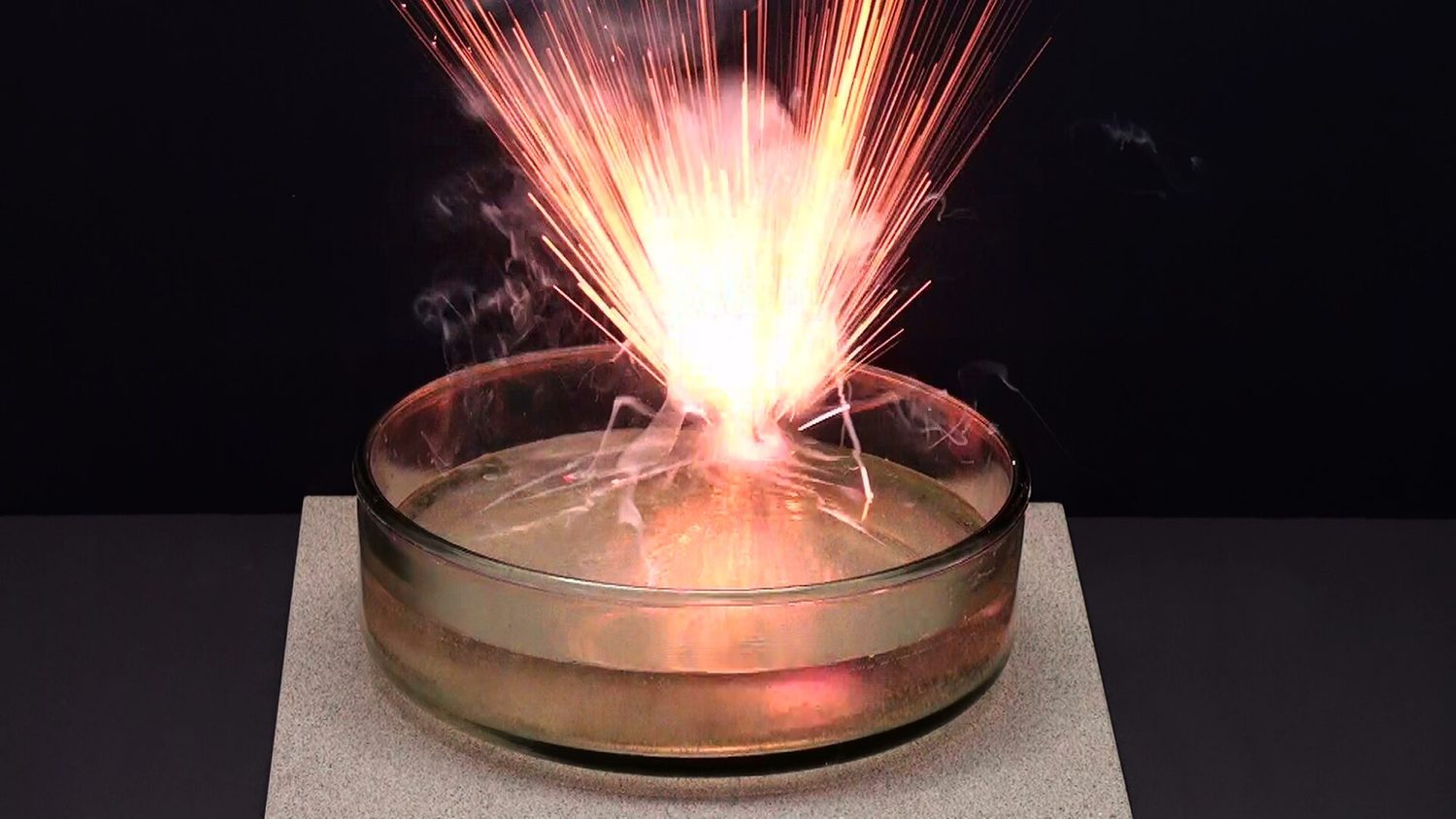
The trend shows up in how violent this is: lithium fizzes steadily but does not melt; sodium melts into a ball and darts around; potassium is fast enough to ignite its own hydrogen, burning with a lilac flame. Two answers to avoid: "hydrogen is given off" is not an observation (you cannot see it - say effervescence), and the metal melts because the reaction is exothermic, not because "water is hot".
العربية
عناصر المجموعة I هي الفلزات القلوية: الليثيوم والصوديوم والبوتاسيوم. وهي فلزات ناعمة (يمكنك قطعها بالسكين).
يتفاعل البوتاسيوم بعنف مع الماء، مطلقاً الهيدروجين الذي يحترق بنيران بنفسجية — يتزايد التفاعل化学ية نزولاً في المجموعة Iكل ذرة في المجموعة الأولى تحتوي على إلكترون واحد في مستواها الخارجي، ولهذا تتفاعل بطرق متشابهة
نزولاً في المجموعة، توجد اتجاهات واضحة:
الخاصية
الاتجاه نزولاً في المجموعة
درجة الانصهار
تنخفض
الكثافة
تزداد
التفاعلChemistry
تزداد
يمكنك استخدام هذه الاتجاهات للتنبؤ بخصائص عناصر أخرى من المجموعة I. على سبيل المثال، الروبيديوم (أسفل البوتاسيوم) سيكون أكثر تفاعلاً وسيكون لديه درجة انصهار أقل.
التفاعل مع الماء وما تراه
هذا هو التفاعل الذي يسأل عنه الامتحان بشكل متكرر. كل فلز من مجموعة I يتفاعل مع الماء ليعطي قاعدة (هيدروكسيد الفلز) بالإضافة إلى الهيدروجين - وهذا بالضبط لماذا سُميت بالفلزات القلوية:
"وصف ما تراه" يستحق درجات خاصة، لذا احفظ القائمة لـ الصوديوم على الماء:
يطفو - الفلز أقل كثافة من الماء.
يذوب كرة - التفاعل يطلق حرارة، ودرجة انصهار الفلز منخفضة.
يتحرك حول على السطح - تدفق الهيدروجين يدفعه حولاً.
يوجد تفجر/رغوة (فوران) - خروج غاز الهيدروجين.
يصغر ويختفي حيث يتم استهلاكه.
المحلول يصبح قاعدياً، لذا يتحول الكاشف الشامل إلى البنفسجي (他现在 هو $\text{NaOH}$).
يظهر الاتجاه في مدى عنف هذا التفاعل: الليثيوم يفور بانتظام لكنه لا يذوب؛ الصوديوم يذوب كرة ويتحرك بسرعة؛ البوتاسيوم سريع بما يكفي لإشعال هيدروجينه الخاص، محترقاً بـ نار بنفسجية. إجابتان يجب تجنبهما: "إطلاق الهيدروجين" ليس ملاحظة (لا يمكنك رؤيتها - قل الفوران)، والفلز يذوب لأن التفاعل طارد للحرارة، وليس لأن "الماء ساخن".
Explore · استكشف
Group I trend lab · تجربة اتجاه المجموعة الأولى
Follow Group I metals down the group and watch reactivity increase. · تابع معادن المجموعة الأولى نزولاً في المجموعة وشاهد زيادة التفاعل.
Group VII — the halogens · المجموعة VII — الهالوجينات
Syllabus · المنهج
English
Core
Supplement
1 Describe the Group VII halogens, chlorine, bromine and iodine, as diatomic non-metals with general trends down the group, limited to: (a) increasing density (b) decreasing reactivity
2 State the appearance of the halogens at r.t.p. as: (a) chlorine, a pale yellow-green gas (b) bromine, a red-brown liquid (c) iodine, a grey-black solid
3 Describe and explain the displacement reactions of halogens with other halide ions
4 Predict the properties of other elements in Group VII, given information about the elements
العربية
أساسي
تكميلي
1 صف الهالوجينات في المجموعة السابعة، الكلور والبروم واليود، sebagai的非金属 ثنائية الذرة مع اتجاهات عامة نزولاً في المجموعة، تقتصر على: (أ) زيادة الكثافة (ب) انخفاض التفاعل
2 بيّن مظهر الهالوجينات في درجة حرارة الغرفة وضغطها الطبيعي كالتالي: (أ) الكلور، غاز أصفر فاتح أخضر (ب) البروم، سائل أحمر بني (ج) اليود، صلب رمادي أسود
3 صف واشرح تفاعلات الاستبدال للهالوجينات مع أيونات الهاليد الأخرى
4 تنبأ بخصائص العناصر الأخرى في المجموعة السابعة، بناءً على معلومات حول العناصر
Source: Cambridge International syllabus · المصدر: منهج كامبريدج الدولي
English
Group VII elements are the halogens 卤素: chlorine 氯气, bromine 溴 and iodine 碘. They are diatomic 双原子 non-metals (each molecule is made of two atoms, such as $\text{Cl}_2$).
Their appearance at room temperature and pressure:
Halogen
Appearance
chlorine
a pale yellow-green gas
bromine
a red-brown liquid
iodine
a grey-black solid
Going down the group, the density increases but the reactivity decreases (the opposite trend to Group I).
Displacement reactions
A more reactive halogen pushes out (displaces) a less reactive halide 卤化物 ion from its solution. This is a displacement reaction 置换反应.
For example, chlorine is more reactive than bromine, so chlorine displaces bromine from potassium bromide:
Worked example. Aqueous chlorine is added to potassium iodide solution; then aqueous iodine is added to potassium bromide solution. What happens in each? Reactivity falls down Group VII: chlorine, then bromine, then iodine. (a) Chlorine is above iodine, so it is more reactive and displaces it: $\text{Cl}_2 + 2\text{KI} \rightarrow 2\text{KCl} + \text{I}_2$, and the solution turns red-brown as iodine is released. (b) Iodine is below bromine, so it is less reactive and cannot displace it - there is no reaction and no colour change. "No reaction" is a complete answer worth marks: check the order in the group before you write any equation.
العربية
عناصر المجموعة VII هي الهالوجينات: الكلور والبروم واليود. وهي لافلزات ثنائية الذرة (كل جزيء مكون من ذرتين، مثل $\text{Cl}_2$).
مظهرها في درجة حرارة وضغط الغرفة:
الهالوجين
المظهر
الكلور
غاز أصفر فاتح مائل للأخضر
البروم
سائل أحمر بني
اليود
صلب رمادي أسود
بالنزول عبر المجموعة، تزداد الكثافة لكن التفاعلية تقل (عكس الاتجاه في المجموعة الأولى).
المجموعة الأولى تصبح أكثر تفاعلية بالنزول، بينما المجموعة السابعة تصبح أقل تفاعلية — اتجاهان متعاكسان
تفاعلات الإزاحة
هالوجين أكثر تفاعلية يطرد (يُزيح) أيون هاليد أقل تفاعلية من محلوله. هذا يُسمى تفاعل إزاحة.
على سبيل المثال، الكلور أكثر تفاعلية من البروم، لذا يزيح الكلور البروم من بروميد البوتاسيوم:
الكلور أكثر تفاعلية، لذا يزيح البروم من المحلول؛ البروم المنطلق يحول المحلول الشفاف إلى اللون البرتقالي
مثال محلل. أضيف كلور مائي إلى محلول يوديد البوتاسيوم، ثم أضيف يود مائي إلى محلول بروميد البوتاسيوم. ماذا يحدث في كل حالة؟ تتناقص التفاعلية للأسفل عبر المجموعة السابعة: الكلور، ثم البروم، ثم اليود. (أ) الكلور فوق اليود، لذا هو أكثر تفاعلية ويزيحه: $\text{Cl}_2 + 2\text{KI} \rightarrow 2\text{KCl} + \text{I}_2$، ويتحول المحلول إلى الأحمر البني عند انطلاق اليود. (ب) اليود أسفل البروم، لذا هو أقل تفاعلية ولا يستطيع إزاحته - لا يوجد تفاعل ولا تغير في اللون. "لا يوجد تفاعل" إجابة كاملة تستحق الدرجات: تحقق من الترتيب في المجموعة قبل كتابة أي معادلة.
Explore · استكشف
Group VII trend lab · تجربة اتجاه المجموعة السابعة
Follow halogens down the group and watch reactivity decrease. · تابع الهالوجينات نزولاً في المجموعة وشاهد انخفاض التفاعل.
1 Describe the transition elements as metals that: (a) have high densities (b) have high melting points (c) form coloured compounds (d) often act as catalysts as elements and in compounds
2 Describe transition elements as having ions with variable oxidation numbers, including iron(II) and iron(III)
العربية
أساسي
تكميلي
1 صف الفلزات الانتقالية sebagai فلزات: (أ) لها كثافات عالية (ب) لها نقاط انصهار عالية (ج) تكون مركبات ملونة (د) تعمل غالباً كمحفزات كعناصر وفي المركبات
2 صف الفلزات الانتقالية بأنها تمتلك أيونات بأرقام تأكسد متغيرة، بما في ذلك الحديد(II) والحديد(III)
Source: Cambridge International syllabus · المصدر: منهج كامبريدج الدولي
English
The transition elements 过渡元素 are the block of metals in the middle of the Periodic Table. Compared with Group I metals, they:
have high densities;
have high melting points;
form coloured 有色compounds 化合物;
often act as catalysts, both as elements and in compounds.
They can also have variable 可变oxidation numbers 氧化数. For example, iron 铁 forms both iron(II) and iron(III) compounds.
العربية
العناصر الانتقالية هي كتلة المعادن في وسط الجدول الدوري. بالمقارنة مع معادن المجموعة الأولى، فإنها:
ذات كثافات عالية؛
نقاط انصهار عالية؛
تُكون مركبات ملونة؛
تعمل غالبًا كمحفزات، سواء كعناصر أو في مركبات.
يمكنها أيضًا أن يكون لها أرقام أكسدة متغيرة. على سبيل المثال، يُكوّن الحديد مركبات حديد(II) وحديد(III).
المعادن الانتقالية تُكون مركبات ملونة: كل من هذه المحاليل يحتوي على أيون عنصر انتقالي مختلف
Explore · استكشف
Transition element lab · تجربة عناصر الانتقال
Match transition-metal properties to real examples. · طابق خصائص فلزات الانتقال مع أمثلة حقيقية.
Group VIII — the noble gases · المجموعة الثامنة — الغازات النبيلة
Syllabus · المنهج
English
Core
Supplement
1 Describe the Group VIII noble gases as unreactive, monatomic gases and explain this in terms of electronic configuration
العربية
أساسي
تكميلي
1 صف الغازات النبيلة في المجموعة الثامنة بأنها غير نشطة، غازات أحادية الذرة واشرح ذلك من حيث التكوين الإلكتروني
Source: Cambridge International syllabus · المصدر: منهج كامبريدج الدولي
English
The Group VIII noble gases 稀有气体 are unreactive 不活泼, monatomic 单原子 gases (they exist as single atoms, not as molecules).
They are unreactive because they already have a full outer shell of electrons. This makes them stable, so they do not need to gain, lose or share electrons.
العربية
الغازات النبيلة للمجموعة الثامنة غير متفاعلة، وهي غازات ذرية مفردة (توجد كذرات فردية وليس كجزيئات).
هي غير متفاعلة لأنها تمتلك بالفعل غلافًا خارجيًا مكتملًا من الإلكترونات. هذا يجعلها مستقرة، لذا لا تحتاج إلى اكتساب أو فقدان أو مشاركة الإلكترونات.
مرور الكهرباء عبر كل غاز نبيل يجعله يتوهج بلون مميز — وهذا هو مبدأ عمل لافتات النيون والإضاءة الأخرى
Explore · استكشف
Noble gas lab · تجربة الغازات النبيلة
Classify noble gas uses by the property that makes them useful. · صنّف استخدامات الغازات النبيلة حسب الخاصية التي تجعلها مفيدة.
The Periodic Table is ordered by proton number. Elements in the same group (column) have the same number of outer electrons, so they react in similar ways; periods are the rows.
Group I (alkali metals) get more reactive going down; Group VII (halogens) get less reactive going down — opposite trends.
A more reactive halogen displaces a less reactive one from a solution of its salt — for example chlorine displaces bromine.
Noble gases are unreactive because they have a full outer shell. Transition elements are hard and dense, form coloured compounds, act as catalysts and have variable oxidation numbers.
العربية
يُرتب الجدول الدوري حسب العدد البروتوني. العناصر في نفس المجموعة (العمود) لها نفس عدد الإلكترونات الخارجية، لذا تتفاعل بطرق مشابهة؛ الدورات هي الصفوف.
المجموعة الأولى (المعادن القلوية) تصبح أكثر تفاعلية بالنزول؛ المجموعة السابعة (الهالوجينات) تصبح أقل تفاعلية بالنزول — اتجاهان متعاكسان.
الهالوجين الأكثر تفاعلية يزيح الأقل تفاعلية من محلول ملحه — على سبيل المثال، يزيح الكلور البروم.
الغازات النبيلة غير متفاعلة لأنها تمتلك غلافًا خارجيًا مكتملًا. العناصر الانتقالية صلبة وكثيفة، وتُكون مركبات ملونة، وتعمل كمحفزات ولها أرقام أكسدة متغيرة.
Interactive lessons on this topic · دروس تفاعلية حول هذا الموضوع
Work through it step by step, with instant-check exercises. · ا-working عليه خطوة بخطوة، مع تمارين تحقق فوري.
Pick one and the site follows you — notes, papers, videos and practice all open on it. · اختر واحدًا وسيتبعك الموقع — الملاحظات، الأوراق، الفيديوهات والتدريب جميعها تفتح عليه.
Type to search notes, lessons, code, vocabulary and past-paper questions across every subject. · اكتب للبحث عن ملاحظات، دروس، أكواد، مفردات وأسئلة امتحانات سابقة عبر جميع المواد.