Skip to content · ⁨الانتقال إلى المحتوى⁩

Agriculture and Rural Land-Use Patterns and Processes · ⁨زراعة وأنماط استخدام الأراضي الريفية والعمليات المتعلقة بها⁩

AP Human Geography · ⁨الجغرافيا البشرية (AP)⁩ · Topic 5 · ⁨الموضوع 5⁩

Video lesson for this topic · ⁨درس فيديو لهذا الموضوع⁩ Open the video page · ⁨افتح صفحة الفيديو⁩
8:32

زراعة وأنماط استخدام الأراضي الريفية والعمليات المتعلقة بها

مزارعان. نفس الوظيفة: زراعة الغذاء. عوالم مختلفة تمامًا. أحدهما يقود آلة عبر حقل واسع لا نهاية له، وكل حبة…

English narration · English + 中文 subtitles burned in · ⁨سرد باللغة الإنجليزية · ترجمة مدمجة بالإنجليزية + الصينية⁩

5.1

Introduction to Agriculture · ⁨مقدمة في الزراعة⁩

Syllabus · ⁨المنهج⁩
English

Enduring Understanding (PSO-5): Availability of resources and cultural practices influence agricultural practices and land-use patterns.

Learning Objective PSO-5.A: Explain the connection between physical geography and agricultural practices.

  • PSO-5.A.1 Agricultural practices are influenced by the physical environment and climatic conditions, such as the Mediterranean climate and tropical climates.
  • PSO-5.A.2 Intensive farming practices include market gardening, plantation agriculture, and mixed crop/livestock systems.
  • PSO-5.A.3 Extensive farming practices include shifting cultivation, nomadic herding, and ranching.
العربية

الفهم الدائم (PSO-5): يؤثر توفر الموارد والممارسات الثقافية على الممارسات الزراعية وأنماط استخدام الأراضي.

هدف التعلم PSO-5.A: اشرح العلاقة بين الجغرافيا الطبيعية والممارسات الزراعية.

  • PSO-5.A.1 تتأثر الممارسات الزراعية بالبيئة الطبيعية والظروف المناخية، مثل المناخ المتوسطي والمناخات الاستوائية.
  • PSO-5.A.2 تشمل الممارسات الزراعية المكثفة البستنة الحضرية، والزراعة المزرعية، وأنظمة المحاصيل والماشية المختلطة.
  • PSO-5.A.3 تشمل الممارسات الزراعية الشاسعة زراعة الانتقال، والرعي الرحل، وتربية الماشية في المزارع.
Source: College Board AP Course and Exam Description · ⁨المصدر: وصف دورة وامتحان College Board AP⁩

English

Agriculture 农业 is the deliberate growing of crops and raising of animals for food and other products. A first big split:

  • Subsistence agriculture 自给农业 — farming to feed the farmer's own family, common in less-developed regions.
  • Commercial agriculture 商业农业 — farming to sell for profit, common in developed regions and often large-scale and mechanised.

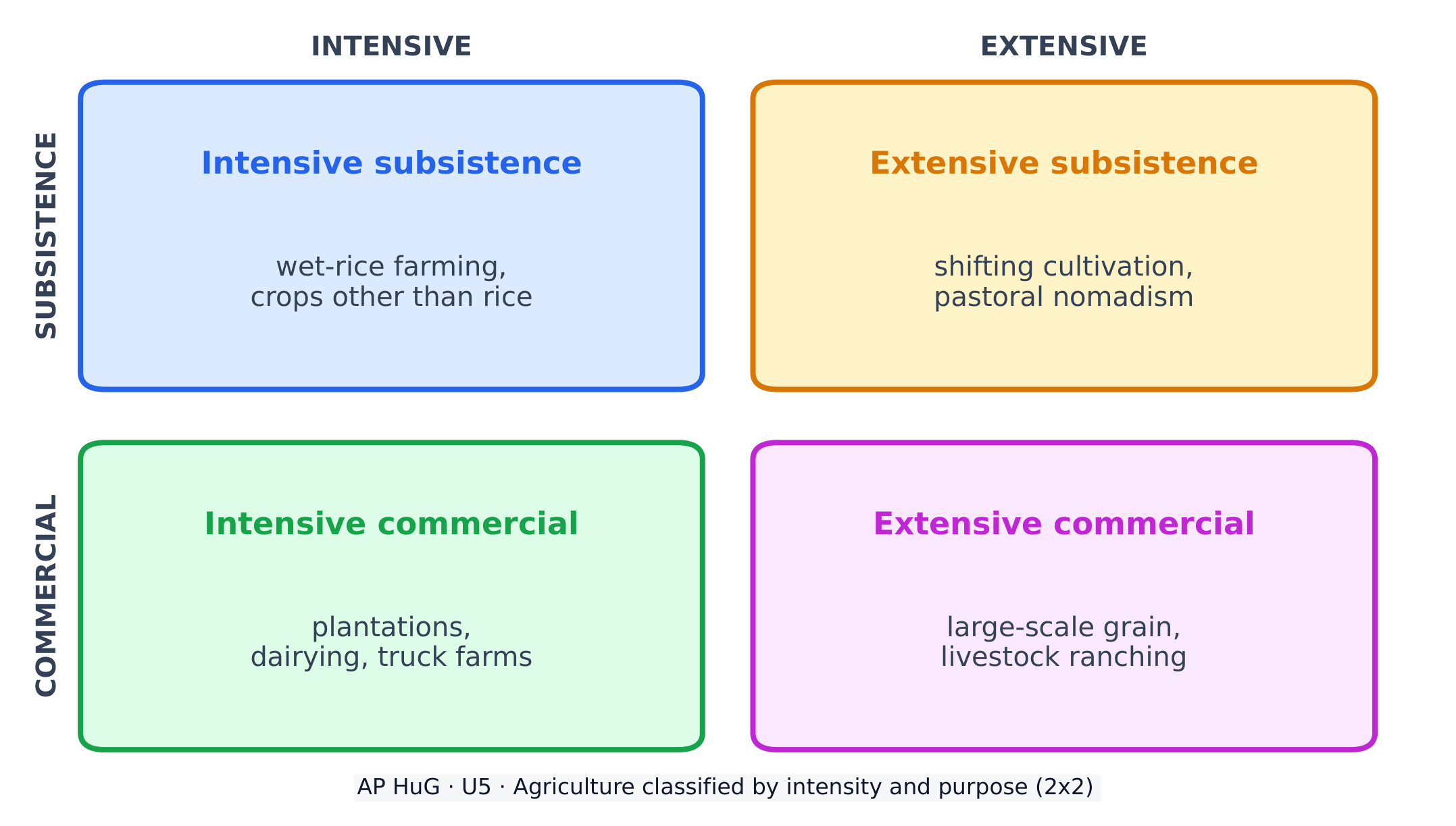
Farming also varies by intensity: intensive 集约 farming uses a lot of labour or money on a small area (rice paddies, market gardening); extensive 粗放 farming uses little input over a large area (ranching, shifting cultivation).

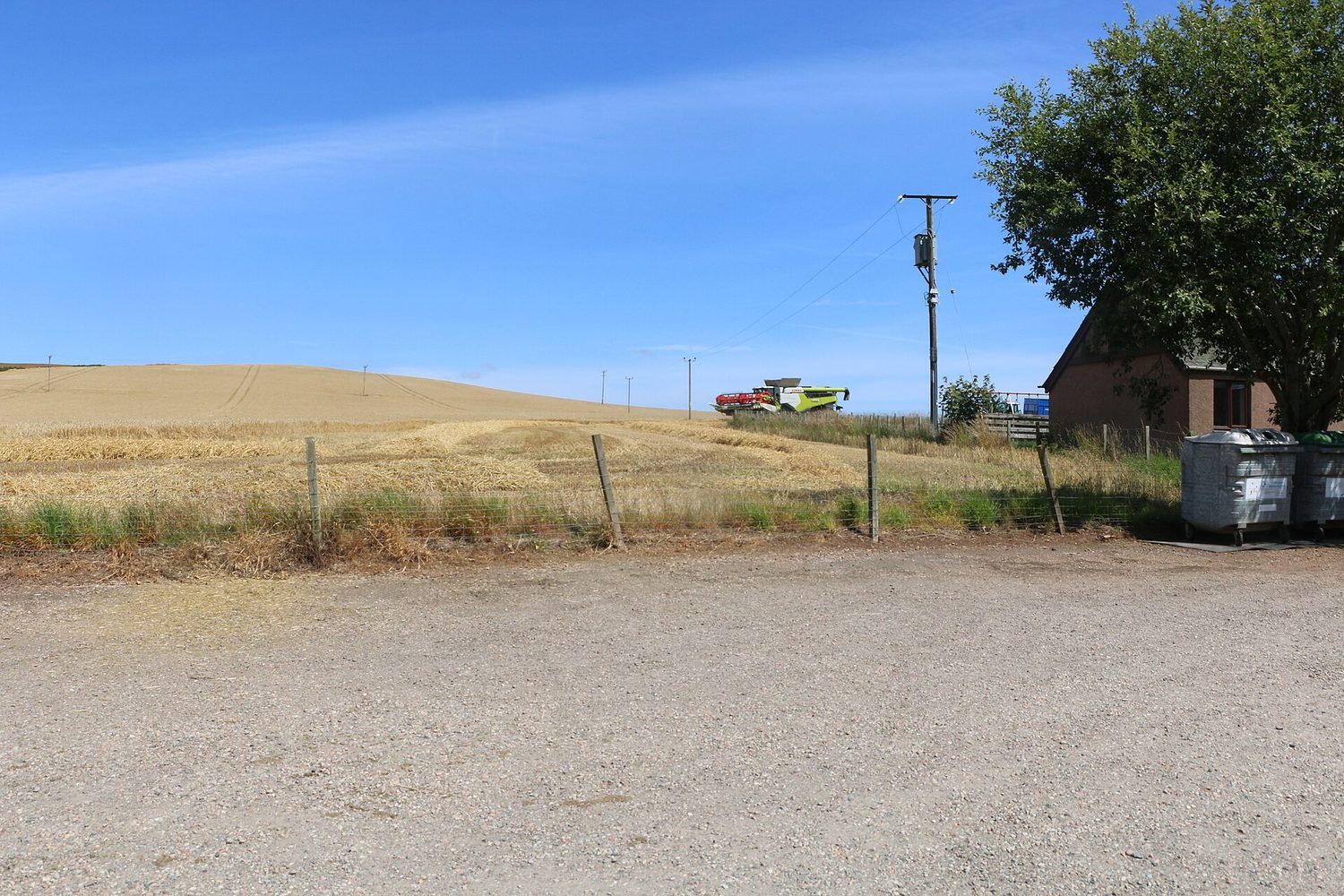
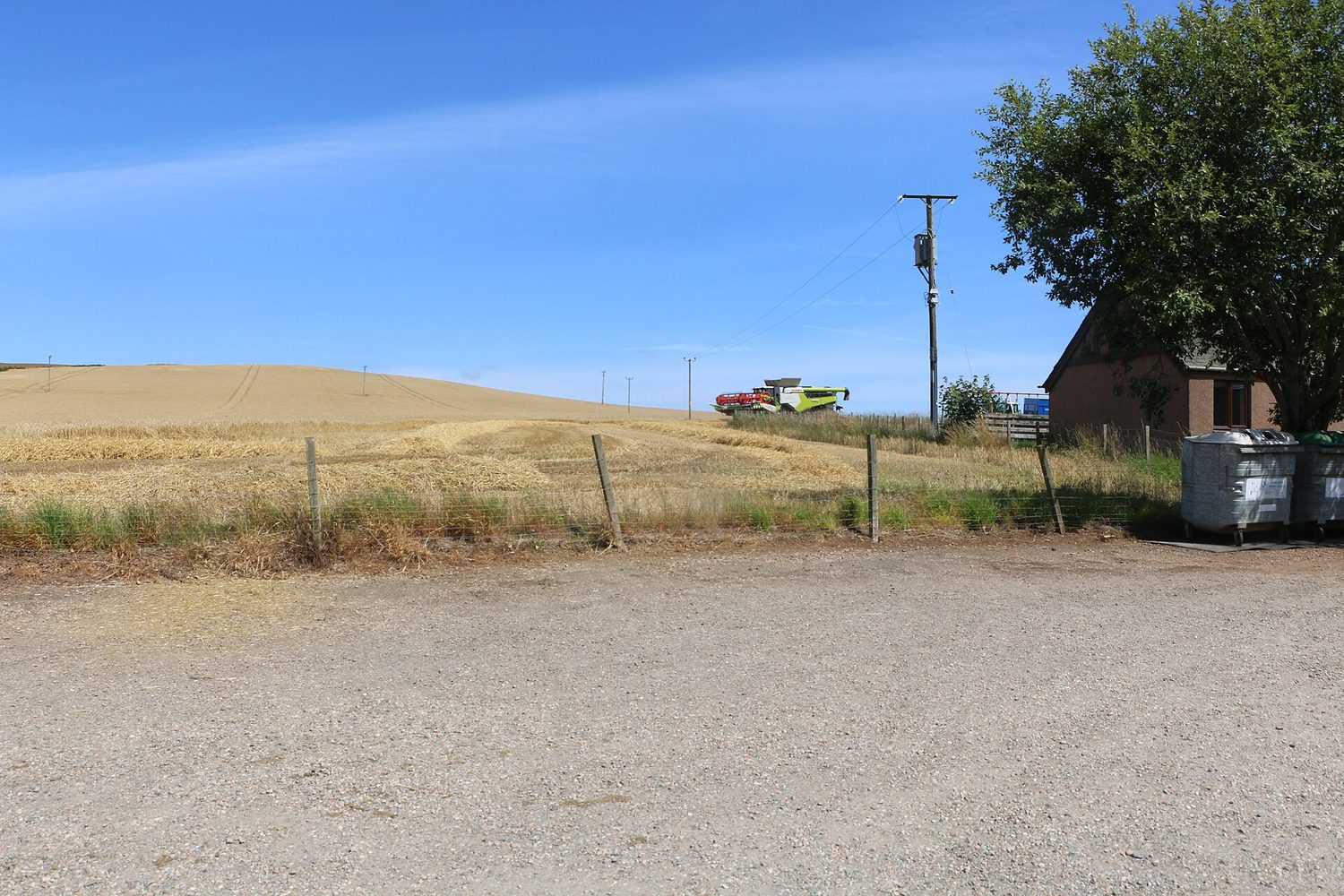
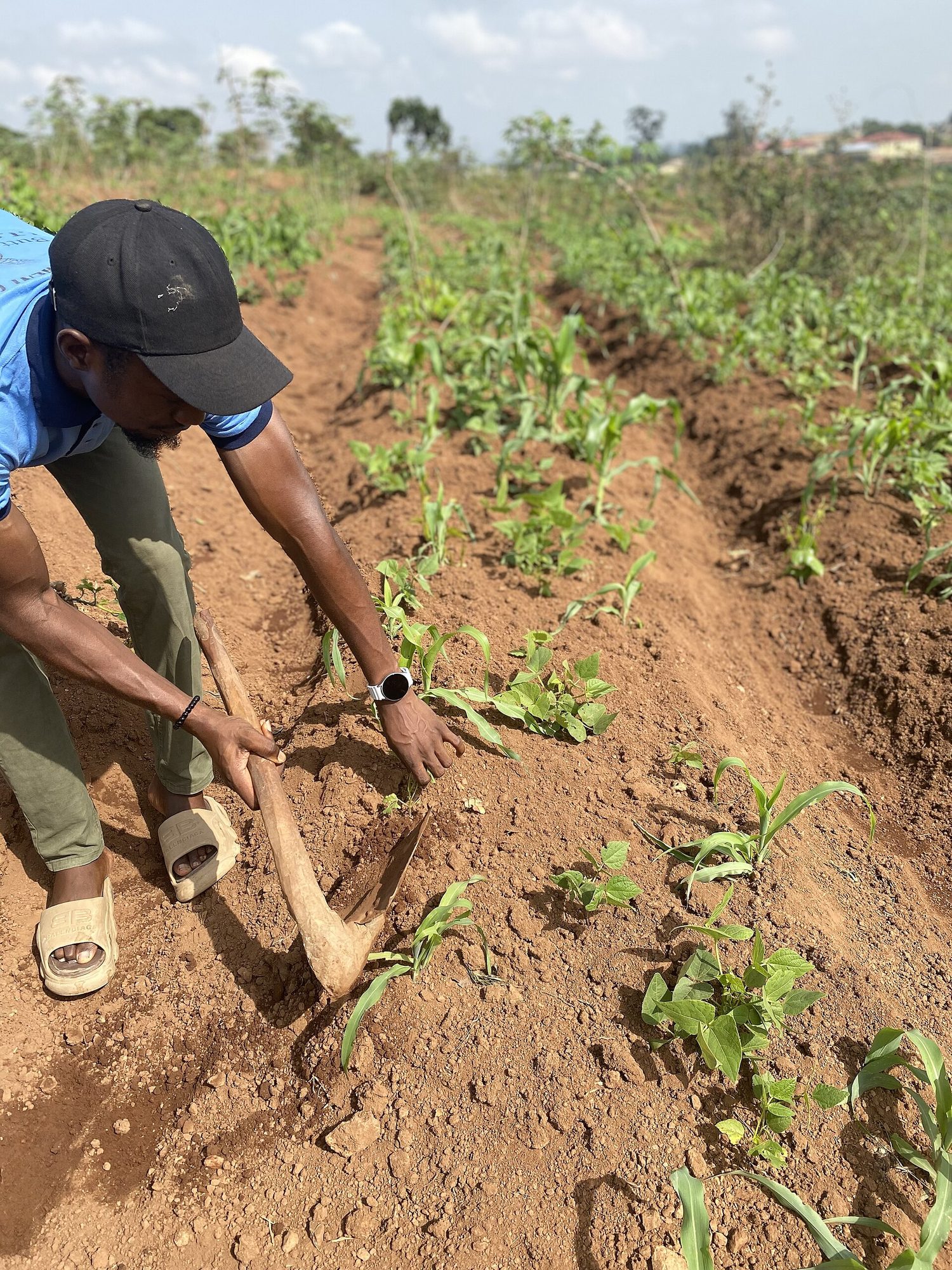
The two photos below are the two ends of the first split — one machine feeding a market versus one person feeding a family:

العربية

الزراعة هي زراعة المحاصيل وتربية الماشية بعمد للحصول على الغذاء والمنتجات الأخرى. أول انقسام كبير:

  • الزراعة الكفيلة بالذات — زراعتها لإطعام عائلة المزارع، شائعة في المناطق الأقل تطوراً.
  • الزراعة التجارية — زراعتها للبيع لتحقيق الربح، شائعة في المناطق المتقدمة وغالباً ما تكون واسعة النطاق وميكانيكية.

تختلف الزراعة أيضاً حسب الشدة: الزراعة المكثفة تستخدم الكثير من العمالة أو المال على مساحة صغيرة (حقول الأرز، البستنة السوقية)؛ بينما الزراعة الشاسعة تستخدم مدخلات قليلة على مساحة كبيرة (الرعي، الزراعة الانتقالية).

الصورتان أدناه تمثلان طرفي هذا الانقسام الأول — آلة واحدة تطبع سوقاً مقابل شخص واحد يطعم عائلة:

جاثث حصاد كبير أحمر وأخضر يقطع حقلاً ذهبياً من القمح
الزراعة التجارية: جاثث حصاد واحد يقطع حقلاً ضخماً من القمح تقريباً بدون عمالة، لزراعة الحبوب للبيع
مزارع ينحني ليعمل تربة قطعة صغيرة من الذرة بحف يدوي
الزراعة الكفيلة بالذات: مزارع يعمل قطعة صغيرة باليد بالمحرثة، أساساً لإطعام العائلة
Explore · ⁨استكشف⁩

Intensive or extensive farming? · ⁨زراعة مكثفة أم واسعة؟⁩

Intensive farming puts a lot of labour or money into a small area; extensive farming spreads little input over a large area. · ⁨الزراعة المكثفة تستثمر عمالة أو مالاً كثيراً في مساحة صغيرة؛ الزراعة الواسعة توزع مدخلات قليلة على مساحة كبيرة.⁩

5.2

Settlement Patterns and Survey Methods · ⁨أنماط الاستيطان وطرق المسح⁩

Syllabus · ⁨المنهج⁩
English

Enduring Understanding (PSO-5): Availability of resources and cultural practices influence agricultural practices and land-use patterns.

Learning Objective PSO-5.B: Identify different rural settlement patterns and methods of surveying rural settlements.

  • PSO-5.B.1 Specific agricultural practices shape different rural land-use patterns.
  • PSO-5.B.2 Rural settlement patterns are classified as clustered, dispersed, or linear.
  • PSO-5.B.3 Rural survey methods include metes and bounds, township and range, and long lot.
العربية

الفهم الدائم (PSO-5): يؤثر توفر الموارد والممارسات الثقافية على الممارسات الزراعية وأنماط استخدام الأراضي.

هدف التعلم PSO-5.B: تحديد أنماط الاستيطان الريفي المختلفة وطرق مسح المستوطنات الريفية.

  • PSO-5.B.1 تشكل الممارسات الزراعية المحددة أنماط استخدام الأراضي الريفية المختلفة.
  • PSO-5.B.2 تُصنف أنماط الاستيطان الريفي على أنها متجمعة، أو مبعثرة، أو خطية.
  • PSO-5.B.3 تشمل طرق المسح الريقي: الحدود والمسافات (metes and bounds)، والتونشوب والرينج (township and range)، والمزارع الطويلة (long lot).

Source: College Board AP Course and Exam Description · ⁨المصدر: وصف دورة وامتحان College Board AP⁩

English

How farmers settle the land leaves a lasting pattern.

  • Clustered (nucleated) 集聚式 settlements group homes together; dispersed 分散 settlements spread them out; linear settlements follow a road or river.
  • Survey methods divide the land: the metes-and-bounds system uses natural features; the township-and-range system uses a grid of squares; the long-lot system gives each farm a thin strip reaching a river or road.
العربية

يترك استيطان المزارعين للأرض نمطاً دائماً.

  • المستوطنات المتكتلة (النووية) تجمع المنازل معاً؛ المستوطنات المتفرقة تبعد بينها؛ المستوطنات الخطية تتبع طريقاً أو نهراً.
  • طرق المسح تقسم الأرض: نظام القياس والحدود يستخدم الميزات الطبيعية؛ نظام البلدية والنطاق يستخدم شبكة مربعات؛ نظام الحصير الطويل يمنح كل مزرعة شريطاً رفيعاً يصل لنهر أو طريق.
5.3 5.4 5.5

Agricultural Origins and Revolutions · ⁨origins Revolution agriculture and Origins of Agriculture⁩

Syllabus · ⁨المنهج⁩
English

Enduring Understanding (SPS-5): Agriculture has changed over time because of cultural diffusion and advances in technology.

Learning Objective SPS-5.A: Identify major centers of domestication of plants and animals.

  • SPS-5.A.1 Early hearths of domestication of plants and animals arose in the Fertile Crescent and several other regions of the world, including the Indus River Valley, Southeast Asia, and Central America.

Learning Objective SPS-5.B: Explain how plants and animals diffused globally.

  • SPS-5.B.1 Patterns of diffusion, such as the Columbian Exchange and the agricultural revolutions, resulted in the global spread of various plants and animals.
العربية

فهم دائم (SPS-5): تغيرت الزراعة عبر الزمن بسبب الانتشار الثقافي والتقدم التكنولوجي.

هدف التعلم SPS-5.A: تحديد مراكز استئناس النبات والحيوان الرئيسية.

  • SPS-5.A.1 نشأت مراكز الاستئناس المبكر للنباتات والحيوانات في الهلال الخصيب ومناطق أخرى من العالم، بما في ذلك وادي السند وجنوب شرق آسيا وأمريكا الوسطى.

هدف التعلم SPS-5.B: شرح كيفية انتشار النباتات والحيوان عالمياً.

  • SPS-5.B.1 أدت أنماط الانتشار، مثل التبادل الكولومبي والثورات الزراعية، إلى انتشار مختلف النباتات والحيوان حول العالم.
English

Enduring Understanding (SPS-5): Agriculture has changed over time because of cultural diffusion and advances in technology.

Learning Objective SPS-5.C: Explain the advances and impacts of the second agricultural revolution.

  • SPS-5.C.1 New technology and increased food production in the second agricultural revolution led to better diets, longer life expectancies, and more people available for work in factories.
العربية

فهم دائم (SPS-5): تغيرت الزراعة عبر الزمن بسبب الانتشار الثقافي والتقدم التكنولوجي.

هدف التعلم SPS-5.C: شرح التقدم والتأثيرات التي لحقت بالثورة الزراعية الثانية.

  • SPS-5.C.1 أدت التكنولوجيا الجديدة وزيادة الإنتاج الغذائي في الثورة الزراعية الثانية إلى تحسين الأنظمة الغذائية، وطول العمر المتوقع، وتوفر عدد أكبر من الناس للعمل في المصانع.
English

Enduring Understanding (SPS-5): Agriculture has changed over time because of cultural diffusion and advances in technology.

Learning Objective SPS-5.D: Explain the consequences of the Green Revolution on food supply and the environment in the developing world.

  • SPS-5.D.1 The Green Revolution was characterized in agriculture by the use of high-yield seeds, increased use of chemicals, and mechanized farming.
  • SPS-5.D.2 The Green Revolution had positive and negative consequences for both human populations and the environment.
العربية

فهم دائم (SPS-5): تغيرت الزراعة عبر الزمن بسبب الانتشار الثقافي والتقدم التكنولوجي.

هدف التعلم SPS-5.D: شرح عواقب الثورة الخضراء على إمدادات الغذاء والبيئة في العالم النامي.

  • SPS-5.D.1 تميزت الثورة الخضراء في الزراعة باستخدام بذور عالية الغلة، وزيادة استخدام المواد الكيميائية، والزراعة الآلية.
  • SPS-5.D.2 كان للثورة الخضراء عواقب إيجابية وسلبية لكل من السكان البشريين والبيئة.

Source: College Board AP Course and Exam Description · ⁨المصدر: وصف دورة وامتحان College Board AP⁩

English

Farming began in a few hearths and spread by diffusion, then was transformed by three revolutions.

  • The First (Neolithic) Agricultural Revolution 新石器农业革命 was the original domestication of plants and animals, letting people settle in one place.
  • The Second Agricultural Revolution 第二次农业革命 used the tools of the Industrial Revolution (machines, better transport, crop rotation) to raise output and feed growing cities.
  • The Green Revolution 绿色革命 (mid-1900s) introduced high-yield seeds, fertilisers, pesticides, and irrigation — hugely increasing food output, though at an environmental and social cost.

Worked example (a real AP exam question). "Describe the concept of an early hearth of domestication." (2023) A full-mark answer: "A place where people first domesticated a wild plant or animal into a farmed variety, and from which that farming practice then spread to other regions." The command word Describe wants more than a one-word definition — give the key features (where domestication began and that it spread) — but it does not require the cause-and-effect reasoning that "Explain" demands.

العربية

بدأت الزراعة في عدد قليل من الموازين وانتشرت عن طريق الانتشار، ثم تحولت بثلاث ثورات.

  • كانت الثورة الزراعية الأولى (العصر الحجري الجديد) هو الاستئناس الأولي للنباتات والحيوانات، مما سمح للناس بالاستقرار في مكان واحد.
  • الثورة الزراعية الثانية استخدمت أدوات الثورة الصناعية (الآلات، النقل الأفضل، تدوير المحاصيل) لزيادة الإنتاج وإطعام المدن المتزايدة.
  • أدت الثورة الخضراء (منتصف 1900) إلى إدخال بذور عالية الإنتاجية والأسمدة والمبيدات الحشرية والري — مما زاد بشكل هائل من إنتاج الغذاء، على الرغم من التكلفة البيئية والاجتماعية.

مثال محلول (سؤال حقيقي من امتحان AP). "وصف مفهوم مركز استئناس مبكر." (2023) إجابة كاملة الدرجة: "مكان قام فيه الناس لأول مرة باستئناس نبات بري أو حيوان ليصبح صنفًا زراعيًا، ومن حيث انتشرت ممارسة الزراعة بعد ذلك إلى مناطق أخرى.". الكلمة الدالة وصف تتطلب أكثر من تعريف بكلمة واحدة — قدم الميزات الرئيسية (أين بدأ الاستئناس وأنه انتشر) — لكنها لا تتطلب سبب وعلاقة السببية التي يتطلبها "اشرح".

5.6

Agricultural Production Regions · ⁨مناطق الإنتاج الزراعي⁩

Syllabus · ⁨المنهج⁩
English

Enduring Understanding (PSO-5): Availability of resources and cultural practices influence agricultural practices and land-use patterns.

Learning Objective PSO-5.C: Explain how economic forces influence agricultural practices.

  • PSO-5.C.1 Agricultural production regions are defined by the extent to which they reflect subsistence or commercial practices (monocropping or monoculture).
  • PSO-5.C.2 Intensive and extensive farming practices are determined in part by land costs (bid-rent theory).
العربية

الفهم الدائم (PSO-5): يؤثر توفر الموارد والممارسات الثقافية على الممارسات الزراعية وأنماط استخدام الأراضي.

هدف التعلم PSO-5.C: شرح كيف تؤثر القوى الاقتصادية على الممارسات الزراعية.

  • PSO-5.C.1 تُعرف مناطق الإنتاج الزراعي بدرجة انعكاسها للممارسات المعيشية أو التجارية (الزراعة الأحادية المحصول).
  • PSO-5.C.2 تحدد ممارسات الزراعة المكثفة والمتعددة جزئياً بتكاليف الأراضي (نظرية الإيجار المبدل - bid-rent theory).

Source: College Board AP Course and Exam Description · ⁨المصدر: وصف دورة وامتحان College Board AP⁩

English

The type of farming in a place depends on climate and level of development.

  • Tropical regions favour shifting cultivation 迁移农业 (slash-and-burn) and plantation crops; dry regions favour pastoral nomadism 游牧 (herding).
  • Developed regions have mixed crop and livestock, dairying, and large commercial grain farms.
  • Bid-rent theory 竞租理论 explains why land close to a market is used more intensively: it is more expensive, so it must earn more per hectare.
العربية

يعتمد نوع الزراعة في مكان ما على المناخ ومستوى التنمية.

  • تفضل المناطق الاستوائية الزراعة الانتقالية (القطع والحرق) ومحاصيل المزارع؛ وتفضل المناطق الجافة الرعي الرحل (الرحل).
  • تمتلك المناطق المتقدمة زراعة مختلطة للمحاصيل والماشية، والزراعة البعلية، ومزارع حبوب تجارية كبيرة.
  • تشرح نظرية الإيجار التنافسي لماذا تُستخدم الأراضي القريبة من الأسواق بشكل مكثف: فهي أغلى ثمناً، لذا يجب أن تحقق عائدات أعلى لكل هكتار.
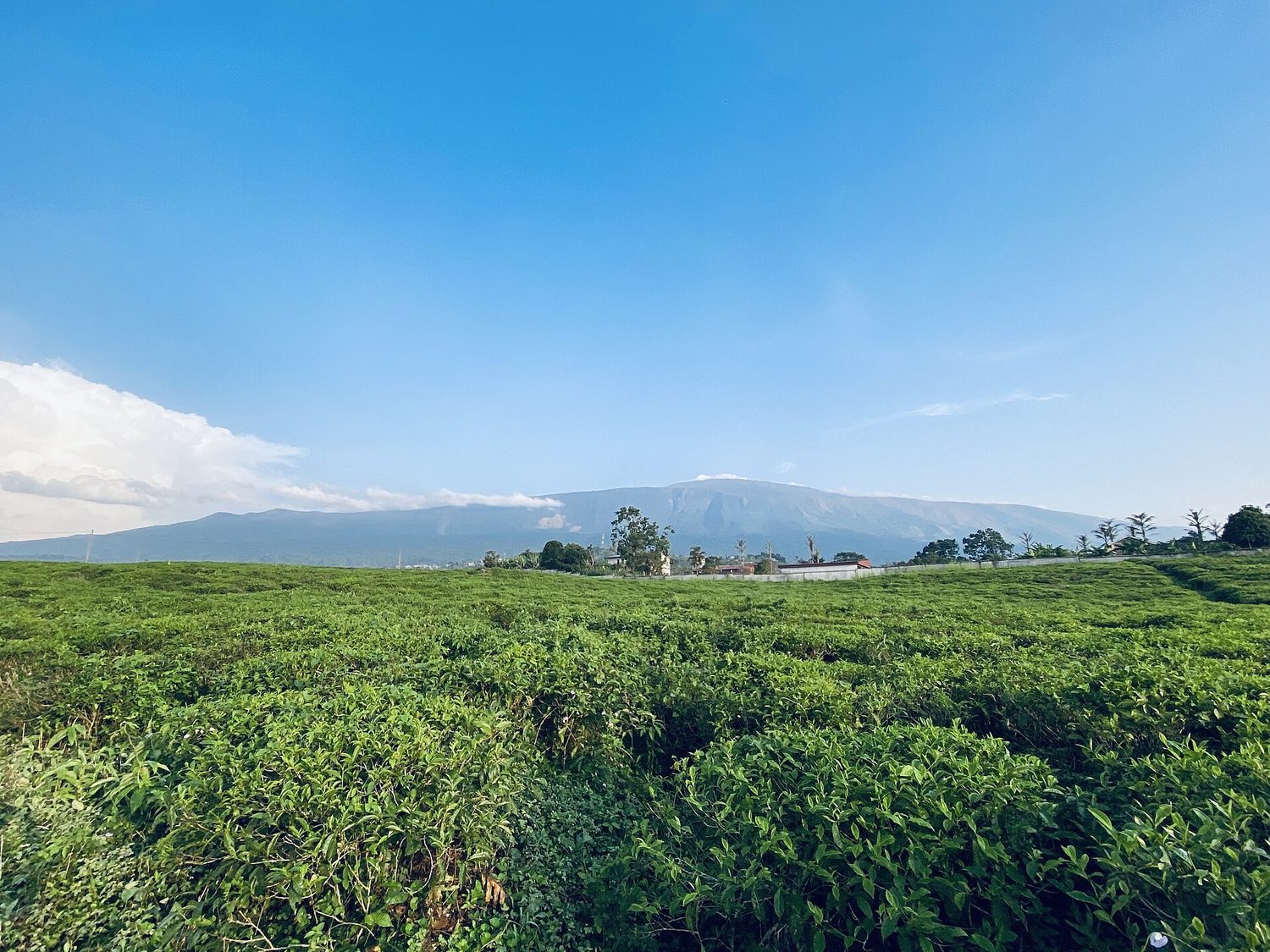
صفوف متوازية منتظمة لأشجار الشاي المنخفضة الخضراء تغطي جانب التل
مزرعة شاي: محصول نقدي واحد يُزرع في صفوف منتظمة على مساحة كبيرة، نموذجي للزراعة التجارية الاستوائية
الزراعة مصنفة حسب الكثافة والغرض
محوران — مقدار العمالة ورأس المال المدخَلين لكل وحدة أرض (مكثفة مقابل شاسعة)، ومن هو الطعام موجه إليه (كفيلة بالذات مقابل تجارية)
Vocabulary · ⁨مفردات⁩ Train · ⁨تدريب⁩
English العربية
Agriculture/ˈæɡrɪkʌltʃə/ الزراعة
Subsistence agriculture/sʌbˈsɪstəns ˈæɡrɪkʌltʃə/ الزراعة المعيشية
Commercial agriculture/kəˈmɜːʃl ˈæɡrɪkʌltʃə/ الزراعة التجارية
intensive/ɪnˈtensɪv/ مكثفة
extensive/ekˈstensɪv/ واسعة
Clustered (nucleated)/ˈklʌstəd/ متجمع (نووي)
dispersed/dɪˈspɜːst/ متناثرة
First (Neolithic) Agricultural Revolution/fɜːst ˌæɡrɪˈkʌltʃərəl ˌrevəˈluːʃn/ الثورة الزراعية الأولى (النيوليتية)
Second Agricultural Revolution/ˈsekənd ˌæɡrɪˈkʌltʃərəl ˌrevəˈluːʃn/ الثورة الزراعية الثانية
Green Revolution/ɡriːn ˌrevəˈluːʃn/ الثورة الخضراء
shifting cultivation/ˈʃɪftɪŋ ˌkʌltɪˈveɪʃn/ الزراعة الانتقالية
pastoral nomadism/ˈpæstərəl ˈnəʊmeɪdɪzəm/ الرعي البدوي
Bid-rent theory/bɪd rent ˈθɪəri/ نظرية الإيجار التنافسي
plantation/plænˈteɪʃn/ مزرعة مزرعية
von Thünen model/vɒn ˈθuːnən ˈmɒdl/ نموذج فون ثünen
global supply chain/ˈɡləʊbl səˈplaɪ tʃeɪn/ سلسلة التوريد العالمية
Agribusiness/ˈæɡrɪbɪznəs/ الزراعة والصناعة
export commodities/ˈekspɔːt kəˈmɒdɪtiz/ سلع التصدير
Fair trade/feə treɪd/ التجارة العادلة
desertification/dɪˌzɜːtɪfɪˈkeɪʃn/ التصحّر
food security/fuːd sɪˈkjʊərɪti/ الأمن الغذائي
5.7 5.8

Spatial Organization and the Von Thünen Model · ⁨التنظيم المكاني ونموذج فون تونين⁩

Syllabus · ⁨المنهج⁩
English

Enduring Understanding (PSO-5): Availability of resources and cultural practices influence agricultural practices and land-use patterns.

Learning Objective PSO-5.C: Explain how economic forces influence agricultural practices.

  • PSO-5.C.3 Large-scale commercial agricultural operations are replacing small family farms.
  • PSO-5.C.4 Complex commodity chains link production and consumption of agricultural products.
  • PSO-5.C.5 Technology has increased economies of scale in the agricultural sector and the carrying capacity of the land.
العربية

الفهم الدائم (PSO-5): يؤثر توفر الموارد والممارسات الثقافية على الممارسات الزراعية وأنماط استخدام الأراضي.

هدف التعلم PSO-5.C: شرح كيف تؤثر القوى الاقتصادية على الممارسات الزراعية.

  • PSO-5.C.3 تستبدل العمليات الزراعية التجارية الكبيرة المزارع العائلية الصغيرة.
  • PSO-5.C.4 تربط سلاسل السلع المعقدة بين إنتاج واستهلاك المنتجات الزراعية.
  • PSO-5.C.5 زادت التكنولوجيا من اقتصاديات الحجم في القطاع الزراعي وقدرة التحمل للأرض.
English

Enduring Understanding (PSO-5): Availability of resources and cultural practices influence agricultural practices and land-use patterns.

Learning Objective PSO-5.D: Describe how the von Thünen model is used to explain patterns of agricultural production at various scales.

  • PSO-5.D.1 Von Thünen’s model helps to explain rural land use by emphasizing the importance of transportation costs associated with distance from the market; however, regions of specialty farming do not always conform to von Thünen’s concentric rings.
العربية

الفهم الدائم (PSO-5): يؤثر توفر الموارد والممارسات الثقافية على الممارسات الزراعية وأنماط استخدام الأراضي.

هدف التعلم PSO-5.D: وصف كيفية استخدام نموذج فون ثونين لشرح أنماط الإنتاج الزراعي على مستويات مختلفة.

  • PSO-5.D.1 يساعد نموذج فون ثونين في شرح استخدام الأراضي الريفية من خلال التأكيد على أهمية تكاليف النقل المرتبطة بالمسافة من السوق؛ ومع ذلك، لا تنطبق مناطق الزراعة المتخصصة دائماً على الحلقات المركزة لفون ثونين.

Source: College Board AP Course and Exam Description · ⁨المصدر: وصف دورة وامتحان College Board AP⁩

English
The Von Thünen model

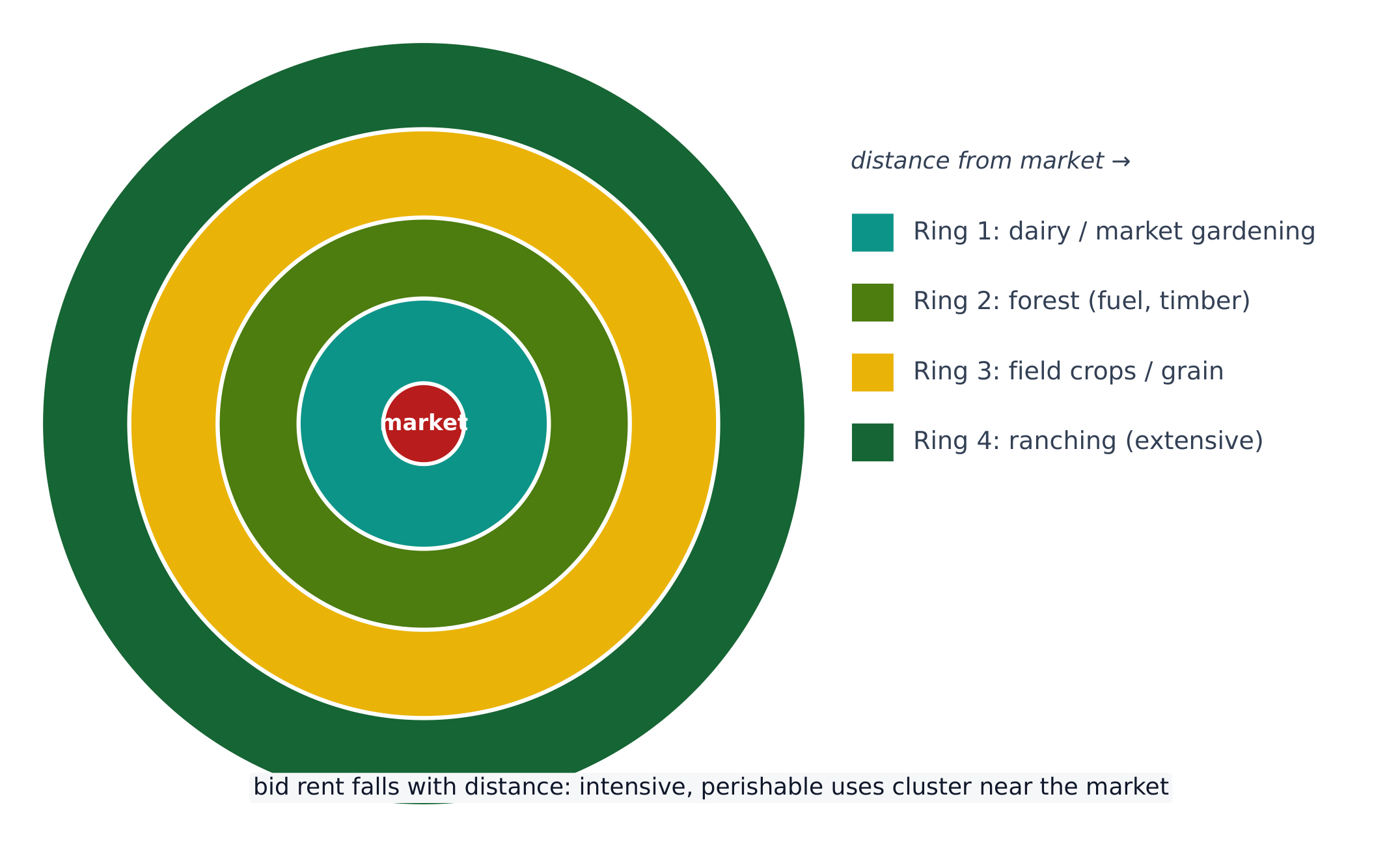
The von Thünen model 冯·杜能模型 (1826) explains what farmers grow where, based on transport cost and distance to market.

  • At the centre is the market (a city). Around it, land use forms concentric rings.
  • Ring 1 — market gardening and dairying (perishable, must be near market).
  • Ring 2 — forest (heavy firewood, costly to move, in his day).
  • Ring 3 — field crops and grain (less perishable).
  • Ring 4 — ranching (extensive, low value per hectare, can be far away).

The model assumes a flat, uniform plain with one market. Real regions bend the rings because of roads, rivers, terrain, and refrigeration — but the core idea, that transport cost shapes land use, still holds.

العربية
نموذج فون تونين

نموذج فون تونين (1826) يفسر ما يزرعه المزارعون أين، بناءً على تكلفة النقل والمسافة إلى السوق.

نموذج فون تونين: استخدامات الأراضي تشكل حلقات حول سوق مركزي
المنتجات القابلة للتلف، أو الثقيلة، أو المكثفة تقع بالقرب من السوق؛ والاستخدامات الشاملة تقع أبعد
  • في المركز يوجد السوق (مدينة). حوله، تتشكل استخدامات الأرض على شكل حلقات متجاورة.
  • الحلقة 1 — البستنة والدراجة (منتجات قابلة للتلف، يجب أن تكون قريبة من السوق).
  • الحلقة 2 — الغابات (خشب اشتعال ثقيل، مكلف النقل، في عصره).
  • الحلقة 3 — المحاصيل الحقلية والحبوب (أقل قابلية للتلف).
  • الحلقة 4 — المزارع الرعوية (شاملة، قيمة منخفضة للهكتار، يمكن أن تكون بعيدة).

يفترض النموذج أرضًا مستوية ومتجانسة مع سوق واحد. المناطق الحقيقية تشوه هذه الحلقات بسبب الطرق والأنهار والتضاريس والتبريد — لكن الفكرة الأساسية، وهي أن تكاليف النقل تشكل استخدامات الأراضي، لا تزال صالحة.

5.9

The Global System of Agriculture · ⁨النظام الزراعي العالمي⁩

Syllabus · ⁨المنهج⁩
English

Enduring Understanding (PSO-5): Availability of resources and cultural practices influence agricultural practices and land use patterns.

Learning Objective PSO-5.E: Explain the interdependence among regions of agricultural production and consumption.

  • PSO-5.E.1 Food and other agricultural products are part of a global supply chain.
  • PSO-5.E.2 Some countries have become highly dependent on one or more export commodities.
  • PSO-5.E.3 The main elements of global food distribution networks are affected by political relationships, infrastructure, and patterns of world trade.
العربية

فهم دائم (PSO-5): يؤثر توفر الموارد والممارسات الثقافية على الممارسات الزراعية وأنماط استخدام الأراضي.

هدف التعلم PSO-5.E: شرح الترابط المتبادل بين مناطق الإنتاج الزراعي والاستهلاك.

  • PSO-5.E.1 الغذاء والمنتجات الزراعية الأخرى جزء من سلسلة إمداد عالمية.
  • PSO-5.E.2 أصبحت بعض الدول معتمدة بشكل كبير على سلعة تصدير واحدة أو أكثر.
  • PSO-5.E.3 تتأثر العناصر الرئيسية لشبكات توزيع الغذاء العالمية بالعلاقات السياسية، والبنية التحتية، وأنماط التجارة العالمية.

Source: College Board AP Course and Exam Description · ⁨المصدر: وصف دورة وامتحان College Board AP⁩

English

Modern farming is a global supply chain 全球供应链.

  • Agribusiness 农业综合企业 links farms to seed, machinery, processing, and retail companies.
  • Many countries specialise in a few export commodities 出口商品 (coffee, cocoa, soy), which can make them dependent on world prices.
  • Fair trade 公平贸易 and local-food movements are responses to the inequalities of this global system.
العربية

الزراعة الحديثة هي سلسلة إمداد عالمية.

  • الأعمال الزراعية الصناعية تربط المزارع ب شركات البذور، والآلات، والمعالجة، والتجزئة.
  • تتخصص العديد من الدول في بضائع تصدير few (commodities) (قهوة، كاكاو، فول صويا)، مما قد يجعلها معتمدة على الأسعار العالمية.
  • حركة التجارة العادلة وحركات الغذاء المحلي هي ردود فعل على أوجه عدم المساواة في هذا النظام العالمي.
5.10 5.11

Consequences and Challenges of Agriculture · ⁨عواقب وتحديات الزراعة⁩

Syllabus · ⁨المنهج⁩
English

Enduring Understanding (IMP-5): Agricultural production and consumption patterns vary in different locations, presenting different environmental, social, economic, and cultural opportunities and challenges.

Learning Objective IMP-5.A: Explain how agricultural practices have environmental and societal consequences.

  • IMP-5.A.1 Environmental effects of agricultural land use include pollution, land cover change, desertification, soil salinization, and conservation efforts.
  • IMP-5.A.2 Agricultural practices—including slash and burn, terraces, irrigation, deforestation, draining wetlands, shifting cultivation, and pastoral nomadism—alter the landscape.
  • IMP-5.A.3 Societal effects of agricultural practices include changing diets, role of women in agricultural production, and economic purpose.
العربية

الفهم الدائم (IMP-5): تختلف أنماط الإنتاج والاستهلاك الزراعي في المواقع المختلفة، مما يقدم فرصًا وتحديات بيئية واجتماعية واقتصادية وثقافية متنوعة.

هدف التعلم IMP-5.A: اشرح كيف للممارسات الزراعية عواقب بيئية ومجتمعية.

  • IMP-5.A.1 تشمل الآثار البيئية لاستخدام الأراضي الزراعية التلوث، وتغير الغطاء الأرضي، والتصحر، وتملح التربة، وجهود الحفظ.
  • IMP-5.A.2 تغير الممارسات الزراعية - بما في ذلك حرق الغابات، والأحواض المدرجة، والري، وإزالة الغابات، وتصريف الأراضي الرطبة، وزراعة الانتقال، والرعي الرحل - المشهد الطبيعي.
  • IMP-5.A.3 تشمل الآثار المجتمعية للممارسات الزراعية تغيير النظام الغذائي، ودور المرأة في الإنتاج الزراعي، والغرض الاقتصادي.
English

Enduring Understanding (IMP-5): Agricultural production and consumption patterns vary in different locations, presenting different environmental, social, economic, and cultural opportunities and challenges.

Learning Objective IMP-5.B: Explain challenges and debates related to the changing nature of contemporary agriculture and food-production practices.

  • IMP-5.B.1 Agricultural innovations such as biotechnology, genetically modified organisms, and aquaculture have been accompanied by debates over sustainability, soil and water usage, reductions in biodiversity, and extensive fertilizer and pesticide use.
  • IMP-5.B.2 Patterns of food production and consumption are influenced by movements relating to individual food choice, such as urban farming, community-supported agriculture (CSA), organic farming, value-added specialty crops, fair trade, local-food movements, and dietary shifts.
  • IMP-5.B.3 Challenges of feeding a global population include lack of food access, as in cases of food insecurity and food deserts; problems with distribution systems; adverse weather; and land use lost to suburbanization.
  • IMP-5.B.4 The location of food-processing facilities and markets, economies of scale, distribution systems, and government policies all have economic effects on food-production practices.
العربية

الفهم الدائم (IMP-5): تختلف أنماط الإنتاج والاستهلاك الزراعي في المواقع المختلفة، مما يقدم فرصًا وتحديات بيئية واجتماعية واقتصادية وثقافية متنوعة.

هدف التعلم IMP-5.B: اشرح التحديات والنقاشات المتعلقة بالتغير في طبيعة الزراعة المعاصرة وممارسات إنتاج الغذاء.

  • IMP-5.B.1 رافقت الابتكارات الزراعية مثل التكنولوجيا الحيوية والكائنات المعدلة وراثيًا وأكواكultura نقاشات حول الاستدامة، واستخدام التربة والمياه، وانخفاض التنوع البيولوجي، والاستخدام المكثف للأسمدة والمبيدات.
  • IMP-5.B.2 تتأثر أنماط إنتاج الغذاء واستهلاكه بالحركات المتعلقة باختيار الفرد للطعام، مثل الزراعة الحضرية، والزراعة المدعومة من المجتمع (CSA)، والزراعة العضوية، والمحاصيل المتخصصة ذات القيمة المضافة، والتجارة العادلة، وحركات الطعام المحلي، والتحولات الغذائية.
  • IMP-5.B.3 تشمل تحديات تغذية سكان العالم نقص الوصول إلى الغذاء، كما في حالات不安全ة الأمن الغذائي والصحارى الغذائية؛ ومشاكل أنظمة التوزيع؛ والأحوال الجوية المعاكسة؛ وفقدان الأراضي بسبب التحول الضوئي (suburbanization).
  • IMP-5.B.4 لموقع مرافق معالجة الأغذية والأسواق، واقتصاديات الحجم، وأنظمة التوزيع، وسياسات الحكومة جميعها تأثيرات اقتصادية على ممارسات الإنتاج الغذائي.

Source: College Board AP Course and Exam Description · ⁨المصدر: وصف دورة وامتحان College Board AP⁩

English

Modern agriculture feeds billions but creates problems:

  • Environmental: soil erosion, water pollution from fertiliser, loss of biodiversity, desertification 荒漠化, and greenhouse-gas emissions.
  • Economic and social: the loss of small family farms, rural depopulation, and questions about food security 粮食安全 and GMOs 转基因生物.
  • Land use change: suburbanisation and urban growth eat into farmland at the edge of cities.
العربية

تغذي الزراعة الحديثة مليارات البشر لكنها تخلق مشاكل:

  • بيئية: تعرية التربة، تلوث المياه بالأسمدة، فقدان التنوع البيولوجي، التصحري، وانبعاثات غازات الدفيئة.
  • اقتصادية واجتماعية: فقدان المزارع العائلية الصغيرة، تفكك الريف، وأسئلة حول الأمن الغذائي والمحاصيل المعدلة وراثياً (GMOs).
  • تغيير استخدام الأراضي: التحضر الضاحوي ونمو المدن يبتلعان الأراضي الزراعية عند حواف المدن.
الزراعة التجارية المكثفة: زراعة محصول واحد ترفع الغلات لكنها قد تدهور التربة والتنوع البيولوجي
Vocabulary · ⁨مفردات⁩ Train · ⁨تدريب⁩
English العربية
GMOs/ˌdʒiː em ˈəʊz/ الكائنات المعدلة وراثيًا
5.12

Women in Agriculture · ⁨المرأة في الزراعة⁩

Syllabus · ⁨المنهج⁩
English

Enduring Understanding (IMP-5): Agricultural production and consumption patterns vary in different locations, presenting different environmental, social, economic, and cultural opportunities and challenges.

Learning Objective IMP-5.C: Explain geographic variations in female roles in food production and consumption.

  • IMP-5.C.1 The role of females in food production, distribution, and consumption varies in many places depending on the type of production involved.
العربية

الفهم الدائم (IMP-5): تختلف أنماط الإنتاج والاستهلاك الزراعي في المواقع المختلفة، مما يقدم فرصًا وتحديات بيئية واجتماعية واقتصادية وثقافية متنوعة.

هدف التعلم IMP-5.C: شرح الاختلافات الجغرافية في أدوار النساء في إنتاج الغذاء واستهلاكه.

  • IMP-5.C.1 تختلف دور المرأة في الإنتاج والتوزيع والاستهلاك الغذائي في أماكن عديدة اعتماداً على نوع الإنتاج المتضمن.

Source: College Board AP Course and Exam Description · ⁨المصدر: وصف دورة وامتحان College Board AP⁩

English

In much of the developing world, women do the majority of farm labour, especially in subsistence agriculture, yet often own little of the land. Their role is central to family food supply. Improving women's access to land, credit, and education raises farm output and, by lowering fertility, links back to the demographic transition.

العربية

في معظم العالم النامي، تقوم النساء بأغلب عمال مزرعة، خاصة في الزراعة المعيشية، لكنهن غالباً ما يمتلكن القليل من الأراضي. دورهن جوهري لتوفير غذاء الأسرة. تحسين وصول النساء إلى الأراضي والقروض والتعليم يرفع إنتاجية المزارع، وبخفض معدل الخصوبة، يرتبط بالانتقال الديموغرافي.

5.12

Exam tips · ⁨نصائح للامتحان⁩

English
  • Classify farming on two axes at once: subsistence or commercial, and intensive or extensive.
  • Drive every Von Thünen answer with transport cost and the perishability of the product.
  • Weigh the Green Revolution: higher yields against costly inputs, environmental harm, and uneven reach.
  • Name the survey system (long-lot, township-and-range, metes-and-bounds) from the field shape.
  • Connect farming to its consequences: soil degradation, water pollution, and deforestation.
العربية
  • صنف الزراعة على محورين في آن واحد: معيشية أو تجارية، ومكثفة أو شاملة.
  • اجعل كل إجابة عن فون ثونين مبنية على تكلفة النقل وقابلية المنتج للتلف.
  • قِس الثورة الخضراء: الغلات الأعلى مقابل المدخلات باهظة الثمن، الأضرار البيئية، والوصول غير المتساوي.
  • سمّ نظام المسح (القطاعات الطويلة، البلدات والنطاقات، الحدود والمقاييس) بناءً على شكل الحقول.
  • اربط الزراعة بآثارها: تدهور التربة، تلوث المياه، وإزالة الغابات.

Interactive lessons on this topic · ⁨دروس تفاعلية حول هذا الموضوع⁩

Work through it step by step, with instant-check exercises. · ⁨ا-working عليه خطوة بخطوة، مع تمارين تحقق فوري.⁩

Past Papers · ⁨أوراق الامتحانات السابقة⁩

More topics in AP Human Geography · ⁨الجغرافيا البشرية (AP)⁩ · ⁨المزيد من المواضيع في AP Human Geography · ⁨الجغرافيا البشرية (AP)⁩⁩

Log in or create account · ⁨تسجيل الدخول أو إنشاء حساب⁩

IGCSE, A-Level & AP