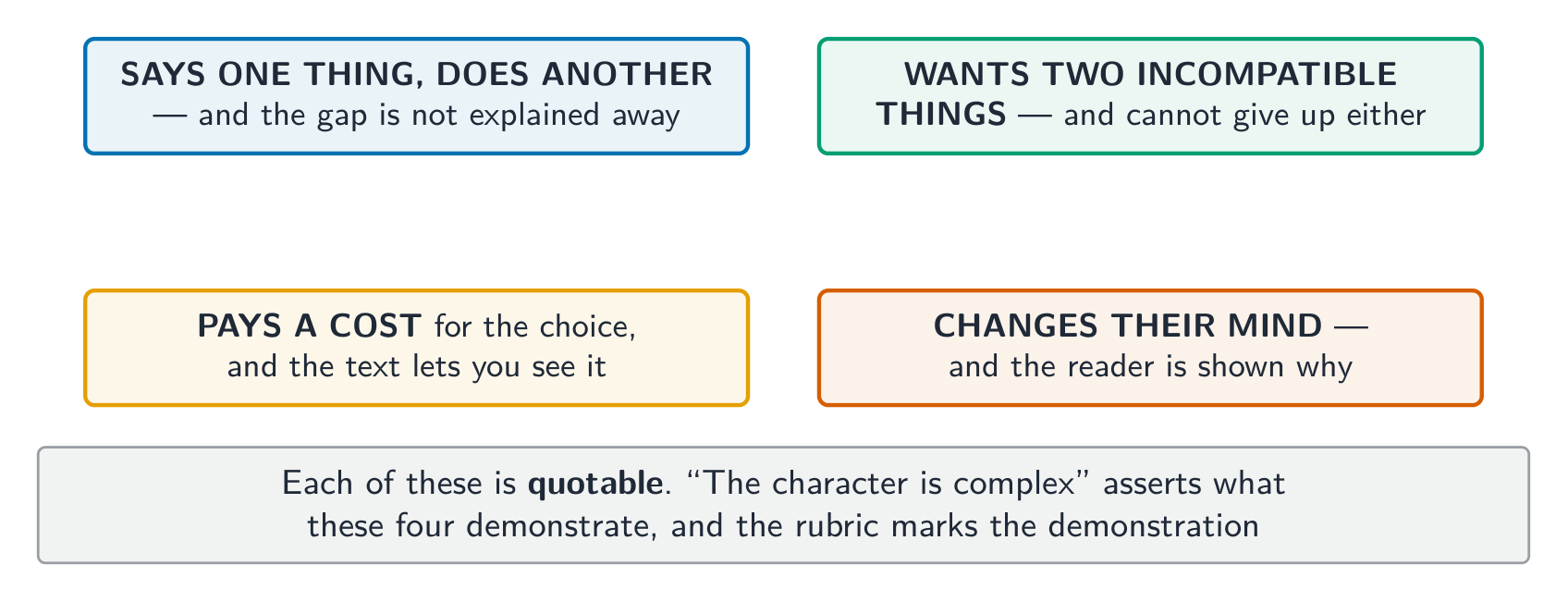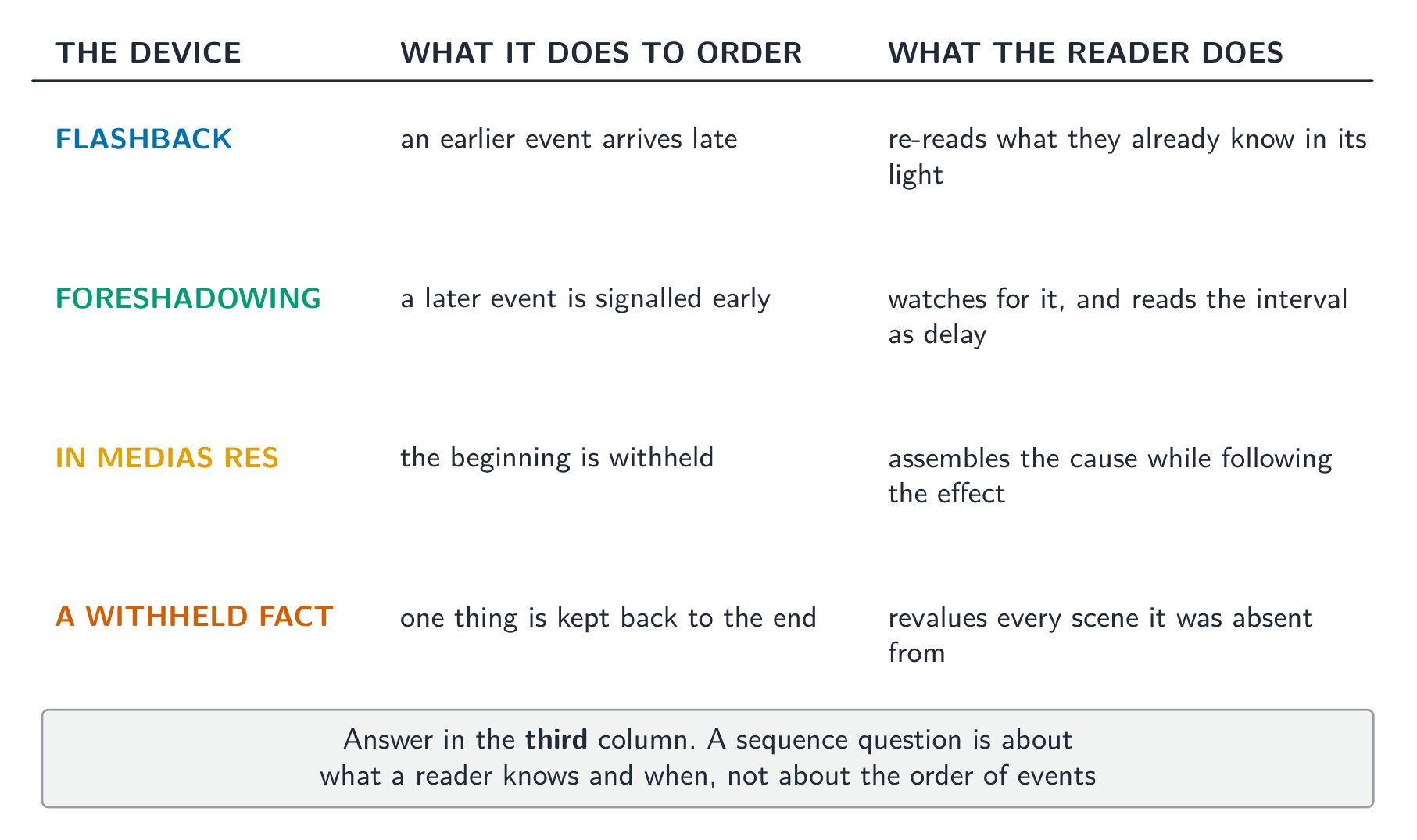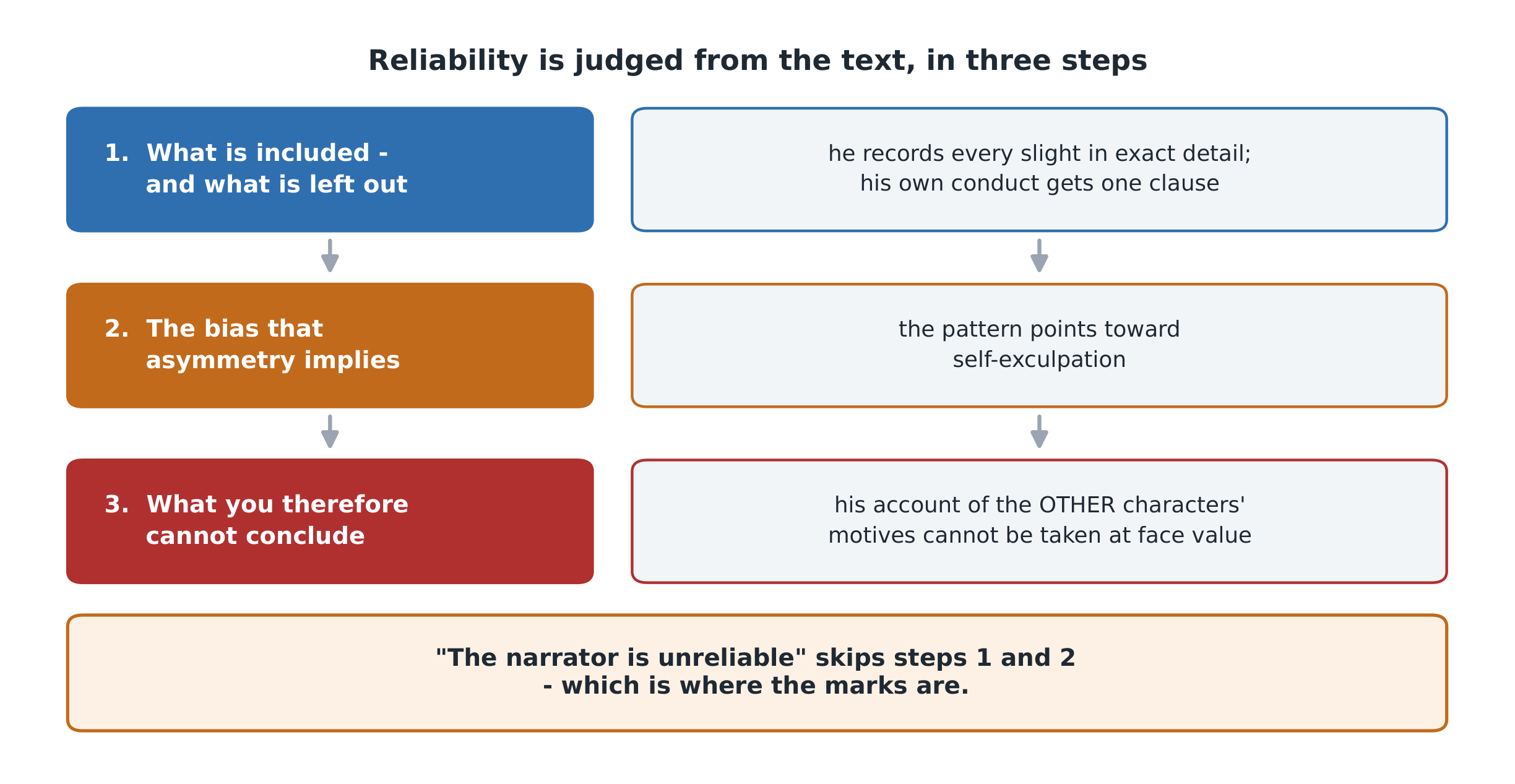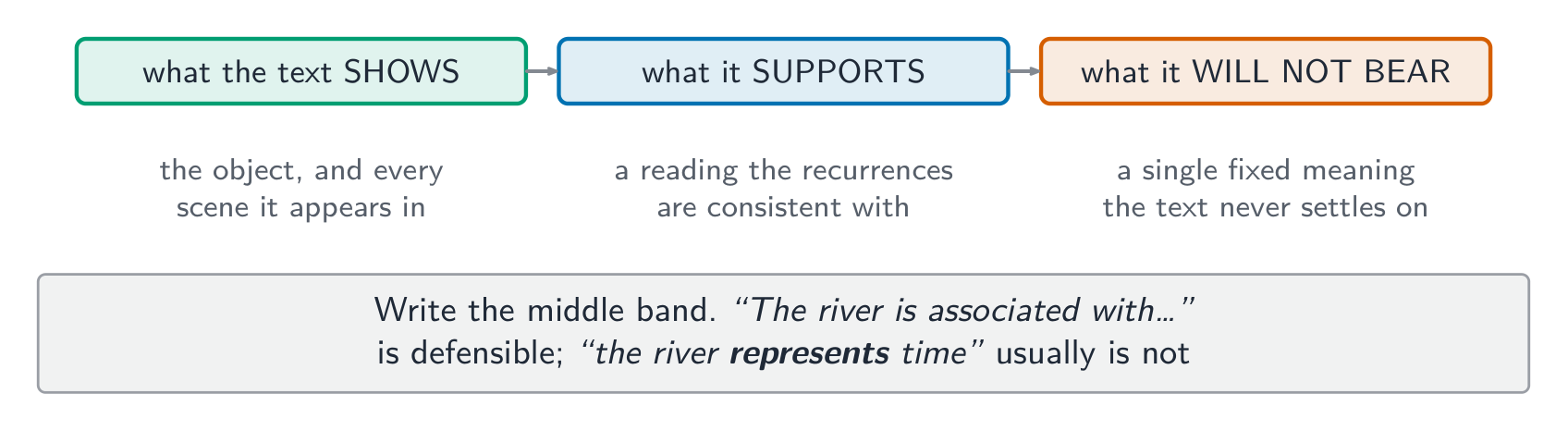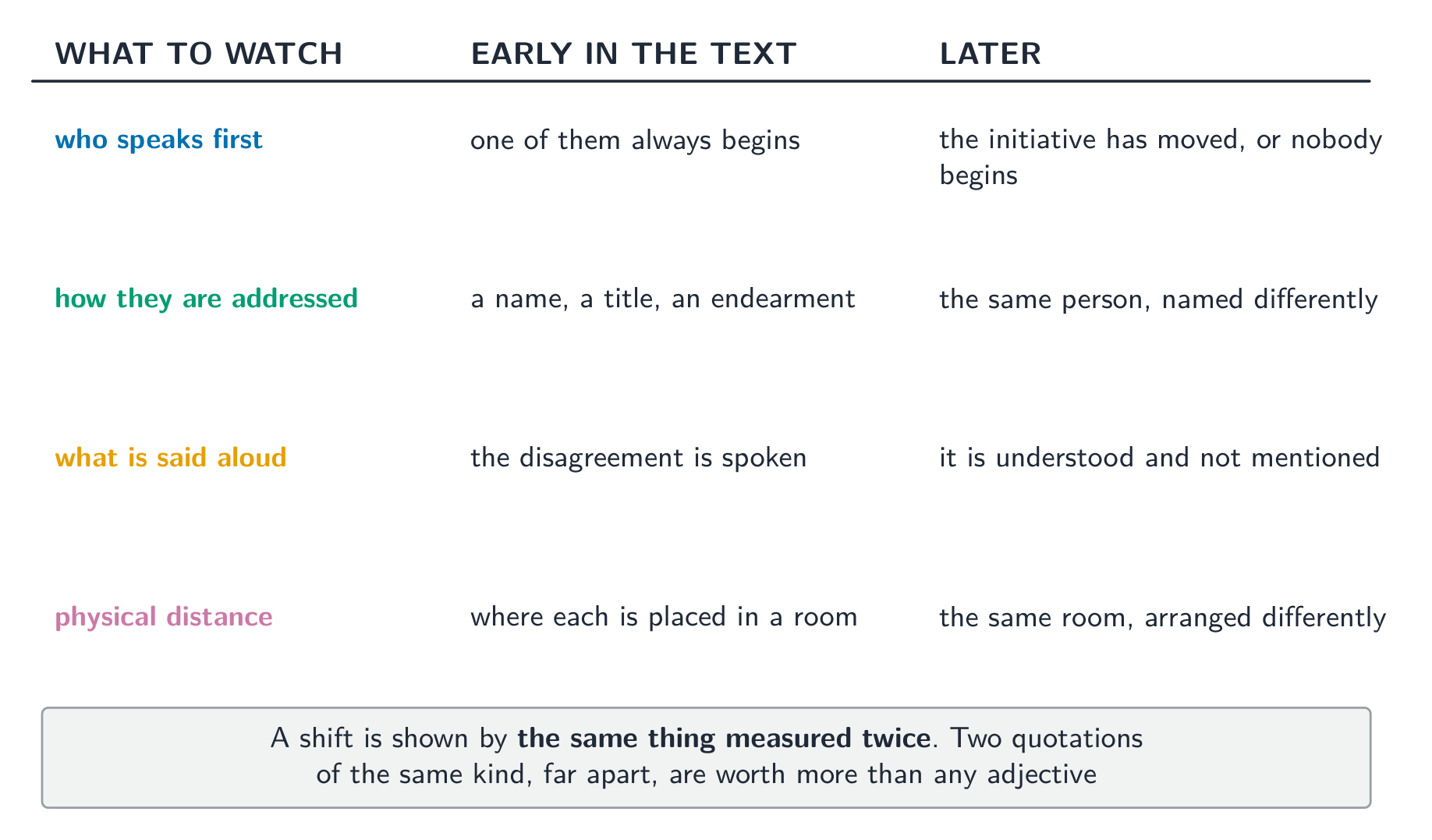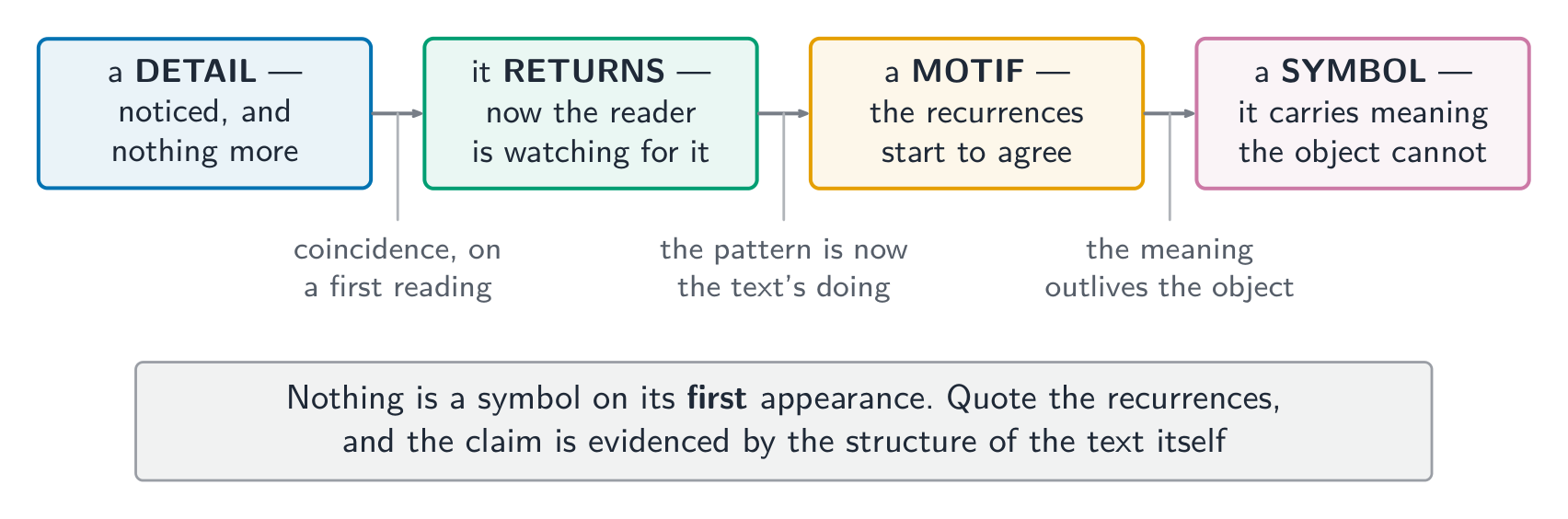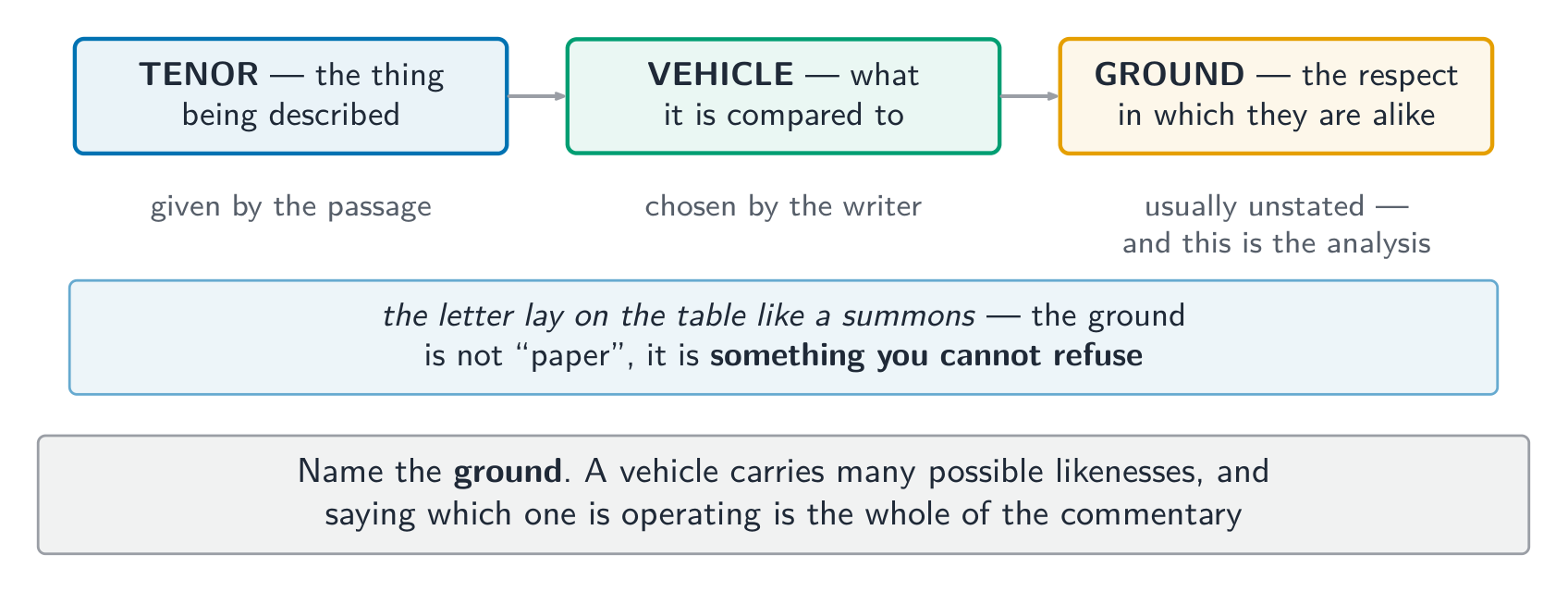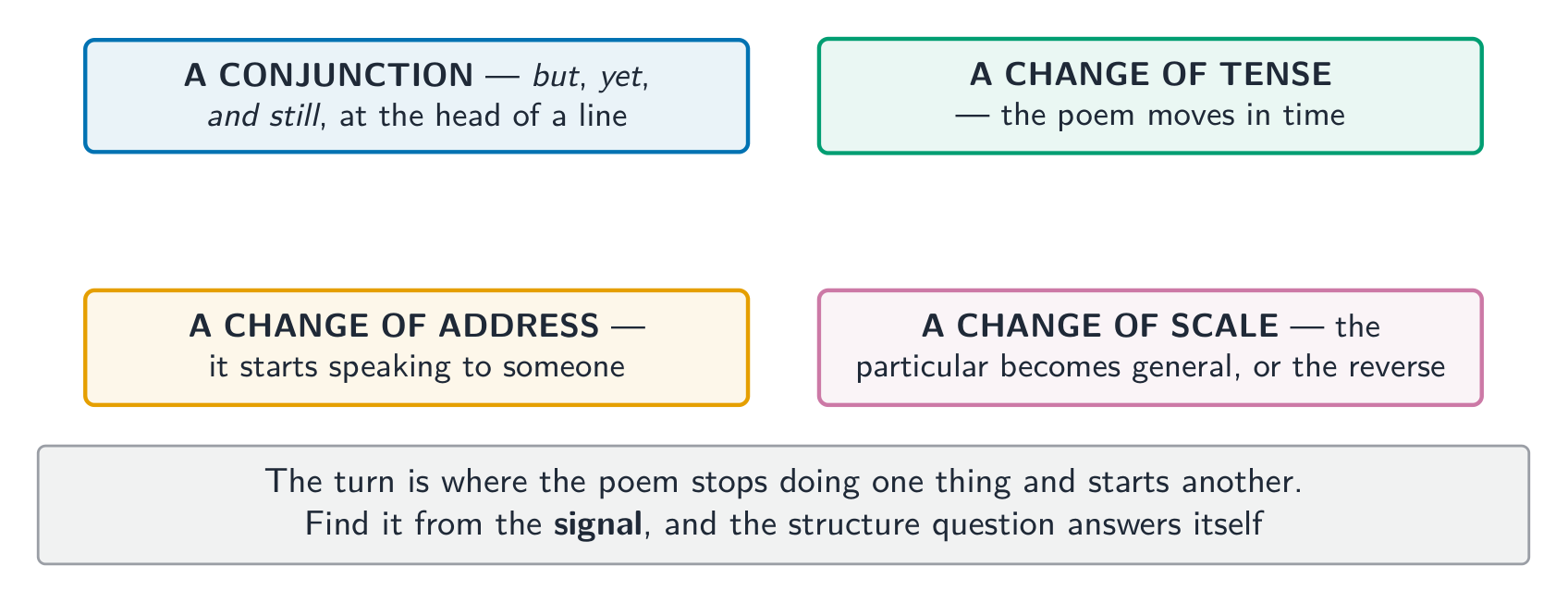
Skip to content · ⁨الانتقال إلى المحتوى⁩
Subjects · ⁨المواد⁩

AP English Literature and Composition · ⁨الأدب والتأليف الإنجليزي (AP)⁩

Tips

آداب إنجليزية AP والتأليف يعلم القراءة العميقة والحجة الأدبية عبر ثلاثة أنواع من النصوص، يُستعرض كل منها ثلاث مرات: الخيال القصير، الشعر، والخيال الطويل أو المسرحية. الوحدات دوّارية، لذا تعود نفس المهارات بعمق أكبر.

يُنظم المقرر حسب عنصر أدبي: الشخصية، الزمان والمكان، البنية، السرد، اللغة المجازية، والحجة الأدبية. لكل عنصر مهاراته الخاصة، ويطلب كل منها نفس السؤال الجوهري - ماذا يفعل هذا الاختيار *في النص*؟

"وظيفة" هي العبارة التي يجب الانتباه إليها. يطرح الإطار مرارًا وتكرارًا وظيفة رمز، أو تناقض، أو تحول في السرد. تحديد الأداة هو الخطوة الأولى؛ شرح الدور الذي تقوم به هو الإجابة.

يجب أن تكون التفسيرات مدعومة، وليست مجرد شخصية. تحصد القراءة درجات عندما تدعمها تفاصيل من النص وتُطور عبر الاستدلال، ولهذا السبب تسير الحجة الأدبية جنبًا إلى جنب مع كل عنصر.

تتبع الملاحظات أدناه الوحدات التسعة بالترتيب الذي تحدده College Board، لذلك يتبادل الخيال القصير والشعر والأعمال الطويلة تمامًا كما يحدث في المقرر.

  • 1

    Short Fiction I · ⁨القصة القصيرة I⁩

    Watch lesson · ⁨شاهد الدرس⁩
    1.1

    What Textual Details Reveal About a Character · ⁨ما تكشفه التفاصيل النصية عن الشخصية⁩

    Syllabus · ⁨المنهج⁩
    English

    Enduring Understanding (CHR-1): Characters in literature allow readers to study and explore a range of values, beliefs, assumptions, biases, and cultural norms represented by those characters.

    Learning Objective 1.A: Identify and describe what specific textual details reveal about a character, that character’s perspective, and that character’s motives.

    • CHR-1.A Description, dialogue, and behavior reveal characters to readers.
    • CHR-1.B Descriptions of characters may come from a speaker, narrator, other characters, or the characters themselves.
    • CHR-1.C Perspective is how narrators, characters, or speakers understand their circumstances, and is informed by background, personality traits, biases, and relationships.
    • CHR-1.D A character’s perspective is both shaped and revealed by relationships with other characters, the environment, the events of the plot, and the ideas expressed in the text.
    العربية

    فهم دائم (CHR-1): الشخصيات في الأدب تتيح للقراء دراسة واستكشاف مجموعة متنوعة من القيم والمعتقدات والفرضيات والتحيزات والأعراف الثقافية التي تمثلها تلك الشخصيات.

    هدف التعلم 1.A: تحديد ووصف ما تكشفه التفاصيل النصية المحددة عن شخصية، وجهة نظر تلك الشخصية، ودوافعها.

    • CHR-1.A الوصف والحوار والسلوك يكشفون الشخصيات للقراء.
    • CHR-1.B قد تأتي وصفات الشخصيات من متحدث، راوي، شخصيات أخرى، أو الشخصيات نفسها.
    • CHR-1.C منظور هو كيفية فهم الرواة أو الشخصيات أو المتحدثين لظروفهم، ويتأثر بالخلفية السيرة الذاتية والسمات الشخصية والتحيزات والعلاقات.
    • CHR-1.D منظور الشخصية يتشكل ويكشف عن نفسه من خلال العلاقات مع الشخصيات الأخرى، والبيئة، وأحداث الحبكة، والأفكار المعبرة في النص.
    Source: College Board AP Course and Exam Description · ⁨المصدر: وصف دورة وامتحان College Board AP⁩

    English

    AP English Literature reads texts in three genres across nine units - short fiction, poetry, and longer fiction or drama, each visited three times at increasing difficulty. Unit 1 installs the tools for all of them.

    Character 人物 is revealed by three things, and the CED names them exactly:

    • Description, dialogue, and behaviour 描写、对话与行为 reveal characters to readers.
    • Descriptions may come from a speaker, narrator, other characters, or the characters themselves - so who is describing is part of the evidence.
    • Perspective 视角 is how narrators, characters, or speakers understand their circumstances, informed by background, experience, and values.
    • A character's perspective is both shaped and revealed by relationships with other characters, the environment, and events.

    That last point is the one that turns character notes into analysis. A character is not a list of adjectives; a character is a way of seeing, which becomes visible in what they notice, what they misread, and how they respond.

    العربية

    الأدب الإنجليزي AP يقرأ نصوصاً في ثلاثة أنواع عبر تسع وحدات - القصة القصيرة، والشعر، والأعمال الطويلة أو المسرحيات، كل منها يُؤخذ ثلاث مرات بصعوبة متزايدة. وحدتي 1 تُرسّخ الأدوات لجميعها.

    الشخصية 人物 تُكشف من خلال ثلاثة things، ويحدد CED اسمها بدقة:

    • الوصف، والحوار، والسلوك 描写、对话与行为 يكشف الشخصيات للقراء.
    • قد يأتي الوصف من متحدث، راوي، شخصيات أخرى، أو الشخصيات نفسها - لذا فإن من يصف جزء من الدليل.
    • المنظور 视角 هو كيف يفهم الرواة، أو الشخصيات، أو المتحدثون ظروفهم، بناءً على الخلفية والتجربة والقيم.
    • منظور الشخصية يتشكل ويُكشف من خلال العلاقات مع الشخصيات الأخرى، والبيئة، والأحداث.

    النقطة الأخيرة هي التي تحول ملاحظات الشخصية إلى تحليل. الشخصية ليست قائمة بصفات؛ بل هي طريقة للنظر، تظهر في ما تلاحظه، وما تسيء فهمه، وكيف تستجيب.

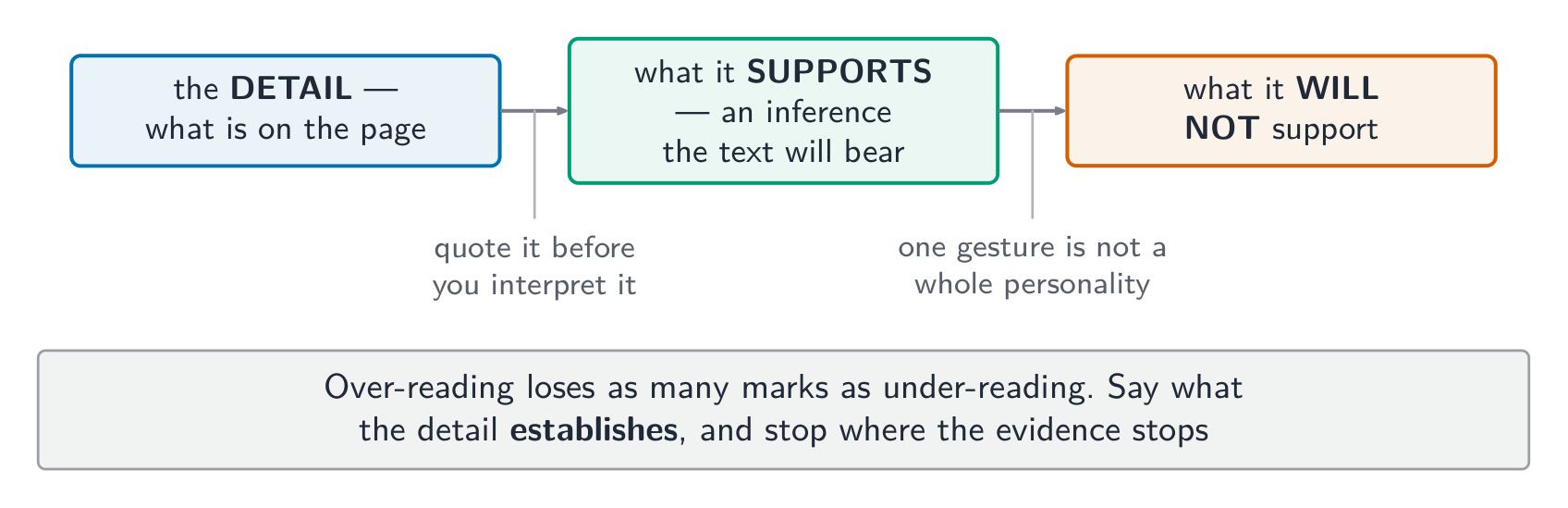
    قل ما确立ه التفصيل، وتوقف عند حدود الدليل
    Explore · ⁨استكشف⁩

    Take a detail exactly as far as it goes · ⁨خُذ تفصيلًا إلى أقصى حد ما يصل إليه⁩

    Over-reading loses as many marks as under-reading: say what the detail establishes, and stop where the evidence stops. · ⁨التفسير المفرط يكتسب نفس عدد الدرجات المفقودة بسبب التفسير غير الكافي: اذكر ما يثبته التفصيل، وتوقف حيث ينتهي الدليل.⁩

    1.2

    Textual Details That Convey Setting · ⁨تفاصيل نصية تنقل المشهد⁩

    Syllabus · ⁨المنهج⁩
    English

    Enduring Understanding (SET-1): Setting and the details associated with it not only depict a time and place, but also convey values associated with that setting.

    Learning Objective 2.A: Identify and describe specific textual details that convey or reveal a setting.

    • SET-1.A Setting includes the time and place during which the events of the text occur.
    العربية

    فهم دائم (SET-1): الخلفية الزمنية والمكانية والتفاصيل المرتبطة بها لا تصور فقط وقتاً ومكاناً، بل تنقل أيضاً القيم المرتبطة بتلك الخلفية الزمنية والمكانية.

    هدف التعلم 2.A: تحديد ووصف تفاصيل نصية محددة تنقل أو تكشف عن الزمان والمكان (الإطار).

    • SET-1.A الإطار يشمل الوقت والمكان اللذين تحدث فيهما أحداث النص.

    Source: College Board AP Course and Exam Description · ⁨المصدر: وصف دورة وامتحان College Board AP⁩

    English

    Setting 背景 includes the time and place during which the events of the text occur.

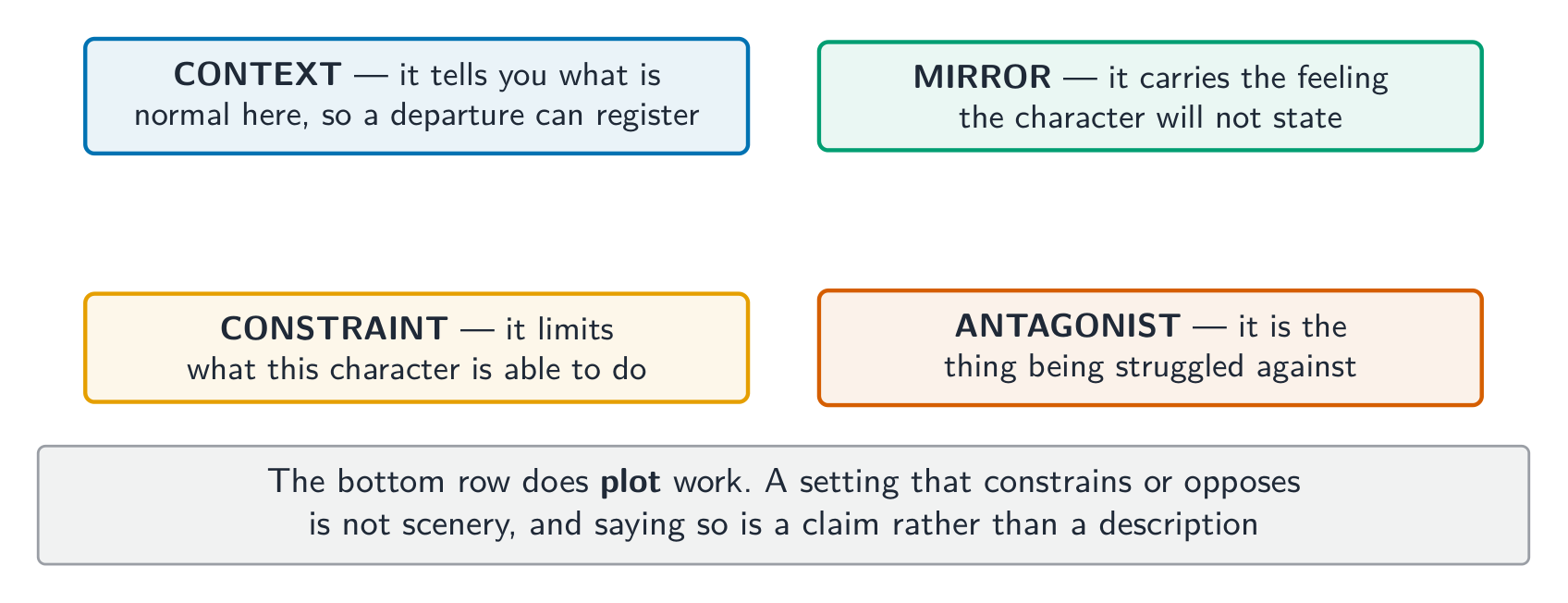
    The CED's definition is deliberately minimal, and that is the trap. Setting earns marks not when it is described but when it is shown doing something - constraining a character, explaining a value, or contrasting with an interior state. A paragraph that establishes where a story happens has not yet made a claim.

    العربية

    المشهد 背景 يشمل الزمان والمكان الذي تحدث فيه أحداث النص.

    تعريف CED متعمد وبسيط، وهذا هو الفخ. المشهد يحصل على درجات ليس عندما يُوصف ولكن عندما يُظهر قيامه بشيء - تقييد شخصية، أو شرح قيمة، أو التناقض مع حالة داخلية. فقرة تحدد مكان حدوث القصة لم تقدم بعد أي ادعاء.

    1.3

    How Plot Orders Events · ⁨كيف يرتب Plot الأحداث⁩

    Syllabus · ⁨المنهج⁩
    English

    Enduring Understanding (STR-1): The arrangement of the parts and sections of a text, the relationship of the parts to each other, and the sequence in which the text reveals information are all structural choices made by a writer that contribute to the reader’s interpretation of a text.

    Learning Objective 3.A: Identify and describe how plot orders events in a narrative.

    • STR-1.A Plot is the sequence of events in a narrative; events throughout a narrative are connected, with each event building on the others, often with a cause-and-effect relationship.
    • STR-1.B The dramatic situation of a narrative includes the setting and action of the plot and how that narrative develops to place characters in conflict(s), and often involves the rising or falling fortunes of a main character or set of characters.
    العربية

    فهم دائم (STR-1): ترتيب أجزاء ونصوص النص، وعلاقة الأجزاء ببعضها البعض، والتسلسل الذي يكشف به النص عن المعلومات هي جميعًا اختيارات بنائية يقوم بها الكاتب تساهم في تفسير القارئ للنص.

    هدف التعلم 3.A: تحديد ووصف كيفية ترتيب Plot الأحداث في السرد.

    • STR-1.A Plot هو تسلسل الأحداث في السرد؛ ترتبط الأحداث عبر السرد، حيث يستند كل حدث إلى الآخر، وغالبًا ما تكون هناك علاقة سببية بين events.
    • STR-1.B الوضع الدرامي للسرد يتضمن الإطار وإجراءات plot وكيفية تطور هذا السرد لوضع الشخصيات في صراعات، وغالبًا ما يتضمن صعود أو هبوط حظ البطل أو مجموعة من الشخصيات.

    Source: College Board AP Course and Exam Description · ⁨المصدر: وصف دورة وامتحان College Board AP⁩

    English
    • Plot 情节 is the sequence of events in a narrative; events are connected, each building on those before it.
    • The dramatic situation 戏剧情境 includes the setting and action of the plot and how the narrative develops to place characters in conflict.

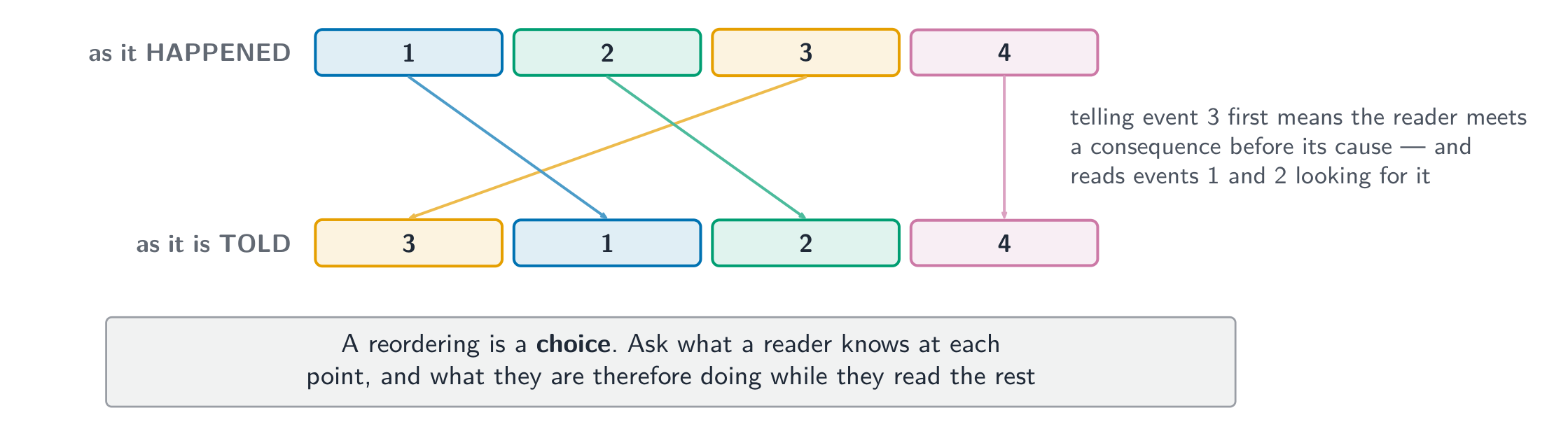
    The word sequence is doing work. Plot is not the events but their order - and an author who reveals something late that happened early has made a choice you can analyse.

    العربية
    • Plot 情节 هو تسلسل الأحداث في السرد؛ الأحداث مترابطة، كل منها يبني على ما سبقه.
    • الموقف الدرامي 戏剧情境 يشمل المشهد والحركة للplot وكيف يتطور السرد لوضع الشخصيات في صراع.

    كلمة تسلسل تقوم بعمل. الـ plot ليس الأحداث بل ترتيبها - وكاتب يكشف شيئاً حدث متأخراً لكنه وقع مبكراً فقد اتخذ قراراً يمكنك تحليله.

    الترتيب الذي حدثت به الأحداث مقابل الترتيب الذي سُمعت به - الفرق هو اختيار
    Vocabulary · ⁨مفردات⁩ Train · ⁨تدريب⁩
    English العربية
    Character/ˈkærɪktə/ الشخصية
    Description, dialogue, and behaviour/dɪˈskrɪpʃn ˈdaɪəlɒɡ ænd bɪˈheɪvjə/ وصف، حوار، وسلوك
    Perspective/pəˈspektɪv/ وجهة النظر
    Setting/ˈsetɪŋ/ الإعداد
    Plot/plɒt/ الحبكة
    dramatic situation/drəˈmætɪk ˌsɪtʃuːˈeɪʃn/ الموقف الدرامي
    1.4

    The Function of a Sequence of Events · ⁨وظيفة تسلسل الأحداث⁩

    Syllabus · ⁨المنهج⁩
    English

    Enduring Understanding (STR-1): The arrangement of the parts and sections of a text, the relationship of the parts to each other, and the sequence in which the text reveals information are all structural choices made by a writer that contribute to the reader’s interpretation of a text.

    Learning Objective 3.B: Explain the function of a particular sequence of events in a plot.

    • STR-1.C Plot and the exposition that accompanies it focus readers’ attention on the parts of the narrative that matter most to its development, including characters, their relationships, and their roles in the narrative, as well as setting and the relationship between characters and setting.
    العربية

    فهم دائم (STR-1): ترتيب أجزاء ونصوص النص، وعلاقة الأجزاء ببعضها البعض، والتسلسل الذي يكشف به النص عن المعلومات هي جميعًا اختيارات بنائية يقوم بها الكاتب تساهم في تفسير القارئ للنص.

    هدف التعلم 3.B: شرح وظيفة سلسلة معينة من الأحداث في plot.

    • STR-1.C يركز plot والتقديم المصاحبه له انتباه القراء على أجزاء السرد الأكثر أهمية لتطوره، بما في ذلك الشخصيات، وعلاقاتها، وأدوارها في السرد، بالإضافة إلى الإطار والعلاقة بين الشخصيات والإطار.

    Source: College Board AP Course and Exam Description · ⁨المصدر: وصف دورة وامتحان College Board AP⁩

    English

    Plot and the exposition that accompanies it focus readers' attention on the parts of the narrative that matter most to the text's meaning.

    That sentence is the whole method for prose analysis: proportion is evidence. What the text lingers over, and what it passes in a clause, is the author telling you where to look.

    العربية

    الـ plot والنص التمهيدي المصاحِب له يركزان انتباه القراء على أجزاء السرد الأهم لمعنى النص.

    هذه الجملة هي المنهج الكامل لتحليل النثر: التناسب هو دليل. ما يتوقف عنده النص، وما يعبر عنه في جملة قصيرة، هو الكاتب يخبرك أين تنظر.

    1.5

    Identifying the Narrator or Speaker · ⁨تحديد الراوي أو المتحدث⁩

    Syllabus · ⁨المنهج⁩
    English

    Enduring Understanding (NAR-1): A narrator’s or speaker’s perspective controls the details and emphases that affect how readers experience and interpret a text.

    Learning Objective 4.A: Identify and describe the narrator or speaker of a text.

    • NAR-1.A Narrators or speakers relate accounts to readers and establish a relationship between the text and the reader.
    • NAR-1.B Perspective refers to how narrators, characters, or speakers see their circumstances, while point of view refers to the position from which a narrator or speaker relates the events of a narrative.
    • NAR-1.C A speaker or narrator is not necessarily the author.
    العربية

    فهم دائم (NAR-1): يحدد منظور الروائي أو المتحدث التفاصيل والتركيزات التي تؤثر على كيفية تجربة القارئ وتفسيره للنص.

    هدف التعلم 4.A: تحديد ووصف الراوي أو متحدث النص.

    • NAR-1.A يروي الروائيون أو المتحدثون الحكايات للقراء ويقررون علاقة بين النص والقارئ.
    • NAR-1.B يشير منظور إلى كيفية رؤية الراوي أو الشخصيات أو المتحدث لظروفه، بينما تشير نقطة النظر إلى الموقع الذي يروي منه راوي أو متحدث أحداث السرد.
    • NAR-1.C المتحدث أو الراوي ليس بالضرورة هو المؤلف.

    Source: College Board AP Course and Exam Description · ⁨المصدر: وصف دورة وامتحان College Board AP⁩

    English
    • Narrators or speakers relate accounts and establish a relationship between the text and the reader.
    • Perspective refers to how narrators, characters, or speakers see their circumstances; point of view 叙述视点 refers to the position from which they relate the account.
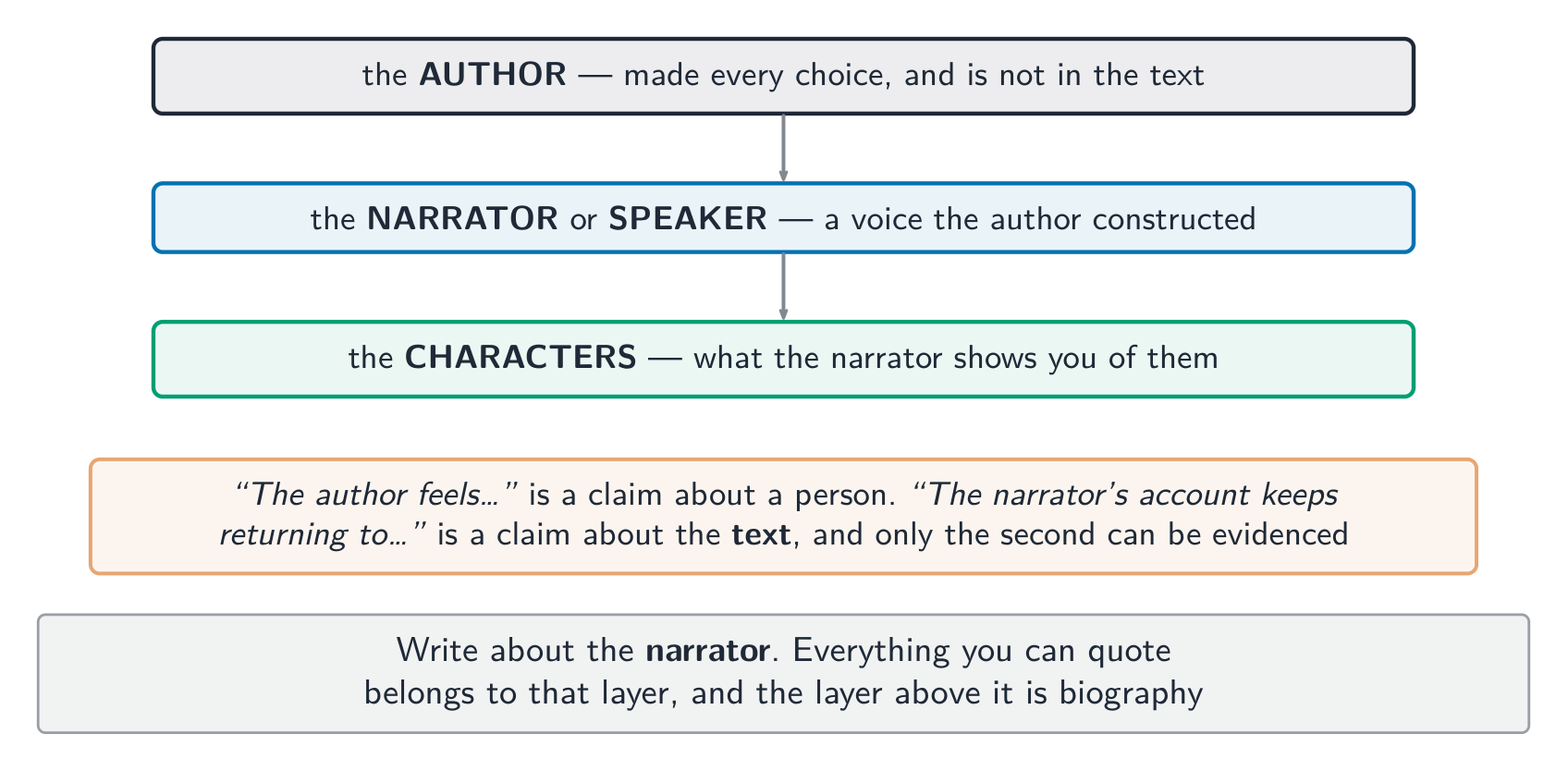
    • A speaker or narrator is not necessarily the author. Never write "the author feels" about a first-person narrator.
    العربية
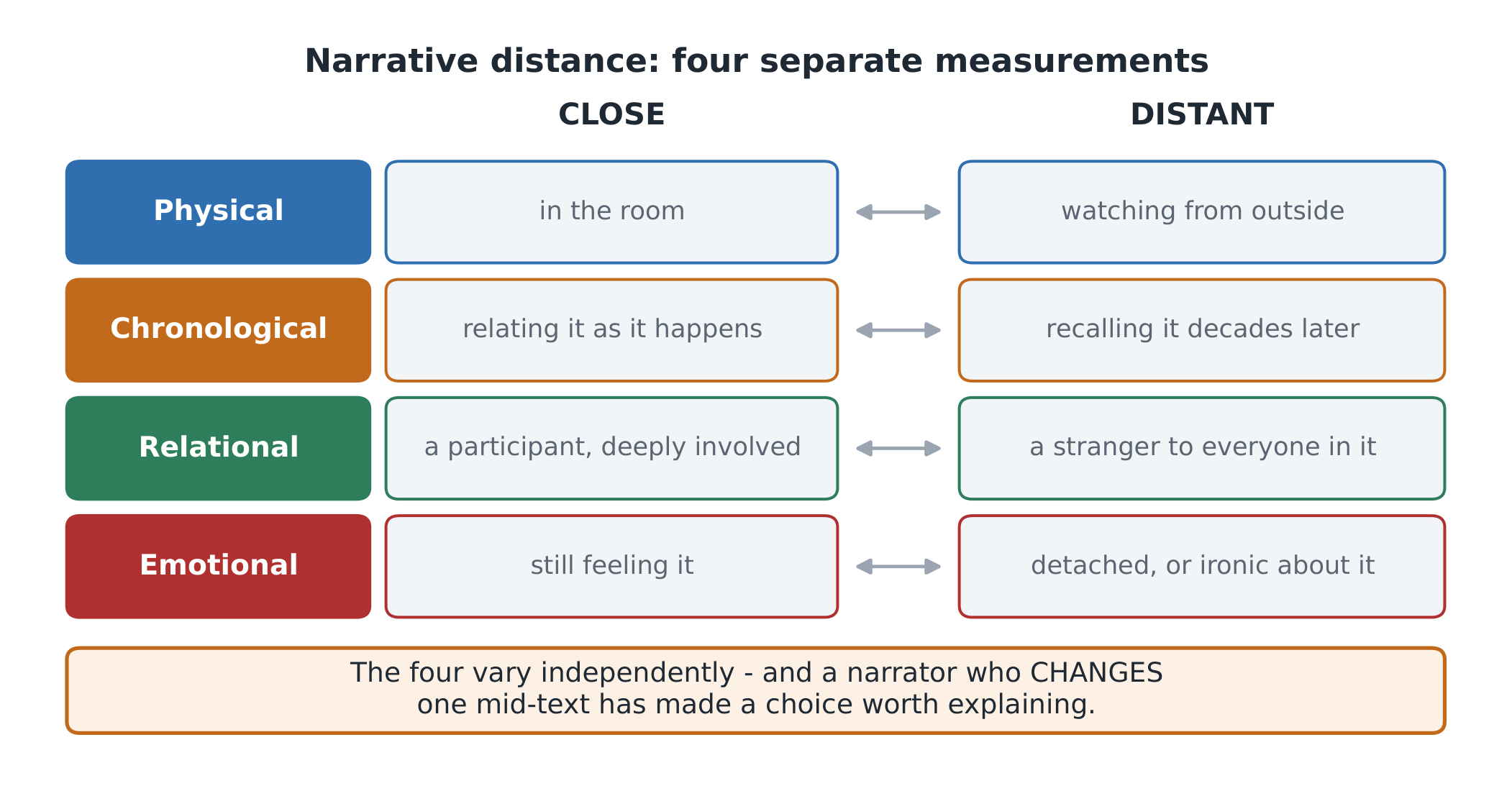
    ما يمكن لكل نقطة نظر أن تعطيك إياها - وما لا تستطيع - وأن هذا الحد هو التحليل
    المنظور هو كيف يرى؛ ونقطة النظر هي حيث يقف. يفصل CED بينهما، وعليك أن تفعل مثله
    • الرواة أو المتحدثون يروون حسابات ويؤسسون علاقة بين النص والقارئ.
    • المنظور يشير إلى كيف يرى الرواة، أو الشخصيات، أو المتحدثون ظروفهم؛ نقطة النظر 叙述视点 تشير إلى الموضع الذي يروون منه الحساب.
    • المتحدث أو الراوي ليس بالضرورة المؤلف. لا تكتب أبداً "يشعر المؤلف" عن راوي الضمير الأول.
    اكتب عن الراوي: كل ما يمكنك اقتباسه ينتمي لتلك الطبقة
    Explore · ⁨استكشف⁩

    Sort each statement by the layer it belongs to · ⁨رتب كل عبارة حسب الطبقة التي تنتمي إليها⁩

    Everything you can quote belongs to the narrator's layer. The layer above it is biography. · ⁨كل ما يمكنك الاستشهاد به ينتمي لطبقة الراوي. الطبقة التي تعلوها هي السيرة الذاتية.⁩

    Vocabulary · ⁨مفردات⁩ Train · ⁨تدريب⁩
    English العربية
    point of view/pɔɪnt ɒv vjuː/ وجهة النظر
    observational to all-knowing/ɒbzəˈveɪʃənl tʊ ɔːl ˈnəʊɪŋ/ رصدية إلى كل ما يعلم
    1.6

    The Function of Point of View · ⁨وظيفة نقطة النظر⁩

    Syllabus · ⁨المنهج⁩
    English

    Enduring Understanding (NAR-1): A narrator’s or speaker’s perspective controls the details and emphases that affect how readers experience and interpret a text.

    Learning Objective 4.B: Identify and explain the function of point of view in a narrative.

    • NAR-1.D The point of view contributes to what narrators, characters, or speakers can and cannot provide in a text based on their level of involvement and intimacy with the details, events, or characters.
    • NAR-1.E Narrators may also be characters, and their role as characters may influence their perspective.
    • NAR-1.F First-person narrators are involved in the narrative; their relationship to the events of the plot and the other characters shapes their perspective.
    • NAR-1.G Third-person narrators are outside observers.
    • NAR-1.H Third-person narrators’ knowledge about events and characters may range from observational to all-knowing, which shapes their perspective.
    • NAR-1.I The outside perspective of third-person narrators may not be affected by the events of the narrative.
    العربية

    فهم دائم (NAR-1): يحدد منظور الروائي أو المتحدث التفاصيل والتركيزات التي تؤثر على كيفية تجربة القارئ وتفسيره للنص.

    الهدف التعليمي 4.B: تحديد وشرح وظيفة نقطة النظر في نص سردي.

    • NAR-1.D تساهم نقطة النظر فيما يمكن للرواة أو الشخصيات أو المتحدثين تقديمه أو عدم قدرتهم على ذلك في النص بناءً على مستوى انخراطهم وقربهم من التفاصيل أو الأحداث أو الشخصيات.
    • NAR-1.E قد يكون الرواة شخصيات أيضًا، وقد يؤثر دورهم كشخصيات على منظورهم.
    • NAR-1.G راويون بالضمير الغائب هم مراقبون خارجيون.
    • NAR-1.H قد يتراوح معرفة راوي الضمير الغائب بالأحداث والشخصيات بين المراقبة والمعرفة الشاملة، مما يشكل منظورهم.
    • NAR-1.I قد لا يتأثر المنظور الخارجي للروايين بالضمير الغائب بأحداث السرد.
    • NAR-1.I قد لا يتأثر المنظور الخارجي للروائيين من الشخص الثالث بأحداث السرد.

    Source: College Board AP Course and Exam Description · ⁨المصدر: وصف دورة وامتحان College Board AP⁩

    English
    • Point of view contributes to what narrators can and cannot provide in a text, based on their position.
    • Narrators may also be characters, and that role may influence their perspective.
    • First-person narrators are involved in the narrative; their relationship to events and to other characters shapes what they can tell you.
    • Third-person narrators are outside observers, and their knowledge may range from observational to all-knowing 全知.
    • The outside perspective of a third-person narrator may not be affected by the events of the narrative.

    The analytical payoff is the cannot. A first-person narrator cannot report what they did not witness or will not admit, and every gap is meaningful. A limited third-person narrator confines you to one consciousness, which is a choice about whose experience counts.

    العربية
    • تساهم نقطة النظر في ما يمكن للرواة تقديمه وما لا يستطيعونه في النص، بناءً على موقعهم.
    • قد يكون الرواة أيضاً شخصيات، وقد يؤثر هذا الدور على منظورهم.
    • الرواة من الضمير الأول مشاركون في السرد؛ علاقتهم بالأحداث وبشخصيات أخرى تشكل ما يمكنهم إخبارك به.
    • الرواة من الضمير الثالث مراقبون خارجيون، وقد تتراوح معرفتهم من المراقبة إلى المعرفة الكاملة 全知.
    • المنظور الخارجي للراوي من الضمير الثالث قد لا يتأثر بأحداث السرد.

    العائد التحليلي هو كلمة لا يستطيع. الراوي من الضمير الأول لا يستطيع الإبلاغ عما لم يشهده أو لن يعترف به، وكل فراغ ذو معنى. الراوي المحدود من الضمير الثالث يحملك في وعي واحد، وهو اختيار حول من تُحسب تجربته.

    1.7

    Developing a Paragraph with Claim and Evidence · ⁨تطوير فقرة بالادعاء والدليل⁩

    Syllabus · ⁨المنهج⁩
    English

    Enduring Understanding (LAN-1): Readers establish and communicate their interpretations of literature through arguments supported by textual evidence.

    Learning Objective 7.A: Develop a paragraph that includes 1) a claim that requires defense with evidence from the text and 2) the evidence itself.

    • LAN-1.A In literary analysis, writers read a text closely to identify details that, in combination, enable them to make and defend a claim about an aspect of the text.
    • LAN-1.B A claim is a statement that requires defense with evidence from the text.
    • LAN-1.C In literary analysis, the initial components of a paragraph are the claim and textual evidence that defends the claim.
    العربية

    فهم دائم (LAN-1): يضع القارئ تفسيراتهم للأدب ويبلغون عنها من خلال حجج مدعومة بأدلة نصية.

    هدف التعلم 7.A: تطوير فقرة تتضمن 1) ادعاء يتطلب الدفاع عنه بدليل من النص و2) الدليل نفسه.

    • LAN-1.B الادعاء هو عبارة تتطلب الدفاع عنها بدليل من النص.
    • LAN-1.C في التحليل الأدبي، تتكون المكونات الأولية للفقرة من الادعاء والدليل النصي الذي يدافع عنه.
    • LAN-1.C في التحليل الأدبي، تتكون المكونات الأولية للفقرة من الادعاء والدليل النصي الذي يدافع عن الادعاء.

    Source: College Board AP Course and Exam Description · ⁨المصدر: وصف دورة وامتحان College Board AP⁩

    English
    • In literary analysis, writers read a text closely to identify details that, in combination, enable them to make and defend a claim.
    • A claim is a statement that requires defence with evidence from the text.
    • The initial components of a paragraph are the claim and the textual evidence that defends it.

    Note in combination. A single detail rarely supports an interpretive claim; two or three details that point the same way do.

    Worked example (a real AP exam task). The AP Literature free-response section has three questions - poetry analysis, prose fiction analysis, and a literary argument on a work you choose - all marked on a six-point rubric: thesis 1, evidence and commentary 4, sophistication 1. For a prose fiction prompt asking how the author uses narrative techniques to reveal a character's attitude, a weak answer writes "the narrator is first-person, which makes it personal." A scoring answer uses the cannot: "Because the narrator is a participant recounting events years later, the account gives us his present judgement of his younger self and withholds what the other characters thought - so the reader receives his self-criticism as the only available evidence, and must decide whether the harshness of it is accuracy or performance." Point of view, its limit, and the effect on the reader.

    العربية
    • في التحليل الأدبي، يقرأ الكُتّاب نصاً بعناية لتحديد تفاصيل تسمح لهم، مجتمعة، بصياغة دفاع عن ادعاء.
    • الادعاء هو عبارة تحتاج إلى دفاع بدليل من النص.
    • المكوّنات الأولية للفقرة هي الادعاء والدليل النصي الذي يدافع عنه.

    لاحظ مجتمعة. نادراً ما يدعم تفصيل فردي ادعاءً تفسيرياً؛ لكن تفصيلين أو ثلاثة تتجه نحو نفس الاتجاه يفعل ذلك.

    مثال محلول (مهمة حقيقية من امتحان AP). يحتوي الجزء الخاص بالإجابات الحرة في امتحان الأدب AP على ثلاثة أسئلة - تحليل القصيدة، وتحليل النثر الروائي، وحجة أدبية حول عمل تختاره - جميعها تُدرَّج بناءً على مقياس تقييم من ست نقاط: الأطروحة 1، والأدلة والتعليق 4، والعمق 1. بالنسبة لموضوع نثر روائي يطلب كيفية استخدام الكاتب للتقنيات السردية لكشف موقف شخصية ما، تكون الإجابة الضعيفة: "السرد من الشخص الأول مما يجعله شخصيًا." أما الإجابة التي تحصل على الدرجة الكاملة فتستخدم استحالة: "لأن الراوي مشارك يُعيد سرد أحداث بعد سنوات، فإن الرواية تعكس حكمه الحالي عن نفسه في صباه وتُخفي آراء الشخصيات الأخرى - لذا يتلقى القارئ انتقاده لذاته كأول دليل متاح، ويتعين عليه أن يقرر ما إذا كانت قسوة هذا النقد دقة أو تمثيلاً." زاوية النظر، وحدودها، وتأثيرها على القارئ."

    1.7

    Exam tips · ⁨نصائح للامتحان⁩

    English
    • Character is a way of seeing, not a list of adjectives. Analyse what they notice and misread.
    • Setting must do something. Describing where a story happens is not yet a claim.
    • Plot is the order of events. A late revelation of an early event is an authorial choice worth analysing.
    • Proportion is evidence. What the text lingers over is where the meaning is.
    • The narrator is not the author. Never write "the author feels" about a first-person narrator.
    • The analytical gold in point of view is what the narrator cannot provide.
    العربية
    • الشخصية هي طريقة للرؤية، وليست مجرد قائمة بالصفات. حلل ما تلاحظه وما تخطئه.
    • الإطار الزمان والمكان يجب أن يقوم بدور. وصف مكان وقوع القصة ليس ادعاءً بحد ذاته.
    • الحبكة هي ترتيب الأحداث. الكشف المتأخر عن حدث سابق هو اختيار من المؤلف يستحق التحليل.
    • النسبة هي الدليل. ما يتوقف النص عنده هو حيث تكمن المعنى.
    • الراوي ليس الكاتب. لا تكتب أبدًا "يشعر الكاتب" عند الحديث عن راوي من الشخص الأول.
    • الذهب التحليلي في زاوية النظر هو ما لا يستطيع الراوي تقديمه.
  • 2

    Poetry I · ⁨الشعر I⁩

    Watch lesson · ⁨شاهد الدرس⁩
    2.1

    What Textual Details Reveal About a Character · ⁨ما تكشفه التفاصيل النصية عن الشخصية⁩

    Syllabus · ⁨المنهج⁩
    English

    Enduring Understanding (CHR-1): Characters in literature allow readers to study and explore a range of values, beliefs, assumptions, biases, and cultural norms represented by those characters.

    Learning Objective 1.A: Identify and describe what specific textual details reveal about a character, that character’s perspective, and that character’s motives.

    • CHR-1.E Characters reveal their perspectives and biases through the words they use, the details they provide in the text, the organization of their thinking, the decisions they make, and the actions they take.
    العربية

    فهم دائم (CHR-1): الشخصيات في الأدب تتيح للقراء دراسة واستكشاف مجموعة متنوعة من القيم والمعتقدات والفرضيات والتحيزات والأعراف الثقافية التي تمثلها تلك الشخصيات.

    هدف التعلم 1.A: تحديد ووصف ما تكشفه التفاصيل النصية المحددة عن شخصية، وجهة نظر تلك الشخصية، ودوافعها.

    • CHR-1.E تكشف الشخصيات عن وجهات نظرها وتحيزاتها من خلال الكلمات التي تستخدمها، والتفاصيل التي تقدمها في النص، وتنظيم تفكيرها، والقرارات التي تتخذها، والأفعال التي تقوم بها.

    Source: College Board AP Course and Exam Description · ⁨المصدر: وصف دورة وامتحان College Board AP⁩

    English

    Unit 2 is the course's first poetry unit, and it adds two things to Unit 1's toolkit: structure as an object of analysis, and figurative language 比喻性语言 handled precisely rather than by name-dropping.

    One addition on character first: characters reveal their perspectives and biases through the words they use, the details they provide, and the details they omit.

    That last item is the analytical opening. What a speaker does not mention, in a poem where everything is chosen, is evidence.

    العربية

    وحدتي 2 هي وحدة الشعر الأولى في المقرر، وتضيف شيئين إلى أدوات وحدتي 1: البنية كشيء للتحليل، واللغة المجازية比喻性语言 يتم التعامل معها بدقة بدلاً من مجرد ذكر الأسماء.

    إضافة أخرى تتعلق بالشخصية أولاً: الكشوفات الشخصية تحدد وجهات نظرهم وتحيزاتهم من خلال الكلمات التي يستخدمونها، والتفاصيل التي يقدمونها، والتفاصيل التي يتركونها خارج نطاق الحديث.

    هذا العنصر الأخير هو نقطة الانطلاق التحليلية. ما لا يذكره المتحدث، في قصيدة كل شيء فيها مُختار بعناية، هو دليل.

    2.2

    The Function of Structure in a Text · ⁨وظيفة البنية في النص⁩

    Syllabus · ⁨المنهج⁩
    English

    Enduring Understanding (STR-1): The arrangement of the parts and sections of a text, the relationship of the parts to each other, and the sequence in which the text reveals information are all structural choices made by a writer that contribute to the reader’s interpretation of a text.

    Learning Objective 3.C: Explain the function of structure in a text.

    • STR-1.D Line and stanza breaks contribute to the development and relationship of ideas in a poem.
    • STR-1.E The arrangement of lines and stanzas contributes to the development and relationship of ideas in a poem.
    • STR-1.F A text’s structure affects readers’ reactions and expectations by presenting the relationships among the ideas of the text via their relative positions and their placement within the text as a whole.
    العربية

    فهم دائم (STR-1): ترتيب أجزاء ونصوص النص، وعلاقة الأجزاء ببعضها البعض، والتسلسل الذي يكشف به النص عن المعلومات هي جميعًا اختيارات بنائية يقوم بها الكاتب تساهم في تفسير القارئ للنص.

    هدف التعلم 3.C: اشرح وظيفة البنية في النص.

    • STR-1.E يساهم ترتيب الأسطر والقوافي في تطوير الأفكار وعلاقتها في القصيدة.
    • STR-1.F تؤثر بنية النص على ردود أفعال القراء وتوقعاتهم من خلال عرض العلاقات بين أفكار النص عبر مواقعها النسبية ومكانتها داخل النص ككل.
    • STR-1.F تؤثر بنية النص على ردود أفعال القراء وتوقعاتهم من خلال عرض العلاقات بين أفكار النص عبر مواقعها النسبية وموضعها داخل النص ككل.

    Source: College Board AP Course and Exam Description · ⁨المصدر: وصف دورة وامتحان College Board AP⁩

    English
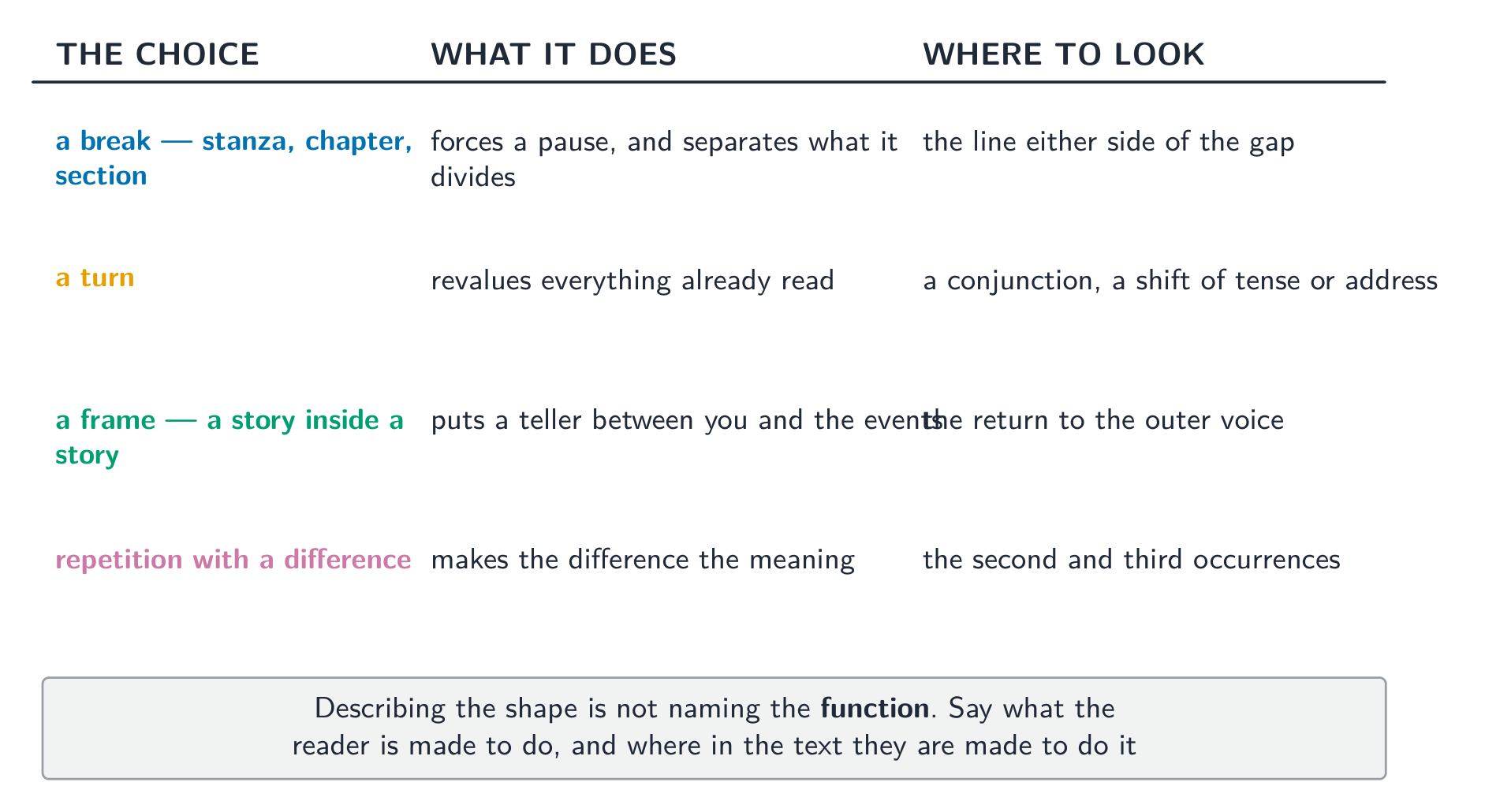
    • Line and stanza breaks 行与诗节的断开 contribute to the development and relationship of ideas in a poem.
    • The arrangement of lines and stanzas contributes to that development.
    • A text's structure affects readers' reactions and expectations by presenting the relationships among ideas.

    Structure in poetry is not decoration; it is punctuation for thought. Where a line breaks decides which words sit at the ends of lines, and the end of a line is the most emphatic position available. A sentence that runs past a line break asks the reader to hold something unresolved; one that stops at the break closes it.

    العربية
    • كسر الشطر وقسط القصيدة 行与诗节的断开 يساهمان في تطور الأفكار وعلاقاتها داخل القصيدة.
    • ترتيب الأشرطة والقسط يساهم في هذا التطور.
    • بنية النص تؤثر على ردود أفعال القراء وتوقعاتهم من خلال عرض العلاقات بين الأفكار.

    البنية في القصيدة ليست زينة؛ بل هي ترقيم للأفكار. المكان الذي ينقطع فيه الشطر يحدد الكلمات التي تأتي في نهايته، ونهاية الشطر هي الموقع الأكثر تأكيداً المتاح. الجملة التي تمتد عبر كسر شطر تدفع القارئ للإبقاء على شيء غير مكتمل؛ واحدة تتوقف عند الكسر تغلق الأمر.

    وصف الشكل ليس تحديد الوظيفة - قل ما يُفعل بالقارئ
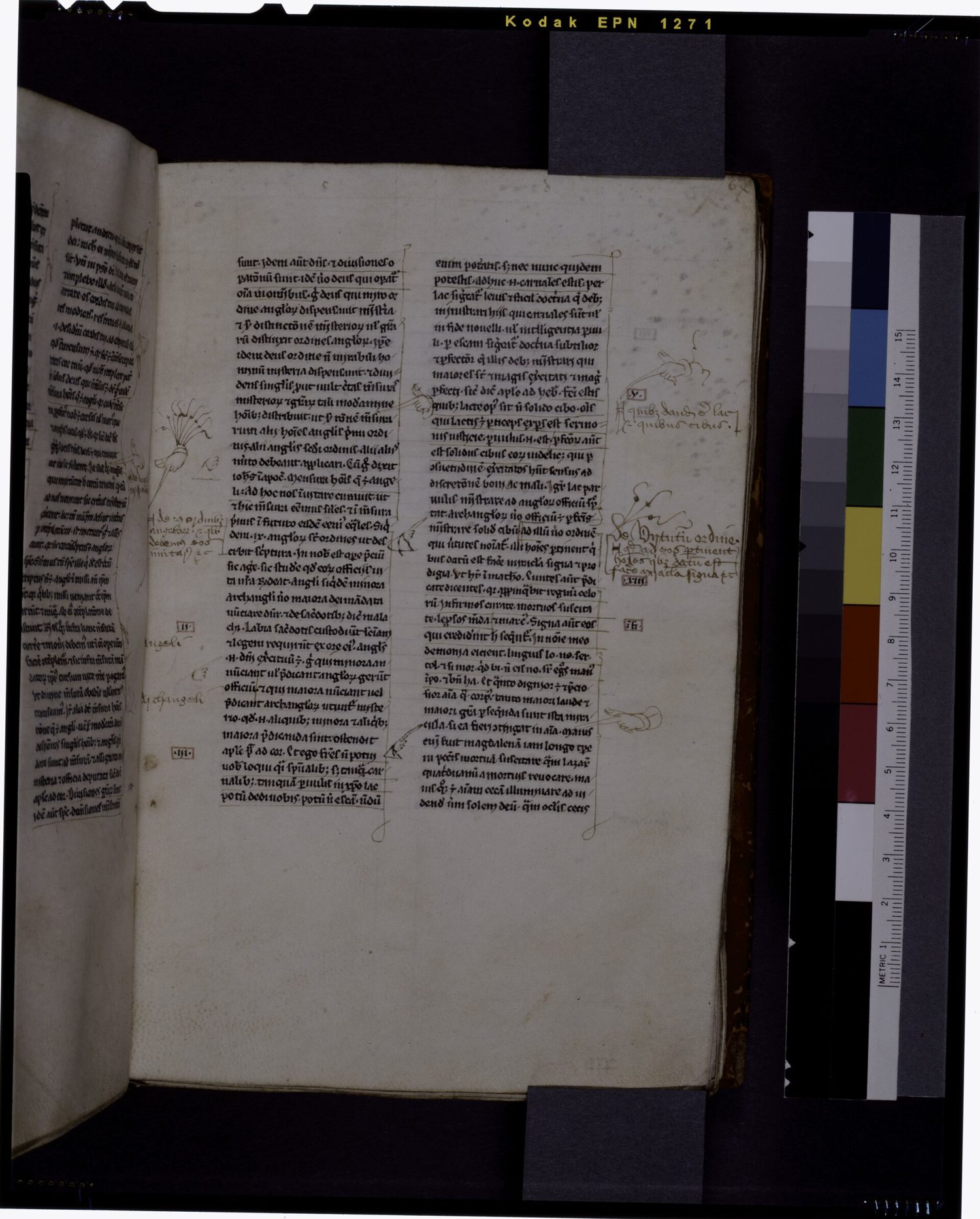
    صفحة تحمل تعليقها الخاص في الهوامش - القراءة الدقيقة، قبل عدة قرون
    Explore · ⁨استكشف⁩

    Match each structural choice to its function · ⁨طابق كل اختيار بنيوي بوظيفته⁩

    Describing the shape is not naming the function. Say what the reader is made to do, and where. · ⁨وصف الشكل ليس تسمية الوظيفة. اذكر ما يُطلب من القارئ فعله، وأين.⁩

    2.3

    The Function of Contrasts Within a Text · ⁨وظيفة التناقضات داخل النص⁩

    Syllabus · ⁨المنهج⁩
    English

    Enduring Understanding (STR-1): The arrangement of the parts and sections of a text, the relationship of the parts to each other, and the sequence in which the text reveals information are all structural choices made by a writer that contribute to the reader’s interpretation of a text.

    Learning Objective 3.D: Explain the function of contrasts within a text.

    • STR-1.G Contrast can be introduced through focus; tone; point of view; character, narrator, or speaker perspective; dramatic situation or moment; settings or time; or imagery.
    • STR-1.H Contrasts are the result of shifts or juxtapositions or both.
    • STR-1.I Shifts may be signaled by a word, a structural convention, or punctuation.
    • STR-1.J Shifts may emphasize contrasts between particular segments of a text.
    العربية

    فهم دائم (STR-1): ترتيب أجزاء ونصوص النص، وعلاقة الأجزاء ببعضها البعض، والتسلسل الذي يكشف به النص عن المعلومات هي جميعًا اختيارات بنائية يقوم بها الكاتب تساهم في تفسير القارئ للنص.

    هدف التعلم 3.D: اشرح وظيفة التناقضات داخل النص.

    • STR-1.H التناقضات هي نتيجة للتغييرات أو الجuxtapositions أو كليهما.
    • STR-1.I قد تُشار إلى التغييرات بكلمة، أو تقليد بنيوي، أو علامات ترقيم.
    • STR-1.J قد تبرز التغييرات التناقضات بين أجزاء معينة من النص.
    • STR-1.J قد تبرز التحولات التناقضات بين أجزاء معينة من النص.

    Source: College Board AP Course and Exam Description · ⁨المصدر: وصف دورة وامتحان College Board AP⁩

    English
    • Contrast 对照 can be introduced through focus, tone, point of view, character or speaker perspective, and dramatic situation.
    • Contrasts are the result of shifts or juxtapositions or both.
    • Shifts may be signalled by a word, a structural convention, or punctuation.
    • Shifts may emphasise contrasts between particular segments of a text.

    This is the most reliable route into an unseen poem. Find the shift - a but, a stanza break, a change of tense or address - and the poem divides into a before and an after. What changed, and what the change costs or gains, is very often the poem's argument.

    العربية
    • التناقض 对照 يمكن إدخاله من خلال التركيز، والنبرة، وزاوية النظر، أو منظور الشخصية أو المتحدث، والحالة الدرامية.
    • التناقضات هي نتيجة انتقالات أو مواضع متقاربة أو كليهما.
    • قد تُعلَن التحولات بكلمة، أو تقليد هيكلي، أو علامات ترقيم.
    • قد تُبرز الانتقالات التناقضات بين أجزاء معينة من النص.

    هذا هو المسار الأكثر موثوقية للدخول في قصيدة غير مألوفة. ابحث عن الانتقال - كلمة "لكن"، أو كسر قسط، أو تغيير في الزمن أو المخاطرة - وتنقسم القصيدة إلى قبل وبعد. ما تغير، وما يكلفه هذا التغيير أو يحققه، هو غالبًا حجة القصيدة.

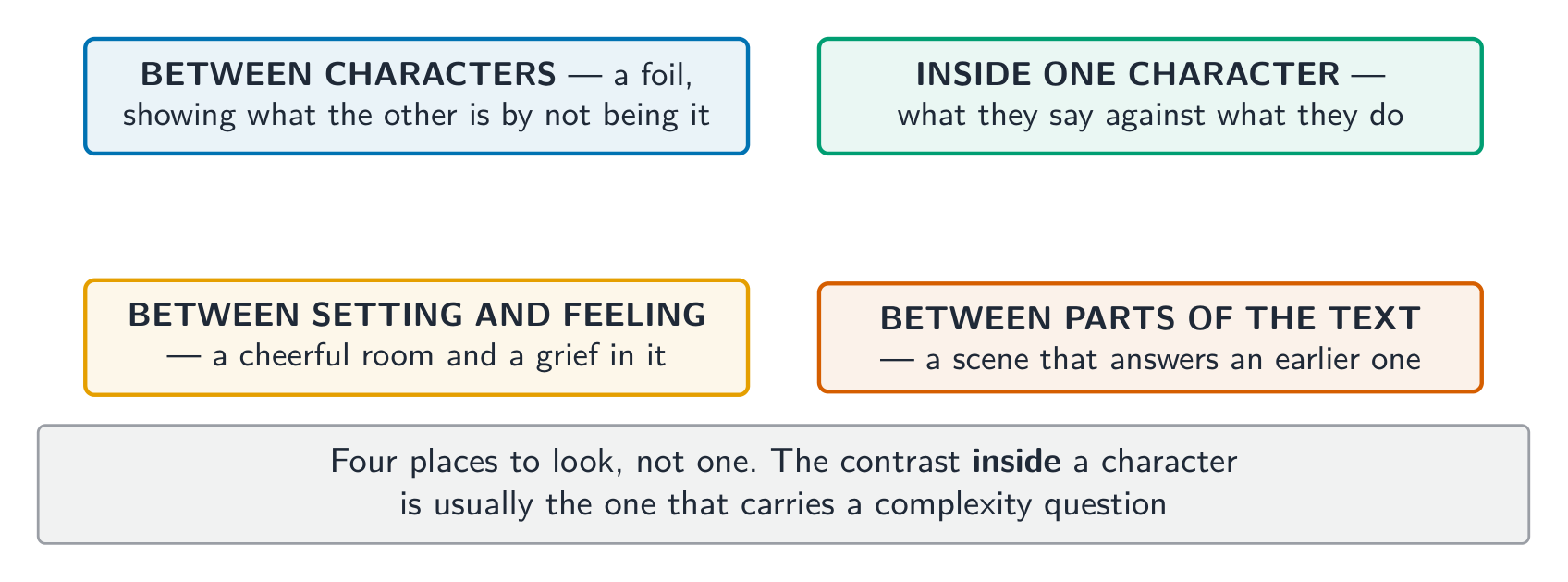
    أربعة أماكن للنظر إلى التناقض، وليس واحدًا
    Explore · ⁨استكشف⁩

    Find the contrast in four places, not one · ⁨ابحث عن التناقض في أربعة أماكن، وليس مكانًا واحدًا⁩

    Students find the obvious pairing and stop — and the contrast inside a character usually carries the complexity question. · ⁨يجد الطلاب التوافق الواضح ويتوقفون — وعادةً ما يحمل التناقض الداخلي لشخصية واحدة سؤال التعقيد.⁩

    Vocabulary · ⁨مفردات⁩ Train · ⁨تدريب⁩
    English العربية
    figurative language/ˈfɪɡjərətɪv ˈlæŋɡwɪdʒ/ اللغة المجازية
    Line and stanza breaks/laɪn ænd ˈstænzə breɪks/ كسور الأسطر والأبيات
    Contrast/ˈkɒntræst/ التباين
    antecedent/ˌæntɪˈsiːdənt/ سابق
    affects interpretation/əˈfekts ɪnˌtɜːprɪˈteɪʃn/ تؤثر على التفسير
    Alliteration/əˌlɪtəˈreɪʃn/ الحروف المتشابهة
    2.4

    The Function of Specific Words and Phrases · ⁨وظيفة كلمات وعبارات محددة⁩

    Syllabus · ⁨المنهج⁩
    English

    Enduring Understanding (FIG-1): Comparisons, representations, and associations shift meaning from the literal to the figurative and invite readers to interpret a text.

    Learning Objective 5.B: Explain the function of specific words and phrases in a text.

    • FIG-1.A An antecedent is a word, phrase, or clause that precedes its referent. Referents may include pronouns, nouns, phrases, or clauses.
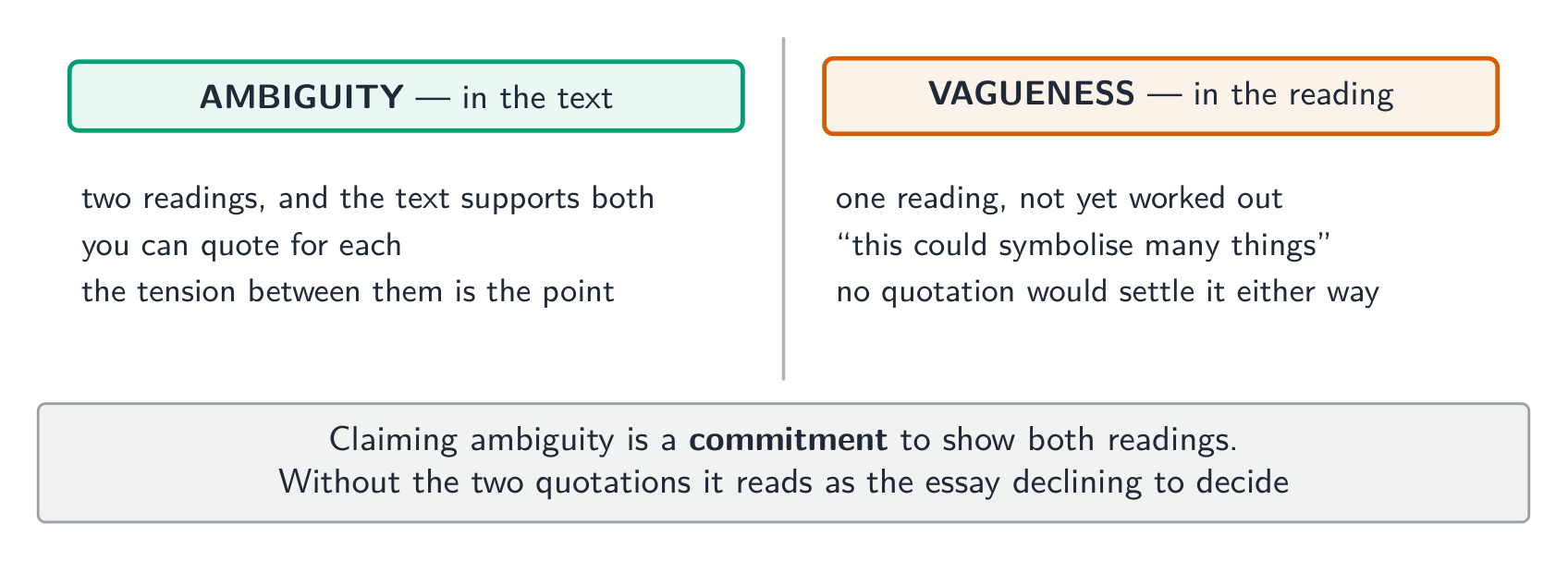
    • FIG-1.B Referents are ambiguous if they can refer to more than one antecedent, which affects interpretation.
    • FIG-1.C Words or phrases may be repeated to emphasize ideas or associations.
    • FIG-1.D Alliteration is the repetition of the same letter sound at the beginning of adjacent or nearby words to emphasize those words and their associations or representations.
    العربية

    فهم دائم (FIG-1): التحليلات والتصورات والروابط تحوّل المعنى من الحرفي إلى المجازي وتدعوا القراء لتفسير النص.

    هدف التعلم 5.B: اشرح وظيفة كلمات وعبارات محددة في النص.
    • FIG-1.B تكون المرجعات غامضة إذا كانت تشير إلى أكثر من مسند واحد، مما يؤثر على التفسير.
    • FIG-1.C قد يتم تكرار الكلمات أو العبارات للتأكيد على الأفكار أو الروابط.
    • FIG-1.D التناغم هو تكرار نفس الصوت الحرفي في بداية كلمات متجاورة أو قريبة للتأكيد على تلك الكلمات وروابطها أو تمثيلاتها.
    • FIG-1.D التناغم هو تكرار نفس صوت الحرف في بداية كلمات متجاورة أو قريبة للتأكيد على تلك الكلمات وروابطها أو تصوراتها.

    Source: College Board AP Course and Exam Description · ⁨المصدر: وصف دورة وامتحان College Board AP⁩

    English
    • An antecedent 先行词 is a word, phrase, or clause that precedes its referent.
    • Referents are ambiguous if they can refer to more than one antecedent, which affects interpretation 影响阐释.
    • Words or phrases may be repeated to emphasise ideas or associations.
    • Alliteration 头韵 is the repetition of the same initial sound in adjacent or nearby words, emphasising those words.

    Ambiguous reference is worth special attention. In prose it is usually a fault; in poetry it is often a device, and a pronoun that could point two ways may be holding both meanings deliberately.

    العربية
    • المستند إليه 先行词 هو كلمة أو عبارة أو جملة تسبق مرجعها.
    • المراجع تكون غامضة إذا كانت تشير إلى أكثر من مستند إليه واحد، مما يؤثر على التفسير 影响阐释.
    • قد يتم تكرار الكلمات أو العبارات لتأكيد الأفكار أو الارتباطات.
    • التناغم الصوتي 头韵 هو تكرار نفس الصوت الأولي في كلمات مجاورة أو قريبة، مما يؤكد تلك الكلمات.

    الإشارة الغامضة تستحق اهتمامًا خاصًا. في النثر عادة ما تكون عيبًا؛但在 القصيدة غالبًا ما تكون أداة، وقد يكون ضمير يمكنه الإشارة بطريقتين يحمل كلا المعنيين عمداً.

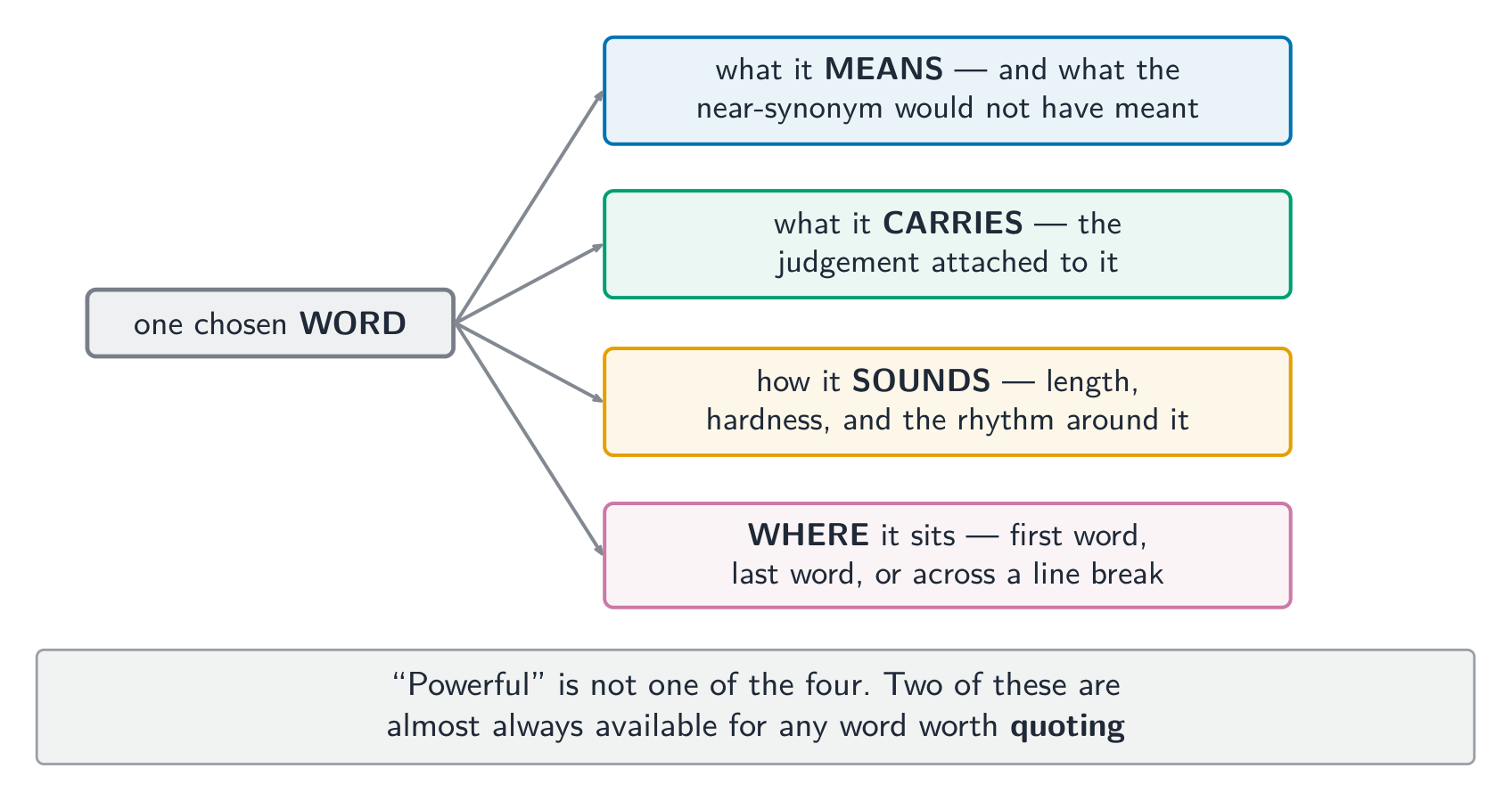
    كلمة واحدة مختارة تقوم حتى أربعة أشياء - "قوي" ليس其中之一
    2.5

    The Function of a Simile · ⁨وظيفة التشبيه⁩

    Syllabus · ⁨المنهج⁩
    English

    Enduring Understanding (FIG-1): Comparisons, representations, and associations shift meaning from the literal to the figurative and invite readers to interpret a text.

    Learning Objective 6.A: Identify and explain the function of a simile.

    • FIG-1.E A simile uses the words “like” or “as” to liken two objects or concepts to each other.
    • FIG-1.F Similes liken two different things to transfer the traits or qualities of one to the other.
    • FIG-1.G In a simile, the thing being compared is the main subject; the thing to which it is being compared is the comparison subject.
    العربية

    فهم دائم (FIG-1): التحليلات والتصورات والروابط تحوّل المعنى من الحرفي إلى المجازي وتدعوا القراء لتفسير النص.

    هدف التعلم 6.A: حدد واشرح وظيفة التشبيه.

    • FIG-1.F يشبه التشبيه شيئين مختلفين لنقل صفات أو خصائص أحدهما إلى الآخر.
    • FIG-1.G في التشبيه، الشيء المُقارَن هو الموضوع الرئيسي؛ والشيء الذي يُقارَن به هو موضوع المقارنة.
    • FIG-1.G في التشبيه، يكون الشيء المقارن هو الموضوع الرئيسي؛ والشيء الذي يتم مقارنته به هو موضوع المقارنة.

    Source: College Board AP Course and Exam Description · ⁨المصدر: وصف دورة وامتحان College Board AP⁩

    English
    • A simile 明喻 uses "like" or "as" to liken two objects or concepts.
    • Similes liken two different things to transfer the traits or qualities of one to the other.
    • In a simile, the thing being compared is the main subject; the thing to which it is compared is the comparison subject.

    Those two terms are the whole method. A scoring answer names the main subject, names the comparison subject, and then says which quality was transferred - because that quality is the claim the poem is making.

    العربية
    مصطلحات CED الخاصة بها - والنقل يحدث في اتجاه واحد فقط
    سمِّ الموضوع الرئيسي، وسمِّ موضوع المقارنة، ثم قل أي صفة انتقلت
    • التشبيه 明喻 يستخدم "مثل" أو "كـ" لمقارنة عنصرين أو مفهومين.
    • التشبيه يُشابه شيئين مختلفين لنقل سمات أو صفات أحدهما إلى الآخر.
    • في التشبيه، الشيء المقارَن به هو الموضوع الرئيسي؛ والشيء الذي يُقارَن به هو موضوع المقارنة.

    هذان المصطلحان هما الطريقة كاملة. الإجابة الجيدة تسمى الموضوع الرئيسي، وتسمى موضوع المقارنة، ثم تقول أي صفة تم نقلها - لأن هذه الصفة هي الادعاء الذي تقدمه القصيدة.

    Vocabulary · ⁨مفردات⁩ Train · ⁨تدريب⁩
    English العربية
    simile/ˈsɪmɪlɪ/ التشبيه
    metaphor/ˈmetəfɔː/ استعارة
    2.6

    The Function of a Metaphor · ⁨وظيفة الاستعارة⁩

    Syllabus · ⁨المنهج⁩
    English

    Enduring Understanding (FIG-1): Comparisons, representations, and associations shift meaning from the literal to the figurative and invite readers to interpret a text.

    Learning Objective 6.B: Identify and explain the function of a metaphor.

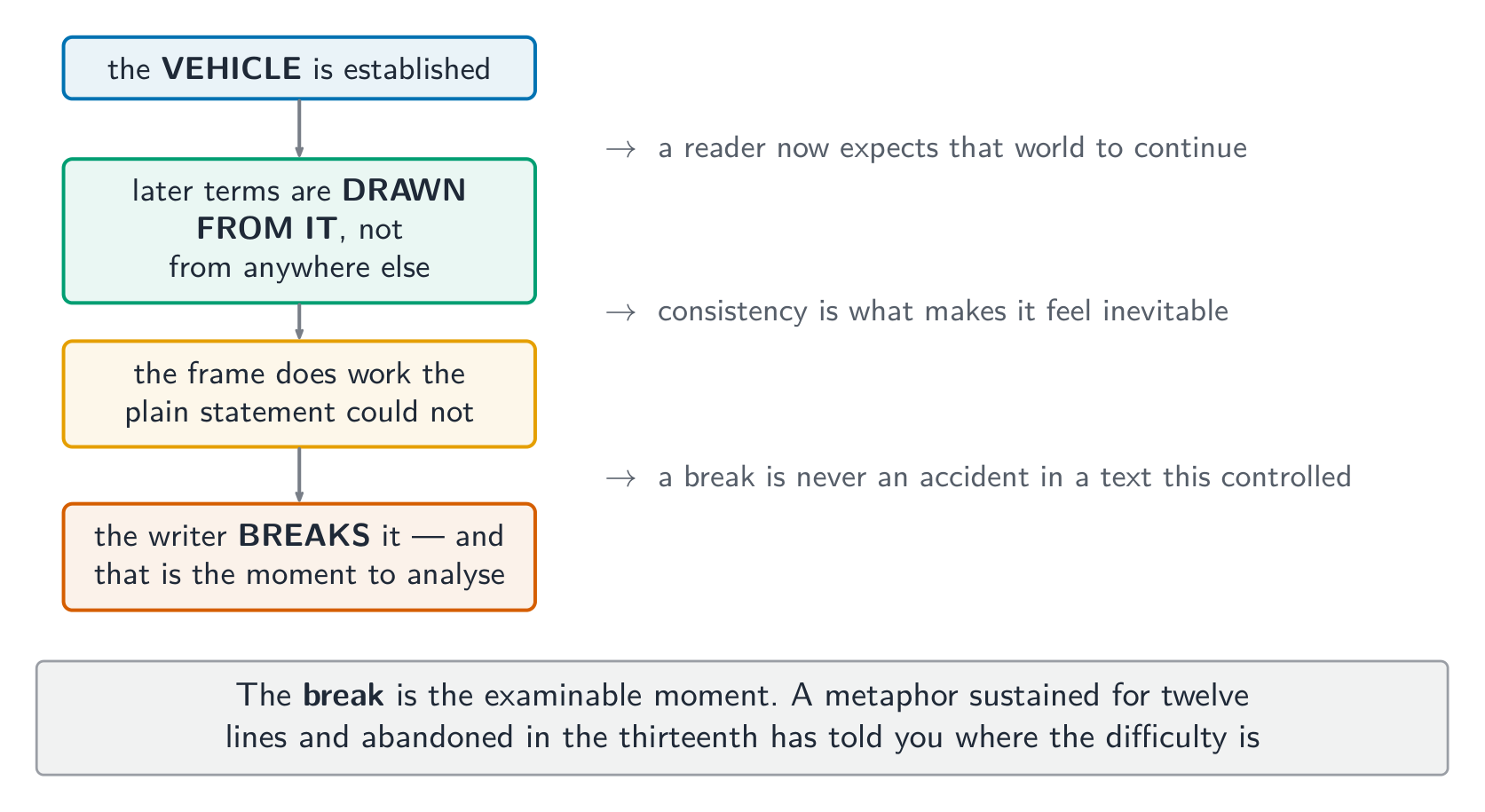
    • FIG-1.H A metaphor implies similarities between two (usually unrelated) concepts or objects in order to reveal or emphasize one or more things about one of them, though the differences between the two may also be revealing.
    • FIG-1.I In a metaphor, as in a simile, the thing being compared is the main subject; the thing to which it is being compared is the comparison subject.
    • FIG-1.J Comparisons between objects or concepts draw on the experiences and associations readers already have with those objects and concepts.
    • FIG-1.K Interpretation of a metaphor may depend on the context of its use; that is, what is happening in a text may determine what is transferred in the comparison.
    العربية

    فهم دائم (FIG-1): التحليلات والتصورات والروابط تحوّل المعنى من الحرفي إلى المجازي وتدعوا القراء لتفسير النص.

    هدف التعلم 6.B: حدد واشرح وظيفة الاستعارة.

    • FIG-1.I في الاستعارة، كما في التشبيه، الشيء المُقارَن هو الموضوع الرئيسي؛ والشيء الذي يُقارَن به هو موضوع المقارنة.
    • FIG-1.J تستند المقارنات بين الأشياء أو المفاهيم إلى تجارب القراء وروابطهم السابقة مع تلك الأشياء والمفاهيم.
    • FIG-1.K قد يعتمد تفسير الاستعارة على سياق استخدامها؛ أي أن ما يحدث في النص قد يحدد ما يتم نقله في المقارنة.
    • FIG-1.K قد يعتمد تفسير الاستعارة على سياق استخدامها؛ أي أن ما يحدث في النص قد يحدد ما يتم نقله في المقارنة.

    Source: College Board AP Course and Exam Description · ⁨المصدر: وصف دورة وامتحان College Board AP⁩

    English
    • A metaphor 隐喻 implies similarities between two usually unrelated concepts to reveal or emphasise qualities of the main subject.
    • The same main-subject and comparison-subject structure applies.
    • Comparisons draw on the experiences and associations readers already have with the comparison subject - which is why a metaphor can fail with an audience that lacks those associations.
    • Interpretation of a metaphor may depend on the context of its use: what is happening in the text may determine which of the comparison subject's qualities is meant.

    That last point protects you from the commonest error, which is importing every association a word has. If a poem calls grief a house, the relevant quality might be shelter, or confinement, or the fact that one must live inside it. The text decides which.

    العربية
    • الاستعارة 隐喻 تلمح إلى أوجه تشابه بين مفهوميين غير مترابطين عادة لكشف أو تأكيد صفات الموضوع الرئيسي.
    • نفس بنية الموضوع الرئيسي وموضوع المقارنة تنطبق.
    • استناد المقارنات إلى الخبرات والارتباطات التي يمتلكها الق ήδηون مسبقاً مع موضوع المقارنة - ولهذا السبب قد تفشل الاستعارة مع جمهور يفتقر إلى تلك الارتباطات.
    • قد يعتمد تفسير الاستعارة على سياق استخدامها: ما يحدث في النص قد يحدد أي من صفات موضوع المقارنة هو المقصود.

    يحميك هذا النقطة الأخيرة من الخطأ الأكثر شيوعًا، وهو استيراد كل ارتباطات الكلمة. إذا وصف شاعر الحزن بـ «منزل»، فقد تكون الصفة ذات الصلة هي المأوى، أو القيد، أو حقيقة أنه يجب أن يعيش المرء بداخله. النص هو من يحدد ذلك.

    2.7

    Developing a Paragraph with Claim and Evidence · ⁨تطوير فقرة بالادعاء والدليل⁩

    Syllabus · ⁨المنهج⁩
    English

    Enduring Understanding (LAN-1): Readers establish and communicate their interpretations of literature through arguments supported by textual evidence.

    Learning Objective 7.A: Develop a paragraph that includes 1) a claim that requires defense with evidence from the text and 2) the evidence itself.

    • LAN-1.A In literary analysis, writers read a text closely to identify details that, in combination, enable them to make and defend a claim about an aspect of the text.
    • LAN-1.B A claim is a statement that requires defense with evidence from the text.
    • LAN-1.C In literary analysis, the initial components of a paragraph are the claim and textual evidence that defends the claim.
    العربية

    فهم دائم (LAN-1): يضع القارئ تفسيراتهم للأدب ويبلغون عنها من خلال حجج مدعومة بأدلة نصية.

    هدف التعلم 7.A: تطوير فقرة تتضمن 1) ادعاء يتطلب الدفاع عنه بدليل من النص و2) الدليل نفسه.

    • LAN-1.B الادعاء هو عبارة تتطلب الدفاع عنها بدليل من النص.
    • LAN-1.C في التحليل الأدبي، تتكون المكونات الأولية للفقرة من الادعاء والدليل النصي الذي يدافع عنه.
    • LAN-1.C في التحليل الأدبي، تتكون المكونات الأولية للفقرة من الادعاء والدليل النصي الذي يدافع عن الادعاء.

    Source: College Board AP Course and Exam Description · ⁨المصدر: وصف دورة وامتحان College Board AP⁩

    English

    Same three components as Unit 1: a claim requiring textual defence, the textual evidence, and details identified in combination.

    Worked example (a real AP exam task). A poetry-analysis prompt asks how the speaker's use of comparison conveys their attitude. A weak answer: "The poet uses a metaphor comparing memory to a house, which is effective." A scoring answer uses the CED's terms and the context rule: "The main subject is memory and the comparison subject a house, but the poem withholds warmth from the comparison: the house has 'rooms she no longer enters'. The quality transferred is therefore not shelter but confinement by a structure one built oneself - so the speaker's attitude to her own past is presented as inhabiting something she can neither leave nor fully occupy." Main subject, comparison subject, transferred quality, and the attitude it conveys.

    العربية

    نفس المكونات الثلاثة كما في الوحدة 1: ادعاء يتطلب دفاعًا نصيًا، والدليل النصي، والتفاصيل المحددة بشكل متزامن.

    مثال محلول (مهمة امتحان AP حقيقية). يطرح سؤال تحليل الشعر كيف ينقل استخدام المتحدث للتشابه موقفه. إجابة ضعيفة: «يستخدم الشاعر استعارة تشبه الذاكرة بالمنزل، وهو أمر مؤثر.» إجابة حاصلة على درجات تستخدم مصطلحات CED وقاعدة السياق: «الموضوع الرئيسي هو الذاكرة وموضوع التشبيه منزل، لكن الشعر ي withholding الدفء من التشبيه: المنزل به 'غرف لا تدخلها بعد الآن'. لذا فإن الصفة المنقولة ليست المأوى بل القيد بواسطة بنية بناها المرء بنفسه - مما يعني أن موقف المتحدث من ماضيه المقدم كسكن شيء لا يمكنه مغادرته ولا استيعابه تمامًا.'». الموضوع الرئيسي، موضوع التشبيه، الصفة المنقولة، والموقف الذي يعبر عنه.

    2.7

    Exam tips · ⁨نصائح للامتحان⁩

    English
    • What a speaker omits is evidence. In a poem, everything present was chosen.
    • Find the shift first. A but, a stanza break, a change of tense - the poem divides there.
    • Line endings are the emphatic position. Say which words the poet put there.
    • An ambiguous referent in poetry is usually a device, not an error.
    • Always name main subject and comparison subject, then the quality transferred. That quality is the claim.
    • Context decides which quality a metaphor imports. Do not list every association the word has.
    العربية
    • ما يغيبه المتحدث هو دليل. في القصيدة، كل ما هو موجود تم اختياره.
    • ابحث عن التحول أولاً. كلمة لكن، نهاية شطر، تغيير في الزمن - ينقسم الشعار هناك.
    • نهايات الأسطر هي الموضع المؤكد. حدد الكلمات التي وضعها الشاعر هناك.
    • المرجع الغامض في الشعر عادة ما يكون أداة، وليس خطأً.
    • سمِّ دائمًا الموضوع الرئيسي وموضوع التشبيه، ثم الصفة المنقولة. هذه الصفة هي الادعاء.
    • السياق يحدد أي صفة يستورد الاستعارة. لا تدرج كل ارتباطات الكلمة.
  • 3

    Longer Fiction or Drama I · ⁨النثر الطويل أو المسرحية I⁩

    Watch lesson · ⁨شاهد الدرس⁩
    3.1

    What Textual Details Reveal About a Character · ⁨ما تكشفه التفاصيل النصية عن الشخصية⁩

    Syllabus · ⁨المنهج⁩
    English

    Enduring Understanding (CHR-1): Characters in literature allow readers to study and explore a range of values, beliefs, assumptions, biases, and cultural norms represented by those characters.

    Learning Objective 1.A: Identify and describe what specific textual details reveal about a character, that character’s perspective, and that character’s motives.

    • CHR-1.F The description of a character creates certain expectations for that character’s behaviors; how a character does or does not meet those expectations affects a reader’s interpretation of that character.
    • CHR-1.G Details associated with a character and/or used to describe a character contribute to a reader’s interpretation of that character.
    • CHR-1.H Readers’ understanding of a character’s perspective may depend on the perspective of the narrator or speaker.
    • CHR-1.I A character’s perspective may shift during the course of a narrative.
    • CHR-1.J When narrators, characters, or speakers compare another character to something or someone else, they reveal their perspective on the compared character and may also reveal something innate about the compared character.
    • CHR-1.K Readers can infer a character’s motives from that character’s actions or inactions.
    العربية

    فهم دائم (CHR-1): الشخصيات في الأدب تتيح للقراء دراسة واستكشاف مجموعة متنوعة من القيم والمعتقدات والفرضيات والتحيزات والأعراف الثقافية التي تمثلها تلك الشخصيات.

    هدف التعلم 1.A: تحديد ووصف ما تكشفه التفاصيل النصية المحددة عن شخصية، وجهة نظر تلك الشخصية، ودوافعها.

    • CHR-1.F وصف الشخصية يخلق توقعات معينة حول سلوك تلك الشخصية؛ وكيفية استجابة الشخصية أو عدم استجابتها لتلك التوقعات تؤثر على تفسير القارئ لتلك الشخصية.
    • CHR-1.G تساهم التفاصيل المرتبطة بالشخصية و/أو المستخدمة لوصفها في تفسير القارئ لتلك الشخصية.
    • CHR-1.H قد يعتمد فهم القارئ لنظرة الشخصية على نظرة الراوي أو المتحدث.
    • CHR-1.I قد تتغير نظرة الشخصية خلال مسار السرد.
    • CHR-1.J عندما يقارن الرواة أو الشخصيات أو المتحدثون شخصية أخرى بشيء أو شخص آخر، فإنهم يكشفون عن نظرتهم للشخصية المقارنة وقد يكشفون أيضًا عن شيء فطري فيها.
    • CHR-1.K يمكن للقارئ استنتاج دوافع الشخصية من أفعالها أو امتناعها عن الفعل.

    Source: College Board AP Course and Exam Description · ⁨المصدر: وصف دورة وامتحان College Board AP⁩

    English

    Unit 3 is the first longer-fiction-or-drama unit, and the length changes what is analysable: characters can now change, conflicts can intersect, and setting acquires a social and historical dimension.

    The CED's additions on character:

    • The description of a character creates expectations for that character's behaviour, and how a character meets or fails those expectations is meaningful.
    • Details associated with a character contribute to a reader's interpretation of them.
    • A reader's understanding of a character's perspective may depend on the perspective of the narrator.
    • A character's perspective may shift during the narrative.
    • When narrators or characters compare another character to something else, they reveal their own perspective as much as the compared character's.
    • Readers can infer motive from a character's actions or inactions.

    That last word - inactions - is the one worth keeping. What a character declines to do is evidence, and it is usually more revealing than what they do.

    العربية

    الوحدة 3 هي أول وحدة للرواية أو المسرحية الطويلة، والطول يغير ما يمكن تحليله: يمكن للشخصيات الآن التغير، ويمكن للصراعات أن تتقاطع، ويكتسب المكان بُعدًا اجتماعيًا وتاريخيًا.

    إضافات CED على الشخصية:

    • وصف الشخصية يخلق توقعات لسلوك تلك الشخصية، وكيف تلبي الشخصية أو تفشل في تلبية تلك التوقعات هو ذو معنى.
    • التفاصيل المرتبطة بالشخصية تساهم في تفسير القارئ لها.
    • قد يعتمد فهم القارئ لمنظور الشخصية على منظور الراوي.
    • قد يتغير منظور الشخصية أثناء السرد.
    • عندما يقارن الراون أو الشخصيات شخصية أخرى بشيء آخر، فإنهم يكشفون عن منظوريهم إلى حد كبير قدر كشف منظور الشخصية المُقارَن بها.
    • يمكن للقراء استنتاج الدافع من أفعال الشخصية أو تقصيراتها.

    كلمة أخيرة - التقصيرات - هي القيمة التي تستحق البقاء. ما ترفض الشخصية فعله هو دليل، وعادة ما يكون أكثر إفادة مما تفعله.

    3.2

    Characters Who Change or Remain Unchanged · ⁨شخصيات تتغير أو تبقى دون تغيير⁩

    Syllabus · ⁨المنهج⁩
    English

    Enduring Understanding (CHR-1): Characters in literature allow readers to study and explore a range of values, beliefs, assumptions, biases, and cultural norms represented by those characters.

    Learning Objective 1.B: Explain the function of a character changing or remaining unchanged.

    • CHR-1.L A dynamic character who develops over the course of the narrative often makes choices that directly or indirectly affect the climax and/or the resolution of that narrative.
    • CHR-1.M Character changes can be visible and external, such as changes to health or wealth, or can be internal, psychological, or emotional changes; external changes can lead to internal changes, and vice versa.
    • CHR-1.N Some characters remain unchanged or are largely unaffected by the events of the narrative.
    العربية

    فهم دائم (CHR-1): الشخصيات في الأدب تتيح للقراء دراسة واستكشاف مجموعة متنوعة من القيم والمعتقدات والفرضيات والتحيزات والأعراف الثقافية التي تمثلها تلك الشخصيات.

    هدف التعلم 1.B: شرح وظيفة الشخصية المتغيرة أو التي تظل دون تغيير.

    • CHR-1.L الشخصية الديناميكية التي تتطور خلال مسار السرد غالبًا ما تتخذ قرارات تؤثر بشكل مباشر أو غير مباشر على الذروة و/أو حسم الأحداث في ذلك السرد.
    • CHR-1.M يمكن أن تكون تغييرات الشخصية مرئية وخارجية، مثل التغييرات في الصحة أو الثروة، أو يمكن أن تكون داخلية، نفسية، أو عاطفية؛ يمكن أن تؤدي التغييرات الخارجية إلى تغييرات داخلية، والعكس صحيح.
    • CHR-1.N بعض الشخصيات تظل دون تغيير أو تتأثر جزئيًا فقط بأحداث السرد.

    Source: College Board AP Course and Exam Description · ⁨المصدر: وصف دورة وامتحان College Board AP⁩

    English
    • A dynamic character 动态人物 develops over the narrative and often makes choices that directly or indirectly cause change.
    • Character change can be visible and external - health, wealth, circumstance - or internal, in belief, value, or understanding.
    • Some characters remain unchanged 静态人物 or are largely unaffected by events.

    The unchanged character is not a failure of characterisation; it is often the measure by which the change in others is visible.

    العربية
    • الشخصية الديناميكية 动态人物 تتطور عبر السرد وغالبًا ما تتخذ قرارات تسبب تغيرًا بشكل مباشر أو غير مباشر.
    • يمكن أن يكون تغيير الشخصية ظاهرًا وخارجيًا - الصحة، الثروة، الظروف - أو داخلياً، في المعتقد، القيمة، أو الفهم.
    • بعض الشخصيات تبقى دون تغيير 静态人物 أو غير متأثرة بشكل كبير بالأحداث.

    الشخصية الثابتة ليست فشلًا في characterization؛ بل هي غالبًا المقياس الذي يظهر به التغيير في الآخرين.

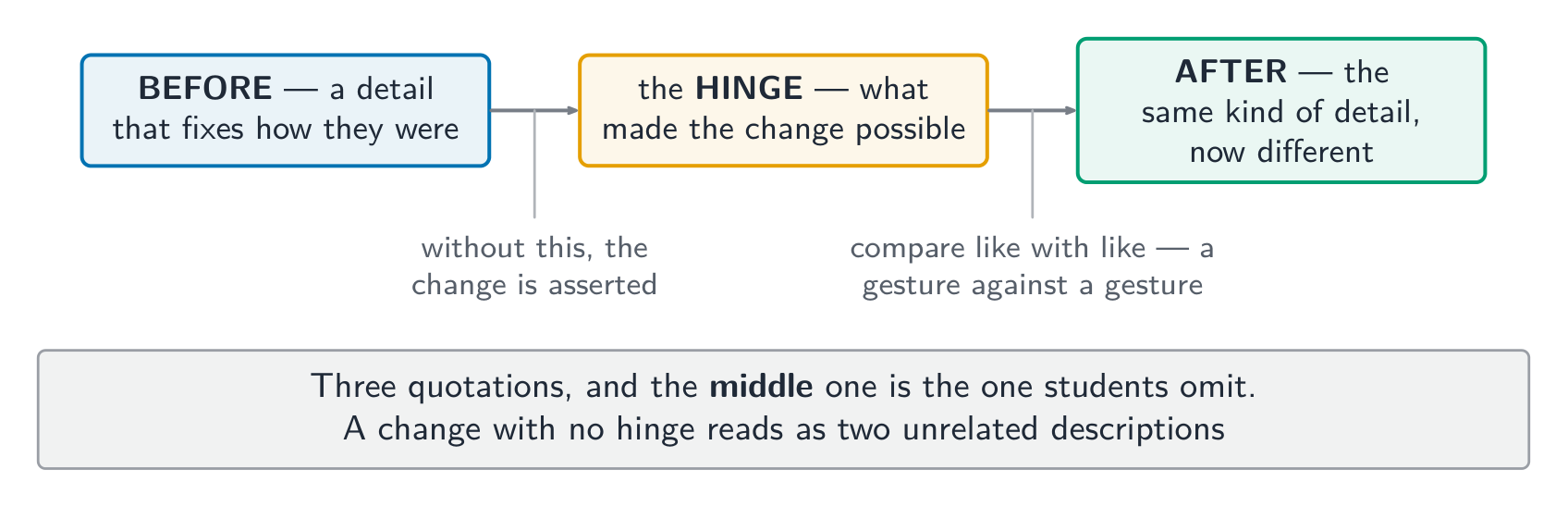
    ثلاثة اقتباسات، والأوسط هو الذي يتجاهله الطلاب
    Explore · ⁨استكشف⁩

    Prove a change with three quotations · ⁨ثبت التغيير بثلاثة استشهادات⁩

    Before, hinge, after — and the hinge is the one students omit, which leaves the change asserted. · ⁨قبل، مفصل، بعد — والمفصل هو الذي يتجاهله الطلاب، مما يترك التغيير مُصرحًا به.⁩

    3.3

    Textual Details That Convey Setting · ⁨تفاصيل نصية تنقل المشهد⁩

    Syllabus · ⁨المنهج⁩
    English

    Enduring Understanding (SET-1): Setting and the details associated with it not only depict a time and place, but also convey values associated with that setting.

    Learning Objective 2.A: Identify and describe specific textual details that convey or reveal a setting.

    • SET-1.B Setting includes the social, cultural, and historical situation during which the events of the text occur.
    العربية

    فهم دائم (SET-1): الخلفية الزمنية والمكانية والتفاصيل المرتبطة بها لا تصور فقط وقتاً ومكاناً، بل تنقل أيضاً القيم المرتبطة بتلك الخلفية الزمنية والمكانية.

    هدف التعلم 2.A: تحديد ووصف تفاصيل نصية محددة تنقل أو تكشف عن الزمان والمكان (الإطار).

    • SET-1.B المكان الزمان يشمل الوضع الاجتماعي والثقافي والتاريخي الذي حدثت خلاله أحداث النص.

    Source: College Board AP Course and Exam Description · ⁨المصدر: وصف دورة وامتحان College Board AP⁩

    English

    Setting now includes the social, cultural, and historical situation in which the events occur - not only time and place.

    This widens what setting can do. A social setting supplies the constraints a character must act within, and constraint is what turns a choice into a revealing one.

    العربية

    يشمل المكان الآن الوضع الاجتماعي والثقافي والتاريخي الذي تحدث فيه الأحداث - ليس فقط الزمان والمكان.

    هذا يوسع ما يمكن للمكان أن يفعله. يوفر المكان الاجتماعي القيود التي يجب أن تتحرك ضمنها الشخصية، والقيود هي ما يحول الاختيار إلى واحد مُفضٍّ.

    3.4

    Significant Events in a Plot · ⁨أحداث رئيسية في الحبكة⁩

    Syllabus · ⁨المنهج⁩
    English

    Enduring Understanding (STR-1): The arrangement of the parts and sections of a text, the relationship of the parts to each other, and the sequence in which the text reveals information are all structural choices made by a writer that contribute to the reader’s interpretation of a text.

    Learning Objective 3.E: Explain the function of a significant event or related set of significant events in a plot.

    • STR-1.K A story, or narrative, is delivered through a series of events that relate to a conflict.
    • STR-1.L Events include episodes, encounters, and scenes in a narrative that can introduce and develop a plot.
    • STR-1.M The significance of an event depends on its relationship to the narrative, the conflict, and the development of characters.
    العربية

    فهم دائم (STR-1): ترتيب أجزاء ونصوص النص، وعلاقة الأجزاء ببعضها البعض، والتسلسل الذي يكشف به النص عن المعلومات هي جميعًا اختيارات بنائية يقوم بها الكاتب تساهم في تفسير القارئ للنص.

    هدف التعلم 3.E: شرح وظيفة الحدث البارز أو مجموعة ذات صلة من الأحداث البارزة في الحبكة.

    • STR-1.K يُروى القصة، أو السرد، من خلال سلسلة من الأحداث تتعلق بصراع.
    • STR-1.L تشمل الأحداث حلقات، ومواجهات، ومشاهد في السرد يمكن أن تقدم وتطور الحبكة.
    • STR-1.M تعتمد أهمية الحدث على علاقته بالسرد والصراع وتطوير الشخصيات.

    Source: College Board AP Course and Exam Description · ⁨المصدر: وصف دورة وامتحان College Board AP⁩

    English
    • A narrative is delivered through a series of events that relate to a conflict.
    • Events include episodes, encounters, and scenes that introduce and develop plot.
    • The significance of an event depends on its relationship to the narrative, the conflict, and character development.

    That third statement is the test for essay selection: an event matters to your argument only if you can say what it does to the conflict or to a character. Retelling a striking scene that does neither is plot summary, which earns nothing.

    العربية
    • يُقدَّم السرد من خلال سلسلة من الأحداث ترتبط بصراع.
    • تشمل الأحداث حلقات، لقاءات، ومشاهد تقدم وتطور الحبكة.
    • تعتمد أهمية الحدث على علاقته بالسرد، والصراع، وتطوير الشخصية.

    هذه العبارة الثالثة هي اختبار لاختيار المقال: الحدث مهم لحجتك فقط إذا كنت تستطيع قول ما يقوم به للصراع أو لشخصية. إعادة سرد مشهد مذهل لا يفعل أيًا منهما هو ملخص للحبكة، والذي لا يجلب نقاطًا.

    3.5

    The Function of Conflict in a Text · ⁨وظيفة الصراع في النص⁩

    Syllabus · ⁨المنهج⁩
    English

    Enduring Understanding (STR-1): The arrangement of the parts and sections of a text, the relationship of the parts to each other, and the sequence in which the text reveals information are all structural choices made by a writer that contribute to the reader’s interpretation of a text.

    Learning Objective 3.F: Explain the function of conflict in a text.

    • STR-1.N Conflict is tension between competing values either within a character, known as internal or psychological conflict, or with outside forces that obstruct a character in some way, known as external conflict.
    • STR-1.O A text may contain multiple conflicts. Often two or more conflicts in a text intersect.
    • STR-1.P A primary conflict can be heightened by the presence of additional conflicts that intersect with it.
    • STR-1.Q Inconsistencies in a text may create contrasts that represent conflicts of values or perspectives.
    العربية

    فهم دائم (STR-1): ترتيب أجزاء ونصوص النص، وعلاقة الأجزاء ببعضها البعض، والتسلسل الذي يكشف به النص عن المعلومات هي جميعًا اختيارات بنائية يقوم بها الكاتب تساهم في تفسير القارئ للنص.

    هدف التعلم 3.F: شرح function of conflict in a text.

    • STR-1.N الصراع هو tension بين قيم متنافسة إما داخل شخصية، معروفة بالصراع الداخلي أو النفسي، أو مع قوى خارجية تعيق الشخصية بطريقة ما، معروفة بالصراع الخارجي.
    • STR-1.O قد يحتوي النص على صراعات متعددة. غالبًا ما تتقاطع صراعان أو أكثر في النص.
    • STR-1.P يمكن أن يتصاعد الصراع الرئيسي بسبب وجود صراعات إضافية تتقاطع معه.
    • STR-1.Q قد تنشئ عدم الاتساقات في النص contrasts تمثل conflicts of values or perspectives.

    Source: College Board AP Course and Exam Description · ⁨المصدر: وصف دورة وامتحان College Board AP⁩

    English
    • Conflict 冲突 is tension between competing values, either within a character - internal or psychological conflict - or between a character and an external force.
    • A text may contain multiple conflicts, and often two or more intersect 交叉.
    • A primary conflict can be heightened by additional conflicts that intersect with it.
    • Inconsistencies in a text may create contrasts that represent conflicts of values or perspectives.

    Note the definition: conflict is between competing values, not merely between people. Two characters who want the same object are in a dispute; two characters who want incompatible goods are in a conflict, and only the second produces meaning.

    العربية
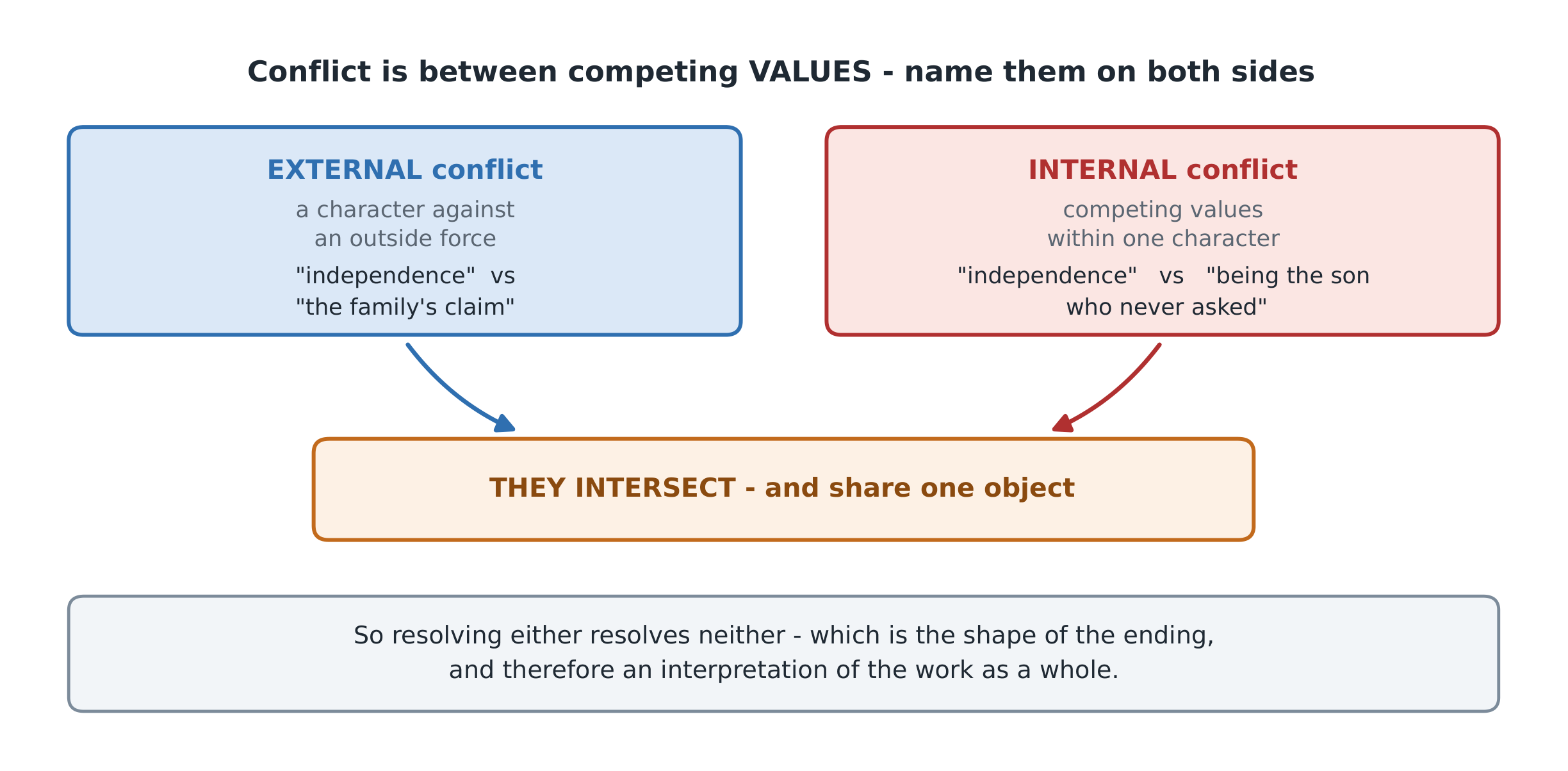
    الصراع له موقعان ويتضاعف - وهو ما يجعل الروايات الطويلة قابلة للتحليل
    صراع أساسي متفاقم بسبب صراع متقاطع هو الشكل القياسي للرواية أو المسرحية
    • الصراع 冲突 هو توتر بين قيم متنافسة، إما داخل الشخصية - صراع داخلي أو نفسي - أو بين الشخصية وقوة خارجية.
    • قد يحتوي النص على صراعات متعددة، وغالبًا ما تتقاطع 交叉 اثنتان أو أكثر.
    • يمكن تفاقم صراع أساسي بسبب صراعات إضافية تتقاطع معه.
    • قد تخلق عدم الاتساق في النص تناقضات تمثل صراعات القيم أو المنظورات.

    لاحظ التعريف: الصراع بين قيم متنافسة، وليس مجرد بين الأشخاص. شخصيتان تريدان نفس الشيء هما في نزاع؛ شخصيتان تريدان سلعًا غير متوافقة هما في صراع، والصراع الثاني وحده ينتج المعنى.

    Vocabulary · ⁨مفردات⁩ Train · ⁨تدريب⁩
    English العربية
    dynamic character/daɪˈnæmɪk ˈkærɪktə/ شخصية ديناميكية
    Some characters remain unchanged/sʌm ˈkærɪktəz rɪˈmeɪn ʌnˈtʃeɪndʒd/ بعض الشخصيات تبقى دون تغيير
    Conflict/ˈkɒnflɪkt/ الصراع
    intersect/ˌɪntəˈsekt/ يتقاطع / تقاطع
    line of reasoning/laɪn ɒv ˈriːzənɪŋ/ خط الحجة
    3.6

    Developing a Paragraph with Claim and Evidence · ⁨تطوير فقرة بالادعاء والدليل⁩

    Syllabus · ⁨المنهج⁩
    English

    Enduring Understanding (LAN-1): Readers establish and communicate their interpretations of literature through arguments supported by textual evidence.

    Learning Objective 7.A: Develop a paragraph that includes 1) a claim that requires defense with evidence from the text and 2) the evidence itself.

    • LAN-1.A In literary analysis, writers read a text closely to identify details that, in combination, enable them to make and defend a claim about an aspect of the text.
    • LAN-1.B A claim is a statement that requires defense with evidence from the text.
    • LAN-1.C In literary analysis, the initial components of a paragraph are the claim and textual evidence that defends the claim.
    العربية

    فهم دائم (LAN-1): يضع القارئ تفسيراتهم للأدب ويبلغون عنها من خلال حجج مدعومة بأدلة نصية.

    هدف التعلم 7.A: تطوير فقرة تتضمن 1) ادعاء يتطلب الدفاع عنه بدليل من النص و2) الدليل نفسه.

    • LAN-1.B الادعاء هو عبارة تتطلب الدفاع عنها بدليل من النص.
    • LAN-1.C في التحليل الأدبي، تتكون المكونات الأولية للفقرة من الادعاء والدليل النصي الذي يدافع عنه.
    • LAN-1.C في التحليل الأدبي، تتكون المكونات الأولية للفقرة من الادعاء والدليل النصي الذي يدافع عن الادعاء.

    Source: College Board AP Course and Exam Description · ⁨المصدر: وصف دورة وامتحان College Board AP⁩

    English

    Unchanged from Units 1 and 2: a claim requiring textual defence, textual evidence, and details identified in combination.

    العربية

    غير متغير من الوحدتين 1 و2: ادعاء يتطلب دفاعًا نصيًا، دليل نصي، وتفاصيل محددة بشكل متزامن.

    3.7

    Developing a Literary Thesis Statement · ⁨تطويربيان الأطروحة الأدبية⁩

    Syllabus · ⁨المنهج⁩
    English

    Enduring Understanding (LAN-1): Readers establish and communicate their interpretations of literature through arguments supported by textual evidence.

    Learning Objective 7.B: Develop a thesis statement that conveys a defensible claim about an interpretation of literature and that may establish a line of reasoning.

    • LAN-1.D A thesis statement expresses an interpretation of a literary text and requires a defense through use of textual evidence and a line of reasoning, both of which are explained in an essay through commentary.
    • LAN-1.E A thesis statement may preview the development or line of reasoning of an interpretation. This is not to say that a thesis statement must list the points of an interpretation, literary elements to be analyzed, or specific evidence to be used in the argument.
    العربية

    فهم دائم (LAN-1): يضع القارئ تفسيراتهم للأدب ويبلغون عنها من خلال حجج مدعومة بأدلة نصية.

    هدف التعلم 7.B: تطوير statement that conveys a defensible claim about an interpretation of literature and that may establish a line of reasoning.

    • LAN-1.D يعبر statement that conveys a defensible claim about an interpretation of literature over through use of textual evidence and a line of reasoning, both of which are explained in an essay through commentary.
    • LAN-1.E قد statement that conveys a defensible claim about an interpretation of literature preview the development or line of reasoning of an interpretation. This is not to say that a thesis statement must list the points of an interpretation, literary elements to be analyzed, or specific evidence to be used in the argument.

    Source: College Board AP Course and Exam Description · ⁨المصدر: وصف دورة وامتحان College Board AP⁩

    English
    • A thesis statement expresses an interpretation of a literary text and requires defence through textual evidence.
    • It may preview the development or line of reasoning of that interpretation - but is not required to list the reasons.

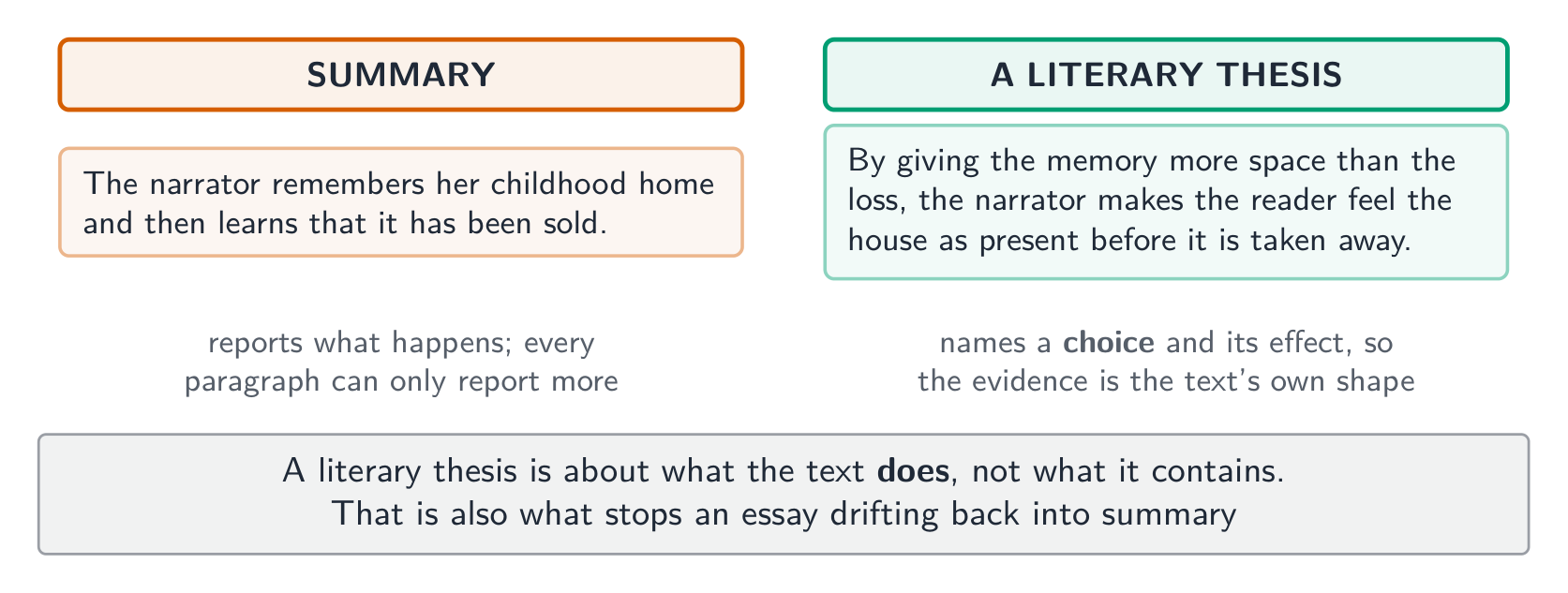
    The key word is interpretation. A thesis that states what happens in the text is not a thesis; it is a summary. A thesis must say what the text means or does, which is by definition arguable.

    العربية
    • عبارة الأطروحة تعبر عن تفسير لنص أدبي وتحتاج إلى دفاع من خلال الدليل النصي.
    • قد تستعرض التطوير أو خط reasoning لذلك التفسير - لكنها ليست مطلوبة لتعداد الأسباب.

    الكلمة المفتاحية هي التفسير. الفرضية التي تصف ما يحدث في النص ليست فرضية، بل هي ملخص. يجب أن تقول الفرضية ماذا يعني النص أو ماذا يفعل، وهو أمر قابل للنقاش بطبيعته.

    الفرضية الأدبية تتعلق بما يفعله النص، لا بما يحتويه
    Explore · ⁨استكشف⁩

    Sort summary from a literary thesis · ⁨فرز الملخص من الأطروحة الأدبية⁩

    A literary thesis is about what the text does, not what it contains — which is also what stops an essay drifting into summary. · ⁨الأطروحة الأدبية تتعلق بما يقوم به النص، وليس بما يحتويه — وهو أيضًا ما يمنع المقال من الانحراف نحو الملخص.⁩

    3.8

    Developing Commentary · ⁨تطوير التعليق⁩

    Syllabus · ⁨المنهج⁩
    English

    Enduring Understanding (LAN-1): Readers establish and communicate their interpretations of literature through arguments supported by textual evidence.

    Learning Objective 7.C: Develop commentary that establishes and explains relationships among textual evidence, the line of reasoning, and the thesis.

    • LAN-1.F A line of reasoning is the logical sequence of claims that work together to defend the overarching thesis statement.
    • LAN-1.G A line of reasoning is communicated through commentary that explains the logical relationship between the overarching thesis statement and the claims/evidence within the body of an essay.
    العربية

    فهم دائم (LAN-1): يضع القارئ تفسيراتهم للأدب ويبلغون عنها من خلال حجج مدعومة بأدلة نصية.

    هدف التعلم 7.C: developing commentary that establishes and explains relationships among textual evidence, the line of reasoning, and the thesis.

    • LAN-1.F line of reasoning is the logical sequence of claims that work together to defend the overarching thesis statement.
    • LAN-1.G line of reasoning is communicated through commentary that explains the logical relationship between the overarching thesis statement and the claims/evidence within the body of an essay.

    Source: College Board AP Course and Exam Description · ⁨المصدر: وصف دورة وامتحان College Board AP⁩

    English
    • A line of reasoning 推理线索 is the logical sequence of claims that together defend the overarching thesis.
    • It is communicated through commentary explaining the logical relationship between evidence and claim.
    العربية
    • خط الحجة 推理线索 هو التسلسل المنطقي للمزاعم الذي يحمي معاً الفرضية الشاملة.
    • يُنقل من خلال تعليق يشرح العلاقة المنطقية بين الدليل والمزعم.
    3.9

    Selecting Relevant and Sufficient Evidence · ⁨اختيار أدلة ذات صلة وكافية⁩

    Syllabus · ⁨المنهج⁩
    English

    Enduring Understanding (LAN-1): Readers establish and communicate their interpretations of literature through arguments supported by textual evidence.

    Learning Objective 7.D: Select and use relevant and sufficient evidence to both develop and support a line of reasoning.

    • LAN-1.H Writers use evidence strategically and purposefully to illustrate, clarify, exemplify, associate, amplify, or qualify a point.
    • LAN-1.I Evidence is effective when the writer of the essay uses commentary to explain a logical relationship between the evidence and the claim.
    • LAN-1.J Evidence is sufficient when its quantity and quality provide apt support for the line of reasoning.
    • LAN-1.K Developing and supporting an interpretation of a text is a recursive process; an interpretation can emerge from analyzing evidence and then forming a line of reasoning, or the interpretation can emerge from forming a line of reasoning and then identifying relevant evidence to support that line of reasoning.
    العربية

    فهم دائم (LAN-1): يضع القارئ تفسيراتهم للأدب ويبلغون عنها من خلال حجج مدعومة بأدلة نصية.

    هدف التعلم 7.D: select and use relevant and sufficient evidence to both develop and support a line of reasoning.

    • LAN-1.H يستخدم الكتاب Evidence strategically and purposefully to illustrate, clarify, exemplify, associate, amplify, or qualify a point.
    • LAN-1.I Evidence is effective when the writer of the essay uses commentary to explain a logical relationship between the evidence and the claim.
    • LAN-1.J Evidence is sufficient when its quantity and quality provide apt support for the line of reasoning.
    • LAN-1.K Developing and supporting an interpretation of a text is a recursive process; an interpretation can emerge from analyzing evidence and then forming a line of reasoning, or the interpretation can emerge from forming a line of reasoning and then identifying relevant evidence to support that line of reasoning.

    Source: College Board AP Course and Exam Description · ⁨المصدر: وصف دورة وامتحان College Board AP⁩

    English
    • Writers use evidence strategically - to illustrate, clarify, exemplify, associate, or amplify.
    • Evidence is effective when commentary explains its logical relationship to the claim.
    • Evidence is sufficient when its quantity and quality provide apt support.
    • Developing an interpretation is a recursive process: an interpretation can emerge, and change, as you read and write.

    That last point is permission worth taking. If your reading changes while you draft, revise the thesis to match it.

    العربية
    • يستخدم الكُتّاب الأدلة باستراتيجية - لتوضيح، أو توضيح، أو تمثيل، أو ربط، أو تضخيم.
    • تكون الأدلة فعالة عندما يفسر تعليقها علاقتها المنطقية بالمزعم.
    • تكون الأدلة كافية عندما توفر كميتها وجودتها دعماً مناسباً.
    • تطوير التفسير عملية تكرارية: يمكن أن ينمو التفسير ويتغير أثناء القراءة والكتابة.

    النقطة الأخيرة هي تصريح يستحق الأخذ به. إذا تغير قراءتك أثناء الصياغة، أعد صياغة الفرضية لتتناسب معها.

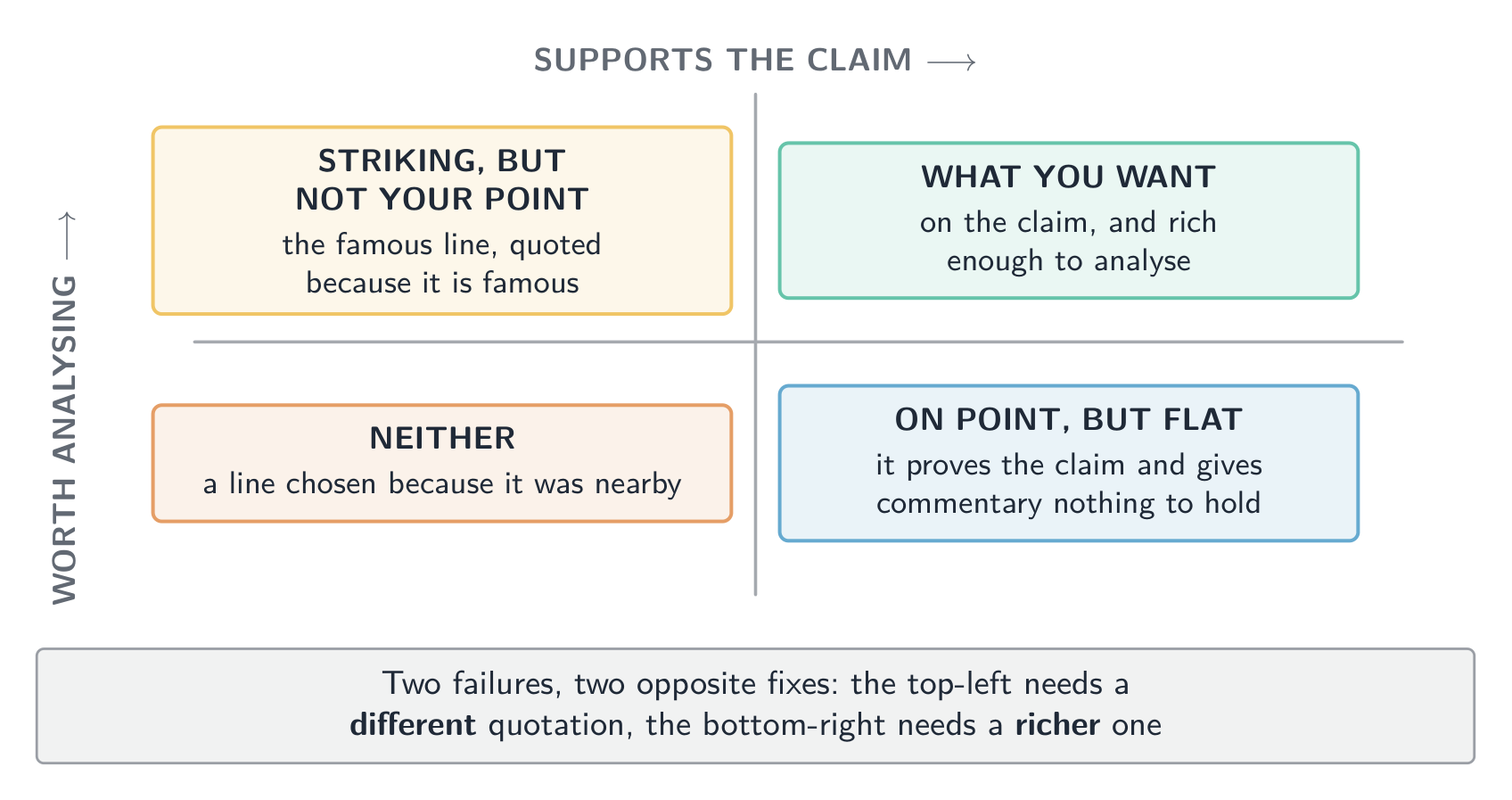
    فشلان مع حلين متعاكسين: اقتباس مختلف، أو أكثر ثراءً
    3.10

    Control Over the Elements of Composition · ⁨السيطرة على عناصر Composition⁩

    Syllabus · ⁨المنهج⁩
    English

    Enduring Understanding (LAN-1): Readers establish and communicate their interpretations of literature through arguments supported by textual evidence.

    Learning Objective 7.E: Demonstrate control over the elements of composition to communicate clearly.

    • LAN-1.L Grammar and mechanics that follow established conventions of language allow writers to clearly communicate their interpretation of a text.
    العربية

    فهم دائم (LAN-1): يضع القارئ تفسيراتهم للأدب ويبلغون عنها من خلال حجج مدعومة بأدلة نصية.

    هدف التعلم 7.E: إظهار التحكم في عناصر التركيب للتواصل بوضوح.

    • LAN-1.L القواعد النحوية والميكانيكية التي تتبع الأعراف اللغوية established تسمح للكتاب بالتواصل بوضوح بتفسيرهم للنص.

    Source: College Board AP Course and Exam Description · ⁨المصدر: وصف دورة وامتحان College Board AP⁩

    English

    Grammar and mechanics that follow established conventions allow writers to communicate clearly. On this exam, control of language is not a separate mark but a condition of the others: an unclear sentence cannot deliver commentary a reader can credit.

    Worked example (a real AP exam task). A Question 3 literary-argument prompt asks you to choose a work and analyse how a character's conflict contributes to an interpretation of the work as a whole. A weak answer narrates the plot around the conflict. A scoring answer identifies competing values and lets them intersect: "The protagonist's external conflict with his family over the inheritance is heightened by an internal one: he wants the independence the money would buy, and he wants to remain the son who never asked for it. Because the two conflicts share a single object, resolving either resolves neither - which is why the novel ends with a choice that satisfies no one, including him." Two conflicts, named as values, and an interpretation of the whole.

    العربية

    القواعد والنحو والآليات التي تتبع الأعراف الراسخة تسمح للكُتّاب بالتواصل بوضوح. في هذا الامتحان، ليس التحكم في اللغة درجة منفصلة، بل هو شرط للدرجات الأخرى: الجملة غير الواضحة لا يمكنها تقديم تعليق يمكن للقارئ تقبله.

    مثال محلول (مهمة امتحان AP حقيقية). يطرح سؤال 3 موضوعاً حجاجياً أدبياً يطلب منك اختيار عمل وتحليل كيف يساهم صراع الشخصية في تفسير العمل ككل. الإجابة الضعيفة سردي Plot حول الصراع. الإجابة المصنفة تحدد قيماً متنافسة وتتركها تتقاطع: "يتصاعد الصراع الخارجي للبطل مع عائلته حول الإرث بسبب صراع داخلي: فهو يرغب في الاستقلال الذي سيوفره المال، ويرغب في البقاء الابن الذي لم يطلبه أبداً. وبما أن الصراعين يشتركان في هدف واحد، فإن حل أي منهما يحل الآخر أيضاً - وهذا هو السبب في أن الرواية تنتهي باختيار لا يرضي أحداً، بما في ذلك هو." صراعان، مُسمَّيان كقيمات، وتفسير للعمل ككل.

    3.10

    Exam tips · ⁨نصائح للامتحان⁩

    English
    • Inactions reveal motive. What a character declines to do is often the strongest evidence available.
    • The unchanged character is the measure by which change in others becomes visible.
    • Setting now includes the social and historical situation - it supplies the constraint that makes choices meaningful.
    • Conflict is between competing values, not merely between people. Name the values.
    • An event matters only if you can say what it does to the conflict or to a character. Otherwise it is plot summary.
    • A thesis must state an interpretation, not what happens. Summary cannot be defended.
    العربية
    • الأفعال المتروكة تكشف عن الدافع. ما ترفضه الشخصية فعله غالباً ما يكون أقوى دليل متاح.
    • الشخصية الثابتة هي المعيار الذي يصبح فيه التغيير في الآخرين مرئياً.
    • الموقع الآن يتضمن الموقف الاجتماعي والتاريخي - فهو يوفر القيد الذي يجعل الخيارات ذات معنى.
    • الصراع بين قيمات متنافسة، وليس فقط بين الناس. سمِّ القيمات.
    • الحدث مهم فقط إذا كنت تستطيع قول ماذا يفعل للصراع أو للشخصية. وإلا فهو مجرد سرد لـ Plot.
    • يجب أن تنص الفرضية على تفسير، لا على ما يحدث. لا يمكن الدفاع عن الملخص.
  • 4

    Short Fiction II · ⁨القصة القصيرة II⁩

    Watch lesson · ⁨شاهد الدرس⁩
    4.1

    What Textual Details Reveal About a Character · ⁨ما تكشفه التفاصيل النصية عن الشخصية⁩

    Syllabus · ⁨المنهج⁩
    English

    Enduring Understanding (CHR-1): Characters in literature allow readers to study and explore a range of values, beliefs, assumptions, biases, and cultural norms represented by those characters.

    Learning Objective 1.A: Identify and describe what specific textual details reveal about a character, that character’s perspective, and that character’s motives.

    • CHR-1.O The significance of characters is often revealed through their agency and through nuanced descriptions.
    • CHR-1.P Characters’ choices—in speech, action, and inaction— reveal what they value.
    العربية

    فهم دائم (CHR-1): الشخصيات في الأدب تتيح للقراء دراسة واستكشاف مجموعة متنوعة من القيم والمعتقدات والفرضيات والتحيزات والأعراف الثقافية التي تمثلها تلك الشخصيات.

    هدف التعلم 1.A: تحديد ووصف ما تكشفه التفاصيل النصية المحددة عن شخصية، وجهة نظر تلك الشخصية، ودوافعها.

    • CHR-1.O غالباً ما يُكشف عن أهمية الشخصيات من خلال استقلالية أفعالها ومن خلال وصف دقيق ومفصّل.
    • CHR-1.P خيارات الشخصيات—في الكلام، والفعل، والتخلف عن الفعل—تكشف عما تقدره.

    Source: College Board AP Course and Exam Description · ⁨المصدر: وصف دورة وامتحان College Board AP⁩

    English

    Unit 4 returns to short fiction with a much larger toolkit. Its two most valuable additions are narrative distance and the idea that choices reveal values.

    • The significance of characters is often revealed through their agency 能动性 and through nuanced descriptions.
    • Characters' choices - in speech, action, and inaction - reveal what they value.

    That second statement is the most practical sentence in the whole course for essay-writing. Whenever you need a claim about a character, look at a choice and ask what it must be true for that choice to have made sense to them.

    العربية

    الوحدة 4 تعود إلى القصة القصيرة بمجموعة أدوات أكبر بكثير. إضافتاها الأكثر قيمة هما المسافة السردية وفكرة أن الخيارات تكشف عن القيمات.

    • تُكشف أهمية الشخصيات غالباً من خلال أغلبيتها 能动性和 أوصاف دقيقة.
    • خيارات الشخصيات - في الكلام، الفعل، والتروك - تكشف عما قيمونه.

    هذه العبارة الثانية هي جملة عملية أكثر في كل المسار لكتابة المقال. كلما احتجت إلى مزعم عن شخصية، انظر إلى خيار واسأل مما يجب أن يكون صحيحاً حتى يكون هذا الخيار منطقياً بالنسبة لهم.

    4.2

    The Function of Contrasting Characters · ⁨وظيفة الشخصيات المتناقضة⁩

    Syllabus · ⁨المنهج⁩
    English

    Enduring Understanding (CHR-1): Characters in literature allow readers to study and explore a range of values, beliefs, assumptions, biases, and cultural norms represented by those characters.

    Learning Objective 1.C: Explain the function of contrasting characters.

    • CHR-1.Q The main character in a narrative is the protagonist; the antagonist in the narrative opposes the protagonist and may be another character, the internal conflicts of the protagonist, a collective (such as society), or nature.
    • CHR-1.R Protagonists and antagonists may represent contrasting values.
    العربية

    فهم دائم (CHR-1): الشخصيات في الأدب تتيح للقراء دراسة واستكشاف مجموعة متنوعة من القيم والمعتقدات والفرضيات والتحيزات والأعراف الثقافية التي تمثلها تلك الشخصيات.

    الهدف التعليمي 1.C: شرح وظيفة الشخصيات المتناقضة.

    • CHR-1.Q البطل هو الشخصية الرئيسية في السرد؛ والمعارض يعارض البطل وقد يكون شخصية أخرى، أو صراعات البطل الداخلية، أو مجموعة (مثل المجتمع)، أو الطبيعة.
    • CHR-1.R قد تمثل الأبطال والمعارض قيماً متناقضة.

    Source: College Board AP Course and Exam Description · ⁨المصدر: وصف دورة وامتحان College Board AP⁩

    English
    • The main character is the protagonist 主人公; the antagonist 对立者 opposes them.
    • Protagonists and antagonists may represent contrasting values.

    The word may is doing careful work. An antagonist is not necessarily a villain; the strongest antagonists hold a value the reader can also recognise as good, which is why the conflict is a conflict rather than a rout.

    العربية
    • الشخصية الرئيسية هي البطل主人公؛ العدو对立者 يعارضهم.
    • قد يمثل البطل والعدو قيماً متضادة.

    كلمة قد تقوم بعمل دقيق. العدو ليس بالضرورة شريراً؛ أشد الأعداء hold value can also be recognized as good by the reader, which is why the conflict is a conflict rather than a rout.

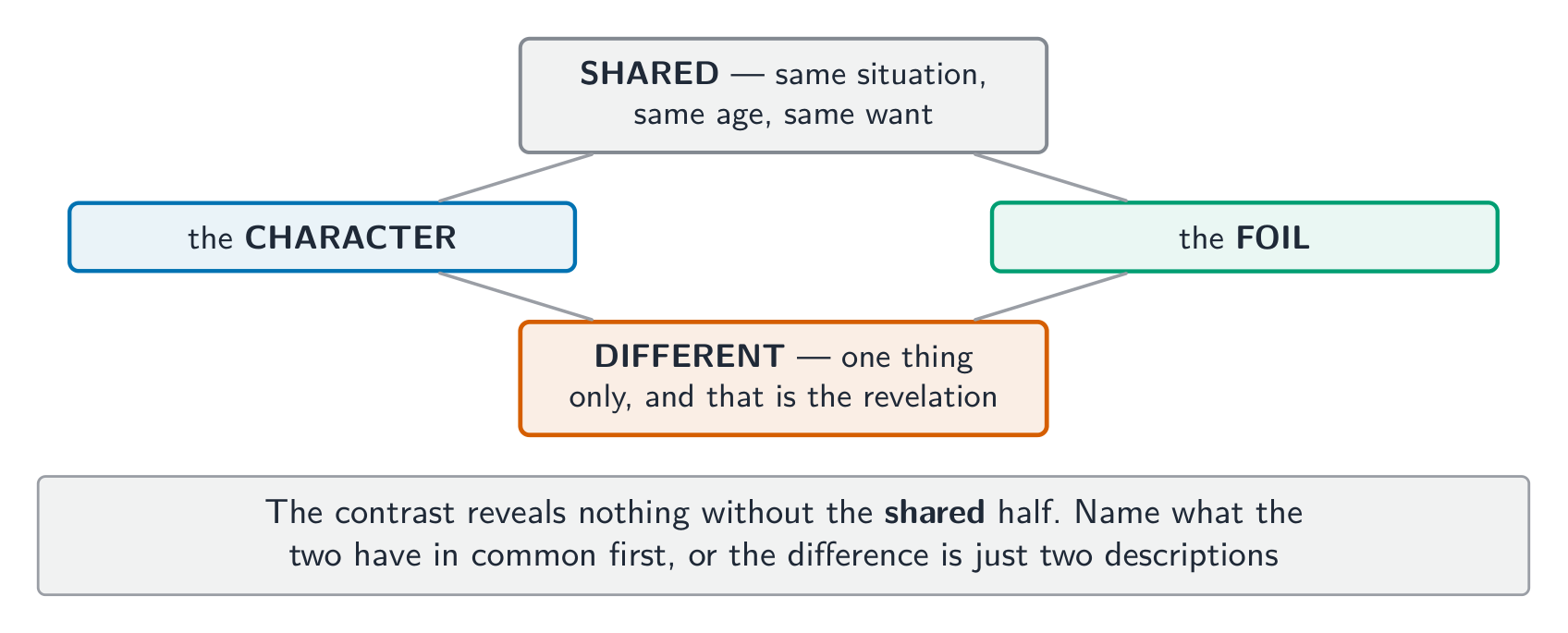
    التناقض يكشف عن شيء بدون النصف المشترك - سمّه أولاً
    4.3

    Nuances in Characters' Relationships · ⁨تفاصيل في علاقات الشخصيات⁩

    Syllabus · ⁨المنهج⁩
    English

    Enduring Understanding (CHR-1): Characters in literature allow readers to study and explore a range of values, beliefs, assumptions, biases, and cultural norms represented by those characters.

    Learning Objective 1.D: Describe how textual details reveal nuances and complexities in characters’ relationships with one another.

    • CHR-1.S Conflict among characters often arises from tensions generated by their different value systems.
    العربية

    فهم دائم (CHR-1): الشخصيات في الأدب تتيح للقراء دراسة واستكشاف مجموعة متنوعة من القيم والمعتقدات والفرضيات والتحيزات والأعراف الثقافية التي تمثلها تلك الشخصيات.

    الهدف التعليمي 1.D: وصف كيف تكشف التفاصيل النصية عن الدقة والتعقيد في علاقات الشخصيات ببعضها البعض.

    • CHR-1.S غالباً ما تنشأ الصراعات بين الشخصيات من التوترات الناتجة عن أنظمتهم القيمية المختلفة.

    Source: College Board AP Course and Exam Description · ⁨المصدر: وصف دورة وامتحان College Board AP⁩

    English

    Conflict among characters often arises from tensions generated by their different value systems.

    This is Unit 3's definition applied to relationships. Two characters in a long-running disagreement usually disagree about something prior to the argument they are having.

    العربية

    غالباً ما ينشأ الصراع بين الشخصيات من ضغوط ناتجة عن نظم قيماتهم المختلفة.

    هذا هو تعريف الوحدة 3 المطبق على العلاقات. شخصيتان في نزاع مطول عادة ما يتفقان على شيء قبل النقاش الذي يخوضانه.

    4.4

    The Function of Setting in a Narrative · ⁨وظيفة الموقع في السرد⁩

    Syllabus · ⁨المنهج⁩
    English

    Enduring Understanding (SET-1): Setting and the details associated with it not only depict a time and place, but also convey values associated with that setting.

    Learning Objective 2.B: Explain the function of setting in a narrative.

    • SET-1.C A setting may help establish the mood and atmosphere of a narrative.
    العربية

    فهم دائم (SET-1): الخلفية الزمنية والمكانية والتفاصيل المرتبطة بها لا تصور فقط وقتاً ومكاناً، بل تنقل أيضاً القيم المرتبطة بتلك الخلفية الزمنية والمكانية.

    الهدف التعليمي 2.B: شرح وظيفة الزمان والمكان في السرد.

    • SET-1.C قد يساعد الزمان والمكان في بناء الجو العام والإحساس بالنص.

    Source: College Board AP Course and Exam Description · ⁨المصدر: وصف دورة وامتحان College Board AP⁩

    English

    A setting may help establish the mood and atmosphere of a narrative.

    Mood is the reader's feeling; atmosphere is the quality the text creates around events. Both are produced by selection - which details of a place the text mentions, and which it does not.

    العربية

    قد يساعد الموقع في تحديد المزاج والأجواء للسرد.

    المزاج هو شعور القارئ؛ الأجواء هي الجودة التي يخلقها النص حول الأحداث. كلاهما ينتجان عن الاختيار - أي تفاصيل المكان التي يذكرها النص وأيها لا يفعل.

    الموقع يقوم بأربع وظائف، والصف السفلي يقوم بعمل Plot
    Explore · ⁨استكشف⁩

    Sort each setting into the job it is doing · ⁨رتب كل إعداد حسب الوظيفة التي تقوم بها⁩

    The bottom two do plot work: a setting that constrains or opposes a character is not scenery. · ⁨الاثنان السفليان يؤديان عملًا سرديًا: الإعداد الذي يقيد أو يعارض شخصية ليس مجرد خلفية.⁩

    4.5

    The Relationship Between Character and Setting · ⁨العلاقة بين الشخصية والموقع⁩

    Syllabus · ⁨المنهج⁩
    English

    Enduring Understanding (SET-1): Setting and the details associated with it not only depict a time and place, but also convey values associated with that setting.

    Learning Objective 2.C: Describe the relationship between a character and a setting.

    • SET-1.D The environment a character inhabits provides information about that character.
    العربية

    فهم دائم (SET-1): الخلفية الزمنية والمكانية والتفاصيل المرتبطة بها لا تصور فقط وقتاً ومكاناً، بل تنقل أيضاً القيم المرتبطة بتلك الخلفية الزمنية والمكانية.

    الهدف التعليمي 2.C: وصف العلاقة بين الشخصية والزمن والمكان.

    • SET-1.D يوفر البيئة التي تعيش فيها الشخصية معلومات عن تلك الشخصية.

    Source: College Board AP Course and Exam Description · ⁨المصدر: وصف دورة وامتحان College Board AP⁩

    English

    The environment a character inhabits provides information about that character.

    This is a second route into character that avoids the trap of psychologising. A room described through its neglect, its order, or its borrowed furniture tells you about the person who lives there, and it is textual evidence rather than speculation.

    العربية

    بيئة يعيش فيها الشخص توفر معلومات عن تلك الشخصية.

    هذا طريق ثانٍ نحو الشخصية يتجنب فخ نفسنة. غرفة توصف بإهمالها، أو ترتيبها، أو أثاثها المستعار تخبرك عن الشخص الذي يعيش فيها، وهي دليل نصي بدلاً من التخمين.

    4.6

    How Plot Orders Events · ⁨كيف يرتب Plot الأحداث⁩

    Syllabus · ⁨المنهج⁩
    English

    Enduring Understanding (STR-1): The arrangement of the parts and sections of a text, the relationship of the parts to each other, and the sequence in which the text reveals information are all structural choices made by a writer that contribute to the reader’s interpretation of a text.

    Learning Objective 3.A: Identify and describe how plot orders events in a narrative.

    • STR-1.R Some patterns in dramatic situations are so common that they are considered archetypes, and these archetypes create certain expectations for how the dramatic situations will progress and be resolved. Note: For the exam, students are not expected to identify or label archetypes.
    العربية

    فهم دائم (STR-1): ترتيب أجزاء ونصوص النص، وعلاقة الأجزاء ببعضها البعض، والتسلسل الذي يكشف به النص عن المعلومات هي جميعًا اختيارات بنائية يقوم بها الكاتب تساهم في تفسير القارئ للنص.

    هدف التعلم 3.A: تحديد ووصف كيفية ترتيب Plot الأحداث في السرد.

    • STR-1.R بعض الأنماط في المواقف الدرامية شائعة جداً لدرجة أنها تُعتبر أرسوطيات (Archetypes)، وتخلق هذه الأرسوطيات توقعات معينة لكيفية تقدم المواقف الدرامية وحلها. ملاحظة: لن يُتوقع من الطلاب في الامتحان تحديد أو تسمية الأرسوطيات.

    Source: College Board AP Course and Exam Description · ⁨المصدر: وصف دورة وامتحان College Board AP⁩

    English

    Some patterns in dramatic situations are so common that they are considered archetypes 原型, and these archetypes carry associations readers bring with them.

    Use archetypes carefully: recognising one is a starting point, and the interesting analysis is almost always where a text departs from the pattern it invoked.

    العربية

    بعض الأنماط في المواقف الدرامية شائعة جداً لدرجة أنها تعتبر أنماطاً أصيلة原型,وتحمل هذه الأنماط ارتباطات يجلبها القارئون معها.

    استخدم الأنماط الأصيلة بعناية: التعرف عليها نقطة بداية، والتحليل الممتع هو دائماً حيث ينحرف النص عن النمط الذي استدعاه.

    4.7

    The Function of Contrasts Within a Text · ⁨وظيفة التناقضات داخل النص⁩

    Syllabus · ⁨المنهج⁩
    English

    Enduring Understanding (STR-1): The arrangement of the parts and sections of a text, the relationship of the parts to each other, and the sequence in which the text reveals information are all structural choices made by a writer that contribute to the reader’s interpretation of a text.

    Learning Objective 3.D: Explain the function of contrasts within a text.

    • STR-1.S The differences highlighted by a contrast emphasize the particular traits, aspects, or characteristics important for comparison of the things being contrasted.
    • STR-1.T Contrasts often represent conflicts in values related to character, narrator, or speaker perspectives on ideas represented by a text.
    العربية

    فهم دائم (STR-1): ترتيب أجزاء ونصوص النص، وعلاقة الأجزاء ببعضها البعض، والتسلسل الذي يكشف به النص عن المعلومات هي جميعًا اختيارات بنائية يقوم بها الكاتب تساهم في تفسير القارئ للنص.

    هدف التعلم 3.D: اشرح وظيفة التناقضات داخل النص.

    • STR-1.S تؤكد الاختلافات التي تبرزها التناقضات السمات أو الجوانب أو الخصائص المحددة المهمة لمقارنة الأشياء المتناقضة.
    • STR-1.T غالباً ما تمثل التناقضات صراعات في القيم تتعلق بمنظورات الشخصيات، أو الراوي، أو المتحدث تجاه الأفكار المُمثَّلة في النص.
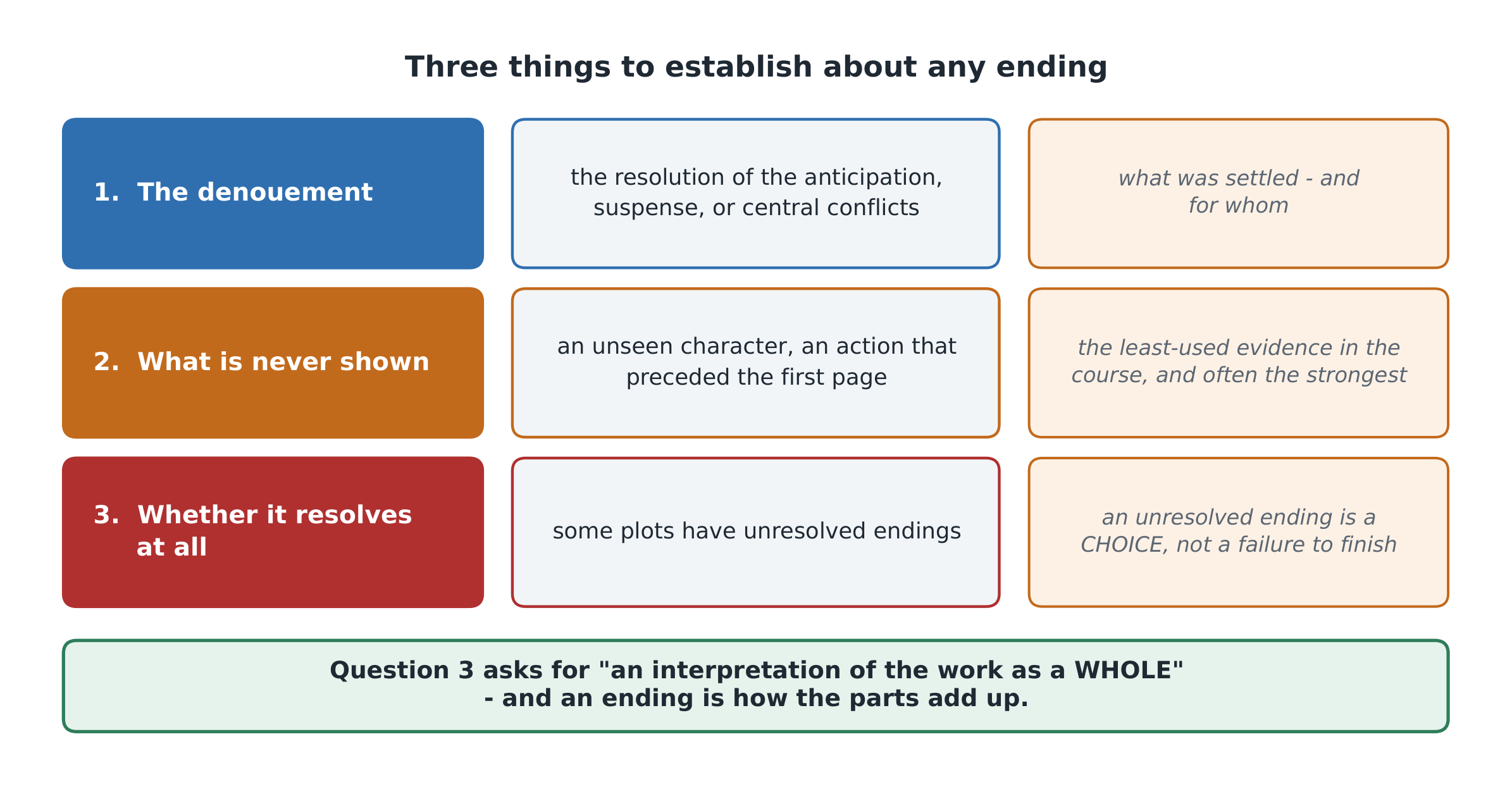
    Source: College Board AP Course and Exam Description · ⁨المصدر: وصف دورة وامتحان College Board AP⁩

    English
    • The differences highlighted by a contrast emphasise particular traits or characteristics in the things contrasted.
    • Contrasts often represent conflicts in values related to character, narrator, or speaker perspectives.
    العربية
    • الاختلافات التي أبرزها التناقض تؤكد سمات أو خصائص معينة في الأشياء المتقابلة.
    • تمثل التناقضات غالباً صراعات في القيمات المتعلقة بوجهات نظر الشخصيات، أو الراوي، أو المتحدث.
    4.8

    Identifying the Narrator or Speaker · ⁨تحديد الراوي أو المتحدث⁩

    Syllabus · ⁨المنهج⁩
    English

    Enduring Understanding (NAR-1): A narrator’s or speaker’s perspective controls the details and emphases that affect how readers experience and interpret a text.

    Learning Objective 4.A: Identify and describe the narrator or speaker of a text.

    • NAR-1.J Narrators may function as characters in the narrative who directly address readers and either recall events or describe them as they occur.
    العربية

    فهم دائم (NAR-1): يحدد منظور الروائي أو المتحدث التفاصيل والتركيزات التي تؤثر على كيفية تجربة القارئ وتفسيره للنص.

    هدف التعلم 4.A: تحديد ووصف الراوي أو متحدث النص.
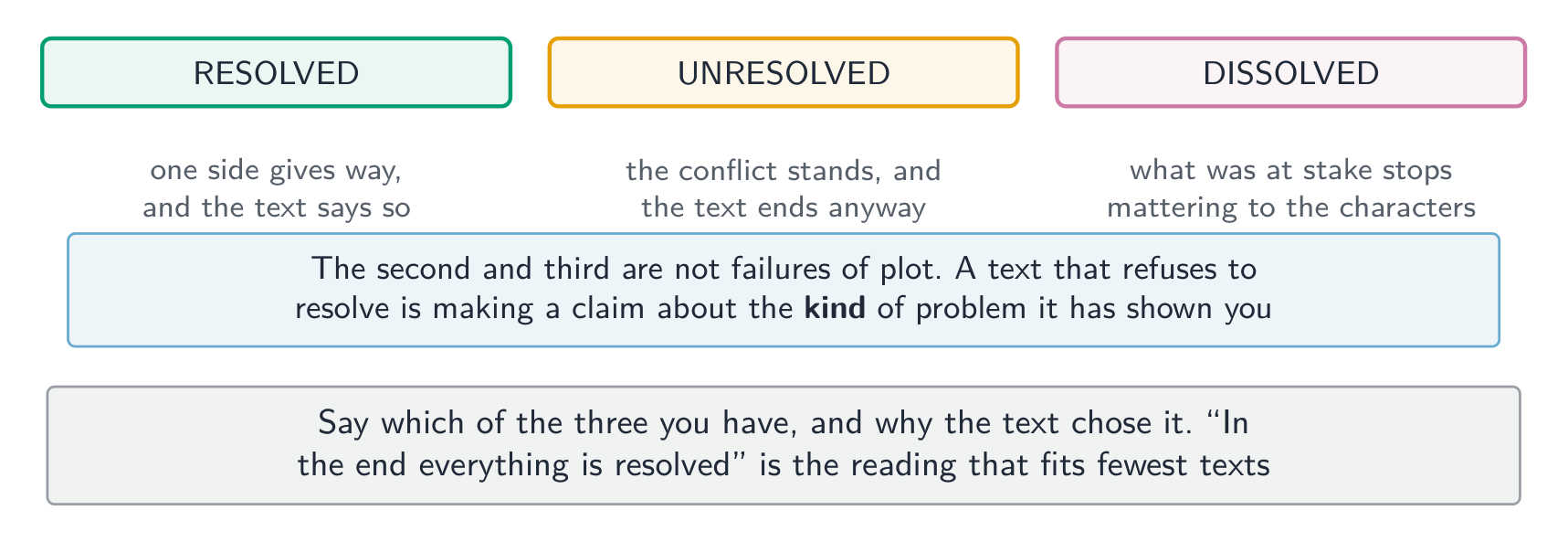
    • NAR-1.J قد يعمل الرواة كشخصيات في السرد تتواصل مباشرة مع القراء إما باستذكار الأحداث أو وصفها كما تحدث.

    Source: College Board AP Course and Exam Description · ⁨المصدر: وصف دورة وامتحان College Board AP⁩

    English

    Narrators may function as characters who directly address readers, and who either recall events or relate them as they occur.

    That distinction - recalling versus relating as they occur - is the first axis of narrative distance below.

    العربية

    قد يعمل السردون كشخصيات تتحدث مباشرة إلى القراء، إما استذكار الأحداث أو سردها كما تقع.

    هذا التمييز - بين الاستذكار والسرد كما يقع - هو المحور الأول لمسافة السرد أدناه.

    4.9

    The Function of Point of View · ⁨وظيفة نقطة النظر⁩

    Syllabus · ⁨المنهج⁩
    English

    Enduring Understanding (NAR-1): A narrator’s or speaker’s perspective controls the details and emphases that affect how readers experience and interpret a text.

    Learning Objective 4.B: Identify and explain the function of point of view in a narrative.

    • NAR-1.K Narrative distance refers to the physical distance, chronological distance, relationships, or emotional investment of the narrator to the events or characters of the narrative.
    • NAR-1.L Stream of consciousness is a type of narration in which a character’s thoughts are related through a continuous dialogue or description.
    العربية

    فهم دائم (NAR-1): يحدد منظور الروائي أو المتحدث التفاصيل والتركيزات التي تؤثر على كيفية تجربة القارئ وتفسيره للنص.

    الهدف التعليمي 4.B: تحديد وشرح وظيفة نقطة النظر في نص سردي.

    • NAR-1.K يشير المسافة السردية إلى المسافة المادية، أو الزمنية، أو العلاقات، أو الاستثمار العاطفي للراوي تجاه أحداث أو شخصيات السرد.
    • NAR-1.L تدفق الوعي هو نوع من السرد يتم فيه ربط أفكار الشخصية من خلال حوار مستمر أو وصف.

    Source: College Board AP Course and Exam Description · ⁨المصدر: وصف دورة وامتحان College Board AP⁩

    English
    • Narrative distance 叙述距离 refers to the physical distance, chronological distance, relationships, or emotional distance between the narrator and the events or characters.
    • Stream of consciousness 意识流 is narration in which a character's thoughts are related through a continuous flow, often with little conventional ordering.

    Narrative distance is the most powerful and least-used tool in this course. A narrator recounting their childhood forty years later is chronologically distant, and that distance supplies irony the child could not have had. Reduce the distance - a narrator relating events as they occur - and the irony vanishes, replaced by immediacy and unreliability.

    العربية
    أربع مسافات بين الراوي والأحداث - وكل منها يمثل خياراً
    موقع الراوي ليس حقيقة واحدة بل أربعة، وأي منها يمكن أن يكون محور التحليل
    • مسافة السرد refers to the physical distance, chronological distance, relationships, or emotional distance between the narrator and the events or characters.
    • تدفق الوعي is narration in which a character's thoughts are related through a continuous flow, often with little conventional ordering.

    مسافة السرد هي الأداة الأقوى والأقل استخداماً في هذا المقرر. راوي يروي طفولته بعد أربعين عاماً يكون بعيداً زمنياً، وتوفر هذه المسافة الكهالة التي لم يكن للطفل拥有ها. تقليل المسافة - راوي يسرد الأحداث كما تقع - يختفي الكهالة، ليحل محلها الإحساس بالحاضر وعدم الموثوقية.

    Vocabulary · ⁨مفردات⁩ Train · ⁨تدريب⁩
    English العربية
    agency/ˈeɪdʒənsi/ وكالة
    protagonist/ˈprəʊtəɡənɪst/ البطل
    antagonist/ænˈtæɡənɪst/ العدو
    archetypes/ˈɑːkɪtaɪps/ النماذج الأولى
    Narrative distance/ˈnærətɪv ˈdɪstəns/ المسافة السردية
    Stream of consciousness/striːm ɒv ˈkɒnʃəsnəs/ تدفق الوعي
    topic sentences/ˈtɒpɪk ˈsentənsɪz/ الجمل الموضوعية
    4.10

    Details, Diction, and Syntax Reveal Perspective · ⁨التفاصيل، والمفردات، والتركيب reveals Perspective⁩

    Syllabus · ⁨المنهج⁩
    English

    Enduring Understanding (NAR-1): A narrator’s or speaker’s perspective controls the details and emphases that affect how readers experience and interpret a text.

    Learning Objective 4.C: Identify and describe details, diction, or syntax in a text that reveal a narrator’s or speaker’s perspective.

    • NAR-1.M The narrators’, characters’, or speakers’ backgrounds and perspectives shape the tone they convey about subjects or events in the text.
    • NAR-1.N Descriptive words, such as adjectives and adverbs, not only qualify or modify the things they describe but also convey a perspective toward those things.
    • NAR-1.O The attitude of narrators, characters, or speakers toward an idea, character, or situation emerges from their perspective and may be referred to as tone.
    العربية

    فهم دائم (NAR-1): يحدد منظور الروائي أو المتحدث التفاصيل والتركيزات التي تؤثر على كيفية تجربة القارئ وتفسيره للنص.

    الهدف التعليمي 4.C: تحديد ووصف التفاصيل، أو اختيار الكلمات، أو النحو في نص يكشف عن منظور الراوي أو المتحدث.

    • NAR-1.M الخلفية والمنظور الخاص بالرواة، أو الشخصيات، أو المتحدثين يشكّلان النبرة التي ينقلونها حول الموضوعات أو الأحداث في النص.
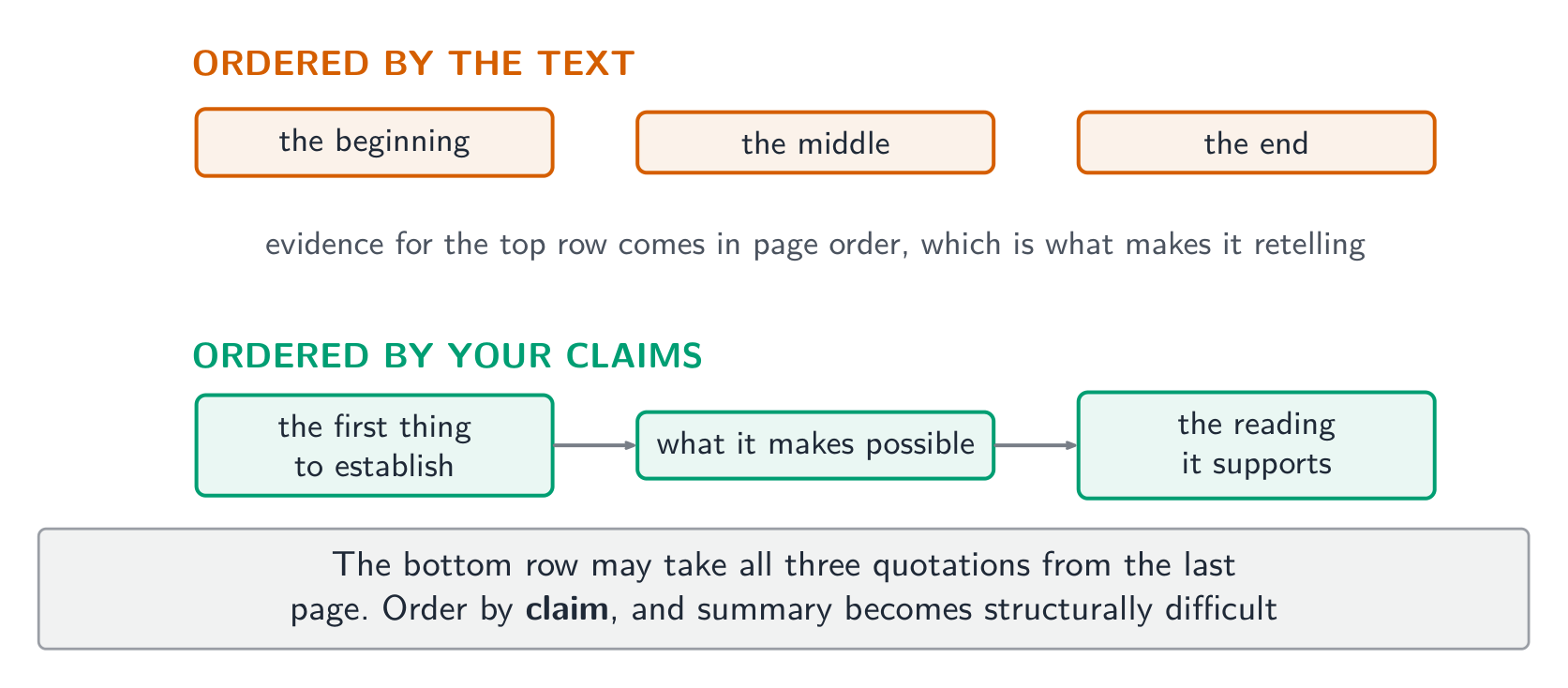
    • NAR-1.N الكلمات الوصفية، كصفات وأدوات الظرف، لا تحسّن أو تعدّل فقط الأشياء التي تصفها، بل تنقل أيضاً منظوراً تجاه تلك الأشياء.
    • NAR-1.O يتجلى موقف الرواة، أو الشخصيات، أو المتحدثين تجاه فكرة، أو شخصية، أو موقف من منظورهم، وقد يُشار إليه باسم النبرة.

    Source: College Board AP Course and Exam Description · ⁨المصدر: وصف دورة وامتحان College Board AP⁩

    English
    • Narrators' and characters' backgrounds and perspectives shape the tone they convey.
    • Descriptive words not only qualify what they describe but convey a perspective toward it.
    • The attitude of a narrator or speaker toward an idea, character, or situation emerges from these choices.
    العربية
    • الخلفيات والتوجهات الخاصة بالسردون والشخصيات تشكل النبرة التي ينقلونها.
    • الكلمات الوصفية لا تحدد فقط ما تصفه بل تنقل توجهاً نحوه.
    • يتجلى موقف الراوي أو المتحدث من فكرة أو شخصية أو موقف من خلال هذه الخيارات.
    التوجه يُبنى من ثلاثة أشياء قابلة للملاحظة - وما لا يتم ملاحظته يحسب أيضاً
    Explore · ⁨استكشف⁩

    Build a perspective from three observables · ⁨بني منظورًا من ثلاثة عناصر قابلة للملاحظة⁩

    What is not noticed is evidence too: a narrator who never describes a face has told you something. · ⁨ما لم يُلاحظ هو دليل أيضًا: راوي لا يصف وجهًا أبدًا أخبرك بشيء.⁩

    4.11

    Developing a Literary Thesis Statement · ⁨تطويربيان الأطروحة الأدبية⁩

    Syllabus · ⁨المنهج⁩
    English

    Enduring Understanding (LAN-1): Readers establish and communicate their interpretations of literature through arguments supported by textual evidence.

    Learning Objective 7.B: Develop a thesis statement that conveys a defensible claim about an interpretation of literature and that may establish a line of reasoning.

    • LAN-1.D A thesis statement expresses an interpretation of a literary text, and requires a defense, through use of textual evidence and a line of reasoning, both of which are explained in an essay through commentary.
    • LAN-1.E A thesis statement may preview the development or line of reasoning of an interpretation. This is not to say that a thesis statement must list the points of an interpretation, literary elements to be analyzed, or specific evidence to be used in the argument.
    العربية

    فهم دائم (LAN-1): يضع القارئ تفسيراتهم للأدب ويبلغون عنها من خلال حجج مدعومة بأدلة نصية.

    هدف التعلم 7.B: تطوير statement that conveys a defensible claim about an interpretation of literature and that may establish a line of reasoning.

    • LAN-1.D تعبر الأطروحة عن تفسير للنص الأدبي، وتتطلب دليلاً مدعوماً بالأدلة النصية وسير استنتاجي، وكلاهما يشرح في المقال من خلال التعليق.
    • LAN-1.E قد statement that conveys a defensible claim about an interpretation of literature preview the development or line of reasoning of an interpretation. This is not to say that a thesis statement must list the points of an interpretation, literary elements to be analyzed, or specific evidence to be used in the argument.

    Source: College Board AP Course and Exam Description · ⁨المصدر: وصف دورة وامتحان College Board AP⁩

    English

    Unchanged: a thesis expresses an interpretation and requires textual defence; it may preview the line of reasoning.

    العربية

    غير متغير: الفكرة الرئيسية تعبر عن تفسير وتتطلب دفاعاً نصياً؛ قد تستعرض خط التفكير.

    4.12

    Developing Commentary · ⁨تطوير التعليق⁩

    Syllabus · ⁨المنهج⁩
    English

    Enduring Understanding (LAN-1): Readers establish and communicate their interpretations of literature through arguments supported by textual evidence.

    Learning Objective 7.C: Develop commentary that establishes and explains relationships among textual evidence, the line of reasoning, and the thesis.

    • LAN-1.F A line of reasoning is the logical sequence of claims that work together to defend the overarching thesis statement.
    • LAN-1.G A line of reasoning is communicated through commentary that explains the logical relationship between the overarching thesis statement and the claims/evidence within the body of an essay.
    • LAN-1.M The body paragraphs of a written argument develop the reasoning and justify claims using evidence and providing commentary that links the evidence to the overall thesis.
    • LAN-1.N Effective paragraphs are cohesive and often use topic sentences to state a claim and explain the reasoning that connects the various claims and evidence that make up the body of an essay.
    العربية

    فهم دائم (LAN-1): يضع القارئ تفسيراتهم للأدب ويبلغون عنها من خلال حجج مدعومة بأدلة نصية.

    هدف التعلم 7.C: developing commentary that establishes and explains relationships among textual evidence, the line of reasoning, and the thesis.

    • LAN-1.F line of reasoning is the logical sequence of claims that work together to defend the overarching thesis statement.
    • LAN-1.G line of reasoning is communicated through commentary that explains the logical relationship between the overarching thesis statement and the claims/evidence within the body of an essay.
    • LAN-1.M تُطوّر فقرات العرض reasoning الاستدلالية وتبرر الادعاءات باستخدام الأدلة وتقديم تعليق يربط الأدلة بالأطروحة الشاملة.
    • LAN-1.N الفقرات الفعالة متماسكة وغالباً ما تستخدم جمل موضوعية للتعبير عن ادعاء وشرح Reasoning الذي يربط الادعاءات والأدلة المختلفة المكوّنة لجسم المقال.

    Source: College Board AP Course and Exam Description · ⁨المصدر: وصف دورة وامتحان College Board AP⁩

    English
    • A line of reasoning is the logical sequence of claims defending the thesis, communicated through commentary.
    • Body paragraphs develop the reasoning and justify claims using evidence.
    • Effective paragraphs are cohesive and often use topic sentences 主题句 to state a claim and explain the reasoning.
    العربية
    • خط التفكير هو التسلسل المنطقي ادعاءات الدفاع عن الفكرة الرئيسية، يتم传达 عبر التعليق.
    • الفقرات develops the reasoning and justify claims using evidence.
    • الفقرات الفعالة تكون متسقة وغالباً ما تستخدم الجمل الموضوعية 主题句 لتعبير عن ادعاء وشرح التفكير.
    4.13

    Selecting Relevant and Sufficient Evidence · ⁨اختيار أدلة ذات صلة وكافية⁩

    Syllabus · ⁨المنهج⁩
    English

    Enduring Understanding (LAN-1): Readers establish and communicate their interpretations of literature through arguments supported by textual evidence.

    Learning Objective 7.D: Select and use relevant and sufficient evidence to both develop and support a line of reasoning.

    • LAN-1.H Writers use evidence strategically and purposefully to illustrate, clarify, exemplify, associate, amplify, or qualify a point.
    • LAN-1.I Evidence is effective when the writer of the essay uses commentary to explain a logical relationship between the evidence and the claim.
    • LAN-1.J Evidence is sufficient when its quantity and quality provide apt support for the line of reasoning.
    • LAN-1.K Developing and supporting an interpretation of a text is a recursive process; an interpretation can emerge from analyzing evidence and then forming a line of reasoning, or the interpretation can emerge from forming a line of reasoning and then identifying relevant evidence to support that line of reasoning.
    العربية

    فهم دائم (LAN-1): يضع القارئ تفسيراتهم للأدب ويبلغون عنها من خلال حجج مدعومة بأدلة نصية.

    هدف التعلم 7.D: select and use relevant and sufficient evidence to both develop and support a line of reasoning.

    • LAN-1.H يستخدم الكتاب Evidence strategically and purposefully to illustrate, clarify, exemplify, associate, amplify, or qualify a point.
    • LAN-1.I Evidence is effective when the writer of the essay uses commentary to explain a logical relationship between the evidence and the claim.
    • LAN-1.J Evidence is sufficient when its quantity and quality provide apt support for the line of reasoning.
    • LAN-1.K Developing and supporting an interpretation of a text is a recursive process; an interpretation can emerge from analyzing evidence and then forming a line of reasoning, or the interpretation can emerge from forming a line of reasoning and then identifying relevant evidence to support that line of reasoning.

    Source: College Board AP Course and Exam Description · ⁨المصدر: وصف دورة وامتحان College Board AP⁩

    English

    Same four points as Unit 3: evidence used strategically; effective when commentary explains the relationship; sufficient in quantity and quality; and interpretation as a recursive process.

    العربية

    نفس النقاط الأربع من الوحدة 3: الأدلة المستخدمة استراتيجياً؛ فعالة عندما يشرح التعليق العلاقة؛ كافية في الكمية والجودة؛ والتفسير كعملية متكررة.

    4.14

    Control Over the Elements of Composition · ⁨السيطرة على عناصر Composition⁩

    Syllabus · ⁨المنهج⁩
    English

    Enduring Understanding (LAN-1): Readers establish and communicate their interpretations of literature through arguments supported by textual evidence.

    Learning Objective 7.E: Demonstrate control over the elements of composition to communicate clearly.

    • LAN-1.O Coherence occurs at different levels in a piece of writing. In a sentence, the idea in one clause logically links to an idea in the next. In a paragraph, the idea in one sentence logically links to an idea in the next. In a text, the ideas in one paragraph logically link to the ideas in the next.
    • LAN-1.P Writers achieve coherence when the arrangement and organization of reasons, evidence, ideas, or details is logical. Writers may use transitions, repetition, synonyms, pronoun references, or parallel structure to indicate relationships between and among those reasons, evidence, ideas, or details.
    العربية

    فهم دائم (LAN-1): يضع القارئ تفسيراتهم للأدب ويبلغون عنها من خلال حجج مدعومة بأدلة نصية.

    هدف التعلم 7.E: إظهار التحكم في عناصر التركيب للتواصل بوضوح.

    • LAN-1.O يحدث الترابط على مستويات مختلفة في القطعة الكتابية. في الجملة، ترتبط الفكرة في جملة جزئية منطقياً بفكرة في الجملة التالية. في الفقرة، ترتبط الفكرة في جملة منطقياً بفكرة في الجملة التالية. في النص، ترتبط الأفكار في فقرة منطقياً بأفكار الفقرة التالية.
    • LAN-1.P يحقق الكُتّاب الترابط عندما يكون ترتيب وتنظيم الأسباب، أو الأدلة، أو الأفكار، أو التفاصيل منطقياً. قد يستخدم الكُتّاب أدوات الربط، أو التكرار، أو المرادفات، أو إشارات الضمائر، أو التوازي لإظهار العلاقات بين وبين تلك الأسباب والأدلة والأفكار أو التفاصيل.

    Source: College Board AP Course and Exam Description · ⁨المصدر: وصف دورة وامتحان College Board AP⁩

    English

    Coherence occurs at different levels - within a sentence, between sentences, across the essay - and writers achieve it when the arrangement of reasons, evidence, and details makes the line of reasoning followable.

    Worked example (a real AP exam task). A prose fiction prompt asks how the author's narrative choices convey the narrator's attitude to a remembered event. A weak answer: "The narrator is nostalgic and uses descriptive language." A scoring answer uses narrative distance: "The narrator relates a single afternoon from a distance of decades, and the distance is doing the work: he describes his own excitement in the third person - 'the boy ran' - before returning to 'I' for the disappointment. Choosing where to close the chronological gap lets him withhold sympathy from his younger self while claiming the loss as his own." Distance, its variation, and the attitude it produces.

    العربية

    يحدث الترابط على مستويات مختلفة - داخل جملة، بين جمل، عبر المقال - ويحقق الكاتب ذلك عندما يجعل ترتيب الأسباب والأدلة والتفاصيل خط التفكير قابلاً للتتبع.

    مثال محلول (مهمة امتحان AP حقيقية). سؤال خيال نثري يطلب كيف تنقل اختيارات المؤلف السردية موقف الراوي من حدث متذكر. إجابة ضعيفة: "الراوي يتنسى ويستخدم لغة وصفية." إجابة عالية الدرجة تستخدم مسافة السرد: "الراوي يسرد عمراً واحداً من مسافة عشرين عاماً، والمسافة تقوم بالعمل: يصف حماسه الخاص بالضمير الغائب - 'ركض الصبي' - قبل العودة إلى 'أنا' للإحباط. اختيار متى إغلاق الفجوة الزمنية يسمح له بامتناع التعاطف مع نفسه الأصغر بينما يدعي الخسارة كملك خاص به." المسافة، وتفاوتها، والموقف الذي تنتجه.

    4.14

    Exam tips · ⁨نصائح للامتحان⁩

    English
    • Choices reveal values. Ask what must have been true for the choice to make sense to that character.
    • An antagonist is not a villain. The strongest hold a value the reader can also recognise as good.
    • The environment tells you about the character - and it is textual evidence, not speculation.
    • Archetypes are a starting point. The analysis is where the text departs from the pattern.
    • Narrative distance has four kinds - physical, chronological, relational, emotional. It is the most underused tool here.
    • A narrator who closes or opens the distance mid-text has made a choice. Say what it produces.
    العربية
    • الكشف عن القيم. اسأل عن ما يجب أن يكون صحيحاً حتى يفهم الاختيار من قبل تلك الشخصية.
    • الشخصية المضادة ليست شريرة. أقوى الشخصيات تحمل قيمة يمكن للقارئ أيضاً التعرف عليها كقيمة جيدة.
    • البيئة تخبرك عن الشخصية - وهي دليل نصي، وليس تخميناً.
    • الأنماط الأولية هي نقطة انطلاق. التحليل هو حيث يبتعد النص عن النمط.
    • مسافة السرد لها أربعة أنواع - جسدية، زمنية، علائقية، عاطفية. وهي الأداة الأقل استخداماً هنا.
    • راوي يغلق أو يفتح المسافة في وسط النص قد اتخذ قراراً. قل ما ينتج عنه.
  • 5

    Poetry II · ⁨الشعر II⁩

    Watch lesson · ⁨شاهد الدرس⁩
    5.1

    The Function of Structure in a Text · ⁨وظيفة البنية في النص⁩

    Syllabus · ⁨المنهج⁩
    English

    Enduring Understanding (STR-1): The arrangement of the parts and sections of a text, the relationship of the parts to each other, and the sequence in which the text reveals information are all structural choices made by a writer that contribute to the reader’s interpretation of a text.

    Learning Objective 3.C: Explain the function of structure in a text.

    • STR-1.U Closed forms of poetry include predictable patterns in the structure of lines, stanzas, meter, and rhyme, which develop relationships among ideas in the poem. Note: The AP Exam will not require students to label or identify specific rhyme schemes, metrical patterns, or forms of poetry.
    • STR-1.V Open forms of poetry may not follow expected or predictable patterns in the structure of their lines or stanzas, but they may still have structures that develop relationships between ideas in the poem.
    • STR-1.W Structures combine in texts to emphasize certain ideas and concepts.
    العربية

    فهم دائم (STR-1): ترتيب أجزاء ونصوص النص، وعلاقة الأجزاء ببعضها البعض، والتسلسل الذي يكشف به النص عن المعلومات هي جميعًا اختيارات بنائية يقوم بها الكاتب تساهم في تفسير القارئ للنص.
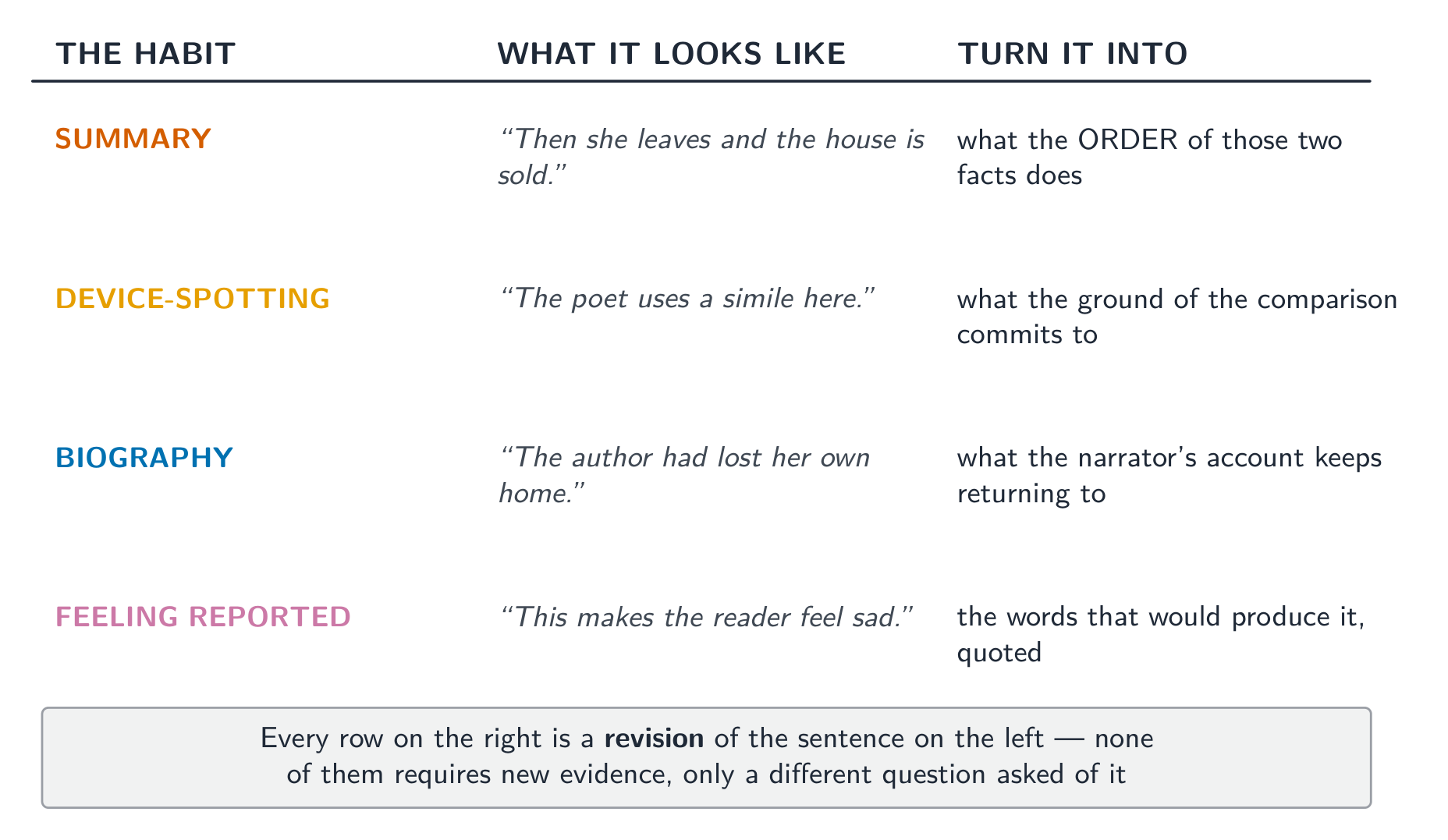
    هدف التعلم 3.C: اشرح وظيفة البنية في النص.

    • STR-1.U تشمل الأشكال المغلقة للشعر أنماطاً متوقعة في بنية الأبيات، أو المقاطع، أو الإيقاع، والقافية، والتي تُطور relationships بين الأفكار في القصيدة. ملاحظة: لن يتطلب امتحان AP من الطلاب تسمية أو تحديد أنماط القافية، أو الأنماط الإيقاعية، أو أشكال الشعر المحددة.
    • STR-1.V قد لا تتبع الأشكال المفتوحة للشعر أنماطاً متوقعة أو محددة مسبقاً في بنية أبياتها أو مقاطعها، لكنها قد تحتوي على هيكلة تُطور علاقات بين الأفكار في القصيدة.
    • STR-1.W تتحد الهياكل في النصوص لتأكيد أفكار ومفاهيم معينة.

    Source: College Board AP Course and Exam Description · ⁨المصدر: وصف دورة وامتحان College Board AP⁩

    English

    Unit 5 is the second poetry unit, and it does two things: it names the forms a poem can take, and it completes the figurative toolkit.

    • Closed forms 格律诗体 include predictable patterns in lines, stanzas, metre, and rhyme.
    • Open forms 自由诗体 may not follow expected or predictable patterns.
    • Structures combine in texts to emphasise certain ideas.

    The examinable question is never "which form is this?" but what the form does. In a closed form, the interesting moment is the departure - the line that runs long, the rhyme that fails to arrive. In an open form, the interesting moment is the imposition - the sudden regularity in a poem that has refused it.

    العربية

    الوحدة 5 هي وحدة الشعر الثانية، وتقوم بشيءين: تسمية الأشكال التي يمكن أن يأخذها القصيدة، وإكمال أدوات التعبير المجازي.

    • الأشكال المغلقة 格律诗体 include أنماط متوقعة في الأسطر، المقاطع، الوزن، والقافية.
    • الأشكال المفتوحة 自由诗体 may not follow expected or predictable patterns.
    • الهياكل تتكامل في النصوص لإبراز أفكار معينة.

    السؤال القابل للاختبار ليس أبداً "أي شكل هو هذا؟" بل ماذا يفعل الشكل. في الشكل المغلق، اللحظة المثيرة هي الانحراف - السطر الطويل، القافية التي تفشل في الوصول. في الشكل المفتوح، اللحظة المثيرة هي فرض النظام - الانتظام المفاجئ في قصيدة رفضته.

    5.2

    Literal and Figurative Meaning · ⁨المعنى الحرفي والمجازي⁩

    Syllabus · ⁨المنهج⁩
    English

    Enduring Understanding (FIG-1): Comparisons, representations, and associations shift meaning from the literal to the figurative and invite readers to interpret a text.

    Learning Objective 5.A: Distinguish between the literal and figurative meanings of words and phrases.

    • FIG-1.L Words with multiple meanings or connotations add nuance or complexity that can contribute to interpretations of a text.
    العربية

    فهم دائم (FIG-1): التحليلات والتصورات والروابط تحوّل المعنى من الحرفي إلى المجازي وتدعوا القراء لتفسير النص.

    هدف التعلم 5.A: التمييز بين المعاني الحرفية والمجازية للكلمات والعبارات.

    • FIG-1.L الكلمات متعددة المعاني أو الإيحاءات تضيف دقة أو تعقيداً قد يساهم في تفسير النص.

    Source: College Board AP Course and Exam Description · ⁨المصدر: وصف دورة وامتحان College Board AP⁩

    English

    Words with multiple meanings or connotations add nuance or complexity that can contribute to interpretation.

    In poetry, a word that could mean two things frequently means both. Resist choosing.

    العربية

    الكلمات متعددة المعاني أو الدلالات تضيف دقة أو تعقيداً يمكن أن تساهم في التفسير.

    في الشعر، الكلمة التي يمكن أن تعني شيئين غالباً ما تعني الاثنين معاً. تقاوم الاختيار.

    5.3

    The Function of Specific Words and Phrases · ⁨وظيفة كلمات وعبارات محددة⁩

    Syllabus · ⁨المنهج⁩
    English

    Enduring Understanding (FIG-1): Comparisons, representations, and associations shift meaning from the literal to the figurative and invite readers to interpret a text.

    Learning Objective 5.B: Explain the function of specific words and phrases in a text.

    • FIG-1.M Descriptive words, such as adjectives and adverbs, qualify or modify the things they describe and affect readers’ interaction with the text.
    • FIG-1.N Hyperbole exaggerates while understatement minimizes. Exaggerating or minimizing an aspect of an object focuses attention on that trait and conveys a perspective about the object.
    العربية

    فهم دائم (FIG-1): التحليلات والتصورات والروابط تحوّل المعنى من الحرفي إلى المجازي وتدعوا القراء لتفسير النص.

    هدف التعلم 5.B: اشرح وظيفة كلمات وعبارات محددة في النص.

    • FIG-1.M الكلمات الوصفية، مثل الصفات والظروف، تحدد أو تعدل الأشياء التي تصفها وتؤثر على تفاعل القارئ مع النص.
    • FIG-1.N المبالغة تكبر بينما التخفيف يصغر. إن تكبير أو تصغير جانب من شيء ما يركز الانتباه على تلك السمة وينقل وجهة نظر حول ذلك الشيء.

    Source: College Board AP Course and Exam Description · ⁨المصدر: وصف دورة وامتحان College Board AP⁩

    English
    • Descriptive words qualify or modify what they describe and affect how the reader perceives it.
    • Hyperbole 夸张 exaggerates while understatement 低调陈述 minimises. Exaggerating or minimising an aspect of a thing has an effect on how it is understood.

    Understatement is the more powerful of the pair and the more often missed by second-language readers. A poem that describes a catastrophe as inconvenient is not being calm; the gap between the event and the word is the poem's whole comment on it.

    العربية
    • الكلمات الوصفية تحدد أو تعدل ما تصفه وتؤثر على كيفية إدراك القارئ له.
    • المبالغة 夸张 exaggerates while التقليل من شأن الأمر 低调陈述 minimises. المبالغة أو التقليل من جانب معين لشيء له تأثير على كيفية فهمه.

    التقليل من شأن الأمر هو الأقوى في الزوج والأكثر غفلاً من قبل قراء اللغة الثانية. قصيدة تصف كارثة بأنها "غير مريحة" ليست هادئة؛ الفجوة بين الحدث والكلمة هي تعليق القصيدة بأكمله حولها.

    5.4

    The Function of an Image or Imagery · ⁨وظيفة الصورة أو الصور⁩

    Syllabus · ⁨المنهج⁩
    English

    Enduring Understanding (FIG-1): Comparisons, representations, and associations shift meaning from the literal to the figurative and invite readers to interpret a text.

    Learning Objective 5.D: Identify and explain the function of an image or imagery.

    • FIG-1.O Descriptive words, such as adjectives and adverbs, contribute to sensory imagery.
    • FIG-1.P An image can be literal or it can be a form of a comparison that represents something in a text through associations with the senses.
    • FIG-1.Q A collection of images, known as imagery, may emphasize ideas in parts of or throughout a text.
    العربية

    فهم دائم (FIG-1): التحليلات والتصورات والروابط تحوّل المعنى من الحرفي إلى المجازي وتدعوا القراء لتفسير النص.

    هدف التعلم 5.D: تحديد وشرح وظيفة الصورة أو الصورية.

    • FIG-1.O الكلمات الوصفية، مثل الصفات والظروف، تساهم في الصور الحسية.
    • FIG-1.P الصورة يمكن أن تكون حرفية أو يمكن أن تكون نوعاً من المقارنة تمثل شيئاً في النص من خلال الارتباطات الحسية.
    • FIG-1.Q مجموعة من الصور، تُعرف بالصورية، قد تؤكد أفكاراً في أجزاء من النص أو طوال النص بأكمله.

    Source: College Board AP Course and Exam Description · ⁨المصدر: وصف دورة وامتحان College Board AP⁩

    English
    • Descriptive words contribute to sensory imagery 感官意象.
    • An image can be literal, or a form of comparison representing something through another thing.
    • A collection of images - imagery - may emphasise ideas in parts of, or throughout, a text.

    The plural matters. A single image is a detail; a pattern of images running through a poem is a claim the poem is making without stating it.

    العربية
    أدوات الشعر II، مرتبة حسب ما تفعله كل واحدة بالقارئ
    تسمية الأداة لا تجلب شيئاً. قول ما تفعله للقارئ هو التحليل
    • الكلمات الوصفية تساهم في الصور الحسية 感官意象.
    • الصورة يمكن أن تكون حرفية، أو نوعاً من المقارنة تمثل شيئاً من خلال شيء آخر.
    • مجموعة من الصور - الصورة الرمزية - قد تُبرز أفكاراً في أجزاء معينة، أو عبر النص بأكمله.

    الأمر هنا يتعلق بالجمع. الصورة الواحدة تُعدّ تفصيلاً؛ أما نمط من الصور يمتد عبر قصيدة فهو ادعاء تتقدم به القصيدة دون أن تصيغه صراحةً.

     الرمز يُصنع بواسطة النص، وليس بواسطة القارئ
    Explore · ⁨استكشف⁩

    Image or symbol? Apply the test · ⁨صورة أم رمز؟ طبق الاختبار⁩

    A symbol is made by the text, not by the reader: the test is whether the text returns to it and gives it weight it does not need. · ⁨الرمز يُصنع بواسطة النص، وليس بواسطة القارئ: الاختبار هو ما إذا كان النص يعود إليه ويعطيه وزنًا لا يحتاجه.⁩

    5.5

    The Function of a Metaphor · ⁨وظيفة الاستعارة⁩

    Syllabus · ⁨المنهج⁩
    English

    Enduring Understanding (FIG-1): Comparisons, representations, and associations shift meaning from the literal to the figurative and invite readers to interpret a text.

    Learning Objective 6.B: Identify and explain the function of a metaphor.

    • FIG-1.R Metaphorical comparisons do not focus solely on the objects being compared; they focus on the particular traits, qualities, or characteristics of the things being compared.
    • FIG-1.S Comparisons not only communicate literal meaning but may also convey figurative meaning or transmit a perspective.
    • FIG-1.T An extended metaphor is created when the comparison of a main subject and comparison subject persists through parts of or an entire text, and when the comparison is expanded through additional details, similes, and images.
    • FIG-1.U Interpretation of an extended metaphor may depend on the context of its use; that is, what is happening in a text may determine what is transferred in the comparison.
    العربية

    فهم دائم (FIG-1): التحليلات والتصورات والروابط تحوّل المعنى من الحرفي إلى المجازي وتدعوا القراء لتفسير النص.

    هدف التعلم 6.B: حدد واشرح وظيفة الاستعارة.

    • FIG-1.R المقارنات المجازية لا تركز حصراً على الأشياء المُقارَنَة؛ بل تركز على السمات أو الخصائص أو الصفات المحددة للأشياء المُقارَنَة.
    • FIG-1.S المقارنات لا تنقل المعنى الحرفي فحسب، بل قد تنقل أيضاً معنى مجازياً أو تنقل وجهة نظر.
    • FIG-1.T تتشكل الاستعارة المتسلسلة عندما تستمر مقارنة الموضوع الرئيسي وموضوع المقارنة عبر أجزاء من النص أو النص بأكمله، وعندما تتم توسيع المقارنة من خلال تفاصيل إضافية، واستعارات تشبيهية، وصور.
    • FIG-1.U قد يعتمد تفسير الاستعارة المتسلسلة على سياق استخدامها؛ أي أن ما يحدث في النص قد يحدد ما يتم نقله في المقارنة.

    Source: College Board AP Course and Exam Description · ⁨المصدر: وصف دورة وامتحان College Board AP⁩

    English
    • Metaphorical comparisons do not focus solely on the objects compared; they focus on the particular qualities the comparison brings out.
    • Comparisons communicate literal meaning and may also convey figurative meaning.
    • An extended metaphor 延伸隐喻 is created when the comparison of a main subject and comparison subject persists across a passage or a whole text.
    • Interpretation of an extended metaphor may depend on the context of its use.

    An extended metaphor is the most rewarding thing to find in an unseen poem, because it gives you structure and meaning at once: you can trace how the comparison develops, and a comparison that changes as it extends is the poem's argument in motion.

    العربية
    • المقاربات المجازية لا تركز حصراً على الكائنات المُقارَبة؛ بل تركز على الخصائص المحددة التي تكشف عنها المقارنة.
    • المقاربات تنقل معنى حرفياً وقد تنقل أيضاً معنى مجازياً.
    • يُنشأ المجاز الممتد 延伸隐喻 عندما تستمر مقارنة الموضوع الرئيسي وموضوع المقارنة عبر مقطع نصي أو نص بأكمله.
    • قد يعتمد تفسير المجاز الممتد على سياق استخدامه.

    المجاز الممتد هو أكثر ما يمكن أن تجده في قصيدة غير مألوفة، لأنه يمنحك البنية والمعنى معاً: يمكنك تتبع كيف يتطور المقارنة، والمقارنة التي تتغير أثناء امتدادها هي حجة القصيدة في حالة حركة.

    5.6

    The Function of Personification · ⁨وظيفة التشخيص⁩

    Syllabus · ⁨المنهج⁩
    English

    Enduring Understanding (FIG-1): Comparisons, representations, and associations shift meaning from the literal to the figurative and invite readers to interpret a text.

    Learning Objective 6.C: Identify and explain the function of personification.

    • FIG-1.V Personification is a type of comparison that assigns a human trait or quality to a nonhuman object, entity, or idea, thus characterizing that object, entity, or idea.
    العربية

    فهم دائم (FIG-1): التحليلات والتصورات والروابط تحوّل المعنى من الحرفي إلى المجازي وتدعوا القراء لتفسير النص.

    هدف التعلم 6.C: تحديد وشرح وظيفة التشخيص.

    • FIG-1.V التشخيص هو نوع من المقارنات يُنسب سمة أو صفة بشرية إلى كائن غير بشري أو كيان أو فكرة، وبالتالي يشخص ذلك الكائن أو الكيان أو الفكرة.

    Source: College Board AP Course and Exam Description · ⁨المصدر: وصف دورة وامتحان College Board AP⁩

    English

    Personification 拟人 is a type of comparison that assigns a human trait or quality to a nonhuman object, animal, or idea.

    Treat it as a comparison with the same parts as any other: the main subject is the nonhuman thing, the comparison subject is a person, and the transferred quality is the human trait. Then ask the useful question - what does granting this thing agency do? A wind that decides is not the same claim as a wind that blows.

    العربية

    التشخيص 拟人 هو نوع من المقاربات يُخصص سمة أو صفة إنسانية لكائن غير بشري، حيوان، أو فكرة.

    عامله كمقارنة ذات نفس الأجزاء كأي مقارنة أخرى: الموضوع الرئيسي هو الكائن غير البشري، وموضوع المقارنة هو الإنسان، والصفة المنقولة هي السمة الإنسانية. ثم اطرح السؤال المفيد - ماذا تفعل منح هذا الشيء وكالة؟ الريح الذي يتخذ قراراً ليس نفس الادعاء للريح الذي يهب فقط.

    'إنه يُحيي الكائن' هو التعريف - العمود الثالث هو التعليق
    Vocabulary · ⁨مفردات⁩ Train · ⁨تدريب⁩
    English العربية
    Closed forms/kləʊzd fɔːmz/ الأشكال المغلقة
    Open forms/ˈəʊpən fɔːmz/ الأشكال المفتوحة
    Hyperbole/haɪˈpɜːbəli/ المبالغة
    understatement/ˌʌndəˈsteɪtmənt/ التقليل من شأن الأمر
    contribute to sensory imagery/kənˈtrɪbjuːt tə ˈsensəri ˈɪmɪdʒri/ تساهم في الصورة الحسية
    extended metaphor/ekˈstendɪd ˈmetəfɔː/ الاستعارة الممتدة
    Personification/pɜːˈsɒnɪfɪkeɪʃn/ التشخيص (إعطاء صفات بشرية)
    Allusions/əˈluːʒnz/ الإشارات الأدبية
    5.7

    The Function of an Allusion · ⁨وظيفة الإشارة الأدبية⁩

    Syllabus · ⁨المنهج⁩
    English

    Enduring Understanding (FIG-1): Comparisons, representations, and associations shift meaning from the literal to the figurative and invite readers to interpret a text.

    Learning Objective 6.D: Identify and explain the function of an allusion.

    • FIG-1.W Allusions in a text can reference literary works including myths and sacred texts; other works of art including paintings and music; or people, places, or events outside the text.
    العربية

    فهم دائم (FIG-1): التحليلات والتصورات والروابط تحوّل المعنى من الحرفي إلى المجازي وتدعوا القراء لتفسير النص.

    هدف التعلم 6.D: تحديد وشرح وظيفة الإشارة.

    • FIG-1.W الإشارات في النص يمكن أن تشير إلى أعمال أدبية بما في ذلك الأساطير والنصوص المقدسة؛ وأعمال فنية أخرى بما في ذلك اللوحات والموسيقى؛ أو أشخاص أو أماكن أو أحداث خارج النص.

    Source: College Board AP Course and Exam Description · ⁨المصدر: وصف دورة وامتحان College Board AP⁩

    English

    Allusions 典故 may reference literary works including myths and sacred texts, other works of art, and historical events.

    An allusion imports meaning the poem has not written. That is its efficiency and its risk: it works only for readers who recognise it. When you meet one you do not know, say what the poem does with it structurally - where it is placed, what it interrupts - rather than pretending to a recognition you lack.

    العربية

    الإشارات الأدبية 典故 قد تشير إلى أعمال أدبية تشمل الأساطير والنصوص المقدسة، وأعمال فنية أخرى، وأحداث تاريخية.

    الإشارة الأدبية تجلب معنى لم تكتبه القصيدة. هذا هو كفاءتها ومخاطرتها: فهي تعمل فقط للقراء الذين يتعرفون عليها. عندما تواجه إشارة لا تعرفها، قل ما تفعله القصيدة بها هيكلياً - أين تم وضعها، وماذا تعطله - بدلاً من التظاهر بمعرفة تفتقر إليها.

    الإشارة الأدبية تجلب موقفًا وحكمًا - وتكلف شيئاً أيضاً
    Explore · ⁨استكشف⁩

    Take an allusion past the source · ⁨أخذ إشارة مكنية تتجاوز المصدر⁩

    Naming the source is not the analysis. An allusion imports a situation and a judgement, and it costs something as well. · ⁨تسمية المصدر ليست التحليل. إن الإشارة المكنية تجلب وضعًا وحكمًا، وتتحمل تكاليف أيضًا.⁩

    5.8

    Developing a Literary Thesis Statement · ⁨تطويربيان الأطروحة الأدبية⁩

    Syllabus · ⁨المنهج⁩
    English

    Enduring Understanding (LAN-1): Readers establish and communicate their interpretations of literature through arguments supported by textual evidence.

    Learning Objective 7.B: Develop a thesis statement that conveys a defensible claim about an interpretation of literature and that may establish a line of reasoning.

    • LAN-1.D A thesis statement expresses an interpretation of a literary text, and requires a defense, through use of textual evidence and a line of reasoning, both of which are explained in an essay through commentary.
    • LAN-1.E A thesis statement may preview the development or line of reasoning of an interpretation. This is not to say that a thesis statement must list the points of an interpretation, literary elements to be analyzed, or specific evidence to be used in the argument.
    العربية

    فهم دائم (LAN-1): يضع القارئ تفسيراتهم للأدب ويبلغون عنها من خلال حجج مدعومة بأدلة نصية.

    هدف التعلم 7.B: تطوير statement that conveys a defensible claim about an interpretation of literature and that may establish a line of reasoning.

    • LAN-1.D تعبر الأطروحة عن تفسير للنص الأدبي، وتتطلب دليلاً مدعوماً بالأدلة النصية وسير استنتاجي، وكلاهما يشرح في المقال من خلال التعليق.
    • LAN-1.E قد statement that conveys a defensible claim about an interpretation of literature preview the development or line of reasoning of an interpretation. This is not to say that a thesis statement must list the points of an interpretation, literary elements to be analyzed, or specific evidence to be used in the argument.

    Source: College Board AP Course and Exam Description · ⁨المصدر: وصف دورة وامتحان College Board AP⁩

    English

    Unchanged: an interpretation requiring textual defence, which may preview the line of reasoning.

    العربية

    غير متغير: تفسير يتطلب دفاعاً نصياً، وقد يستعرض خط الاستنتاج مسبقاً.

    5.9

    Developing Commentary · ⁨تطوير التعليق⁩

    Syllabus · ⁨المنهج⁩
    English

    Enduring Understanding (LAN-1): Readers establish and communicate their interpretations of literature through arguments supported by textual evidence.

    Learning Objective 7.C: Develop commentary that establishes and explains relationships among textual evidence, the line of reasoning, and the thesis.

    • LAN-1.F A line of reasoning is the logical sequence of claims that work together to defend the overarching thesis statement.
    • LAN-1.G A line of reasoning is communicated through commentary that explains the logical relationship between the overarching thesis statement and the claims/evidence within the body of an essay.
    العربية

    فهم دائم (LAN-1): يضع القارئ تفسيراتهم للأدب ويبلغون عنها من خلال حجج مدعومة بأدلة نصية.

    هدف التعلم 7.C: developing commentary that establishes and explains relationships among textual evidence, the line of reasoning, and the thesis.

    • LAN-1.F line of reasoning is the logical sequence of claims that work together to defend the overarching thesis statement.
    • LAN-1.G line of reasoning is communicated through commentary that explains the logical relationship between the overarching thesis statement and the claims/evidence within the body of an essay.

    Source: College Board AP Course and Exam Description · ⁨المصدر: وصف دورة وامتحان College Board AP⁩

    English

    A line of reasoning is the logical sequence of claims defending the thesis, communicated through commentary explaining the relationship between evidence and claim.

    العربية

    خط الاستنتاج هو التسلسل المنطقي للادعاءات التي تدافع عن الأطروحة، يتم传达 من خلال تعليقات تشرح العلاقة بين الدليل والادعاء.

    5.10

    Selecting Relevant and Sufficient Evidence · ⁨اختيار أدلة ذات صلة وكافية⁩

    Syllabus · ⁨المنهج⁩
    English

    Enduring Understanding (LAN-1): Readers establish and communicate their interpretations of literature through arguments supported by textual evidence.

    Learning Objective 7.D: Select and use relevant and sufficient evidence to both develop and support a line of reasoning.

    • LAN-1.H Writers use evidence strategically and purposefully to illustrate, clarify, exemplify, associate, amplify, or qualify a point.
    • LAN-1.I Evidence is effective when the writer of the essay uses commentary to explain a logical relationship between the evidence and the claim.
    • LAN-1.J Evidence is sufficient when its quantity and quality provide apt support for the line of reasoning.
    • LAN-1.K Developing and supporting an interpretation of a text is a recursive process; an interpretation can emerge from analyzing evidence and then forming a line of reasoning, or the interpretation can emerge from forming a line of reasoning and then identifying relevant evidence to support that line of reasoning.
    العربية

    فهم دائم (LAN-1): يضع القارئ تفسيراتهم للأدب ويبلغون عنها من خلال حجج مدعومة بأدلة نصية.

    هدف التعلم 7.D: select and use relevant and sufficient evidence to both develop and support a line of reasoning.

    • LAN-1.H يستخدم الكتاب Evidence strategically and purposefully to illustrate, clarify, exemplify, associate, amplify, or qualify a point.
    • LAN-1.I Evidence is effective when the writer of the essay uses commentary to explain a logical relationship between the evidence and the claim.
    • LAN-1.J Evidence is sufficient when its quantity and quality provide apt support for the line of reasoning.
    • LAN-1.K Developing and supporting an interpretation of a text is a recursive process; an interpretation can emerge from analyzing evidence and then forming a line of reasoning, or the interpretation can emerge from forming a line of reasoning and then identifying relevant evidence to support that line of reasoning.

    Source: College Board AP Course and Exam Description · ⁨المصدر: وصف دورة وامتحان College Board AP⁩

    English

    Evidence used strategically, effective with commentary, sufficient in quantity and quality, and interpretation as a recursive process.

    العربية

    الدليل المستخدم باستراتيجية، فعال مع التعليقات، كافٍ في الكمية والجودة، والتفسير كعملية متكررة.

    5.11

    Control Over the Elements of Composition · ⁨السيطرة على عناصر Composition⁩

    Syllabus · ⁨المنهج⁩
    English

    Enduring Understanding (LAN-1): Readers establish and communicate their interpretations of literature through arguments supported by textual evidence.

    Learning Objective 7.E: Demonstrate control over the elements of composition to communicate clearly.

    • LAN-1.Q Transitional elements are words or other elements (phrases, clauses, sentences, or paragraphs) that assist in creating coherence between sentences and paragraphs by showing relationships between ideas.
    العربية

    فهم دائم (LAN-1): يضع القارئ تفسيراتهم للأدب ويبلغون عنها من خلال حجج مدعومة بأدلة نصية.

    هدف التعلم 7.E: إظهار التحكم في عناصر التركيب للتواصل بوضوح.

    • LAN-1.Q العناصر الانتقالية هي كلمات أو عناصر أخرى (عبارات، جمل، أو فقرات) تساعد في خلق تماسك بين الجمل والفقرات من خلال إظهار العلاقات بين الأفكار.

    Source: College Board AP Course and Exam Description · ⁨المصدر: وصف دورة وامتحان College Board AP⁩

    English

    Transitional elements - words, phrases, clauses, sentences, or paragraphs - assist in creating coherence.

    Worked example (a real AP exam task). A poetry-analysis prompt asks how the poet's use of figurative language conveys the speaker's attitude. A weak answer catalogues: "The poet uses personification, imagery, and a metaphor." A scoring answer traces one device developing: "The extended comparison of the tide to a creditor runs the length of the poem, but the terms change: in the first stanza it 'asks', by the third it 'takes what was always owed'. The comparison subject stays constant while the speaker's account of the relationship hardens - so the attitude the poem conveys is not fear of loss but the recognition that the loss was never hers to prevent." One device, traced, with the attitude it produces.

    العربية

    العناصر الانتقالية - كلمات، عبارات، جمل، أو فقرات - تساعد في خلق تماسك.

    مثال محلل (سؤال حقيقي في امتحان AP). سياق تحليل شعري يسأل كيف ينقل استخدام الشاعر للكلام المجازي موقف المتحدث. إجابة ضعيفة تسرد: "الشاعر يستخدم التشخيص، والصورة، والاستعارة." إجابة صحيحة تتبع جهازاً واحداً يتطور: "المقارنة المطولة للموجة بالدين تمتد طوال القصيدة، لكن الشروط تتغير: في الشطر الأول 'تطلب'، وبحلول الشطر الثالث 'تأخذ ما كان مستحقاً دائماً'. موضوع المقارنة يبقى ثابتاً بينما becomes account of the relationship hardens - hence the attitude conveyed is not fear of loss but recognition that the loss was never hers to prevent." جهاز واحد، مُتبع، مع الموقف الذي ينتجه.

    5.11

    Exam tips · ⁨نصائح للامتحان⁩

    English
    • Never ask "which form is this?" Ask what the form does - and look for the departure or the imposition.
    • A word with two meanings often means both. Do not choose prematurely.
    • Understatement is the more powerful half of the pair, and the more often missed. The gap is the comment.
    • A pattern of images is a claim the poem makes without stating it. A single image is only a detail.
    • An extended metaphor that changes as it extends is the poem's argument in motion. Trace it.
    • Cataloguing devices earns nothing. One device traced beats four devices named.
    العربية
    • لا تسأل أبداً "ما هو الشكل؟" اسأل ماذا يفعل الشكل - وابحث عن الانحراف أو فرضه.
    • الكلمة ذات معنيين غالباً تعني الاثنين معاً. لا تختر بشكل مبكر.
    • التقليل من شأن الأمر هو النصف الأقوى من الزوج، والأكثر عرضة للتجاهل. الفجوة هي التعليق.
    • نمط من الصور هو ادعاء تتقدم به القصيدة دون أن تصيغه صراحةً. الصورة الواحدة هي مجرد تفصيل.
    • المجاز الممتد الذي يتغير أثناء امتداده هو حجة القصيدة في حالة حركة. اتبعه.
    • سرد الأجهزة لا يجلب أي نقاط. جهاز واحد تم تتبعه يفوق أربعة أجهزة مذكورة.
  • 6

    Longer Fiction or Drama II · ⁨النثر الطويل أو المسرحية II⁩

    Watch lesson · ⁨شاهد الدرس⁩
    6.1

    What Textual Details Reveal About a Character · ⁨ما تكشفه التفاصيل النصية عن الشخصية⁩

    Syllabus · ⁨المنهج⁩
    English

    Enduring Understanding (CHR-1): Characters in literature allow readers to study and explore a range of values, beliefs, assumptions, biases, and cultural norms represented by those characters.

    Learning Objective 1.A: Identify and describe what specific textual details reveal about a character, that character’s perspective, and that character’s motives.

    • CHR-1.T Different character, narrator, or speaker perspectives often reveal different information, develop different attitudes, and influence different interpretations of a text and the ideas in it.
    العربية

    فهم دائم (CHR-1): الشخصيات في الأدب تتيح للقراء دراسة واستكشاف مجموعة متنوعة من القيم والمعتقدات والفرضيات والتحيزات والأعراف الثقافية التي تمثلها تلك الشخصيات.

    هدف التعلم 1.A: تحديد ووصف ما تكشفه التفاصيل النصية المحددة عن شخصية، وجهة نظر تلك الشخصية، ودوافعها.

    • CHR-1.T غالباً ما تكشف وجهات نظر الشخصية المختلفة أو الراوي أو المتحدث عن معلومات مختلفة، وتطور مواقف مختلفة، وتؤثر على تفسيرات مختلفة للنص والأفكار الواردة فيه.

    Source: College Board AP Course and Exam Description · ⁨المصدر: وصف دورة وامتحان College Board AP⁩

    English

    Unit 6 is the second longer-fiction-or-drama unit and it adds the two most sophisticated tools in the course: narrator reliability and the symbol.

    Different character, narrator, or speaker perspectives often reveal different information and develop different interpretations of the same events.

    In a long work with several perspectives, the discrepancies between them are not a problem to reconcile. They are the text's method.

    العربية

    الوحدة 6 هي الوحدة الثانية للنثر الطويل أو المسرحية وتضيف أداتين أكثر تعقيداً في المقرر: موثوقية الراوي والرمز.

    وجهات نظر مختلفة للشخصيات أو الراوي أو المتحدث تكشف غالباً عن معلومات مختلفة وتطور تفسيرات مختلفة للأحداث نفسها.

    في عمل طويل有多个وجهات نظر، الاختلافات بينها ليست مشكلة للحل. إنها طريقة النص.

    6.2

    The Function of Contrasting Characters · ⁨وظيفة الشخصيات المتناقضة⁩

    Syllabus · ⁨المنهج⁩
    English

    Enduring Understanding (CHR-1): Characters in literature allow readers to study and explore a range of values, beliefs, assumptions, biases, and cultural norms represented by those characters.

    Learning Objective 1.C: Explain the function of contrasting characters.

    • CHR-1.U Foil characters (foils) serve to illuminate, through contrast, the traits, attributes, or values of another character.
    العربية

    فهم دائم (CHR-1): الشخصيات في الأدب تتيح للقراء دراسة واستكشاف مجموعة متنوعة من القيم والمعتقدات والفرضيات والتحيزات والأعراف الثقافية التي تمثلها تلك الشخصيات.

    الهدف التعليمي 1.C: شرح وظيفة الشخصيات المتناقضة.

    • CHR-1.U تعمل الشخصيات المضادة (المضادات) على إبراز، من خلال التناقض، سمات أو صفات أو قيم شخصية أخرى.

    Source: College Board AP Course and Exam Description · ⁨المصدر: وصف دورة وامتحان College Board AP⁩

    English

    Foil characters 陪衬人物 serve to illuminate, through contrast, the traits, attributes, or values of another character.

    A foil is not an antagonist. A foil may be an ally, a sibling, a friend - what makes them a foil is that they are similar enough for the difference to be visible. The useful question is always: what does this character have that the protagonist lacks, and what does the text do with that gap?

    العربية

    الشخصيات المضادة 陪衬人物 تخدم في إضاءة، من خلال التناقض، الصفات أو الخصائص أو القيم لشخصية أخرى.

    الشخصية المضادة ليست عدوًا. قد تكون الحليف، الأخ، الصديق - ما يجعلها شخصية مضادة هو أنها مشابهة بما يكفي ليظهر الفرق. السؤال المفيد دائماً هو: ماذا يمتلك هذا الشخصية يفتقر إليه البطل، وماذا يفعل النص بهذه الفجوة؟

    6.3

    Choices, Actions, and Speech Reveal Complexity · ⁨الخيارات، الأفعال، والكلمات تكشف التعقيد⁩

    Syllabus · ⁨المنهج⁩
    English

    Enduring Understanding (CHR-1): Characters in literature allow readers to study and explore a range of values, beliefs, assumptions, biases, and cultural norms represented by those characters.

    Learning Objective 1.E: Explain how a character’s own choices, actions, and speech reveal complexities in that character, and explain the function of those complexities.

    • CHR-1.V Inconsistencies between the private thoughts of characters and their actual behavior reveal tensions and complexities between private and professed values.
    • CHR-1.W A character’s competing, conflicting, or inconsistent choices or actions contribute to complexity in a text.
    العربية

    فهم دائم (CHR-1): الشخصيات في الأدب تتيح للقراء دراسة واستكشاف مجموعة متنوعة من القيم والمعتقدات والفرضيات والتحيزات والأعراف الثقافية التي تمثلها تلك الشخصيات.

    هدف التعلم 1.E: شرح كيف تكشف اختيارات الشخصية وأفعالها وكلامها عن تعقيدها، وشرح وظيفة هذه التعقيدات.

    • CHR-1.V يكشف عدم الاتساق بين الأفكار الخاصة للشخصيات وسلوكها الفعلي عن التوترات والتعقيدات بين القيم الخاصة والمعلنة.
    • CHR-1.W تساهم خيارات الشخصية المتنافرة أو المتعارضة أو غير المتسقة في التعقيد داخل النص.

    Source: College Board AP Course and Exam Description · ⁨المصدر: وصف دورة وامتحان College Board AP⁩

    English
    • Inconsistencies between the private thoughts of characters and their actual behaviour reveal tensions.
    • A character's competing, conflicting, or inconsistent choices contribute to complexity.

    This is where AP Literature parts company with simpler reading. Inconsistency is not a flaw in a character; it is the evidence that the character has an interior. A character who always acts on what they think is a position, not a person.

    العربية
    • عدم الاتساق بين الأفكار الخاصة بالشخصيات وسلوكها الفعلي يكشف عن توترات.
    • الخيارات المتنافسة أو المتعارضة أو غير المتسقة للشخصية تساهم في التعقيد.

    هنا يفصل الأدب AP عن القراءة البسيطة. عدم الاتساق ليس عيباً في الشخصية؛ إنه الدليل على أن الشخصية لديها عالم داخلي. شخصية总是根据她认为是立场的东西行动,而不是作为一个活生生的人。

    أنماط قابلة للإقتباس أربع - المعايير تحدد الإثبات، وليس Assertion
    Explore · ⁨استكشف⁩

    Find the quotable sign of complexity · ⁨ابحث عن علامة على التعقيد قابلة للاستشهاد بها⁩

    The rubric marks the demonstration, not the assertion — and each of these is something you can quote. · ⁨الوصف يحدد الإثبات وليس الادعاء — وكل منهما شيء يمكنك الاستشهاد به.⁩

    6.4

    How Plot Orders Events · ⁨كيف يرتب Plot الأحداث⁩

    Syllabus · ⁨المنهج⁩
    English

    Enduring Understanding (STR-1): The arrangement of the parts and sections of a text, the relationship of the parts to each other, and the sequence in which the text reveals information are all structural choices made by a writer that contribute to the reader’s interpretation of a text.

    Learning Objective 3.A: Identify and describe how plot orders events in a narrative.

    • STR-1.X Some narrative structures interrupt the chronology of a plot; such structures include flashback, foreshadowing, in medias res, and stream of consciousness.
    العربية

    فهم دائم (STR-1): ترتيب أجزاء ونصوص النص، وعلاقة الأجزاء ببعضها البعض، والتسلسل الذي يكشف به النص عن المعلومات هي جميعًا اختيارات بنائية يقوم بها الكاتب تساهم في تفسير القارئ للنص.

    هدف التعلم 3.A: تحديد ووصف كيفية ترتيب Plot الأحداث في السرد.

    • STR-1.X بعض الهياكل السردية تقطع التسلسل الزمني للقصة؛ تشمل هذه الهياكل flashback، foreshadowing، in medias res، وstream of consciousness.

    Source: College Board AP Course and Exam Description · ⁨المصدر: وصف دورة وامتحان College Board AP⁩

    English

    Some narrative structures interrupt the chronology of a plot: flashback 倒叙, foreshadowing 伏笔, and in medias res 从中间开始.

    العربية

    بعض الهياكل السردية تقطع التسلسل الزمني للحدث: ال flashback 倒叙، foreshadowing 伏笔، و in medias res 从中间开始.

    Vocabulary · ⁨مفردات⁩ Train · ⁨تدريب⁩
    English العربية
    Foil characters/fɔɪl ˈkærɪktəz/ شخصيات التباين
    flashback/ˈflæʃbæk/ القصة العكسية
    foreshadowing/fɔːˈʃædəʊɪŋ/ التلميح المسبق
    in medias res/ɪn ˈmiːdiːəz rez/ في وسط الحدث
    6.5

    The Function of a Sequence of Events · ⁨وظيفة تسلسل الأحداث⁩

    Syllabus · ⁨المنهج⁩
    English

    Enduring Understanding (STR-1): The arrangement of the parts and sections of a text, the relationship of the parts to each other, and the sequence in which the text reveals information are all structural choices made by a writer that contribute to the reader’s interpretation of a text.

    Learning Objective 3.B: Explain the function of a particular sequence of events in a plot.

    • STR-1.Y Narrative structures that interrupt the chronology of a plot, such as flashback, foreshadowing, in medias res, and stream of consciousness, can directly affect readers’ experiences with a text by creating anticipation or suspense or building tension.
    العربية

    فهم دائم (STR-1): ترتيب أجزاء ونصوص النص، وعلاقة الأجزاء ببعضها البعض، والتسلسل الذي يكشف به النص عن المعلومات هي جميعًا اختيارات بنائية يقوم بها الكاتب تساهم في تفسير القارئ للنص.

    هدف التعلم 3.B: شرح وظيفة سلسلة معينة من الأحداث في plot.

    • STR-1.Y يمكن للهياكل السردية التي تقطع التسلسل الزمني للقصة، مثل flashback، foreshadowing، in medias res، وstream of consciousness، أن تؤثر مباشرة على تجارب القراء مع النص من خلال خلق التوقع أو الإثارة أو بناء التوتر.

    Source: College Board AP Course and Exam Description · ⁨المصدر: وصف دورة وامتحان College Board AP⁩

    English

    Those interrupting structures affect the reader's experience of the narrative - what is known when, and therefore what is felt when.

    The analytical move is always to ask what the reader knows at that moment. Foreshadowing gives the reader knowledge the characters lack, which converts suspense into dread. A flashback withholds until a later point, so the earlier scenes are read twice - once in ignorance and once in retrospect.

    العربية

    تؤثر تلك التراكيب المفاجئة على تجربة القارئ في السرد - ما يُعرفه ومتى، وبالتالي ما يشعر به متى.

    الخطوة التحليلية دائماً هي طرح سؤال ماذا يعرف القارئ في تلك اللحظة. الكشف المسبق يمنح القارئ معرفة يفتقدها الشخصيات، مما يحول الغموض إلى رعب. أما الاسترجاع الذي يؤجل الكشف حتى وقت لاحق، فإن المشاهدات الأولى تُقرأ مرتين - مرة في غفلة ومرة في استحضار الذاكرة.

    الإجابة في العمود الثالث: ما يعرفه القارئ، ومتى
    Explore · ⁨استكشف⁩

    Match each device to what the reader then does · ⁨طابق كل أداة بما يقوم به القارئ بعد ذلك⁩

    A sequence question is about what a reader knows and when, not about the order of events. · ⁨سؤال التسلسل يتعلق بما يعرفه القارئ ومتى، وليس بترتيب الأحداث.⁩

    6.6

    The Function of Contrasts Within a Text · ⁨وظيفة التناقضات داخل النص⁩

    Syllabus · ⁨المنهج⁩
    English

    Enduring Understanding (STR-1): The arrangement of the parts and sections of a text, the relationship of the parts to each other, and the sequence in which the text reveals information are all structural choices made by a writer that contribute to the reader’s interpretation of a text.

    Learning Objective 3.D: Explain the function of contrasts within a text.

    • STR-1.Z Contrasts often represent contradictions or inconsistencies that introduce nuance, ambiguity, or contradiction into a text. As a result, contrasts make texts more complex.
    العربية

    فهم دائم (STR-1): ترتيب أجزاء ونصوص النص، وعلاقة الأجزاء ببعضها البعض، والتسلسل الذي يكشف به النص عن المعلومات هي جميعًا اختيارات بنائية يقوم بها الكاتب تساهم في تفسير القارئ للنص.

    هدف التعلم 3.D: اشرح وظيفة التناقضات داخل النص.

    • STR-1.Z غالباً ما تمثل التناقضات تناقضات أو عدم اتساقات تقدم الدقة أو الغموض أو التناقض إلى النص. ونتيجة لذلك، تجعل التناقضات النصوص أكثر تعقيداً.

    Source: College Board AP Course and Exam Description · ⁨المصدر: وصف دورة وامتحان College Board AP⁩

    English

    Contrasts often represent contradictions or inconsistencies that introduce nuance, ambiguity, or contradictory interpretations.

    Note the last phrase. The CED explicitly permits a text to support more than one reading. An essay that acknowledges a competing interpretation and shows why its own is better is doing exactly what the sophistication point rewards.

    العربية

    التناقضات غالباً ما تمثل تناقضات أو عدم اتساق التي تُ引入 nuance, ambiguity, or contradictory interpretations.

    لاحظ العبارة الأخيرة. يسمح CED صراحة لنص ما بدعم أكثر من تفسير. المقال الذي يعترف بتفسير منافس ويوضح لماذا هو أفضل يقوم بالضبط بما تكافئه نقطة النضج الفكري.

    6.7

    Details, Diction, and Syntax Reveal Perspective · ⁨التفاصيل، والمفردات، والتركيب reveals Perspective⁩

    Syllabus · ⁨المنهج⁩
    English

    Enduring Understanding (NAR-1): A narrator’s or speaker’s perspective controls the details and emphases that affect how readers experience and interpret a text.

    Learning Objective 4.C: Identify and describe details, diction, or syntax in a text that reveal a narrator’s or speaker’s perspective.

    • NAR-1.P The narrator’s or speaker’s tone toward events or characters in a text influences readers’ interpretation of the ideas associated with those things.
    • NAR-1.Q The syntactical arrangement of phrases and clauses in a sentence can emphasize details or ideas and convey a narrator’s or speaker’s tone.
    • NAR-1.R Information included and/or not included in a text conveys the perspective of characters, narrators, and/ or speakers.
    • NAR-1.S A narrator’s or speaker’s perspective may influence the details and amount of detail in a text and may reveal biases, motivations, or understandings.
    العربية

    فهم دائم (NAR-1): يحدد منظور الروائي أو المتحدث التفاصيل والتركيزات التي تؤثر على كيفية تجربة القارئ وتفسيره للنص.

    الهدف التعليمي 4.C: تحديد ووصف التفاصيل، أو اختيار الكلمات، أو النحو في نص يكشف عن منظور الراوي أو المتحدث.

    • NAR-1.P يؤثر نبرة الراوي أو المتحدث تجاه الأحداث أو الشخصيات في النص على تفسير القراء للأفكار المرتبطة بتلك الأشياء.
    • NAR-1.Q يمكن أن يبرز الترتيب التركيبي للعبارات والجمل في جملة ما التفاصيل أو الأفكار وينقل نبرة الراوي أو المتحدث.
    • NAR-1.R المعلومات المتضمنة و/أو غير المتضمنة في نص تعكس وجهة نظر الشخصيات، أو الراويين، و/أو المتحدثين.
    • NAR-1.S قد تؤثر وجهة نظر الراوي أو المتحدث على التفاصيل وكمية التفاصيل في النص وقد تكشف عن تحيزات أو دوافع أو فهمات.

    Source: College Board AP Course and Exam Description · ⁨المصدر: وصف دورة وامتحان College Board AP⁩

    English
    • A narrator's or speaker's tone toward events or characters influences readers' interpretations.
    • The syntactical arrangement of phrases and clauses can emphasise details or ideas.
    • Information included and not included conveys the perspective of characters and narrators.
    • A narrator's perspective may influence the details and the amount of detail in a text.
    العربية
    • نبرة راوي أو متحدث نحو الأحداث أو الشخصيات تؤثر على تفسيرات القراء.
    • التنظيم النحوي للعبارات والجمل يمكن أن يُبرز تفاصيل أو أفكاراً.
    • المعلومات المضمنة وغير المضمنة تنقل منظور الشخصيات والرواة.
    • منظور الراوي قد يؤثر على التفاصيل وكمية التفاصيل في النص.
    6.8

    How a Narrator's Reliability Affects a Narrative · ⁨كيف يؤثر موثوقية الراوي على السرد⁩

    Syllabus · ⁨المنهج⁩
    English

    Enduring Understanding (NAR-1): A narrator’s or speaker’s perspective controls the details and emphases that affect how readers experience and interpret a text.

    Learning Objective 4.D: Explain how a narrator’s reliability affects a narrative.

    • NAR-1.T Readers can infer narrators’ biases by noting which details they choose to include in a narrative and which they choose to omit.
    • NAR-1.U Readers who detect bias in a narrator may find that narrator less reliable.
    • NAR-1.V The reliability of a narrator may influence a reader’s understanding of a character’s motives.
    العربية

    فهم دائم (NAR-1): يحدد منظور الروائي أو المتحدث التفاصيل والتركيزات التي تؤثر على كيفية تجربة القارئ وتفسيره للنص.

    هدف التعلم 4.D: اشرح كيف تؤثر موثوقية الراوي على السرد.

    • NAR-1.T يمكن للقراء استنتاج تحيزات الرواة من خلال ملاحظة التفاصيل التي يختارون تضمينها في السرد والتفاصيل التي يختارون إهمالها.
    • NAR-1.U القارئ الذي يكتشف تحيزًا في راوٍ ما قد يجد هذا الراوي أقل موثوقية.
    • NAR-1.V قد تؤثر موثوقية الراوي على فهم القارئ لدوافع شخصية ما.

    Source: College Board AP Course and Exam Description · ⁨المصدر: وصف دورة وامتحان College Board AP⁩

    English
    • Readers can infer narrators' biases by noting which details they choose to include and which they omit.
    • Readers who detect bias in a narrator may find that narrator less reliable.
    • The reliability of a narrator may influence a reader's understanding of a character's motives.

    The CED gives this as a chain, and reproducing the chain is what makes an answer analytical rather than impressionistic. You do not assert that a narrator is unreliable; you show the pattern of inclusion and omission, name the bias it implies, and then say what that bias prevents you from concluding.

    العربية
    كيف تُحكم على الموثوقية - وهي تُحكم من النص، وليس من شعور
    الانحياز يُستنتج مما هو مضمون وما تم حذفه. الانحياز المكتشف يقلل الموثوقية. انخفاض الموثوقية يغير ما يمكنك استنتاجه حول الدافع
    • يمكن للقراء استنتاج انحياز الرواة من خلال ملاحظة أي التفاصيل يختارون تضمينها وأيها يتجاوزونه.
    • القراء الذين يكتشفون انحيازاً في راوٍ قد يجدون ذلك الراوي أقل موثوقية.
    • موثوقية الراوي قد تؤثر في فهم القارئ لدوافع شخصية ما.

    يقدمCED هذا على شكل سلسلة، وتكرار السلسلة هو ما يجعل الإجابة تحليلية بدلاً من انطباعية. لا تدعي أن الراوي غير موثوق؛ بل أظهري نمط التضمين والحذف، وسمي الانحياز الذي يستلزمه، ثم قولي ما يمنعك منه ذلك الانحياز من الاستنتاج.

    6.9

    The Function of a Symbol · ⁨وظيفة الرمز الأدبي⁩

    Syllabus · ⁨المنهج⁩
    English

    Enduring Understanding (FIG-1): Comparisons, representations, and associations shift meaning from the literal to the figurative and invite readers to interpret a text.

    Learning Objective 5.C: Identify and explain the function of a symbol.

    • FIG-1.AA When a character comes to represent, or stand for, an idea or concept, that character becomes symbolic; some symbolic characters have become so common they are archetypal. Note: The AP Exam will not require students to identify or label archetypes.
    • FIG-1.X When a material object comes to represent, or stand for, an idea or concept, it becomes a symbol.
    • FIG-1.Y A symbol is an object that represents a meaning, so it is said to be symbolic or representative of that meaning. A symbol can represent different things depending on the experiences of a reader or the context of its use in a text.
    • FIG-1.Z Certain symbols are so common and recurrent that many readers have associations with them prior to reading a text. Other symbols are more contextualized and only come to represent certain things through their use in a particular text.
    العربية

    فهم دائم (FIG-1): التحليلات والتصورات والروابط تحوّل المعنى من الحرفي إلى المجازي وتدعوا القراء لتفسير النص.

    هدف التعلم 5.C: حدد وشرح وظيفة الرمز.

    • FIG-1.AA عندما يصبح الشخصية ممثلةً لفكرة أو مفهوم، فإن تلك الشخصية تصبح رمزية؛ وبعض الشخصيات الرمزية أصبحت شائعة لدرجة أنها تُعدّ نمطية. ملاحظة: لن يتطلب امتحان AP من الطلاب تحديد أو تسمية الأنماط النمطية.
    • FIG-1.X عندما يأتي جسم مادي ليُمثّل أو يعبر عن فكرة أو مفهوم، فإنه يصبح رمزًا.
    • FIG-1.Y الرمز هو كائن يمثل معنى، لذا يُقال إنه رمزي أو دلالة على ذلك المعنى. يمكن للرمز أن يمثل أشياء مختلفة اعتمادًا على تجارب القارئ أو سياق استخدامه في النص.
    • FIG-1.Z بعض الرموز شائعة ومتكررة لدرجة أن العديد من القراء لديهم ارتباطات مسبق بها قبل قراءة النص. بينما الرموز الأخرى أكثر ارتباطًا بالسياق وتبدأ فقط في تمثيل أشياء معينة من خلال استخدامها في نص معين.

    Source: College Board AP Course and Exam Description · ⁨المصدر: وصف دورة وامتحان College Board AP⁩

    English
    • When a material object comes to represent an idea or concept, it becomes a symbol 象征.
    • When a character comes to represent an idea, that character becomes symbolic.
    • A symbol is an object that represents a meaning, so it is said to be symbolic or representative of that meaning.
    • Certain symbols are so common and recurrent that readers bring associations to them before reading.

    The last point is a warning. A conventional symbol arrives with meanings attached, and the text may be using them, refusing them, or inverting them. Check what the text does before importing the convention.

    العربية
    • عندما يصل جسم مادي ليمثل فكرة أو مفهوم، يصبح رمزاً 象征.
    • عندما تصل شخصية لتمثل فكرة، تصبح تلك الشخصية رمزية.
    • الرمز هو شيء يمثل معنى، لذا يقال إنه رمزي أو ممثل لذلك المعنى.
    • بعض الرموز شائعة ومتكررة جداً لدرجة أن القراء يجلبون لها ارتباطات قبل القراءة.

    النقطة الأخيرة تحذير. الرمز التقليدي يأتي مع معاني ملحقة، وقد يستخدمها النص، أو يرفضها، أو يعكسها. تحقق مما يفعله النص قبل استيراد التقاليد.

    اكتب الشريط الأوسط - 'مرتبط بـ' قابل للدفاع حيث 'يمثل' غير مقبول
    Vocabulary · ⁨مفردات⁩ Train · ⁨تدريب⁩
    English العربية
    symbol/ˈsɪmbl/ الرمز
    6.10 6.11 6.12

    Developing a Literary Thesis, Commentary, and Evidence · ⁨تطوير أطروحة أدبية، وتعليق، وأدلة⁩

    Syllabus · ⁨المنهج⁩
    English

    Enduring Understanding (LAN-1): Readers establish and communicate their interpretations of literature through arguments supported by textual evidence.

    Learning Objective 7.B: Develop a thesis statement that conveys a defensible claim about an interpretation of literature and that may establish a line of reasoning.

    • LAN-1.D A thesis statement expresses an interpretation of a literary text, and requires a defense, through use of textual evidence and a line of reasoning, both of which are explained in an essay through commentary.
    • LAN-1.E A thesis statement may preview the development or line of reasoning of an interpretation. This is not to say that a thesis statement must list the points of an interpretation, literary elements to be analyzed, or specific evidence to be used in the argument.
    العربية

    فهم دائم (LAN-1): يضع القارئ تفسيراتهم للأدب ويبلغون عنها من خلال حجج مدعومة بأدلة نصية.

    هدف التعلم 7.B: تطوير statement that conveys a defensible claim about an interpretation of literature and that may establish a line of reasoning.

    • LAN-1.D تعبر الأطروحة عن تفسير للنص الأدبي، وتتطلب دليلاً مدعوماً بالأدلة النصية وسير استنتاجي، وكلاهما يشرح في المقال من خلال التعليق.
    • LAN-1.E قد statement that conveys a defensible claim about an interpretation of literature preview the development or line of reasoning of an interpretation. This is not to say that a thesis statement must list the points of an interpretation, literary elements to be analyzed, or specific evidence to be used in the argument.
    English

    Enduring Understanding (LAN-1): Readers establish and communicate their interpretations of literature through arguments supported by textual evidence.

    Learning Objective 7.C: Develop commentary that establishes and explains relationships among textual evidence, the line of reasoning, and the thesis.

    • LAN-1.F A line of reasoning is the logical sequence of claims that work together to defend the overarching thesis statement.
    • LAN-1.G A line of reasoning is communicated through commentary that explains the logical relationship between the overarching thesis statement and the claims/evidence within the body of an essay.
    العربية

    فهم دائم (LAN-1): يضع القارئ تفسيراتهم للأدب ويبلغون عنها من خلال حجج مدعومة بأدلة نصية.

    هدف التعلم 7.C: developing commentary that establishes and explains relationships among textual evidence, the line of reasoning, and the thesis.

    • LAN-1.F line of reasoning is the logical sequence of claims that work together to defend the overarching thesis statement.
    • LAN-1.G line of reasoning is communicated through commentary that explains the logical relationship between the overarching thesis statement and the claims/evidence within the body of an essay.
    English

    Enduring Understanding (LAN-1): Readers establish and communicate their interpretations of literature through arguments supported by textual evidence.

    Learning Objective 7.D: Select and use relevant and sufficient evidence to both develop and support a line of reasoning.

    • LAN-1.H Writers use evidence strategically and purposefully to illustrate, clarify, exemplify, associate, amplify, or qualify a point.
    • LAN-1.I Evidence is effective when the writer of the essay uses commentary to explain a logical relationship between the evidence and the claim.
    • LAN-1.J Evidence is sufficient when its quantity and quality provide apt support for the line of reasoning.
    • LAN-1.K Developing and supporting an interpretation of a text is a recursive process; an interpretation can emerge from analyzing evidence and then forming a line of reasoning, or the interpretation can emerge from forming a line of reasoning and then identifying relevant evidence to support that line of reasoning.
    العربية

    فهم دائم (LAN-1): يضع القارئ تفسيراتهم للأدب ويبلغون عنها من خلال حجج مدعومة بأدلة نصية.

    هدف التعلم 7.D: select and use relevant and sufficient evidence to both develop and support a line of reasoning.

    • LAN-1.H يستخدم الكتاب Evidence strategically and purposefully to illustrate, clarify, exemplify, associate, amplify, or qualify a point.
    • LAN-1.I Evidence is effective when the writer of the essay uses commentary to explain a logical relationship between the evidence and the claim.
    • LAN-1.J Evidence is sufficient when its quantity and quality provide apt support for the line of reasoning.
    • LAN-1.K Developing and supporting an interpretation of a text is a recursive process; an interpretation can emerge from analyzing evidence and then forming a line of reasoning, or the interpretation can emerge from forming a line of reasoning and then identifying relevant evidence to support that line of reasoning.

    Source: College Board AP Course and Exam Description · ⁨المصدر: وصف دورة وامتحان College Board AP⁩

    English

    Unchanged from Units 3-5: an interpretation requiring textual defence; a line of reasoning of claims communicated through commentary; evidence used strategically, effective with commentary, sufficient in quantity and quality, developed recursively.

    العربية

    غير متغير عن الوحدات 3-5: تفسير يتطلب دفاعاً نصياً؛ خط من الاستدلال من الادعاءات يتم التواصل عبر التعليق؛ الأدلة المستخدمة استراتيجياً، فعالة مع التعليق، كافية في الكمية والنوعية، مطورة تكرارياً.

    6.13

    Control Over the Elements of Composition · ⁨السيطرة على عناصر Composition⁩

    Syllabus · ⁨المنهج⁩
    English

    Enduring Understanding (LAN-1): Readers establish and communicate their interpretations of literature through arguments supported by textual evidence.

    Learning Objective 7.E: Demonstrate control over the elements of composition to communicate clearly.

    • LAN-1.R Writers convey their ideas in a sentence through strategic selection and placement of phrases and clauses. Writers may use coordination to illustrate a balance or equality between ideas or subordination to illustrate an imbalance or inequality.
    • LAN-1.S Writers use words that enhance the clear communication of an interpretation.
    • LAN-1.T Punctuation conveys relationships between and among parts of a sentence.
    العربية

    فهم دائم (LAN-1): يضع القارئ تفسيراتهم للأدب ويبلغون عنها من خلال حجج مدعومة بأدلة نصية.

    هدف التعلم 7.E: إظهار التحكم في عناصر التركيب للتواصل بوضوح.

    • LAN-1.R ينقل الكاتب أفكاره في الجملة من خلال الاختيار الاستراتيجي ووضع العبارات والجمل. قد يستخدم الكاتب التنسيق لإظهار التوازن أو المساواة بين الأفكار، أو الاستخدام الفرعي لإظهار عدم التوازن أو عدم المساواة.
    • LAN-1.S يستخدم الكاتب كلمات تعزز التواصل الواضح للتفسير.
    • LAN-1.T علامات الترقيم تنقل العلاقات بين وبين أجزاء الجملة.

    Source: College Board AP Course and Exam Description · ⁨المصدر: وصف دورة وامتحان College Board AP⁩

    English
    • Writers convey ideas through the strategic selection and placement of phrases and clauses.
    • Writers use words that enhance the clear communication of an interpretation.
    • Punctuation conveys relationships between parts of a sentence.

    Worked example (a real AP exam task). A Question 3 literary-argument prompt asks how an unreliable narrator contributes to an interpretation of a work as a whole. A weak answer asserts: "The narrator is unreliable because he lies." A scoring answer runs the CED's chain: "The narrator records every slight he received in exact detail and summarises his own conduct in a clause - 'there was an argument, and I left'. The asymmetry of detail implies a bias toward self-exculpation, which means his account of the other characters' motives cannot be taken at face value. The novel therefore asks the reader to reconstruct a story the narrator is committed to not telling, and its subject is less the events than his need to arrange them." Inclusion and omission, the bias inferred, and what that bias prevents.

    العربية
    • writers conveying ideas through the strategic selection and placement of phrases and clauses.
    • writers use words that enhance the clear communication of an interpretation.
    • الترقيم ينقل العلاقات بين أجزاء الجملة.

    مثال محلول (مسألة امتحان AP حقيقية). Asking Question 3 literary-argument prompt asks how an unreliable narrator contributes to an interpretation of a work as a whole. A weak answer asserts: "The narrator is unreliable because he lies." A scoring answer runs the CED's chain: "The narrator records every slight he received in exact detail and summarises his own conduct in a clause - 'there was an argument, and I left'. The asymmetry of detail implies a bias toward self-exculpation, which means his account of the other characters' motives cannot be taken at face value. The novel therefore asks the reader to reconstruct a story the narrator is committed to not telling, and its subject is less the events than his need to arrange them." Inclusion and omission, the bias inferred, and what that bias prevents.

    6.13

    Exam tips · ⁨نصائح للامتحان⁩

    English
    • Discrepancies between perspectives are the method, not a problem to reconcile.
    • A foil is similar enough for the difference to show. Ask what they have that the protagonist lacks.
    • Inconsistency is evidence of an interior. A perfectly consistent character is a position, not a person.
    • For any structural interruption, ask what the reader knows at that moment. That is the effect.
    • Reliability is a chain: inclusion and omission, then bias, then what you cannot conclude. Show all three.
    • With a conventional symbol, check whether the text uses, refuses, or inverts the association before importing it.
    العربية
    • الاختلافات بين وجهات النظر هي المنهجية، وليست مشكلة يجب حلها.
    • الشخصية البديلة مشابهة بما يكفي ليظهر الفرق. اسأل عما يمتلكونه مما يفتقده البطل.
    • عدم الاتساق هو دليل على وجود داخلي. شخصية متسقة تماماً هي موقف، وليست شخصاً.
    • لأي مقاطعة هيكلية، اسأل ماذا يعرف القارئ في تلك اللحظة. هذا هو التأثير.
    • الموثوقية هي سلسلة: التضمين والحذف، ثم الانحياز، ثم ما لا يمكنك استنتاجه. أظهر الثلاثة.
    • مع الرمز التقليدي، تحقق مما إذا كان النص يستخدم، أو يرفض، أو يعكس الارتباط قبل استيرادها.
  • 7

    Short Fiction III · ⁨القصة القصيرة III⁩

    Watch lesson · ⁨شاهد الدرس⁩
    7.1

    Characters Who Change or Remain Unchanged · ⁨شخصيات تتغير أو تبقى دون تغيير⁩

    Syllabus · ⁨المنهج⁩
    English

    Enduring Understanding (CHR-1): Characters in literature allow readers to study and explore a range of values, beliefs, assumptions, biases, and cultural norms represented by those characters.

    Learning Objective 1.B: Explain the function of a character changing or remaining unchanged.

    • CHR-1.AA An epiphany may affect the plot by causing a character to act on his or her sudden realization.
    • CHR-1.X Often the change in a character emerges directly from a conflict of values represented in the narrative.
    • CHR-1.Y Changes in a character’s circumstances may lead to changes in that character.
    • CHR-1.Z While characters can change gradually over the course of a narrative, they can also change suddenly as the result of a moment of realization, known as an epiphany. An epiphany allows a character to see things in a new light and is often directly related to a central conflict of the narrative.
    العربية

    فهم دائم (CHR-1): الشخصيات في الأدب تتيح للقراء دراسة واستكشاف مجموعة متنوعة من القيم والمعتقدات والفرضيات والتحيزات والأعراف الثقافية التي تمثلها تلك الشخصيات.

    هدف التعلم 1.B: شرح وظيفة الشخصية المتغيرة أو التي تظل دون تغيير.

    • CHR-1.AA قد تؤثر اللحظة الإلهامية على الحبكة من خلال دفع الشخصية للتصرف بناءً على إدراكها المفاجئ.
    • CHR-1.X غالبًا ما ينبع التغيير في الشخصية مباشرة من صراع القيم الممثل في السرد.
    • CHR-1.Y قد تؤدي التغيرات في ظروف الشخصية إلى تغييرات في تلك الشخصية.
    • CHR-1.Z بينما يمكن للشخصيات أن تتغير تدريجيًا على طول السرد، يمكن أيضًا أن تتغير فجأة كنتيجة لحظة إدراك تُعرف باللحظة الإلهامية. تسمح اللحظة الإلهامية للشخصية برؤية الأشياء بنظرة جديدة وغالبًا ما تكون مرتبطة مباشرة بصراع مركزي في السرد.

    Source: College Board AP Course and Exam Description · ⁨المصدر: وصف دورة وامتحان College Board AP⁩

    English

    Unit 7 is the last short-fiction unit, and it sharpens two things: how change happens in a character, and pacing as a deliberate manipulation of time.

    • Often the change in a character emerges directly from a conflict of values represented in the narrative.
    • Changes in a character's circumstances may lead to changes in that character.
    • Characters can change gradually, but they can also change suddenly 骤然.
    • An epiphany 顿悟 may affect the plot by causing a character to act on a sudden realisation.

    The two axes are independent, which is what makes them useful. A change caused by a conflict of values can arrive gradually or in an instant, and an epiphany is only examinable when the character acts on it - a realisation that changes nothing has not affected the plot.

    العربية

    الوحدة 7 هي آخر وحدة قصص قصيرة، وهي تشدد على شيئين: كيف يحدث التغيير في شخصية، ووتيرة السرد كتلاعب متعمد بالوقت.

    • غالباً ما يظهر التغيير في الشخصية مباشرة من صراع قيم ممثلاً في السرد.
    • تغيرات ظروف الشخصية قد تؤدي إلى تغييرات في تلك الشخصية.
    • يمكن للشخصيات أن تتغير تدريجياً، لكنها يمكن أن تتغير أيضاً فجأة 骤然.
    • الرؤية الحادة 顿悟 قد تؤثر على الحبكة من خلال التسبب في أن تتصرف الشخصية بناءً على إدراك مفاجئ.
    أين يأتي التغيير، وكيف يصل بسرعة - سؤالان مستقلان
    تغيير بدون مصدر هو ادعاء؛ تغيير بدون عواقب في الحبكة هو زينة

    المحوران مستقلان، وهو ما يجعلهما مفدين. يمكن أن يأتي التغير الناجم عن تعارض القيم تدريجيًا أو في لحظة واحدة، ولا يُعدّ الوهم الإلهامي موضوع اختبار إلا عندما يتصرف الشخصية بناءً عليه — فالإدراك الذي لا يغيّر شيئًا لم يؤثر على الحبكة.

    7.2

    Nuances in Characters' Relationships · ⁨تفاصيل في علاقات الشخصيات⁩

    Syllabus · ⁨المنهج⁩
    English

    Enduring Understanding (CHR-1): Characters in literature allow readers to study and explore a range of values, beliefs, assumptions, biases, and cultural norms represented by those characters.

    Learning Objective 1.D: Describe how textual details reveal nuances and complexities in characters’ relationships with one another.

    • CHR-1.AB A group or force can function as a character.
    • CHR-1.AC When readers consider a character, they should examine how that character interacts with other characters, groups, or forces and what those interactions may indicate about the character.
    • CHR-1.AD The relationship between a character and a group, including the inclusion or exclusion of that character, reveals the collective attitude of the group toward that character and possibly the character’s attitude toward the group.
    العربية

    فهم دائم (CHR-1): الشخصيات في الأدب تتيح للقراء دراسة واستكشاف مجموعة متنوعة من القيم والمعتقدات والفرضيات والتحيزات والأعراف الثقافية التي تمثلها تلك الشخصيات.

    الهدف التعليمي 1.D: وصف كيف تكشف التفاصيل النصية عن الدقة والتعقيد في علاقات الشخصيات ببعضها البعض.

    • CHR-1.AB يمكن للمجموعة أو القوة أن تعمل كشخصية.
    • CHR-1.AC عند النظر القارئ في شخصية ما، يجب عليه فحص كيفية تفاعل تلك الشخصية مع شخصيات أخرى، أو مجموعات، أو قوى وما قد تشير إليه تلك التفاعلات حول الشخصية.
    • CHR-1.AD يكشف العلاقة بين الشخصية والمجموعة، بما في ذلك اندماج أو استبعاد تلك الشخصية، عن الاتجاه الجماعي للمجموعة تجاه تلك الشخصية وربما اتجاه الشخصية نحو المجموعة.

    Source: College Board AP Course and Exam Description · ⁨المصدر: وصف دورة وامتحان College Board AP⁩

    English
    • A group or force can function as a character.
    • Readers should examine how a character interacts with other characters.
    • The relationship between a character and a group - including their inclusion in or exclusion from it - is significant.

    The group-as-character idea is worth taking literally. A town, a family, an institution can hold values, exert pressure, and oppose a protagonist exactly as an individual antagonist would, and reading it that way often unlocks a story with no obvious opponent.

    العربية
    • يمكن لمجموعة أو قوة أن تعمل كشخصية.
    • يجب على القراء فحص كيف تتفاعل الشخصية مع الشخصيات الأخرى.
    • العلاقة بين الشخصية والمجموعة - بما في ذلك انضمامها إليها أو استبعادها منها - ذات أهمية كبيرة.

    فكرة "المجموعة كشخصية" تستحق الأخذ بها حرفيًا. قد تحمل المدينة، أو العائلة، أو المؤسسة قيمًا معينة، وتمارس ضغوطًا، وتعارض البطل تمامًا كما يفعل الشرير الفردي، وغالبًا ما يؤدي قراءة النص بهذه الطريقة إلى فك رموز قصة لا تظهر فيها خصوم واضحون.

    يُظهر التحول نفس الشيء مقاسه مرتين، متباعدتين زمنياً
    7.3

    The Function of Setting in a Narrative · ⁨وظيفة الموقع في السرد⁩

    Syllabus · ⁨المنهج⁩
    English

    Enduring Understanding (SET-1): Setting and the details associated with it not only depict a time and place, but also convey values associated with that setting.

    Learning Objective 2.B: Explain the function of setting in a narrative.

    • SET-1.E When a setting changes, it may suggest other movements, changes, or shifts in the narrative.
    • SET-1.F Settings may be contrasted in order to establish a conflict of values or ideas associated with those settings.
    العربية

    فهم دائم (SET-1): الخلفية الزمنية والمكانية والتفاصيل المرتبطة بها لا تصور فقط وقتاً ومكاناً، بل تنقل أيضاً القيم المرتبطة بتلك الخلفية الزمنية والمكانية.

    الهدف التعليمي 2.B: شرح وظيفة الزمان والمكان في السرد.

    • SET-1.E عندما يتغير الزمان والمكان، فقد يشير إلى حركات أخرى، أو تغييرات، أو تحولات في السرد.
    • SET-1.F قد يتم التضاد بين الزمان والمكان لإنشاء صراع قيم أو أفكار مرتبط بتلك الزمان والمكان.

    Source: College Board AP Course and Exam Description · ⁨المصدر: وصف دورة وامتحان College Board AP⁩

    English
    • When a setting changes, it may suggest other movements, changes, or shifts in the narrative.
    • Settings may be contrasted to establish a conflict of values or ideas associated with them.

    Two settings placed against each other are rarely just two places. They usually carry the competing value systems the plot is testing.

    العربية
    • عندما يتغير الإطار الزمان والمكاني، قد يشير إلى حركات أخرى، أو تغييرات، أو تحولات في السرد.
    • قد يتم المقارنة بين الأطر الزمنية والمكانية لت确立 تعارض في القيم أو الأفكار المرتبطة بها.

    نادرًا ما يكون الإطاران الزمان والمكاني الموضوعان أمام بعضهما مجرد مكانين فقط. عادةً ما يحملان أنظمة القيم المتنافسة التي تختبرها الحبكة.

    7.4

    The Relationship Between Character and Setting · ⁨العلاقة بين الشخصية والموقع⁩

    Syllabus · ⁨المنهج⁩
    English

    Enduring Understanding (SET-1): Setting and the details associated with it not only depict a time and place, but also convey values associated with that setting.

    Learning Objective 2.C: Describe the relationship between a character and a setting.

    • SET-1.G The way characters interact with their surroundings provides insights about those characters and the setting(s) they inhabit.
    • SET-1.H The way characters behave in or describe their surroundings reveals an attitude about those surroundings and contributes to the development of those characters and readers’ interpretations of them.
    العربية

    فهم دائم (SET-1): الخلفية الزمنية والمكانية والتفاصيل المرتبطة بها لا تصور فقط وقتاً ومكاناً، بل تنقل أيضاً القيم المرتبطة بتلك الخلفية الزمنية والمكانية.

    الهدف التعليمي 2.C: وصف العلاقة بين الشخصية والزمن والمكان.

    • SET-1.G يوفر طريقة تفاعل الشخصيات مع محيطها رؤى حول تلك الشخصيات والزمان والمكان(ين) اللذين يعيشان فيهما.
    • SET-1.H يكشف سلوك الشخصيات في محيطهم أو وصفهم له عن موقف تجاه ذلك المحيط ويساهم في تطوير تلك الشخصيات وتفسيرات القارئ لها.

    Source: College Board AP Course and Exam Description · ⁨المصدر: وصف دورة وامتحان College Board AP⁩

    English
    • The way characters interact with their surroundings provides insights about them.
    • The way characters behave in or describe their surroundings reveals an attitude toward those surroundings.
    العربية
    • طريقة تفاعل الشخصيات مع محيطها تقدم رؤى حول شخصياتها.
    • طريقة تصرف الشخصيات أو وصفها لمحيطها تكشف عن موقف تجاه ذلك المحيط.
    7.5

    How Plot Orders Events · ⁨كيف يرتب Plot الأحداث⁩

    Syllabus · ⁨المنهج⁩
    English

    Enduring Understanding (STR-1): The arrangement of the parts and sections of a text, the relationship of the parts to each other, and the sequence in which the text reveals information are all structural choices made by a writer that contribute to the reader’s interpretation of a text.

    Learning Objective 3.A: Identify and describe how plot orders events in a narrative.

    • STR-1.AA Pacing is the manipulation of time in a text. Several factors contribute to the pace of a narrative, including arrangement of details, frequency of events, narrative structures, syntax, the tempo or speed at which events occur, or shifts in tense and chronology in the narrative.
    العربية

    فهم دائم (STR-1): ترتيب أجزاء ونصوص النص، وعلاقة الأجزاء ببعضها البعض، والتسلسل الذي يكشف به النص عن المعلومات هي جميعًا اختيارات بنائية يقوم بها الكاتب تساهم في تفسير القارئ للنص.

    هدف التعلم 3.A: تحديد ووصف كيفية ترتيب Plot الأحداث في السرد.

    • STR-1.AA الإيقاع هو التحكم في الوقت في النص. تساهم عدة عوامل في إيقاع السرد، بما في ذلك ترتيب التفاصيل، وتواتر الأحداث، والهياكل السردية، والنحو، والإيقاع أو السرعة التي تحدث بها الأحداث، أو التحولات في الزمن والخط الزمني في السرد.

    Source: College Board AP Course and Exam Description · ⁨المصدر: وصف دورة وامتحان College Board AP⁩

    English

    Pacing 节奏 is the manipulation of time in a text, and several factors contribute to it - the length given to an event, the compression of long periods, the interruption of chronology.

    العربية

    الإيقاع هو التعامل مع الزمن في النص، وتساهم عدة عوامل فيه - طول الوقت المخصص لحدث معين، ضغط الفترات الطويلة، وقطع التسلسل الزمني.

    7.6

    The Function of a Sequence of Events · ⁨وظيفة تسلسل الأحداث⁩

    Syllabus · ⁨المنهج⁩
    English

    Enduring Understanding (STR-1): The arrangement of the parts and sections of a text, the relationship of the parts to each other, and the sequence in which the text reveals information are all structural choices made by a writer that contribute to the reader’s interpretation of a text.

    Learning Objective 3.B: Explain the function of a particular sequence of events in a plot.

    • STR-1.AB Narrative pacing may evoke an emotional reaction in readers by the order in which information is revealed; the relationships between the information, when it is provided, and other parts of the narrative; and the significance of the revealed information to other parts of the narrative.
    العربية

    فهم دائم (STR-1): ترتيب أجزاء ونصوص النص، وعلاقة الأجزاء ببعضها البعض، والتسلسل الذي يكشف به النص عن المعلومات هي جميعًا اختيارات بنائية يقوم بها الكاتب تساهم في تفسير القارئ للنص.

    هدف التعلم 3.B: شرح وظيفة سلسلة معينة من الأحداث في plot.

    • STR-1.AB قد يثير إيقاع السرد رد فعل عاطفي لدى القراء من خلال ترتيب الكشف عن المعلومات؛ والعلاقات بين المعلومات، ومتى يتم تقديمها، والأجزاء الأخرى من السرد؛ وأهمية المعلومات المكشوفة للأجزاء الأخرى من السرد.

    Source: College Board AP Course and Exam Description · ⁨المصدر: وصف دورة وامتحان College Board AP⁩

    English

    Narrative pacing may evoke an emotional reaction in readers by the order in which information is revealed.

    Pacing is measurable and therefore very usable as evidence. Count the pages a text gives to an afternoon and to the following decade, and the disproportion is a claim about what mattered.

    العربية

    قد يثير إيقاع السرد ردود فعل عاطفية لدى القراء من خلال ترتيب كشف المعلومات.

    الإيقاع قابل للقياس وبالتالي مفيد جدًا كدليل. احسب عدد الصفحات المخصصة لعصر غروب الشمس وما يليه من عقد، فإن عدم التناسب هذا هو ادعاء بشأن ما كان مهمًا.

    7.7

    How a Narrator's Reliability Affects a Narrative · ⁨كيف يؤثر موثوقية الراوي على السرد⁩

    Syllabus · ⁨المنهج⁩
    English

    Enduring Understanding (NAR-1): A narrator’s or speaker’s perspective controls the details and emphases that affect how readers experience and interpret a text.

    Learning Objective 4.D: Explain how a narrator’s reliability affects a narrative.

    • NAR-1.W Some narrators or speakers may provide details and information that others do not or cannot provide. Multiple narrators or speakers may provide contradictory information in a text.
    العربية

    فهم دائم (NAR-1): يحدد منظور الروائي أو المتحدث التفاصيل والتركيزات التي تؤثر على كيفية تجربة القارئ وتفسيره للنص.

    هدف التعلم 4.D: اشرح كيف تؤثر موثوقية الراوي على السرد.

    • NAR-1.W قد يقدم بعض الراوين أو المتحدثين تفاصيل ومعلومات لا يمكن للآخرين تقديمها أو لا يقدمونها. قد توفر راويات متعددة أو متحدثين معلومات متناقضة في النص.

    Source: College Board AP Course and Exam Description · ⁨المصدر: وصف دورة وامتحان College Board AP⁩

    English

    Some narrators or speakers may provide details and information that others do not or cannot provide.

    Compare narrators where a text offers more than one. What one can say and another cannot is the clearest possible evidence of how the text is constructed.

    العربية

    قد يقدم بعض الرواة أو المتحدثين تفاصيل ومعلومات لا يستطيع آخرون تقديمها أو لا يرغبون بذلك.

    قارن بين الرواة عندما يوفر النص أكثر من واحد. ما يمكن لواحد قوله وما لا يستطيع الآخر قوله هو الدليل الأكثر وضوحًا على كيفية بناء النص.

    7.8

    The Function of a Symbol · ⁨وظيفة الرمز الأدبي⁩

    Syllabus · ⁨المنهج⁩
    English

    Enduring Understanding (FIG-1): Comparisons, representations, and associations shift meaning from the literal to the figurative and invite readers to interpret a text.

    Learning Objective 5.C: Identify and explain the function of a symbol.

    • FIG-1.AB A setting may become symbolic when it is, or comes to be, associated with abstractions such as emotions, ideologies, and beliefs.
    • FIG-1.AC Over time, some settings have developed certain associations such that they almost universally symbolize particular concepts.
    العربية

    فهم دائم (FIG-1): التحليلات والتصورات والروابط تحوّل المعنى من الحرفي إلى المجازي وتدعوا القراء لتفسير النص.

    هدف التعلم 5.C: حدد وشرح وظيفة الرمز.

    • FIG-1.AB قد تصبح الإعدادات رمزية عندما تكون، أو تصبح مرتبطة بمفاهيم مجردة مثل العواطف والأيدولوجيات والمعتقدات.
    • FIG-1.AC مع مرور الوقت، طورت بعض الإعدادات روابط معينة بحيث ترمز تقريبًا بشكل عالمي لمفاهيم محددة.

    Source: College Board AP Course and Exam Description · ⁨المصدر: وصف دورة وامتحان College Board AP⁩

    English
    • A setting may become symbolic when it is associated with abstractions - emotions, ideas, times of life.
    • Over time, some settings have developed associations so strong that they almost universally symbolise something.
    العربية
    • قد يصبح الإطار الزمان والمكاني رمزًا عندما يرتبط بمفاهيم تجريدية - مشاعر، أفكار، مراحل من الحياة.
    • مع مرور الوقت، تطورت بعض الأطر الزمانية والمكانية روابط قوية لدرجة أنها ترمز تقريبًا بشكل عالمي إلى شيء ما.
    لا شيء يُعد رمزًا عند ظهوره الأول - استشهد بالظهورات المتكررة
    Explore · ⁨استكشف⁩

    Watch repetition build a symbol · ⁨راقب كيف يبني التكرار رمزاً⁩

    Nothing is a symbol on its first appearance. Quote the recurrences and the claim is evidenced by the text's own structure. · ⁨لا شيء يكون رمزًا عند ظهوره الأول. استشهد بالتكرارات والادعاء مدعوم ببنية النص نفسه.⁩

    Vocabulary · ⁨مفردات⁩ Train · ⁨تدريب⁩
    English العربية
    suddenly/ˈsʌdənli/ فجأة
    epiphany/ɪˈpɪfənɪ/ الوضوح المفاجئ
    Pacing/ˈpeɪsɪŋ/ إيقاع السرد
    motif/məʊˈtiːf/ الدافع
    7.9

    The Function of an Image or Imagery · ⁨وظيفة الصورة أو الصور⁩

    Syllabus · ⁨المنهج⁩
    English

    Enduring Understanding (FIG-1): Comparisons, representations, and associations shift meaning from the literal to the figurative and invite readers to interpret a text.

    Learning Objective 5.D: Identify and explain the function of an image or imagery.

    • FIG-1.AD A motif is a unified pattern of recurring objects or images used to emphasize a significant idea in large parts of or throughout a text.
    العربية

    فهم دائم (FIG-1): التحليلات والتصورات والروابط تحوّل المعنى من الحرفي إلى المجازي وتدعوا القراء لتفسير النص.

    هدف التعلم 5.D: تحديد وشرح وظيفة الصورة أو الصورية.

    • FIG-1.AD المحور (Motif) هو نمط موحد من العناصر أو الصور المتكررة يُستخدم للتأكيد على فكرة مهمة في أجزاء كبيرة من النص أو عبره بأكمله.

    Source: College Board AP Course and Exam Description · ⁨المصدر: وصف دورة وامتحان College Board AP⁩

    English

    A motif 母题 is a unified pattern of recurring objects or images used to emphasise a significant idea.

    A motif differs from a symbol in that it need not stand for one thing. It accumulates: each recurrence adds to what the pattern means, which is why noting the first and last appearance is usually more productive than listing them all.

    العربية

    الرمز المتكرر هو نمط موحد لأشياء أو صور متكررة تُستخدم للتأكيد على فكرة مهمة.

    يختلف الرمز المتكرر عن الرمز لأنه لا يشترط أن يرمز لشيء واحد. فهو يتراكم: كل ظهور متكرر يضيف إلى دلالة النمط، ولهذا السبب يُعد ملاحظة أول وآخر ظهور عادةً أكثر إنتاجية من سردها جميعًا.

    7.10

    The Function of a Simile · ⁨وظيفة التشبيه⁩

    Syllabus · ⁨المنهج⁩
    English

    Enduring Understanding (FIG-1): Comparisons, representations, and associations shift meaning from the literal to the figurative and invite readers to interpret a text.

    Learning Objective 6.A: Identify and explain the function of a simile.

    • FIG-1.AE The function of a simile relies on the selection of the objects being compared as well as the traits of the objects.
    العربية

    فهم دائم (FIG-1): التحليلات والتصورات والروابط تحوّل المعنى من الحرفي إلى المجازي وتدعوا القراء لتفسير النص.

    هدف التعلم 6.A: حدد واشرح وظيفة التشبيه.

    • FIG-1.AE يعتمد عمل التشبيه على اختيار الكائنات المقارنة بالإضافة إلى صفات تلك الكائنات.

    Source: College Board AP Course and Exam Description · ⁨المصدر: وصف دورة وامتحان College Board AP⁩

    English

    The function of a simile relies on the selection of the objects being compared as well as the traits transferred. Both halves are choices, and both can be analysed.

    العربية

    تعتمد وظيفة التشبيه على اختيار الأشياء المُقارَنة بالإضافة إلى الصفات المنقولة. كلا الجانبين يمثلان اختيارات، وكلاهما قابل للتحليل.

    سمِّ الأساس - السيارة تحمل محاكيات متعددة محتملة
    Explore · ⁨استكشف⁩

    Name the ground of the comparison · ⁨سمِّ أساس المقارنة⁩

    A vehicle carries many possible likenesses. Saying which one is operating is the whole of the commentary. · ⁨الحامل يحمل تشابهات متعددة محتملة. تحديد أي منها يعمل هو كل التعليق.⁩

    7.11

    The Function of Personification · ⁨وظيفة التشخيص⁩

    Syllabus · ⁨المنهج⁩
    English

    Enduring Understanding (FIG-1): Comparisons, representations, and associations shift meaning from the literal to the figurative and invite readers to interpret a text.

    Learning Objective 6.C: Identify and explain the function of personification.

    • FIG-1.AF By assigning the qualities of a nonhuman object, entity, or idea to a person or character, the narrator, character, or speaker communicates an attitude about that person or character.
    العربية

    فهم دائم (FIG-1): التحليلات والتصورات والروابط تحوّل المعنى من الحرفي إلى المجازي وتدعوا القراء لتفسير النص.

    هدف التعلم 6.C: تحديد وشرح وظيفة التشخيص.

    • FIG-1.AF من خلال إسناد صفات كائن غير بشري، أو كيان، أو فكرة إلى شخص أو شخصية، ينقل الراوي أو الشخصية أو المتحدث موقفًا تجاه ذلك الشخص أو الشخصية.

    Source: College Board AP Course and Exam Description · ⁨المصدر: وصف دورة وامتحان College Board AP⁩

    English

    The CED adds the reverse move here: assigning the qualities of a nonhuman object, entity, or idea to a person or character - describing a person as mechanical, as weather, as an animal.

    This is worth watching for, because it usually indicates a judgement. A character described in the vocabulary of machinery has been characterised, and by someone.

    العربية

    يضيف CED الحركة العكسية هنا: منح صفات كائن غير بشري، أو كيان، أو فكرة لشخص أو شخصية - وصف شخص بأنه ميكانيكي، أو جوي، أو حيوان.

    يستحق هذا الملاحظة، لأنه عادة ما يشير إلى حكم. إذا وُصفت شخصية بمفردات الآلات، فقد تم characterization لها، ومن قبل شخص ما.

    7.12 7.13 7.14

    Developing a Literary Thesis, Commentary, and Evidence · ⁨تطوير أطروحة أدبية، وتعليق، وأدلة⁩

    Syllabus · ⁨المنهج⁩
    English

    Enduring Understanding (LAN-1): Readers establish and communicate their interpretations of literature through arguments supported by textual evidence.

    Learning Objective 7.B: Develop a thesis statement that conveys a defensible claim about an interpretation of literature and that may establish a line of reasoning.

    • LAN-1.D A thesis statement expresses an interpretation of a literary text, and requires a defense, through use of textual evidence and a line of reasoning, both of which are explained in an essay through commentary.
    • LAN-1.E A thesis statement may preview the development or line of reasoning of an interpretation. This is not to say that a thesis statement must list the points of an interpretation, literary elements to be analyzed, or specific evidence to be used in the argument.
    العربية

    فهم دائم (LAN-1): يضع القارئ تفسيراتهم للأدب ويبلغون عنها من خلال حجج مدعومة بأدلة نصية.

    هدف التعلم 7.B: تطوير statement that conveys a defensible claim about an interpretation of literature and that may establish a line of reasoning.

    • LAN-1.D تعبر الأطروحة عن تفسير للنص الأدبي، وتتطلب دليلاً مدعوماً بالأدلة النصية وسير استنتاجي، وكلاهما يشرح في المقال من خلال التعليق.
    • LAN-1.E قد statement that conveys a defensible claim about an interpretation of literature preview the development or line of reasoning of an interpretation. This is not to say that a thesis statement must list the points of an interpretation, literary elements to be analyzed, or specific evidence to be used in the argument.
    English

    Enduring Understanding (LAN-1): Readers establish and communicate their interpretations of literature through arguments supported by textual evidence.

    Learning Objective 7.C: Develop commentary that establishes and explains relationships among textual evidence, the line of reasoning, and the thesis.

    • LAN-1.F A line of reasoning is the logical sequence of claims that work together to defend the overarching thesis statement.
    • LAN-1.G A line of reasoning is communicated through commentary that explains the logical relationship between the overarching thesis statement and the claims/evidence within the body of an essay.
    • LAN-1.U More sophisticated literary arguments may explain the significance or relevance of an interpretation within a broader context, discuss alternative interpretations of a text, or use relevant analogies to help an audience better understand an interpretation.
    العربية

    فهم دائم (LAN-1): يضع القارئ تفسيراتهم للأدب ويبلغون عنها من خلال حجج مدعومة بأدلة نصية.

    هدف التعلم 7.C: developing commentary that establishes and explains relationships among textual evidence, the line of reasoning, and the thesis.

    • LAN-1.F line of reasoning is the logical sequence of claims that work together to defend the overarching thesis statement.
    • LAN-1.G line of reasoning is communicated through commentary that explains the logical relationship between the overarching thesis statement and the claims/evidence within the body of an essay.
    • LAN-1.U قد تفسر الحجج الأدبية الأكثر تطورًا أهمية أو صلة تفسير معين ضمن سياق أوسع، أو تناقش تفسيرات بديلة للنص، أو تستخدم تشبيهات ذات صلة لمساعدة الجمهور على فهم التفسير بشكل أفضل.
    English

    Enduring Understanding (LAN-1): Readers establish and communicate their interpretations of literature through arguments supported by textual evidence.

    Learning Objective 7.D: Select and use relevant and sufficient evidence to both develop and support a line of reasoning.

    • LAN-1.H Writers use evidence strategically and purposefully to illustrate, clarify, exemplify, associate, amplify, or qualify a point.
    • LAN-1.I Evidence is effective when the writer of the essay uses commentary to explain a logical relationship between the evidence and the claim.
    • LAN-1.J Evidence is sufficient when its quantity and quality provide apt support for the line of reasoning.
    • LAN-1.K Developing and supporting an interpretation of a text is a recursive process; an interpretation can emerge from analyzing evidence and then forming a line of reasoning, or the interpretation can emerge from forming a line of reasoning and then identifying relevant evidence to support that line of reasoning.
    • LAN-1.V Textual evidence may require revision to an interpretation and a line of reasoning if the evidence does not sufficiently support the initial interpretation and line of reasoning.
    العربية

    فهم دائم (LAN-1): يضع القارئ تفسيراتهم للأدب ويبلغون عنها من خلال حجج مدعومة بأدلة نصية.

    هدف التعلم 7.D: select and use relevant and sufficient evidence to both develop and support a line of reasoning.

    • LAN-1.H يستخدم الكتاب Evidence strategically and purposefully to illustrate, clarify, exemplify, associate, amplify, or qualify a point.
    • LAN-1.I Evidence is effective when the writer of the essay uses commentary to explain a logical relationship between the evidence and the claim.
    • LAN-1.J Evidence is sufficient when its quantity and quality provide apt support for the line of reasoning.
    • LAN-1.K Developing and supporting an interpretation of a text is a recursive process; an interpretation can emerge from analyzing evidence and then forming a line of reasoning, or the interpretation can emerge from forming a line of reasoning and then identifying relevant evidence to support that line of reasoning.
    • LAN-1.V قد تتطلب الأدلة النصية مراجعة التفسير وسير الاستدلال إذا كانت الأدلة لا تدعم sufficiently التفسير الأولي وسير الاستدلال.

    Source: College Board AP Course and Exam Description · ⁨المصدر: وصف دورة وامتحان College Board AP⁩

    English
    • Unchanged: a thesis expresses an interpretation requiring textual defence.
    • New: more sophisticated literary arguments may explain the significance or relevance of an interpretation - why this reading matters, not only that it is supportable. This is the sophistication point stated directly.
    • New: textual evidence may require revision to an interpretation if the evidence does not support it.

    Worked example (a real AP exam task). A prose fiction prompt asks how the author's use of pacing conveys the significance of an event. A weak answer: "The story slows down at the important part." A scoring answer measures and interprets: "The story gives four pages to a conversation lasting minutes and a single sentence to the three years that follow. The disproportion refuses the reader the consolation of aftermath: we are held in the moment of the decision and then denied any account of whether it was right, so the story's subject becomes the irreversibility of the choice rather than its consequences." Pacing measured, and its effect on what the reader is allowed to know.

    العربية
    • غير متغير: الأطروحة تعبر عن تفسير يتطلب دفاعًا نصيًا.
    • جديد: قد تفسر الحجج الأدبية الأكثر تعقيدًا أهمية أو صلة التفسير - لماذا هذه القراءة مهمة، وليس فقط أنها مدعومة. هذا هو نقطة التعقيد المصاغة مباشرة.
    • جديد: قد يتطلب الدليل النصي مراجعة التفسير إذا كان الدليل لا يدعمه.

    مثال محلول (واجب امتحان AP حقيقي). يطرح سؤال في الخيال النثري كيف ينقل استخدام الكاتب للإيقاع أهمية حدث ما. إجابة ضعيفة: "تتباطأ القصة في الجزء المهم." إجابة محلولة تقاس وتفسر: "تخصص القصة أربع صفحات لمحادثة تدوم دقائق وسentence واحدة لثلاث سنوات تليها. يرفض عدم التناسب القارئ راحة ما بعد الحدث: نحن محتفظون بلحظة القرار ثم محرومون من أي سرد عما إذا كان صحيحًا، لذا يصبح موضوع القصة عدم قابلية الانعكاس للاختيار بدلاً من عواقبه." قياس الإيقاع، وتأثيره على ما يُسمح للقارئ بمعرفة.

    7.12 7.13 7.14

    Exam tips · ⁨نصائح للامتحان⁩

    English
    • A change needs a source (a conflict of values, or changed circumstances) and a consequence in the plot.
    • An epiphany is examinable when the character acts on it. A realisation that changes nothing is decoration.
    • A group can function as a character. Try it on any story with no obvious antagonist.
    • Two contrasted settings usually carry the competing values the plot is testing.
    • Pacing is measurable. Count what gets space and what gets a clause; the disproportion is a claim.
    • For a motif, compare the first and last appearance rather than listing every one.
    العربية
    • يحتاج التغير إلى مصدر (تعارض في القيم، أو ظروف متغيرة) ونتيجة في الحبكة.
    • يُعد الوهم الإلهامي موضوع اختبار عندما يتصرف الشخصية بناءً عليه. الإدراك الذي لا يغير شيئًا هو مجرد زينة.
    • يمكن للمجموعة أن تعمل كشخصية. جرب ذلك على أي قصة لا يظهر فيها شرير واضح.
    • عادةً ما تحمل إطاران زمان ومكاني متناقضان القيم المتنافسة التي تختبرها الحبكة.
    • الإيقاع قابل للقياس. احسب ما يحصل على مساحة وما يحصل على جملة؛ إن عدم التناسب هو ادعاء.
    • بالنسبة للرمز المتكرر، قارن الأول والأخير ظهورة بدلاً من سرد كل واحدة.
  • 8

    Poetry III · ⁨الشعر III⁩

    Watch lesson · ⁨شاهد الدرس⁩
    8.1

    The Function of Structure in a Text · ⁨وظيفة البنية في النص⁩

    Syllabus · ⁨المنهج⁩
    English

    Enduring Understanding (STR-1): The arrangement of the parts and sections of a text, the relationship of the parts to each other, and the sequence in which the text reveals information are all structural choices made by a writer that contribute to the reader’s interpretation of a text.

    Learning Objective 3.C: Explain the function of structure in a text.

    • STR-1.AC Ideas and images in a poem may extend beyond a single line or stanza.
    • STR-1.AD Punctuation is often crucial to the understanding of a text.
    • STR-1.AE When structural patterns are created in a text, any interruption in the pattern creates a point of emphasis.
    العربية

    فهم دائم (STR-1): ترتيب أجزاء ونصوص النص، وعلاقة الأجزاء ببعضها البعض، والتسلسل الذي يكشف به النص عن المعلومات هي جميعًا اختيارات بنائية يقوم بها الكاتب تساهم في تفسير القارئ للنص.

    هدف التعلم 3.C: اشرح وظيفة البنية في النص.

    • STR-1.AC قد تمتد الأفكار والصور في القصيدة ما يتجاوز سطرًا واحدًا أو شطرًا.
    • STR-1.AD غالبًا ما يكون علامات الترقيم حاسمة لفهم النص.
    • STR-1.AE عند إنشاء أنماط هيكلية في النص، فإن أي انقطاع في النمط يخلق نقطة تركيز.

    Source: College Board AP Course and Exam Description · ⁨المصدر: وصف دورة وامتحان College Board AP⁩

    English

    Unit 8 is the last poetry unit and it handles the hardest material in the course: the family of devices built on contradiction.

    • Ideas and images in a poem may extend beyond a single line or stanza.
    • Punctuation is often crucial to understanding a text.
    • When structural patterns are created, any interruption in the pattern creates a point of emphasis.

    That third statement is the most efficient reading tool in the course. Establish what the poem has been doing, then find the moment it stops doing it. That moment is where the poem points.

    Punctuation deserves the emphasis it gets. In a poem, a semicolon and a full stop are different claims about how tightly two statements are joined, and a poem without punctuation has made a decision about how you must read it.

    العربية

    الوحدة 8 هي الوحدة الأخيرة للشعر وتتناول أصعب المواد في المقرر: عائلة الأجهزة المبنية على التناقض.

    • قد تمتد الأفكار والصور في القصيدة beyond سطر واحد أو مقطع شعري.
    • غالبًا ما تكون علامات الترقيم حاسمة لفهم النص.
    • عند إنشاء أنماط بنائية، فإن أي انقطاع في النمط يخلق نقطة تركيز.

    تُعدّ هذه العبارة الثالثة أكثر أداة قراءة كفاءة في هذا المقرر. حدد ما كان يقوم به القصيدة، ثم ابحث عن اللحظة التي تتوقف فيها عن ذلك. تلك اللحظة هي نقطة指向 القصيدة.

    الترقيم يستحق التركيز الذي يحظى به. في القصيدة، الفاصلة المنقوطة والنقطة الكاملة يمثلان ادعاءات مختلفة حول مدى ارتباط العبارتين بعضهما البعض، والقصيدة الخالية من الترقيم اتخذت قراراً بشأن كيفية قراءتها.

    أربع إشارات تحدد حيث يتغير اتجاه القصيدة
    8.2

    The Function of Contrasts Within a Text · ⁨وظيفة التناقضات داخل النص⁩

    Syllabus · ⁨المنهج⁩
    English

    Enduring Understanding (STR-1): The arrangement of the parts and sections of a text, the relationship of the parts to each other, and the sequence in which the text reveals information are all structural choices made by a writer that contribute to the reader’s interpretation of a text.

    Learning Objective 3.D: Explain the function of contrasts within a text.

    • STR-1.AF Juxtaposition may create or demonstrate an antithesis.
    • STR-1.AG Situational or verbal irony is created when events or statements in a text are inconsistent with either the expectations readers bring to a text or the expectations established by the text itself.
    • STR-1.AH Paradox occurs when seemingly contradictory elements are juxtaposed, but the contradiction—which may or may not be reconciled—can reveal a hidden or unexpected idea.
    العربية

    فهم دائم (STR-1): ترتيب أجزاء ونصوص النص، وعلاقة الأجزاء ببعضها البعض، والتسلسل الذي يكشف به النص عن المعلومات هي جميعًا اختيارات بنائية يقوم بها الكاتب تساهم في تفسير القارئ للنص.

    هدف التعلم 3.D: اشرح وظيفة التناقضات داخل النص.

    • STR-1.AF يمكن للوضع المتقابل أن يخلق أو يظهر تناقضًا.
    • STR-1.AG يتكون الكونتراسيوي أو السخرية اللفظية عندما تكون الأحداث أو العبارات في النص غير متسقة مع التوقعات التي يحملها القراء إلى النص أو التوقعات التي وضعها النص نفسه.
    • STR-1.AH يحدث التناقض المنطقي عندما يتم وضع عناصر تبدو متناقضة جنبًا إلى جنب، لكن التناقض—الذي قد يُحل أو لا يُحل—يمكن أن يكشف عن فكرة خفية أو غير متوقعة.

    Source: College Board AP Course and Exam Description · ⁨المصدر: وصف دورة وامتحان College Board AP⁩

    English
    • Juxtaposition may create or demonstrate an antithesis.
    • Situational or verbal irony 情境反讽与言语反讽 is created when events or statements are inconsistent with what is expected.
    • Paradox 悖论 occurs when seemingly contradictory elements are juxtaposed, but the contradiction - which may be at odds with ordinary logic - reveals a deeper truth.

    The distinction matters and students routinely collapse it. An antithesis places two opposed things together, and both remain true in their own terms. An irony is a gap between the expected and the actual - and someone, the writer or the reader, is aware of the gap. A paradox looks like a contradiction and survives inspection: the contradiction is the point, not an error.

    العربية
    ثلاثة أساليب مبنية على التناقض - وهي ليست نفس الأسلوب
    التضاد يضع المتضادات جنباً إلى جنب. السخرية هي عدم تطابق. التناقض يفتقر للمنطق ولا يزال صحيحاً.
    • قد يؤدي الجوانب أو عرض متضاد إلى إنشاء تضاد أو توضيحه.
    • السخرية الموقعية أو اللفظية 情境反讽与言语反讽 تنشأ عندما تكون الأحداث أو العبارات غير متسقة مع ما هو متوقع.
    • التناقض 悖论 يحدث عندما يتم عرض عناصر تبدو متناقضة جنباً إلى جنب، لكن التناقض - والذي قد يكون في تعارض مع المنطق العادي - يكشف عن حقيقة أعمق.

    هذا التمييز مهم وغالباً ما يخلط بين الطلاب. التضاد يضع شيئين متعارضين معاً، ويبقى كلاهما صحيحاً في سياقه. السخرية هي فجوة بين المتوقع والحقيقي - ويحضر شخص ما، الكاتب أو القارئ، لإدراك هذه الفجوة. التناقض يبدو كتناقض ويصمد أمام الفحص: التناقض هو النقطة الأساسية، وليس خطأً.

    Vocabulary · ⁨مفردات⁩ Train · ⁨تدريب⁩
    English العربية
    Situational or verbal irony/ˌsɪtʃuːˈeɪʃənl ɔː ˈvɜːbl ˈaɪrəni/ الكوميديا الموضعية أو اللفظية
    Paradox/ˈpærədɒks/ المفارقة
    conceit/kənˈsiːt/ الاستعارة المجازية
    8.3

    The Function of Specific Words and Phrases · ⁨وظيفة كلمات وعبارات محددة⁩

    Syllabus · ⁨المنهج⁩
    English

    Enduring Understanding (FIG-1): Comparisons, representations, and associations shift meaning from the literal to the figurative and invite readers to interpret a text.

    Learning Objective 5.B: Explain the function of specific words and phrases in a text.

    • FIG-1.AG Ambiguity allows for different readings and understandings of a text by different readers.
    العربية

    فهم دائم (FIG-1): التحليلات والتصورات والروابط تحوّل المعنى من الحرفي إلى المجازي وتدعوا القراء لتفسير النص.

    هدف التعلم 5.B: اشرح وظيفة كلمات وعبارات محددة في النص.

    • FIG-1.AG يسمح الغموض بتفسيرات وفهمات مختلفة للنص من قِبل قراء مختلفين.

    Source: College Board AP Course and Exam Description · ⁨المصدر: وصف دورة وامتحان College Board AP⁩

    English

    Ambiguity allows for different readings and understandings of a text by different readers.

    In this course, ambiguity is a resource. An essay that identifies a genuinely ambiguous element, explores both readings, and then argues for one is doing exactly what the sophistication point rewards - far more than an essay that pretends the text is simpler than it is.

    العربية

    التعدد المعنوي يسمح بقراءات وتفسيرات مختلفة للنص من قِبل قراء مختلفين.

    في هذا المقرر، التعدد المعنوي يُعدّ موردًا. المقال الذي يحدد عنصرًا متعدد المعنى حقًا، ويستكشف كلا القراءتين، ثم يجادل لأحدهما، يفعل بالضبط ما تكافئه درجة النضج - أكثر بكثير من مقال يدعي أن النص أبسط مما هو عليه.

    ادعاء التعدد المعنوي التزام بإظهار القراءتين
    Explore · ⁨استكشف⁩

    Ambiguity or vagueness? · ⁨إبهام أم عدم وضوح؟⁩

    Claiming ambiguity commits you to showing both readings. Without the two quotations it reads as declining to decide. · ⁨الادعاء بالإبهام يلتزم بإظهار كلا القراءتين. بدون الاستشهادين يتحول إلى امتناع عن اتخاذ قرار.⁩

    8.4

    The Function of a Symbol · ⁨وظيفة الرمز الأدبي⁩

    Syllabus · ⁨المنهج⁩
    English

    Enduring Understanding (FIG-1): Comparisons, representations, and associations shift meaning from the literal to the figurative and invite readers to interpret a text.

    Learning Objective 5.C: Identify and explain the function of a symbol.

    • FIG-1.AH Symbols in a text and the way they are used may imply that a narrator, character, or speaker has a particular attitude or perspective.
    العربية

    فهم دائم (FIG-1): التحليلات والتصورات والروابط تحوّل المعنى من الحرفي إلى المجازي وتدعوا القراء لتفسير النص.

    هدف التعلم 5.C: حدد وشرح وظيفة الرمز.

    • FIG-1.AH قد توحي الرموز في النص وكيفية استخدامها بأن الراوي أو الشخصية أو المتحدث لديه موقف أو منظور معين.

    Source: College Board AP Course and Exam Description · ⁨المصدر: وصف دورة وامتحان College Board AP⁩

    English

    Symbols in a text, and the way they are used, may imply that a narrator, character, or speaker has a particular perspective.

    A symbol is not free-floating. Someone in the text is treating that object as meaningful, and asking who attaches this meaning is often more productive than asking what the meaning is.

    العربية

    الرموز في النص، وكيفية استخدامها، قد توحي بأن راوي أو شخصية أو متكلم يمتلك وجهة نظر معينة.

    الرمز ليس طافيًا. شخص ما في النص يعامل هذا الكائن كمعني، وسؤال من يرتبط بهذا المعنى غالباً ما يكون أكثر إنتاجية من سؤال ما هو المعنى نفسه.

    8.5

    The Function of a Metaphor · ⁨وظيفة الاستعارة⁩

    Syllabus · ⁨المنهج⁩
    English

    Enduring Understanding (FIG-1): Comparisons, representations, and associations shift meaning from the literal to the figurative and invite readers to interpret a text.

    Learning Objective 6.B: Identify and explain the function of a metaphor.

    • FIG-1.AI A conceit is a form of extended metaphor that often appears in poetry. Conceits develop complex comparisons that present images, concepts, and associations in surprising or paradoxical ways.
    • FIG-1.AJ Often, conceits are used to make complex comparisons between the natural world and an individual.
    • FIG-1.AK Multiple comparisons, representations, or associations may combine to affect one another in complex ways.
    العربية

    فهم دائم (FIG-1): التحليلات والتصورات والروابط تحوّل المعنى من الحرفي إلى المجازي وتدعوا القراء لتفسير النص.

    هدف التعلم 6.B: حدد واشرح وظيفة الاستعارة.

    • FIG-1.AI التشبيه المجازي (Conceit) هو شكل من أشكال الاستعارة الممتدة تظهر غالبًا في الشعر. develops تشبيهات معقدة تقدم صورًا ومفاهيم وروابط بطرق مفاجئة أو متناقضة.
    • FIG-1.AJ غالبًا ما تُستخدم التشبيهات المجازية لإجراء مقارنات معقدة بين العالم الطبيعي والفرد.
    • FIG-1.AK قد تتجمع المقارنات المتعددة أو التمثيلات أو الروابط لتؤثر على بعضها البعض بطرق معقدة.

    Source: College Board AP Course and Exam Description · ⁨المصدر: وصف دورة وامتحان College Board AP⁩

    English
    • A conceit 奇喻 is a form of extended metaphor, common in poetry, developing complex comparisons.
    • Conceits are often used to make complex comparisons between the natural world and an individual.
    • Multiple comparisons, representations, or associations may combine to affect one another in complex ways.

    A conceit is an extended metaphor that has been pushed further than seems reasonable, and the strain is deliberate. When analysing one, follow how far the poet takes the comparison and where it starts to resist - the resistance is usually the poem's real subject.

    العربية
    • المجاز البديع 奇喻 هو شكل من أشكال المجاز الممتد، شائع في الشعر، ويطور مقاربات معقدة.
    • غالباً ما تُستخدم المجازات البديعة لإجراء مقاربات معقدة بين العالم الطبيعي والفرد.
    • قد تتجمع مقاربات متعددة، أو تمثيلات، أو ترابطات لتؤثر على بعضها البعض بطرق معقدة.

    المجاز البديع هو مجاز ممتد تم دفعه أبعد مما يبدو معقولاً، والجهد في ذلك مقصود. عند تحليله، اتبع إلى أي مدى أخذ الشاعر المقارنة وأين تبدأ في المقاومة - المقاومة عادة ما تكون الموضوع الحقيقي للقصيدة.

    الكسر هو لحظة الامتحان - النص المحكوم لا يكسر الإطار صدفة
    Explore · ⁨استكشف⁩

    Follow an extended metaphor to its break · ⁨تابع الاستعار المطوّل حتى نقطة كسره⁩

    An extended metaphor is a metaphor with obligations — and the place the writer breaks the frame is deliberate and analysable. · ⁨التشبيه الموسع هو تشبيه له التزامات — ومكان كسر الكاتب للإطار مقصود وقابل للتحليل.⁩

    8.6

    The Function of an Allusion · ⁨وظيفة الإشارة الأدبية⁩

    Syllabus · ⁨المنهج⁩
    English

    Enduring Understanding (FIG-1): Comparisons, representations, and associations shift meaning from the literal to the figurative and invite readers to interpret a text.

    Learning Objective 6.D: Identify and explain the function of an allusion.

    • FIG-1.AL Because of shared knowledge about a reference, allusions create emotional or intellectual associations and understandings.
    العربية

    فهم دائم (FIG-1): التحليلات والتصورات والروابط تحوّل المعنى من الحرفي إلى المجازي وتدعوا القراء لتفسير النص.

    هدف التعلم 6.D: تحديد وشرح وظيفة الإشارة.

    • FIG-1.AL نظرًا للمعرفة المشتركة حول المرجع، فإن الإشارات الأدبية تخلق روابط عاطفية أو عقلانية وفهمًا.

    Source: College Board AP Course and Exam Description · ⁨المصدر: وصف دورة وامتحان College Board AP⁩

    English

    Because of shared knowledge about a reference, allusions create emotional or intellectual associations in readers who recognise them.

    Note the condition: shared knowledge. An allusion is a bet on the reader's memory, and a poem that alludes heavily has chosen its audience.

    العربية

    بسبب المعرفة المشتركة بالمراجع، تخلق الاستعارات (الإشارة) ترابطات عاطفية أو فكرية لدى القراء الذين يتعرفون عليها.

    لاحظ الشرط: المعرفة المشتركة. الاستعارة هي رهان على ذاكرة القارئ، والقصيدة التي تستعير بشدة قد اختارت جمهورها.

    8.7 8.8 8.9

    Developing a Literary Thesis, Commentary, and Evidence · ⁨تطوير أطروحة أدبية، وتعليق، وأدلة⁩

    Syllabus · ⁨المنهج⁩
    English

    Enduring Understanding (LAN-1): Readers establish and communicate their interpretations of literature through arguments supported by textual evidence.

    Learning Objective 7.B: Develop a thesis statement that conveys a defensible claim about an interpretation of literature and that may establish a line of reasoning.

    • LAN-1.D A thesis statement expresses an interpretation of a literary text, and requires a defense, through use of textual evidence and a line of reasoning, both of which are explained in an essay through commentary.
    • LAN-1.E A thesis statement may preview the development or line of reasoning of an interpretation. This is not to say that a thesis statement must list the points of an interpretation, literary elements to be analyzed, or specific evidence to be used in the argument.
    العربية

    فهم دائم (LAN-1): يضع القارئ تفسيراتهم للأدب ويبلغون عنها من خلال حجج مدعومة بأدلة نصية.

    هدف التعلم 7.B: تطوير statement that conveys a defensible claim about an interpretation of literature and that may establish a line of reasoning.

    • LAN-1.D تعبر الأطروحة عن تفسير للنص الأدبي، وتتطلب دليلاً مدعوماً بالأدلة النصية وسير استنتاجي، وكلاهما يشرح في المقال من خلال التعليق.
    • LAN-1.E قد statement that conveys a defensible claim about an interpretation of literature preview the development or line of reasoning of an interpretation. This is not to say that a thesis statement must list the points of an interpretation, literary elements to be analyzed, or specific evidence to be used in the argument.
    English

    Enduring Understanding (LAN-1): Readers establish and communicate their interpretations of literature through arguments supported by textual evidence.

    Learning Objective 7.C: Develop commentary that establishes and explains relationships among textual evidence, the line of reasoning, and the thesis.

    • LAN-1.F A line of reasoning is the logical sequence of claims that work together to defend the overarching thesis statement.
    • LAN-1.G A line of reasoning is communicated through commentary that explains the logical relationship between the overarching thesis statement and the claims/evidence within the body of an essay.
    • LAN-1.U More sophisticated literary arguments may explain the significance or relevance of an interpretation within a broader context, discuss alternative interpretations of a text, or use relevant analogies to help an audience better understand an interpretation.
    العربية

    فهم دائم (LAN-1): يضع القارئ تفسيراتهم للأدب ويبلغون عنها من خلال حجج مدعومة بأدلة نصية.

    هدف التعلم 7.C: developing commentary that establishes and explains relationships among textual evidence, the line of reasoning, and the thesis.

    • LAN-1.F line of reasoning is the logical sequence of claims that work together to defend the overarching thesis statement.
    • LAN-1.G line of reasoning is communicated through commentary that explains the logical relationship between the overarching thesis statement and the claims/evidence within the body of an essay.
    • LAN-1.U قد تفسر الحجج الأدبية الأكثر تطورًا أهمية أو صلة تفسير معين ضمن سياق أوسع، أو تناقش تفسيرات بديلة للنص، أو تستخدم تشبيهات ذات صلة لمساعدة الجمهور على فهم التفسير بشكل أفضل.
    English

    Enduring Understanding (LAN-1): Readers establish and communicate their interpretations of literature through arguments supported by textual evidence.

    Learning Objective 7.D: Select and use relevant and sufficient evidence to both develop and support a line of reasoning.

    • LAN-1.H Writers use evidence strategically and purposefully to illustrate, clarify, exemplify, associate, amplify, or qualify a point.
    • LAN-1.I Evidence is effective when the writer of the essay uses commentary to explain a logical relationship between the evidence and the claim.
    • LAN-1.J Evidence is sufficient when its quantity and quality provide apt support for the line of reasoning.
    • LAN-1.K Developing and supporting an interpretation of a text is a recursive process; an interpretation can emerge from analyzing evidence and then forming a line of reasoning, or the interpretation can emerge from forming a line of reasoning and then identifying relevant evidence to support that line of reasoning.
    العربية

    فهم دائم (LAN-1): يضع القارئ تفسيراتهم للأدب ويبلغون عنها من خلال حجج مدعومة بأدلة نصية.

    هدف التعلم 7.D: select and use relevant and sufficient evidence to both develop and support a line of reasoning.

    • LAN-1.H يستخدم الكتاب Evidence strategically and purposefully to illustrate, clarify, exemplify, associate, amplify, or qualify a point.
    • LAN-1.I Evidence is effective when the writer of the essay uses commentary to explain a logical relationship between the evidence and the claim.
    • LAN-1.J Evidence is sufficient when its quantity and quality provide apt support for the line of reasoning.
    • LAN-1.K Developing and supporting an interpretation of a text is a recursive process; an interpretation can emerge from analyzing evidence and then forming a line of reasoning, or the interpretation can emerge from forming a line of reasoning and then identifying relevant evidence to support that line of reasoning.

    Source: College Board AP Course and Exam Description · ⁨المصدر: وصف دورة وامتحان College Board AP⁩

    English
    • A thesis expresses an interpretation requiring textual defence.
    • More sophisticated literary arguments explain the significance or relevance of an interpretation - the sophistication point, stated by the CED.
    • Evidence: strategic, effective with commentary, sufficient in quantity and quality, developed recursively.
    العربية
    • الأطروحة تعبر عن تفسير يتطلب دفاعاً نصياً.
    • الحجج الأدبية الأكثر نضجاً تشرح أهمية أو صلة التفسير - نقطة النضج، كما صاغها CED.
    • الدليل: استراتيجي، فعال مع التعليق، كافٍ في الكمية والجودة، مُطوّر تكرارياً.
    8.10

    Control Over the Elements of Composition · ⁨السيطرة على عناصر Composition⁩

    Syllabus · ⁨المنهج⁩
    English

    Enduring Understanding (LAN-1): Readers establish and communicate their interpretations of literature through arguments supported by textual evidence.

    Learning Objective 7.E: Demonstrate control over the elements of composition to communicate clearly.

    • LAN-1.W Writers must acknowledge words, ideas, images, texts, and other intellectual property of others through attribution, citation, or reference. Note: Students are not expected to use a specific attribution style (like MLA) within the timed essays on the AP Exam, but should follow such guidelines for any extended papers they develop in class through multiple revisions.
    العربية

    فهم دائم (LAN-1): يضع القارئ تفسيراتهم للأدب ويبلغون عنها من خلال حجج مدعومة بأدلة نصية.

    هدف التعلم 7.E: إظهار التحكم في عناصر التركيب للتواصل بوضوح.

    • LAN-1.W يجب على الكتاب الاعتراف بكلمات الآخرين وأفكارهم وصورهم ونصوصهم والملكية الفكرية الأخرى من خلال الإسناد أو الاقتباس أو الإشارة. ملاحظة: لا يُتوقع من الطلاب استخدام أسلوب إسناد محدد (مثل MLA) في المقالات المكتوبة تحت إشراف الوقت في امتحان AP، ولكن يجب عليهم اتباع هذه الإرشادات لأي papers طويلة طوروها في الفصل الدراسي من خلال تعديلات متعددة.

    Source: College Board AP Course and Exam Description · ⁨المصدر: وصف دورة وامتحان College Board AP⁩

    English

    Writers must acknowledge the words, ideas, images, texts, and intellectual property of others through attribution and citation.

    Worked example (a real AP exam task). A poetry-analysis prompt asks how the poet's use of contrast conveys a complex attitude. A weak answer calls everything irony. A scoring answer separates the devices: "The poem places the harvest against the emptied village - an antithesis, in which both are simply true. But the speaker calls the year 'generous', and the surrounding stanzas have shown what the generosity cost; that mismatch is verbal irony. The final line is neither: 'the fuller the barn, the fewer to eat from it' is a paradox, and it is the only statement the poem does not undercut - the contradiction is exactly the truth the speaker has arrived at." Three devices, correctly distinguished, and an interpretation that needs all three.

    العربية

    يجب على الكتاب الاعتراف بكلمات وآصات وصورة ونصوص وملكيتهم الفكرية للآخرين من خلال الإحالة والاستشهاد.

    مثال محلول (مهمة امتحان AP حقيقية). يطرح سؤال تحليل قصائد كيف ينقل استخدام الشاعر للتباين موقفًا معقدًا. إجابة ضعيفة تصف كل شيء بسخرية. إجابة ذات درجة عالية تفصل بين الأساليب: "تضع القصيدة الحصاد مقابل القرية الفارغة - وهو تضاد، حيث كلاهما صحيح ببساطة. لكن المتحدث يسمي العام 'كريمًا'، وقد أظهرت الأبيات المحيطة ثمن الكرامة؛ هذا عدم التطابق هو سخرية لفظية. السطر الأخير ليس أيًا منهما: 'كلما امتلأ المخزن، قل عدد من يأكل منه' هو تناقض، وهو العبارة الوحيدة التي لا تقوضها القصيدة - التناقض هو تماماً الحقيقة التي وصل إليها المتحدث." ثلاثة أساليب، مميزة بشكل صحيح، وتفسير يحتاج جميعها.

    8.10

    Exam tips · ⁨نصائح للامتحان⁩

    English
    • Establish the pattern, then find the interruption. The interruption is where the poem points.
    • Punctuation is a claim about how tightly statements are joined. A poem without it has made a decision too.
    • Antithesis, irony, paradox are not synonyms. Learn the three definitions precisely; conflating them costs marks.
    • Ambiguity is a resource. Explore both readings, then argue for one. That is the sophistication point.
    • Ask who attaches the meaning to a symbol. It is usually more productive than asking what it means.
    • A conceit is a comparison pushed past comfort. Follow it to where it resists - that is the subject.
    العربية
    • حدد النمط، ثم ابحث عن الانقطاع. الانقطاع هو حيث تشير القصيدة.
    • الترقيم هو ادعاء حول مدى ارتباط العبارات ببعضها. القصيدة الخالية منه اتخذت قراراً أيضاً.
    • التضاد والسخرية والتناقض ليست مرادفات. احفظ التعريفات الثلاثة بدقة؛ الخلط بينها يفقد الدرجات.
    • التعدد المعنوي مورد. استكشف القراءتين، ثم جادل لأحدهما. هذه هي نقطة النضج.
    • اسأل من يرتبط المعنى بالرمز. عادة ما يكون ذلك أكثر إنتاجية من سؤال ما معناه.
    • المجاز البديع هو مقارنة دُفعت beyond comfort. اتبعها إلى حيث تقاوم - ذلك هو الموضوع.
  • 9

    Longer Fiction or Drama III · ⁨النثر الطويل أو المسرحية III⁩

    Watch lesson · ⁨شاهد الدرس⁩
    9.1

    Characters Who Change or Remain Unchanged · ⁨شخصيات تتغير أو تبقى دون تغيير⁩

    Syllabus · ⁨المنهج⁩
    English

    Enduring Understanding (CHR-1): Characters in literature allow readers to study and explore a range of values, beliefs, assumptions, biases, and cultural norms represented by those characters.

    Learning Objective 1.B: Explain the function of a character changing or remaining unchanged.

    • CHR-1.AE Minor characters often remain unchanged because the narrative doesn’t focus on them. They may only be part of the narrative to advance the plot or to interact with major characters.
    • CHR-1.AF Readers’ interpretations of a text are often affected by a character changing—or not—and the meaning conveyed by such changes or lack thereof.
    العربية

    فهم دائم (CHR-1): الشخصيات في الأدب تتيح للقراء دراسة واستكشاف مجموعة متنوعة من القيم والمعتقدات والفرضيات والتحيزات والأعراف الثقافية التي تمثلها تلك الشخصيات.

    هدف التعلم 1.B: شرح وظيفة الشخصية المتغيرة أو التي تظل دون تغيير.

    • CHR-1.AE غالبًا ما تبقى الشخصيات الثانوية دون تغيير لأن السرد لا يركز عليها. قد تكون جزءًا من السرد فقط لتقدم الحبكة أو للتفاعل مع الشخصيات الرئيسية.
    • CHR-1.AF تتأثر تفسيرات القراء للنص غالبًا بتغير الشخصية—أو عدم تغيرها—والمعنى الذي تنقله مثل هذه التغييرات أو غيابها.

    Source: College Board AP Course and Exam Description · ⁨المصدر: وصف دورة وامتحان College Board AP⁩

    English

    Unit 9 is the final unit, and its subject is how texts end - and what an ending lets a reader conclude about the whole work.

    • Minor characters often remain unchanged because the narrative does not focus on them; they may serve other functions.
    • Readers' interpretations are often affected by a character changing - or not - and by the nature of that change.

    The second is the interpretive move the whole course has been building toward. Whether a character changes is not a fact to report; it is the ground on which a reading of the work stands.

    العربية

    الوحدة 9 هي الوحدة الأخيرة، وموضوعها هو كيف تنتهي النصوص - وماذا يسمح النهاية للقارئ بالاستنتاج حول العمل بأكمله.

    • الشخصيات الثانوية غالباً ما تبقى دون تغيير لأن السرد لا يركز عليها؛ قد تؤدي وظائف أخرى.
    • غالباً ما تتأثر تفسيرات القارئ بتغير الشخصية - أو عدم تغيرها - وطبيعة هذا التغيير.

    الثانية هي الحركة التفسيرية التي يسعى المقرر بأكمله نحوها. سواء كانت الشخصية تتغير أم لا ليس حقيقة يتم الإبلاغ عنها؛ بل هو الأرضية التي تقوم عليها قراءة العمل.

    9.2

    Choices, Actions, and Speech Reveal Complexity · ⁨الخيارات، الأفعال، والكلمات تكشف التعقيد⁩

    Syllabus · ⁨المنهج⁩
    English

    Enduring Understanding (CHR-1): Characters in literature allow readers to study and explore a range of values, beliefs, assumptions, biases, and cultural norms represented by those characters.

    Learning Objective 1.E: Explain how a character’s own choices, actions, and speech reveal complexities in that character, and explain the function of those complexities.

    • CHR-1.AG A character’s responses to the resolution of the narrative—in their words or in their actions—reveal something about that character’s own values; these responses may be inconsistent with the previously established behaviors or perspectives of that character.
    • CHR-1.AH Inconsistencies and unexpected developments in a character affect readers’ interpretation of that character; other characters; events in the plot; conflicts; the perspective of the narrator, character, or speaker; and/or setting.
    العربية

    فهم دائم (CHR-1): الشخصيات في الأدب تتيح للقراء دراسة واستكشاف مجموعة متنوعة من القيم والمعتقدات والفرضيات والتحيزات والأعراف الثقافية التي تمثلها تلك الشخصيات.

    هدف التعلم 1.E: شرح كيف تكشف اختيارات الشخصية وأفعالها وكلامها عن تعقيدها، وشرح وظيفة هذه التعقيدات.

    • CHR-1.AG تكشف استجابات الشخصية لحل السرد—في كلماتها أو أفعالها—شيئًا عن قيم تلك الشخصية؛ قد تكون هذه الاستجابات غير متسقة مع السلوكيات أو المنظورات التي تم تحديدها سابقًا لتلك الشخصية.
    • CHR-1.AH تؤثر عدم الاتساقات والتطورات غير المتوقعة في الشخصية على تفسير القارئ لتلك الشخصية؛ والشخصيات الأخرى؛ وأحداث الحبكة؛ والصراعات؛ ومنظور الراوي أو الشخصية أو المتحدث؛ و/أو الإعداد.

    Source: College Board AP Course and Exam Description · ⁨المصدر: وصف دورة وامتحان College Board AP⁩

    English
    • A character's responses to the resolution of the narrative - in words or in actions - are revealing.
    • Inconsistencies and unexpected developments in a character affect readers' interpretations.

    How a character behaves after the crisis is resolved is often the most compressed evidence in a text, and it is almost always overlooked, because by then the reader is finishing.

    العربية
    • ردود الأفعال التي تُظهرها الشخصية بعد حل القصة - سواء كانت كلمات أو أفعالًا - تكشف الكثير.
    • التناقضات والتطورات غير المتوقعة في شخصية ما تؤثر على تفسيرات القراء.

    كيف تتصرف الشخصية بعد انتهاء الأزمة هو غالبًا أكثر الأدلة إيجازًا في النص، وغالبًا ما يتم تجاهله تمامًا، لأنه بحلول ذلك الوقت يكون القارئ قد انتهى من القراءة.

    9.3

    Significant Events in a Plot · ⁨أحداث رئيسية في الحبكة⁩

    Syllabus · ⁨المنهج⁩
    English

    Enduring Understanding (STR-1): The arrangement of the parts and sections of a text, the relationship of the parts to each other, and the sequence in which the text reveals information are all structural choices made by a writer that contribute to the reader’s interpretation of a text.

    Learning Objective 3.E: Explain the function of a significant event or related set of significant events in a plot.

    • STR-1.AI Significant events often illustrate competing value systems that relate to a conflict present in the text.
    • STR-1.AJ Events in a plot collide and accumulate to create a sense of anticipation and suspense.
    العربية

    فهم دائم (STR-1): ترتيب أجزاء ونصوص النص، وعلاقة الأجزاء ببعضها البعض، والتسلسل الذي يكشف به النص عن المعلومات هي جميعًا اختيارات بنائية يقوم بها الكاتب تساهم في تفسير القارئ للنص.

    هدف التعلم 3.E: شرح وظيفة الحدث البارز أو مجموعة ذات صلة من الأحداث البارزة في الحبكة.

    • STR-1.AI غالبًا ما توضح الأحداث الهامة أنظمة قيم متنافسة تتعلق بصراع موجود في النص.
    • STR-1.AJ تصطدم أحداث الحبكة وتتراكب لتخلق شعورًا بالتوقع والتوتر.

    Source: College Board AP Course and Exam Description · ⁨المصدر: وصف دورة وامتحان College Board AP⁩

    English
    • Significant events often illustrate competing value systems related to a conflict in the text.
    • Events collide and accumulate to create anticipation and suspense.

    Note accumulate. Suspense is not produced by a single event but by a series that narrows what can still happen.

    العربية
    • الأحداث الهامة غالبًا ما توضح أنظمة قيم متنافسة مرتبطة بصراع في النص.
    • تتصادم الأحداث وتتراكب لتخلق الترقب والتشويق.

    لاحظ التراكم. التشويق لا ينتج عن حدث واحد بل عن سلسلة تقيد ما يمكن أن يحدث بعد ذلك.

    9.4

    The Function of Conflict in a Text · ⁨وظيفة الصراع في النص⁩

    Syllabus · ⁨المنهج⁩
    English

    Enduring Understanding (STR-1): The arrangement of the parts and sections of a text, the relationship of the parts to each other, and the sequence in which the text reveals information are all structural choices made by a writer that contribute to the reader’s interpretation of a text.

    Learning Objective 3.F: Explain the function of conflict in a text.

    • STR-1.AK The resolution of the anticipation, suspense, or central conflicts of a plot may be referred to as the moment of catharsis or emotional release.
    • STR-1.AL Sometimes things not actually shown in a narrative, such as an unseen character or a preceding action, may be in conflict with or result in conflict for a character.
    • STR-1.AM Although most plots end in resolution of the central conflicts, some have unresolved endings, and the lack of resolution may contribute to interpretations of the text.
    العربية

    فهم دائم (STR-1): ترتيب أجزاء ونصوص النص، وعلاقة الأجزاء ببعضها البعض، والتسلسل الذي يكشف به النص عن المعلومات هي جميعًا اختيارات بنائية يقوم بها الكاتب تساهم في تفسير القارئ للنص.

    هدف التعلم 3.F: شرح function of conflict in a text.

    • STR-1.AK قد يُشار إلى حل التوقع أو التوتر أو الصراعات المركزية في الحبكة بأنه لحظة الانبثاق العاطفي أو التحرر العاطفي.
    • STR-1.AL أحيانًا تكون الأشياء التي لم تُظهر فعليًا في السرد، مثل شخصية غير مرئية أو إجراء سابق، في صراع مع الشخصية أو تؤدي إلى صراع لشخصية ما.
    • STR-1.AM على الرغم من أن معظم الحبكات تنتهي بحل الصراعات المركزية، إلا أن بعضها له نهاية غير محلولة، وقد يساهم غياب الحل في تفسيرات النص.

    Source: College Board AP Course and Exam Description · ⁨المصدر: وصف دورة وامتحان College Board AP⁩

    English
    • The resolution of the anticipation, suspense, or central conflicts of a plot may be called the denouement 结局.
    • Sometimes things not actually shown in a narrative - an unseen character, a preceding action - affect the interpretation of what is shown.
    • Although most plots end in resolution, some have unresolved endings, and those affect interpretation too.

    The middle point is the least used and often the most powerful. What a text keeps offstage - a death that happened before the first page, a character who is discussed and never appears - shapes everything the reader is shown, and is textual evidence like any other.

    العربية
    ثلاثة أمور يجب تأكيدها حول أي نهاية - والثالث هو الذي يتخطاه معظم الإجابات
    ما تم حله، وما لم يُعرض أبدًا، وما إذا كان النص يحل مشكلاته أصلاً
    • قد يُطلق على حل الترقب أو التشويق أو الصراعات المركزية للحبكة اسم النهاية الحتمية (Denouement) 结局.
    • أحيانًا تؤثر عناصر غير معروضة فعليًا في السرد - مثل شخصية غير مرئية، أو فعل سابق - على تفسير ما تم عرضه.
    • على الرغم من أن معظم الحبكات تنتهي بحل، إلا أن بعضها له نهايات مفتوحة (غير محلولة)، وتلك تؤثر أيضًا على التفسير.

    النقطة الوسطى هي الأقل استخدامًاً وغالبًا ما تكون الأكثر تأثيرًا. ما يتركه النص خارج المسرح - وفاة وقعت قبل الصفحة الأولى، أو شخصية يُشار إليها ولا تظهر أبدًا - يشكل كل ما يعرضه القارئ، وهي دليل نصي كأي دليل آخر.

    ثلاث طرق يمكن أن تنتهي بها الصراعات، وواحدة فقط منها تمثل الحل
    Explore · ⁨استكشف⁩

    Sort each ending by how the conflict closes · ⁨رتب كل نهاية حسب كيفية حل الصراع⁩

    Only one of the three is resolution. A text that refuses to resolve is making a claim about the kind of problem it showed you. · ⁨واحدة فقط من الثلاث هي الحل. النص الذي يرفض الحل يطرح ادعاءً حول نوع المشكلة التي عرضها عليك.⁩

    Vocabulary · ⁨مفردات⁩ Train · ⁨تدريب⁩
    English العربية
    denouement/deɪˈnuːmɒ/ نهاية القصة
    9.5

    Details, Diction, and Syntax Reveal Perspective · ⁨التفاصيل، والمفردات، والتركيب reveals Perspective⁩

    Syllabus · ⁨المنهج⁩
    English

    Enduring Understanding (NAR-1): A narrator’s or speaker’s perspective controls the details and emphases that affect how readers experience and interpret a text.

    Learning Objective 4.C: Identify and describe details, diction, or syntax in a text that reveal a narrator’s or speaker’s perspective.

    • NAR-1.X Multiple, and even contrasting, perspectives can occur within a single text and contribute to the complexity of the text.
    • NAR-1.Y A narrator or speaker may change over the course of a text as a result of actions and interactions.
    • NAR-1.Z Changes and inconsistencies in a narrator’s or speaker’s perspective may contribute to irony or the complexity of the text.
    العربية

    فهم دائم (NAR-1): يحدد منظور الروائي أو المتحدث التفاصيل والتركيزات التي تؤثر على كيفية تجربة القارئ وتفسيره للنص.

    الهدف التعليمي 4.C: تحديد ووصف التفاصيل، أو اختيار الكلمات، أو النحو في نص يكشف عن منظور الراوي أو المتحدث.

    • NAR-1.X يمكن أن تحدث وجهات نظر متعددة، وحتى متناقضة، داخل نص واحد وتساهم في تعقيد النص.
    • NAR-1.Y قد يتغير الراوي أو المتحدث على مدار النص نتيجة للأفعال والتفاعلات.
    • NAR-1.Z قد تساهم التغييرات وعدم الاتساقات في منظور الراوي أو المتحدث في السخرية أو تعقيد النص.

    Source: College Board AP Course and Exam Description · ⁨المصدر: وصف دورة وامتحان College Board AP⁩

    English
    • Multiple, and even contrasting, perspectives can occur within a single text and contribute to its complexity.
    • A narrator or speaker may change over the course of a text as a result of actions and interactions.
    • Changes and inconsistencies in a narrator's or speaker's perspective may contribute to irony or to a reader's judgement of reliability.

    A narrator who changes is doubly analysable: as a character who developed, and as a lens that altered. When the lens changes, everything seen through it before is retrospectively re-lit.

    العربية
    • يمكن أن توجد وجهات نظر متعددة، وحتى متعارضة، داخل نص واحد وتساهم في تعقيده.
    • قد يتغير الراوي أو المتحدث خلال مسار النص نتيجة للأفعال والتفاعلات.
    • التغييرات والتناقضات في وجهة نظر الراوي أو المتحدث قد تساهم في السخرية أو في تقييم القارئ لمدى موثوقية السرد.

    الراوي الذي يتغير قابل للتحليل مضاعف: كشخصية تطورت، وكعدسة تغيرت. عندما تتغير العدسة، فإن كل ما رُئى خلالها يُعاد إضاءته لاحقًا.

    9.6

    Developing a Literary Thesis Statement · ⁨تطويربيان الأطروحة الأدبية⁩

    Syllabus · ⁨المنهج⁩
    English

    Enduring Understanding (LAN-1): Readers establish and communicate their interpretations of literature through arguments supported by textual evidence.

    Learning Objective 7.B: Develop a thesis statement that conveys a defensible claim about an interpretation of literature and that may establish a line of reasoning.

    • LAN-1.D A thesis statement expresses an interpretation of a literary text, and requires a defense, through use of textual evidence and a line of reasoning, both of which are explained in an essay through commentary.
    • LAN-1.E A thesis statement may preview the development or line of reasoning of an interpretation. This is not to say that a thesis statement must list the points of an interpretation, literary elements to be analyzed, or specific evidence to be used in the argument.
    العربية

    فهم دائم (LAN-1): يضع القارئ تفسيراتهم للأدب ويبلغون عنها من خلال حجج مدعومة بأدلة نصية.

    هدف التعلم 7.B: تطوير statement that conveys a defensible claim about an interpretation of literature and that may establish a line of reasoning.

    • LAN-1.D تعبر الأطروحة عن تفسير للنص الأدبي، وتتطلب دليلاً مدعوماً بالأدلة النصية وسير استنتاجي، وكلاهما يشرح في المقال من خلال التعليق.
    • LAN-1.E قد statement that conveys a defensible claim about an interpretation of literature preview the development or line of reasoning of an interpretation. This is not to say that a thesis statement must list the points of an interpretation, literary elements to be analyzed, or specific evidence to be used in the argument.

    Source: College Board AP Course and Exam Description · ⁨المصدر: وصف دورة وامتحان College Board AP⁩

    English

    Unchanged: an interpretation requiring textual defence, which may preview the line of reasoning. At this stage, the thesis you are aiming for is one that could not be written before reading the whole work - a claim about how the parts add up.

    العربية

    غير متغير: تفسير يتطلب دفاعًا نصيًا، والذي قد يسبق خط الاستدلال. في هذه المرحلة، الأطروحة التي تسعى إليها هي واحدة لا يمكن كتابتها قبل قراءة العمل بأكمله - ادعاء حول كيفية تجميع الأجزاء معًا.

    ترتيب حسب الادعاء، ويصبح الملخص صعب هيكليًا
    9.7

    Developing Commentary · ⁨تطوير التعليق⁩

    Syllabus · ⁨المنهج⁩
    English

    Enduring Understanding (LAN-1): Readers establish and communicate their interpretations of literature through arguments supported by textual evidence.

    Learning Objective 7.C: Develop commentary that establishes and explains relationships among textual evidence, the line of reasoning, and the thesis.

    • LAN-1.F A line of reasoning is the logical sequence of claims that work together to defend the overarching thesis statement.
    • LAN-1.G A line of reasoning is communicated through commentary that explains the logical relationship between the overarching thesis statement and the claims/evidence within the body of an essay.
    • LAN-1.U More sophisticated literary arguments may explain the significance or relevance of an interpretation within a broader context, discuss alternative interpretations of a text, or use relevant analogies to help an audience better understand an interpretation.
    العربية

    فهم دائم (LAN-1): يضع القارئ تفسيراتهم للأدب ويبلغون عنها من خلال حجج مدعومة بأدلة نصية.

    هدف التعلم 7.C: developing commentary that establishes and explains relationships among textual evidence, the line of reasoning, and the thesis.

    • LAN-1.F line of reasoning is the logical sequence of claims that work together to defend the overarching thesis statement.
    • LAN-1.G line of reasoning is communicated through commentary that explains the logical relationship between the overarching thesis statement and the claims/evidence within the body of an essay.
    • LAN-1.U قد تفسر الحجج الأدبية الأكثر تطورًا أهمية أو صلة تفسير معين ضمن سياق أوسع، أو تناقش تفسيرات بديلة للنص، أو تستخدم تشبيهات ذات صلة لمساعدة الجمهور على فهم التفسير بشكل أفضل.

    Source: College Board AP Course and Exam Description · ⁨المصدر: وصف دورة وامتحان College Board AP⁩

    English
    • A line of reasoning is the sequence of claims defending the thesis, communicated through commentary.
    • More sophisticated literary arguments explain the significance or relevance of an interpretation.

    For the Question 3 literary argument in particular, the phrase in the prompt is almost always "an interpretation of the work as a whole". That phrase is a requirement: your claim must be about the whole, and the passage or character you analyse must be shown to bear on it.

    العربية
    • خط الاستدلال هو تسلسل الادعاءات المدافعة عن الأطروحة، يتم توصيلها عبر التعليقات.
    • الحجج الأدبية الأكثر تعقيدًا تشرح أهمية أو صلة التفسير.

    بالنسبة لحجة Question 3 الأدبية تحديدًا، عبارة السؤال في الغالب هي دائمًا *

    أربع عادات، والتصحيح الذي يصبح عليه كل واحدة - لا حاجة لأدلة جديدة
    Explore · ⁨استكشف⁩

    Convert each losing habit into its revision · ⁨حوّل كل عادة خاسرة إلى مراجعة لها⁩

    None of the four needs new evidence — only a different question asked of the evidence already there. · ⁨لا حاجة لأي من الأربعة لأدلة جديدة — فقط طرح سؤال مختلف على الأدلة الموجودة بالفعل.⁩

    9.8

    Selecting Relevant and Sufficient Evidence · ⁨اختيار أدلة ذات صلة وكافية⁩

    Syllabus · ⁨المنهج⁩
    English

    Enduring Understanding (LAN-1): Readers establish and communicate their interpretations of literature through arguments supported by textual evidence.

    Learning Objective 7.D: Select and use relevant and sufficient evidence to both develop and support a line of reasoning.

    • LAN-1.H Writers use evidence strategically and purposefully to illustrate, clarify, exemplify, associate, amplify, or qualify a point.
    • LAN-1.I Evidence is effective when the writer of the essay uses commentary to explain a logical relationship between the evidence and the claim.
    • LAN-1.J Evidence is sufficient when its quantity and quality provide apt support for the line of reasoning.
    • LAN-1.K Developing and supporting an interpretation of a text is a recursive process; an interpretation can emerge from analyzing evidence and then forming a line of reasoning, or the interpretation can emerge from forming a line of reasoning and then identifying relevant evidence to support that line of reasoning.
    العربية

    فهم دائم (LAN-1): يضع القارئ تفسيراتهم للأدب ويبلغون عنها من خلال حجج مدعومة بأدلة نصية.

    هدف التعلم 7.D: select and use relevant and sufficient evidence to both develop and support a line of reasoning.

    • LAN-1.H يستخدم الكتاب Evidence strategically and purposefully to illustrate, clarify, exemplify, associate, amplify, or qualify a point.
    • LAN-1.I Evidence is effective when the writer of the essay uses commentary to explain a logical relationship between the evidence and the claim.
    • LAN-1.J Evidence is sufficient when its quantity and quality provide apt support for the line of reasoning.
    • LAN-1.K Developing and supporting an interpretation of a text is a recursive process; an interpretation can emerge from analyzing evidence and then forming a line of reasoning, or the interpretation can emerge from forming a line of reasoning and then identifying relevant evidence to support that line of reasoning.

    Source: College Board AP Course and Exam Description · ⁨المصدر: وصف دورة وامتحان College Board AP⁩

    English

    Evidence used strategically; effective with commentary; sufficient in quantity and quality; and interpretation developed recursively, revised when the evidence does not support it.

    Worked example (a real AP exam question). A Question 3 prompt asks you to select a work in which a character's response to the resolution contributes to an interpretation of the work as a whole. A weak answer describes the ending. A scoring answer uses the unresolved ending and the offstage: "The novel refuses a denouement: the trial's verdict is never given, and the brother whose death set the plot in motion never appears. What we are shown instead is the protagonist returning to work the following Monday. Because the text withholds both the verdict and the origin, that ordinary Monday becomes the only available measure of what has happened - and the interpretation the novel supports is that the loss was never going to be settled by an outcome, only absorbed." An unresolved ending, an offstage cause, and a claim about the whole.

    العربية

    الأدلة المستخدمة استراتيجيًا؛ فعّالة مع التعليقات؛ كافية من حيث الكمية والجودة؛ والتفسير مطوّر تكراريًا، ومُعدّل عندما لا تدعمه الأدلة.

    مثال محلول (سؤال حقيقي من امتحان AP). يطلب نص السؤال 3 منك اختيار عمل فني تساهم فيه استجابة شخصية ما للنهاية في تفسير العمل ككل. الإجابة الضعيفة تصف النهاية فقط. أما الإجابة المرتفعة فتستخدم النهاية غير المحلولة والعنصر غير الظاهر على المسرح: "يرفض الرواية وجود خاتمة؛ فلا يُصدر حكم المحاكمة، ولا يظهر الأخ الذي كان وفاته سببًا في تحرك الأحداث. بدلاً من ذلك، نرى البطل يعود إلى عمله يوم الاثنين التالي. ونظرًا لأن النص يحجب كلًا من الحكم والسبب الأصلي، فإن هذا الاثنين العادي يصبح المعيار الوحيد المتاح لفهم ما حدث - والتفسير الذي تدعمه الرواية هو أن الخسارة لن تُحسم أبدًا بنتيجة، بل ستُستوعب." نهاية غير محلولة، وسبب غير ظاهر على المسرح، وادعاء حول العمل ككل.

    9.8

    Exam tips · ⁨نصائح للامتحان⁩

    English
    • Whether a character changes is the ground of a reading, not a fact to report.
    • How a character behaves after the crisis is compressed evidence, and almost always overlooked.
    • Suspense accumulates. It comes from a series that narrows what can still happen, not from one event.
    • What is never shown - an unseen character, a prior action - is textual evidence. Use it.
    • An unresolved ending is a choice with meaning, not a failure to finish.
    • Question 3 asks for "the work as a whole". That is a requirement, and it is where most answers fall short.
    العربية
    • هل تتغير الشخصية أو لا هو أساس القراءة، وليس حقيقة يجب الإبلاغ عنها.
    • كيف تتصرف الشخصية بعد الأزمة هي دليل مضغوط، وغالبًا ما يتم إهماله.
    • التوتر يتراكم. ينشأ من سلسلة من الأحداث تضيق الخيارات التي يمكن أن تحدث لاحقًا، وليس من حدث واحد.
    • ما لم يُعرض - شخصية غير مرئية، أو فعل سابق - هو دليل نصي. استخدمه.
    • النهاية غير المحلولة هي اختيار ذو معنى، وليست فشلًا في الإنهاء.
    • يطرح السؤال 3 "العمل ككل". وهذا شرط أساسي، وهو المكان الذي يفشل فيه معظم الإجابات.

Log in or create account · ⁨تسجيل الدخول أو إنشاء حساب⁩

IGCSE, A-Level & AP