English
Learning Objective 1.1.A: Calculate quantities of a substance or its relative number of particles using dimensional analysis and the mole concept.
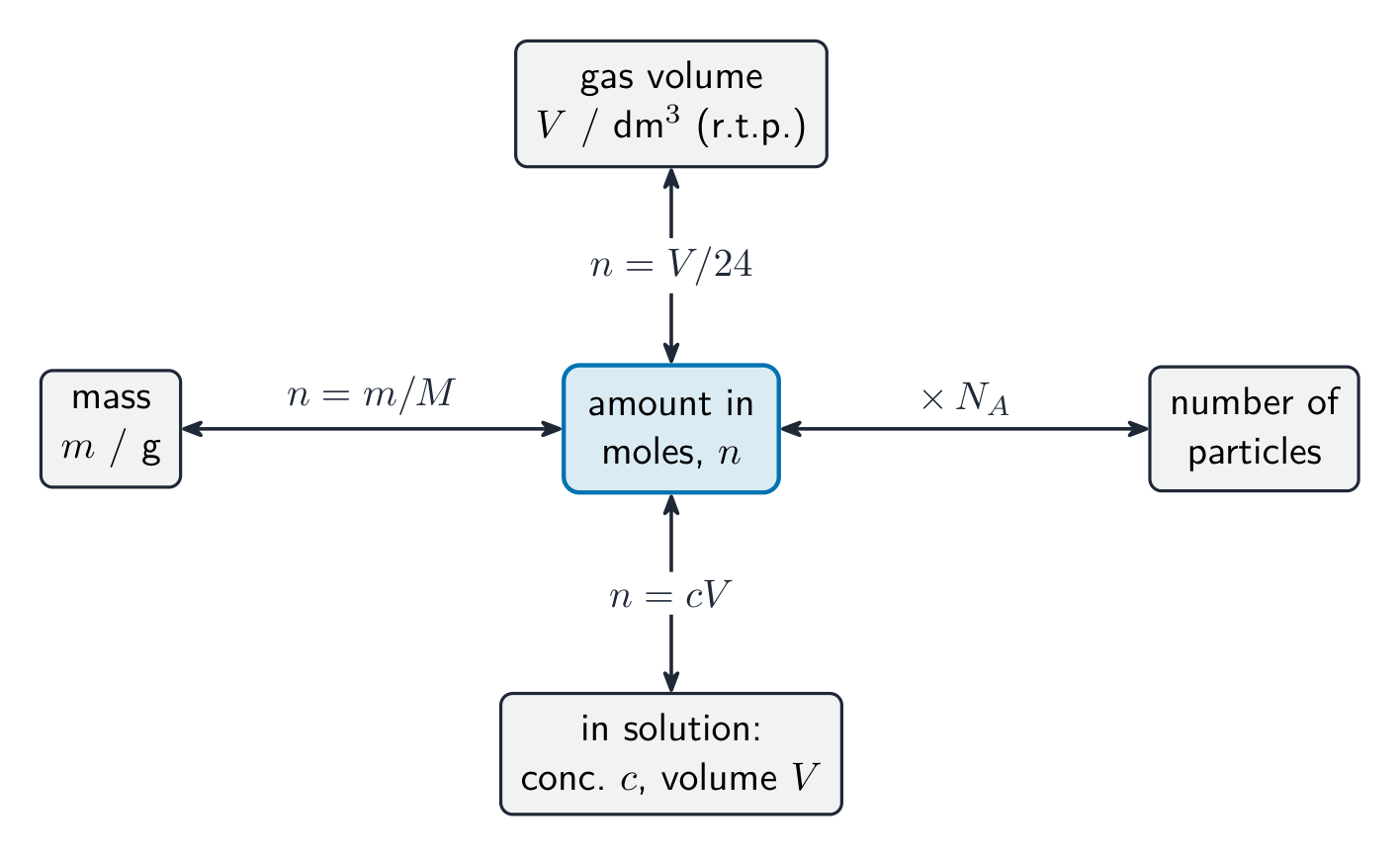
- 1.1.A.1 One cannot count particles directly while performing laboratory work. Thus, there must be a connection between the masses of substances reacting and the actual number of particles undergoing chemical changes.
- 1.1.A.2 Avogadro's number ($N_{\mathrm{A}} = 6.022 \times 10^{23}\ \mathrm{mol}^{-1}$) provides the connection between the number of moles in a pure sample of a substance and the number of constituent particles (or formula units) of that substance.
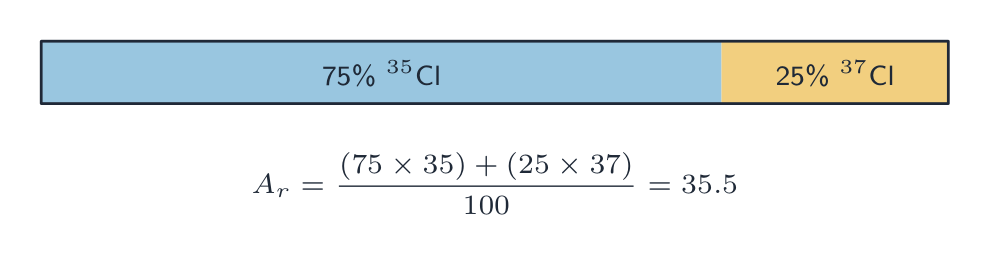
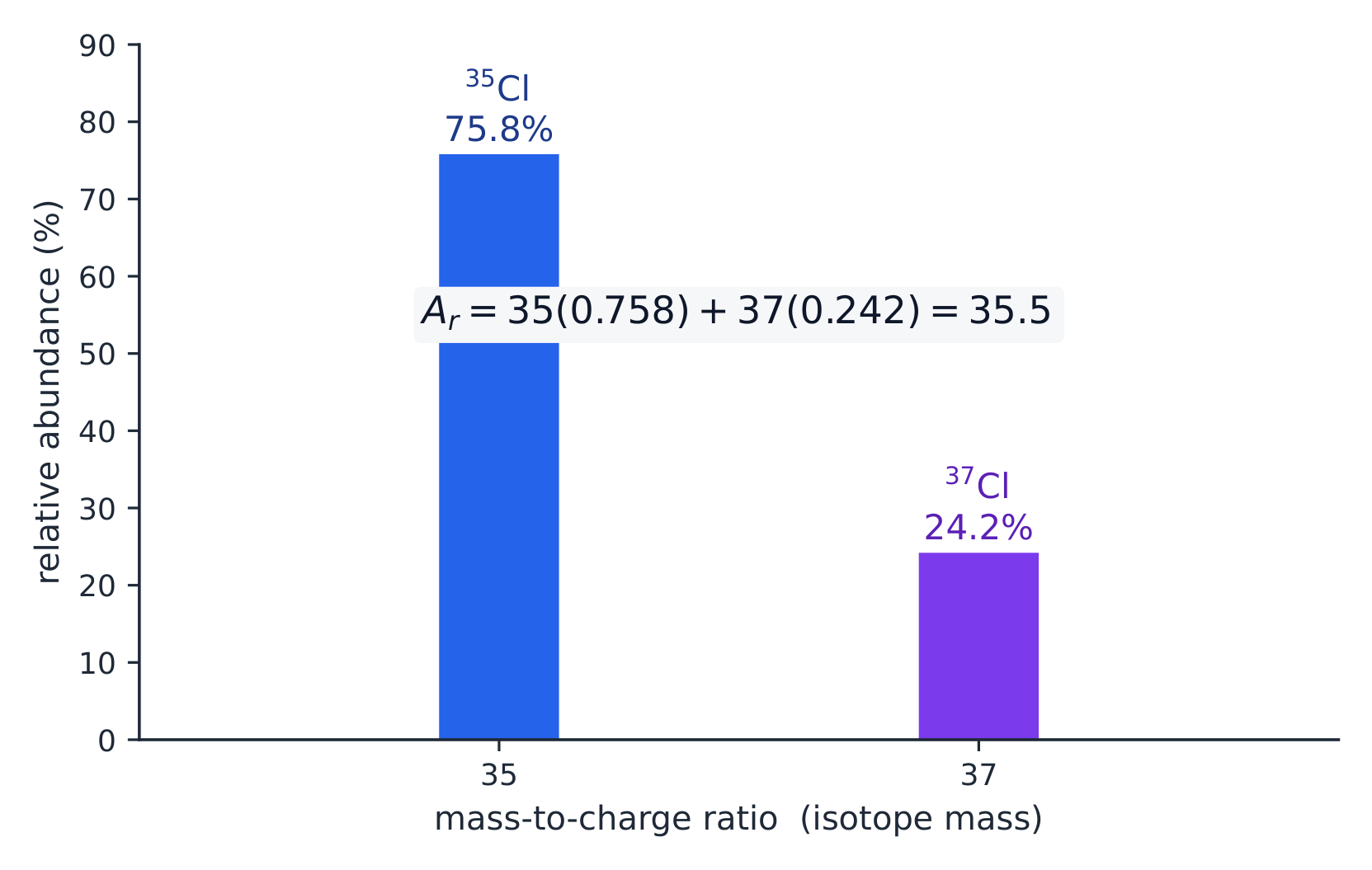
- 1.1.A.3 Expressing the mass of an individual atom or molecule in atomic mass units (amu) is useful because the average mass in amu of one particle (atom or molecule) or formula unit of a substance will always be numerically equal to the molar mass of that substance in grams. Thus, there is a quantitative connection between the mass of a substance and the number of particles that the substance contains.
- Equation: $n = m/M$
العربية
هدف التعلم 1.1.A: حساب كميات المادة أو عددها النسوي للجسيمات باستخدام التحليل البعدي ومفهوم المول.
- 1.1.A.1 لا يمكن عد الجسيمات بشكل مباشر أثناء إجراء العمل المخبري. وبالتالي، يجب أن يكون هناك ارتباط بين كتل المواد المتفاعلة والعدد الفعلي للجسيمات التي تخضع لتغيرات كيميائية.
- 1.1.A.2 رقم أفوجادرو ($N_{\mathrm{A}} = 6.022 \times 10^{23}\ \mathrm{mol}^{-1}$) يوفّر العلاقة بين عدد المولات في عينة نقية من مادة ما وعدد الجسيمات المكونة (أو الوحدات الصيغية) لهذه المادة.
- 1.1.A.3 يُعد التعبير عن كتلة ذرة أو جزيء فردي بوحدة الكتلة الذرية (amu) مفيدًا لأن متوسط الكتلة بالـ amu لجسيم واحد (ذرة أو جزيء) أو وحدة صيغة لمادة ما يساوي دائمًا عدديًا الكتلة المولية لهذه المادة بالغرام. وبالتالي، يوجد ارتباط كمي بين كتل المادة وعدد الجسيمات التي تحتوي عليها.
- المعادلة: $n = m/M$