ميز بين العبارات الإيجابية والمعيارية في سياق الاختيار
Source: Cambridge International syllabus · المصدر: منهج كامبريدج الدولي
English
Economics starts with one big idea: scarcity 稀缺性. We never have enough to give everyone everything they want.
resources 资源 are the things we use to make goods and services. They are finite 有限的 — there is only a limited amount, so they are scarce 稀缺.
goods 物品 (things you can touch, like food) and services 服务 (work done for you, like a haircut) are what we make from resources.
human wants 欲望 are unlimited. People always want more.
Because wants are bigger than resources, this is called the economic problem 经济问题. Every society must answer three questions:
What to produce?
How to produce it?
For whom to produce it?
Choice and opportunity cost
Because resources are scarce, you must choose. Every choice means you give up something else.
opportunity cost 机会成本 — the next best alternative 替代选择 you give up when you make a decision.
Opportunity cost is faced by everyone:
consumers 消费者 (people who buy and use goods): buy a phone, and you give up the holiday that money could have paid for.
producers 生产者 and firms 企业 (the businesses that make goods): use a factory to make cars, and you give up the trucks it could have made.
governments 政府: spend tax money on hospitals, and you give up the schools that money could have built.
العربية
تبدأ الاقتصاد بفكرة كبيرة واحدة: الندرة. لن نملك أبدًا ما يكفي ليعطي الجميع كل ما يرغبون فيه.
الموارد هي الأشياء التي نستخدمها لصنع السلع والخدمات. وهي محدودة — يوجد منها كمية محدودة فقط، لذا فهي نادرة.
السلع (أشياء يمكنك لمسها، مثل الطعام) والخدمات (عمل يُؤدى من أجلك، مثل قص الشعر) هي ما نصنعه من الموارد.
الرغبات البشرية غير محدودة. الناس يرغبون دائمًا في المزيد.
بسبب أن الرغبات أكبر من الموارد، يسمى هذا المشكلة الاقتصادية. يجب على كل مجتمع الإجابة على ثلاث أسئلة:
ماذا ننتج؟
كيف ننتجه؟
لمن ننتجه؟
الاختيار والتكلفة البديلة
بسبب ندرة الموارد، يجب عليك الاختيار. كل اختيار يعني أنك تتنازل عن شيء آخر.
التكلفة البديلة — أفضل بديل تتنازل عنه عندما تتخذ قرارًا.
التكلفة البديلة تواجه الجميع:
المستهلكون (الأشخاص الذين يشترون ويستخدمون السلع): اشتري هاتفاً، وتتنازل عن العطلة التي كان يمكن للمال أن تدفع ثمنها.
المنتجون والشركات (الأعمال التي تصنع السلع): استخدم مصنعًا لصنع سيارات، وتتنازل عن الشاحنات التي كان يمكن أن تصنعها.
الحكومات: تنفق أموال الضرائب على المستشفيات، وتتنازل عن المدارس التي كان يمكن للمال أن تبنيها.
1.2
Thinking like an economist · التفكير كمختص اقتصادي
Syllabus · المنهج
English
explain economics as a social science and the use of the ceteris paribus assumption
distinguish positive and normative statements and the role of value judgements
distinguish microeconomics and macroeconomics
العربية
شرح الاقتصاد كـ علم اجتماعي واستخدام افتراض كيتريس باريبوس (مع بقاء العوامل الأخرى ثابتة)
التمييز بين العبارات الإيجابية والتوجيهية ودور الأحكام القيمية
التمييز بين الاقتصاد الجزئي والاقتصاد الكلي
Source: Cambridge International syllabus · المصدر: منهج كامبريدج الدولي
English
Economics as a social science
Economics is a social science 社会科学. It studies how people behave when they make choices. Like other sciences, it builds models 模型 (simple pictures of the real world) and tests them with data.
The real world is complex, so economists change one thing at a time and keep everything else fixed. This is the idea of ceteris paribus 其他条件不变 — a Latin phrase meaning "all other things stay the same". For example: "if the price of coffee rises, people buy less coffee, ceteris paribus".
Positive and normative statements
a positive statement 实证表述 is about fact. It can be tested as true or false. Example: "a higher price of petrol reduces the amount people buy."
a normative statement 规范表述 is about opinion. It says what should happen, and it cannot be tested as true or false. Example: "the government should make petrol cheaper."
Normative statements rest on a value judgement 价值判断 — a personal view about what is good or fair. Two people can agree on the facts and still disagree about what should be done.
Microeconomics and macroeconomics
microeconomics 微观经济学 studies single parts of the economy: one market, one firm, one consumer.
macroeconomics 宏观经济学 studies the whole economy together: total output 产出, jobs, and rising prices.
العربية
الاقتصاد كعلم اجتماعي
الاقتصاد هو علم اجتماعي. يدرس كيف يتصرف الناس عند اتخاذهم للاختيارات. مثل العلوم الأخرى، يبني نماذج (صور مبسطة للواقع الحقيقي) ويختبرها بالبيانات.
العالم الحقيقي معقد، لذا يغير الاقتصاديون شيئًا واحدًا في كل مرة ويبقون كل شيء آخر ثابتًا. هذه فكرة ceteris paribus — عبارة لاتينية تعني "كل چیز أخرى تبقى كما هي". على سبيل المثال: "إذا ارتفعت أسعار القهوة، سيشتري الناس قهوة أقل، ceteris paribus".
العبارات الإيجابية والمعاييرية
عبارة إيجابية تتعلق بالحقيقة. يمكن اختبارها لتكون صحيحة أو خاطئة. مثال: "ارتفاع سعر البنزين يقلل من الكمية التي يشتريها الناس."
عبارة معيارية تتعلق بالرأي. تقول ما يجب أن يحدث، ولا يمكن اختبارها لتكون صحيحة أو خاطئة. مثال: "يجب على الحكومة جعل البنزين أرخص."
تعتمد العبارات المعيارية على حكم قيمة — وجهة نظر شخصية حول ما هو جيد أو عادل. يمكن لشخصين الاتفاق على الحقائق ولا يزالان يختلفان حول ما يجب فعله.
عبارة إيجابية يمكن اختبارها؛ عبارة معيارية هي حكم قيمة
الاقتصاد الجزئي والاقتصاد الكلي
الاقتصاد الجزئي يدرس أجزاء فردية من الاقتصاد: سوق واحد، شركة واحدة، مستهلك واحد.
الاقتصاد الكلي يدرس الاقتصاد بأكمله معًا: إجمالي الإنتاج، والوظائف، وارتفاع الأسعار.
Explore · استكشف
Economic method lab · معمل المنهج الاقتصادي.
Classify statements by the role they play in economic reasoning. · صنّف العبارات حسب الدور الذي تلعبه في الاستدلال الاقتصادي.
define land, labour, capital and enterprise and their rewards (rent, wages, interest, profit)
explain division of labour and specialisation and their advantages and disadvantages
explain the mobility of factors of production
العربية
تعريف الأرض، العمل، رأس المال والمبادرة وعوائد كل منها (إيجار، أجور، فائدة، ربح)
شرح تقسيم العمل والتخصص ومزايا وعيوبهما
شرح حركية عوامل الإنتاج
Source: Cambridge International syllabus · المصدر: منهج كامبريدج الدولي
English
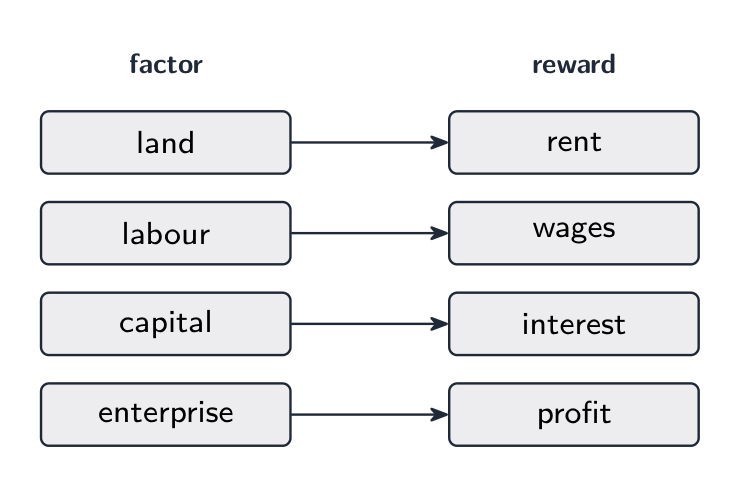
The factors of production 生产要素 are the four kinds of resource used to make goods and services. Each one earns a reward 报酬.
Factor
What it is
Its reward
land 土地
natural resources (fields, water, oil, minerals)
rent 地租
labour 劳动
human work, both physical and mental
wages 工资
capital 资本
man-made things used to produce, like machines, tools and factories
interest 利息
enterprise 企业家才能
the skill of bringing the other three together and taking the risk
profit 利润
Land includes some non-renewable resources 不可再生资源 (like oil and coal) that can run out. Enterprise is supplied by the entrepreneur 企业家, the person who has the business idea and risks their own money.
Specialisation and division of labour
specialisation 专业化 is when a worker, firm or country makes only the things it is best at, then trades for the rest.
Inside a workplace, specialisation leads to the division of labour 劳动分工: a big job is split into small tasks, and each worker 工人 does one task again and again.
Advantages
Disadvantages
workers get faster and better at one task
doing one task is boring, so workers may quit
less time wasted moving between jobs
if one worker is absent, the whole line can stop
output per worker rises, so costs fall
workers learn only one narrow skill
Mobility of factors
mobility 流动性 means how easily a factor can move to a new use.
occupational mobility 职业流动性 — how easily a factor moves from one job or use to another. A teacher who retrains as a nurse is occupationally mobile.
geographical mobility 地理流动性 — how easily a factor moves from one place to another. Land cannot move at all, so it has no geographical mobility.
Labour is often not very mobile. Family ties, the cost of housing, and missing skills all make it hard for workers to move.
العربية
عوامل الإنتاج هي الأنواع الأربعة للموارد المستخدمة في إنتاج السلع والخدمات. كل عامل يحقق له عائد.
عوامل الإنتاج الأربعة والعائد الذي يكسبه كل منها
العامل
ما هو
عائدته
الأرض
الموارد الطبيعية (المزارع، الماء، النفط، المعادن)
الإيجار
العمل
العمل البشري، سواء الجسدي أو العقلي
الأجور
رأس المال
الأشياء المصنوعة يدويًا المستخدمة في الإنتاج، مثل الآلات والأدوات والمصانع
الفائدة
المبادرة
مهارة دمج العوامل الثلاثة الأخرى وتحمل المخاطرة
الربح
تشمل الأرض بعض الموارد غير المتجددة (مثل النفط والفحم) التي قد تنفد. وتوفر المبادرة من قبل رائد الأعمال، وهو الشخص الذي يحمل الفكرة التجارية ويخاطر بأمواله الخاصة.
منجم نحاس مفتوح: تشمل الأرض الموارد الطبيعية (المعادن، النفط، الماء) التي تستخرجها الشركات.
التخصص وتقسيم العمل
التخصص هو عندما يقوم العامل أو الشركة أو البلد بإنتاج فقط ما يتقنون فيه، ثم يتبادلون باقي المنتجات.
داخل مكان العمل، يؤدي التخصص إلى تقسيم العمل: حيث يتم تقسيم مهمة كبيرة إلى مهام صغيرة، ويقوم كل عامل بتنفيذ مهمة واحدة مرارًا وتكرارًا.
مميزات
عيوب
يصبح العمال أسرع وأفضل في مهمة واحدة
تنفيذ مهمة واحدة مملة، لذا قد يترك العمال العمل
وقت أقل ضائع في التنقل بين المهام
إذا غاب عامل واحد، قد تتوقف خط الإنتاج بالكامل
يرتفع الإنتاج لكل عامل، مما يقلل التكاليف
يتعلم العمال مهارة واحدة ضيقة فقط
خط تجميع السيارات: رأس المال (الآلات والروبوتات) بالإضافة إلى تقسيم العمل، حيث يعيد كل عامل تنفيذ مهمة واحدة.
مرونة العوامل
المرونة تعني مدى سهولة قدرة العامل على الانتقال لاستخدام جديد.
المرونة المهنية — مدى سهولة انتقال العامل من وظيفة أو استخدام إلى آخر. المعلم الذي يعيد تدريب نفسه كممرض يعتبر مرناً مهنياً.
المرونة الجغرافية — مدى سهولة انتقال العامل من مكان إلى آخر. لا يمكن نقل الأرض على الإطلاق، لذا فهي لا تملك مرونة جغرافية.
غالباً ما لا يكون العمل مرناً جداً. الروابط العائلية، وتكلفة السكن، ونقص المهارات جميعها تجعل حركة العمال صعبة.
Explore · استكشف
Factors of production lab · معمل عوامل الإنتاج
Sort real resources by the factor of production they represent. · رتب الموارد الحقيقية حسب عامل الإنتاج الذي تمثلها.
explain how resources are allocated in market, planned and mixed economic systems
explain the role of the price mechanism (signalling, incentive, rationing) in allocating resources
evaluate the advantages and disadvantages of each system
العربية
شرح كيفية تخصيص الموارد في الأنظمة السوقية، المخططة والمختلطة
شرح دور آلية السعر (الإشارة، الحافز، التخصيص) في تخصيص الموارد
تقييم مزايا وعيوب كل نظام
Source: Cambridge International syllabus · المصدر: منهج كامبريدج الدولي
English
An economic system is the way a country decides how to allocate 配置 (share out) its scarce resources. There are three types.
a market economy 市场经济 — firms and people own resources, and prices decide what is made. The government does little.
a planned economy 计划经济 (also called a command economy 指令经济) — the government owns resources and decides what is made, how, and for whom.
a mixed economy 混合经济 — a blend of the two. The private sector 私营部门 (firms and households) and the public sector 公共部门 (the government) both make decisions. Almost every real country is mixed.
The price mechanism
In a market economy, resources are guided by the price mechanism 价格机制. Prices do three jobs:
signalling 信号传递 — a price tells buyers and sellers where resources are wanted. A rising price says "this is wanted — make more".
incentive 激励 — a higher price rewards producers, so they want to supply more of that good.
rationing 配给 — when a good is scarce, a higher price shares it out to those who are willing and able to pay.
Comparing the systems
System
Strengths
Weaknesses
market
choice, low prices, strong incentive to work and invent
large gap between rich and poor; some goods not supplied
planned
smaller gap between rich and poor; key goods provided for all
weak incentive; shortages and surpluses; slow to change
mixed
tries to keep the good points of both
the right balance is hard to find
In practice no country sits at a pure extreme. China's economy, for instance, is officially a socialist market economy, where markets set most prices while the government guides key sectors and owns major enterprises. Every real system mixes the two and sits somewhere on the spectrum below.
العربية
النظام الاقتصادي هو الطريقة التي يقرر بها الدولة كيفية تخصيص (توزيع) مواردها النادرة. هناك ثلاثة أنواع.
اقتصاد السوق — تملك الشركات والأفراد الموارد، والأسعار تحدد ما يتم إنتاجه. الحكومة تتدخل قليلاً.
اقتصاد مخطط (يُسمى أيضاً اقتصاد أوامر) — تملك الحكومة الموارد وتحدد ما يتم إنتاجه، وكيفية الإنتاج، ولأين.
اقتصاد مختلط — مزيج من الاثنين. القطاع الخاص (الشركات والأسر) والقطاع العام (الحكومة) كلاهما يتخذان القرارات. كل بلد فعلي تقريباً هو اقتصاد مختلط.
آلية السعر
في اقتصاد السوق، تُوجه الموارد بواسطة آلية السعر. يقوم السعر بثلاث وظائف:
الإشارة — السعر يخبر المشترين والبائعين أين تكون الموارد مطلوبة. ارتفاع السعر يعني "هذا مطلوب — أنتجوا المزيد".
الحافز — السعر الأعلى يكافئ المنتجين، sehingga يرغبون في تزويد المزيد من تلك السلعة.
الترشيد — عندما تكون السلعة نادرة، يقوم السعر الأعلى بتوزيعها على أولئك الذين يرغبون وقادرون على دفع ثمنها.
في السوق، يقوم السعر بثلاث وظائف في آن واحد — يشير، ويعطي حافزاً، ويرشد السلعة النادرة
مقارنة النظم
النظام
نقاط القوة
نقاط الضعف
السوق
حرية الاختيار، أسعار منخفضة، حافز قوي للعمل والابتكار
فجوة كبيرة بين الغني والفقير؛ عدم تزويد بعض السلع
المخطط
فجوة أصغر بين الغني والفقير؛ توفير سلع أساسية للجميع
ضعف الحافز؛ نقص وفوائض؛ بطء في التغيير
المختلط
يحاول الاحتفاظ بالنقاط الإيجابية لكلا النظامين
من الصعب إيجاد التوازن الصحيح
في الواقع، لا يوجد بلد يقف عند حد نقائي تام. فمثلاً، economy الصين تُعتبر رسمياً اقتصاداً سوقياً اشتراكياً، حيث تحدد الأسواق معظم الأسعار بينما توجه الحكومة القطاعات الرئيسية وتملك الشركات الكبرى. كل نظام فعلي يجمع بين الاثنين ويقع في مكان ما على الطيف أدناه.
تتشكل النظم الاقتصادية في طيف: سوق نقائي في أحد الطرفين، وتخطيط حكومي كامل في الطرف الآخر، واقتصادات مختلطة في المنتصف.
Production possibility curves · منحنيات إمكانية الإنتاج
Syllabus · المنهج
English
draw and interpret PPCs to show opportunity cost, scarcity, choice and efficiency
explain movements along and shifts of the PPC and constant versus increasing opportunity cost
relate the PPC to economic growth and the allocation between capital and consumer goods
العربية
رسم وتفسير منحنيات إمكانية الإنتاج (PPCs) لإظهار تكلفة الفرصة البديلة، الندرة، الاختيار والكفاءة
شرح الحركات على طول منحنى إمكانية الإنتاج وانزياحاته، وتكلفة الفرصة الثابتة مقابل المتزايدة
ربط منحنى إمكانية الإنتاج بـالنمو الاقتصادي والتخصيص بين سلع رأس المال وسلع الاستهلاك
Source: Cambridge International syllabus · المصدر: منهج كامبريدج الدولي
English
The PPF and opportunity cost
A production possibility curve 生产可能性曲线 (PPC) is a line showing the largest combinations of two goods an economy can make when all its resources are fully and well used.
Imagine an economy that makes only food and machines. The PPC is drawn with food on one axis and machines on the other.
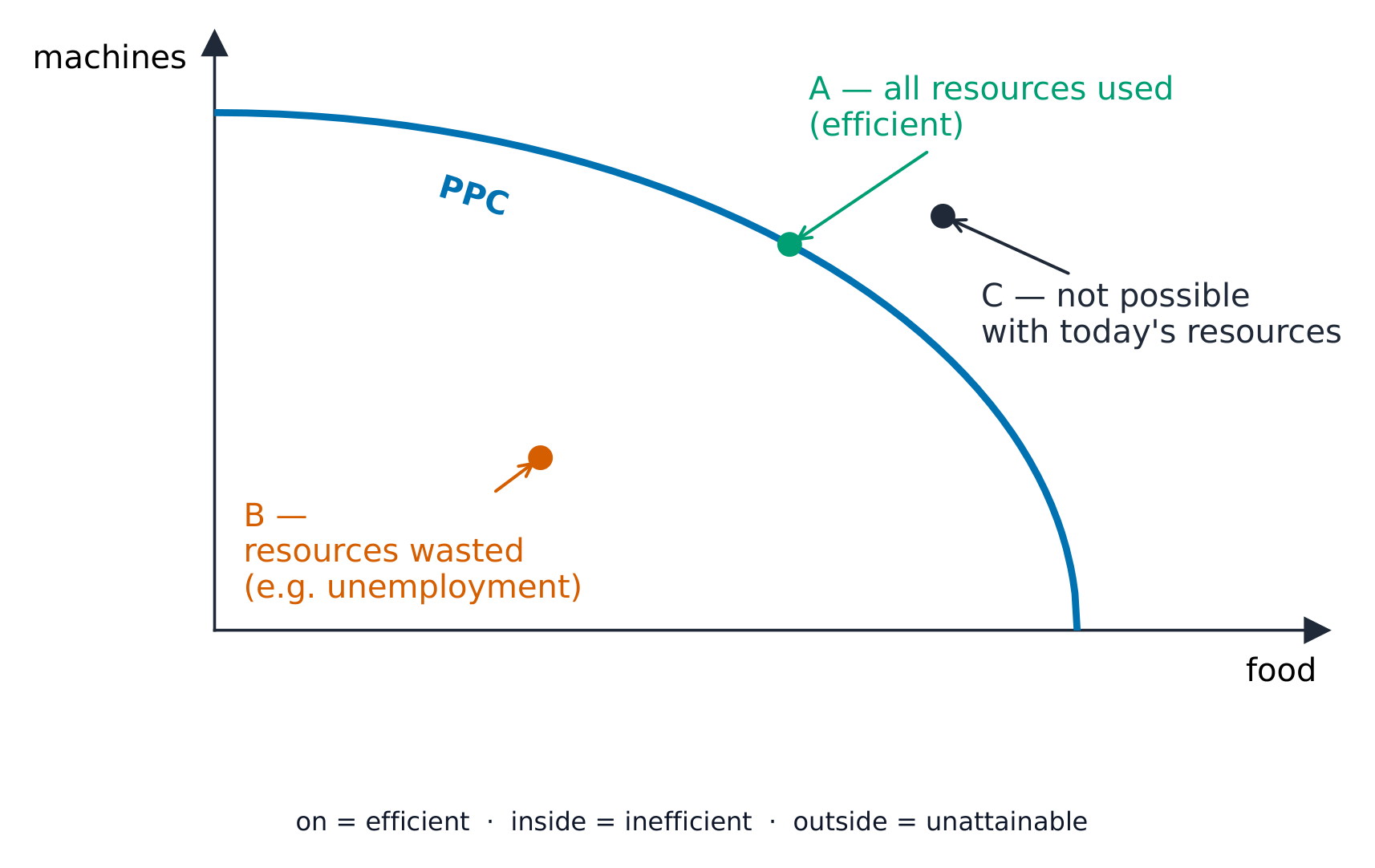
a point on the curve: all resources are used with full efficiency 效率.
a point inside the curve: resources are wasted (for example, unemployment 失业 of workers). The economy could do better.
a point outside the curve: impossible today, because there are not enough resources. This shows scarcity.
Moving along the curve shows opportunity cost: to make more food, you must move resources away from machines, so you make fewer machines. This is the trade-off 取舍 between the two goods.
The shape of the curve shows how opportunity cost behaves:
a straight-line PPC means constant opportunity cost — each extra unit of food costs the same number of machines.
a curve that bows outwards means increasing opportunity cost — each extra unit of food costs more and more machines, because resources are not equally good at making both goods.
Shifts and growth
When the PPC moves outward (to the right), the economy can make more of both goods. This is economic growth 经济增长. It happens when there are more resources, or better ones (new technology 技术, a bigger or more skilled workforce). War or disaster can move the PPC inward — this is economic decline 经济衰退.
A country must also choose between two kinds of good now:
capital goods 资本品 — goods used to make other goods (machines, factories).
consumer goods 消费品 — goods people use directly (food, clothes).
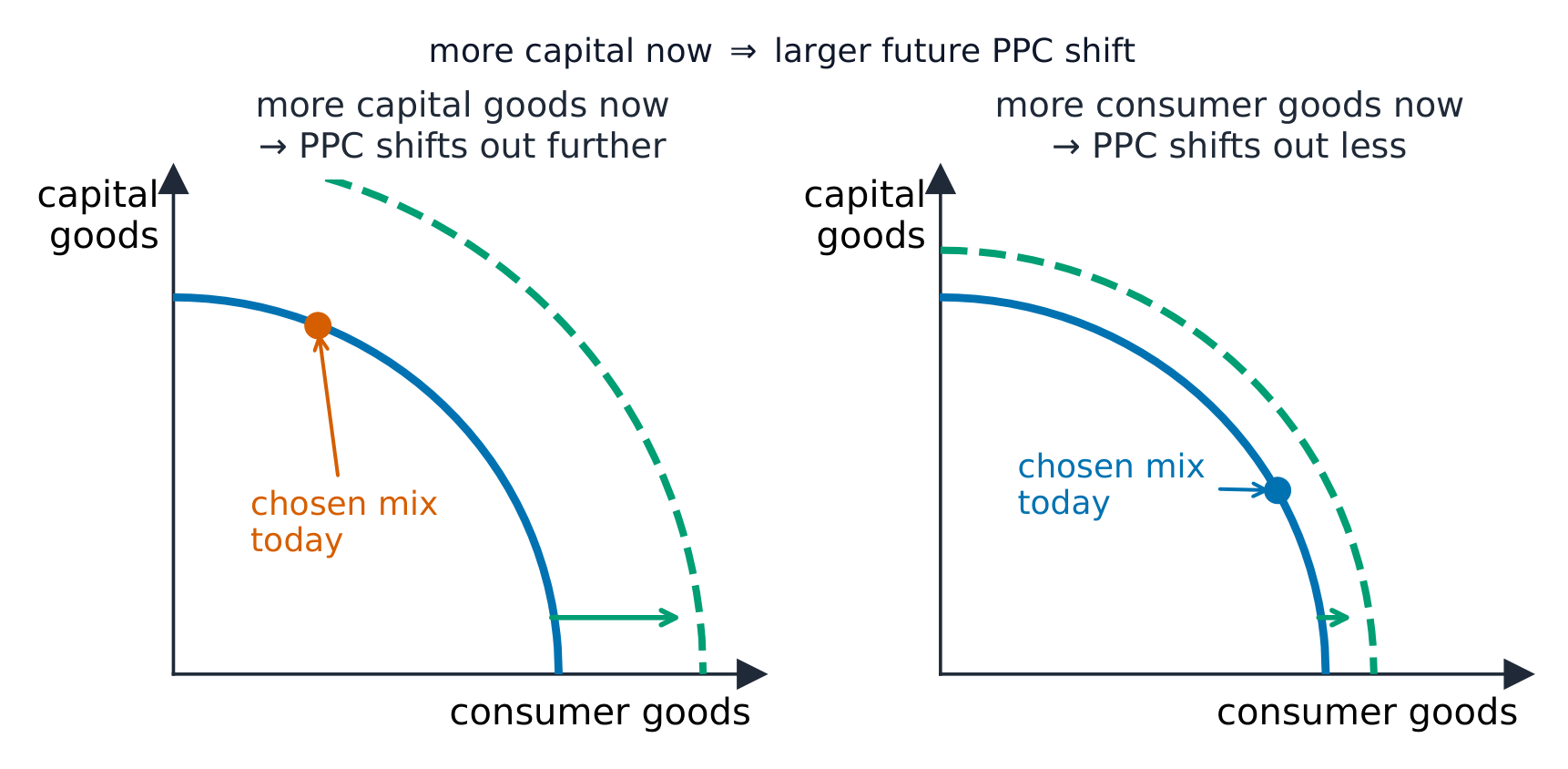
Making more capital goods today means fewer consumer goods today. But more capital goods help the economy grow faster, so the PPC shifts out by more in the future.
Worked example. Why is a production possibility curve usually drawn concave (bowed outwards) rather than as a straight line? A straight line would mean the opportunity cost of each extra unit stays constant. The curve bows out because factors of production are not perfectly substitutable - they are specialised. Starting from all-food production, the first factors moved into making cars are the ones least suited to farming, so very little food is given up for a lot of cars. Keep going and you must move factors that are increasingly good at farming and increasingly bad at making cars, so each extra car costs more and more food. That rising cost is increasing opportunity cost, and the bowed shape is simply its picture. A straight-line PPC is not wrong - it just assumes factors are perfectly substitutable, and naming that assumption is what earns the mark.
العربية
منحنى إمكانية الإنتاج والتكلفة البديلة
منحنى إمكانية الإنتاج (PPC) هو خط يظهر أكبر تركيبات من سلعتين يمكن للاقتصاد إنتاجهما عندما تكون جميع موارد مستخدمة بكفاءة تامة.
تخيل اقتصاداً ينتج الغذاء والآلات فقط. يُرسم منحنى إمكانية الإنتاج بحيث يكون الغذاء على محور واحد والآلات على المحور الآخر.
نقطة على المنحنى: يتم استخدام جميع الموارد بكفاءة كاملة.
نقطة داخل المنحنى: إهدار الموارد (على سبيل المثال، بطالة العمال). كان بإمكان الاقتصاد أن يفعل أفضل.
نقطة خارج المنحنى: مستحيلة اليوم، لأن الموارد غير كافية. وهذا يدل على الندرة.
النقطة على المنحنى تستخدم جميع الموارد (كفاءة)؛ والنقطة داخله تعني إهدارًا، مثل البطالة؛ والخارجية ليست ممكنة بعد.
التحرك على طول المنحنى يظهر تكلفة الفرصة البديلة: لإنتاج المزيد من الغذاء، يجب تحويل الموارد من الآلات، مما يعني إنتاج fewer machines. هذا هو المفاضلة بين السلعتين.
شكل المنحنى يظهر سلوك تكلفة الفرصة البديلة:
خط مستقيم لـ PPC يعني ثبات تكلفة الفرصة البديلة — كل وحدة إضافية من الغذاء تكلف نفس عدد الآلات.
منحنى مقعر للخارج يعني تزايد تكلفة الفرصة البديلة — كل وحدة إضافية من الغذاء تكلف المزيد من الآلات، لأن الموارد ليست متساوية الكفاءة في إنتاج كلا السلعتين.
PPC خط مستقيم يعني أن كل وحدة إضافية من الغذاء تكلف نفس القدر؛ والـ PPC المقعر يعني أن كل وحدة إضافية تكلف المزيد من الآلات.
التحولات والنمو
عندما يتحرك الـ PPC إلى الخارج (يمين)، يمكن للاقتصاد إنتاج المزيد من كلتا السلعتين. هذا هو النمو الاقتصادي. يحدث عندما تكون هناك موارد أكثر أو أفضل (تكنولوجيا جديدة، أو قوة عاملة أكبر أو أكثر مهارة). الحرب أو الكوارث قد تحرك الـ PPC للداخل — هذا هو التراجع الاقتصادي.
المزيد أو تحسين الموارد يحرك الـ PPC بالكامل للخارج (نمو)؛ والحرب أو الكارثة تحركه للداخل (تراجع).
يجب على الدولة أيضًا الاختيار بين نوعين من السلع الآن:
سلع رأس المال — سلع تُستخدم لإنتاج سلع أخرى (آلات، مصانع).
سلع استهلاكية — سلع يستخدمها الناس مباشرة (طعام، ملابس).
إنتاج المزيد من سلع رأس المال اليوم يعني سلع استهلاكية أقل اليوم. لكن سلع رأس المال تساعد الاقتصاد على النمو بسرعة أكبر، لذا يتحرك الـ PPC للخارج بمقدار أكبر في المستقبل.
اختيار المزيد من سلع رأس المال اليوم يعني سلع استهلاكية أقل الآن، لكن الـ PPC المستقبلي يتحرك للخارج أكثر.
مثال محلل. لماذا يُرسم منحنى إمكانية الإنتاج عادةً بشكل مقعر (مقعر للخارج) بدلاً من كونه خطًا مستقيمًا؟ الخط المستقيم يعني أن تكلفة الفرصة البديلة لكل وحدة إضافية تظل ثابتة. المنحنى ينحني للخارج لأن عوامل الإنتاج ليست قابلة للاستبدال تمامًا - بل هي متخصصة. بدءًا من الإنتاج الغذائي الكامل، فإن العوامل الأولى التي تُحوّل لإنتاج السيارات هي تلك الأقل ملاءمة للزراعة، لذلك يتم التضحية بكمية قليلة جدًا من الغذاء مقابل الكثير من السيارات. استمر في ذلك، ويجب نقل عوامل تصبح بشكل متزايد جيدة في الزراعة وسيئة في صناعة السيارات، لذا كل سيارة إضافية تكلف المزيد والمزيد من الغذاء. هذا التكلفة المتصاعدة هي تكلفة فرصة متزايدة، وشكل الانحناء هو مجرد تمثيل مرئي لها. الـ PPC الخط المستقيم ليس خاطئًا - إنه فقط يفترض أن العوامل قابلة للاستبدال تمامًا، وذكر هذا الافتراض هو ما يكسب الدرجة.
Explore · استكشف
The production possibility frontier · حد الإمكانات الإنتاجية.
Producing more of one good means giving up some of the other — that trade-off is the opportunity cost, shown by the slope of the frontier. · إنتاج المزيد من سلعة واحدة يعني التضحية ببعض الأخرى — هذا التبادل هو التكلفة البديلة، الموضح بميل الحد.
Explore · استكشف
Allocating scarce resources · تخصيص الموارد النادرة
An economy can't have more of everything: making more of one good means giving up some of another — the frontier's slope is that opportunity cost. · لا يمكن للاقتصاد أن يمتلك المزيد من كل شيء: زيادة إنتاج سلعة معينة تعني التخلي عن جزء من سلعة أخرى — ميل الحد هو هذا التكلفة الفرصة.
Explore · استكشف
The production possibility curve · منحنى إمكانيات الإنتاج
Move along the curve. Producing more of one good means producing less of the other — the curve shows opportunity cost and scarcity. · تحرّك على المنحنى. إنتاج المزيد من سلعة ما يعني إنتاج أقل من الأخرى — يُظهر المنحنى تكلفة الفرصة البديلة والندرة.
Types of goods and services · أنواع السلع والخدمات
Syllabus · المنهج
English
distinguish free goods and economic (private) goods
explain the characteristics of public goods (non-rivalry, non-excludability) and the free-rider problem
explain merit and demerit goods and the role of information and value judgements
العربية
التمييز بين السلع الحرة والسلع الاقتصادية (الخاصة)
شرح خصائص السلع العامة (عدم التنافس، عدم الاستبعاد) ومشكلة المتسكعين
شرح السلع ذات الفوائد والسلع ذات الأضرار ودور المعلومات والأحكام القيمية
Source: Cambridge International syllabus · المصدر: منهج كامبريدج الدولي
English
Free goods and economic goods
a free good 免费物品 has no opportunity cost. Its supply is unlimited, so it has no price (for example, air or sunlight).
an economic good 经济物品 (also called a private good 私人物品) is scarce. Making it has an opportunity cost, so it has a price.
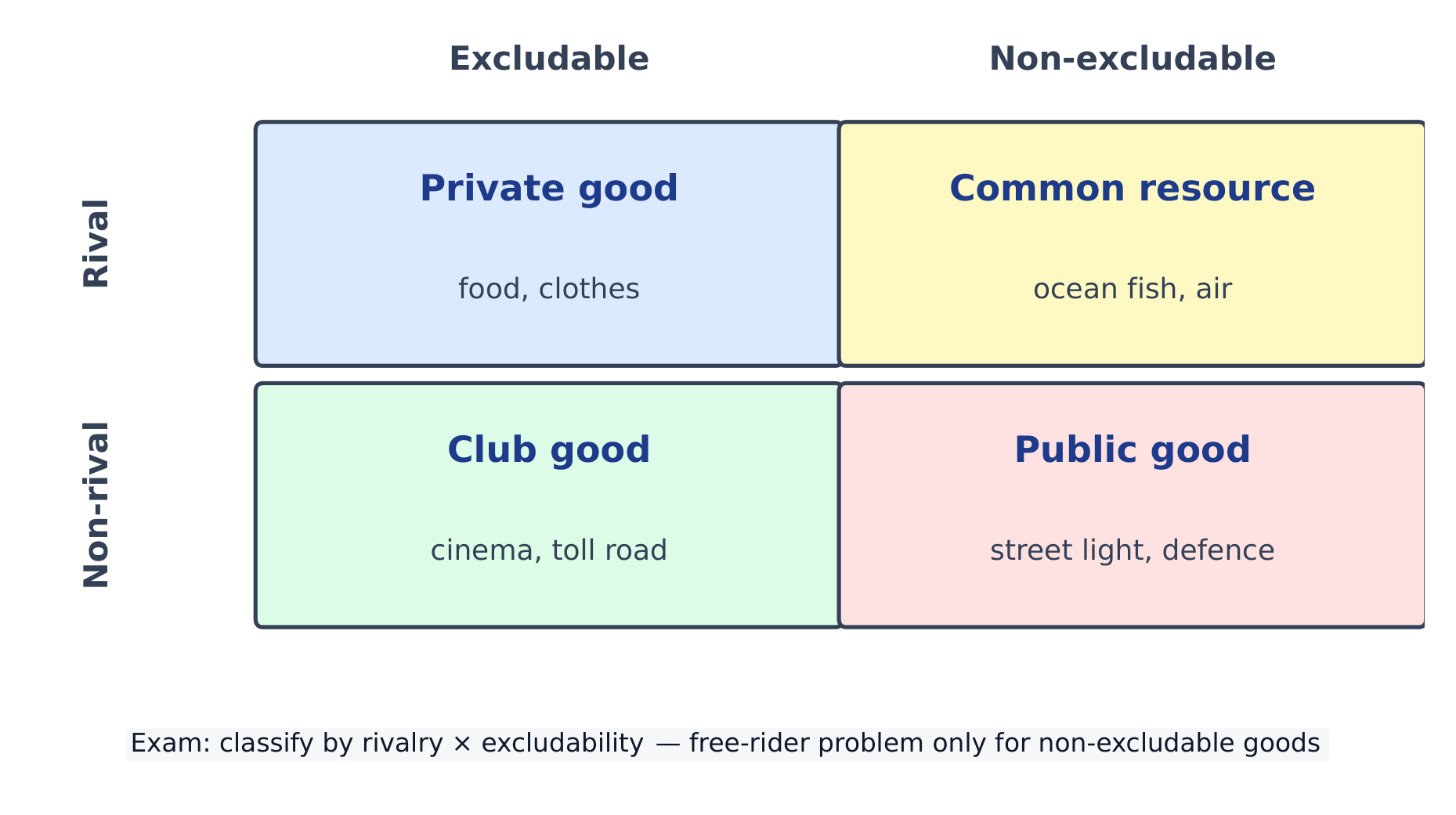
A private good has two features. It has rivalry 竞争性 (if I eat the apple, you cannot) and excludability 排他性 (the seller can stop you using it unless you pay).
Public goods
A public good 公共物品 is the opposite of a private good. It has two features:
non-rivalry 非竞争性 — one person using it does not reduce the amount left for others.
non-excludability 非排他性 — you cannot stop people who do not pay from using it.
Because of non-excludability, public goods suffer from the free-rider problem 搭便车问题: people enjoy the good without paying for it. So private firms cannot make a profit and will not supply it. The government must provide public goods instead — for example, street lighting and national defence 国防.
Merit and demerit goods
a merit good 优值品 is better for you (and for society) than you realise, so people buy too little of it. Examples: education and health care.
a demerit good 劣值品 is worse for you than you realise, so people buy too much of it. Examples: cigarettes and alcohol.
People misjudge these goods because of information failure 信息失灵 — they do not have, or do not use, the full facts about the benefit or harm.
Deciding what counts as a merit or demerit good is partly a value judgement, so people may disagree about which goods belong on each list.
العربية
السلع الحرة والسلع الاقتصادية
السلعة الحرة ليس لها تكلفة فرصة بديلة. عرضها لا محدود، لذا ليس لها سعر (مثل الهواء أو ضوء الشمس).
السلعة الاقتصادية (تسمى أيضًا السلعة الخاصة) نادرة. إنتاجها له تكلفة فرصة بديلة، لذا له سعر.
للسلعة الخاصة ميزتان. لديها المنافسة (إذا أكلت التفاحة، لا يمكنك أنت آخر) والإقصاء (يمكن للبائع منعك من استخدامها إلا إذا دفعت).
السلعة الحرة ليس لها تكلفة فرصة بديلة ولا سعر؛ والسلعة الاقتصادية نادرة، ومنافسة وقابلة للإقصاء
السلع العامة
الـ سلعة العامة هي عكس السلعة الخاصة. لديها ميزتان:
عدم المنافسة — استخدام شخص واحد لها لا يقلل الكمية المتبقية للآخرين.
عدم الإقصاء — لا يمكنك منع الأشخاص الذين لا يدفعون من استخدامها.
بسبب عدم الإقصاء، تعاني السلع العامة من مشكلة الركاب المجانيين: يستمتع الناس بالسلعة دون دفع ثمنها. لذا لا تستطيع الشركات الخاصة تحقيق ربح ولن تزودها. يجب على الحكومة توفير السلع العامة بدلاً من ذلك — على سبيل المثال، إنارة الشوارع والدفاع الوطني.
المنافسة والإقصاء يعطي أربعة أنواع من السلع: خاصة، نادي، مورد مشترك، وعامة.
السلع المفضلة وغير المفضلة
السلعة المفضلة أفضل لك (وللمجتمع) مما تدركه، لذلك يشتري الناس القليل منها. أمثلة: التعليم والرعاية الصحية.
السلعة غير المفضلة أسوأ لك مما تدركه، لذلك يشتري الناس الكثير منها. أمثلة: السجائر والكحول.
التعليم سلعة مفضلة كلاسيكية. قيمته الكاملة — وظائف أفضل، ومجتمع أكثر مهارة — من السهل underestimate، لذا عند تركهم لأمرهم، يشتري الناس القليل منها مقارنة بما هو مفيد لهم أو للبلد. لهذا السبب توفر الحكومات الدعم وتقدمه.
يقيّم الناس هذه السلع بشكل خاطئ بسبب فشل المعلومات — فهم لا يمتلكون، أو لا يستخدمون، المعلومات الكاملة حول الفائدة أو الضرر.
تحديد ما إذا كانت السلعة مفضلة أو غير مفضلة هو جزئيًا حكم قيمي، لذا قد يختلف الناس حول أي السلع تنتمي إلى كل قائمة.
Explore · استكشف
Goods and services lab · معمل السلع والخدمات
Classify examples by rivalry, excludability or whether they are services. · صنف الأمثلة حسب التنافسية، الاستبعاد أو كونها خدمات.
Frame answers around scarcity and choice: every choice has an opportunity cost — the next best alternative given up.
Read a PPC: a point inside means unused resources, on the curve is efficient, outside is unattainable; the slope shows opportunity cost.
Distinguish positive (a testable fact) from normative ("should", a value judgement) statements.
Classify goods: free versus economic, and public / merit / demerit goods (non-excludable, non-rival, and so on).
العربية
أطر الإجابات حول الندرة والاختيار: كل قرار له تكلفة بديلة — وهي أفضل بديل تم التخلي عنه.
اقرأ منحنى إمكانات الإنتاج (PPC): النقطة التي تقع داخل المنحنى تعني موارد غير مستغلة، وعلى المنحنى تعني كفاءة، وخارجه أمر مستحيل؛ ويوضح الميل تكلفة الفرصة البديلة.
ميز بين العبارات الإيجابية (حقائق قابلة للاختبار) والعبارات المعيارية (تحتوي على "يجب" أو تقييم للقيم).
صنف السلع: السلع المجانية مقابل الاقتصادية، والسلع العامة / الصالحة / الضارة (غير القابلة للاستبعاد، وغير التنافسية، وما إلى ذلك).
Interactive lessons on this topic · دروس تفاعلية حول هذا الموضوع
Work through it step by step, with instant-check exercises. · ا-working عليه خطوة بخطوة، مع تمارين تحقق فوري.
Pick one and the site follows you — notes, papers, videos and practice all open on it. · اختر واحدًا وسيتبعك الموقع — الملاحظات، الأوراق، الفيديوهات والتدريب جميعها تفتح عليه.
Type to search notes, lessons, code, vocabulary and past-paper questions across every subject. · اكتب للبحث عن ملاحظات، دروس، أكواد، مفردات وأسئلة امتحانات سابقة عبر جميع المواد.