| Core | Supplement |
|---|---|
| 1 State that the Sun is the principal source of energy input to biological systems | |
| 2 Describe the flow of energy through living organisms, including light energy from the Sun and chemical energy in organisms, and its eventual transfer to the environment |
生物与环境
IGCSE 生物 · 第 19 主题
 8:11
8:11
Organisms and their Environment
An African savanna. A coral reef. They look nothing alike, but they run on the same rule. Every living thing here is joined to the others by feeding. Energy…
英文讲解 · 内嵌中英文字幕
19.1
能量流动
大纲
来源:剑桥国际大纲
太阳是几乎所有生命的能量(energy)的主要来源。植物通过光合作用(photosynthesis)捕获光能并把它作为化学能储存在食物中。这个能量随即随着生物取食从一个生物传到另一个。在每一步,一些能量被损失(大多作为来自呼吸作用(respiration)的热)到环境(environment)中。能量单向流动——它不被回收。
探索
Energy flow through a food chain
Energy from the Sun enters living things through plants, then passes along the food chain — losing a lot at each step.
词汇表
训练
| 英文 | 中文 | 拼音 |
|---|---|---|
| energy/ˈenədʒi/ | 能量 | néng liàng |
| photosynthesis/ˌfəʊtəʊˈsɪnθəsɪs/ | 光合作用 | guāng hé zuò yòng |
| respiration/ˌrespɪˈreɪʃn/ | 呼吸作用 | hū xī zuò yòng |
| environment/enˈvaɪrənmənt/ | 环境 | huán jìng |
19.2
食物链与食物网

大纲
| Core | Supplement |
|---|---|
| 1 Describe a food chain as showing the transfer of energy from one organism to the next, beginning with a producer | |
| 2 Construct and interpret simple food chains | |
| 3 Describe a food web as a network of interconnected food chains and interpret food webs | |
| 4 Describe a producer as an organism that makes its own organic nutrients, usually using energy from sunlight, through photosynthesis | |
| 5 Describe a consumer as an organism that gets its energy by feeding on other organisms | |
| 6 State that consumers may be classed as primary, secondary, tertiary and quaternary according to their position in a food chain | |
| 7 Describe a herbivore as an animal that gets its energy by eating plants | |
| 8 Describe a carnivore as an animal that gets its energy by eating other animals | |
| 9 Describe a decomposer as an organism that gets its energy from dead or waste organic material | |
| 10 Use food chains and food webs to describe the impact humans have through overharvesting of food species and through introducing foreign species to a habitat | |
| 11 Draw, describe and interpret pyramids of numbers and pyramids of biomass | 15 Draw, describe and interpret pyramids of energy |
| 12 Discuss the advantages of using a pyramid of biomass rather than a pyramid of numbers to represent a food chain | 16 Discuss the advantages of using a pyramid of energy rather than pyramids of numbers or biomass to represent a food chain |
| 13 Describe a trophic level as the position of an organism in a food chain, food web or ecological pyramid | |
| 14 Identify the following as the trophic levels in food webs, food chains and ecological pyramids: producers, primary consumers, secondary consumers, tertiary consumers and quaternary consumers | |
| 17 Explain why the transfer of energy from one trophic level to another is often not efficient | |
| 18 Explain, in terms of energy loss, why food chains usually have fewer than five trophic levels | |
| 19 Explain why it is more energy efficient for humans to eat crop plants than to eat livestock that have been fed on crop plants |
来源:剑桥国际大纲
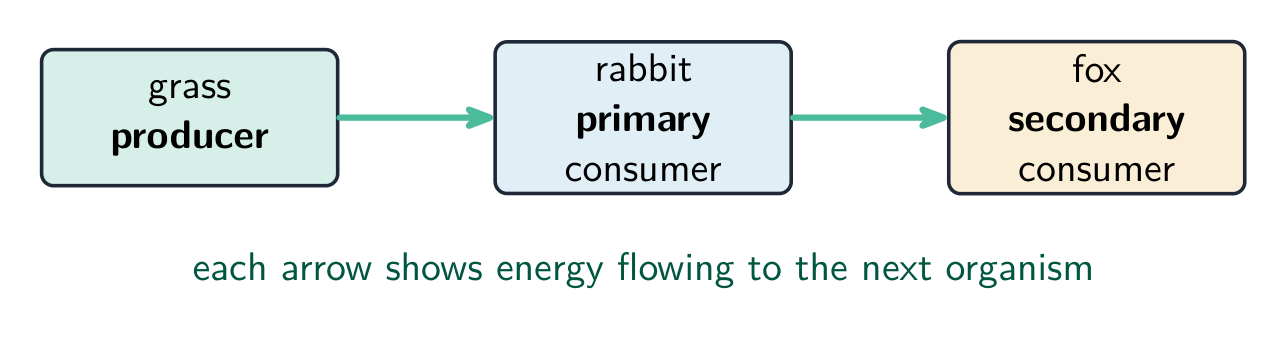
一个食物链(food chain)显示能量从一个生物到下一个的转移,以一个生产者开始。每个箭头指向能量流动的方向:
草 → 兔子 → 狐狸
一个食物网(food web)是许多食物链连接在一起。

Producers, consumers and decomposers
| 类型 | 意义 |
|---|---|
| 生产者(producer) | 制造它自己的食物(有机营养物质(nutrients)),通常通过光合作用 |
| 消费者(consumer) | 通过取食其他生物得到它的能量 |
| 食草动物(herbivore) | 一个吃植物的消费者 |
| 食肉动物(carnivore) | 一个吃其他动物的消费者 |
| 分解者(decomposer) | 从死的或废物材料得到它的能量,引起分解(decomposition) |
消费者按它们的位置命名:一个初级消费者吃生产者;一个次级消费者吃初级消费者;然后是三级和四级消费者。
Trophic levels and pyramids
一个营养级(trophic level)是一个生物在一个食物链中的位置(生产者第一,然后初级消费者,如此等等)。你可以把一个食物链显示为一个金字塔(pyramid):
- 一个数量金字塔数每一级的生物。
- 一个生物量金字塔(pyramid of biomass)显示每一级的总质量——通常是一个更好的图景,因为它不取决于生物有多大。
- (补充) 一个能量金字塔显示每一级的能量——所有中最有用的图景。

Energy loss along a chain (Supplement)
只有约 10% 的一个营养级的能量传到下一个。其余的作为热(来自呼吸作用)、在运动中和在废物中损失。因为损失了这么多能量,食物链通常有少于五个营养级。人们直接吃农作物(crop plants)比吃被那些作物喂养的动物更节能,因为每个额外的级浪费能量。
例题。 一片田地里的生产者固定了 40 000 kJ 的能量。大约有多少能到达次级消费者?为什么食物链都很短?每一步大约只有 10% 传递下去。初级消费者得到 40 000 的 10% = 4000 kJ。次级消费者得到 4000 的 10% = 400 kJ - 只有植物所固定能量的 1%。经过几个营养级之后,剩下的能量已经少到无法再支撑一级,所以食物链很少超过五级。10% 要在每一步都再用一次,而不是整条链只用一次。
Human impact
人类能通过以下损害食物网:
- 过度捕捞(overharvesting)——取太多的一个物种(如过度捕鱼),所以它的数目崩溃。
- 引入一个外来物种(foreign species)——一个新物种可能没有捕食者,并可能挤走本地物种。
探索
Food web energy route
Move energy from producer to consumers and see why each link loses energy.
探索
Build the pyramid of energy
Drag the energy the plants capture and watch only a tenth pass up each level — so the top predator is left with almost nothing.
词汇表
训练
| 英文 | 中文 | 拼音 |
|---|---|---|
| food chain/fuːd tʃeɪn/ | 食物链 | shí wù liàn |
| food web/fuːd web/ | 食物网 | shí wù wǎng |
| producer/prəˈdjuːsə/ | 生产者 | shēng chǎn zhě |
| nutrients/ˈnjuːtrɪənts/ | 营养物质 | yíng yǎng wù zhì |
| consumer/kənˈsuːmə/ | 消费者 | xiāo fèi zhě |
| herbivore/ˈhɜːbɪvɔː/ | 食草动物 | shí cǎo dòng wù |
| carnivore/ˈkɑːnɪvɔː/ | 食肉动物 | shí ròu dòng wù |
| decomposer/ˌdiːkəmˈpəʊzə/ | 分解者 | fēn jiě zhě |
| decomposition/ˌdiːkɒmpəˈzɪʃn/ | 分解 | fēn jiě |
| trophic level/ˈtrəʊfɪk ˈlevl/ | 营养级 | yíng yǎng jí |
| pyramid/ˈpɪrəmɪd/ | 金字塔 | jīn zì tǎ |
| biomass/ˌbaɪəʊˈmæs/ | 生物量 | shēng wù liàng |
| crop plants/krɒp plænts/ | 农作物 | nóng zuò wù |
| overharvesting/ˌəʊvəˈhɑːvɪstɪŋ/ | 过度捕捞 | guò dù bǔ lāo |
| foreign species/ˈfɒrən ˈspiːsiːz/ | 外来物种 | wài lái wù zhǒng |
| species/ˈspiːsiːz/ | 物种 | wù zhǒng |
| ecosystem/ˈiːkəʊsɪstəm/ | 生态系统 | shēng tài xì tǒng |
19.3
营养物质循环

大纲
| Core | Supplement |
|---|---|
| 1 Describe the carbon cycle, limited to: photosynthesis, respiration, feeding, decomposition, formation of fossil fuels and combustion | |
| 2 Describe the nitrogen cycle with reference to: • decomposition of plant and animal protein to ammonium ions • nitrification • nitrogen fixation by lightning and bacteria • absorption of nitrate ions by plants • production of amino acids and proteins • feeding and digestion of proteins • deamination • denitrification | |
| 3 State the roles of microorganisms in the nitrogen cycle, limited to: decomposition, nitrification, nitrogen fixation and denitrification (generic names of individual bacteria, e.g. Rhizobium, are not required) |
来源:剑桥国际大纲
不像能量,营养物质被回收——一遍又一遍地使用。
The carbon cycle
在碳循环(carbon cycle)中:
- 光合作用从空气中移除二氧化碳(carbon dioxide)。
- 呼吸作用和燃烧(combustion,烧)把二氧化碳还给空气。
- 取食把碳从一个生物传给下一个。
- 分解把碳还给空气和土壤。
- 经过数百万年,死的生物能构成化石燃料(fossil fuels,煤和油),它们在被烧时释放二氧化碳。
The nitrogen cycle (Supplement)
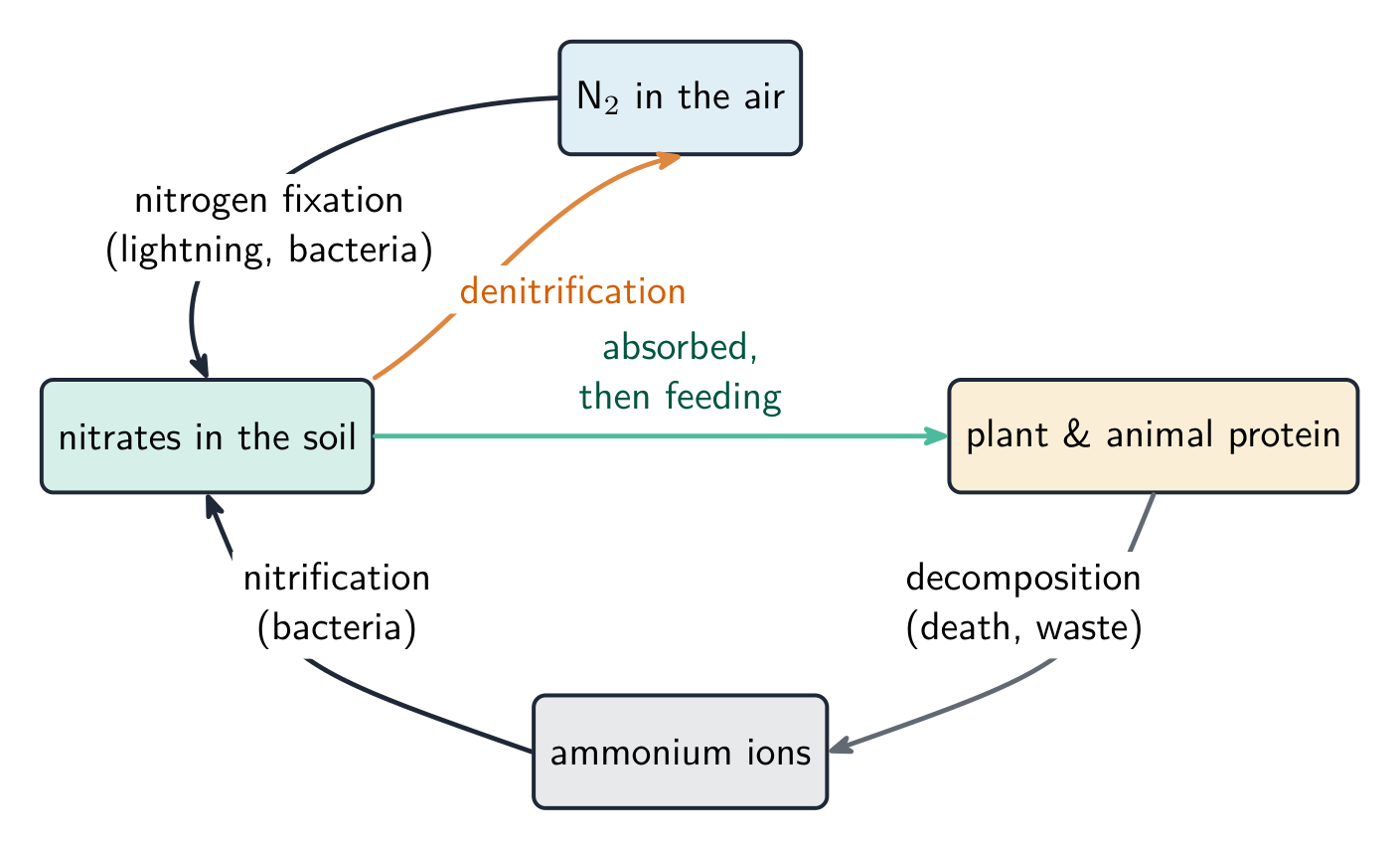
氮循环(nitrogen cycle)回收氮以制造蛋白质(proteins)。微生物(microorganisms)做大多数工作:
- 分解:分解者把死的蛋白质分解成铵离子(ammonium ions)。
- 硝化作用(nitrification):细菌把铵离子变成硝酸根离子(nitrate ions)。
- 固氮作用(nitrogen fixation):闪电和一些细菌(bacteria)把氮气变成植物能用的化合物。
- 植物吸收硝酸根离子以制造氨基酸(amino acids)和蛋白质;动物通过取食和消化(digestion)得到它们。
- 脱氨基作用(deamination,在肝脏中)和分解再次释放氮化合物。
- 反硝化作用(denitrification):一些细菌把硝酸根离子变回氮气。
探索
The carbon cycle
Carbon moves between the air, living things and the ground in a never-ending cycle.
词汇表
训练
| 英文 | 中文 | 拼音 |
|---|---|---|
| carbon cycle/ˈkɑːbən ˈsaɪkl/ | 碳循环 | tàn xún huán |
| carbon dioxide/ˈkɑːbən daɪˈɒksaɪd/ | 二氧化碳 | èr yǎng huà tàn |
| combustion/kəmˈbʌstʃn/ | 燃烧 | rán shāo |
| fossil fuels/ˈfɒsl ˈfjuːəlz/ | 化石燃料 | huà shí rán liào |
| nitrogen cycle/ˈnaɪtrədʒn ˈsaɪkl/ | 氮循环 | dàn xún huán |
| proteins/ˈprəʊtiːnz/ | 蛋白质 | dàn bái zhì |
| microorganisms/ˌmaɪkrəʊˈɔːɡənɪzəmz/ | 微生物 | wēi shēng wù |
| ammonium ions/æˈməʊnɪəm ˈaɪɒnz/ | 铵离子 | ǎn lí zi |
| nitrification/ˌnaɪtrɪfɪˈkeɪʃn/ | 硝化作用 | xiāo huà zuò yòng |
| nitrate ions/ˈnaɪtreɪt ˈaɪɒnz/ | 硝酸根离子 | xiāo suān gēn lí zi |
| nitrogen fixation/ˈnaɪtrədʒn fɪkˈseɪʃn/ | 固氮作用 | gù dàn zuò yòng |
| bacteria/bækˈtɪərɪə/ | 细菌 | xì jūn |
| amino acids/əˈmiːnəʊ ˈæsɪdz/ | 氨基酸 | ān jī suān |
| digestion/daɪˈdʒestʃn/ | 消化 | xiāo huà |
| deamination/ˌdiːmɪˈneɪʃn/ | 脱氨基作用 | tuō ān jī zuò yòng |
| denitrification/diːˌnaɪtrɪfɪˈkeɪʃn/ | 反硝化作用 | fǎn xiāo huà zuò yòng |
19.4
种群
大纲
| Core | Supplement |
|---|---|
| 1 Describe a population as a group of organisms of one species, living in the same area, at the same time | |
| 2 Describe a community as all of the populations of different species in an ecosystem | |
| 3 Describe an ecosystem as a unit containing the community of organisms and their environment, interacting together | |
| 4 Identify and state the factors affecting the rate of population growth for a population of an organism, limited to food supply, competition, predation and disease | |
| 5 Identify the lag, exponential (log), stationary and death phases in the sigmoid curve of population growth for a population growing in an environment with limited resources | |
| 6 Interpret graphs and diagrams of population growth | 7 Explain the factors that lead to each phase in the sigmoid curve of population growth, making reference, where appropriate, to the role of limiting factors |
来源:剑桥国际大纲
- 一个种群(population)是一个物种(species)的一组生物,在同一个时间生活在同一个区域。
- 一个群落(community)是一个地方所有不同物种的所有种群。
- 一个生态系统(ecosystem)是群落连同它的环境,全部相互作用。
Population growth
一个种群的增长取决于食物供应、竞争(competition)、捕食(predation,被吃)和疾病。
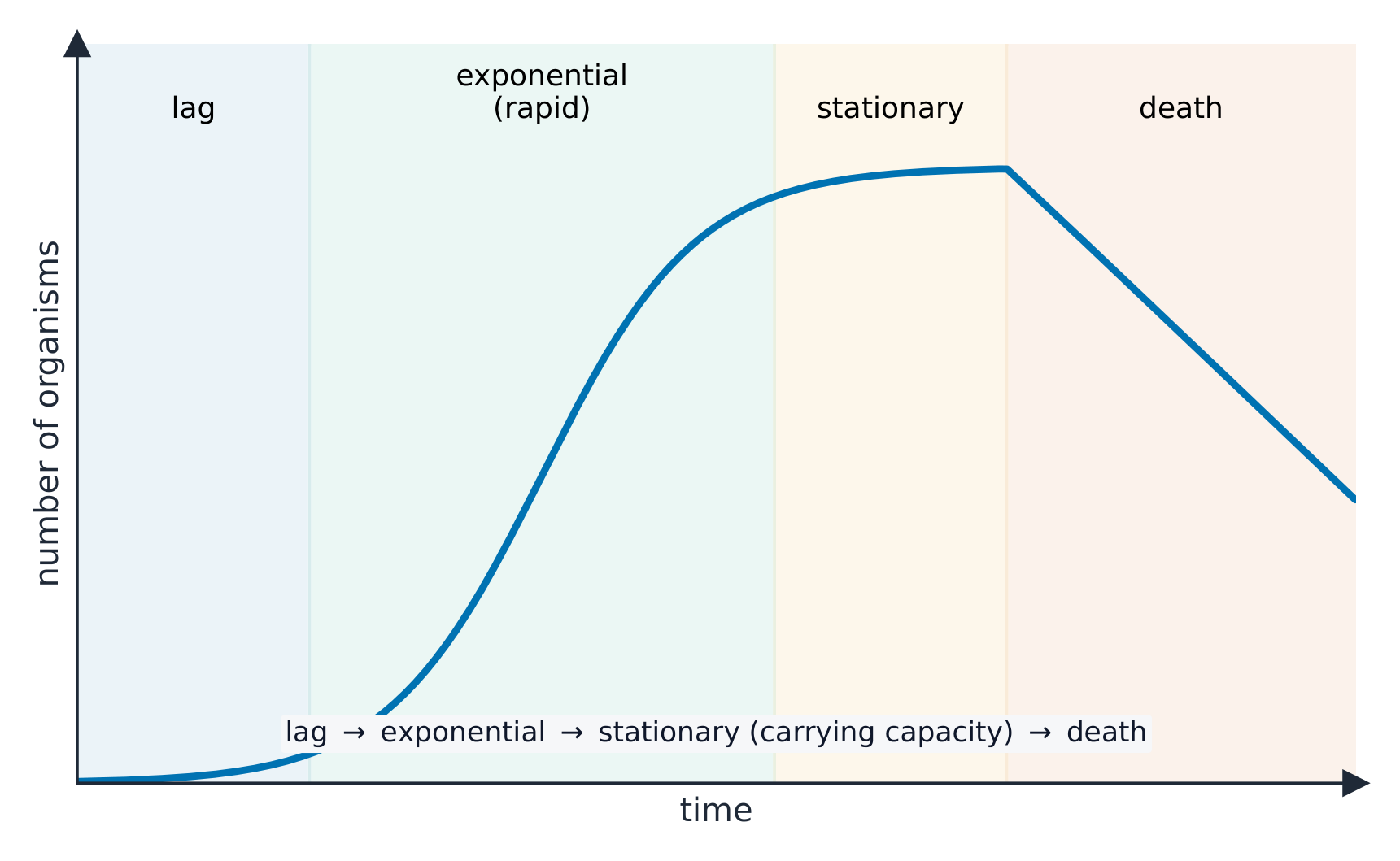
当一个种群在一个资源有限的地方增长时,它的增长遵循一条 S 形曲线,带四个阶段:
| 阶段 | 发生什么 |
|---|---|
| 延迟期(lag phase) | 起初缓慢的增长,当数目还小时 |
| 对数期(exponential phase) | 非常快的增长,有大量的食物和空间 |
| 稳定期(stationary phase) | 增长停止;出生 ≈ 死亡(一个限制因素(limiting factor)如食物拖住它) |
| 衰亡期(death phase) | 随着食物用尽、废物积累,或疾病传播,数目下降 |
探索
How a population grows
Change the growth rate and the carrying capacity. Growth is fast at first, then levels off as resources run short.
词汇表
训练
| 英文 | 中文 | 拼音 |
|---|---|---|
| population/ˌpɒpjʊˈleɪʃn/ | 种群 | zhǒng qún |
| community/kəˈmjuːnɪti/ | 群落 | qún luò |
| competition/ˌkɒmpəˈtɪʃn/ | 竞争 | jìng zhēng |
| predation/prɪˈdeɪʃn/ | 捕食 | bǔ shí |
| resources/rɪˈzɔːsɪz/ | 资源 | zī yuán |
| lag phase/læɡ feɪz/ | 延迟期 | yán chí qī |
| exponential phase/ˌekspəˈnenʃl feɪz/ | 对数期 | duì shù qī |
| stationary phase/ˈsteɪʃənəri feɪz/ | 稳定期 | wěn dìng qī |
| limiting factor/ˈlɪmɪtɪŋ ˈfæktə/ | 限制因素 | xiàn zhì yīn sù |
| death phase/deθ feɪz/ | 衰亡期 | shuāi wáng qī |
19.4
考试技巧
- 能量从太阳进入、沿链单向流动,并在每一步作为热损失。营养物质被回收。
- 食物链以一个生产者开始;箭头显示能量流动。学习生产者、消费者、食草动物、食肉动物、分解者。
- 只有 ~10% 的能量往每个营养级上传,所以链短,而吃植物更高效。
- 碳循环:光合作用 ↔ 呼吸作用和燃烧;氮循环(补充):微生物的固氮、硝化、反硝化。
- 种群:一个物种、一个区域、一个时间。学习 S 形增长曲线的四个阶段。
本主题的互动课程
逐步学习,并即时检测练习。