| Core | Supplement |
|---|---|
| 1 Describe photosynthesis as the process by which plants synthesise carbohydrates from raw materials using energy from light | |
| 2 State the word equation for photosynthesis as: carbon dioxide + water $\rightarrow$ glucose + oxygen in the presence of light and chlorophyll | 10 State the balanced chemical equation for photosynthesis as: $6\text{CO}_2 + 6\text{H}_2\text{O} \rightarrow \text{C}_6\text{H}_{12}\text{O}_6 + 6\text{O}_2$ |
| 3 State that chlorophyll is a green pigment that is found in chloroplasts | |
| 4 State that chlorophyll transfers energy from light into energy in chemicals, for the synthesis of carbohydrates | |
| 5 Outline the subsequent use and storage of the carbohydrates made in photosynthesis, limited to: (a) starch as an energy store (b) cellulose to build cell walls (c) glucose used in respiration to provide energy (d) sucrose for transport in the phloem (e) nectar to attract insects for pollination | |
| 6 Explain the importance of: (a) nitrate ions for making amino acids (b) magnesium ions for making chlorophyll | |
| 7 Investigate the need for chlorophyll, light and carbon dioxide for photosynthesis, using appropriate controls | |
| 8 Investigate and describe the effects of varying light intensity, carbon dioxide concentration and temperature on the rate of photosynthesis | |
| 9 Investigate and describe the effect of light and dark conditions on gas exchange in an aquatic plant using hydrogencarbonate indicator solution | |
| 11 Identify and explain the limiting factors of photosynthesis in different environmental conditions |
植物的营养
IGCSE 生物 · 第 6 主题
 7:36
7:36
Photosynthesis
A plant cannot hunt and it cannot move. So it builds its own food out of almost nothing: a gas from the air, water from the soil, and light. Every meal you…
英文讲解 · 内嵌中英文字幕
6.1
光合作用

大纲
来源:剑桥国际大纲
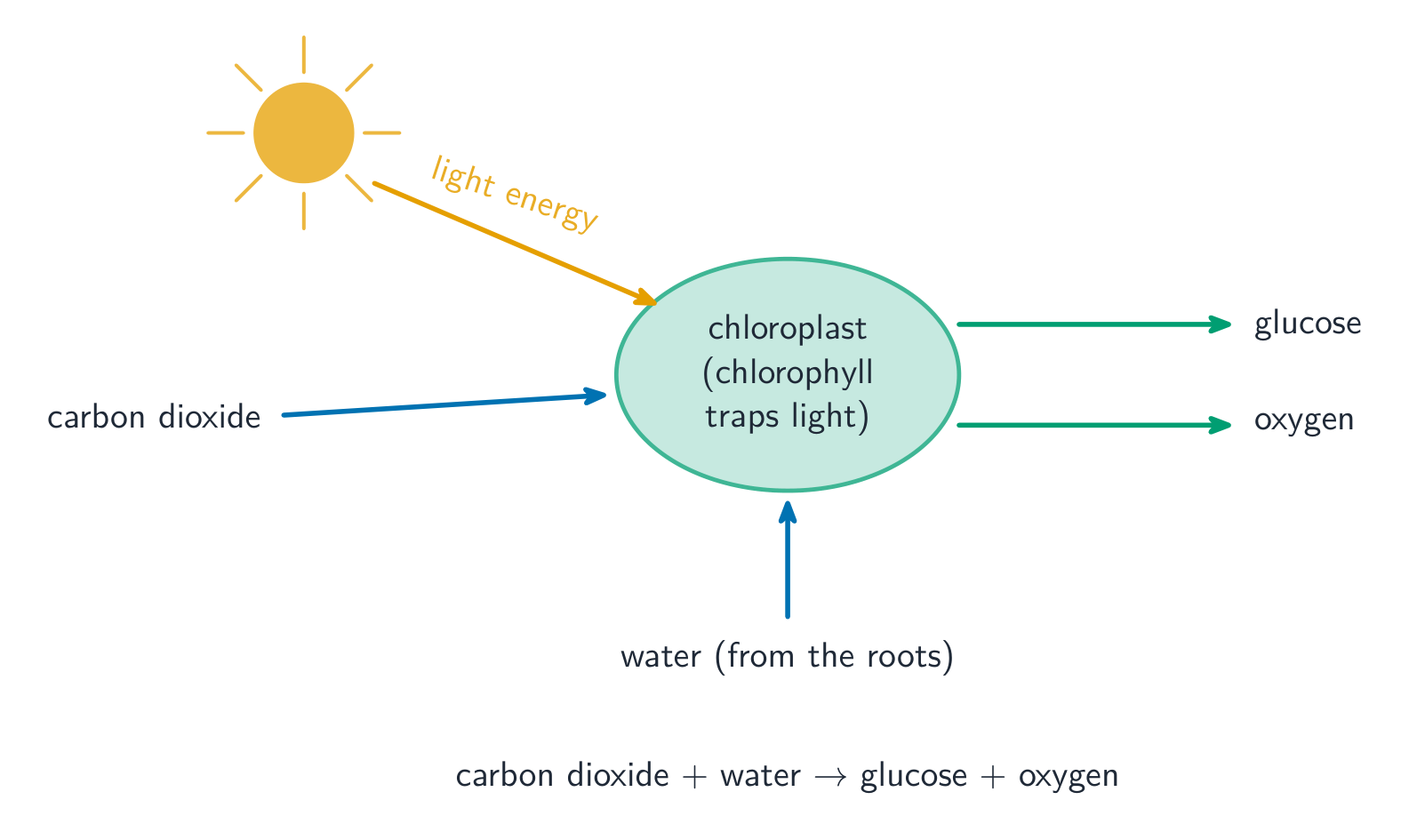
光合作用(photosynthesis)是植物用来自光的能量(energy)从简单的原料(raw materials)制造碳水化合物(carbohydrates)的过程。它是植物如何喂养自己。
The word equation
$$\text{carbon dioxide} + \text{water} \rightarrow \text{glucose} + \text{oxygen}$$
用文字:植物吸入二氧化碳(carbon dioxide)和水,并制造葡萄糖(glucose)和氧气(oxygen)。这个反应只能在光中发生,而且只在有叶绿素(chlorophyll)的地方。
(补充) 配平的化学方程是:
$$6\text{CO}_2 + 6\text{H}_2\text{O} \rightarrow \text{C}_6\text{H}_{12}\text{O}_6 + 6\text{O}_2$$
What chlorophyll does
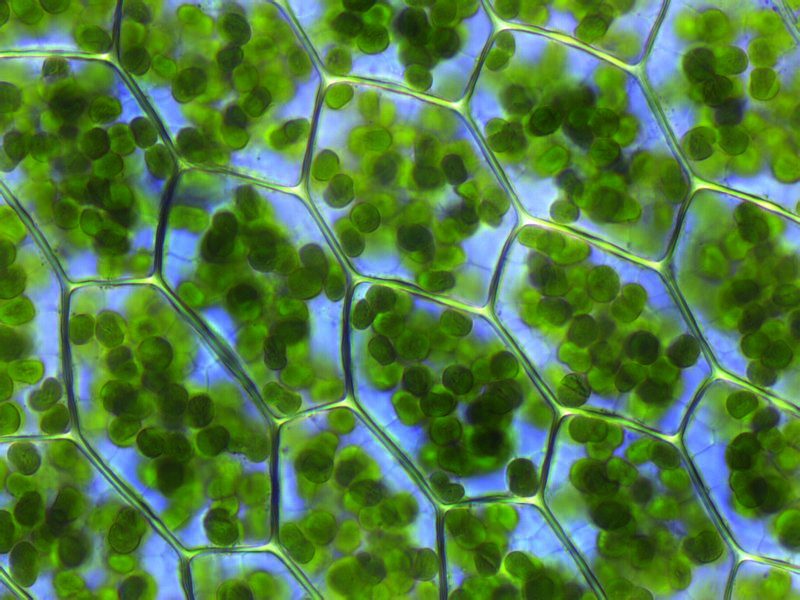
叶绿素是叶绿体(chloroplasts)中找到的一种绿色色素(pigment)。它捕光并把来自光的能量转移成储存在化学物中的能量。那种化学能随即被用来建造碳水化合物。
What the plant does with the glucose
| 用途 | 发生什么 |
|---|---|
| 储存 | 变成淀粉(starch),一种不溶解的能量储存 |
| 建造 | 制成纤维素(cellulose)以建造细胞壁(cell walls) |
| 释放能量 | 在呼吸作用(respiration)中分解以释放能量 |
| 运输 | 变成蔗糖(sucrose)并在韧皮部(phloem)中在植物周围移动 |
| 吸引动物 | 制成花蜜(nectar)以吸引昆虫(insects)进行传粉(pollination) |

Minerals from the soil
植物也通过它们的根从土壤吸收矿物离子(ions):
- 硝酸根离子(nitrate ions)——制造氨基酸(amino acids,以及蛋白质)所需。
- 镁离子(magnesium ions)——制造叶绿素所需。
一株缺硝酸盐的植物长得差、茎弱;一株缺镁的植物有黄叶(它不能制造足够的叶绿素)。

The rate of photosynthesis
光合作用的速率(rate)取决于三样东西:
- 光照强度(light intensity)——更多的光给一个更快的速率,到某一点为止。
- 二氧化碳浓度(concentration)——更多的二氧化碳给一个更快的速率。
- 温度(temperature)——一个更暖的温度更快,直到它变得如此热以至于酶被变性。
(补充) 在任何时刻,供应最短缺的那一个因素拖住速率。这叫限制因素(limiting factor)。例如,在一个阴天光照强度通常是限制因素;在一个明亮的天二氧化碳可能是。

例题。 在一张速率对光照强度的图上,曲线先陡峭上升,然后趋平成一条水平线。每一段的限制因素分别是什么?在上升段,增加光会提高速率,所以光照强度是那里的限制因素。在水平段,再加光也没有任何变化,所以光不再是限制因素 - 别的因素才是,通常是二氧化碳浓度或温度。判断方法始终一样:如果增加某个因素能让反应加快,那么这个因素就是原来拖住它的那个。
Investigating photosynthesis
要证明一株植物需要光、叶绿素和二氧化碳,你在拿走其中之一后测试一片叶的淀粉。一个对照(control)保持每个其他条件相同,所以测试是公平的。(首先把植物放在黑暗中以用尽它的淀粉。)一片有绿色和白色部分的叶只在绿色部分显示淀粉,绿色部分有叶绿素。
你也可以用碳酸氢盐指示剂(indicator)观察一株水生植物中的气体交换(gas exchange),它随着二氧化碳水平改变而变色。在光中植物吸入二氧化碳用于光合作用;在黑暗中它从呼吸作用放出二氧化碳。
探索
What limits photosynthesis
Change light and CO₂. The slowest factor — the limiting factor — sets the rate.
词汇表
训练
| 英文 | 中文 | 拼音 |
|---|---|---|
| photosynthesis/ˌfəʊtəʊˈsɪnθəsɪs/ | 光合作用 | guāng hé zuò yòng |
| carbohydrates/ˌkɑːbəʊˈhaɪdreɪts/ | 碳水化合物 | tàn shuǐ huà hé wù |
| raw materials/rɔː məˈtɪərɪəlz/ | 原料 | yuán liào |
| energy/ˈenədʒi/ | 能量 | néng liàng |
| carbon dioxide/ˈkɑːbən daɪˈɒksaɪd/ | 二氧化碳 | èr yǎng huà tàn |
| glucose/ˈɡluːkəʊs/ | 葡萄糖 | pú táo táng |
| oxygen/ˈɒksɪdʒn/ | 氧气 | yǎng qì |
| chlorophyll/ˌklɔːrəʊˈfɪl/ | 叶绿素 | yè lǜ sù |
| pigment/ˈpɪɡmənt/ | 色素 | sè sù |
| chloroplasts/ˈklɔːrəʊplæsts/ | 叶绿体 | yè lǜ tǐ |
| starch/stɑːtʃ/ | 淀粉 | diàn fěn |
| cellulose/ˈseljuːləʊs/ | 纤维素 | xiān wéi sù |
| cell walls/sel wɔːlz/ | 细胞壁 | xì bāo bì |
| respiration/ˌrespɪˈreɪʃn/ | 呼吸作用 | hū xī zuò yòng |
| sucrose/ˈsuːkrəʊs/ | 蔗糖 | zhè táng |
| phloem/ˈfləʊɪm/ | 韧皮部 | rèn pí bù |
| nectar/ˈnektə/ | 花蜜 | huā mì |
| insects/ˈɪnsekts/ | 昆虫 | kūn chóng |
| pollination/ˌpɒlɪˈneɪʃn/ | 传粉 | chuán fěn |
| ions/ˈaɪɒnz/ | 离子 | lí zi |
| nitrate ions/ˈnaɪtreɪt ˈaɪɒnz/ | 硝酸根离子 | xiāo suān gēn lí zi |
| amino acids/əˈmiːnəʊ ˈæsɪdz/ | 氨基酸 | ān jī suān |
| magnesium ions/mæɡˈniːzɪəm ˈaɪɒnz/ | 镁离子 | měi lí zi |
| rate/reɪt/ | 速率 | sù lǜ |
| light intensity/laɪt ɪnˈtensɪti/ | 光照强度 | guāng zhào qiáng dù |
| concentration/ˌkɒnsənˈtreɪʃn/ | 浓度 | nóng dù |
| temperature/ˈtemprɪtʃə/ | 温度 | wēn dù |
| limiting factor/ˈlɪmɪtɪŋ ˈfæktə/ | 限制因素 | xiàn zhì yīn sù |
| control/kənˈtrəʊl/ | 对照 | duì zhào |
| gas exchange/ɡæs eksˈtʃeɪndʒ/ | 气体交换 | qì tǐ jiāo huàn |
| indicator/ˈɪndɪkeɪtə/ | 指示剂 | zhǐ shì jì |
6.2
叶的结构

大纲
| Core | Supplement |
|---|---|
| 1 State that most leaves have a large surface area and are thin, and explain how these features are adaptations for photosynthesis | |
| 2 Identify in diagrams and images the following structures in the leaf of a dicotyledonous plant: chloroplasts, cuticle, guard cells and stomata, upper and lower epidermis, palisade mesophyll, spongy mesophyll, air spaces, vascular bundles, xylem and phloem | |
| 3 Explain how the structures listed in 6.2.2 adapt leaves for photosynthesis |
来源:剑桥国际大纲
一片叶为光合作用很好地适应(adapted)。大多数叶宽,带一个大表面积(surface area)以捕获大量的光,并薄,使气体和光快速到达所有的细胞。
叶的中间,叶肉(mesophyll),是大多数光合作用发生的地方。这些是一片叶的主要部分:
| 结构 | 工作 / 它如何帮助光合作用 |
|---|---|
| 角质层(cuticle) | 顶上一个透明的蜡质层;它减少水分流失但仍让光通过 |
| 上表皮(epidermis) | 一个没有叶绿体的透明细胞层;它让光通过到下面的细胞 |
| 栅栏叶肉(palisade mesophyll) | 塞满叶绿体的高的、柱形的细胞,靠近顶部;它们做大多数的光合作用 |
| 海绵叶肉(spongy mesophyll) | 圆形细胞,它们之间有气腔(air spaces),所以气体能容易地移动 |
| 气孔(stomata) | 微小的孔,大多在下表面,让二氧化碳进、氧气出 |
| 保卫细胞(guard cells) | 每个气孔周围一对细胞;它们打开和关闭它 |
| 下表皮 | 一个容纳气孔的薄层 |
| 维管束(vascular bundles) | 含有木质部(xylem,把水带到叶)和韧皮部(把糖带走) |

探索
Inside a leaf
Tap each layer of a leaf cross-section to see how its structure is built for photosynthesis and gas exchange.
词汇表
训练
| 英文 | 中文 | 拼音 |
|---|---|---|
| adapted/əˈdæptɪd/ | 适应 | shì yìng |
| surface area/ˈsɜːfɪs ˈeərɪə/ | 表面积 | biǎo miàn jī |
| cuticle/ˈkjuːtɪkl/ | 角质层 | jiǎo zhì céng |
| epidermis/ˌepɪˈdɜːmɪs/ | 表皮 | biǎo pí |
| mesophyll/ˈmesəfɪl/ | 叶肉 | yè ròu |
| palisade mesophyll/ˈpælɪseɪd ˈmesəfɪl/ | 栅栏叶肉 | zhà lán yè ròu |
| spongy mesophyll/ˈspʌndʒi ˈmesəfɪl/ | 海绵叶肉 | hǎi mián yè ròu |
| air spaces/eə ˈspeɪsɪz/ | 气腔 | qì qiāng |
| stomata/ˈstəʊmətə/ | 气孔 | qì kǒng |
| guard cells/ɡɑːd selz/ | 保卫细胞 | bǎo wèi xì bāo |
| vascular bundles/ˈvæskjʊlə ˈbʌndlz/ | 维管束 | wéi guǎn shù |
| xylem/ˈzaɪləm/ | 木质部 | mù zhì bù |
6.2
考试技巧
- 精确地学习文字方程:二氧化碳 + 水 → 葡萄糖 + 氧气(在光中,带叶绿素)。
- 叶绿素在叶绿体中;它不被消耗——它转移光能。
- 把每个因素与速率联系起来:更多的光、更多的二氧化碳、更暖(但不太热)→ 更快,直到一个限制因素阻止进一步增加。
- 对于叶结构,总是把部件与它的工作联系起来:宽而薄以捕光;栅栏细胞充满叶绿体;气孔和气腔用于气体交换。
- 硝酸根离子 → 氨基酸;镁离子 → 叶绿素。
本主题的互动课程
逐步学习,并即时检测练习。