| Core | Supplement |
|---|---|
| 1 Describe the circulatory system as a system of blood vessels with a pump and valves to ensure one-way flow of blood | |
| 2 Describe the single circulation of a fish | |
| 3 Describe the double circulation of a mammal | |
| 4 Explain the advantages of a double circulation |
动物体内的运输
IGCSE 生物 · 第 9 主题
 8:21
8:21
Transport in Animals
Your heart beats about a hundred thousand times a day, and it has never once stopped to rest. It is not really one pump — it is two, side by side, sharing a…
英文讲解 · 内嵌中英文字幕
9.1
循环系统

大纲
来源:剑桥国际大纲
循环系统(circulatory system)把血液运送到全身。它有三部分:一个泵(pump,心脏(heart))、一个血管(blood vessels)网络,以及使血液只往一个方向流的瓣膜(valves)。
Single and double circulation (Supplement)
- 一条鱼有一个单循环(single circulation):血液每绕身体一趟通过心脏一次。
- 一只哺乳动物(mammal)有一个双循环(double circulation):血液每完整一趟通过心脏两次——一次在去肺的路上,一次在去身体其余部分的路上。
- 双循环的优点:血液能在去身体之前以高压(high pressure)再次被泵,所以它行进更快并快速递送氧气(oxygen)。
探索
Double circulation
Mammals have a double circulation — blood passes through the heart TWICE on each full trip round the body.
词汇表
训练
| 英文 | 中文 | 拼音 |
|---|---|---|
| circulatory system/ˌsɜːkjʊˈleɪtəri ˈsɪstəm/ | 循环系统 | xún huán xì tǒng |
| heart/hɑːt/ | 心脏 | xīn zàng |
| pump/pʌmp/ | 泵 | bèng |
| blood vessels/blʌd ˈveslz/ | 血管 | xuè guǎn |
| valves/vælvz/ | 瓣膜 | bàn mó |
| single circulation/ˈsɪŋɡl ˌsɜːkjʊˈleɪʃn/ | 单循环 | dān xún huán |
| mammal/ˈmæml/ | 哺乳动物 | bǔ rǔ dòng wù |
| double circulation/ˈdʌbl ˌsɜːkjʊˈleɪʃn/ | 双循环 | shuāng xún huán |
| pressure/ˈpreʃə/ | 压力 | yā lì |
| oxygen/ˈɒksɪdʒn/ | 氧气 | yǎng qì |
9.2
心脏

大纲
| Core | Supplement |
|---|---|
| 1 Identify in diagrams and images the structures of the mammalian heart, limited to: muscular wall, septum, left and right ventricles, left and right atria, one-way valves and coronary arteries | 7 Identify in diagrams and images the atrioventricular and semilunar valves in the mammalian heart |
| 8 Explain the relative thickness of: (a) the muscle walls of the left and right ventricles (b) the muscle walls of the atria compared to those of the ventricles | |
| 9 Explain the importance of the septum in separating oxygenated and deoxygenated blood | |
| 10 Describe the functioning of the heart in terms of the contraction of muscles of the atria and ventricles and the action of the valves | |
| 2 State that blood is pumped away from the heart in arteries and returns to the heart in veins | |
| 3 State that the activity of the heart may be monitored by: ECG, pulse rate and listening to sounds of valves closing | |
| 4 Investigate and describe the effect of physical activity on the heart rate | 11 Explain the effect of physical activity on the heart rate |
| 5 Describe coronary heart disease in terms of the blockage of coronary arteries and state the possible risk factors including: diet, lack of exercise, stress, smoking, genetic predisposition, age and sex | |
| 6 Discuss the roles of diet and exercise in reducing the risk of coronary heart disease |
来源:剑桥国际大纲
心脏由肌肉(muscle)构成。一堵叫隔膜(septum)的墙把它分成一个左侧和一个右侧。每一侧有一个上腔,心房(atrium),和一个下腔,心室(ventricle)。腔之间的瓣膜阻止血液倒流。心肌由冠状动脉(coronary arteries)用血液喂养。
(补充) 左心室的壁比右的厚,因为它必须把血液泵绕全身;右侧只把血液泵到附近的肺。心房有薄壁,因为它们只把血液推入正好在它们下面的心室。
隔膜把左侧的含氧血(oxygenated blood)与右侧的缺氧血(deoxygenated blood)分开,所以两者从不混合。
(补充) 每个心房和心室之间的瓣膜是房室瓣(atrioventricular valves)。每个心室出口的瓣膜是半月瓣(semilunar valves)。
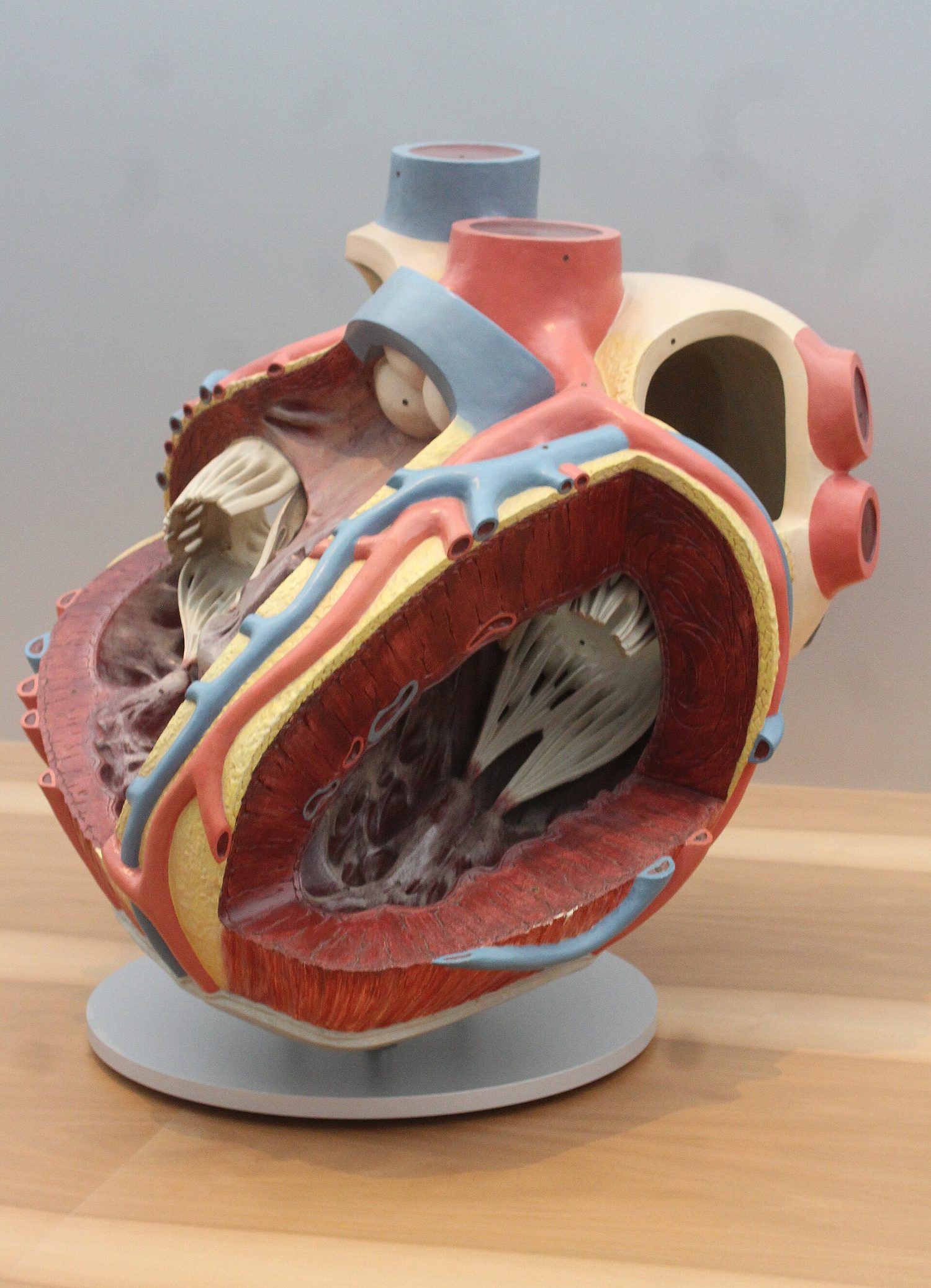
How the heart beats (Supplement)
- 心房收缩(contract)并把血液往下推入心室。
- 心室收缩并把血液挤出到动脉;瓣膜猛地关闭,所以血液不能倒流。
- 肌肉放松,而心脏再次充满血液。
血液在动脉中被从心脏泵走,并在静脉中返回心脏。
Heart rate and exercise
你可以用一个 ECG、通过感觉一条动脉里的脉搏(pulse),或通过听瓣膜关闭来检查心脏的活动。运动期间心率(heart rate)上升,所以血液更快到达肌肉,带来它们需要的额外氧气和葡萄糖。

例题。 一名学生在静息时 15 秒内数到 18 次脉搏,运动后立即 15 秒内数到 33 次。求两种情况下每分钟的心率。一分钟里有 60 ÷ 15 = 4 个 15 秒,所以乘以 4。静息:18 × 4 = 每分钟 72 次。运动后:33 × 4 = 每分钟 132 次。心率上升是为了给肌肉输送更多氧气和葡萄糖。把 15 秒数到的数直接当作心率写下去是最常见的错误 - 一定要换算成整整一分钟。
Coronary heart disease
冠心病(coronary heart disease)在冠状动脉变窄或阻塞、所以心肌不能得到足够氧气时发生。风险因素(risk factors)包括高脂肪饮食、缺乏运动、压力、吸烟、家族史(遗传)、年龄较大和是男性。一份健康的饮食和规律的运动降低风险。

探索
Blood flow through the heart
The four chambers and their valves keep blood moving one way — deoxygenated to the lungs, oxygenated to the body.
探索
The heart (double circulation)
Follow the blood: blue comes back from the body, the right side pumps it to the lungs (it turns red), and the left side pumps it out to the body — a double circulation.
词汇表
训练
| 英文 | 中文 | 拼音 |
|---|---|---|
| muscle/ˈmʌsl/ | 肌肉 | jī ròu |
| septum/ˈseptəm/ | 隔膜 | gé mó |
| atrium/ˈeɪtrɪəm/ | 心房 | xīn fáng |
| ventricle/ˈventrɪkl/ | 心室 | xīn shì |
| coronary arteries/ˈkɒrənəri ˈɑːtəriz/ | 冠状动脉 | guān zhuàng dòng mài |
| oxygenated blood/ˈɒksɪdʒeneɪtɪd blʌd/ | 含氧血 | hán yǎng xuè |
| deoxygenated blood/diːˈɒksɪdʒeneɪtɪd blʌd/ | 缺氧血 | quē yǎng xuè |
| atrioventricular valves/ˌeɪtrɪˌəʊvənˈtrɪkjʊlə vælvz/ | 房室瓣 | fáng shì bàn |
| semilunar valves/ˌsemɪˈluːnə vælvz/ | 半月瓣 | bàn yuè bàn |
| contract/ˈkɒntrækt/ | 收缩 | shōu suō |
| pulse/pʌls/ | 脉搏 | mài bó |
| heart rate/hɑːt reɪt/ | 心率 | xīn lǜ |
| coronary heart disease/ˈkɒrənəri hɑːt dɪˈziːz/ | 冠心病 | guān xīn bìng |
| risk factors/rɪsk ˈfæktəz/ | 风险因素 | fēng xiǎn yīn sù |
| arteries/ˈɑːtəriz/ | 动脉 | dòng mài |
9.3
血管

大纲
| Core | Supplement |
|---|---|
| 1 Describe the structure of arteries, veins and capillaries, limited to: relative thickness of wall, diameter of the lumen and the presence of valves in veins | 4 Explain how the structure of arteries and veins is related to the pressure of the blood that they transport |
| 2 State the functions of capillaries | 5 Explain how the structure of capillaries is related to their functions |
| 3 Identify in diagrams and images the main blood vessels to and from the: (a) heart, limited to: vena cava, aorta, pulmonary artery and pulmonary vein (b) lungs, limited to: pulmonary artery and pulmonary vein (c) kidney, limited to: renal artery and renal vein | 6 Identify, in diagrams and images, the main blood vessels to and from the liver as: hepatic artery, hepatic veins and hepatic portal vein |
来源:剑桥国际大纲
有三种血管。一根血管内部的空间是它的管腔(lumen)。
| 血管 | 壁 | 管腔 | 瓣膜? | 工作 |
|---|---|---|---|---|
| 动脉(arteries) | 厚、肌肉性、弹性 | 窄 | 无 | 以高压把血液从心脏运走 |
| 静脉(veins) | 薄 | 宽 | 有 | 以低压把血液运回心脏 |
| 毛细血管(capillaries) | 一个细胞厚 | 非常窄 | 无 | 让氧气、葡萄糖和废物在血液和细胞之间通过 |
(补充) 动脉有厚的弹性壁以应对来自心脏的高压。静脉有瓣膜,因为它们的血液处于低压,否则可能倒流。毛细血管非常薄(一个细胞厚)且非常窄,给一个大表面积(surface area)和一个短距离以快速交换。
Main blood vessels
| 连接 | 动脉(把血液运出) | 静脉(把血液运入) |
|---|---|---|
| 心脏 ↔ 身体 | 主动脉(aorta) | 腔静脉(vena cava) |
| 心脏 ↔ 肺 | 肺动脉(pulmonary artery) | 肺静脉(pulmonary vein) |
| ↔ 肾脏 | 肾动脉(renal artery) | 肾静脉(renal vein) |
(补充) 肝脏由肝动脉(hepatic artery)、肝静脉(hepatic vein),以及肝门静脉(hepatic portal vein,它把血液从肠道带到肝脏)服务。
探索
The three blood vessels
Compare an artery, a vein and a capillary — their walls and lumens suit the pressure and job of each.
词汇表
训练
| 英文 | 中文 | 拼音 |
|---|---|---|
| lumen/ˈluːmen/ | 管腔 | guǎn qiāng |
| veins/veɪnz/ | 静脉 | jìng mài |
| capillaries/ˈkæpɪləriz/ | 毛细血管 | máo xì xuè guǎn |
| surface area/ˈsɜːfɪs ˈeərɪə/ | 表面积 | biǎo miàn jī |
| aorta/eɪˈɔːtə/ | 主动脉 | zhǔ dòng mài |
| vena cava/ˈviːnə ˈkɑːvə/ | 腔静脉 | qiāng jìng mài |
| pulmonary artery/ˈpʌlmənəri ˈɑːtəri/ | 肺动脉 | fèi dòng mài |
| pulmonary vein/ˈpʌlmənəri veɪn/ | 肺静脉 | fèi jìng mài |
| renal artery/ˈriːnl ˈɑːtəri/ | 肾动脉 | shèn dòng mài |
| renal vein/ˈriːnl veɪn/ | 肾静脉 | shèn jìng mài |
| hepatic artery/heˈpætɪk ˈɑːtəri/ | 肝动脉 | gān dòng mài |
| hepatic vein/heˈpætɪk veɪn/ | 肝静脉 | gān jìng mài |
| hepatic portal vein/heˈpætɪk ˈpɔːtl veɪn/ | 肝门静脉 | gān mén jìng mài |
9.4
血液

大纲
| Core | Supplement |
|---|---|
| 1 List the components of blood as: red blood cells, white blood cells, platelets and plasma | |
| 2 Identify red and white blood cells in photomicrographs and diagrams | 5 Identify lymphocytes and phagocytes in photomicrographs and diagrams |
| 3 State the functions of the following components of blood: (a) red blood cells in transporting oxygen, including the role of haemoglobin (b) white blood cells in phagocytosis and antibody production (c) platelets in clotting (details are not required) (d) plasma in the transport of blood cells, ions, nutrients, urea, hormones and carbon dioxide | 6 State the functions of: (a) lymphocytes – antibody production (b) phagocytes – engulfing pathogens by phagocytosis |
| 4 State the roles of blood clotting as preventing blood loss and the entry of pathogens | 7 Describe the process of clotting as the conversion of fibrinogen to fibrin to form a mesh |
来源:剑桥国际大纲
血液有四部分:
| 部分 | 功能 |
|---|---|
| 红细胞(red blood cells) | 携带氧气,用红色色素(pigment)血红蛋白(haemoglobin) |
| 白细胞(white blood cells) | 保卫身体抵抗疾病 |
| 血小板(platelets) | 帮助血液凝血(clot) |
| 血浆(plasma) | 一种携带血细胞、离子(ions)、营养物质(nutrients)、尿素(urea)、激素(hormones)和二氧化碳(carbon dioxide)的液体 |

Defending the body, and clotting
白细胞以两种方式对抗病原体(pathogens,引起疾病的微生物):
- 吞噬细胞(phagocytes)执行吞噬作用(phagocytosis)——它们围住并消化病原体。
- 淋巴细胞(lymphocytes)制造抗体(antibodies),它们粘到病原体上并摧毁它们。
当你割伤自己时,血液凝血以封住伤口。这阻止血液流失并阻止病原体进入。(补充) 凝血期间,一种叫纤维蛋白原(fibrinogen)的可溶蛋白被变成纤维蛋白(fibrin)的线。这些线构成一个困住血细胞并造出一个固体血块的网。
探索
Blood component lab
Classify blood components by the job they do.
词汇表
训练
| 英文 | 中文 | 拼音 |
|---|---|---|
| red blood cells/red blʌd selz/ | 红细胞 | hóng xì bāo |
| pigment/ˈpɪɡmənt/ | 色素 | sè sù |
| haemoglobin/ˌhiːməˈɡləʊbɪn/ | 血红蛋白 | xuè hóng dàn bái |
| white blood cells/waɪt blʌd selz/ | 白细胞 | bái xì bāo |
| platelets/ˈpleɪtlɪts/ | 血小板 | xuè xiǎo bǎn |
| clot/klɒt/ | 凝血 | níng xuè |
| plasma/ˈplæzmə/ | 血浆 | xuè jiāng |
| ions/ˈaɪɒnz/ | 离子 | lí zi |
| nutrients/ˈnjuːtrɪənts/ | 营养物质 | yíng yǎng wù zhì |
| urea/juːˈrɪə/ | 尿素 | niào sù |
| hormones/ˈhɔːməʊnz/ | 激素 | jī sù |
| carbon dioxide/ˈkɑːbən daɪˈɒksaɪd/ | 二氧化碳 | èr yǎng huà tàn |
| pathogens/ˈpæθədʒnz/ | 病原体 | bìng yuán tǐ |
| phagocytes/ˈfæɡəsaɪts/ | 吞噬细胞 | tūn shì xì bāo |
| phagocytosis/ˌfæɡəsɪˈtəʊsɪs/ | 吞噬作用 | tūn shì zuò yòng |
| lymphocytes/ˈlɪmfəsaɪts/ | 淋巴细胞 | lín bā xì bāo |
| antibodies/ˈæntɪbɒdiz/ | 抗体 | kàng tǐ |
| fibrinogen/ˈfɪbrɪnədʒn/ | 纤维蛋白原 | xiān wéi dàn bái yuán |
| fibrin/ˈfɪbrɪn/ | 纤维蛋白 | xiān wéi dàn bái |
9.4
考试技巧
- 循环系统 = 泵(心脏)+ 血管 + 用于单向流动的瓣膜。
- 双循环(哺乳动物):血液通过心脏两次。左心室壁最厚,因为它泵到全身。
- 动脉把血液运走(厚、高压);静脉把它运回(瓣膜、低压);毛细血管用于交换(一个细胞厚)。
- 血液 = 红细胞(氧气、血红蛋白)+ 白细胞(防御)+ 血小板(凝血)+ 血浆(运输)。
- 吞噬细胞吞入病原体;淋巴细胞制造抗体。
本主题的互动课程
逐步学习,并即时检测练习。