| Core | Supplement |
|---|---|
| 1 Describe the characteristics of living organisms by describing: (a) movement as an action by an organism or part of an organism causing a change of position or place (b) respiration as the chemical reactions in cells that break down nutrient molecules and release energy for metabolism (c) sensitivity as the ability to detect and respond to changes in the internal or external environment (d) growth as a permanent increase in size and dry mass (e) reproduction as the processes that make more of the same kind of organism (f) excretion as the removal of the waste products of metabolism and substances in excess of requirements (g) nutrition as the taking in of materials for energy, growth and development |
生物的特征与分类
IGCSE 生物 · 第 1 主题
 15:02
15:02
Characteristics & Classification
A car moves. It uses fuel, gives off waste gases, and responds when you turn the wheel. So is a car alive? No — and biology can tell you exactly why. Living…
英文讲解 · 内嵌中英文字幕
1.1
生物的特征

大纲
来源:剑桥国际大纲
每个生物都共享同样的七个特征(characteristics)——所有生物体(organisms)都执行的七个生命过程(life processes)。你可以用字母 MRS GREN 记住它们。考官为确切的措辞给分,所以学好每个定义。
- 运动(Movement)——一个生物体、或生物体的一部分,改变它的位置或地方的一个动作。
- 呼吸作用(Respiration)——细胞(cells)中分解营养物质(nutrient molecules)并为新陈代谢(metabolism)释放能量(energy)的化学反应。
- 应激性(Sensitivity)——检测并响应内部或外部环境(environment)变化的能力。
- 生长(Growth)——大小和干重(dry mass)的一个永久增加。
- 生殖(Reproduction)——制造更多同种生物体的过程。
- 排泄(Excretion)——移除新陈代谢的废物(waste products),以及身体过量拥有(多于它所需)的物质。
- 营养(Nutrition)——摄入用于能量、生长和发育的材料。
新陈代谢意味着一个生物体细胞内部发生的所有化学反应。
探索
Characteristics of life lab
Classify real observations by the life process they show.
词汇表
训练
| 英文 | 中文 | 拼音 |
|---|---|---|
| characteristics/ˌkærɪktəˈrɪstɪks/ | 特征 | tè zhēng |
| life processes/laɪf ˈprəʊsesɪz/ | 生命过程 | shēng mìng guò chéng |
| organisms/ˈɔːɡənɪzəmz/ | 生物体 | shēng wù tǐ |
| movement/ˈmuːvmənt/ | 运动 | yùn dòng |
| respiration/ˌrespɪˈreɪʃn/ | 呼吸作用 | hū xī zuò yòng |
| cells/selz/ | 细胞 | xì bāo |
| nutrient molecules/ˈnjuːtrɪənt ˈmɒlɪkjuːlz/ | 营养物质 | yíng yǎng wù zhì |
| energy/ˈenədʒi/ | 能量 | néng liàng |
| metabolism/məˈtæbəlɪzəm/ | 新陈代谢 | xīn chén dài xiè |
| sensitivity/ˌsensɪˈtɪvɪti/ | 应激性 | yīng jī xìng |
| environment/enˈvaɪrənmənt/ | 环境 | huán jìng |
| growth/ɡrəʊθ/ | 生长 | shēng zhǎng |
| dry mass/draɪ mæs/ | 干重 | gàn zhòng |
| reproduction/rɪprəˈdʌkʃn/ | 生殖 | shēng zhí |
| excretion/ekˈskreʃn/ | 排泄 | pái xiè |
| waste products/weɪst ˈprɒdʌkts/ | 废物 | fèi wù |
| nutrition/njuːˈtrɪʃn/ | 营养 | yíng yǎng |
1.2
分类系统的概念与用途
大纲
| Core | Supplement |
|---|---|
| 1 State that organisms can be classified into groups by the features that they share | 5 Explain that classification systems aim to reflect evolutionary relationships |
| 2 Describe a species as a group of organisms that can reproduce to produce fertile offspring | |
| 3 Describe the binomial system of naming species as an internationally agreed system in which the scientific name of an organism is made up of two parts showing the genus and species | |
| 4 Construct and use dichotomous keys based on identifiable features | |
| 6 Explain that the sequences of bases in DNA are used as a means of classification | |
| 7 Explain that groups of organisms which share a more recent ancestor (are more closely related) have base sequences in DNA that are more similar than those that share only a distant ancestor |
来源:剑桥国际大纲
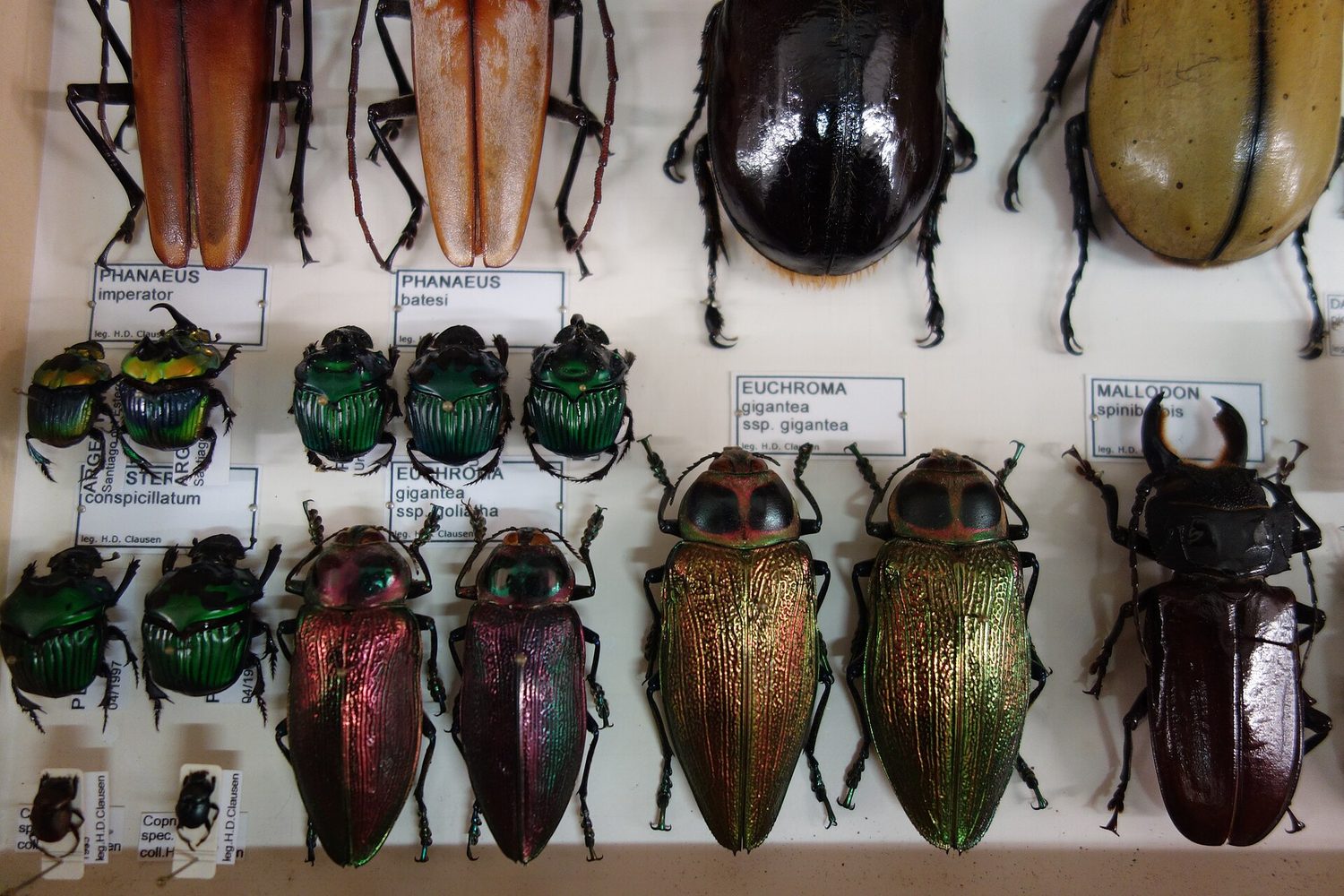
有数百万种生物。为了研究它们,科学家分类(classify)它们——他们按它们共享的特征把它们分成组。同一组中的生物体彼此共享的特征比与其他组中的生物体共享的更多。
Species and the binomial system
最小的共同组是物种(species)。一个物种是能生殖以制造可育后代(fertile offspring)的一组生物体("可育"意味着后代能自己继续生育)。

每个物种有一个两部分的学名(scientific name)。这种命名方式是双名法(binomial system)——一个全世界都同意的系统,所以每个科学家用同样的名称。
- 第一部分是属(genus,物种所属的一个更大的组)。它以一个大写字母开始。
- 第二部分是物种。它以一个小写字母开始。
整个名称用斜体书写,例如 Homo sapiens(人类)。两只名为 Rattus norvegicus 和 Rattus rattus 的鼠属于同一个属,但是不同的物种。
Dichotomous keys
一个二歧检索表(dichotomous key)是一个帮助你识别一个未知生物体的工具。"二歧"意味着"分裂成两个"。在每一步检索表给你关于一个特征的两个选择。你挑选适合你生物体的那个,而那个选择把你送到下一对选择。你重复这个直到你到达生物体的名称。
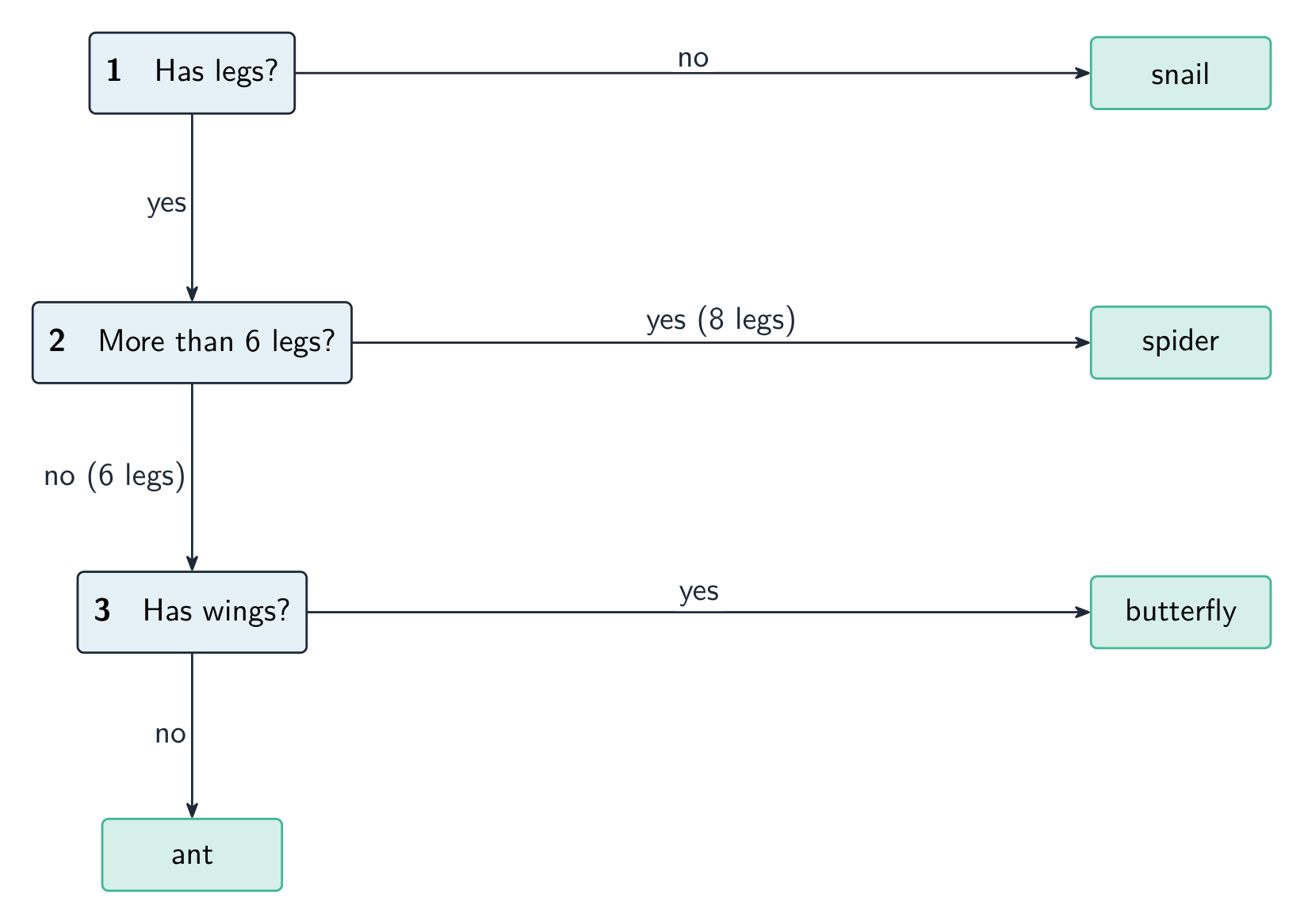
当你构建一个检索表时,选择你能看到的清晰特征——例如"有翅膀 / 没有翅膀"——而不是改变的特征,如大小。
例题。 一个检索表这样写:第 1 步,有翅,转到 2;无翅,转到 3。第 2 步,一对翅,是家蝇;两对翅,是蝴蝶。现有一只不认识的昆虫,有两对翅。第 1 步只问"有翅还是无翅",所以"有翅"把你送到第 2 步。在第 2 步,"两对"给出蝴蝶。按检索表给出的路线一步一步走 - 不要直接跳到那个看起来像的名字。
Classification and DNA (Supplement)
现代分类试图显示进化关系(evolutionary relationships)——不同的生物体关系有多近。关系更近的生物体共享一个更晚近的祖先(ancestor)。
要测量这个,科学家比较 DNA 的碱基序列(base sequence,构成一个生物体基因(genes)的化学"字母"的顺序)。规则很简单:
- 共享一个更晚近祖先(关系更近)的生物体有更相似的 DNA 碱基序列。
- 只共享一个遥远祖先的生物体有较不相似的碱基序列。
所以一个 DNA 碱基序列既能被用来给生物体分类,又能算出两个物种关系有多近。
探索
Classification rank lab
Place examples at the right level in the biological hierarchy.
词汇表
训练
| 英文 | 中文 | 拼音 |
|---|---|---|
| classify/ˈklæsɪfaɪ/ | 分类 | fēn lèi |
| species/ˈspiːsiːz/ | 物种 | wù zhǒng |
| fertile offspring/ˈfɜːtaɪl ˈɒfsprɪŋ/ | 可育后代 | kě yù hòu dài |
| scientific name/saɪənˈtɪfɪk neɪm/ | 学名 | xué míng |
| binomial system/baɪˈnəʊmɪəl ˈsɪstəm/ | 双名法 | shuāng míng fǎ |
| genus/ˈdʒenəs/ | 属 | shǔ |
| dichotomous key/daɪˈkɒtəməs kiː/ | 二歧检索表 | èr qí jiǎn suǒ biǎo |
| evolutionary relationships/ɪvəˈluːʃənəri rɪˈleɪʃənʃɪps/ | 进化关系 | jìn huà guān xì |
| ancestor/ˈænsestə/ | 祖先 | zǔ xiān |
| base sequence/beɪs ˈsiːkwəns/ | 碱基序列 | jiǎn jī xù liè |
| genes/dʒiːnz/ | 基因 | jī yīn |
1.3
生物类群的特征
大纲
| Core | Supplement |
|---|---|
| 1 State the main features used to place animals and plants into the appropriate kingdoms | 4 State the main features used to place all organisms into one of the five kingdoms: animal, plant, fungus, prokaryote, protoctist |
| 2 State the main features used to place organisms into groups within the animal kingdom, limited to: (a) the main groups of vertebrates: mammals, birds, reptiles, amphibians, fish (b) the main groups of arthropods: myriapods, insects, arachnids, crustaceans | 5 State the main features used to place organisms into groups within the plant kingdom, limited to ferns and flowering plants (dicotyledons and monocotyledons) |
| 3 Classify organisms using the features identified in 1.3.1 and 1.3.2 | 6 Classify organisms using the features identified in 1.3.4 and 1.3.5 |
| 7 State the features of viruses, limited to a protein coat and genetic material |
来源:剑桥国际大纲
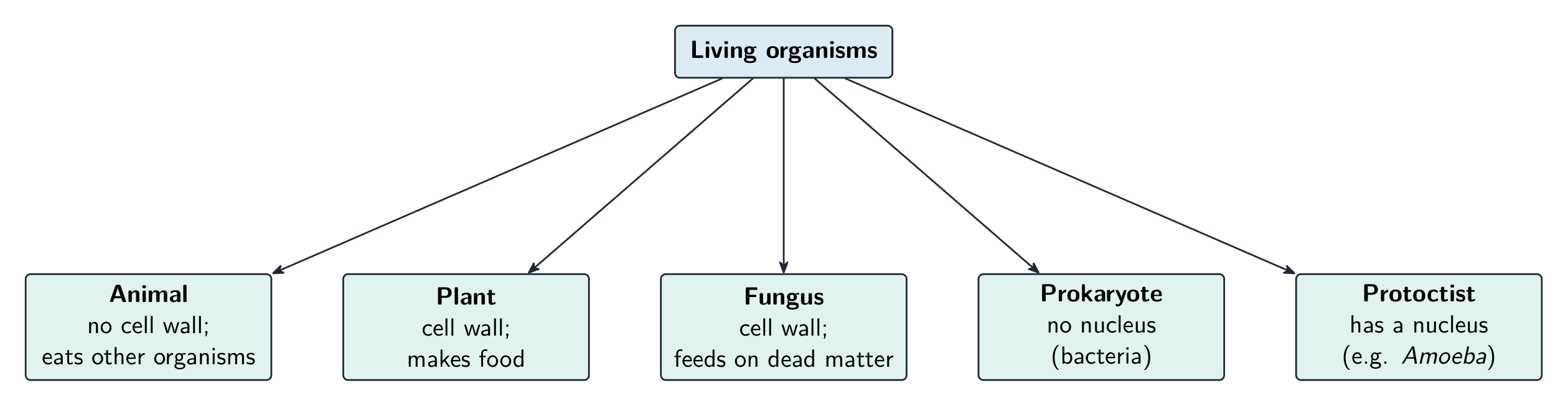
生物体被分入的最大的组叫界(kingdoms)。在核心级别你把生物体放入下面头两个界;对于补充你需要全部五个界。你通过看一个生物体的主要特征来决定它属于哪里。
| 界 | 主要特征 |
|---|---|
| 动物(Animal) | 由许多细胞构成;细胞没有细胞壁(cell wall);不能制造它们自己的食物,所以它们以其他生物体为食;大多数能移动它们整个身体 |
| 植物(Plant) | 由许多细胞构成;细胞有一个细胞壁;通过光合作用(photosynthesis)制造它们自己的食物,所以许多细胞含有叶绿体(chloroplasts) |
| 真菌(Fungus) | 例如霉菌(moulds)、蘑菇(mushrooms)和酵母(yeast);有细胞壁;不能进行光合作用;以死的或活的物质为食 |
| 原核生物(Prokaryote) | 例如细菌(bacteria);单细胞(single-celled);细胞没有细胞核(nucleus) |
| 原生生物(Protoctist) | 例如阿米巴和藻类(algae);通常单细胞;细胞确实有一个细胞核 |
真菌、原核生物和原生生物界只属于补充。


Grouping the animal kingdom
动物界首先分成两个:有脊柱的动物和没有脊柱的动物。

脊椎动物(Vertebrates)是有一根脊柱(backbone)的动物。有五个主要组。
| 组 | 主要特征 |
|---|---|
| 哺乳动物(Mammals) | 有毛发(fur)或毛;用奶喂养它们的幼崽 |
| 鸟类(Birds) | 有羽毛(feathers)和一个喙(beak);产带硬壳的蛋 |
| 爬行动物(Reptiles) | 有覆盖着鳞片(scales)的干皮肤;在陆地上产带革质壳的蛋 |
| 两栖动物(Amphibians) | 有湿润的皮肤;在水中产蛋;幼体生活在水中 |
| 鱼类(Fish) | 有湿的鳞片和鳍(fins);用鳃(gills)呼吸;在水中产蛋 |
节肢动物(Arthropods)是没有脊柱的动物。它们有一个硬的外骨骼(一个外骨骼(exoskeleton))和在关节(joints)处弯曲的腿。有四个主要组。
| 组 | 主要特征 |
|---|---|
| 昆虫(Insects) | 身体分 3 部分;3 对腿;通常 2 对翅膀;1 对触角(antennae) |
| 蛛形类(Arachnids) | 身体分 2 部分;4 对腿;没有翅膀;没有触角 |
| 甲壳类(Crustaceans) | 许多对腿;2 对触角;大多数生活在水中 |
| 多足类(Myriapods) | 由许多体节(segments)构成的长身体;每个体节上一对或两对腿 |
Grouping the plant kingdom (Supplement)
植物也被放入组。你需要其中两个。
- 蕨类植物(Ferns)——有根、茎和叶,但不制造花或种子。它们用微小的孢子(spores)生殖。
- 开花植物(Flowering plants)——制造花,并在花里面形成种子(seeds)。它们按它们的子叶(种子里面的第一片叶,叫子叶(cotyledons))分成两个组:
| 组 | 特征 |
|---|---|
| 单子叶植物(Monocotyledons) | 种子有一片子叶;长而窄的叶;叶脉(veins)并排(平行)运行 |
| 双子叶植物(Dicotyledons) | 种子有两片子叶;宽叶;叶脉构成一个分支的网 |

Viruses (Supplement)
病毒(Viruses)不被放入任何界。它们不是由细胞构成的,所以许多科学家不把它们算作有生命。一个病毒非常简单,只有两部分:
- 一个外蛋白质外壳(protein coat),以及
- 里面的遗传物质(genetic material,它的基因)。
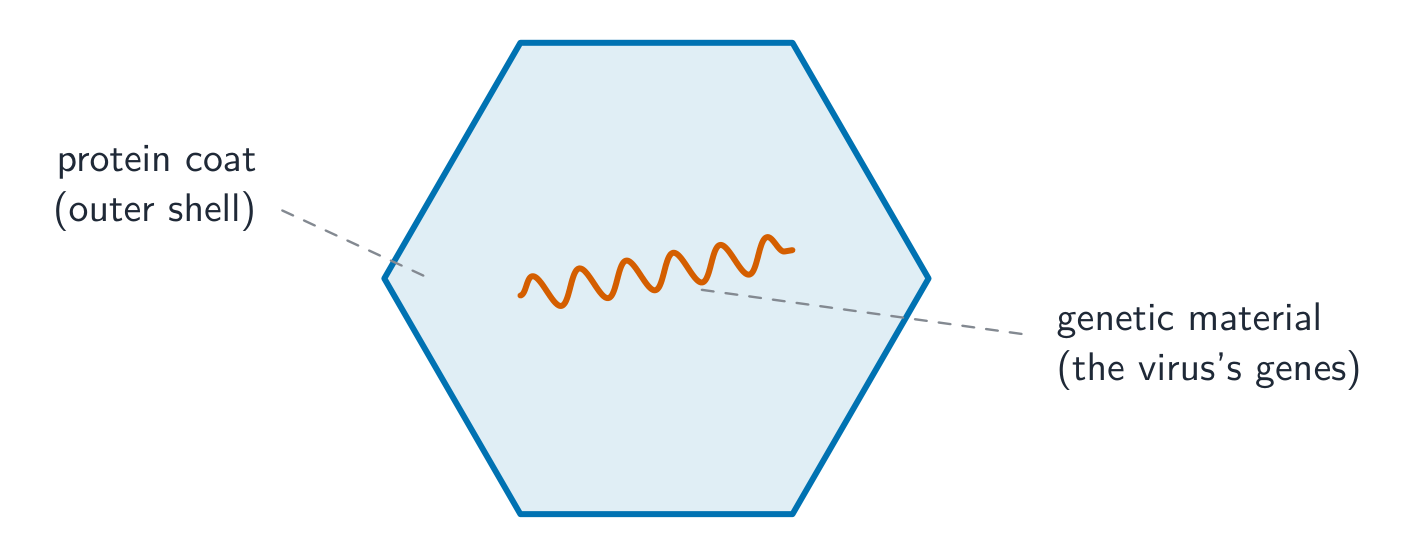
一个病毒不能自己执行生命过程。它只能在一个宿主(host,它感染的生物体)的活细胞里面生殖。
探索
Groups of organisms lab
Compare organism groups by the feature that identifies them.
词汇表
训练
| 英文 | 中文 | 拼音 |
|---|---|---|
| kingdoms/ˈkɪŋdəmz/ | 界 | jiè |
| animal/ˈænɪml/ | 动物 | dòng wù |
| cell wall/sel wɔːl/ | 细胞壁 | xì bāo bì |
| plant/plænt/ | 植物 | zhí wù |
| photosynthesis/ˌfəʊtəʊˈsɪnθəsɪs/ | 光合作用 | guāng hé zuò yòng |
| chloroplasts/ˈklɔːrəʊplæsts/ | 叶绿体 | yè lǜ tǐ |
| fungus/ˈfʌŋɡəs/ | 真菌 | zhēn jūn |
| moulds/məʊldz/ | 霉菌 | méi jūn |
| mushrooms/ˈmʌʃruːmz/ | 蘑菇 | mó gū |
| yeast/jiːst/ | 酵母 | jiào mǔ |
| prokaryote/ˈprɒkərɪəʊt/ | 原核生物 | yuán hé shēng wù |
| bacteria/bækˈtɪərɪə/ | 细菌 | xì jūn |
| single-celled/ˈsɪŋɡl seld/ | 单细胞 | dān xì bāo |
| nucleus/ˈnjuːklɪəs/ | 细胞核 | xì bāo hé |
| protoctist/ˈprəʊtəʊktɪst/ | 原生生物 | yuán shēng shēng wù |
| algae/ˈælɡiː/ | 藻类 | zǎo lèi |
| vertebrates/ˈvɜːtɪbreɪts/ | 脊椎动物 | jǐ zhuī dòng wù |
| backbone/ˈbækbəʊn/ | 脊柱 | jí zhù |
| mammals/ˈmæmlz/ | 哺乳动物 | bǔ rǔ dòng wù |
| fur/fɜː/ | 毛发 | máo fà |
| birds/bɜːdz/ | 鸟类 | niǎo lèi |
| feathers/ˈfeðəz/ | 羽毛 | yǔ máo |
| beak/biːk/ | 喙 | huì |
| reptiles/ˈreptaɪlz/ | 爬行动物 | pá xíng dòng wù |
| scales/skeɪlz/ | 鳞片 | lín piàn |
| amphibians/æmˈfɪbɪənz/ | 两栖动物 | liǎng qī dòng wù |
| fish/fɪʃ/ | 鱼类 | yú lèi |
| fins/fɪnz/ | 鳍 | qí |
| gills/ɡɪlz/ | 鳃 | sāi |
| arthropods/ˈɑːθrəpɒdz/ | 节肢动物 | jié zhī dòng wù |
| exoskeleton/ˈeksəʊskelɪtn/ | 外骨骼 | wài gǔ gé |
| joints/dʒɔɪnts/ | 关节 | guān jié |
| insects/ˈɪnsekts/ | 昆虫 | kūn chóng |
| antennae/ænˈteniː/ | 触角 | chù jiǎo |
| arachnids/əˈræknɪdz/ | 蛛形类 | zhū xíng lèi |
| crustaceans/krʌˈsteɪʃnz/ | 甲壳类 | jiǎ qiào lèi |
| myriapods/ˈmaɪrɪæpɒdz/ | 多足类 | duō zú lèi |
| segments/ˈseɡmənts/ | 体节 | tǐ jié |
| ferns/fɜːnz/ | 蕨类植物 | jué lèi zhí wù |
| spores/spɔːz/ | 孢子 | bāo zǐ |
| flowering plants/ˈflaʊərɪŋ plænts/ | 开花植物 | kāi huā zhí wù |
| seeds/siːdz/ | 种子 | zhǒng zi |
| cotyledons/ˌkɒtɪˈliːdnz/ | 子叶 | zǐ yè |
| monocotyledons/ˌmɒnəʊˌkɒtɪˈliːdnz/ | 单子叶植物 | dān zi yè zhí wù |
| leaf veins/liːf veɪnz/ | 叶脉 | yè mài |
| dicotyledons/ˌdɪkətɪˈliːdnz/ | 双子叶植物 | shuāng zǐ yè zhí wù |
| viruses/ˈvaɪrəsɪz/ | 病毒 | bìng dú |
| protein coat/ˈprəʊtiːn kəʊt/ | 蛋白质外壳 | dàn bái zhì wài ké |
| genetic material/dʒɪˈnetɪk məˈtɪərɪəl/ | 遗传物质 | yí chuán wù zhì |
| host/həʊst/ | 宿主 | sù zhǔ |
1.3
考试技巧
- 熟记七个特征及它们确切的定义。把它们写成清晰、完整的句子。
- 消化(Digestion)不是七个特征之一——它只是营养的一部分。"呼吸"也不是七个之一。
- 在一个学名中,属以一个大写字母开始、物种以一个小写字母开始,而且两者都是斜体。
- 要用一个二歧检索表,从第一对选择开始并一步步跟随路线。不要向前跳。
- 更相似的 DNA 碱基序列 → 生物体关系更近(它们共享一个更晚近的祖先)。
词汇表
训练
| 英文 | 中文 | 拼音 |
|---|---|---|
| digestion/daɪˈdʒestʃn/ | 消化 | xiāo huà |
本主题的互动课程
逐步学习,并即时检测练习。