| Core | Supplement |
|---|---|
| 1 Describe what is meant by a balanced diet | |
| 2 State the principal dietary sources and describe the importance of: (a) carbohydrates (b) fats and oils (c) proteins (d) vitamins, limited to C and D (e) mineral ions, limited to calcium and iron (f) fibre (roughage) (g) water | |
| 3 State the causes of scurvy and rickets |
人体的营养
IGCSE 生物 · 第 7 主题
 15:52
15:52
Human Nutrition
The food on your plate is made of molecules far too big to enter your blood. So your body takes it apart — first by crushing it, then by cutting the molecules…
英文讲解 · 内嵌中英文字幕
7.1
膳食

大纲
来源:剑桥国际大纲
一份均衡饮食(balanced diet)以正确的量给你所有你需要的物质。有七个部分。

| 饮食部分 | 好的来源 | 为什么你需要它 |
|---|---|---|
| 碳水化合物(carbohydrates) | 米饭、面包、土豆 | 能量(energy)的主要来源 |
| 脂肪(fats)和油 | 黄油、油、坚果 | 一个能量储存;帮助保持你温暖 |
| 蛋白质(proteins) | 肉、鱼、蛋、豆 | 细胞的生长和修复 |
| 维生素(vitamin)C | 新鲜水果、蔬菜 | 保持皮肤和牙龈健康 |
| 维生素 D | 阳光、油性鱼、蛋 | 帮助身体吸收钙(calcium) |
| 矿物质离子(mineral ions)——钙 | 牛奶、奶酪 | 强壮的骨和牙 |
| 矿物质离子——铁(iron) | 红肉、绿叶蔬菜 | 制造血红蛋白(haemoglobin,红细胞中携带氧气的红色色素)所需 |
| 膳食纤维(fibre,粗粮) | 蔬菜、全谷物 | 保持食物通过肠道移动 |
| 水 | 饮料和食物 | 所有反应所需;身体的大部分是水 |
两种疾病来自缺少一种维生素:
- 太少的维生素 C → 坏血病(scurvy,牙龈出血、愈合缓慢)。
- 太少的维生素 D → 佝偻病(rickets,软的、弯的骨),因为身体不能吸收足够的钙。
例题。 一个孩子几乎不吃新鲜水果和蔬菜。他的牙龈出血,小伤口愈合缓慢。饮食中缺少哪一部分?为什么这能解释这些症状?新鲜水果和蔬菜是维生素 C 的主要来源,而维生素 C 太少会导致坏血病 - 它的表现正是牙龈出血和愈合缓慢。所以缺少的是维生素 C。要分别写出物质和疾病:只写"缺乏某种维生素"是拿不到分的。
探索
Balanced diet lab
Match dietary needs to the nutrient that solves the problem.
词汇表
训练
| 英文 | 中文 | 拼音 |
|---|---|---|
| balanced diet/ˈbælənst ˈdaɪət/ | 均衡饮食 | jūn héng yǐn shí |
| carbohydrates/ˌkɑːbəʊˈhaɪdreɪts/ | 碳水化合物 | tàn shuǐ huà hé wù |
| energy/ˈenədʒi/ | 能量 | néng liàng |
| fats/fæts/ | 脂肪 | zhī fáng |
| proteins/ˈprəʊtiːnz/ | 蛋白质 | dàn bái zhì |
| vitamin/ˈvɪtəmɪn/ | 维生素 | wéi shēng sù |
| calcium/ˈkælsɪəm/ | 钙 | gài |
| mineral ions/ˈmɪnərəl ˈaɪɒnz/ | 矿物质离子 | kuàng wù zhì lí zi |
| iron/ˈaɪən/ | 铁 | tiě |
| haemoglobin/ˌhiːməˈɡləʊbɪn/ | 血红蛋白 | xuè hóng dàn bái |
| fibre/ˈfaɪbə/ | 膳食纤维 | shàn shí xiān wéi |
| scurvy/ˈskɜːvi/ | 坏血病 | huài xuè bìng |
| rickets/ˈrɪkɪts/ | 佝偻病 | gōu lóu bìng |
7.2
消化系统

大纲
| Core | Supplement |
|---|---|
| 1 Identify in diagrams and images the main organs of the digestive system, limited to: (a) alimentary canal: mouth, oesophagus, stomach, small intestine (duodenum and ileum) and large intestine (colon, rectum, anus) (b) associated organs: salivary glands, pancreas, liver and gall bladder | |
| 2 Describe the functions of the organs of the digestive system listed in 7.2.1, in relation to: (a) ingestion – the taking of substances, e.g. food and drink, into the body (b) digestion – the breakdown of food (c) absorption – the movement of nutrients from the intestines into the blood (d) assimilation – uptake and use of nutrients by cells (e) egestion – the removal of undigested food from the body as faeces |
来源:剑桥国际大纲
消化系统(digestive system)分解食物。食物沿一根长管,消化道(alimentary canal)通过:
嘴 → 食道(oesophagus)→ 胃(stomach)→ 小肠(small intestine,十二指肠(duodenum)然后回肠(ileum))→ 大肠(large intestine,结肠(colon)、直肠(rectum)和肛门(anus))。
一些器官帮助消化但食物不通过它们:嘴里的唾液腺(salivary glands)、胰腺(pancreas)、肝脏(liver)和胆囊(gall bladder)。
食物按顺序发生五件事:
| 过程 | 它意味着什么 |
|---|---|
| 摄入(ingestion) | 通过嘴把食物和饮料带进身体 |
| 消化(digestion) | 把食物分解成小分子 |
| 吸收(absorption) | 营养物质(nutrients)从肠道移入血液 |
| 同化(assimilation) | 细胞吸收并使用营养物质 |
| 排遗(egestion) | 未消化的食物作为粪便(faeces)离开身体 |
探索
Through the digestive system
Food travels along the gut; each part does a different job to break it down and absorb it.
词汇表
训练
| 英文 | 中文 | 拼音 |
|---|---|---|
| digestive system/daɪˈdʒestɪv ˈsɪstəm/ | 消化系统 | xiāo huà xì tǒng |
| alimentary canal/əlaɪˈmentəri kəˈnæl/ | 消化道 | xiāo huà dào |
| oesophagus/ɪˈsɒfəɡəs/ | 食道 | shí dào |
| small intestine/smɔːl ɪnˈtestɪn/ | 小肠 | xiǎo cháng |
| duodenum/ˈdjuːəʊdnəm/ | 十二指肠 | shí èr zhǐ cháng |
| ileum/ɪˈliːəm/ | 回肠 | huí cháng |
| large intestine/lɑːdʒ ɪnˈtestɪn/ | 大肠 | dà cháng |
| colon/ˈkəʊlən/ | 结肠 | jié cháng |
| rectum/ˈrektəm/ | 直肠 | zhí cháng |
| anus/ˈeɪnʌs/ | 肛门 | gāng mén |
| salivary glands/ˈsælɪvəri ɡlændz/ | 唾液腺 | tuò yè xiàn |
| pancreas/ˈpæŋkrɪəs/ | 胰腺 | yí xiàn |
| liver/ˈlɪvə/ | 肝脏 | gān zàng |
| gall bladder/ɡɔːl ˈblædə/ | 胆囊 | dǎn náng |
| ingestion/ɪnˈdʒestʃn/ | 摄入 | shè rù |
| digestion/daɪˈdʒestʃn/ | 消化 | xiāo huà |
| nutrients/ˈnjuːtrɪənts/ | 营养物质 | yíng yǎng wù zhì |
| absorption/əbˈsɔːpʃn/ | 吸收 | xī shōu |
| assimilation/əˌsɪmɪˈleɪʃn/ | 同化 | tóng huà |
| egestion/ɪˈdʒestʃn/ | 排遗 | pái yí |
| faeces/ˈfiːsiːz/ | 粪便 | fèn biàn |
7.3
物理消化

大纲
| Core | Supplement |
|---|---|
| 1 Describe physical digestion as the breakdown of food into smaller pieces without chemical change to the food molecules | |
| 2 State that physical digestion increases the surface area of food for the action of enzymes in chemical digestion | |
| 3 Identify in diagrams and images the types of human teeth: incisors, canines, premolars and molars | |
| 4 Describe the structure of human teeth, limited to: enamel, dentine, pulp, nerves, blood vessels and cement, and understand that teeth are embedded in bone and the gums | |
| 5 Describe the functions of the types of human teeth in physical digestion of food | |
| 6 Describe the function of the stomach in physical digestion | |
| 7 Outline the role of bile in emulsifying fats and oils to increase the surface area for chemical digestion |
来源:剑桥国际大纲
物理消化把食物分成更小的片,不改变食物分子。这给一个更大的表面积(surface area)供酶(enzymes)以后作用。
Teeth
你有四种牙齿(teeth):
| 牙齿 | 工作 |
|---|---|
| 门齿(incisors) | 用于咬和切的锋利的前牙 |
| 犬齿(canines) | 用于撕的尖牙 |
| 前臼齿(premolars) | 用于咀嚼和研磨的平牙 |
| 臼齿(molars) | 用于咀嚼和研磨的平的后牙 |
一颗牙齿由这些部分构建:
| 部分 | 描述 |
|---|---|
| 牙釉质(enamel) | 硬的白色外层;身体中最硬的材料 |
| 牙本质(dentine) | 牙釉质下更软的、骨状的层 |
| 牙髓(pulp) | 软的中心,带神经(nerves)和血管(blood vessels) |
| 牙骨质(cement) | 把牙根固定进颚 |
牙齿嵌进颚的骨中,由牙龈(gums)固定稳固。

The stomach
胃壁由挤压和混合食物的肌肉(muscle)构成,把它分成更小的片。
Bile (Supplement)
胆汁(bile)在肝脏中制造并储存在胆囊中。它乳化(emulsifies)脂肪和油——它把大的脂肪滴分成许多微小的液滴。这给一个大得多的表面积供酶脂肪酶(lipase)消化脂肪。胆汁本身不含酶。
探索
Physical (mechanical) digestion
Physical digestion breaks food into smaller pieces WITHOUT changing it chemically — it just increases the surface area for enzymes.
词汇表
训练
| 英文 | 中文 | 拼音 |
|---|---|---|
| stomach/ˈstʌmək/ | 胃 | wèi |
| surface area/ˈsɜːfɪs ˈeərɪə/ | 表面积 | biǎo miàn jī |
| enzymes/ˈenzaɪmz/ | 酶 | méi |
| teeth/tiːθ/ | 牙齿 | yá chǐ |
| incisors/ɪnˈsaɪzəz/ | 门齿 | mén chǐ |
| canines/ˈkeɪnaɪnz/ | 犬齿 | quǎn chǐ |
| premolars/priːˈməʊləz/ | 前臼齿 | qián jiù chǐ |
| molars/ˈməʊləz/ | 臼齿 | jiù chǐ |
| enamel/ɪˈnæml/ | 牙釉质 | yá yòu zhì |
| dentine/ˈdentiːn/ | 牙本质 | yá běn zhì |
| pulp/pʌlp/ | 牙髓 | yá suǐ |
| nerves/nɜːvz/ | 神经 | shén jīng |
| blood vessels/blʌd ˈveslz/ | 血管 | xuè guǎn |
| cement/sɪˈment/ | 牙骨质 | yá gǔ zhì |
| gums/ɡʌmz/ | 牙龈 | yá yín |
| muscle/ˈmʌsl/ | 肌肉 | jī ròu |
| bile/baɪl/ | 胆汁 | dǎn zhī |
| emulsifies/ɪˈmʌlsɪfaɪz/ | 乳化 | rǔ huà |
| lipase/ˈlɪpeɪs/ | 脂肪酶 | zhī fáng méi |
7.4
化学消化

大纲
| Core | Supplement |
|---|---|
| 1 Describe chemical digestion as the breakdown of large insoluble molecules into small soluble molecules | |
| 2 State the role of chemical digestion in producing small soluble molecules that can be absorbed | |
| 3 Describe the functions of enzymes as follows: (a) amylase breaks down starch to simple reducing sugars (b) proteases break down protein to amino acids (c) lipase breaks down fats and oils to fatty acids and glycerol | 6 Describe the digestion of starch in the digestive system: (a) amylase breaks down starch to maltose (b) maltase breaks down maltose to glucose on the membranes of the epithelium lining the small intestine |
| 4 State where, in the digestive system, amylase, protease and lipase are secreted and where they act | 7 Describe the digestion of protein by proteases in the digestive system: (a) pepsin breaks down protein in the acidic conditions of the stomach (b) trypsin breaks down protein in the alkaline conditions of the small intestine |
| 5 Describe the functions of hydrochloric acid in gastric juice, limited to killing harmful microorganisms in food and providing an acidic pH for optimum enzyme activity | 8 Explain that bile is an alkaline mixture that neutralises the acidic mixture of food and gastric juices entering the duodenum from the stomach, to provide a suitable pH for enzyme action |
来源:剑桥国际大纲
化学消化把大的不溶性(insoluble)分子分解成小的可溶性(soluble)分子。只有小的可溶性分子能被吸收进血液。酶执行这个工作。
| 酶 | 分解 | 成为 | 制造于 |
|---|---|---|---|
| 淀粉酶(amylase) | 淀粉(starch) | 还原糖(reducing sugars) | 唾液腺、胰腺 |
| 蛋白酶(protease) | 蛋白质 | 氨基酸(amino acids) | 胃、胰腺 |
| 脂肪酶 | 脂肪和油 | 脂肪酸(fatty acids)和甘油(glycerol) | 胰腺 |
Acid in the stomach
胃制造盐酸(hydrochloric acid),它是胃液(gastric juice)的一部分。这种酸:
- 杀死食物中有害的微生物(microorganisms),以及
- 给一个酸性(acidic)pH,胃的蛋白酶工作的最佳 pH。
Digesting starch and protein (Supplement)
淀粉分两步消化:
- 淀粉酶把淀粉分解成麦芽糖(maltose)。
- 麦芽糖酶(maltase),在衬着小肠的上皮(epithelium)的膜上,把麦芽糖分解成葡萄糖(glucose)。
蛋白质由两种蛋白酶消化:
- 胃蛋白酶(pepsin)在酸性的胃中分解蛋白质。
- 胰蛋白酶(trypsin)在碱性(alkaline)的小肠中分解蛋白质。
胆汁是碱性的。它在酸性食物和胃液进入十二指肠时中和(neutralises)它们,给那里的酶一个合适的 pH。
探索
How fast a digestive enzyme works
Add more substrate and the reaction rate climbs, then levels off as every enzyme is busy — the same way amylase, protease and lipase break down food.
词汇表
训练
| 英文 | 中文 | 拼音 |
|---|---|---|
| insoluble/ɪnˈsɒljuːbl/ | 不溶性 | bù róng xìng |
| soluble/ˈsɒljuːbl/ | 可溶性 | kě róng xìng |
| amylase/ˈæmɪleɪz/ | 淀粉酶 | diàn fěn méi |
| starch/stɑːtʃ/ | 淀粉 | diàn fěn |
| reducing sugars/rɪˈdjuːsɪŋ ˈʃʊɡəz/ | 还原糖 | huán yuán táng |
| protease/ˈprəʊteɪs/ | 蛋白酶 | dàn bái méi |
| amino acids/əˈmiːnəʊ ˈæsɪdz/ | 氨基酸 | ān jī suān |
| fatty acids/ˈfæti ˈæsɪdz/ | 脂肪酸 | zhī fáng suān |
| glycerol/ˈɡlɪsərɒl/ | 甘油 | gān yóu |
| hydrochloric acid/ˌhaɪdrəˈklɔːrɪk ˈæsɪd/ | 盐酸 | yán suān |
| gastric juice/ˈɡæstrɪk dʒuːs/ | 胃液 | wèi yè |
| microorganisms/ˌmaɪkrəʊˈɔːɡənɪzəmz/ | 微生物 | wēi shēng wù |
| acidic/əˈsɪdɪk/ | 酸性 | suān xìng |
| maltose/ˈmɒltəʊs/ | 麦芽糖 | mài yá táng |
| maltase/ˈmɒlteɪs/ | 麦芽糖酶 | mài yá táng méi |
| epithelium/ˌepɪˈθiːlɪəm/ | 上皮 | shàng pí |
| glucose/ˈɡluːkəʊs/ | 葡萄糖 | pú táo táng |
| pepsin/ˈpepsɪn/ | 胃蛋白酶 | wèi dàn bái méi |
| trypsin/ˈtrɪpsɪn/ | 胰蛋白酶 | yí dàn bái méi |
| alkaline/ˈælkəlaɪn/ | 碱性 | jiǎn xìng |
| neutralises/ˈnjuːtrəlaɪzɪz/ | 中和 | zhōng hé |
7.5
吸收

大纲
| Core | Supplement |
|---|---|
| 1 State that the small intestine is the region where nutrients are absorbed | |
| 3 Explain the significance of villi and microvilli in increasing the internal surface area of the small intestine | |
| 4 Describe the structure of a villus | |
| 5 Describe the roles of capillaries and lacteals in villi | |
| 2 State that most water is absorbed from the small intestine but that some is also absorbed from the colon |
来源:剑桥国际大纲
消化的营养物质在小肠被吸收进血液。大多数水也在这里被吸收;结肠吸收其余的,留下固体粪便。
Villi (Supplement)
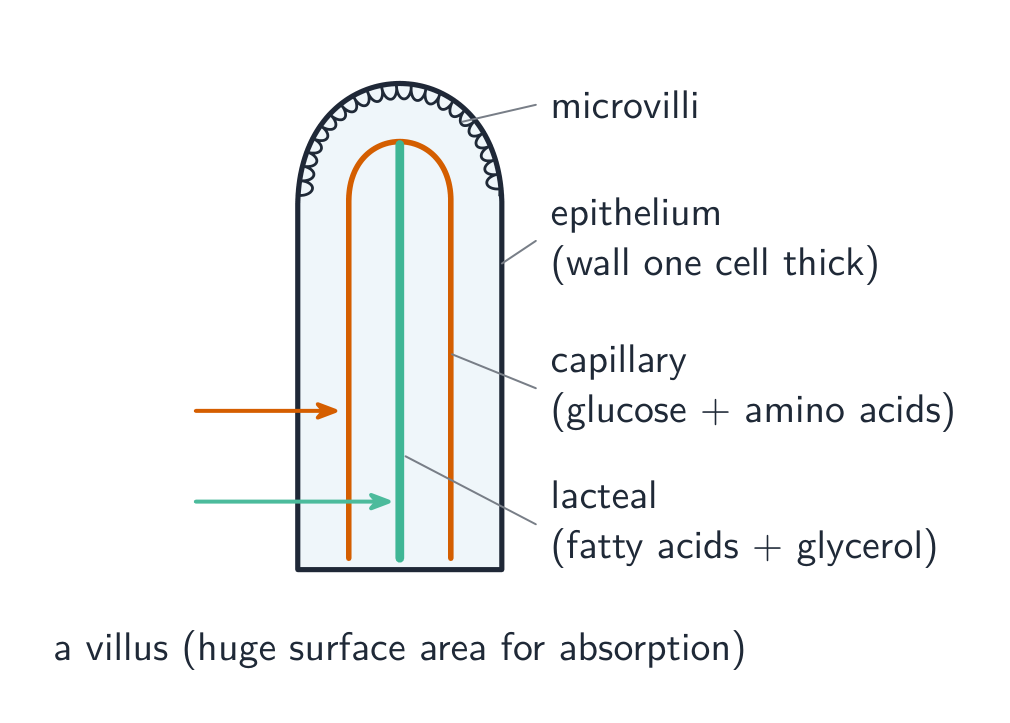
小肠的内部覆盖着数百万微小的手指形绒毛(villi)。每个绒毛本身覆盖着小得多的微绒毛(microvilli)。这些一起给一个巨大的表面积,所以吸收很快。
一个单一绒毛有:
- 一个只有一个细胞厚的壁,所以分子只有一个短距离要行进。
- 一个毛细血管(capillaries)网络,把吸收的葡萄糖和氨基酸带走。
- 中心一个乳糜管(lacteal),把吸收的脂肪酸和甘油带走。
探索
Absorption at the villi
The small intestine is lined with millions of villi that give a huge surface area for absorbing digested food.
词汇表
训练
| 英文 | 中文 | 拼音 |
|---|---|---|
| villi/ˈvɪlaɪ/ | 绒毛 | róng máo |
| microvilli/ˈmaɪkrəʊvɪlaɪ/ | 微绒毛 | wēi róng máo |
| capillaries/ˈkæpɪləriz/ | 毛细血管 | máo xì xuè guǎn |
| lacteal/ˈlæktɪəl/ | 乳糜管 | rǔ mí guǎn |
7.5
考试技巧
- 一份均衡饮食有每个部分的正确的量。学习每个的一个来源和一个用途。
- 维生素 C ↔ 坏血病;维生素 D ↔ 佝偻病。
- 按顺序的五个过程:摄入 → 消化 → 吸收 → 同化 → 排遗。排遗(粪便)不是排泄。
- 物理消化使片更小(更多的表面积);化学消化用酶使分子更小、可溶。
- 淀粉酶 → 糖、蛋白酶 → 氨基酸、脂肪酶 → 脂肪酸 + 甘油。胃酸杀死微生物并设定一个低 pH。
- 绒毛和微绒毛给一个大表面积,而一个薄壁给一个短距离——两者都使吸收更快。
本主题的互动课程
逐步学习,并即时检测练习。