| Core | Supplement |
|---|---|
| 1 Describe a catalyst as a substance that increases the rate of a chemical reaction and is not changed by the reaction | |
| 2 Describe enzymes as proteins that are involved in all metabolic reactions, where they function as biological catalysts | |
| 3 Describe why enzymes are important in all living organisms in terms of a reaction rate necessary to sustain life | |
| 4 Describe enzyme action with reference to the shape of the active site of an enzyme being complementary to its substrate and the formation of products | 6 Explain enzyme action with reference to: active site, enzyme-substrate complex, substrate and product |
| 7 Explain the specificity of enzymes in terms of the complementary shape and fit of the active site with the substrate | |
| 5 Investigate and describe the effect of changes in temperature and pH on enzyme activity with reference to optimum temperature and denaturation | 8 Explain the effect of changes in temperature on enzyme activity in terms of kinetic energy, shape and fit, frequency of effective collisions and denaturation |
| 9 Explain the effect of changes in pH on enzyme activity in terms of shape and fit and denaturation |
酶
IGCSE 生物 · 第 5 主题
 5:54
5:54
Enzymes
Every second, thousands of chemical reactions are running inside you. Left to themselves, almost all of them would be far too slow to keep you alive. What…
英文讲解 · 内嵌中英文字幕
5.1
酶

大纲
来源:剑桥国际大纲
一个催化剂(catalyst)是一种加速一个化学反应(chemical reaction)的速率(rate)但不被反应消耗或改变的物质。同一个催化剂能一遍又一遍地使用。
酶(Enzymes)是生物催化剂——由活细胞制造的催化剂。它们是蛋白质(proteins)。酶参与新陈代谢(metabolism)的所有反应,所以它们控制一个生物中几乎每个化学反应。
酶至关重要。没有它们,使你活着的反应会太慢。酶把反应速率提高得足以使生物体活着。
探索
What enzymes do
rate rises then plateaus
More substrate means a faster reaction — until the enzymes can't keep up.
词汇表
训练
| 英文 | 中文 | 拼音 |
|---|---|---|
| catalyst/ˈkætəlɪst/ | 催化剂 | cuī huà jì |
| rate/reɪt/ | 速率 | sù lǜ |
| chemical reaction/ˈkemɪkl rɪˈækʃn/ | 化学反应 | huà xué fǎn yìng |
| enzymes/ˈenzaɪmz/ | 酶 | méi |
| proteins/ˈprəʊtiːnz/ | 蛋白质 | dàn bái zhì |
| metabolism/məˈtæbəlɪzəm/ | 新陈代谢 | xīn chén dài xiè |
5.1
酶如何起作用

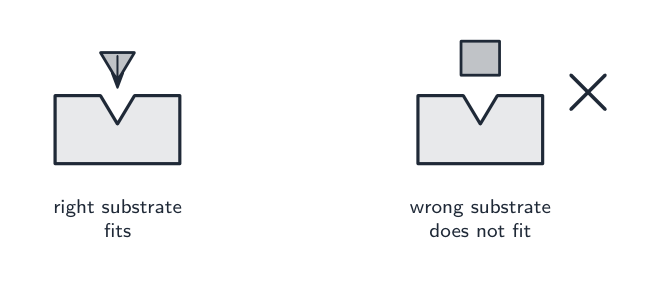
每个酶有一个叫它活性位点(active site)的特殊口袋。它作用的分子(molecule)叫底物(substrate)。
- 活性位点的形状与底物的形状互补(complementary)——它们像一把钥匙在一把锁里契合在一起。
- 底物插入活性位点。(补充) 这构成一个酶底物复合物(enzyme-substrate complex)。
- 反应发生,而底物被变成一个或多个产物(products)。
- 产物离开活性位点,它随即腾出来再次被使用。

Why enzymes are specific (Supplement)
每个酶是专一(specific)的——它只作用于一种底物。这是因为只有那个底物有正确的形状来契合活性位点。一个不同形状的底物不会契合,正如错误的钥匙不会打开一把锁。
词汇表
训练
| 英文 | 中文 | 拼音 |
|---|---|---|
| active site/ˈæktɪv saɪt/ | 活性位点 | huó xìng wèi diǎn |
| molecule/ˈmɒlɪkjuːl/ | 分子 | fèn zǐ |
| substrate/ˈsʌbstreɪt/ | 底物 | dǐ wù |
| complementary/ˌkɒmplɪˈmentəri/ | 互补 | hù bǔ |
| enzyme-substrate complex/ˈenzaɪm ˈsʌbstreɪt ˈkɒmpleks/ | 酶底物复合物 | méi dǐ wù fù hé wù |
| products/ˈprɒdʌkts/ | 产物 | chǎn wù |
| specific/spəˈsɪfɪk/ | 专一 | zhuān yī |
5.1
温度与 pH 的影响
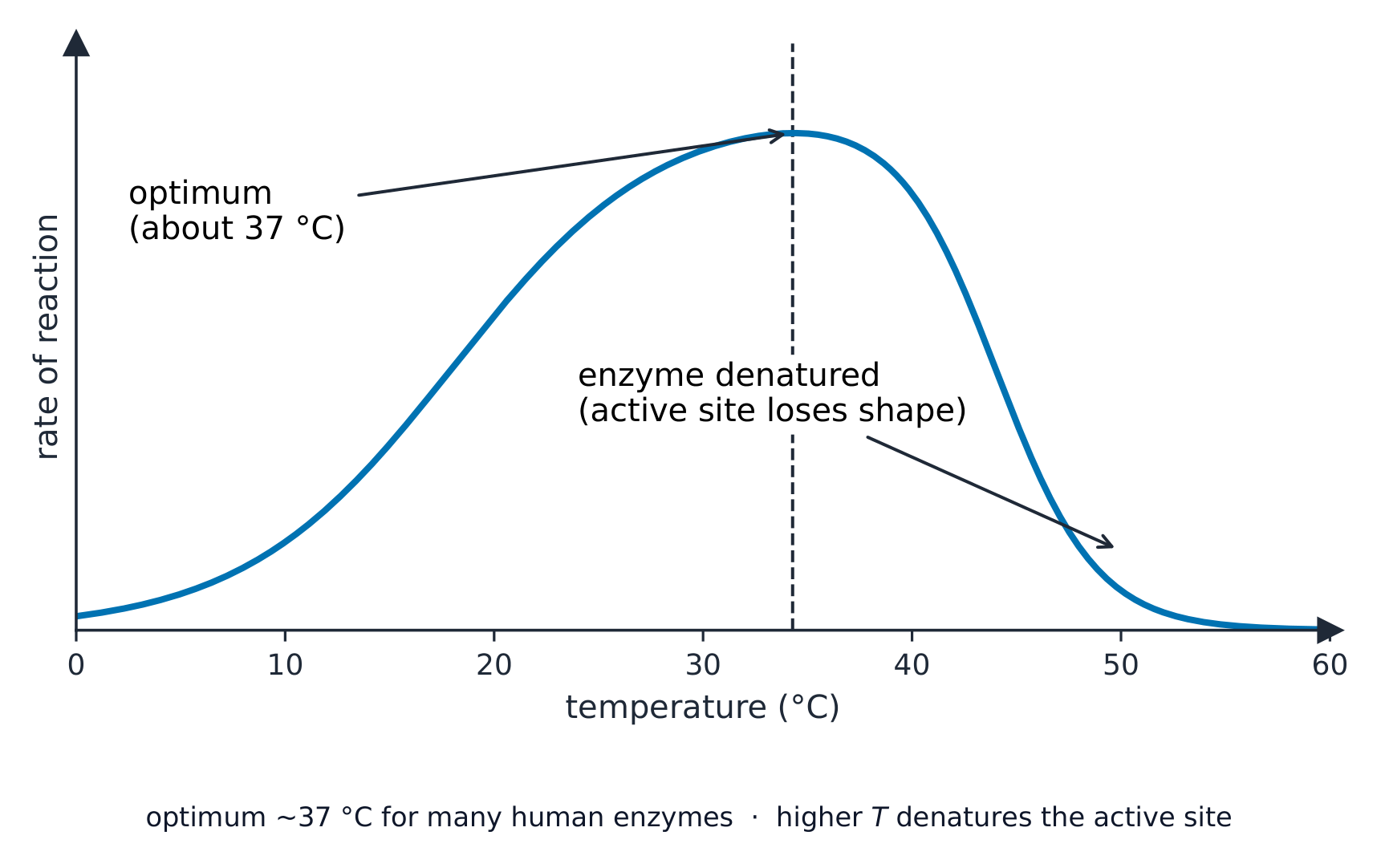
一个酶的活性取决于温度(temperature)和 pH。你可以通过测量反应在不同的温度或 pH 值进行得多快来研究这个。
Temperature
- 随着温度从冷上升,酶活性加速。酶和底物分子有更多的动能(kinetic energy),所以它们移动更快、更频繁地相遇。(补充) 每秒有更多有用的碰撞(collisions)。
- 活性在最适温度(optimum temperature,人体中约 37 °C)最高。
- 在最适温度之上,活性快速下降。热改变活性位点的形状,所以底物不再契合。酶被变性(denatured)。变性是永久的——酶不能恢复。
例题。 一个反应在 20 °C 时 50 s 完成,在 37 °C 时 20 s 完成。哪个温度更快?快多少?更短的时间意味着更快的速率,所以用 速率 = 1000 ÷ 时间 求出速率。在 20 °C,速率是 1000 ÷ 50 = 20 个单位;在 37 °C,是 1000 ÷ 20 = 50 个单位。所以 37 °C 快 50 ÷ 20 = 2.5 倍。不要说速率"上升了 30 s" - 时间不是速率。先把时间换成速率,并记住:速率越大,时间总是越小。
pH
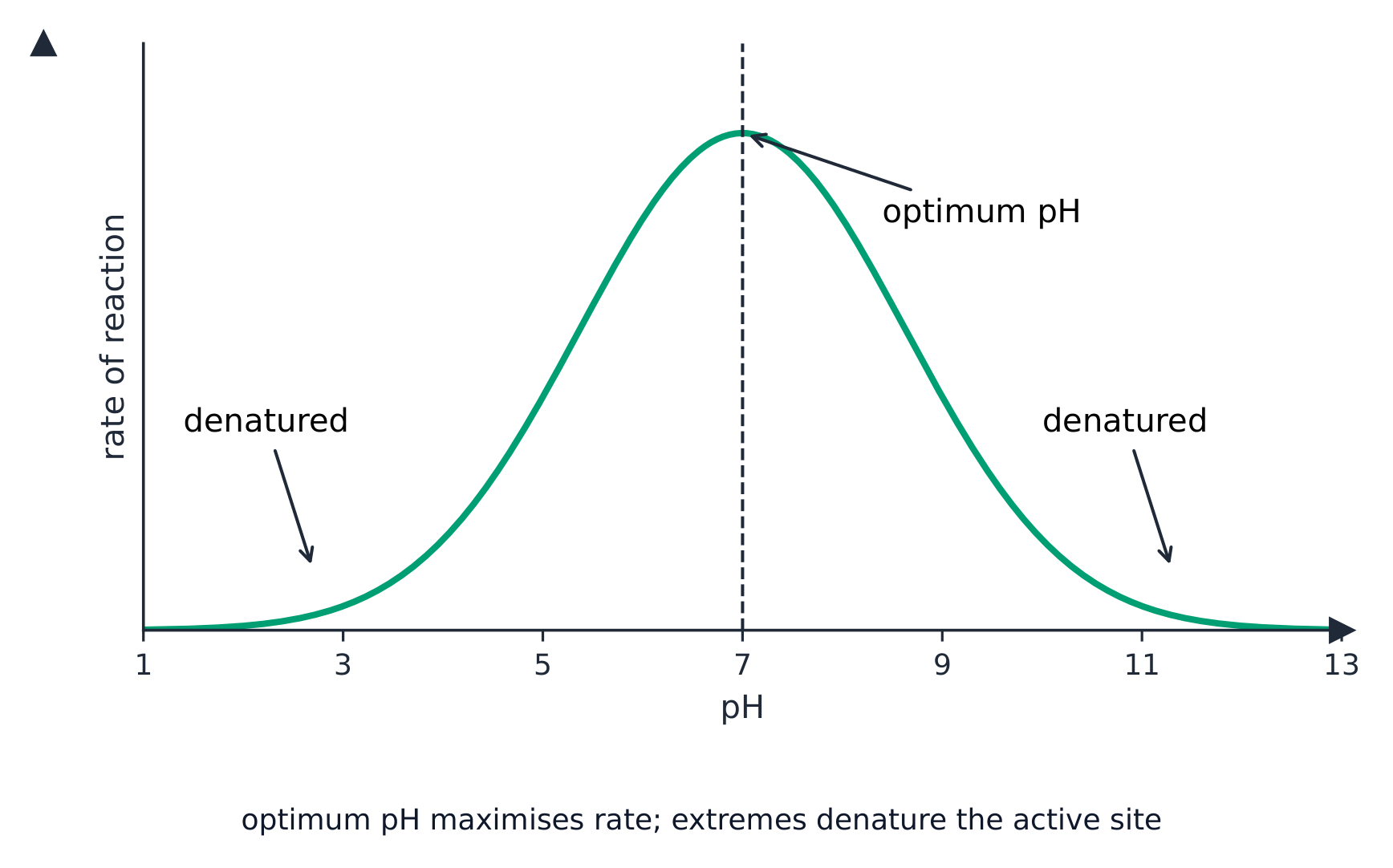
- 每个酶在一个特定的 pH 工作得最好。
- 若 pH 太高或太低,活性位点的形状改变,底物停止契合,而酶被变性。
探索
Temperature and enzyme activity
Drag the temperature. Activity rises to an optimum, then falls as the enzyme denatures.
词汇表
训练
| 英文 | 中文 | 拼音 |
|---|---|---|
| temperature/ˈtemprɪtʃə/ | 温度 | wēn dù |
| kinetic energy/kɪˈnetɪk ˈenədʒi/ | 动能 | dòng néng |
| collisions/kəˈlɪʒnz/ | 碰撞 | pèng zhuàng |
| optimum temperature/ˈɒptɪməm ˈtemprɪtʃə/ | 最适温度 | zuì shì wēn dù |
| denatured/ˈdenətʃəd/ | 变性 | biàn xìng |
5.1
考试技巧
- 一个酶既是一个蛋白质又是一个生物催化剂:它加速一个反应而不被消耗。
- 描述形状:活性位点与底物互补(锁钥思想)。每个酶对一种底物专一。
- 低温 → 慢(太少的动能)。最适 → 最快。太热 → 变性(活性位点永久地失去它的形状)。
- 错误的 pH 也通过改变活性位点的形状使酶变性。
- "变性"不意味着"被杀死"——酶不是活的。说活性位点的形状已改变,所以底物不再契合。
本主题的互动课程
逐步学习,并即时检测练习。