| English | 释义 | 拼音 |
|---|---|---|
| enzymes/ˈenzaɪmz/ | 酶 | méi |
| catalysts/ˈkætəlɪsts/ | 催化剂 | cuī huà jì |
| substrate/ˈsʌbstreɪt/ | 底物 | dǐ wù |
| active site/ˈæktɪv saɪt/ | 活性位点 | huó xìng wèi diǎn |
| specific/spəˈsɪfɪk/ | 专一 | zhuān yī |
| products/ˈprɒdʌkts/ | 产物 | chǎn wù |
洗涤剂如何去除蛋白质污渍?
- 部分洗涤剂含有酶,有助于分解污渍。蛋白酶作用于蛋白质;但它对每种污渍的分解效果并不相同。
- 酶是生物催化剂:它们能加快反应速率而不被消耗。其形状决定了它们催化的特定反应类型。
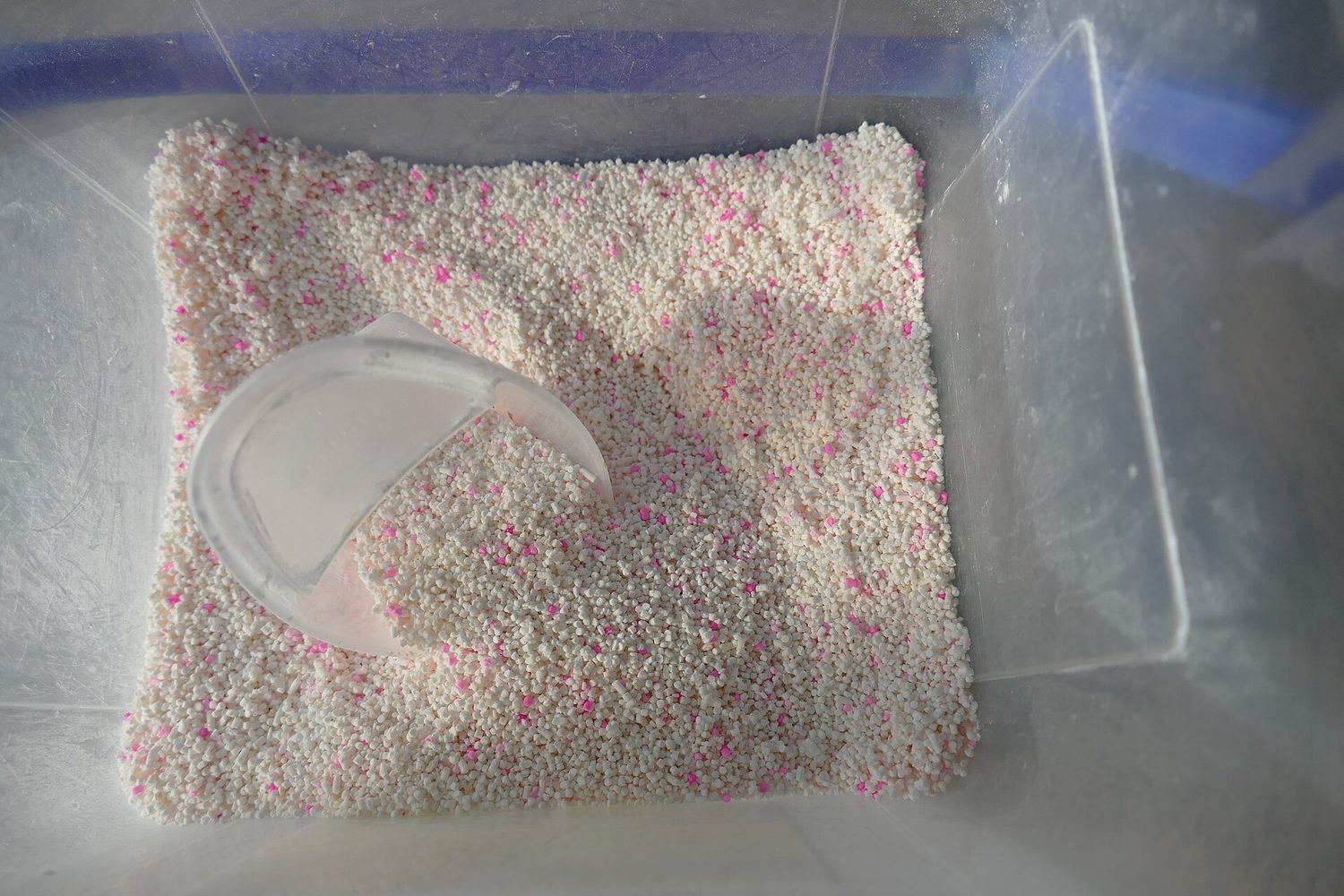
不同的污渍材料需要具有不同特异性的酶。
催化剂可重复使用
- 在此学习阶段,酶被描述为作为生物催化剂起作用的蛋白质。它们能提高反应速率并在反应后保持活性。
- 参与反应的物质称为底物。反应的发生并不意味着生成了更多酶;原始分子可以继续催化后续反应。
An enzyme is a biological catalyst, which means it:
难度 1/5 · 今日首次完成可获 100 金币及少量额外奖励
Catalysts speed up reactions and are reusable.
Enzymes are made of:
难度 1/5 · 今日首次完成可获 100 金币及少量额外奖励
Enzymes are proteins.
将底物与活性位点匹配
- 活性位点是底物结合的区域。其互补的形状使酶对合适的底物具有专一性。
- 在锁钥模型中,底物像钥匙插入锁孔一样与酶结合。这是解释特异性的模型,并非声称酶是刚性的金属物体,或所有酶都分解分子。
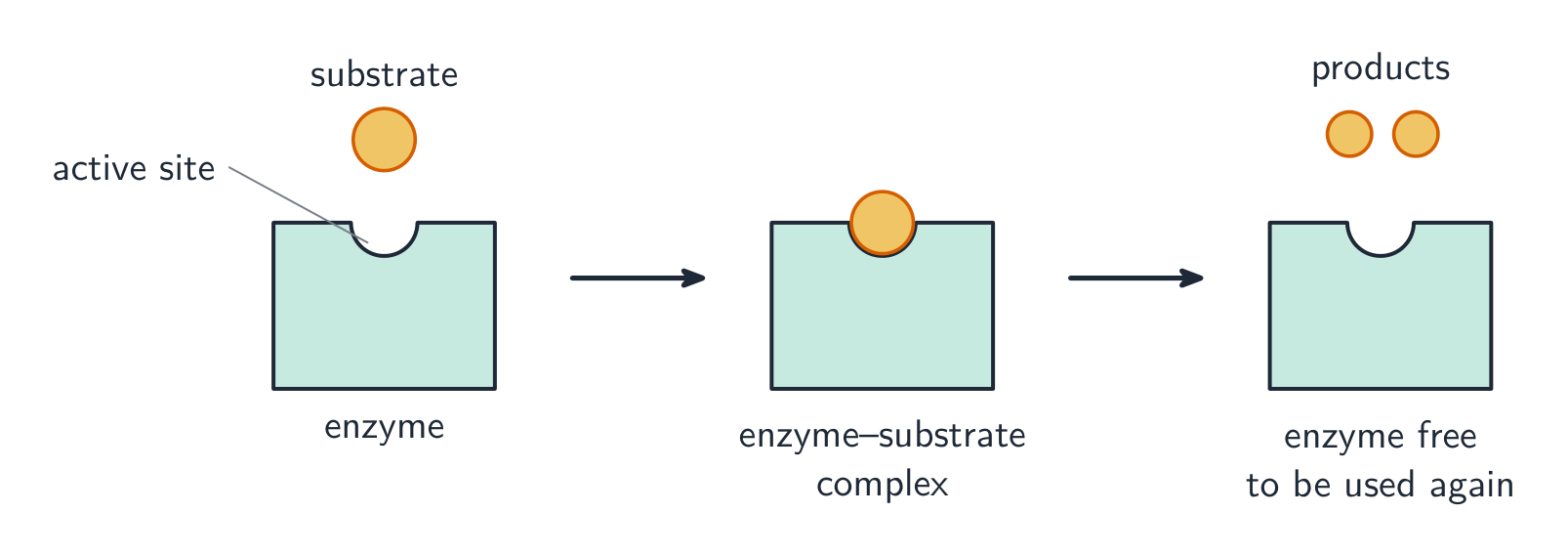
跟随酶经历各个阶段:它在产物离开后仍然存在。
温度影响将在下一课中详细讲解;首先解释正常反应过程。
The part of an enzyme where the substrate binds is the:
难度 1/5 · 今日首次完成可获 100 金币及少量额外奖励
The substrate fits into the active site.
Each enzyme can break down many different types of substrate.
难度 1/5 · 今日首次完成可获 100 金币及少量额外奖励
False. Each enzyme is specific: only a substrate with a complementary shape fits its active site.
The model where only a matching substrate fits an enzyme is the ______-and-key model.
难度 1/5 · 今日首次完成可获 100 金币及少量额外奖励
Lock-and-key explains enzyme specificity.
追踪结合、反应与释放
- 互补的底物结合到活性位点,形成酶-底物复合物。酶催化其反应,产物离开。
- 酶未被消耗,其活性位点可结合另一个合适的底物。请区分底物、酶和产物这三个不同角色。
淀粉酶催化淀粉分解为麦芽糖。淀粉是底物,麦芽糖是产物,淀粉酶是酶。产物离开后,淀粉酶可再次作用;它不会变成麦芽糖。
What enzymes do
速率上升后趋于平稳
More substrate means a faster reaction — until the enzymes can't keep up.
Amylase catalyses starch breakdown to maltose. Which statement is correct?
难度 1/5 · 今日首次完成可获 100 金币及少量额外奖励
Amylase is the enzyme; the substrate reacts and the products leave.
Describe one complete enzyme reaction cycle, from a free substrate to an enzyme ready to act again.
A complementary substrate binds to the active site, forming an enzyme–substrate complex. The reaction occurs, products leave, and the enzyme remains available for another substrate.
根据特异性做出预测
- 蛋白酶分解蛋白质,而淀粉酶作用于淀粉。经淀粉酶处理后仍残留的蛋白质污渍,本身并不能证明淀粉酶已停止工作。
- 为探究特异性,需在相同温度和pH条件下比较合适与不合适的底物。应设置不含酶的样本,以免将变化自动归因于酶。
反应停止时不要说“酶被消耗了”。可能是底物耗尽,也可能是条件发生了改变。特异性解释了底物的选择;作为催化剂的性质解释了酶的重复使用。
Amylase does not remove a protein stain. What is the best next check before claiming it is inactive?
难度 1/5 · 今日首次完成可获 100 金币及少量额外奖励
An unsuitable substrate is different from an inactive enzyme. Test a suitable substrate under controlled conditions.
诊断反应停止的原因
- 淀粉酶与淀粉在适宜条件下反应。当所有淀粉被分解完时反应停止;此时酶并未变性。
- 预测若加入更多淀粉会发生什么。请用活性位点和酶作为催化剂的角色来解释。
Amylase breaks down all the starch in a sample without being denatured. The reaction stops. Predict what happens if fresh starch is added under the same suitable conditions, and explain.
The reaction can start again because amylase is a catalyst and was not used up. Fresh starch binds to its complementary active site, reacts, and products are released. Running out of substrate explains the earlier stop; it does not show that the enzyme was consumed.
分别解释选择性与重复使用
- 酶是一种生物催化剂:它能加速反应而不被消耗。
- 互补的底物结合于活性位点,发生反应后以产物形式离开。
- 特异性解释了哪种底物发生反应;产物的释放使酶得以再次发挥作用。
Why does one enzyme usually act on one substrate?
难度 1/5 · 今日首次完成可获 100 金币及少量额外奖励
The shape of the active site makes the enzyme specific.