Photosynthesis · 光合作用
| English | 中文 | Pinyin · 拼音 |
|---|---|---|
| photosynthesis/ˌfəʊtəʊˈsɪnθəsɪs/ | 光合作用 | guāng hé zuò yòng |
| glucose/ˈɡluːkəʊs/ | 葡萄糖 | pú táo táng |
| chlorophyll/ˌklɔːrəʊˈfɪl/ | 叶绿素 | yè lǜ sù |
| starch/stɑːtʃ/ | 淀粉 | diàn fěn |
| limiting factor/ˈlɪmɪtɪŋ ˈfæktə/ | 限制因素 | xiàn zhì yīn sù |
How plants feed themselves
- Plants don't eat — they make their own food from sunlight, water and air.
- This remarkable process, photosynthesis 光合作用, feeds almost every living thing on Earth.
植物如何自己进食
- 植物不吃东西——它们从阳光、水和空气制造自己的食物。
- 这个非凡的过程,光合作用(photosynthesis),养活地球上几乎每个活的东西。
The products of photosynthesis are: · 光合作用的产物是:
CO₂ + water → glucose + oxygen. · CO₂ + 水 → 葡萄糖 + 氧。
The photosynthesis equation
- Plants turn carbon dioxide and water into glucose 葡萄糖 and oxygen, using light energy trapped by chlorophyll 叶绿素.
- In words: carbon dioxide + water → glucose + oxygen (with light and chlorophyll).
Green leaves capture sunlight for photosynthesis
光合作用方程
- 植物把二氧化碳和水变成葡萄糖和氧,使用被叶绿素(chlorophyll)捕获的光能。
- 用文字表示:二氧化碳 + 水 → 葡萄糖 + 氧(有光和叶绿素)。

绿叶为光合作用捕获阳光
Photosynthesis · 光合作用
rate rises, then plateaus · 速率上升,然后达到平台
More light means faster photosynthesis — until CO₂ or temperature becomes limiting. · 更多的光意味着更快的光合作用——直到 CO₂ 或温度变成限制因素。
The green pigment that absorbs light for photosynthesis is: · 为光合作用吸收光的绿色色素是:
Chlorophyll in chloroplasts traps light energy. · 叶绿体中的叶绿素捕获光能。
Which does a plant need for photosynthesis? (Select all that apply.) · 植物的光合作用需要哪些?(选择所有适用项。)
Light, CO₂ and water (plus chlorophyll) are needed; protein is not a raw material. · 需要光、CO₂ 和水(加叶绿素);蛋白质不是一种原料。
Glucose made in photosynthesis is often stored as . · 光合作用制造的葡萄糖常常储存为。
Starch is the plant's storage carbohydrate. · 淀粉是植物的储存碳水化合物。
What plants need
- Light (energy), carbon dioxide (from the air), water (from the soil), and chlorophyll (to absorb light).
- The glucose made is used for energy, or stored as starch 淀粉.
Photosynthesis takes in carbon dioxide and water and makes glucose and oxygen, using light
植物需要什么
- 光(能量)、二氧化碳(来自空气)、水(来自土壤),以及叶绿素(来吸收光)。
- 制造的葡萄糖用于能量,或储存为淀粉。
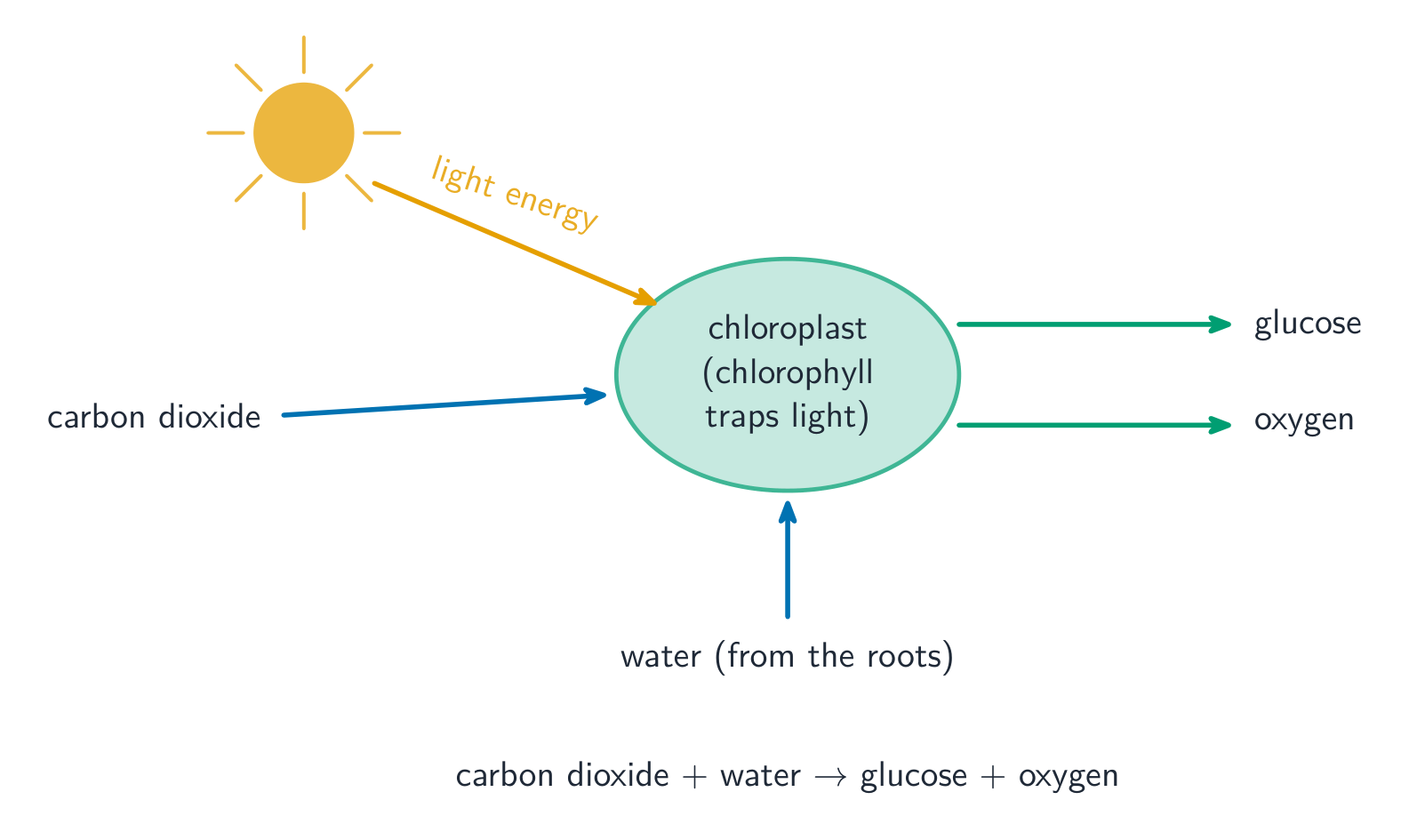
光合作用吸入二氧化碳和水,使用光制造葡萄糖和氧
A limiting factor is one that: · 一个限制因素是这样一个因素,它:
The scarcest factor limits the rate. · 最稀缺的因素限制速率。
Limiting factors 限制因素
- The rate of photosynthesis is limited by whatever is in shortest supply: light, carbon dioxide or temperature.
- Increase a limiting factor and the rate rises — until another factor becomes limiting.
Rate rises with light, then plateaus when another factor (CO₂ or temperature) limits it.
Only the factor in shortest supply limits the rate. Adding more light won't help if carbon dioxide is the limiting factor. Find what's scarce and increase that.
More light speeds up photosynthesis until another factor becomes limiting
限制因素
- 光合作用的速率被供应最少的东西限制:光、二氧化碳或温度。
- 增加一个限制因素,速率上升——直到另一个因素变成限制因素。
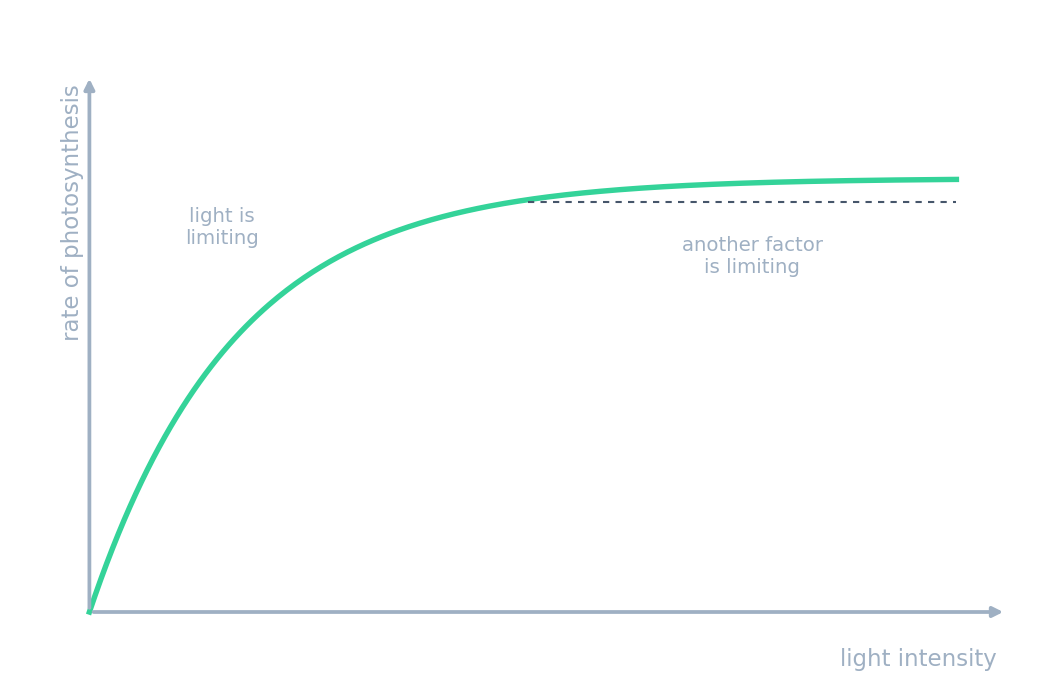
速率随光上升,然后当另一个因素(CO₂ 或温度)限制它时趋平。
只有供应最少的因素限制速率。 如果二氧化碳是限制因素,增加更多的光无济于事。找出什么稀缺并增加它。

更多的光加快光合作用,直到另一个因素变成限制因素
You've got it
- carbon dioxide + water → glucose + oxygen (using light and chlorophyll)
- plants need light, CO₂, water and chlorophyll; glucose is stored as starch
- the rate is set by the limiting factor — whatever is in shortest supply
你掌握了
- 二氧化碳 + 水 → 葡萄糖 + 氧(使用光和叶绿素)
- 植物需要光、CO₂、水和叶绿素;葡萄糖储存为淀粉
- 速率由限制因素设定——无论什么供应最少