The carbon cycle · 碳循环
| English | 中文 | Pinyin · 拼音 |
|---|---|---|
| carbon cycle/ˈkɑːbən ˈsaɪkl/ | 碳循环 | tàn xún huán |
| combustion/kəmˈbʌstʃn/ | 燃烧 | rán shāo |
| decomposers/ˌdiːkəmˈpəʊzəz/ | 分解者 | fēn jiě zhě |
| fossil fuels/ˈfɒsl ˈfjuːəlz/ | 化石燃料 | huà shí rán liào |
Carbon goes round and round
- Unlike energy, the atoms of carbon are used again and again, cycling between living things and the air.
- This is the carbon cycle 碳循环.
碳转了又转
- 不像能量,碳的原子被一次又一次地使用,在活的东西和空气之间循环。
- 这是碳循环(carbon cycle)。
Which process removes carbon dioxide from the air? · 哪个过程从空气移除二氧化碳?
Photosynthesis fixes CO₂ into glucose. · 光合作用把 CO₂ 固定进葡萄糖。
Carbon is locked into glucose in plants by the process of ______. · 碳通过______的过程被锁进植物中的葡萄糖。
Photosynthesis takes carbon out of the air. · 光合作用把碳从空气中取出。
Carbon into living things
- Photosynthesis removes carbon dioxide from the air and locks the carbon into glucose in plants.
- Animals get carbon by eating plants (or other animals).
The carbon cycle: photosynthesis removes CO2; respiration, combustion 燃烧 and decay return it
碳进入活的东西
- 光合作用从空气移除二氧化碳,把碳锁进植物中的葡萄糖。
- 动物通过吃植物(或其他动物)获得碳。

碳循环:光合作用移除 CO2;呼吸作用、燃烧和腐烂返回它
The carbon cycle · 碳循环
Carbon moves between the air, living things and the ground in a never-ending cycle. · 碳在空气、活的东西和地面之间以一个永不停止的循环移动。
Which processes return carbon dioxide to the air? · 哪些过程把二氧化碳返回空气?
Respiration and combustion release CO₂. · 呼吸作用和燃烧释放 CO₂。
Carbon back to the air
- Respiration (by plants, animals and decomposers 分解者) returns carbon dioxide to the air.
- Combustion (burning fuels) also releases carbon dioxide.
Photosynthesis takes carbon in; respiration and combustion return it to the air.
碳回到空气
- 呼吸作用(由植物、动物和分解者)把二氧化碳返回空气。
- 燃烧(combustion,烧燃料)也释放二氧化碳。
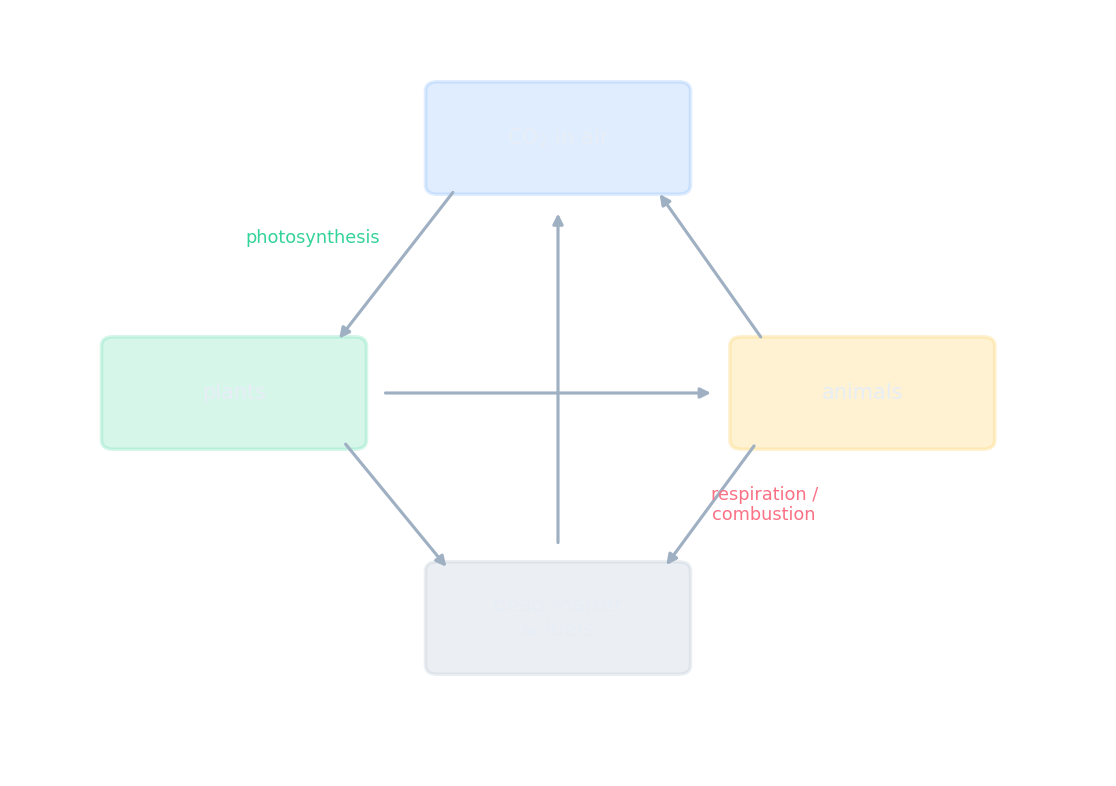
光合作用把碳吸入;呼吸作用和燃烧把它返回空气。
Decomposers return carbon to the air by: · 分解者通过以下哪种把碳返回空气:
Decomposers respire, releasing CO₂. · 分解者进行呼吸作用,释放 CO₂。
Burning fossil fuels releases extra carbon dioxide into the air. · 烧化石燃料把额外的二氧化碳释放进空气。
It frees carbon locked away for millions of years. · 它释放被锁起来数百万年的碳。
Decomposers and fossil fuels 化石燃料
- Decomposers break down dead organisms, releasing carbon dioxide.
- Over millions of years, some dead matter formed fossil fuels, releasing CO₂ when burned today.
Burning fossil fuels adds extra CO₂. It releases carbon that was locked away for millions of years, faster than photosynthesis can remove it — raising atmospheric CO₂ and driving climate change.
分解者和化石燃料
- 分解者分解死的生物,释放二氧化碳。
- 经过数百万年,一些死物质形成了化石燃料(fossil fuels),今天烧时释放 CO₂。
烧化石燃料增加额外的 CO₂。 它释放被锁起来数百万年的碳,比光合作用能移除它更快——提高大气 CO₂ 并驱动气候变化。
You've got it
- photosynthesis removes CO₂ from the air; respiration and combustion return it
- animals get carbon by eating; decomposers release it from dead matter
- burning fossil fuels adds extra CO₂, driving climate change
你掌握了
- 光合作用从空气移除 CO₂;呼吸作用和燃烧返回它
- 动物通过吃获得碳;分解者从死物质释放它
- 烧化石燃料增加额外的 CO₂,驱动气候变化