The nitrogen cycle · 氮循环
| English | 中文 | Pinyin · 拼音 |
|---|---|---|
| nitrogen cycle/ˈnaɪtrədʒn ˈsaɪkl/ | 氮循环 | dàn xún huán |
| nitrates/ˈnaɪtreɪts/ | 硝酸盐 | xiāo suān yán |
| nitrogen-fixing/ˈnaɪtrədʒn ˈfɪksɪŋ/ | 固氮 | gù dàn |
| nitrifying/ˈnaɪtrɪfaɪɪŋ/ | 硝化 | xiāo huà |
| denitrifying/diːˈnaɪtrɪfaɪɪŋ/ | 反硝化 | fǎn xiāo huà |
Recycling nitrogen
- Living things need nitrogen to make proteins and DNA — but they can't use the nitrogen gas that makes up most of the air.
- The nitrogen cycle 氮循环 turns it into a usable form and back again.
回收氮
- 活的东西需要氮(nitrogen)来制造蛋白质和 DNA——但它们不能使用构成大部分空气的氮气。
- 氮循环(nitrogen cycle)把它变成一种可用的形式,再变回去。
Why can't plants use nitrogen gas from the air directly? · 为什么植物不能直接使用空气中的氮气?
N₂ is unreactive; it must be turned into nitrates. · N₂ 不反应;它必须被变成硝酸盐。
The problem with nitrogen gas
- The air is about 78% nitrogen gas (N₂), but it is unreactive — plants and animals can't use it directly.
- It must be turned into nitrates 硝酸盐 first.
The nitrogen cycle: microorganisms move nitrogen between the air, soil and living things
氮气的问题
- 空气大约是 78% 的氮气(N₂),但它不反应——植物和动物不能直接使用它。
- 它必须首先被变成硝酸盐(nitrates)。
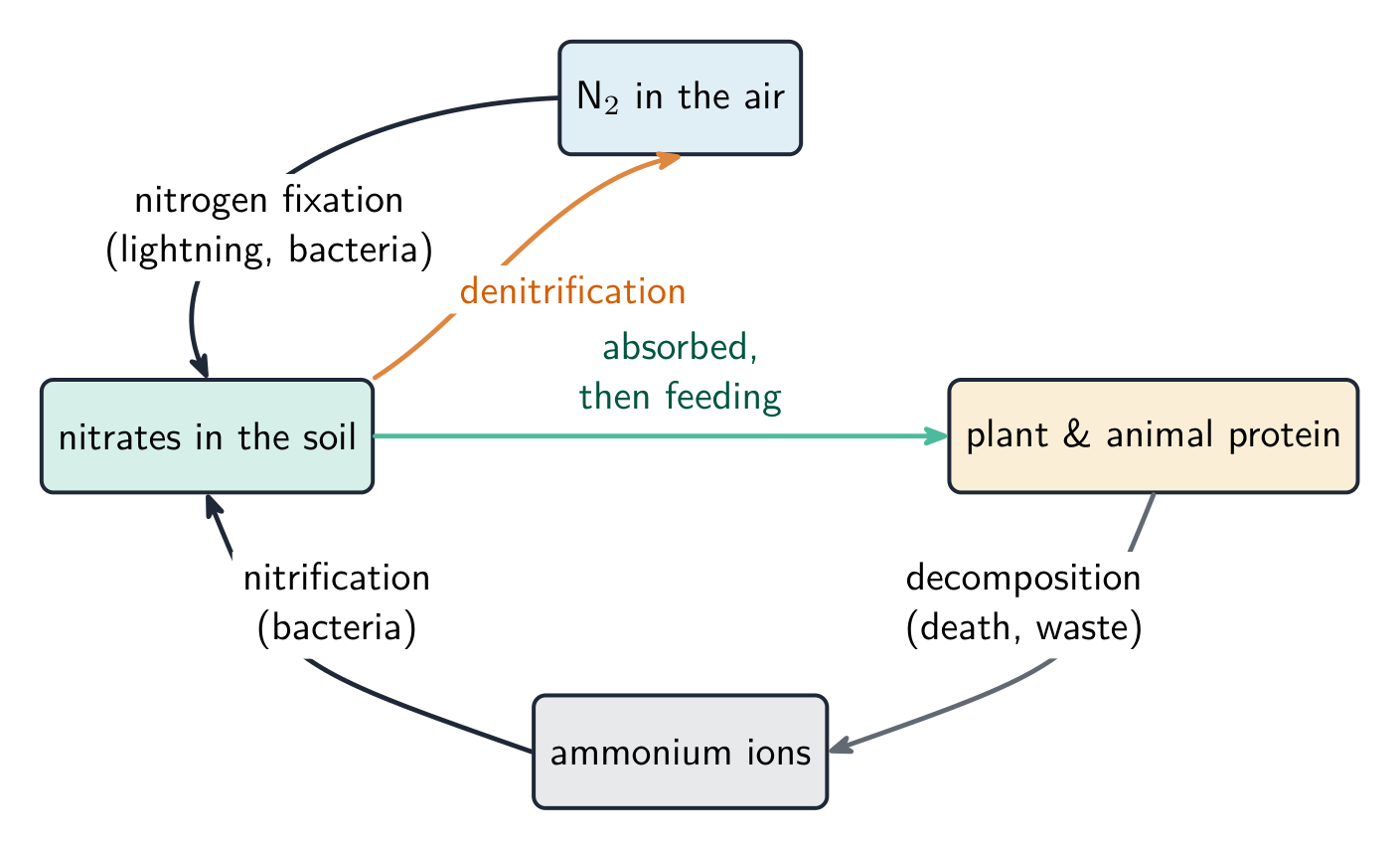
氮循环:微生物在空气、土壤和活的东西之间移动氮
The nitrogen cycle · 氮循环
Nitrogen is recycled between the air, the soil and living things by several types of bacteria. · 氮由几种类型的细菌在空气、土壤和活的东西之间回收。
Nitrogen-fixing bacteria: · 固氮细菌:
They fix nitrogen into compounds plants can use. · 它们把氮固定进植物能使用的化合物。
The key bacteria
- Nitrogen-fixing 固氮 bacteria turn nitrogen gas into compounds plants can use.
- Decomposers release nitrogen from dead matter; nitrifying 硝化 bacteria make nitrates.
关键的细菌
- 固氮细菌(nitrogen-fixing bacteria)把氮气变成植物能使用的化合物。
- 分解者从死物质释放氮;硝化细菌(nitrifying bacteria)制造硝酸盐。
Plants take up nitrogen from the soil mainly as: · 植物从土壤摄取氮主要作为:
Plants absorb nitrates to make proteins. · 植物吸收硝酸盐来制造蛋白质。
Denitrifying bacteria return nitrogen gas to the air. · 反硝化细菌把氮气返回空气。
They complete the cycle by releasing N₂. · 它们通过释放 N₂ 完成循环。
Animals obtain their nitrogen by ______ plants or other animals. · 动物通过______植物或其他动物获得它们的氮。
Nitrogen passes along the food chain. · 氮沿食物链传递。
Into and out of living things
- Plants absorb nitrates from the soil to make proteins; animals get nitrogen by eating plants.
- Denitrifying 反硝化 bacteria return nitrogen gas to the air, completing the cycle.
Worked example. A dead leaf is broken down by decomposers, releasing nitrogen compounds. Nitrifying bacteria turn these into nitrates, which a new plant absorbs to build its own proteins — nitrogen recycled.
进出活的东西
- 植物从土壤吸收硝酸盐来制造蛋白质;动物通过吃植物获得氮。
- 反硝化细菌(denitrifying bacteria)把氮气返回空气,完成循环。
例题。 一片死叶被分解者分解,释放氮化合物。硝化细菌把这些变成硝酸盐,一棵新植物吸收它来构建它自己的蛋白质——氮被回收。
You've got it
- nitrogen gas (N₂) is unreactive; it must become nitrates for plants to use
- nitrogen-fixing and nitrifying bacteria make usable nitrogen; decomposers release it from dead matter
- plants absorb nitrates; animals get nitrogen by eating; denitrifying bacteria return N₂ to the air
你掌握了
- 氮气(N₂)不反应;它必须变成硝酸盐供植物使用
- 固氮和硝化细菌制造可用的氮;分解者从死物质释放它
- 植物吸收硝酸盐;动物通过吃获得氮;反硝化细菌把 N₂ 返回空气