| Enduring Understanding | Learning Objective | Essential Knowledge |
|---|---|---|
PSO-4 | PSO-4.A |
|
政治的格局与过程
AP 人文地理 · 第 4 主题
 8:12
8:12
Political Patterns and Processes
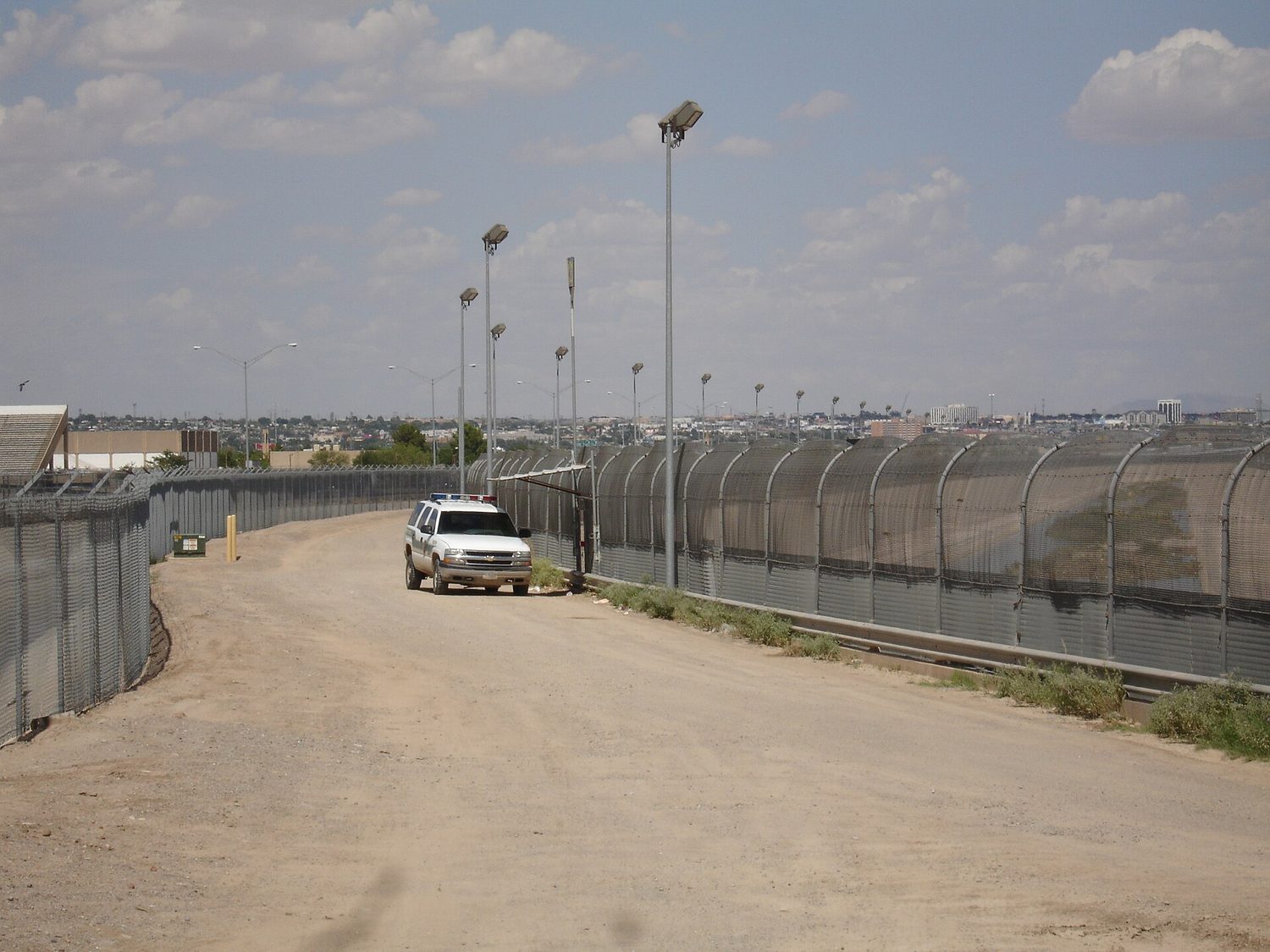
Here is a fence. It runs across open ground all the way to the horizon. On the far side stands a city — the same dry land, the same sky. And here is the hall…
英文讲解 · 内嵌中英文字幕
4.1
政治地理学导论

大纲
来源:美国大学理事会 AP 课程与考试说明
政治地理学(political geography)研究人类如何划分和控制空间。它的关键单位:
- 一个国家(state)(country)是一个有确定边界、一个永久人口、一个政府,和主权(sovereignty)——对它自己事务的完全控制——的地区。
- 一个民族(nation)是一群有共享的文化和身份的人;一个民族国家(nation-state)是一个边界匹配一个民族的国家(日本很接近)。
- 一个多民族国家(multinational state)包含几个民族;一个无国家民族(stateless nation)(像库尔德人)没有它自己的国家。
Worked example(一道真实的 AP 考题)。 "定义独立国家的概念。"(2025)满分答案:"一个主权国家,治理自己和自己的领土,不被任何外部势力控制,并被其他国家承认。" 命令词 Define(定义)要求一个简短、精确的含义——一句清晰的话就够了。这里你不需要例子或解释;把那些留给"Describe"和"Explain"的部分。
词汇表
训练
| 英文 | 中文 | 拼音 |
|---|---|---|
| Political geography/pəˈlɪtɪkl dʒɪˈɒɡrəfi/ | 政治地理学 | zhèng zhì dì lǐ xué |
| state/steɪt/ | 国家 | guó jiā |
| sovereignty/ˈsɒvərɪnti/ | 主权 | zhǔ quán |
| nation/ˈneɪʃn/ | 民族 | mín zú |
| nation-state/ˈneɪʃn steɪt/ | 民族国家 | mín zú guó jiā |
| multinational state/ˌmʌltɪˈnæʃənl steɪt/ | 多民族国家 | duō mín zú guó jiā |
| stateless nation/ˈsteɪtləs ˈneɪʃn/ | 无国家民族 | wú guó jiā mín zú |
4.2 4.3
政治过程
大纲
| Enduring Understanding | Learning Objective | Essential Knowledge |
|---|---|---|
PSO-4 | PSO-4.B |
|
| Enduring Understanding | Learning Objective | Essential Knowledge |
|---|---|---|
PSO-4 | PSO-4.C |
|
来源:美国大学理事会 AP 课程与考试说明
领域性(territoriality)是一个人或群体通过控制一个地区来控制人和物的尝试。权力通过对土地、人和资源的控制在地理上表达。
- 殖民主义(colonialism)和帝国主义(imperialism)通过控制遥远的领土建立帝国;新殖民主义(neocolonialism)是在正式独立后持续的经济控制。
- 咽喉要道(choke points)(像苏伊士运河或马六甲海峡这样的狭窄通道)和破碎地带(shatterbelts)(夹在竞争大国之间的地区)显示地理如何塑造政治权力。
词汇表
训练
| 英文 | 中文 | 拼音 |
|---|---|---|
| Territoriality/ˌterɪˌtɔːrɪˈælɪti/ | 领域性 | lǐng yù xìng |
| neocolonialism/ˈniːəʊkɒləʊnɪəlɪzəm/ | 新殖民主义 | xīn zhí mín zhǔ yì |
| Choke points/tʃəʊk pɔɪnts/ | 咽喉要道 | yān hóu yào dào |
| shatterbelts/ˈʃætəbelts/ | 破碎地带 | pò suì dì dài |
4.4 4.5 4.6
政治边界的界定
大纲
| Enduring Understanding | Learning Objective | Essential Knowledge |
|---|---|---|
IMP-4 | IMP-4.A |
|
| Enduring Understanding | Learning Objective | Essential Knowledge |
|---|---|---|
IMP-4 | IMP-4.B |
|
| Enduring Understanding | Learning Objective | Essential Knowledge |
|---|---|---|
IMP-4 | IMP-4.B |
|
来源:美国大学理事会 AP 课程与考试说明
一个边界(boundary)是标记一个国家领土界限的一条线。按起源的类型:
- 先成边界(antecedent)(在密集定居之前画出)、后成边界(subsequent)(随着文化发展画出)、叠加边界(superimposed)(由一个外部力量强加,忽略本地文化),和残余边界(relic)(不再是一个边界但仍然可见,像柏林墙)。
- 定义、划定和标定(definition, delimitation, and demarcation)是设定一个边界的步骤:商定措辞、在一张地图上画它,然后在地面上标记它。
- 在海上,联合国海洋法公约(UN Convention on the Law of the Sea,UNCLOS)设定每个沿海国家的领海,以及一个专属经济区(exclusive economic zone,EEZ),界定对渔业和海床资源的权利。
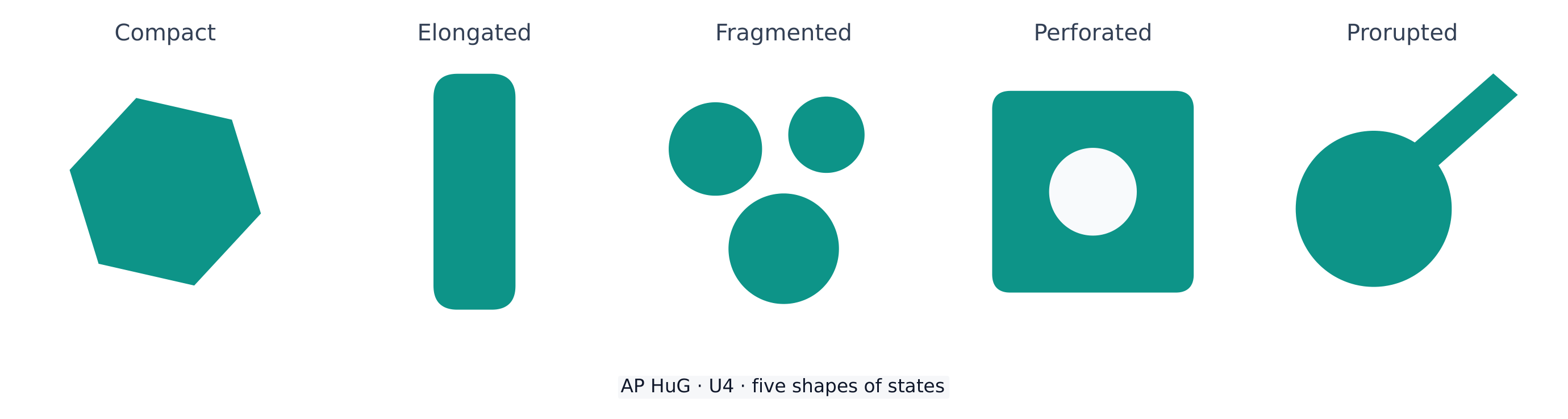
- 一个国家的形状(shape of a state)重要:紧凑(compact)的国家容易治理;狭长(elongated)、破碎(fragmented)、穿孔(perforated),和突出(prorupted)的形状造成治理挑战。
词汇表
训练
| 英文 | 中文 | 拼音 |
|---|---|---|
| boundary/ˈbaʊndəri/ | 边界 | biān jiè |
| Antecedent/ˌæntɪˈsiːdənt/ | 先成边界 | xiān chéng biān jiè |
| subsequent/ˈsʌbsɪkwənt/ | 后成边界 | hòu chéng biān jiè |
| superimposed/ˌsuːpərɪmˈpəʊzd/ | 叠加边界 | dié jiā biān jiè |
| relic/ˈrelɪk/ | 残余边界 | cán yú biān jiè |
| UN Convention on the Law of the Sea (UNCLOS) | 联合国海洋法公约 | lián hé guó hǎi yáng fǎ gōng yuē |
| exclusive economic zone (EEZ)/eksˈkluːsɪv ˌiːkəˈnɒmɪk zəʊn/ | 专属经济区 | zhuān shǔ jīng jì qū |
4.7
治理形式
大纲
| Enduring Understanding | Learning Objective | Essential Knowledge |
|---|---|---|
IMP-4 | IMP-4.C |
|
IMP-4.D |
|
来源:美国大学理事会 AP 课程与考试说明
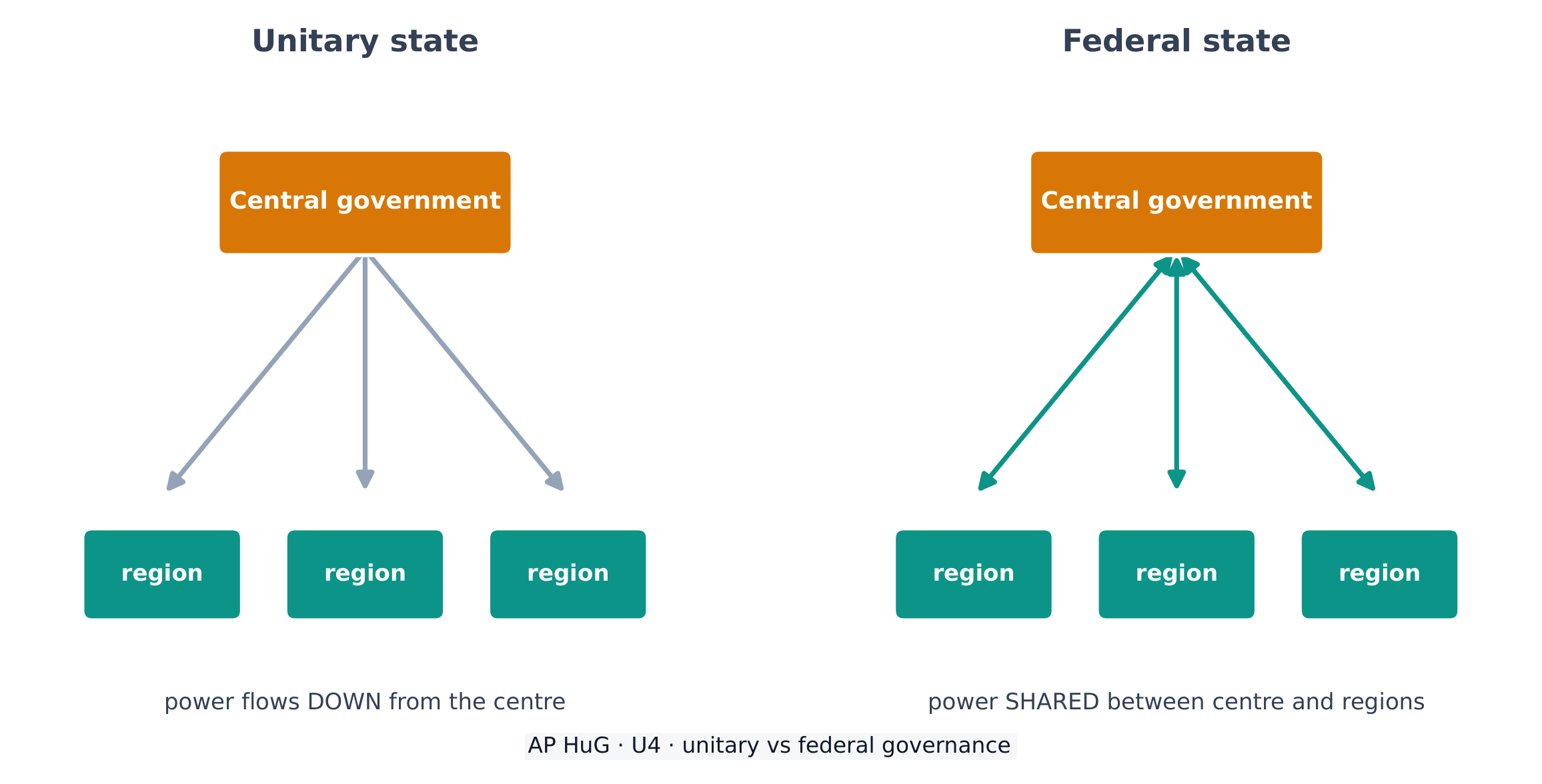
国家以两种主要方式在中央和地区之间组织权力:
- 一个单一制国家(unitary state)把大部分权力保持在中央政府(法国)。它在小的或文化统一的国家里工作最好。
- 一个联邦制国家(federal state)在中央和地区政府之间分享权力(美国、印度)。它适合大的或多样的国家。
- 选区划分不公(gerrymandering)是重新绘制投票区边界以偏袒一个群体——地理的一个政治用途。
词汇表
训练
| 英文 | 中文 | 拼音 |
|---|---|---|
| unitary state/ˈjuːnɪtəri steɪt/ | 单一制国家 | dān yī zhì guó jiā |
| federal state/ˈfedərəl steɪt/ | 联邦制国家 | lián bāng zhì guó jiā |
| Gerrymandering/ˈdʒerɪmændərɪŋ/ | 选区划分不公 | xuǎn qū huà fēn bù gōng |
4.8 4.9
权力下放因素的界定
大纲
| Enduring Understanding | Learning Objective | Essential Knowledge |
|---|---|---|
SPS-4 | SPS-4.A |
|
| Enduring Understanding | Learning Objective | Essential Knowledge |
|---|---|---|
SPS-4 | SPS-4.B |
|
来源:美国大学理事会 AP 课程与考试说明
权力下放(devolution)是权力从一个中央政府向下转移给地区政府。它由下放因素驱动:族裔或宗教差异、物理地理(岛屿、山脉),和经济不平等。
- 强的差异能导致一个地区的自治(autonomy),甚至一个完全独立的运动。
- 主权也从外部被超国家组织(supranational organisations)(欧盟、联合国)、全球化,和自由地跨越边界的互联网挑战。
词汇表
训练
| 英文 | 中文 | 拼音 |
|---|---|---|
| Devolution/dɪvəˈluːʃn/ | 权力下放 | quán lì xià fàng |
| autonomy/ɔːˈtɒnəmi/ | 自治 | zì zhì |
| supranational organisations/ˌsuːprəˈnæʃənl ˌɔːɡənaɪˈzeɪʃnz/ | 超国家组织 | chāo guó jiā zǔ zhī |
4.10
离心力与向心力的影响

大纲
| Enduring Understanding | Learning Objective | Essential Knowledge |
|---|---|---|
SPS-4 | SPS-4.C |
|
来源:美国大学理事会 AP 课程与考试说明
两种对立的力量作用于每个国家:
- 离心力(centrifugal forces)把一个国家拉开——族裔冲突、不均匀的发展,和弱的身份能导致失败国家(failed states)和分裂主义运动。
- 向心力(centripetal forces)把一个国家维系在一起——一门共享的语言、国家象征、公平的基础设施,和一个强的国家身份(与一个族裔群体绑定时是族裔民族主义(ethnonationalism))。
政府加强向心力(国家节日、一门共同语言)以保持国家统一。平衡这些力量是政治地理学的中心任务。
探索
Centrifugal or centripetal force?
A centrifugal force pulls a state apart; a centripetal force holds it together.
词汇表
训练
| 英文 | 中文 | 拼音 |
|---|---|---|
| Centrifugal forces/ˌsentrɪˈfjuːɡl ˈfɔːsɪz/ | 离心力 | lí xīn lì |
| failed states/feɪld steɪts/ | 失败国家 | shī bài guó jiā |
| Centripetal forces/senˈtrɪpɪtl ˈfɔːsɪz/ | 向心力 | xiàng xīn lì |
| ethnonationalism/ˌeθnəˈneɪʃənəlɪzəm/ | 族裔民族主义 | zú yì mín zú zhǔ yì |
4.10
考试技巧
- 把国家(领土 + 主权)、民族(一群人)和民族国家清晰地分开。
- 按历史(先成 / 后成 / 叠加 / 残余)和按阶段(定义到管理)给一个边界分类。
- 命名边界争端类型:定义性、位置性、操作性或分配性。
- 比较单一制和联邦制治理,并把这个选择与管理多样性联系起来。
- 通过离心和向心力和权力下放解释不稳定;使用中立的例子。
本主题的互动课程
逐步学习,并即时检测练习。