这个最后的主题涵盖贸易失衡、深入的汇率,以及国家如何发展和连接。
国际经济问题(A Level)
A-Level 经济学 · 第 11 主题
 8:57
8:57
International economic issues (A Level)
A country's money loses a fifth of its value overnight. Exports are suddenly cheap, imports suddenly dear, so the trade gap should close at once. It does not.…
英文讲解 · 内嵌中英文字幕
11.1
纠正国际收支失衡的政策
大纲
- explain expenditure-switching and expenditure-reducing policies and the Marshall–Lerner condition and J-curve effect
- evaluate policies to correct a current account imbalance
来源:剑桥国际大纲
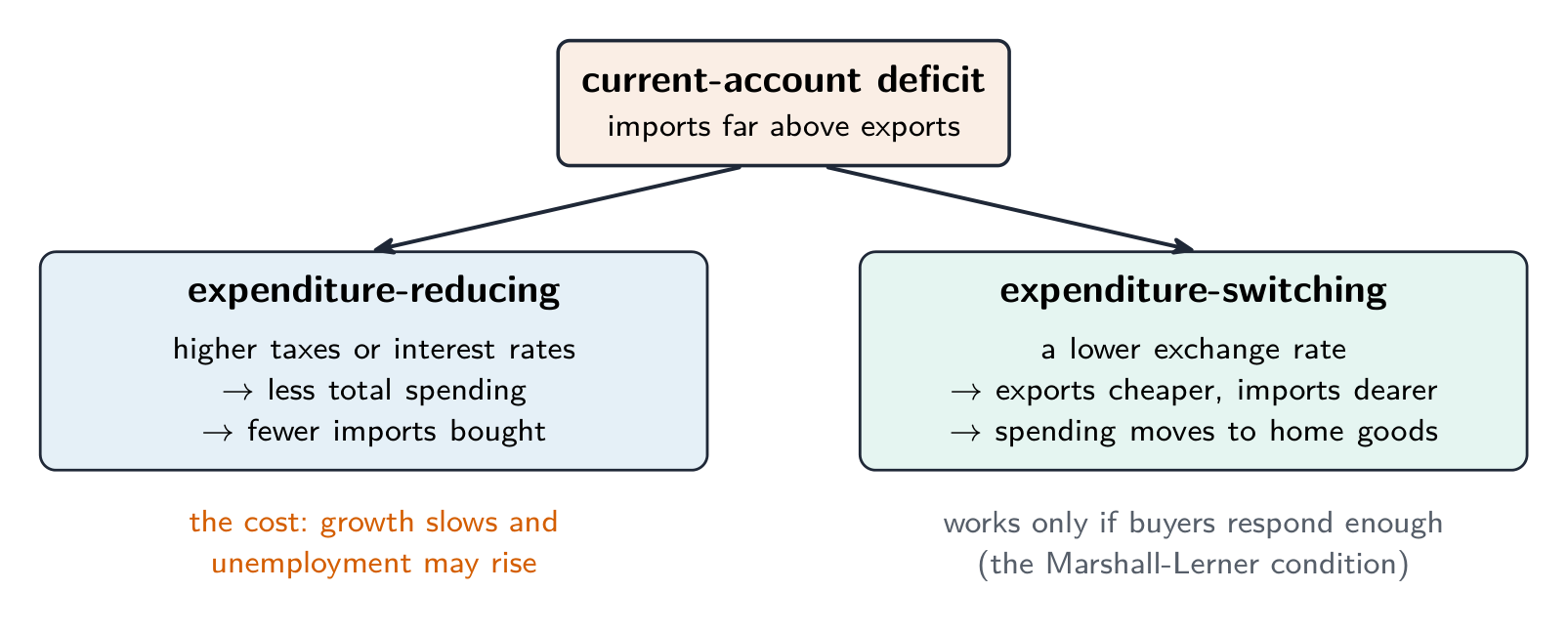
一个有大的国际收支(balance of payments)问题的国家——通常是经常账户(current account)的一个赤字——能用两种政策。
- 支出减少(expenditure-reducing)政策削减总需求(更高的税或利率)。在更少的支出下,人们买更少的进口。但增长减慢而失业可能上升。
- 支出转换(expenditure-switching)政策把支出从进口移向本国物品。主要的工具是一个更低的汇率(exchange rate)——在浮动汇率下的一次贬值(depreciation),或在一个固定制度下的一次法定贬值(devaluation)——它使出口更便宜、进口更贵。
The Marshall–Lerner condition and the J-curve
一个更低的汇率只在买者响应足够时才改善经常账户。马歇尔勒纳条件(Marshall-Lerner condition)说对出口和进口需求的价格弹性之和必须大于一:
$$PED_{\text{exports}} + PED_{\text{imports}} > 1$$
例题。 一次贬值之后,对一个国家出口的需求有 $PED = 0.6$ 而它对进口的需求有 $PED = 0.7$。经常账户会改善吗?
$$0.6 + 0.7 = 1.3 > 1,$$
所以马歇尔勒纳条件被满足,而贬值应当在长期改善经常账户。(若两个弹性加起来小于 $1$——例如 $0.3 + 0.4 = 0.7$——一次贬值会使赤字更糟。)
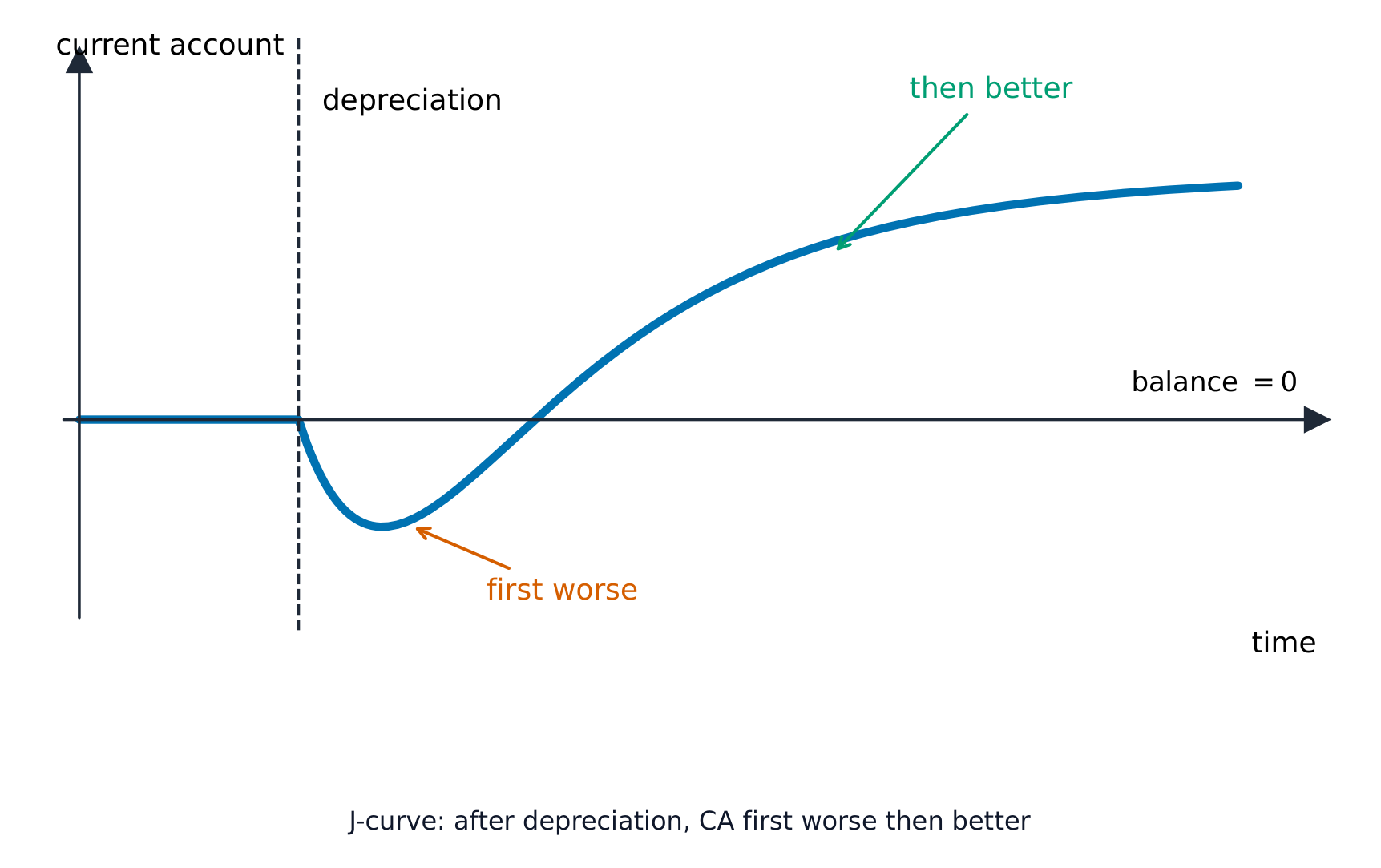
即使这成立,收益也要花时间。J曲线效应(J-curve effect)描述发生的事:就在一次贬值之后,经常账户先变更糟(进口立即花费更多,但贸易量改变缓慢),然后随着买者调整而改善——描摹一个字母 J 的形状。
探索
Economics case lab
Classify real examples by the economic idea they show.
词汇表
训练
| 英文 | 中文 | 拼音 |
|---|---|---|
| balance of payments/ˈbæləns ɒv ˈpeɪmənts/ | 国际收支 | guó jì shōu zhī |
| current account/ˈkʌrənt əˈkaʊnt/ | 经常账户 | jīng cháng zhàng hù |
| expenditure-reducing/ekˈspendɪtʃə rɪˈdjuːsɪŋ/ | 支出减少 | zhī chū jiǎn shǎo |
| expenditure-switching/ekˈspendɪtʃə ˈswɪtʃɪŋ/ | 支出转换 | zhī chū zhuǎn huàn |
| exchange rate/eksˈtʃeɪndʒ reɪt/ | 汇率 | huì lǜ |
| depreciation/dɪˌpriːʃɪˈeɪʃn/ | 贬值 | biǎn zhí |
| devaluation/diːˌvæljuːˈeɪʃn/ | 法定贬值 | fǎ dìng biǎn zhí |
| Marshall-Lerner condition/ˈmɑːʃl ˈlɜːnə kənˈdɪʃn/ | 马歇尔勒纳条件 | mǎ xiē ěr lēi nà tiáo jiàn |
| J-curve effect/dʒeɪ kɜːv ɪˈfekt/ | J曲线效应 | J qū xiàn xiào yìng |
11.2
汇率

大纲
- explain nominal, real and trade-weighted (effective) exchange rates and how they are determined
- explain fixed, floating and managed exchange rate systems, devaluation/revaluation and the effects of exchange rate changes
来源:剑桥国际大纲
一个汇率(exchange rate)是一种货币以另一种货币计的价格。测量它有不止一种方式:
- 名义汇率(nominal exchange rate)是两种货币之间的日常市场汇率。
- 实际汇率(real exchange rate)为国家之间价格的差异调整名义汇率,所以它显示真实的竞争力。
- 贸易加权汇率(trade-weighted exchange rate),也叫有效汇率(effective exchange rate),是一种货币对它所有贸易伙伴的价值的一个平均,按与每个做多少贸易加权。
The three systems
- 一个浮动汇率(floating exchange rate)由对货币的需求和供给设定。
- 一个固定汇率(fixed exchange rate)被中央银行保持在一个设定的价值。
- 一个管理浮动汇率(managed exchange rate)大多浮动,中央银行时不时介入。
在浮动汇率下,价值的一个上升是一次升值(appreciation),而一个下降是一次贬值(depreciation)。在一个固定制度下,一个蓄意的上升是一次法定升值(revaluation),而一个蓄意的下降是一次法定贬值(devaluation)。一个更弱的货币倾向于提高出口和通货膨胀;一个更强的货币做相反的。
探索
Exchange rates in the FX market
The exchange rate is set by the demand for and supply of the currency. Shift either to see the rate appreciate or depreciate.
词汇表
训练
| 英文 | 中文 | 拼音 |
|---|---|---|
| nominal exchange rate/ˈnɒmɪnl eksˈtʃeɪndʒ reɪt/ | 名义汇率 | míng yì huì lǜ |
| real exchange rate/rɪəl eksˈtʃeɪndʒ reɪt/ | 实际汇率 | shí jì huì lǜ |
| trade-weighted exchange rate/treɪd ˈweɪtɪd eksˈtʃeɪndʒ reɪt/ | 贸易加权汇率 | mào yì jiā quán huì lǜ |
| effective exchange rate/ɪˈfektɪv eksˈtʃeɪndʒ reɪt/ | 有效汇率 | yǒu xiào huì lǜ |
| floating exchange rate/ˈfləʊtɪŋ eksˈtʃeɪndʒ reɪt/ | 浮动汇率 | fú dòng huì lǜ |
| fixed exchange rate/fɪkst eksˈtʃeɪndʒ reɪt/ | 固定汇率 | gù dìng huì lǜ |
| managed exchange rate/ˈmænɪdʒd eksˈtʃeɪndʒ reɪt/ | 管理浮动汇率 | guǎn lǐ fú dòng huì lǜ |
| appreciation/əˌpriːʃɪˈeɪʃn/ | 升值 | shēng zhí |
| revaluation/rɪˌvæljuːˈeɪʃn/ | 法定升值 | fǎ dìng shēng zhí |
11.3
经济发展

大纲
- distinguish economic growth and economic development and explain the characteristics of development
- explain indicators of development including the Human Development Index (HDI) and other measures
来源:剑桥国际大纲
不混淆两个思想很重要:
- 经济增长(economic growth)只是实际产出的一个上升。
- 经济发展(economic development)更广。它是关于人们的生活水平(standard of living)——他们的健康、教育和选择的自由,而不只是他们的收入。

一个国家能增长而不太发展(若额外的收入去到少数人)。发展通常意味着上升的收入加上更好的健康、更多的上学,以及更少的贫困。
Measuring development
最著名的量度是人类发展指数(Human Development Index,HDI)。它把三样东西组合成一个 0 和 1 之间的数:
- 收入(每人 GNI),
- 健康(出生时的预期寿命(life expectancy)),
- 教育(平均和预期受教育年限(years of schooling))。

发展的其他有用迹象包括获得干净的水、每人的医生数目,以及手机和互联网的使用。
探索
Development chain lab
Follow how policy and resources can change living standards.
词汇表
训练
| 英文 | 中文 | 拼音 |
|---|---|---|
| economic growth/ˌiːkəˈnɒmɪk ɡrəʊθ/ | 经济增长 | jīng jì zēng zhǎng |
| economic development/ˌiːkəˈnɒmɪk dɪˈveləpmənt/ | 经济发展 | jīng jì fā zhǎn |
| standard of living/ˈstændəd ɒv ˈlɪvɪŋ/ | 生活水平 | shēng huó shuǐ píng |
| Human Development Index/ˈhjuːmən dɪˈveləpmənt ˈɪndeks/ | 人类发展指数 | rén lèi fā zhǎn zhǐ shù |
| life expectancy/laɪf ekˈspektənsi/ | 预期寿命 | yù qī shòu mìng |
| years of schooling/jɪəz ɒv ˈskuːlɪŋ/ | 受教育年限 | shòu jiào yù nián xiàn |
11.4
不同发展水平国家的特征
大纲
- compare the economic and demographic characteristics of countries at different levels of development (income, population, employment structure, education, health)
- explain the factors that influence the level of development
来源:剑桥国际大纲
我们常常比较一个发达国家(developed country,高收入,如德国)和一个发展中国家(developing country,较低收入,如肯尼亚)。它们以清晰的方式不同:
| 特征 | 发达 | 发展中 |
|---|---|---|
| 每人收入 | 高 | 低 |
| 出生率(birth rate)和人口增长 | 低 | 往往高 |
| 预期寿命 | 高 | 较低 |
| 农业中工人的份额 | 小 | 大 |
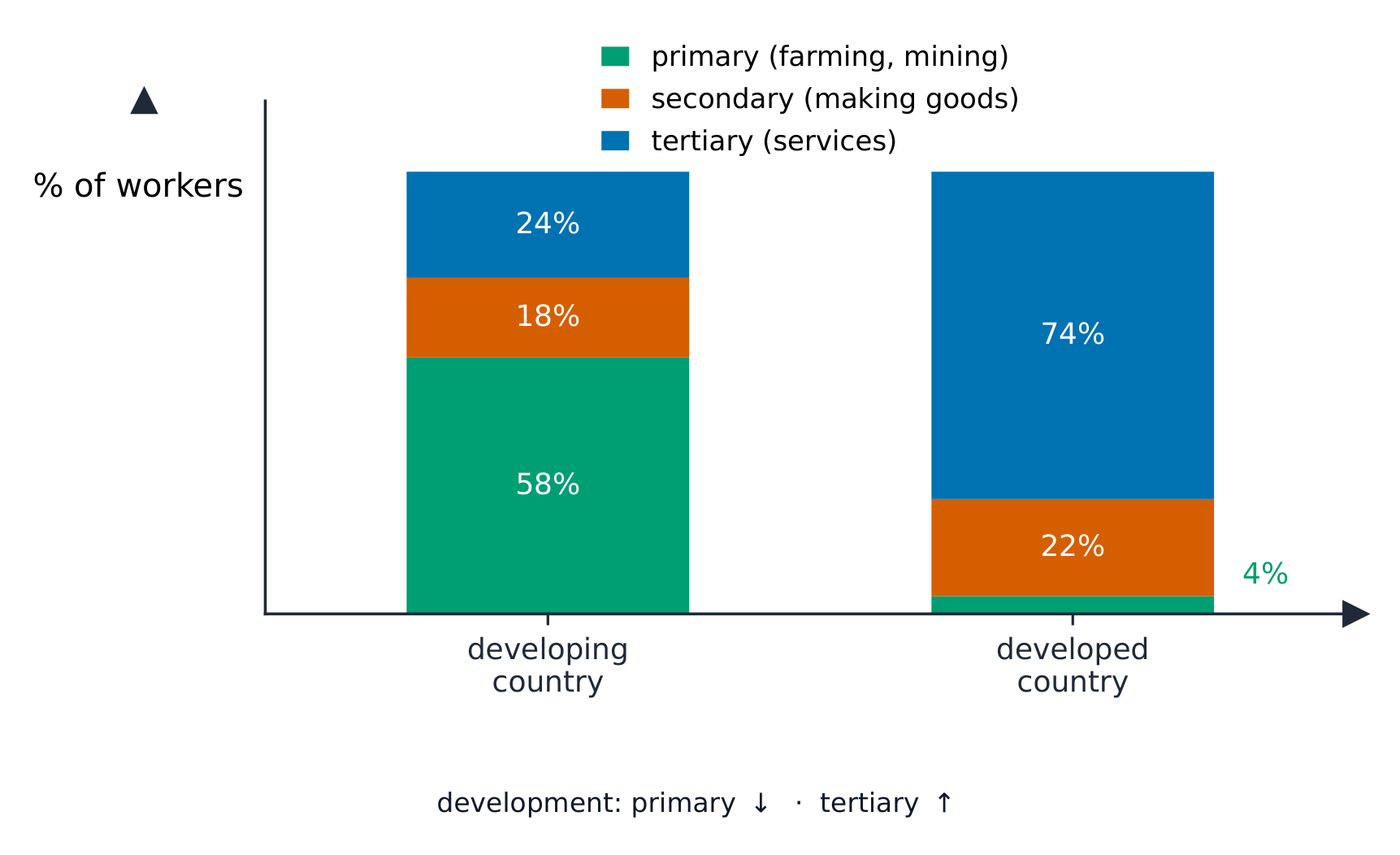
就业结构(employment structure)也不同。随着一个国家发展,工人从第一产业(primary sector,农业和采矿)移出,进入第二产业(secondary sector,制造物品),后来进入第三产业(tertiary sector,服务)。
许多东西塑造发展:储蓄和投资、教育和健康的质量、基础设施、稳定的政府和法律,以及进入世界市场。
探索
Economics case lab
Classify real examples by the economic idea they show.
词汇表
训练
| 英文 | 中文 | 拼音 |
|---|---|---|
| developed country/dɪˈveləpt ˈkʌntri/ | 发达国家 | fā dá guó jiā |
| developing country/dɪˈveləpɪŋ ˈkʌntri/ | 发展中国家 | fā zhǎn zhōng guó jiā |
| birth rate/bɜːθ reɪt/ | 出生率 | chū shēng lǜ |
| employment structure/emˈplɔɪmənt ˈstrʌktʃə/ | 就业结构 | jiù yè jié gòu |
| primary sector/ˈpraɪməri ˈsektə/ | 第一产业 | dì yī chǎn yè |
| secondary sector/ˈsekəndəri ˈsektə/ | 第二产业 | dì èr chǎn yè |
| tertiary sector/ˈtɜːʃjəri ˈsektə/ | 第三产业 | dì sān chǎn yè |
11.5
不同发展水平国家之间的关系
大纲
- explain the relationship between developed and developing countries through trade, aid, debt, foreign direct investment and multinationals, and migration/remittances
- evaluate the impact of these relationships on development
来源:剑桥国际大纲
更富和更穷的国家以几种方式相连,每种都有好和坏的方面。
- 贸易能提高收入,但许多发展中国家依赖少数几个初级出口,它们的价格剧烈摆动。
- 外国援助(aid)能资助学校和道路,但它可能创造依赖或被浪费。
- 欠其他国家的债务(debt)能支付发展,但偿还它能耗尽一个穷国的预算。
- 一个跨国公司(multinational corporation)的外国直接投资(foreign direct investment,FDI)带来钱、就业和技术,但利润可能流回国外,而工人可能被糟糕地对待。
- 工人的移民(migration)能缓解失业并带来侨汇(remittances,寄回家的钱),但它也能使一个国家流失它最有技能的人。
探索
Economics case lab
Classify real examples by the economic idea they show.
词汇表
训练
| 英文 | 中文 | 拼音 |
|---|---|---|
| aid/eɪd/ | 援助 | yuán zhù |
| debt/det/ | 债务 | zhài wù |
| foreign direct investment/ˈfɒrən daɪˈrekt ɪnˈvestmənt/ | 外国直接投资 | wài guó zhí jiē tóu zī |
| multinational corporation/ˌmʌltɪˈnæʃənl ˌkɔːpəˈreɪʃn/ | 跨国公司 | kuà guó gōng sī |
| migration/maɪˈɡreɪʃn/ | 移民 | yí mín |
| remittances/rɪˈmɪtənsɪz/ | 侨汇 | qiáo huì |
11.6
全球化

大纲
- explain globalisation and its causes and the role of multinational corporations and trade blocs
- evaluate the benefits and costs of globalisation for developed and developing economies
来源:剑桥国际大纲
全球化(globalisation)是国家之间不断增长的联系——在贸易、货币、技术和人上——使世界更像一个市场行动。它的原因包括更便宜的运输和通信、自由贸易(free trade)协定,以及跨国企业的扩散。
国家常常加入一个贸易集团(trade bloc)——一个在它们之间自由贸易的群(像欧盟)。
Benefits and costs
| 好处 | 成本 |
|---|---|
| 更低的价格和更多的选择 | 一些行业和工作输给更便宜的国家 |
| 更快的增长和技术转移 | 贫富之间的差距能扩大 |
| 给企业更大的市场 | 更多的污染和资源的使用 |
| 更穷的国家能工业化 | 强大的跨国公司可能避税并规避贸易保护主义(protectionism)规则 |
全球化以不同的方式帮助发达和发展中经济,但收益不被均匀地分享,这就是为什么它仍如此被争论。
探索
Open economy lab
See how trade or exchange-rate pressure changes domestic outcomes.
词汇表
训练
| 英文 | 中文 | 拼音 |
|---|---|---|
| globalisation/ˌɡləʊbəlaɪˈzeɪʃn/ | 全球化 | quán qiú huà |
| free trade/friː treɪd/ | 自由贸易 | zì yóu mào yì |
| trade bloc/treɪd blɒk/ | 贸易集团 | mào yì jí tuán |
| protectionism/prəˈtekʃənɪzəm/ | 贸易保护主义 | mào yì bǎo hù zhǔ yì |
11.6
考试技巧
- 区分一个赤字的支出减少与支出转换政策。
- 解释马歇尔勒纳条件($PED_x + PED_m > 1$)和 J曲线(赤字在改善之前先恶化)。
- 用 HDI(收入、教育、健康)而不是单独的 GDP 比较发展。
- 用它的赢家和输家评估全球化(增长和选择对不平等和不稳定)。
本主题的互动课程
逐步学习,并即时检测练习。