English
Enduring Understanding (STB-2): Human activities have physical, chemical, and biological consequences for the atmosphere.
Learning Objective STB-2.A: Identify the sources and effects of air pollutants.
- STB-2.A.1 Coal combustion releases air pollutants including carbon dioxide, sulfur dioxide, toxic metals, and particulates.
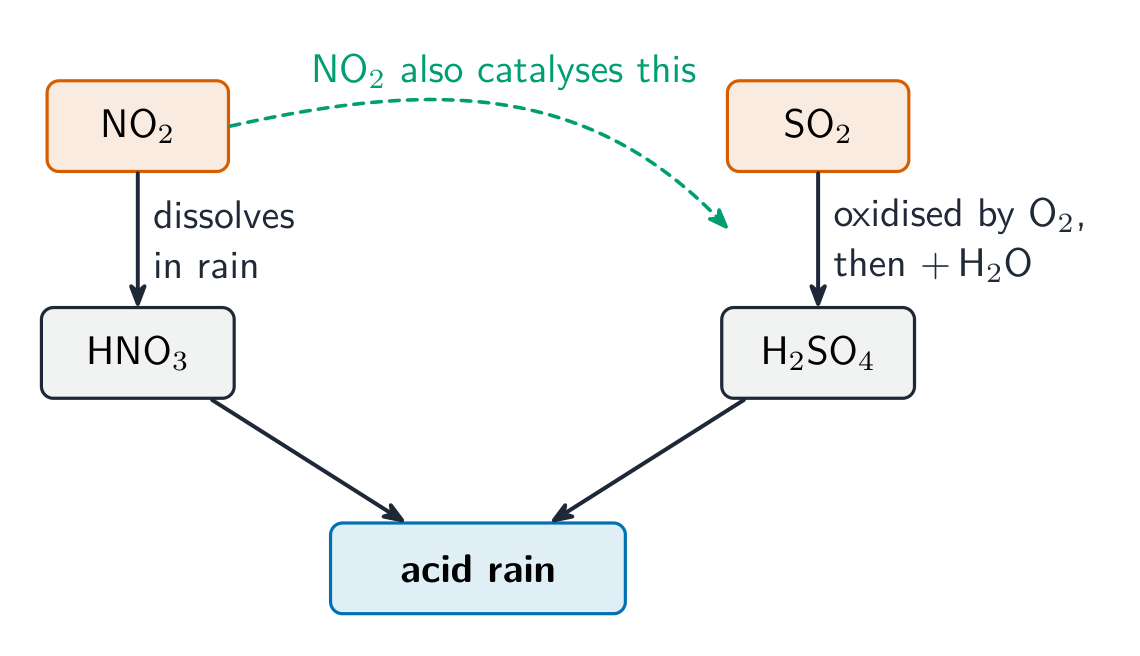
- STB-2.A.2 The combustion of fossil fuels releases nitrogen oxides into the atmosphere. They lead to the production of ozone, formation of photochemical smog, and convert to nitric acid in the atmosphere, causing acid rain. Other pollutants produced by fossil fuel combustion include carbon monoxide, hydrocarbons, and particulate matter.
- STB-2.A.3 Air quality can be affected through the release of sulfur dioxide during the burning of fossil fuels, mainly diesel fuels.
- STB-2.A.4 Through the Clean Air Act, the Environmental Protection Agency (EPA) regulated the use of lead, particularly in fuels, which dramatically decreased the amount of lead in the atmosphere.
- STB-2.A.5 Air pollutants can be primary or secondary pollutants.
Tiếng Việt
Hiểu biết bền vững (STB-2): Hoạt động của con người có những hậu quả vật lý, hóa học và sinh học đối với khí quyển.
Mục tiêu học tập STB-2.A: Xác định các nguồn phát sinh và tác hại của các chất ô nhiễm không khí.
- STB-2.A.1 Quá trình đốt than giải phóng các chất ô nhiễm không khí bao gồm carbon dioxide, sulfur dioxide, kim loại độc và các hạt bụi.
- STB-2.A.2 Quá trình đốt nhiên liệu hóa thạch giải phóng nitơ oxit vào khí quyển. Chúng dẫn đến sự hình thành ozone, tạo khói quang hóa, và chuyển hóa thành axit nitric trong khí quyển, gây ra mưa axit. Các chất ô nhiễm khác do quá trình đốt nhiên liệu hóa thạch tạo ra bao gồm carbon monoxide, hydrocarbon và vật liệu dạng hạt.
- STB-2.A.3 Chất lượng không khí có thể bị ảnh hưởng bởi việc giải phóng sulfur dioxide trong quá trình đốt nhiên liệu hóa thạch, chủ yếu là nhiên liệu diesel.
- STB-2.A.4 Thông qua Đạo luật Không khí Sạch, Cơ quan Bảo vệ Môi trường (EPA) đã quản lý việc sử dụng chì, đặc biệt là trong nhiên liệu, giúp giảm đáng kể lượng chì trong khí quyển.
- STB-2.A.5 Các chất ô nhiễm không khí có thể là chất ô nhiễm sơ cấp hoặc thứ cấp.