Skip to content · ⁨ข้ามไปยังเนื้อหา⁩

Enzymes · ⁨เอนไซม์⁩

IGCSE Biology · ⁨Biology IGCSE⁩ · Topic 5 · ⁨หัวข้อ 5⁩

Video lesson for this topic · ⁨บทเรียนวิดีโอสำหรับหัวข้อนี้⁩ Open the video page · ⁨เปิดหน้าวิดีโอ⁩
5:54

เอนไซม์

ทุกวินาที ปฏิกิริยาเคมีจำนวนนับพันกำลังเกิดขึ้นภายในร่างกายคุณ หากปล่อยให้อัตโนมัติ casi todas จะช้าเกินไปที่จะรักษาชีวิตคุณไว้ได้ What…

English narration · English + 中文 subtitles burned in · ⁨การบรรยายภาษาอังกฤษ · คำบรรยายภาษาอังกฤษ + 中文 ลอยตัวบนภาพ⁩

5.1

What enzymes are · ⁨เอนไซม์คืออะไร⁩

Syllabus · ⁨หลักสูตร⁩
English
Core Supplement
1 Describe a catalyst as a substance that increases the rate of a chemical reaction and is not changed by the reaction
2 Describe enzymes as proteins that are involved in all metabolic reactions, where they function as biological catalysts
3 Describe why enzymes are important in all living organisms in terms of a reaction rate necessary to sustain life
4 Describe enzyme action with reference to the shape of the active site of an enzyme being complementary to its substrate and the formation of products 6 Explain enzyme action with reference to: active site, enzyme-substrate complex, substrate and product
7 Explain the specificity of enzymes in terms of the complementary shape and fit of the active site with the substrate
5 Investigate and describe the effect of changes in temperature and pH on enzyme activity with reference to optimum temperature and denaturation 8 Explain the effect of changes in temperature on enzyme activity in terms of kinetic energy, shape and fit, frequency of effective collisions and denaturation
9 Explain the effect of changes in pH on enzyme activity in terms of shape and fit and denaturation
ไทย
แก่น เพิ่มเติม
1 อธิบายตัวเร่งปฏิกิริยาว่าเป็นสารที่เพิ่มอัตราการเกิดปฏิกิริยาเคมีและไม่ถูกเปลี่ยนแปลงโดยปฏิกิริยานั้น
2 อธิบายเอนไซม์ว่าเป็นโปรตีนที่เกี่ยวข้องกับปฏิกิริยาเมตาบอลิซึมทั้งหมด โดยทำหน้าที่เป็นตัวเร่งปฏิกิริยาทางชีวภาพ
3 อธิบายว่าทำไมเอนไซม์จึงมีความสำคัญต่อสิ่งมีชีวิตทุกชนิด ในแง่ของอัตราการเกิดปฏิกิริยาที่จำเป็นต่อการดำรงชีวิต
4 อธิบายการทำงานของเอนไซม์โดยอ้างอิงถึงรูปร่างของตำแหน่งที่ทำงานของเอนไซม์ที่มีลักษณะเสริมกันกับสารตั้งต้นและการเกิดผลิตภัณฑ์ 6 อธิบายการทำงานของเอนไซม์โดยอ้างอิงถึง: ตำแหน่งที่ทำงาน, คอมเพล็กซ์เอนไซม์-สารตั้งต้น, สารตั้งต้น และผลิตภัณฑ์
7 อธิบายความจำเพาะของเอนไซม์ในแง่ของรูปร่างเสริมกันและความเข้ากันได้ของตำแหน่งที่ทำงานกับสารตั้งต้น
5 Investigate and describe the effect of changes in temperature and pH on enzyme activity with reference to optimum temperature and denaturation 8 Explain the effect of changes in temperature on enzyme activity in terms of kinetic energy, shape and fit, frequency of effective collisions and denaturation
9 อธิบายผลกระทบของการเปลี่ยนแปลงค่า pH ต่อ activité ของเอนไซม์ในแง่ของรูปร่างและความเข้ากันได้ และการเสียสภาพโครงสร้าง

Source: Cambridge International syllabus · ⁨แหล่งที่มา: หลักสูตร Cambridge International⁩

English
Enzyme action: lock and key

A catalyst 催化剂 is a substance that speeds up the rate 速率 of a chemical reaction 化学反应 but is not used up or changed by the reaction. The same catalyst can be used again and again.

Enzymes 酶 are biological catalysts — catalysts made by living cells. They are proteins 蛋白质. Enzymes take part in all the reactions of metabolism 新陈代谢, so they control almost every chemical reaction in a living thing.

Enzymes are vital. Without them, the reactions that keep you alive would be far too slow. Enzymes raise the reaction rate enough to keep the organism alive.

ไทย

*การทำงานของเอนไซม์: กุญแจและล็อค

一盒生物洗衣粉
生物洗衣粉含有分解污渍的酶。

催化剂是一种加快化学反应速率的物质,但不会被反应消耗或改变。同一种催化剂可以反复使用。

酶是生物催化剂——由活细胞产生的催化剂。它们是蛋白质。酶参与所有的代谢反应,因此它们控制着生物体内几乎所有的化学反应。

酶至关重要。没有它们,维持生命的反应会慢得多。酶提高反应速率足以使生物体存活。

Explore · ⁨สำรวจ⁩

What enzymes do · ⁨เอนไซม์ทำหน้าที่อย่างไร⁩

rate rises then plateaus · ⁨อัตราเพิ่มขึ้นแล้วคงที่⁩

More substrate means a faster reaction — until the enzymes can't keep up. · ⁨สารตั้งต้นมากขึ้นทำให้ปฏิกิริยาเร็วขึ้น — จนกว่าเอนไซม์จะตามไม่ทัน⁩

5.1

How an enzyme works · ⁨酶如何工作⁩

English

Each enzyme has a special pocket called its active site 活性位点. The molecule 分子 it works on is called the substrate 底物.

  • The shape of the active site is complementary 互补 to the shape of the substrate — they fit together like a key in a lock.
  • The substrate slots into the active site. (Supplement) This makes an enzyme-substrate complex 酶底物复合物.
  • The reaction takes place, and the substrate is changed into one or more products 产物.
  • The products leave the active site, which is then free to be used again.

Why enzymes are specific (Supplement)

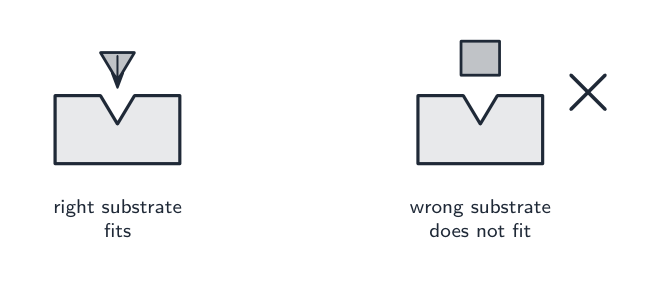
Each enzyme is specific 专一 — it works on only one kind of substrate. This is because only that substrate has the right shape to fit the active site. A substrate of a different shape will not fit, just as the wrong key will not open a lock.

ไทย
切开的猕猴桃
猕猴桃含有一种蛋白酶,可分解蛋白质。

每种酶都有一个特殊的口袋,称为其活性位点。它作用的分子称为底物。

  • 活性位点的形状与底物的形状互补——它们像钥匙插入锁孔一样契合。
  • 底物嵌入活性位点。(补充)这形成了一个酶-底物复合物。
  • 反应发生,底物被转化为一个或多个产物。
  • 产物离开活性位点,使其随后可以再次使用。
具有缺口状活性位点的酶;匹配的底物进入形成酶-底物复合物,然后作为两个产物片段离开,释放酶
สารตั้งต้นเข้าได้กับตำแหน่งทำงานเหมือนกุญแจในล็อค จากนั้นจะหลุดออกไปในฐานะผลิตภัณฑ์

为什么酶具有特异性(补充)

每种酶都是特异性的——它只对一种类型的底物起作用。这是因为只有该底物具有适合活性位点的正确形状。不同形状的底物将无法契合,就像错误的钥匙无法打开锁一样。

一种酶:形状正确的底物适合活性位点,但形状错误的则不适合
เฉพาะสารตั้งต้นที่ตรงกันจึงจะเข้าได้กับตำแหน่งทำงาน
Vocabulary · ⁨คำศัพท์⁩ Train · ⁨ฝึกฝน⁩
English ไทย
catalyst/ˈkætəlɪst/ ตัวเร่งปฏิกิริยา
rate/reɪt/ อัตราส่วน
chemical reaction/ˈkemɪkl rɪˈækʃn/ ปฏิกิริยาเคมี
enzymes/ˈenzaɪmz/ เอนไซม์
proteins/ˈprəʊtiːnz/ โปรตีน
metabolism/məˈtæbəlɪzəm/ การเผาผลาญ
active site/ˈæktɪv saɪt/ ตำแหน่งที่ทำงานของเอนไซม์
molecule/ˈmɒlɪkjuːl/ โมเลกุล
substrate/ˈsʌbstreɪt/ สารตั้งต้น
complementary/ˌkɒmplɪˈmentəri/ สีคู่เสริม
enzyme-substrate complex/ˈenzaɪm ˈsʌbstreɪt ˈkɒmpleks/ คอมเพล็กซ์เอนไซม์-สารตั้งต้น
products/ˈprɒdʌkts/ ผลิตภัณฑ์
specific/spəˈsɪfɪk/ เฉพาะเจาะจง
5.1

The effect of temperature and pH · ⁨温度和pH的影响⁩

English

The activity of an enzyme depends on temperature 温度 and pH. You can investigate this by measuring how fast the reaction goes at different temperatures or pH values.

Temperature

  • As the temperature rises from cold, enzyme activity speeds up. The enzyme and substrate molecules have more kinetic energy 动能, so they move faster and meet more often. (Supplement) There are more useful collisions 碰撞 each second.
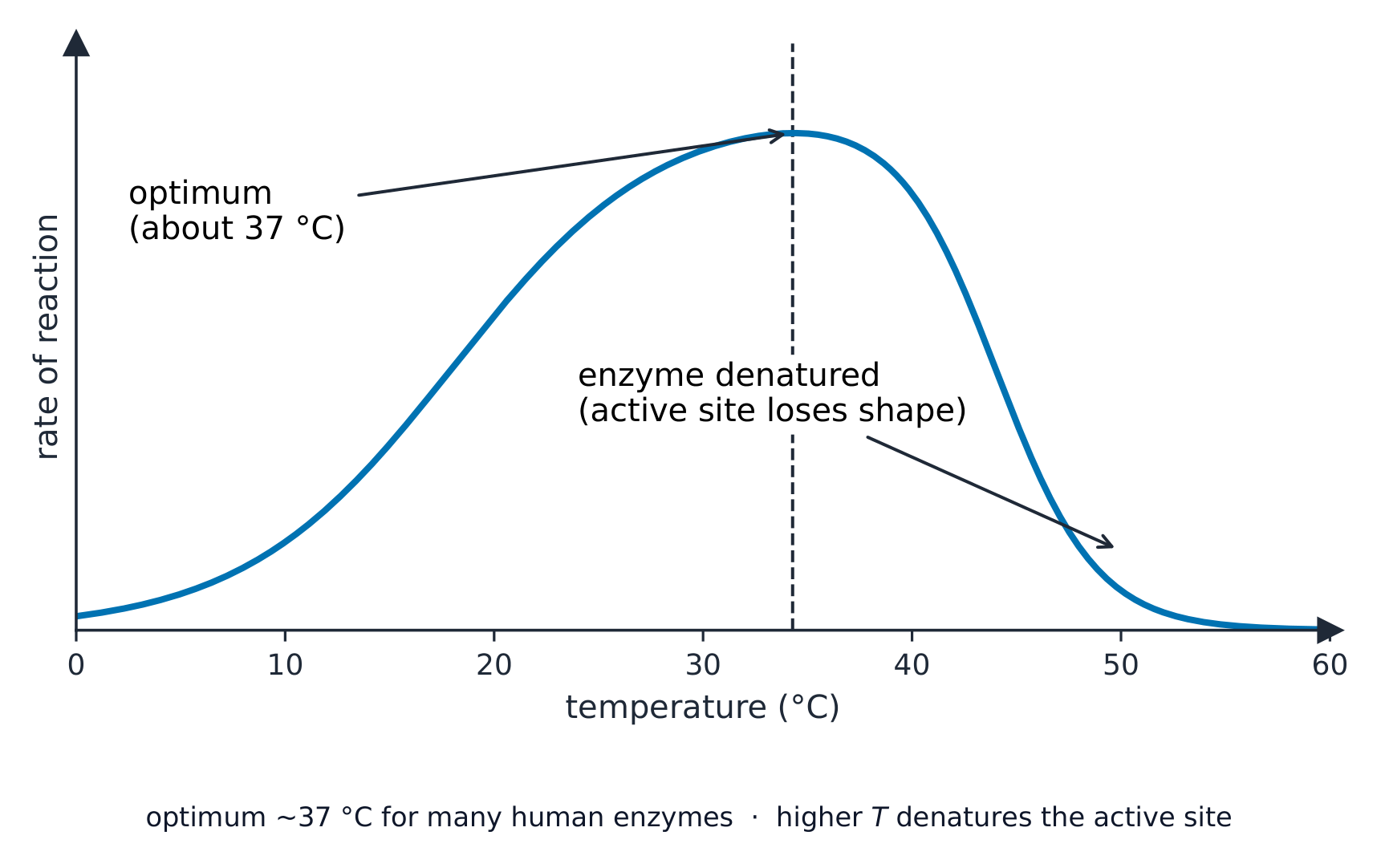
  • Activity is highest at the optimum temperature 最适温度 (about 37 °C in the human body).
  • Above the optimum, activity falls fast. The heat changes the shape of the active site, so the substrate no longer fits. The enzyme is denatured 变性. Denaturation is permanent — the enzyme cannot recover.

Worked example. A reaction finishes in 50 s at 20 °C, and in 20 s at 37 °C. Which temperature is faster, and by how much? A shorter time means a faster rate, so work out a rate with rate = 1000 ÷ time. At 20 °C the rate is 1000 ÷ 50 = 20 units; at 37 °C it is 1000 ÷ 20 = 50 units. So 37 °C is 50 ÷ 20 = 2.5 times faster. Do not say the rate "went up by 30 s" - a time is not a rate. Turn the time into a rate first, and remember the bigger rate always goes with the smaller time.

pH

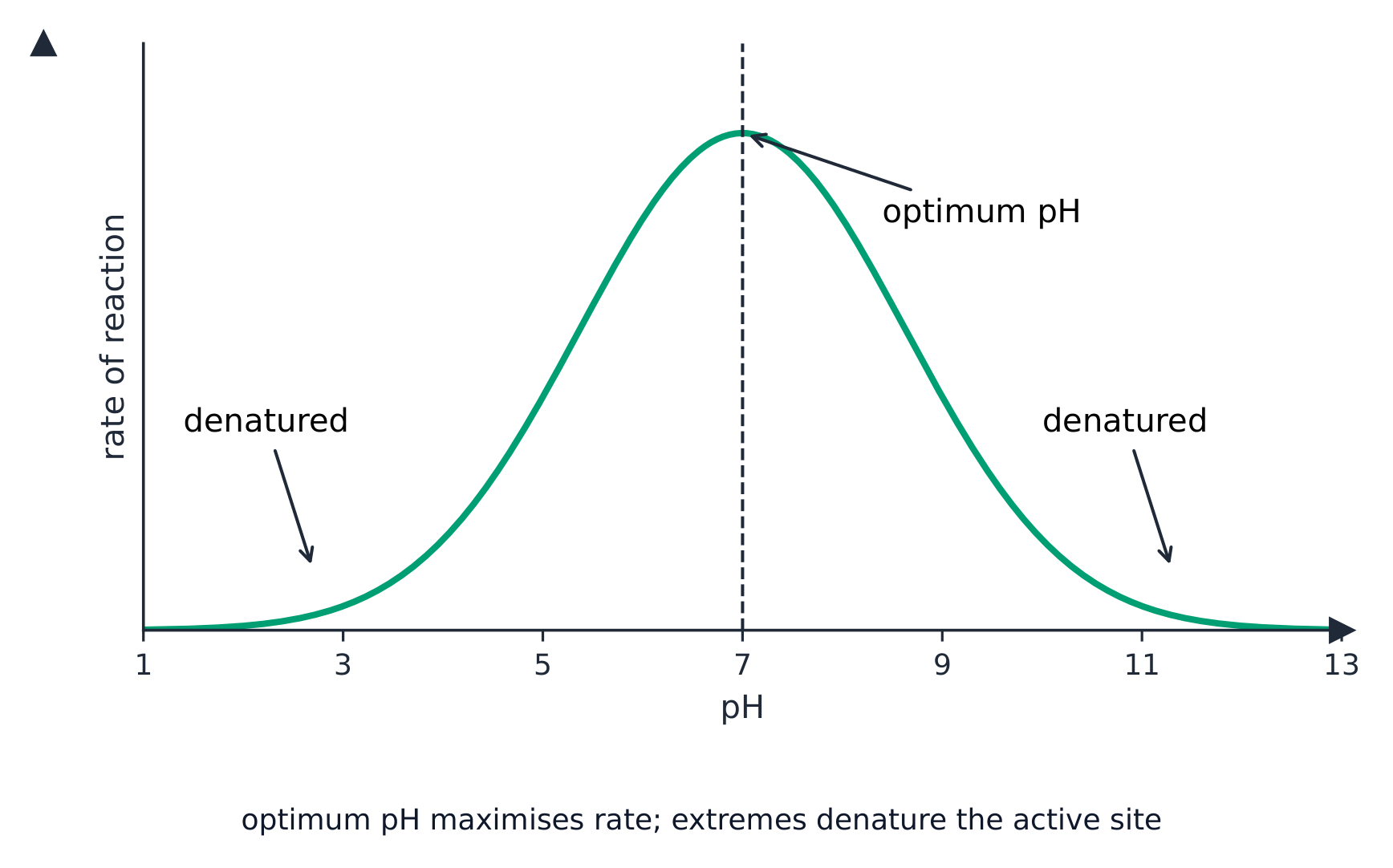
  • Each enzyme works best at one particular pH.
  • If the pH is too high or too low, the shape of the active site changes, the substrate stops fitting, and the enzyme is denatured.
ไทย

กิจกรรมของเอนไซม์ขึ้นอยู่กับ อุณหภูมิ และ pH คุณสามารถศึกษาเรื่องนี้ได้โดยการวัดความเร็วของปฏิกิริยาที่อุณหภูมิต่างๆ หรือค่า pH ที่แตกต่างกัน

อุณหภูมิ

  • เมื่ออุณหภูมิสูงขึ้นจากจุดเย็น กิจกรรมของเอนไซม์จะเพิ่มขึ้น โมเลกุลของเอนไซม์และสารตั้งต้นมี พลังงานจลน์ มากขึ้น จึงเคลื่อนที่เร็วขึ้นและพบปะกันบ่อยขึ้น (ส่วนเสริม) มีการ ชน ที่เกิดประโยชน์มากขึ้นทุกวินาที
  • กิจกรรมสูงที่สุดที่ อุณหภูมิที่เหมาะสม (ประมาณ 37 °C ในร่างกายมนุษย์)
  • เหนืออุณหภูมิที่เหมาะสม กิจกรรมจะลดลงอย่างรวดเร็ว ความร้อนทำให้รูปร่างของตำแหน่งทำงานเปลี่ยนไป ทำให้สารตั้งต้นไม่เข้าอีกต่อไป เอนไซม์ถูก เสียสภาพ การเสียสภาพเป็นสิ่งที่ถาวร — เอนไซม์ไม่สามารถคืนสภาพเดิมได้
กราฟแสดงความเร็วของปฏิกิริยาเทียบกับอุณหภูมิ: ความเร็วเพิ่มขึ้นถึงจุดสูงสุดที่ประมาณ 37 องศา แล้วลดลงอย่างรุนแรงเมื่อเอนไซม์เสียสภาพ
กิจกรรมพุ่งสูงขึ้นที่อุณหภูมิที่เหมาะสม จากนั้นลดลงอย่างรวดเร็วเมื่อเอนไซม์เสียสภาพ

ตัวอย่างวิธีทำ ปฏิกิริยาหนึ่งสิ้นสุดใน 50 วินาทีที่ 20 °C และใน 20 วินาทีที่ 37 °C อุณหภูมิใดเร็วกว่า และเร็วกว่าเท่าไร? เวลาที่ สั้นกว่า หมายความว่า ความเร็ว สูงขึ้น ดังนั้นคำนวณอัตราด้วยสูตร อัตรา = 1000 ÷ เวลา ที่ 20 °C อัตราคือ 1000 ÷ 50 = 20 หน่วย; ที่ 37 °C อัตราคือ 1000 ÷ 20 = 50 หน่วย ดังนั้น 37 °C จึงเร็วกว่า 50 ÷ 20 = 2.5 เท่า อย่าบอกว่าอัตรา "เพิ่มขึ้น 30 วินาที" เพราะเวลาไม่ใช่อัตรา ต้องแปลงเวลาให้อัตราก่อน และจำไว้ว่าอัตรามากเสมอจะตรงกับเวลาน้อยเสมอ

ค่า pH

  • แต่ละชนิดของเอนไซม์ทำงานได้ดีที่สุดที่ค่า pH เฉพาะหนึ่งค่าเท่านั้น
  • หากค่า pH สูงหรือต่ำเกินไป รูปร่างของตำแหน่งทำงานจะเปลี่ยนไป สารตั้งต้นจะไม่เข้าอีกต่อไป และเอนไซม์จะถูกเสียสภาพ
กราฟแสดงความเร็วของปฏิกิริยาเทียบกับ pH: กราฟรูปกระดิ่งซึ่งพุ่งขึ้นถึงจุดสูงสุดที่ค่า pH ที่เหมาะสม และลดลงทั้งสองข้างเมื่อเอนไซม์เสียสภาพ
เอนไซม์แต่ละชนิดมีค่า pH ที่เหมาะสมหนึ่งค่า; ห่างจากจุดนั้นเอนไซม์จะเสียสภาพ
Explore · ⁨สำรวจ⁩

Temperature and enzyme activity · ⁨อุณหภูมิและกิจกรรมของเอนไซม์⁩

Drag the temperature. Activity rises to an optimum, then falls as the enzyme denatures. · ⁨ลากอุณหภูมิ กิจกรรมเพิ่มขึ้นถึง จุดสูงสุด แล้วลดลงเมื่อเอนไซม์ เสียสภาพ⁩

Vocabulary · ⁨คำศัพท์⁩ Train · ⁨ฝึกฝน⁩
English ไทย
temperature/ˈtemprɪtʃə/ อุณหภูมิ
kinetic energy/kɪˈnetɪk ˈenədʒi/ พลังงานจลน์
collisions/kəˈlɪʒnz/ การชนกัน
optimum temperature/ˈɒptɪməm ˈtemprɪtʃə/ อุณหภูมิที่เหมาะสม
denatured/ˈdenətʃəd/ เสียสภาพ (denatured)
5.1

Exam tips · ⁨ข้อแนะนำสำหรับการสอบ⁩

English
  • An enzyme is both a protein and a biological catalyst: it speeds up a reaction and is not used up.
  • Describe the shape: the active site is complementary to the substrate (the lock-and-key idea). Each enzyme is specific to one substrate.
  • Low temperature → slow (too little kinetic energy). Optimum → fastest. Too hot → denatured (the active site loses its shape, permanently).
  • The wrong pH also denatures the enzyme by changing the shape of the active site.
  • "Denatured" does not mean "killed" — enzymes are not alive. Say that the shape of the active site has changed so the substrate no longer fits.
ไทย
  • เอนไซม์เป็นทั้ง โปรตีน และตัวเร่งปฏิกิริยาทางชีวภาพ: ช่วยเร่งปฏิกิริยาและ ไม่ ถูกใช้สิ้นไป
  • อธิบายรูปร่าง: ตำแหน่งทำงานมีลักษณะ ตรงกันพอดี กับสารตั้งต้น (แนวคิดกุญแจและล็อค) เอนไซม์แต่ละชนิดมีความ จำเพาะ ต่อสารตั้งต้นเพียงชนิดเดียว
  • อุณหภูมิต่ำ → ช้า (พลังงานจลน์น้อยเกินไป) อุณหภูมิที่เหมาะสม → เร็วที่สุด ร้อนเกินไป → เสียสภาพ (ตำแหน่งทำงานสูญเสียรูปร่างไปอย่างถาวร)
  • ค่า pH ที่ไม่ถูกต้องยังทำให้เอนไซม์ เสียสภาพ ได้โดยเปลี่ยนรูปร่างของตำแหน่งทำงาน
  • คำว่า "เสียสภาพ" ไม่ได้หมายความว่า "ตาย" — เอนไซม์ไม่ใช่สิ่งมีชีวิต ให้บอกว่าเป็นเรื่องของการที่รูปร่างของตำแหน่งทำงานเปลี่ยนแปลงไปจนสารตั้งต้นไม่เข้าอีกต่อไป

Interactive lessons on this topic · ⁨บทเรียนเชิงโต้ตอบสำหรับหัวข้อนี้⁩

Work through it step by step, with instant-check exercises. · ⁨ทำทีละขั้นตอน พร้อมแบบฝึกหัดตรวจสอบผลทันที⁩

Past Papers · ⁨ข้อสอบย้อนหลัง⁩

More topics in IGCSE Biology · ⁨Biology IGCSE⁩ · ⁨หัวข้อเพิ่มเติมใน IGCSE Biology · ⁨Biology IGCSE⁩⁩

Log in or create account · ⁨เข้าสู่ระบบหรือสร้างบัญชี⁩

IGCSE, A-Level & AP