Temperature and pH
Introduced| English | Meaning |
|---|---|
| optimum/ˈɒptɪməm/ | The condition or value at which a process performs best under the stated criteria. |
| denatured/ˈdenətʃəd/ | Describes an enzyme whose active site has lost its shape, so it no longer works. |
| denaturing/ˈdenətʃərɪŋ/ | denaturing |
Too hot, too cold, just right
- Enzymes are fussy. Change the temperature or pH and they can speed up, slow down — or stop working forever.
- Understanding this is key to how living things stay alive.
The temperature at which an enzyme works fastest is its:
Difficulty 1/5 · 100 coins + a small bonus on first completion today
The optimum is where the rate is highest.
If an enzyme gets too hot, it:
Difficulty 1/5 · 100 coins + a small bonus on first completion today
High temperature denatures the enzyme, destroying its active site.
The optimum temperature of most human enzymes is about how many °C?
Difficulty 2/5 · 140 coins + a small bonus on first completion today
Human body temperature is about 37 °C.
Temperature
- As temperature rises, the reaction speeds up — to an optimum 最适 (often around 37 °C in humans).
- Too hot, and the enzyme's shape is destroyed: it is denatured 变性 and stops working.
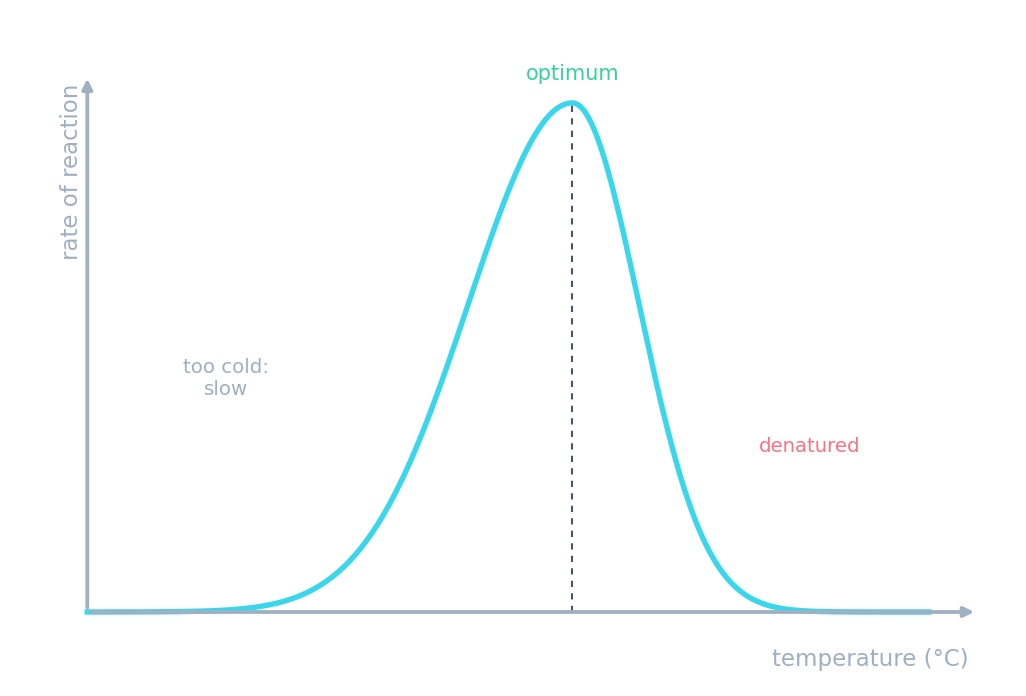
Rate peaks at the optimum temperature, then crashes as the enzyme denatures.
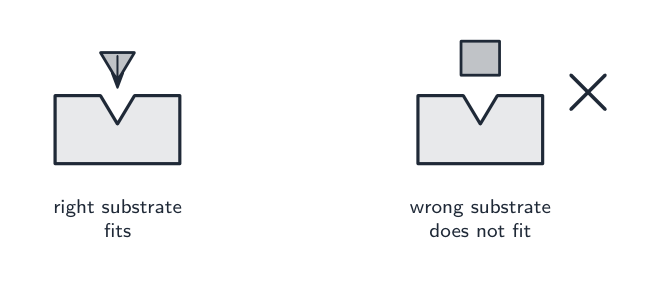
Only the matching substrate fits the active site
Temperature and pH
rate peaks at the optimum
There's an optimum temperature; too hot and the enzyme is denatured and stops working.
Moving the pH far from an enzyme's optimum will:
Difficulty 1/5 · 100 coins + a small bonus on first completion today
The wrong pH changes the active site shape.
pH
- Each enzyme has an optimum pH where it works best.
- Too far from it (too acidic or too alkaline) changes the active site's shape and slows or stops the enzyme.
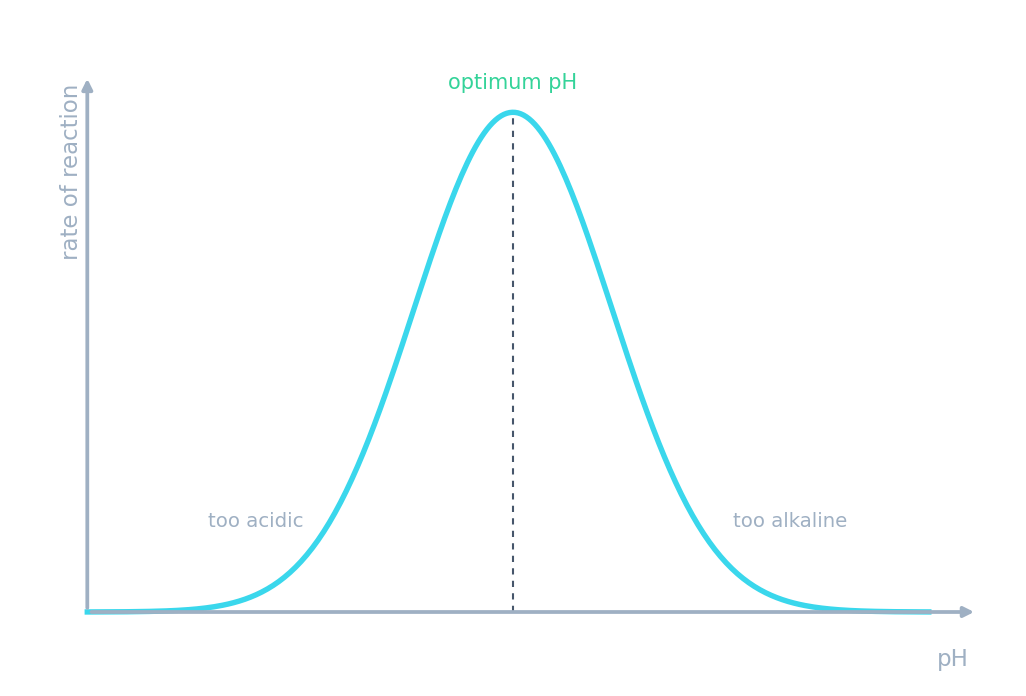
Each enzyme has an optimum pH; rate falls on either side.
A denatured enzyme can recover its shape once it cools down.
Difficulty 1/5 · 100 coins + a small bonus on first completion today
Denaturing is permanent; cooling does not restore the active site.
Denaturing 变性 is permanent
- Denaturing permanently changes the active site — the substrate no longer fits.
- Unlike cooling a too-cold enzyme, a denatured enzyme cannot recover.
Cold slows an enzyme; heat can destroy it. A cold enzyme just works slowly and speeds up again when warmed. A denatured (overheated) enzyme is wrecked for good.

The substrate fits the active site like a key in a lock, then leaves as products
You've got it
- rate rises to an optimum temperature (≈37 °C), then falls as the enzyme denatures
- each enzyme has an optimum pH; rate falls on either side
- denaturing permanently destroys the active site — cold is reversible, denaturing is not