| Core | Supplement |
|---|---|
| 1 List the chemical elements that make up: carbohydrates, fats and proteins | |
| 2 State that large molecules are made from smaller molecules, limited to: (a) starch, glycogen and cellulose from glucose (b) proteins from amino acids (c) fats and oils from fatty acids and glycerol | |
| 3 Describe the use of: (a) iodine solution test for starch (b) Benedict’s solution test for reducing sugars (c) biuret test for proteins (d) ethanol emulsion test for fats and oils (e) DCPIP test for vitamin C | 4 Describe the structure of a DNA molecule: (a) two strands coiled together to form a double helix (b) each strand contains chemicals called bases (c) bonds between pairs of bases hold the strands together (d) the bases always pair up in the same way: A with T, and C with G (full names are not required) |
Biological molecules
IGCSE Biology · Topic 4
 5:26
5:26
Biological Molecules
Bread, meat, oil, your own muscles — all of them are built from just a handful of chemical elements. And the large molecules in your food are not really large…
English narration · English + 中文 subtitles burned in
4.1
The chemical elements in food

Syllabus
Source: Cambridge International syllabus

Living things are built from a few kinds of molecule 分子. The most important are carbohydrates, fats and proteins. Each is made from a small number of chemical elements 元素.
- Carbohydrates 碳水化合物 and fats 脂肪 contain three elements: carbon 碳 (C), hydrogen 氢 (H) and oxygen (O).
- Proteins 蛋白质 contain carbon, hydrogen and oxygen too, plus nitrogen 氮 (N). (Some proteins also contain sulfur, S.)
Explore
Biological molecules lab
Classify food molecules by their main job in cells.
Vocabulary
Train
| English |
|---|
| molecule/ˈmɒlɪkjuːl/ |
| elements/ˈelɪmənts/ |
| carbohydrates/ˌkɑːbəʊˈhaɪdreɪts/ |
| fats/fæts/ |
| carbon/ˈkɑːbən/ |
| hydrogen/ˈhaɪdrədʒn/ |
| proteins/ˈprəʊtiːnz/ |
| nitrogen/ˈnaɪtrədʒn/ |
4.1
Building large molecules from small ones

Large molecules are made by joining many small molecules together, like beads on a string.
| Large molecule | Built from |
|---|---|
| starch 淀粉, glycogen 糖原 and cellulose 纤维素 | many glucose 葡萄糖 units |
| proteins | amino acids 氨基酸 |
| fats and oils | fatty acids 脂肪酸 and glycerol 甘油 |
Starch and glycogen are energy stores; cellulose makes plant cell walls. Proteins are built from about 20 different kinds of amino acid joined in a chain. One fat molecule is made from three fatty acids joined to one glycerol.

Vocabulary
Train
| English |
|---|
| starch/stɑːtʃ/ |
| glycogen/ˈɡlaɪkədʒn/ |
| cellulose/ˈseljuːləʊs/ |
| glucose/ˈɡluːkəʊs/ |
| amino acids/əˈmiːnəʊ ˈæsɪdz/ |
| fatty acids/ˈfæti ˈæsɪdz/ |
| glycerol/ˈɡlɪsərɒl/ |
4.1
Food tests

You can test a piece of food to find out which substances it contains. Add the test chemical and watch for a colour change.
| Food substance | Test | Positive result |
|---|---|---|
| starch | add iodine solution 碘液 | orange-brown → blue-black |
| reducing sugars 还原糖 (such as glucose) | add Benedict's solution 本尼迪特试剂 and heat | blue → brick-red / orange |
| protein | add biuret 双缩脲 solution | blue → purple |
| fats and oils | ethanol 乙醇 emulsion 乳浊液 test | a cloudy white layer forms |
| vitamin 维生素 C | add to blue DCPIP | blue → colourless |
Two things to remember: only the Benedict's test needs heat; and DCPIP loses its colour (goes colourless), while the other tests gain a new colour.
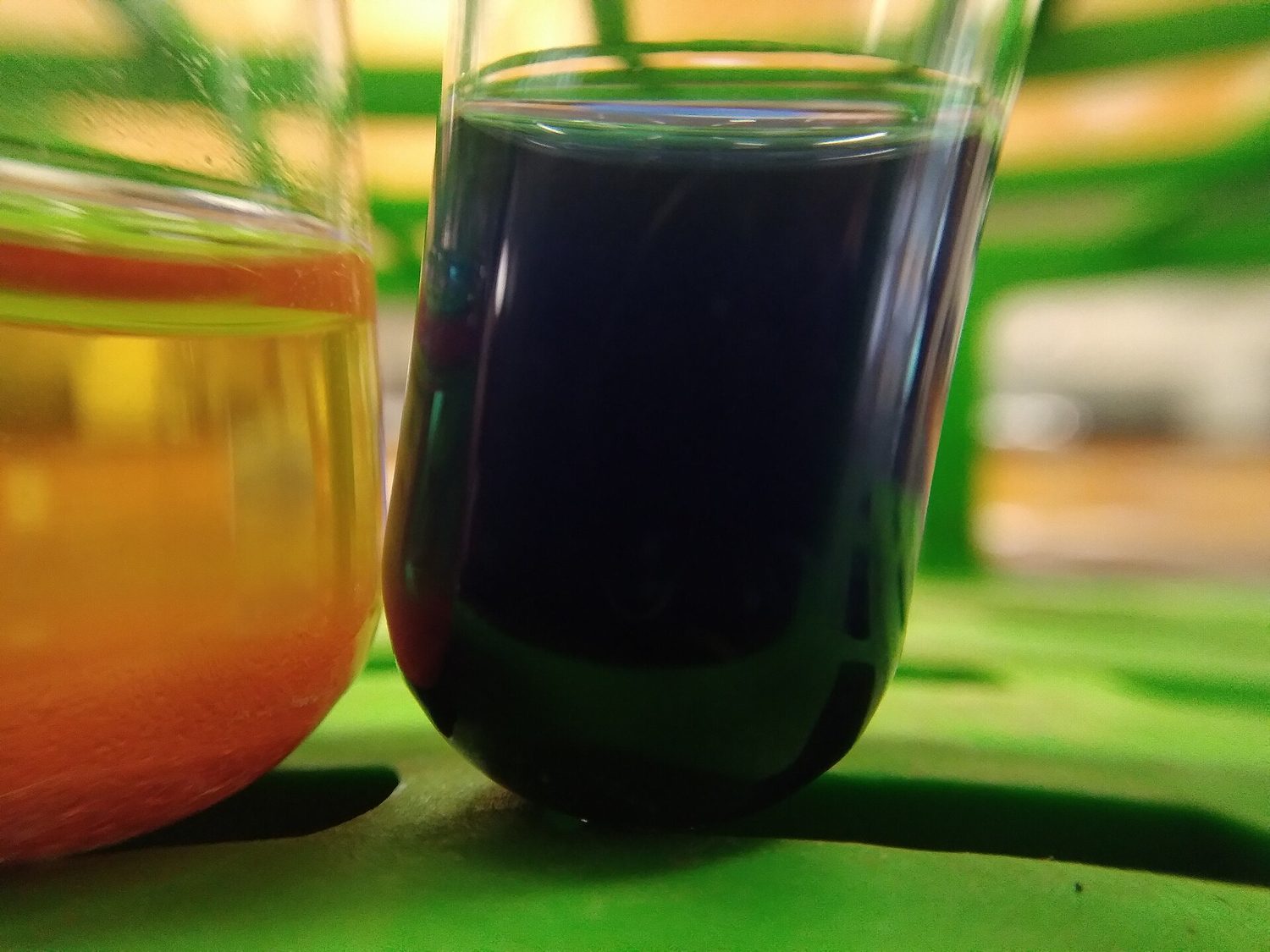
Worked example. A student tests an unknown food. Iodine solution stays orange-brown. Benedict's solution, after heating, turns brick-red. Biuret solution turns purple. What does the food contain? Iodine staying orange-brown is a negative result, so there is no starch. Brick-red is a positive Benedict's result, so reducing sugar is present. Purple is a positive biuret result, so protein is present. The food contains reducing sugar and protein, but no starch. "No colour change" is a real result - it tells you the substance is absent.
Explore
Food test lab
Follow how the test result reveals the nutrient in a sample.
Vocabulary
Train
| English |
|---|
| iodine solution/ˈaɪədiːn səˈluːʃn/ |
| reducing sugars/rɪˈdjuːsɪŋ ˈʃʊɡəz/ |
| Benedict's solution/ˈbenɪdɪkts səˈluːʃn/ |
| biuret/ˈbɪjuːrət/ |
| ethanol/ˈeθənɒl/ |
| emulsion/ɪˈmʌlʃn/ |
| vitamin/ˈvɪtəmɪn/ |
4.1
The structure of DNA (Supplement)

DNA is the genetic material 遗传物质 — it carries the instructions for building and running an organism. Its structure has four key points:
- two strands 链 are coiled together to form a double helix 双螺旋 (like a twisted ladder).
- each strand carries chemicals called bases 碱基.
- bonds 化学键 between pairs of bases hold the two strands together.
- the bases always pair in the same way: A with T, and C with G.
Vocabulary
Train
| English |
|---|
| genetic material/dʒɪˈnetɪk məˈtɪərɪəl/ |
| strands/strændz/ |
| double helix/ˈdʌbl ˈhiːlɪks/ |
| bases/ˈbeɪsɪz/ |
| bonds/bɒndz/ |
4.1
Exam tips
- Carbohydrates and fats are made of C, H and O. Proteins also contain N (nitrogen).
- Learn each food test and its colour change. For reducing sugars you must heat the Benedict's solution.
- DCPIP goes from blue to colourless; the other four tests each give a new colour.
- In DNA, the bases pair only A–T and C–G. So if you know the bases on one strand, you can work out the other.
Interactive lessons on this topic
Work through it step by step, with instant-check exercises.