Skip to content · ⁨ข้ามไปยังเนื้อหา⁩

Land-Based Empires

AP World History: Modern · ⁨AP ประวัติศาสตร์โลก: สมัยใหม่⁩ · Topic 3 · ⁨หัวข้อ 3⁩

Video lesson for this topic · ⁨บทเรียนวิดีโอสำหรับหัวข้อนี้⁩ Open the video page · ⁨เปิดหน้าวิดีโอ⁩
5:35

หน่วย 3: จักรวรรดิบนบก

ผู้ปกครองทุกคนในหน่วยนี้เผชิญกับปัญหาทางปฏิบัติเดียวกัน คุณได้พิชิตดินแดนที่อยู่ห่างจากเมืองหลวงเป็นสัปดาห์ของการเดินทาง และผู้คนที่มีอำนาจจริง…

English narration · English + 中文 subtitles burned in · ⁨การบรรยายภาษาอังกฤษ · คำบรรยายภาษาอังกฤษ + 中文 ลอยตัวบนภาพ⁩

3.1

How the Land Empires Expanded · ⁨การขยายตัวของจักรวรรดินั้น⁩

Syllabus · ⁨หลักสูตร⁩
English

3.1 Empires Expand

Thematic Focus (GOV): Governance — A variety of internal and external factors contribute to state formation, expansion, and decline. Governments maintain order through a variety of administrative institutions, policies, and procedures, and governments obtain, retain, and exercise power in different ways and for different purposes.

Learning Objective Unit 3.A: Explain how and why various land-based empires developed and expanded from 1450 to 1750.

  • KC-4.3.II Imperial expansion relied on the increased use of gunpowder, cannons, and armed trade to establish large empires in both hemispheres.
  • KC-4.3.II.B Land empires included the Manchu in Central and East Asia; the Mughal in South and Central Asia; the Ottoman in Southern Europe, the Middle East, and North Africa; and the Safavids in the Middle East.
  • KC-4.3.III.i Political and religious disputes led to rivalries and conflict between states.

Illustrative examples:

  • State rivalries:
    • Safavid–Mughal conflict
    • Songhai Empire’s conflict with Morocco
ไทย

3.1 จักรวรรดิขยายตัว

ประเด็นเน้น (GOV): การปกครอง — ปัจจัยภายในและภายนอกหลากหลายชนิดมีส่วนร่วมในการก่อตัว การขยายตัว และการล่มสลายของรัฐ รัฐบาลรักษาความสงบเรียบร้อยผ่านสถาบัน นโยบาย และขั้นตอนการบริหารจัดการที่หลากหลาย และรัฐบาลได้รับ รักษาส Powers และใช้อำนาจในรูปแบบและด้วยวัตถุประสงค์ที่แตกต่างกัน

วัตถุประสงค์การเรียนรู้ หน่วย 3.A: อธิบายว่าและทำไมจักรวรรดิบนแผ่นดินต่างๆ จึงพัฒนาและขยายตัวในช่วงปี ค.ศ. 1450 ถึง 1750

  • KC-4.3.II การขยายตัวของจักรวรรดิพึ่งพาการใช้ปืนดำ ปืนใหญ่ และการค้าแบบ مسلх более активно дляสร้างจักรวรรดิขนาดใหญ่ในทั้งสองซีกโลก
  • KC-4.3.II.B จักรวรรดินั้นรวม: มานชู่ ในเอเชียกลางและเอเชียตะวันออก; มุกล์ ในเอเชียใต้และเอเชียกลาง; ออตโตมัน ในยุโรปใต้ ตะวันออกกลาง และแอฟริกาเหนือ; และซาฟาวิด ในตะวันออกกลาง
  • KC-4.3.III.i ความขัดแย้งทางการเมืองและศาสนานำไปสู่การแข่งขันและความขัดแย้งระหว่างรัฐ

ตัวอย่างประกอบ:

  • การแข่งขันระหว่างรัฐ:
    • ความขัดแย้งระหว่างซาฟาวิดกับมุกล์
    • ความขัดแย้งของจักรวรรดิซงไฮ่กับโมร็อกโก
Source: College Board AP Course and Exam Description · ⁨แหล่งที่มา: คำอธิบายหลักสูตรและข้อสอบ College Board AP⁩

English

Unit 3 covers the great land-based empires 陆基帝国 of roughly 1450 to 1750. Four questions organise it: how they expanded, how they governed, how they paid for themselves, and how they used religion.

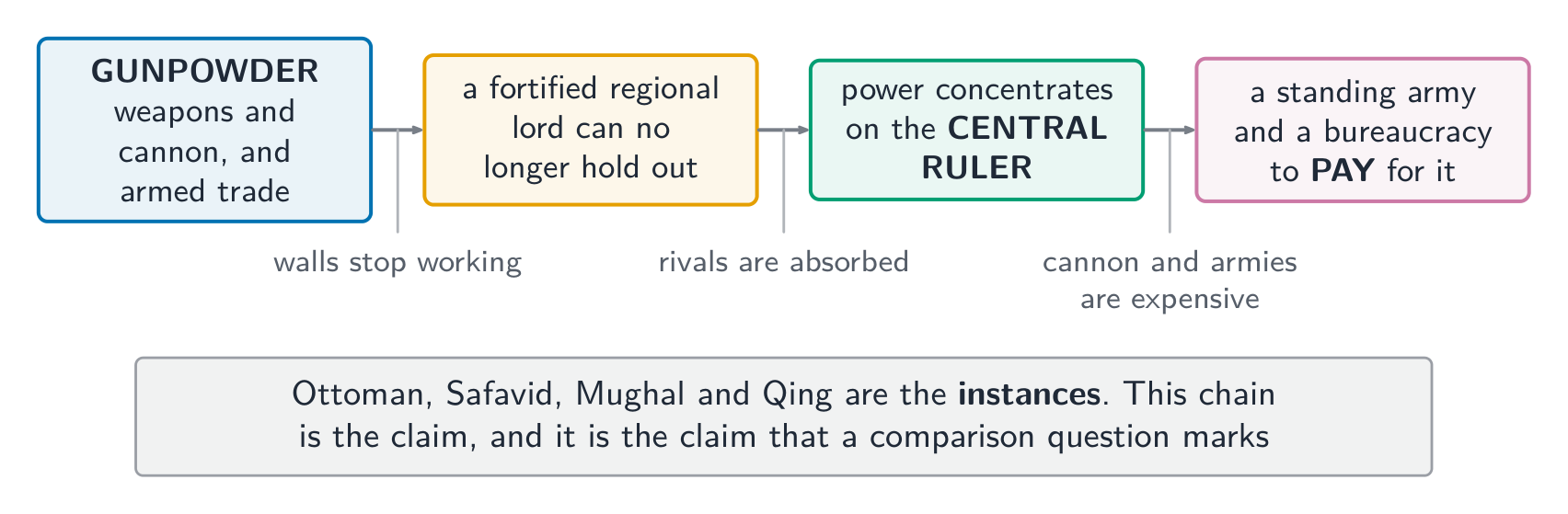
Expansion relied on the increased use of gunpowder, cannons, and armed trade - which is why these are often called the gunpowder empires 火药帝国. Access to gunpowder weapons let a central ruler overpower regional rivals and fortified nobles, so military technology and political centralisation grew together.

The empires to know:

  • The Manchu (Qing) 满清 in Central and East Asia.
  • The Mughal 莫卧儿 in South Asia.
  • The Ottoman 奥斯曼 in the eastern Mediterranean and beyond.
  • The Safavid 萨法维 in Persia.
ไทย

หน่วย 3 ครอบคลุม จักรวรรดินั้นใหญ่ ในช่วงประมาณ 1450 ถึง 1750 สี่คำถามจัดระเบียบเนื้อหา: วิธีการขยายตัว วิธีการปกครอง การจ่ายค่าใช้จ่ายของตนเอง และการใช้ศาสนา

การขยายตัวพึ่งพา การใช้ปืนpowder ปืนและ armed trade ที่เพิ่มขึ้น - นี่คือเหตุผลที่มักเรียกว่า จักรวรรดิปืนpowder การเข้าถึงอาวุธปืนช่วยให้君主กลางควบคุมคู่แข่งระดับภูมิภาคและขุนนางผู้ยึดครองป้อมปราการได้ ดังนั้นเทคโนโลยีทางทหารและการรวมศูนย์ทางการเมืองจึงเติบโตไปด้วยกัน

จักรวรรดิที่ต้องรู้:

  • Manchu (Qing) ในเอเชียกลางและเอเชียตะวันออก
  • Mughal ในเอเชียใต้
  • Ottoman ในเมดิเตอร์เรเนียนตะวันออกและ beyond
  • Safavid ในเปอร์เซีย
ทำไมเขาจึงเรียกว่าจักรวรรดิปืนpowder: เทคโนโลยีทางทหารและการรวมศูนย์เติบโตไปด้วยกัน
Explore · ⁨สำรวจ⁩

Assemble the gunpowder-empire claim · ⁨ประกอบข้ออ้างเรื่องจักรวรรดิปืนpowder⁩

Military technology and political centralisation grew together — and the mechanism is that a cannon ends a fortified lord's advantage. · ⁨เทคโนโลยีทางทหารและการรวมศูนย์ทางการเมืองเติบโตไปพร้อมกัน — และกลไกคือการปืนใหญ่จบความได้เปรียบของผู้ทรงอำนาจที่มีป้อมปราการ⁩

Vocabulary · ⁨คำศัพท์⁩ Train · ⁨ฝึกฝน⁩
English ไทย
land-based empires/lænd beɪst ˈempaɪəz/ จักรวรรดินิเวศน์
gunpowder empires/ˈɡʌnpaʊdə ˈempaɪəz/ จักรวรรดิปืนpowder empires
Manchu (Qing)/ˈmæntʃuː/ مانชू (ชิง)
Mughal/ˈməʊɡl/ มุกล์ (Mughal)
Ottoman/ˈɒtəmən/ ออตโตแมน (Ottoman)
Safavid/ˈsæfəvɪd/ ซัฟาวี
Recruitment of bureaucratic elites/rɪˈkruːtmənt ɒv ˌbjʊərəʊˈkrætɪk ɪˈliːts/ การสรรหาชนชั้นนำระบบราชการ
3.2

Administration · ⁨การบริหาร⁩

Syllabus · ⁨หลักสูตร⁩
English

3.2 Empires: Administration

Thematic Focus (GOV): Governance — A variety of internal and external factors contribute to state formation, expansion, and decline. Governments maintain order through a variety of administrative institutions, policies, and procedures, and governments obtain, retain, and exercise power in different ways and for different purposes.

Learning Objective Unit 3.B: Explain how rulers used a variety of methods to legitimize and consolidate their power in land-based empires from 1450 to 1750.

  • KC-4.3.I.C Recruitment and use of bureaucratic elites, as well as the development of military professionals, became more common among rulers who wanted to maintain centralized control over their populations and resources.
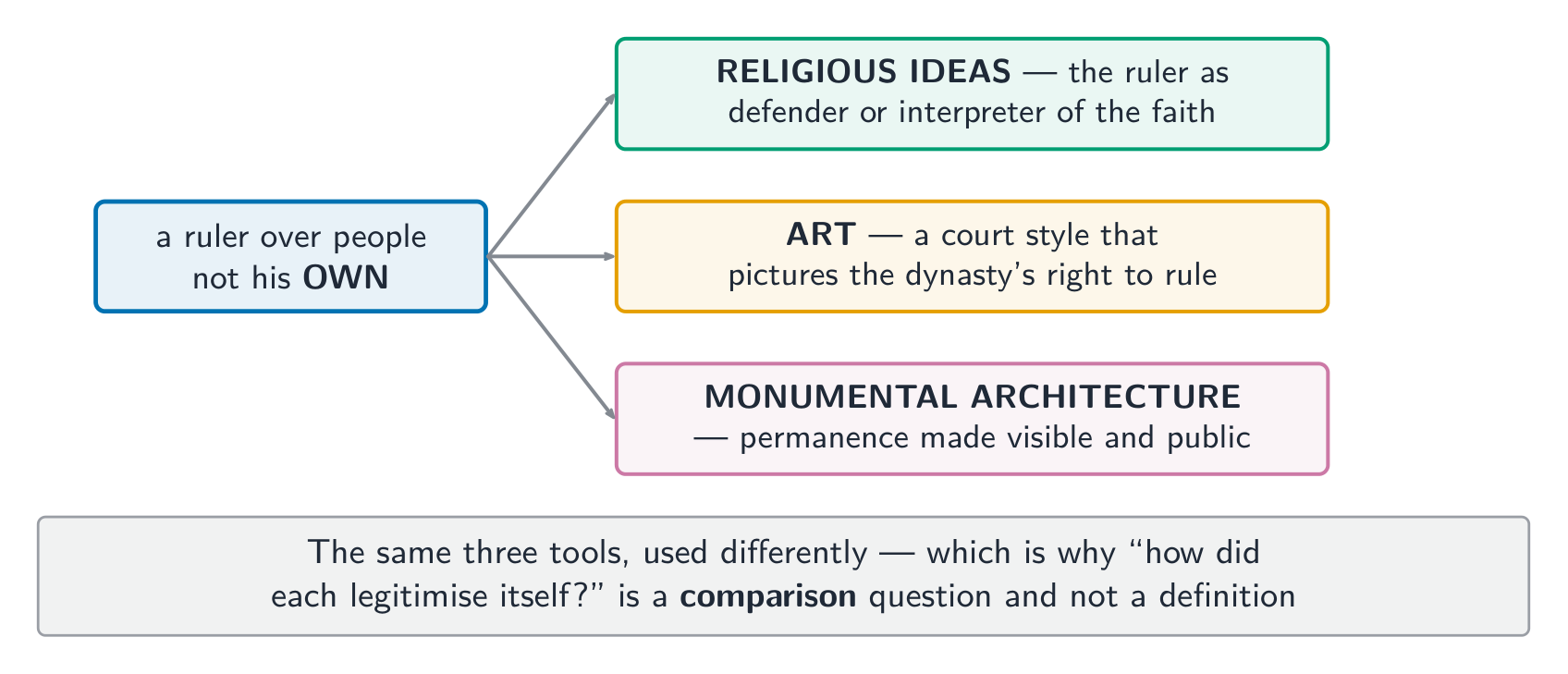
  • KC-4.3.I.A Rulers continued to use religious ideas, art, and monumental architecture to legitimize their rule.
  • KC-4.3.I.D Rulers used tribute collection, tax farming, and innovative tax-collection systems to generate revenue in order to forward state power and expansion.

Illustrative examples:

  • Bureaucratic elites or military professionals:
    • Ottoman devshirme
    • Salaried samurai
  • Religious ideas:
    • Mexica practice of human sacrifice
    • European notions of divine right
    • Songhai promotion of Islam
  • Art and monumental architecture:
    • Qing imperial portraits
    • Incan sun temple of Cuzco
    • Mughal mausolea and mosques
    • European palaces, such as Versailles
  • Tax-collection systems:
    • Mughal zamindar tax collection
    • Ottoman tax farming
    • Mexica tribute lists
    • Ming practice of collecting taxes in hard currency
ไทย

3.2 จักรวรรดิ: การปกครอง

ประเด็นเน้น (GOV): การปกครอง — ปัจจัยภายในและภายนอกหลากหลายชนิดมีส่วนร่วมในการก่อตัว การขยายตัว และการล่มสลายของรัฐ รัฐบาลรักษาความสงบเรียบร้อยผ่านสถาบัน นโยบาย และขั้นตอนการบริหารจัดการที่หลากหลาย และรัฐบาลได้รับ รักษาส Powers และใช้อำนาจในรูปแบบและด้วยวัตถุประสงค์ที่แตกต่างกัน

วัตถุประสงค์การเรียนรู้ หน่วย 3.B: อธิบายว่าผู้ปกครองใช้วิธีการต่างๆ อย่างไรเพื่อสร้างความชอบธรรมและเสริมสร้างอำนาจในจักรวรรดินั้นๆ ระหว่างปี ค.ศ. 1450 ถึง 1750

  • KC-4.3.I.C การสรรหาและใช้กลุ่มชนชั้นนักบริหาร以及การพัฒนาทหารมืออาชีพ กลายเป็นเรื่องปกติมากขึ้นสำหรับผู้ปกครองที่ต้องการรักษาการควบคุมส่วนกลางต่อประชาชนและทรัพยากรของตน
  • KC-4.3.I.A ผู้ปกครองยังคงใช้แนวคิดทางศิลปะ ศิลปะ และสถาปัตยกรรมอันยิ่งใหญ่ เพื่อสร้างความชอบธรรมในการปกครอง
  • KC-4.3.I.D ผู้ปกครองใช้การจัดเก็บบรรณาชีพ การเช่าจัดเก็บภาษี และระบบจัดเก็บภาษีที่สร้างสรรค์ เพื่อสร้างรายได้เพื่อยกระดับอำนาจรัฐและการขยายตัว

ตัวอย่างประกอบ:

  • ชนชั้นนักบริหารหรือทหารมืออาชีพ:
    • เดวชีร์เม ออตโตมัน
    • ซามูไรได้รับเงินเดือน
  • แนวคิดทางศาสนา:
    • ประเพณีการบูชายัญมนุษย์ของเม็กซิคา
    • แนวคิดสิทธิแห่งสวรรค์ของยุโรป
    • การส่งเสริมศาสนาอิสลามของซงไฮ่
  • ศิลปะและสถาปัตยกรรมอันยิ่งใหญ่:
    • ภาพวาดพระบรมรูปราชวงศ์ชิง
    • วัดพระอาทิตย์แห่งคูสโกของอินคา
    • ม่าซอลียะและมัสยิดของมุกล์
    • พระราชวังยุโรป เช่น แวร์ซาย
  • ระบบจัดเก็บภาษี:
    • การจัดเก็บภาษีโดยซามินดาร์ของมุกล์
    • การเช่าจัดเก็บภาษีของออตโตมัน
    • รายการบรรณาชีพของเม็กซิคา
    • ธรรมเนียมการเก็บภาษีเป็นเงินสดของหมิง

Source: College Board AP Course and Exam Description · ⁨แหล่งที่มา: คำอธิบายหลักสูตรและข้อสอบ College Board AP⁩

English

Rulers faced the same problem: how to control territory far from the capital. The CED names the tools they used.

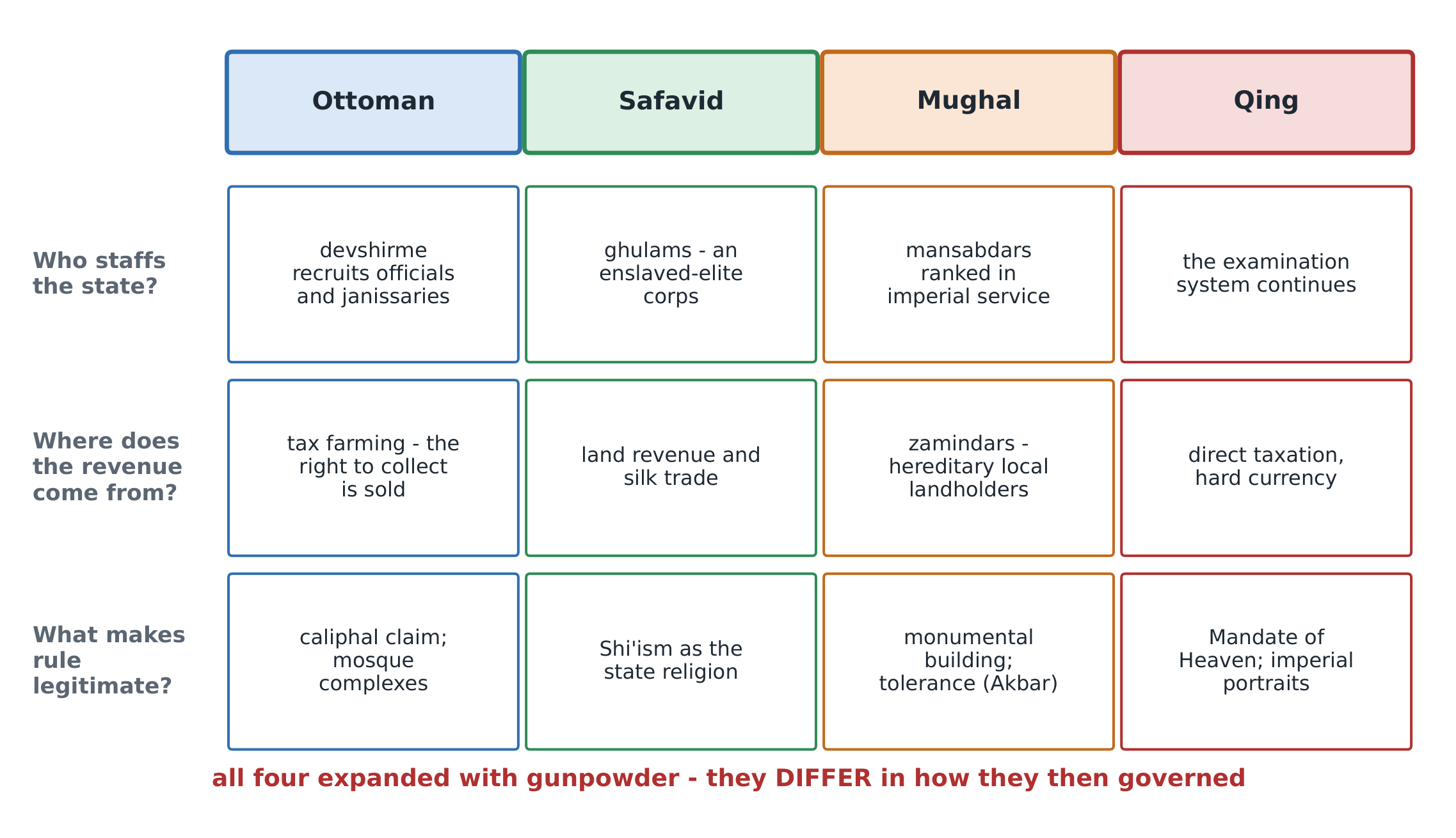
Recruitment of bureaucratic elites 官僚精英的选任 and the development of military professionals 职业军人 gave rulers officials who owed their position to the state rather than to birth. The clearest case is the Ottoman devshirme 德夫希尔梅 system, which recruited and trained administrators and soldiers, including the janissaries 耶尼切里; the Manchu continued China's examination system; the Safavids used ghulams 古拉姆.

Revenue came through tribute collection 纳贡, tax farming 包税制, and innovative tax-collection systems. The Mughal zamindar 柴明达尔 system and Ottoman tax farming are the standard examples, and the Ming practice of collecting taxes in hard currency 硬通货 is another.

ไทย
สี่จักรวรรดิ เครื่องมือชุดเดียว: แต่ละแห่ง recruited官员อย่างไร รวบรวมรายได้และ claiming legitimacyอย่างไร
ปัญหาสามอย่างเดิม - Params, Revenue, Legitimacy - แก้ไข differently โดยแต่ละจักรวรรดิ

君主เผชิญปัญหาเดียวกัน: จะควบคุมดินแดนที่ห่างไกลจากเมืองหลวงได้อย่างไร CEDตั้งชื่อเครื่องมือที่ใช้

Recruitment ของ elite burocratic และการพัฒนา military professionals ให้君主มี官员 who oweตำแหน่ง themselves to the state rather than to birth กรณีที่ชัดเจนที่สุดคือระบบ devshirme ของ Ottoman ซึ่ง recruit และ training administrators และ soldiers รวมถึง janissaries; Manchu ต่อเนื่อง China's examination system; Safavids ใช้ ghulams

Revenue มาจาก tax collection, tax farming, และระบบเก็บภาษีที่สร้างสรรค์ Mughal zamindar system และ Ottoman tax farming เป็นตัวอย่างมาตรฐาน และ Ming practice of collecting taxes in hard currency เป็นอีกตัวอย่างหนึ่ง

Vocabulary · ⁨คำศัพท์⁩ Train · ⁨ฝึกฝน⁩
English ไทย
military professionals/ˈmɪlɪtəri prəˈfeʃənlz/ มืออาชีพทางทหาร
devshirme/ˈdevʃɜːm/ เดวชีร์เม
janissaries/ˈdʒænɪsəriz/ เจนีซารี
ghulams/ˈɡjʊlæmz/ กูลามส์
tribute collection/ˈtrɪbjuːt kəˈlekʃn/ การเก็บภาษีส่งมอบ
tax farming/tæks ˈfɑːmɪŋ/ การจัดเก็บภาษีแบบเช่า
zamindar/ˈzæmaɪndɑː/ ซามินดาร์
hard currency/hɑːd ˈkʌrənsi/ สกุลเงินแข็ง
3.3

Legitimacy and Belief

Syllabus · ⁨หลักสูตร⁩
English

3.3 Empires: Belief Systems

Thematic Focus (CDI): Cultural Developments and Interactions — The development of ideas, beliefs, and religions illustrates how groups in society view themselves, and the interactions of societies and their beliefs often have political, social, and cultural implications.

Learning Objective Unit 3.C: Explain continuity and change within the various belief systems during the period from 1450 to 1750.

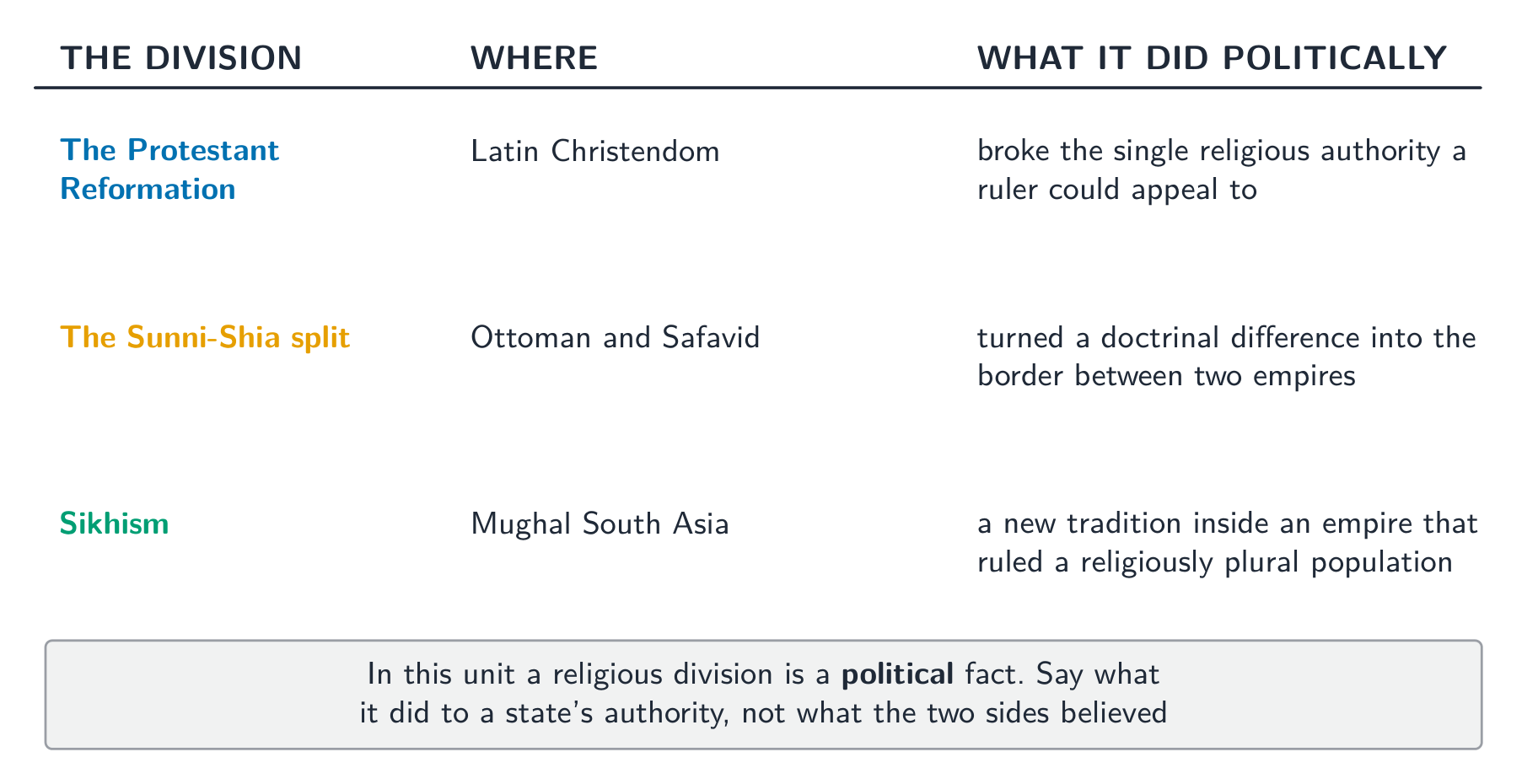
  • KC-4.1.VI.i The Protestant Reformation marked a break with existing Christian traditions and both the Protestant and Catholic reformations contributed to the growth of Christianity.
  • KC-4.1.VI.ii Political rivalries between the Ottoman and Safavid empires intensified the split within Islam between Sunni and Shi’a.
  • KC-4.1.VI.iii Sikhism developed in South Asia in a context of interactions between Hinduism and Islam.
ไทย

3.3 จักรวรรดิ: ระบบความเชื่อ

ประเด็นเน้น (CDI): การพัฒนาและการปฏิสัมพันธ์ทางวัฒนธรรม — การพัฒนาของแนวคิด ความเชื่อ และศาสนาแสดงให้เห็นว่ากลุ่มคนในสังคมมองเห็นตนเองอย่างไร และการปฏิสัมพันธ์ระหว่างสังคมและความเชื่อของพวกเขา มักจะมีนัยสำคัญทางการเมือง สังคม และวัฒนธรรม

วัตถุประสงค์การเรียนรู้ หน่วย 3.C: อธิบายความต่อเนื่องและการเปลี่ยนแปลงในระบบความเชื่อต่างๆ ในช่วงปี ค.ศ. 1450 ถึง 1750

  • KC-4.1.VI.i การปฏิรูปโปรเตสแตนต์เป็นการตัดขาดจากประเพณีคริสต์ศาสนาก่อนหน้า และการปฏิรูปทั้งโปรเตสแตนต์และคาทอลิกได้ส่งเสริมการเติบโตของศาสนาคริสต์
  • KC-4.1.VI.ii การแข่งขันทางการเมืองระหว่างจักรวรรดิออตโตมันและซาฟาวิด ทำให้ความแตกแยกใน.espresso ระหว่างสุหนี่และชีอะ intensified up
  • KC-4.1.VI.iii ศีคข์พัฒนาระบบความเชื่อในเอเชียใต้ ภายใต้บริบทของการปฏิสัมพันธ์ระหว่างฮินดูและอิสลาม

Source: College Board AP Course and Exam Description · ⁨แหล่งที่มา: คำอธิบายหลักสูตรและข้อสอบ College Board AP⁩

English

Rulers continued to use religious ideas, art, and monumental architecture to legitimise their rule - Mughal mosques and mausolea, Ottoman mosque complexes, Qing imperial portraits, and European palaces such as Versailles all do the same work.

Religious change also produced conflict:

  • The Protestant Reformation 新教改革 marked a break with existing Christian traditions and led to sustained religious and political conflict in Europe.
  • Political rivalry between the Ottoman and Safavid empires intensified the Sunni-Shia split 逊尼派与什叶派分裂, showing how state rivalry can deepen a religious division.
  • Sikhism 锡克教 developed in South Asia in a context of interaction between Hinduism and Islam.

Political and religious disputes together produced rivalries and conflict between states across Eurasia.

ไทย

君主ยังคงใช้ ความคิดทางศิลปะ มุขนิยมและ monumental architecture เพื่อ legitimise ราชสมบัติ - Mughal mosques และ mausolea, Ottoman mosque complexes, Qing imperial portraits และ European palaces เช่น Versailles都做相同的工作

การเปลี่ยนแปลงทางศาสนา juga产生了 conflict:

  • Protestant Reformation ทำลาย break กับ existing Christian traditions และ导致 sustained religious และ political conflict ในยุโรป
  • Political rivalry ระหว่าง Ottoman และ Safavid Jintensified Sunni-Shia split, แสดงให้เห็นว่า state rivalry สามารถ deepen Religious division ได้
  • Sikhism พัฒนาใน Asia South ในบริบทของการ interaction ระหว่าง Hinduism และ Islam

Political และ religious disputes together 产生了 rivalries และ conflict ระหว่าง states Across Eurasia

Three instruments对于一个 ruler对于people不是他自己的 - 由each empire differently
สามนิกายทางศาสนา อ่านเพื่อทำความเข้าใจว่าแต่ละนิกายมีผลต่ออำนาจรัฐอย่างไร
มัสยิดซูเลย์มานีเย - สถาปัตยกรรมอันยิ่งใหญ่ในฐานะเครื่องมือแห่งความชอบธรรม
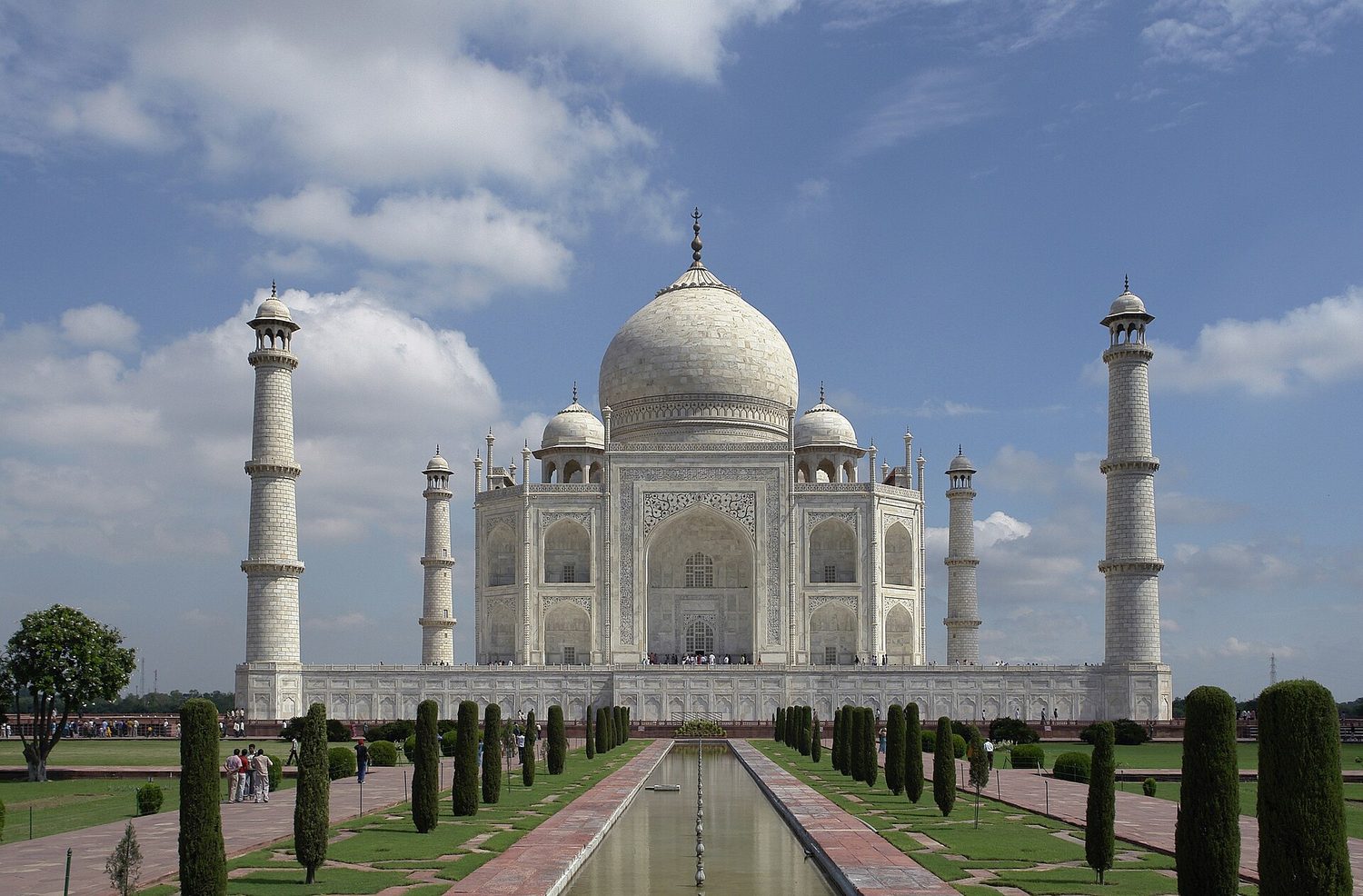
taj mahal - เครื่องมือเดียวกันนี้ถูกใช้โดยกษัตริย์มูกล์เหนือประชากรที่หลากหลายทางศาสนา
Explore · ⁨สำรวจ⁩

Sort each instrument of legitimacy · ⁨จำแนกเครื่องมือ legitimacies (ความชอบธรรม) แต่ละอย่าง⁩

These rulers governed people who shared neither their language nor their faith, so legitimacy had to be manufactured. · ⁨ผู้ปกครองเหล่านี้บริหารชนชาติที่ neither ภาษา nor ศาสนา与他们相同,所以 legitimacy ต้องถูกสร้างขึ้น⁩

Vocabulary · ⁨คำศัพท์⁩ Train · ⁨ฝึกฝน⁩
English ไทย
Protestant Reformation/ˈprɒtɪstənt rɪfɔːˈmeɪʃn/ การปฏิรูปนิกายโปรเตสแตนต์
Sunni-Shia split/ˈsʌni ʃɪə splɪt/ ความแตกแยกซุนนี่-ชีอะ
Sikhism/ˈsiːkɪzəm/ ซิกข์
3.4

Comparison in Land-Based Empires · ⁨เปรียบเทียบในจักรวรรดิบนบก⁩

Syllabus · ⁨หลักสูตร⁩
English

3.4 Comparison in Land-Based Empires

Learning Objective Unit 3.D: Compare the methods by which various empires increased their influence from 1450 to 1750.

  • KC-4.1 The interconnection of the Eastern and Western Hemispheres made possible by transoceanic voyaging, transformed trade and had a significant social impact on the world.
    • KC-4.1.VI In some cases, the increase and intensification of interactions between newly connected hemispheres expanded the reach and furthered development of existing religions, and contributed to religious conflicts and the development of syncretic belief systems and practices.
  • KC-4.3 Empires achieved increased scope and influence around the world, shaping and being shaped by the diverse populations they incorporated.
    • KC-4.3.II Imperial expansion relied on the increased use of gunpowder, cannons, and armed trade to establish large empires in both hemispheres.
    • KC-4.3.II.B Land empires included the Manchu in Central and East Asia; Mughal in South and Central Asia; Ottoman in Southern Europe, the Middle East, and North Africa; and the Safavids in the Middle East.
    • KC-4.3.III.i Political and religious disputes led to rivalries and conflict between states.
ไทย

3.4 เปรียบเทียบในจักรวรรดินั้น

วัตถุประสงค์การเรียนรู้ หน่วย 3.D: เปรียบเทียบวิธีการที่จักรวรรดิต่างๆ ใช้เพื่อเพิ่มอิทธิพลของตนระหว่างปี ค.ศ. 1450 ถึง 1750

  • KC-4.1 การเชื่อมโยงระหว่างซีกโลกตะวันออกและตะวันตกซึ่งเกิดขึ้นจากการเดินเรือข้ามมหาสมุทร ได้เปลี่ยนรูปแบบการค้าและมีผลกระทบทางสังคมอย่างมากต่อโลก
    • KC-4.1.VI ในบางกรณี การเพิ่มขึ้นและความเข้มข้นของการ interaksiระหว่างซีกโลกที่ถูกเชื่อมโยงใหม่ ได้ขยายขอบเขตและส่งเสริมการพัฒนาของศาสนาที่มีอยู่เดิม รวมถึงก่อให้เกิดความขัดแย้งทางศาสนาและการพัฒนาระบบความเชื่อและการปฏิบัติแบบผสมผสาน
  • KC-4.3 จักรวรรดิได้เพิ่มขอบเขตและอิทธิพลไปทั่วโลก โดยมีการ塑造和被 diverse populations they incorporated
    • KC-4.3.II การขยายตัวของจักรวรรดิอาศัยการใช้ปืนpowder ปืนใหญ่ และการค้าด้วยอาวุธอย่างกว้างขวางเพื่อสร้างจักรวรรดิขนาดใหญ่ในทั้งสองซีกโลก
    • KC-4.3.II.B อารยธรรมดินแดนรวมถึงชนمانจูในเอเชียกลางและเอเชียตะวันออก; มุกล์มานในเอเชียใต้และเอเชียกลาง; ออตโตแมนในยุโรปตอนใต้, ตะวันออกกลาง และAfricaเหนือ; และซาฟาวิดในตะวันออกกลาง
    • KC-4.3.III.i ความขัดแย้งทางการเมืองและศาสนาได้ก่อให้เกิดการแข่งขันและความขัดแย้งระหว่างรัฐ

Source: College Board AP Course and Exam Description · ⁨แหล่งที่มา: คำอธิบายหลักสูตรและข้อสอบ College Board AP⁩

English

The unit's reasoning skill is comparison, and the productive comparisons are about method, not size:

  • Recruiting officials by examination (Qing) against by enslaved-elite systems (Ottoman devshirme, Safavid ghulams).
  • Tax farming (Ottoman) against land-revenue intermediaries (Mughal zamindars) against direct taxation (Ming hard currency).
  • Legitimacy through religious identity (Safavid Shi'ism as state religion) against through tolerance of diversity (Mughal policy under Akbar).

Worked example (a real AP exam question). AP World short-answer questions in this unit typically ask students to "Explain one similarity" or "Explain one difference in how land-based empires maintained power." A full-mark answer names the method for both and explains the effect: "Both the Ottoman and Mughal empires used intermediaries to collect revenue rather than salaried tax officials, but the Ottomans used tax farming, which sold the right to collect for a fixed payment, while the Mughals relied on zamindars, hereditary landholders whose local standing gave them a permanent interest in the countryside." Notice the shape: the comparison is one function (raising revenue), performed two ways, with the consequence stated.

ไทย

ทักษะการคิดของหน่วยนี้คือ การเปรียบเทียบ และการเปรียบเทียบที่สำคัญเกี่ยวกับ วิธีการ ไม่ใช่ขนาด:

  • การสรรหาเจ้าหน้าที่ผ่าน การสอบ (ชิง) เทียบกับการใช้ ระบบชนชั้นผู้ถูก enslaved (เดฟชีร์เมอ ออตโตมัน, กูลามส์.OpenSafavid).
  • การจัดเก็บภาษีแบบเช่า (ออตโตมัน) เทียบกับ ตัวกลางจัดเก็บรายได้จากที่ดิน (ซามินดาร์ มูกล์) เทียบกับ การเก็บภาษีโดยตรง (หมิง ใช้เงินตราแข็ง).
  • ความชอบธรรมผ่าน อัตลักษณ์ทางศาสนา (ชียะฮ์.OpenSafavid เป็นศาสนาของรัฐ) เทียบกับผ่าน ความอดทนต่อความหลากหลาย (นโยบายมูกล์ภายใต้ราชวงศ์อาคบาร์).

ตัวอย่างวิธีทำ (ข้อสอบ AP จริง). ข้อสอบสั้น AP World ในหน่วยนี้มักถามให้นักเรียน "อธิบายความคล้ายคลึงหนึ่งอย่าง" หรือ "อธิบายความแตกต่างหนึ่งอย่างในการที่จักรวรรดิบนบกรักษาอำนาจไว้". คำตอบเต็มคะแนนจะระบุวิธีการสำหรับทั้งสองฝ่ายและอธิบายผลกระทบ: "ทั้งจักรวรรดิออตโตมันและมูกล์ต่างใช้ตัวกลางในการจัดเก็บรายได้แทนที่จะใช้เจ้าหน้าที่เก็บภาษีรับเงินเดือน แต่ออตโตมันใช้การจัดเก็บภาษีแบบเช่า ซึ่งขายสิทธิ์ในการจัดเก็บด้วยค่าตอบแทนคงที่ ในขณะที่มูกล์พึ่งพาสامينดาร์ ผู้ถือครองดินแดนสืบต่อกันมาซึ่งสถานะในระดับท้องถิ่นทำให้他们有 Permanent interest in the countryside." หมายเหตุโครงสร้าง: การเปรียบเทียบคือ หน้าที่ หนึ่งอย่างที่ทำสองวิธี พร้อมระบุผลลัพธ์.

3.4

Exam tips · ⁨ข้อแนะนำสำหรับการสอบ⁩

English
  • Say why gunpowder mattered: it let central rulers overpower regional rivals, so military change and centralisation go together.
  • Learn the four empires by their administrative method, not their territory - devshirme, examinations, zamindars, ghulams.
  • Tax farming sells the right to collect; a zamindar is a hereditary landholder. Questions turn on that difference.
  • Monumental architecture is evidence of legitimation, not decoration. Say what it was doing.
  • The Ottoman-Safavid rivalry is the example of political conflict deepening a religious divide.
  • Comparisons should be one function performed two ways, with the consequence stated.
ไทย
  • บอก เหตุผล ที่ป้อมป.registry matters: มันช่วยให้ผู้ปกครองส่วนกลาง战胜了 regional rivals, ดังนั้นการเปลี่ยนแปลงทางทหารและการรวมศูนย์จึงไปด้วยกัน.
  • จำจักรวรรดิสี่แห่งตาม วิธีการบริหาร ไม่ใช่พื้นที่ - เดฟชีร์เมอ, การสอบ, ซามินดาร์, กูลามส์.
  • การจัดเก็บภาษีแบบเช่า ขายสิทธิ์ในการจัดเก็บ; ซามินดาร์ คือผู้ถือครองดินแดนสืบต่อกันมา. คำถาม.test on that difference.
  • สถาปัตยกรรมอันยิ่งใหญ่เป็น หลักฐานของการสร้าง legitimacy, ไม่ใช่แค่ตกแต่ง. บอกว่ามันทำหน้าที่อะไร.
  • ความขัดแย้งระหว่าง ออตโตมัน-.OpenSafavid เป็นตัวอย่างของความขัดแย้งทางการเมืองที่ลึกซึ้งขึ้นจากความแบ่งแยกทางศาสนา.
  • การเปรียบเทียบควรเป็น หน้าที่ หนึ่งอย่างที่ทำสองวิธี พร้อมระบุผลลัพธ์.

Interactive lessons on this topic · ⁨บทเรียนเชิงโต้ตอบสำหรับหัวข้อนี้⁩

Work through it step by step, with instant-check exercises. · ⁨ทำทีละขั้นตอน พร้อมแบบฝึกหัดตรวจสอบผลทันที⁩

Past Papers · ⁨ข้อสอบย้อนหลัง⁩

More topics in AP World History: Modern · ⁨AP ประวัติศาสตร์โลก: สมัยใหม่⁩ · ⁨หัวข้อเพิ่มเติมใน AP World History: Modern · ⁨AP ประวัติศาสตร์โลก: สมัยใหม่⁩⁩

Log in or create account · ⁨เข้าสู่ระบบหรือสร้างบัญชี⁩

IGCSE, A-Level & AP