Skip to content · ⁨ข้ามไปยังเนื้อหา⁩

Collecting Data · ⁨การเก็บรวบรวมข้อมูล⁩

AP Statistics · Topic 3 · ⁨หัวข้อ 3⁩

Video lesson for this topic · ⁨บทเรียนวิดีโอสำหรับหัวข้อนี้⁩ Open the video page · ⁨เปิดหน้าวิดีโอ⁩
7:31

การเก็บรวบรวมข้อมูล

การโหวตออนไลน์รวบรวมคำตอบสามหมื่นครั้ง การสำรวจอย่างระมัดระวังถามเพียงหนึ่งพันคน ตัวไหนใกล้ความจริงมากกว่า? ตัวเล็ก ๆ เกือบทุก...

English narration · English + 中文 subtitles burned in · ⁨การบรรยายภาษาอังกฤษ · คำบรรยายภาษาอังกฤษ + 中文 ลอยตัวบนภาพ⁩

3.1

Can We Trust the Data We Collected? · ⁨เราเชื่อถือข้อมูลที่เก็บรวบรวมได้หรือไม่?⁩

Syllabus · ⁨หลักสูตร⁩
English

Enduring Understanding (VAR-1): Given that variation may be random or not, conclusions are uncertain.

Learning Objective VAR-1.E: Identify questions to be answered about data collection methods. [Skill 1.A]

  • VAR-1.E.1 Methods for data collection that do not rely on chance result in untrustworthy conclusions.
ไทย

ความเข้าใจที่ยั่งยืน (VAR-1): เนื่องจากความแปรปรวนอาจเป็นแบบสุ่มหรือไม่ ดังนั้นข้อสรุปจึงมีความไม่แน่นอน

จุดประสงค์การเรียนรู้ VAR-1.E: ระบุคำถามที่ต้องการตอบเกี่ยวกับวิธีการเก็บข้อมูล [ทักษะ 1.A]

  • VAR-1.E.1 วิธีการเก็บข้อมูลที่ไม่อาศัยโอกาสจะนำไปสู่ข้อสรุปที่เชื่อถือไม่ได้
Source: College Board AP Course and Exam Description · ⁨แหล่งที่มา: คำอธิบายหลักสูตรและข้อสอบ College Board AP⁩

English

A conclusion is only as good as the data behind it. How data are collected decides what you may conclude – whether you can generalize to a population 总体, and whether you can claim cause and effect. Poorly collected data can be worse than none.

ไทย

ข้อสรุปดีเท่ากับข้อมูลที่อยู่เบื้องหลัง. วิธีการ เก็บข้อมูลกำหนดสิ่งที่คุณจะสรุปได้ – whether you can generalizing to a ประชากร, and whether you can claim เหตุและผล. ข้อมูลที่เก็บไม่ดีอาจแย่กว่าไม่มีเลย

3.2

Observational Studies and Experiments · ⁨การศึกษาเชิงสังเกตและการทดลอง⁩

Syllabus · ⁨หลักสูตร⁩
English

Enduring Understanding (DAT-2): The way we collect data influences what we can and cannot say about a population.

Learning Objective DAT-2.A: Identify the type of a study. [Skill 1.C]

  • DAT-2.A.1 A population consists of all items or subjects of interest.
  • DAT-2.A.2 A sample selected for study is a subset of the population.
  • DAT-2.A.3 In an observational study, treatments are not imposed. Investigators examine data for a sample of individuals (retrospective) or follow a sample of individuals into the future collecting data (prospective) in order to investigate a topic of interest about the population. A sample survey is a type of observational study that collects data from a sample in an attempt to learn about the population from which the sample was taken.
  • DAT-2.A.4 In an experiment, different conditions (treatments) are assigned to experimental units (participants or subjects).

Learning Objective DAT-2.B: Identify appropriate generalizations and determinations based on observational studies. [Skill 4.A]

  • DAT-2.B.1 It is only appropriate to make generalizations about a population based on samples that are randomly selected or otherwise representative of that population.
  • DAT-2.B.2 A sample is only generalizable to the population from which the sample was selected.
  • DAT-2.B.3 It is not possible to determine causal relationships between variables using data collected in an observational study.
ไทย

ความเข้าใจที่ยั่งยืน (DAT-2): วิธีการที่เราเก็บข้อมูลมีผลต่อสิ่งที่เราสามารถพูดและไม่สามารถพูดเกี่ยวกับประชากรได้

จุดประสงค์การเรียนรู้ DAT-2.A: ระบุประเภทของการศึกษา [ทักษะ 1.C]

  • DAT-2.A.1 ประชากรประกอบด้วยวัตถุหรือ Subjects ทั้งหมดที่เกี่ยวข้อง
  • DAT-2.A.2 ตัวอย่างที่เลือกสำหรับการศึกษาเป็นSubset ของประชากร
  • DAT-2.A.3 ในการศึกษาแบบสังเกต (observational study), การทดลอง (treatments) ไม่ถูกบังคับ นักวิจัยตรวจสอบข้อมูลจากกลุ่มตัวอย่างของบุคคล (retrospective) หรือติดตามกลุ่มตัวอย่างของบุคคลเข้าสู่อนาคตเพื่อเก็บข้อมูล (prospective) เพื่อศึกษาหัวข้อที่น่าสนใจเกี่ยวกับประชากร การสำรวจตัวอย่าง (sample survey) เป็นประเภทหนึ่งของการศึกษาแบบสังเกตที่เก็บข้อมูลจากตัวอย่างเพื่อพยายามเรียนรู้เกี่ยวกับประชากรที่ตัวอย่างนั้นถูกดึงมาจากนั้น
  • DAT-2.A.4 ในการทดลอง (experiment), เงื่อนไขต่างๆ (treatments) ถูกกำหนดให้กับหน่วยทดลอง (experimental units) (ผู้เข้าร่วมหรือ subjects)

จุดประสงค์การเรียนรู้ DAT-2.B: ระบุการสรุปและการตัดสินที่เหมาะสมจากการศึกษาแบบสังเกต [ทักษะ 4.A]

  • DAT-2.B.1 เหมาะสมที่จะสรุปเกี่ยวกับประชากรได้ก็ต่อเมื่อตัวอย่างถูกสุ่มเลือกหรือเป็นตัวแทนของประชากรนั้น
  • DAT-2.B.2 ตัวอย่างสามารถสรุปไปยังประชากรได้ก็ต่อเมื่อประชากรนั้นเป็นประชากรที่ตัวอย่างถูกเลือกออกมาจากเท่านั้น
  • DAT-2.B.3 เป็นไปไม่ได้ที่จะระบุความสัมพันธ์เชิงสาเหตุระหว่างตัวแปรโดยใช้ข้อมูลที่เก็บมาจากการศึกษาแบบสังเกต

Source: College Board AP Course and Exam Description · ⁨แหล่งที่มา: คำอธิบายหลักสูตรและข้อสอบ College Board AP⁩

English
  • In an observational study 观察性研究 you measure individuals without trying to influence them. It can show association, but not causation, because lurking variables may explain the link.
  • In an experiment 实验 you deliberately impose a treatment 处理 and compare responses. A well-designed experiment can establish cause and effect.
ไทย
  • ในการ การศึกษาเชิงสังเกต คุณวัดบุคคลโดยไม่พยายามส่งผลกระทบ. สามารถแสดง ความสัมพันธ์, แต่ไม่ใช่สาเหตุ, เพราะตัวแปรแฝงอาจอธิบายความเชื่อมโยง
  • ในการ การทดลอง คุณกำหนด การรักษา (treatment) อย่างตั้งใจและเปรียบเทียบคำตอบ. การทดลองที่ออกแบบดี สามารถ สร้างเหตุผลและผลได้
Explore · ⁨สำรวจ⁩

Observational study or experiment? · ⁨การศึกษารายละเอียดหรือการทดลอง?⁩

In an experiment the researcher imposes a treatment (and can show cause); an observational study only records what already happens (and can show association, not cause). · ⁨ในการ ทดลอง นักวิจัย กำหนด การรักษา (และสามารถพิสูจน์เหตุและผลได้); การศึกษารายละเอียด บันทึกเพียงสิ่งที่เกิดขึ้นอยู่แล้ว (และสามารถแสดงความสัมพันธ์ แต่ไม่ใช่เหตุและผล)⁩

Vocabulary · ⁨คำศัพท์⁩ Train · ⁨ฝึกฝน⁩
English ไทย
treatment/ˈtriːtmənt/ การรักษา
sample/ˈsæmpl/ ตัวอย่าง
Random sampling/ˈrændəm ˈsæmplɪŋ/ การสุ่มตัวอย่าง
3.3

Random Sampling · ⁨การสุ่มตัวอย่าง⁩

Syllabus · ⁨หลักสูตร⁩
English

Enduring Understanding (DAT-2): The way we collect data influences what we can and cannot say about a population.

Learning Objective DAT-2.C: Identify a sampling method, given a description of a study. [Skill 1.C]

  • DAT-2.C.1 When an item from a population can be selected only once, this is called sampling without replacement. When an item from the population can be selected more than once, this is called sampling with replacement.
  • DAT-2.C.2 A simple random sample (SRS) is a sample in which every group of a given size has an equal chance of being chosen. This method is the basis for many types of sampling mechanisms. A few examples of mechanisms used to obtain SRSs include numbering individuals and using a random number generator to select which ones to include in the sample, ignoring repeats, using a table of random numbers, or drawing a card from a deck without replacement.
  • DAT-2.C.3 A stratified random sample involves the division of a population into separate groups, called strata, based on shared attributes or characteristics (homogeneous grouping). Within each stratum a simple random sample is selected, and the selected units are combined to form the sample.
  • DAT-2.C.4 A cluster sample involves the division of a population into smaller groups, called clusters. Ideally, there is heterogeneity within each cluster, and clusters are similar to one another in their composition. A simple random sample of clusters is selected from the population to form the sample of clusters. Data are collected from all observations in the selected clusters.
  • DAT-2.C.5 A systematic random sample is a method in which sample members from a population are selected according to a random starting point and a fixed, periodic interval.
  • DAT-2.C.6 A census selects all items/subjects in a population.

Learning Objective DAT-2.D: Explain why a particular sampling method is or is not appropriate for a given situation. [Skill 1.C]

  • DAT-2.D.1 There are advantages and disadvantages for each sampling method depending upon the question that is to be answered and the population from which the sample will be drawn.
ไทย

ความเข้าใจที่ยั่งยืน (DAT-2): วิธีการที่เราเก็บข้อมูลมีผลต่อสิ่งที่เราสามารถพูดและไม่สามารถพูดเกี่ยวกับประชากรได้

จุดประสงค์การเรียนรู้ DAT-2.C: ระบุวิธีการสุ่มตัวอย่าง จากคำอธิบายของการศึกษา [ทักษะ 1.C]

  • DAT-2.C.1 เมื่อวัตถุจากประชากรสามารถถูกเลือกได้เพียงครั้งเดียว เรียกว่าการสุ่มโดยไม่แทนที่ (sampling without replacement) เมื่อวัตถุจากประชากรสามารถถูกเลือกได้มากกว่าครั้งเดียว เรียกว่าการสุ่มโดยแทนที่ (sampling with replacement)
  • DAT-2.C.2 ตัวอย่างสุ่มอย่างง่าย (SRS) เป็นตัวอย่างที่แต่ละกลุ่มที่มีขนาดที่กำหนดมีโอกาสเท่าๆ กันที่จะถูกเลือก วิธีนี้เป็นพื้นฐานของกลไกการสุ่มหลายชนิด ตัวอย่างของกลไกที่ใช้ในการได้ SRSs รวมถึงการให้หมายเลขแก่บุคคลและการใช้เครื่องสุ่มตัวเลขเพื่อเลือก哪些 who should be included in the sample, ignoring repeats, using a table of random numbers, or drawing a card from a deck without replacement.
  • DAT-2.C.3 การสุ่มตัวอย่างแบบแบ่งชั้น (stratified random sample) เกี่ยวข้องกับการแบ่งประชากรออกเป็นกลุ่มย่อยที่แยกจากกัน ซึ่งเรียกว่า ชั้น (strata) โดยพิจารณาตามคุณสมบัติหรือลักษณะร่วม (การจับกลุ่มที่มีลักษณะคล้ายคลึงกัน) ภายในแต่ละชั้นจะทำการสุ่มตัวอย่างแบบง่าย และนำหน่วยตัวอย่างที่เลือกมามารวมกันเพื่อสร้างเป็นตัวอย่าง
  • DAT-2.C.4 การสุ่มตัวอย่างแบบกลุ่ม (cluster sample) เกี่ยวข้องกับการแบ่งประชากรออกเป็นกลุ่มย่อยที่เล็กกว่า ซึ่งเรียกว่า กลุ่ม (clusters) ในทาง理想的แล้ว ควรมีความหลากหลายภายในแต่ละกลุ่ม และกลุ่มต่างๆ ควรมีองค์ประกอบคล้ายคลึงกันกับอีกกลุ่มหนึ่งๆ จะสุ่มตัวอย่างแบบง่ายจากกลุ่มของประชากรเพื่อสร้างเป็นตัวอย่างของกลุ่ม ข้อมูลจะถูกเก็บรวบรวมจากทุกข้อสังเกตในกลุ่มที่ถูกเลือก
  • DAT-2.C.5 การสุ่มตัวอย่างแบบมีระบบ (systematic random sample) เป็นวิธีการที่สมาชิกตัวอย่างจากประชากรถูกเลือกโดยเริ่มจากจุดเริ่มต้นแบบสุ่ม และมีช่วงระยะคงที่ตามกำหนด
  • DAT-2.C.6 การสำมะโน (census) เลือกตัว物件/ Subjects ทั้งหมดในประชากร

วัตถุประสงค์การเรียนรู้ DAT-2.D: อธิบายเหตุผลว่าทำไมวิธีการสุ่มตัวอย่างแบบใดแบบหนึ่งจึงเหมาะสมหรือไม่เหมาะสมสำหรับสถานการณ์ที่กำหนด [ทักษะ 1.C]

  • DAT-2.D.1 แต่ละวิธีการสุ่มตัวอย่างมีทั้งข้อดีและข้อเสียขึ้นอยู่กับคำถามที่ต้องการตอบและประชากรที่จะดึงตัวอย่างออกมา

Source: College Board AP Course and Exam Description · ⁨แหล่งที่มา: คำอธิบายหลักสูตรและข้อสอบ College Board AP⁩

English

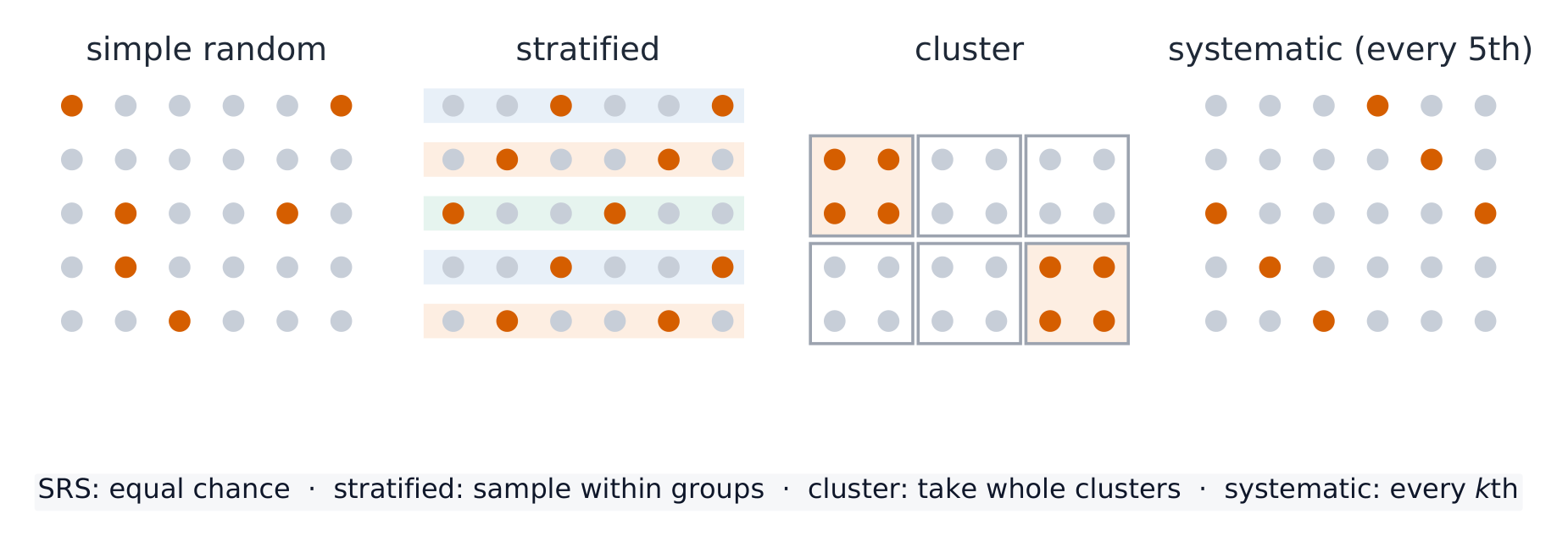
To learn about a population you take a sample 样本. Random sampling 随机抽样 protects against selection bias 偏差 and lets you generalize (it cannot fix undercoverage, nonresponse, or response bias — see below). Common designs:

  • Simple random sample (SRS) 简单随机样本: every group of the chosen size is equally likely.
  • Stratified 分层: split the population into similar strata, then sample within each.
  • Cluster 整群: split into clusters, randomly choose whole clusters.
  • Systematic 系统: pick every $k$th individual from a random start.

A convenience sample 方便样本 or voluntary response sample is not random and is biased.

Worked example. To survey a school, an administrator lists all students by grade and randomly selects $20$ from each grade. This is a stratified sample – the grades are the strata – which guarantees every grade is represented, unlike an SRS that might by chance draw few from one grade.

ไทย

เพื่อเรียนรู้เกี่ยวกับประชากรคุณต้อง取了 ตัวอย่าง. การสุ่มตัวอย่าง ป้องกัน อคติ ในการเลือกและทำให้คุณสามารถ generalize (มันไม่สามารถแก้ไข undercoverage, nonresponse, หรือ response bias – ดูด้านล่าง). แบบแผนทั่วไป:

  • ตัวอย่างสุ่มง่าย (SRS): ทุกกลุ่มขนาดที่เลือกมีความน่าจะเป็นเท่ากัน
  • แบบแบ่งชั้น: แบ่งประชากรเป็นชั้นที่คล้ายกัน, แล้วสุ่มภายในแต่ละชั้น
  • แบบกลุ่ม: แบ่งเป็นกลุ่ม, เลือกทั้งกลุ่มแบบสุ่ม
  • แบบระบบ: เลือกทุก $k$-nth บุคคลจากรandom start
สี่แบบแผนการสุ่มตัวอย่าง: ใครได้รับคัดเลือก, และอย่างไร
การออกแบบการสุ่มตัวอย่างแบบสุ่มสี่แบบ: ใครถูกเลือก และ چگونه

ตัวอย่างความสะดวก หรือ ตัวอย่างการตอบสนองโดยสมัครใจ เป็น ไม่ใช่ แบบสุ่มและมี ความลำเอียง

ตัวอย่างที่แสดงวิธีทำ. เพื่อสำรวจโรงเรียน ผู้บริหารจัดรายชื่อนักเรียนตามระดับชั้นและสุ่มเลือก $20$ จากแต่ละระดับชั้น นี่คือ ตัวอย่างแบบแบ่งชั้น – ระดับชั้นคือชั้น stratification – ซึ่งรับประกันว่าทุกระดับชั้นมีตัวแทนต่างจาก SRS ที่อาจโดยบังเอิญดึงตัวอย่างน้อยจากระดับชั้นใดระดับชั้นหนึ่ง

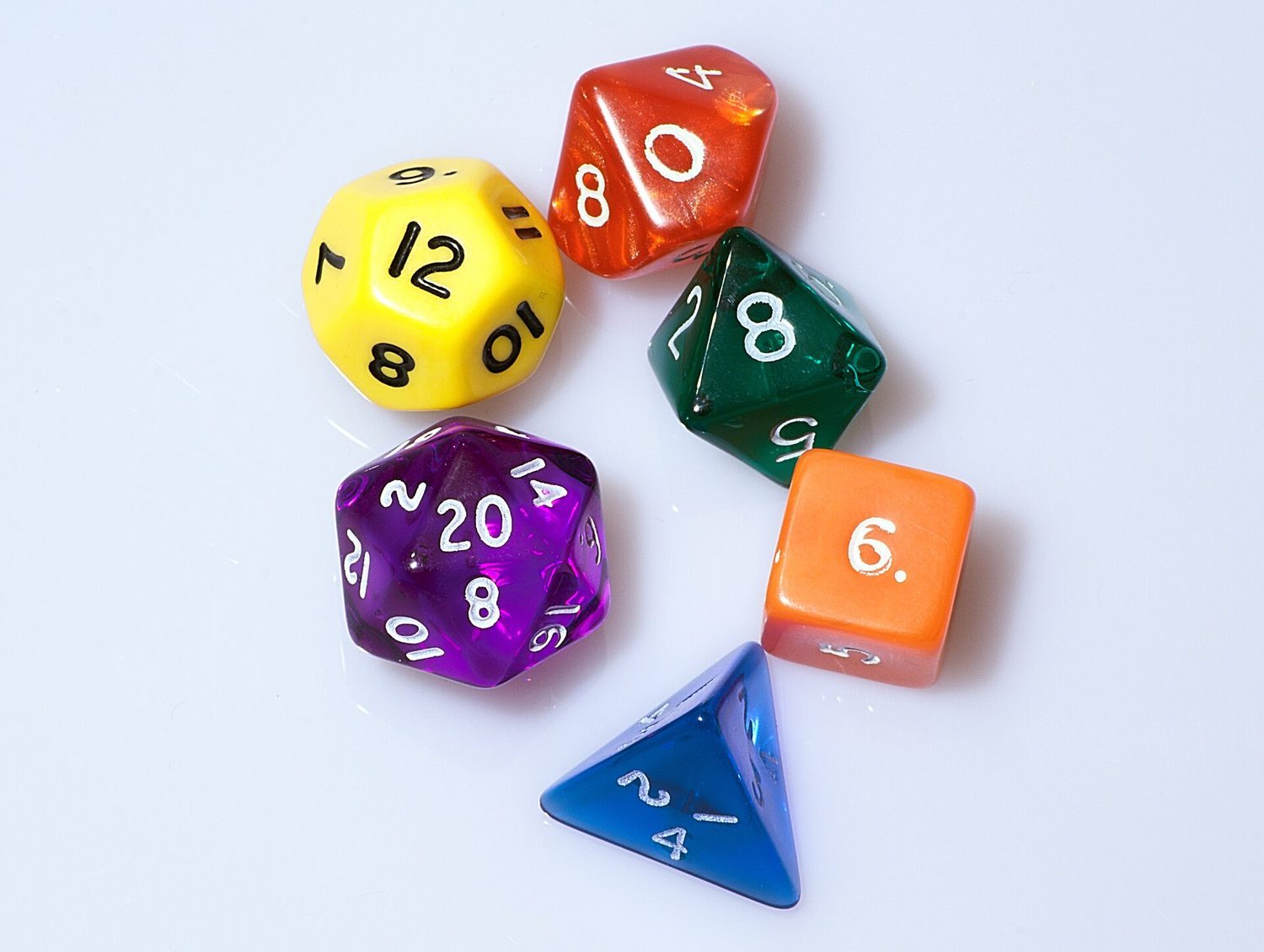
ผลลัพธ์แบบสุ่ม: ลูกเต๋าทำให้แต่ละหน้ามีโอกาสเท่ากันภายใต้เงื่อนไขที่ยุติธรรม
Vocabulary · ⁨คำศัพท์⁩ Train · ⁨ฝึกฝน⁩
English ไทย
bias/ˈbaɪəs/ อคติ
Simple random sample (SRS)/ˈsɪmpl ˈrændəm ˈsæmpl/ ตัวอย่างสุ่มอย่างง่าย (SRS)
Stratified/ˈstrætɪfaɪd/ Stratified
Cluster/ˈklʌstə/ Cluster
Systematic/ˌsɪstəˈmætɪk/ Systematic
convenience sample/kənˈviːnɪəns ˈsæmpl/ ตัวอย่างแบบสะดวก
Undercoverage/ˌʌndəˈkʌvərɪdʒ/ การครอบคลุมไม่เพียงพอ (Undercoverage)
Nonresponse/ˌnɒnrɪˈspɒns/ การไม่ตอบคำถาม
Response bias/rɪˈspɒns ˈbaɪəs/ ความเบี่ยงเบนจากการตอบคำถาม
control group/kənˈtrəʊl ɡruːp/ กลุ่มควบคุม (control group)
placebo/pləˈsiːbəʊ/ ยาหลอกลวง
Random assignment/ˈrændəm əˈsaɪnmənt/ การจัดกลุ่มแบบสุ่ม
Replication/ˌreplɪˈkeɪʃn/ การทำซ้ำ (Replication)
Confounding/kənˈfaʊndɪŋ/ ตัวแปรรบกวน (Confounding)
Blinding/ˈblaɪndɪŋ/ การบดบัง
single-blind/ˈsɪŋɡl blaɪnd/ บอดแบบฝ่ายเดียว (single-blind)
double-blind/ˈdʌbl blaɪnd/ บอดแบบสองฝ่าย (double-blind)
Blocking/ˈblɒkɪŋ/ การจัดกลุ่มตัวแปร
3.4

When Sampling Goes Wrong · ⁨เมื่อการสุ่มตัวอย่างผิดพลาด⁩

Syllabus · ⁨หลักสูตร⁩
English

Enduring Understanding (DAT-2): The way we collect data influences what we can and cannot say about a population.

Learning Objective DAT-2.E: Identify potential sources of bias in sampling methods. [Skill 1.C]

  • DAT-2.E.1 Bias occurs when certain responses are systematically favored over others.
  • DAT-2.E.2 When a sample is comprised entirely of volunteers or people who choose to participate, the sample will typically not be representative of the population (voluntary response bias).
  • DAT-2.E.3 When part of the population has a reduced chance of being included in the sample, the sample will typically not be representative of the population (undercoverage bias).
  • DAT-2.E.4 Individuals chosen for the sample for whom data cannot be obtained (or who refuse to respond) may differ from those for whom data can be obtained (nonresponse bias).
  • DAT-2.E.5 Problems in the data gathering instrument or process result in response bias. Examples include questions that are confusing or leading (question wording bias) and self-reported responses.
  • DAT-2.E.6 Non-random sampling methods (for example, samples chosen by convenience or voluntary response) introduce potential for bias because they do not use chance to select the individuals.
ไทย

ความเข้าใจที่ยั่งยืน (DAT-2): วิธีการที่เราเก็บข้อมูลมีผลต่อสิ่งที่เราสามารถพูดและไม่สามารถพูดเกี่ยวกับประชากรได้

วัตถุประสงค์การเรียนรู้ DAT-2.E: ระบุแหล่งที่มาที่เป็นไปได้ของความเบี่ยงเบน (bias) ในวิธีการสุ่มตัวอย่าง [ทักษะ 1.C]

  • DAT-2.E.1 ความเบี่ยงเบนเกิดขึ้นเมื่อคำตอบบางประเภทถูกสนับสนุนอย่างเป็นระบบมากกว่าอีกประเภทหนึ่ง
  • DAT-2.E.2 เมื่อตัวอย่างประกอบด้วยผู้สมัครใจทั้งหมดหรือคนที่เลือกเข้าร่วม ตัวอย่างนั้นมักจะไม่เป็นตัวแทนของประชากร (ความเบี่ยงเบนจากการตอบแบบสมัครใจ - voluntary response bias)
  • DAT-2.E.3 เมื่อส่วนหนึ่งของประชากรมีโอกาสถูกนำเข้าสู่ตัวอย่างลดลง ตัวอย่างนั้นมักจะไม่เป็นตัวแทนของประชากร (ความเบี่ยงเบนจากการครอบคลุมไม่เพียงพอ - undercoverage bias)
  • DAT-2.E.4 บุคคลที่ถูกเลือกเข้าตัวอย่างซึ่งไม่สามารถเก็บข้อมูลได้ (หรือปฏิเสธที่จะตอบ) อาจแตกต่างจากผู้ที่สามารถเก็บข้อมูลได้ (ความเบี่ยงเบนจากการไม่ตอบกลับ - nonresponse bias)
  • DAT-2.E.5 ปัญหาในเครื่องมือหรือกระบวนการเก็บรวบรวมข้อมูลส่งผลให้เกิดความเบี่ยงเบนในการตอบ ตัวอย่างเช่น คำถามที่สับสนหรือชี้นำ (ความเบี่ยงเบนจากรูปแบบคำถาม - question wording bias) และการตอบด้วยตนเอง
  • DAT-2.E.6 วิธีการสุ่มตัวอย่างที่ไม่ได้สุ่ม (เช่น การเลือกตัวอย่างตามความสะดวกหรือการตอบแบบสมัครใจ) นำไปสู่ความเป็นไปได้ของความเบี่ยงเบนเพราะไม่ได้ใช้โอกาสในการเลือกบุคคล

Source: College Board AP Course and Exam Description · ⁨แหล่งที่มา: คำอธิบายหลักสูตรและข้อสอบ College Board AP⁩

English

Bias makes estimates systematically miss the truth:

  • Undercoverage 覆盖不足: some groups are left out of the sampling frame.
  • Nonresponse 无回应: selected people do not answer.
  • Response bias 回应偏差: people answer inaccurately (bad wording, sensitive topics).

Bias is about a consistent error in one direction – increasing the sample size does not fix it.

ไทย

ความลำเอียง ทำให้ค่าประมาณคลาดเคลื่อนจากความจริงอย่างมีระบบ:

  • การครอบคลุมไม่เพียงพอ: กลุ่มบางกลุ่มถูกตัดออกจากกรอบการสุ่มตัวอย่าง
  • การไม่ตอบกลับ: บุคคลที่ถูกเลือกไม่ตอบคำถาม
  • ความลำเอียงจากการตอบกลับ: ผู้ตอบตอบไม่ถูกต้อง (การตั้งคำถามที่ไม่ดี, หัวข้อที่อ่อนไหว)

ความลำเอียงเป็นเรื่องของ ความคลาดเคลื่อนที่สม่ำเสมอ ในทิศทางใดทิศทางหนึ่ง – การเพิ่มขนาดตัวอย่างไม่ได้แก้ปัญหา

ตัวอย่างความสะดวกขาดจากประชากร: ความลำเอียงแทรกซึมเข้ามาเมื่อการคัดเลือกไม่เป็นแบบสุ่ม
3.5

Designing an Experiment · ⁨การออกแบบการทดลอง⁩

Syllabus · ⁨หลักสูตร⁩
English

Enduring Understanding (VAR-3): Well-designed experiments can establish evidence of causal relationships.

Learning Objective VAR-3.A: Identify the components of an experiment. [Skill 1.C]

  • VAR-3.A.1 The experimental units are the individuals (which may be people or other objects of study) that are assigned treatments. When experimental units consist of people, they are sometimes referred to as participants or subjects.
  • VAR-3.A.2 An explanatory variable (or factor) in an experiment is a variable whose levels are manipulated intentionally. The levels or combination of levels of the explanatory variable(s) are called treatments.
  • VAR-3.A.3 A response variable in an experiment is an outcome from the experimental units that is measured after the treatments have been administered.
  • VAR-3.A.4 A confounding variable in an experiment is a variable that is related to the explanatory variable and influences the response variable and may create a false perception of association between the two.

Learning Objective VAR-3.B: Describe elements of a well-designed experiment. [Skill 1.B]

  • VAR-3.B.1 A well-designed experiment should include the following:
    • a. Comparisons of at least two treatment groups, one of which could be a control group.
    • b. Random assignment/allocation of treatments to experimental units.
    • c. Replication (more than one experimental unit in each treatment group).
    • d. Control of potential confounding variables where appropriate.

Learning Objective VAR-3.C: Compare experimental designs and methods. [Skill 1.C]

  • VAR-3.C.1 In a completely randomized design, treatments are assigned to experimental units completely at random. Random assignment tends to balance the effects of uncontrolled (confounding) variables so that differences in responses can be attributed to the treatments.
  • VAR-3.C.2 Methods for randomly assigning treatments to experimental units in a completely randomized design include using a random number generator, a table of random values, drawing chips without replacement, etc.
  • VAR-3.C.3 In a single-blind experiment, subjects do not know which treatment they are receiving, but members of the research team do, or vice versa.
  • VAR-3.C.4 In a double-blind experiment neither the subjects nor the members of the research team who interact with them know which treatment a subject is receiving.
  • VAR-3.C.5 A control group is a collection of experimental units either not given a treatment of interest or given a treatment with an inactive substance (placebo) in order to determine if the treatment of interest has an effect.
  • VAR-3.C.6 The placebo effect occurs when experimental units have a response to a placebo.
  • VAR-3.C.7 For randomized complete block designs, treatments are assigned completely at random within each block.
  • VAR-3.C.8 Blocking ensures that at the beginning of the experiment the units within each block are similar to each other with respect to at least one blocking variable. A randomized block design helps to separate natural variability from differences due to the blocking variable.
  • VAR-3.C.9 A matched pairs design is a special case of a randomized block design. Using a blocking variable, subjects (whether they are people or not) are arranged in pairs matched on relevant factors. Matched pairs may be formed naturally or by the experimenter. Every pair receives both treatments by randomly assigning one treatment to one member of the pair and subsequently assigning the remaining treatment to the second member of the pair. Alternately, each subject may get both treatments.
ไทย

ความเข้าใจที่ยั่งยืน (VAR-3): การทดลองที่มีการออกแบบอย่างดีสามารถสร้างความเชื่อมโยงเชิงเหตุและผลได้

วัตถุประสงค์การเรียนรู้ VAR-3.A: ระบุองค์ประกอบของการทดลอง [ทักษะ 1.C]

  • VAR-3.A.1 หน่วยทดลอง (experimental units) คือบุคคล (ซึ่งอาจเป็นมนุษย์หรือวัตถุอื่นๆ ที่ศึกษา) ที่ได้รับ treatment เมื่อหน่วยทดลองประกอบด้วยคน บางครั้งจะถูกเรียกว่า ผู้เข้าร่วม (participants) หรือ วัตถุ (subjects)
  • VAR-3.A.2 ตัวแปรอธิบาย (explanatory variable) หรือ ปัจจัย (factor) ในการทดลองคือตัวแปรwhose ระดับถูกจัดการอย่างตั้งใจ ระดับหรือชุดรวมของระดับของตัวแปรอธิบาย(s) ถูกเรียกว่า treatment
  • VAR-3.A.3 ตัวแปรตอบสนอง (response variable) ในการทดลองคือผลลัพธ์จากหน่วยทดลองที่ถูกวัดหลังจาก administering treatments แล้ว
  • VAR-3.A.4 ตัวแปรรบกวน (confounding variable) ในการทดลองคือตัวแปรที่เกี่ยวข้องกับตัวแปรอธิบายและมีอิทธิพลต่อตัวแปรตอบสนองและอาจสร้างความเข้าใจผิดว่ามีความสัมพันธ์ระหว่างสองสิ่งนี้

วัตถุประสงค์การเรียนรู้ VAR-3.B: อธิบายองค์ประกอบการทดลองที่มีการออกแบบอย่างดี [ทักษะ 1.B]

  • VAR-3.B.1 การทดลองที่มีการออกแบบอย่างดีควรประกอบด้วยสิ่งต่อไปนี้:
    • ก. การเปรียบเทียบอย่างน้อยสองกลุ่ม treatment ซึ่งกลุ่มหนึ่งอาจเป็นกลุ่มควบคุม
    • ข. การจัดสรรแบบสุ่ม/จัดลำดับ treatment ไปยังหน่วยทดลอง
    • ค. การทำซ้ำ (replication) (มีหน่วยทดลองมากกว่าหนึ่งหน่วยในแต่ละกลุ่ม treatment)
    • ง. การควบคุมตัวแปรรบกวนที่เป็นไปได้เมื่อเหมาะสม

วัตถุประสงค์การเรียนรู้ VAR-3.C: เปรียบเทียบการออกแบบและการทดลองวิธีการ [ทักษะ 1.C]

  • VAR-3.C.1 ในการออกแบบแบบสุ่มสมบูรณ์ (completely randomized design) treatment ถูกจัดสรรไปยังหน่วยทดลองอย่างสุ่มโดยสิ้นเชิง การจัดสรรแบบสุ่มมีแนวโน้มที่จะปรับสมดุลผลกระทบของตัวแปรที่ไม่ถูกควบคุม (ตัวแปรรบกวน) เพื่อให้ความแตกต่างในการตอบสนองสามารถอธิบายได้ด้วย treatment
  • VAR-3.C.2 วิธีการสำหรับการจัดสรร treatment แบบสุ่มไปยังหน่วยทดลองในการออกแบบแบบสุ่มสมบูรณ์รวมถึงการใช้เครื่องสร้างตัวเลขสุ่ม, ตารางค่าสุ่ม, การจับสลากโดยไม่มีการแทนที่, เป็นต้น
  • VAR-3.C.3 ในการทดลองแบบบอดเดียว (single-blind experiment) วิทยากรไม่รู้ว่ากำลังได้รับ treatment了什么 แต่สมาชิกทีมวิจัยรู้ หรือในทางกลับกัน
  • VAR-3.C.4 ในการทดลองแบบบอดสองชั้น (double-blind experiment) neither วิทยากร nor สมาชิกทีมวิจัยที่ติดต่อกับพวกเขาทราบว่า วิทยากรกำลังได้รับ treatment什么
  • VAR-3.C.5 กลุ่มควบคุม (control group) คือชุดรวมของหน่วยทดลองที่ไม่ได้รับ treatment ที่สนใจ หรือได้รับ treatment ที่มีสารไม่มีฤทธิ์ (placebo) เพื่อกำหนด xem treatment ที่สนใจมีผลหรือไม่
  • VAR-3.C.6 ผลกระทบของยาหลอก (placebo effect) เกิดขึ้นเมื่อหน่วยทดลองมีตอบสนองต่อยาหลอก
  • VAR-3.C.7 สำหรับการออกแบบบล็อกแบบสุ่มสมบูรณ์ (randomized complete block designs) treatment ถูกจัดสรรอย่างสุ่มโดยสิ้นเชิงภายในแต่ละบล็อก
  • VAR-3.C.8 การทำบล็อก (blocking) รับประกันว่า ณ จุดเริ่มต้นของการทดลอง หน่วยภายในแต่ละบล็อกจะมีลักษณะคล้ายคลึงกัน regarding at least one blocking variable. การออกแบบแบบบล็อกแบบสุ่มช่วยแยกความแปรปรวนธรรมชาติออกจากความแตกต่างที่เกิดจากตัวแปรที่ทำบล็อก
  • VAR-3.C.9 การออกแบบจับคู่ (matched pairs design) เป็นกรณีพิเศษของการออกแบบบล็อกแบบสุ่ม Using ตัวแปรการบล็อค (blocking variable) หน่วยงานทดสอบ (ซึ่งอาจเป็นบุคคลหรือไม่ก็ตาม) จะถูกจัดเรียงเป็นคู่โดยจับคู่ตามปัจจัยที่เกี่ยวข้อง คู่ที่จับคู่กันอาจเกิดขึ้นได้เองตามธรรมชาติหรือผู้ทดลองสามารถสร้างขึ้นก็ได้ ทุกคู่จะได้รับทั้งการรักษา (treatments) โดยสุ่มเลือกให้สมาชิกคนหนึ่งในคู่รับการรักษาหนึ่ง และ afterward asign treatment ที่เหลือให้กับอีกสมาชิกในคู่ หรือ alternatively, หน่วยงานแต่ละตัวอาจได้รับทั้งสองการรักษา

Source: College Board AP Course and Exam Description · ⁨แหล่งที่มา: คำอธิบายหลักสูตรและข้อสอบ College Board AP⁩

English

Good experiments follow three principles:

  • Comparison with a control group 对照组 (often a placebo 安慰剂).
  • Random assignment 随机分配 of subjects to treatments, to balance out other variables.
  • Replication 重复: enough subjects per treatment to see a real effect.

Confounding 混杂 occurs when another variable is tied to the treatment so their effects cannot be separated; random assignment guards against it. Blinding 盲法 hides who is getting which treatment to prevent expectation effects: in a single-blind 单盲 study only one side is kept unaware (usually the subjects, or only the people assessing the result), while in a double-blind 双盲 study neither the subjects nor the researchers who interact with them know, blocking both the placebo effect and biased assessment. Blocking 区组 groups similar subjects and randomizes within each block to reduce variability.

ไทย

การทดลองที่ดีต้องปฏิบัติตามหลักการสามประการ:

  • การเปรียบเทียบ กับ กลุ่มควบคุม (มักจะเป็น ยาหลอก)
  • การกำหนดแบบสุ่ม ของผู้เข้าร่วมเพื่อเข้ากลุ่มการรักษา เพื่อปรับสมดุลตัวแปรอื่นๆ
  • การทำซ้ำ: มีผู้เข้าร่วมพอเพียงต่อ每组การรักษาเพื่อดูผลจริง
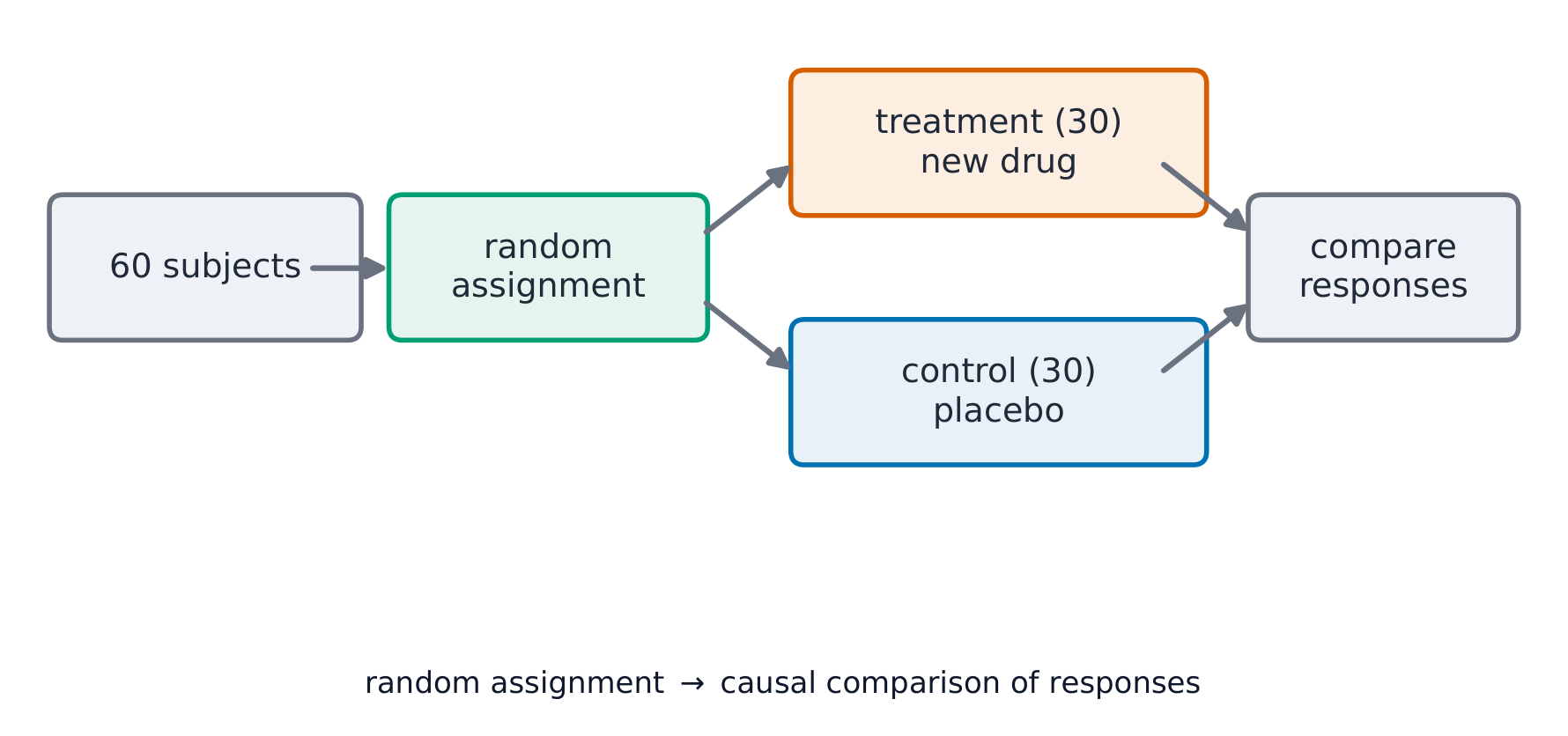
การทดลองแบบสุ่มทั้งหมดเปรียบเทียบกลุ่มการรักษากับกลุ่มควบคุม

ความรบกวน เกิดขึ้นเมื่อตัวแปรอื่นผูกติดกับการรักษา sehinggaผลกระทบไม่สามารถแยกออกจากกันได้; การกำหนดแบบสุ่มช่วยป้องกันได้ การบดบัง บังคับให้ไม่รู้ว่าเป็นใครได้รับการรักษาอะไรเพื่อป้องกันผลจากความคาดหวัง: ในการศึกษา แบบบดบังเดียว มีเพียงฝ่ายเดียวที่ไม่ทราบ (มักเป็นผู้เข้าร่วม หรือเฉพาะผู้ประเมินผลลัพธ์) ในขณะที่การศึกษา แบบบดบังสอง ทั้ง ผู้เข้าร่วมและผู้วิจัยที่ติดต่อกับพวกเขาไม่ทราบ ช่วยปิดกั้นทั้งผลยาหลอกและการประเมินที่มีอคติ การแบ่งกลุ่ม จัดกลุ่มผู้เข้าร่วมที่คล้ายกันและสุ่มภายในแต่ละกลุ่มเพื่อลดความแปรปรวน

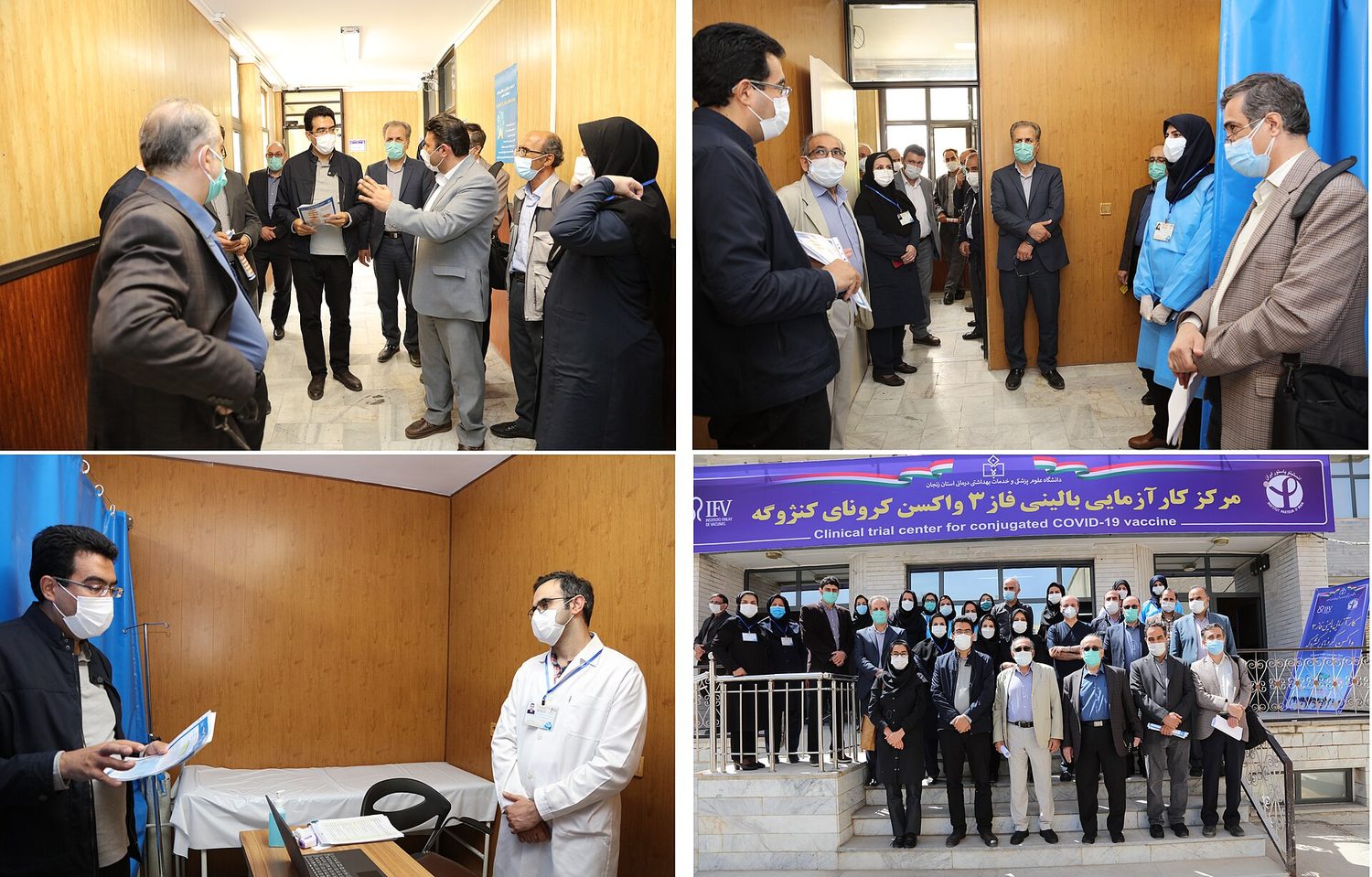
การทดลองทางคลินิก: การกำหนดแบบสุ่มแยกการรักษาออกจากกลุ่มควบคุม
Vocabulary · ⁨คำศัพท์⁩ Train · ⁨ฝึกฝน⁩
English ไทย
population/ˌpɒpjʊˈleɪʃn/ ประชากร
observational study/ɒbzəˈveɪʃənl ˈstʌdi/ การศึกษาแบบสังเกต
experiment/ekˈsperɪmənt/ การทดลอง
3.6

Choosing the Right Design · ⁨การเลือกการออกแบบที่เหมาะสม⁩

Syllabus · ⁨หลักสูตร⁩
English
Enduring UnderstandingLearning ObjectiveEssential Knowledge

VAR-3
Well-designed experiments can establish evidence of causal relationships.

VAR-3.D
Explain why a particular experimental design is appropriate. [Skill 1.C]

  • VAR-3.D.1 There are advantages and disadvantages for each experimental design depending on the question of interest, the resources available, and the nature of the experimental units.
ไทย

ความเข้าใจที่ยั่งยืน (VAR-3): การทดลองที่มีการออกแบบอย่างดีสามารถสร้างความเชื่อมโยงเชิงเหตุและผลได้

Learning ObjectiveEssential Knowledge

VAR-3.D
อธิบายเหตุผลว่าทำไมการออกแบบการทดลองแบบใดแบบหนึ่งจึงเหมาะสม [Skill 1.C]

  • VAR-3.D.1 แต่ละการออกแบบการทดลองมีข้อดีและข้อเสียขึ้นอยู่กับคำถามที่ต้องการศึกษา ทรัพยากรที่มีอยู่ และลักษณะของหน่วยงานการทดลอง

Source: College Board AP Course and Exam Description · ⁨แหล่งที่มา: คำอธิบายหลักสูตรและข้อสอบ College Board AP⁩

English

Match the design to the goal: use a completely randomized design for uniform subjects; a randomized block design when a known variable (sex, age) affects the response; a matched-pairs design when each subject can serve as its own control. State how you would carry out the randomization.

ไทย

จับคู่การออกแบบกับเป้าหมาย: ใช้ การออกแบบแบบสุ่มทั้งหมด สำหรับผู้เข้าร่วมที่เป็นเนื้อเดียวกัน; การออกแบบแบบสุ่มด้วยกลุ่ม เมื่อตัวแปรที่ทราบ (เพศ, อายุ) ส่งผลต่อการตอบสนอง; การออกแบบคู่จับคู่ เมื่อผู้เข้าร่วมแต่ละคนสามารถทำหน้าที่เป็นกลุ่มควบคุมของตนเองได้ ระบุวิธีการดำเนินการสุ่มของคุณ

3.7

What an Experiment Lets You Conclude · ⁨สิ่งที่การทดลองให้คุณสรุปได้⁩

Syllabus · ⁨หลักสูตร⁩
English
Enduring UnderstandingLearning ObjectiveEssential Knowledge

VAR-3
Well-designed experiments can establish evidence of causal relationships.

VAR-3.E
Interpret the results of a well-designed experiment. [Skill 4.B]

  • VAR-3.E.1 Statistical inference attributes conclusions based on data to the distribution from which the data were collected.
  • VAR-3.E.2 Random assignment of treatments to experimental units allows researchers to conclude that some observed changes are so large as to be unlikely to have occurred by chance. Such changes are said to be statistically significant.
  • VAR-3.E.3 Statistically significant differences between or among experimental treatment groups are evidence that the treatments caused the effect.
  • VAR-3.E.4 If the experimental units used in an experiment are representative of some larger group of units, the results of an experiment can be generalized to the larger group. Random selection of experimental units gives a better chance that the units will be representative.
ไทย

ความเข้าใจที่ยั่งยืน (VAR-3): การทดลองที่มีการออกแบบอย่างดีสามารถสร้างความเชื่อมโยงเชิงเหตุและผลได้

Learning ObjectiveEssential Knowledge

VAR-3.E
ตีความผลการทดลองที่มีการออกแบบอย่างดี [Skill 4.B]

  • VAR-3.E.1 การอนุมานทางสถิติ (Statistical inference) เชื่อมโยงข้อสรุปจากข้อมูลเข้ากับประชากร (distribution) ที่ข้อมูลนั้นถูกเก็บรวบรวมมาจาก
  • VAR-3.E.2 การสุ่มมอบการรักษา (Random assignment) ให้กับหน่วยงานการทดลองช่วยให้ผู้วิจัยสรุปได้ว่าเปลี่ยนแปลง某些 observed changes มีขนาดใหญ่จน unlikely to have occurred by chance เปลี่ยนแปลงดังกล่าวเรียกว่ามีความสำคัญทางสถิติ (statistically significant)
  • VAR-3.E.3 ความแตกต่างที่สำคัญทางสถิติระหว่างหรือในกลุ่มกลุ่มการรักษา (experimental treatment groups) เป็นหลักฐานว่าการรักษาเป็นสาเหตุของผลลัพธ์
  • VAR-3.E.4 หากหน่วยงานการทดลองที่ใช้ในการทดลองเป็นตัวแทนของประชากรขนาดใหญ่ ผลการทดลองสามารถ generalize ไปยังประชากรนั้นได้ การสุ่มเลือกหน่วยงานการทดลอง (Random selection) เพิ่มโอกาสที่หน่วยงานเหล่านั้นจะเป็นตัวแทนที่ดีขึ้น

Source: College Board AP Course and Exam Description · ⁨แหล่งที่มา: คำอธิบายหลักสูตรและข้อสอบ College Board AP⁩

English

Two questions decide the scope of a conclusion:

  • Random assignment used? Then a significant difference can be attributed to the treatment (causation) – for these subjects.
  • Random sampling from a population? Then results generalize to that population.

Only an experiment with random assignment supports a cause-and-effect claim; only random sampling supports generalization. Say exactly which you have.

Worked example. Researchers randomly assign $100$ volunteers to a new drug or a placebo, and the drug group improves significantly more. Because of the random assignment, the improvement can be attributed to the drug (causation) – but because the subjects were not randomly sampled, the conclusion applies only to these volunteers and does not automatically generalize to everyone.

ไทย

สองคำถามจะกำหนดขอบเขตของการสรุป:

  • มีการ กำหนดแบบสุ่ม หรือไม่? แล้วความแตกต่างที่สำคัญสามารถอธิบายได้ด้วย treatment (สาเหตุ) – สำหรับผู้เข้าร่วมเหล่านี้
  • มีการ สุ่มตัวอย่าง จากประชากรหรือไม่? แล้วผลลัพธ์ ขยายผล ไปยังประชากรนั้น

เฉพาะการทดลองที่มีการกำหนดแบบสุ่มจึงรองรับการอ้างถึงเหตุและผล; และการสุ่มตัวอย่างเท่านั้นที่รองรับการขยายผล บอกให้ชัดเจนว่าคุณมีสิ่งใดบ้าง

ตัวอย่างที่แสดงวิธีทำ. นักวิจัยสุ่มกำหนด $100$ ผู้อาสาสมัคร ให้รับยารุ่นใหม่หรือยาหลอก และกลุ่มยารุ่นใหม่ดีขึ้นอย่างมีนัยสำคัญ เนื่องจาก การกำหนดแบบสุ่ม การพัฒนาสามารถอธิบายได้ด้วยยารุ่นใหม่ (สาเหตุ) – แต่เนื่องจากผู้เข้าร่วม ไม่ได้สุ่มตัวอย่าง จากประชากร สรุปนี้ใช้ได้เฉพาะกับผู้อาสาสมัครเหล่านี้และไม่ขยายผลไปยังทุกคนโดยอัตโนมัติ

3.7

Exam tips · ⁨ข้อแนะนำสำหรับการสอบ⁩

English
  • Distinguish an observational study (finds association) from an experiment (can show causation).
  • Good sampling is random (SRS, stratified, cluster) — beware bias (voluntary response, undercoverage, nonresponse).
  • Good experiments use control, randomization, and replication; blocking handles a known nuisance variable.
  • Only a randomized experiment supports a cause-and-effect conclusion.
  • Name the population, sample, and any confounding clearly.
ไทย
  • แยกแยะระหว่าง การศึกษาระงับติดตาม (หาความสัมพันธ์) กับ การทดลอง (สามารถแสดงความสัมพันธ์เชิงสาเหตุ)
  • การสุ่มตัวอย่างที่ดีต้องเป็น แบบสุ่ม (SRS, แบ่งชั้น, กลุ่ม) – ระวังความลำเอียง (การตอบสนองโดยสมัครใจ, การครอบคลุมไม่เพียงพอ, การไม่ตอบกลับ)
  • การทดลองที่ดีใช้ การควบคุม, การสุ่ม, และการทำซ้ำ; การแบ่งกลุ่มจัดการกับตัวแปรรบกวนที่ทราบ
  • เฉพาะการทดลองแบบสุ่มเท่านั้นที่รองรับการสรุปเรื่องเหตุและผล
  • ระบุชื่อประชากร ตัวอย่าง และความรบกวนให้ชัดเจน

Interactive lessons on this topic · ⁨บทเรียนเชิงโต้ตอบสำหรับหัวข้อนี้⁩

Work through it step by step, with instant-check exercises. · ⁨ทำทีละขั้นตอน พร้อมแบบฝึกหัดตรวจสอบผลทันที⁩

Past Papers · ⁨ข้อสอบย้อนหลัง⁩

More topics in AP Statistics · ⁨หัวข้อเพิ่มเติมใน AP Statistics⁩

Log in or create account · ⁨เข้าสู่ระบบหรือสร้างบัญชี⁩

IGCSE, A-Level & AP