Skip to content · ⁨ข้ามไปยังเนื้อหา⁩

Aquatic and Terrestrial Pollution · ⁨มลพิษทางน้ำและบนบก⁩

AP Environmental Science · Topic 8 · ⁨หัวข้อ 8⁩

Video lesson for this topic · ⁨บทเรียนวิดีโอสำหรับหัวข้อนี้⁩ Open the video page · ⁨เปิดหน้าวิดีโอ⁩
8:37

มลพิษทางน้ำและบนบก

ดูบ่อน้ำนี้ มันสีเขียวสด และเต็มไปด้วยชีวิต ปลาทุกตัวในนั้นตายแล้ว ตอนนี้ดูภูเขาใบนี้ มันไม่ใช่ภูเขา มันคือขยะของเรา被埋藏...

English narration · English + 中文 subtitles burned in · ⁨การบรรยายภาษาอังกฤษ · คำบรรยายภาษาอังกฤษ + 中文 ลอยตัวบนภาพ⁩

8.1

Sources of Pollution · ⁨แหล่งกำเนิดมลพิษ⁩

Syllabus · ⁨หลักสูตร⁩
English

Enduring Understanding (STB-3): Human activities, including the use of resources, have physical, chemical, and biological consequences for ecosystems.

Learning Objective STB-3.A: Identify differences between point and nonpoint sources of pollution.

  • STB-3.A.1 A point source refers to a single, identifiable source of a pollutant, such as a smokestack or waste discharge pipe.
  • STB-3.A.2 Nonpoint sources of pollution are diffused and can therefore be difficult to identify, such as pesticide spraying or urban runoff.
ไทย

ความเข้าใจที่ยั่งยืน (STB-3): กิจกรรมของมนุษย์ รวมถึงการใช้ทรัพยากร มีผลกระทบทางกายภาพ เคมี และชีวภาพต่อระบบนิเวศ

จุดประสงค์การเรียนรู้ STB-3.A: ระบุความแตกต่างระหว่างแหล่งกำเนิดมลพิษแบบจุดและไม่ใช้จุด

  • STB-3.A.1 แหล่งกำเนิดแบบจุดหมายถึงแหล่งกำเนิดที่ระบุได้ชัดเจนแห่งเดียวของสารปนเปื้อน เช่น เสาควันหรือท่อระบายของเสีย
  • STB-3.A.2 แหล่งกำเนิดมลพิษที่ไม่ใช้จุดมีการกระจายตัวและดังนั้นจึงอาจระบุได้ยาก เช่น การพ่นสารกำจัดศัตรูพืชหรือน้ำ runoff จากพื้นที่เมือง
Source: College Board AP Course and Exam Description · ⁨แหล่งที่มา: คำอธิบายหลักสูตรและข้อสอบ College Board AP⁩

English

Pollution sources are point or nonpoint. A point source 点源 comes from a single, identifiable place (a factory pipe, a sewage outfall) – easy to locate and regulate. A nonpoint source 非点源 is spread out (farm runoff, urban street runoff, car exhaust) – much harder to control because it comes from everywhere.

ไทย

แหล่งกำเนิดมลพิษเป็นแบบ จุด หรือ ไม่ระบุจุด แหล่งกำเนิดแบบจุด มาจากสถานที่เดียวที่ระบุได้ชัดเจน (ท่อโรงงาน, ทางระบายน้ำเสีย) – หาตำแหน่งและควบคุมได้ง่าย แหล่งกำเนิดแบบไม่ระบุจุด กระจายตัว (น้ำไหลล้างจากฟาร์ม, น้ำไหลล้างจากถนนในเมือง, exhaustจากรถยนต์) – ควบคุมยากมากเพราะมาจากทุกที่

8.2

Human Impacts on Ecosystems · ⁨ผลกระทบของมนุษย์ต่อระบบนิเวศ⁩

Syllabus · ⁨หลักสูตร⁩
English

Enduring Understanding (STB-3): Human activities, including the use of resources, have physical, chemical, and biological consequences for ecosystems.

Learning Objective STB-3.B: Describe the impacts of human activities on aquatic ecosystems.

  • STB-3.B.1 Organisms have a range of tolerance for various pollutants. Organisms have an optimum range for each factor where they can maintain homeostasis. Outside of this range, organisms may experience physiological stress, limited growth, reduced reproduction, and in extreme cases, death.
  • STB-3.B.2 Coral reefs have been suffering damage due to a variety of factors, including increasing ocean temperature, sediment runoff, and destructive fishing practices.
  • STB-3.B.3 Oil spills in marine waters cause organisms to die from the hydrocarbons in oil. Oil that floats on the surface of water can coat the feathers of birds and fur of marine mammals. Some components of oil sink to the ocean floor, killing some bottom-dwelling organisms.
  • STB-3.B.4 Oil that washes up on the beach can have economic consequences on the fishing and tourism industries.
  • STB-3.B.5 Oceanic dead zones are areas of low oxygen in the world's oceans caused by increased nutrient pollution.
  • STB-3.B.6 An oxygen sag curve is a plot of dissolved oxygen levels versus the distance from a source of pollution, usually excess nutrients and biological refuse.
  • STB-3.B.7 Heavy metals used for industry, especially mining and burning of fossil fuels, can reach the groundwater, impacting the drinking water supply.
  • STB-3.B.8 Litter that reaches aquatic ecosystems, besides being unsightly, can create intestinal blockage and choking hazards for wildlife and introduce toxic substances to the food chain.
  • STB-3.B.9 Increased sediment in waterways can reduce light infiltration, which can affect primary producers and visual predators. Sediment can also settle, disrupting habitats.
  • STB-3.B.10 When elemental sources of mercury enter aquatic environments, bacteria in the water convert it to highly toxic methylmercury.
ไทย

ความเข้าใจที่ยั่งยืน (STB-3): กิจกรรมของมนุษย์ รวมถึงการใช้ทรัพยากร มีผลกระทบทางกายภาพ เคมี และชีวภาพต่อระบบนิเวศ

จุดประสงค์การเรียนรู้ STB-3.B: อธิบายผลกระทบของกิจกรรมมนุษย์ต่อระบบนิเวศทางน้ำ

  • STB-3.B.1 สิ่งมีชีวิตมีช่วงความทนทานต่อมลพิษต่างๆ มีช่วงที่เหมาะสมสำหรับแต่ละปัจจัยเพื่อให้รักษาสภาพสมดุลภายในได้ خارجเหนือหรือต่ำกว่าช่วงนี้ สิ่งมีชีวิตอาจเกิดความเครียดทางสรีรวิทยา การเจริญเติบโตจำกัด การสืบพันธุ์ลดลง และในกรณีรุนแรงอาจถึงขั้นตาย
  • STB-3.B.2 ปะการังกำลังได้รับความเสียหายจากหลายปัจจัย เช่น อุณหภูมิทะเลที่สูงขึ้น การไหลบ่าของตะกอน และการทำประมงที่ทำลายระบบนิเวศ
  • STB-3.B.3 น้ำมันรั่วไหลในทะเลทำให้สิ่งมีชีวิตตายเนื่องจากไฮโดรคาร์บอนในน้ำมัน น้ำมันที่ลอยอยู่บนผิวน้ำสามารถเคลือบขนนกและขนสัตว์ของสัตว์เลี้ยงลูกด้วยนมในทะเล ส่วนประกอบบางส่วนของน้ำมันจมลงสู่ก้นทะเล ทำให้สิ่งมีชีวิตที่อยู่ก้นทะเลตาย
  • STB-3.B.4 น้ำมันที่ washed up บนชายหาดส่งผลกระทบต่อเศรษฐกิจในอุตสาหกรรมประมงและการท่องเที่ยว
  • STB-3.B.5 พื้นที่ว่างเปล่าในมหาสมุทร (Oceanic dead zones) คือบริเวณที่มีออกซิเจนต่ำในมหาสมุทรทั่วโลกซึ่งเกิดจากมลพิษสารอาหารที่เพิ่มขึ้น
  • STB-3.B.6 กราฟออกซิเจนตก (Oxygen sag curve) คือกราฟแสดงความสัมพันธ์ระหว่างระดับออกซิเจนละลายกับระยะห่างจากแหล่งกำเนิดมลพิษ มักเป็นสารอาหารเกินและขยะชีวภาพ
  • STB-3.B.7 โลหะหนักที่ใช้ในอุตสาหกรรม โดยเฉพาะการเหมืองแร่และการเผาไหม้เชื้อเพลิงฟอสซิล สามารถซึมเข้าสู่ชั้นน้ำใต้ดิน ส่งผลต่อการจัดหาน้ำดื่ม
  • STB-3.B.8 ขยะที่ไหลเข้าสู่ระบบนิเวศทางน้ำ นอกจากจะดูไม่สวยงามแล้ว ยังอาจทำให้เกิดการอุดตันในลำไส้และความเสี่ยงต่อการสำลักในสัตว์ป่า และนำสารพิษเข้าสู่ห่วงโซ่อาหาร
  • STB-3.B.9 การเพิ่มขึ้นของตะกอนในแหล่งน้ำอาจลดการส่องผ่านของแสง ซึ่งส่งผลต่อผู้ผลิตหลักและสัตว์นักล่าที่ใช้สายตา ตะกอนยังสามารถตกสะสม รบกวนแหล่งที่อยู่อาศัย
  • STB-3.B.10 当元素态汞进入水生环境后,水中的细菌会将其转化为高毒性的甲基汞。

Source: College Board AP Course and Exam Description · ⁨แหล่งที่มา: คำอธิบายหลักสูตรและข้อสอบ College Board AP⁩

English

Human activities – pollution, habitat destruction, overharvesting, introducing species – degrade ecosystems and reduce biodiversity. Because species are interconnected, harming one part can ripple through the whole system.

ไทย

กิจกรรมของมนุษย์ – มลพิษ, การทำลายที่อยู่อาศัย, การเก็บเกี่ยวเกินขนาด, การนำสายพันธุ์ใหม่เข้ามา – ทำลายระบบนิเวศและลดความหลากหลายทางชีวภาพ เนื่องจากสายพันธุ์เชื่อมโยงกัน การทำลายส่วนหนึ่งอาจส่งผลกระทบเป็นลูกโซ่ทั้งระบบ

8.3

Endocrine Disruptors · ⁨สารรบกวนระบบต่อมไร้ท่อ⁩

Syllabus · ⁨หลักสูตร⁩
English

Enduring Understanding (STB-3): Human activities, including the use of resources, have physical, chemical, and biological consequences for ecosystems.

Learning Objective STB-3.C: Describe endocrine disruptors.

  • STB-3.C.1 Endocrine disruptors are chemicals that can interfere with the endocrine system of animals.

Learning Objective STB-3.D: Describe the effects of endocrine disruptors on ecosystems.

  • STB-3.D.1 Endocrine disruptors can lead to birth defects, developmental disorders, and gender imbalances in fish and other species.
ไทย

ความเข้าใจที่ยั่งยืน (STB-3): กิจกรรมของมนุษย์ รวมถึงการใช้ทรัพยากร มีผลกระทบทางกายภาพ เคมี และชีวภาพต่อระบบนิเวศ

จุดประสงค์การเรียนรู้ STB-3.C: อธิบายสารรบกวนระบบต่อมไร้ท่อ

  • STB-3.C.1 สารรบกวนระบบต่อมไร้ท่อคือสารเคมีที่สามารถรบกวนการทำงานของระบบต่อมไร้ท่อในสัตว์

จุดประสงค์การเรียนรู้ STB-3.D: อธิบายผลกระทบของสารรบกวนระบบต่อมไร้ท่อต่อระบบนิเวศ

  • STB-3.D.1 สารรบกวนระบบต่อมไร้ท่ออาจนำไปสู่ความผิดปกติแต่กำเนิด ภาวะพัฒนาการผิดปกติ และความไม่สมดุลของเพศในปลาและชนิดอื่น ๆ

Source: College Board AP Course and Exam Description · ⁨แหล่งที่มา: คำอธิบายหลักสูตรและข้อสอบ College Board AP⁩

English

Endocrine disruptors 内分泌干扰物 are chemicals (some pesticides, plasticizers like BPA) that mimic or block hormones, disrupting growth, reproduction, and development in wildlife and humans even at very low doses.

ไทย

สารรบกวนระบบต่อมไร้ท่อ เป็นสารเคมี (บางชนิดเป็นสารกำจัดศัตรูพืช, สารทำให้พลาสติกอ่อนตัวอย่าง BPA) ที่เลียนแบบหรือยับยั้งฮอร์โมน รบกวนการเจริญเติบโต การสืบพันธุ์ และการพัฒนาในสัตว์ป่าและมนุษย์ แม้ในปริมาณต่ำมาก

8.4

Human Impacts on Wetlands and Mangroves · ⁨ผลกระทบของมนุษย์ต่อพื้นที่ชุ่มน้ำและป่าชายเลน⁩

Syllabus · ⁨หลักสูตร⁩
English

Enduring Understanding (STB-3): Human activities, including the use of resources, have physical, chemical, and biological consequences for ecosystems.

Learning Objective STB-3.E: Describe the impacts of human activity on wetlands and mangroves.

  • STB-3.E.1 Wetlands are areas where water covers the soil, either part or all of the time.
  • STB-3.E.2 Wetlands provide a variety of ecological services, including water purification, flood protection, water filtration, and habitat.
  • STB-3.E.3 Threats to wetlands and mangroves include commercial development, dam construction, overfishing, and pollutants from agriculture and industrial waste.
ไทย

ความเข้าใจที่ยั่งยืน (STB-3): กิจกรรมของมนุษย์ รวมถึงการใช้ทรัพยากร มีผลกระทบทางกายภาพ เคมี และชีวภาพต่อระบบนิเวศ

วัตถุประสงค์การเรียนรู้ STB-3.E: อธิบายผลกระทบของกิจกรรมของมนุษย์ต่อพื้นที่ชุ่มน้ำและป่าชายเลน

  • STB-3.E.1 พื้นที่ชุ่มน้ำคือพื้นที่ที่น้ำครอบคลุมพื้นดิน ทั้ง或部分或部分ตลอดเวลา
  • STB-3.E.2 พื้นที่ชุ่มน้ำให้บริการระบบนิเวศที่หลากหลาย รวมถึงการฟอกน้ำ การป้องกันน้ำท่วม การกรองน้ำ และการเป็นแหล่งที่อยู่อาศัย
  • STB-3.E.3 threats ต่อพื้นที่ชุ่มน้ำและป่าชายเลน รวมถึงการพัฒนาเชิงพาณิชย์ การสร้างเขื่อน การประมงเกินขนาด และมลพิษจากเกษตรกรรมและของเสียอุตสาหกรรม

Source: College Board AP Course and Exam Description · ⁨แหล่งที่มา: คำอธิบายหลักสูตรและข้อสอบ College Board AP⁩

English

Wetlands 湿地 and mangroves 红树林 filter pollutants, store floodwater, and nurse young fish, but they are drained and cleared for farms, shrimp ponds, and development. Losing them removes valuable ecosystem services and coastal protection.

ไทย

พื้นที่ชุ่มน้ำ และ ป่าชายเลน กรองมลสาร เก็บกักน้ำท่วม และเลี้ยงดูปลาอ่อน但它们ถูกขุดลอกและตัดเพื่อทำฟาร์ม บ่อเลี้ยงกุ้ง และการพัฒนา เมื่อสูญเสียไปจะขาดบริการระบบนิเวศที่มีค่าและการปกป้องชายฝั่ง

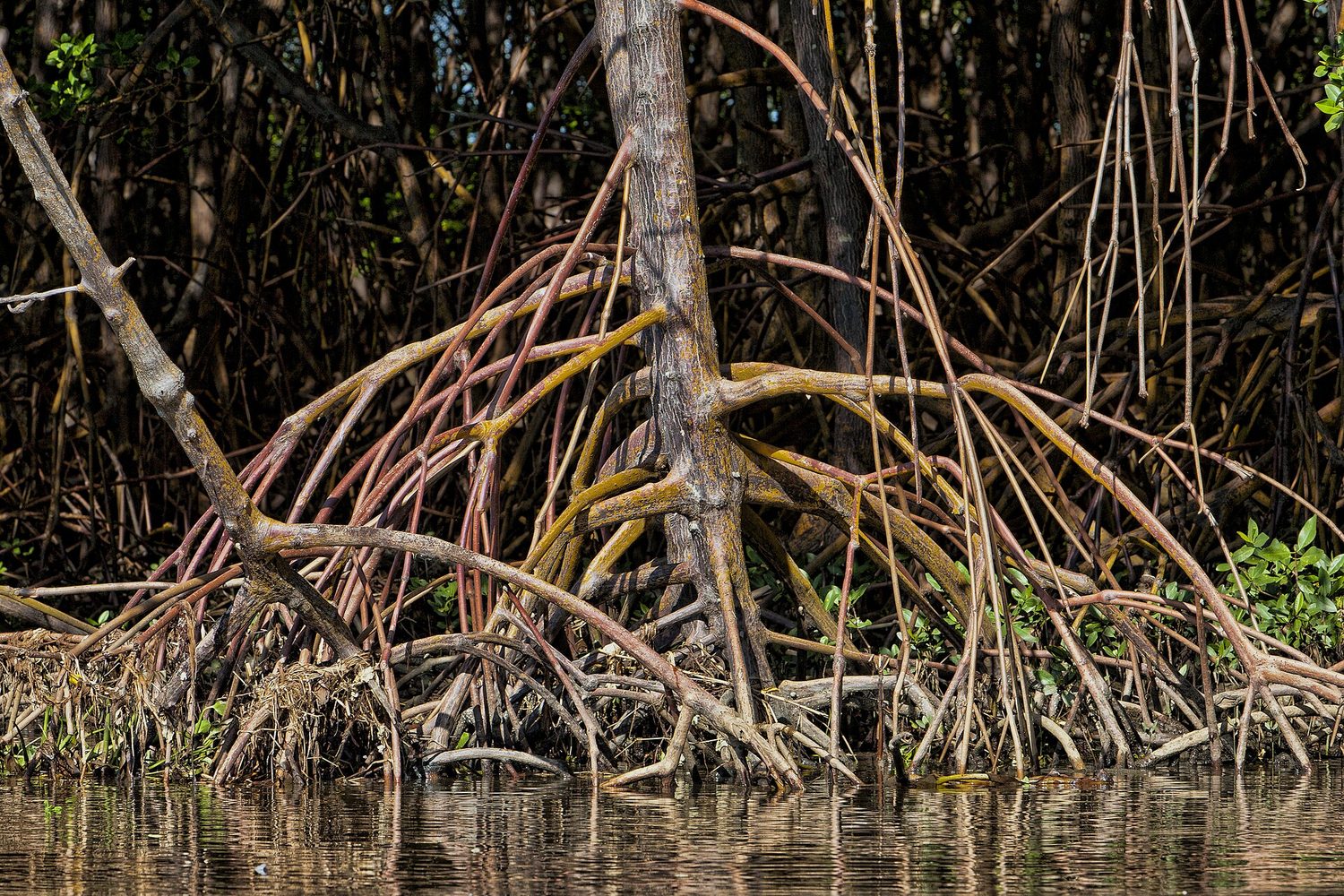
รากค้ำของต้นป่าชายเลนที่หนาแน่นและโค้งงอโผล่ขึ้นจากน้ำตื้น
รากป่าชายเลน: ความพันกันนี้ดักจับตะกอน ลดคลื่น และเป็นที่หลบภัยของปลาอ่อน บริการทั้งหมดนี้จะหายไปเมื่อป่าชายเลนถูกตัด
Vocabulary · ⁨คำศัพท์⁩ Train · ⁨ฝึกฝน⁩
English ไทย
point source/pɔɪnt sɔːs/ แหล่งกำเนิดแบบจุด (point source)
nonpoint source/ˌnɒnˈpɔɪnt sɔːs/ แหล่งกำเนิดแบบไม่เฉพาะจุด (nonpoint source)
Endocrine disruptors/ˈendəʊkraɪn dɪsˈrʌptəz/ สารรบกวนต่อมไร้ท่อ
Wetlands/ˈwetləndz/ พื้นที่ชุ่มน้ำ (Wetlands)
mangroves/ˈmæŋɡrəʊvz/ ป่าชายเลน
8.5

Eutrophication · ⁨ภาวะน้ำเน่าเสีย (Eutrophication)⁩

Syllabus · ⁨หลักสูตร⁩
English

Enduring Understanding (STB-3): Human activities, including the use of resources, have physical, chemical, and biological consequences for ecosystems.

Learning Objective STB-3.F: Explain the environmental effects of excessive use of fertilizers and detergents on aquatic ecosystems.

  • STB-3.F.1 Eutrophication occurs when a body of water is enriched in nutrients.
  • STB-3.F.2 The increase in nutrients in eutrophic aquatic environments causes an algal bloom. When the algal bloom dies, microbes digest the algae, along with the oxygen in the water, leading to a decrease in the dissolved oxygen levels in the water. The lack of dissolved oxygen can result in large die-offs of fish and other aquatic organisms.
  • STB-3.F.3 Hypoxic waterways are those bodies of water that are low in dissolved oxygen.
  • STB-3.F.4 Compared to eutrophic waterways, oligotrophic waterways have very low amounts of nutrients, stable algae populations, and high dissolved oxygen.
  • STB-3.F.5 Anthropogenic causes of eutrophication are agricultural runoff and wastewater release.
ไทย

ความเข้าใจที่ยั่งยืน (STB-3): กิจกรรมของมนุษย์ รวมถึงการใช้ทรัพยากร มีผลกระทบทางกายภาพ เคมี และชีวภาพต่อระบบนิเวศ

วัตถุประสงค์การเรียนรู้ STB-3.F: อธิบายผลกระทบทางสิ่งแวดล้อมจากการใช้ปุ๋ยและผงซักฟอกเกินจำเป็นต่อระบบนิเวศทางน้ำ

  • STB-3.F.1 Eutrophication เกิดขึ้นเมื่อแหล่งน้ำมีสารอาหารเพิ่มขึ้นมาก
  • STB-3.F.2 การเพิ่มขึ้นของสารอาหารในสภาพแวดล้อมทางน้ำที่มี eutrophication ทำให้เกิด algal bloom เมื่อ algal bloom ตายลง จุลินทรีย์จะย่อยสลายสาหร่ายพร้อมกับออกซิเจนในน้ำ ส่งผลให้ระดับออกซิเจนละลายในน้ำลดลง การขาดออกซิเจนละลายอาจทำให้ปลาและสิ่งมีชีวิตทางน้ำอื่น ๆตายจำนวนมาก
  • STB-3.F.3 Waterways ที่มี hypoxic คือแหล่งน้ำที่มีออกซิเจนละลายต่ำ
  • STB-3.F.4 เมื่อเทียบกับ waterways ที่มี eutrophication แล้ว waterways ที่มี oligotrophic มีสารอาหารต่ำมาก ประชากรสาหร่ายคงที่ และมีออกซิเจนละลายสูง
  • STB-3.F.5 สาเหตุจากมนุษย์ที่ทำให้เกิด eutrophication ได้แก่ น้ำไหลบ่าจากพื้นที่เกษตรกรรมและการปล่อยน้ำเสีย

Source: College Board AP Course and Exam Description · ⁨แหล่งที่มา: คำอธิบายหลักสูตรและข้อสอบ College Board AP⁩

English
Eutrophication

Eutrophication 富营养化 happens when excess nutrients (nitrogen, phosphorus from fertilizer and sewage) trigger algal blooms 藻华. When the algae die, decomposers use up the oxygen, creating hypoxic 缺氧 "dead zones" that suffocate fish.

ไทย
ภาวะน้ำเน่าเสีย

ภาวะน้ำเน่าเสีย เกิดขึ้นเมื่อสารอาหารมากเกินไป (ไนโตรเจน, ฟอสฟอรัสจากปุ๋ยและน้ำเสีย) กระตุ้น การเพิ่มจำนวนของสาหร่าย เมื่อสาหร่ายตาย ผู้ย่อยสลายจะใช้氧จนหมด สร้าง เขตขาด氧 (

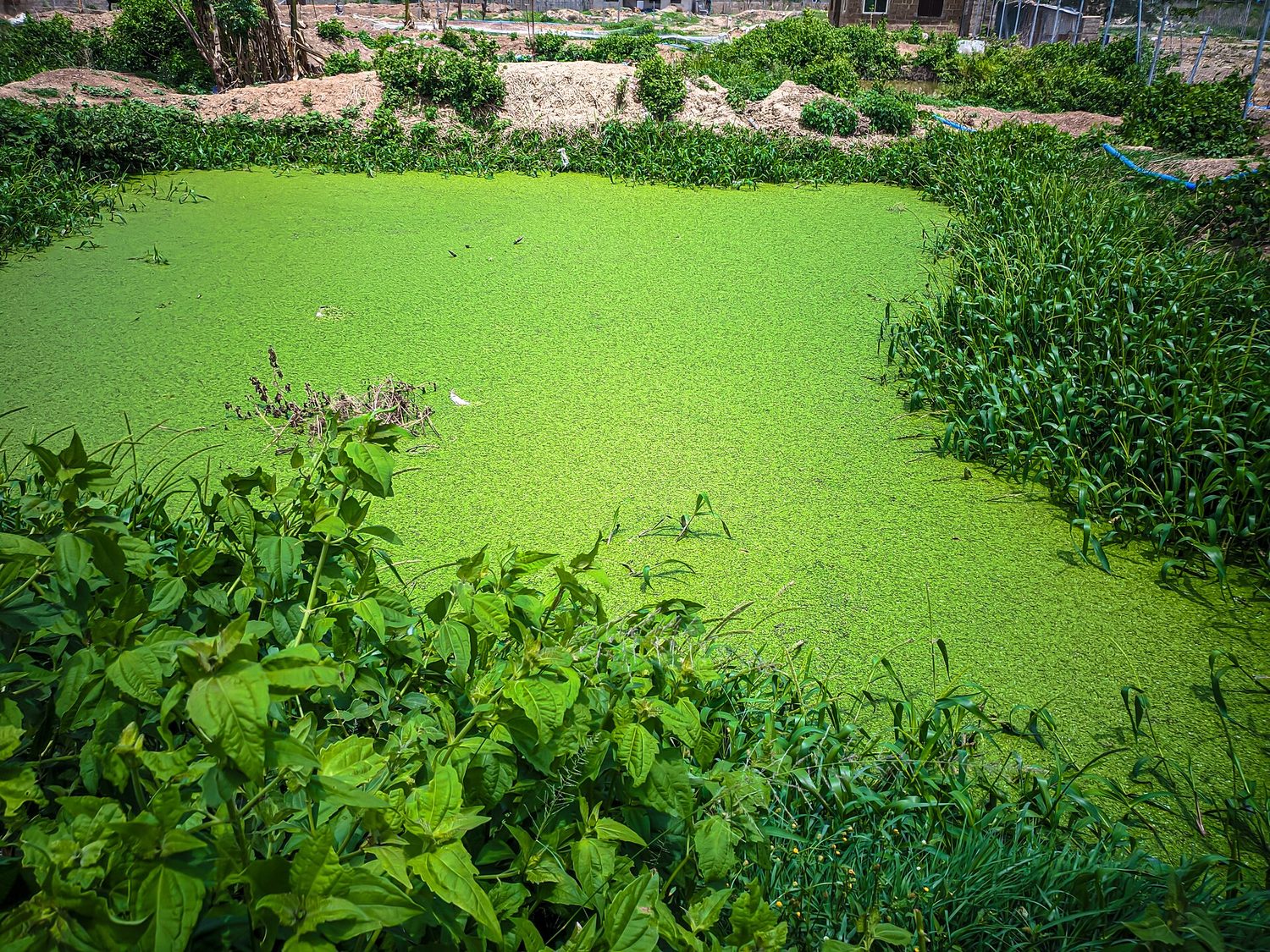
บึงเล็ก whose entire surface is covered with a thick layer of bright green algae *บึง被藻华窒息: Nutrients的增加让藻类覆盖整个表面. เมื่อ它们 die and rot, น้ำ失去其氧气

ปุ๋ยเพิ่มมากขึ้นทำให้สาหร่ายเจริญเติบโตอย่างรวดเร็ว แล้วน้ำจะสูญเสียออกซิเจน
Vocabulary · ⁨คำศัพท์⁩ Train · ⁨ฝึกฝน⁩
English ไทย
Eutrophication/ˌjuːtrəfɪˈkeɪʃn/ การเกิดสาหร่าย bloom (Eutrophication)
algal blooms/ˈælɡl bluːmz/ ปรากฏการณ์สาหร่าย bloom
hypoxic/ˌhaɪpəʊˈzɪk/ ภาวะขาดออกซิเจนในน้ำ (hypoxic)
Thermal pollution/ˈθɜːml pəˈluːʃn/ มลพิษความร้อน
Persistent organic pollutants/pəˈsɪstənt ɔːˈɡænɪk pəˈluːtənts/ สารอินทรีย์ตกค้าง (POPs)
8.6

Thermal Pollution · ⁨มลพิษทางความร้อน⁩

Syllabus · ⁨หลักสูตร⁩
English

Enduring Understanding (STB-3): Human activities, including the use of resources, have physical, chemical, and biological consequences for ecosystems.

Learning Objective STB-3.G: Describe the effects of thermal pollution on aquatic ecosystems.

  • STB-3.G.1 Thermal pollution occurs when heat released into the water produces negative effects to the organisms in that ecosystem.
  • STB-3.G.2 Variations in water temperature affect the concentration of dissolved oxygen because warm water does not contain as much oxygen as cold water.
ไทย

ความเข้าใจที่ยั่งยืน (STB-3): กิจกรรมของมนุษย์ รวมถึงการใช้ทรัพยากร มีผลกระทบทางกายภาพ เคมี และชีวภาพต่อระบบนิเวศ

วัตถุประสงค์การเรียนรู้ STB-3.G: อธิบายผลกระทบของมลพิษความร้อนต่อระบบนิเวศทางน้ำ

  • STB-3.G.1 Thermal pollution เกิดขึ้นเมื่อความร้อนที่ถูกปล่อยลงสู่ผิวน้ำส่งผลเสียต่อสิ่งมีชีวิตในระบบนิเวศนั้น
  • STB-3.G.2 ความแปรปรวนของอุณหภูมิน้ำส่งผลต่อความเข้มข้นของออกซิเจนละลาย เนื่องจากน้ำอุ่นไม่ chứaออกซิเจนได้เท่ากับน้ำเย็น

Source: College Board AP Course and Exam Description · ⁨แหล่งที่มา: คำอธิบายหลักสูตรและข้อสอบ College Board AP⁩

English

Thermal pollution 热污染 is heat added to water, usually from power-plant cooling. Warm water holds less dissolved oxygen and stresses aquatic life adapted to cooler temperatures.

ไทย

มลพิษความร้อน คือความร้อนที่เพิ่มลงในน้ำ โดยทั่วไปมาจากระบบระบายความร้อนของโรงไฟฟ้า น้ำอุ่นมี ออกซิเจนละลายได้น้อยกว่า และทำให้สิ่งมีชีวิตในน้ำที่ปรับตัวอยู่กับอุณหภูมิต่ำ experiencing ความเครียด

8.7

Persistent Organic Pollutants (POPs) · ⁨มลสารอินทรีย์คงทน (POPs)⁩

Syllabus · ⁨หลักสูตร⁩
English

Enduring Understanding (STB-3): Human activities, including the use of resources, have physical, chemical, and biological consequences for ecosystems.

Learning Objective STB-3.H: Describe the effect of persistent organic pollutants (POPs) on ecosystems.

  • STB-3.H.1 Persistent organic pollutants (POPs) do not easily break down in the environment because they are synthetic, carbon-based molecules (such as DDT and PCBs).
  • STB-3.H.2 Persistent organic pollutants (POPs) can be toxic to organisms because they are soluble in fat, which allows them to accumulate in organisms' fatty tissues.
  • STB-3.H.3 Persistent organic pollutants (POPs) can travel over long distances via wind and water before being redeposited.
ไทย

ความเข้าใจที่ยั่งยืน (STB-3): กิจกรรมของมนุษย์ รวมถึงการใช้ทรัพยากร มีผลกระทบทางกายภาพ เคมี และชีวภาพต่อระบบนิเวศ

วัตถุประสงค์การเรียนรู้ STB-3.H: อธิบายผลกระทบของสารอินทรีย์ตกค้าง (POPs) ต่อระบบนิเวศ

  • STB-3.H.1 Persistent organic pollutants (POPs) ไม่สลายตัวง่ายในสิ่งแวดล้อมเพราะเป็นโมเลกุลสังเคราะห์ที่มีคาร์บอนเป็นฐาน (เช่น DDT และ PCBs)
  • STB-3.H.2 Persistent organic pollutants (POPs) อาจเป็นพิษต่อสิ่งมีชีวิตเพราะละลายในไขมัน ซึ่งช่วยให้สะสมอยู่ในเนื้อเยื่อไขมันของสิ่งมีชีวิตได้
  • STB-3.H.3 Persistent organic pollutants (POPs) สามารถเดินทางระยะไกลผ่านลมและน้ำก่อนจะถูกตกค้างใหม่

Source: College Board AP Course and Exam Description · ⁨แหล่งที่มา: คำอธิบายหลักสูตรและข้อสอบ College Board AP⁩

English

Persistent organic pollutants 持久性有机污染物 (POPs, like DDT and PCBs) resist breakdown, so they last for decades, travel far, and are fat-soluble, so they build up in organisms. This sets up bioaccumulation and biomagnification.

ไทย

มลสารอินทรีย์คงทน (POPs, เช่น DDT และ PCBs) ทนต่อการสลายตัว ดังนั้นจึงอยู่ได้นานหลายสิบปี travels ไกล และเป็น ละลายไขมันได้ ดังนั้นจึงสะสมในร่างกายสิ่งมีชีวิต สิ่งนี้นำไปสู่การสะสมทางชีวภาพและการ放大ทางชีวภาพ

8.8

Bioaccumulation and Biomagnification · ⁨การสะสมทางชีวภาพและการ放大ทางชีวภาพ⁩

Syllabus · ⁨หลักสูตร⁩
English

Enduring Understanding (STB-3): Human activities, including the use of resources, have physical, chemical, and biological consequences for ecosystems.

Learning Objective STB-3.I: Describe bioaccumulation and biomagnification.

  • STB-3.I.1 Bioaccumulation is the selective absorption and concentration of elements or compounds by cells in a living organism, most commonly fat-soluble compounds.
  • STB-3.I.2 Biomagnification is the increase in concentration of substances per unit of body tissue that occurs in successively higher trophic levels of a food chain or in a food web.

Learning Objective STB-3.J: Describe the effects of bioaccumulation and biomagnification.

  • STB-3.J.1 Some effects that can occur in an ecosystem when a persistent substance is biomagnified in a food chain include eggshell thinning and developmental deformities in top carnivores of the higher trophic levels.
  • STB-3.J.2 Humans also experience harmful effects from biomagnification, including issues with the reproductive, nervous, and circulatory systems.
  • STB-3.J.3 DDT, mercury, and PCBs are substances that bioaccumulate and have significant environmental impacts.
ไทย

ความเข้าใจที่ยั่งยืน (STB-3): กิจกรรมของมนุษย์ รวมถึงการใช้ทรัพยากร มีผลกระทบทางกายภาพ เคมี และชีวภาพต่อระบบนิเวศ

วัตถุประสงค์การเรียนรู้ STB-3.I: อธิบายการสะสมทางชีวภาพและการขยายตัวทางชีวภาพ

  • STB-3.I.1 Bioaccumulation คือการดูดซึมและมีความเข้มข้นอย่างเลือกสรรของธาตุหรือสารประกอบโดยเซลล์ในสิ่งมีชีวิต โดยเฉพาะสารประกอบที่ละลายในไขมันมากที่สุด
  • STB-3.I.2 Biomagnification คือการเพิ่มขึ้นของความเข้มข้นของสารต่อหน่วยน้ำหนักเนื้อเยื่อที่เกิดขึ้นในระดับ trophic ที่สูงขึ้นต่อเนื่องกันในห่วงโซ่อาหารหรือข่ายใยอาหาร

วัตถุประสงค์การเรียนรู้ STB-3.J: อธิบายผลกระทบของการสะสมทางชีวภาพและการขยายตัวทางชีวภาพ

  • STB-3.J.1 ผลบางอย่างที่เกิดในระบบนิเวศเมื่อสารคงทนถูก biomagnify ในห่วงโซ่อาหาร ได้แก่ เปลือกไข่บางลงและความผิดปกติในการพัฒนาของสัตว์กินเนื้ออันดับบนในระดับ trophic สูง
  • STB-3.J.2 มนุษย์ก็ได้รับผลเสียจาก biomagnification เช่น ปัญหาเกี่ยวกับระบบสืบพันธุ์ ระบบประสาท และระบบไหลเวียนเลือด
  • STB-3.J.3 DDT, ปรอท และ PCBs เป็นสารที่ bioaccumulate และมีผลกระทบทางสิ่งแวดล้อมอย่างมาก

Source: College Board AP Course and Exam Description · ⁨แหล่งที่มา: คำอธิบายหลักสูตรและข้อสอบ College Board AP⁩

English
Bioaccumulation and biomagnification

Bioaccumulation 生物累积 is the build-up of a toxin within one organism over its life. Biomagnification 生物放大 is the increase in concentration up the food chain – top predators end up with the highest levels, which is why large predatory fish carry the most mercury.

Worked example. Suppose lake water holds DDT at just $0.01\ \text{ppm}$. Plankton concentrate it to $0.5\ \text{ppm}$, small fish to $2\ \text{ppm}$, large fish to $10\ \text{ppm}$, and a fish-eating eagle to $25\ \text{ppm}$. From water to eagle the concentration has multiplied about $\dfrac{25}{0.01}=2500$-fold – which is why a top predator can be poisoned even when the water itself looks only lightly polluted.

ไทย
การสะสมทางชีวภาพและการ放大ทางชีวภาพ

การสะสมทางชีวภาพ คือการสะสมของสารพิษ ภายในสิ่งมีชีวิตหนึ่งตัว ตลอดชีวิต การ放大ทางชีวภาพ คือการเพิ่มขึ้นของความเข้มข้น ตามห่วงโซ่อาหาร – สัตว์นักล่าสูงสุดจะมีความเข้มข้นสูงสุด ซึ่งเป็นสาเหตุที่ปลานักล่าขนาดใหญ่มีปรอทมากที่สุด

ตัวอย่างคำอธิบาย. สมมติว่าน้ำในทะเลสาบมี DDT เพียง $0.01\ \text{ppm}$. พланктอนรวมมันเข้าไว้ที่ $0.5\ \text{ppm}$, ปลาเล็กที่ $2\ \text{ppm}$, ปลาใหญ่ที่ $10\ \text{ppm}$, และนกอินทรีกินปลาที่ $25\ \text{ppm}$. จากน้ำไปยังนกอินทรี ความเข้มข้นเพิ่มขึ้นประมาณ $\dfrac{25}{0.01}=2500$ เท่า – นี่คือเหตุว่าทำไมสัตว์นักล่าสูงสุดสามารถ中毒ได้แม้ว่าน้ำเองดูเหมือนจะมีมลพิษเพียงเล็กน้อย

Explore · ⁨สำรวจ⁩

Toxins concentrate up the food chain · ⁨สารพิษเข้มข้นขึ้นตามสายโซ่อาหาร⁩

Bioaccumulation builds a toxin up in one organism; biomagnification concentrates it at each step up the food chain, so top predators carry the highest doses. · ⁨การสะสมทางชีวภาพ ทำให้สารพิษสะสมในสิ่งมีชีวิตตัวหนึ่ง; การขยายระดับทางชีวภาพ จะทำให้สารพิษเข้มข้นขึ้นในแต่ละขั้นของสายโซ่อาหาร ดังนั้นสัตว์นักล่าระดับบนจึงได้รับปริมาณสารพิษสูงสุด⁩

Vocabulary · ⁨คำศัพท์⁩ Train · ⁨ฝึกฝน⁩
English ไทย
Biomagnification/ˌbaɪəʊˌmæɡnɪfɪˈkeɪʃn/ การสะสมสารพิษในห่วงโซ่อาหาร
sanitary landfills/ˈsænɪtəri ˈlændfɪlz/ หลุมฝังกลบที่มีระบบสุขาภิบาล
incinerators/ɪnˈsɪnəreɪtəz/ เตาเผาขยะ
e-waste/iː weɪst/ ขยะอิเล็กทรอนิกส์ (e-waste)
garbage patches/ˈɡɑːbɪdʒ ˈpætʃɪz/ เกาะขยะ
reduce, reuse, recycle/rɪˈdjuːs riːˈjuːz rɪˈsaɪkl/ ลด ใช้ซ้ำ และรีไซเคิล
composting/ˈkɒmpɒstɪŋ/ การทำปุ๋ยหมัก
Sewage treatment/ˈsuːɪdʒ ˈtriːtmənt/ การบำบัดน้ำเสีย
8.9

Solid Waste Disposal · ⁨การกำจัดขยะของแข็ง⁩

Syllabus · ⁨หลักสูตร⁩
English

Enduring Understanding (STB-3): Human activities, including the use of resources, have physical, chemical, and biological consequences for ecosystems.

Learning Objective STB-3.K: Describe solid waste disposal methods.

  • STB-3.K.1 Solid waste is any discarded material that is not a liquid or gas. It is generated in domestic, industrial, business, and agricultural sectors.
  • STB-3.K.2 Solid waste is most often disposed of in landfills. Landfills can contaminate groundwater and release harmful gases.
  • STB-3.K.3 Electronic waste, or e-waste, is composed of discarded electronic devices including televisions, cell phones, and computers.
  • STB-3.K.4 A sanitary municipal landfill consists of a bottom liner (plastic or clay), a storm water collection system, a leachate collection system, a cap, and a methane collection system.

Learning Objective STB-3.L: Describe the effects of solid waste disposal methods.

  • STB-3.L.1 Factors in landfill decomposition include the composition of the trash and conditions needed for microbial decomposition of the waste.
  • STB-3.L.2 Solid waste can also be disposed of through incineration, where waste is burned at high temperatures. This method significantly reduces the volume of solid waste but releases air pollutants.
  • STB-3.L.3 Some items are not accepted in sanitary landfills and may be disposed of illegally, leading to environmental problems. One example is used rubber tires, which when left in piles can become breeding grounds for mosquitoes that can spread disease.
  • STB-3.L.4 Some countries dispose of their waste by dumping it in the ocean. This practice, along with other sources of plastic, has led to large floating islands of trash in the oceans. Additionally, wildlife can become entangled in the waste, as well as ingest it.
ไทย

ความเข้าใจที่ยั่งยืน (STB-3): กิจกรรมของมนุษย์ รวมถึงการใช้ทรัพยากร มีผลกระทบทางกายภาพ เคมี และชีวภาพต่อระบบนิเวศ

วัตถุประสงค์การเรียนรู้ STB-3.K: อธิบายวิธีการจัดการขยะมูลฝอย

  • STB-3.K.1 Solid waste คือวัสดุที่ถูกทิ้งที่ไม่ใช่ของเหลวหรือแก๊ส เกิดขึ้นในภาคครัวเรือน อุตสาหกรรม ธุรกิจ และการเกษตร
  • STB-3.K.2 Solid waste มักถูกกำจัดใน landfill โดย landfill สามารถทำให้ groundwater kontaminated และปล่อยก๊าซที่เป็นอันตรายออกมา
  • STB-3.K.3 Electronic waste หรือ e-waste ประกอบด้วยอุปกรณ์อิเล็กทรอนิกส์ที่ถูกทิ้ง包括电视机、手机和电脑。
  • STB-3.K.4 พื้นที่ฝังกลบแบบสุขาภิบาลประกอบด้วยชั้นกันซึมด้านล่าง (พลาสติกหรือดินเหนียว) ระบบเก็บกักน้ำฝน ระบบเก็บกักของเสียเหลว ฝาปิด และระบบเก็บกักก๊าซมีเทน

วัตถุประสงค์การเรียนรู้ STB-3.L: อธิบายผลกระทบของวิธีการจัดการขยะมูลฝอย

  • STB-3.L.1 ปัจจัยในการย่อยสลายในพื้นที่ฝังกลบ ได้แก่ ส่วนประกอบของขยะและสภาพแวดล้อมที่จำเป็นต่อการย่อยสลายโดยจุลินทรีย์
  • STB-3.L.2 ขยะแข็งยังสามารถกำจัดได้ด้วยการเผาไหม้ โดยมีการเผาขยะที่อุณหภูมิสูง วิธีนี้ช่วยลดปริมาณขยะแข็งอย่างมากแต่ก็ปล่อยมลพิษทางอากาศออกมาด้วย
  • STB-3.L.3 บางสิ่งไม่ถูกยอมรับในพื้นที่ฝังกลบแบบสุขาภิบาลและอาจถูกทิ้งอย่างผิดกฎหมาย ส่งผลให้เกิดปัญหาสิ่งแวดล้อม ตัวอย่างเช่น ยางรถยนต์เก่าเมื่อถูกทิ้งไว้เป็นกองจะกลายเป็นแหล่งเพาะพันธุ์ยุงซึ่งสามารถแพร่กระจายโรคได้
  • STB-3.L.4 บางประเทศกำจัดขยะโดยการเทลงทะเล ปฏิบัติการณ์นี้ร่วมกับแหล่งกำเนิดพลาสติกอื่นๆ ได้ก่อให้เกิดเกาะขยะลอยน้ำขนาดใหญ่ในมหาสมุทร นอกจากนี้ สัตว์ป่ายังอาจติดกับดักในขยะหรือกินเข้าไปด้วย

Source: College Board AP Course and Exam Description · ⁨แหล่งที่มา: คำอธิบายหลักสูตรและข้อสอบ College Board AP⁩

English

Solid waste is any discarded material that is not a liquid or gas, generated by homes, industry, business, and agriculture. It is buried in sanitary landfills 卫生填埋场 (lined to limit leachate) or burned in incinerators 焚烧炉 (reduces volume but emits pollutants). Landfills take space and can leak; both have environmental costs, so reducing waste is preferred.

Two categories the exam names specifically: e-waste 电子垃圾 (discarded electronics - phones, computers, televisions - which contain toxic metals), and ocean dumping, where plastic and other waste collect into vast floating garbage patches 垃圾带 far out at sea.

ไทย

ขยะของแข็ง คือวัสดุที่ถูกทิ้งซึ่งไม่ใช่ของเหลวหรือแก๊ส ที่เกิดจากบ้านเรือน อุตสาหกรรม ธุรกิจ และการเกษตร ถูกฝังใน หลุมฝังกลบ (บุด้วยแผ่นกันซึมเพื่อจำกัดน้ำชะหน้าดิน) หรือเผาใน เตาเผาขยะ (ลดปริมาตรแต่ปล่อยมลพิษ) หลุมฝังกลบใช้พื้นที่และอาจมีการรั่วไหล; ทั้งสองมีต้นทุนต่อสิ่งแวดล้อม ดังนั้นการลดขยะจึงเป็นทางเลือกที่ดีกว่า

สองประเภทที่ข้อสอบระบุโดยเฉพาะ: ขยะอิเล็กทรอนิกส์ (อุปกรณ์อิเล็กทรอนิกส์ที่ถูกทิ้ง – โทรศัพท์ คอมพิวเตอร์ โทรทัศน์ – ซึ่งมีโลหะที่เป็นพิษ), และการทิ้งลงทะเล, ที่พลาสติกรวมกับขยะอื่นๆ เข้าด้วยกันเป็น -area ขยะลอยน้ำ ขนาดใหญ่กลางทะเล

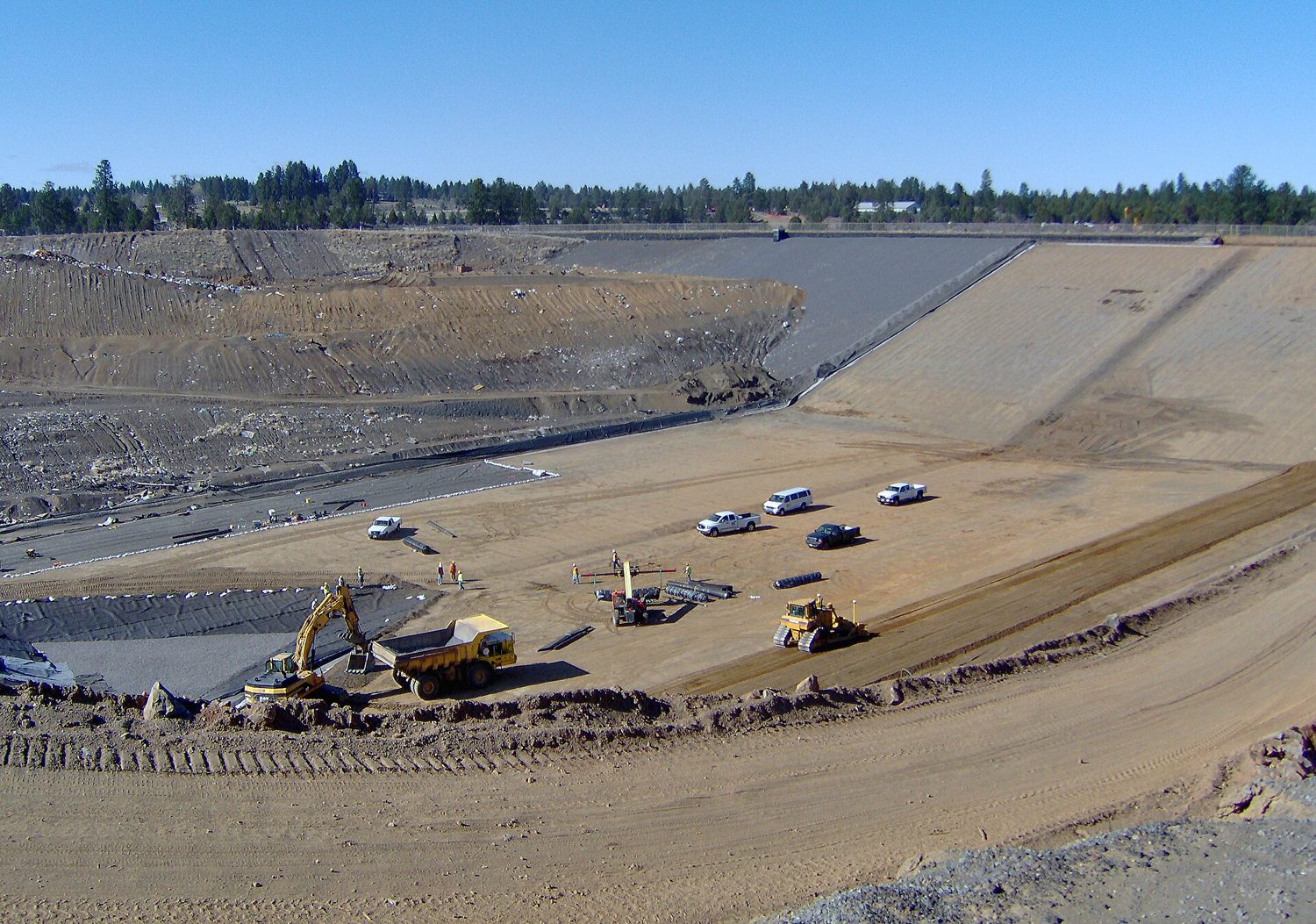
กองขยะขนาดใหญ่ที่ฝังอยู่โผล่พ้นพื้นดินเหนือเมืองในหุบเขาด้านล่าง
บ่อฝังกลบ: ขยะของแข็งจะถูกฝังในที่เก็บซึ่งมีแผ่นกันซึม ใช้พื้นที่มากและอาจมีการรั่วไหลได้ ดังนั้นการลดปริมาณขยะจึงเป็นอันดับแรก
8.10

Waste Reduction Methods · ⁨วิธีการลดปริมาณขยะ⁩

Syllabus · ⁨หลักสูตร⁩
English

Enduring Understanding (STB-3): Human activities, including the use of resources, have physical, chemical, and biological consequences for ecosystems.

Learning Objective STB-3.M: Describe changes to current practices that could reduce the amount of generated waste and their associated benefits and drawbacks.

  • STB-3.M.1 Recycling is a process by which certain solid waste materials are processed and converted into new products.
  • STB-3.M.2 Recycling is one way to reduce the current global demand on minerals, but this process is energy-intensive and can be costly.
  • STB-3.M.3 Composting is the process of organic matter such as food scraps, paper, and yard waste decomposing. The product of this decomposition can be used as fertilizer. Drawbacks to composting include odor and rodents.
  • STB-3.M.4 E-waste can be reduced by recycling and reuse. E-wastes may contain hazardous chemicals, including heavy metals such as lead and mercury, which can leach from landfills into groundwater if they are not disposed of properly.
  • STB-3.M.5 Landfill mitigation strategies range from burning waste for energy to restoring habitat on former landfills for use as parks.
  • STB-3.M.6 The combustion of gases produced from decomposition of organic material in landfills can be used to turn turbines and generate electricity. This process reduces landfill volume.
ไทย

ความเข้าใจที่ยั่งยืน (STB-3): กิจกรรมของมนุษย์ รวมถึงการใช้ทรัพยากร มีผลกระทบทางกายภาพ เคมี และชีวภาพต่อระบบนิเวศ

จุดประสงค์การเรียนรู้ STB-3.M: อธิบายการเปลี่ยนแปลงในกระบวนการปัจจุบันที่อาจลดปริมาณขยะที่เกิดขึ้นและประโยชน์และความเสี่ยงที่เกี่ยวข้อง

  • STB-3.M.1 การรีไซเคิลคือกระบวนการที่วัสดุขยะแข็งบางชนิดถูกประมวลผลและแปลงเป็นผลิตภัณฑ์ใหม่
  • STB-3.M.2 การรีไซเคิลเป็นหนึ่งในวิธีลดความต้องการแร่ธาตุทั่วโลกในปัจจุบัน แต่กระบวนการนี้ใช้พลังงานมากและอาจมีค่าใช้จ่ายสูง
  • STB-3.M.3 การทำปุ๋ยหมักคือกระบวนการที่สสารอินทรีย์เช่น เศษอาหาร กระดาษ และเศษซากในสวนย่อยสลาย ผลิตภัณฑ์จากการย่อยสลายนี้สามารถใช้เป็นปุ๋ย ความเสี่ยงของการทำปุ๋ยหมักรวมถึงกลิ่นและหนู
  • STB-3.M.4 ขยะอิเล็กทรอนิกส์สามารถลดได้ด้วยการรีไซเคิลและการใช้ซ้ำ ขยะอิเล็กทรอนิกส์อาจมีสารเคมีที่เป็นอันตราย รวมถึงโลหะหนักเช่น ตะกั่วและปรอท ซึ่งสามารถซึมผ่านจากหลุมฝังกลบลงสู่ชั้นน้ำใต้ดินหากไม่ได้รับการจัดการอย่างถูกต้อง
  • STB-3.M.5 กลยุทธ์บรรเทาผลจากหลุมฝังกลบครอบคลุมตั้งแต่การเผาขยะเพื่อผลิตพลังงานไปจนถึงการฟื้นฟูสภาพแวดล้อมบนหลุมฝังกลบเก่าเพื่อใช้เป็นสวนสาธารณะ
  • STB-3.M.6 การเผาไหม้ของก๊าซที่เกิดจากการย่อยสลายของสสารอินทรีย์ในหลุมฝังกลบสามารถใช้หมุนกังหันและผลิตไฟฟ้า กระบวนการนี้ช่วยลดปริมาตรของหลุมฝังกลบ

Source: College Board AP Course and Exam Description · ⁨แหล่งที่มา: คำอธิบายหลักสูตรและข้อสอบ College Board AP⁩

English

The waste hierarchy is reduce, reuse, recycle 减量、再利用、回收, plus composting 堆肥 for organic waste. Reducing consumption is best (no waste to manage); recycling and composting recover materials and cut landfill use.

ไทย

ลำดับความสำคัญในการจัดการขยะคือ ลดการใช้ ใช้ซ้ำ และรีไซเคิล รวมถึง การทำปุ๋ยหมัก สำหรับขยะอินทรีย์ การลดการบริโภคเป็นวิธีที่ดีที่สุด (ไม่มีขยะให้จัดการ) ส่วนการรีไซเคิลและการทำปุ๋ยหมักช่วยกู้คืนวัสดุและลดการใช้บ่อฝังกลบ

8.11

Sewage Treatment · ⁨การบำบัดน้ำเสีย⁩

Syllabus · ⁨หลักสูตร⁩
English

Enduring Understanding (STB-3): Human activities, including the use of resources, have physical, chemical, and biological consequences for ecosystems.

Learning Objective STB-3.N: Describe best practices in sewage treatment.

  • STB-3.N.1 Primary treatment of sewage is the physical removal of large objects, often through the use of screens and grates, followed by the settling of solid waste in the bottom of a tank.
  • STB-3.N.2 Secondary treatment is a biological process in which bacteria break down organic matter into carbon dioxide and inorganic sludge, which settles in the bottom of a tank. The tank is aerated to increase the rate at which the bacteria break down the organic matter.
  • STB-3.N.3 Tertiary treatment is the use of ecological or chemical processes to remove any pollutants left in the water after primary and secondary treatment.
  • STB-3.N.4 Prior to discharge, the treated water is exposed to one or more disinfectants (usually, chlorine, ozone, or UV light) to kill bacteria.
ไทย

ความเข้าใจที่ยั่งยืน (STB-3): กิจกรรมของมนุษย์ รวมถึงการใช้ทรัพยากร มีผลกระทบทางกายภาพ เคมี และชีวภาพต่อระบบนิเวศ

จุดประสงค์การเรียนรู้ STB-3.N: อธิบายแนวทางปฏิบัติที่ดีที่สุดในการบำบัดน้ำเสีย

  • STB-3.N.1 การบำบัดขั้นต้นของน้ำเสียคือการกำจัดวัตถุขนาดใหญ่ด้วยวิธีทางกายภาพ มักใช้ตะแกรงและตาข่าย ตามด้วยการตั้งตะกอนของของแข็งที่ก้นถัง
  • STB-3.N.2 การบำบัดขั้นที่สองคือกระบวนการทางชีวภาพที่แบคทีเรียย่อยสลายสสารอินทรีย์เป็นคาร์บอนไดออกไซด์และตะกอน vô机ซึ่งจะตั้งตะกอนที่ก้นถัง ถังจะถูกเพิ่มออกซิเจนเพื่อเพิ่มอัตราการย่อยสลายสสารอินทรีย์ของแบคทีเรีย
  • STB-3.N.3 การบำบัดขั้นที่สามคือการใช้อารมณ์หรือกระบวนการทางเคมีเพื่อกำจัดสารปนเปื้อนที่เหลืออยู่ในน้ำหลังการบำบัดขั้นต้นและขั้นที่สอง
  • STB-3.N.4 ก่อนการปล่อย น้ำที่ผ่านการบำบัดจะถูกสัมผัสกับสารฆ่าเชื้อโรคหนึ่งหรือหลายชนิด (โดยทั่วไปคือ คลอรีน, โอโซน หรือแสง UV) เพื่อฆ่าแบคทีเรีย

Source: College Board AP Course and Exam Description · ⁨แหล่งที่มา: คำอธิบายหลักสูตรและข้อสอบ College Board AP⁩

English

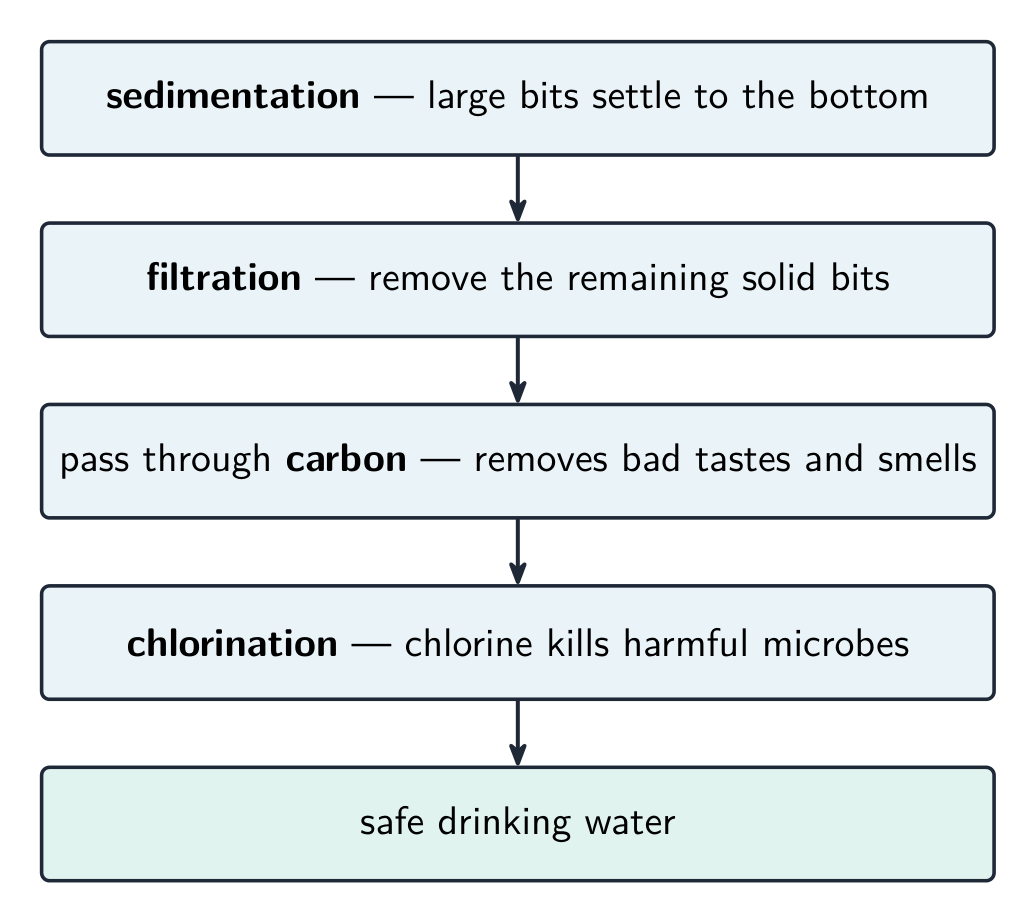
Sewage treatment 污水处理 cleans wastewater in stages: primary (settling out solids), secondary (bacteria break down organic matter), and sometimes tertiary (removing nutrients and disinfecting). This protects waterways from pathogens and nutrient pollution.

ไทย

การบำบัดน้ำเสีย ทำความสะอาดน้ำเสียผ่านหลายขั้นตอน: ขั้นต้น (ตกตะกอนของแข็ง), ขั้นกลาง (แบคทีเรียย่อยสลายสารอินทรีย์) และบางครั้งมี ขั้นสุดท้าย (กำจัดสารอาหารและฆ่าเชื้อโรค) กระบวนการนี้ช่วยปกป้องแหล่งน้ำจากเชื้อโรคและมลพิษทางสารอาหาร

กระบวนการบำบัดน้ำให้เป็นน้ำสะอาด: การตกตะกอน การกรอง และการฆ่าเชื้อโรค *กระบวนการบำบัดน้ำให้เป็นน้ำสะอาด: การตกตะกอน การกรอง และการฆ่าเชื้อโรค

8.12

Lethal Dose 50% (LD50) · ⁨ปริมาณสารพิษ致死 50% (LD50)⁩

Syllabus · ⁨หลักสูตร⁩
English

Enduring Understanding (EIN-3): Pollutants can have both direct and indirect impacts on the health of organisms, including humans.

Learning Objective EIN-3.A: Define lethal dose 50% ($LD_{50}$).

  • EIN-3.A.1 Lethal dose 50% ($LD_{50}$) is the dose of a chemical that is lethal to 50% of the population of a particular species.
ไทย

ความเข้าใจที่ยั่งยืน (EIN-3): มลพิษสามารถส่งผลกระทบโดยตรงและไม่โดยตรงต่อสุขภาพของสิ่งมีชีวิต รวมถึงมนุษย์

จุดประสงค์การเรียนรู้ EIN-3.A: นิยาม matrices Lethal Dose 50% ($LD_{50}$)

  • EIN-3.A.1 matrices Lethal Dose 50% ($LD_{50}$) คือปริมาณสารเคมีที่เป็นอันตรายถึงชีวิตต่อ 50% ของประชากรในสายพันธุ์หนึ่ง

Source: College Board AP Course and Exam Description · ⁨แหล่งที่มา: คำอธิบายหลักสูตรและข้อสอบ College Board AP⁩

English
The dose-response curve and LD50

The LD50 半数致死量 is the dose of a substance that kills 50% of a test population. A lower LD50 means a more toxic substance (less is needed to be deadly). It is a standard way to compare toxicity.

Worked example. Chemical A has an LD50 of $5\ \text{mg}$ per kg of body weight; chemical B, $500\ \text{mg/kg}$. Because A's value is $100$ times smaller, A is about $100\times$ more toxic. For a $70\ \text{kg}$ adult, the dose of A expected to be lethal to half of people is $5\ \text{mg/kg}\times70\ \text{kg}=350\ \text{mg}$ – a tiny amount, whereas B would take $500\times70=35{,}000\ \text{mg}$ ($35\ \text{g}$).

ไทย

*กราฟความสัมพันธ์ระหว่างปริมาณสารกับผลที่เกิดขึ้น และ LD50

LD50 คือปริมาณของสารที่ทำให้สิ่งมีชีวิตทดลอง 50% ตาย ค่า 越低 ของ LD50 บ่งชี้ว่าสารนั้นมีความ เป็นพิษสูงขึ้น (ใช้เพียงเล็กน้อยก็ถึงแก่ชีวิต) เป็นมาตรฐานที่ใช้เปรียบเทียบระดับความเป็นพิษ

ตัวอย่างวิธีทำ. สารเคมี A มีค่า LD50 ที่ $5\ \text{mg}$ ต่อกก. น้ำหนักตัว; สารเคมี B, $500\ \text{mg/kg}$. เนื่องจากค่าของ A ต่ำกว่า $100$ เท่า, A จึง มีความเป็นพิษมากกว่า ประมาณ $100\times$ เท่า. สำหรับผู้ใหญ่ $70\ \text{kg}$, ปริมาณของ A ที่คาดว่าจะทำให้เสียชีวิตครึ่งหนึ่ง的人是 $5\ \text{mg/kg}\times70\ \text{kg}=350\ \text{mg}$ – เป็นปริมาณน้อยมาก ในขณะที่ B จะต้องใช้ $500\times70=35{,}000\ \text{mg}$ ($35\ \text{g}$).

Vocabulary · ⁨คำศัพท์⁩ Train · ⁨ฝึกฝน⁩
English ไทย
LD50/ˌel diː ˈfɪfti/ LD50
dose–response curve/dəʊs rɪˈspɒns kɜːv/ กราฟตอบสนองต่อปริมาณยา/สารพิษ
8.13

Dose Response Curve · ⁨กราฟความสัมพันธ์ระหว่างปริมาณสารกับผลที่เกิดขึ้น⁩

Syllabus · ⁨หลักสูตร⁩
English

Enduring Understanding (EIN-3): Pollutants can have both direct and indirect impacts on the health of organisms, including humans.

Learning Objective EIN-3.B: Evaluate dose response curves.

  • EIN-3.B.1 A dose response curve describes the effect on an organism or mortality rate in a population based on the dose of a particular toxin or drug.
ไทย

ความเข้าใจที่ยั่งยืน (EIN-3): มลพิษสามารถส่งผลกระทบโดยตรงและไม่โดยตรงต่อสุขภาพของสิ่งมีชีวิต รวมถึงมนุษย์

วัตถุประสงค์การเรียนรู้ EIN-3.B: ประเมินกราฟความสัมพันธ์ระหว่างปริมาณสารกับผลที่เกิดขึ้น

  • EIN-3.B.1 กราฟความสัมพันธ์ระหว่างปริมาณสารกับผลที่เกิดขึ้น (dose response curve) อธิบายถึงผลกระทบที่มีต่อสิ่งมีชีวิตหรืออัตราการตายในประชากร โดยพิจารณาจากปริมาณของสารพิษหรือยาชนิดหนึ่งๆ ที่ได้รับ

Source: College Board AP Course and Exam Description · ⁨แหล่งที่มา: คำอธิบายหลักสูตรและข้อสอบ College Board AP⁩

English

A dose–response curve 剂量反应曲线 plots the effect against the dose. Generally, a higher dose causes a greater effect. Some chemicals have a threshold 阈值 (no effect below it); for others any exposure carries risk. These curves guide safety limits.

ไทย

กราฟความสัมพันธ์ระหว่างปริมาณสารกับผลที่เกิดขึ้น แสดงผลลัพธ์เมื่อเทียบกับปริมาณสาร โดยทั่วไปยิ่งได้รับปริมาณสูง ผลที่เกิดขึ้นก็ยิ่งมาก บางสารมี จุดเริ่มต้นที่มีผล (threshold) (ไม่เกิดผลหากต่ำกว่าจุดนี้) แต่สำหรับสารอื่นๆ การสัมผัสแม้เพียงเล็กน้อยก็มีความเสี่ยง กราฟเหล่านี้ใช้เป็นแนวทางกำหนดขีดจำกัดความปลอดภัย

Vocabulary · ⁨คำศัพท์⁩ Train · ⁨ฝึกฝน⁩
English ไทย
threshold/ˈθreʃəʊld/ 阈値 (threshold)
Pathogens/ˈpæθədʒnz/ เชื้อโรค
8.14

Pollution and Human Health · ⁨มลพิษและสุขภาพมนุษย์⁩

Syllabus · ⁨หลักสูตร⁩
English

Enduring Understanding (EIN-3): Pollutants can have both direct and indirect impacts on the health of organisms, including humans.

Learning Objective EIN-3.C: Identify sources of human health issues that are linked to pollution.

  • EIN-3.C.1 It can be difficult to establish a cause and effect between pollutants and human health issues because humans experience exposure to a variety of chemicals and pollutants.
  • EIN-3.C.2 Dysentery is caused by untreated sewage in streams and rivers.
  • EIN-3.C.3 Mesothelioma is a type of cancer caused mainly by exposure to asbestos.
  • EIN-3.C.4 Respiratory problems and overall lung function can be impacted by elevated levels of tropospheric ozone.
ไทย

ความเข้าใจที่ยั่งยืน (EIN-3): มลพิษสามารถส่งผลกระทบโดยตรงและไม่โดยตรงต่อสุขภาพของสิ่งมีชีวิต รวมถึงมนุษย์

วัตถุประสงค์การเรียนรู้ EIN-3.C: ระบุแหล่งที่มาของปัญหาสุขภาพมนุษย์ที่เกี่ยวข้องกับมลภาวะ

  • EIN-3.C.1 อาจเป็นไปยากที่จะพิสูจน์ความสัมพันธ์เชิงเหตุและผลระหว่างมลพิษกับปัญหาสุขภาพมนุษย์ เนื่องจากมนุษย์ต้องเผชิญกับการสัมผัสสารเคมีและมลพิษหลากหลายชนิด
  • EIN-3.C.2 โรคบิด (dysentery) เกิดจากการที่น้ำเสียที่ไม่ได้ผ่านการบำบัดไหลลงสู่ลำธารและแม่น้ำ
  • EIN-3.C.3 มะเร็งเมโซทیلیโอมา (mesothelioma) เป็นชนิดหนึ่งของมะเร็งที่เกิดจากการสัมผัสกับใยหินเป็น主要原因
  • EIN-3.C.4 ปัญหาทางระบบหายใจและการทำงานของปอดโดยรวมสามารถได้รับผลกระทบจากระดับโอโซนในชั้นบรรยากาศtropospheric yang สูงขึ้น

Source: College Board AP Course and Exam Description · ⁨แหล่งที่มา: คำอธิบายหลักสูตรและข้อสอบ College Board AP⁩

English

Pollution harms health directly (respiratory disease from air pollution, poisoning from contaminated water) and indirectly. Dose, duration, and individual sensitivity all affect the outcome. The poor are often most exposed and least protected.

ไทย

มลพิษกระทบต่อสุขภาพโดยตรง (โรคระบบทางเดินหายใจจากมลพิษทางอากาศ, การพิษจากน้ำปนเปื้อน) และทางอ้อม ปริมาณสาร ระยะเวลา และความไวของแต่ละบุคคล ล้วนส่งผลต่อผลลัพธ์ คนยากจนมักถูกสัมผัสกับมลพิษมากที่สุดแต่ได้รับการป้องกันน้อยที่สุด

8.15

Pathogens and Infectious Diseases · ⁨เชื้อโรคและโรคติดเชื้อ⁩

Syllabus · ⁨หลักสูตร⁩
English

Enduring Understanding (EIN-3): Pollutants can have both direct and indirect impacts on the health of organisms, including humans.

Learning Objective EIN-3.D: Explain human pathogens and their cycling through the environment.

  • EIN-3.D.1 Pathogens adapt to take advantage of new opportunities to infect and spread through human populations.
  • EIN-3.D.2 Specific pathogens can occur in many environments regardless of the appearance of sanitary conditions.
  • EIN-3.D.3 As equatorial-type climate zones spread north and south in to what are currently subtropical and temperate climate zones, pathogens, infectious diseases, and any associated vectors are spreading into these areas where the disease has not previously been known to occur.
  • EIN-3.D.4 Poverty-stricken, low-income areas often lack sanitary waste disposal and have contaminated drinking water supplies, leading to havens and opportunities for the spread of infectious diseases.
  • EIN-3.D.5 Plague is a disease carried by organisms infected with the plague bacteria. It is transferred to humans via the bite of an infected organism or through contact with contaminated fluids or tissues.
  • EIN-3.D.6 Tuberculosis is a bacterial infection that typically attacks the lungs. It is spread by breathing in the bacteria from the bodily fluids of an infected person.
  • EIN-3.D.7 Malaria is a parasitic disease caused by bites from infected mosquitoes. It is most often found in sub-Saharan Africa.
  • EIN-3.D.8 West Nile virus is transmitted to humans via bites from infected mosquitoes.
  • EIN-3.D.9 Severe acute respiratory syndrome (SARS) is a form of pneumonia. It is transferred by inhaling or touching infected fluids.
  • EIN-3.D.10 Middle East Respiratory Syndrome (MERS) is a viral respiratory illness that is transferred from animals to humans.
  • EIN-3.D.11 Zika is a virus caused by bites from infected mosquitoes. It can be transmitted through sexual contact.
  • EIN-3.D.12 Cholera is a bacterial disease that is contracted from infected water.
ไทย

ความเข้าใจที่ยั่งยืน (EIN-3): มลพิษสามารถส่งผลกระทบโดยตรงและไม่โดยตรงต่อสุขภาพของสิ่งมีชีวิต รวมถึงมนุษย์

วัตถุประสงค์การเรียนรู้ EIN-3.D: อธิบายเชื้อโรคในมนุษย์และการหมุนเวียนผ่านสิ่งแวดล้อม

  • EIN-3.D.1 เชื้อโรคปรับตัวเพื่อใช้ประโยชน์จากโอกาสใหม่ๆ ในการติดเชื้อและแพร่กระจายในประชากรมนุษย์
  • EIN-3.D.2 เชื้อโรคบางชนิดสามารถพบได้ในหลายสภาพแวดล้อมไม่ว่าจะดูสะอาดหรือไม่ก็ตาม
  • EIN-3.D.3 เมื่อเขตภูมิอากาศแบบเขตร้อนขยายตัวเข้า向北และ向南ไปยังพื้นที่ที่เป็นเขตภูมิอากาศกึ่งร้อนและเขตภูมิอากาศปานกลางในปัจจุบัน เชื้อโรค โรคติดเชื้อ และพาหะที่เกี่ยวข้องกำลังแพร่กระจายเข้าสู่พื้นที่เหล่านี้ซึ่งไม่เคยมีประวัติการเกิดโรคมาก่อน
  • EIN-3.D.4 พื้นที่จนยากและรายได้น้อยมักขาดระบบกำจัดขยะมูลฝอยอย่างถูกสุขลักษณะและมีแหล่งน้ำดื่มที่ปนเปื้อน ซึ่งนำไปสู่การกลายเป็นแหล่งสะสมและโอกาสในการแพร่ระบาดของโรคติดเชื้อ
  • EIN-3.D.5 ไข้กาฬหลังแสด (plague) เป็นโรคที่ติดต่อกันโดยสิ่งมีชีวิตที่ติดเชื้อแบคทีเรีย causing ไข้กาฬหลังแสด It is transferred to humans via the bite of an infected organism or through contact with contaminated fluids or tissues.
  • EIN-3.D.6 วัณโรค (tuberculosis) เป็นโรคติดเชื้อแบคทีเรียที่มักโจมตีปอด It is spread by breathing in the bacteria from the bodily fluids of an infected person.
  • EIN-3.D.7 malaria เป็นโรคพ mojo caused by bites from infected mosquitoes. It is most often found in sub-Saharan Africa.
  • EIN-3.D.8ไวรัสเวสต์ไนล์ (west nile virus) ถูกส่งต่อสู่มนุษย์ผ่านการกัดยุงที่ติดเชื้อ
  • EIN-3.D.9 โรคระบบทางเดินหายใจเฉียบพลันรุนแรง (severe acute respiratory syndrome: sars) เป็นรูปแบบหนึ่งของโรคปอดบวม It is transferred by inhaling or touching infected fluids.
  • EIN-3.D.10 โรคทางเดินหายใจจากตะวันออกกลาง (MERS) เป็นโรคระบบทางเดินหายใจจากไวรัสที่ติดเชื้อจากสัตว์สู่มนุษย์
  • EIN-3.D.11 เชื้อไวรัสซิก้าเกิดจากการถูกยุงที่มีเชื้อกัด สามารถแพร่กระจายผ่านการมีเพศสัมพันธ์ได้
  • EIN-3.D.12 cholera เป็นโรคจากแบคทีเรียที่ติดเชื้อผ่านน้ำที่ไม่สะอาด

Source: College Board AP Course and Exam Description · ⁨แหล่งที่มา: คำอธิบายหลักสูตรและข้อสอบ College Board AP⁩

English

Pathogens 病原体 (bacteria, viruses, parasites) spread through contaminated water and food. The exam names specific diseases and expects you to know how each one is transmitted, because the transmission route decides the defence:

Disease Type How it spreads
Cholera 霍乱 bacterial drinking water contaminated with sewage
Dysentery 痢疾 bacterial untreated sewage in streams and rivers
Plague 鼠疫 bacterial bite of an infected organism (e.g. fleas) or contact with infected fluids
Tuberculosis (TB) 结核病 bacterial breathing in bacteria from an infected person's bodily fluids
Malaria 疟疾 parasitic bite of an infected mosquito 蚊子 (mostly sub-Saharan Africa)
West Nile / Zika 西尼罗/寨卡 viral bite of an infected mosquito (Zika also via sexual contact)
SARS / MERS viral inhaling or touching infected fluids; MERS passes from animals to humans

Two big-picture ideas carry marks. Poverty deepens the problem - low-income areas often lack sanitary waste disposal and clean water, giving water-borne diseases a haven. And climate change spreads disease: as warm equatorial climate zones expand toward the poles, mosquitoes and other vectors 传播媒介 - and the diseases they carry - move into temperate regions that never had them before. Clean water, sanitation, and vector control remain the main defences.

ไทย

เชื้อโรค (แบคทีเรีย ไวรัส Parasite) แพร่กระจายผ่านน้ำและอาหารที่ปนเปื้อน ข้อสอบจะระบุชื่อโรคเฉพาะและคาดหวังให้คุณรู้ วิธีการแพร่每种โรค, เพราะช่องทางในการแพร่决定了การป้องกัน:

โรค ประเภท วิธีการแพร่
cholera แบคทีเรีย ดื่มน้ำที่ปนเปื้อนด้วยน้ำเสีย
dysentery แบคทีเรีย น้ำเสียที่ไม่ผ่านการบำบัดในลำธารและแม่น้ำ
plague แบคทีเรีย กัดของสัตว์นำโรคที่ติดเชื้อ (เช่น เหา) หรือสัมผัสกับของเหลวที่ติดเชื้อ
tuberculosis (TB) แบคทีเรีย หายใจรับแบคทีเรียจากของเหลวร่างกายของผู้ที่ติดเชื้อ
malaria 寄生虫 กัดของยุงที่ติดเชื้อ (ยุง ส่วนใหญ่ในแอฟริกาใต้ Sahara)
West Nile / Zika ไวรัส กัดของยุงที่ติดเชื้อ (Zika ยังแพร่ผ่านทางเพศสัมพันธ์)
SARS / MERS ไวรัส การหายใจหรือสัมผัสของเหลวที่ติดเชื้อ; MERS สามารถส่งต่อจากสัตว์สู่มนุษย์

แนวคิดหลักสองประการที่สำคัญต่อการทำข้อสอบ ความยากจน ทำให้ปัญหาลึกซึ้งขึ้น – พื้นที่รายได้น้อยมักขาดการจัดการขยะอย่างถูกสุขลักษณะและน้ำสะอาด ทำให้เป็นแหล่งอาศัยของโรคที่แพร่ผ่านน้ำ และ การเปลี่ยนแปลงสภาพภูมิอากาศ促使โรคแพร่กระจาย: เมื่อเขตภูมิประเทศเขตร้อนอุ่นขยายตัวเข้าใกล้ขั้วโลก สัตว์นำโรคและ vectors อื่นๆ –连同它们携带的病原体– จะเคลื่อนย้ายเข้าสู่ภูมิภาคที่มีอากาศเย็นที่เคยไม่มีมาก่อน น้ำสะอาด การสุขาภิบาล และการควบคุมสัตว์นำโรคยังคงเป็นการป้องกันหลัก

Vocabulary · ⁨คำศัพท์⁩ Train · ⁨ฝึกฝน⁩
English ไทย
Cholera/ˈkɒlərə/ cholera
Dysentery/ˈdɪsəntəri/ โรคบิด
Plague/pleɪɡ/ โรคระบาด (plague)
Tuberculosis (TB)/ˌtjuːbəkjʊˈləʊsɪs/ วัณโรค (TB)
Malaria/mæˈleərɪə/ มาลาเรีย
mosquito/məˈskiːtəʊ/ ยุง
West Nile / Zika/west naɪl ˈziːkə/ ไวรัสเวสต์ไนล์ / ซิกา
vectors/ˈvektəz/ เวกเตอร์
8.15

Exam tips · ⁨ข้อแนะนำสำหรับการสอบ⁩

English
  • Trace eutrophication step by step: nutrient runoff → algal bloom → decay → oxygen depletion → fish die.
  • Bioaccumulation builds up in one organism; biomagnification increases up the food chain, so top predators are hit hardest.
  • Read an LD50: a lower value means more toxic; multiply by body mass for a lethal dose.
  • Order the waste hierarchy reduce > reuse > recycle, and the stages of sewage treatment.
  • Link pathogens to contaminated water and to clean-water/sanitation defences.
ไทย
  • ติดตาม ภาวะน้ำเสีย (eutrophication) ตามขั้นตอน: น้ำเสียไหลลงสู่แหล่งน้ำ → พืช_Interface เติบโต过快 → การเน่าเปื่อย → การ消耗ออกซิเจน → ปลาตาย.
  • Bioaccumulation สะสมอยู่ในสิ่งมีชีวิตตัวใดตัวหนึ่ง; biomagnification เพิ่มปริมาณขึ้นตามสายโซ่อาหาร ทำให้ผู้กินเนื้อสัตว์ระดับบนได้รับผลกระทบหนักที่สุด
  • อ่านค่า LD50: ค่า越低 significa越 toxic; คูณด้วยมวลร่างกายเพื่อหาปริมาณ致死.
  • เรียงลำดับความสำคัญของการจัดการขยะ reduce > reuse > recycle และขั้นตอนการบำบัดน้ำเสีย.
  • เชื่อมโยงเชื้อโรคกับน้ำปนเปื้อนและการป้องกันด้วยน้ำสะอาด/สุขาภิบาล.
Vocabulary · ⁨คำศัพท์⁩ Train · ⁨ฝึกฝน⁩
English ไทย
Bioaccumulation/ˌbaɪəʊəˌkjuːmjʊˈleɪʃn/ การสะสมทางชีวภาพ

Interactive lessons on this topic · ⁨บทเรียนเชิงโต้ตอบสำหรับหัวข้อนี้⁩

Work through it step by step, with instant-check exercises. · ⁨ทำทีละขั้นตอน พร้อมแบบฝึกหัดตรวจสอบผลทันที⁩

Past Papers · ⁨ข้อสอบย้อนหลัง⁩

More topics in AP Environmental Science · ⁨หัวข้อเพิ่มเติมใน AP Environmental Science⁩

Log in or create account · ⁨เข้าสู่ระบบหรือสร้างบัญชี⁩

IGCSE, A-Level & AP