Skip to content · ⁨ข้ามไปยังเนื้อหา⁩

Land and Water Use · ⁨การใช้ที่ดินและน้ำ⁩

AP Environmental Science · Topic 5 · ⁨หัวข้อ 5⁩

Video lesson for this topic · ⁨บทเรียนวิดีโอสำหรับหัวข้อนี้⁩ Open the video page · ⁨เปิดหน้าวิดีโอ⁩
13:36

การใช้ที่ดินและน้ำ

สามสถานที่ธรรมดาๆ ลังไม้ที่บรรทุกต้นไม้ซึ่งเคยยืนอยู่ที่นี่เมื่อเช้าวันนั้น บ่อที่กว้างจนมองเห็นได้จากอวกาศ และเมืองที่กำลังขยายตัวไปทั่ว...

English narration · English + 中文 subtitles burned in · ⁨การบรรยายภาษาอังกฤษ · คำบรรยายภาษาอังกฤษ + 中文 ลอยตัวบนภาพ⁩

5.1

The Tragedy of the Commons · ⁨วิกฤตการณ์ทรัพยากรส่วนรวม⁩

Syllabus · ⁨หลักสูตร⁩
English

Enduring Understanding (EIN-2): When humans use natural resources, they alter natural systems.

Learning Objective EIN-2.A: Explain the concept of the tragedy of the commons.

  • EIN-2.A.1 The tragedy of the commons suggests that individuals will use shared resources in their own self-interest rather than in keeping with the common good, thereby depleting the resources.
ไทย

ความเข้าใจที่ยั่งยืน (EIN-2): เมื่อมนุษย์ใช้ทรัพยากรธรรมชาติ พวกเขาจะเปลี่ยนแปลงระบบธรรมชาติ

วัตถุประสงค์การเรียนรู้ EIN-2.A: อธิบายแนวคิดเรื่องภัยพิบัติของทรัพยากรส่วนรวม

  • EIN-2.A.1 ภัยพิบัติของทรัพยากรส่วนรวมชี้ให้เห็นว่าบุคคลจะใช้ทรัพยากรส่วนรวมเพื่อประโยชน์ส่วนตัวแทนที่จะรักษาผลประโยชน์ส่วนรวม ส่งผลให้ทรัพยากรหมดสิ้นลง
Source: College Board AP Course and Exam Description · ⁨แหล่งที่มา: คำอธิบายหลักสูตรและข้อสอบ College Board AP⁩

English
The tragedy of the commons

The tragedy of the commons 公地悲剧: when a resource is shared and open to all (a fishery, the atmosphere, a pasture), each user takes as much as they can for private gain, and the shared resource is overused and degraded for everyone. Solutions require regulation, privatization, or cooperative management.

ไทย
วิกฤตการณ์ทรัพยากรส่วนรวม

วิกฤตการณ์ทรัพยากรส่วนรวม: เมื่อแหล่งทรัพยากรถูกแบ่งปันและเป็นสาธารณะ (แหล่งประมง, บรรยากาศ, มังกรกินหญ้า) ผู้ใช้แต่ละคนจะดึงเอาไปใช้มากที่สุดเพื่อผลประโยชน์ส่วนตัว ทำให้ทรัพยากรส่วนรวมถูกใช้เกินกำลังและเสื่อมโทรมสำหรับทุกคน การแก้ปัญหาต้องอาศัยการควบคุม, การจัดสรรสิทธิ์ ownership, หรือการบริหารจัดการร่วมกัน

5.2

Clearcutting · ⁨การตัดไม้ทำลายป่าแบบเบ็ดเสร็จ⁩

Syllabus · ⁨หลักสูตร⁩
English

Enduring Understanding (EIN-2): When humans use natural resources, they alter natural systems.

Learning Objective EIN-2.B: Describe the effect of clearcutting on forests.

  • EIN-2.B.1 Clearcutting can be economically advantageous but leads to soil erosion, increased soil and stream temperatures, and flooding.
  • EIN-2.B.2 Forests contain trees that absorb pollutants and store carbon dioxide. The cutting and burning of trees releases carbon dioxide and contributes to climate change.
ไทย

ความเข้าใจที่ยั่งยืน (EIN-2): เมื่อมนุษย์ใช้ทรัพยากรธรรมชาติ พวกเขาจะเปลี่ยนแปลงระบบธรรมชาติ

จุดประสงค์การเรียนรู้ EIN-2.B: อธิบายผลกระทบของการตัดป่ายกเว้นต่อป่าไม้

  • EIN-2.B.1 การตัดป่ายกเว้นอาจให้ประโยชน์ทางเศรษฐกิจ แต่ก่อให้เกิดการพังทลายของดิน อุณหภูมิของดินและสายน้ำเพิ่มขึ้น และการเกิดน้ำท่วม
  • EIN-2.B.2 ป่ามีต้นไม้ที่ดูดซับมลพิษและเก็บกักคาร์บอนไดออกไซด์ การตัดและเผาต้นไม้จะปล่อยคาร์บอนไดออกไซด์และเป็นสาเหตุของการเปลี่ยนแปลงสภาพภูมิอากาศ

Source: College Board AP Course and Exam Description · ⁨แหล่งที่มา: คำอธิบายหลักสูตรและข้อสอบ College Board AP⁩

English

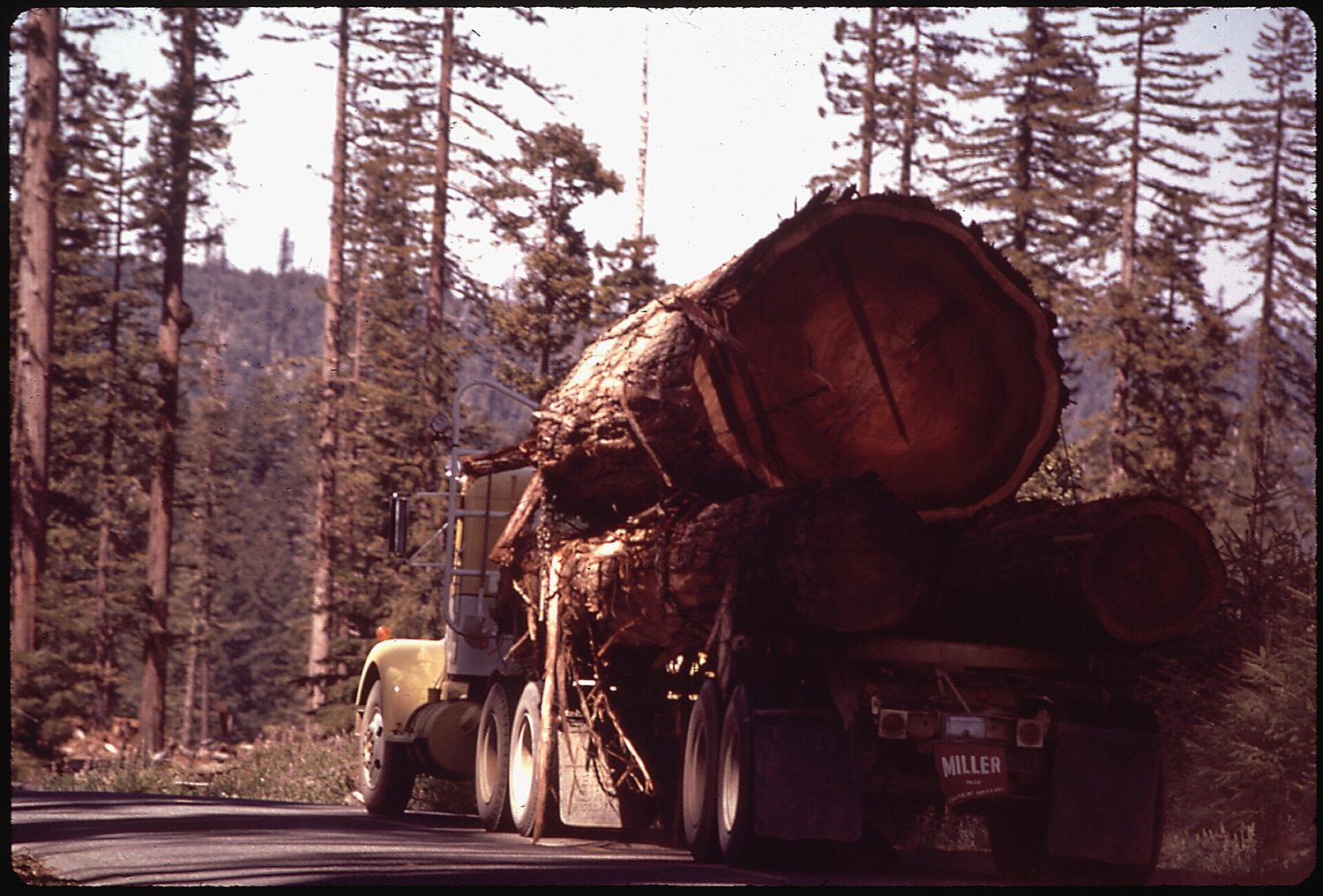
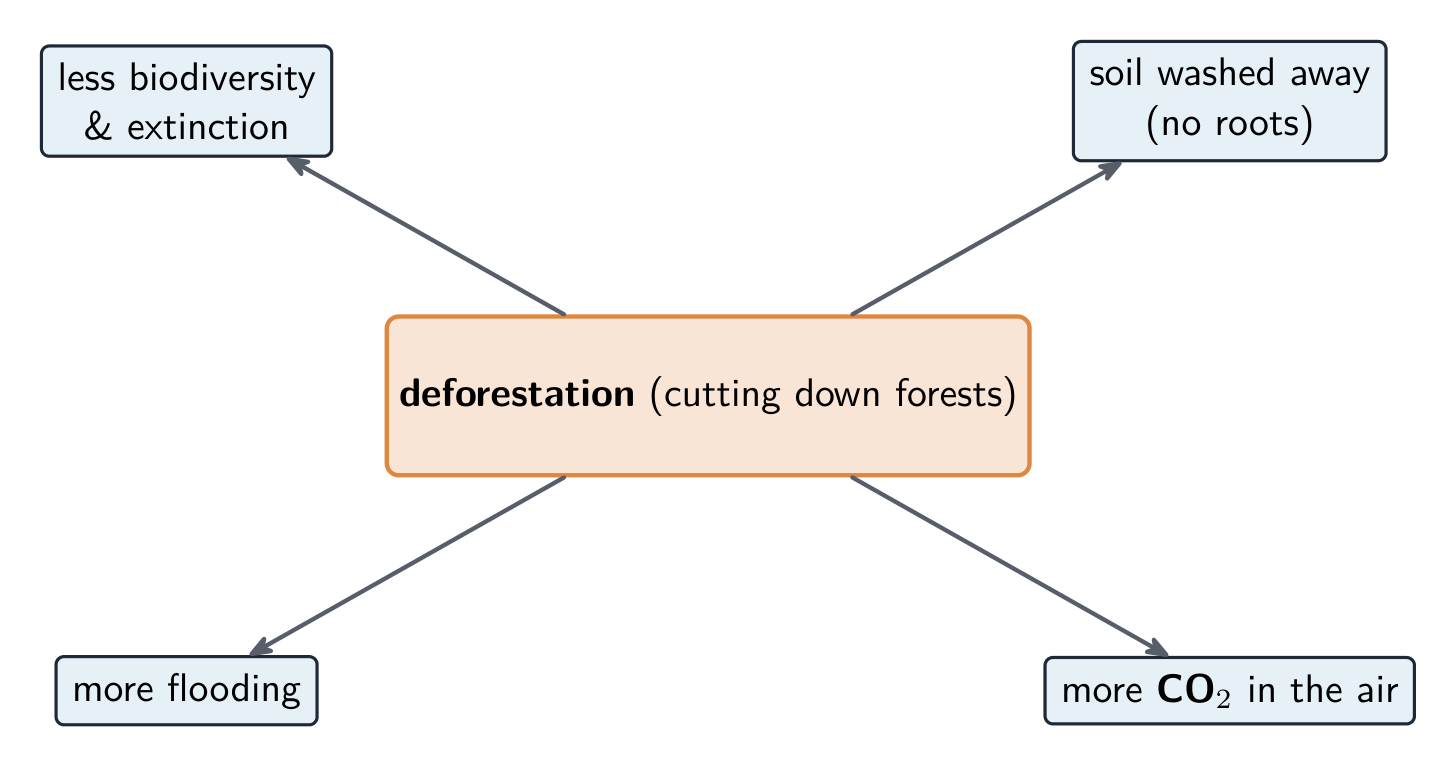
Clearcutting 皆伐 removes all trees from an area at once. It is cheap and efficient but causes erosion 侵蚀, loss of habitat and biodiversity, flooding, and higher soil temperatures. Recovery is slow, and nearby streams suffer from sediment.

ไทย

การตัดไม้ทำลายป่าแบบเบ็ดเสร็จ ตัดต้นไม้ทั้งหมดในบริเวณหนึ่งพร้อมกัน มีต้นทุนต่ำและมีประสิทธิภาพแต่ก่อให้เกิด การกัดเซาะ, การสูญเสียที่อยู่อาศัยและความหลากหลายทางชีวภาพ, น้ำท่วม, และอุณหภูมิดินสูงขึ้น การฟื้นตัวทำได้ช้า และลำน้ำใกล้เคียงได้รับผลกระทบจากตะกอน

เนินเขาที่มีป่าไม้ถูกตัดทอนทั้งหมดเป็นแถบหนึ่ง เหลือเพียงดินสีน้ำตาลเปลือยอยู่ข้างต้นไม้สีเขียวที่ยังคงยืนอยู่
การตัดไม้ทำลายป่าแบบเบ็ดเสร็จใหม่: ต้นไม้ทุกต้นในแถบนั้นถูกเก็บเกี่ยวพร้อมกัน เหลือดินเปล่าที่ถูกกัดเซาะและไหลลงสู่ลำน้ำ
การตัดไม้ลด Biodiversity และทำให้เกิดการกัดเซาะ น้ำท่วม, และ CO2 สูงขึ้น
5.3

The Green Revolution · ⁨การปฏิวัติสีเขียว⁩

Syllabus · ⁨หลักสูตร⁩
English

Enduring Understanding (EIN-2): When humans use natural resources, they alter natural systems.

Learning Objective EIN-2.C: Describe changes in agricultural practices.

  • EIN-2.C.1 The Green Revolution started a shift to new agricultural strategies and practices in order to increase food production, with both positive and negative results. Some of these strategies and methods are mechanization, genetically modified organisms (GMOs), fertilization, irrigation, and the use of pesticides.
  • EIN-2.C.2 Mechanization of farming can increase profits and efficiency for farms. It can also increase reliance on fossil fuels.
ไทย

ความเข้าใจที่ยั่งยืน (EIN-2): เมื่อมนุษย์ใช้ทรัพยากรธรรมชาติ พวกเขาจะเปลี่ยนแปลงระบบธรรมชาติ

จุดประสงค์การเรียนรู้ EIN-2.C: อธิบายการเปลี่ยนแปลงในแนวทางการเกษตร

  • EIN-2.C.1 การปฏิวัติสีเขียวนำไปสู่การเปลี่ยนไปใช้กลยุทธ์และแนวทางการเกษตรใหม่ๆ เพื่อเพิ่มผลผลิตอาหาร ซึ่งให้ผลลัพธ์ทั้งเชิงบวกและเชิงลบ กลยุทธ์และวิธีเหล่านี้รวมถึงการใช้เครื่องจักรกล สิ่งมีชีวิตดัดแปลงพันธุกรรม (GMOs) การใส่ปุ๋ย การทำนาชลประทาน และการใช้สารกำจัดศัตรูพืช
  • EIN-2.C.2 การใช้เครื่องจักรกลในการเกษตรสามารถเพิ่มกำไรและประสิทธิภาพให้กับฟาร์มได้ แต่อาจทำให้พึ่งพาเชื้อเพลิงฟอสซิลมากขึ้นด้วย

Source: College Board AP Course and Exam Description · ⁨แหล่งที่มา: คำอธิบายหลักสูตรและข้อสอบ College Board AP⁩

English

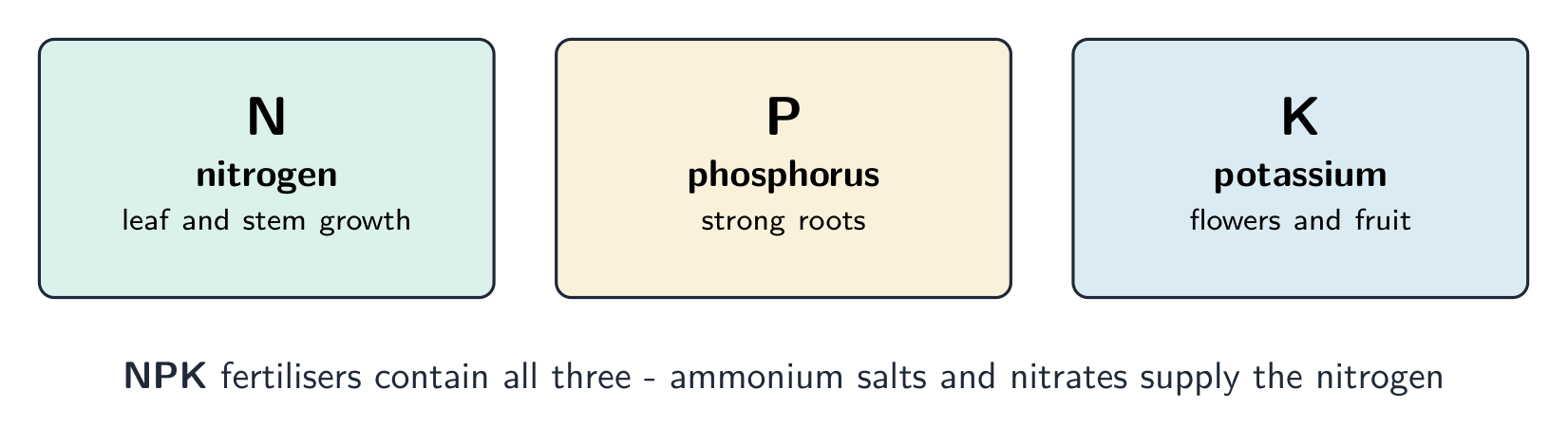
The Green Revolution 绿色革命 boosted crop yields with high-yield seeds, synthetic fertilizers 化肥, pesticides 农药, irrigation, and mechanization. It fed billions but brought costs: soil degradation, water pollution, high energy and water use, and loss of crop diversity (monoculture 单一栽培).

ไทย

การปฏิวัติสีเขียว เพิ่มผลผลิตพืชด้วยเมล็ดพันธุ์ให้ผลผลิตสูง, ปุ๋ยเคมี, สารกำจัดศัตรูพืช, การชลประทาน, และการใช้เครื่องจักรกล มันได้เลี้ยงดูผู้คนนับพันล้านคนแต่มีต้นทุน: การเสื่อมโทรมของดิน, มลพิษทางน้ำ, การใช้พลังงานและน้ำสูง, และการสูญเสียความหลากหลายของพืชผล (การปลูกพืชชนิดเดียว)

ปุ๋ย NPK จัดหาองค์ประกอบสามอย่างที่พืชต้องการมากที่สุด
ปุ๋ย NPK จ่ายธาตุอาหารสามชนิดที่พืชต้องการมากที่สุด
5.4

Impacts of Agricultural Practices · ⁨ผลกระทบของวิธีการเกษตรกรรม⁩

Syllabus · ⁨หลักสูตร⁩
English

Enduring Understanding (EIN-2): When humans use natural resources, they alter natural systems.

Learning Objective EIN-2.D: Describe agricultural practices that cause environmental damage.

  • EIN-2.D.1 Agricultural practices that can cause environmental damage include tilling, slash-and-burn farming, and the use of fertilizers.
ไทย

ความเข้าใจที่ยั่งยืน (EIN-2): เมื่อมนุษย์ใช้ทรัพยากรธรรมชาติ พวกเขาจะเปลี่ยนแปลงระบบธรรมชาติ

จุดประสงค์การเรียนรู้ EIN-2.D: อธิบายแนวทางการเกษตรที่ทำให้เกิดความเสียหายต่อสิ่งแวดล้อม

  • EIN-2.D.1 แนวทางการเกษตรที่อาจทำให้เกิดความเสียหายต่อสิ่งแวดล้อม ได้แก่ การไถพรวน การทำนาแบบตัดและเผา และการใช้ปุ๋ย

Source: College Board AP Course and Exam Description · ⁨แหล่งที่มา: คำอธิบายหลักสูตรและข้อสอบ College Board AP⁩

English

Practices such as tilling, monoculture, and heavy fertilizer/pesticide use cause erosion, soil salinization 土壤盐碱化, nutrient runoff (causing eutrophication 富营养化), and loss of biodiversity. Sustainable methods reduce these harms.

ไทย

วิธีการเช่น การไถพรวน, การปลูกพืชชนิดเดียว, และการใช้ปุ๋ย/สารกำจัดศัตรูพืชหนักเกินไป ก่อให้เกิด การกัดเซาะ, การเกลือของดิน, การไหลรั่วของสารอาหาร (ซึ่งนำไปสู่ การเจริญเติบโตของสาหร่าย), และการสูญเสียความหลากหลายทางชีววิทยา วิธีการที่ยั่งยืนช่วยลดความเสียหายเหล่านี้

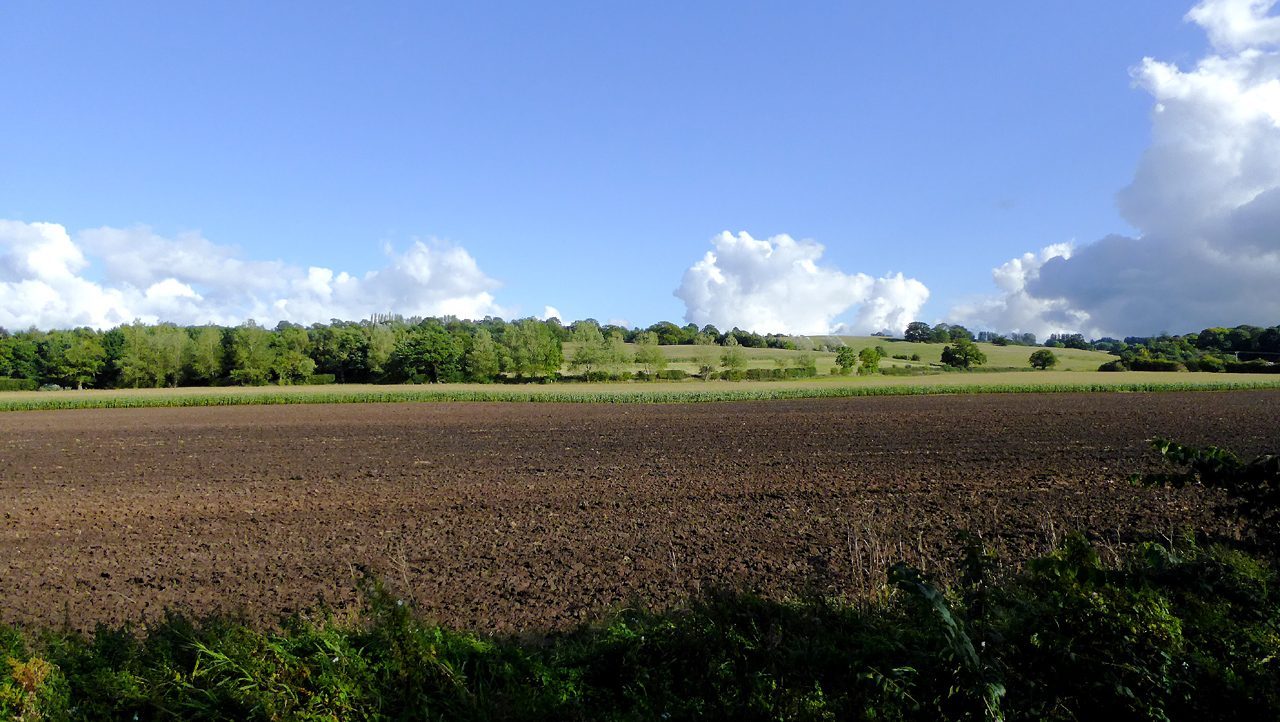
พื้นที่การเกษตรแบบเข้มข้น: การพรวนดิน การใช้ปุ๋ย และการปลูกพืชชนิดเดียวเพิ่มผลผลิตได้ แต่อาจทำให้ดินเสื่อมโทรมและปนเปื้อนแหล่งน้ำ
พื้นที่เกษตรกรรมเชิงintensiv: การไถพรวน, ปุ๋ย และการปลูกพืชชนิดเดียวเพิ่มผลผลิตแต่สามารถกัดเซาะดินและปนเปื้อนน้ำ
5.5

Irrigation Methods · ⁨วิธีการชลประทาน⁩

Syllabus · ⁨หลักสูตร⁩
English

Enduring Understanding (EIN-2): When humans use natural resources, they alter natural systems.

Learning Objective EIN-2.E: Describe different methods of irrigation.

  • EIN-2.E.1 The largest human use of freshwater is for irrigation (70%).
  • EIN-2.E.2 Types of irrigation include drip irrigation, flood irrigation, furrow irrigation, drip irrigation, and spray irrigation.

Learning Objective EIN-2.F: Describe the benefits and drawbacks of different methods of irrigation.

  • EIN-2.F.1 Waterlogging occurs when too much water is left to sit in the soil, which raises the water table of groundwater and inhibits plants' ability to absorb oxygen through their roots.
  • EIN-2.F.2 Furrow irrigation involves cutting furrows between crop rows and filling them with water. This system is inexpensive, but about 1/3 of the water is lost to evaporation and runoff.
  • EIN-2.F.3 Flood irrigation involves flooding an agricultural field with water. This system sees about 20% of the water lost to evaporation and runoff. This can also lead to waterlogging of the soil.
  • EIN-2.F.4 Spray irrigation involves pumping ground water into spray nozzles across an agricultural field. This system is more efficient than flood and furrow irrigation, with only 1/4 or less of the water lost to evaporation or runoff. However, spray systems are more expensive than flood and furrow irrigation, and also requires energy to run.
  • EIN-2.F.5 Drip irrigation uses perforated hoses to release small amounts of water to plant roots. This system is the most efficient, with only about 5% of water lost to evaporation and runoff. However, this system is expensive and so is not often used.
  • EIN-2.F.6 Salinization occurs when the salts in groundwater remain in the soil after the water evaporates. Over time, salinization can make soil toxic to plants.
  • EIN-2.F.7 Aquifers can be severely depleted if overused for agricultural irrigation, as has happened to the Ogallala Aquifer in the central United States.
ไทย

ความเข้าใจที่ยั่งยืน (EIN-2): เมื่อมนุษย์ใช้ทรัพยากรธรรมชาติ พวกเขาจะเปลี่ยนแปลงระบบธรรมชาติ

จุดประสงค์การเรียนรู้ EIN-2.E: อธิบายวิธีการทำนาชลประทานที่แตกต่างกัน

  • EIN-2.E.1 การใช้ทรัพยากรน้ำจืดของมนุษย์ส่วนใหญ่สำหรับการทำนาชลประทาน (70%)
  • EIN-2.E.2 ประเภทของการทำนาชลประทาน ได้แก่ การให้น้ำแบบหยด การ flooding การให้น้ำแบบร่องน้ำ การให้น้ำแบบหยด และการให้น้ำแบบสเปรย์

จุดประสงค์การเรียนรู้ EIN-2.F: อธิบายข้อดีและข้อเสียของวิธีการทำนาชลประทานแต่ละชนิด

  • EIN-2.F.1 การน้ำขังเกิดขึ้นเมื่อมีน้ำมากเกินพอที่คงอยู่บนดิน ซึ่งทำให้ระดับน้ำใต้ดินสูงขึ้นและขัดขวางความสามารถของพืชในการดูดซึมออกซิเจนผ่านราก
  • EIN-2.F.2 การให้น้ำแบบร่องน้ำเกี่ยวข้องกับการขุดร่องน้ำระหว่างแถวพืชผลและเติมน้ำลงในร่อง ระบบนี้มีราคาถูกแต่ประมาณ 1/3 ของน้ำจะสูญเสียไปจากการระเหยและการไหลบ่า
  • EIN-2.F.3 การให้น้ำแบบ flooding เกี่ยวกับการ flooding พื้นที่การเกษตรด้วยน้ำ ระบบนี้มีความสูญเสียประมาณ 20% ของน้ำจากการระเหยและการไหลบ่า นอกจากนี้ยังอาจนำไปสู่ภาวะน้ำขังในดินได้
  • EIN-2.F.4 การให้น้ำแบบสเปรย์เกี่ยวข้องกับการปั๊มน้ำใต้ดินเข้าไปในหัวฉีดสเปรย์ทั่วพื้นที่การเกษตร ระบบนี้มีประสิทธิภาพมากกว่าการให้น้ำแบบ flooding และร่องน้ำ โดยมีความสูญเสียเพียง 1/4 หรือน้อยกว่าจากการระเหยหรือการไหลบ่า อย่างไรก็ตาม ระบบสเปรย์มีราคาแพงกว่าการให้น้ำแบบ flooding และร่องน้ำ และต้องใช้พลังงานในการทำงาน
  • EIN-2.F.5 การให้น้ำแบบหยดใช้ท่อที่มีรูพรุนเพื่อปล่อยน้ำปริมาณน้อยลงเข้าสู่รากของพืช ระบบนี้มีประสิทธิภาพสูงสุด โดยมีความสูญเสียประมาณ 5% ของน้ำจากการระเหยและการไหลบ่า อย่างไรก็ตาม ระบบนี้มีความแพงและไม่ค่อย đượcใช้งาน
  • EIN-2.F.6 การสะสมของเกลือเกิดขึ้นเมื่อเกลือในน้ำใต้ดินคงอยู่ในดินหลังจากน้ำระเหยไป เมื่อเวลาผ่านไป การสะสมของเกลืออาจทำให้ดินเป็นพิษต่อพืช
  • EIN-2.F.7 ชั้นน้ำใต้ดินอาจถูกใช้จนหมดอย่างรุนแรงหากถูกใช้เกินขนาดสำหรับการทำนาชลประทาน ซึ่งเกิดขึ้นกับชั้นน้ำใต้ดิน Ogallala ในกลางประเทศสหรัฐอเมริกา

Source: College Board AP Course and Exam Description · ⁨แหล่งที่มา: คำอธิบายหลักสูตรและข้อสอบ College Board AP⁩

English

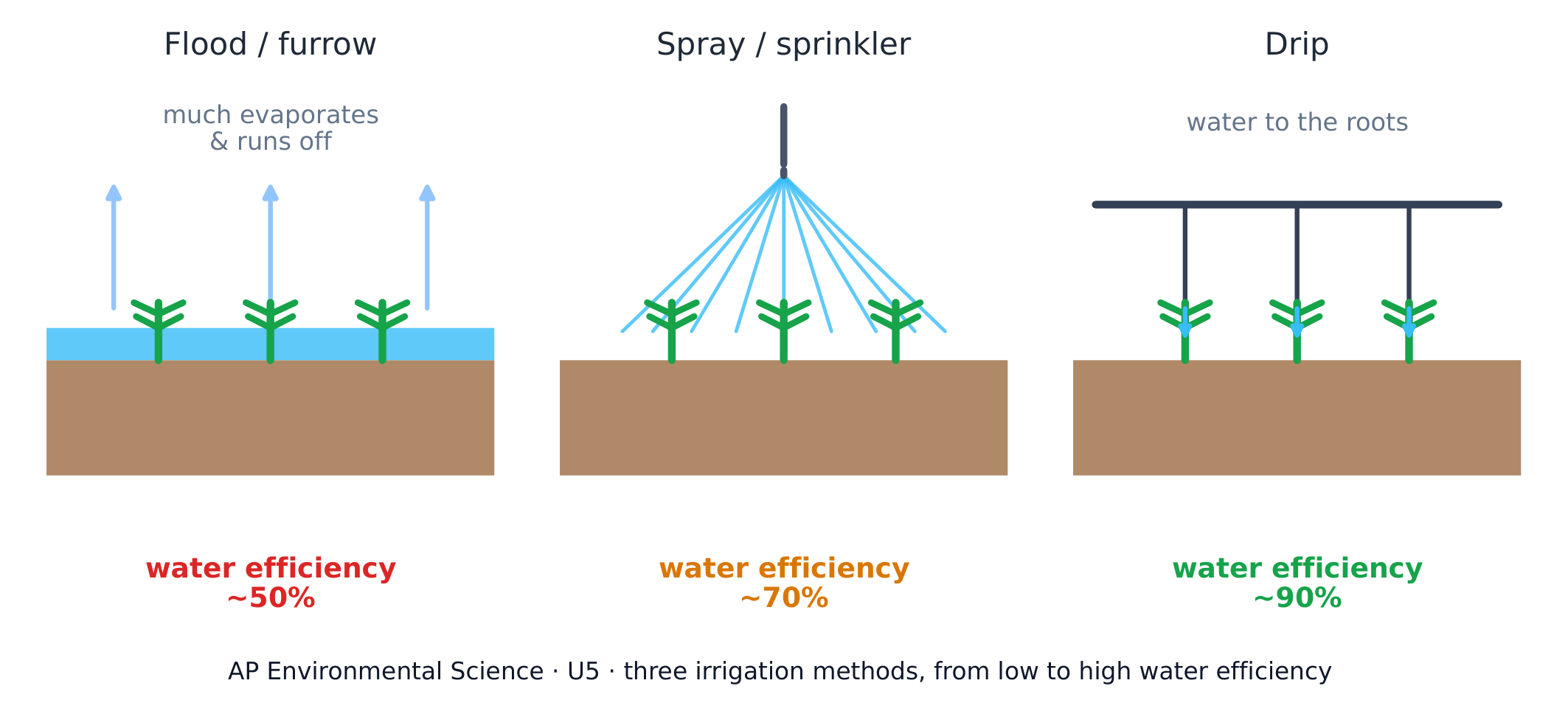
Irrigation 灌溉 supplies water to crops, and it is by far the largest human use of freshwater - about 70% of it worldwide, a figure the exam expects you to know. Drip irrigation is the most efficient (least evaporation); flood and spray methods waste more water and can cause waterlogging and salinization as evaporation leaves salts behind. Over-irrigation depletes aquifers 含水层 (underground stores of freshwater) faster than they refill.

ไทย

การชลประทาน จัดหาน้ำให้พืชผล และเป็น การใช้ทรัพยากรน้ำจืดของมนุษย์มากที่สุด – ประมาณ 70% ของปริมาณน้ำจืดทั่วโลก ซึ่งเป็นตัวเลขที่ข้อสอบคาดหวังให้คุณทราบ ระบบหยดน้ำ เป็นวิธีที่มีประสิทธิภาพที่สุด (ระเหยน้อยที่สุด); ระบบน้ำท่วม และ ระบบพ่นหมอก ใช้ประโยชน์จากน้ำน้อยกว่าและอาจทำให้เกิด ภาวะน้ำขัง และ การเกลือของดิน เมื่อการระเหยทิ้งเกลือไว้ phíaหลัง การให้น้ำมากเกินไปทำให้ ชั้นน้ำใต้ดิน (แหล่งกักเก็บน้ำจืดใต้พื้นดิน) หมดเร็วกว่าที่จะเติมเต็ม

เปรียบเทียบวิธีการชลประทาน: การหยดใช้น้ำน้อยที่สุด การล้นตักใช้น้ำมากที่สุด
เปรียบเทียบวิธีการชลประทาน: ระบบหยดน้ำเสียใช้น้ำน้อยที่สุด, ระบบน้ำท่วมเสียใช้น้ำมากที่สุด
Vocabulary · ⁨คำศัพท์⁩ Train · ⁨ฝึกฝน⁩
English ไทย
tragedy of the commons/ˈtrædʒədi ɒvðə ˈkɒmənz/ โศกนาฏกรรมของสาธารณะ (tragedy of the commons)
Clearcutting/ˈklɪəkʌtɪŋ/ การตัดป่าแบบหมดต้น
erosion/ɪˈrəʊʒn/ การพังทลายของดิน
Green Revolution/ɡriːn ˌrevəˈluːʃn/ ปฏิวัติเขียว
synthetic fertilizers/sɪnˈθetɪk ˈfɜːtəlaɪzəz/ ปุ๋ยสังเคราะห์
pesticides/ˈpestɪsaɪdz/ ยาฆ่าแมลง
monoculture/ˈmɒnəʊkʌltʃə/ การปลูกพืชเพียงชนิดเดียว
soil salinization/sɔɪl ˌseɪlɪnaɪˈzeɪʃn/ การสะสมเกลือในดิน
eutrophication/ˌjuːtrəfɪˈkeɪʃn/ การเพิ่มสารอาหาร (eutrophication)
Irrigation/ˌɪrɪˈɡeɪʃn/ ระบบชลประทาน
aquifers/ˈækwɪfəz/ ชั้นน้ำใต้ดิน
pesticide resistance/ˈpestɪsaɪd rɪˈzɪstəns/ ความต้านทานยาฆ่าแมลง
methane/ˈmiːθeɪn/ มีเทน
Overgrazing/ˌəʊvəˈɡreɪzɪŋ/ การกินอาหารเกินความจุของพื้นที่
desertification/dɪˌzɜːtɪfɪˈkeɪʃn/ การกลายเป็นทะเลทราย
rotational grazing/rəʊˈteɪʃənl ˈɡreɪzɪŋ/ การเลี้ยงสัตว์แบบหมุนเวียน
Overfishing/ˌəʊvəˈfɪʃɪŋ/ การจับปลาเกินขนาด
5.6

Pest Control Methods · ⁨วิธีการควบคุมศัตรูพืช⁩

Syllabus · ⁨หลักสูตร⁩
English

Enduring Understanding (EIN-2): When humans use natural resources, they alter natural systems.

Learning Objective EIN-2.G: Describe the benefits and drawbacks of different methods of pest control.

  • EIN-2.G.1 One consequence of using common pest-control methods such as pesticides, herbicides, fungicides, rodenticides, and insecticides is that organisms can become resistant to them through artificial selection. Pest control decreases crop damage by pest and increases crop yields.
  • EIN-2.G.2 Crops can be genetically engineered to increase their resistance to pests and diseases. However, using genetically engineered crops in planting or other ways can lead to loss of genetic diversity of that particular crop.
ไทย

ความเข้าใจที่ยั่งยืน (EIN-2): เมื่อมนุษย์ใช้ทรัพยากรธรรมชาติ พวกเขาจะเปลี่ยนแปลงระบบธรรมชาติ

จุดประสงค์การเรียนรู้ EIN-2.G: อธิบายข้อดีและข้อเสียของวิธีการควบคุมศัตรูพืชที่แตกต่างกัน

  • EIN-2.G.1 หนึ่งในผลกระทบของการใช้วิธีการควบคุมศัตรูพืชทั่วไป เช่น สารเคมี สารกำจัดวัชพืช สารฆ่าเชื้อรา สารกำจัดหนู และสารกำจัดแมลง คือสิ่งมีชีวิตอาจเกิดการดื้อต่อบาง طریقของการคัดเลือกโดยเทียม การควบคุมศัตรูพืชช่วยลดความเสียหายของพืชผลจากศัตรูพืชและเพิ่มผลผลิตพืชผล
  • EIN-2.G.2 พืชผลสามารถดัดแปลงพันธุกรรมเพื่อเพิ่มความต้านทานต่อศัตรูพืชและโรคได้ อย่างไรก็ตาม การใช้พืชผลดัดแปลงพันธุกรรมในการปลูกหรือวิธีอื่น ๆ อาจนำไปสู่การสูญเสียความหลากหลายทางพันธุกรรมของพืชผลชนิดนั้น

Source: College Board AP Course and Exam Description · ⁨แหล่งที่มา: คำอธิบายหลักสูตรและข้อสอบ College Board AP⁩

English

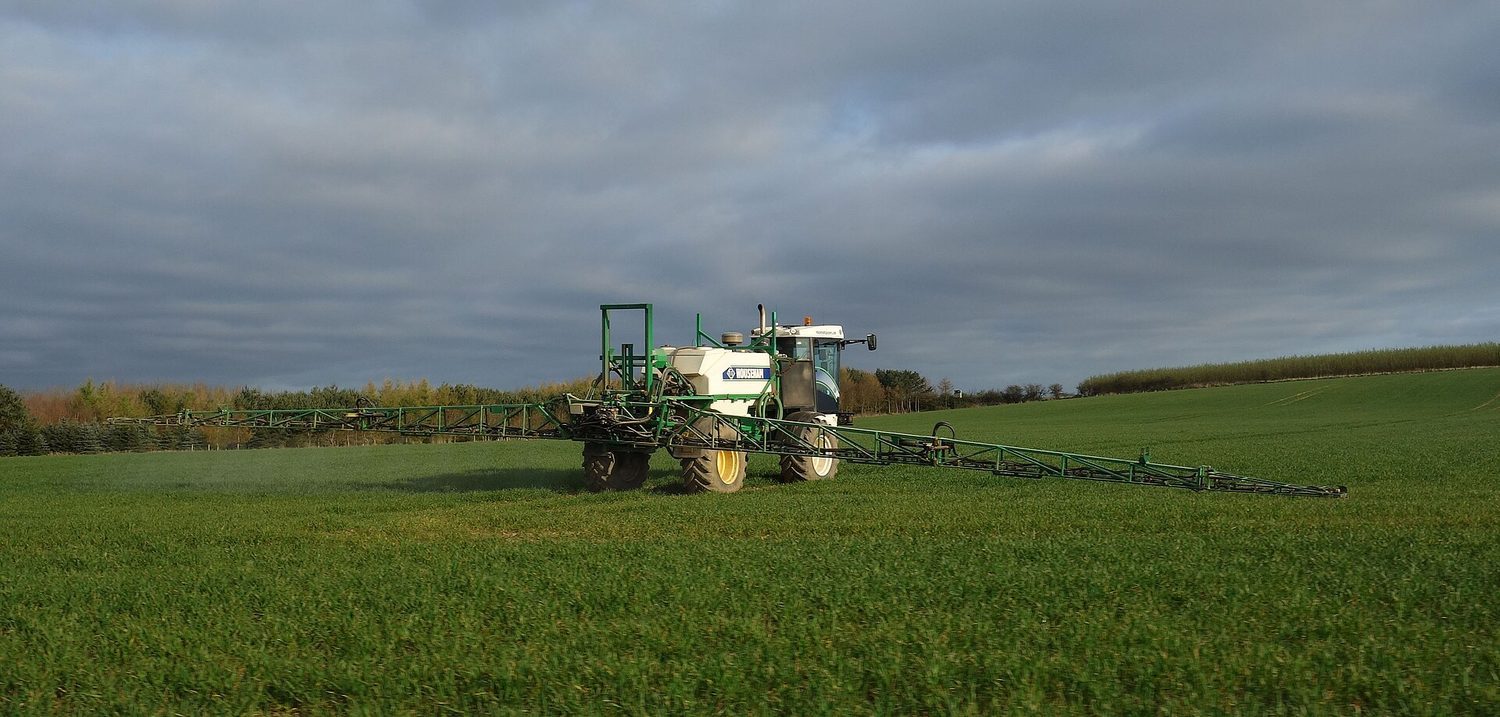
Pesticides kill pests and raise yields, but cause problems: they harm non-target species, pollute water, and drive pesticide resistance 抗药性 (survivors breed, so stronger doses are needed – the "pesticide treadmill").

ไทย

สารกำจัดศัตรูพืช杀死害虫并提高产量,但会带来问题:它们会伤害非目标物种,污染水体,并导致 杀虫剂抗性(幸存者繁殖,因此需要更强剂量——“杀虫剂 treadmill”)。

การพ่นยาฆ่าแมลงทางอากาศ: การควบคุมศัตรูพืชด้วยสารเคมีอาจปกป้องผลผลิตได้但也 อาจทำลายสิ่งมีชีวิตที่ไม่ใช่เป้าหมายและก่อให้เกิดศัตรูพืชดื้อยา
การพ่นสารกำจัดศัตรูพืชทางอากาศ: การควบคุมศัตรูพืชด้วยสารเคมีอาจปกป้องผลผลิตแต่ก็ทำลายสิ่งมีชีวิตที่ไม่ใช่เป้าหมายและก่อให้เกิดศัตรูพืชดื้อยา
5.7

Meat Production Methods · ⁨วิธีการผลิตเนื้อสัตว์⁩

Syllabus · ⁨หลักสูตร⁩
English

Enduring Understanding (EIN-2): When humans use natural resources, they alter natural systems.

Learning Objective EIN-2.H: Identify different methods of meat production.

  • EIN-2.H.1 Methods of meat production include concentrated animal feeding operations (CAFOs), also called feedlots, and free-range grazing.

Learning Objective EIN-2.I: Describe the benefits and drawbacks of different methods of meat production.

  • EIN-2.I.1 Meat production is less efficient than agriculture; it takes approximately 20 times more land to produce the same amount of calories from meat as from plants.
  • EIN-2.I.2 Concentrated animal feeding operation (CAFOs) are used as a way to quickly get livestock ready for slaughter. They tend to be crowded, and animals are fed grains or feed that are not as suitable as grass. Additionally, feedlots generate a large amount of organic waste, which can contaminate ground and surface water. The use of feedlots are less expensive than other methods, which can keep costs to consumers down.
  • EIN-2.I.3 Free range grazing allows animals to graze on grass during their entire lifecycle. Meat from free range animals tends to be free from antibiotics and other chemicals used in feedlots. Organic waste from these animals acts as fertilizer. Free range grazing requires large areas of land and the meat produced is more expensive for consumers.
  • EIN-2.I.4 Overgrazing occurs when too many animals feed on a particular area of land. Overgrazing causes loss of vegetation, which leads to soil erosion.
  • EIN-2.I.5 Overgrazing can cause desertification. Desertification is the degradation of low precipitation regions toward being increasingly arid until they become deserts.
  • EIN-2.I.6 Less consumption of meat could reduce $\text{CO}_2$, methane, and $\text{N}_2\text{O}$ emissions; conserve water; reduce the use of antibiotics and growth hormones; and improve topsoil.
ไทย

ความเข้าใจที่ยั่งยืน (EIN-2): เมื่อมนุษย์ใช้ทรัพยากรธรรมชาติ พวกเขาจะเปลี่ยนแปลงระบบธรรมชาติ

จุดประสงค์การเรียนรู้ EIN-2.H: ระบุวิธีการผลิตเนื้อที่แตกต่างกัน

  • EIN-2.H.1 วิธีการผลิตเนื้อรวมถึงการดำเนินการให้อาหารสัตว์แบบเข้มข้น (CAFOs) หรือที่เรียกว่า Feedlots และการเลี้ยงแบบ自由-range grazing

จุดประสงค์การเรียนรู้ EIN-2.I: อธิบายข้อดีและข้อเสียของวิธีการผลิตเนื้อที่แตกต่างกัน

  • EIN-2.I.1 การผลิตเนื้อสัตว์มีประสิทธิภาพน้อยกว่าการเพาะปลูก โดยต้องการพื้นที่ประมาณ 20 เท่าเพื่อผลิตแคลอรี่ในปริมาณเท่ากันจากเนื้อสัตว์เมื่อเทียบกับพืช
  • EIN-2.I.2 ระบบเลี้ยงสัตว์แบบเข้มข้น (CAFOs) ถูกใช้เป็นวิธีการเร่งรัดให้สัตว์พร้อมสำหรับการ屠宰 สัตว์มักถูกเลี้ยง在一个拥挤的环境中 และได้รับอาหารเป็นธัญพืชหรืออาหารที่ต่ำกว่าคุณภาพของหญ้า นอกจากนี้ ฟาร์มเลี้ยงสัตว์เหล่านี้สร้างขยะอินทรีย์จำนวนมาก ซึ่งอาจปนเปื้อนแหล่งน้ำใต้ดินและน้ำผิวดิน การใช้ระบบฟาร์มเลี้ยงสัตว์มีต้นทุนต่ำกว่าวิธีอื่น ซึ่งช่วยให้ราคาสินค้าสำหรับผู้บริโภคคงอยู่ระดับต่ำ
  • EIN-2.I.3 การเลี้ยงแบบเปิดโล่ง (Free range grazing)อนุญาตให้สัตว์หากินหญ้าตลอดวงจรชีวิต เนื้อจากสัตว์ประเภทนี้มักปราศจากยาปฏิชีวนะและสารเคมีที่ใช้ในระบบฟาร์มเลี้ยงสัตว์ ขยะอินทรีย์จากสัตว์เหล่านี้ทำหน้าที่เป็นปุ๋ย การเลี้ยงแบบเปิดโล่งต้องการพื้นที่ขนาดใหญ่ และเนื้อที่ผลิตได้จะมีราคาแพงกว่าสำหรับผู้บริโภค
  • EIN-2.I.4 การกินหญ้าเกิน限度 (Overgrazing)เกิดขึ้นเมื่อมีสัตว์มากเกินไปมาหากินในพื้นที่หนึ่ง การกินหญ้าเกิน限度ทำให้เกิดการสูญเสียพืชพรรณ นำไปสู่การกัดเซาะของดิน
  • EIN-2.I.5 การกินหญ้าเกิน限度สามารถนำไปสู่กระบวนการกลายเป็นทะเลทราย (Desertification) ซึ่งเป็นกระบวนการเสื่อมโทรมของพื้นที่ที่มีฝนตกน้อยลงเรื่อยๆจนกลายเป็นพื้นที่แห้งแล้ง并最终กลายเป็นทะเลทราย
  • EIN-2.I.6 การบริโภคเนื้อสัตว์ลดลงอาจช่วยลดการปล่อย $\text{CO}_2$ เมทาน และ $\text{N}_2\text{O}$; ประหยัดน้ำ; ลดการใช้ยาปฏิชีวนะและฮอร์โมนกระตุ้นการเจริญเติบโต; และปรับปรุงชั้นดิน表层

Source: College Board AP Course and Exam Description · ⁨แหล่งที่มา: คำอธิบายหลักสูตรและข้อสอบ College Board AP⁩

English

Producing meat, especially in concentrated animal feeding operations (CAFOs), uses large amounts of land, water, feed, and energy, and generates waste and methane 甲烷 (a greenhouse gas). Meat is far less energy-efficient than plant food because of the 10% rule – higher trophic levels waste more energy.

Overgrazing 过度放牧 - letting livestock eat vegetation faster than it regrows - strips the soil of its protective cover. On dry land this can drive desertification 荒漠化: the degradation of low-precipitation regions until they become deserts. The sustainable answer is rotational grazing 轮牧, moving livestock regularly between pastures so no single area is grazed bare.

ไทย

การผลิตเนื้อสัตว์ โดยเฉพาะใน หน่วยเลี้ยงสัตว์集中的 (CAFOs), ใช้ที่ดิน, น้ำ, อาหาร, และพลังงานจำนวนมาก และสร้างของเสียและ เมเธน (ก๊าซเรือนกระจก) เนื้อสัตว์มีประสิทธิภาพด้านพลังงานต่ำกว่าอาหารพืชอย่างมากเนื่องจากกฎ 10% – ระดับทางโภชนาการที่สูงขึ้นสิ้นเปลืองพลังงานมากกว่า

การกินหญ้าเกินกำลัง - ให้สัตว์กินพืชเร็วกว่าที่จะงอกใหม่ - ล้างชั้นป้องกันดินออก ในพื้นที่แห้งแล้งนำไปสู่ การรกร้าง: การเสื่อมโทรมของพื้นที่ฝนน้อยจนกลายเป็นทะเลทราย คำตอบที่ยั่งยืนคือ การเลี้ยงสัตว์แบบหมุนเวียน ย้ายสัตว์ไปมาระหว่างทุ่งหญ้าอย่างสม่ำเสมอเพื่อให้พื้นที่ใดไม่ถูกกินจนกลวง

5.8

Impacts of Overfishing · ⁨ผลกระทบของการจับปลาเกินขนาด⁩

Syllabus · ⁨หลักสูตร⁩
English

Enduring Understanding (EIN-2): When humans use natural resources, they alter natural systems.

Learning Objective EIN-2.J: Describe causes of and problems related to overfishing.

  • EIN-2.J.1 Overfishing has led to the extreme scarcity of some fish species, which can lessen biodiversity in aquatic systems and harm people who depend on fishing for food and commerce.
ไทย

ความเข้าใจที่ยั่งยืน (EIN-2): เมื่อมนุษย์ใช้ทรัพยากรธรรมชาติ พวกเขาจะเปลี่ยนแปลงระบบธรรมชาติ

วัตถุประสงค์การเรียนรู้ EIN-2.J: อธิบายสาเหตุและปัญหาที่เกี่ยวข้องกับการจับปลาเกิน限度

  • EIN-2.J.1 การจับปลาเกิน限度นำไปสู่ความหายากอย่างรุนแรงของบางชนิดปลา ซึ่งอาจลดความหลากหลายทางชีวภาพในระบบนิเวศทางน้ำและเป็นอันตรายต่อผู้คนที่ยึดอาชีพประมงเป็นอาหารและการค้า

Source: College Board AP Course and Exam Description · ⁨แหล่งที่มา: คำอธิบายหลักสูตรและข้อสอบ College Board AP⁩

English

Overfishing 过度捕捞 removes fish faster than they reproduce, collapsing populations (like cod). Bycatch (unwanted catch) and destructive methods (bottom trawling) damage ecosystems. It is a classic tragedy of the commons in the open ocean.

ไทย

การจับปลาเกินขนาด จับปลาได้เร็วกว่าที่มันสืบพันธุ์ ทำให้ประชากรลดลง (เช่น ปลา cod) โดยcatch ที่ไม่ต้องการ (unwanted catch) และวิธีการทำลายล้าง (bottom trawling) ทำลายระบบนิเวศ นี่คือวิกฤตการณ์ทรัพยากรส่วนรวมที่คลาสสิกในมหาสมุทรเปิด

Explore · ⁨สำรวจ⁩

Push a fish stock past its limit · ⁨Push一个fish stock ผ่าน limit ของมัน⁩

A population grows toward its carrying capacity $K$, but harvesting faster than it can breed collapses the stock. Raise the pressure and watch the population crash. · ⁨ประชากรจะเพิ่มขึ้น menuju ความจุรองรับ $K$ แต่การเก็บเกี่ยวที่เร็วกว่าการสืบพันธุ์จะทำให้สต็อกลดลง เพิ่มแรงกดดันและดูประชากรล่มสลาย⁩

5.9

Impacts of Mining · ⁨ผลกระทบจากการทำเหมือง⁩

Syllabus · ⁨หลักสูตร⁩
English

Enduring Understanding (EIN-2): When humans use natural resources, they alter natural systems.

Learning Objective EIN-2.K: Describe natural resource extraction through mining.

  • EIN-2.K.1 As the more accessible ores are mined to depletion, mining operations are forced to access lower grade ores. Accessing these ores requires increased use of resources that can cause increased waste and pollution.
  • EIN-2.K.2 Surface mining is the removal of large portions of soil and rock, called overburden, in order to access the ore underneath. An example is strip mining, which removes the vegetation from an area, making the area more susceptible to erosion.

Learning Objective EIN-2.L: Describe ecological and economic impacts of natural resource extraction through mining.

  • EIN-2.L.1 Mining wastes include the soil and rocks that are moved to gain access to the ore and the waste, called slag and tailings that remain when the minerals have been removed from the ore. Mining helps to provide low cost energy and material necessary to make products. The mining of coal can destroy habitats, contaminate ground water, and release dust particles and methane.
  • EIN-2.L.2 As coal reserves get smaller, due to a lack of easily accessible reserves, it becomes necessary to access coal through subsurface mining, which is very expensive.
ไทย

ความเข้าใจที่ยั่งยืน (EIN-2): เมื่อมนุษย์ใช้ทรัพยากรธรรมชาติ พวกเขาจะเปลี่ยนแปลงระบบธรรมชาติ

วัตถุประสงค์การเรียนรู้ EIN-2.K: อธิบายการ extracting ทรัพยากรธรรมชาติผ่านการทำเหมือง

  • EIN-2.K.1 เมื่อแร่ที่เข้าถึงได้ง่ายถูกขุดใช้หมด การดำเนินการทำเหมืองจะถูกบังคับให้เข้าถึงแร่ที่มีเกรดต่ำกว่า การเข้าถึงแร่เหล่านี้ต้องใช้ทรัพยากรเพิ่มขึ้นซึ่งสามารถก่อให้เกิดขยะและมลพิษเพิ่มขึ้น
  • EIN-2.K.2 การทำเหมืองแบบเปิด (Surface mining)คือการกำจัดดินและหินส่วนใหญ่ที่เรียกว่า overburden เพื่อเข้าถึงแร่ที่อยู่ด้านล่าง ตัวอย่างเช่นการทำเหมืองแบบแถบ (strip mining)ซึ่งกำจัดพืชพรรณออกจากพื้นที่ ทำให้พื้นที่นั้นเสี่ยงต่อการกัดเซาะมากขึ้น

วัตถุประสงค์การเรียนรู้ EIN-2.L: อธิบายผลกระทบด้านนิเวศวิทยาและเศรษฐกิจจากการ extraction ทรัพยากรธรรมชาติผ่านการทำเหมือง

  • EIN-2.L.1 ขยะจากการทำเหมืองรวมถึงดินและหินที่ถูกเคลื่อนย้ายเพื่อเข้าถึงแร่และขยะที่เรียกว่า slag และ tailings ที่เหลืออยู่หลังจากที่แร่ถูกแยกออกจาก Ore การทำเหมืองช่วยจัดหาค่าพลังงานและวัสดุที่มีราคาถูกจำเป็นสำหรับการผลิตสินค้า การทำเหมืองถ่านหินสามารถทำลายถิ่นที่อยู่ ปนเปื้อนน้ำใต้ดิน และปล่อยฝุ่นละอองและเมทาน
  • EIN-2.L.2 เมื่อสำรองถ่านหินมีขนาดเล็กลงเนื่องจากขาดสำรองที่เข้าถึงง่าย จำเป็นต้องเข้าถึงถ่านหินผ่านการทำเหมืองใต้ดิน (subsurface mining)ซึ่งมีค่าใช้จ่ายสูงมาก

Source: College Board AP Course and Exam Description · ⁨แหล่งที่มา: คำอธิบายหลักสูตรและข้อสอบ College Board AP⁩

English

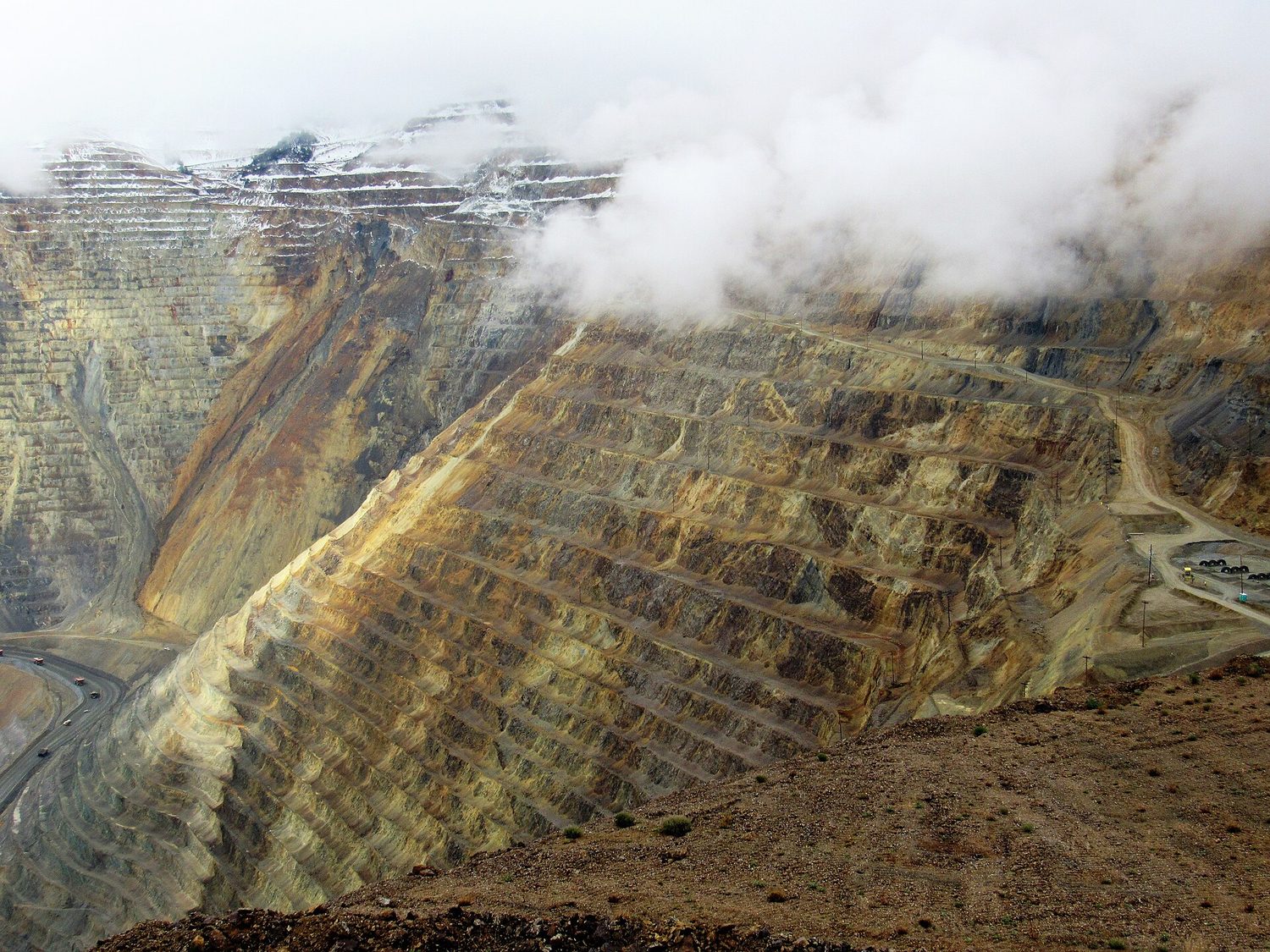
Mining 采矿 extracts minerals and fuels but disturbs land, especially surface (strip) mining and mountaintop removal. Impacts include habitat destruction, acid mine drainage 酸性矿山废水, and toxic tailings polluting water.

When the easily reached deposits are gone, mining moves underground to subsurface mining 地下开采, which is far more expensive and dangerous - the same pattern applies to coal as its accessible reserves shrink.

ไทย

การทำเหมือง ดึงแร่และเชื้อเพลิงออกมาแต่รบกวนพื้นดิน โดยเฉพาะ การทำเหมืองแบบเปิด (strip mining) และ การขุดยอดเขา ผลกระทบรวมถึงการทำลายแหล่งที่อยู่อาศัย น้ำเสียจากเหมืองแร่ที่เป็นกรด และของเสียพิษที่ปนเปื้อนแหล่งน้ำ

เหมืองเปิดขนาดใหญ่: บันไดขั้นบันไดรูปทรงเกลียวขุดลึกลงไปในพื้นดิน กว้างหลายกิโลเมตร
เหมืองเปิด: บันไดถูกขุดกว้างและลึกขึ้นเรื่อยๆ เพื่อเข้าถึงแร่ ทำลายแหล่งที่อยู่อาศัยและเปิดเผยหินที่ก่อให้เกิดมลพิษทางน้ำ

เมื่อแหล่งแร่ที่เข้าถึงได้ง่ายหมดไป การทำเหมืองจะย้ายลงใต้ดินเป็น การทำเหมืองใต้ดิน ซึ่งมีค่าใช้จ่ายสูงและอันตรายกว่ามาก - รูปแบบเดียวกันนี้เกิดขึ้นกับถ่านหินเมื่อปริมาณสำรองที่เข้าถึงได้ลดลง

Vocabulary · ⁨คำศัพท์⁩ Train · ⁨ฝึกฝน⁩
English ไทย
Mining/ˈmaɪnɪŋ/ การทำเหมือง
acid mine drainage/ˈæsɪd maɪn ˈdreɪnɪdʒ/ น้ำเสียจากเหมืองแร่
subsurface mining/ˈsʌbsəfɪs ˈmaɪnɪŋ/ การทำเหมืองใต้ดิน (subsurface mining)
Urbanization/ˌɜːbənaɪˈzeɪʃn/ การเป็นเมือง
impervious surfaces/ɪmˈpɜːvɪəs ˈsɜːfɪsɪz/ พื้นผิวกันน้ำ (impervious surfaces)
urban heat islands/ˈɜːbən hiːt ˈaɪləndz/ เกาะความร้อนในเมือง
hydrologic cycle/ˌhaɪdrəˈlɒdʒɪk ˈsaɪkl/ วัฏจักรไฮโดรโลজิก
saltwater intrusion/ˈsɒltwɔːtə ɪnˈtruːʒn/ การแทรกซึมของน้ำเกลือ
ecological footprint/ˌekəˈlɒdʒɪkl ˈfʊtprɪnt/ รอยเท้าเชิงนิเวศวิทยา
open-pit mine/ˈəʊpən pɪt maɪn/ เหมืองแบบเปิด
5.10

Impacts of Urbanization · ⁨ผลกระทบจากการขยายตัวของเมือง⁩

Syllabus · ⁨หลักสูตร⁩
English

Enduring Understanding (EIN-2): When humans use natural resources, they alter natural systems.

Learning Objective EIN-2.M: Describe the effects of urbanization on the environment.

  • EIN-2.M.1 Urbanization can lead to depletion of resources and saltwater intrusion in the hydrologic cycle.
  • EIN-2.M.2 Urbanization, through the burning of fossil fuels and landfills, affects the carbon cycle by increasing the amount of carbon dioxide in the atmosphere.
  • EIN-2.M.3 Impervious surfaces are human-made structures—such as roads, buildings, sidewalks, and parking lots—that do not allow water to reach the soil, leading to flooding.
  • EIN-2.M.4 Urban sprawl is the change in population distribution from high population density areas to low density suburbs that spread into rural lands, leading to potential environmental problems.
ไทย

ความเข้าใจที่ยั่งยืน (EIN-2): เมื่อมนุษย์ใช้ทรัพยากรธรรมชาติ พวกเขาจะเปลี่ยนแปลงระบบธรรมชาติ

วัตถุประสงค์การเรียนรู้ EIN-2.M: อธิบายผลกระทบของการขยายตัวของเมืองต่อสิ่งแวดล้อม

  • EIN-2.M.1 การขยายตัวของเมืองอาจนำไปสู่การใช้ทรัพยากรเกิน限度และการแทรกซึมของน้ำเค็มในวัฏจักรน้ำ
  • EIN-2.M.2 การขยายตัวของเมือง ผ่านการเผาไหม้เชื้อเพลิงฟอสซิลและ landfill ส่งผลต่อวัฏจักรคาร์บอนโดยการเพิ่มปริมาณก๊าซคาร์บอนไดออกไซด์ในบรรยากาศ
  • EIN-2.M.3 พื้นผิวกันน้ำคือโครงสร้างที่มนุษย์สร้างขึ้น เช่น ถนน อาคาร ทางเท้า และที่จอดรถ ซึ่งไม่ให้น้ำซึมลงดิน ทำให้เกิดน้ำท่วม
  • EIN-2.M.4 การขยายตัวของเมืองแบบกระจายตัว (urban sprawl) คือการเปลี่ยนแปลงการกระจายตัวของประชากรจากพื้นที่ที่มีความหนาแน่นสูงไปยังชานเมืองที่มีความหนาแน่นต่ำที่แผ่ขยายเข้าไปในที่ดินชนบท นำไปสู่ปัญหาสิ่งแวดล้อม潜在的

Source: College Board AP Course and Exam Description · ⁨แหล่งที่มา: คำอธิบายหลักสูตรและข้อสอบ College Board AP⁩

English

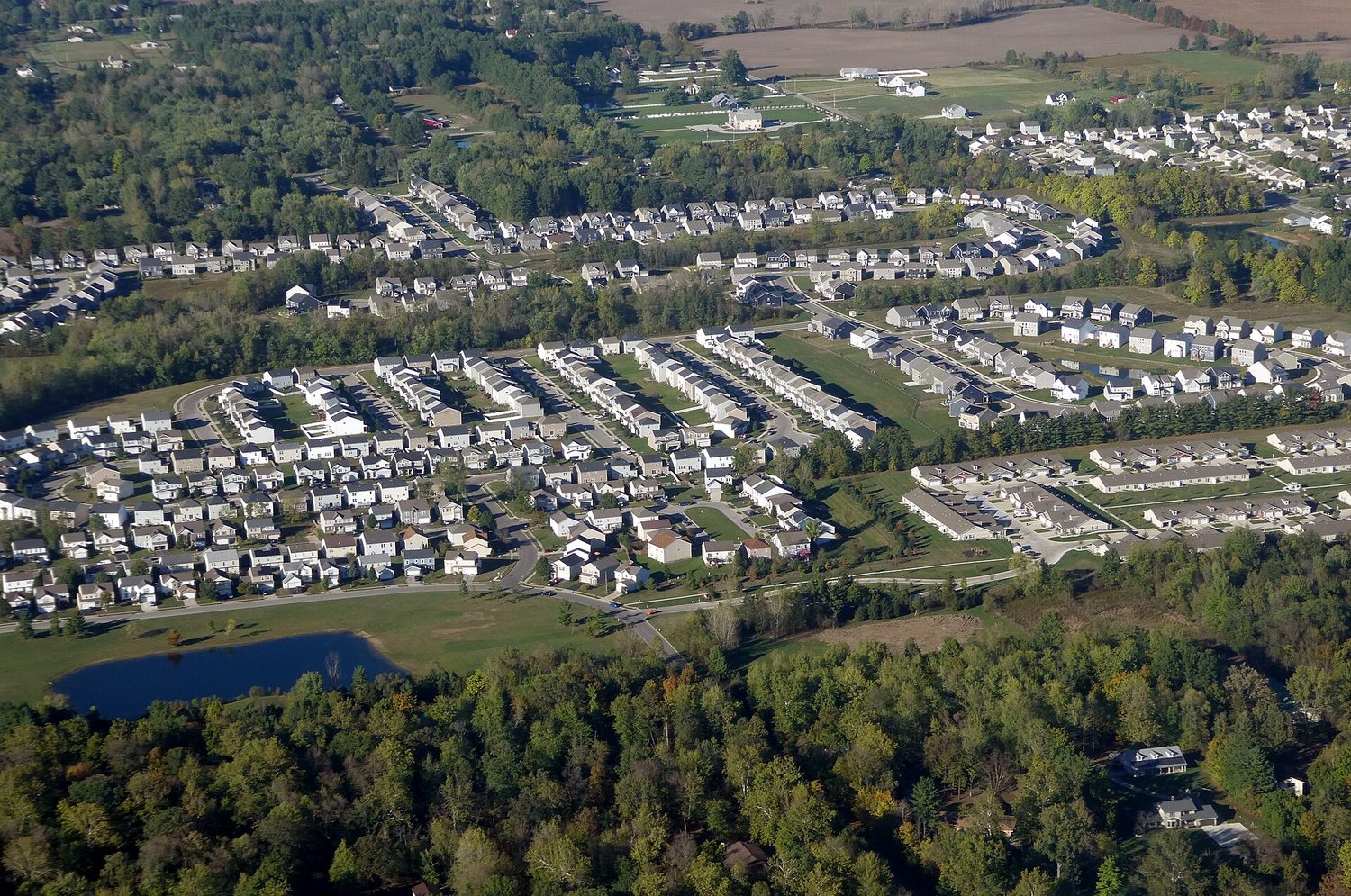
Urbanization 城市化 replaces natural land with impervious surfaces 不透水面 (roads, buildings), increasing runoff and flooding, creating urban heat islands 热岛, and generating pollution and waste. Urban sprawl consumes farmland and habitat. It also strains the hydrologic cycle 水循环: a dense city depletes local water, and heavy groundwater pumping near a coast draws seawater into the aquifer - saltwater intrusion 海水入侵 - which can ruin a freshwater supply.

ไทย

การขยายตัวของเมือง แทนที่พื้นที่ธรรมชาติด้วย พื้นผิวกันซึม (ถนน อาคาร) เพิ่มปริมาณน้ำไหล permukaan และการเกิดน้ำท่วม สร้าง เกาะความร้อนในเมือง และก่อให้เกิดมลพิษและขยะ การขยายตัวของเมืองอย่างไร้ทิศทาง ใช้พื้นที่เกษตรกรรมและแหล่งที่อยู่อาศัยจำนวนมาก มันยังทำให้ วงจรไฮโดรโลจิก ผิดพลาด: เมืองหนาแน่นใช้ทรัพยากรน้ำท้องถิ่นจนหมด และการสูบน้ำบาดาลหนักๆ ใกล้ชายฝั่งจะดึงน้ำทะเลเข้าไปในชั้นน้ำใต้ดิน - การแทรกซึมของน้ำเค็ม - ซึ่งสามารถทำลายแหล่งน้ำจืดได้

มุมมองทางอากาศของบ้านเดี่ยวความหนาแน่นต่ำที่แผ่ขยายออกไปถึงขอบฟ้าเหนือพื้นที่เกษตรกรรมเดิม
การขยายตัวของเมืองอย่างไร้ทิศทาง: ที่อยู่อาศัยแผ่กระจายบนพื้นที่เกษตรกรรมเดิม ทำให้ดินปิดสนิท น้ำฝนจึงไหลผ่านแทนที่จะซึมเข้าดิน
Vocabulary · ⁨คำศัพท์⁩ Train · ⁨ฝึกฝน⁩
English ไทย
urban sprawl/ˈɜːbən sprɔːl/ urban sprawl
5.11

Ecological Footprints · ⁨รอยเท้าเชิงนิเวศวิทยา⁩

Syllabus · ⁨หลักสูตร⁩
English

Enduring Understanding (EIN-2): When humans use natural resources, they alter natural systems.

Learning Objective EIN-2.N: Explain the variables measured in an ecological footprint.

  • EIN-2.N.1 Ecological footprints compare resource demands and waste production required for an individual or a society.
ไทย

ความเข้าใจที่ยั่งยืน (EIN-2): เมื่อมนุษย์ใช้ทรัพยากรธรรมชาติ พวกเขาจะเปลี่ยนแปลงระบบธรรมชาติ

วัตถุประสงค์การเรียนรู้ EIN-2.N: อธิบายตัวแปรที่วัดในรอยเท้าเชิงนิเวศ

  • EIN-2.N.1 รอยเท้าเชิงนิเวศเปรียบเทียบความต้องการทรัพยากรและการผลิตเสียที่จำเป็นสำหรับบุคคลหรือสังคม

Source: College Board AP Course and Exam Description · ⁨แหล่งที่มา: คำอธิบายหลักสูตรและข้อสอบ College Board AP⁩

English

An ecological footprint 生态足迹 measures the land and water a person or population needs to supply resources and absorb wastes. Wealthy, high-consumption nations have much larger footprints. If everyone's footprint exceeds Earth's capacity, resources are being used unsustainably.

Worked example. Earth provides roughly $1.6$ global hectares (gha) of biocapacity per person. If the average person's footprint is $2.7\ \text{gha}$, humanity is demanding about $\tfrac{2.7}{1.6}\approx1.7$ Earths – living beyond what the planet can renew. Worse, if everyone consumed like a high-income nation at $8\ \text{gha}$ per person, it would take $\tfrac{8}{1.6}=5$ Earths – exactly why footprint-per-person is the key sustainability yardstick.

ไทย

รอยเท้าเชิงนิเวศวิทยา วัดพื้นที่ดินและน้ำที่บุคคลหรือประชากรต้องการเพื่อจัดหานิคมทรัพยากรและดูดซับของเสีย ประเทศรวยที่มีบริโภคสูงมีรอยเท้าที่ใหญ่กว่ามาก หากรอยเท้าของแต่ละคนเกินความสามารถของโลก ทรัพยากรกำลังถูกใช้โดยไม่ยั่งยืน

ตัวอย่างวิธีทำ. โลกให้ ศักยภาพทางชีวภาพ ประมาณ $1.6$ เฮกตาร์โลกต่อคน (gha) หากรอยเท้าเฉลี่ยของแต่ละคนคือ $2.7\ \text{gha}$ มนุษย์กำลังต้องการโลกประมาณ $\tfrac{2.7}{1.6}\approx1.7$ โลก – Lives beyond what the planet can renew. Worse, if everyone consumed like a high-income nation at $8\ \text{gha}$ per person, it would take $\tfrac{8}{1.6}=5$ Earths – exactly why footprint-per-person is the key sustainability yardstick.

Vocabulary · ⁨คำศัพท์⁩ Train · ⁨ฝึกฝน⁩
English ไทย
Sustainability/səˌsteɪnəˈbɪlɪti/ ความยั่งยืน (Sustainability)
permeable pavement/ˈpɜːməbl ˈpeɪvmənt/ พื้นผิวโปร่งน้ำ
green roofs/ɡriːn ruːfs/ หลังคาเขียว
Integrated pest management/ˈɪntɪɡreɪtɪd pest ˈmænɪdʒmənt/ การจัดการศัตรูพืชแบบบูรณาการ (Integrated pest management)
crop rotation/krɒp rəʊˈteɪʃn/ การหมุนเวียนพืชผล
contour plowing/ˈkɒntʊə ˈplaʊɪŋ/ การไถพรวนตามแนวระดับ
terracing/ˈterɪsɪŋ/ การทำขั้นบันได
Aquaculture/ˈækwəkʌltʃə/ การเลี้ยงสัตว์น้ำ
selective cutting/sɪˈlektɪv ˈkʌtɪŋ/ การตัดไม้เลือก
reforestation/rɪˌfɒrɪˈsteɪʃn/ การปลูกป่าใหม่
prescribed burn/prɪˈskraɪbd bɜːn/ การเผาไหม้อย่างถูกกำหนด
5.12

Introduction to Sustainability · ⁨บทนำสู่ความยั่งยืน⁩

Syllabus · ⁨หลักสูตร⁩
English

Enduring Understanding (STB-1): Humans can mitigate their impact on land and water resources through sustainable use.

Learning Objective STB-1.A: Explain the concept of sustainability.

  • STB-1.A.1 Sustainability refers to humans living on Earth and their use of resources without depletion of the resources for future generations. Environmental indicators that can guide humans to sustainability include biological diversity, food production, average global surface temperatures and $\text{CO}_2$ concentrations, human population, and resource depletion.
  • STB-1.A.2 Sustainable yield is the amount of a renewable resource that can be taken without reducing the available supply.
ไทย

ความเข้าใจที่ยั่งยืน (STB-1): มนุษย์สามารถลดผลกระทบต่อแหล่งดินและน้ำด้วยการใช้ทรัพยากรอย่างยั่งยืน

วัตถุประสงค์การเรียนรู้ STB-1.A: อธิบายแนวคิดเรื่องความยั่งยืน

  • STB-1.A.1 ความยั่งยืนหมายถึงการที่มนุษย์อาศัยอยู่บนโลกและใช้ทรัพยากรโดยไม่ทำให้ทรัพยากรเหล่านั้นหมดสิ้นสำหรับรุ่นในอนาคต ตัวชี้วัดทางสิ่งแวดล้อมที่ช่วยนำทางมนุษย์สู่ความยั่งยืนได้ ได้แก่ ความหลากหลายทางชีวภาพ การผลิตอาหาร อุณหภูมิพื้นผิวเฉลี่ยของโลก และ $\text{CO}_2$ ความเข้มข้น, จำนวนประชากรมนุษย์ และการสูญเสียทรัพยากร
  • STB-1.A.2 ผลผลิตที่ยั่งยืน (sustainable yield) คือปริมาณของทรัพยากร تجدได้ที่สามารถใช้โดยไม่ลดทอนปริมาณที่มีอยู่

Source: College Board AP Course and Exam Description · ⁨แหล่งที่มา: คำอธิบายหลักสูตรและข้อสอบ College Board AP⁩

English

Sustainability 可持续性 means meeting present needs without harming future generations' ability to meet theirs. It balances environmental health, economic viability, and social equity, using resources no faster than they can be replaced.

ไทย

ความยั่งยืน หมายถึงการตอบสนองความต้องการในปัจจุบันโดยไม่ทำลายความสามารถของรุ่นอนาคตในการตอบสนอง theirs平衡 environmental health, economic viability, and social equity, using resources no faster than they can be replaced.

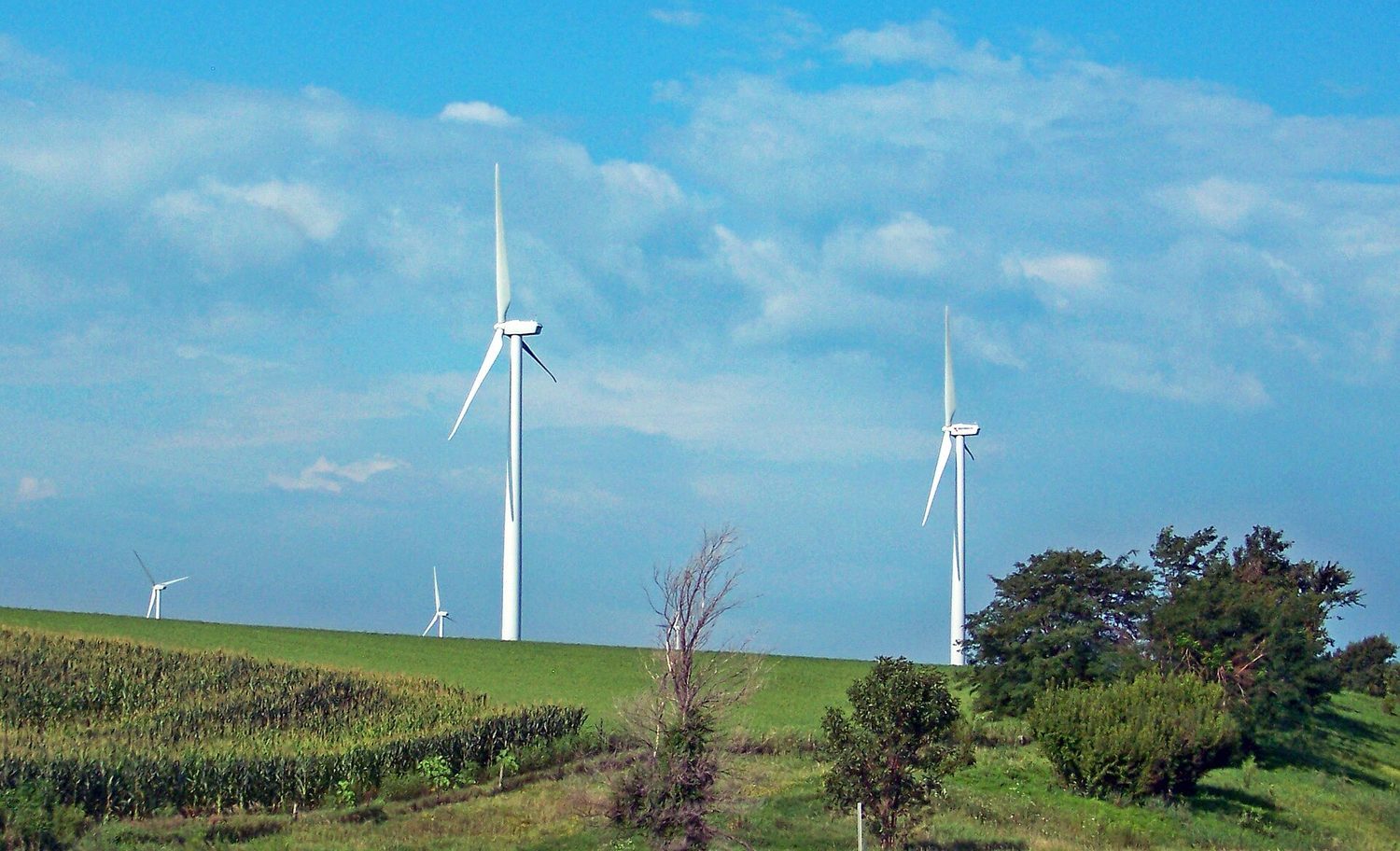
กังหันลมในพื้นที่เกษตรกรรม: การใช้ทรัพยากรที่ยั่งยืนตอบสนองความต้องการปัจจุบันโดยไม่ตัดสิทธิ์รุ่นอนาคต *กังหันลมในพื้นที่เกษตรกรรม: การใช้ทรัพยากรที่ยั่งยืนตอบสนองความต้องการปัจจุบันโดยไม่ตัดสิทธิ์รุ่นอนาคต

5.13

Methods to Reduce Urban Runoff · ⁨วิธีการลดน้ำไหลsurface⁩

Syllabus · ⁨หลักสูตร⁩
English

Enduring Understanding (STB-1): Humans can mitigate their impact on land and water resources through sustainable use.

Learning Objective STB-1.B: Describe methods for mitigating problems related to urban runoff.

  • STB-1.B.1 Methods to increase water infiltration include replacing traditional pavement with permeable pavement, planting trees, increased use of public transportation, and building up, not out.
ไทย

ความเข้าใจที่ยั่งยืน (STB-1): มนุษย์สามารถลดผลกระทบต่อแหล่งดินและน้ำด้วยการใช้ทรัพยากรอย่างยั่งยืน

วัตถุประสงค์การเรียนรู้ STB-1.B: อธิบายวิธีการบรรเทาปัญหาน้ำไหลบ่าจากเมือง

  • STB-1.B.1 วิธีการเพิ่มการซึมซึมน้ำ ได้แก่ การเปลี่ยนถนนคอนกรีตแบบเดิมด้วยถนนโปร่งระบายน้ำ การปลูกต้นไม้ การใช้ขนส่งสาธารณะมากขึ้น และการสร้างอาคารขึ้น而非向外扩展

Source: College Board AP Course and Exam Description · ⁨แหล่งที่มา: คำอธิบายหลักสูตรและข้อสอบ College Board AP⁩

English

Reduce runoff with permeable pavement 透水路面, rain gardens and green roofs 绿色屋顶, retention ponds, and preserved vegetation. These let water soak in, filtering pollutants and recharging groundwater instead of flooding streams.

ไทย

ลดน้ำไหลsurface ด้วย ** pavement แบบซึมน้ำ**, สวนฝน และ หลังคาเขียว, อ่างเก็บน้ำ, และรักษาพืชพรรณไว้方法เหล่านี้ช่วยให้น้ำซึมเข้าดิน กรองมลพิษ และเติมเต็มชั้นน้ำใต้ดินแทนที่จะทำให้เกิดน้ำท่วมลำน้ำ

5.14

Integrated Pest Management · ⁨การจัดการศัตรูพืชแบบผสมผสาน⁩

Syllabus · ⁨หลักสูตร⁩
English

Enduring Understanding (STB-1): Humans can mitigate their impact on land and water resources through sustainable use.

Learning Objective STB-1.C: Describe integrated pest management.

  • STB-1.C.1 Integrated pest management (IPM) is a combination of methods used to effectively control pest species while minimizing the disruption to the environment. These methods include biological, physical, and limited chemical methods such as biocontrol, intercropping, crop rotation, and natural predators of the pests.

Learning Objective STB-1.D: Describe the benefits and drawbacks of integrated pest management (IPM).

  • STB-1.D.1 The use of integrated pest management (IPM) reduces the risk that pesticides pose to wildlife, water supplies, and human health.
  • STB-1.D.2 Integrated pest management (IPM) minimizes disruptions to the environment and threats to human health but can be complex and expensive.
ไทย

ความเข้าใจที่ยั่งยืน (STB-1): มนุษย์สามารถลดผลกระทบต่อแหล่งดินและน้ำด้วยการใช้ทรัพยากรอย่างยั่งยืน

วัตถุประสงค์การเรียนรู้ STB-1.C: อธิบายการจัดการศัตรูพืชแบบบูรณาการ

  • STB-1.C.1 การจัดการศัตรูพืชแบบบูรณาการ (IPM) คือการผสมผสานวิธีการต่างๆ เพื่อควบคุมชนิดพันธุ์ศัตรูพืชได้อย่างมีประสิทธิภาพโดยลดการรบกวนต่อสิ่งแวดล้อมที่สุด วิธีการเหล่านี้รวมถึงวิธีชีวภาพ วิธีกายภาพ และวิธีเคมีจำกัด เช่น การควบคุมด้วยชีวภาพ การปลูกพืชสลับ การหมุนเวียนพืช และสัตว์นักล่าตามธรรมชาติของศัตรูพืช

วัตถุประสงค์การเรียนรู้ STB-1.D: อธิบายข้อดีและข้อเสียของการจัดการศัตรูพืชแบบบูรณาการ (IPM)

  • STB-1.D.1 การใช้การจัดการศัตรูพืชแบบบูรณาการ (IPM) ลดความเสี่ยงที่สารเคมีกำจัดศัตรูพืชจะส่งผลกระทบต่อสัตว์ป่า แหล่งน้ำ และสุขภาพของมนุษย์
  • STB-1.D.2 การจัดการศัตรูพืชแบบบูรณาการ (IPM) ลดการรบกวนต่อสิ่งแวดล้อมและภัยคุกคามต่อสุขภาพของมนุษย์ แต่อาจมีความซับซ้อนและมีค่าใช้จ่ายสูง

Source: College Board AP Course and Exam Description · ⁨แหล่งที่มา: คำอธิบายหลักสูตรและข้อสอบ College Board AP⁩

English

Integrated pest management 综合虫害管理 (IPM) combines methods – biological controls (natural predators), crop rotation, limited targeted pesticides, and monitoring – to control pests with less chemical use, slowing resistance and protecting non-target species.

ไทย

การจัดการศัตรูพืชแบบผสมผสาน (IPM) รวมวิธีการต่างๆ – การควบคุมทางชีวภาพ (สัตว์นักล่าตามธรรมชาติ), การหมุนเวียนพืช, การใช้สารเคมีจำกัดเฉพาะจุด, และการตรวจสอบ – เพื่อควบคุมศัตรูพืชด้วย การใช้สารเคมีน้อยลง ชะลอการดื้อยาและปกป้องสปีชีส์ที่ไม่ใช่เป้าหมาย

5.15

Sustainable Agriculture · ⁨การเกษตรที่ยั่งยืน⁩

Syllabus · ⁨หลักสูตร⁩
English

Enduring Understanding (STB-1): Humans can mitigate their impact on land and water resources through sustainable use.

Learning Objective STB-1.E: Describe sustainable agricultural and food production practices.

  • STB-1.E.1 The goal of soil conservation is to prevent soil erosion. Different methods of soil conservation include contour plowing, windbreaks, perennial crops, terracing, no-till agriculture, and strip cropping.
  • STB-1.E.2 Strategies to improve soil fertility include crop rotation and the addition of green manure and limestone.
  • STB-1.E.3 Rotational grazing is the regular rotation of livestock between different pastures in order to avoid overgrazing in a particular area.
ไทย

ความเข้าใจที่ยั่งยืน (STB-1): มนุษย์สามารถลดผลกระทบต่อแหล่งดินและน้ำด้วยการใช้ทรัพยากรอย่างยั่งยืน

วัตถุประสงค์การเรียนรู้ STB-1.E: อธิบายแนวทางการเกษตรและการผลิตอาหารที่ยั่งยืน

  • STB-1.E.1 เป้าหมายของการอนุรักษ์ดินคือการป้องกันการกัดเซาะดิน วิธีการอนุรักษ์ดินที่แตกต่างกันได้แก่ การไถตามแนวระดับ การกันลม การปลูกพืช perennial การทำขั้นบันได การทำนาแบบไม่ไถพรวน และการปลูกแบบแถบ
  • STB-1.E.2 กลยุทธ์ในการปรับปรุงความอุดมสมบูรณ์ของดินรวมถึงการหมุนเวียนพืชและการเพิ่มปุ๋ยเขียวและหินปูน
  • STB-1.E.3 การเลี้ยงสัตว์แบบหมุนเวียนเป็นระบบการหมุนเวียนสัตว์เลี้ยงระหว่างทุ่งหญ้าต่างๆ เพื่อหลีกเลี่ยงการกินพืชมากเกินไปในพื้นที่ใดพื้นที่หนึ่ง

Source: College Board AP Course and Exam Description · ⁨แหล่งที่มา: คำอธิบายหลักสูตรและข้อสอบ College Board AP⁩

English

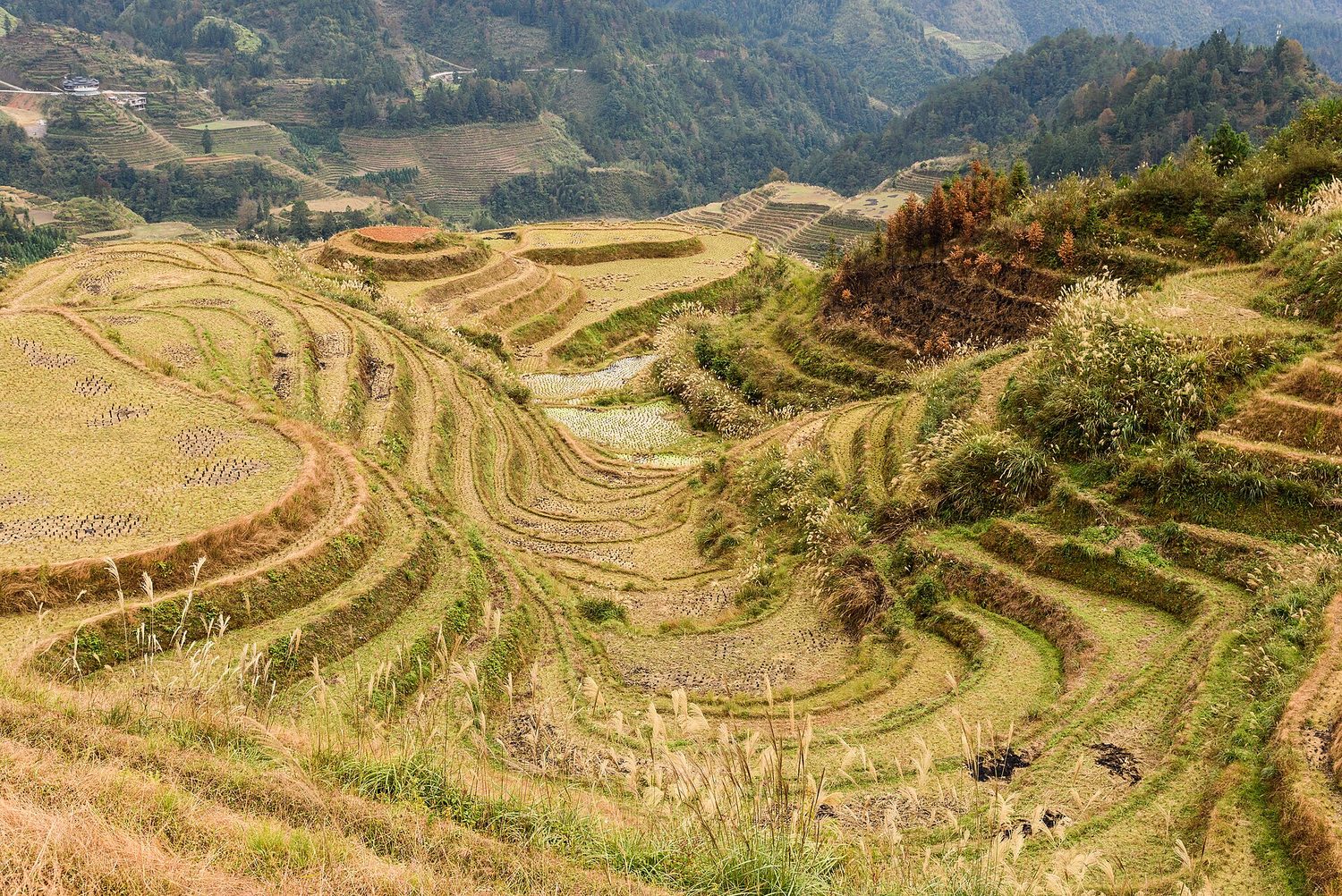
Sustainable farming protects soil and water: crop rotation 轮作, cover crops, contour plowing 等高耕作, terracing 梯田, reduced tillage, and agroforestry. These cut erosion, maintain fertility, and reduce chemical inputs.

ไทย

การเกษตรที่ยั่งยืนปกป้องดินและน้ำ: การหมุนเวียนพืช, พืชคลุมดิน, การไถตามแนวระดับ, การทำขั้นบันได, การลดการไถพรวน, และ การปลูกป่าผสมผสาน วิธีเหล่านี้ลดการกัดเซาะ รักษาความอุดมสมบูรณ์ และลดการใช้สารเคมี

นาข้าวสีเขียวที่ถูกปรับเป็นขั้นบันไดโค้งตามแนวระดับบนภูเขาชัน *ขั้นบันไดนาข้าว ตัดหน้าผา steep slope เป็นขั้นบันไดราบเรียบ เพื่อให้水和ดินคงอยู่原位 ไม่ถูกชะล้าง downhill

5.16

Aquaculture · ⁨การเพาะเลี้ยงสัตว์น้ำ⁩

Syllabus · ⁨หลักสูตร⁩
English

Enduring Understanding (STB-1): Humans can mitigate their impact on land and water resources through sustainable use.

Learning Objective STB-1.F: Describe the benefits and drawbacks of aquaculture.

  • STB-1.F.1 Aquaculture has expanded because it is highly efficient, requires only small areas of water, and requires little fuel.
  • STB-1.F.2 Aquaculture can contaminate wastewater, and fish that escape may compete or breed with wild fish. The density of fish in aquaculture can lead to increases in disease incidences, which can be transmitted to wild fish.
ไทย

ความเข้าใจที่ยั่งยืน (STB-1): มนุษย์สามารถลดผลกระทบต่อแหล่งดินและน้ำด้วยการใช้ทรัพยากรอย่างยั่งยืน

จุดประสงค์การเรียนรู้ STB-1.F: อธิบายข้อดีและข้อเสียของการเพาะเลี้ยงสัตว์น้ำ

  • STB-1.F.1 การเพาะเลี้ยงสัตว์น้ำมีการขยายตัวเนื่องจากมีประสิทธิภาพสูง ใช้พื้นที่น้ำเพียงเล็กน้อย และใช้เชื้อเพลิงน้อย
  • STB-1.F.2 การเพาะเลี้ยงสัตว์น้ำอาจทำให้แหล่งน้ำเสีย และปลาที่ escapes อาจแข่งขันหรือผสมพันธุ์กับปลาธรรมชาติ ความหนาแน่นของปลาในการเพาะเลี้ยงสามารถนำไปสู่การเพิ่มขึ้นของโรค ซึ่งสามารถส่งต่อไปยังปลาธรรมชาติได้

Source: College Board AP Course and Exam Description · ⁨แหล่งที่มา: คำอธิบายหลักสูตรและข้อสอบ College Board AP⁩

English

Aquaculture 水产养殖 (fish farming) eases pressure on wild stocks and is efficient, but can pollute water with waste and antibiotics, spread disease to wild fish, and destroy habitat (like mangroves for shrimp farms).

ไทย

การเพาะเลี้ยงสัตว์น้ำ (ฟาร์มปลา) ลดแรงกดดันต่อประชากรปลาธรรมชาติและมีประสิทธิภาพ แต่อาจก่อมลพิษทางน้ำด้วยของเสียและยาปฏิชีวนะ แพร่โรคไปยังปลาธรรมชาติ และทำลายแหล่งที่อยู่อาศัย (เช่น ป่าชายเลนสำหรับฟาร์มกุ้ง)

5.17

Sustainable Forestry · ⁨การทำป่าไม้ที่ยั่งยืน⁩

Syllabus · ⁨หลักสูตร⁩
English

Enduring Understanding (STB-1): Humans can mitigate their impact on land and water resources through sustainable use.

Learning Objective STB-1.G: Describe methods for mitigating human impact on forests.

  • STB-1.G.1 Some of the methods for mitigating deforestation include reforestation, using and buying wood harvested by ecologically sustainable forestry techniques, and reusing wood.
  • STB-1.G.2 Methods to protect forests from pathogens and insects include integrated pest management (IPM) and the removal of affected trees.
  • STB-1.G.3 Prescribed burn is a method by which forests are set on fire under controlled conditions in order to reduce the occurrence of natural fires.
ไทย

ความเข้าใจที่ยั่งยืน (STB-1): มนุษย์สามารถลดผลกระทบต่อแหล่งดินและน้ำด้วยการใช้ทรัพยากรอย่างยั่งยืน

จุดประสงค์การเรียนรู้ STB-1.G: อธิบายวิธีการลดผลกระทบของมนุษย์ต่อป่าไม้

  • STB-1.G.1 วิธีการบางประการในการลดการตัดไม้ทำลายป่า ได้แก่ การปลูกป่าใหม่ การใช้และซื้อไม้ที่ได้จากการจัดการป่าไม้ที่ยั่งยืนทางนิเวศวิทยา และการนำไม้กลับมาใช้ใหม่
  • STB-1.G.2 วิธีการปกป้องป่าจากเชื้อโรคและแมลง ได้แก่ การจัดการศัตรูพืชแบบบูรณาการ (IPM) และการตัดต้นไม้ที่ได้รับผลกระทบออก
  • STB-1.G.3 การเผาตามแผนคือวิธีการที่ป่าถูกเผาในสภาวะควบคุมเพื่อลดโอกาสเกิดไฟป่าธรรมชาติ

Source: College Board AP Course and Exam Description · ⁨แหล่งที่มา: คำอธิบายหลักสูตรและข้อสอบ College Board AP⁩

English

Sustainable forestry keeps forests productive: selective cutting 择伐 instead of clearcutting, replanting, leaving buffer strips along streams, and long rotation times. It maintains habitat, prevents erosion, and lets forests keep providing ecosystem services.

Forests also absorb pollutants and store carbon dioxide, so cutting and burning them releases $\text{CO}_2$ and worsens climate change. Ways to mitigate deforestation include reforestation 重新造林 (replanting), buying wood from ecologically sustainable forestry, and reusing wood. A separate tool is the prescribed burn 计划烧除: deliberately burning a forest under controlled conditions to clear fuel, so a later wildfire cannot grow catastrophic.

ไทย

การทำป่าไม้ที่ยั่งยืนรักษาผลผลิตของป่า: การตัดเลือก แทนการตัดทั้งหมด, การปลูกใหม่, การทิ้งแถบกันชนตามริมแม่น้ำ, และการหมุนเวียนระยะยาว มันรักษาแหล่งที่อยู่อาศัย ป้องกันการกัดเซาะ และให้ป่าให้บริการระบบนิเวศต่อไป

ป่ายังดูดซับมลพิษและกักเก็บคาร์บอนไดออกไซด์ ดังนั้นการตัดและเผาป่าจึงปล่อย $\text{CO}_2$ และทำให้การเปลี่ยนแปลงสภาพภูมิอากาศแย่ลง วิธี บรรเทาการตัดไม้ทำลายป่า รวมถึง การปลูกป่าใหม่ (ปลูกใหม่), การซื้อไม้จากการทำป่าไม้ที่ยั่งยืน, และการใช้ไม้ซ้ำเครื่องมือแยกต่างหากคือ การเผาควบคุม: การเผาป่าโดยตั้งใจภายใต้เงื่อนไขที่ควบคุมได้เพื่อกำจัดเชื้อเพลิง เพื่อให้ไฟป่าในภายหลังไม่สามารถเติบโตจนเป็นภัยพิบัติได้

5.17

Exam tips · ⁨ข้อแนะนำสำหรับการสอบ⁩

English
  • Explain the tragedy of the commons — shared, unowned resources get overused — and how rules/ownership prevent it.
  • Weigh the trade-offs of the green revolution, irrigation (salinisation, aquifer depletion), and mining/urbanisation.
  • Compute an ecological footprint in "number of Earths" (footprint ÷ biocapacity per person); it is measured per person.
  • List the harms of deforestation (erosion, flooding, lost habitat, more CO₂).
  • Define sustainability (meeting needs without harming future generations) and give sustainable methods (IPM, crop rotation, quotas).
ไทย
  • อธิบาย โศกนาฏกรรมของทรัพยากรร่วม — ทรัพยากรร่วมกันที่ไม่มีเจ้าของถูกใช้มากเกินไป — และกฎ/ความเป็นเจ้าของป้องกันสิ่งได้อย่างไร
  • พิจารณาข้อแลกเปลี่ยนของการปฏิวัติสีเขียว การชลประทาน (การเกลือตัว, การลดชั้นน้ำใต้ดิน), และการทำเหมือง/การขยายตัวของเมือง
  • คำนวณ รอยเท้าเชิงนิเวศวิทยา ใน "จำนวนโลก" (รอยเท้า ÷ ศักยภาพทางชีวภาพต่อคน);它วัด ต่อคน
  • จดรายการอันตรายจากการ ตัดไม้ทำลายป่า (การพังทลายของดิน, น้ำท่วม, การสูญเสียถิ่นที่อยู่, CO₂ เพิ่มขึ้น).
  • นิยาม ความยั่งยืน (ตอบสนองความต้องการโดยไม่ทำลายรุ่นอนาคต) และยกตัวอย่างวิธีที่ยั่งยืน (IPM, การหมุนเวียนพืช, quotas)

Interactive lessons on this topic · ⁨บทเรียนเชิงโต้ตอบสำหรับหัวข้อนี้⁩

Work through it step by step, with instant-check exercises. · ⁨ทำทีละขั้นตอน พร้อมแบบฝึกหัดตรวจสอบผลทันที⁩

Past Papers · ⁨ข้อสอบย้อนหลัง⁩

More topics in AP Environmental Science · ⁨หัวข้อเพิ่มเติมใน AP Environmental Science⁩

Log in or create account · ⁨เข้าสู่ระบบหรือสร้างบัญชี⁩

IGCSE, A-Level & AP