Skip to content · ⁨ข้ามไปยังเนื้อหา⁩

Cell Communication and Cell Cycle · ⁨การสื่อสารของเซลล์และรอบเซลล์⁩

AP Biology · Topic 4 · ⁨หัวข้อ 4⁩

Video lesson for this topic · ⁨บทเรียนวิดีโอสำหรับหัวข้อนี้⁩ Open the video page · ⁨เปิดหน้าวิดีโอ⁩
7:34

การสื่อสารของเซลล์และรอบเซลล์

สังเกตอย่างใกล้ชิด นี่คือเซลล์จริงที่ถูกถ่ายในระหว่างกระบวนการแบ่งตัว ภายในร่างกายของคุณมีเซลล์ใหม่ถูกสร้างขึ้นหลายล้านเซลล์ทุกวินาที — ผิวหนัง เลือด ลำไส้…

English narration · English + 中文 subtitles burned in · ⁨การบรรยายภาษาอังกฤษ · คำบรรยายภาษาอังกฤษ + 中文 ลอยตัวบนภาพ⁩

4.1

Cell Communication · ⁨การสื่อสารระหว่างเซลล์⁩

Syllabus · ⁨หลักสูตร⁩
English

Big Idea 3 — Information Storage and Transmission: Living systems store, retrieve, transmit, and respond to information essential to life processes.

Learning Objective 4.1.A: Describe the ways that cells can communicate with one another.

  • 4.1.A.1 Cells communicate with one another through direct contact with other cells or from a distance via chemical signaling.
    • Illustrative examples for 4.1.A.1:
      • Immune cells interact through cell-to-cell contact, antigen-presenting cells (APCs), helper T-cells, and killer T-cells.

Learning Objective 4.1.B: Explain how cells communicate with one another over short and long distances.

  • 4.1.B.1 Cells communicate over short distances by using local regulators that target cells in the vicinity of the signal-emitting cell.
    • Illustrative examples for 4.1.B.1:
      • Neurotransmitters
      • Plant immune response
      • Quorum sensing in bacteria
      • Morphogens in embryonic development
  • 4.1.B.2 Signals released by one cell type can travel long distances to target cells of another type.
    • Illustrative examples for 4.1.B.2:
      • Insulin
      • Human growth hormone
      • Thyroid hormones
      • Testosterone
      • Estrogen
ไทย

แนวคิดหลักที่ 3 — การจัดเก็บและการส่งต่อข้อมูล: ระบบชีวภาพจัดเก็บ ดึงข้อมูล ส่งต่อ และตอบสนองต่อข้อมูลที่จำเป็นต่อกระบวนการมีชีวิต

วัตถุประสงค์การเรียนรู้ 4.1.A: อธิบายวิธีการที่เซลล์สามารถสื่อสารกันได้

  • 4.1.A.1 เซลล์สื่อสารกันโดยการสัมผัสโดยตรงกับเซลล์อื่นหรือระยะไกลผ่านการส่งสัญญาณทางเคมี
    • ตัวอย่างประกอบสำหรับ 4.1.A.1:
      • เซลล์ภูมิคุ้มกันมีปฏิสัมพันธ์ด้วยการสัมผัสระหว่างเซลล์ เซลล์นำเสนอแอนติเจน (APCs), helper T-cells, และ killer T-cells。

วัตถุประสงค์การเรียนรู้ 4.1.B: อธิบายวิธีการที่เซลล์สื่อสารกันในระยะสั้นและระยะไกล

  • 4.1.B.1 เซลล์สื่อสารในระยะสั้นโดยใช้ตัวปรับสภาพท้องถิ่น (local regulators) ที่กำหนดเป้าหมายไปที่เซลล์บริเวณใกล้เคียงกับเซลล์ผู้ส่งสัญญาณ
    • ตัวอย่างประกอบสำหรับ 4.1.B.1:
      • Neurotransmitters
      • การตอบสนองทางภูมิคุ้มกันของพืช
      • Quorum sensing ในแบคทีเรีย
      • Morphogens ในการพัฒนาของเอ็มบริโอ
  • 4.1.B.2 สัญญาณที่ปล่อยโดยเซลล์ชนิดหนึ่งสามารถเดินทางไกลไปยังเซลล์เป้าหมายของอีกชนิดหนึ่ง
    • ตัวอย่างประกอบสำหรับ 4.1.B.2:
      • Insulin
      • Human growth hormone
      • Thyroid hormones
      • Testosterone
      • Estrogen

Source: College Board AP Course and Exam Description · ⁨แหล่งที่มา: คำอธิบายหลักสูตรและข้อสอบ College Board AP⁩

English

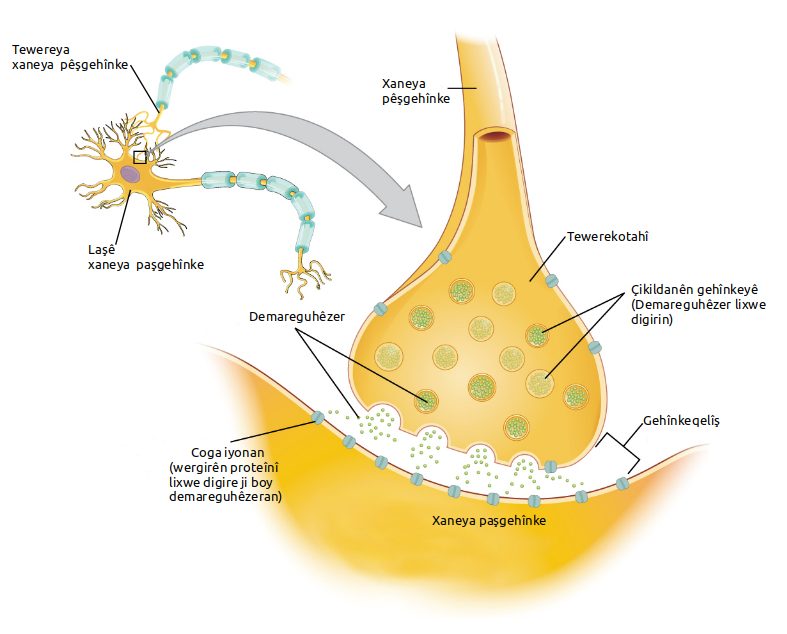
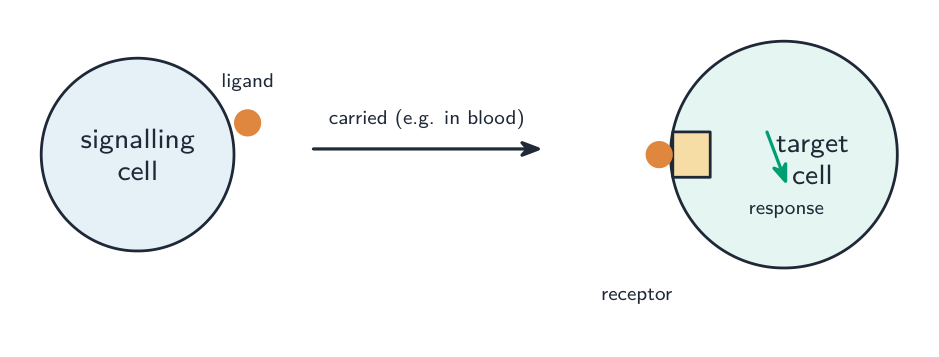
Cells coordinate by sending and receiving chemical signals 信号. A signaling cell releases a ligand 配体 that binds a receptor 受体 on a target cell. Signals travel over different ranges: direct contact (cell junctions), local signaling (nearby cells, like neurotransmitters), and long-distance signaling (hormones 激素 through the blood).

ไทย

เซลล์ประสานงานโดยการส่งและรับ สัญญาณ ทางเคมี เซลล์ผู้ส่งปล่อย ligand ที่จับกับ receptor บนเซลล์เป้าหมาย สัญญาณเดินทางในระยะต่างๆ: การสัมผัสโดยตรง (cell junctions), สัญญาณระยะใกล้ (nearby cells, เช่น neurotransmitters), และ สัญญาณระยะไกล (hormones ผ่านเลือด)

โมเลกุลสัญญาณ (ligand) จับกับ receptor ที่ตรงกันบนเซลล์เป้าหมาย
Vocabulary · ⁨คำศัพท์⁩ Train · ⁨ฝึกฝน⁩
English ไทย
signals/ˈsɪɡnlz/ สัญญาณ
ligand/ˈlɪɡænd/ ลิแกนด์
receptor/rɪˈseptə/ ตัวรับ (receptor)
hormones/ˈhɔːməʊnz/ ฮอร์โมน (hormones)
4.2

Introduction to Signal Transduction · ⁨บทนำสู่การส่งผ่านสัญญาณ⁩

Syllabus · ⁨หลักสูตร⁩
English

Big Idea 3 — Information Storage and Transmission: Living systems store, retrieve, transmit, and respond to information essential to life processes.

Learning Objective 4.2.A: Describe the components of a signal transduction pathway.

  • 4.2.A.1 Signal transduction pathways link signal receptions with cellular responses.
  • 4.2.A.2 Many signal transduction pathways include protein modifications and involve phosphorylation cascades.

Learning Objective 4.2.B: Describe the role of components of a signal transduction pathway in producing a cellular response.

  • 4.2.B.1 Signaling begins with the recognition of a chemical messenger—a ligand—by a receptor protein in a target cell.
    • i. The ligand-binding domain of a receptor recognizes a specific chemical messenger, which can be a peptide (protein) or a small molecule.
    • ii. G protein-coupled receptors are an example of a receptor protein in eukaryotes.
    • iii. Receptors may be located on the surface of a target cell or in the cytoplasm or nucleus of the target cell.
  • 4.2.B.2 Signaling cascades relay signals from receptors to cell targets, often amplifying the incoming signals, resulting in the appropriate responses by the cell. Responses could include cell growth, secretion of molecules, or gene expression.
    • i. After the ligand binds, the intracellular domain of a receptor protein changes shape, initiating transduction of the signal.
    • ii. Enzymes and second messengers such as cyclic AMP (cAMP) relay and amplify the intracellular signal.
    • iii. Hormones are an example of a signaling messenger that can travel long distances in the bloodstream.
    • iv. The binding of ligands to ligand-gated channels can cause the channel to open or close.
ไทย

แนวคิดหลักที่ 3 — การจัดเก็บและการส่งต่อข้อมูล: ระบบชีวภาพจัดเก็บ ดึงข้อมูล ส่งต่อ และตอบสนองต่อข้อมูลที่จำเป็นต่อกระบวนการมีชีวิต

วัตถุประสงค์การเรียนรู้ 4.2.A: อธิบายองค์ประกอบของเส้นทางส่งต่อสัญญาณ

  • 4.2.A.1 เส้นทางส่งต่อสัญญาณเชื่อมโยงการรับสัญญาณกับการตอบสนองของเซลล์
  • 4.2.A.2 เส้นทางส่งต่อสัญญาณหลายประเภทรวมถึงการดัดแปลงโปรตีนและมีส่วนร่วมในการ cascade ของการฟอสโฟริเลชัน

วัตถุประสงค์การเรียนรู้ 4.2.B: อธิบายบทบาทขององค์ประกอบของเส้นทางส่งต่อสัญญาณในการสร้างการตอบสนองของเซลล์

  • 4.2.B.1 การส่งสัญญาณเริ่มต้นด้วยการจดจำสารสื่อเคมี—a ligand—โดยโปรตีนรีเซปเตอร์ในเซลล์เป้าหมาย
    • i. Domain การจับ ligand ของรีเซปเตอร์จะจดจำสารสื่อเคมีเฉพาะ ซึ่งอาจเป็นเพปไทด์ (โปรตีน) หรือโมเลกุลขนาดเล็ก
    • ii. G protein-coupled receptors เป็นตัวอย่างของโปรตีนรีเซปเตอร์ในยูเคาริโอต
    • iii. รีเซปเตอร์อาจอยู่บนพื้นผิวของเซลล์เป้าหมายหรือในไซโทพลาซึมหรือนิวเคลียสของเซลล์เป้าหมาย
  • 4.2.B.2的信号 cascades ส่งต่อสัญญาณจากรีเซปเตอร์ไปยังเป้าหมายของเซลล์ มักจะขยายสัญญาณขาเข้า ทำให้เกิดการตอบสนองที่เหมาะสมของเซลล์ การตอบสนองอาจรวมถึงการเติบโตของเซลล์ การหลั่งโมเลกุล หรือการแสดงออกของยีน
    • i. หลังจาก ligand จับแล้ว domestic domain ของโปรตีนรีเซปเตอร์จะเปลี่ยนรูปร่าง เริ่มการส่งต่อสัญญาณ
    • ii. เอนไซม์และ second messengers เช่น cyclic AMP (cAMP) ส่งต่อและขยายสัญญาณภายในเซลล์
    • iii. Hormones เป็นตัวอย่างของสารสื่อสัญญาณที่สามารถเดินทางไกลในกระแสเลือด
    • iv. การจับของ ligands กับargo-gated channels สามารถทำให้ channel เปิดหรือปิด

Source: College Board AP Course and Exam Description · ⁨แหล่งที่มา: คำอธิบายหลักสูตรและข้อสอบ College Board AP⁩

English

Signal transduction 信号转导 converts an outside signal into a cellular response in three stages: reception (ligand binds receptor), transduction (a relay of molecules inside the cell), and response (a change in the cell's activity, such as switching on a gene). Receptors are specific, so a cell only responds to signals it can receive.

ไทย

การส่งผ่านสัญญาณ เปลี่ยนสัญญาณภายนอกให้เป็นคำตอบของเซลล์ในสามขั้นตอน: การรับ (ligand จับ receptor), การส่งผ่าน (a relay of molecules ภายในเซลล์), และ คำตอบ (การเปลี่ยนแปลงในกิจกรรมของเซลล์ เช่น การเปิดใช้งาน gene) Receptors มีความจำเพาะ ดังนั้นเซลล์จะตอบสนองต่อสัญญาณที่มันสามารถรับได้เท่านั้น

Chemical synapse: signal transduction ส่งข้อความข้ามช่องว่างด้วย ligand และ receptor
Vocabulary · ⁨คำศัพท์⁩ Train · ⁨ฝึกฝน⁩
English ไทย
Signal transduction/ˈsɪɡnl trænsˈdʌkʃn/ การส่งผ่านสัญญาณ
4.3

Signal Transduction Pathways · ⁨เส้นทางส่งผ่านสัญญาณ⁩

Syllabus · ⁨หลักสูตร⁩
English

Big Idea 3 — Information Storage and Transmission: Living systems store, retrieve, transmit, and respond to information essential to life processes.

Learning Objective 4.3.A: Describe the different types of cellular responses elicited by a signal transduction pathway.

  • 4.3.A.1 Signal transduction may result in changes in gene expressions and cell function, which may alter phenotype or result in programmed cell death (apoptosis).
    • Illustrative examples for 4.3.A.1:
      • Use of chemical messengers by microbes to communicate with other nearby cells and to regulate specific pathways in response to population density (quorum sensing)
      • Epinephrine stimulation of glycogen breakdown in mammals

Learning Objective 4.3.B: Explain how a change in the structure of any signaling molecule affects the activity of the signaling pathway.

  • 4.3.B.1 Changes in signal transduction pathways can alter cellular responses. Mutations in any domain of the receptor protein or in any component of the signaling pathway may affect the downstream components by altering the subsequent transduction of the signal.
    • Illustrative examples for 4.3.B.1:
      • Cytokines regulate gene expression to allow for cell replication and division.
      • Mating pheromones in yeast trigger mating gene expression.
      • Ethylene levels cause changes in the production of different enzymes allowing fruits to ripen.
      • HOX genes regulate animal body plans during embryonic development.
  • 4.3.B.2 Chemicals that interact with any component of the signaling pathway may activate or inhibit the pathway.
ไทย

แนวคิดหลักที่ 3 — การจัดเก็บและการส่งต่อข้อมูล: ระบบชีวภาพจัดเก็บ ดึงข้อมูล ส่งต่อ และตอบสนองต่อข้อมูลที่จำเป็นต่อกระบวนการมีชีวิต

วัตถุประสงค์การเรียนรู้ 4.3.A: อธิบายประเภทต่างๆ ของการตอบสนองของเซลล์ที่เกิดจากเส้นทางส่งต่อสัญญาณ

  • 4.3.A.1 Signal transduction อาจส่งผลให้เกิดการเปลี่ยนแปลงในการแสดงออกของยีนและการทำงานของเซลล์ ซึ่งอาจเปลี่ยนแปลง phenotype หรือนำไปสู่ programmed cell death (apoptosis)。
    • ตัวอย่างประกอบสำหรับ 4.3.A.1:
      • การใช้สารสื่อเคมีโดยจุลินทรีย์เพื่อสื่อสารกับเซลล์ใกล้เคียงอื่นๆ และควบคุมเส้นทางเฉพาะเพื่อตอบสนองต่อความหนาแน่นของประชากร (quorum sensing)
      • การกระตุ้นด้วย Epinephrine เพื่อการสลาย glycogen ในสัตว์มีกระดูกสันหลัง

วัตถุประสงค์การเรียนรู้ 4.3.B: อธิบายว่ามีการเปลี่ยนแปลงในโครงสร้างของโมเลกุลส่งสัญญาณใด ๆ ส่งผลต่อกิจกรรมของเส้นทางส่งสัญญาณอย่างไร

  • 4.3.B.1 การเปลี่ยนแปลงในเส้นทางส่งต่อสัญญาณสามารถเปลี่ยนแปลงการตอบสนองของเซลล์ การกลายพันธุ์ในโดเมนใด ๆ ของโปรตีนรีเซปเตอร์หรือองค์ประกอบใด ๆ ของเส้นทางส่งสัญญาณอาจส่งผลต่อองค์ประกอบ downstream โดยการเปลี่ยนแปลงการส่งต่อสัญญาณถัดไป
    • ตัวอย่างประกอบสำหรับ 4.3.B.1:
      • Cytokines ควบคุมการแสดงออกของยีนเพื่อให้สามารถจำลองและแบ่งเซลล์ได้
      • Mating pheromones ในยีสต์กระตุ้นการแสดงออกของยีนการผสมพันธุ์
      • ระดับ Ethylene ทำให้เกิดการเปลี่ยนแปลงในการผลิตเอนไซม์ที่แตกต่างกันเพื่อให้ผลไม้สุก
      • HOX genes ควบคุมแผนร่างกายของสัตว์ระหว่างการพัฒนาของเอ็มบริโอ
  • 4.3.B.2 สารเคมีที่มีปฏิกิริยากับองค์ประกอบใดๆ ของเส้นทางส่งสัญญาณอาจกระตุ้นหรือยับยั้งเส้นทางนั้นได้

Source: College Board AP Course and Exam Description · ⁨แหล่งที่มา: คำอธิบายหลักสูตรและข้อสอบ College Board AP⁩

English

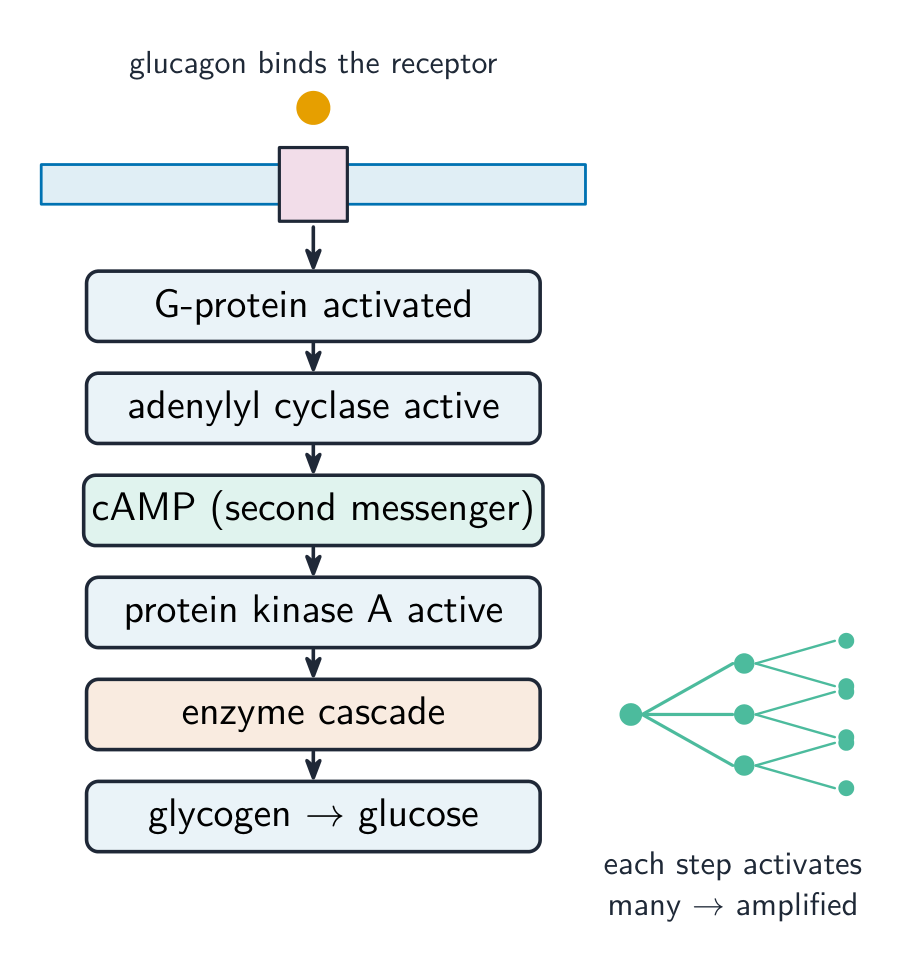
In the transduction stage, the signal passes through a pathway – often a cascade of proteins that activate one another, frequently amplifying the signal so a few ligands trigger a large response. Second messengers (like cyclic AMP or calcium ions) spread the signal quickly through the cell. A change in one step can alter the whole outcome.

ไทย

ในช่วงการส่งผ่าน สัญญาณจะผ่าน pathway – มักจะเป็น cascade ของโปรตีนที่กระตุ้นกันเอง บ่อยครั้งเพิ่มกำลังสัญญาณเพื่อให้ ligand เพียงเล็กน้อยกระตุ้นคำตอบขนาดใหญ่ Second messengers (เช่น cyclic AMP หรือ calcium ions) กระจายสัญญาณอย่างรวดเร็วทั่วเซลล์ การเปลี่ยนแปลงในขั้นตอนหนึ่งอาจเปลี่ยนผลลัพธ์ทั้งหมด

A signalling cascade amplify.signal message inside the cell *การส่งต่อสัญญาณ (signalling cascade) ช่วยขยายสัญญาณภายในเซลล์

4.4

Feedback · ⁨การตอบกลับ⁩

Syllabus · ⁨หลักสูตร⁩
English

Big Idea 2 — Energetics: Biological systems use energy and molecular building blocks to grow, reproduce, and maintain dynamic homeostasis.

Learning Objective 4.4.A: Explain how positive and negative feedback helps maintain homeostasis.

  • 4.4.A.1 Organisms use feedback mechanisms to maintain their internal environments in response to internal and external changes.
    • i. Negative feedback mechanisms maintain homeostasis by reducing the initial stimulus to regulate physiological processes. If a system is perturbed or disrupted, negative feedback mechanisms return the system back to its target set point. These processes operate at the molecular, cellular, and organismal levels.
      • Illustrative examples for 4.4.A.1.i:
        • Blood sugar regulation by insulin/glucagon
    • ii. Positive feedback mechanisms amplify responses and processes in biological organisms. The variable initiating the response is moved further away from the initial set point. Amplification occurs when the stimulus is further intensified, which, in turn, initiates an additional response that produces system change.
      • Illustrative examples for 4.4.A.1.ii:
        • Lactation in mammals
        • Onset of labor in childbirth
        • Ripening of fruit
ไทย

แนวคิดหลัก 2 — พลังงาน: ระบบชีวภาพใช้พลังงานและหน่วยสร้างโมเลกุลเพื่อการเจริญเติบโต การสืบพันธุ์ และการรักษาสมดุลภายในแบบไดนามิก

วัตถุประสงค์การเรียนรู้ 4.4.A: อธิบายว่ากลไกการตอบกลับแบบบวกและลบช่วยรักษาสมดุลภายในร่างกายได้อย่างไร

  • 4.4.A.1 สิ่งมีชีวิตใช้กลไกการตอบกลับเพื่อรักษาสภาวะภายในให้คงที่ ตอบสนองต่อการเปลี่ยนแปลงทั้งภายในและภายนอก
    • i. กลไกการตอบกลับแบบลบรักษาสมดุลภายในโดยลดการกระตุ้นเริ่มต้นเพื่อควบคุมกระบวนการทางสรีรวิทยา หากระบบถูกรบกวน กลไกการตอบกลับแบบลบจะนำระบบกลับสู่จุดตั้งต้นเดิม กระบวนการเหล่านี้ทำงานในระดับโมเลกุล เซลล์ และระดับสิ่งมีชีวิต
      • ตัวอย่างประกอบสำหรับ 4.4.A.1.i:
        • การควบคุมระดับน้ำตาลในเลือดโดยอินซูลิน/กลูคาگون
    • ii. กลไกการตอบกลับแบบบวกขยายผลตอบสนองและกระบวนการในสิ่งมีชีวิต ตัวแปรที่เริ่มการตอบสนองจะถูกย้ายออกไปจากจุดตั้งต้นเดิม การขยายผลเกิดขึ้นเมื่อมีการเพิ่มแรงกระตุ้นมากขึ้น ซึ่งจะนำไปสู่การเกิดตอบสนองเพิ่มเติมที่ทำให้เกิดการเปลี่ยนแปลงของระบบ
      • ตัวอย่างประกอบสำหรับ 4.4.A.1.ii:
        • การหลั่งน้ำนมในสัตว์เลี้ยงลูกด้วยนม
        • การเริ่มคลอดบุตร
        • การสุกของผลไม้

Source: College Board AP Course and Exam Description · ⁨แหล่งที่มา: คำอธิบายหลักสูตรและข้อสอบ College Board AP⁩

English

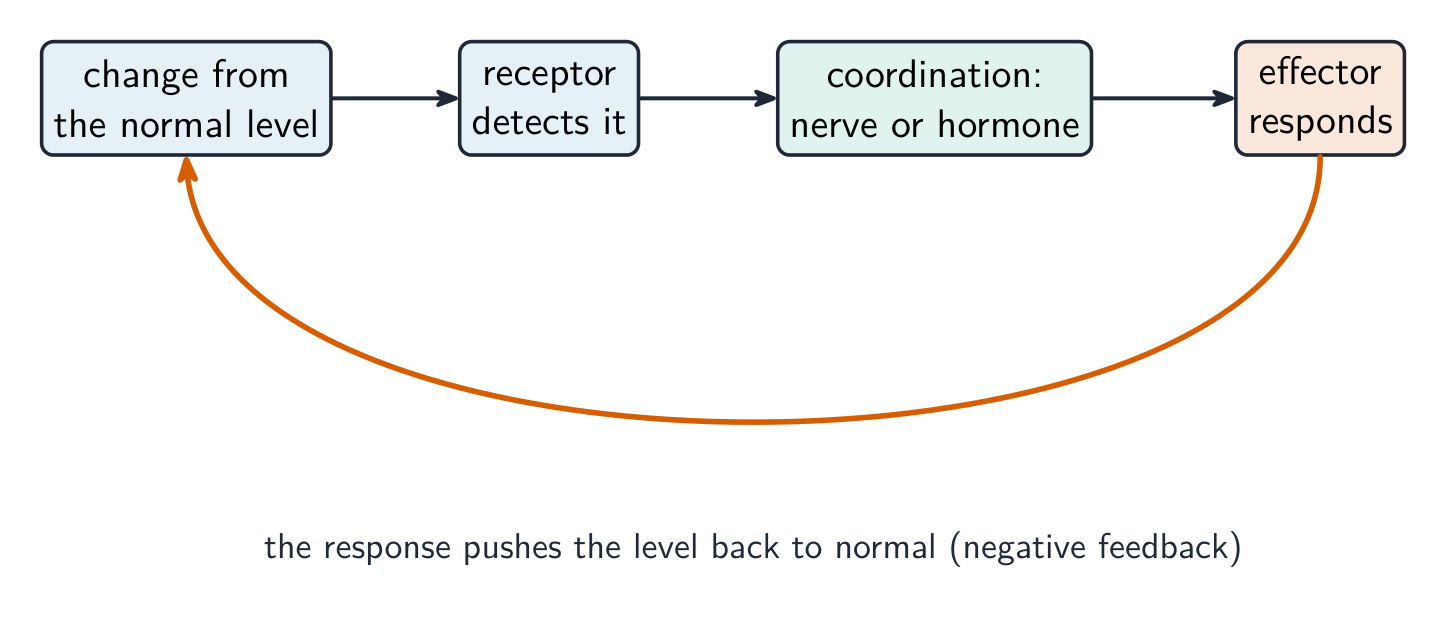
Feedback 反馈 keeps systems balanced:

  • Negative feedback 负反馈 counteracts a change to restore a set point (like a thermostat) – it maintains homeostasis 稳态.
  • Positive feedback 正反馈 amplifies a change to push a process to completion (like childbirth contractions or blood clotting).
ไทย

Feedback รักษาสมดุลของระบบ:

Negative feedback ตรวจจับและแก้ไขการเปลี่ยนแปลง
  • Negative feedback ต้านทานการเปลี่ยนแปลงเพื่อคืนค่าที่กำหนดไว้ (ule thermostat) – มันรักษาสภาวะ homeostasis
  • ปฏิกิริยาลูกโซ่เชิงบวก (Positive feedback) เพิ่มการเปลี่ยนแปลงเพื่อผลักดันกระบวนการให้เสร็จสมบูรณ์ (เช่น การหดตัวของมดลูกในขณะคลอด หรือการแข็งตัวของเลือด)
Explore · ⁨สำรวจ⁩

Negative feedback keeps things steady · ⁨负反馈维持稳定⁩

Negative feedback senses a change and reverses it, holding a variable (like blood glucose) near a set point. Push it away and watch the system correct. · ⁨负反馈感知变化并将其逆转,使变量(如血糖)保持在设定点附近。将其推离设定点并观察系统如何纠正。⁩

Vocabulary · ⁨คำศัพท์⁩ Train · ⁨ฝึกฝน⁩
English ไทย
Feedback/ˈfiːdbæk/ คำติชม
Negative feedback/ˈneɡətɪv ˈfiːdbæk/ ฟีดแบ็กเชิงลบ
homeostasis/ˌhəʊmiːəˈstɑːsiz/ homeostasis
Positive feedback/ˈpɒzɪtɪv ˈfiːdbæk/ ปฏิกิริยาลูกโซ่เชิงบวก
4.5

Cell Cycle · ⁨วัฏจักรเซลล์⁩

Syllabus · ⁨หลักสูตร⁩
English

Big Idea 3 — Information Storage and Transmission: Living systems store, retrieve, transmit, and respond to information essential to life processes.

Learning Objective 4.5.A: Describe the events that occur in the cell cycle.

  • 4.5.A.1 The cell cycle is a highly regulated series of events that controls the growth and reproduction of eukaryotic cells.
    • i. The cell cycle consists of sequential stages of interphase (G1, S, G2), mitosis, and cytokinesis.
    • ii. G1 phase: The cell is metabolically active, duplicating organelles and cytosolic components.
    • iii. S phase: DNA is in the form of chromatin and replicates to form two sister chromatids connected at a centromere.
    • iv. G2 phase: Protein synthesis occurs, ATP is produced in large quantities, and centrosomes replicate.
    • v. A cell can enter a stage (G0) in which it no longer divides, but it can reenter the cell cycle in response to appropriate cues.
    • vi. Nondividing cells may exit the cell cycle or be held at a particular stage in the cell cycle.

Learning Objective 4.5.B: Explain how mitosis results in the transmission of chromosomes from one generation of cells to the next.

  • 4.5.B.1 Mitosis is a process that ensures the transfer of a complete genome from a parent cell to two genetically identical daughter cells in eukaryotes.
    • i. Mitosis plays a role in growth, tissue repair, and asexual reproduction.
    • ii. Mitosis occurs in sequential steps (prophase, metaphase, anaphase, telophase) and alternates with interphase in the cell cycle.
    • iii. Prophase: Sister chromatids condense, mitotic spindle begins to form, and centrosomes move to opposite poles of the cell.
    • iv. Metaphase: Spindle fibers align chromosomes along the equator of the cell.
    • v. Anaphase: Paired sister chromatids separate as spindle fibers pull chromatids toward poles.
    • vi. Telophase: Mitotic spindle breaks down, a new nuclear envelope develops, and then the cytoplasm divides.
    • vii. Cytokinesis: A cleavage furrow forms in animal cells or a cell plate forms in plant cells, resulting in two new daughter cells.
ไทย

แนวคิดหลักที่ 3 — การจัดเก็บและการส่งต่อข้อมูล: ระบบชีวภาพจัดเก็บ ดึงข้อมูล ส่งต่อ และตอบสนองต่อข้อมูลที่จำเป็นต่อกระบวนการมีชีวิต

วัตถุประสงค์การเรียนรู้ 4.5.A: อธิบายเหตุการณ์ที่เกิดขึ้นในรอบเซลล์

  • 4.5.A.1 รอบเซลล์เป็นลำดับเหตุการณ์ที่ถูกควบคุมอย่างเข้มงวด เพื่อควบคุมการเจริญเติบโตและการสืบพันธุ์ของเซลล์ยูคาริโอต
    • i. รอบเซลล์ประกอบด้วยขั้นตอนที่ต่อเนื่องกัน ได้แก่ ระยะอินเตอร์เฟส (G1, S, G2), ไมโทซิส และการแบ่งไซโตพลาซึม
    • ii. ระยะ G1: เซลล์มีกิจกรรมทางเมตาบอลิซึมสูง ทำการ duplication ออร์แกเนลล์และองค์ประกอบในไซโทพลาซึม
    • iii. ระยะ S: DNA อยู่ในรูปของโครมาตินและทำ replication เพื่อสร้าง姐妹染色单体 (sister chromatids) สองเส้นที่เชื่อมต่อกันที่ centromere
    • iv. ระยะ G2: เกิดการสังเคราะห์โปรตีน ผลิต ATP ในปริมาณมาก และ centrosomes ทำการ duplication
    • v. เซลล์สามารถเข้าสู่ระยะ (G0) ที่ไม่มีการแบ่งอีกต่อไป แต่สามารถกลับเข้าสู่รอบเซลล์ได้อีกครั้งเมื่อได้รับสัญญาณที่เหมาะสม
    • vi. เซลล์ที่ไม่แบ่งตัวอาจออกจากรอบเซลล์ หรือถูกหยุดไว้ที่ขั้นตอนใดขั้นตอนหนึ่งในรอบเซลล์

วัตถุประสงค์การเรียนรู้ 4.5.B: อธิบายว่าไมโทซิสส่งผลให้เกิดการถ่ายทอดโครโมโซมจากรุ่นหนึ่งไปยังรุ่นถัดไปได้อย่างไร

  • 4.5.B.1 ไมโทซิสคือกระบวนการที่มั่นใจว่าการถ่ายทอดจีโนมที่สมบูรณ์จากเซลล์แม่ไปยังเซลล์ลูกสองเซลล์ที่มีพันธุกรรมเหมือนกันในยูคาริโอต
    • i. ไมโทซิสมีบทบาทในการเจริญเติบโต การซ่อมแซมเนื้อเยื่อ และการสืบพันธุ์แบบไม่อาศัยเพศ
    • ii. ไมโทซิสเกิดขึ้นตามขั้นตอนที่ต่อเนื่องกัน (prophase, metaphase, anaphase, telophase) และสลับกับระยะอินเตอร์เฟสในรอบเซลล์
    • iii. Prophase:姐妹染色单体 (sister chromatids) ขดตัวแน่น spindle微管 (mitotic spindle) เริ่มก่อตัวขึ้น และ centrosomes เคลื่อนที่ไปยังขั้วตรงข้ามของเซลล์
    • iv. Metaphase: Spindle fibers จัดเรียงโครโมโซสตามแนว赤道板 (equator) ของเซลล์
    • v. Anaphase:姐妹染色单体 (sister chromatids) คู่แยกออกจากกัน เมื่อ spindle fibers ดึง姐妹染色单体 ไปยังขั้วเซลล์
    • vi. Telophase: Mitotic spindle แตกสลาย เยื่อหุ้มนิวเคลียสใหม่พัฒนาขึ้น จากนั้นไซโทพลาซึมจะแบ่งออก
    • vii. Cytokinesis: Cleavage furrow ก่อตัวขึ้นในเซลล์สัตว์ หรือ cell plate ก่อตัวขึ้นในเซลล์พืช ส่งผลให้เกิดเซลล์ลูกใหม่สองเซลล์

Source: College Board AP Course and Exam Description · ⁨แหล่งที่มา: คำอธิบายหลักสูตรและข้อสอบ College Board AP⁩

English

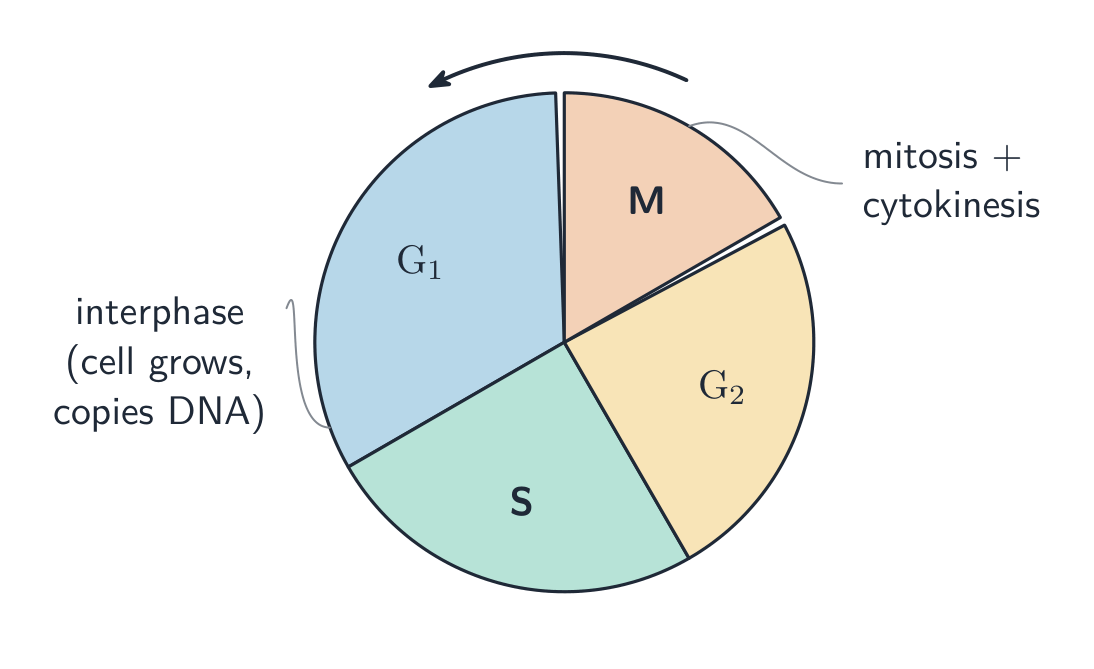
The cell cycle 细胞周期 is the life of a cell from one division to the next: interphase 间期 (G1 growth, S DNA replication, G2 preparation) followed by mitosis 有丝分裂 (M) and cytokinesis, which produce two identical daughter cells. Interphase takes most of the time; DNA is copied only in S phase.

ไทย
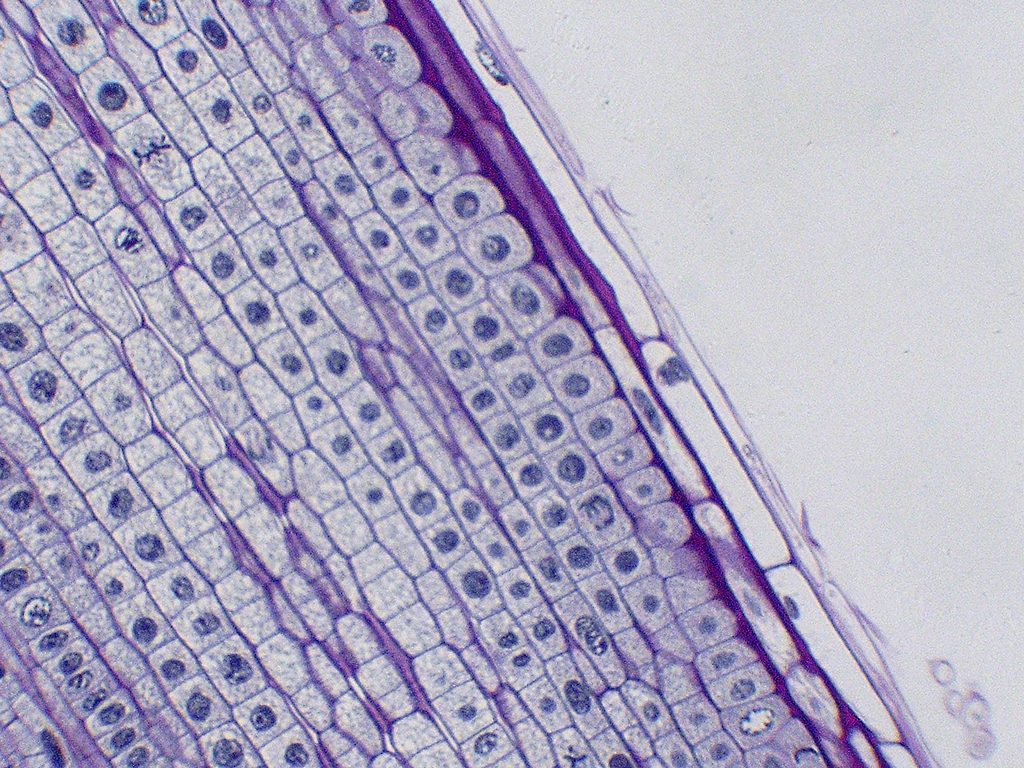
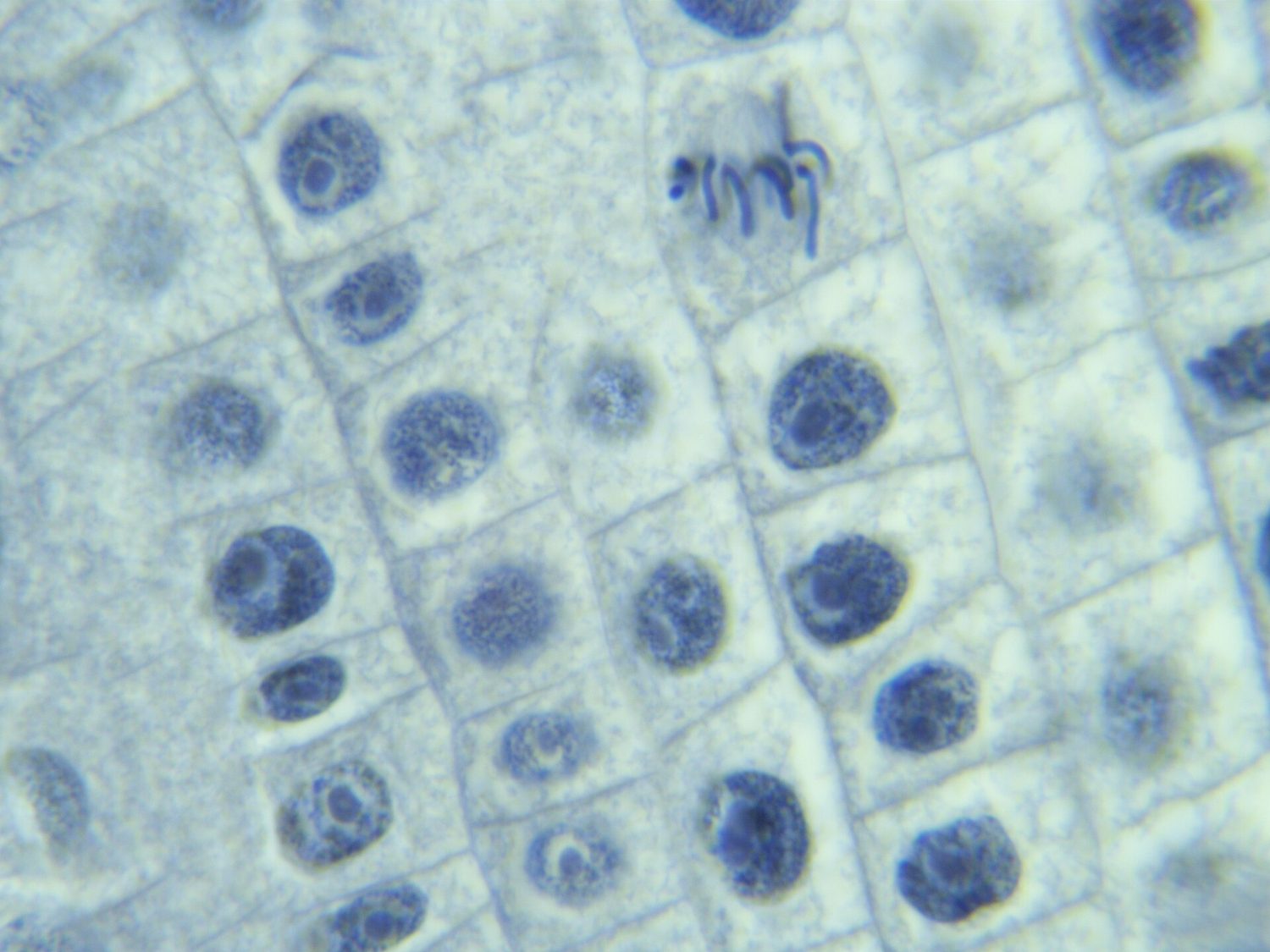
เซลล์ปลายรากหัวหอมในระยะต่างๆ ของ mitosis (ภาพจุลทรรศน์แสง)

วัฏจักรเซลล์ คือชีวิตของเซลล์ตั้งแต่การแบ่งครั้งหนึ่งไปจนถึงอีกครั้ง: ระยะระหว่าง division (G1 เติบโต, S สำเนา DNA, G2 เตรียมพร้อม) ตามด้วย mitosis (M) และ cytokinesis ซึ่งผลิตเซลล์ลูกที่เหมือนกันสองเซลล์ ระยะระหว่าง division ใช้เวลาส่วนใหญ่; DNA ถูกคัดลอกเฉพาะในระยะ S เท่านั้น

วัฏจักรเซลล์: ระยะระหว่าง division, แล้วตามด้วย mitosis และ cytokinesis
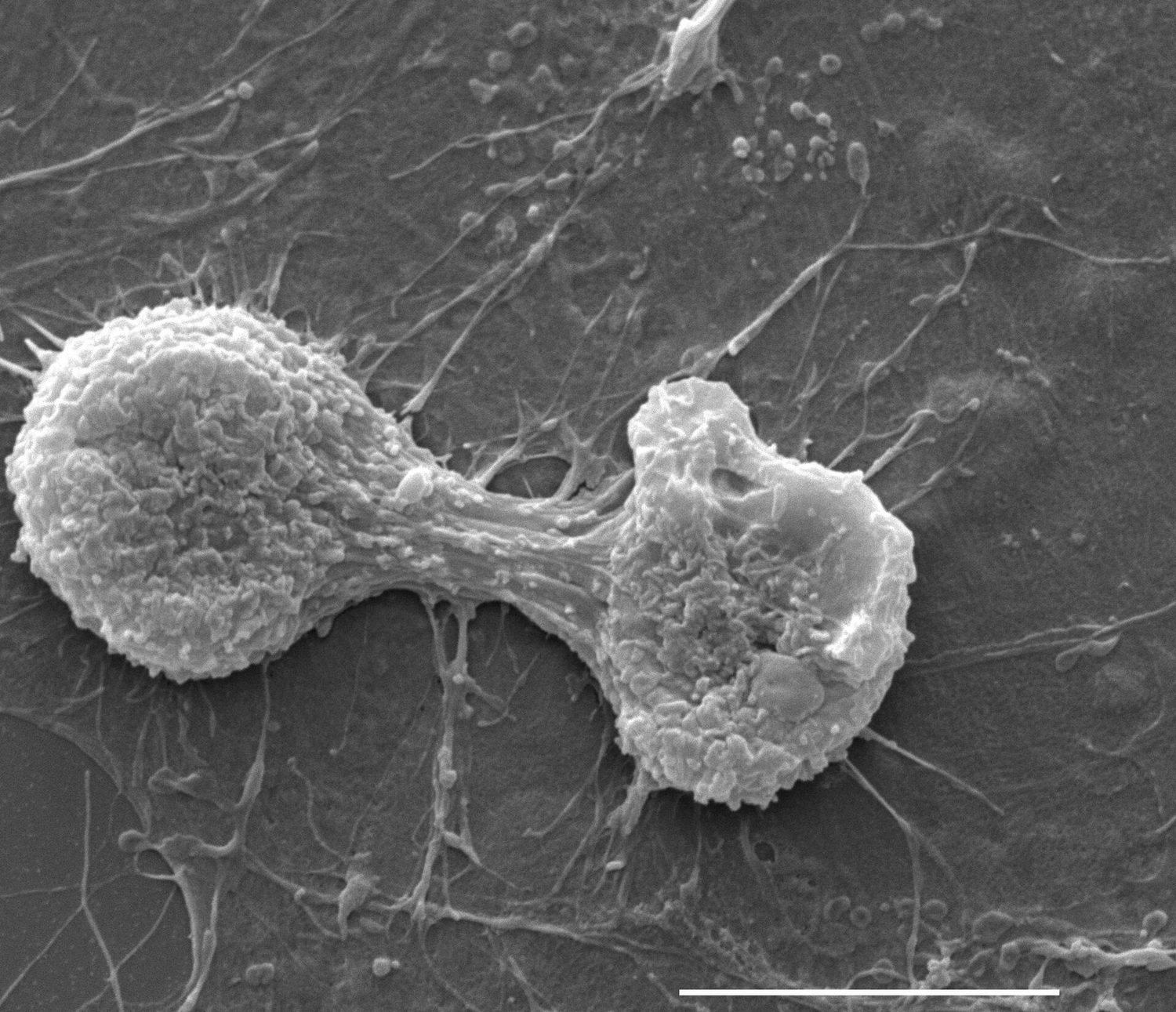
เซลล์ fibroblast กำลังแบ่ง: cytokinesis แยกเซลล์เดียวออกเป็นสองเซลล์หลังจาก mitosis สิ้นสุด
ปลายรากหัวหอมในระยะ metaphase: โครโมโซมเรียงตัวก่อนที่ sister chromatids จะแยกจากกัน
Explore · ⁨สำรวจ⁩

Step through the cell cycle · ⁨逐步浏览细胞周期⁩

The cell cycle copies the DNA (S phase) then splits it evenly in mitosis, producing two identical cells. Step through the stages. · ⁨细胞周期复制DNA(S期),然后在有丝分裂中平均分配,产生两个相同的细胞。逐步浏览各个阶段。⁩

Vocabulary · ⁨คำศัพท์⁩ Train · ⁨ฝึกฝน⁩
English ไทย
cell cycle/sel ˈsaɪkl/ รอบเซลล์
interphase/ˌɪntəˈfeɪz/ interphase
mitosis/maɪˈtəʊsɪs/ mitosis
checkpoints/ˈtʃekpɔɪnts/ จุดตรวจสอบ
cancer/ˈkænsə/ cancer
4.6

Regulation of Cell Cycle · ⁨การควบคุมวัฏจักรเซลล์⁩

Syllabus · ⁨หลักสูตร⁩
English

Big Idea 3 — Information Storage and Transmission: Living systems store, retrieve, transmit, and respond to information essential to life processes.

Learning Objective 4.6.A: Describe the role of checkpoints in regulating the cell cycle.

  • 4.6.A.1 A number of internal controls or checkpoints regulate progression through the cell cycle.
  • 4.6.A.2 Interactions between cyclins and cyclin-dependent kinases control the cell cycle.
    • Exclusion statement: Knowledge of specific cyclin-CdK pairs or growth factors is beyond the scope of the AP Exam.

Learning Objective 4.6.B: Describe the effects of disruptions to the cell cycle on the cell or organism.

  • 4.6.B.1 Disruptions to the cell cycle may result in cancer or apoptosis (programmed cell death).
ไทย

แนวคิดหลักที่ 3 — การจัดเก็บและการส่งต่อข้อมูล: ระบบชีวภาพจัดเก็บ ดึงข้อมูล ส่งต่อ และตอบสนองต่อข้อมูลที่จำเป็นต่อกระบวนการมีชีวิต

วัตถุประสงค์การเรียนรู้ 4.6.A: อธิบายบทบาทของจุดตรวจสอบ (checkpoints) ในการควบคุมรอบเซลล์

  • 4.6.A.1 มีการควบคุมภายในหรือจุดตรวจสอบหลายแห่งเพื่อควบคุมความก้าวหน้าผ่านรอบเซลล์
  • 4.6.A.2 ปฏิกิริยาระหว่าง cyclins และ cyclin-dependent kinases ควบคุมรอบเซลล์
    • ข้อจำกัดเนื้อหา: ความรู้เกี่ยวกับคู่ cyclin-CdK เฉพาะเจาะจงหรือ growth factors ไม่อยู่ในขอบเขตของข้อสอบ AP

วัตถุประสงค์การเรียนรู้ 4.6.B: อธิบายผลกระทบของการรบกวนรอบเซลล์ต่อเซลล์หรือสิ่งมีชีวิต

  • 4.6.B.1 การรบกวนรอบเซลล์อาจนำไปสู่มะเร็งหรือ apoptosis (การตายของเซลล์แบบกำหนดเอง)

Source: College Board AP Course and Exam Description · ⁨แหล่งที่มา: คำอธิบายหลักสูตรและข้อสอบ College Board AP⁩

English

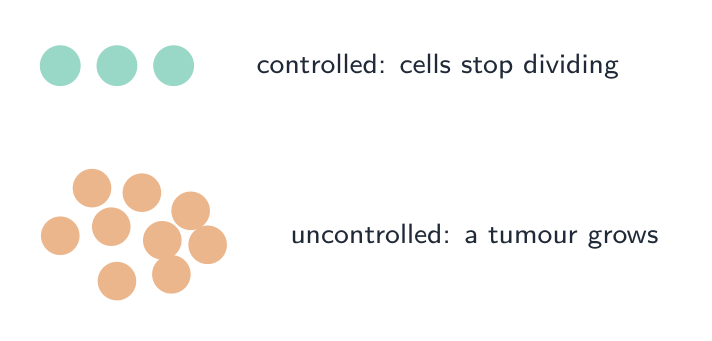
The cycle is controlled at checkpoints 检查点 that verify conditions before proceeding (Is the DNA intact? Are chromosomes attached?). Internal signals (cyclins and their kinases) and external signals drive the cycle forward. When this control fails – for example, a mutation that ignores a checkpoint – cells divide uncontrollably, which underlies cancer 癌症.

Worked example. Signal amplification in a cascade: one hormone activates one receptor, which switches on about 100 relay proteins, and each of those makes about 1,000 second-messenger molecules — so a single signal produces roughly $100 \times 1000 = 10^{5}$ product molecules. This is why a hormone concentration as low as $10^{-9}\,\text{M}$ can trigger a large cellular response.

ไทย

วัฏจักรถูกควบคุมที่ จุดตรวจสอบ ที่ยืนยันสภาพก่อนจะดำเนินการต่อไป (DNA สมบูรณ์หรือไม่? โครโมโซมติดกับ spindle แล้วหรือยัง?) สัญญาณภายใน (cyclins และ kinases ของพวกมัน) และสัญญาณภายนอกขับเคลื่อนวัฏจักรไปข้างหน้า เมื่อการควบคุมนี้ล้มเหลว – ตัวอย่างเช่น การกลายพันธุ์ที่ละเลยจุดตรวจสอบ – เซลล์จะแบ่งตัวอย่างไม่ควบคุม ซึ่งเป็นพื้นฐานของ มะเร็ง

การแบ่งตัวที่ไม่ควบคุมได้จากการล้มเหลวของจุดตรวจสอบสร้างเนื้องอก

ตัวอย่างฝึกหัด. การขยายสัญญาณในลูกโซ่: هرمोनหนึ่งตัวกระตุ้นรีเซพเตอร์หนึ่งตัว ซึ่งจะเปิด relay proteins ประมาณ 100 ตัว และแต่ละตัวสร้าง second-messenger molecules ประมาณ 1,000 โมเลกุล – ดังนั้นสัญญาณเดียวจึงผลิตผลิตภัณฑ์ประมาณ $100 \times 1000 = 10^{5}$ โมเลกุล นี่คือเหตุผลว่าทำไมความเข้มข้นของฮอร์โมนต่ำเพียง $10^{-9}\,\text{M}$ จึงสามารถกระตุ้นการตอบสนองระดับเซลล์ขนาดใหญ่ได้

4.6

Exam tips · ⁨ข้อแนะนำสำหรับการสอบ⁩

English
  • In signal transduction name the three stages: reception → transduction → response.
  • Negative feedback reverses a change to keep conditions steady (homeostasis); positive feedback amplifies a change to completion (childbirth, clotting).
  • Order the cell cycle: interphase (grow, copy DNA in S phase) then mitosis → two identical daughter cells.
  • The DNA is copied once, in S phase, so each daughter gets a full copy.
  • Failed checkpoints allow uncontrolled division → cancer.
ไทย
  • ในการส่งผ่านสัญญาณ ระบุสามขั้นตอน: การรับ → การส่งผ่าน → การตอบสนอง
  • ปฏิกิริยาลูกโซ่เชิงลบ (Negative feedback) เปลี่ยนทิศทางของการเปลี่ยนแปลงเพื่อให้สภาวะคงที่ (homeostasis); ปฏิกิริยาลูกโซ่เชิงบวก เพิ่มการเปลี่ยนแปลงให้直至เสร็จสมบูรณ์ (การคลอดบุตร, การแข็งตัวของเลือด)
  • เรียงลำดับ วัฏจักรเซลล์: ระยะระหว่าง division (เติบโต, คัดลอก DNA ในระยะ S) แล้วตามด้วย mitosis → เซลล์ลูก ** identical ** สองเซลล์
  • DNA ถูกคัดลอก หนึ่งครั้ง ในระยะ S ดังนั้นแต่ละเซลล์ลูกจะได้รับสำเนาเต็มชุด
  • จุดตรวจสอบ ล้มเหลว อนุญาตให้แบ่งตัวโดยไม่ควบคุม → มะเร็ง

Interactive lessons on this topic · ⁨บทเรียนเชิงโต้ตอบสำหรับหัวข้อนี้⁩

Work through it step by step, with instant-check exercises. · ⁨ทำทีละขั้นตอน พร้อมแบบฝึกหัดตรวจสอบผลทันที⁩

Past Papers · ⁨ข้อสอบย้อนหลัง⁩

More topics in AP Biology · ⁨หัวข้อเพิ่มเติมใน AP Biology⁩

Log in or create account · ⁨เข้าสู่ระบบหรือสร้างบัญชี⁩

IGCSE, A-Level & AP