

English
- describe the features of the endocrine system with reference to the hormones ADH, glucagon and insulin (see 14.1.8, 14.1.9 and 14.1.10)
- compare the features of the nervous system and the endocrine system
- describe the structure and function of a sensory neurone and a motor neurone and state that intermediate neurones connect sensory neurones and motor neurones
- outline the role of sensory receptor cells in detecting stimuli and stimulating the transmission of impulses in sensory neurones
- describe the sequence of events that results in an action potential in a sensory neurone, using a chemoreceptor cell in a human taste bud as an example
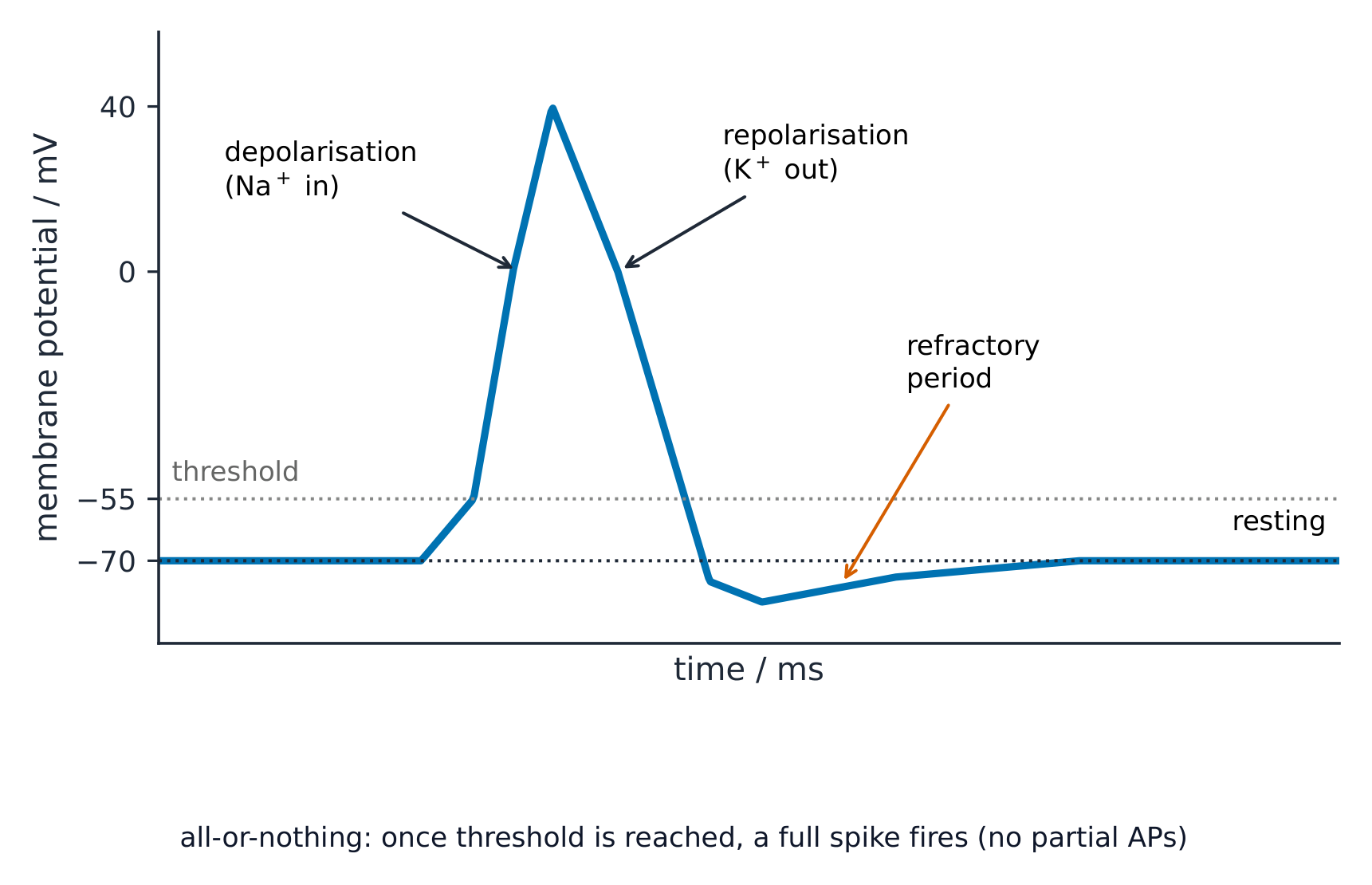
- describe and explain changes to the membrane potential of neurones, including: • how the resting potential is maintained • the events that occur during an action potential • how the resting potential is restored during the refractory period
- describe and explain the rapid transmission of an impulse in a myelinated neurone with reference to saltatory conduction
- explain the importance of the refractory period in determining the frequency of impulses
- describe the structure of a cholinergic synapse and explain how it functions, including the role of calcium ions
- describe the roles of neuromuscular junctions, the T-tubule system and sarcoplasmic reticulum in stimulating contraction in striated muscle
- describe the ultrastructure of striated muscle with reference to sarcomere structure using electron micrographs and diagrams
- explain the sliding filament model of muscular contraction including the roles of troponin, tropomyosin, calcium ions and ATP
ไทย
- อธิบายลักษณะของ endocrine system โดยอ้างอิงถึง hormones ADH, glucagon และ insulin (ดู 14.1.8, 14.1.9 และ 14.1.10)
- เปรียบเทียบลักษณะของระบบประสาทและ endocrine system
- อธิบายโครงสร้างและหน้าที่ของ sensory neurone และ motor neurone และระบุว่า intermediate neurones ทำหน้าที่เชื่อมต่อ sensory neurones และ motor neurones
- สรุปบทบาทของ sensory receptor cells ในการตรวจจับ stimuli และการกระตุ้นการส่ง impulse ใน sensory neurones
- อธิบายลำดับเหตุการณ์ที่นำไปสู่การเกิด action potential ใน sensory neurone โดยใช้เซลล์ chemoreceptor ใน taste bud ของมนุษย์เป็นตัวอย่าง
- อธิบายและอธิบายการเปลี่ยนแปลงของ membrane potential ใน neurones รวมถึง: • วิธีที่ resting potential ถูกรักษารักษาไว้ • เหตุการณ์ที่เกิดขึ้นระหว่าง action potential • วิธีที่ resting potential đượcฟื้นฟูในช่วง refractory period
- อธิบายการส่ง impulse ที่รวดเร็วใน myelinated neurone โดยอ้างอิงถึง saltatory conduction
- อธิบายความสำคัญของ refractory period ในการกำหนดความถี่ของ impulses
- อธิบายโครงสร้างของ cholinergic synapse และอธิบายการทำงาน รวมถึงบทบาทของ calcium ions
- อธิบายบทบาทของ neuromuscular junctions, ระบบ T-tubule และ sarcoplasmic reticulum ในการกระตุ้นการหดตัวของ striated muscle
- อธิบาย ultrastructure ของ striated muscle โดยอ้างอิงถึงโครงสร้างของ sarcomere โดยใช้ micrographs อิเล็กตรอนและแผนภาพ
- อธิบายโมเดล sliding filament ของการหดตัวของกล้ามเนื้อ รวมถึงบทบาทของ troponin, tropomyosin, calcium ions และ ATP


 *สัญญาณกระโดดจาก node ไปยัง node — saltatory conduction — ทำให้นิวรอนที่มีเยื่อไมอีลินส่งสัญญาณได้เร็วกว่ามาก

 *โมเดล sliding filament: เส้น actin บางเลื่อนเหนือ myosin หนา ทำให้ sarcomere สั้นลง
 *"acid growth" ของ auxin: H⁺ ถูกปั๊มเข้าผนังทำให้คลายตัว เซลล์จึงยืดยาวขึ้นเมื่อมีน้ำเข้า