English
Learning Objective 14.1.A: Describe the physical properties of waves and wave pulses.
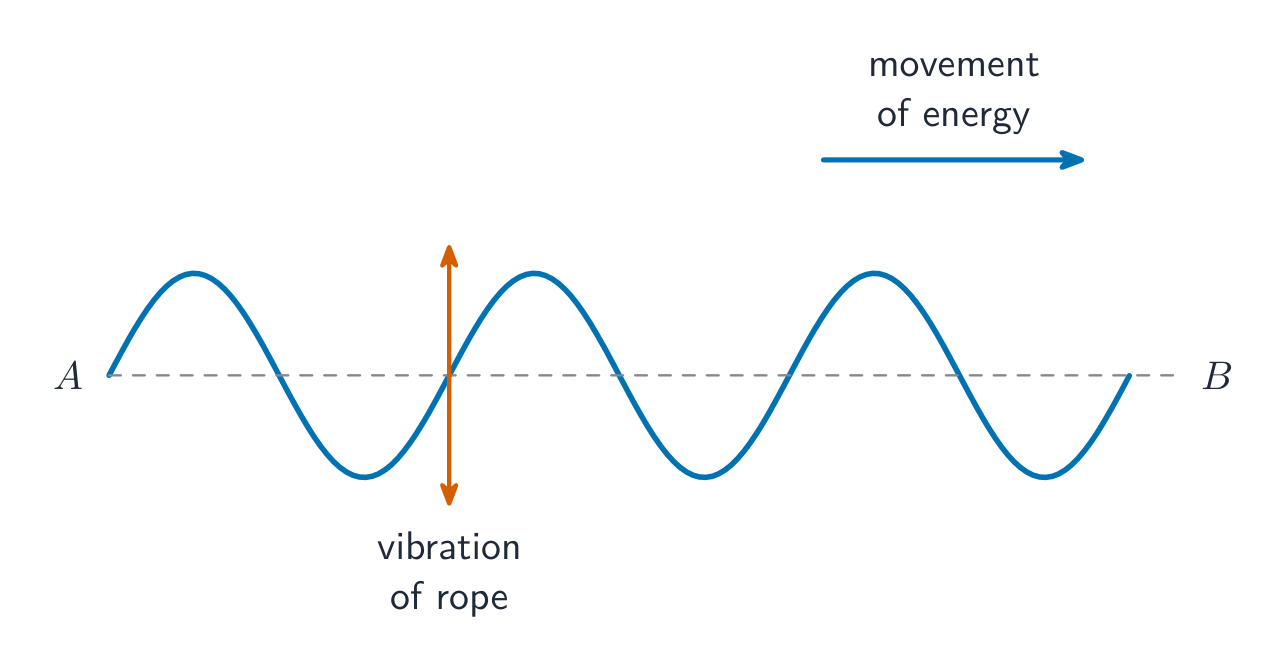
- 14.1.A.1 Waves transfer energy between two locations without transferring matter between those locations.
- 14.1.A.1.i A wave pulse is a single disturbance that transfers energy without transferring matter between two locations.
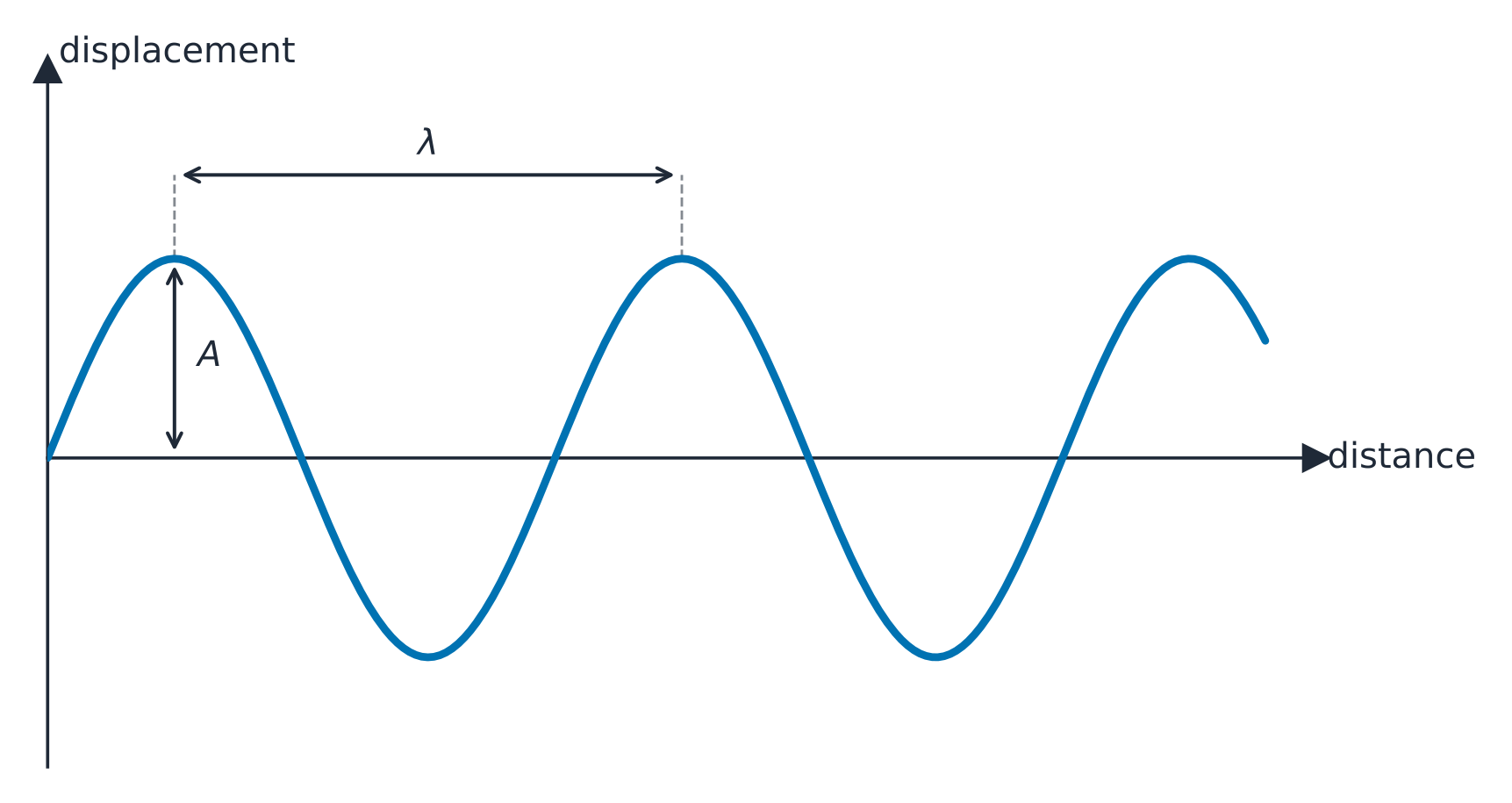
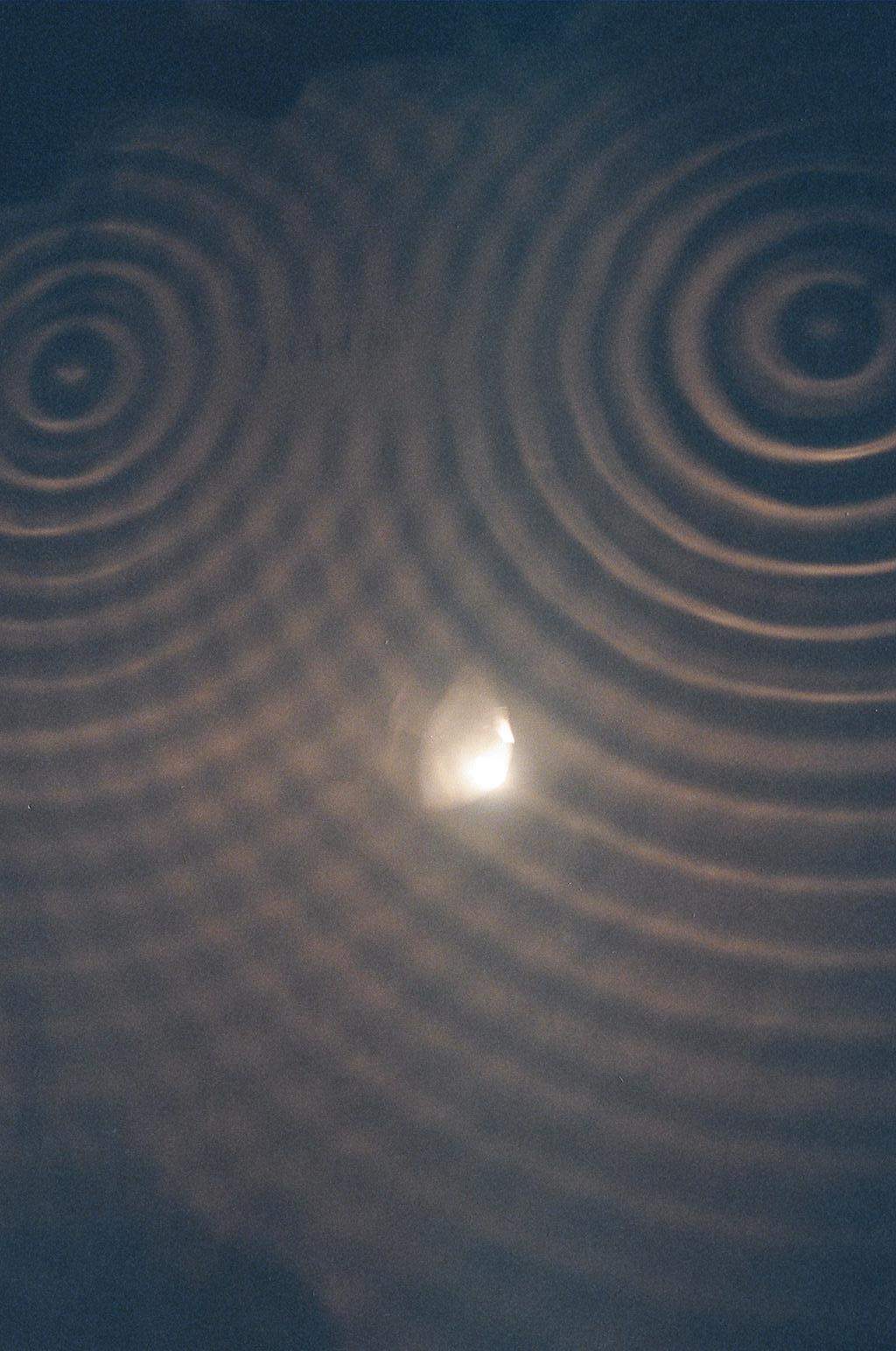
- 14.1.A.1.ii A wave is modeled as a continuous, periodic disturbance with well-defined wavelength and frequency.
- 14.1.A.2 Mechanical waves or wave pulses require a medium in which to propagate. Electromagnetic waves or wave pulses do not require a medium in which to propagate.
- 14.1.A.3 The speed at which a wave or wave pulse propagates through a medium depends on the type of wave and the properties of the medium.
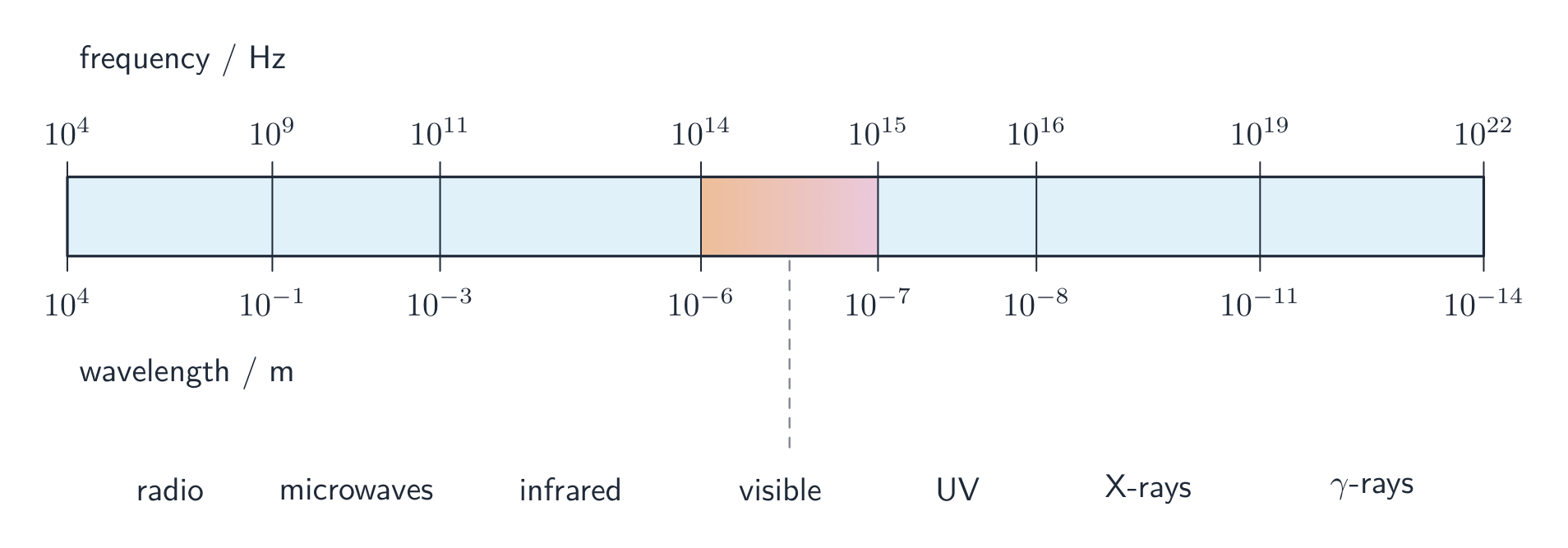
- 14.1.A.3.i The speed of all electromagnetic waves in a vacuum is a universal physical constant, $c = 3.00 \times 10^{8}$ m/s.
- 14.1.A.3.ii The speed at which a wave pulse or wave propagates along a string is dependent upon the tension in the string, $F_T$, and the mass per length of the string.
- Equation: $v_{\text{string}} = \sqrt{\dfrac{F_T}{m/\ell}}$
- 14.1.A.3.iii In a given medium, the speed of sound waves increases with the temperature of the medium.
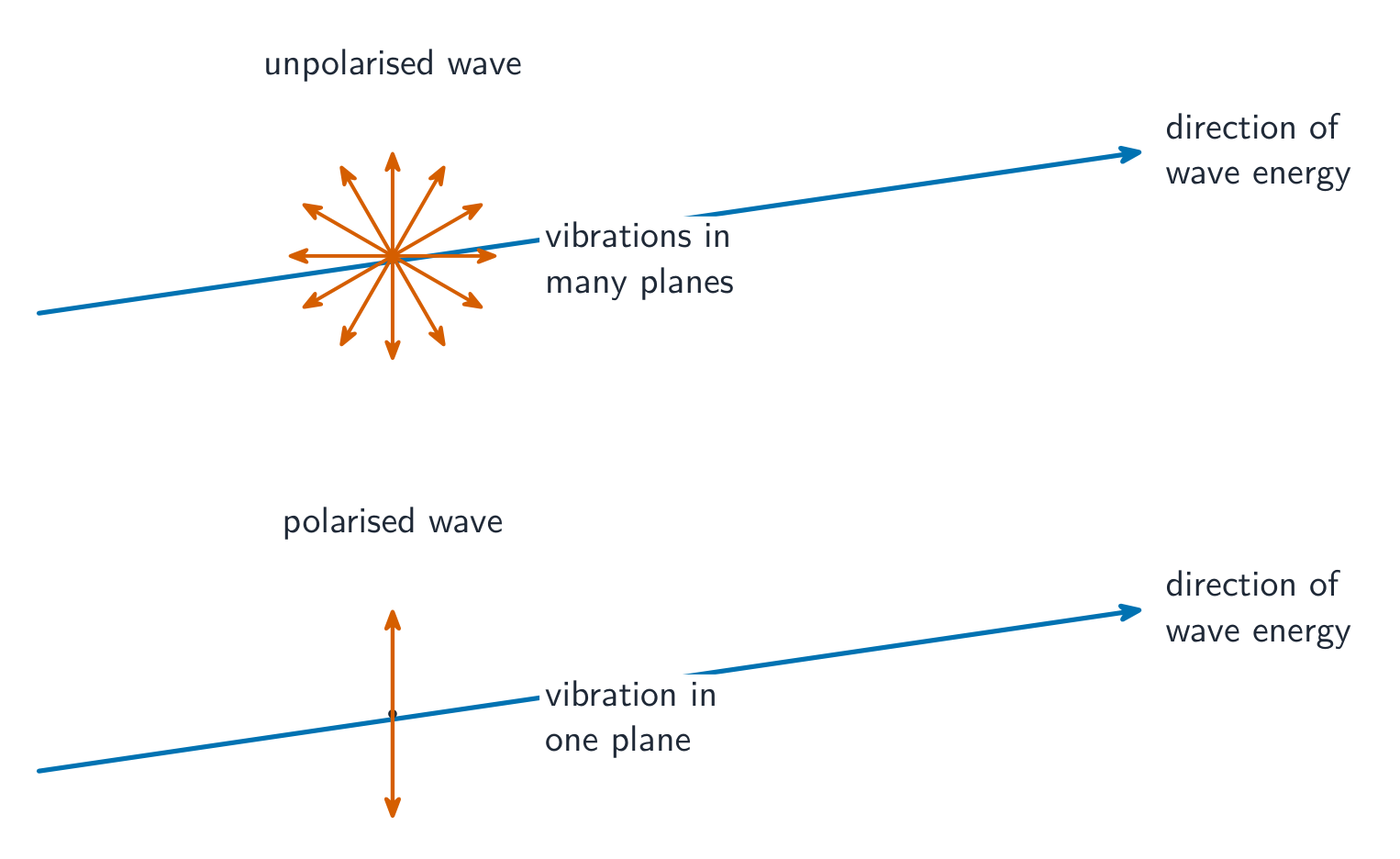
- 14.1.A.4 In a transverse wave, the direction of the disturbance is perpendicular to the direction of propagation of the wave.
- 14.1.A.5 In a longitudinal wave, the direction of the disturbance is parallel to the direction of propagation of the wave.
- 14.1.A.5.i Sound waves are modeled as mechanical longitudinal waves.
- 14.1.A.5.ii The regions of high and low pressure in a sound wave are called compressions and rarefactions, respectively.
- 14.1.A.6 Amplitude is the maximum displacement of a wave from its equilibrium position.
- 14.1.A.6.i The amplitude of a longitudinal pressure wave may be determined by the maximum increase or decrease in pressure from equilibrium pressure.
- 14.1.A.6.ii The loudness of a sound increases with increasing amplitude.
- 14.1.A.6.iii The energy carried by a wave increases with increasing amplitude.
Русский
Цель обучения 14.1.A: Описать физические свойства волн и волновых импульсов.
- 14.1.A.1 Волны передают энергию между двумя точками без переноса вещества между этими точками.
- 14.1.A.1.i Волновой импульс — это одиночное возмущение, которое передает энергию без переноса вещества между двумя точками.
- 14.1.A.1.ii Волна моделируется как непрерывное периодическое возмущение с четко определенными длиной волны и частотой.
- 14.1.A.2 Механические волны или волновые импульсы требуют среды для распространения. Электромагнитные волны или волновые импульсы не требуют среды для распространения.
- 14.1.A.3 Скорость распространения волны или волнового импульса в среде зависит от типа волны и свойств среды.
- 14.1.A.3.i Скорость всех электромагнитных волн в вакууме является универсальной физической константой, $c = 3.00 \times 10^{8}$ м/с.
- 14.1.A.3.ii Скорость распространения волнового импульса или волны вдоль струны зависит от натяжения струны, $F_T$, и массы на единицу длины струны.
- Уравнение: $v_{\text{string}} = \sqrt{\dfrac{F_T}{m/\ell}}$
- 14.1.A.3.iii В данной среде скорость звуковых волн увеличивается с повышением температуры среды.
- 14.1.A.4 В поперечной волне направление возмущения перпендикулярно направлению распространения волны.
- 14.1.A.5 В продольной волне направление возмущения параллельно направлению распространения волны.
- 14.1.A.5.i Звуковые волны моделируются как механические продольные волны.
- 14.1.A.5.ii Области высокого и низкого давления в звуковой волне называются соответственно сжатиями и разрежениями.
- 14.1.A.6 Амплитуда — это максимальное смещение волны от положения равновесия.
- 14.1.A.6.i Амплитуду продольной волны давления можно определить по максимальному увеличению или уменьшению давления относительно давления равновесия.
- 14.1.A.6.ii Громкость звука увеличивается с ростом амплитуды.
- 14.1.A.6.iii Энергия, переносимая волной, увеличивается с ростом амплитуды.