9.1 Contextualizing Cold War and Contemporary Europe
| Learning Objective | Preview: Unit 9 Key Concepts |
|---|---|
Unit 9.A |
|
AP European History · AP 유럽사 · Topic 9 · 주제 9
 9:37
9:37
단원 9: 냉전과 근현대 유럽
이 단원은 두 부분으로 나뉘어 있으며, 이 둘은 서로 연결되어야 합니다. 분열은 1991까지 이어졌고, 그와 병행하여 통합이 진행되었으며 이후에도 계속되었습니다. 이들은 순차적인 과정이 아닙니다…
English narration · English + 中文 subtitles burned in · 영어 내레이션 · 영어 + 중국어 자막 burned-in
| Learning Objective | Preview: Unit 9 Key Concepts |
|---|---|
Unit 9.A |
|
Source: College Board AP Course and Exam Description · 출처: College Board AP Course and Exam Description
Unit 9 takes Europe from 1945 to the present. The same four key concepts as Unit 8 apply, but the emphasis shifts: a polarised state order, competing conceptions of the individual and the state, continued questioning of objective knowledge, and demographic and economic change reshaping everyday life.
The unit has two halves that must be held together - division until 1991, and integration running alongside and then beyond it.
단원 9은 1945부터 현재까지의 유럽사를 다룬다. 단원 8과 동일한 네 가지 핵심 개념이 적용되나 강조점이 달라진다: 극단화된 국가 질서, 개인과 국가에 대한 경쟁적 관념, 객관적 지식에 대한 지속되는 의문, 그리고 일상생활을 재구성하는 인구 및 경제적 변화 등이다.
이 단원은 두 부분으로 나뉘어在一起(함께 유지되어야 합니다) - 1991까지의 분리와, 이를 alongside(따라가며) 그리고 beyond(초월하여) 이루어지는 통합.
| Thematic Focus | Learning Objective | Historical Developments |
|---|---|---|
ECD | Unit 9.B |
|
Source: College Board AP Course and Exam Description · 출처: College Board AP Course and Exam Description
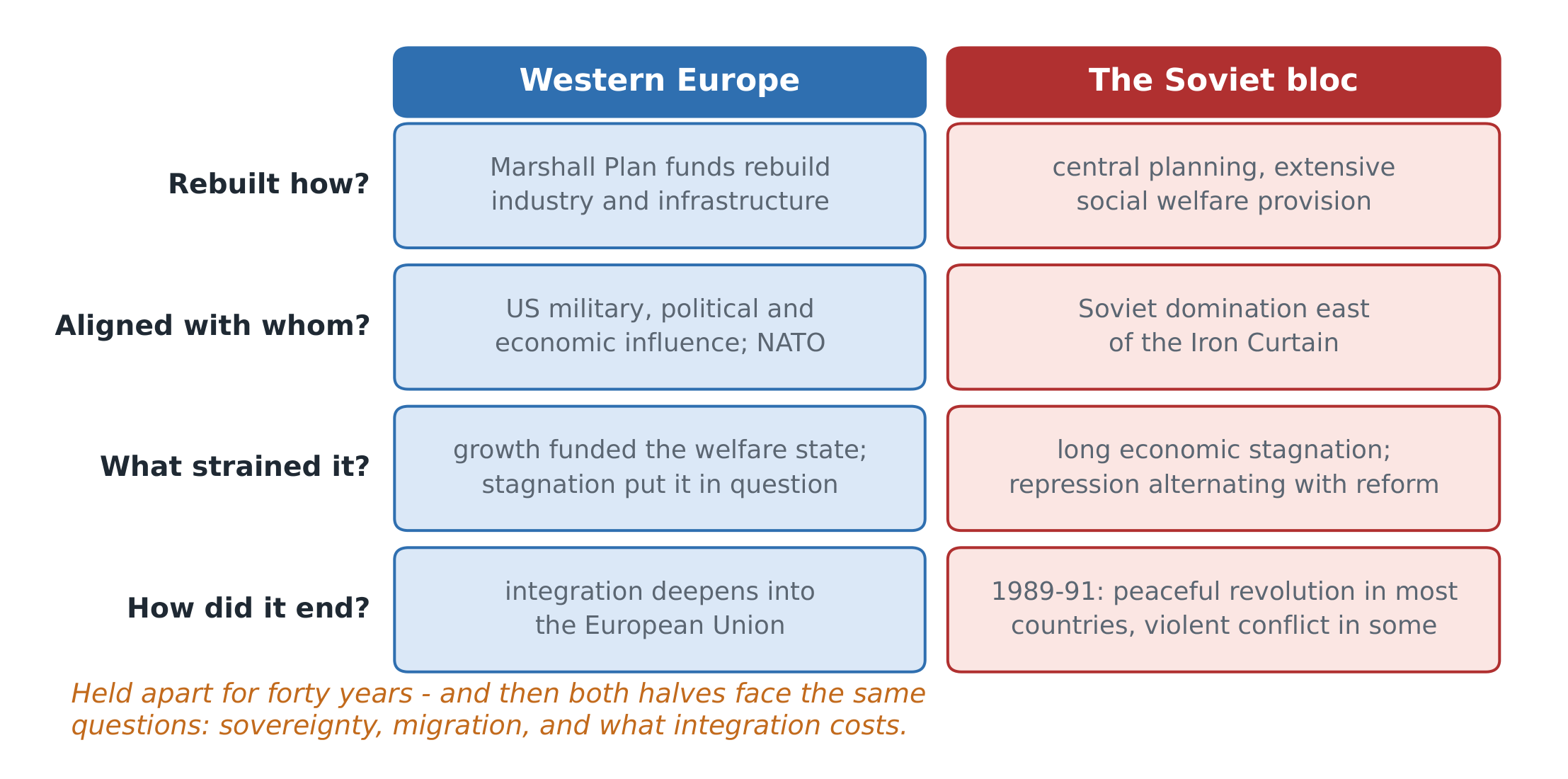
Marshall Plan 马歇尔计划 funds from the United States financed an extensive reconstruction of industry and infrastructure and stimulated an economic revival in Western Europe.
The Marshall Plan is examinable in two directions at once: it rebuilt Western Europe, and by being refused for the Soviet bloc it helped harden the division that defines the rest of the unit.
마셜 플랜에 의해 미국이 지원한 자금은 산업 및 인프라의 광범위한 재건을 financing하고 서유럽의 경제 부흥을 자극했습니다.
마셜 플랜은 두 방향으로 동시에 출제될 수 있습니다: 서유럽을 재건했음과, 소련 연맹에 의해 거절됨으로써 단위가 정의하는 나머지 단원의 주된 분열을 고착화시키는 데 기여했음입니다.
| Thematic Focus | Learning Objective | Historical Developments |
|---|---|---|
INT | Unit 9.C |
|
Illustrative examples:
Source: College Board AP Course and Exam Description · 출처: College Board AP Course and Exam Description
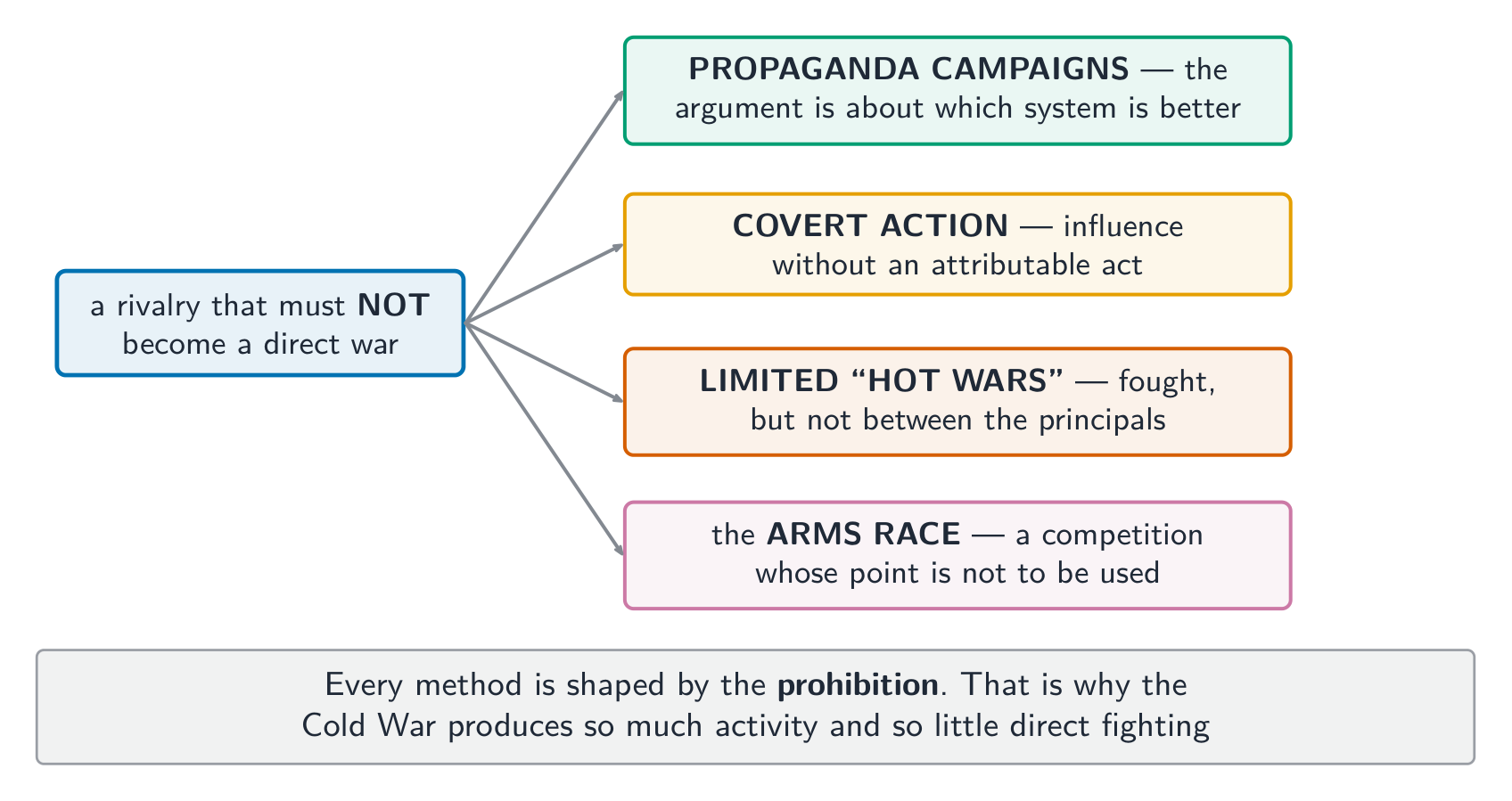
Despite efforts to maintain international cooperation through the newly created United Nations 联合国, deep-seated tensions between the two blocs produced the Cold War.
The CED lists how it was actually conducted, and the list is worth memorising because questions ask for methods:
Note what is absent: direct war between the principals. The methods list is the answer to "how could a conflict this intense produce no direct war".
신설된 유엔을 통한 국제 협력 유지를 위한 노력에도 불구하고, 두 진영 사이의 깊은 긴장관계는 냉전을 초래했습니다.
CED는 냉전이 실제로 어떻게 수행되었는지 나열하며, 이 목록은 질문들이方法来 묻기 때문에 암기할 가치가 있습니다:
무엇이 누락되었는지 주목하라: 주요국 간의 직접적인 전쟁이다. 방법 목록은 "이렇게 격렬한 갈등이 어떻게 직접적인 전쟁 없이도 발생할 수 있었는가"라는 질문에 대한 답 그 자체이다.
| English | 한국어 |
|---|---|
| Marshall Plan/ˈmɑːʃl plæn/ | 매리셜 플랜(Marshall Plan) |
| United Nations/juːˈnaɪtɪd ˈneɪʃnz/ | 유엔 |
| propaganda campaigns/ˌprɒpəˈɡændə kæmˈpeɪnz/ | 선전 campaigns |
| covert actions/kəʊˈvɜːt ˈækʃnz/ | 비공개 actions |
| limited "hot wars"/ˈlɪmɪtɪd hɒt wɔːz/ | 제한적 "(@ |
| arms race/ɑːmz reɪs/ | 군비 경쟁 |
Thematic Focus (ECD): Economic and Commercial Developments — Economic development, especially the development of capitalism, played an important role in Europe’s history, often having significant social, political, and cultural effects.
Learning Objective Unit 9.D: Explain the economic and political consequences of the Cold War for Europe.
Illustrative examples:
주제 초점 (ECD): 경제 및 상업 발전 — 경제 발전, 특히 자본주의의 발전은 유럽 역사에서 중요한 역할을 했으며, 종종 유의미한 사회적, 정치적, 문화적 영향을 미쳤다.
학습 목표 9.D: 냉전이 유럽에 미친 경제적·정치적 결과를 설명하시오.
예시 사례:
Source: College Board AP Course and Exam Description · 출처: College Board AP Course and Exam Description
| English | 한국어 |
|---|---|
| NATO/ˈneɪtəʊ/ | NATO |
| Iron Curtain/ˈaɪən ˈkɜːtn/ | 철의 커튼 |
| central planning/ˈsentrəl ˈplænɪŋ/ | 중앙 계획 |
| increase in welfare benefits/ˈɪŋkriːs ɪn ˈwelfeə ˈbenɪfɪts/ | 복지 수혜 증가 |
| economic stagnation/ˌiːkəˈnɒmɪk stæɡˈneɪʃn/ | 경제 정체 |
| welfare state/ˈwelfeə steɪt/ | 복지 국가 |
| Mikhail Gorbachev's/ˈmɪkaɪl ˈɡɔːbəʃevz/ | 미하일 고르바초프의 |
| perestroika/ˈperɪstrɔɪkə/ | 건재 |
| glasnost/ˈɡlæsnɒst/ | 개방성 |
| decolonisation/dɪˌkɒlənaɪˈzeɪʃn/ | 탈식민화 |
| European Union/ˌjʊərəˈpɪən ˈjuːnɪən/ | 유럽 연합 |
| migrant workers/ˈmaɪɡrənt ˈwɜːkəz/ | 이민 노동자 |
| altered Europe's religious makeup/ˈɒltəd ˈjʊərəps rɪˈlɪdʒəs ˈmeɪkʌp/ | 유럽의 종교적 구성을 바꾸었다 |
| eluded consensus/ɪˈluːdɪd kənˈsensəs/ | 합의를 회피했다 |
| both enthusiasm and criticism/bəʊθ enˈθjuːziæzəm ænd ˈkrɪtɪsɪzəm/ | 열정과 비판 모두 |
| Green parties/ɡriːn ˈpɑːtiz/ | 녹색 정당 |
| sustainable development/səˈsteɪnəbl dɪˈveləpmənt/ | 지속 가능한 발전 |
| consumer culture/kənˈsuːmə ˈkʌltʃə/ | 소비 문화 |
| Thematic Focus | Learning Objective | Historical Developments |
|---|---|---|
NEI | Unit 9.E |
|
Illustrative examples:
**주제 중심 (NEI): 민족 및 유럽 정체성 — 지역, 문화, 민족 및 유럽 정체성에 대한 정의와 인식은 시간이 흐르며 발전하고 도전을 받았으며, 이는 유럽의 정치, 사회 및 문화 질서에 다양하고 종종 깊은 영향을 미쳤다.
| Learning Objective | Historical Developments |
|---|---|
Unit 9.E |
|
예시 사례:
Source: College Board AP Course and Exam Description · 출처: College Board AP Course and Exam Description
Nationalist and separatist movements, along with ethnic conflict and ethnic cleansing, periodically disrupted the post-war order. The examinable point is that 1945 did not end the problem of nationalism in Europe; it suppressed it in some places and postponed it in others.
민족주의 및 분리주의 운동, 그리고 민족 갈등 및 민족 청결은 주기적으로 전후 질서를 방해했다. 출제 포인트는 1945가 유럽의 민족주의 문제를 해결한 것이 아니라, 일부 지역에서는 이를 억압하고 다른 지역에서는 이를 미루었다는 점이다.
| Thematic Focus | Learning Objective | Historical Developments |
|---|---|---|
ECD | Unit 9.F |
|
주제 초점 (ECD): 경제 및 상업 발전 — 경제 발전, 특히 자본주의의 발전은 유럽 역사에서 중요한 역할을 했으며, 종종 유의미한 사회적, 정치적, 문화적 영향을 미쳤다.
| Learning Objective | Historical Developments |
|---|---|
Unit 9.F |
|
Source: College Board AP Course and Exam Description · 출처: College Board AP Course and Exam Description
Postwar economic growth supported an increase in welfare benefits 福利待遇; subsequent economic stagnation 经济停滞 led to criticism and scaling back of the welfare state 福利国家.
Hold both halves. Growth funded the welfare state; the end of growth is what put it under argument - which is a causal claim, not just a sequence of events.
전후 경제 성장은 복지 혜택 증가를 뒷받침했으나, 이후 경제 정체는 복지 국가에 대한 비판과 축소를 초래했다.
양측을 함께 고려하라. 경제 성장이 복지 국가를 재원조성했고, 성장의 종말이 이를 논쟁의 대상으로 만들었다 - 이는 단순한 사건 나열이 아닌 인과 관계를 주장하는 것이다.
| Thematic Focus | Learning Objective | Historical Developments |
|---|---|---|
SOP | Unit 9.G |
|
Illustrative examples:
주제적 초점 (SOP): 국가 및 기타 권력 기구 — 유럽의 국가와 민족들은 사회를 조직하고 정치적 권력을 강화하기 위해 1450년부터 현재까지 정부 및 시민 기구를 발전시켰으며, 다양한 사회적, 문화적, 경제적 영향을 미쳤다.
| Learning Objective | Historical Developments |
|---|---|
Unit 9.G |
|
예시 사례:
Source: College Board AP Course and Exam Description · 출처: College Board AP Course and Exam Description
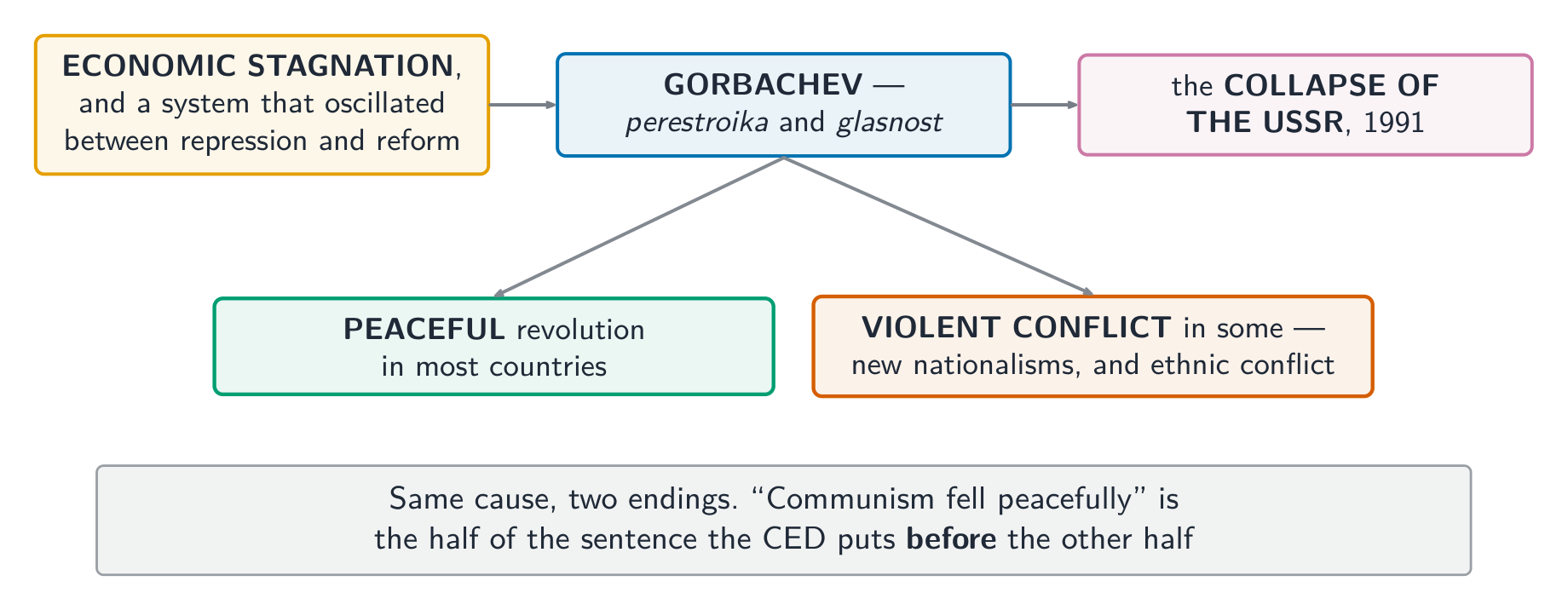
Following a long period of economic stagnation, Mikhail Gorbachev's 戈尔巴乔夫 internal reforms of perestroika 改革 and glasnost 开放 - despite being intended to strengthen the system - contributed to its collapse.
The collapse of the USSR in 1991 ended the Cold War and led to the establishment of capitalist economies throughout Eastern Europe.
The shape of the argument matters: reform intended to save a system helped end it. That is the kind of claim an evaluation question rewards.
긴 기간의 경제 정체 후, 미하일 고르바초프의 내부 개혁인 페레스트로카와 글라스노스트는 시스템을 강화하려는 의도와 달리 시스템의 붕괴에 기여했다.
소련의 붕괴가 1991에发生于 cold war를 끝내며 동유럽 전역에서 자본주의 경제 체제의 수립으로 이어졌다.
논증의 형태가 중요하다: 시스템을 구하기 위한 개혁이 오히려 그것을 끝내는 데 기여했다는 점은 평가-type 질문에 적절한 답변 유형이다.
The CED pairs 'peaceful revolution in most countries' with 'violent conflict in some'. Students drop the second half. · CED는 '대부분의 국가에서의 평화로운 혁명'과 '일부에서의 폭력적 충돌'을 짝 지음. 학생들이 두 번째 부분을 생략함.
| Thematic Focus | Learning Objective | Historical Developments |
|---|---|---|
SCD | Unit 9.H |
|
Illustrative examples:
Source: College Board AP Course and Exam Description · 출처: College Board AP Course and Exam Description
The lives of women were defined by family and work responsibilities, economic changes, and feminism. Across the century: expanding participation in paid work, especially during both wars; the extension of political rights; and organised movements that changed law and expectation in the postwar decades.
여성의 삶은 가족 및 직업 책임, 경제 변화, 여성주의에 의해 정의되었다. 세기를 관통하여:paid work 참여 확대(특히 두 세계대전 중), 정치적 권리 확장, 전후数十年에 걸쳐 법과 사회적 기대를 변화시킨 조직화된 운동 등이 포함된다.
| Thematic Focus | Learning Objective | Historical Developments |
|---|---|---|
INT | Unit 9.I |
|
Illustrative examples:
Source: College Board AP Course and Exam Description · 출처: College Board AP Course and Exam Description
The process of decolonisation 去殖民化 occurred over the course of the century with varying degrees of cooperation, interference, or resistance from the European imperial powers.
The consequence for Europe itself is the part students omit: losing empire changed what a European state was, and it produced the migration examined two topics below.
식민지 해방 과정은 세기에 걸쳐 진행되었으며, 유럽 제국주의 열강으로부터 다양한 수준의 협력, 간섭 또는 저항을 보였다.
유럽 자체에 대한 결과는 학생들이 생략하는 부분입니다. 제국의 상실은 유럽 국가의 정체성을 바꾸었으며, 이는 아래에서 다룰 두 가지 주제 중 하나인 이주를 초래했습니다.
| Thematic Focus | Learning Objective | Historical Developments |
|---|---|---|
NEI | Unit 9.J |
|
Unit 9.K |
|
Illustrative examples:
Source: College Board AP Course and Exam Description · 출처: College Board AP Course and Exam Description
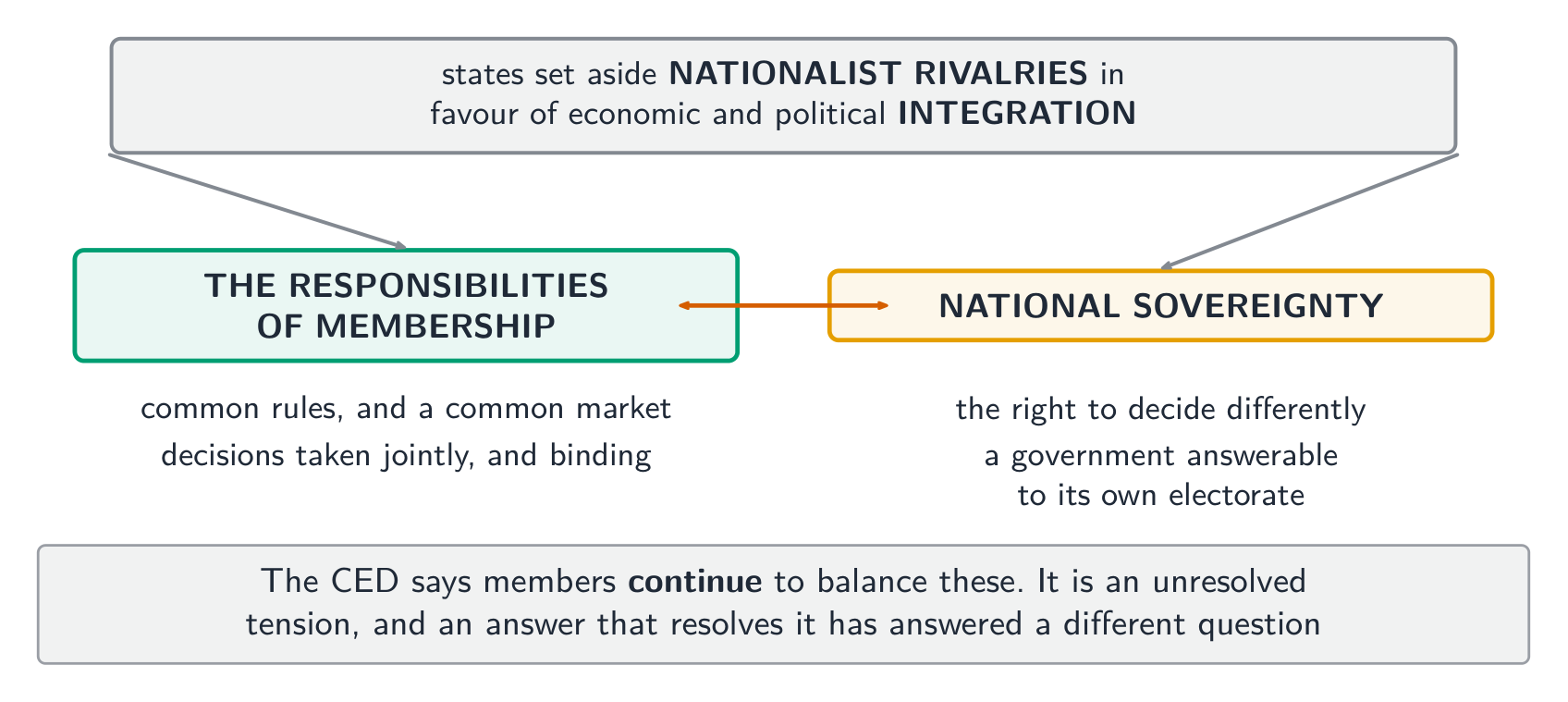
European states began to set aside nationalist rivalries in favour of economic and political integration, forming a series of institutions that became the European Union 欧盟.
And the tension the CED names explicitly: EU member nations continue to balance questions of national sovereignty against the responsibilities of membership in an international body. That balance is the examinable issue, not the institutional history.
유럽 국가들은 민족주의적 경쟁을 유예하고 경제 및 정치적 통합을 우선시하기 시작하며, 이것이 곧 유럽 연합으로 발전한 일련의 기구들을 형성했습니다.
CED(과목 가이드)가 명시적으로 지적하는 긴장감도 존재합니다: EU 회원국들은 국제 기구로서의 가입 의무와 자국 주권 문제 사이에서 균형을 유지하고 있습니다. 이 균형 자체가 시험 대상이며, institution의 역사적 배경이 아닙니다.
The CED says members 'continue to balance' these — it is an unresolved tension, and an answer that resolves it has answered a different question. · CED는 회원국들이 이 둘을 '계속 균형 있게 유지한다'고 말함 — 이는 해결되지 않은 긴장이며, 이를 해결한 답은 다른 질문의 답이 됨.
| Thematic Focus | Learning Objective | Historical Developments |
|---|---|---|
SCD | Unit 9.L |
|
Illustrative examples:
Source: College Board AP Course and Exam Description · 출처: College Board AP Course and Exam Description
Note the CED's own causal order: economic growth created labour demand, and migration followed it. The debates came afterwards.
CED의 인과관계 순서를 주의 깊게 보십시오: 경제 성장이 노동 수요를 창출했고, 그에 이어 이주가 발생했습니다. 논쟁은 이후에 나타났습니다.
Thematic Focus (TSI): Technological and Scientific Innovation — Scientific and technological innovations have increased efficiency, improved daily life, and shaped human development and interactions, having both intended and unintended consequences.
Learning Objective Unit 9.M: Explain how innovation and advances in technology influenced cultural and intellectual developments in the period 1914 to the present.
Illustrative examples:
주제적 초점 (TSI): 기술 및 과학 혁신 — 과학 및 기술 혁신은 효율성을 높이고 일상 생활을 개선하며 인간 발전과 상호작용에 영향을 미쳤으며, 의도된 결과와 비의도적인 결과를 모두 가져왔다.
학습 목표 단위 9.M: 1914년부터 현재까지 혁신과 기술 발전이 문화 및 지적 발전에 미친 영향을 설명하시오.
예시 사례:
| Thematic Focus | Learning Objective | Historical Developments |
|---|---|---|
TSI | Unit 9.N |
|
Illustrative examples:
Source: College Board AP Course and Exam Description · 출처: College Board AP Course and Exam Description
| Thematic Focus | Learning Objective | Historical Developments |
|---|---|---|
CID | Unit 9.O |
|
Illustrative examples:
Source: College Board AP Course and Exam Description · 출처: College Board AP Course and Exam Description
| English | 한국어 |
|---|---|
| baby boom/ˈbeɪbi buːm/ | 베이비 부머 |
| Learning Objective | Review: Unit 9 Key Concepts |
|---|---|
Unit 9.P |
|
Source: College Board AP Course and Exam Description · 출처: College Board AP Course and Exam Description
The unit's reasoning skill is continuity and change.
Worked example (a real AP exam question). AP European History short-answer questions here ask, for example, to "Explain one way in which European integration after 1945 represented a change from earlier European international relations." A full-mark answer states the change against what it replaced: "Before 1945 European states pursued national interest through competing alliances and, repeatedly, war. After 1945 states began to set aside those rivalries in favour of shared institutions, accepting binding common rules on trade and law - so a dispute between members became a matter for negotiation within an institution rather than a matter for the balance of power." Notice that a change claim needs the prior state of affairs to be named.
이 단원의 추론 스킬은 지속과 변화이다.
worked example (실제 AP 시험 문제). AP 유럽 역사 단답형 질문에서는 예를 들어 *"1945년 이후 유럽 통합이 이전의 유럽 국제 관계에 비해 어떤 변화를 나타내는지를 설명하시오."*와 같은 문제를 낸다. 만점 답안은 변경 사항을 대체했던 기존 상황과 대비하여 서술한다: "1945년 이전에는 유럽 국가들이 경쟁적인 동맹과 반복되는 전쟁을 통해 자국 이익을 추구했다. 1945년 이후 국가들은 이러한 적대 관계를 버리고 공동 기관을 수용하며, 무역 및 법에 대한 구속력 있는 공통 규범을 받아들였다. 따라서 회원국 간 분쟁은 힘의 균형 문제가 아닌 기관 내 협상의 사 안으로 전환되었다." 변경 claim(주장)을 할 때는 반드시 이전 상태를 명시해야 함을 유의할 것.
Work through it step by step, with instant-check exercises. · 즉시 체크 기능 exercises를 통해 단계별로 진행하세요.
Loading subjects… · 과목 로드 중…