지속적 이해 (핵심 개념 3 — 정보 저장 및 전송): 생명체는 생명 과정에 필수적인 정보를 저장, 인출, 전송 및 반응합니다.
학습 목표 5.1.A: 감수분열이 어떻게 하여 한 세대에서 다음 세대까지의 염색체 전이를 보장하는지 설명하라.
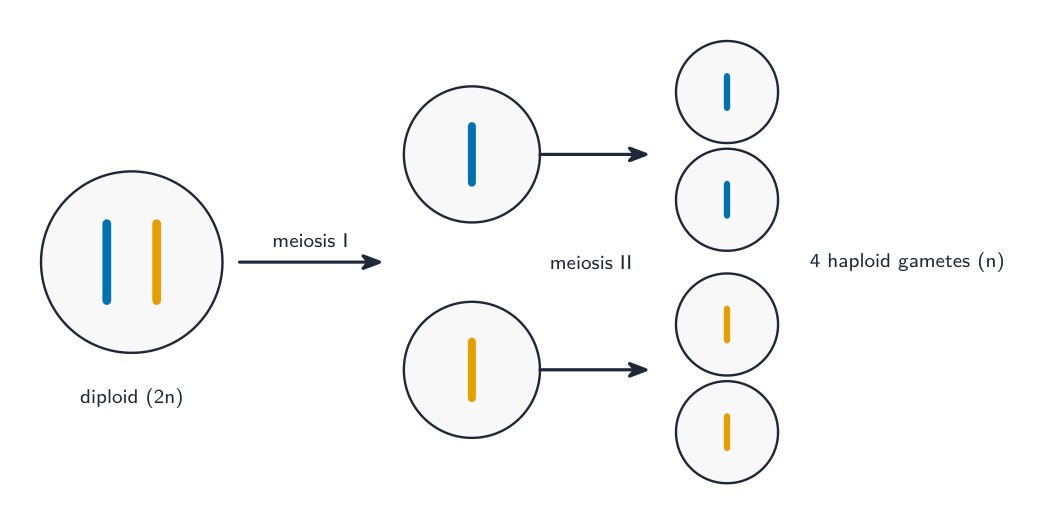
- 5.1.A.1 감수분열은 유성 생식을 하는 이배체 생물에서 haploid(단배체) 배세포(gamete cells, 때로는 딸세포라고 불림)가 형성되도록 보장하는 과정이다.
- 5.1.A.2 감수분열 I에는 다음과 같은 단계가 포함된다:
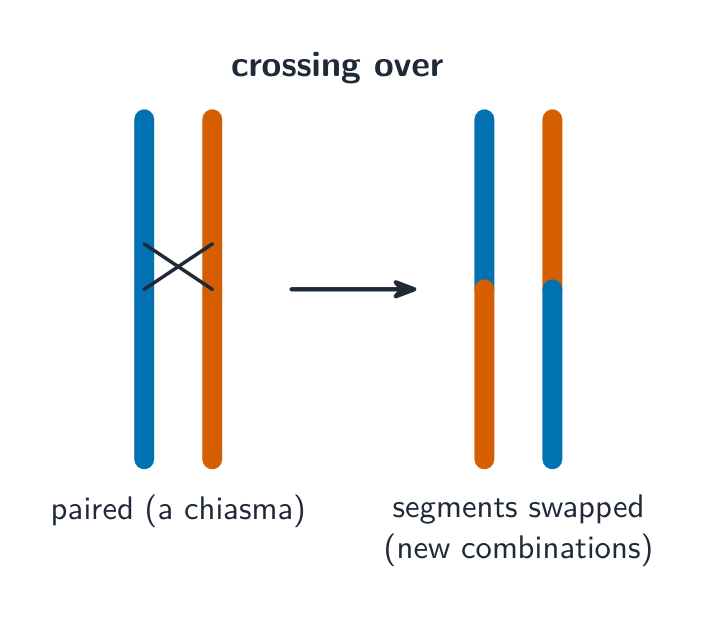
- i. 전위기 I: 동원염색체가 짝을 이루고 응축되며, synapsis(동원염색체 결합)가 일어나고 chiasmata(교차)가 형성될 수 있으며, 감수분열 방울 형성이 시작되고, 중심체가 세포의 반대 극으로 이동하며, 핵막이 붕괴된다.
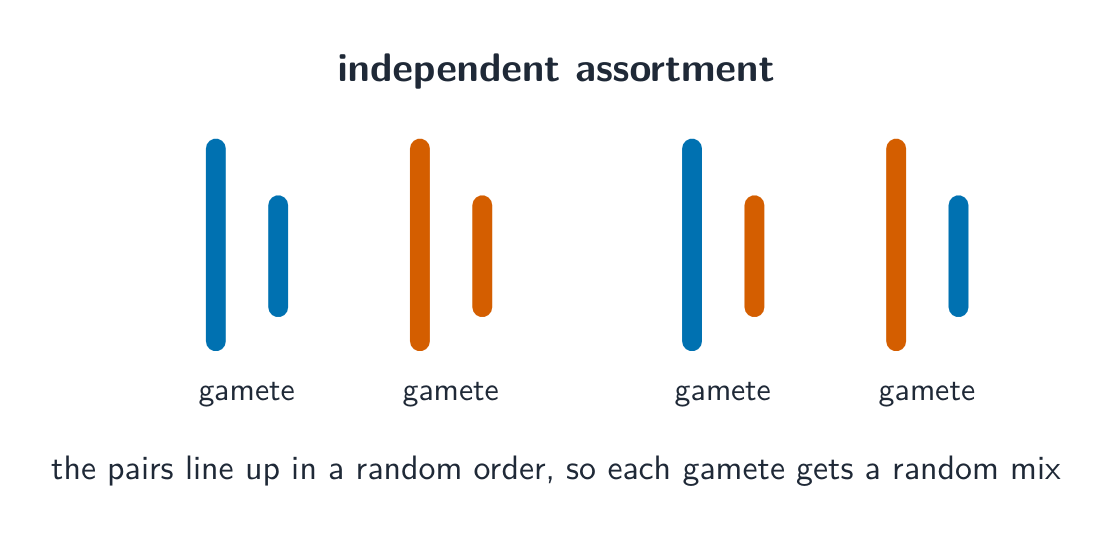
- ii. 중기 I: 감수분열 방울 섬유가 중기판(metaphase plate)에서 동원염색체의 짝을 세포의 적도면에 정렬시킨다.
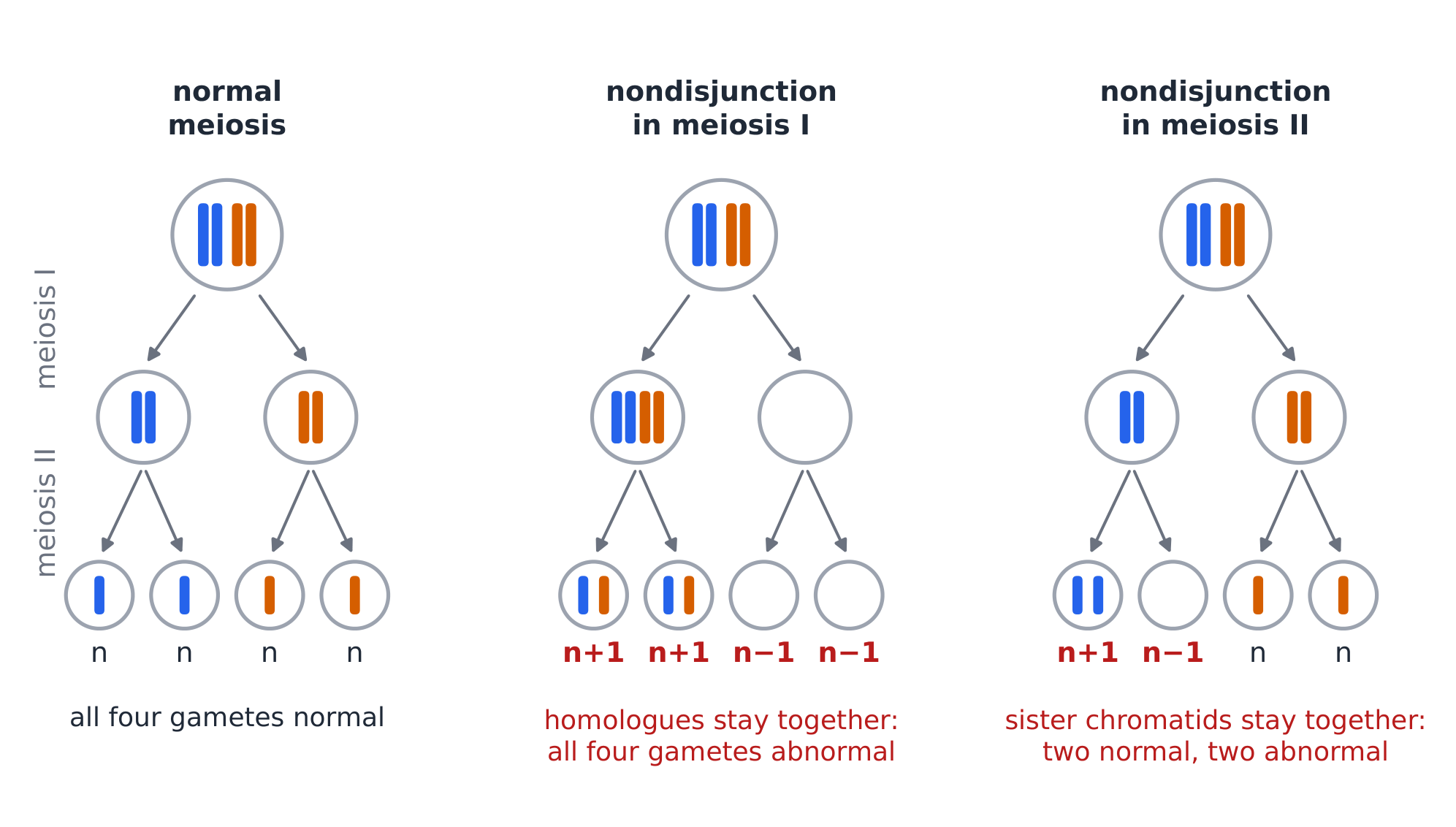
- iii. Anaphase I: Homologous chromosomes separate, while sister chromatids remain attached, as meiotic spindle fibers pull chromosomes toward poles.
- iv. 말기 I: 감수분열 방울이 붕괴되고, 새로운 핵막이 형성되며, 절개 골(동물 세포) 또는 세포판(식물 세포)이 형성되고 세포질분열이 일어난다. 두 개의 단배체 딸세포가 형성된다(감수분열 I 종료 시).
- 5.1.A.3 감수분열 II에는 다음과 같은 단계가 포함된다:
- i. Prophase II: Meiotic spindle forms; sister chromatids connected at the centromere attach to meiotic spindle.
- ii. Metaphase II: Chromosomes align along the metaphase plate; the kinetochore of each chromatid is attached to a microtubule extending from the poles.
- iii. Anaphase II: Proteins at the centromeres break down, and sister chromatids are pulled apart and toward opposite poles in the cell.
- iv. Telophase II: Meiotic spindle breaks down, a new nuclear envelope develops, a cleavage furrow (animal cell) or a cell plate (plant cell) forms, chromatids begin to decondense, and cytokinesis occurs. Four haploid daughter cells are formed, each with an unduplicated chromatid.
학습 목표 5.1.B: 유분열과 감수분열의 단계 및 결과의 유사점과 차이점을 설명하라.
- 5.1.B.1 유분열과 감수분열은 염색체를 이동시키기 위해 방추기를 사용하는 점은 유사하지만, 생성되는 세포의 수와 딸세포의 유전적 구성은 다릅니다.