Verbs that do more than describe an action. to let / make让/to be called; to call叫/please; to invite请/to make使 make or ask someone to act; to think以为 is a belief that turned out wrong; as if好像 says something seems true; want / will / need要to look at; to watch; to read看 says the answer depends on something; to rest with在于 names what something really comes down to. to pass through通过, to come from来自 and to come来 complete the set.
Verbs
HSK 4 · Topic 12
 5:00
HSK 4 Grammar 12: Verbs
Eight verb patterns in one lesson. Four causatives, an "it depends", a hedge, an essay verb, a wrong-belief verb, a two-hatted 通过, 来自, and the dummy 来. Each…
English explanations + Mandarin examples · captions follow the spoken text
12.1
At a glance
- 1. to let / make让 / to be called; to call叫 / please; to invite请 / to make使 – causative: manager经理to let / make让I / me我to notify通知everyone大家Friday星期五to hand over交to inform报告。
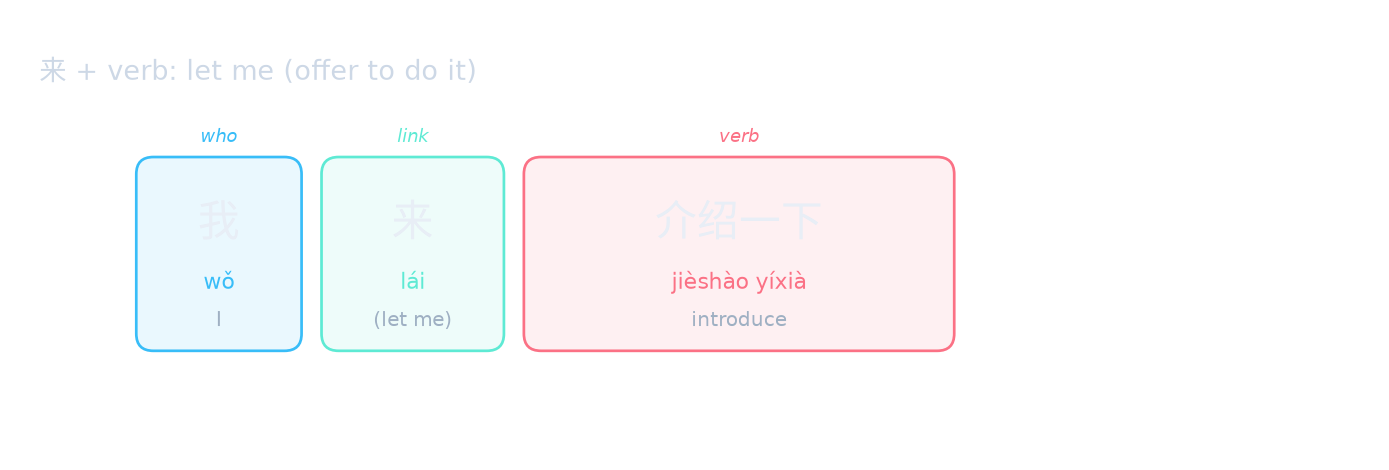
- 2. to come来 as a dummy verb – I'll do it: to come来一碗beef noodle soup牛肉面。
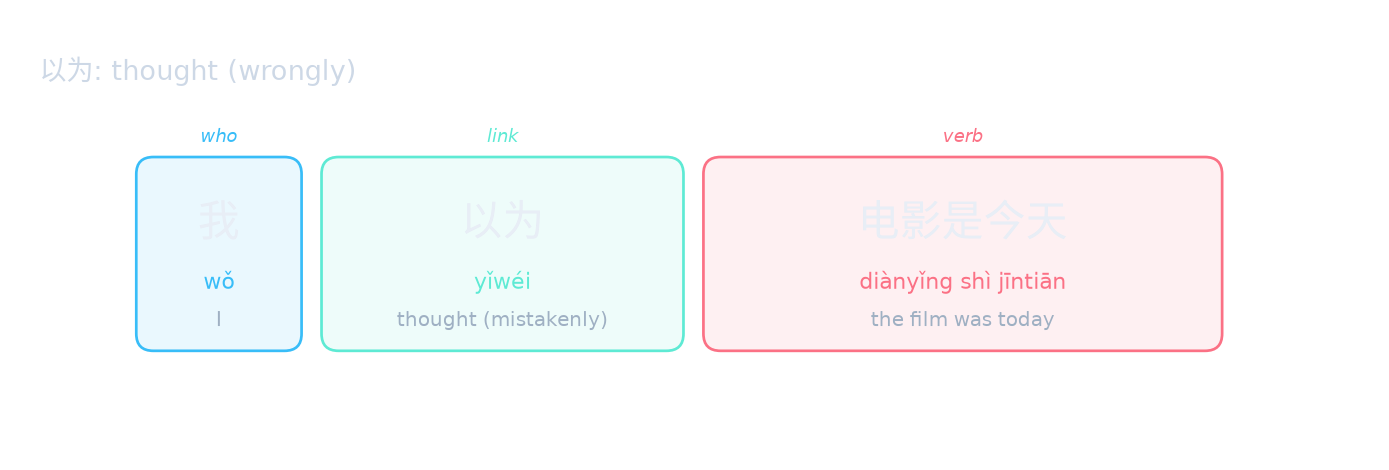
- 3. to think以为 – mistakenly think: I / me我to think以为film; movie电影to be / is是today今天!
- 4. as if好像 – it seems / as if: he / him他as if好像not不太高兴。
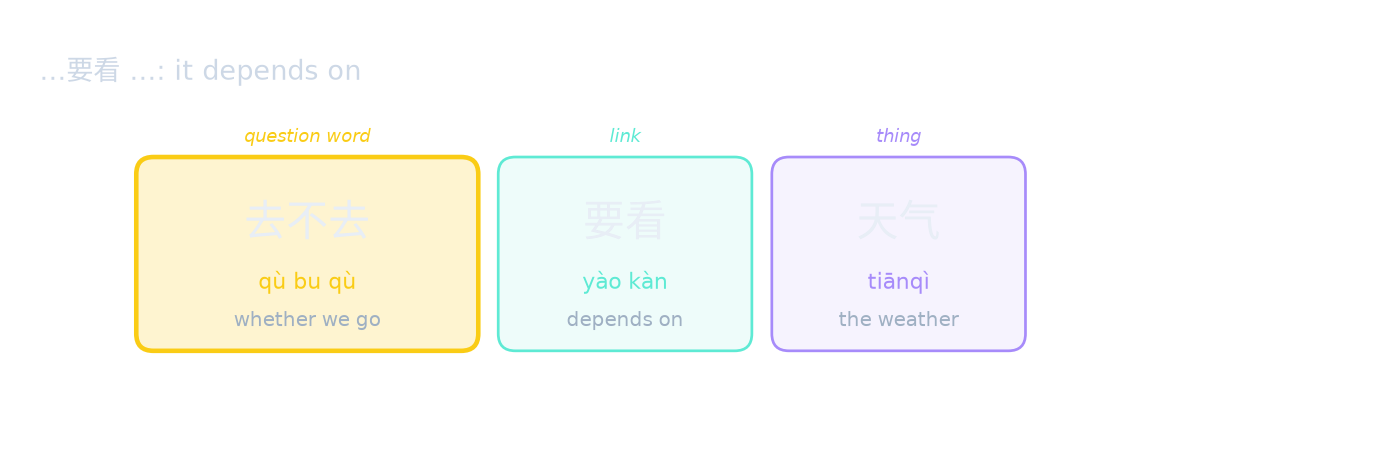
- 5. want / will / need要to look at; to watch; to read看 / (degree marker)得to look at; to watch; to read看 – it depends on: 去不去want / will / need要to look at; to watch; to read看weather天气。
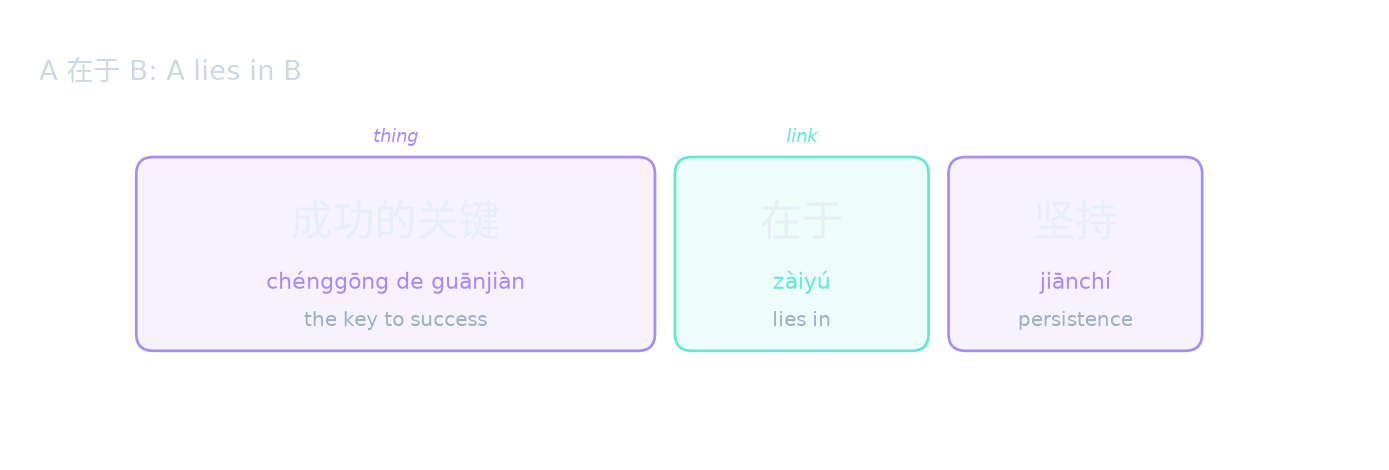
- 6. to rest with在于 – lies in / consists in: success成功(modifier / structural particle)的关键在于to persevere with坚持。
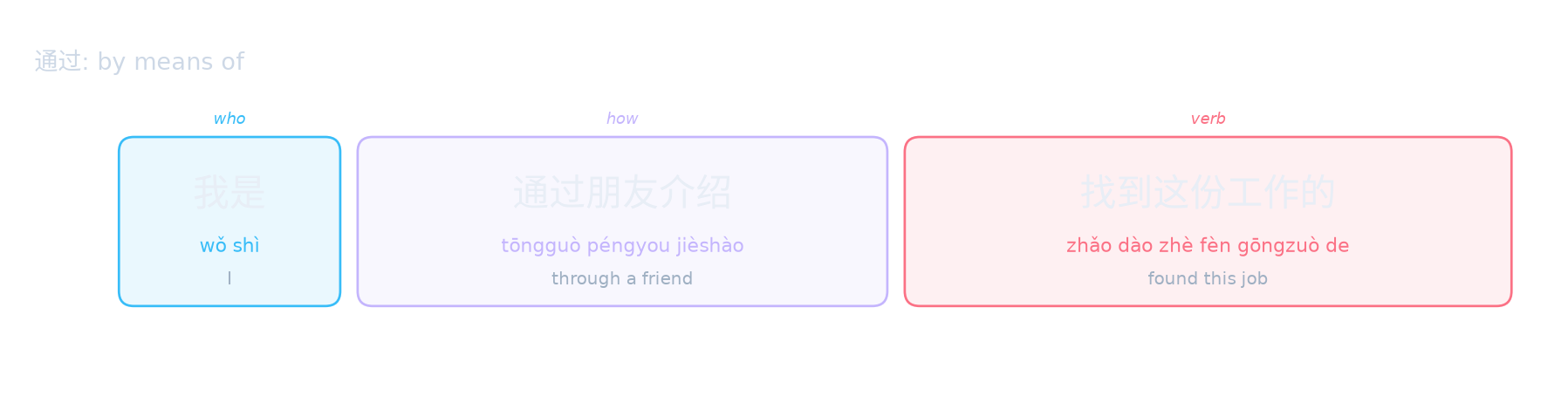
- 7. to pass through通过 – through / by means of: I / me我to be / is是to pass through通过friend朋友to introduce介绍to find找到这份to work; job工作(modifier / structural particle)的。
- 8. to come from来自 – come from: these这些student学生to come from来自十多个country国家。
12.2
1. 让 / 叫 / 请 / 使 (causative)
Form: A + to let / make让 / to be called; to call叫 / please; to invite请 / to make使 + B + verb · to let / make让 / to make使 + B + feeling
- manager经理to let / make让I / me我to notify通知everyone大家Friday星期五to hand over交to inform报告。 Jīnglǐ ràng wǒ tōngzhī dàjiā xīngqīwǔ jiāo bàogào. – The manager asked me to tell everyone to hand in their reports on Friday.
- he / him他if (coming after a…的话to let / make让I / me我degree / adjective linker很to move感动。 Tā de huà ràng wǒ hěn gǎndòng. – What he said moved me deeply.
- this这个news消息to make使everyone大家very非常to be startled吃惊。 – The news greatly surprised everyone.
- doctor医生不让he / him他to drink (alcohol)喝酒。 – The doctor won't let him drink.
How it works. B is the object of the first verb and the doer of the second.
| Verb | Use | Register |
|---|---|---|
| to let / make让 | let, make, ask; cause a feeling | everyday |
| to be called; to call叫 | tell someone to | spoken, direct |
| please; to invite请 | invite, ask politely | polite: we / us我们want / think / miss想please; to invite请to rule王professor教授to come来to do; to make做to inform报告 |
| to make使 | cause a change of state | written |
不让 / not / haven't没to let / make让 refuse or didn't ask; to let / make让……don't别…… tells someone not to: mum; mother妈妈to let / make让我别to play玩mobile phone手机.
Watch out
- to make使 is not for permission: wrong: mum; mother妈妈to make使I / me我to go去 → mum; mother妈妈to let / make让I / me我to go去.
- To a teacher, please; to invite请you (polite)您…… sounds right; to be called; to call叫you (polite)您…… sounds rude.

Vocabulary
Train
| 汉字 | Pinyin | English |
|---|---|---|
| 通知 | tōng zhī | to notify |
| 交 | jiāo | to hand over |
| 感动 | gǎn dòng | to move |
| 消息 | xiāo xi | news |
| 吃惊 | chī jīng | to be startled |
| 教授 | jiào shòu | professor |
12.3
2. 来 as a dummy verb (I'll do it)
Form: (I / me我) to come来 (+ verb) · to come来 + amount + item (ordering)
- 我来(suggestion)吧! Wǒ lái ba! – Let me do it!
- 我来to pay money付钱! – Let me pay!
- 我来to introduce介绍(used after a verb) give it…一下。 – Let me introduce (him).
- to come来一碗beef noodle soup牛肉面。 Lái yì wǎn niúròu miàn. – A bowl of beef noodles, please.
How it works. In casual speech, to come来 can stand in for the real action: "let me take care of it". The action is clear from the situation (carrying, paying, introducing). In a restaurant, to come来 + amount means "bring me": to come来两瓶beer啤酒, 再来一个!
| 我来to do; to make做 | I / me我to go去to buy买 |
|---|---|
| I'll take it on, here | I'll go off and buy it |
Watch out
- Here to come来 does not mean "come": 我来(suggestion)吧 is "let me do it".
12.4
3. 以为 (mistakenly think)
Form: subject + (still / also还) to think以为 + belief,(former原来 / didn't expect没想到) + truth
- I / me我to think以为film; movie电影to be / is是today今天! Wǒ yǐwéi diànyǐng shì jīntiān! – I thought the film was today! (it wasn't)
- I / me我to think以为he / him他to be / is是China中国person人,former原来he / him他to be / is是Japan日本person人。 – I thought he was Chinese, but it turns out he's Japanese.
- I / me我to think以为you你already已经to walk走(completed / change)了,didn't expect没想到you你still / also还at / in在。 – I thought you'd already left; I didn't expect you'd still be here.
- I / me我still / also还to think以为you你not不to come来(completed / change)了。 – And here I was thinking you weren't coming.
How it works. to think以为 yǐwéi reports a belief that turned out to be wrong. A second clause often gives the truth, with former原来 or didn't expect没想到. still / also还to think以为 stresses the mistake.
| to think / believe认为 | to feel / think觉得 | to think以为 |
|---|---|---|
| a considered opinion | feel, think (everyday) | thought, wrongly |
| I / me我to think / believe认为this这个means办法degree / adjective linker很good好 | I / me我to feel / think觉得slightly有点儿cold冷 | I / me我to think以为you你to be / is是teacher老师 |
Watch out
- In a debate, "I think this plan is reasonable" is I / me我to think / believe认为…, not I / me我to think以为….
Vocabulary
Train
| 汉字 | Pinyin | English |
|---|---|---|
| 原来 | yuán lái | former |
12.5
4. 好像 (it seems / as if)
Form: subject + as if好像 + guess · A + as if好像 + B + like一样 (+ adjective)
- he / him他as if好像not不太高兴。 Tā hǎoxiàng bú tài gāoxìng. – He seems a bit unhappy.
- shop商店as if好像to close a door关门(completed / change)了。 – It seems the shop is closed.
- I / me我as if好像to appear见(experienced)过he / him他。 – I think I've seen him somewhere.
- here这儿(modifier / structural particle)的winter冬天as if好像spring (season)春天like一样warm暖和。 – Winter here is as warm as spring.
How it works. as if好像 hǎoxiàng gives a soft guess from what you notice: "it seems, apparently". It goes after the subject or at the start (as if好像want / will / need要to rain下雨(completed / change)了). With like一样, it compares: "as if, like": he / him他happy; glad高兴(degree marker)得as if好像(measure word)个child孩子like一样.
| as if好像 | apparently看来 | seemingly看起来 |
|---|---|---|
| a soft guess | a conclusion from evidence | an impression from looks |
| he / him他as if好像to fall ill生病(completed / change)了 | he / him他not / haven't没to come来,apparently看来to be / is是to fall ill生病(completed / change)了 | he / him他seemingly看起来很累 |
Watch out
- as if好像 is tentative, so not with definitely一定: wrong: he / him他as if好像definitely一定illness病(completed / change)了 → he / him他as if好像illness病(completed / change)了.

Vocabulary
Train
| 汉字 | Pinyin | English |
|---|---|---|
| 好像 | hǎo xiàng | as if |
| 过 | guò | to cross |
| 暖和 | nuǎn huo | warm |
12.6
5. 要看 / 得看 (it depends on)
Form: undecided matter + want / will / need要to look at; to watch; to read看 / (degree marker)得to look at; to watch; to read看 + deciding factor
- 去不去want / will / need要to look at; to watch; to read看weather天气。 Qù bu qù yào kàn tiānqì. – Whether we go depends on the weather.
- A: you你tomorrow明天to come来(yes/no ?)吗? B: (degree marker)得to look at; to watch; to read看circumstances情况。 Děi kàn qíngkuàng. – "Are you coming tomorrow?" "It depends."
- achievement成绩(coll.) all right?好不好,want / will / need要to look at; to watch; to read看you你to make an effort努力not不to make an effort努力。 – Whether your results are good depends on whether you work hard.
How it works. Put what is undecided first, often as A-not-A or with a question word (去不去, what什么time; when时候, how about怎么样), then want / will / need要to look at; to watch; to read看 / (degree marker)得to look at; to watch; to read看 + the factor that decides it. In (degree marker)得to look at; to watch; to read看, (degree marker)得 is read děi ("must").
| Spoken | Written |
|---|---|
| want / will / need要to look at; to watch; to read看 / (degree marker)得to look at; to watch; to read看 | to hinge on取决于 |
| outcome结果want / will / need要to look at; to watch; to read看everyone大家(modifier / structural particle)的to make an effort努力 | outcome结果to hinge on取决于everyone大家(modifier / structural particle)的to make an effort努力 |
Watch out
- In most speech the undecided part comes first: wrong: want / will / need要to look at; to watch; to read看weather天气去不去 → 去不去want / will / need要to look at; to watch; to read看weather天气.
Vocabulary
Train
| 汉字 | Pinyin | English |
|---|---|---|
| 情况 | qíng kuàng | circumstances |
| 结果 | jié guǒ | outcome |
12.7
6. 在于 (lies in / consists in)
Form: abstract subject (crucial point关键 / question问题 / cause原因 / difference区别) + to rest with在于 + B
- success成功(modifier / structural particle)的关键在于to persevere with坚持。 Chénggōng de guānjiàn zàiyú jiānchí. – The key to success lies in perseverance.
- this这两个method方法(modifier / structural particle)的difference区别to rest with在于speed速度。 – The difference between the two methods lies in speed.
- question问题to rest with在于money钱not enough不够。 – The problem is that there isn't enough money.
- to follow good examples学好foreign language外语to rest with在于many; much多to practice练习。 – Learning a language well comes down to plenty of practice.
How it works. to rest with在于 zàiyú names where the key point, problem, reason or difference lies. The subject is abstract, and the style is formal. In speech, main主要to be / is是…… often replaces it: question问题main主要to be / is是time时间not enough不够.
| at / in在 + place | to be / is是 | to rest with在于 |
|---|---|---|
| be located | states identity | stresses where the point lies |
| he / him他at / in在Beijing北京 | crucial point关键to be / is是to persevere with坚持 | 关键在于to persevere with坚持 |
Watch out
- Not for places: wrong: he / him他to rest with在于Beijing北京 → he / him他at / in在Beijing北京.
Vocabulary
Train
| 汉字 | Pinyin | English |
|---|---|---|
| 关键 | guān jiàn | crucial point |
| 原因 | yuán yīn | cause |
| 区别 | qū bié | difference |
| 成功 | chéng gōng | success |
| 坚持 | jiān chí | to persevere with |
| 方法 | fāng fǎ | method |
| 速度 | sù dù | speed |
12.8
7. 通过 (through / by means of)
Form: to pass through通过 + means,subject + result · subject + to pass through通过 + exam / place
- I / me我to be / is是to pass through通过friend朋友to introduce介绍to find找到这份to work; job工作(modifier / structural particle)的。 Wǒ shì tōngguò péngyou jièshào zhǎodào zhè fèn gōngzuò de. – I found this job through a friend's introduction.
- to pass through通过这次to exercise活动,everyone大家each other互相to understand了解(completed / change)了。 – Through this event, everyone got to know each other.
- he / him他to pass through通过(completed / change)了exam; to take an exam考试。 Tā tōngguòle kǎoshì. – He passed the exam.
- car or other vehicle…车子to pass through通过(completed / change)了Da Qiao, one of the Two…大桥。 – The car crossed the bridge.
How it works. Before a verb or at the start, to pass through通过 means "through, by means of": how a result is reached. As a verb, it means "pass" (an exam, a test, a vote) or "go through" a place.
| to pass through通过 | to pass经过 |
|---|---|
| the means | a process gone through |
| to pass through通过network网络to buy tickets买票 | to pass经过三年(modifier / structural particle)的to make an effort努力 |
Watch out
- After a to pass through通过 phrase, the result still needs a subject: wrong: to pass through通过to study; to learn学习,to make使I / me我progress进步(completed / change)了 → to pass through通过to study; to learn学习,I / me我progress进步(completed / change)了很多. This is a classic exam trap.
Vocabulary
Train
| 汉字 | Pinyin | English |
|---|---|---|
| 通过 | tōng guò | to pass through |
| 活动 | huó dòng | to exercise |
| 互相 | hù xiāng | each other |
12.9
8. 来自 (come from)
Form: subject + to come from来自 + place / source (formal)
- these这些student学生to come from来自十多个country国家。 Zhèxiē xuésheng láizì shí duō ge guójiā. – These students come from more than ten countries.
- she / her她to come from来自Peking University北京大学。 – She is from Peking University.
- this这个news消息to come from来自the whole family一家newspaper报纸。 – This news comes from a newspaper.
- he / him他(modifier / structural particle)的pressure压力main主要to come from来自to work; job工作。 – His stress comes mainly from work.
How it works. to come from来自 láizì "come from" is the formal alternative to from从……to come来. The place or source follows directly. It suits introductions and writing; in conversation, I / me我是从China中国to come来(modifier / structural particle)的 or I / me我to be / is是China中国person人 is more natural.
Watch out
- No from从 and no to come来 at the end: wrong: to come from来自from从China中国, wrong: to come from来自China中国to come来 → to come from来自China中国.

Vocabulary
Train
| 汉字 | Pinyin | English |
|---|---|---|
| 压力 | yā lì | pressure |
12.10
Practice
Cover the teaching pages before you answer. The answers are at the end.
1. to let / make让 / to be called; to call叫 / please; to invite请 / to make使 (causative)
1. Complete: “His words moved me deeply.” he / him他if (coming after a…的话…………I / me我degree / adjective linker很to move感动。
2. You invite your professor to give a talk. Which verb fits? we / us我们want / think / miss想___to rule王professor教授to come来to do; to make做to inform报告。
- A. to be called; to call叫
- B. to make使
- C. please; to invite请
- D. to let / make让
3. Build: “The doctor won't let him drink.”
Put in order: doctor医生 / to drink (alcohol)喝酒。 / he / him他 / 不让
4. True or false? to make使 is the usual verb for giving permission in conversation. If false, correct it.
5. Your manager wants the report by Friday and tells you to inform the team. Use to let / make让 / to be called; to call叫 / please; to invite请 / to make使. Write your answer in Chinese, then say it aloud.
2. to come来 as a dummy verb (I'll do it)
6. Offer to pay: “Let me pay!” I / me我…………to pay money付钱!
7. In a restaurant, what does to come来两瓶beer啤酒 mean?
- A. Two bottles of beer are coming.
- B. Two bottles of beer, please.
- C. Beer comes in two bottles.
- D. Come and drink two beers.
8. Build: “Let me introduce (him/her) briefly.”
Put in order: to come来 / to introduce介绍 / I / me我 / (used after a verb) give it…一下。
9. True or false? 我来(suggestion)吧 here means “let me come”. If false, correct it.
10. Your grandmother is struggling with a heavy box. You step in. Use to come来 as a dummy verb. Write your answer in Chinese, then say it aloud.
3. to think以为 (mistakenly think)
11. Complete: “I thought you were a teacher (but you're not).” I / me我…………you你to be / is是teacher老师。
12. In a debate: “I think this plan is reasonable.” Which verb fits?
- A. former原来
- B. to think / believe认为
- C. to think以为
- D. as if好像
13. Build: “I thought you'd already left.”
Put in order: you你 / already已经 / I / me我to think以为 / to walk走(completed / change)了。
14. True or false? I / me我still / also还to think以为you你not不to come来(completed / change)了 suggests the speaker was wrong. If false, correct it.
15. You arrive at the cinema and the staff tell you your film was yesterday. Use to think以为. Write your answer in Chinese, then say it aloud.
4. as if好像 (it seems / as if)
16. Complete: “It seems the shop is closed.” shop商店…………to close a door关门(completed / change)了。
17. Which sentence is natural?
- A. he / him他as if好像to fall ill生病(completed / change)了。
- B. as if好像he / him他definitely一定to fall ill生病。
- C. he / him他as if好像definitely一定to fall ill生病(completed / change)了。
- D. he / him他to fall ill生病as if好像(completed / change)了。
18. Build: “Winter here is as warm as spring.”
Put in order: here这儿(modifier / structural particle)的winter冬天 / as if好像spring (season)春天 / warm暖和。 / like一样
19. True or false? I / me我as if好像to appear见(experienced)过he / him他 means “I think I've seen him before.” If false, correct it.
20. Your roommate has been quiet all evening and didn't eat dinner. Use as if好像. Write your answer in Chinese, then say it aloud.
5. want / will / need要to look at; to watch; to read看 / (degree marker)得to look at; to watch; to read看 (it depends on)
21. Complete: “Whether we go depends on the weather.” 去不去…………weather天气。
22. How is (degree marker)得 read in (degree marker)得to look at; to watch; to read看circumstances情况?
- A. děi
- B. dé
- C. de
- D. dì
23. Build: “Whether your results are good depends on whether you work hard.”
Put in order: achievement成绩(coll.) all right?好不好 / want / will / need要to look at; to watch; to read看you你 / to make an effort努力not不to make an effort努力。 / ,
24. True or false? to hinge on取决于 is the formal written equivalent of want / will / need要to look at; to watch; to read看. If false, correct it.
25. Your friend asks if the hike is still on for Saturday. Use want / will / need要to look at; to watch; to read看 / (degree marker)得to look at; to watch; to read看. Write your answer in Chinese, then say it aloud.
6. to rest with在于 (lies in / consists in)
26. Complete: “The problem lies in a lack of money.” question问题…………money钱not enough不够。
27. Which sentence is correct?
- A. I / me我(modifier / structural particle)的home; family家to rest with在于Shanghai municipality…上海。
- B. he / him他to rest with在于school学校to study; to learn学习。
- C. to rest with在于he / him他to be / is是teacher老师。
- D. success成功(modifier / structural particle)的关键在于to make an effort努力。
28. Build: “The difference lies in speed.”
Put in order: to rest with在于 / speed速度。 / difference区别
29. True or false? crucial point关键to be / is是to persevere with坚持 and 关键在于to persevere with坚持 have similar meanings. If false, correct it.
30. In an interview, a famous athlete is asked why she keeps winning. Use to rest with在于. Write your answer in Chinese, then say it aloud.
7. to pass through通过 (through / by means of)
31. Complete: “Through this event, everyone got to know each other.” …………这次to exercise活动,everyone大家each other互相to understand了解(completed / change)了。
32. Which sentence is correct?
- A. to pass through通过to study; to learn学习,to make使I / me我progress进步(completed / change)了很多。
- B. I / me我to pass through通过to study; to learn学习to make使progress进步(completed / change)了。
- C. to pass through通过to study; to learn学习,progress进步(completed / change)了很多to make使I / me我。
- D. to pass through通过to study; to learn学习,I / me我progress进步(completed / change)了很多。
33. Build: “He passed the exam.”
Put in order: exam; to take an exam考试。 / to pass through通过(completed / change)了 / he / him他
34. True or false? to pass经过 stresses a process; to pass through通过 stresses the means. If false, correct it.
35. A friend asks how you got your new job so quickly. Use to pass through通过. Write your answer in Chinese, then say it aloud.
8. to come from来自 (come from)
36. Complete (formal introduction): “She comes from Canada.” she / her她…………Canada加拿大。
37. Which is correct?
- A. he / him他from从to come from来自United Kingdom 联合王国英国。
- B. he / him他to come from来自United Kingdom 联合王国英国to come来。
- C. he / him他to come from来自from从United Kingdom 联合王国英国。
- D. he / him他to come from来自United Kingdom 联合王国英国。
38. Build: “His stress comes mainly from work.”
Put in order: to come from来自 / main主要 / to work; job工作。 / he / him他(modifier / structural particle)的pressure压力
39. True or false? to come from来自 sounds more formal than 是从…to come来(modifier / structural particle)的. If false, correct it.
40. Your summer camp has students from all over the world. Use to come from来自. Write your answer in Chinese, then say it aloud.
12.11
Mixed practice
These questions mix the patterns and use new situations.
41. Choose to think以为 or to feel / think觉得: I / me我…………today今天can / will会to rain下雨,outcome结果to be / is是clear sky晴天。
42. Say "Whether we go depends on the weather."
43. Which sentence is correct?
- A. to pass through通过这次to exercise活动,to make使student学生more更to have / there is有confidence信心(completed / change)了。
- B. 这次to exercise活动to make使student学生more更to have / there is有confidence信心(completed / change)了。
- C. 这次to exercise活动to make使more更to have / there is有confidence信心student学生(completed / change)了。
44. Find and fix the problem. A notice says to pass through通过这次to exercise活动,to make使student学生more更to have confidence in oneself自信(completed / change)了. Give two ways to correct it.
45. Use it yourself. Say that whether you go depends on the weather, and that you thought it would rain, but it didn't.
12.12
Answers and explanations
Mark your work, then correct each mistake in your own words.
1. to let / make让 / to be called; to call叫 / please; to invite请 / to make使 (causative)
1. to let / make让
to let / make让/to make使 + person + feeling.
2. C. please; to invite请
please; to invite请 is the polite invitation.
3. doctor医生不让he / him他to drink (alcohol)喝酒。
A + 不让 + B + verb.
4. False.
Permission is to let / make让; to make使 is formal and causes a change.
5. Model answer: manager经理to let / make让I / me我to notify通知everyone大家Friday星期五to hand over交to inform报告。
Check your answer:
- please; to invite请 is for polite invitations; to your teacher, please; to invite请you (polite)您… sounds right, to be called; to call叫you (polite)您… sounds rude.
- to make使 needs a cause and a change of state, usually in writing; do not use it for permission: mum; mother妈妈to let / make让I / me我to go去, not mum; mother妈妈to make使I / me我to go去.
2. to come来 as a dummy verb (I'll do it)
6. to come来
我来 + verb = let me do it.
7. B. Two bottles of beer, please.
to come来 + item = bring me / I'll have.
8. 我来to introduce介绍(used after a verb) give it…一下。
我来 + verb + (used after a verb) give it…一下.
9. False.
It means “let me (do it)”.
10. Model answer: 我来(suggestion)吧!
Check your answer:
- This to come来 is spoken; the real action must be clear from context (carrying, paying, ordering).
- It does not mean "come" here: 我来(suggestion)吧 is "let me (do it)", not "let me come".
3. to think以为 (mistakenly think)
11. to think以为
to think以为 marks a mistaken belief.
12. B. to think / believe认为
A considered opinion takes to think / believe认为; to think以为 suggests a mistake.
13. I / me我to think以为you你already已经to walk走(completed / change)了。
to think以为 + mistaken belief.
14. True.
The person did come; the belief was mistaken.
15. Model answer: I / me我to think以为film; movie电影to be / is是today今天!
Check your answer:
- For a considered opinion, use to think / believe认为: I / me我to think / believe认为this这个means办法degree / adjective linker很good好 – "I think this method is good." to think以为 suggests the belief was wrong.
- Do not use to think以为 for a correct belief that you are stating as fact.
4. as if好像 (it seems / as if)
16. as if好像
as if好像 + guess.
17. A. he / him他as if好像to fall ill生病(completed / change)了。
as if好像 is tentative and does not combine with definitely一定.
18. here这儿(modifier / structural particle)的winter冬天as if好像spring (season)春天like一样warm暖和。
A + as if好像 + B + like一样 + Adj.
19. True.
as if好像 softens the memory into a guess.
20. Model answer: he / him他as if好像not不太高兴。
Check your answer:
- as if好像 softens what you say; do not pair it with definitely一定 (certainly): he / him他as if好像illness病(completed / change)了, not he / him他as if好像definitely一定illness病(completed / change)了.
- For a looks-based impression, seemingly看起来 is also possible: he / him他seemingly看起来很累.
5. want / will / need要to look at; to watch; to read看 / (degree marker)得to look at; to watch; to read看 (it depends on)
21. want / will / need要to look at; to watch; to read看
Undecided matter + want / will / need要to look at; to watch; to read看 + factor.
22. A. děi
Here (degree marker)得 means “must, have to” and is read děi: (degree marker)得to look at; to watch; to read看circumstances情况 “It depends on the situation.” As a particle after a verb it is de; dé means “obtain”.
23. achievement成绩(coll.) all right?好不好,want / will / need要to look at; to watch; to read看you你to make an effort努力not不to make an effort努力。
Undecided matter + want / will / need要to look at; to watch; to read看 + factor.
24. True.
outcome结果to hinge on取决于… = the result depends on ….
25. Model answer: 去不去want / will / need要to look at; to watch; to read看weather天气。
Check your answer:
- Put the undecided matter first, then want / will / need要to look at; to watch; to read看 + factor: 去不去want / will / need要to look at; to watch; to read看weather天气, not want / will / need要to look at; to watch; to read看weather天气去不去 in most speech.
- In (degree marker)得to look at; to watch; to read看, (degree marker)得 is read děi ("must"), not de.
6. to rest with在于 (lies in / consists in)
26. to rest with在于
Abstract subject + to rest with在于 + where it lies.
27. D. success成功(modifier / structural particle)的关键在于to make an effort努力。
success成功(modifier / structural particle)的关键在于to make an effort努力 is right: to rest with在于 means "lies in" and links an abstract subject (crucial point关键, question问题) to its cause. It does not mean "is in" a place, so it cannot replace at / in在.
28. difference区别to rest with在于speed速度。
A + to rest with在于 + B.
29. True.
to rest with在于 stresses that the point lies there; to be / is是 states it.
30. Model answer: success成功(modifier / structural particle)的关键在于to persevere with坚持。
Check your answer:
- to rest with在于 needs an abstract subject (key, problem, difference); not he / him他to rest with在于Beijing北京 for "he is in Beijing".
- It is formal; in speech, main主要to be / is是… often replaces it: question问题main主要to be / is是time时间not enough不够.
7. to pass through通过 (through / by means of)
31. to pass through通过
to pass through通过 + means, then the result.
32. D. to pass through通过to study; to learn学习,I / me我progress进步(completed / change)了很多。
The result clause needs its own subject; to pass through通过…,to make使… has none.
33. he / him他to pass through通过(completed / change)了exam; to take an exam考试。
to pass through通过 as a verb = pass.
34. True.
That is the key difference.
35. Model answer: I / me我to be / is是to pass through通过friend朋友to introduce介绍to find找到这份to work; job工作(modifier / structural particle)的。
Check your answer:
- A sentence starting with to pass through通过… still needs a subject in the result: to pass through通过to study; to learn学习,I / me我progress进步(completed / change)了, not to pass through通过to study; to learn学习,to make使I / me我progress进步(completed / change)了.
- That missing-subject error is a classic exam trap; check for a subject after the comma.
8. to come from来自 (come from)
36. to come from来自
to come from来自 + place.
37. D. he / him他to come from来自United Kingdom 联合王国英国。
to come from来自 takes the place directly.
38. he / him他(modifier / structural particle)的pressure压力main主要to come from来自to work; job工作。
Subject + main主要 + to come from来自 + source.
39. True.
to come from来自 suits introductions and writing.
40. Model answer: these这些student学生to come from来自十多个country国家。
Check your answer:
- Say to come from来自China中国, not to come from来自from从China中国 or to come from来自China中国to come来.
- to come from来自 is formal; in conversation, I / me我是从China中国to come来(modifier / structural particle)的 or I / me我to be / is是China中国person人 is more natural.
Mixed practice
41. I / me我to think以为today今天can / will会to rain下雨,outcome结果to be / is是clear sky晴天。to think以为 is for a belief that turned out to be wrong.
42. 去不去want / will / need要to look at; to watch; to read看weather天气。want / will / need要to look at; to watch; to read看 + the deciding thing.
43. B. to make使 needs a subject (这次to exercise活动). A has no subject, because to pass through通过 turns 这次to exercise活动 into a phrase.
44. The sentence has no subject. Drop to pass through通过: 这次to exercise活动to make使student学生more更to have confidence in oneself自信(completed / change)了. Or drop to make使: to pass through通过这次to exercise活动,student学生more更to have confidence in oneself自信(completed / change)了.
45. Model answer. 去不去want / will / need要to look at; to watch; to read看weather天气。I / me我to think以为today今天can / will会to rain下雨,outcome结果not have / haven't没有under; below; next (week)下。to think以为 shows the belief was wrong.
Review later. Tomorrow, write one sentence with to let / make让 and one with to think以为.
Interactive lessons on this topic
Work through it step by step, with instant-check exercises.