Two verbs for duty. (degree marker)得 (děi) means "must, have to" and is common in speech: I / me我(degree marker)得to walk / to leave走(completed / change)了. need not不用 means "don't need to"; it removes a duty and does not forbid anything. Note that the negative of (degree marker)得 (děi) is need not不用, not must not不得.
Auxiliary verbs
HSK 4 · Topic 13
 2:48
HSK 4 Grammar 13: Auxiliary Verbs
Two words move obligations around. 不用 lifts one: no need to. 得 imposes one: have to. Both traps are about pairing: the negative of 要 meaning must, and of 得, is…
English explanations + Mandarin examples · captions follow the spoken text
13.1
At a glance
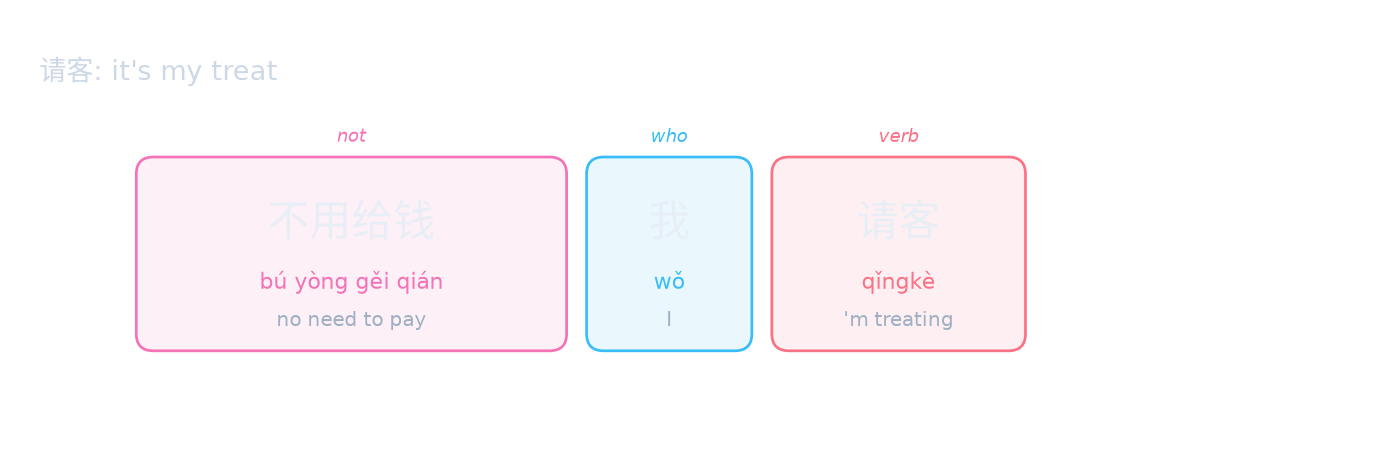
- 1. need not不用 – don't need to: need not不用给钱,I / me我to treat (someone to a meal)请客。
- 2. (degree marker)得 (děi) – must / have to: I / me我(degree marker)得to walk / to leave走(completed / change)了,today今天evening晚上(degree marker)得to write写to finish完thesis; paper论文。
13.2
1. 不用 (don't need to)
Form: need not不用 + verb (no need to) · need not不用(completed / change)了
- need not不用给钱,I / me我to treat (someone to a meal)请客。 Búyòng gěi qián, wǒ qǐngkè. – You don't need to pay; it's on me.
- you你need not不用early早to come来。 – You don't need to come early.
- A: to thank谢谢! B: You're welcome不用谢。 – "Thanks!" "No need to thank me."
- A: want / will / need要I / me我to help帮忙(yes/no ?)吗? B: need not不用(completed / change)了,to thank谢谢。 – "Shall I help?" "No need, thanks."
How it works. need not不用 búyòng + verb means "there's no need to". It is the usual negative of want / will / need要 or (degree marker)得 děi (must) when something is unnecessary.
| need not不用 + verb | don't别 + verb | cannot不能 + verb |
|---|---|---|
| no need to (kind, light) | don't (an order) | mustn't, not allowed |
| need not不用to go去(completed / change)了 | 别去! | here这里cannot不能to take a picture拍照 |
Watch out
- need not不用 + noun can mean "not use": need not不用chopsticks筷子. Check whether a verb or a noun follows.
Vocabulary
Train
| 汉字 | Pinyin | English |
|---|---|---|
| 请客 | qǐng kè | to treat (someone to a meal) |
13.3
2. 得 (děi) (must / have to)
Form: subject + (degree marker)得 (děi) + verb · need not不用 (don't have to)
- I / me我(degree marker)得to walk / to leave走(completed / change)了。 Wǒ děi zǒu le. – I have to go now.
- tomorrow明天to have / there is有exam; to take an exam考试,I / me我(degree marker)得to review复习。 Míngtiān yǒu kǎoshì, wǒ děi fùxí. – There's an exam tomorrow; I have to revise.
- 这件事得to ask问teacher老师。 – We'll have to ask the teacher about this.
- you你not不to be used for用来。 – You don't have to come.
How it works. Before a verb, (degree marker)得 is read děi and means "must, have to" in casual speech.
| (degree marker)得 děi | want / will / need要 | to have to必须 |
|---|---|---|
| casual "have to" | need to, will | stronger, formal |
| I / me我(degree marker)得to walk / to leave走(completed / change)了 | 我要to go去bank银行 | you你to have to必须to bring带identity card身份证 |
Watch out
- "Don't have to" is need not不用, never wrong: must not不得.
- After a verb, (degree marker)得 is the particle de: he / him他to run跑(degree marker)得很快.

13.4
Practice
Cover the teaching pages before you answer. The answers are at the end.
1. need not不用 (don't need to)
1. Reassure: “You don't need to come early.” you你…………early早to come来。
2. A sign says you mustn't take photos. Which fits? here这里____to take a picture拍照。
- A. need not不用
- B. useless没用
- C. to have to (be forced)不得不
- D. cannot不能
3. Build: “No need, thanks.”
Put in order: , / to thank谢谢。 / need not不用(completed / change)了
4. True or false? need not不用to go去(completed / change)了 sounds lighter than 别去. If false, correct it.
5. You take a friend to lunch, and she reaches for her wallet. Use need not不用. Write your answer in Chinese, then say it aloud.
2. (degree marker)得 (děi) (must / have to)
6. Complete (spoken): “I have to go now.” I / me我…………to walk / to leave走(completed / change)了。
7. Which says “You don't have to come”?
- A. you你not不to be used for用来。
- B. you你not不to have to必须to come来。
- C. you你must not不得to come来。
- D. you你(degree marker)得not不to come来。
8. Build: “There's an exam tomorrow; I have to revise.”
Put in order: tomorrow明天to have / there is有exam; to take an exam考试 / , / to review复习。 / I / me我(degree marker)得
9. True or false? In he / him他to run跑(degree marker)得很快, (degree marker)得 is read děi. If false, correct it.
10. It is 9 p.m. and you still have an essay due tomorrow morning. Use (degree marker)得. Write your answer in Chinese, then say it aloud.
13.5
Mixed practice
These questions mix the patterns and use new situations.
11. Translate: you你not不to be used for用来。
12. Say "I have to leave early; you don't need to come with me."
13. Find and fix the problem. A classmate translates you你not不to be used for用来 as "You must not come". Correct the translation.
14. Use it yourself. Say you have to leave early, and your friend doesn't need to come with you.
13.6
Answers and explanations
Mark your work, then correct each mistake in your own words.
1. need not不用 (don't need to)
1. need not不用
need not不用 + verb = no need to.
2. D. cannot不能
Prohibition is cannot不能; need not不用 means no need.
3. need not不用(completed / change)了,to thank谢谢。
A polite refusal.
4. True.
need not不用 says it is unnecessary; don't别 is an order.
5. Model answer: need not不用给钱,I / me我to treat (someone to a meal)请客。
Check your answer:
- need not不用 + Verb means "no need to"; "mustn't" is cannot不能 / not不can / may可以: here这里cannot不能to smoke抽烟 – "You cannot smoke here."
- need not不用 + noun can mean "don't use": need not不用chopsticks筷子 – "not use chopsticks". Check whether a verb or noun follows.
2. (degree marker)得 (děi) (must / have to)
6. (degree marker)得
(degree marker)得 (děi) + verb = must.
7. A. you你not不to be used for用来。
The negative of (degree marker)得 (must) is need not不用.
8. tomorrow明天to have / there is有exam; to take an exam考试,I / me我(degree marker)得to review复习。
Reason, then (degree marker)得 + verb.
9. False.
After a verb, (degree marker)得 is the particle de.
10. Model answer: I / me我(degree marker)得to walk / to leave走(completed / change)了,today今天evening晚上(degree marker)得to write写to finish完thesis; paper论文。
Check your answer:
- "Don't have to" is need not不用, never must not不得: you你not不to be used for用来, not you你must not不得to come来.
- Read it děi only before a verb meaning "must"; after a verb (跑得快) it is the particle de.
Mixed practice
11. You don't need to come. (It does not mean "you must not come": that is you你别来 or you你cannot不能to come来.)
12. I / me我(degree marker)得早点儿to walk / to leave走,you你need not不用with / and跟I / me我together一起to go去。
13. It means "You don't need to come." need not不用 removes a duty. To forbid, say you你别来 or you你cannot不能to come来.
14. Model answer. I / me我(degree marker)得早点儿to walk / to leave走,you你need not不用with / and跟I / me我together一起to go去。(degree marker)得 is read děi here.
Review later. Tomorrow, tell a partner two things you have to do ((degree marker)得) and one they don't need to do (need not不用).
Interactive lessons on this topic
Work through it step by step, with instant-check exercises.