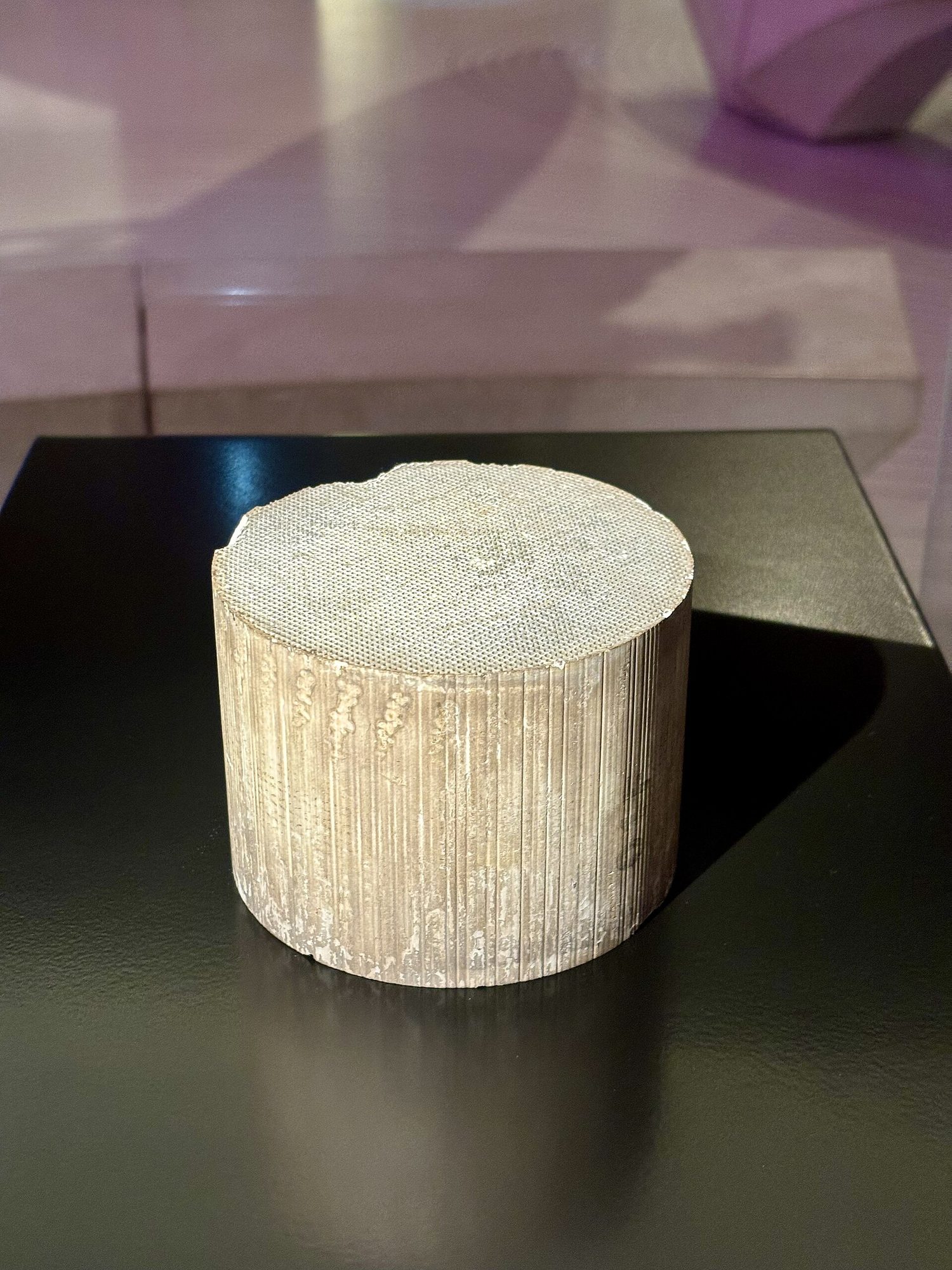
一杯の水やこの部屋の空気を眺めてみてください。どちらも清潔で単純に見えます。しかし、自然水には溶解した酸素、ミネラル、そして sometimes 下水などが含まれており…
English narration · English + 中文 subtitles burned in · 英語ナレーション・英語+中文字幕 burning-in
10.1
Water · 水
Syllabus · シラバス
English
Core
Supplement
1 Describe chemical tests for the presence of water using anhydrous cobalt(II) chloride and anhydrous copper(II) sulfate
2 Describe how to test for the purity of water using melting point and boiling point
3 Explain that distilled water is used in practical chemistry rather than tap water because it contains fewer chemical impurities
4 State that water from natural sources may contain substances, including: (a) dissolved oxygen (b) metal compounds (c) plastics (d) sewage (e) harmful microbes (f) nitrates from fertilisers (g) phosphates from fertilisers and detergents
5 State that some of these substances are beneficial, including: (a) dissolved oxygen for aquatic life (b) some metal compounds provide essential minerals for life
6 State that some of these substances are potentially harmful, including: (a) some metal compounds are toxic (b) some plastics harm aquatic life (c) sewage contains harmful microbes which cause disease (d) nitrates and phosphates lead to deoxygenation of water and damage to aquatic life Details of the eutrophication process are not required
7 Describe the treatment of the domestic water supply in terms of: (a) sedimentation and filtration to remove solids (b) use of carbon to remove tastes and odours (c) chlorination to kill microbes
Source: Cambridge International syllabus · 出典: Cambridge International シラバス
English
Testing for water
Two chemical tests show that water is present:
Anhydrous 无水 cobalt(II) chloride turns from blue to pink when water is added.
Anhydrous copper(II) sulfate turns from white to blue when water is added.
These tests only show that water is there. To show that water is pure, you test its melting point 熔点 and boiling point 沸点: pure water melts at exactly $0\,{}^{\circ}\text{C}$ and boils at exactly $100\,{}^{\circ}\text{C}$. Any dissolved substance changes these values.
This is why distilled water 蒸馏水 is used in chemistry instead of tap water — it has far fewer chemical impurities 杂质.
What is in natural water
Water from rivers, lakes and the sea is not pure. It may contain dissolved oxygen 氧气, metal compounds, plastics, sewage 污水, harmful microbes 微生物, and nitrates 硝酸盐 and phosphates 磷酸盐 (which come from fertilisers and detergents).
Some of these are helpful:
dissolved oxygen lets aquatic life 水生生物 (fish and plants) breathe;
some metal compounds give essential minerals 矿物质.
Others are harmful:
some metal compounds are toxic 有毒 (poisonous);
some plastics harm aquatic life;
sewage carries microbes that cause disease;
nitrates and phosphates cause deoxygenation 缺氧 (loss of oxygen) in the water, which harms aquatic life.
Treating drinking water
To make water safe to drink, the water supply is treated in steps:
sedimentation 沉降 and filtration 过滤 remove solid bits;
passing it through carbon 碳 removes bad tastes and smells;
1 State the composition of clean, dry air as approximately 78% nitrogen, $\text{N}_2$, 21% oxygen, $\text{O}_2$ and the remainder as a mixture of noble gases and carbon dioxide, $\text{CO}_2$
2 State the source of each of these air pollutants, limited to: (a) carbon dioxide from the complete combustion of carbon-containing fuels (b) carbon monoxide and particulates from the incomplete combustion of carbon-containing fuels (c) methane from the decomposition of vegetation and waste gases from digestion in animals (d) oxides of nitrogen from car engines (e) sulfur dioxide from the combustion of fossil fuels which contain sulfur compounds
3 State the adverse effect of these air pollutants, limited to: (a) carbon dioxide: higher levels of carbon dioxide leading to increased global warming, which leads to climate change (b) carbon monoxide: toxic gas (c) particulates: increased risk of respiratory problems and cancer (d) methane: higher levels of methane leading to increased global warming, which leads to climate change (e) oxides of nitrogen: acid rain, photochemical smog and respiratory problems (f) sulfur dioxide: acid rain
7 Describe how the greenhouse gases carbon dioxide and methane cause global warming, limited to: (a) the absorption, reflection and emission of thermal energy (b) reducing thermal energy loss to space
4 State and explain strategies to reduce the effects of these environmental issues, limited to: (a) climate change: planting trees, reduction in livestock farming, decreasing use of fossil fuels, increasing use of hydrogen and renewable energy, e.g. wind, solar (b) acid rain: use of catalytic converters in vehicles, reducing emissions of sulfur dioxide by using low-sulfur fuels and flue gas desulfurisation with calcium oxide
8 Explain how oxides of nitrogen form in car engines and describe their removal by catalytic converters, e.g. $2\text{CO} + 2\text{NO} \rightarrow 2\text{CO}_2 + \text{N}_2$
5 Describe photosynthesis as the reaction between carbon dioxide and water to produce glucose and oxygen in the presence of chlorophyll and using energy from light
6 State the word equation for photosynthesis, carbon dioxide + water $\rightarrow$ glucose + oxygen
9 State the symbol equation for photosynthesis, $6\text{CO}_2 + 6\text{H}_2\text{O} \rightarrow \text{C}_6\text{H}_{12}\text{O}_6 + 6\text{O}_2$
Source: Cambridge International syllabus · 出典: Cambridge International シラバス
English
Clean, dry air is approximately:
78% nitrogen ($\text{N}_2$)
21% oxygen ($\text{O}_2$)
the rest is a mixture of noble gases 稀有气体 and carbon dioxide ($\text{CO}_2$).
Air pollutants and their sources
Pollutant
Main source
carbon dioxide ($\text{CO}_2$)
complete combustion 完全燃烧 of carbon-containing fuels
carbon monoxide 一氧化碳 and particulates 颗粒物
incomplete combustion 不完全燃烧 of carbon-containing fuels
methane 甲烷
rotting plants and waste gases from animal digestion
oxides of nitrogen 氮氧化物
car engines
sulfur dioxide
burning fossil fuels 化石燃料 that contain sulfur 硫
Effects of these pollutants
Carbon dioxide 二氧化碳 and methane are greenhouse gases 温室气体: more of them causes global warming 全球变暖, which leads to climate change 气候变化.
Carbon monoxide is a toxic gas.
Particulates increase the risk of respiratory 呼吸 (breathing) problems and cancer 癌症.
Oxides of nitrogen cause acid rain 酸雨, photochemical smog 光化学烟雾 and breathing problems.
Sulfur dioxide causes acid rain.
Worked example. A power station burns coal containing sulfur, and a lake downwind slowly turns acidic. Name the pollutant, explain the link, and give one way to stop it. Burning a fossil fuel that contains sulfur releases sulfur dioxide, which causes acid rain, so the rain falling on the lake is acidic. To stop it at the source, use flue gas desulfurisation, where calcium oxide removes the sulfur dioxide from the waste gases before they leave the chimney, or switch to a low-sulfur fuel. Match the fix to the pollutant: a catalytic converter treats a car's oxides of nitrogen and would do nothing about a coal-fired power station's sulfur dioxide.
Reducing these problems
To slow climate change: plant trees, farm fewer animals, burn fewer fossil fuels, and use more hydrogen and renewable energy 可再生能源 such as wind and solar power.
To reduce acid rain: fit catalytic converters 催化转化器 in cars, use low-sulfur fuels, and use flue gas desulfurisation 烟气脱硫 with calcium oxide 氧化钙 to remove sulfur dioxide from waste gases.
How greenhouse gases warm the Earth
Greenhouse gases such as carbon dioxide and methane let sunlight through, but they absorb the thermal energy 热能 given off by the warm Earth, and send some of it back down. This reduces the thermal energy lost to space, so the Earth gets warmer.
In a car engine, the high temperature makes nitrogen and oxygen from the air react to form oxides of nitrogen. A catalytic converter removes them, for example:
Photosynthesis 光合作用 is the opposite of combustion — it removes carbon dioxide from the air. Plants use light energy and chlorophyll 叶绿素 to turn carbon dioxide and water into glucose 葡萄糖 and oxygen:
** worked example.** 硫黄を含む石炭を燃やす発電所があり、下風側の湖がゆっくりと酸性化している。汚染物質の名前を答え、その因果関係を説明し、対策を一つ挙げよ。硫黄を含む化石燃料を燃やすと二酸化硫黄が放出され、酸雨の原因となるため、湖に降る雨は酸性になる。発生源で防ぐには、煙突から排出される前に排ガス中の二酸化硫黄を除去する**排ガス脱硫(フリューガス脱硫)**を使用するか、低硫黄燃料に切り替える。対策と汚染物質を結びつけよ: 触媒コンバーターは自動車の窒素酸化物を処理するため、石炭火力発電所の二酸化硫黄には全く効果がない。
Two tests show water is present (cobalt(II) chloride blue → pink; copper(II) sulfate white → blue), but only fixed melting and boiling points (0 °C and 100 °C) show it is pure.
Clean, dry air is about 78% nitrogen, 21% oxygen and 1% other gases (mostly noble gases and carbon dioxide).
Match each pollutant to its source and effect: carbon monoxide (incomplete combustion; toxic); sulfur dioxide and oxides of nitrogen (acid rain); carbon dioxide and methane (greenhouse gases → global warming).
Greenhouse gases let sunlight through but absorb the heat the warm Earth gives off and send some back down, so the Earth warms up.
日本語
2つの試験で水が存在することを確認できます(コバルト(II)塩化物:青→ピンク;硫酸銅(II):白→青)、ただし純度を示すのは固定された融点・沸点のみ(0 °C および 100 °C)です。
Type to search notes, lessons, code, vocabulary and past-paper questions across every subject. · すべての科目でノートImplemented、Implemented、コード、語彙、過去問問題を検索するために入力してください。