Air composition and pollutants
Introduced| English | Meaning |
|---|---|
| argon/ˈɑːɡɒn/ | argon |
| carbon monoxide/ˈkɑːbən mʌˈnɒksaɪd/ | A compound of carbon and oxygen with formula CO, formed for example during incomplete combustion. |
| sulfur dioxide/ˈsʌlfɜː daɪˈɒksaɪd/ | A compound of sulfur and oxygen with formula SO2, formed in processes such as burning sulfur-containing fuels. |
| acid rain/ˈæsɪd reɪn/ | Precipitation made unusually acidic mainly by atmospheric reactions involving sulfur dioxide and nitrogen oxides. |
| particulates/pəˈtɪkjʊleɪts/ | Small solid particles or liquid droplets suspended in air or another fluid. |
| fossil fuels/ˈfɒsl ˈfjuːəlz/ | Coal, oil and natural gas formed from ancient organic matter over millions of years. |
What's in the air?
- The air we breathe is a mixture of gases — and human activity adds harmful pollutants to it.
- Knowing the composition helps us understand the pollutants.
Air pollutant lab
Classify air gases by source and environmental effect.
Approximately what percentage of clean air is nitrogen?
Difficulty 2/5 · 140 coins + a small bonus on first completion today
Air is about 78% nitrogen.
Approximately what percentage of clean air is oxygen?
Difficulty 2/5 · 140 coins + a small bonus on first completion today
Air is about 21% oxygen.
Composition of clean air
- Air is about 78% nitrogen and 21% oxygen.
- The remaining ~1% includes argon 氩, carbon dioxide and water vapour.
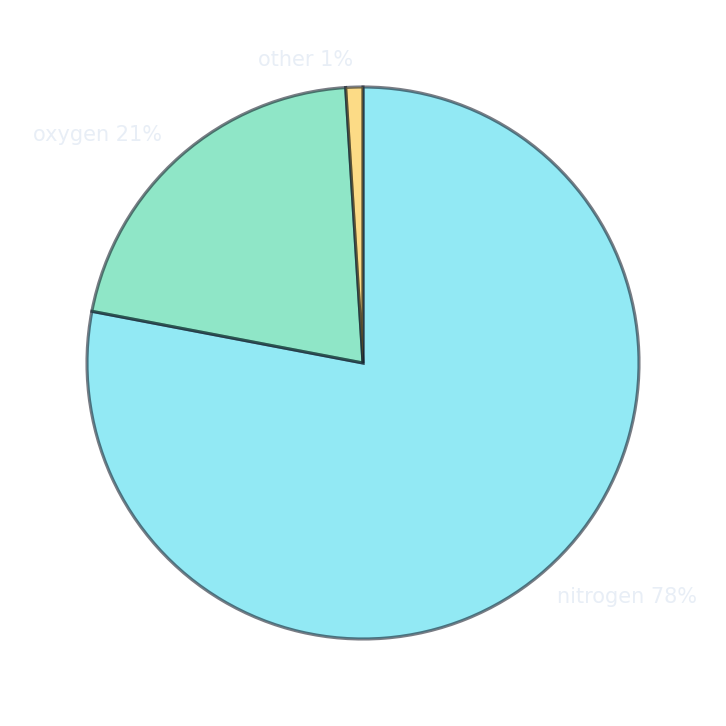
Clean dry air is roughly 78% nitrogen, 21% oxygen and 1% other gases.
Carbon monoxide (CO) is produced by:
Difficulty 1/5 · 100 coins + a small bonus on first completion today
CO forms when fuels burn with too little oxygen.
Which pollutant gas is a major cause of acid rain?
Difficulty 1/5 · 100 coins + a small bonus on first completion today
SO₂ (and nitrogen oxides) cause acid rain.
Common pollutants
- Carbon monoxide 一氧化碳 (CO): a toxic gas from incomplete combustion.
- Sulfur dioxide 二氧化硫 (SO₂) and nitrogen oxides: cause acid rain 酸雨.
- Particulates 颗粒物 (soot): harm the lungs.
Carbon monoxide is dangerous because it stops the blood carrying ______.
Difficulty 1/5 · 100 coins + a small bonus on first completion today
It binds to haemoglobin in place of oxygen.
Where pollutants come from
- Burning fossil fuels 化石燃料 in cars and power stations is the main source.
- Incomplete combustion (too little oxygen) produces carbon monoxide and soot.
Carbon monoxide is dangerous because it has no smell. It binds to haemoglobin in the blood, stopping it carrying oxygen. Because you can't detect it, faulty heaters can be deadly.
You've got it
- clean air ≈ 78% nitrogen, 21% oxygen, 1% other (argon, CO₂, water vapour)
- pollutants: CO (toxic), SO₂ and nitrogen oxides (acid rain), particulates
- most pollution comes from burning fossil fuels