5.1 Contextualizing Period 5
Learning Objective Unit 5.A: Explain the context in which sectional conflict emerged from 1844 to 1877.
- KC-5.1 The United States became more connected with the world, pursued an expansionist foreign policy in the Western Hemisphere, and emerged as the destination for many migrants from other countries.
- KC-5.1.I Popular enthusiasm for U.S. expansion, bolstered by economic and security interests, resulted in the acquisition of new territories, substantial migration westward, and new overseas initiatives.
- KC-5.1.II In the 1840s and 1850s, Americans continued to debate questions about rights and citizenship for various groups of U.S. inhabitants.
- KC-5.2 Intensified by expansion and deepening regional divisions, debates over slavery and other economic, cultural, and political issues led the nation into civil war.
- KC-5.2.I Ideological and economic differences over slavery produced an array of diverging responses from Americans in the North and the South.
- KC-5.2.II Debates over slavery came to dominate political discussion in the 1850s, culminating in the bitter election of 1860 and the secession of Southern states.
- KC-5.3 The Union victory in the Civil War and the contested reconstruction of the South settled the issues of slavery and secession, but left unresolved many questions about the power of the federal government and citizenship rights.
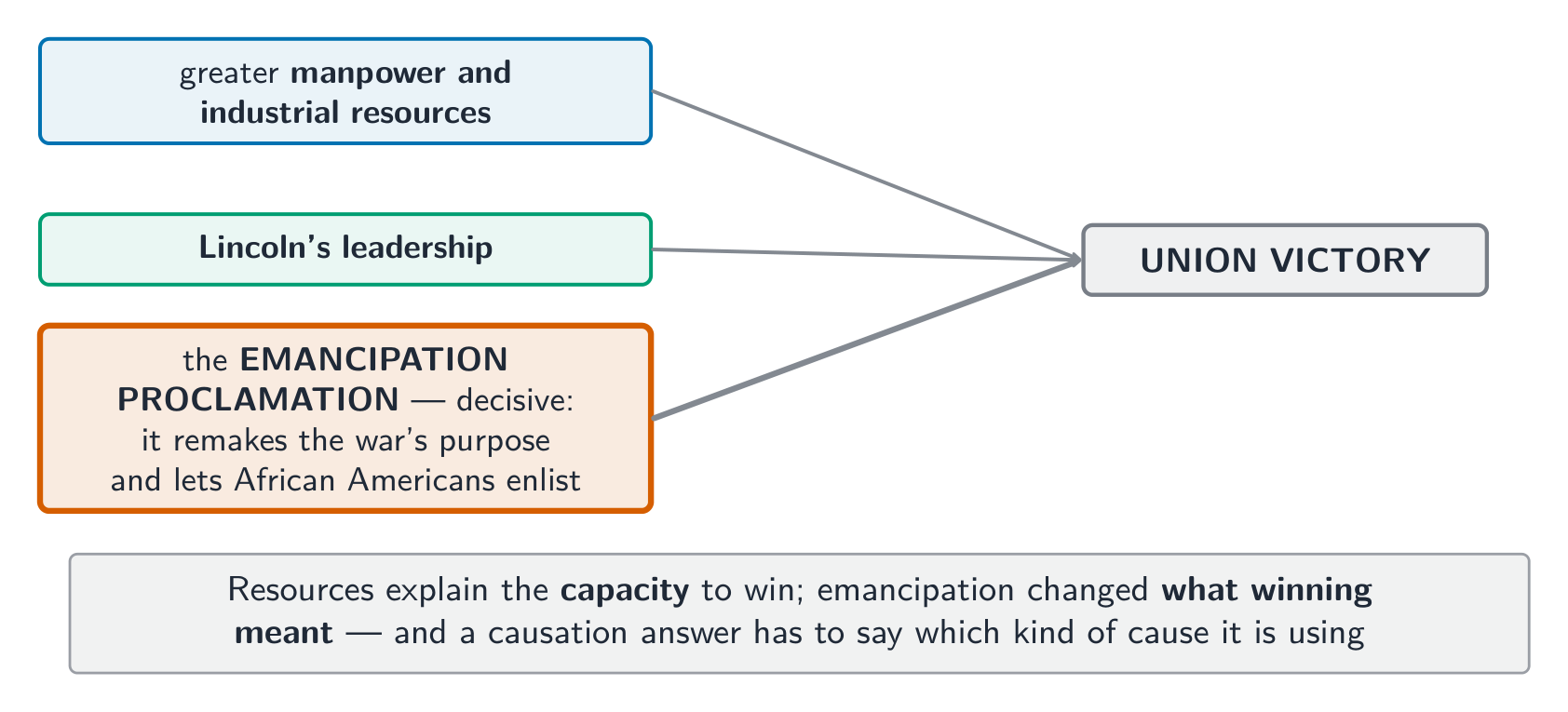
- KC-5.3.I The North’s greater manpower and industrial resources, the leadership of Abraham Lincoln and others, and the decision to emancipate enslaved people eventually led to the Union military victory over the Confederacy in the devastating Civil War.
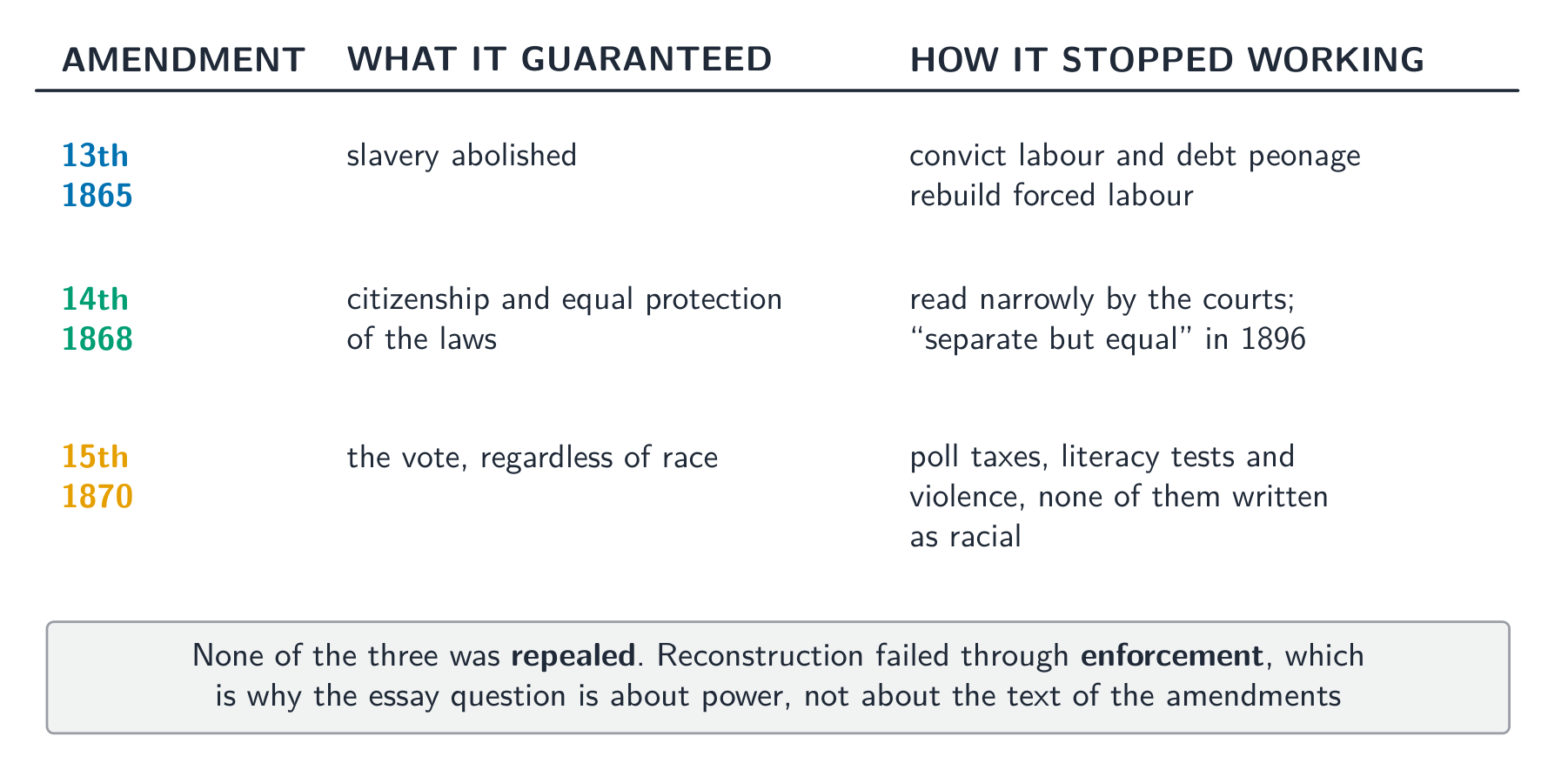
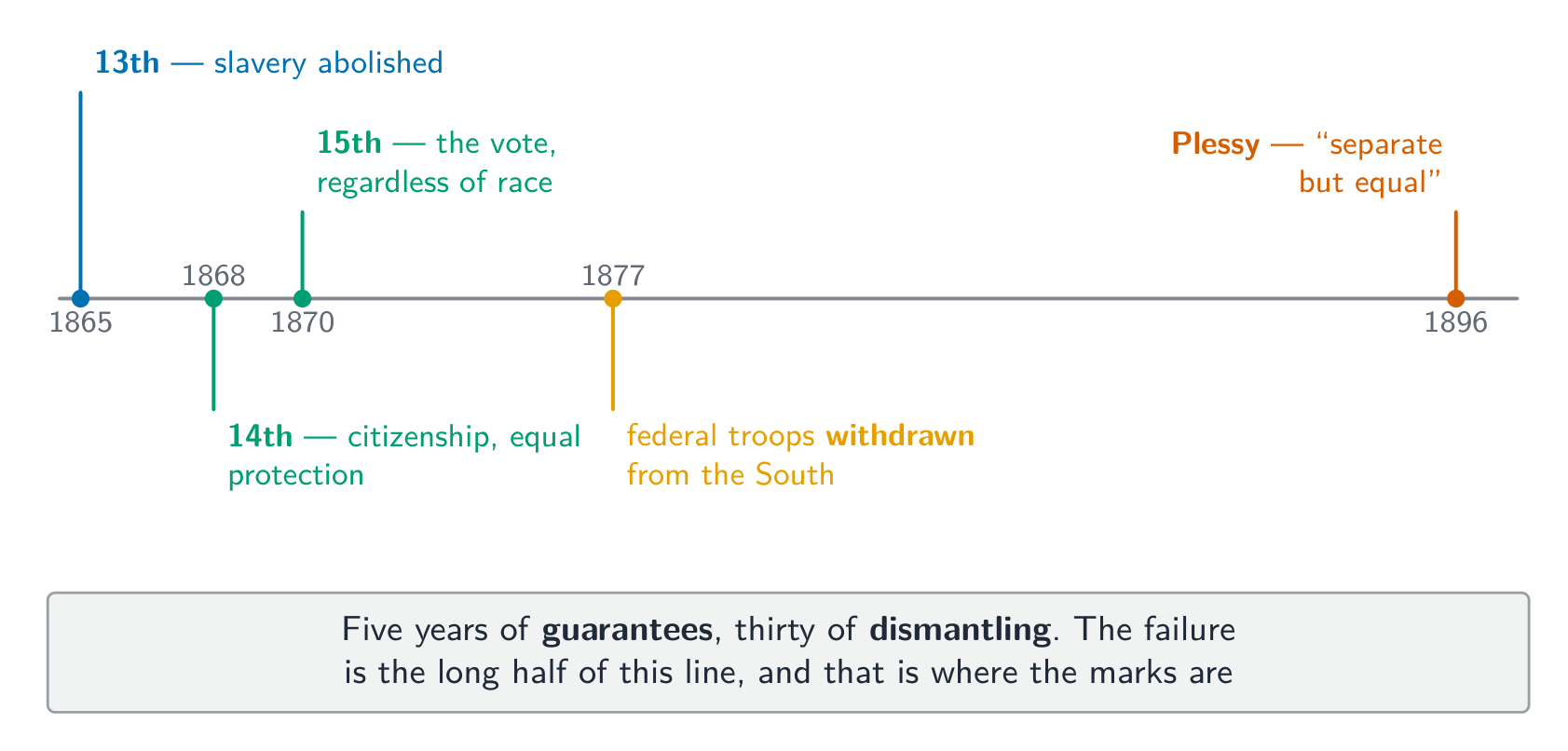
- KC-5.3.II.i Reconstruction and the Civil War ended slavery, altered relationships between the states and the federal government, and led to debates over new definitions of citizenship, particularly regarding the rights of African Americans, women, and other minorities.
5.1 第5期の文脈付け
学習目標 Unit 5.A: 1844年から1877年にかけて地域間対立が生じた背景を説明せよ。
- KC-5.1 アメリカ合衆国は世界との連結を深め、西半球での拡大志向の外交政策を追求し、他国からの多くの移民の目的地となりました。
- KC-5.1.I 経済的・安全保障上の利益によって後押しされたアメリカの拡大に対する人々の熱意は、新たな領土の取得、大規模な西部への移住、および新たな海外事業の推進につながりました。
- KC-5.1.II 1840年代から1850年代にかけて、アメリカ人は米国居住者の various groups に対する権利と市民権に関する議論を続けました。
- KC-5.2 拡大と深化する地域間の分裂によって激化し、奴隷制及其他 economic, cultural, and political issues に関する議論は、国家を内戦に導きました。
- KC-5.2.I 奴隷制をめぐる思想的・経済的な違いは、北部および南部のアメリカ人による多様な反応を生み出しました。
- KC-5.2.II 奴隷制をめぐる議論は1850年代に政治討論の中心となり、1860年の激しい選挙と南部諸州の脱連邦に結末しました。
- KC-5.3 南北戦争における連邦軍の勝利と南部の contested reconstruction は、奴隷制および脱連邦の問題を解決しましたが、連邦政府の権力および市民権に関する许多 questions remained unresolved.
- KC-5.3.I 北部のより多くの人力と産業資源、アブラハム・リンカーンらによる指導力、そして奴隷解放の決定は、最終的に悲惨な内戦において北部同盟軍が南部連合国を破る勝利をもたらした。
- KC-5.3.II.i 再建期と内戦は奴隷制を廃止し、州と連邦政府の関係を変え、特にアフリカ系アメリカ人、女性、その他の少数派の権利に関する市民権の新しい定義をめぐる議論を引き起こした。
5.2 Manifest Destiny
Thematic Focus (GEO): Geography and the Environment — Geographic and environmental factors, including competition over and debates about natural resources, shape the development of America and foster regional diversity. The development of America impacts the environment and reshapes geography, which leads to debates about environmental and geographic issues.
Learning Objective Unit 5.B: Explain the causes and effects of westward expansion from 1844 to 1877.
- KC-5.1.I.A The desire for access to natural and mineral resources and the hope of many settlers for economic opportunities or religious refuge led to an increased migration to and settlement in the West.
- KC-5.1.I.B Advocates of annexing western lands argued that Manifest Destiny and the superiority of American institutions compelled the United States to expand its borders westward to the Pacific Ocean; however, this frequently provoked competition and violent conflict.
- KC-5.1.I.D Westward migration was boosted during and after the Civil War by the passage of new legislation promoting western transportation and economic development.
- KC-5.1.I.E U.S. interest in expanding trade led to economic, diplomatic, and cultural initiatives to create more ties with Asia.
5.2 天賦満洲主義
テーマ焦点 (GEO): 地理学と環境 — 自然資源をめぐる競争や議論を含む地理学的・環境的要因は、アメリカの発展を形作り、地域的多様性を育む。アメリカの発展は環境に影響を与え、地理を再構成し、環境・地理的問題についての議論につながる。
学習目標 Unit 5.B: 1844年から1877年までの西側への拡張の原因と結果を説明せよ。
- KC-5.1.I.A 天然資源および鉱物資源へのアクセスへの渇望と、多くの入植者が経済的機会や宗教的避難所を期待していたことが、西部への移住および定着の増加につながった。
- KC-5.1.I.B 西部領土併合を支持する者たちは、天賦満洲主義およびアメリカの制度の優位性が米国に太平洋まで国境を西へ拡張することを強制したと主張したが、これは頻繁に競争と暴力的な紛争を引き起こした。
- KC-5.1.I.D 内戦中およびその後に、西部の交通および経済発展を促進する新たな立法が通過されることで、西部への移住が促進された。
- KC-5.1.I.E 貿易拡大への米国の関心は、アジアとのつながりを強化するための経済的、外交的、文化的な initiative につながった。
5.3 The Mexican–American War
Thematic Focus (WOR): America in the World — Diplomatic, economic, cultural, and military interactions between empires, nations, and peoples shape the development of America and America’s increasingly important role in the world.
Learning Objective Unit 5.C: Explain the causes and effects of the Mexican– American War.
- KC-5.1.I.C The United States added large territories in the West through victory in the Mexican– American War and diplomatic negotiations, raising questions about the status of slavery, American Indians, and Mexicans in the newly acquired lands.
- KC-5.1.II.C U.S. government interaction and conflict with Mexican Americans and American Indians increased in regions newly taken from American Indians and Mexico, altering these groups’ economic self-sufficiency and cultures.
5.3 メキシコ・アメリカ戦争
テーマ焦点 (WOR): 世界の中のアメリカ — 帝国、国、民族間の外交、経済、文化的、軍事的相互作用は、アメリカの発展を形作り、アメリカの世界におけるより重要な役割を形成する。
学習目標 Unit 5.C: メキシコ・アメリカ戦争の原因と結果を説明せよ。
- KC-5.1.I.C 米国はメキシコ・アメリカ戦争での勝利と外交交渉を通じて西部に広大な領土を追加したが、 newly acquired lands における奴隷制、インディアン、メキシコ人の地位について疑問が生じた。
- KC-5.1.II.C 米国政府のメキシコ系アメリカ人およびインディアンとの相互作用および紛争は、インディアンおよびメキシコから占領された newly taken regions で増加し、これらのグループの経済的自立と文化を変化させた。