Source: College Board AP Course and Exam Description · 出典: College Board AP コースおよび試験説明書
English
A renewable resource 可再生资源 replenishes on a human timescale (sun, wind, water, biomass); a nonrenewable resource 不可再生资源 exists in fixed amounts that take millions of years to form (fossil fuels, nuclear fuel). Nonrenewables will eventually run out and often pollute more.
Source: College Board AP Course and Exam Description · 出典: College Board AP コースおよび試験説明書
English
Global energy use is rising, especially in developing nations. Most energy still comes from fossil fuels 化石燃料. Wealthy nations consume the most per person; access to energy shapes economic development.
Trace energy from source to use · エネルギー源から使用先までの流れを追跡する
A Sankey diagram shows how energy flows from sources to useful work — and how much is lost. Most primary energy is wasted as heat before it does anything useful. · サンキー図は、エネルギーが源から有用な仕事へどのように流れ、どれほど損失するかを示します。多くの一次エネルギーは、有効に利用される前に熱として失われます。
6.3
Fuel Types and Uses · 燃料の種類と用途
Syllabus · シラバス
English
Enduring Understanding (ENG-3): Humans use energy from a variety of sources, resulting in positive and negative consequences.
Learning Objective ENG-3.C: Identify types of fuels and their uses.
ENG-3.C.1 Wood is commonly used as fuel in the forms of firewood and charcoal. It is often used in developing countries because it is easily accessible.
ENG-3.C.2 Peat is partially decomposed organic material that can be burned for fuel.
ENG-3.C.3 Three types of coal used for fuel are lignite, bituminous, and anthracite. Heat, pressure, and depth of burial contribute to the development of various coal types and their qualities.
ENG-3.C.4 Natural gas, the cleanest of the fossil fuels, is mostly methane.
ENG-3.C.5 Crude oil can be recovered from tar sands, which are a combination of clay, sand, water, and bitumen.
ENG-3.C.6 Fossil fuels can be made into specific fuel types for specialized uses (e.g., in motor vehicles).
ENG-3.C.7 Cogeneration occurs when a fuel source is used to generate both useful heat and electricity.
Source: College Board AP Course and Exam Description · 出典: College Board AP コースおよび試験説明書
English
Different fuels suit different needs: coal and natural gas for electricity, oil for transportation, and biomass for heating and cooking in many regions. Each has trade-offs in cost, availability, and pollution.
Distribution of Natural Energy Resources · 自然エネルギー資源の分布
Syllabus · シラバス
English
Enduring Understanding (ENG-3): Humans use energy from a variety of sources, resulting in positive and negative consequences.
Learning Objective ENG-3.D: Identify where natural energy resources occur.
ENG-3.D.1 The global distribution of natural energy resources, such as ores, coal, crude oil, and gas, is not uniform and depends on regions' geologic history.
Source: College Board AP Course and Exam Description · 出典: College Board AP コースおよび試験説明書
English
Energy resources are unevenly distributed – oil is concentrated in some regions, coal in others, and renewables depend on local sun, wind, or rivers. This uneven distribution drives trade, economics, and geopolitics.
Enduring Understanding (ENG-3): Humans use energy from a variety of sources, resulting in positive and negative consequences.
Learning Objective ENG-3.E: Describe the use and methods of fossil fuels in power generation.
ENG-3.E.1 The combustion of fossil fuels is a chemical reaction between the fuel and oxygen that yields carbon dioxide and water and releases energy.
ENG-3.E.2 Energy from fossil fuels is produced by burning those fuels to generate heat, which then turns water into steam. That steam turns a turbine, which spins a generator, producing electricity.
ENG-3.E.3 Humans use a variety of methods to extract fossil fuels from the earth for energy generation.
Learning Objective ENG-3.F: Describe the effects of fossil fuels on the environment.
ENG-3.F.1 Hydrologic fracturing (fracking) can cause groundwater contamination and the release of volatile organic compounds.
Source: College Board AP Course and Exam Description · 出典: College Board AP コースおよび試験説明書
English
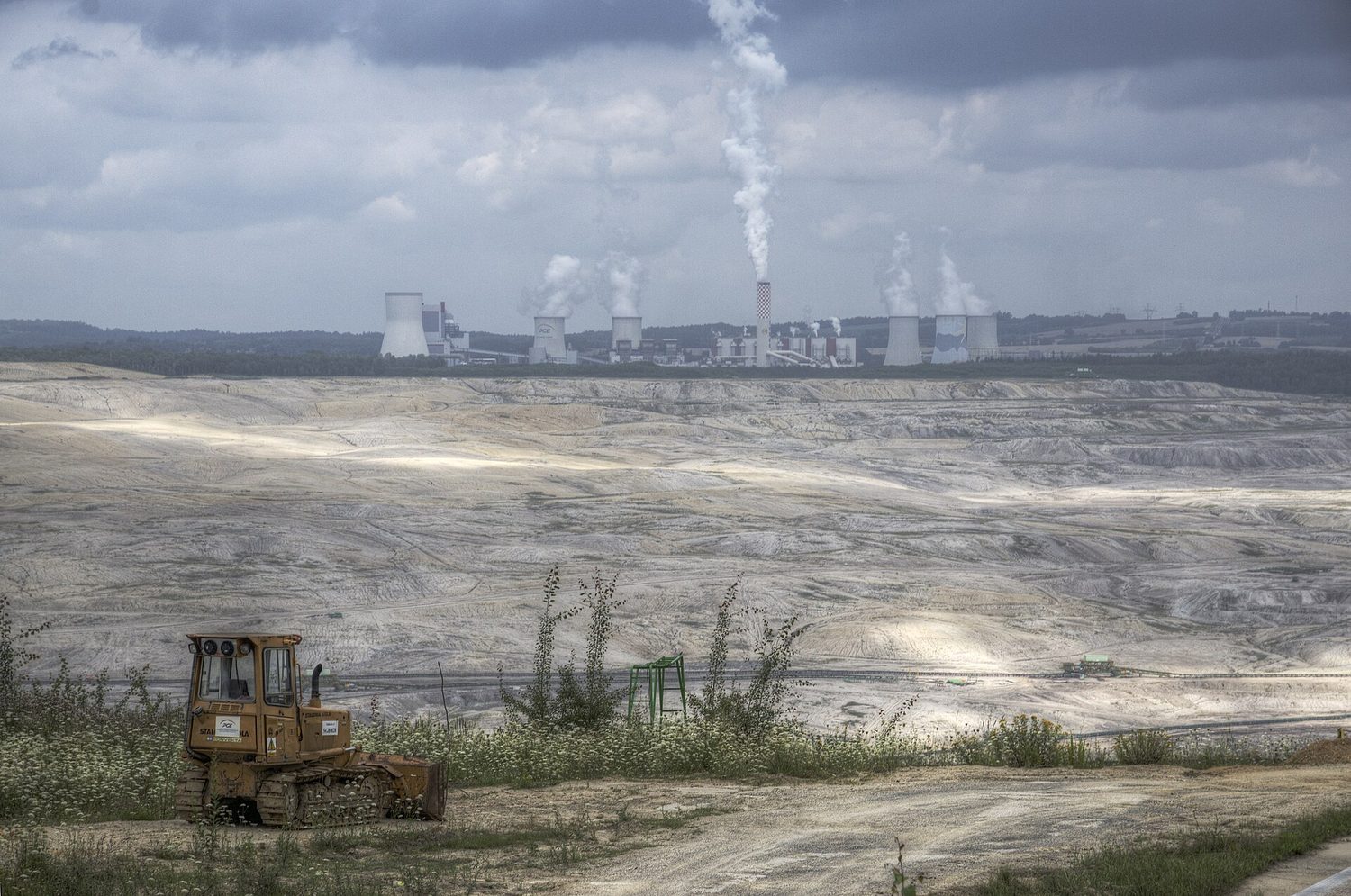
Fossil fuels (coal, oil, natural gas) formed from ancient organisms. They are energy-dense and reliable but nonrenewable and the main source of $\text{CO}_2$ and air pollution. Coal is the dirtiest; natural gas burns cleaner but leaks methane 甲烷.
Coal forms in stages, and its rank climbs with the heat, pressure, and depth of burial it has endured. Partly decomposed plant matter first becomes peat 泥炭 (which can itself be dried and burned), then soft brown lignite, then bituminous 烟煤 coal, and finally hard anthracite 无烟煤 – each step is drier, more carbon-rich, and higher in energy, so anthracite burns hottest and cleanest.
Oil and natural gas are increasingly reached by hydraulic fracturing 水力压裂 ("fracking"): a high-pressure fluid is pumped into shale rock to crack it open and release the trapped fuel. It has unlocked huge reserves, but it can contaminate groundwater (methane and chemicals reaching drinking-water wells), release volatile organic compounds 挥发性有机化合物 into the air, and trigger minor earthquakes.
Crude oil can also be recovered from tar sands 油砂 – a mix of clay, sand, water, and thick bitumen 沥青. Separating the oil is energy- and water-intensive and clears large areas of land, so its environmental cost per barrel of oil is high.
Enduring Understanding (ENG-3): Humans use energy from a variety of sources, resulting in positive and negative consequences.
Learning Objective ENG-3.G: Describe the use of nuclear energy in power generation.
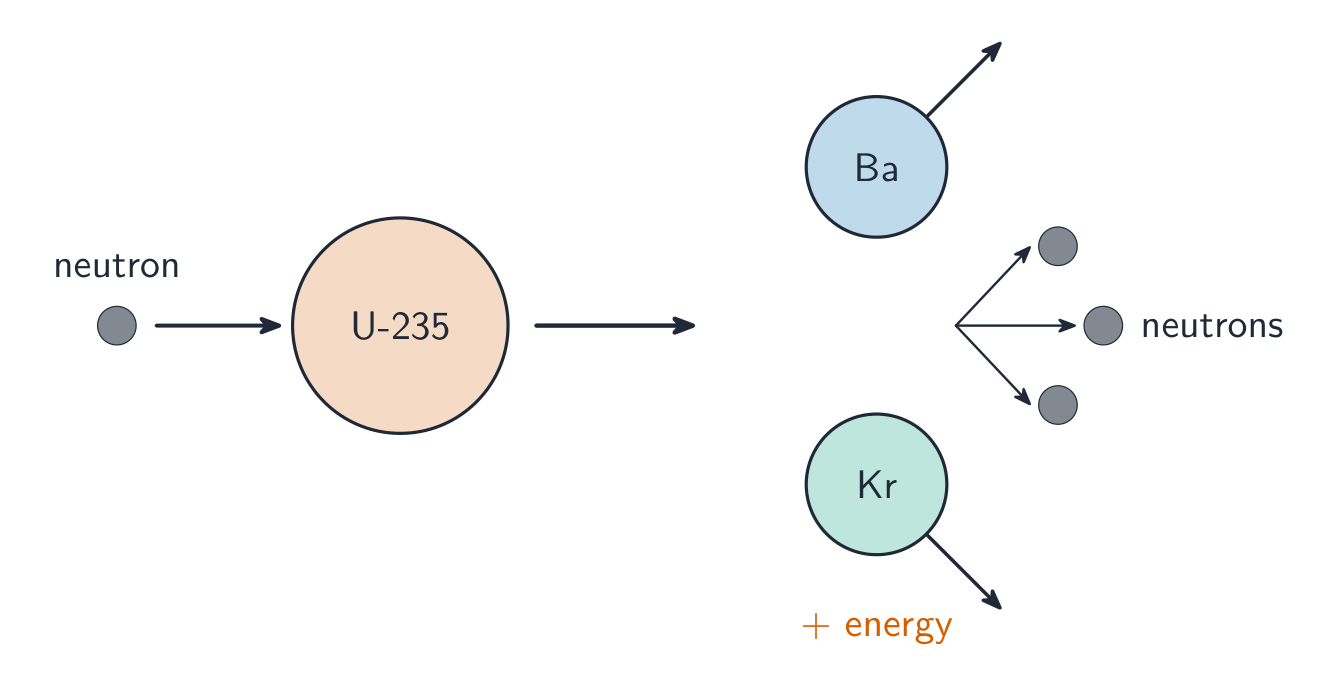
ENG-3.G.1 Nuclear power is generated through fission, where atoms of Uranium-235, which are stored in fuel rods, are split into smaller parts after being struck by a neutron. Nuclear fission releases a large amount of heat, which is used to generate steam, which powers a turbine and generates electricity.
ENG-3.G.2 Radioactivity occurs when the nucleus of a radioactive isotope loses energy by emitting radiation.
ENG-3.G.3 Uranium-235 remains radioactive for a long time, which leads to the problems associated with the disposal of nuclear waste.
ENG-3.G.4 Nuclear power generation is a nonrenewable energy source. Nuclear power is considered a cleaner energy source because it does not produce air pollutants, but it does release thermal pollution and hazardous solid waste.
Learning Objective ENG-3.H: Describe the effects of the use of nuclear energy on the environment.
ENG-3.H.1 Three Mile Island, Chernobyl, and Fukushima are three cases where accidents or natural disasters led to the release of radiation. These releases have had short- and long-term impacts on the environment.
ENG-3.H.2 A radioactive element's half-life can be used to calculate a variety of things, including the rate of decay and the radioactivity level at specific points in time.
Source: College Board AP Course and Exam Description · 出典: College Board AP コースおよび試験説明書
English
Nuclear power 核能 splits uranium (fission 裂变) to boil water and drive turbines. It produces no $\text{CO}_2$ and lots of energy from little fuel, but risks include radioactive waste 核废料 (long-lived), the danger of meltdowns, and high cost.
Worked example. Radioactive waste decays by its half-life – the time for half of it to decay. Suppose an isotope has a half-life of $30$ years and a reactor leaves $100\ \text{g}$ of it. After $30$ years $50\ \text{g}$ remains; after $60$ years $25\ \text{g}$; after $90$ years (three half-lives) $100\times\left(\tfrac12\right)^3=12.5\ \text{g}$. Because the drop is halving, not linear, the waste stays hazardous for many half-lives – the core reason it must be stored safely for centuries.
energy return on energy investment (EROEI)/ˈenədʒi rɪˈtɜːn ɒn ˈenədʒi ɪnˈvestmənt/
エネルギー投資対リターン(EROEI)
6.7
Energy from Biomass · バイオマスからのエネルギー
Syllabus · シラバス
English
Enduring Understanding (ENG-3): Humans use energy from a variety of sources, resulting in positive and negative consequences.
Learning Objective ENG-3.I: Describe the effects of the use of biomass in power generation on the environment.
ENG-3.I.1 Burning of biomass produces heat for energy at a relatively low cost, but it also produces carbon dioxide, carbon monoxide, nitrogen oxides, particulates, and volatile organic compounds. The overharvesting of trees for fuel also causes deforestation.
ENG-3.I.2 Ethanol can be used as a substitute for gasoline. Burning ethanol does not introduce additional carbon into the atmosphere via combustion, but the energy return on energy investment for ethanol is low.
Source: College Board AP Course and Exam Description · 出典: College Board AP コースおよび試験説明書
English
Biomass 生物质 (wood, crops, waste, biofuels like ethanol) is renewable and can be carbon-neutral if replanted, but burning it causes air pollution, and growing fuel crops competes with food and habitat.
Ethanol 乙醇, made from crops such as corn or sugarcane, can substitute for gasoline and adds no new carbon when burned (the plant absorbed that $\text{CO}_2$ as it grew). Its drawback is a low energy return on energy investment (EROEI) 能量投资回报率: growing, harvesting, and distilling the crop uses nearly as much energy as the fuel finally delivers.
Enduring Understanding (ENG-3): Humans use energy from a variety of sources, resulting in positive and negative consequences.
Learning Objective ENG-3.J: Describe the use of solar energy in power generation.
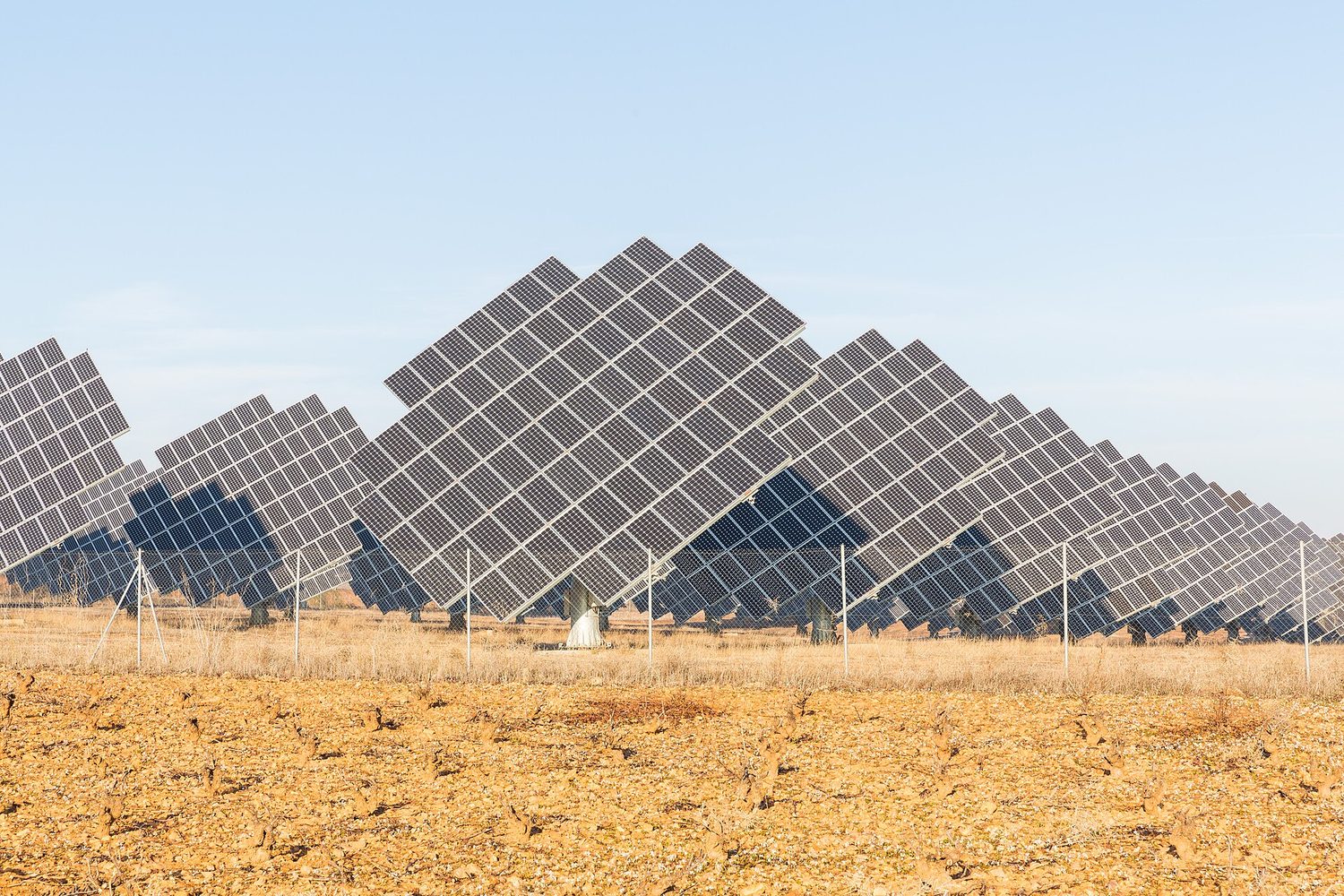
ENG-3.J.1 Photovoltaic solar cells capture light energy from the sun and transform it directly into electrical energy. Their use is limited by the availability of sunlight.
ENG-3.J.2 Active solar energy systems use solar energy to heat a liquid through mechanical and electric equipment to collect and store the energy captured from the sun.
ENG-3.J.3 Passive solar energy systems absorb heat directly from the sun without the use of mechanical and electric equipment, and energy cannot be collected or stored.
Learning Objective ENG-3.K: Describe the effects of the use of solar energy in power generation on the environment.
ENG-3.K.1 Solar energy systems have low environmental impact and produce clean energy, but they can be expensive. Large solar energy farms may negatively impact desert ecosystems.
Source: College Board AP Course and Exam Description · 出典: College Board AP コースおよび試験説明書
English
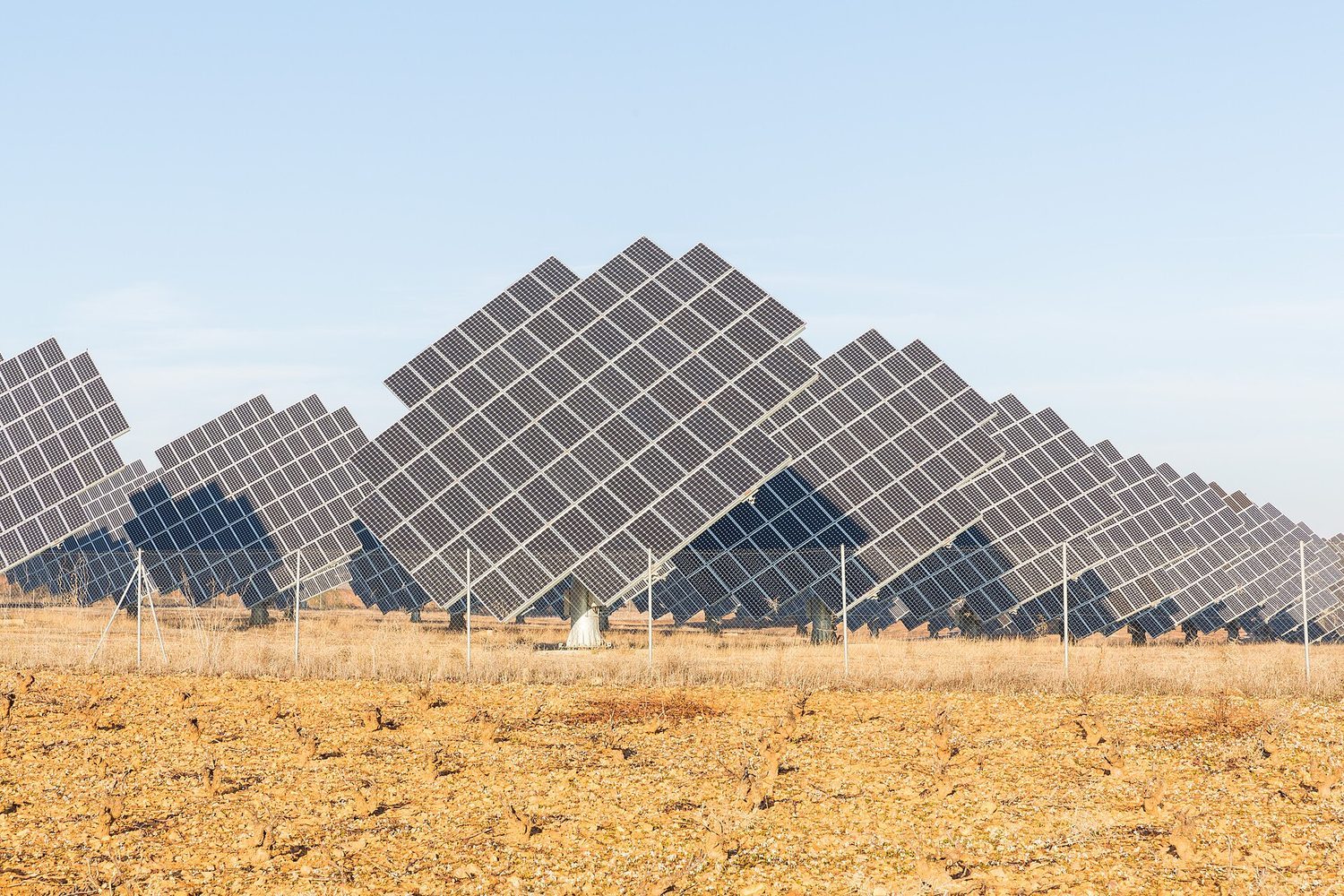
Solar 太阳能 converts sunlight to electricity (photovoltaic panels) or heat. It is renewable and clean during use, but intermittent (no sun at night), needs space, and has manufacturing impacts.
Enduring Understanding (ENG-3): Humans use energy from a variety of sources, resulting in positive and negative consequences.
Learning Objective ENG-3.L: Describe the use of hydroelectricity in power generation.
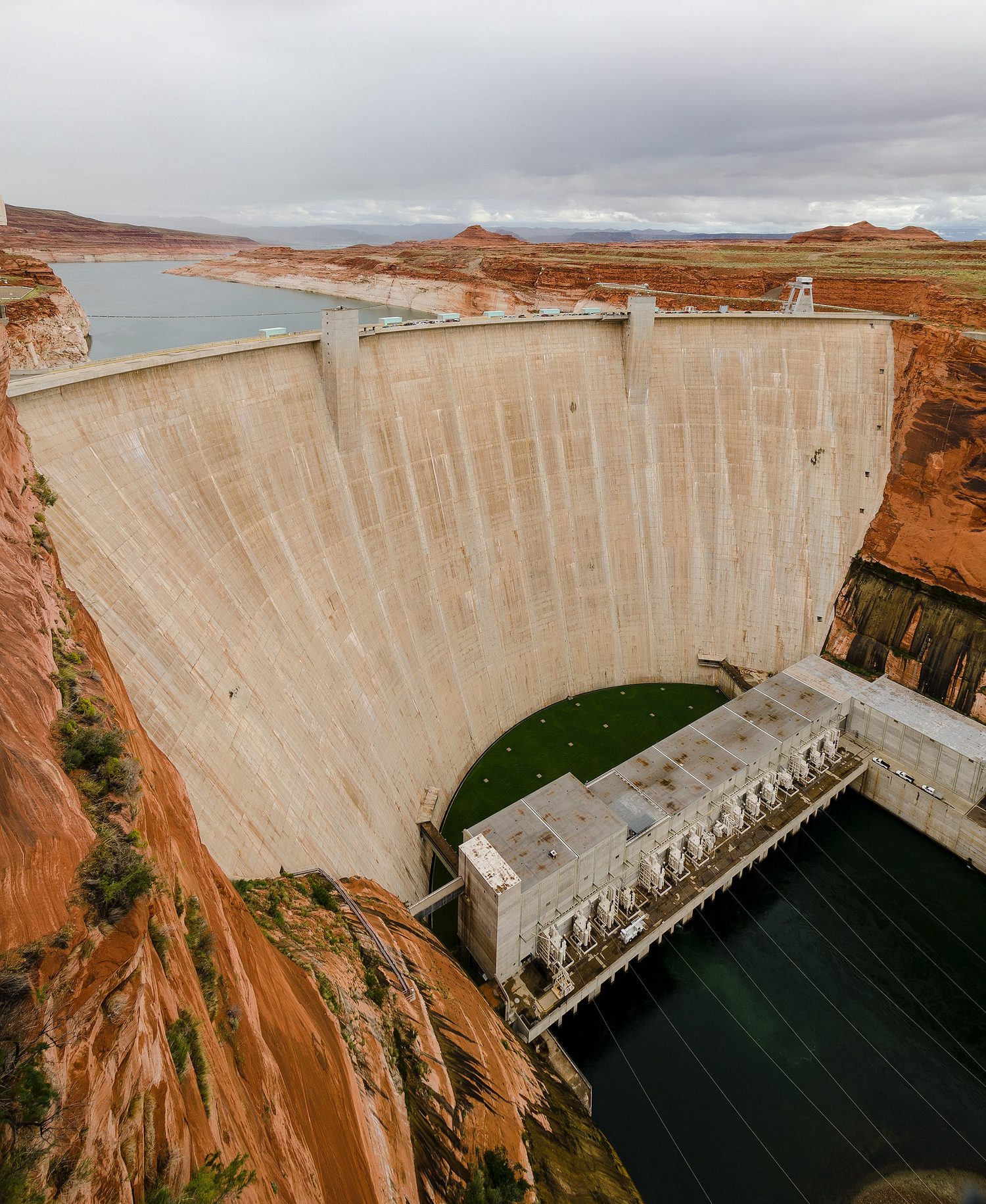
ENG-3.L.1 Hydroelectric power can be generated in several ways. Dams built across rivers collect water in reservoirs. The moving water can be used to spin a turbine. Turbines can also be placed in small rivers, where the flowing water spins the turbine.
ENG-3.L.2 Tidal energy uses the energy produced by tidal flows to turn a turbine.
Learning Objective ENG-3.M: Describe the effects of the use of hydroelectricity in power generation on the environment.
ENG-3.M.1 Hydroelectric power does not generate air pollution or waste, but construction of the power plants can be expensive, and there may be a loss of or change in habitats following the construction of dams.
Source: College Board AP Course and Exam Description · 出典: College Board AP コースおよび試験説明書
English
Hydroelectric 水电 power uses flowing water (dams) to spin turbines – renewable and low-emission, but dams flood habitat, block fish migration, trap sediment, and displace people.
Enduring Understanding (ENG-3): Humans use energy from a variety of sources, resulting in positive and negative consequences.
Learning Objective ENG-3.N: Describe the use of geothermal energy in power generation.
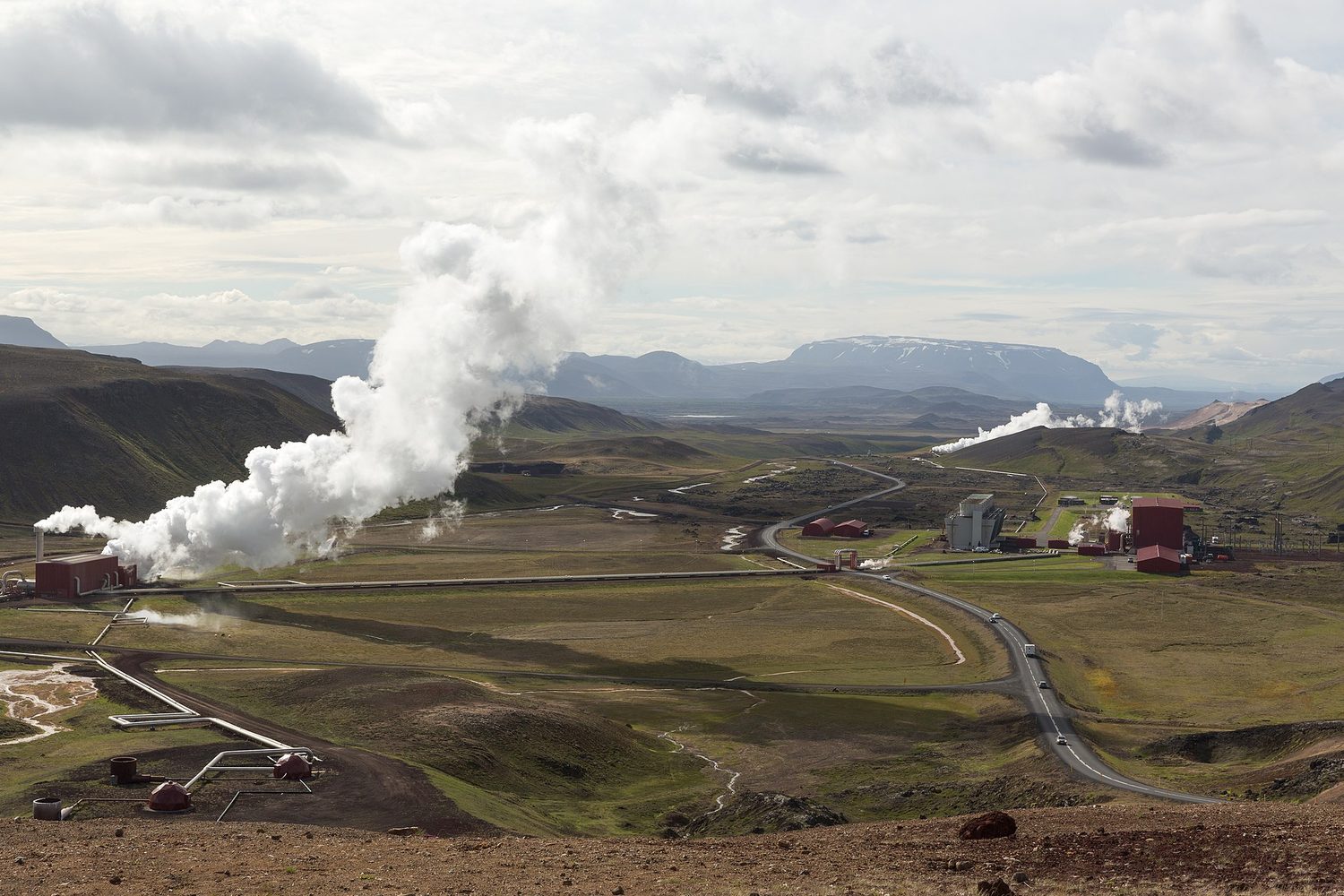
ENG-3.N.1 Geothermal energy is obtained by using the heat stored in the Earth's interior to heat up water, which is brought back to the surface as steam. The steam is used to drive an electric generator.
Learning Objective ENG-3.O: Describe the effects of the use of geothermal energy in power generation on the environment.
ENG-3.O.1 The cost of accessing geothermal energy can be prohibitively expensive, as is not easily accessible in many parts of the world. In addition, it can cause the release of hydrogen sulfide.
Source: College Board AP Course and Exam Description · 出典: College Board AP コースおよび試験説明書
English
Geothermal 地热能 taps Earth's internal heat for electricity and heating. It is renewable and reliable, but only practical where hot rock is near the surface (volcanic regions) and can release underground gases.
Enduring Understanding (ENG-3): Humans use energy from a variety of sources, resulting in positive and negative consequences.
Learning Objective ENG-3.P: Describe the use of hydrogen fuel cells in power generation.
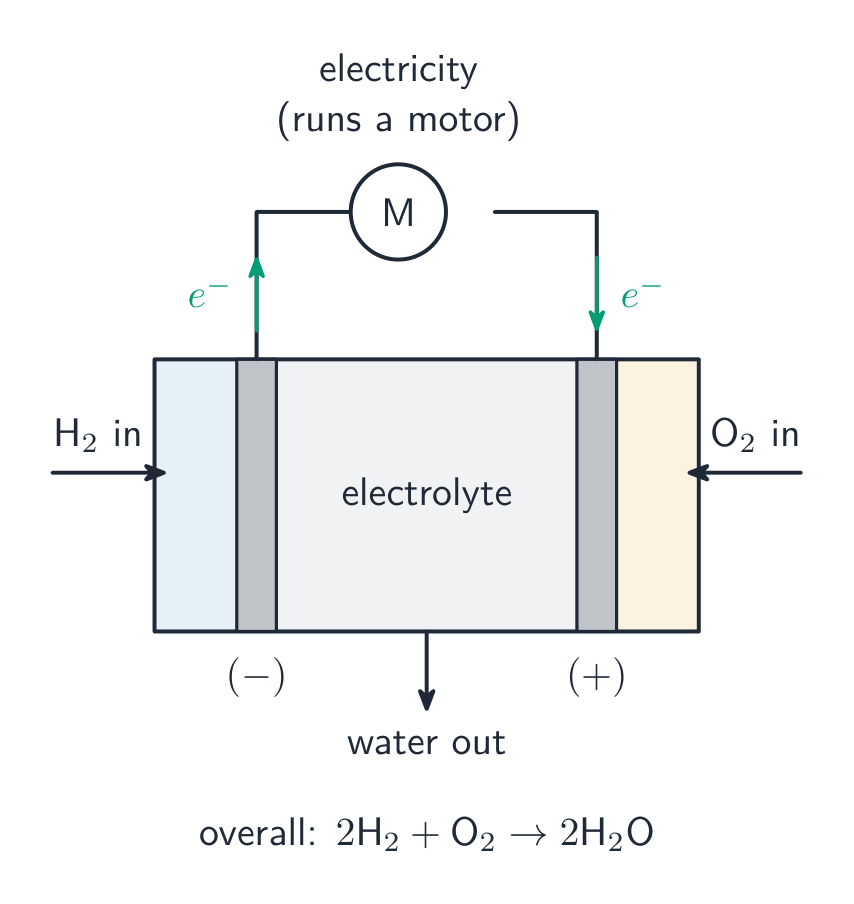
ENG-3.P.1 Hydrogen fuel cells are an alternate to non-renewable fuel sources. They use hydrogen as fuel, combining the hydrogen and oxygen in the air to form water and release energy (electricity) in the process. Water is the product (emission) of a fuel cell.
Learning Objective ENG-3.Q: Describe the effects of the use of hydrogen fuel cells in power generation on the environment.
ENG-3.Q.1 Hydrogen fuel cells have low environmental impact and produce no carbon dioxide when the hydrogen is produced from water. However, the technology is expensive and energy is still needed to create the hydrogen gas used in the fuel cell.
Source: College Board AP Course and Exam Description · 出典: College Board AP コースおよび試験説明書
English
A hydrogen fuel cell 氢燃料电池 combines hydrogen and oxygen to make electricity, with water as the only emission at use. But producing hydrogen usually requires energy (often from fossil fuels), and storage is difficult.
Source: College Board AP Course and Exam Description · 出典: College Board AP コースおよび試験説明書
English
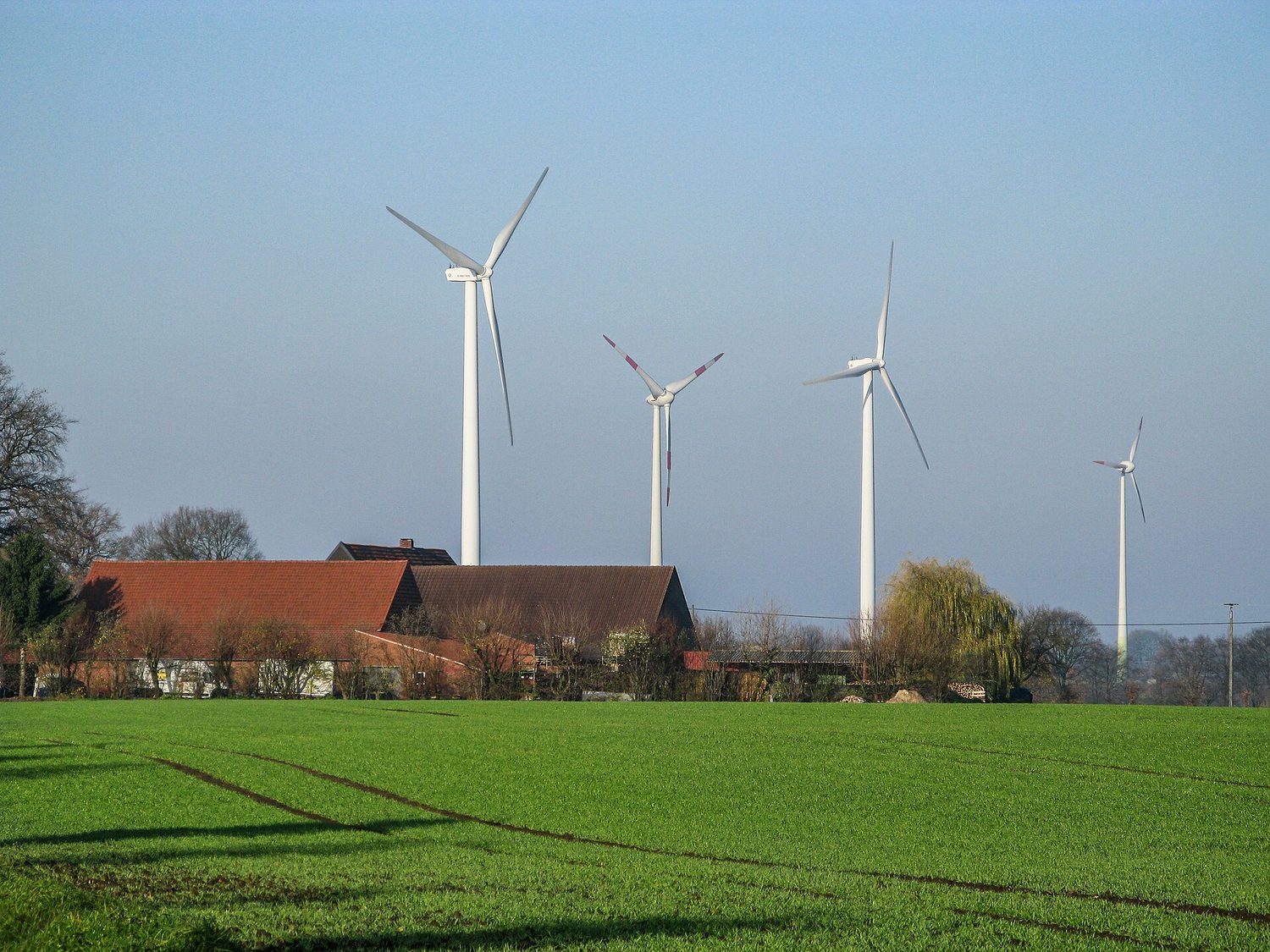
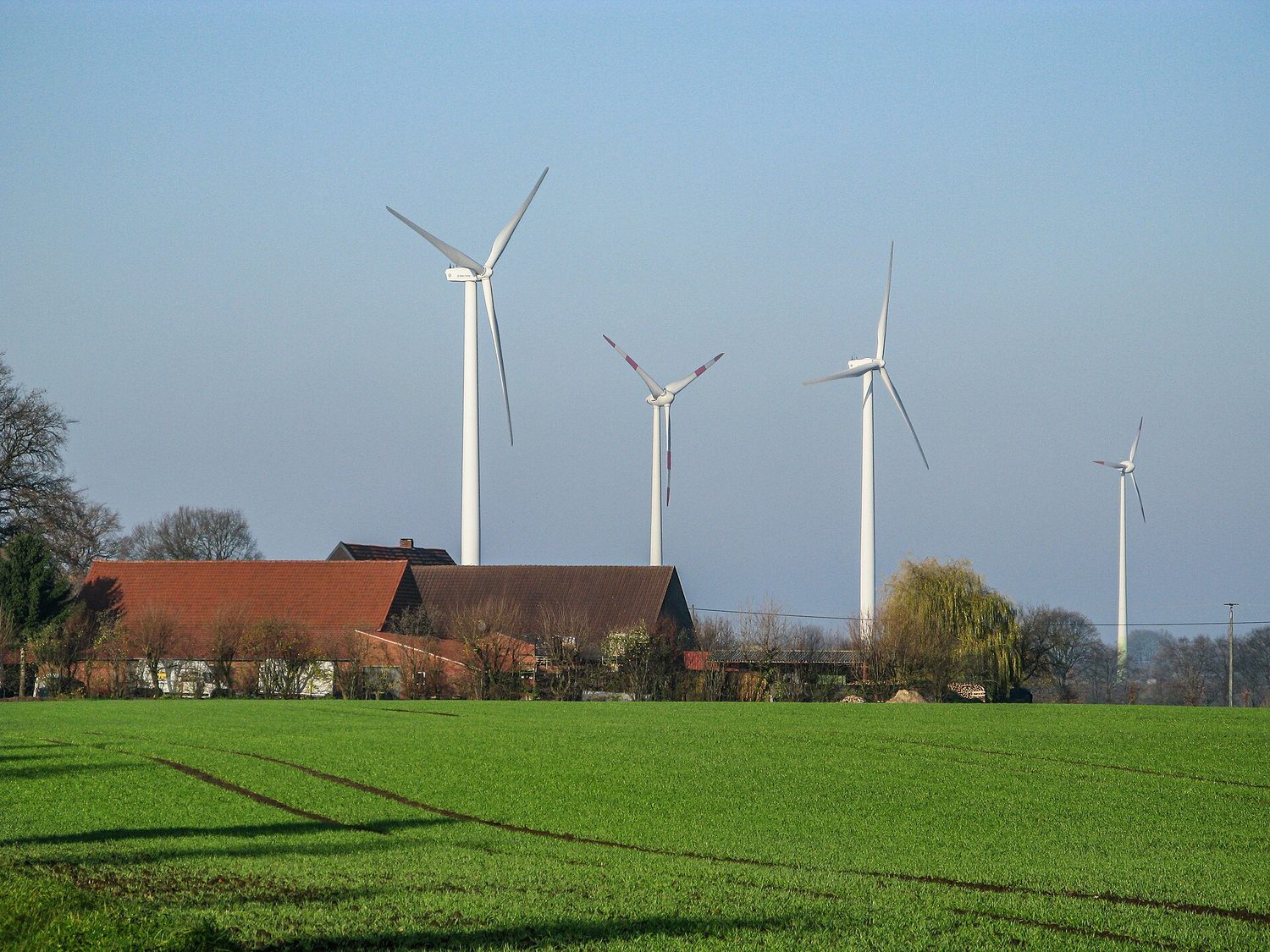
Wind 风能 turbines convert moving air to electricity – renewable, clean, and low-operating-cost, but intermittent, land- or sea-intensive, and a hazard to birds and bats. Best where winds are strong and steady.
Enduring Understanding (ENG-3): Humans use energy from a variety of sources, resulting in positive and negative consequences.
Learning Objective ENG-3.T: Describe methods for conserving energy.
ENG-3.T.1 Some of the methods for conserving energy around a home include adjusting the thermostat to reduce the use of heat and air conditioning, conserving water, use of energy-efficient appliances, and conservation landscaping.
ENG-3.T.2 Methods for conserving energy on a large scale include improving fuel economy for vehicles, using BEVs (battery electric vehicles) and hybrid vehicles, using public transportation, and implementing green building design features.
Source: College Board AP Course and Exam Description · 出典: College Board AP コースおよび試験説明書
English
Energy conservation 节能 reduces demand through efficiency (LED lighting, insulation, efficient appliances, public transport) and behavior. Saving energy is often the cheapest and cleanest option – the energy you do not use needs no fuel and makes no pollution.
A related efficiency gain is cogeneration 热电联产 (combined heat and power): a single fuel burn is used to make both electricity and useful heat, capturing the waste heat that an ordinary power plant simply dumps – so far more of the fuel's energy ends up doing useful work.
Worked example. Replacing a $60\ \text{W}$ incandescent bulb with a $10\ \text{W}$ LED that gives the same light saves $50\ \text{W}$. Running it $5$ hours a day saves $50\ \text{W}\times5\ \text{h}=250\ \text{Wh}=0.25\ \text{kWh}$ per day, or about $0.25\times365\approx91\ \text{kWh}$ per year. Multiply that by every bulb in a city and conservation rivals a new power plant – at far lower cost.
Type to search notes, lessons, code, vocabulary and past-paper questions across every subject. · すべての科目でノートImplemented、Implemented、コード、語彙、過去問問題を検索するために入力してください。

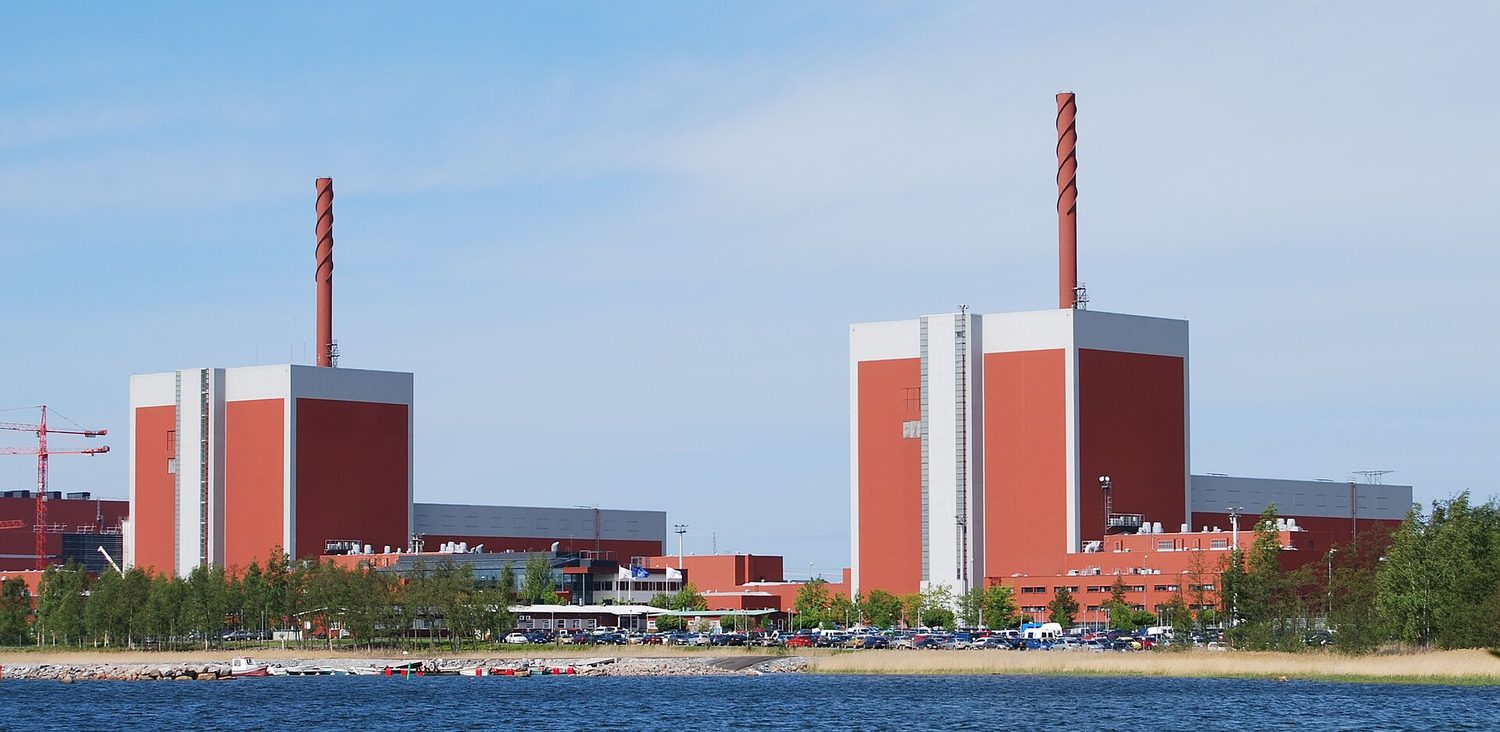 原子力発電所。反応堆建屋に燃料が収容されており、海が冷却水を提供しています。煙がないことに注目してください – 核分裂は*