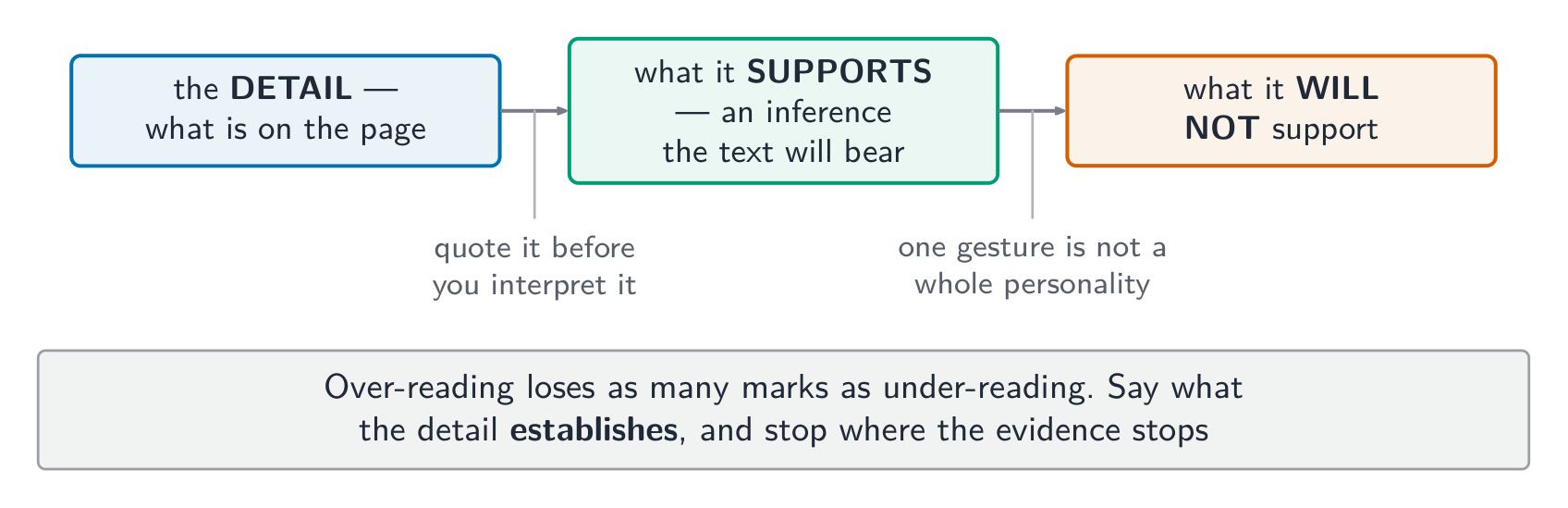
- 文学分析において、作家たちは複数の詳細を組み合わせることで主張を成立させ、守るために、テキストを慎重に読み取ります。
- 主張(claim) とは、テキストからの証拠によって防衛される必要がある声明です。
- パラグラフの最初の構成要素は、それを防衛するための主張と本文の証拠です。
in combination(組み合わせて) に注意してください。一つのディテールだけでは解釈的な主張を支えることは稀ですが、同じ方向を指す二つ以上のディテールであれば支えられます。
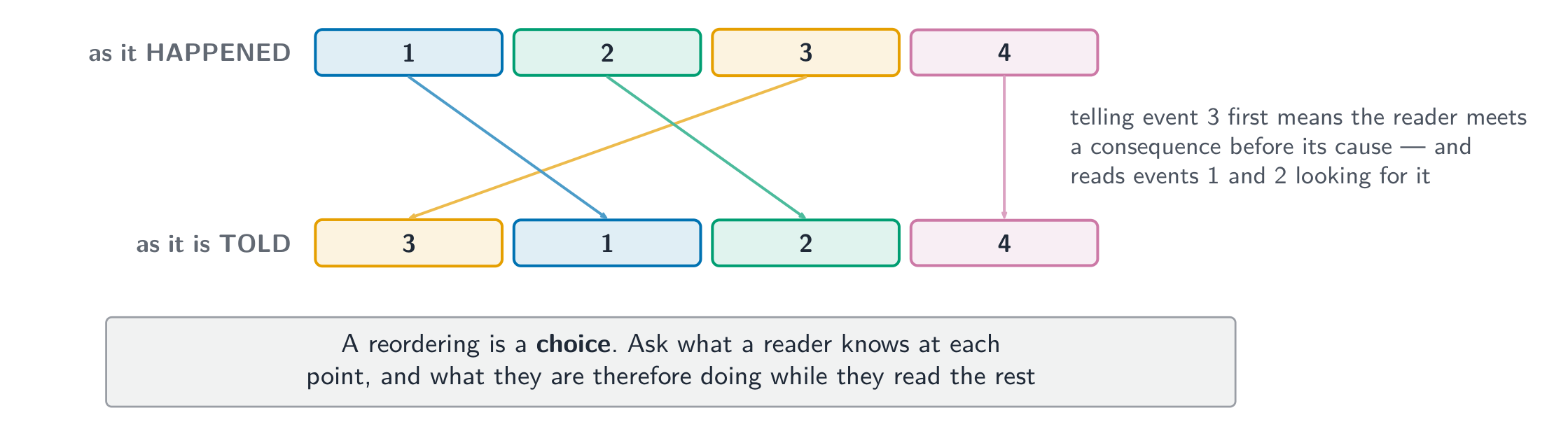
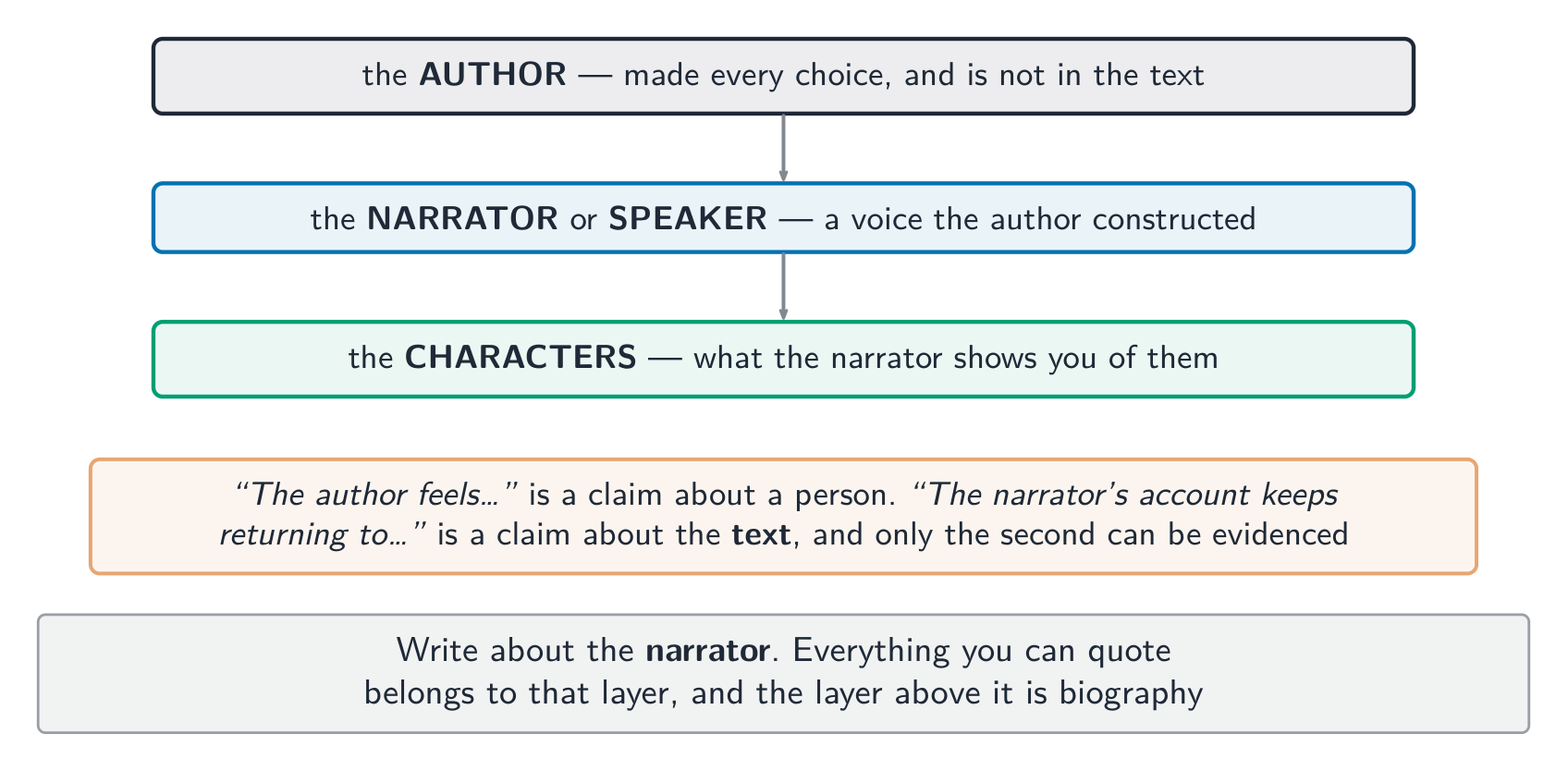
** worked example (AP試験の実際の課題) **。 AP文学の自由記述問題には3つの設問があります - 詩の分析、散文小説の分析、そしてあなたが選んだ作品に関する文学的論考です。これらはすべて 6点満点のルーブリック で採点されます: thesis 1、 evidence and commentary 4、 sophistication 1。 「作者がどのような叙述技法を用いて登場人物の態度を明らかにしているか」という散文小説の設問に対し、不十分答えは「the narrator is first-person, which makes it personal.」と書きます。高得点な答えでは cannot を用い、「Because the narrator is a participant recounting events years later, the account gives us his present judgement of his younger self and withholds what the other characters thought - so the reader receives his self-criticism as the only available evidence, and must decide whether the harshness of it is accuracy or performance.」とします。視点(point of view)、その限界、そして読者への効果です。