English
Enduring Understanding (RHS-1): Individuals write within a particular situation and make strategic writing choices based on that situation.
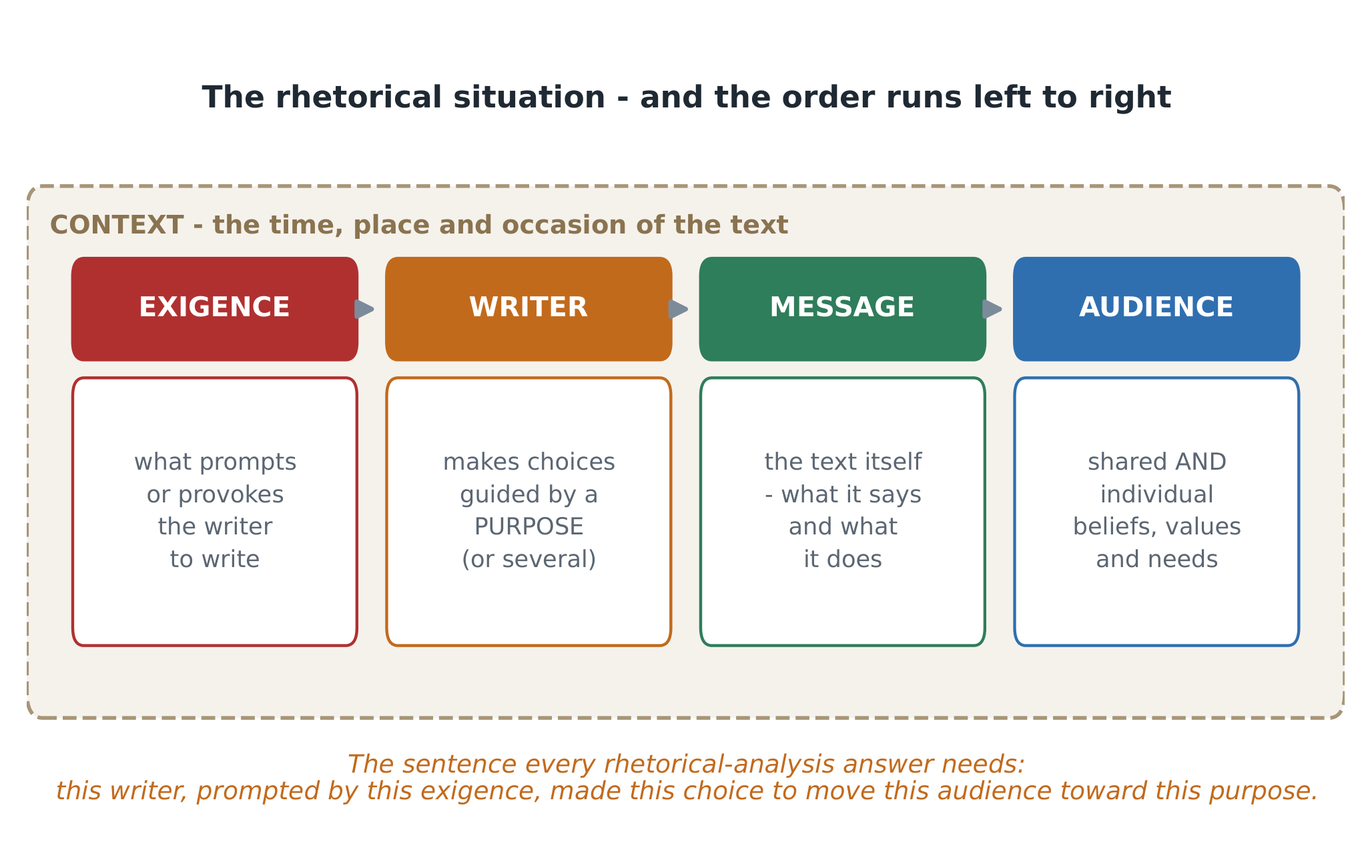
Learning Objective 1.A: Reading – Identify and describe components of the rhetorical situation: the exigence, audience, writer, purpose, context, and message.
- RHS-1.A The rhetorical situation of a text collectively refers to the exigence, purpose, audience, writer, context, and message.
- RHS-1.B The exigence is the part of a rhetorical situation that inspires, stimulates, provokes, or prompts writers to create a text.
- RHS-1.C The purpose of a text is what the writer hopes to accomplish with it. Writers may have more than one purpose in a text.
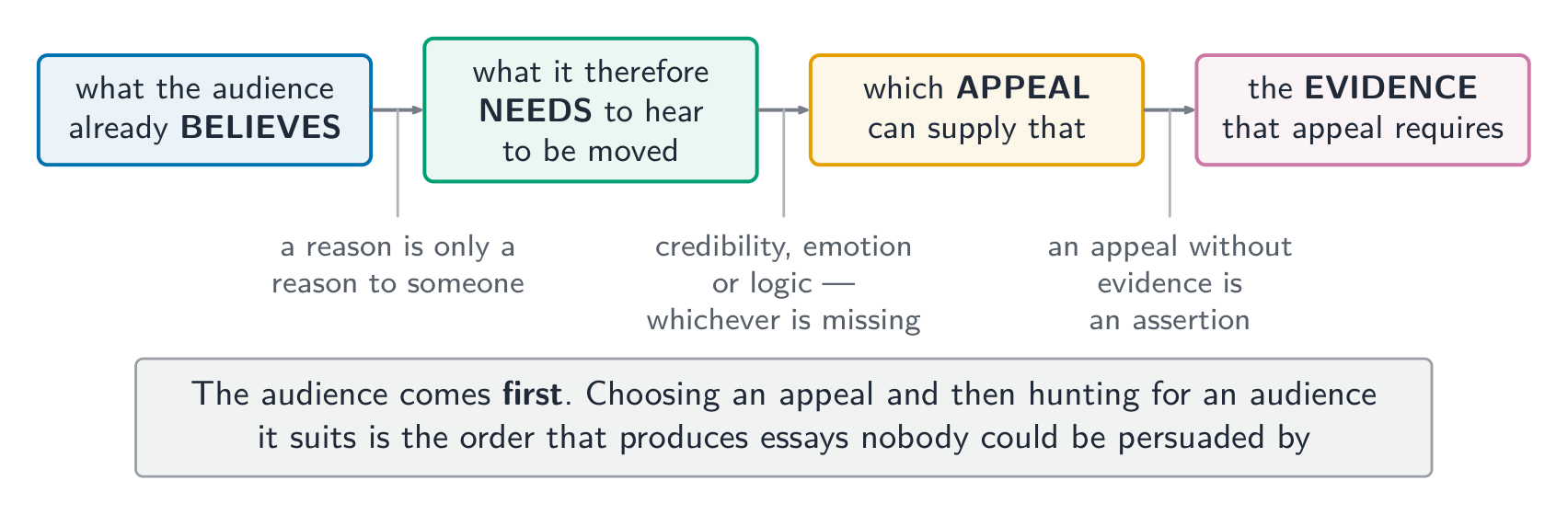
- RHS-1.D An audience of a text has shared as well as individual beliefs, values, needs, and backgrounds.
- RHS-1.E Writers create texts within a particular context that includes the time, place, and occasion.
Bahasa Indonesia
Pemahaman Abadi (RHS-1): Individu menulis dalam situasi tertentu dan membuat pilihan menulis strategis berdasarkan situasi tersebut.
Tujuan Pembelajaran 1.A: Membaca – Identifikasi dan jelaskan komponen situasi retoris: exigence, audiens, penulis, tujuan, konteks, dan pesan.
- RHS-1.A Situasi retoris dari sebuah teks secara kolektif merujuk pada exigence, tujuan, audiens, penulis, konteks, dan pesan.
- RHS-1.B Kebutuhan adalah bagian dari situasi retorika yang menginspirasi, merangsang, memprovokasi, atau mendorong penulis untuk menciptakan sebuah teks.
- RHS-1.C Tujuan sebuah teks adalah apa yang希望 dicapai oleh penulis dengannya. Penulis dapat memiliki lebih dari satu tujuan dalam sebuah teks.
- RHS-1.D Audiens dari sebuah teks memiliki keyakinan, nilai, kebutuhan, dan latar belakang yang shared maupun individual.
- RHS-1.E Penulis membuat teks dalam konteks tertentu yang mencakup waktu, tempat, dan kesempatan.