הסתכלו על כוס מים ואוויר בחדר זה. שניהם נראים נקיים ופשוטים. אך מים טבעיים מכילים חמצן מומס, מינרלים ולעיתים גם פסולת אורבנית ו…
English narration · English + 中文 subtitles burned in · קריאת קול באנגלית · תרגום אנגלי + סינית שרוף בתוך הסרטון
10.1
Water · מים
Syllabus · סיילבוס
English
Core
Supplement
1 Describe chemical tests for the presence of water using anhydrous cobalt(II) chloride and anhydrous copper(II) sulfate
2 Describe how to test for the purity of water using melting point and boiling point
3 Explain that distilled water is used in practical chemistry rather than tap water because it contains fewer chemical impurities
4 State that water from natural sources may contain substances, including: (a) dissolved oxygen (b) metal compounds (c) plastics (d) sewage (e) harmful microbes (f) nitrates from fertilisers (g) phosphates from fertilisers and detergents
5 State that some of these substances are beneficial, including: (a) dissolved oxygen for aquatic life (b) some metal compounds provide essential minerals for life
6 State that some of these substances are potentially harmful, including: (a) some metal compounds are toxic (b) some plastics harm aquatic life (c) sewage contains harmful microbes which cause disease (d) nitrates and phosphates lead to deoxygenation of water and damage to aquatic life Details of the eutrophication process are not required
7 Describe the treatment of the domestic water supply in terms of: (a) sedimentation and filtration to remove solids (b) use of carbon to remove tastes and odours (c) chlorination to kill microbes
עברית
ליבה
תוספת
1 תאר בדיקות כימיות לנוכחות מים באמצעות קובלט(II) כלוריד אנדרטי ואנדרטי נחושת(II) סולפט
2 תאר כיצד לבצע בדיקה לניקיון מים באמצעות נקודת המיסה ונקודת הרתיחה
3 הסבר שמים מעוכבים משמשים בכימיה מעשית ולא מים מהברז כי הם מכילים פחות זיהומים כימיים
5 ציין שחלק מחומרים אלו הם יועילים, כולל: (א) חמצן מומס לחיי אקו-מערכת מימית (ב) חלק מתרכובות המתכת מספקות מינרלים חיוניים לחיים
6 ציין שחלק מחומרים אלו עלולים להיות מזיקים, כולל: (א) חלק מתרכובות המתכת רעילות (ב) חלק מהפלסטיק פוגע בחיי האקו-מערכת המימית (ג) הביוב מכיל מיקרואורגניזמים מזיקים הגורמים למחלות (ד) ניטרטים ופוספטים מובילים לדלדול חמצן במים ולנזק לחיי האקו-מערכת המימית פרטי תהליך האוטרופיקציה אינם נדרשים
7 תאר את טיפול אספקת המים הביתית בהתאם ל: (א) הצבה סינון להסרת מוצקים (ב) שימוש בפחמן להסרת טעמים וריחות (ג) כלורינוז להשמדת מיקרואורגניזמים
Source: Cambridge International syllabus · מקור: הסיילבוס הבינלאומי של קמבריד'ג'
English
Testing for water
Two chemical tests show that water is present:
Anhydrous 无水 cobalt(II) chloride turns from blue to pink when water is added.
Anhydrous copper(II) sulfate turns from white to blue when water is added.
These tests only show that water is there. To show that water is pure, you test its melting point 熔点 and boiling point 沸点: pure water melts at exactly $0\,{}^{\circ}\text{C}$ and boils at exactly $100\,{}^{\circ}\text{C}$. Any dissolved substance changes these values.
This is why distilled water 蒸馏水 is used in chemistry instead of tap water — it has far fewer chemical impurities 杂质.
What is in natural water
Water from rivers, lakes and the sea is not pure. It may contain dissolved oxygen 氧气, metal compounds, plastics, sewage 污水, harmful microbes 微生物, and nitrates 硝酸盐 and phosphates 磷酸盐 (which come from fertilisers and detergents).
Some of these are helpful:
dissolved oxygen lets aquatic life 水生生物 (fish and plants) breathe;
some metal compounds give essential minerals 矿物质.
Others are harmful:
some metal compounds are toxic 有毒 (poisonous);
some plastics harm aquatic life;
sewage carries microbes that cause disease;
nitrates and phosphates cause deoxygenation 缺氧 (loss of oxygen) in the water, which harms aquatic life.
Treating drinking water
To make water safe to drink, the water supply is treated in steps:
sedimentation 沉降 and filtration 过滤 remove solid bits;
passing it through carbon 碳 removes bad tastes and smells;
כלוריד קובלט(II) אנדרטוס מתבצע מכחול לוורוד כאשר מוסיפים מים.
סולפט נחושת(II) אנדרטוס מתבצע מכחלב לכחול כאשר מוסיפים מים.
בדיקות אלו מראות רק שמים נוכחים. כדי להראות שמים הם טהורים, בודקים את נקודת ההיתוך והרתיחה: מים טהורים נמסים בדיוק ב$0\,{}^{\circ}\text{C}$ ומרתחים בדיוק ב$100\,{}^{\circ}\text{C}$. כל חומר מומס משנה ערכים אלו.
בדיקות שינוי צבע מראות שמים נוכחים; נקודות היתוך ורתיחה קבועות מראות שהם טהורים
זוהי הסיבה שמים מעוכים משמשים בכימיה במקום מים מהברז — הם מכילים הרבה פחות זיהומים כימיים.
מה יש במים טבעיים
מים מאגמים, ימים וימי ים אינם טהורים. הם עשויים להכיל חמצן מומס, תרכובות מתכת, פלסטיק, ביוב, מיקרואורגניזמים מזיקים, וניטרטים ופוספטים (הגיעו מדשנים וחומרי ניקוי).
חלקם מועילים:
חמצן מומס מאפשר לחיי מים (דגים וצמחים) לנשום;
חלק מתרכובות המתכת מספקות מינרלים חיוניים.
אחרים הם מזיקים:
חלק מהתרכובות המתכתיות רעילות (מחומרות);
חלק מהפלסטיקים פוגעים בחיי המיץ;
מים מעורבים מכילים חיידקים הגורמים למחלות;
נitrates ופוספטים גורמים ל-דאוקסיגנציה (איבוד חמצן) במים, דבר הפוגע בחיי המיץ.
טיפול במי שתייה
כדי להפוך את המים לבטוחים לשתייה, אספקת המים עוברת תהליכי טיפול בשלבים:
השקעה וסינון מסירים חלקיקים מוצרים;
מעבר דרך פחם מסיר טעמים וריחות רעים;
כלורציה (הוספת כלור) מחסלת חיידקים מזיקים.
מי שתייה הופכים לבטוחים בשלבים: ישיבה של חלקיקים גדולים, סינון, הסרת טעמים עם פחם, ולאחר מכן כלורציה
Explore · חקור
Water treatment lab · מעבדת טיפול במים
Classify water processes by what they remove or change. · מיינו תהליכי מים לפי מה שהם מסירים או משנים.
1 State the composition of clean, dry air as approximately 78% nitrogen, $\text{N}_2$, 21% oxygen, $\text{O}_2$ and the remainder as a mixture of noble gases and carbon dioxide, $\text{CO}_2$
2 State the source of each of these air pollutants, limited to: (a) carbon dioxide from the complete combustion of carbon-containing fuels (b) carbon monoxide and particulates from the incomplete combustion of carbon-containing fuels (c) methane from the decomposition of vegetation and waste gases from digestion in animals (d) oxides of nitrogen from car engines (e) sulfur dioxide from the combustion of fossil fuels which contain sulfur compounds
3 State the adverse effect of these air pollutants, limited to: (a) carbon dioxide: higher levels of carbon dioxide leading to increased global warming, which leads to climate change (b) carbon monoxide: toxic gas (c) particulates: increased risk of respiratory problems and cancer (d) methane: higher levels of methane leading to increased global warming, which leads to climate change (e) oxides of nitrogen: acid rain, photochemical smog and respiratory problems (f) sulfur dioxide: acid rain
7 Describe how the greenhouse gases carbon dioxide and methane cause global warming, limited to: (a) the absorption, reflection and emission of thermal energy (b) reducing thermal energy loss to space
4 State and explain strategies to reduce the effects of these environmental issues, limited to: (a) climate change: planting trees, reduction in livestock farming, decreasing use of fossil fuels, increasing use of hydrogen and renewable energy, e.g. wind, solar (b) acid rain: use of catalytic converters in vehicles, reducing emissions of sulfur dioxide by using low-sulfur fuels and flue gas desulfurisation with calcium oxide
8 Explain how oxides of nitrogen form in car engines and describe their removal by catalytic converters, e.g. $2\text{CO} + 2\text{NO} \rightarrow 2\text{CO}_2 + \text{N}_2$
5 Describe photosynthesis as the reaction between carbon dioxide and water to produce glucose and oxygen in the presence of chlorophyll and using energy from light
6 State the word equation for photosynthesis, carbon dioxide + water $\rightarrow$ glucose + oxygen
9 State the symbol equation for photosynthesis, $6\text{CO}_2 + 6\text{H}_2\text{O} \rightarrow \text{C}_6\text{H}_{12}\text{O}_6 + 6\text{O}_2$
עברית
ליבה
תוספת
1 ציין את הרכב האוויר הנקי והיבש ככ-78% חנקן, $\text{N}_2$, 21% חמצן, $\text{O}_2$ והשאר כערבוב של גזים נדירים ופחמן דו-חמצני, $\text{CO}_2$
2 ציין את המקור של כל אחד מזיהומי האוויר הללו, מוגבל ל: (a) פחמן דו-חמצני מתהליך בעירה מלא של דלקים המכילים פחמן (b) פחמן חד-חמצני וחלקיקים מתהליך בעירה לא מלאה של דלקים המכילים פחמן (c) מתאן מפירוק צמחייה וגזים הנפלים בתהליך עיכול בבעלי חיים (d) תחמוצות חנקן ממנועי רכב (e) גופרית דו-חמצני מתהליך בעירה של דלקים מאובשים המכילים תרכובות גופרית
3 ציין את ההשפעה הרעילה של זיהומי האוויר הללו, מוגבל ל: (a) פחמן דו-חמצני: רמות גבוהות יותר של פחמן דו-חמצני המובילות להתחממות גלובלית מוגברת, שהיא מובילה לשינויי אקלים (b) פחמן חד-חמצני: גז רעיל (c) חלקיקים: סיכון מוגבר לבעיות נשימה ולסרטן (d) מתאן: רמות גבוהות יותר של מתאן המובילות להתחממות גלובלית מוגברת, שהיא מובילה לשינויי אקלים (e) תחמוצות חנקן: גשם חומצי, סמוג פוטוכימי ובעיות נשימה (f) גופרית דו-חמצני: גשם חומצי
7 הסבר כיצד הגזים החממה פחמן דו-חמצני ומתאן גורמים להתחממות גלובלית, מוגבל ל: (a) ספיגה, השבה ופליטה של אנרגיה תרמית (b) הפחתת איבוד אנרגיה תרמית לחלל
4 ציין והסבר אסטרטגיות להפחתת ההשפעות של בעיות סביבתיות אלו, מוגבל ל: (a) שינויי אקלים: נטיעת עצים, הפחתת גידול בעלי חיים, ירידה בשימוש בדלקים מאובשים, עלייה בשימוש במימן ובאנרגיות מתחדשות, כגון אנרגיה רוחנית ואנרגיה סולארית (b) גשם חומצי: שימוש בממירים קטליטיים ברכבים, הפחתת פליטות גופרית דו-חמצני באמצעות שימוש בדלקים נמוכי גופרית ועיבוד גזי מערה עם חומצה סידנית
8 הסבר כיצד נוצרים תחמוצות חנקן במנועי רכב ותיאור הסרתן על ידי ממירים קטליטיים, כגון $2\text{CO} + 2\text{NO} \rightarrow 2\text{CO}_2 + \text{N}_2$
5 תאר את התהליך של פוטוסינתזה כתגובה בין פחמן דו-חמצני למים ליצירת גלוקוז וחמצן בנוכחות כלורופיל ובשימוש באנרגיה מהאור
6 ציין את המשוואה המילולית לפוטוסינתזה, פחמן דו-חמצני + מים $\rightarrow$ גלוקוז + חמצן
9 ציין את המשוואה הסימלית לפוטוסינתזה, $6\text{CO}_2 + 6\text{H}_2\text{O} \rightarrow \text{C}_6\text{H}_{12}\text{O}_6 + 6\text{O}_2$
Source: Cambridge International syllabus · מקור: הסיילבוס הבינלאומי של קמבריד'ג'
English
Clean, dry air is approximately:
78% nitrogen ($\text{N}_2$)
21% oxygen ($\text{O}_2$)
the rest is a mixture of noble gases 稀有气体 and carbon dioxide ($\text{CO}_2$).
Air pollutants and their sources
Pollutant
Main source
carbon dioxide ($\text{CO}_2$)
complete combustion 完全燃烧 of carbon-containing fuels
carbon monoxide 一氧化碳 and particulates 颗粒物
incomplete combustion 不完全燃烧 of carbon-containing fuels
methane 甲烷
rotting plants and waste gases from animal digestion
oxides of nitrogen 氮氧化物
car engines
sulfur dioxide
burning fossil fuels 化石燃料 that contain sulfur 硫
Effects of these pollutants
Carbon dioxide 二氧化碳 and methane are greenhouse gases 温室气体: more of them causes global warming 全球变暖, which leads to climate change 气候变化.
Carbon monoxide is a toxic gas.
Particulates increase the risk of respiratory 呼吸 (breathing) problems and cancer 癌症.
Oxides of nitrogen cause acid rain 酸雨, photochemical smog 光化学烟雾 and breathing problems.
Sulfur dioxide causes acid rain.
Worked example. A power station burns coal containing sulfur, and a lake downwind slowly turns acidic. Name the pollutant, explain the link, and give one way to stop it. Burning a fossil fuel that contains sulfur releases sulfur dioxide, which causes acid rain, so the rain falling on the lake is acidic. To stop it at the source, use flue gas desulfurisation, where calcium oxide removes the sulfur dioxide from the waste gases before they leave the chimney, or switch to a low-sulfur fuel. Match the fix to the pollutant: a catalytic converter treats a car's oxides of nitrogen and would do nothing about a coal-fired power station's sulfur dioxide.
Reducing these problems
To slow climate change: plant trees, farm fewer animals, burn fewer fossil fuels, and use more hydrogen and renewable energy 可再生能源 such as wind and solar power.
To reduce acid rain: fit catalytic converters 催化转化器 in cars, use low-sulfur fuels, and use flue gas desulfurisation 烟气脱硫 with calcium oxide 氧化钙 to remove sulfur dioxide from waste gases.
How greenhouse gases warm the Earth
Greenhouse gases such as carbon dioxide and methane let sunlight through, but they absorb the thermal energy 热能 given off by the warm Earth, and send some of it back down. This reduces the thermal energy lost to space, so the Earth gets warmer.
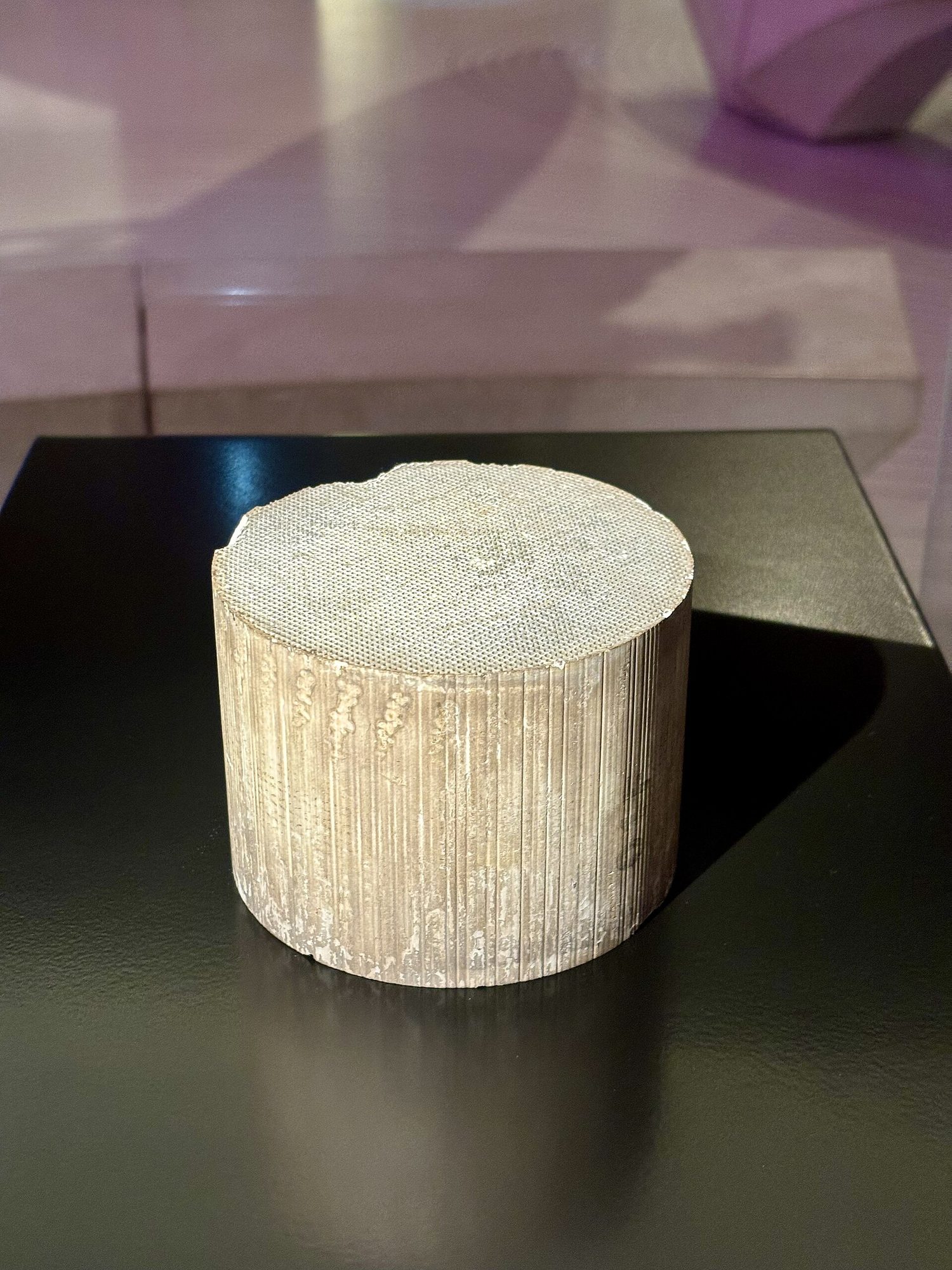
In a car engine, the high temperature makes nitrogen and oxygen from the air react to form oxides of nitrogen. A catalytic converter removes them, for example:
Photosynthesis 光合作用 is the opposite of combustion — it removes carbon dioxide from the air. Plants use light energy and chlorophyll 叶绿素 to turn carbon dioxide and water into glucose 葡萄糖 and oxygen:
דוגמה פותרת. תחנת כוח שורפת פחם המכיל גופרית, ואגם במורד הרוח מתחמץ לאט. זיהו את המזהם, הסבירו את הקשר ותנו דרך אחת למניעתו. שריפת דלק מאובן המכיל גופרית משחררת די-חמצן גופרית, הגורם לגשם חומצי, ולכן הגשם הפול על האגם הוא חומצי. כדי למנוע זאת במקור, יש להשתמש בטיה גזי פליטה, שבה סידן חמצני מסיר את די-חמצן הגופרית מגזי הפליטה לפני שהם יוצאים מהמעלה, או לעבור לדלק עם תכולת גופרית נמוכה. התאימו את הפתרון למזהם: ממיר קטליטי מטפל בתחמוצות החנקן של רכב ולא יהיה לו כל השפעה על די-חמצן הגופרית של תחנת כוח הפועלת בפחם.
צמצום בעיות אלו
כדי להאט את השינוי האקלימי: לשתול עצים, לגדל פחות בעלי חיים, לשרוף פחות דלקות מאובנות ולהשתמש יותר במימן ובאנרגיה מתחדשת כמו אנרגיה רוחנית ואנרגיה סולארית.
כדי להפחית אתגשם החומצי: להתקיןממיר קItemsטיבי ברכבים, להשתמש בדלקים נמוכי גופרית ולהשתמש בהסרת גופרית מגזי פליטה עםחמצן סידן כדי להסיר דו-חמצן גופרית מגזי פליטה.
בתוך ממיר קItemsטיבי יש כוורת מצופה במתכות קItemsטיביות; הערוצים הקטנים הרבים מספקים שטח פני ענק
כיצד גזי חממה מחממים את כדור הארץ
גזי חממה כמו דו-חמצן פחמן ומתאן מאפשרים מעבר לאור השמש, אך הםסופגים אתהאנרגיה התרמית המשוחררת על ידי כדור הארץ החמים, וחלק ממנה מושבת כלפי מטה. הדבר מפחית את האנרגיה התרמית הולכת לחלל, ולכן כדור הארץ מתחמם.
גזי חממה מאפשרים מעבר לאור שמש אך לוכדים חלק מהחום שמשחרר כדור הארץ, ולכן כדור הארץ מתחמם
במנוע רכב, הטמפרטורה הגבוהה גורמת לחנקן וחמצן באוויר להגיב וליצור תחמוצי חנקן. ממיר קItemsטיבי מסיר אותם, לדוגמה:
Two tests show water is present (cobalt(II) chloride blue → pink; copper(II) sulfate white → blue), but only fixed melting and boiling points (0 °C and 100 °C) show it is pure.
Clean, dry air is about 78% nitrogen, 21% oxygen and 1% other gases (mostly noble gases and carbon dioxide).
Match each pollutant to its source and effect: carbon monoxide (incomplete combustion; toxic); sulfur dioxide and oxides of nitrogen (acid rain); carbon dioxide and methane (greenhouse gases → global warming).
Greenhouse gases let sunlight through but absorb the heat the warm Earth gives off and send some back down, so the Earth warms up.
עברית
שני מבחנים מראים שהמים נוכחים (כלוריד קובלט(II) כחול → ורוד; גואגן קופר(II) לבן → כחול), אך רק נקודות הכוה והרתיחה הקבועות (0 °C ו-100 °C) מראות שהוא טהור.
אוויר נקי ויבש מכיל כ-78% חנקן, 21% חמצן ו-1% גזים אחרים (בעיקר גזים אלמוגים ודו-חמצן פחמן).
התאם כל זיהום למקור ולשפיע: גז פחמן חד-חמצני (בעירה לא מלאה; רעיל); דו-חמצן גופרית ותחמוצי חנקן (גשם חומצי); דו-חמצן פחמן ומתאן (גזי חממה → התחממות עולמית).
גזי חממה מאפשרים מעבר לאור שמש אך סופגים את החום שמשחרר כדור הארץ החמים וחלק ממנו מושבת כלפי מטה, ולכן כדור הארץ מתחמם.
Interactive lessons on this topic · שיעורים אינטראקטיביים בנושא זה
Work through it step by step, with instant-check exercises. · לעבור על הדברים צעד אחר צעד, עם תרגילים לבדיקה מיידית.
Pick one and the site follows you — notes, papers, videos and practice all open on it. · בחרו נושא אחד והאתר יעקוב אחריו — הערות, מסמכים, וידאו ותרגולים פתוחים בו.
Type to search notes, lessons, code, vocabulary and past-paper questions across every subject. · הקלד כדי לחפש הערות, שיעורים, קוד, אוצר מילים ושאלות מבחנים בכל הנושאים.