Skip to content · ⁨דלג לתוכן⁩

Consequences of Industrialization · ⁨ consequences of Industrialization (השלכות התעשייה)⁩

AP World History: Modern · ⁨היסטוריה עולמית: זמנים מודרניים - AP⁩ · Topic 6 · ⁨נושא 6⁩

Video lesson for this topic · ⁨שיעור וידאו לנושא זה⁩ Open the video page · ⁨פתח את עמוד הוידאו⁩
6:14

יחידה 6: השלכות התעשייה

זהו החומר על השלכות התעשייה, משנת 1750 עד 1900. הבדל אחד מחליט על רוב הנקודות ביחידה זו, והוא קל לניסוח ו…

English narration · English + 中文 subtitles burned in · ⁨קריאת קול באנגלית · תרגום אנגלי + סינית שרוף בתוך הסרטון⁩

6.1

Justifying Empire · ⁨הוכחת הצדק למושביות⁩

Syllabus · ⁨סיילבוס⁩
English

6.1 Rationales for Imperialism from1750 to 1900

Thematic Focus (CDI): Cultural Developments and Interactions — The development of ideas, beliefs, and religions illustrates how groups in society view themselves, and the interactions of societies and their beliefs often have political, social, and cultural implications.

Learning Objective Unit 6.A: Explain how ideologies contributed to the development of imperialism from 1750 to 1900.

  • KC-5.2.III A range of cultural, religious, and racial ideologies were used to justify imperialism, including Social Darwinism, nationalism, the concept of the civilizing mission, and the desire to religiously convert indigenous populations.
עברית

6.1 הצדקות לאימפריאליזם מ-1750 עד 1900

מיקוד נושא (CDI): התפתחויות ותفاعלים תרבותיים — פיתוח רעיונות, אמונות ודתות מדגיש כיצד קבוצות בחברה רואות את עצמן, והתفاعלים בין חברות ואמונותיהן לעיתים קרובות יש להם משמעויות פוליטיות, חברתיות ותרבותיות.

מטרות למידה ליחידה 6.A: הסבר כיצד אידיאולוגיות תרמו לפיתוח האימפריאליזם מ-1750 עד 1900.

  • KC-5.2.III מגוון של אידיאולוגיות תרבותיות, דתיות וגזעניות שימשו להצדקת אימפריאליזם, לרבות דארווینیזם חברתי, לאומיות, קונספט המשימה המלמדת, ואת הרצון להמיר דתית את האוכלוסיות המקומיות.
Source: College Board AP Course and Exam Description · ⁨מקור: תיאור הקורס והמבחן של College Board AP⁩

English

Unit 6 covers the consequences of industrialisation, 1750 to 1900: why industrial states expanded, how people resisted, how the world economy reorganised, and who moved.

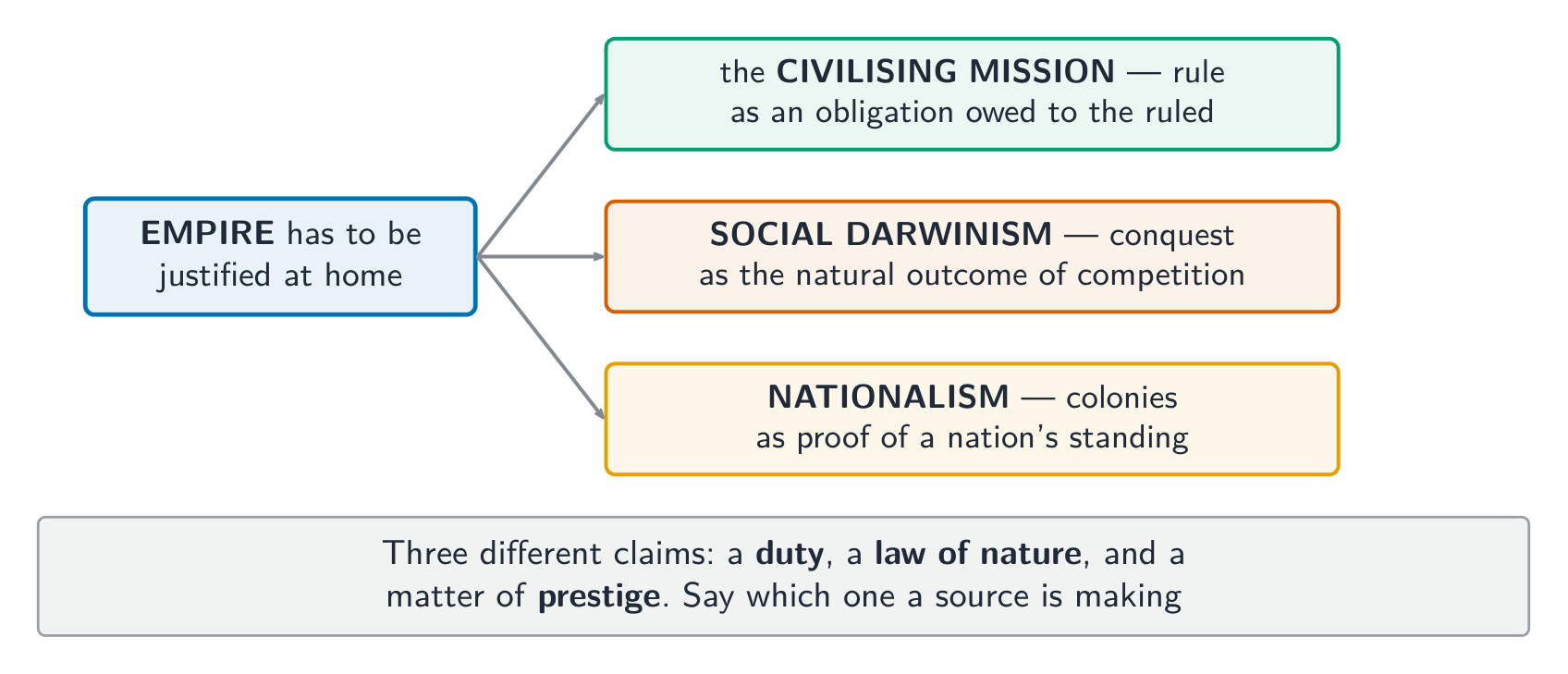
A range of cultural, religious, and racial ideologies were used to justify imperialism. The examinable ones are the civilising mission 文明教化使命, missionary activity, Social Darwinism 社会达尔文主义 applied to nations and peoples, and nationalism - the claim that colonies proved a state's greatness.

These are justifications, not causes. Naming them as ideology, and separating them from the economic and strategic motives in the next sections, is what a strong answer does.

עברית

היחידה 6 עוסקת בתוצאות התעשיור, 1750 עד 1900: מדוע מדינות תעשייתיות התרחבו, איך אנשים התנגדו, איך הכלכלה העולמית אורגנה מחדש, ומי עבר.

מגוון של אידיאולוגיות תרבותיות, דתיות וגזעניות שימשו להצדקת האימפריאליזם. אלו שנבדקות במבחנים הן המשימה המצביעה, פעילות מיסיונרית, דארוויניזם חברתי שהוחל על מדינות ועמים, ולאומיות - הטענה שהמושבים הוכיחו את עוצמתה של מדינה.

אלו הן הצדקות, לא סיבות. זיהוי שלהן כאידיאולוגיה, והפרדה ביניהן מהמוטיבים הכלכליים והאסטרטגיים בפרקים הבאים, הוא מה שתשובה חזקה עושה.

שלוש הצדקות המעלות שלושה טענות שונות: חובה, חוק טבע, תהילה
Explore · ⁨חקור⁩

Match each justification to the claim it makes · ⁨התאם כל הסיבה לטענה שהיא מעלה⁩

They are not one bundle of ideas: a duty, a law of nature and a matter of prestige are three different arguments. · ⁨הן אינן חבילה אחת של רעיונות: חובה, חוק טבע ונושא של כבוד הם שלושה ארגומנטים שונים.⁩

6.2

State Expansion · ⁨הרחבת המדינה⁩

Syllabus · ⁨סיילבוס⁩
English

6.2 State Expansion from 1750 to 1900

Thematic Focus (GOV): Governance — A variety of internal and external factors contribute to state formation, expansion, and decline. Governments maintain order through a variety of administrative institutions, policies, and procedures, and governments obtain, retain, and exercise power in different ways and for different purposes.

Learning Objective Unit 6.B: Compare processes by which state power shifted in various parts of the world from 1750 to 1900.

  • KC-5.2.I.A Some states with existing colonies strengthened their control over those colonies and in some cases assumed direct control over colonies previously held by non-state entities.
  • KC-5.2.I.B European states as well as the United States and Japan acquired territories throughout Asia and the Pacific, while Spanish and Portuguese influence declined.
  • KC-5.2.I.C Many European states used both warfare and diplomacy to expand their empires in Africa.
  • KC-5.2.I.D Europeans established settler colonies in some parts of their empires.
  • KC-5.2.II.B The United States, Russia, and Japan expanded their land holdings by conquering and settling neighboring territories.

Illustrative examples:

  • Non-state to state colonial control:
    • Shift from the private ownership of the Congo by King Leopold II to the Belgium government
    • Shift from the Dutch East India Company to Dutch government control in Indonesia and Southeast Asia
  • European states that expanded empires in Africa:
    • Britain in West Africa
    • Belgium in the Congo
    • French in West Africa
  • Settler colonies established in empires:
    • New Zealand
עברית

6.2 הרחבת מדינה מ-1750 עד 1900

מיקוד נושא (GOV): שלטון — מגוון גורמים פנימיים וחיצוניים תורמים ליצירת מדינות, הרחבתן ונפילתן. ממשלות שומרות על סדר באמצעות מגוון מוסדות, מדיניות ונהלים מנהליים, וממשלות רוכשות, שומרות ומפעילות כוח בדרכים ובמטרות שונות.

מטרות למידה ליחידה 6.B: השוואה בין תהליכים שבהם כוח המדינה השתנה באזורים שונים בעולם מ-1750 עד 1900.

  • KC-5.2.I.A חלק ממדינות עם מושבות קיימות חיזקו את שליטתן על המושבות הללו ובמקרים מסוימים קיבלו שליטה ישירה על מושבות שהוחזקו בעבר על ידי יישומי שאינם מדינה.
  • KC-5.2.I.B מדינות אירופאיות כמו גם ארצות הברית ויפן רכשו שטחים בכל רחבי אסיה והפסיפיק, בעוד שהשפעת ספרד ופורטוגל ירדה.
  • KC-5.2.I.C מדינות אירופאיות רבות השתמשו גם במלחמה וגם דיפלומטיה כדי להרחיב את האימפריות שלהן באפריקה.
  • KC-5.2.I.D אירופאים הקימו מושבות התיישבותיות בחלקים מסוימים מאימפריותיהם.
  • KC-5.2.II.B ארצות הברית, רוסיה ויפן הרחיבו את שטחי היבשה שלהן על ידי כיבוש והתיישבות בשטחים שכנים.

דוגמאות מדגמיות:

  • שלטון קולוניאלי מעל מדינות:
    • המעבר מהמלכות הפרטית של הקונגו על ידי המלך לאופולד השני לממשלת בלגיה
    • המעבר מחברת הודו המזרחית ההולנדית לשלטון ממשלתי הולנדי באינדונזיה ובדרום-מזרח אסיה
  • מדינות אירופיות שהרחיבו אימפריות באפריקה:
    • בריטניה במערב אפריקה
    • בלגיה בקונגו
    • צרפת במערב אפריקה
  • מושבות מתיישבים שהוקמו באימפריות:
    • ניו זילנד

Source: College Board AP Course and Exam Description · ⁨מקור: תיאור הקורס והמבחן של College Board AP⁩

English

Expansion took several forms, and the CED distinguishes them:

  • Some states strengthened control over existing colonies, converting trading relationships into direct rule.
  • European states, the United States, and Japan acquired new territory, showing that imperialism was not only European.
  • Many European states used both warfare and diplomacy 战争与外交 to expand - conquest, but also treaties, protectorates, and partition agreements made in Europe.
  • Europeans established settler colonies 定居殖民地 in some places, which displaced Indigenous populations far more thoroughly than administrative rule.
  • The United States, Russia, and Japan expanded by taking contiguous land rather than overseas territory.
עברית

ההתפשטות קיבלה מספר צורות שונות, וה-CED מבדיל ביניהן:

  • מדינות רבות חיזקו את השליטה על המושבות הקיימות, ומרתו יחסי מסחר לשלטון ישיר.
  • מדינות אירופאיות, ארצות הברית ויפן רכשו שטחים חדשים, מה שהראה כי האימפריאליזם לא היה רק אירופאי.
  • מדינות אירופאיות רבות השתמשו גם במלחמה וגם במדיניות כדי להתרחב - כיבוש, אך גם הסכמים, חסותיות והסכמי חלוקה שנערכו באירופה.
  • האירופאים הקימו מושבות התיישבות במקומות מסוימים, שה desplazו את האוכלוסיות המקומיות בצורה הרבה יותר כוללת מאשר שלטון מנהלי.
  • ארצות הברית, רוסיה ויפן התרחבו על ידי acquisition של אדמות סמוכות ולא שטח מעבר לים.
6.3

Resistance · ⁨התנגדות⁩

Syllabus · ⁨סיילבוס⁩
English

6.3 Indigenous Responses to State Expansion from 1750 to 1900

Thematic Focus (GOV): Governance — A variety of internal and external factors contribute to state formation, expansion, and decline. Governments maintain order through a variety of administrative institutions, policies, and procedures, and governments obtain, retain, and exercise power in different ways and for different purposes.

Learning Objective Unit 6.C: Explain how and why internal and external factors have influenced the process of state building from 1750 to 1900.

  • KC-5.3.III.D Increasing questions about political authority and growing nationalism contributed to anticolonial movements.
  • KC-5.2.II.C Anti-imperial resistance took various forms, including direct resistance within empires and the creation of new states on the peripheries.
  • KC-5.3.III.E Increasing discontent with imperial rule led to rebellions, some of which were influenced by religious ideas.

Illustrative examples:

  • Direct resistance:
    • Túpac Amaru II’s rebellion in Peru
    • Samory Touré’s military battles in West Africa
    • Yaa Asantewaa War in West Africa
    • 1857 rebellion in India
  • New states:
    • Establishment of independent states in the Balkans
    • Sokoto Caliphate in modern-day Nigeria
    • Cherokee Nation
    • Zulu Kingdom
  • Rebellions:
    • Ghost Dance in the U.S.
    • Xhosa Cattle-Killing Movement in Southern Africa
    • Mahdist wars in Sudan
עברית

6.3 תגובות ילידות להתרחבות מדינית משנת 1750 ועד 1900

מיקוד נושא (GOV): שלטון — מגוון גורמים פנימיים וחיצוניים תורמים ליצירת מדינות, הרחבתן ונפילתן. ממשלות שומרות על סדר באמצעות מגוון מוסדות, מדיניות ונהלים מנהליים, וממשלות רוכשות, שומרות ומפעילות כוח בדרכים ובמטרות שונות.

מטרות לימוד ליחידה 6.C: הסבר כיצד וגם מדוע גורמים פנימיים וחיצוניים השפיעו על תהליך בניית המדינה משנת 1750 ועד 1900.

  • KC-5.3.III.D העלייה בשאלות לגבי סמכות פוליטית והלאומיות הגוברת תרמו לתנועות אנטי-קולוניאליות.
  • KC-5.2.II.C התנגדות לאימפריאליסטית קיבלה צורות שונות, כולל התנגדות ישירה בתוך האימפריות ויצירת מדינות חדשות בפריפריה.
  • KC-5.3.III.E חוסר שביעות רצון growing עם שלטון אימפריאלי הביא למרדים, חלקם שנשפעו מאידאולוגיות דתיות.

דוגמאות מדגמיות:

  • התנגדות ישירה:
    • המרד של טואפק אמארו השני בפרו
    • הקרבות הצבאיים של סמורי טורה במערב אפריקה
    • מלחמת יאה אסנטווה במערב אפריקה
    • המרד בשנת 1857 בהודו
  • מדינות חדשות:
    • הקמת מדינות עצמאיות במבלקן
    • הח'ליפה בסוקוטה בג'ינג'ה המודרנית
    • האומה הצ'ירוקית
    • ממלכת הזולואים
  • מרידות:
    • מחול הרוחות בארה"ב
    • תנועת הרגת הבקר של הכוסה בדרום אפריקה
    • מלחמות המהדסטים בסודאן

Source: College Board AP Course and Exam Description · ⁨מקור: תיאור הקורס והמבחן של College Board AP⁩

English

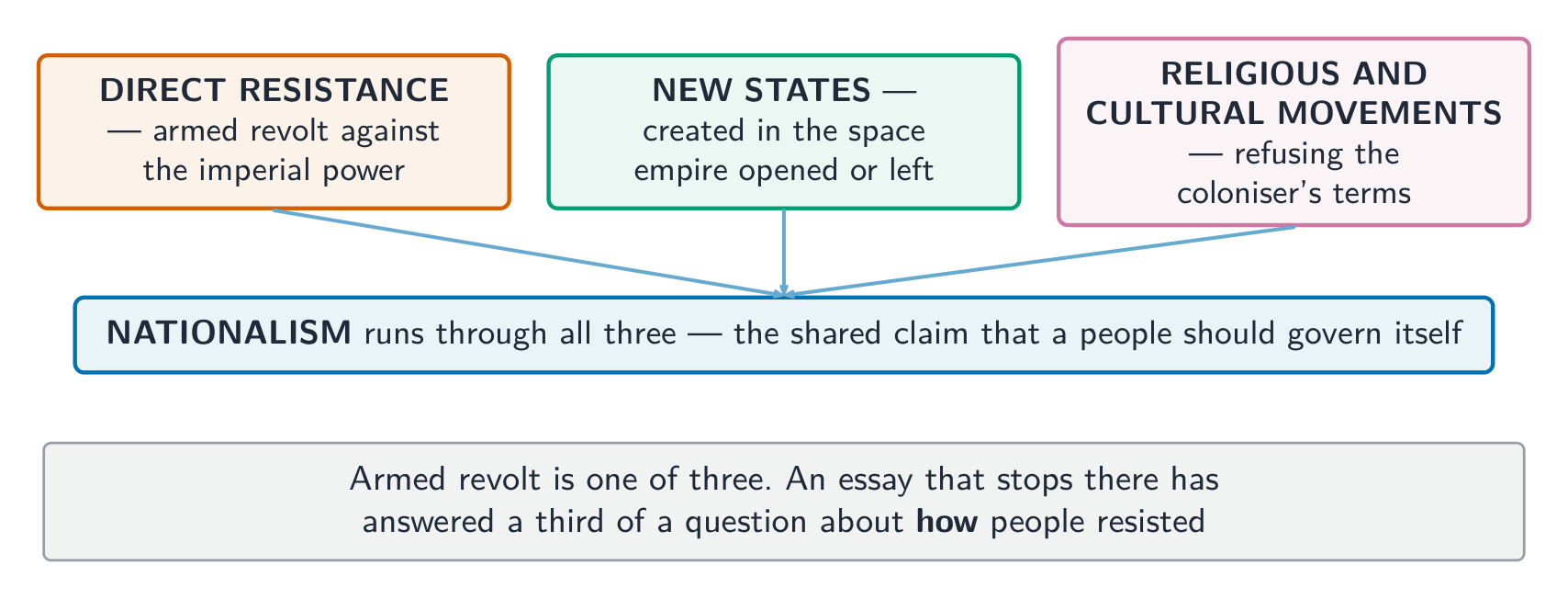
Anti-imperial resistance 抵抗 took various forms, and listing only armed revolt loses marks:

  • Direct resistance 直接抵抗 - armed rebellion against colonial authority.
  • Creation of new states 建立新国家 by leaders organising against imperial power.
  • Religious and cultural movements 宗教与文化运动 that reasserted local identity against colonial rule.

Increasing questions about political authority and growing nationalism in colonised regions led to rebellions, some of which were sustained enough to change imperial policy. The important point: resistance is continuous throughout the period, not a late reaction.

The examples the CED names, one per form

An essay needs a case, not a category. These are the ones the CED lists, sorted by the form of resistance they illustrate:

Case Where Form it illustrates
Samory Touré's 萨莫里·杜尔 military campaigns West Africa direct armed resistance, sustained for years against the French
Yaa Asantewaa War 雅阿·阿散蒂瓦战争 Asante, West Africa direct resistance led by a woman, in defence of a sacred symbol of sovereignty
Sokoto Caliphate 索科托哈里发国 modern-day Nigeria the creation of a NEW state, founded in a religious reform movement

The Congo shows how the argument about empire changed. The territory was first held as the private property of King Leopold II of Belgium rather than as a colony of Belgium at all; the atrocities of the rubber regime became an international scandal, and in 1908 ownership was transferred to the Belgian government. It is the clearest case in the unit of imperial practice being altered by publicity and criticism — useful evidence in any question about how empire was justified or challenged.

עברית

ההתנגדות נגד האימפריאליזם קיבלה צורות שונות, והצגת מרד מוזרק בלבד תגרור הפחתת נקודות:

  • התנגדות ישירה - מרד מזויין נגד הרשות המושבתית.
  • יצירת מדינות חדשות על ידי מנהיגים שארגנו נגד הכוח האימפריאלי.
  • תנועות דתיות ותרבותיות שמחדשות זהות מקומית נגד השלטון המושבת.

שאלות מוגברות לגבי סמכות פוליטית ואומנות לאומית מתגברת באזורים המושבים הובילו למרדים, חלקם היו ממושכים מספיק כדי לשנות את המדיניות האימפריאלית. הנקודה החשובה: ההתנגדות היא רציפה לאורך כל התקופה, ולא תגובה מאוחרת.

ההתנגדות קיבלה שלוש צורות, כאשר לאומנות עוברת דרך כולן

הדוגמאות שה-CED מציינת, אחת לכל צורה

מאמר זקוק למקרה ספציפי, לא לקטגוריה. אלו הם אלו שה-CED מונה, מסודרים לפי הצורה של ההתנגדות שהן ממחישות:

מקרה היכן צורה שהוא ממחיש
הקמפניות הצבאיות של סמורי טורה מערב אפריקה התנגדות מוזרقت ישירה, שהייתה ממושכת שנים רבות נגד הצרפתים
מלחמת יאה אסנטווה אסנטה, מערב אפריקה התנגדות ישירה שהובילה על ידי אישה, בהגנה על סמל קדוש של ריבונות
ח'ליפות סוקוטו ניגריה המודרנית יצירת מדינה חדשה, שהוקמה בתנועת רפורמה דתית

הקונגו מדגימה כיצד הטיחוני לגבי האימפריה השתנה. השטח נשלט במקור כהחברה הפרטית של המלך ליאופולד השני של בלגיה ולא כמושבה של בלגיה; העבירות של משטר הגומי הפכו לסקנדל בינלאומי, וב-1908 המעבר לבעלות הועבר לממשלת בלגיה. זהו המקרה הבולט ביותר ביחידה שבו שימוש אימפריאלי שונה על ידי פרסום וביקורת - עדות שימושית בכל שאלה לגבי כיצד האימפריה הוצדקה או נקלה.

Vocabulary · ⁨מילון מונחים⁩ Train · ⁨אימון⁩
English עברית
civilising mission/ˈsɪvəlaɪzɪŋ ˈmɪʃn/ משימת האזנה
Social Darwinism/ˈsəʊʃl ˈdɑːwɪnɪzəm/ דארוויניזם חברתי
warfare and diplomacy/ˈwɔːfeə ænd dɪˈpləʊməsi/ מלחמות ודיפלומטיה
settler colonies/ˈsetlə ˈkɒləniz/ מושבות מתיישבים
resistance/rɪˈzɪstəns/ התנגדות
Direct resistance/daɪˈrekt rɪˈzɪstəns/ התנגדות ישירה
Creation of new states/kriːˈeɪʃn ɒv njuː steɪts/ יצירת מדינות חדשות
Religious and cultural movements/rɪˈlɪdʒəs ænd ˈkʌltʃərəl ˈmuːvmənts/ תנועות דתיות ותרבותיות
Samory Touré's/ˈsæməri tʊəˈreɪz/ של סמורי טורה
Yaa Asantewaa War/jɑː əˈsæntjuːɑː wɔː/ מלחמת יאה אסנטווה
Sokoto Caliphate/səˈkəʊtəʊ ˈkælɪfeɪt/ הקליפייה של סוקוטה
raw materials/rɔː məˈtɪərɪəlz/ חומרי גלם
food supplies/fuːd səˈplaɪz/ אספקת מזון
cash crops/kæʃ krɒps/ גידולי מסחר
extractive industries/ekˈstræktɪv ˈɪndʌstriz/ תעשיות חילוץ
6.4 6.5

The Global Economy · ⁨הכלכלה העולמית⁩

Syllabus · ⁨סיילבוס⁩
English

6.4 Global Economic Development from1750 to 1900

Thematic Focus (ENV): Humans and the Environments — The environment shapes human societies, and as populations grow and change, these populations in turn shape their environments.

Learning Objective Unit 6.D: Explain how various environmental factors contributed to the development of the global economy from 1750 to 1900.

  • KC-5.1.II.A The need for raw materials for factories and increased food supplies for the growing population in urban centers led to the growth of export economies around the world that specialized in commercial extraction of natural resources and the production of food and industrial crops. The profits from these raw materials were used to purchase finished goods.

Illustrative examples:

  • Resource export economies:
    • Cotton production in Egypt
    • Rubber extraction in the Amazon and the Congo basin
    • The palm oil trade in West Africa
    • The guano industries in Peru and Chile
    • Meat from Argentina and Uruguay
    • Diamonds from Africa
עברית

6.4 פיתוח כלכלי עולמי משנת 1750 עד 1900

דגש נושאי (ENV): אנושים וסביבות — הסביבה מעצבת את המיזמים האנושיים, וככל שהאוכלוסיות גדלות ומשתנות, כך המיזמים הללו עוצבים בתורם את הסביבות שלהם.

מטרת למידה ליחידה 6.D: הסבר כיצד גורמים סביבתיים שונים תרמו לפיתוח הכלכלה העולמית בין השנים 1750 ל-1900.

  • KC-5.1.II.A הצורך בחומרי גלם למפעלים ובעודף מזון לאוכלוסייה הגדולה במרכזים העירוניים הובילו לגידול כלכלות יצוא בעולם כולו, שהתמחו בפיקוח מסחרי על משאבי טבע ובהפקת מזון וצמחי תעשייה. הרווחים מחומרי הגלם הללו שימשו לרכישת מוצרים מוגמרים.

דוגמאות מדגמיות:

  • כלכלות יצוא משאבים:
    • ייצור כותנה במצרים
    • פיקוח גומי באמזונאס ובאגן הקונגו
    • המסחר בשמן דקלים במערב אפריקה
    • תעשיית הדשן (גואנו) בפרו ובצ'ילה
    • בשר מארגנטינה ומאורוגוואי
    • יהלומים מאפריקה
English

6.5 Economic Imperialism from 1750 to 1900

Thematic Focus (ECN): Economics Systems — As societies develop, they affect and are affected by the ways that they produce, exchange, and consume goods and services.

Learning Objective Unit 6.E: Explain how various economic factors contributed to the development of the global economy from 1750 to 1900.

  • KC-5.2.I.E Industrialized states and businesses within those states practiced economic imperialism primarily in Asia and Latin America.
  • KC-5.1.II.C Trade in some commodities was organized in a way that gave merchants and companies based in Europe and the U.S. a distinct economic advantage.

Illustrative examples:

  • Industrialized states practicing economic imperialism:
    • Britain and France expanding their influence in China through the Opium Wars
    • The construction of the Port of Buenos Aires with the support of British firms
  • Commodities that contributed to European and American economic advantage:
    • Opium produced in the Middle East or South Asia and exported to China
    • Cotton grown in South Asia and Egypt and exported to Great Britain and other European countries
    • Palm oil produced in sub-Saharan Africa and exported to European countries
    • Copper extracted in Chile
עברית

6.5 אימפריאליזם כלכלי משנת 1750 עד 1900

הדגשה נושאית (ECN): מערכות כלכליות — כאשר חברות מתפתחות, הן משפיעות ומושפעות מהדרך שבהן הן מייצרות, מחליפות וצורכות סחורות ושירותים.

מטרת הלמידה ליחידה 6.E: הסבר כיצד גורמים כלכליים שונים תרמו לפיתוח הכלכלה הגלובלית בין השנים 1750 ל-1900.

  • KC-5.2.I.E מדינות מודרניות וחברות בתוכם הפעילו אימפריאליזם כלכלי בעיקר באסיה ובאמריקה הדרומית.
  • KC-5.1.II.C המסחר במספר סוגי מוצרים אורגן כך שהעניק לסוחרים ולחברות הממוקמות באירופה ובארצות הברית יתרון כלכלי בולט.

דוגמאות מדגמיות:

  • מדינות מודרניות המפעילות אימפריאליזם כלכלי:
    • בריטניה וצרפת הרחיבו את השפעתן בסין באמצעות מלחמות האופיום
    • בניית נמל בואנוס איירס עם תמיכה של חברות בריטיות
  • מוצרים שתרמו ליתרון הכלכלי האירופאי והאמריקאי:
    • אופיום שיוצר במזרח התיכון או בדרום אסיה וצווא לשוק סין
    • כותנה שגודלה בדרום אסיה ובמצרים וצואה לבריטניה ומדינות אירופאיות אחרות
    • שמן דקל שיוצר באפריקה דרומית לסהרה וצואה למדינות אירופאיות
    • נחושת שנחפרה בצ'ילה

Source: College Board AP Course and Exam Description · ⁨מקור: תיאור הקורס והמבחן של College Board AP⁩

English

The need for raw materials 原材料 for factories and increased food supplies 粮食供应 for growing urban populations reorganised production across the world. Colonies and dependent regions were pushed toward cash crops 经济作物 and extractive industries 采掘业, often at the cost of food production for local use.

The commodities are worth knowing by name and origin, because a question usually supplies one and expects you to place it: cotton from Egypt and India, rubber from the Congo and the Amazon, palm oil from West Africa, sugar from the Caribbean, guano from Peru, and meat from Argentina and Uruguay — the last made possible by refrigerated shipping, which turned distant grassland into a supplier for European cities.

Economic imperialism 经济帝国主义 is the examinable distinction. Industrialised states and their businesses exercised control through investment, loans, and trade dominance without necessarily taking political control - so a region could be economically dominated while remaining formally independent.

Trade in some commodities was organised so that merchants and firms in industrialised states held disproportionate power 不成比例的权力 over producers, setting prices and terms.

עברית
מדינות תעשייתיות צרכו חומרי גלם ושוקים; המושבות אורגנו מחדש כדי לספק אותם
אימפריאליזם כלכלי לא דרש תמיד שליטה פוליטית - ולכן יש להבדיל בין השניים

הצורך בחומרי גלם למפעלים ובספקי מזון מוגברים לאוכלוסיות עירוניות גדלות ארגן מחדש את הייצור בכל העולם. מושבות ואזורים תלויים הועברו לייצור תוצאות חקלאיות יצוא ותעשיות חילוץ, לעיתים קרובות על חשבון ייצור מזון לצריכה מקומית.

חשוב לדעת בשמותיהם ומקורותיהם של הסחורות, משום ששאלה בדרך כלל מספקת אחת ומצפה שתמקמה: כותנה ממצרים והודו, גומי מקונגו ומהאמזונאס, שמן דקל ממערב אפריקה, סוכר מהכריבי, גואנו מפרו, ובשר מארגנטינה ואורוגוואי – האחרון הפך אפשרי בזכות משלוחים מקורבים, שהפכו את הדשא הרחוק לספק עבור ערי אירופה.

אימפריאליזם כלכלי הוא ההבדל הנדרש לבחינה. מדינות ממוחשפות וחברותיהן הפעילו שליטה דרך השקעות, הלוואות ועליונות במסחר מבלי לקחת בהכרח שליטה פוליטית – כך שאזור יכול להיות נשלט כלכלית תוך שמירה על עצמאות פורמלית.

המסחר בסחורות מסוימות אורגן כך שסוחרים וחברות במדינות ממוחשפות החזיקו בכוח בלתי פרופורציונלי מעל המייצרים, קבעו מחירים ותנאים.

Vocabulary · ⁨מילון מונחים⁩ Train · ⁨אימון⁩
English עברית
Economic imperialism/ˌiːkəˈnɒmɪk ɪmˈpɪərɪəlɪzəm/ אימפריאליזם כלכלי
disproportionate power/ˌdɪsprəˈpɔːʃənət ˈpaʊə/ כוח לא פרופורציונלי
modes of transportation/məʊdz ɒv trænspɔːˈteɪʃn/ שיטות תחבורה
temporary or seasonal/ˈtemprəri ɔː ˈsiːzənl/ זמני או עונתי
coerced and semi-coerced labour/ˌkəʊˈɜːst ænd ˈsemi ˌkəʊˈɜːst ˈleɪbə/ עבודה מוכרחת וחצי-מוכרחת
indentured servitude/ˌɪnˈdentʃəd ˈsɜːvɪtjuːd/ עבודת כפייה בהסכם
ethnic enclaves/ˈeθnɪk ˈeŋkleɪvz/ ערים קהילתיות אתניות
6.6

Migration · ⁨הגירה⁩

Syllabus · ⁨סיילבוס⁩

6.6 Causes of Migration in an Interconnected World

Thematic FocusLearning ObjectiveHistorical Developments

ECN
Economics Systems — As societies develop, they affect and are affected by the ways that they produce, exchange, and consume goods and services.

Unit 6.F
Explain how various environmental factors contributed to the development of varied patterns of migration from 1750 to 1900.

  • KC-5.4.I Migration in many cases was influenced by changes in demographics in both industrialized and unindustrialized societies that presented challenges to existing patterns of living.
  • KC-5.4.I.B Because of the nature of new modes of transportation, both internal and external migrants increasingly relocated to cities. This pattern contributed to the significant global urbanization of the 19th century. The new methods of transportation also allowed for many migrants to return, periodically or permanently, to their home societies.

Unit 6.G
Explain how various economic factors contributed to the development of varied patterns of migration from 1750 to 1900.

  • KC-5.4.II.A Many individuals chose freely to relocate, often in search of work.
  • KC-5.4.II.B The new global capitalist economy continued to rely on coerced and semicoerced labor migration, including enslavement Chinese and Indian indentured servitude, and convict labor.

Illustrative examples:

  • Return of migrants:
    • Japanese agricultural workers in the Pacific
    • Lebanese merchants in the Americas
    • Italian industrial workers in Argentina
  • (CONT’D) Migrants:
    • Irish to the United States
    • British engineers and geologists to South Asia and Africa

Source: College Board AP Course and Exam Description · ⁨מקור: תיאור הקורס והמבחן של College Board AP⁩

English

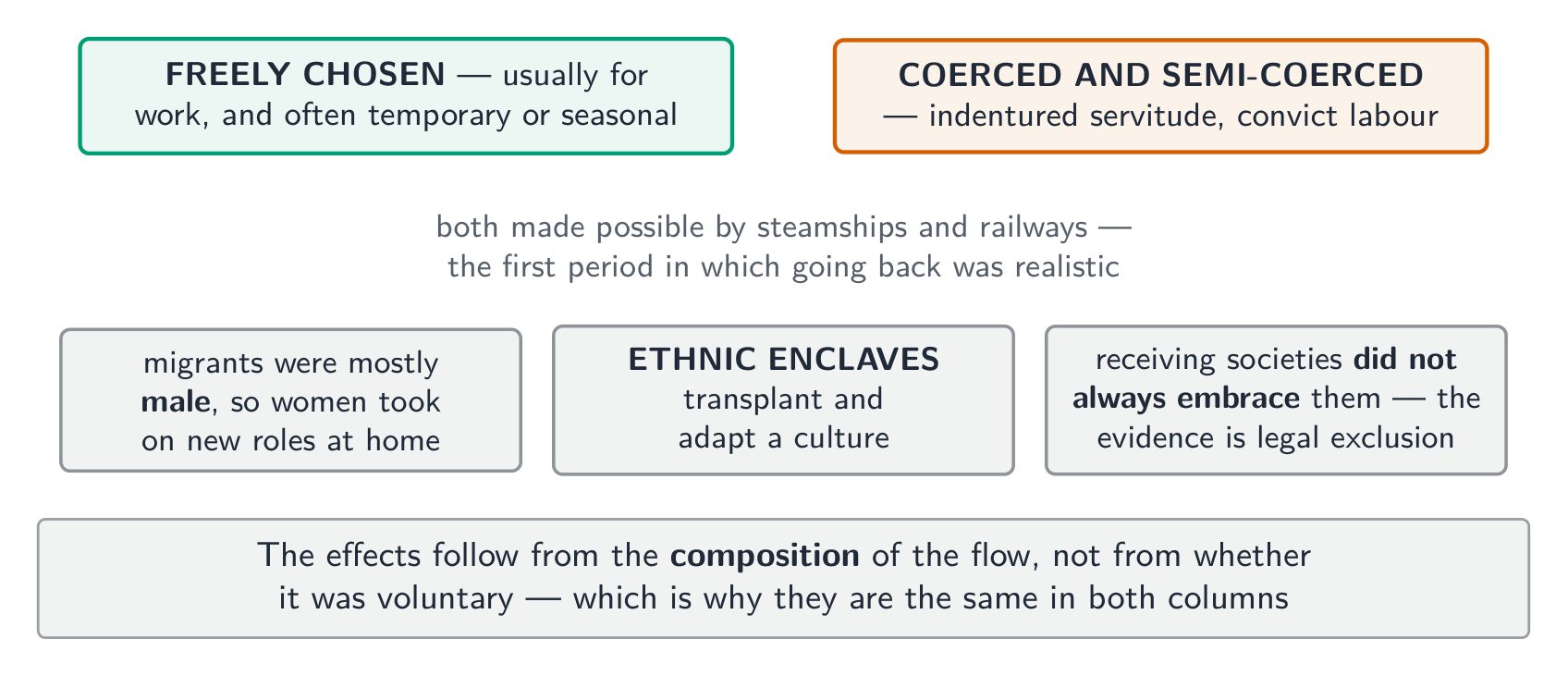
Migration in this period was shaped by demographic change in both sending and receiving societies, and by new modes of transportation 交通方式 - steamships and railways - which made long-distance and often temporary or seasonal 临时或季节性 movement possible for the first time.

Two kinds must be distinguished:

  • Many people chose freely to relocate, usually in search of work.
  • The global capitalist economy continued to rely on coerced and semi-coerced labour 强制与半强制劳动, including indentured servitude 契约劳工 and convict labour, after the legal end of the slave trade.
עברית

הגירה בתקופה זו עוצבה על ידי שינויים דמוגרפיים בחברות המשלחות ובמקבלות, ועל ידי מודעי תחבורה חדשים – אוניות קיטור ורכבות – שהפכו תנועה לטווח ארוך ולעיתים זמנית או עונתית אפשרית לראשונה.

יש להבחין בין שני סוגים:

  • אנשים רבים בחרו בחופשיות להשתכן, לרוב במטרות עבודה.
  • הכלכלה הקפיטליסטית העולמית המשיכה להסתמך על עבודה מאולצת וחצי-מאולצת, כולל עבדות חוזים ועבודת אסירים, לאחר הסיום המשפטי של המסחר בעבדים.
6.7

Effects of Migration · ⁨השפעות ההגירה⁩

Syllabus · ⁨סיילבוס⁩
English

6.7 Effects of Migration

Thematic Focus (SIO): Social Interactions and Organization — The process by which societies group their members and the norms that govern the interactions between these groups and between individuals influence political, economic, and cultural institutions and organization.

Learning Objective Unit 6.H: Explain how and why new patterns of migration affected society from 1750 to 1900.

  • KC-5.4.III.A Migrants tended to be male, leaving women to take on new roles in the home society that had been formerly occupied by men.
  • KC-5.4.III.B Migrants often created ethnic enclaves in different parts of the world that helped transplant their culture into new environments.
  • KC-5.4.III.C Receiving societies did not always embrace immigrants, as seen in the various degrees of ethnic and racial prejudice and the ways states attempted to regulate the increased flow of people across their borders.

Illustrative examples:

  • Migrant ethnic enclaves:
    • Chinese in Southeast Asia, the Caribbean, South America, and North America
    • Indians in East and Southern Africa, the Caribbean, and Southeast Asia
    • Irish in North America
    • Italians in North and South America
  • Regulation of immigrants:
    • Chinese Exclusion Act
    • White Australia policy
עברית

6.7 השפעות ההגירה

מיקוד נושאי (SIO): אינטראקציות חברתיות וארגון — התהליך שבו societies מחלקות את חבריהן והנורמות שמפקדות את האינטראקציות בין קבוצות אלו ובין פרטים משפיעות על המוסדות והארגון הפוליטיים, הכלכליים והתרבותיים.

מטרות למידה ליחידה 6.H: הסבר כיצד ובאיזה אופן דפוסי הגירה חדשים השפיעו על החברה בין 1750 ל-1900.

  • KC-5.4.III.A המהגרים היו נוטים להיות זכרים, מה שהשאיר נשים לקחת תפקידים חדשים בחברה המקומית שבעבר תופסו גברים.
  • KC-5.4.III.B המהגרים יצרו לעיתים קרובות מחנות אתניים במרחבי העולם השונים, מה שסייע בהעתקת התרבות שלהם לסביבות חדשות.
  • KC-5.4.III.C החברות המקבלות לא תמיד קיבלו את המהגרים בחום, כפי שנראה בדרגות השונות של גזענות ודוחי אתניות ובדרך שבה מדינות ניסו לווסת את הזרם המוגבר של אנשים חוצה גבולותיהן.

דוגמאות מדגמיות:

  • מחנות אתניים של מהגרים:
    • סינים בדרום-מזרח אסיה, הקריביים, דרום אמריקה וצפון אמריקה
    • הודים במזרח אפריקה ובדרומה, בקריביים ובדרום-מזרח אסיה
    • איריים בצפון אמריקה
    • איטלקים בצפון ובדרום אמריקה
  • ויסות של מהגרים:
    • חוק האיסור על סין
    • מדיניות אוסטרליה הלבנה

Source: College Board AP Course and Exam Description · ⁨מקור: תיאור הקורס והמבחן של College Board AP⁩

English

Three effects are named directly in the CED:

  • Migrants tended to be male, leaving women to take on new roles in the home societies they left.
  • Migrants created ethnic enclaves 族裔聚居区 in destination societies, transplanting and adapting their cultures.
  • Receiving societies did not always embrace immigrants, and the examinable evidence is legal exclusion - most clearly the restriction of Chinese and other Asian migration in several countries.
עברית

שלושה השפעות מצוינות במפורש ב-CED:

  • הגירים היו נוטים להיות זכרים, מה שהשאיר נשים לקחת תפקידים חדשים בחברות המקור שלהן.
  • הגירים יצרו חבלי תרבות בחברות היעד, התרבות והתאגדו לתרבויותיהם.
  • חברות מקבלות לא תמיד קיבלו את הגירים, וההוכחה הנדרשת לבחינה היאheit משפטי – במיוחד ההגבלה על הגירה סינית ואסייתית אחרת במדינות רבות.
שני סוגי תנועה, סוג אחד של השפעות – הן נובעות מההרכב של הזרימה
Explore · ⁨חקור⁩

Sort the two kinds of movement and their effects · ⁨סווג את שני סוגי התנועה והשפעותיהם⁩

The effects follow from the composition of the flow, not from whether it was voluntary — which is why they are the same on both sides. · ⁨ההשפעות נובעות מהרכב הזרימה, ולא מיותו וולונטרי — ולכן הן זהות בשני הצדדים.⁩

6.8

Causation in the Imperial Age · ⁨סיבתיות בתקופת האימפריאליזם⁩

Syllabus · ⁨סיילבוס⁩
English

6.8 Causation in the Imperial Age

Learning Objective Unit 6.I: Explain the relative significance of the effects of imperialism from 1750 to 1900.

  • KC-5.1 The development of industrial capitalism led to increased standards of living for some, and to continued improvement in manufacturing methods that increased the availability, affordability, and variety of consumer goods.
  • KC-5.2 As states industrialized, they also expanded existing overseas empires and established new colonies and transoceanic relationships.
  • KC-5.3 The 18th century marked the beginning of an intense period of revolution and rebellion against existing governments, leading to the establishment of new nation-states around the world.
  • KC-5.4 As a result of the emergence of transoceanic empires and a global capitalist economy, migration patterns changed dramatically, and the numbers of migrants increased significantly.
עברית

6.8 גורמים בעידן האימפריאלי

מטרות למידה ליחידה 6.I: הסבר על המשמעות היחסית של השפעות האימפריאליזם בין 1750 ל-1900.

  • KC-5.1 פיתוח הקפיטליזם התעשייתי הוביל להגברת רמת החיים עבור חלק מהאוכלוסייה, וכן להמשך שיפור בשיטות הייצור שהגדילו את הזמינות, השתלמות ומגוון המוצרים הצריכתיים.
  • KC-5.2 כשהמדינות התעשייניות, הן גם הרחיבו את האימפריות המהגרות הקיימות והקימו מושבות חדשות ויחסים טרנס-אוקיינוסיים.
  • KC-5.3 המאה ה-18 סימלה את תחילת תקופה אינטנסיבית של מהפכות ומרידות נגד הממשלות הקיימות, מה שהוביל להקמת מדינות לאום חדשות בכל העולם.
  • KC-5.4 כתוצאה מהתפתחותם של אימפריות טרנס-אוקיינוסיות ומשק קפיטליסטי גלובלי, דפוסי ההגירה השתנו באופן משמעותי, ומספר המהגרים גדל בצורה ניכרת.

Source: College Board AP Course and Exam Description · ⁨מקור: תיאור הקורס והמבחן של College Board AP⁩

English

The unit's reasoning skill is causation. The strongest chain: industrial production created demand for raw materials and markets, which drove expansion; expansion required justification, which ideology supplied; and both produced resistance and mass migration.

Worked example (a real AP exam question). AP World short-answer questions here ask, for example, to "Explain one way in which industrialisation contributed to imperialism" between 1750 and 1900. A full-mark answer traces the mechanism: "Industrial factories required raw materials such as cotton and rubber that could not be produced in Europe, so industrial states took political or economic control of regions that could supply them, reorganising those economies around export crops." Notice the shape: the mark is for the link, not for asserting that industrialisation and imperialism are connected.

עברית

הכישור הסיבתיות של היחידה הוא סיבתיות. השרשרת החזקה ביותר: ייצור תעשייתי יצר ביקוש לחומרי גלם ושוקים, שהניע הרחבה; הרחבה דרשה הצדקה, שהאידאולוגיה סיפקה; ושניהם ייצרו התנגדות והגירה המונית.

דוגמה מפורטת (שאלה אמיתית בבחינת AP). שאלות מענה קצר ב-AP World כאן מבקשות, לדוגמה, "להסביר דרך אחת שבה תעשייה תרמה לאימפריאליזם" בין 1750 ל-1900. תשובה מלאה נקודות מנכסה את המנגנון: "מפעלים תעשייתיים דרשו חומרי גלם כמו כותנה וגומי שלא יכלו להיות מיוצרים באירופה, ולכן מדינות תעשייתיות קיבלו שליטה פוליטית או כלכלית על אזורים שיכולים לספק אותם, ומארגנים מחדש את כלכלותיהן סביב תוצאות יצוא." שמו לב למבנה: הנקודה היא עבור הקשר, ולא עבור הטענה כי תעשייה ואימפריאליזם קשורים זה לזה.

6.8

Exam tips · ⁨טיפים לבחינות⁩

English
  • Separate justifications (civilising mission, Social Darwinism) from causes (raw materials, markets, strategy). Questions often ask for one and reward not confusing it with the other.
  • Economic imperialism works without political control; that distinction answers many questions on its own.
  • Give three kinds of resistance - direct, new states, religious and cultural movements.
  • Migration questions want the split between free and coerced or semi-coerced movement.
  • For effects, use the CED's own three: male migration changing home societies, ethnic enclaves, and exclusion laws.
  • Causation answers must trace a mechanism. Asserting a connection is not explaining one.
עברית
  • הפרד בין הצדקות (משימה מלכדת, דוויניזם חברתי) לבין גורמים (חומרי גלם, שווקים, אסטרטגיה). השאלות בדרך כלל מבקשות אחת מהן ומעניקות ניקוד רק כאשר לא מתבלבלים ביניהן.
  • אימפריאליזם כלכלי פועל ללא שליטה פוליטית; הבחנה זו היא התשובה לשאלות רבות בעצמה.
  • ציינו שלושה סוגי התנגדות: התנגדות ישירה, מדינות חדשות, ותנועות דתיות ותרבותיות.
  • בשאלות מעבר, יש להבדיל בין תנועה חופשית לבין תנועה מוכרחת או חצי-מוכרחת.
  • עבור השפעות, השתמשו בשלושת הסעיפים של ה-CED עצמו: הגירה של גברים המשנה את החברה המקורית, מחלقات אתניות, וחוקי אינטגרציה.
  • בתשובות לגורמים, יש לעקוב אחר המנגנון. האמרת קשר אינה מספקת הסבר עליו.

Interactive lessons on this topic · ⁨שיעורים אינטראקטיביים בנושא זה⁩

Work through it step by step, with instant-check exercises. · ⁨לעבור על הדברים צעד אחר צעד, עם תרגילים לבדיקה מיידית.⁩

Past Papers · ⁨מבחני עבר⁩

More topics in AP World History: Modern · ⁨היסטוריה עולמית: זמנים מודרניים - AP⁩ · ⁨נושאים נוספים בAP World History: Modern · ⁨היסטוריה עולמית: זמנים מודרניים - AP⁩⁩

Log in or create account · ⁨היכנס או צור חשבון⁩

IGCSE, A-Level & AP