Skip to content · ⁨דלג לתוכן⁩

Land-Based Empires · ⁨אימפריות מבוססות יבשה⁩

AP World History: Modern · ⁨היסטוריה עולמית: זמנים מודרניים - AP⁩ · Topic 3 · ⁨נושא 3⁩

Video lesson for this topic · ⁨שיעור וידאו לנושא זה⁩ Open the video page · ⁨פתח את עמוד הוידאו⁩
5:35

יחידה 3: אימפריות יבשתיות

לכל שליט ביחידה זו ישנו אותם בעיה פרקטית. כישת רכבת שטחים הנמצאים בשבועות נסיעה מהבירה שלך, והאנשים ש…

English narration · English + 中文 subtitles burned in · ⁨קריאת קול באנגלית · תרגום אנגלי + סינית שרוף בתוך הסרטון⁩

3.1

How the Land Empires Expanded · ⁨כיצד האימפריות היבשתיות התרחבו⁩

Syllabus · ⁨סיילבוס⁩
English

3.1 Empires Expand

Thematic Focus (GOV): Governance — A variety of internal and external factors contribute to state formation, expansion, and decline. Governments maintain order through a variety of administrative institutions, policies, and procedures, and governments obtain, retain, and exercise power in different ways and for different purposes.

Learning Objective Unit 3.A: Explain how and why various land-based empires developed and expanded from 1450 to 1750.

  • KC-4.3.II Imperial expansion relied on the increased use of gunpowder, cannons, and armed trade to establish large empires in both hemispheres.
  • KC-4.3.II.B Land empires included the Manchu in Central and East Asia; the Mughal in South and Central Asia; the Ottoman in Southern Europe, the Middle East, and North Africa; and the Safavids in the Middle East.
  • KC-4.3.III.i Political and religious disputes led to rivalries and conflict between states.

Illustrative examples:

  • State rivalries:
    • Safavid–Mughal conflict
    • Songhai Empire’s conflict with Morocco
עברית

3.1 אימפריות מתרחבות

מיקוד נושא (GOV): שלטון — מגוון גורמים פנימיים וחיצוניים תורמים ליצירת מדינות, הרחבתן ונפילתן. ממשלות שומרות על סדר באמצעות מגוון מוסדות, מדיניות ונהלים מנהליים, וממשלות רוכשות, שומרות ומפעילות כוח בדרכים ובמטרות שונות.

מטרת הלמידה יחידה 3.A: הסבר כיצד ואיך פיתחו והתרחבו אימפריות יבשתיות שונות בין 1450 ל-1750.

  • KC-4.3.II הרחבת אימפריות הסתמכה על השימוש המוגבר באבקת שער, תותחים ומסחר מזוין כדי להקים אימפריות גדולות בשני חצאי הכדור.
  • KC-4.3.II.B האימפריות היבשתיות כללו את המנצ'ואים במרכז וברזון המזרחי; המוגולים בדרום ובמרכז אסיה; העות'מאנים באירופה הדרומית, במזרח התיכון ובצפון אפריקה; ואת הספווידים במזרח התיכון.
  • KC-4.3.III.i מחלוקות פוליטיות ודתיות הובילו לתחרויות ולסכסוך בין מדינות.

דוגמאות מדגמיות:

  • תחרויות מדיניות:
    • סכסוך ספאווידי-מוגולי
    • סכסוך האימפריה של סונגהאי עם מרוקו
Source: College Board AP Course and Exam Description · ⁨מקור: תיאור הקורס והמבחן של College Board AP⁩

English

Unit 3 covers the great land-based empires 陆基帝国 of roughly 1450 to 1750. Four questions organise it: how they expanded, how they governed, how they paid for themselves, and how they used religion.

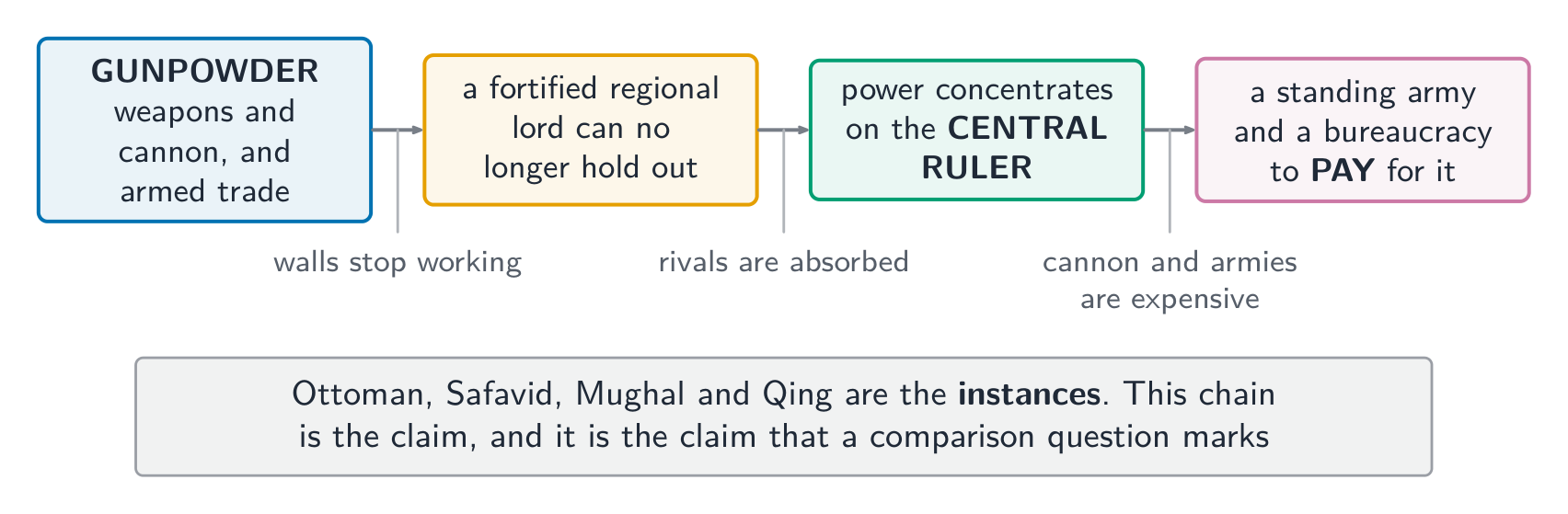
Expansion relied on the increased use of gunpowder, cannons, and armed trade - which is why these are often called the gunpowder empires 火药帝国. Access to gunpowder weapons let a central ruler overpower regional rivals and fortified nobles, so military technology and political centralisation grew together.

The empires to know:

  • The Manchu (Qing) 满清 in Central and East Asia.
  • The Mughal 莫卧儿 in South Asia.
  • The Ottoman 奥斯曼 in the eastern Mediterranean and beyond.
  • The Safavid 萨法维 in Persia.
עברית

הנושא 3 מכסה את האימפריות היבשתיות הגדולות של כ-1450 עד 1750. ארבע שאלות מארגנות אותו: כיצד הן התרחבו, כיצד שלטו, כיצד מימן את עצמו, וכיצד השתמשו בדת.

ההרחבה הסתמכה על שימוש מוגבר באבקת שריפה, תותחים ומסחר מזויין – ולכן נקראות לעיתים האימפריות של אבקת השריפה. גישה לנשקי אבקת שריפה אפשרה לשלטSubmit המרכזי לגבר על יריבים אזוריים ועל אצילים מצודים, כך שהטכנולוגיה הצבאית והמרכזיות הפוליטית גדלו יחד.

האימפריות שיש לדעת:

  • מנצ'ו (צ'ינג) במרכז ובמזרח אסיה.
  • מוגול בדרום אסיה.
  • עות'מאני במזרח הים התיכון ובנוסף.
  • ספאווידי בפארס.
מדוע הן נקראות אימפריות אבקת שריפה: טכנולוגיה צבאית ומרכזיות גדלו יחד
Explore · ⁨חקור⁩

Assemble the gunpowder-empire claim · ⁨הרכב את טענת האימפריית אבק-השדה⁩

Military technology and political centralisation grew together — and the mechanism is that a cannon ends a fortified lord's advantage. · ⁨טכנולוגיה צבאית וריכוז פוליטי התפתחו יחד – והמנגנון הוא שקנה תת-קרקע מסתיים את היתרון של אדון מצוד.⁩

Vocabulary · ⁨מילון מונחים⁩ Train · ⁨אימון⁩
English עברית
land-based empires/lænd beɪst ˈempaɪəz/ אימפריות קרקעיות
gunpowder empires/ˈɡʌnpaʊdə ˈempaɪəz/ אימפריות אבקת נשק
Manchu (Qing)/ˈmæntʃuː/ מנצ'ו (צ'ינג)
Mughal/ˈməʊɡl/ מוגול
Ottoman/ˈɒtəmən/ עות'מאני
Safavid/ˈsæfəvɪd/ ספאבי
Recruitment of bureaucratic elites/rɪˈkruːtmənt ɒv ˌbjʊərəʊˈkrætɪk ɪˈliːts/ גיוס אליטות בירוקרטיות
military professionals/ˈmɪlɪtəri prəˈfeʃənlz/ מקצוענים צבאיים
devshirme/ˈdevʃɜːm/ דישירמה
janissaries/ˈdʒænɪsəriz/ יניצ'רים
ghulams/ˈɡjʊlæmz/ ג'ולאמים
tribute collection/ˈtrɪbjuːt kəˈlekʃn/ איסוף מס הכבוד
tax farming/tæks ˈfɑːmɪŋ/ חכירת מיסים
zamindar/ˈzæmaɪndɑː/ זמנדר
hard currency/hɑːd ˈkʌrənsi/ מטבע קשיח
Protestant Reformation/ˈprɒtɪstənt rɪfɔːˈmeɪʃn/ הרפורמה הפרוטסטנטית
Sunni-Shia split/ˈsʌni ʃɪə splɪt/ התפצלות סוני-שיעית
Sikhism/ˈsiːkɪzəm/ סיקיזם
3.2

Administration · ⁨מינהל⁩

Syllabus · ⁨סיילבוס⁩
English

3.2 Empires: Administration

Thematic Focus (GOV): Governance — A variety of internal and external factors contribute to state formation, expansion, and decline. Governments maintain order through a variety of administrative institutions, policies, and procedures, and governments obtain, retain, and exercise power in different ways and for different purposes.

Learning Objective Unit 3.B: Explain how rulers used a variety of methods to legitimize and consolidate their power in land-based empires from 1450 to 1750.

  • KC-4.3.I.C Recruitment and use of bureaucratic elites, as well as the development of military professionals, became more common among rulers who wanted to maintain centralized control over their populations and resources.
  • KC-4.3.I.A Rulers continued to use religious ideas, art, and monumental architecture to legitimize their rule.
  • KC-4.3.I.D Rulers used tribute collection, tax farming, and innovative tax-collection systems to generate revenue in order to forward state power and expansion.

Illustrative examples:

  • Bureaucratic elites or military professionals:
    • Ottoman devshirme
    • Salaried samurai
  • Religious ideas:
    • Mexica practice of human sacrifice
    • European notions of divine right
    • Songhai promotion of Islam
  • Art and monumental architecture:
    • Qing imperial portraits
    • Incan sun temple of Cuzco
    • Mughal mausolea and mosques
    • European palaces, such as Versailles
  • Tax-collection systems:
    • Mughal zamindar tax collection
    • Ottoman tax farming
    • Mexica tribute lists
    • Ming practice of collecting taxes in hard currency
עברית

3.2 אימפריות: מינהל

מיקוד נושא (GOV): שלטון — מגוון גורמים פנימיים וחיצוניים תורמים ליצירת מדינות, הרחבתן ונפילתן. ממשלות שומרות על סדר באמצעות מגוון מוסדות, מדיניות ונהלים מנהליים, וממשלות רוכשות, שומרות ומפעילות כוח בדרכים ובמטרות שונות.

מטרת הלמידה יחידה 3.B: הסבר כיצד שליטים השתמשו במגוון שיטות כדי ללגיטימץ ולחזק את כוחם באימפריות יבשתיות בין 1450 ל-1750.

  • KC-4.3.I.C גיוס והשתמשות בעליות ביורוקרטיות, כמו גם פיתוח מקצוענים צבאיים, הפכו לנפוצות יותר בקרב שליטים שרצו לשמור על שליטה מרכזית על אוכלוסיותיהם ועל המשאבים שלהם.
  • KC-4.3.I.A שליטים המשיכו להשתמש ברעיונות דתיים, אמנות וארכיטקטורה מונומנטלית כדי ללגיטימץ את שלטונם.
  • KC-4.3.I.D שליטים השתמשו באיסוף תשלום, מכירת רישיונות מס ומערכות איסוף מס חדשניות כדי לייצר הכנסות כדי לקדם את כוח המדינה והתרחבותה.

דוגמאות מדגמיות:

  • אלית ביורוקרטית או מקצועות צבאיים:
    • דוושירמה העות'מאנית
    • סמוראי משוכנים
  • רעיונות דתיים:
    • מעשי הקרבת קורבן אנושי על ידי המקסיקה
    • תפיסות אירופאיות של זכות אלוהית
    • קידום האסלאם על ידי סונגחאי
  • אמנות וארכיטקטורה מונומנטלית:
    • דיוקנאות קיסריות של שין
    • מקדש השמש האינקאי בקוסקו
    • מאוזוליאומים ומסגדים מהוגלים
    • ארמונות אירופאיים, כגון ורसाי
  • מערכות איסוף מסים:
    • איסוף מסים על ידי זמינדרים מהוגלים
    • חכירת מסים עות'מאנית
    • רשימות תשלומי הכבוד של המקסיקה
    • שיטת איסוף המסים במטבע קשיח על ידי מינג

Source: College Board AP Course and Exam Description · ⁨מקור: תיאור הקורס והמבחן של College Board AP⁩

English

Rulers faced the same problem: how to control territory far from the capital. The CED names the tools they used.

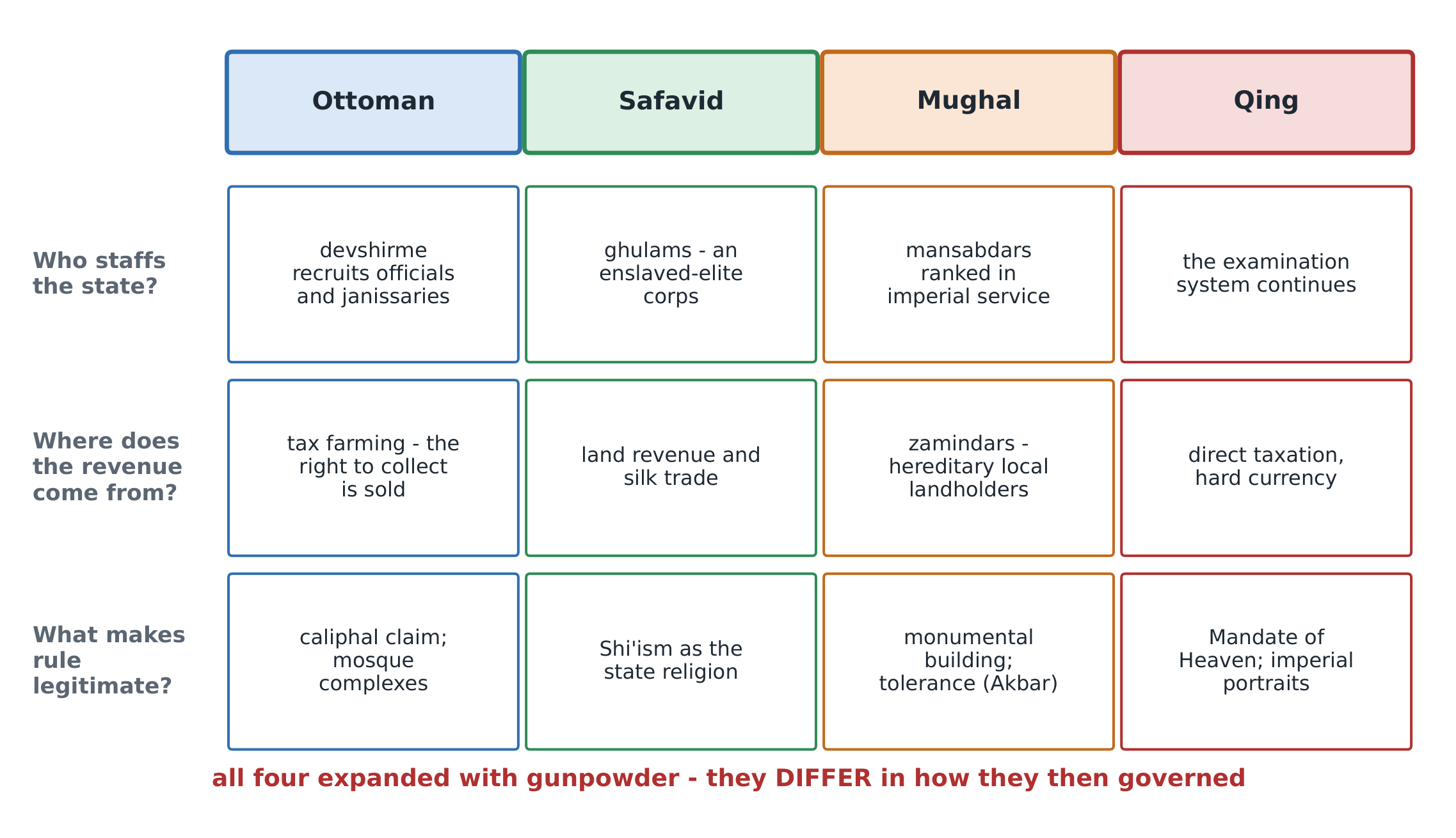
Recruitment of bureaucratic elites 官僚精英的选任 and the development of military professionals 职业军人 gave rulers officials who owed their position to the state rather than to birth. The clearest case is the Ottoman devshirme 德夫希尔梅 system, which recruited and trained administrators and soldiers, including the janissaries 耶尼切里; the Manchu continued China's examination system; the Safavids used ghulams 古拉姆.

Revenue came through tribute collection 纳贡, tax farming 包税制, and innovative tax-collection systems. The Mughal zamindar 柴明达尔 system and Ottoman tax farming are the standard examples, and the Ming practice of collecting taxes in hard currency 硬通货 is another.

עברית
ארבעה אימפריות, ערכת כלים אחת: כיצד כל אחת מהן גייסה פקידים, גבה הכנסות והכריזה על סמכותה
אותם שלושה בעיות - כוח אדם, הכנסות, סמכות - נפתרו בצורה שונה על ידי כל אימפריה

שלטונים נתקלו באותו בעיה: כיצד לשלוט במרחקים הרחוקים מבירת המדינה. ה-CED מציין את הכלים שהשתמשו בהם.

גיוסElites של מינהל ופיתוח מקצועיים צבאיים סיפקו לשלטון פקידים שזכו למעמדם בזכות המדינה ולא בזכות ייחוס. המקרה הבולט ביותר הוא מערכת דששירמה העות'מנית, שגייסה ואימנה מנהלים וחיילים, כולל ה-ג'ניסרים; המנצ'וארים המשיכו את מערכת ה-מבחנים של סין; הספבידים השתמשו ב-ג'ולמים.

הכנסות הגיעו דרך איסוף מסים, מכירת זכויות גביית מסים, ומערכות איסוף מסים חדשניות. מערכת זמינדר המוגולית ומכירת זכויות גביית מסים עות'מנית הן הדוגמאות הסטנדרטיות, ושיטת איסוף המסים במטבע קשיח של המינג היא עוד דוגמה.

3.3

Legitimacy and Belief · ⁨סמכות ואמונה⁩

Syllabus · ⁨סיילבוס⁩
English

3.3 Empires: Belief Systems

Thematic Focus (CDI): Cultural Developments and Interactions — The development of ideas, beliefs, and religions illustrates how groups in society view themselves, and the interactions of societies and their beliefs often have political, social, and cultural implications.

Learning Objective Unit 3.C: Explain continuity and change within the various belief systems during the period from 1450 to 1750.

  • KC-4.1.VI.i The Protestant Reformation marked a break with existing Christian traditions and both the Protestant and Catholic reformations contributed to the growth of Christianity.
  • KC-4.1.VI.ii Political rivalries between the Ottoman and Safavid empires intensified the split within Islam between Sunni and Shi’a.
  • KC-4.1.VI.iii Sikhism developed in South Asia in a context of interactions between Hinduism and Islam.
עברית

3.3 אימפריות: מערכות אמונה

מיקוד נושא (CDI): התפתחויות ותفاعלים תרבותיים — פיתוח רעיונות, אמונות ודתות מדגיש כיצד קבוצות בחברה רואות את עצמן, והתفاعלים בין חברות ואמונותיהן לעיתים קרובות יש להם משמעויות פוליטיות, חברתיות ותרבותיות.

מטרות למידה ליחידה 3.C: הסבר על הרצף והשינוי בתוך מערכות האמונה השונות בתקופה שבין 1450 ל-1750.

  • KC-4.1.VI.i הרפורמה הפרוטסטנטית סימלה שבירה עם המסורות הנוצריות הקיימות, והרפורמות הפרוטסטנטיות והקתוליות תרמו כולם לגודל הנצרות.
  • KC-4.1.VI.ii המריבות הפוליטיות בין האימפריות העות'מאנית והספווידית חידדו את השבר בתוך האסלאם בין הסונים לשיעים.
  • KC-4.1.VI.iii הסיחיות התפתחה בדרום אסיה במרחב של אינטראקציות בין ההינדואיזם לאסלאם.

Source: College Board AP Course and Exam Description · ⁨מקור: תיאור הקורס והמבחן של College Board AP⁩

English

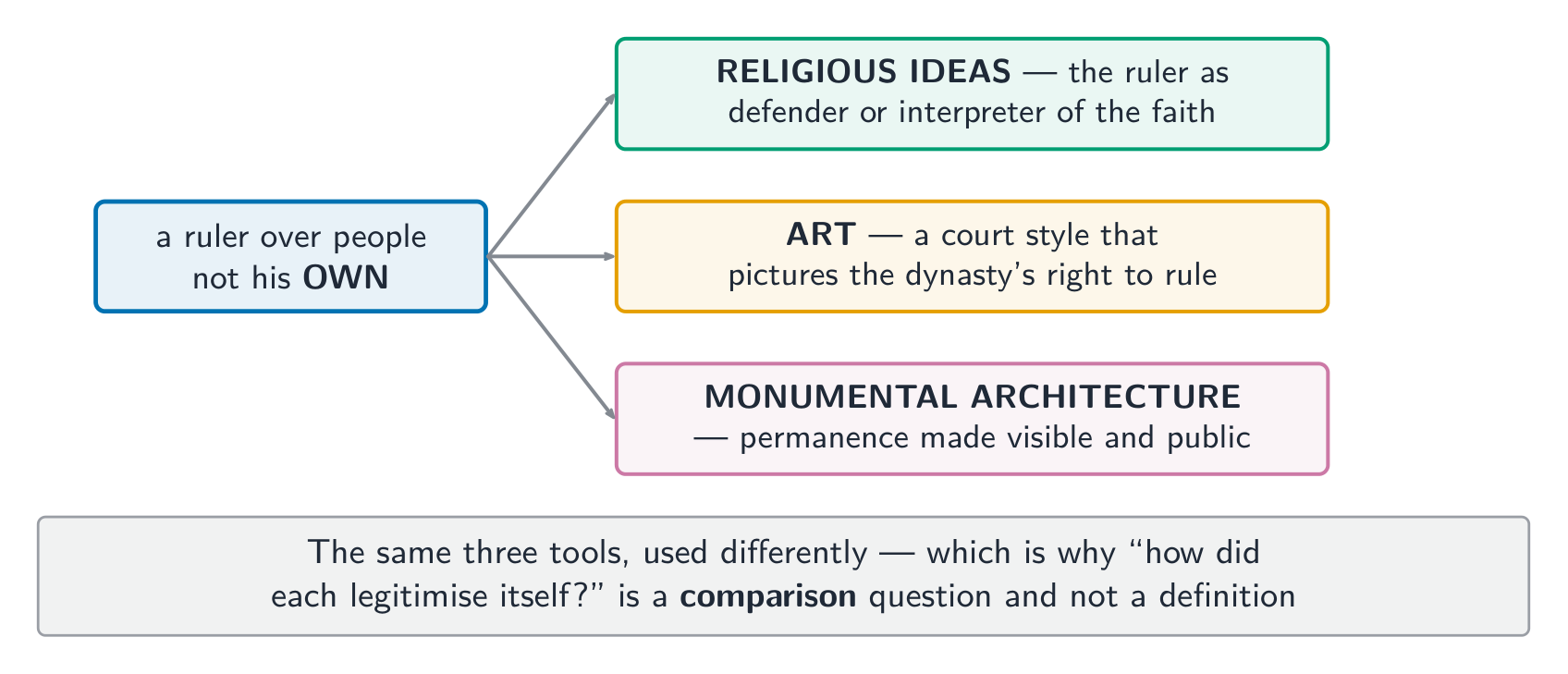
Rulers continued to use religious ideas, art, and monumental architecture to legitimise their rule - Mughal mosques and mausolea, Ottoman mosque complexes, Qing imperial portraits, and European palaces such as Versailles all do the same work.

Religious change also produced conflict:

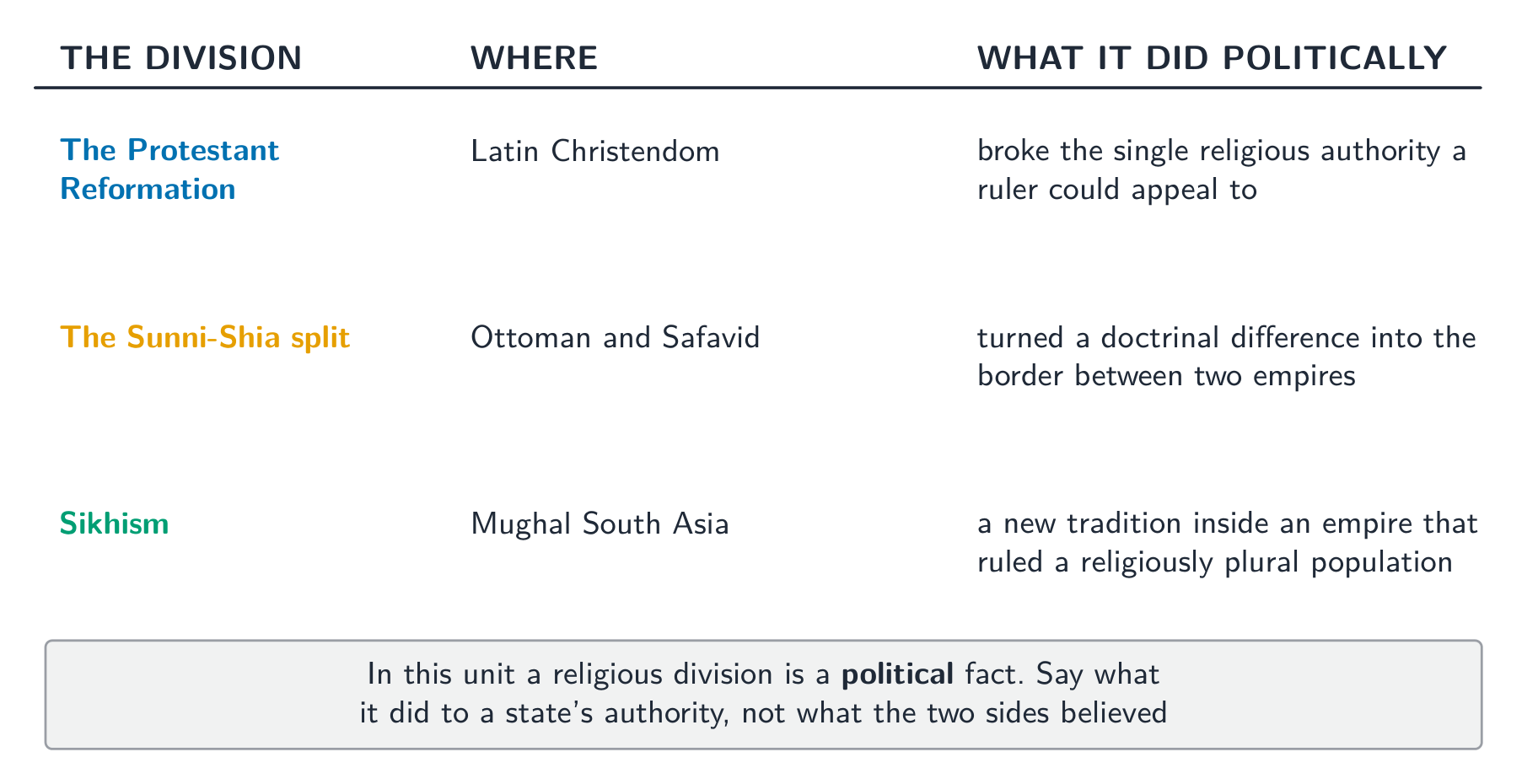
  • The Protestant Reformation 新教改革 marked a break with existing Christian traditions and led to sustained religious and political conflict in Europe.
  • Political rivalry between the Ottoman and Safavid empires intensified the Sunni-Shia split 逊尼派与什叶派分裂, showing how state rivalry can deepen a religious division.
  • Sikhism 锡克教 developed in South Asia in a context of interaction between Hinduism and Islam.

Political and religious disputes together produced rivalries and conflict between states across Eurasia.

עברית

שלטונים המשיכו להשתמש ב-רעיונות דתיים, אמנות ואדריכלות אנדרטית כדי להקנות סמכות לשלטונם - מסגדים וקברות מוגולים, קומפלקסי מסגדים עות'מניים, תמונות קיסריות צ'ינג, וארמונות אירופאיים כמו ורסאי עושים את אותה עבודה.

שינוי דתי יצר גם מחלוקת:

  • הרפורמה הפרוטסטנטית סימלה שבירה עם המסורות הנוצריות הקיימות והובילה למחלוקת דתית ופוליטית מתמשכת באירופה.
  • תחרות פוליטית בין האימپرיות העות'מנית והספבית החמירה את השבר הסוני-שיעי, מראה כיצד תחרות מדינית יכולה לעמיק חלוקה דתית.
  • הסיקיזם התפתח בדרום אסיה בתוך הקשר של אינטראקציה בין הינדואיזם לאסלאם.

מחלוקות פוליטיות ודתיות יחד יצרו תחרויות ומחלוקות בין מדינות בכל רחבי אוראסיה.

שלושה כלים לשליטה של שלטון על עמים שאינם שלו - ששימשו בצורה שונה על ידי כל אימפריה
שלושה חלוקות דתיות, לקריאה לכך שכל אחת מהן ביצעה למסדרת האutority של המדינה
מסגד הסולטנייה - אדריכלות אנדרטית ככלי לסמכות
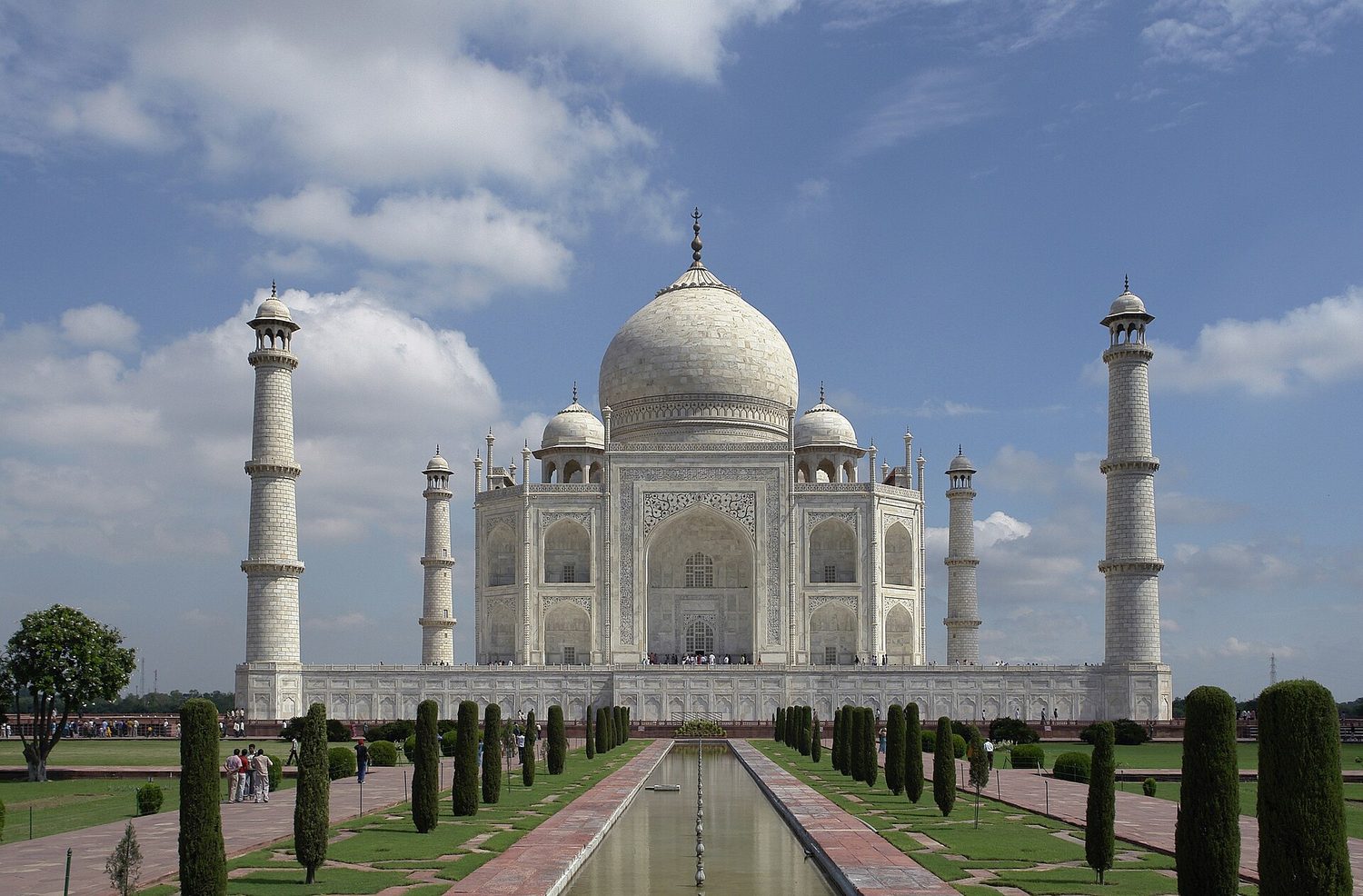
הטאג' מאהל - אותו כלי, שימש על ידי שלטון מוגולי על אוכלוסייה פלורלית דתית
Explore · ⁨חקור⁩

Sort each instrument of legitimacy · ⁨סדר כל כלי חוקיות⁩

These rulers governed people who shared neither their language nor their faith, so legitimacy had to be manufactured. · ⁨שלטונים אלו שלטו על עמים שלא חלקו את שפתם או את דתם, ולכן החוקיות הייתה חייבת להיות נוצרת באופן מלאכותי.⁩

3.4

Comparison in Land-Based Empires · ⁨השוואה באימפריות מבוססות יבשה⁩

Syllabus · ⁨סיילבוס⁩
English

3.4 Comparison in Land-Based Empires

Learning Objective Unit 3.D: Compare the methods by which various empires increased their influence from 1450 to 1750.

  • KC-4.1 The interconnection of the Eastern and Western Hemispheres made possible by transoceanic voyaging, transformed trade and had a significant social impact on the world.
    • KC-4.1.VI In some cases, the increase and intensification of interactions between newly connected hemispheres expanded the reach and furthered development of existing religions, and contributed to religious conflicts and the development of syncretic belief systems and practices.
  • KC-4.3 Empires achieved increased scope and influence around the world, shaping and being shaped by the diverse populations they incorporated.
    • KC-4.3.II Imperial expansion relied on the increased use of gunpowder, cannons, and armed trade to establish large empires in both hemispheres.
    • KC-4.3.II.B Land empires included the Manchu in Central and East Asia; Mughal in South and Central Asia; Ottoman in Southern Europe, the Middle East, and North Africa; and the Safavids in the Middle East.
    • KC-4.3.III.i Political and religious disputes led to rivalries and conflict between states.
עברית

3.4 השוואה באימפריות יבשתיות

מטרות לימוד ליחידה 3.D: השוו את השיטות שבהן אימפריות שונאות הגדילו את השפעתן מ-1450 עד 1750.

  • KC-4.1 הקישור בין החציכד המזרחי למערבי, שהתאפשר בזכות ספינות מעבר לאוקיינוסים, שינה את המסחר וגרם להשפעה חברתית משמעותית על העולם.
    • KC-4.1.VI במקרים מסוימים, הגידול וההידוק של האינטראקציות בין החציכדים המחודשים הרחיבו את היקף הדתות הקיימות וקידמו את פיתוחן, ותרום לסכסוכים דתיים ולפיתוח מערכי אמונה ומעשים סינקרטיים.
  • KC-4.3 האימפריות השיגו היקף והשפעה מוגברים בכל רחבי העולם, עיצבו את אוכלוסיות המגוון שהשתלבו בהן והיו עצמן מעוצבות על ידי אלו.
    • KC-4.3.II הרחבת אימפריות נסמכה על שימוש מוגבר באבקן, תותחים ומסחר מזוין כדי לקיים אימפריות גדולות בשני החציכדים.
    • KC-4.3.II.B האימפריות היבשתיות כללו את המנצ'ו במרכז ובמזרח אסיה; המוגולים בדרום ובמרכז אסיה; העות'מאנים בדרום אירופה, המזרח התיכון ואפריקה הצפונית; ואת הספווידים במזרח התיכון.
    • KC-4.3.III.i מחלוקות פוליטיות ודתיות הובילו למריבות ולסכסוכים בין מדינות.

Source: College Board AP Course and Exam Description · ⁨מקור: תיאור הקורס והמבחן של College Board AP⁩

English

The unit's reasoning skill is comparison, and the productive comparisons are about method, not size:

  • Recruiting officials by examination (Qing) against by enslaved-elite systems (Ottoman devshirme, Safavid ghulams).
  • Tax farming (Ottoman) against land-revenue intermediaries (Mughal zamindars) against direct taxation (Ming hard currency).
  • Legitimacy through religious identity (Safavid Shi'ism as state religion) against through tolerance of diversity (Mughal policy under Akbar).

Worked example (a real AP exam question). AP World short-answer questions in this unit typically ask students to "Explain one similarity" or "Explain one difference in how land-based empires maintained power." A full-mark answer names the method for both and explains the effect: "Both the Ottoman and Mughal empires used intermediaries to collect revenue rather than salaried tax officials, but the Ottomans used tax farming, which sold the right to collect for a fixed payment, while the Mughals relied on zamindars, hereditary landholders whose local standing gave them a permanent interest in the countryside." Notice the shape: the comparison is one function (raising revenue), performed two ways, with the consequence stated.

עברית

מיומנות ההסתכלות של היחידה היא השוואה, וההשוואות הפורמטיביות הן על שיטה, ולא על גודל:

  • גיוס פקידים באמצעות מבחנים (צ'ינג) לעומת מערכות Elites משועבדות (דששירמה עות'מנית, ג'ולמים ספבידי).
  • חקירה מוסכמת (עות'מאנית) נגד מתווכים באיסוף מיסים על אדמה (זמינדרים מוגוליים) נגד מיסוי ישיר (מטבע קשיח במינג).
  • סמכות דתית דרך זהות דתית (שיעיות בספווידית כדת המדינה) נגד דרך סובלנות כלפי מגוון (מדיניות המוגולים בתקופת אקבר).

דוגמה פתורה (שאלה אמיתית מבחן AP). שאלות תשובה קצרה בהיסטוריה עולמית בפרק זה בדרך כלל מבקשות מהתלמידים ל*"הסביר דמיון אחד"* או ל*"הסביר הבדל אחד באופן שבו אימפריות יבשתיות שמרו על כוחם."* תשובה מלאה ונקודות מציינת את השיטה עבור שתי האימپرיות ומסבירה את ההשפעה: "האימפריות העות'מאנית והמוגולית השתמשו במתווכים לאיסוף מיסים במקום פקידים משולמים, אך העות'מאנים השתמשו בחקירה מוסכמת, שהייתה מכירה את הזכות לאסוף מיסים לתמורה קבועה, בעוד שהמוגולים הסתמכו על זמינדרים, בעלי אדמות אריתראליים שלדעת המקומית נתנה להם עניין מתמשך בשטח הכפרי." שימו לב למבנה: ההשוואה היא לפונקציה אחת (איסוף הכנסות), שנעשתה בשתי דרכים, עם ציון ההשלכה.

3.4

Exam tips · ⁨טיפים לבחינות⁩

English
  • Say why gunpowder mattered: it let central rulers overpower regional rivals, so military change and centralisation go together.
  • Learn the four empires by their administrative method, not their territory - devshirme, examinations, zamindars, ghulams.
  • Tax farming sells the right to collect; a zamindar is a hereditary landholder. Questions turn on that difference.
  • Monumental architecture is evidence of legitimation, not decoration. Say what it was doing.
  • The Ottoman-Safavid rivalry is the example of political conflict deepening a religious divide.
  • Comparisons should be one function performed two ways, with the consequence stated.
עברית
  • אמרו למה אבק-שרף היה חשוב: הוא אפשר לשלטונים מרכזיים לגבור על יריבים אזוריים, ולכן שינוי צבאי ומרכזיות הולכים יחד.
  • למדו את ארבע האימپرיות לפי שיטת המנהל שלהן, ולא לפי השטח שלהן - דבשירמה, ביקורות, זמינדרים, גולאמים.
  • חקירה מוסכמת מוכרת את הזכות לאסוף; זמינדר הוא בעל אדמה אריתראלי. שאלות נסובבות סביב ההבדל הזה.
  • אדריכלות מונומנטלית היא עדאה לסמכות, ולא לעיטור. אמרו מה היא הייתה עושה.
  • המתחרות בין עות'מאנים לספווידים היא הדוגמה לסכסוך פוליטי שמעמיק חלוקה דתית.
  • השוואות צריכות להיות לפונקציה אחת שנעשית בשתי דרכים, עם ציון ההשלכה.

Interactive lessons on this topic · ⁨שיעורים אינטראקטיביים בנושא זה⁩

Work through it step by step, with instant-check exercises. · ⁨לעבור על הדברים צעד אחר צעד, עם תרגילים לבדיקה מיידית.⁩

Past Papers · ⁨מבחני עבר⁩

More topics in AP World History: Modern · ⁨היסטוריה עולמית: זמנים מודרניים - AP⁩ · ⁨נושאים נוספים בAP World History: Modern · ⁨היסטוריה עולמית: זמנים מודרניים - AP⁩⁩

Log in or create account · ⁨היכנס או צור חשבון⁩

IGCSE, A-Level & AP